Government through Stories
Stories that explain governments: how a constitutional republic can become something else, and what changes when it does.
Why Stories?
A definition tells you what fascism, monarchy, or democracy is, but it’s hard to picture. A story shows what it means for real people’s lives before, during, and after the system changes.
Each short story begins in a working republic, shows how it changes, and follows what tends to happen after each change. It usually starts in the minds of the voters: hard times, a sense of unfairness, a crisis, someone to blame, slick politicians promising the moon, and a generation that was never taught how our republic works. Then, little by little, like death by a thousand cuts, the safeguards fall and the republic becomes something else. Each story ends with The Real Lesson: what the story is saying, and what it is not.
The characters are made up, but every turn of the plot follows how that system has actually changed in history.
Some stories cover political systems, such as democracy, the constitutional republic, and federalism. They show who governs. Others cover economic systems, such as capitalism. They show who owns things and how goods are made and sold. Each story is labeled one or the other, and each shows the safeguards under pressure, the ways the system can break, or different versions side by side.
After each story:
- What Was Lost lists the safeguards that fell.
- What the Story Shows matches each moment in the plot to the real history behind it.
- You Decide lays out what has drawn people to the system, what it has cost, and a question for you. We don’t give you the answer.
For a side-by-side comparison of all the systems, continue to Modern Systems of Government.
The stories
- Constitutional RepublicPolitical system
The Ship, the Crew, and the Rules That Keep It Afloat
A constitutional republic is like a ship that belongs to everyone aboard, with written rules that nobody, not even the captain, is above.
Read the story - FascismPolitical system
The Machine, the Guards, and the Blade That Cuts Everyone
A republic is like a chopping machine with safety guards on its blades. In hard times, with a strong man promising order, the guards start coming off, one emergency at a time.
Read the story - CapitalismEconomic system
The Ball Game, the Referee, and the Rules of Capitalism
Capitalism in a constitutional republic is like a big ball game with a referee. There are two ways to ruin the game, and they come from opposite sides of the bleachers.
Read the story - Direct DemocracyPolitical system
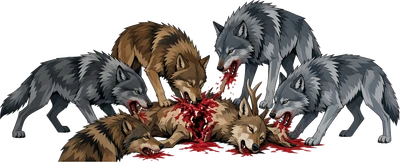
The Wolves, the Sheep, and the Vote for Dinner
Direct democracy is two wolves and a sheep voting on what to have for dinner. Every vote is fair, every ballot is counted, and that’s the problem.
Read the story - Representative DemocracyPolitical system
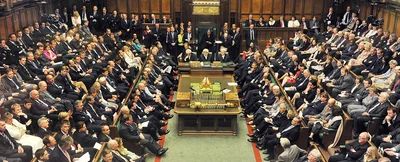
The King, the Council, and the Guards That Took 800 Years
Going from a kingdom to a representative democracy is like bolting the safety guards back onto a chopping machine, one at a time, over eight hundred years.
Read the story - CommunismEconomic system
The Orchard, the Promise, and the Wall That Kept Everyone In
Communism doesn’t always break down a republic’s door. Sometimes it knocks politely, holding flowers, and promises an orchard where everyone gets what they need.
Read the story - SocialismEconomic system
The Mill, the Majority, and the Road to Dictatorship
A town votes to buy its mill and run it for everyone. Every step is fair, popular, and legal, until the town can no longer vote its way back.
Read the story - Mixed EconomyEconomic system
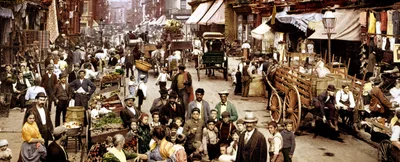
The Market Street, the Town, and the Dial Between Them
A mixed economy is a free market with a few things the whole town decided to do together. The argument is over where to set the dial.
Read the story - MonarchyPolitical system
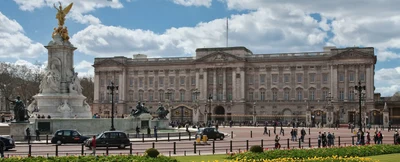
The Bell, the Hero, and the Crown No Vote Could Take Back
A worn-out republic votes its greatest hero into power, then for life, then a crown. Every vote is a landslide, and none of them can be taken back.
Read the story - DictatorshipPolitical system
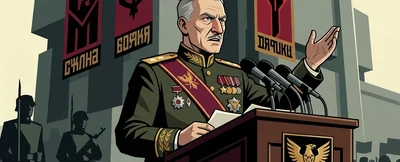
The Watchman, the Keys, and the Night That Never Ended
In a hard year, a town's night watch takes the keys to save the republic and promises to give them back soon. Getting them back takes sixteen years.
Read the story - OligarchyPolitical system
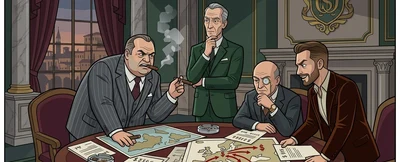
The Long Table, the Golden Book, and the Closing of the Door
A harbor town's council chairs are open to anyone, until a few rich families write the rules for who may sit in them. Nobody breaks a law, and the elections never stop.
Read the story - TheocracyPolitical system
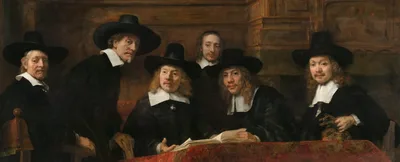
The Key, the Elders, and the Book Only They Could Open
A town of many faiths gives its most trusted elders the power to keep its laws good. Each step is popular and sincere, until only the elders hold the key to the town's constitution.
Read the story - TotalitarianismPolitical system
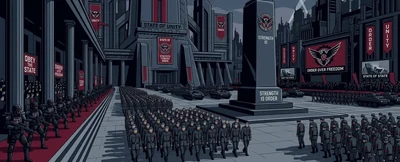
The Windows, the Neighbors, and the Town Made of Glass
A town with thick walls and busy clubs gives up one window for safety. Then a glass door, then glass walls, until there is nowhere left to stand.
Read the story - AnarchyPolitical system
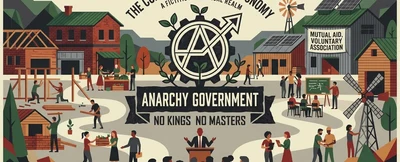
The Lamps, the Watch, and the Strongest Man on the Street
A town stops paying for its streetlamps, its night watch, and its judge, and for a while its neighbors do fine on their own. Then someone breaks open the watchhouse.
Read the story - Federal vs. Unitary SystemsPolitical system
The Villages, the Great Hall, and Who Holds the Keys
Two valleys, both republics. One splits its keys among its villages, and one keeps every key in a single hall. Each choice protects something, and each has a price.
Read the story - Commentary from the Author

Lessons Already Paid For
We’ve watched nearly every kind of government in action. We don’t have to guess how these systems turn out. In most cases, real people already paid for the results.
Read the commentary
Easy to Lose, Hard to Win Back
A republic runs on persuasion. Power goes to whoever can convince the most voters, and the constitution trusts those voters, and the officials they elect, to keep its limits in place. That openness is its strength and its weak point. A leader who persuades enough people can win power legally, and if enough officials go along, can use that power to take apart the courts, the press, and the elections that could remove him. The safeguards against tyranny are only as strong as the people sworn to uphold them.
History shows how fast it can happen. Louis-Napoleon Bonaparte was elected president of France's Second Republic in 1848, seized full power in a coup three years later, and made himself emperor in 1852. Adolf Hitler was appointed chancellor of Germany's Weimar Republic in January 1933; less than two months later, the Enabling Act let him make laws without parliament. Neither man had to conquer his own country. Each was handed power through the system, and Germany's constitution was never formally repealed. It simply stopped mattering.
An authoritarian regime works the other way around. Its power does not depend on persuading millions of voters. It depends on a small circle: the army, the police, and the people around the leader. Once elections, courts, and a free press are gone, ordinary people have no peaceful lever left to pull, and a regime that controls the news can keep them from even agreeing on what is happening. A free people can be talked into giving power away. A ruler who already holds all of it rarely has to listen to anyone. In the cases below, the regimes ended when they lost a war, when the ruler died, when the people rose up, or after decades of pressure, and several have not ended at all.
Here is the hardest part. Losing a republic can cost almost no lives at all. Germany's was signed away in a parliament chamber in 1933, by more than the two-thirds vote it needed; only the Social Democrats voted no. No battle was fought. A law was passed. Getting freedom back has cost millions. Once in power, Nazi Germany's fascist regime plunged the whole world into war: Germany started World War II by invading Poland on September 1, 1939. The regime lasted twelve years and fell only when that war ended in its defeat, after an estimated 60 million people had died, including six million Jews murdered in the Holocaust. Cambodia's Khmer Rouge killed almost two million people, about a third of the country, in less than four years, until an invading Vietnamese army drove it from power in 1979. Some regimes did end peacefully, through a vote in Chile in 1988 or the largely peaceful revolutions across Eastern Europe in 1989, but only after decades in which thousands were killed, imprisoned, or disappeared.
How fast republics have fallen
Roman Republic
509 BC to 27 BC, about 480 years
After decades of civil war, Augustus took sole power. The Senate and the old elected offices kept their names, but no longer their power.
French Second Republic
1848 to 1852, 4 years
Its first elected president, Louis-Napoleon, seized power in a coup in 1851 and made himself emperor a year later.
Weimar Republic (Germany)
1919 to 1933, 14 years
Hitler was appointed chancellor in January 1933. The Enabling Act gave him the power to make laws on his own less than two months later.
How long non-democratic regimes took to end, and what it cost
Fascist Italy
1922 to 1943, 21 years
How it endedDefeat in World War II. The king removed Mussolini after the Allies invaded Sicily.
The costAbout 457,000 Italians died in the war.
Nazi Germany
1933 to 1945, 12 years
How it endedStarted World War II by invading Poland in 1939, and fell only in total defeat in 1945.
The costAn estimated 60 million deaths worldwide in the war, including six million Jews murdered in the Holocaust, and 6.6 to 8.8 million Germans.
Spain under Franco
1939 to 1975, 36 years
How it endedFranco died in office. A peaceful transition to democracy followed.
The costThe civil war that brought him to power killed about 500,000 people.
Soviet-backed regimes in Eastern Europe
About 1948 to 1989, about 40 years
How it endedLargely peaceful revolutions in 1989. Only in Romania did they turn violent.
The costDecades of political imprisonment, and hundreds killed in Romania in 1989.
Cuba under Batista
1952 to 1959, almost 7 years
How it endedRebels led by Fidel Castro won a guerrilla war, and Batista fled the country on January 1, 1959.
The costEstimates of the people killed range from hundreds to 20,000. The 20,000 figure, widely repeated after 1959, is disputed by historians.
Iran under the Shah
1953 to 1979, 26 years
How it endedA 1953 coup backed by the CIA and Britain overthrew the elected prime minister, Mohammad Mossadegh, and left the Shah in full control. Months of mass protests and strikes forced him to leave Iran on January 16, 1979.
The costAmnesty International reported in the 1970s that Iran had the highest rate of death sentences in the world and "a history of torture which is beyond belief." About 3,000 people died in the 1978-79 revolution, by researcher Emad Baghi's count.
Haiti under the Duvaliers
1957 to 1986, 29 years
How it endedA popular uprising forced Jean-Claude "Baby Doc" Duvalier to flee to France on a U.S. Air Force plane on February 7, 1986. Coups and instability followed. In 2026, gangs control most of the capital, an unelected prime minister governs, and elections have been postponed.
The costHuman Rights Watch estimated that up to 30,000 Haitians were killed under the two Duvaliers, many by the Tontons Macoutes militia. Amnesty International documented thousands killed, tortured, or disappeared under Jean-Claude alone.
Chile under Pinochet
1973 to 1990, 17 years
How it endedVoters rejected him in a 1988 plebiscite, and he handed over power.
The costThousands killed or disappeared, according to Chile's official truth commission.
Cambodia under the Khmer Rouge
1975 to 1979, under 4 years
How it endedAn invading Vietnamese army captured the capital in January 1979.
The costAlmost two million people, about a third of the population.
Seychelles under France-Albert René
1977 to 1993, 16 years
How it endedRené allowed multiparty elections in 1993 and stepped down in 2004. In 2020 an opposition candidate won the presidency for the first time, and in 2025 voters returned René's old party to power, each time with a peaceful handover.
The costTwo people died in the 1977 coup. Seychelles' truth commission heard 374 complaints and found unlawful killings, disappearances, torture, and forced exile under one-party rule.
North Korea
1948 to today, more than 75 years
How it endedIt has not ended. The third generation of the Kim family rules today.
The costStill unknown. The country is closed to outside observers.
Cuba under the Castros and the Communist Party
1959 to today, more than 67 years
How it endedIt has not ended. Castro promised to restore Cuba's 1940 Constitution and hold elections, then built a one-party state. Miguel Díaz-Canel leads it today.
The costThe Cuba Archive, an exile documentation project, has recorded more than 3,000 firing-squad executions since 1959. Cuba's own statistics office says the population fell from about 11 million in 2020 to 9.4 million in 2025, mostly because people left.
Iran under the ayatollahs
1979 to today, more than 47 years
How it endedIt has not ended. Supreme Leader Ali Khamenei was killed in U.S. and Israeli strikes on February 28, 2026, and the clerics named his son, Mojtaba Khamenei, to replace him in March.
The costAmnesty International estimates at least 5,000 political prisoners were secretly executed in 1988, and the group Iran Human Rights counted at least 1,639 executions in 2025, the most since 1989. Rights groups say thousands of protesters were killed in January 2026.
Venezuela under Chávez and Maduro
1999 to today, more than 27 years
How it endedNot fully. Hugo Chávez was elected in 1998 and took apart the checks on his power, and Nicolás Maduro followed him in 2013. U.S. forces captured Maduro on January 3, 2026, but his vice president, Delcy Rodríguez, still governs as acting president and has set no election date.
The costAbout 7.9 million people have left the country, according to the UN-led R4V platform. The UN human rights office reported thousands of killings by security forces, many likely executions, and the central bank put inflation at 130,060 percent in 2018.
None of this means a republic is doomed, or that every strong government becomes a tyranny. The United States has governed itself under the same Constitution since 1789, through a civil war, a depression, and two world wars. The question every story here leaves you with is the one each generation of voters faces: what would it take to lose a republic, and what would it take to keep one?
Coming next
Every system on our list now has a story. More may be added over time.
Sources & Further Reading
- Encyclopaedia Britannica: Fulgencio Batista
- National Security Archive: CIA Documents Acknowledge Its Role in Iran's 1953 Coup
- Amnesty International: Iran Briefing (1976)
- U.S. Institute of Peace, The Iran Primer: Protests, 1979 to 2023
- Amnesty International: Haiti, the Truth Must Not Die with Jean-Claude Duvalier (2014)
- UN News: Haiti Elections Postponed (October 2026)
- Library of Congress Country Study: Seychelles, the 1977 Coup
- U.S. State Department: 2022 Human Rights Report, Seychelles
- CSVR African Transitional Justice Hub: Seychelles
- Al Jazeera: Patrick Herminie Wins Seychelles Runoff (2025)
- Cuba Archive: Extrajudicial Killings Report (2023)
- AFP via Arab News: Cuba's Population Falls to 9.4 Million (2026)
- Amnesty International: Blood-Soaked Secrets, Iran's 1988 Prison Massacres
- Iran Human Rights: Annual Report on the Death Penalty, 2025
- Amnesty International: What Happened at the Protests in Iran (2026)
- Al Jazeera: Iran Names Khamenei's Son as New Supreme Leader (March 2026)
- NPR: Venezuela's Government After Maduro's Capture (January 2026)
- Reuters via U.S. News: Venezuela's Rodríguez Promises Elections (September 2026)
- PBS NewsHour: UN Reports 5,287 Killed in Venezuela Security Operations (2019)
- R4V: Refugees and Migrants from Venezuela
- Encyclopaedia Britannica: Napoleon III
- Encyclopaedia Britannica: Augustus
- U.S. Holocaust Memorial Museum: The Enabling Act
- U.S. Holocaust Memorial Museum: Documenting Numbers of Victims of the Holocaust
- U.S. Holocaust Memorial Museum: World War II in Europe
- The National WWII Museum: Worldwide Deaths in World War II
- Encyclopaedia Britannica: Spanish Civil War
- U.S. Department of State, Office of the Historian: The Collapse of Communism in Eastern Europe, 1989
- Human Rights Watch: Chile, The Struggle for Truth and Justice (1992)
- U.S. Holocaust Memorial Museum: Cambodia, 1975 to 1979
- History.com: Pol Pot Overthrown (January 7, 1979)
- Encyclopaedia Britannica: North Korea
Death tolls are estimates and vary between sources; where they differ, this page gives the figure or range the cited source uses.