
Your government works for you.
But only if you understand it.
We break down every part of the United States government, how it was created, why it was created, who runs it, and what it actually does, in plain English that anyone can follow. No jargon. No spin. Just facts.
LIVE U.S. POPULATION ESTIMATE based on U.S. Census Bureau growth data:
As of October 2026, 341.8 million Americans call this government theirs.
Countdown to the Midterms
Election Day: Tuesday, November 3, 2026
The 2026 Midterms Are Coming. Know What's on Your Ballot.
Every seat in the U.S. House, a third of the Senate, and 36 governors are on the ballot this November, plus statewide ballot measures that could change your taxes. Our state voter guides lay out every race and every measure, with the reasons people vote yes and no, so you can walk in informed and make up your own mind.
America is a Republic, Not a Pure Democracy
"Democracy is four wolves and a lamb voting on what to have for lunch."
The saying makes a simple point: if a bare majority could decide everything, nothing would protect the people who lose the vote. The Founders built several layers of protection against that. The House of Representatives, with 435 members elected every two years, is the part of the government that follows the majority most closely. The Senate was designed to slow it down: senators serve six-year terms, and every state has two, no matter how many people live there.
Other protections go further. The Bill of Rights puts freedoms such as speech, religion, and a fair trial beyond the reach of any election. Federal judges serve for life so they can rule against popular laws that break the Constitution, and amending the Constitution normally takes a two-thirds vote of both houses of Congress plus approval by three-fourths of the states.
The United States is not a pure democracy. It is a constitutional republic that operates under a federalist system.
Here’s what those terms mean:
- Pure democracy = majority rules on everything, all the time. 51% of the people could vote to take away the rights of the other 49%.
- A republic = we elect representatives to make decisions, but those decisions are limited by a Constitution that protects individual rights and prevents the majority from trampling on minorities.
- Federalism = power is split between the national (federal) government and the state governments. The Founders didn’t want all power concentrated in one place.
That’s why we have:
- The Electoral College (instead of a direct national vote for president)
- Two very different houses of Congress
- A Constitution that is deliberately hard to amend
- Independent courts that can strike down laws, as in these landmark cases
- A division of power between the federal government and the states
The Three Branches of Government
The U.S. government is divided into three branches: the legislative branch (Congress) writes the laws, the executive branch (the president) carries them out, and the judicial branch (the courts) decides what they mean. The Founders separated these powers so that no single branch could control the government on its own.
| Branch | Who | What it does |
|---|---|---|
| Legislative | Congress (the House and the Senate) | Writes and passes the laws, and controls federal spending |
| Executive | The president, vice president, and the Cabinet | Carries out and enforces the laws Congress passes |
| Judicial | The Supreme Court and the lower federal courts | Interprets the laws and measures them against the Constitution |
The Legislative Branch
Article I of the Constitution
Congress, made up of the House and the Senate, writes the laws, controls the money, and keeps the President in check. It's the most powerful branch on paper, and the most contentious in practice.
- House of Representatives
- The U.S. Senate
- How a Bill Becomes Law
- The Congressional Budget
- Impeachment Explained
The Executive Branch
Article II of the Constitution
The President, Vice President, and the Cabinet run the day-to-day operations of the federal government. They enforce the laws Congress writes, and have enormous power to shape how those laws play out.
Explore the Executive Branch →The Judicial Branch
Article III of the Constitution
The federal courts, led by the Supreme Court, interpret the laws and decide whether they follow the Constitution. Nine justices serve for life, and their rulings can reshape the country for generations.
Explore the Judicial Branch →Explore the Site
Beyond the three branches, the site covers the Constitution, every state and territory, American history, and how civic life works.
The Constitution
The full text, the Bill of Rights, all 27 amendments, and the people who wrote it.
Read the Constitution →States & Territories
All 50 states and 14 U.S. territories: their governments, history, economies, and leaders.
See every state and territory →American History
From colonial America to the present: wars, movements, landmarks, and the peoples who built the country.
Explore U.S. history →Civics & Elections
How elections, political parties, citizenship, and everyday civic duties actually work.
Learn how elections work →How Governments Work
Why the Founders chose this system, how it compares with others around the world, and the checks built into it.
Compare systems of government →Money & the Budget
Where federal money comes from, where it goes, and how the national debt grew.
See the federal budget →📰 Latest Guides
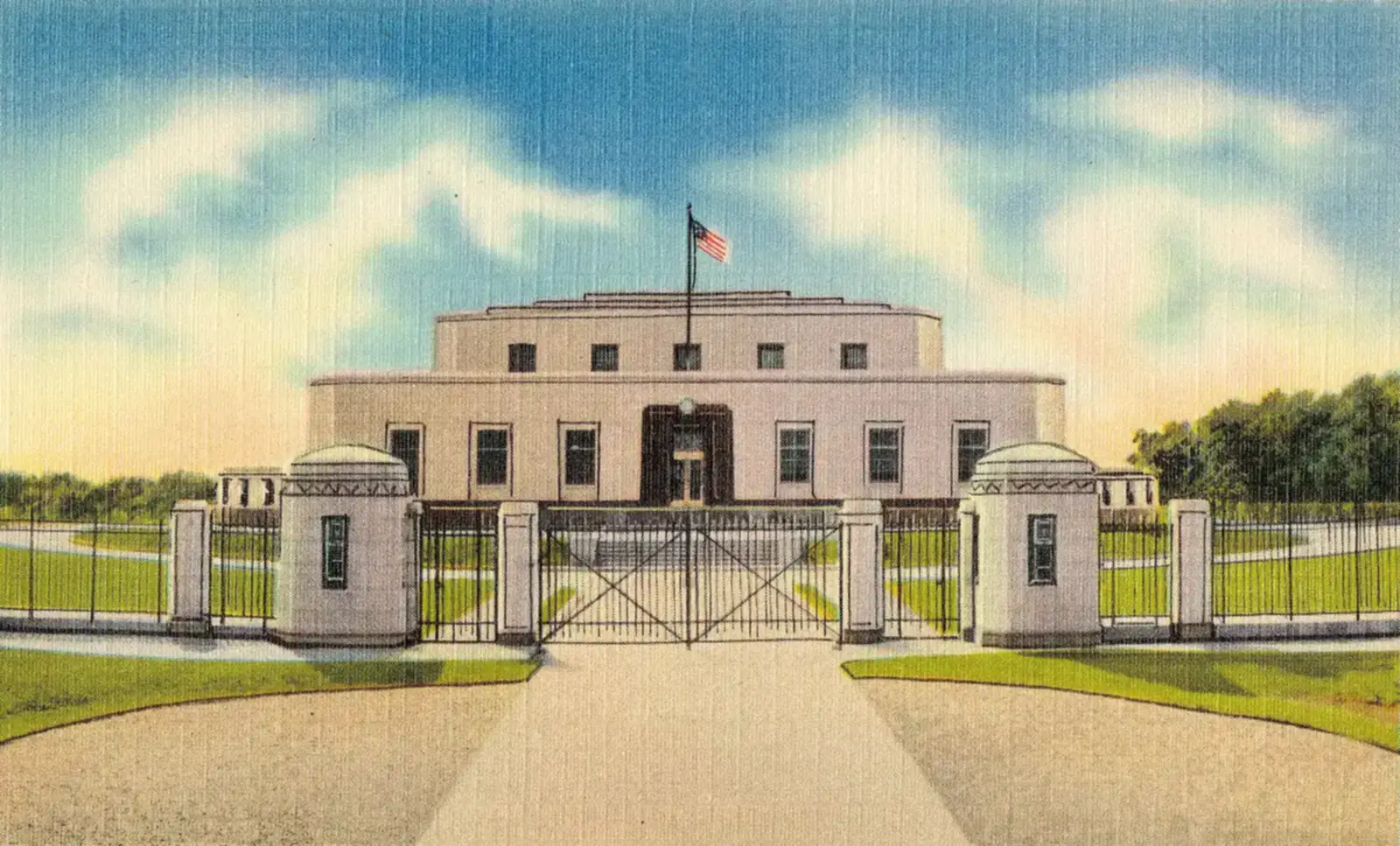
The History of Fort Knox
From a World War I artillery camp to the birthplace of the Army's armored force and home of the nation's most famous gold vault. How the gold got there, how it is guarded, and the treasures hidden there during World War II.
Read the guide →The Mexican-American War
What started it, every major campaign from Palo Alto to Mexico City, and how the Treaty of Guadalupe Hidalgo moved the border.
The History of the Panama Canal
The failed French attempt, American construction, the Canal Zone, and the 1999 handover to Panama.
Classroom Reading Paths and Topic Bundles
Ready-made reading paths, topic bundles, and copy-and-paste syllabus text for civics and history classes.
Watch the House of Representatives Live
The House's official live video of floor debates and votes, from the Clerk of the House.
"An educated citizenry is a vital requisite for our survival as a free people."
, Thomas Jefferson
Commonly attributed to Thomas Jefferson; the attribution is not verified (Monticello).
The United States government is complicated by design. The Founders built in checks and balances specifically to slow things down and prevent any one person or group from gaining too much power. Understanding how it all works isn't just interesting. It's how self-government survives.
Much of the government you deal with every day is not in Washington at all. Public schools, police, roads, water, and property taxes are mostly run by states, counties, and cities, which is why understanding local government matters as much as knowing the three federal branches.
Citizens also keep the system running directly. They choose leaders in elections, and they decide criminal and civil cases as jurors, a right the Sixth and Seventh Amendments guarantee. Knowing how elections work, and what each office actually controls, helps every vote count for what the voter intends.
That is the reason this site exists: free, sourced, and nonpartisan guides to every part of American government and history, with many pages also in Spanish. Teachers can build lessons from the site's reading paths and topic bundles.
The Pledge of Allegiance
"I pledge allegiance to the Flag of the United States of America, and to the Republic for which it stands, one Nation under God, indivisible, with liberty and justice for all."
Written by Francis Bellamy · First published in The Youth's Companion, September 8, 1892
“under God” added by Act of Congress, signed by President Eisenhower on Flag Day, June 14, 1954
The Star-Spangled Banner
"O say can you see, by the dawn's early light,
What so proudly we hailed at the twilight's last gleaming,
Whose broad stripes and bright stars through the perilous fight,
O'er the ramparts we watched, were so gallantly streaming?
And the rocket's red glare, the bombs bursting in air,
Gave proof through the night that our flag was still there;
O say does that star-spangled banner yet wave
O'er the land of the free and the home of the brave?"
Words by Francis Scott Key · Written September 14, 1814 · Fort McHenry, Baltimore
National Anthem designated by Act of Congress, signed by President Hoover on March 3, 1931
"Study the past if you would define the future."
Confucius
Commonly attributed to Confucius; the saying does not appear in the Analects, and the attribution is not verified.
How We Explain Things
Every guide follows the same format
Historical Origins
Where it came from, what problem it solved, and what the Founders were thinking
The Constitution
Exactly which article and section establishes it, and what that text says
How It Works
Day-to-day operations, elections, appointments, powers, and limits
Why It Matters
Real-world impact and why this part of government affects your daily life