
The Speaker
of the House
The most powerful person in Congress, and the third most powerful person in the United States government. Here's everything about how they get the job, what they can do with it, and how they can lose it.
What Is the Speaker of the House?
The Speaker of the House is the leader of the entire House of Representatives, elected by all 435 members to preside over the chamber, control its agenda, and serve as the public face of the majority party in Congress. It's widely considered the third most powerful job in the United States, behind only the President and Vice President.
Unlike the President or VP, the Speaker is not elected by voters nationally. They're elected by a majority vote of the entire House membership, which means whoever controls the majority of seats controls who becomes Speaker. In practice, the Speaker is almost always the leader of the majority party.
The office is as old as the House itself. The first Congress elected Frederick Muhlenberg of Pennsylvania as Speaker on April 1, 1789, the day the House first reached a quorum. The title was borrowed from the presiding officer of the British House of Commons, but the American version quickly became something the British Speaker never was: an open partisan leader. Henry Clay, elected Speaker on his very first day in the House in 1811, is generally credited with that transformation, using the chair to drive the country toward the War of 1812.
Today the Speaker rarely presides over floor debate in person, handing the gavel to a rotating set of majority-party members who serve as Speaker pro tempore, and instead spends the day setting the schedule, negotiating with the Senate and White House, raising money, and managing the majority. The Speaker earns $223,500 a year, more than the party floor leaders ($193,400) and rank-and-file members ($174,000), and is the only House leadership post the Constitution actually names.
What the Constitution Says
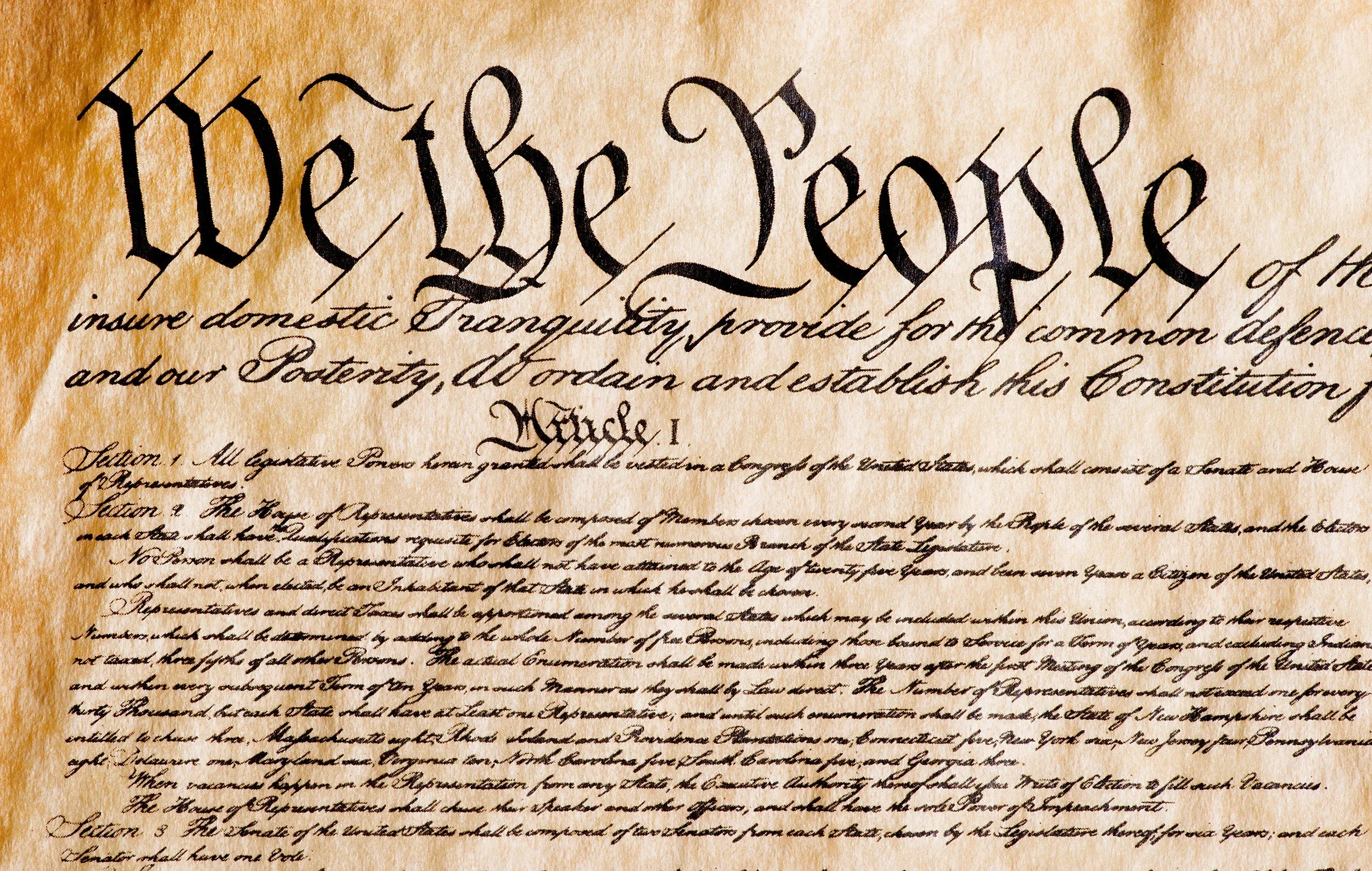
Article I, Section 2, a single clause creates the speakership (Public Domain)
Here's a surprising fact: the Constitution creates the entire speakership in a single 11-word clause. That's it. Everything else, the enormous power, the rules, the procedures, was built up by tradition, House rules, and over 230 years of precedent.
Because the Constitution says so little, the Speaker's role has been shaped more by the individual personalities who held the job than by any written rules. The speakership of 1800 looked nothing like 1900, which looked nothing like today.
One of the most remarkable things: the Constitution does not require the Speaker to be a member of the House. Technically, the House could elect any American citizen as Speaker, a senator, a former president, a private citizen. It has never happened, but it's constitutionally permitted.
The clearest proof that the job is defined by House rules rather than the Constitution came in 1910, when a bipartisan bloc revolted against Speaker Joseph Cannon and stripped the chair of its power to appoint committees and to sit on the Rules Committee. The Speaker's authority was rebuilt over the following decades, and the party-leadership tools used today, controlling the Rules Committee, the floor schedule, and committee assignments through a steering panel, all rest on rules the majority adopts anew at the start of each Congress.
"The House of Representatives shall chuse their Speaker and other Officers..."
That's it. One clause. The House picks its own Speaker. Everything about how that works, the election, the powers, the removal, comes from House rules and tradition, not the Constitution itself.
How the Speaker Gets the Job
Becoming Speaker requires winning two separate elections, one inside your party and one on the House floor:
Party Conference Nomination
At the start of each new Congress (every 2 years), each party caucuses privately and nominates their candidate for Speaker. The majority party's nominee almost always becomes Speaker, but not always. This private vote is where the real competition happens.
Full House Floor Vote
On the first day of the new Congress, the full House votes for Speaker by roll call, every member's name is called and they announce their vote publicly. A candidate needs 218 votes (a majority of the full 435-member House) to win.
Sworn In
The winning candidate is immediately sworn in by the dean of the House (the longest-serving member). They then swear in the rest of the House members as a group. The gavel is handed over and the new Congress officially begins.
When Nobody Gets 218
If no candidate wins 218 votes on the first ballot, the House keeps voting until someone does. In January 2023, Kevin McCarthy required 15 rounds of voting over 4 days before finally securing the speakership, the longest Speaker election since 1859. The House literally cannot conduct any business until a Speaker is chosen.
The Speaker's Powers and Duties
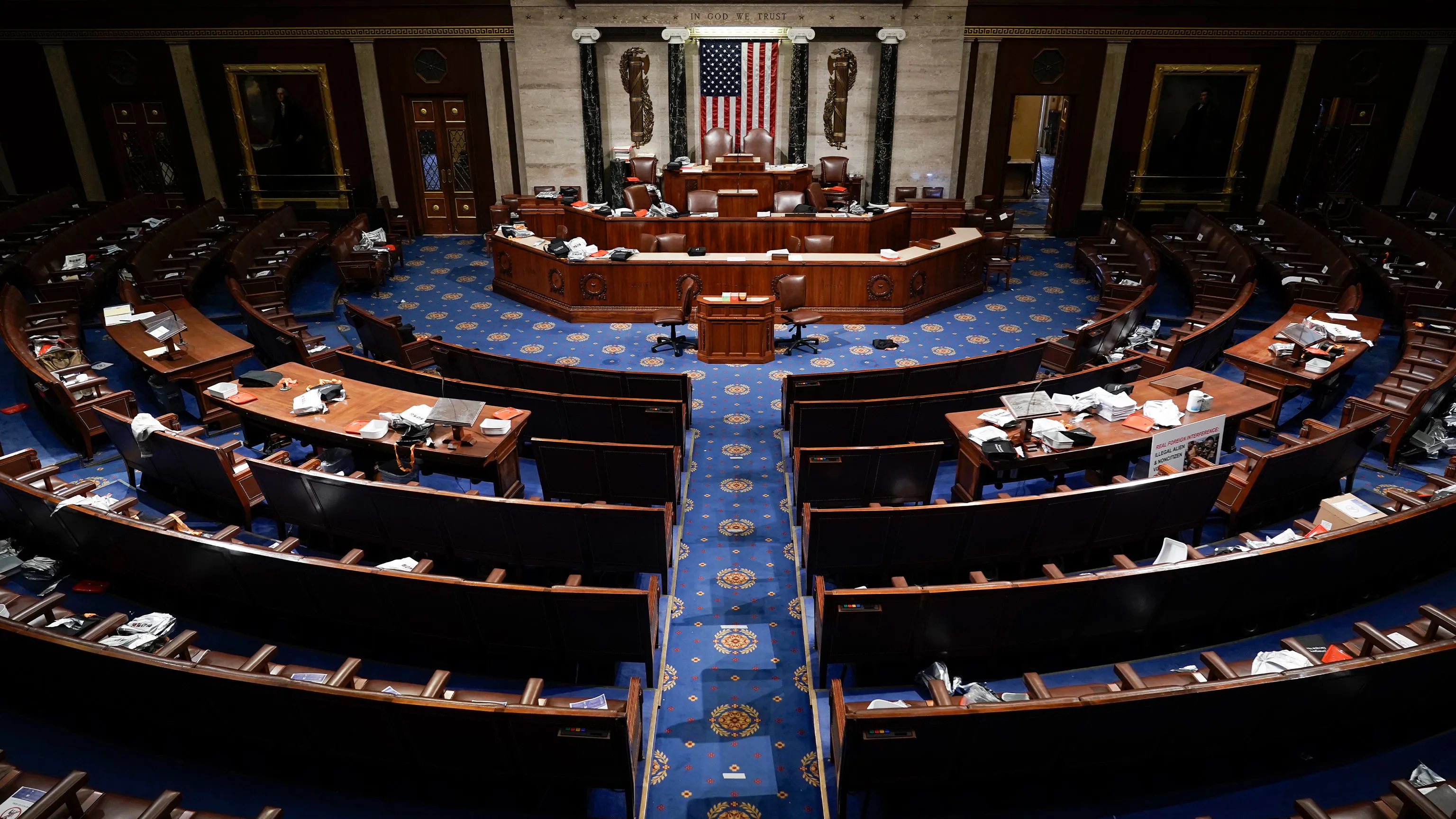
The House chamber, the Speaker presides from the raised rostrum at the front (Public Domain)
The Speaker's power comes from controlling what happens, and what doesn't happen, on the House floor. They have enormous influence over every piece of legislation that moves through the chamber:
Controls the Legislative Agenda
The Speaker decides which bills get a vote and when. A bill can have majority support, pass every committee, and have presidential backing, but if the Speaker refuses to schedule it for a floor vote, it dies. This 'gatekeeping' power is arguably the Speaker's most important tool. It's sometimes called the 'Hastert Rule', the informal norm of not scheduling any bill that doesn't have support from a majority of the majority party.
Assigns Members to Committees
The Speaker controls committee assignments for the majority party, deciding who sits on powerful committees like Ways and Means, Appropriations, and Rules. A member who cooperates with the Speaker gets a plum committee seat. A member who defies the Speaker might find themselves on less influential committees. This gives the Speaker enormous leverage over individual members.
Presides Over Floor Debate
When the House is in session, the Speaker (or their designated presiding officer) sits in the raised chair at the front of the chamber. They recognize members to speak, manage debate time, rule on procedural questions, and maintain order. Their rulings on parliamentary procedure can make or break legislation.
Leads the Majority Party
The Speaker is simultaneously the constitutional officer of the full House and the political leader of the majority party. They set the party's legislative strategy, negotiate with the Senate and the White House, communicate the party's message publicly, and work to keep their caucus united. Balancing these roles, representing all 435 members while leading one party, is the central tension of the job.
Represents the House Institutionally
The Speaker is the public face and official representative of the House of Representatives as an institution. They meet with foreign leaders, represent the House in inter-branch negotiations, and speak on behalf of the chamber in a way that individual members cannot. In foreign policy conversations, the Speaker's position matters as much as the administration's.
Second in Line for the Presidency
Under the Presidential Succession Act, the Speaker is second in line to the presidency, behind only the Vice President. If both the President and VP are unable to serve, the Speaker becomes president immediately. This makes them arguably the most powerful legislative official in the world, since they stand a single tragedy away from the executive branch.
The Motion to Vacate: How Speakers Get Fired
The Speaker serves at the pleasure of the House, meaning any member can file a motion to vacate the chair, forcing a full House vote on whether to remove the Speaker. If a majority votes yes, the Speaker is immediately removed and the House must elect a new one.
This is an extraordinary tool. For over a century it was rarely used as a real threat. The threshold has moved with the House rules: in 2019 Speaker Nancy Pelosi changed the rule so that only a party leadership motion, not one lone member, could trigger a vote. In January 2023 Kevin McCarthy agreed to restore the single-member trigger as the price of winning enough hardline Republican votes to become Speaker after 15 ballots.
That concession set up what happened on October 3, 2023, when a single Republican used the rule McCarthy had just reinstated to remove him.
October 2023: Kevin McCarthy Removed
Rep. Matt Gaetz of Florida filed a motion to vacate against Speaker Kevin McCarthy, largely over McCarthy's decision to work with Democrats to pass a short-term spending bill and avoid a government shutdown. The vote was 216-210 to remove McCarthy, with 8 Republicans joining all Democrats.
McCarthy became the first Speaker in US history to be removed by a motion to vacate. The House was leaderless for 22 days as Republicans struggled to find a replacement. Three nominees failed before Rep. Mike Johnson of Louisiana was elected on October 25, 2023.
Historical context: The last time a Speaker faced a serious motion to vacate before 2023 was in 1910, when members revolted against "Czar" Joseph Cannon's iron-fisted control of the House. Cannon survived that vote but was stripped of his key powers. The tool sat mostly dormant for more than a century (Rep. Mark Meadows filed one against Speaker John Boehner in 2015, but it never came to a vote) before Gaetz revived it.
Notable Speakers in History
The Speaker Who Invented the Modern Role
Henry Clay (1811–1825)
Before Henry Clay, the Speaker was largely a ceremonial figure who ran floor proceedings. Clay transformed the role into a power center, using committee assignments, floor scheduling, and personal persuasion to actively shape legislation. He is widely credited with creating the speakership as we know it today. He also ran for president three times without success, earning the nickname 'The Great Compromiser.'
"Czar Reed", The Speaker Who Broke the Minority's Veto
Thomas Brackett Reed (1889–1899)
Democrats in the minority had developed a tactic called the "disappearing quorum", refusing to answer roll calls to prevent the House from having enough members present to conduct business. Reed ended it in 1890 by simply counting silent members as present. Members erupted in outrage. Reed responded coolly: "The House is now proceeding to business." His rulings survived and permanently strengthened the majority party's power.
"Uncle Joe", The Most Powerful Speaker in History
Joseph Cannon (1903–1911)
Cannon controlled everything, committee assignments, floor scheduling, even who was allowed to speak. He chaired the Rules Committee himself, giving him direct control over every piece of legislation. Members of his own party eventually rebelled in 1910, stripping him of Rules Committee membership and much of his power. The 'Cannon Revolt' permanently changed the speakership, but his decade of dominance remains unmatched.
Longest-Serving Speaker, Quiet Power
Sam Rayburn (1940–1961)
Rayburn served as Speaker for 17 years across three separate stints, the longest total tenure in history. His philosophy was personal relationships and quiet persuasion rather than raw power. His famous advice to new members: 'To get along, go along.' He mentored Lyndon Johnson and shaped the House through the New Deal, World War II, the Korean War, and the early Cold War. When he died in 1961, he was mourned by members of both parties.
First Woman Speaker, Master Legislator
Nancy Pelosi (2007–2011, 2019–2023)
Pelosi became the first, and so far only, woman to serve as Speaker of the House. She is widely regarded as one of the most effective legislative tacticians in modern history, steering the Affordable Care Act, the economic stimulus package, and the January 6th Select Committee investigation through a closely divided House. She stepped down from leadership in 2023 after Republicans won the House majority.
All 56 Speakers of the House
Every person who has served as Speaker of the House, from Frederick Muhlenberg in 1789 to Mike Johnson today.

Frederick Muhlenberg
1789–1791, 1793–1795
PA
Fed./Pro-AdminFirst Speaker ever

Jonathan Trumbull Jr.
1791–1793
CT
Fed./Pro-Admin
Jonathan Dayton
1795–1799
NJ
Fed./Pro-AdminYoungest Speaker ever (26)

Theodore Sedgwick
1799–1801
MA
Fed./Pro-Admin
Nathaniel Macon
1801–1807
NC
Dem.-Republican
Joseph B. Varnum
1807–1811
MA
Dem.-Republican
Henry Clay
1811–1820, 1823–1825
KY
Dem.-RepublicanDefined the modern speakership

Langdon Cheves
1814–1815
SC
Dem.-Republican
John W. Taylor
1820–1821, 1825–1827
NY
Dem.-Republican
Philip P. Barbour
1821–1823
VA
Dem.-Republican
Andrew Stevenson
1827–1834
VA
Democrat
John Bell
1834–1835
TN
Whig
James K. Polk
1835–1839
TN
DemocratLater became 11th President

Robert M.T. Hunter
1839–1841
VA
Democrat
John White
1841–1843
KY
Whig
John Winston Jones
1843–1845
VA
Democrat
John W. Davis
1845–1847
IN
Democrat
Robert C. Winthrop
1847–1849
MA
Whig
Howell Cobb
1849–1851
GA
Democrat
Linn Boyd
1851–1855
KY
Democrat
Nathaniel P. Banks
1856–1857
MA
Republican
James L. Orr
1857–1859
SC
Democrat
William Pennington
1860–1861
NJ
Republican
Galusha A. Grow
1861–1863
PA
Republican
Schuyler Colfax
1863–1869
IN
RepublicanLater became VP (1869)

Theodore M. Pomeroy
1869
NY
RepublicanServed just one day

James G. Blaine
1869–1875
ME
Republican
Michael C. Kerr
1875–1876
IN
DemocratDied in office

Samuel J. Randall
1876–1881
PA
Democrat
J. Warren Keifer
1881–1883
OH
Republican
John G. Carlisle
1883–1889
KY
Democrat
Thomas Brackett Reed
1889–1891, 1895–1899
ME
Republican"Czar Reed", transformed the speakership

Charles F. Crisp
1891–1895
GA
Democrat
David B. Henderson
1899–1903
IA
Republican
Joseph G. Cannon
1903–1911
IL
Republican"Uncle Joe", most powerful Speaker in history

Champ Clark
1911–1919
MO
Democrat
Frederick H. Gillett
1919–1925
MA
Republican
Nicholas Longworth
1925–1931
OH
Republican
John Nance Garner
1931–1933
TX
DemocratLater became VP under FDR

Henry T. Rainey
1933–1934
IL
DemocratDied in office

Joseph W. Byrns
1935–1936
TN
DemocratDied in office

William B. Bankhead
1936–1940
AL
DemocratDied in office

Sam Rayburn
1940–47, 1949–53, 1955–61
TX
DemocratLongest-serving Speaker (17 years total)

Joseph W. Martin Jr.
1947–1949, 1953–1955
MA
Republican
John W. McCormack
1962–1971
MA
Democrat
Carl Albert
1971–1977
OK
Democrat
Thomas P. O'Neill Jr.
1977–1987
MA
Democrat"Tip", brought speakership into TV age

Jim Wright
1987–1989
TX
DemocratResigned amid ethics investigation

Thomas S. Foley
1989–1995
WA
DemocratFirst Speaker to lose re-election since 1860

Newt Gingrich
1995–1999
GA
Republican"Contract with America" revolution

J. Dennis Hastert
1999–2007
IL
RepublicanLongest-serving Republican Speaker

Nancy Pelosi
2007–2011, 2019–2023
CA
DemocratFirst and only woman Speaker

John Boehner
2011–2015
OH
RepublicanResigned under pressure from conservatives

Paul Ryan
2015–2019
WI
RepublicanDeclined to seek re-election

Kevin McCarthy
Jan–Oct 2023
CA
RepublicanFirst Speaker removed by Motion to Vacate
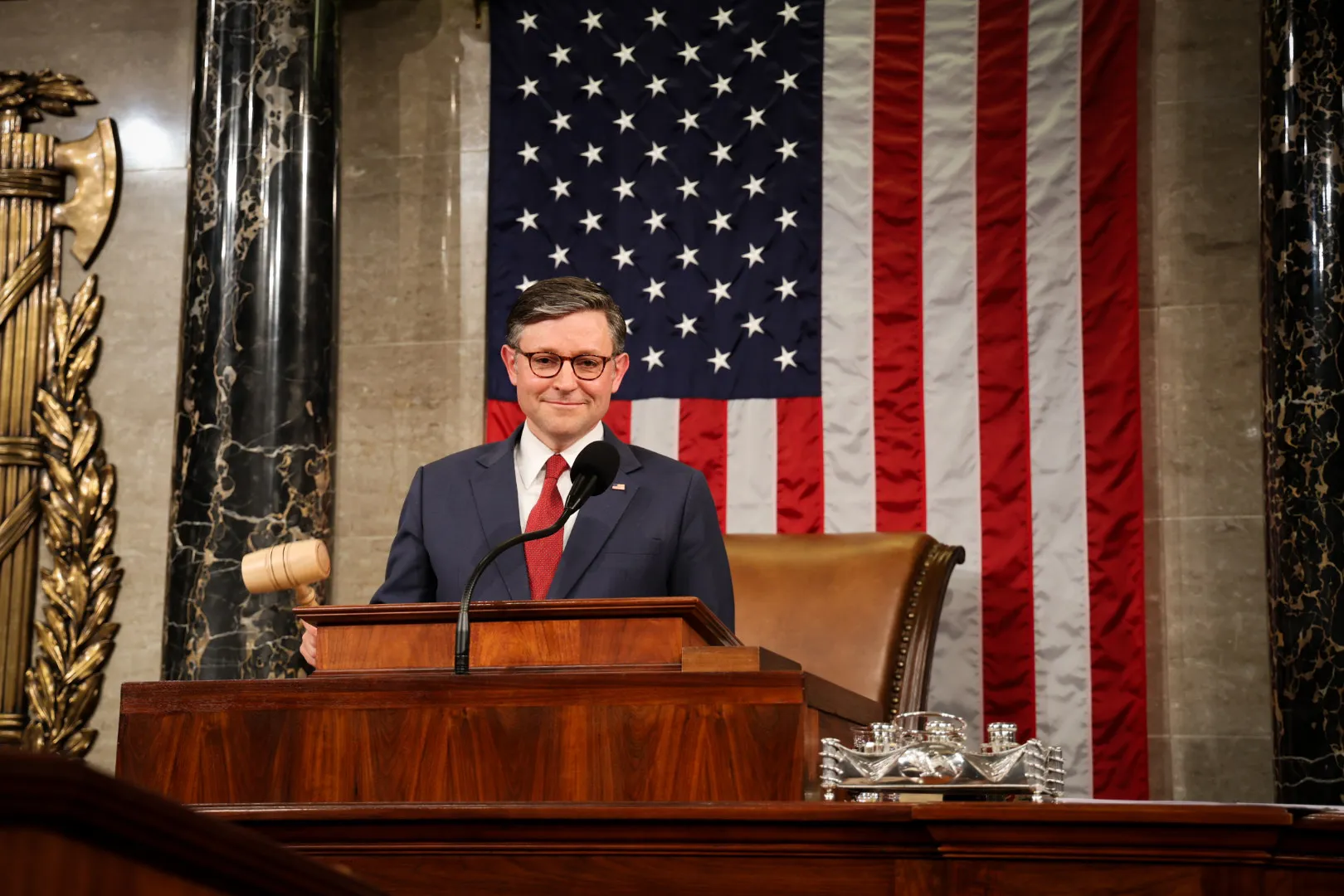
Mike Johnson
2023–Present
LA
RepublicanCurrent
Current Speaker
Mike Johnson
56th Speaker of the House
Elected Speaker after Kevin McCarthy was removed by a motion to vacate, the first Speaker removed in US history. Took the gavel after 3 other nominees failed to secure 218 votes.
Quick Facts
Where to Find It
Did You Know?
The Speaker rarely uses the gavel personally
Despite presiding over the House, the Speaker rarely actually sits in the presiding chair during routine floor proceedings. That duty is usually delegated to junior members of the majority party who take turns presiding. The Speaker appears for major votes and important moments.
One Speaker served for just one day
Theodore Pomeroy of New York was elected Speaker on March 3, 1869, the very last day of the 40th Congress. He presided for exactly one day before the Congress ended. He still counts as the 25th Speaker.
Only one Speaker became President
James K. Polk served as Speaker (1835-1839), then as governor of Tennessee, and became the 11th President in 1845. He remains the only Speaker ever to reach the presidency. Gerald Ford came close to the same path from the House, but he was Minority Leader, never Speaker, before becoming Vice President and then President.
The Speaker has their own security detail
The Speaker is protected full-time by the U.S. Capitol Police Dignitary Protection Division, not the Secret Service; other top congressional leaders also receive Capitol Police details. The Speaker's protection reflects both their position in the line of succession and their high public profile as a target.