About Puerto Rico
Puerto Rico is a Caribbean island of approximately 3,515 square miles, roughly the size of Connecticut, located about 1,000 miles southeast of Miami where the Atlantic Ocean meets the Caribbean Sea. With a population of approximately 3.2 million, it is the largest and most populous of the five inhabited U.S. territories and has more people than 21 of the 50 states. It is also the most economically significant, the most politically complex, and the one whose relationship with the United States has generated the most sustained debate about democracy, citizenship, and colonial history.
Puerto Ricans have been U.S. citizens since 1917, a status granted by Congress without being requested by Puerto Ricans and timed, critics note, to make them eligible for the World War I draft. Despite more than a century of citizenship, they cannot vote for President, have no voting representation in Congress, and in 2016 had an unelected federal oversight board, La Junta, imposed over their elected government to restructure $74 billion in public debt, the largest municipal debt crisis in American history.
The island is also la isla del encanto, the island of enchantment, a place of genuine and extraordinary beauty, cultural richness, and resilience. Old San Juan's 500-year-old fortresses and cobblestone streets, El Yunque's ancient rainforest, the bioluminescent bays of Vieques, the coffee mountains of the Cordillera Central, and the sounds of salsa, bomba, and plena that define Puerto Rican musical culture are as much Puerto Rico as any of its political challenges. The island's people have survived colonialism, hurricanes, debt crises, and federal neglect with a cultural confidence and humor that is distinctly, irreducibly Puerto Rican.
Puerto Rico's Five Regions
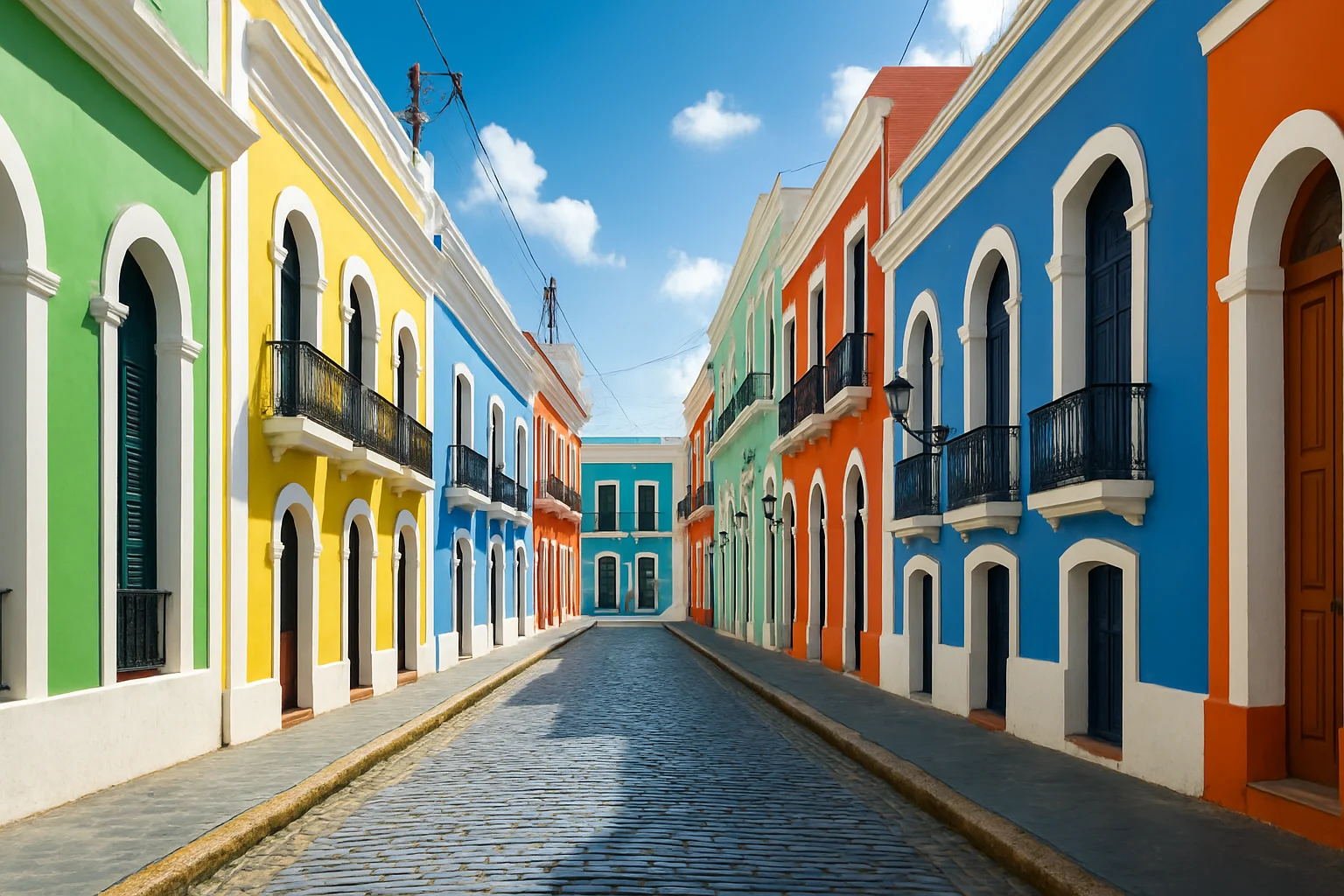
San Juan, Puerto Rico's capital and largest city, anchors a northeastern metro that holds roughly a third of the island's population. Old San Juan, the historic colonial district on an islet linked to the mainland by bridges, is one of the best-preserved Spanish colonial cities in the Americas, with 16th-century fortresses, streets paved in blue adoquines brought from Spain as ship ballast, and pastel buildings.
The Condado and Isla Verde strips concentrate the island's luxury hotels, and the metro also holds the pharmaceutical clusters in Guaynabo, Bayamón, and Carolina and Luis Muñoz Marín International Airport, the busiest in the Caribbean.
El Morro and San Cristóbal, the fortresses guarding the harbor, and the old walled city are a UNESCO World Heritage Site, the only one in the United States that is a colonial military complex. La Fortaleza, in use since the 1530s, is the oldest continuously occupied executive mansion in the Western Hemisphere.
The metro's population has been shrinking with the island's, and San Juan proper has lost roughly a fifth of its residents since 2000. La Perla, a hillside community outside the old city walls long stigmatized as a slum, became internationally famous as the backdrop of the 2017 music video 'Despacito,' at the time the most-viewed video in YouTube history.
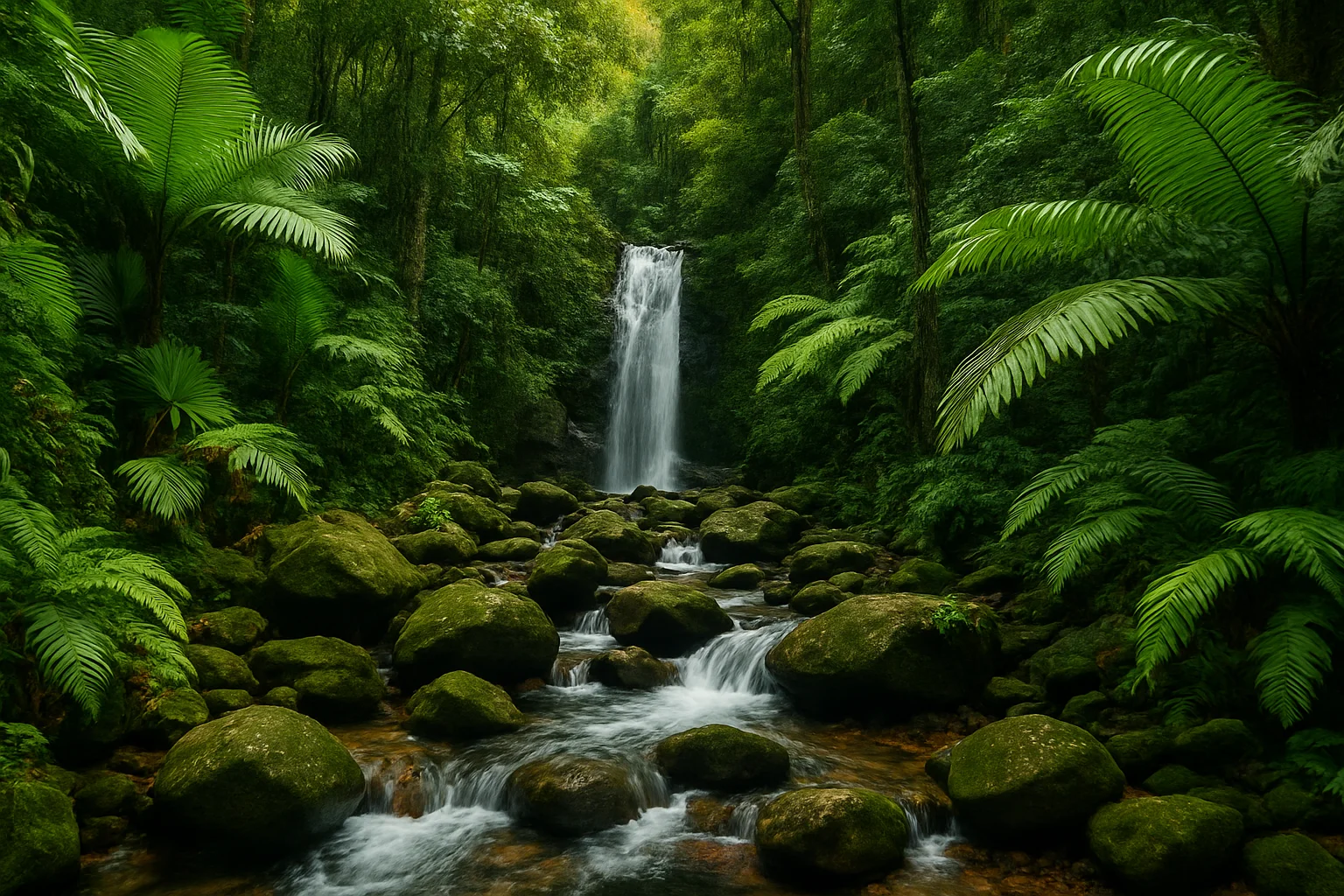
The northeastern corner holds El Yunque National Forest, the only tropical rainforest in the U.S. National Forest System and one of the most biodiverse places in the Caribbean. It receives more than 100 billion gallons of rain a year and shelters the endangered Puerto Rican parrot and the coquí frog whose nighttime call is the sound most associated with the island.
Hurricane Maria stripped most of El Yunque's canopy in a single night in 2017, though recovery has been striking. The eastern coast around Fajardo, Ceiba, and Naguabo has some of the island's best beaches and is the ferry gateway to Vieques and Culebra.
The Puerto Rican parrot fell to about 13 wild birds by 1975 and is one of the world's rarest; a captive-breeding program has rebuilt small wild flocks, but Maria killed roughly half of them and the effort had to restart. The Yokahú and Mount Britton towers and the La Mina and La Coca falls are the forest's most visited features.
Ceiba was the site of Roosevelt Roads, once one of the largest U.S. naval bases in the world and tied to the Navy's use of nearby Vieques; it closed in 2004, a year after the Vieques range shut down, and the roughly 8,600-acre site has been slowly and unevenly redeveloped.
Vieques and Culebra, off Puerto Rico's eastern coast, are among the most beautiful places in the Caribbean. Culebra's Flamenco Beach is consistently ranked among the world's best, and Vieques holds Mosquito Bay, one of the brightest bioluminescent bays on Earth, where dinoflagellates make the water glow blue-green when disturbed at night.
Vieques was the site of a decades-long conflict: from the 1940s the U.S. Navy used roughly two-thirds of the island for training and live bombing, displacing residents and contaminating land with unexploded ordnance and heavy metals. A sustained civil-disobedience campaign forced the Navy out in 2003.
The turning point was the 1999 death of civilian guard David Sanes, killed by an errant 500-pound bomb, which set off years of protest, encampments on the range, and the jailing of activists, politicians, and clergy. President Clinton ordered a phaseout and President George W. Bush ended the bombing in 2003; the former range became a national wildlife refuge and a large Superfund cleanup site that is still not finished.
Vieques residents have long argued that the contamination produced elevated cancer rates and that cleanup and health care have lagged, and the island has never regained a reliable hospital; patients are often flown to the main island. Ferry service to both islands has been chronically unreliable, and both have seen sharp increases in mainland-owned second homes and short-term rentals since Maria.
The Cordillera Central, the mountain spine running east to west through the island's interior, rises to Cerro de Punta at 4,390 feet and is the agricultural and cultural heart of traditional Puerto Rican life. The coffee municipalities of the western range, Yauco, Lares, and Las Marías, produced beans prized by the Vatican and European royalty in the 19th century.
This region was among the hardest hit by Hurricane Maria and the slowest to recover, with mountain towns going months without power or reliable water. Toro Negro state forest offers the island's only true wilderness hiking, and the interior towns reflect an older, land-based, Catholic Puerto Rican culture distinct from the coast.
The interior is the historic home of the jíbaro, the mountain smallholder who became the romantic national symbol on the crest of the Popular Democratic Party. Lares is a nationalist landmark: the failed 1868 'Grito de Lares' revolt against Spain is commemorated there every September 23, and the town remains a center of the independence movement.
Adjuntas is home to Casa Pueblo, a community group that fought off open-pit mining in the 1990s and, after Maria, put solar power on its building, the town pharmacy, and homes, becoming a national model for community-owned 'energy islands.' Utuado and Jayuya hold some of the best-preserved Taíno ceremonial sites, including the Caguana ball courts.
The western and southern coasts are the island's industrial and agricultural heartland, less touristed but essential to the economy. Ponce, the second-largest city, was once the commercial capital and keeps a distinct identity and architecture, including the red-and-black Parque de Bombas firehouse and the Museo de Arte de Ponce, home to one of the finest art collections in the Caribbean.
The southern coastal plain was the center of the sugar industry until the mid-20th century and now holds oil refineries, petrochemical plants, and some pharmaceutical facilities. The northwestern karst around Arecibo is a landscape of sinkholes, caves, and haystack mogotes unique in the United States, and was the site of the Arecibo Observatory radio telescope, which operated from 1963 until its 900-ton platform collapsed into the dish in 2020.
The southwest around Guánica and Guayanilla was the epicenter of the 2019 to 2020 earthquake swarm, whose largest shock, magnitude 6.4 on January 7, 2020, killed one person, wrecked schools and homes, and toppled the natural stone arch at Punta Ventana. Guánica also holds one of the best-preserved tropical dry forests in the world, a UNESCO biosphere reserve.
The west-coast city of Mayagüez hosts an engineering-focused campus of the University of Puerto Rico and was once known as 'Tuna Town' for the canneries that closed by the 2000s. Rincón, on the northwest tip, is the island's surfing capital and home to the BONUS reactor, an experimental 1960s nuclear plant that is now a museum.
How Puerto Rico Makes Its Living
Puerto Rico's $115 billion economy is one of the most productive in the Caribbean, dominated by pharmaceutical manufacturing and shaped by the long shadow of federal tax policy decisions and a debt crisis that placed it under external oversight.
Puerto Rico is one of the most important pharmaceutical manufacturing centers in the world, producing roughly a quarter of all U.S. pharmaceutical exports. More than a dozen of the world's top-selling prescription drugs are made on the island, including products from Pfizer, Johnson & Johnson, AbbVie, Bristol Myers Squibb, Amgen, and Eli Lilly, and the industry employs about 90,000 people directly and generates more than 60 billion dollars in exports a year.
The concentration grew from the 1970s onward under Section 936 of the U.S. tax code, which exempted U.S. corporations from federal tax on profits earned in Puerto Rico. When Congress phased Section 936 out between 1996 and 2006, the drugmakers stayed because of the specialized plants they had built, but the tax edge that created the cluster was gone.
Puerto Rico now competes for pharmaceutical investment on its skilled workforce, established infrastructure, and the certainty of operating inside the U.S. regulatory system, and it has courted a share of federal incentives for reshoring drug and medical-supply production after COVID-era shortages.
The 2017 hurricane exposed how much the mainland depends on the island: Baxter's Puerto Rico plants make most of the small-volume IV saline bags used in U.S. hospitals, and Maria triggered a national IV-fluid shortage the FDA managed for most of a year. A 2017 federal tax law that treated the territory's plants as 'foreign' for a new levy also rattled the industry before it was partly softened.
Tourism is Puerto Rico's most visible economic sector and the one most tied to its cultural identity. The island draws roughly 4 to 5 million visitors a year, mostly from the U.S. mainland, for a domestic destination that needs no passport, Old San Juan's 500-year-old colonial core, El Yunque rainforest, and beaches such as Flamenco on Culebra.
Cruise traffic concentrated in San Juan brings revenue but has been criticized for spilling little into local businesses, and the food scene has become one of the most dynamic in the Caribbean.
Since 2012 the tax laws now known as Acts 20 and 22, folded into Act 60, have offered mainland Americans who move to Puerto Rico near-zero tax on capital gains and dividends and a 4 percent rate on export services. The incentives drew thousands of wealthy transplants and crypto investors to San Juan and Dorado, and the resulting surge in home prices and short-term rentals has fueled a fierce local debate over displacement of Puerto Ricans.
Tourism rebounded strongly after Maria and again after COVID, hitting record visitor spending in the early 2020s, helped by federal recovery money, remote workers, and the global popularity of the reggaeton artist Bad Bunny, whose 2022 album and hometown concerts leaned explicitly into Puerto Rican identity and politics. Vieques and Culebra remain constrained by damaged ferry service the territory has struggled for years to fix.
Beyond pharmaceuticals, Puerto Rico has significant manufacturing in medical devices, electronics, aerospace parts, and food processing. Medical devices, clustered around San Juan and the west coast, are the second-largest manufacturing sector and produce surgical, orthopedic, and diagnostic equipment for global markets.
The textile and apparel industry that boomed under Operation Bootstrap has largely moved offshore, though some specialized production survives. Rum is a mainstay: Bacardi's Cataño distillery is one of the largest in the world, and Don Q is made in Ponce.
Puerto Rican rum benefits from the federal 'rum cover-over': most of the U.S. excise tax collected on rum made in Puerto Rico and the U.S. Virgin Islands is rebated to the two territorial governments, worth several hundred million dollars a year to Puerto Rico, and the two territories have clashed over how aggressively each can use the money to subsidize distillers.
The island's industrial base is highly exposed to its unreliable, expensive electricity: the bankrupt Puerto Rico Electric Power Authority was handed to a private operator, LUMA Energy, for transmission and distribution in 2021, and to Genera PR for generation in 2023, amid continuing blackouts. A 2019 law sets a target of 100 percent renewable electricity by 2050, and rooftop solar has grown faster than the grid itself.
The Puerto Rican government is one of the island's largest employers, but its finances are dominated by the 2016 fiscal crisis and the restructuring under the Puerto Rico Oversight, Management, and Economic Stability Act (PROMESA). PROMESA created a federal Financial Oversight and Management Board, known locally as 'La Junta,' an unelected seven-member body with authority to approve budgets, restructure debt, and override the elected government.
The board's restructuring of roughly 74 billion dollars in debt, the largest municipal debt restructuring in U.S. history, settled the central government's, COFINA's, and other agencies' debts between 2019 and 2022, while the Electric Power Authority's roughly 9 billion dollars in bonds remained in court proceedings into the mid-2020s. Federal transfers, Medicaid, nutrition assistance, and Social Security, are a major part of household income for a large share of the population.
Puerto Rico's federal programs run on a different basis from the states: it gets a capped Medicaid block grant rather than open-ended matching, its residents were excluded from the full Supplemental Security Income program, a policy the Supreme Court upheld 8 to 1 in United States v. Vaello Madero in 2022, and it uses its own Nutrition Assistance block grant instead of SNAP.
PROMESA left Puerto Rico with lower debt but still-large pension obligations, and the oversight board was expected to remain until the government posts four straight balanced budgets and regains capital-market access, milestones it had not fully met by the mid-2020s. Territorial politics have been volatile: Governor Ricardo Rosselló resigned in 2019 after mass 'Verano del 19' street protests over leaked chat messages and corruption arrests.
Puerto Rico's agricultural sector is small relative to the island's output but culturally significant and the focus of a growing food-sovereignty movement. The island grows coffee, once among the world's most prized and now in a craft revival, along with plantains, bananas, tropical fruit, vegetables, and some cattle and dairy.
Agriculture employs a small fraction of the workforce and supplies only a fraction of what the island eats; Puerto Rico imports roughly 85 percent of its food, a vulnerability Hurricane Maria exposed when supply chains collapsed for weeks.
The decline was policy-driven: sugar, coffee, and tobacco dominated the economy into the 1940s, but Operation Bootstrap deliberately shifted labor and capital to factories, and cheap mainland imports and the loss of the guaranteed U.S. sugar quota finished off the plantations by the 1990s. Agriculture is now about 1 percent of the economy.
Since Maria, agroecology collectives, seed-saving networks, and small diversified farms have expanded, and the territory has steered recovery money and land-bank programs toward local production, arguing that food resilience is a hurricane-preparedness issue. Coffee remains fragile: Maria destroyed an estimated 80 percent of the crop, and the sector still depends heavily on migrant labor from the Dominican Republic.
What Is Puerto Rico's Political Status?
Puerto Rico is officially an unincorporated organized territory of the United States. Its official Spanish name, Estado Libre Asociado (Free Associated State), is translated in English as Commonwealth, a term that implies a degree of autonomy that critics argue the island does not actually possess. The Commonwealth status, established by Puerto Rico's 1952 constitution, gave the island self-government over local matters while leaving ultimate authority with Congress under the Territorial Clause of the U.S. Constitution.
The word "unincorporated" means that not all provisions of the U.S. Constitution automatically apply in Puerto Rico, a consequence of the Insular Cases, the Supreme Court decisions of 1901-1922 that created the legal framework for governing territories whose populations were not expected to become states. The Insular Cases have been widely criticized by legal scholars and jurists as reflecting the racial attitudes of the era, and Justice Gorsuch wrote in 2022 that they "deserve the same fate as Plessy v. Ferguson."
The practical consequences for Puerto Rico's 3.2 million U.S. citizens are substantial: no presidential vote, no voting congressional representation, federal benefits at capped rates below what states receive, and since 2016 the imposition of an unelected federal oversight board with authority to override the elected Puerto Rican government's fiscal decisions.
Rights: Puerto Rico Residents vs. State Residents
| Right or Benefit | Puerto Rico Residents | State Residents |
|---|---|---|
| U.S. Citizenship | ✅ Yes (since 1917) | ✅ Yes |
| Vote for President | ❌ No | ✅ Yes |
| Voting Rep. in Congress | ❌ Non-voting Resident Commissioner only | ✅ Yes |
| U.S. Senate representation | ❌ None | ✅ 2 senators |
| Serve in U.S. military | ✅ Yes | ✅ Yes |
| Medicaid / SNAP benefits | ⚠️ Capped (not full match) | ✅ Full federal match |
| Social Security / Medicare | ✅ Yes | ✅ Yes |
| Federal income tax | ❌ Pay Puerto Rico income tax instead | ✅ Pay federal income tax |
| Move freely to mainland | ✅ Yes | ✅ Yes |
| Electoral votes | ❌ None | ✅ Based on population |
How Puerto Rico's Government Works
Puerto Rico's government is established by its own constitution, ratified in 1952 and modeled closely on the U.S. federal system with three branches: executive, legislative, and judicial. The Governor is directly elected by Puerto Rico voters to a four-year term. Puerto Rico has a two-party system organized not around the Democratic and Republican parties but around the status question: the New Progressive Party (NPP) supports statehood and is affiliated with the Republican Party nationally; the Popular Democratic Party (PDP) supports the current Commonwealth arrangement and is affiliated with the Democratic Party.
Puerto Rico's Legislative Assembly is the territory's bicameral legislature, with a Senate and a House of Representatives. The legislature has broad authority over local laws, taxation, and public services, but its power is constrained both by Congress's plenary authority over territories and since 2016 by the Financial Oversight and Management Board (La Junta), which can reject or modify the legislature's budget decisions.
Puerto Rico has its own Supreme Court and complete court system for local matters, with federal cases handled by the U.S. District Court for the District of Puerto Rico and appeals going to the U.S. Court of Appeals for the 1st Circuit in Boston, and ultimately to the U.S. Supreme Court.
Governor of Puerto Rico
Current Governor
Jenniffer Gonzalez-Colon
- Party
- New Progressive Party (NPP, pro-statehood)
- In Office Since
- January 2, 2025
- Term Ends
- January 2029
- Born
- August 5, 1976, San Juan, Puerto Rico
- Education
- University of Puerto Rico, Río Piedras (BA); Inter American University of Puerto Rico (JD, LLM)
- Prior Role
- U.S. Resident Commissioner for Puerto Rico (2017-2025)
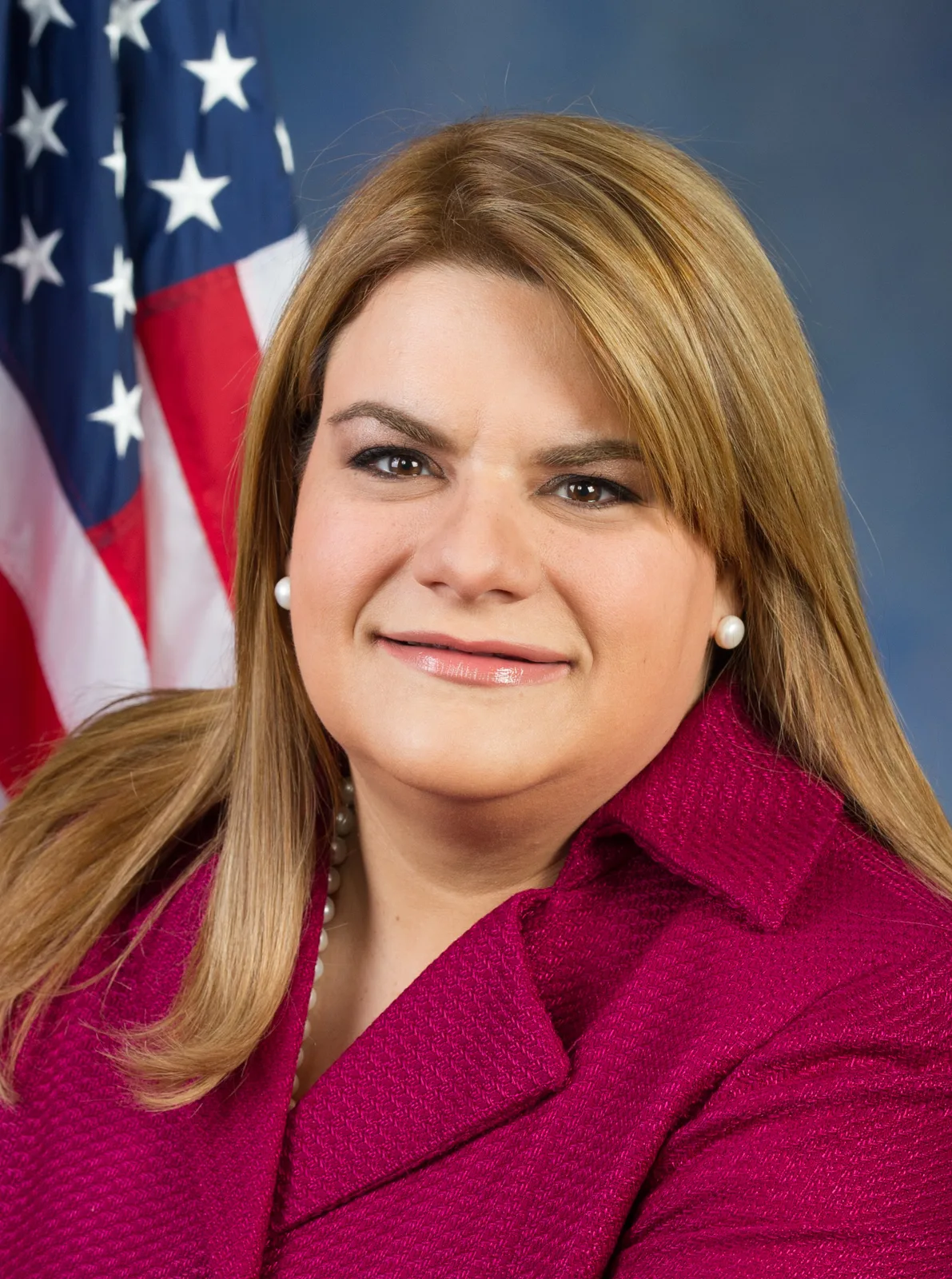
Jenniffer Gonzalez-Colon became Governor of Puerto Rico in January 2025, elected in November 2024 after serving eight years as Puerto Rico's non-voting Resident Commissioner in Washington. A strong advocate for Puerto Rico statehood, she previously served as Speaker of the Puerto Rico House of Representatives. She succeeded Pedro Pierluisi (governor 2021 to 2025), whose term followed Ricardo Rossello's 2019 resignation amid a chat scandal and mass protests. She is the second woman elected governor of Puerto Rico, after Sila Calderón, and the third to hold the office, after Calderón and Wanda Vázquez.
Other Current Territorial Officials
Secretary of State (Lt. Governor equivalent)
Rosachely Rivera
In office since July 2025; a former mayor of Gurabo (2016 to 2025). Puerto Rico does not have a Lieutenant Governor. The Secretary of State is first in the line of succession to the governorship and functions as the equivalent. Appointed by the Governor and confirmed by the Legislature, the Secretary of State also oversees official records and relations with other governments; elections are run by the separate State Elections Commission.
Attorney General
Lourdes Gómez Torres
In office since May 2025. Puerto Rico's Attorney General is appointed by the Governor and confirmed by the Senate. The AG leads the Department of Justice of Puerto Rico, which is separate from the U.S. Department of Justice, and handles criminal prosecution, consumer protection, and civil rights enforcement under Puerto Rican law.
President of the Senate
Thomas Rivera Schatz
A longtime NPP legislator and one of Puerto Rico's most powerful political figures, Rivera Schatz has served as Senate President multiple times. The Senate President is elected by the 27-member Senate and controls the chamber's agenda and committee assignments.
The Puerto Rico Legislative Assembly
Puerto Rico Senate
- Seats: 27 senators
- Terms: 4-year terms
The upper chamber. 16 senators are elected from 8 senatorial districts (2 per district) and 11 senators are elected at-large territory-wide. Senators serve 4-year terms aligned with the gubernatorial election cycle.
Puerto Rico House of Representatives
- Seats: 51 members
- Terms: 4-year terms
The lower chamber. 40 representatives are elected from 40 representative districts and 11 are elected at-large. Like the Senate, the House serves 4-year terms. Puerto Rico has no term limits on legislators.
Puerto Rico's Non-Voting Resident Commissioner
U.S. House Resident Commissioner (Non-Voting)
Pablo Jose Hernandez Rivera
Puerto Rico's representative in Congress is officially titled the Resident Commissioner rather than a Delegate, a distinction with one important difference: the Resident Commissioner serves a four-year term (aligned with Puerto Rico's gubernatorial election) rather than the two-year terms of other territorial delegates. Elected in November 2024, Hernandez Rivera represents the PDP (pro-Commonwealth) position and can vote in committees but not on the House floor.
What the Resident Commissioner cannot do: Vote on final passage of legislation affecting 3.2 million American citizens. Puerto Rico has no representation in the Senate.
The Puerto Rico Court System
Puerto Rico has its own complete court system for local matters, headed by the Supreme Court of Puerto Rico (nine justices since 2011, appointed by the Governor and confirmed by the Senate) as the territory's highest local court, with the Court of Appeals and Court of First Instance below it. For federal matters, the U.S. District Court for the District of Puerto Rico is the federal trial court, with appeals to the U.S. Court of Appeals for the 1st Circuit in Boston. Decisions of the Supreme Court of Puerto Rico go directly to the U.S. Supreme Court.
📋 Current Officials
For the most current list of Puerto Rico government officials, visit estado.pr.gov.
Puerto Rico Through the Years
From the Taino civilization of Borinquen to 400 years of Spanish rule, from the Jones Act citizenship to Operation Bootstrap to Hurricane Maria, Puerto Rico has navigated more than a century of American territorial status while keeping a strong and distinct cultural identity.
Before European contact, the island now called Puerto Rico was known as Borikén and was home to the Taíno, an Arawakan-speaking people who had settled the Caribbean in waves from South America beginning around 500 CE.
The Taíno of Borikén practiced sophisticated agriculture based on cassava and sweet potato in raised mounds called conucos, organized under chiefs called caciques, and played a ritual ball game, batey, on stone-lined courts. Many everyday English words, hurricane, hammock, barbecue, canoe, come from Taíno, as do 'coquí' and 'Borinquen.' The population is estimated at 30,000 to 60,000 at contact.
Spanish colonization was catastrophic: forced labor under the encomienda system, smallpox and other diseases, and a failed 1511 uprising led by the cacique Agüeybaná II reduced the Taíno to a few thousand within a generation, and by the 1540s Spain declared the population effectively gone as a distinct group.
Taíno people did not entirely disappear; they intermarried into the growing mixed Spanish-African-Indigenous population, and DNA studies show a large share of Puerto Ricans carry Indigenous maternal lineages. A Taíno revival movement since the 1990s has reclaimed the identity, and the Caguana ceremonial site in Utuado, with its petroglyph-lined ball courts, is the island's most important pre-Columbian monument.
Columbus reached Puerto Rico on his second voyage on November 19, 1493, and Juan Ponce de León founded the first permanent settlement at Caparra, near San Juan, in 1508. Spain grasped the island's strategic value at once: San Juan became the most heavily fortified city in the Americas, and El Morro and San Cristóbal repelled attacks by Francis Drake in 1595, the Earl of Cumberland in 1598, and the Dutch in 1625.
The Taíno were devastated within decades, and enslaved Africans were imported to work sugar and, later, coffee plantations. By 1898 Puerto Rico had a distinct culture blending Spanish, African, and Taíno elements, a small independence movement, and an autonomous 'Carta Autonómica' government that Spain had granted just months before the Spanish-American War.
For most of the colonial period Puerto Rico was a poor military outpost, subsidized by silver shipments from Mexico called the situado. It filled up slowly, mostly through the 1815 Real Cédula de Gracias, which invited Catholic settlers, and their enslaved laborers, from other parts of the Americas and Europe to build the plantation economy.
Slavery was abolished in Puerto Rico on March 22, 1873, still marked as Abolition Day, later than in much of the Americas and with a compensation scheme that indebted the freed. The 1868 Grito de Lares revolt failed within a day but became the founding myth of Puerto Rican nationalism, and Spain's brief 1897 grant of autonomy came only after decades of pressure from figures like Ramón Emeterio Betances and Luis Muñoz Rivera.
The Spanish-American War of 1898 transferred Puerto Rico to the United States under the Treaty of Paris; U.S. troops landed at Guánica in July 1898 with little resistance. The Foraker Act of 1900 set up a civilian government but gave Puerto Ricans almost no political voice, and the Supreme Court's Insular Cases soon held that the island 'belonged to' but was not 'part of' the United States.
The Jones-Shafroth Act of 1917 granted U.S. citizenship, passed just weeks before the U.S. entered World War I and made Puerto Ricans eligible for the draft. Operation Bootstrap in the 1940s and 1950s, led by Governor Luis Muñoz Marín, turned an agricultural economy into an industrial one. Voters ratified Puerto Rico's own constitution on March 3, 1952, and on July 25, 1952, it was proclaimed an Estado Libre Asociado, translated 'Commonwealth,' the ambiguous status that has defined the relationship ever since.
The dollar replaced the peso at 60 cents on the dollar in 1899, wiping out much of the island's wealth, and a 1928 hurricane and the Great Depression devastated the plantation economy. English-only schooling was imposed for decades and abandoned only in 1949 as a failure.
The 1950 Puerto Rico Federal Relations Act let the island write a constitution, ratified by the 1952 vote after Congress struck out a proposed economic bill of rights. The United Nations removed Puerto Rico from its list of non-self-governing territories in 1953 on the U.S. representation that the island now had self-government, a decision independence and statehood advocates have disputed ever since.
The decades after Operation Bootstrap saw mass emigration as Puerto Ricans left for New York and other mainland cities, creating a diaspora that would eventually outnumber the island's population. By 1970 more than 800,000 Puerto Ricans lived in New York City alone, concentrated in East Harlem, the South Bronx, and Brooklyn, and they built a distinct Nuyorican culture that fed back to the island through music, art, and politics.
The independence movement, though a minority, produced serious political violence: the 1950 Jayuya Uprising and an attempt to assassinate President Truman at Blair House, and the 1954 shooting attack on the U.S. House of Representatives that wounded five congressmen. Repeated non-binding plebiscites on status followed, none resolving anything.
The federal government surveilled the movement heavily: from the 1930s the FBI kept secret 'carpeta' files on tens of thousands of Puerto Ricans suspected of nationalist sympathies, a program exposed and litigated in the 1980s. The 1937 Ponce Massacre, in which police killed 19 people at a Nationalist Party march, remains a defining grievance.
The clandestine group FALN carried out more than 100 bombings on the mainland in the 1970s and 1980s, most notoriously the 1975 Fraunces Tavern bombing in New York that killed four. Presidents Carter and Clinton later granted clemency to jailed nationalists and FALN members, and President Obama commuted the sentence of Oscar López Rivera in 2017, decisions that were bitterly contested.
The phaseout of Section 936 between 1996 and 2006 removed the tax incentive that had drawn U.S. corporations to Puerto Rico, and the island fell into a recession in 2006 that it never left. By 2015 the Commonwealth had roughly 74 billion dollars in public debt and 50 billion in unfunded pensions it could not pay, the largest municipal debt crisis in U.S. history.
In 2016 Congress passed PROMESA, creating a seven-member Financial Oversight and Management Board, appointed by the president and congressional leaders and not required to be Puerto Rican residents, with power to restructure the debt and override the elected government's budget. The board became the central symbol of Puerto Rican political grievance, seen by critics as modern colonial control.
Much of the debt had been sold in tax-exempt bonds to mainland mutual funds and, as the crisis deepened, to hedge funds that bought distressed paper at a discount and fought for full repayment. Courts also found that a large tranche of general-obligation bonds issued in 2012 and 2014 exceeded the constitutional debt limit and was therefore void.
The board negotiated away tens of billions of dollars in debt and related claims across multiple bankruptcy-style proceedings under PROMESA's Title III, cutting central-government debt and, more painfully for residents, pensions. Austerity measures, hundreds of school closures, university budget cuts, and pension reductions, fueled the mass 2019 protests that forced Governor Rosselló from office.
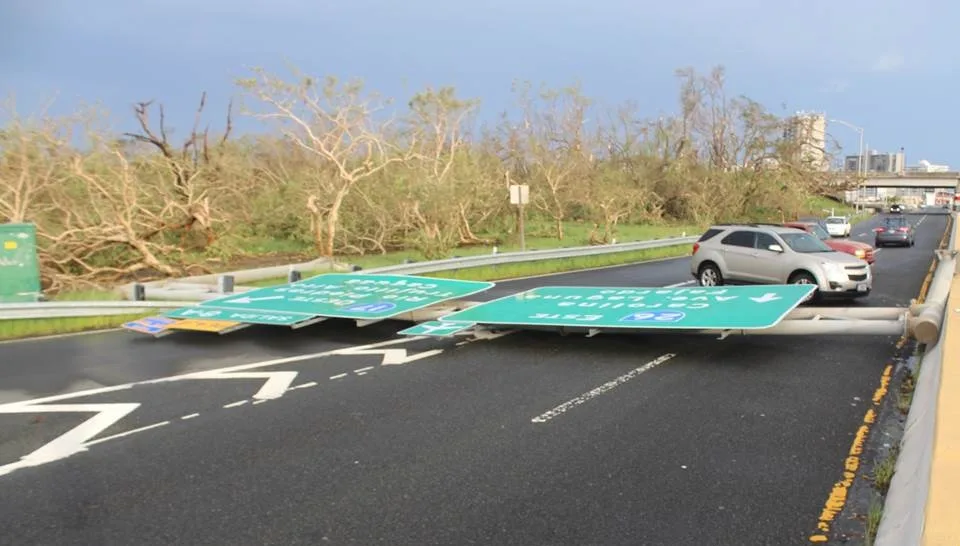
Hurricane Maria made landfall on September 20, 2017, as a Category 4 storm, the strongest to hit Puerto Rico in nearly 90 years. It destroyed the electrical grid, collapsed much of the water and communications systems, and caused about 90 billion dollars in damage. An independent George Washington University study commissioned by the territory estimated 2,975 excess deaths, a figure the federal government disputed for months after officials first reported 64.
The federal response was widely criticized as inadequate and slow compared with the near-simultaneous responses to Hurricanes Harvey and Irma on the mainland. Before recovery was complete, an earthquake swarm struck the southwest in December 2019 and January 2020, and COVID-19 arrived in 2020.
The grid took the longest of any U.S. blackout in history to restore, with some communities dark for close to a year, and the failure led to the 2021 privatization of transmission to LUMA Energy, which has faced continuing blackouts and public anger. Thousands of tarped-over homes were still in place years later, many because owners lacked clear title to their land and could not qualify for FEMA rebuilding aid.
Maria accelerated a population decline already underway: Puerto Rico has lost more than 10 percent of its residents since 2010, with tens of thousands moving to Florida in the storm's immediate wake. Congress appropriated tens of billions in recovery money, but a large share was slow to disburse, and the island entered the 2020s with an unfinished debt restructuring, ongoing federal oversight, and a status question no closer to resolution.
Puerto Rico's Defining Moments in American History
These are the events that didn't just shape Puerto Rico. They forced America to confront the meaning of citizenship, democracy, and its obligations to the people it governs.
When Hurricane Maria made landfall on September 20, 2017, it knocked out electricity to all 3.4 million residents of Puerto Rico, destroyed the water system, and severed communications across the island. What followed was widely documented as one of the most inadequate federal responses to a major U.S. disaster since Hurricane Katrina.
President Trump visited and tossed paper towels into a crowd of survivors, and later feuded publicly with San Juan's mayor and questioned the death count. FEMA's response was hampered by the island's remoteness and the scale of destruction; the initial toll of 64 was ultimately estimated at 2,975 by an independent academic study.
The contrast with the responses to Harvey in Texas and Irma in Florida weeks earlier, faster, larger, and better funded, sharpened the argument that territorial status meant second-class treatment. A federal watchdog later found FEMA had been understaffed and short of supplies, and that Puerto Rico's own emergency agency was overwhelmed and, in one case, corrupt.
The grid restoration became the longest blackout in U.S. history, and the storm hardened Puerto Rican support for either statehood or independence over the status quo. It also seeded community solar and mutual-aid networks, helped drive the 2019 street uprising, and swelled a diaspora, especially in Florida, that is now a courted voting bloc in presidential elections the islanders themselves cannot join.
When Congress passed the Puerto Rico Oversight, Management, and Economic Stability Act in 2016, it created the Financial Oversight and Management Board, an unelected seven-member body with authority to override Puerto Rico's elected government on all budget and fiscal matters. Puerto Ricans call it 'La Junta,' a word that in Spanish connotes a military junta, and many view it as a contemporary form of colonial imposition.
The board oversaw a roughly 74-billion-dollar debt restructuring, imposed austerity including pension cuts and school closures, and approved policies the elected government and public opposed. Defenders argue it was necessary to resolve a fiscal crisis Puerto Rico's own government had created through decades of irresponsible borrowing; critics argue federal policy helped cause the crisis, that no state would face this kind of external unelected oversight, and that it removed democratic accountability from the people most affected.
PROMESA passed with bipartisan support and President Obama's signature after markets froze Puerto Rico out and a default loomed; it rests explicitly on Congress's constitutional power to make 'all needful rules' for U.S. territories, the same clause behind the Insular Cases. The Supreme Court in 2020 upheld the board's structure against a claim that its members were 'officers of the United States' needing Senate confirmation.
The restructuring cut tens of billions of dollars from Puerto Rico's debt and related claims, and the board is meant to dissolve only after four consecutive balanced budgets and a return to the bond market, milestones not met by the mid-2020s. Its cost, hundreds of millions of dollars in fees paid to lawyers and advisers and billed to Puerto Rico, has been a recurring source of outrage.
Puerto Rico has held seven status plebiscites since 1967, asking residents whether they prefer statehood, independence, or the current territorial status. Results have been consistent but inconclusive: recent votes have shown majorities for statehood, 52 percent in 2020 and about 59 percent in 2024, yet Congress has taken no action. A Puerto Rico Status Act requiring Congress to act on a binding vote passed the House in 2022 but died in the Senate.
The question divides Puerto Rican politics along party lines: the New Progressive Party backs statehood, the Popular Democratic Party backs the Commonwealth arrangement, and the small Puerto Rican Independence Party favors independence. The unresolved status means 3.2 million American citizens have lived in a constitutional limbo for more than 125 years.
Turnout and ballot wording have made the results easy to contest. The pro-Commonwealth party boycotted the 2012 and 2017 votes, so the statehood majorities came on depressed turnout, and Washington has treated each result as advisory. A 2024 vote, held alongside the general election with only three options (statehood, independence, and free association) and no Commonwealth choice, gave statehood a majority, about 59 percent.
Congress's inaction reflects real politics: admitting Puerto Rico would likely add two senators and several House members and electoral votes, and both parties weigh the partisan effect, though recent Puerto Rican elections have not lined up neatly with mainland party lines. In 2022 a House committee for the first time merged the statehood and independence camps behind a single bill offering a binding choice among statehood, independence, and free association, dropping the current status as an option.
Operation Bootstrap (Operación Manos a la Obra) was the Puerto Rican government's mid-20th-century industrialization program, developed under Governor Luis Muñoz Marín with federal support, that transformed the island from a poor agricultural economy into an industrial one within a generation. By offering U.S. corporations tax exemptions and providing cheap labor, modern infrastructure, and legal certainty within the U.S. system, it drew pharmaceutical, electronics, and textile firms, and per-capita income rose sharply.
The island became a Cold War showcase for what American-supported development could achieve, promoted across Latin America. But Bootstrap also drove the mass emigration to New York that created the diaspora, accelerated the decline of Puerto Rican agriculture, increased food-import dependency, and built an economy structurally dependent on federal tax policy, a dependency that imploded when Section 936 was repealed.
The tax vehicle evolved from local exemptions in the 1940s to Section 931 and then, from 1976, Section 936, which let mainland parent companies repatriate profits from Puerto Rican subsidiaries with no federal tax. Critics in Congress came to see 936 as a corporate giveaway costing billions a year in forgone revenue for a modest number of island jobs, and it was phased out from 1996.
Bootstrap's social engineering had a dark side: from the 1930s into the 1970s, U.S.- and territory-backed family-planning programs sterilized roughly a third of Puerto Rican women of childbearing age, the highest rate in the world, and the island was used as the main testing ground for the first birth-control pill in the 1950s, often without informed consent.
Roberto Clemente, born in Carolina, Puerto Rico in 1934, is the most celebrated figure in Puerto Rican history and one of the greatest baseball players who ever lived. In 18 seasons with the Pittsburgh Pirates he won four National League batting titles, made 15 All-Star teams, won 12 Gold Gloves, was the 1966 NL MVP, and reached exactly 3,000 career hits.
He was also one of the fiercest advocates for Latin American and Black players in a sport that had only recently integrated, and he bristled at being condescended to by the U.S. press. On New Year's Eve 1972 he died in a plane crash off San Juan while personally accompanying an aid mission to Nicaragua after an earthquake, having grown convinced that corrupt officials were diverting relief. He was 38.
The Baseball Hall of Fame waived its five-year waiting period and inducted him in 1973, the first Latino player enshrined. Major League Baseball's annual humanitarian award is named for him, and his number 21 is honored across much of the sport, though not retired leaguewide as Jackie Robinson's 42 is.
In Puerto Rico the loss is still a living grief: December 31 is marked quietly, his body was never recovered, and the Ciudad Deportiva youth sports complex he had planned for the island was built in his name in San Juan. His widow, Vera Clemente, ran his foundation for decades, and the family and island have periodically pressed MLB to retire number 21 leaguewide.
Territory Symbols and Quick Facts
| Official Status | Unincorporated Organized U.S. Territory (Commonwealth) |
| Official Name | Commonwealth of Puerto Rico / Estado Libre Asociado de Puerto Rico |
| Capital | San Juan |
| Largest City | San Juan |
| U.S. Territory Since | December 10, 1898 (Treaty of Paris) |
| Citizenship Granted | March 2, 1917 (Jones-Shafroth Act) |
| Commonwealth Status | July 25, 1952 (Commonwealth proclaimed; constitution ratified by voters March 3, 1952) |
| Population | ~3.2 million (2025 est., down from 3.8M in 2000) |
| Area | 3,515 sq miles (slightly smaller than Connecticut) |
| Location | Caribbean Sea, 18°N 66°W |
| Distance from Mainland | ~1,000 miles southeast of Miami |
| Time Zone | Atlantic Standard Time (UTC-4, no DST) |
| Official Languages | Spanish and English (Spanish is primary) |
| Territorial Bird | Puerto Rican Spindalis (Reinita Mora) |
| Territorial Flower | Flor de Maga (Puerto Rican Hibiscus) |
| Territorial Tree | Ceiba (Kapok) |
| Territorial Song | "La Borinqueña" |
| Currency | U.S. Dollar |
| Resident Commissioner | Non-voting Resident Commissioner to U.S. House (4-year term) |
| Presidential Vote | None. Territory residents cannot vote for President. |
Did You Know?
Puerto Rico has a larger population than about 18 U.S. states, yet its 3.2 million residents have no voting representation in Congress and cannot vote for President. If Puerto Rico were a state, it would have about 4 House seats and 6 electoral votes.
El Yunque is the only tropical rainforest in the United States National Forest System. It receives more than 100 billion gallons of rainfall annually and is home to hundreds of plant species found nowhere else on Earth, including the Puerto Rican parrot, one of the rarest birds in the world.
Puerto Rico produces approximately 25 percent of all U.S. pharmaceutical exports, making it one of the most important drug manufacturing centers in the world despite having a population smaller than Connecticut. Major drugs for conditions including HIV, cancer, and heart disease are manufactured on the island.
The coqui frog, whose nighttime call gives the islands their most distinctive sound, is found naturally only in Puerto Rico. The frog has become the most beloved symbol of Puerto Rican national identity. There are 17 species of coqui, several of which are critically endangered. Puerto Ricans living on the mainland often say 'el coqui no canta fuera de Borinquen' (the coqui does not sing outside of Puerto Rico), a saying about homesickness.
Puerto Rico's Mosquito Bay on Vieques Island is one of the brightest bioluminescent bays in the world. The water glows blue-green at night when disturbed by movement due to microscopic organisms called dinoflagellates. On the darkest nights, a kayaker's paddle leaves a trail of light in the water.
Old San Juan's cobblestone streets are paved with adoquines, blue-gray stones that were originally used as ballast in Spanish ships and unloaded in Puerto Rico to make room for cargo. The stones have been in place for hundreds of years and give Old San Juan's streets their distinctive blue tint in certain light.
Puerto Rico has held seven plebiscites on its political status since 1967. The most recent, in November 2024, showed about 59 percent support for statehood, up from 52 percent in 2020. Despite these results, Congress has taken no action to admit Puerto Rico as a state. The status question has divided Puerto Rican politics along party lines for generations.
The Puerto Rican diaspora on the U.S. mainland is larger than the island's own population. Approximately 5.8 million people of Puerto Rican origin live in the 50 states and Washington D.C., compared to 3.2 million on the island. Puerto Ricans on the mainland can vote in presidential elections; those on the island cannot.
Roberto Clemente, widely considered one of the greatest baseball players in history, was born in Carolina, Puerto Rico. He died on December 31, 1972, in a plane crash while delivering humanitarian aid to earthquake victims in Nicaragua. The Baseball Hall of Fame waived its usual five-year waiting period and inducted him immediately after his death.
Hurricane Maria's official death toll was initially reported by the Puerto Rico government as 64. An independent study commissioned by the Puerto Rican government and published by George Washington University estimated the true death toll at 2,975, a figure that includes people who died from causes directly attributable to the storm and its aftermath including lack of medical care, power outages, and infrastructure collapse.
Quick Facts and Common Questions
Short answers to the questions people most often ask about Puerto Rico: where it is, how it became part of the United States, its political status, and what it means for the people who live there.
Puerto Rico is in the Caribbean Sea, about 1,000 miles southeast of Miami. Besides the main island it includes the smaller islands of Vieques, Culebra, and Mona. About 3.29 million people lived there in the 2020 census, more than in 21 of the 50 states, and its capital is San Juan.
Spain ruled Puerto Rico for about 400 years. U.S. troops landed at Guánica on July 25, 1898, during the Spanish-American War, and Spain ceded the island to the United States in the Treaty of Paris that December.
Neither. Puerto Rico is an unincorporated territory of the United States with the status of a commonwealth, or "Estado Libre Asociado," under a constitution its voters approved and Congress accepted in 1952. Unincorporated means only selected parts of the U.S. Constitution apply there, a doctrine that comes from the early 1900s Insular Cases, among the Supreme Court's landmark cases.
Yes. The Jones-Shafroth Act, signed on March 2, 1917, made Puerto Ricans U.S. citizens, and people born in Puerto Rico are U.S. citizens by federal law. They can live and work anywhere in the United States without a passport or visa.
Puerto Rico has elected its own governor since 1948, when Luis Muñoz Marín became the first elected governor. It has a two-chamber Legislative Assembly, a Senate and a House of Representatives, and its own Supreme Court, while federal cases go to the U.S. District Court for Puerto Rico. Since 2016, under the federal PROMESA law, a Financial Oversight and Management Board has also overseen the commonwealth's budget and debt restructuring.
Puerto Rico elects a Resident Commissioner to the U.S. House of Representatives for a four-year term; the position can vote in committee but not on the final passage of bills. Puerto Rico has no votes in the Electoral College, so residents cannot vote in the general election for president, but they do take part in the parties' presidential primaries. A Puerto Rican who moves to a state can vote there.
Residents generally do not pay federal income tax on income earned in Puerto Rico, though they pay federal income tax on income from other sources. They do pay Social Security and Medicare taxes and many other federal taxes, and the commonwealth has its own income tax.
Puerto Rico has held several nonbinding votes on its political status since 1967, offering choices such as statehood, independence, and the current commonwealth status, most recently in 2024. Any change in status would require action by Congress.
Spanish and English are both official languages of Puerto Rico. Spanish is the main language of daily life, government, and schools, and English is widely taught.
Sources & Further Reading
- Puerto Rico, Office of Insular Affairs
- Definitions of Insular Area Political Organizations, Office of Insular Affairs
- 2020 Census Apportionment Results, U.S. Census Bureau
- The Spanish-American War, 1898, Office of the Historian, U.S. Department of State
- Resident Commissioner, History, Art and Archives, U.S. House of Representatives