The Deal That Doubled the Nation
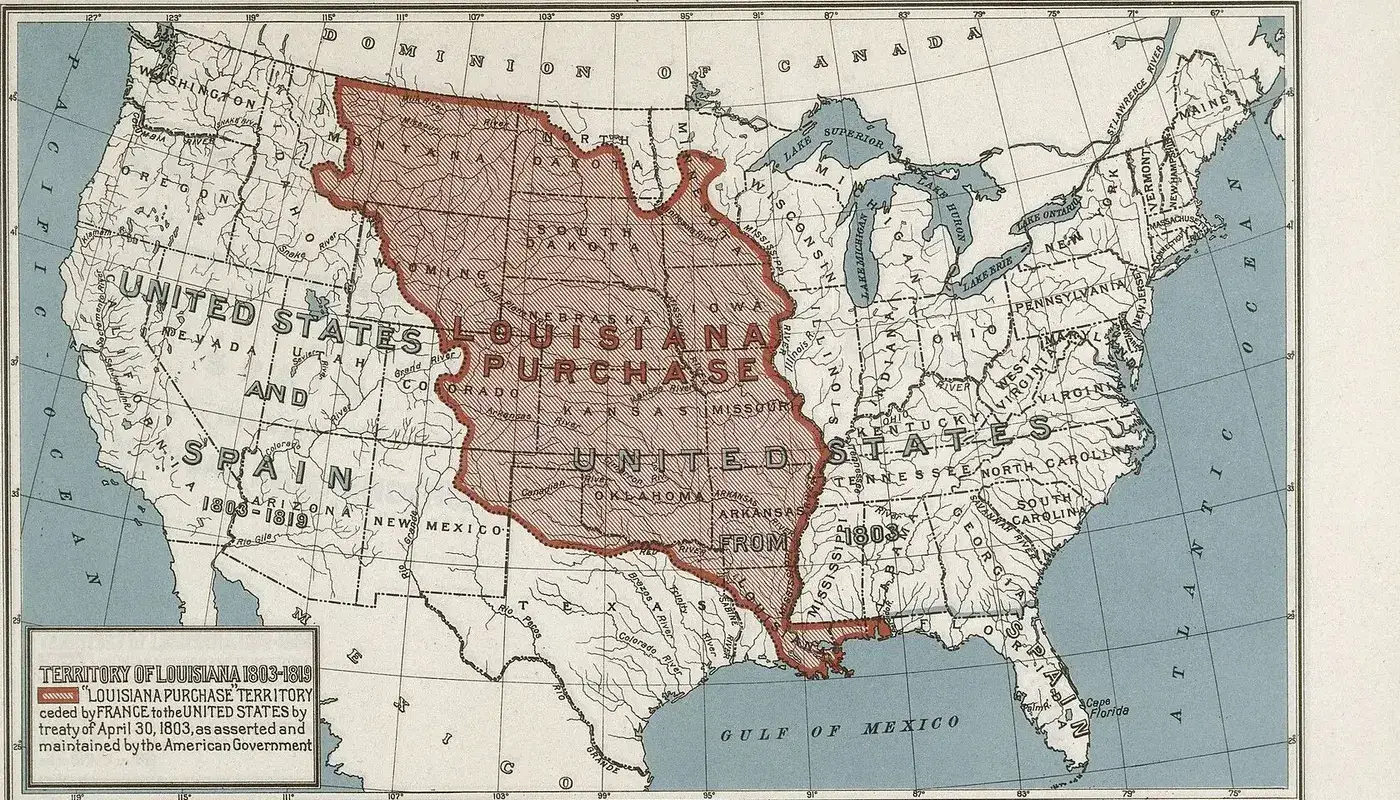
In 1803 the United States bought the Louisiana Territory from France: about 828,000 square miles of land between the Mississippi River and the Rocky Mountains, according to the National Archives. The price was $15 million. Overnight, the young country roughly doubled in size, and the western border of the United States moved from the Mississippi to the Rockies. It is one of the defining moments in the story of the United States.
President Thomas Jefferson never set out to buy half a continent. He wanted one city: New Orleans, the port at the mouth of the Mississippi River where western farmers shipped their crops to the world. When Spain secretly handed Louisiana back to France and then closed New Orleans to American trade in 1802, Jefferson sent diplomats to Paris to buy the city and, if possible, the Floridas.
The offer that came back was far bigger. Napoleon Bonaparte, France's leader, had lost an army to disease and a slave revolution in Saint-Domingue (today's Haiti), and he was about to go to war with Britain again. In April 1803 he offered all of Louisiana. The American envoys, Robert Livingston and James Monroe, agreed to buy it without permission from Washington, because there was no time to ask.
The purchase raised hard questions: whether the Constitution allowed it, who would govern the people already living there, and whether slavery would spread west. Its land eventually became all or part of 15 states. Together with the land gained after the Mexican-American War, it turned a country of coastal states into one that stretched from the Atlantic to the Pacific.
At a Glance
1803
Treaty signed in Paris, dated April 30, 1803
828,000 sq mi
Land acquired, about 530 million acres (National Archives)
$15 million
Purchase price, including $3.75 million in claims
15
Present-day states made from all or part of the land
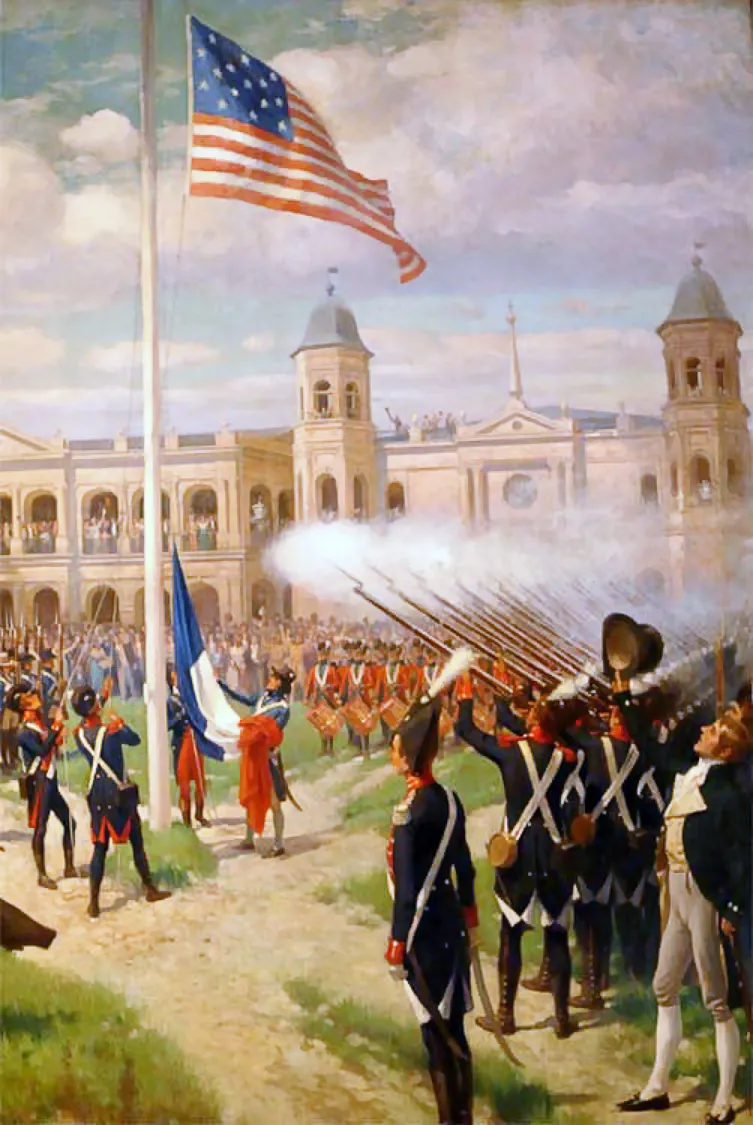
The U.S. flag goes up over the main square of New Orleans on December 20, 1803, as painted by Thure de Thulstrup for the purchase's 100th anniversary.
Did You Know?
The treaty is dated April 30, 1803, but historians note it was actually signed a few days later, around May 2.
Americans learned of the purchase on July 4, 1803, the 27th anniversary of the Declaration of Independence.
New Orleans flew three flags in three weeks: Spanish, then French from November 30, then American from December 20, 1803.
No one defined the borders. The treaty described Louisiana only by its extent under Spain and France, and the U.S. spent until 1819 settling them.
The United States paid mostly in bonds, which French officials sold to banks in London and Amsterdam to get cash right away.
Louisiana became a state on April 30, 1812, exactly nine years after the date on the treaty.
Jefferson wrote privately that the purchase was "an act beyond the constitution," but he approved it anyway.
Toussaint Louverture, whose revolution helped push France to sell, died in a French prison 23 days before the treaty's date.
Sources & Further Reading
- Louisiana Purchase Treaty (1803), National Archives
- The Louisiana Purchase, 1803, U.S. Department of State, Office of the Historian
- Louisiana Purchase: Primary Documents in American History, Library of Congress
- The Louisiana Purchase, Thomas Jefferson Foundation (Monticello)
- Thomas Jefferson to Robert R. Livingston, April 18, 1802, Founders Online, National Archives
- Thomas Jefferson to John Breckinridge, August 12, 1803, Founders Online, National Archives
- Louisiana Purchase, Encyclopaedia Britannica
- Adams-Onís Treaty, U.S. Department of State, Office of the Historian
Treaty dates, the area, and the price follow the National Archives' Louisiana Purchase Treaty page, which also holds the treaty text quoted here. The Library of Congress, the Office of the Historian at the U.S. Department of State, and the Thomas Jefferson Foundation (Monticello) were used for the negotiation, the constitutional debate, and Jefferson's letters. Some quotations from the negotiation were recorded years later by participants, and the page notes where that is the case.