About the Northern Mariana Islands
The Commonwealth of the Northern Mariana Islands (CNMI) is a chain of 14 islands stretching north from Guam in the western Pacific, beginning about 40 miles north of Guam at Rota and extending nearly 400 miles north to the remote volcanic island of Farallon de Pajaros. Three islands, Saipan, Tinian, and Rota, hold virtually the entire population of about 47,000 people (47,329 in the 2020 Census). The remaining islands are largely uninhabited, several having been evacuated following volcanic eruptions or left empty after the forced relocations of their populations during the 20th century.
The CNMI's relationship with the United States is unusual even by the standards of U.S. territorial arrangements. It is the only jurisdiction to call itself a "Commonwealth in political union" with the United States, a status negotiated directly with the local population in a 1975 vote and formalized in a Covenant that took full effect in 1986. Unlike Guam, which was seized from Spain in 1898 without consulting its residents, the CNMI's current political status resulted from a democratic choice made by the Marianas people during the decolonization process of the 1970s.
The islands carry a history that is simultaneously ancient and modern, deeply local and globally consequential. The latte stones of the ancient Chamorros, the sugar economy of Japanese colonialism, the most devastating Pacific island battles of World War II, the atomic bomb pits on Tinian, the sweatshops of the garment era, and the luxury resort hotels of the Japanese tourism boom all exist within 184 square miles and within living memory. Nowhere in American territory is the layering of history quite so compressed.
The CNMI's Four Island Groups
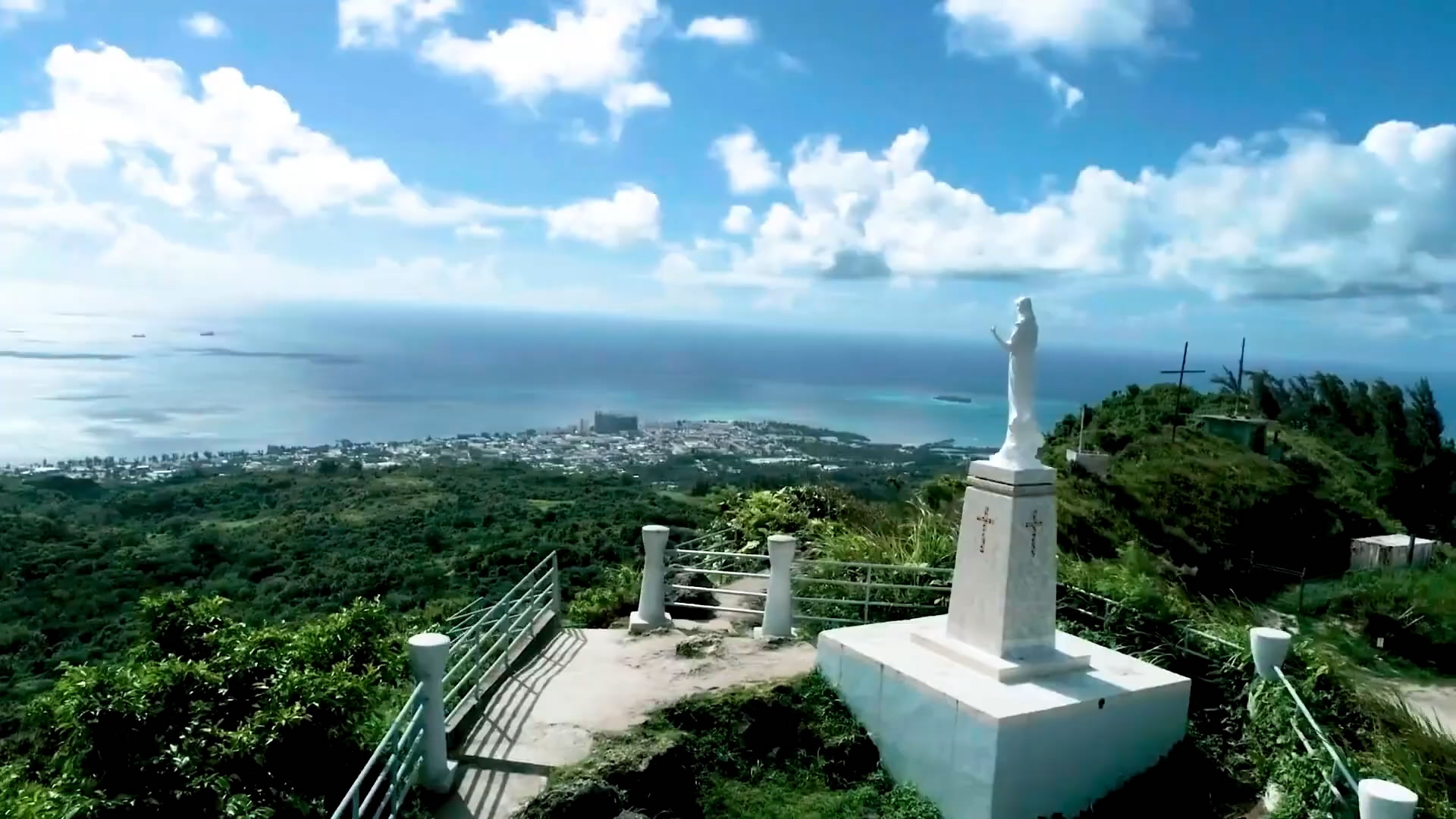
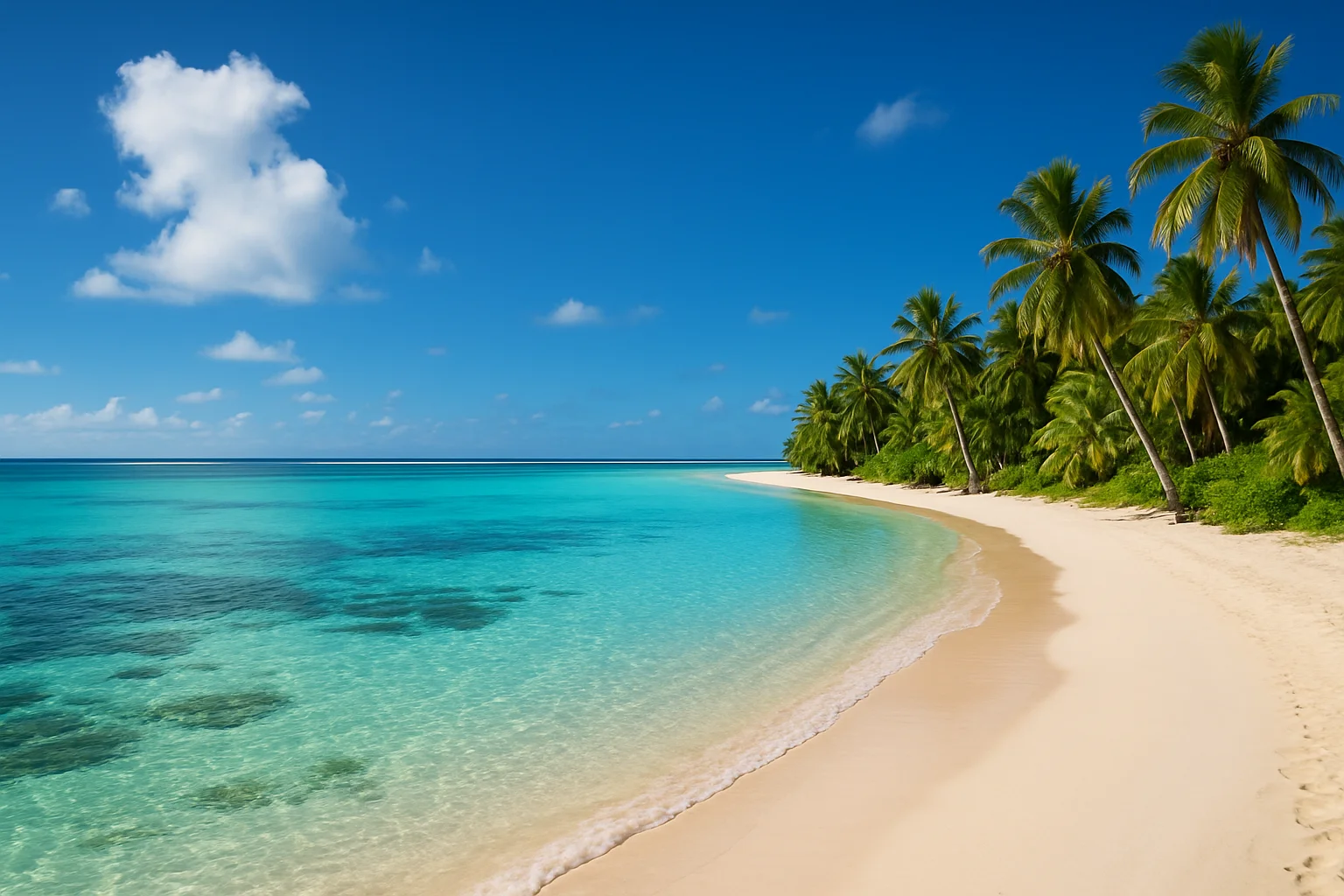
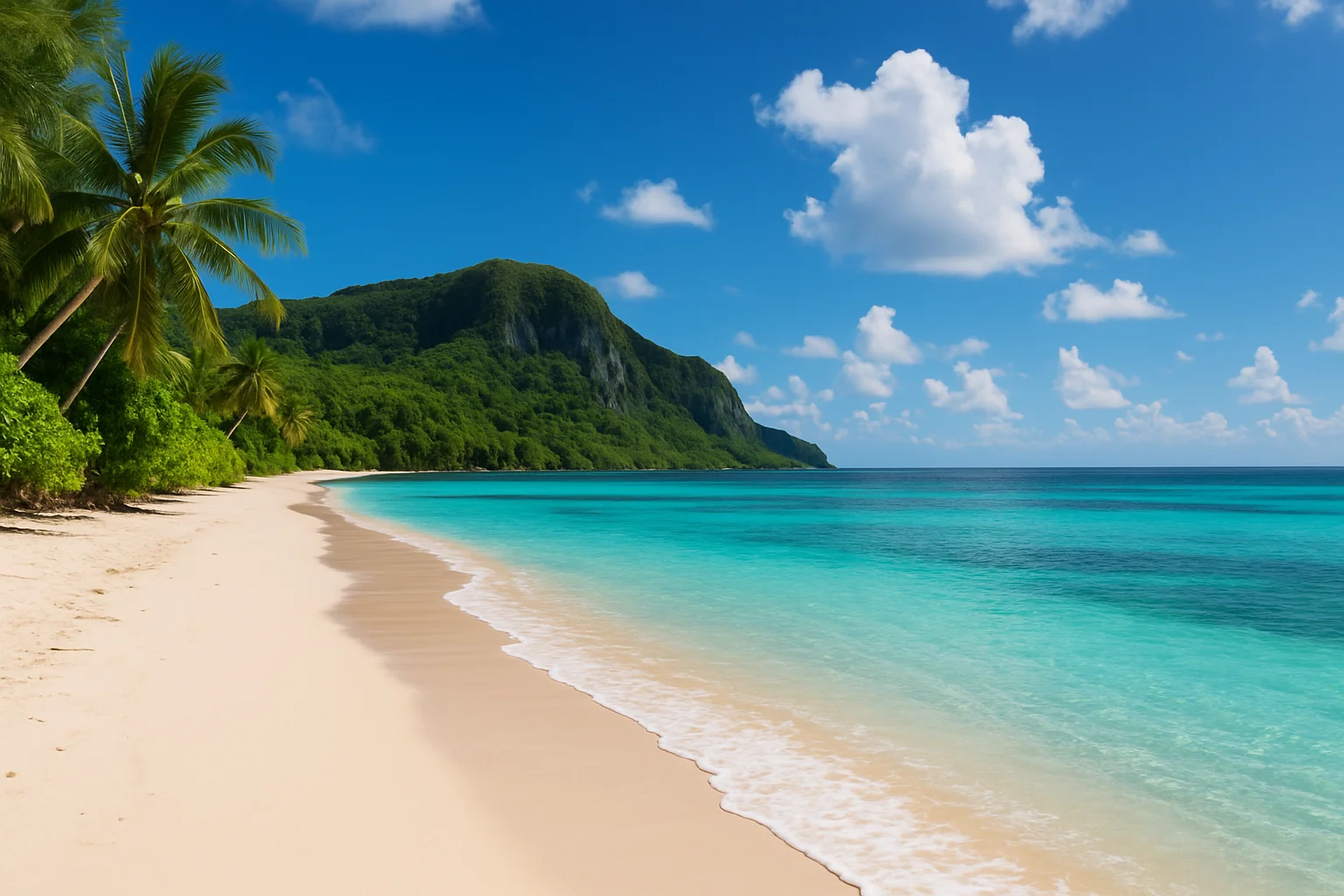
Saipan, the largest and most populous island in the CNMI with about 90 percent of the territory's people, is the political, commercial, and cultural center of the Commonwealth. Its western coast has the turquoise lagoon and white-sand beaches that once made it one of Asia's premier beach destinations.
Capitol Hill, the government center on the central plateau, houses the CNMI Legislature, the governor's office, and federal offices. Garapan, the commercial strip along the lagoon, was the center of Japanese colonial administration and is now the tourist district; the northern tip at Banzai Cliff and Suicide Cliff are the somber sites where thousands of Japanese civilians and soldiers died in 1944.
Saipan is only about 12 miles long. The 1,560-foot Mount Tapochau at its center offers a full-island view, and American Memorial Park in Garapan, run by the National Park Service, honors the roughly 5,000 U.S. troops and 900 local residents killed in the 1944 campaign to take the island.
The population is strikingly mixed: Chamorros and Carolinians are outnumbered by Filipino, Chinese, Korean, Bangladeshi, and other workers and their families, many holding CW-1 guest-worker visas rather than citizenship. Typhoons Soudelor in 2015 and Yutu in 2018 each flattened large parts of the island, and blue-tarped roofs were still common years later.
Tinian, the CNMI's second-largest island, just three miles south of Saipan, is best known in American history as the island from which the B-29 Enola Gay took off on August 6, 1945, to drop the atomic bomb on Hiroshima. North Field was the largest airfield in the world during World War II, with four parallel 8,500-foot runways from which hundreds of B-29s bombed Japan.
The pits where the two atomic bombs were assembled and loaded are preserved as National Historic Landmarks. Post-war Tinian has been quiet, with a population of about 3,000, a small casino, and sugarcane fields slowly giving way to the U.S. military's expanding training ranges.
Under the 1975 Covenant the United States leased roughly two-thirds of Tinian, about 15,000 acres, for military use, and for decades left it fallow. Plans announced in the 2010s to build live-fire ranges, and later to rebuild North Field as a dispersal airfield for bombers, drew objections from the small population and from preservationists over the wartime ruins and ancient Chamorro sites in the lease area.
Tinian's one town, San Jose, sits at the south end near the Taga latte site, whose 16-foot pillars are the tallest in the Marianas. The island's flat terrain, the reason it made an ideal bomber base, and its light population make it the CNMI's focus for military expansion under the Pacific realignment.
Rota, the southernmost major island in the CNMI, between Guam and Saipan, is the most traditionally Chamorro of the main islands and has deliberately built its tourism identity around natural beauty and cultural authenticity rather than the mass development that reshaped Saipan.
Rota's Coral Garden is considered one of the finest reef experiences in Micronesia, with visibility often over 100 feet, and the Taga Stone latte quarry preserves partly cut pillars that connect Rota to the ancient Chamorro civilization shared with Guam. Its population, 1,893 in the 2020 Census, is declining as residents move to Saipan and the mainland.
Rota escaped a ground battle in 1944, when U.S. forces bypassed it and left the Japanese garrison to wait out the war, so it kept far more of its pre-war landscape and village pattern than Saipan or Tinian. A short-lived attempt to build a large hotel and golf resort in the 1990s left a mostly idle complex on the island's east side.
The island is a birdwatching destination: the Mariana crow, or aga, survives in the wild almost only on Rota, and the Mariana fruit dove and Rota white-eye are found there. Its small size and isolation have made it a candidate site in various proposals to concentrate CNMI conservation or services, none of which have advanced.
The northern islands of the CNMI, running from Farallon de Pajaros in the north down to Anatahan, are a chain of active and dormant volcanoes, largely uninhabited since their small populations were evacuated in the 20th century. Agrihan, at 3,166 feet, is the highest point in the Mariana Islands.
Pagan was a farming and copra center until a 1981 eruption forced the evacuation of its entire population, and Anatahan had a major eruption in 2003. The islands are part of the CNMI's territory and fishing zone but are otherwise minimally integrated into its economy and government; proposals to resettle some of them have come and gone without resolution.
Pagan became a flashpoint in the 2010s when the U.S. military proposed using the island, and Tinian, for large-scale live-fire and amphibious-assault training under a program called CNMI Joint Military Training. Former Pagan residents and their descendants, who still hold land there and want to return, sued and organized against it, and the plan stalled.
The islands are a globally important seabird habitat, and Uracas and Maug are protected inside the Mariana Trench Marine National Monument. Nearby, the submarine volcano NW Rota-1 is one of the few places on Earth where an erupting underwater volcano can be observed directly.
How the CNMI Makes Its Living
The CNMI's economy has been through more boom-and-bust cycles in 40 years than most places experience in a century, from Japanese tourism to garment manufacturing to casino development, each rise followed by a sharper fall.
Tourism was the dominant engine of the CNMI economy from the 1980s through the mid-2010s, with the islands at their peak receiving more than half a million visitors a year, almost entirely from Japan, South Korea, China, and Russia. Saipan's beaches, clear water, World War II sites, and duty-free shopping made it a premium destination for Asian travelers, and the island built a large hotel and resort base to serve them.
The industry began declining after 2015, hit by hotel closures, cuts to airline service, the destruction from Typhoon Yutu in 2018, one of the most powerful storms ever to strike a U.S. jurisdiction, and the total loss of the Chinese market during COVID-19. Recovery has been slow, held back by damaged infrastructure and the difficulty of attracting flights to such a remote place.
Casino resorts were promoted as a replacement, above all the Imperial Pacific International project on Saipan, which was mired in labor-abuse prosecutions, regulatory failures, and bankruptcy; its half-finished tower still dominates the Garapan skyline.
Imperial Pacific was a case study in territorial regulation gone wrong: it reported billions in VIP gambling turnover from mainland Chinese junkets, several executives and contractors were convicted of using illegal Chinese construction workers on tourist visas after a worker fell to his death in 2017, and its casino license was revoked in 2023. The CNMI has since leaned on dive and nature tourism from Korea and Japan and on courting new nonstop flights.
From the 1980s through the mid-2000s the CNMI hosted one of the most controversial manufacturing operations in American territorial history: a large garment industry that used a legal loophole letting goods made in the CNMI carry 'Made in the USA' labels while the territory ran its own immigration system, admitting workers from China, the Philippines, Bangladesh, and elsewhere at wages and conditions that would have been illegal on the mainland.
At its peak the industry employed tens of thousands of foreign workers, mostly women, sewing clothing for major American brands. Congressional investigations and press exposés in the late 1990s and 2000s documented excessive hours, wage theft, confinement in guarded barracks, and debt bondage. The industry collapsed after 2007, when Congress applied federal minimum-wage and immigration law to the CNMI and removed the arbitrage that made it profitable.
The scandal became a Washington fixture. Lobbyist Jack Abramoff was paid millions by the CNMI government and factory owners in the late 1990s to block reform bills and to fly members of Congress and staff to Saipan on all-expenses tours; the arrangement was central to the corruption case that sent Abramoff to prison in 2006.
A 1999 class action on behalf of about 30,000 workers against roughly two dozen retailers and CNMI manufacturers settled for around 20 million dollars and created a monitoring program. The last factories closed by 2009 when the global textile-quota system ended and China could ship directly, leaving Saipan's industrial park mostly empty and the workforce stranded on expiring visas.
The Commonwealth government is the CNMI's largest employer, and federal spending, through the military, Covenant grants, and disaster recovery, is a major part of the economy. The CNMI receives federal benefits at capped levels well below what a state in similar shape would get.
The U.S. military presence on Tinian and the wider Pacific realignment of forces are a growing source of federal money, with the Defense Department leasing large parts of Tinian for training ranges and rebuilding the wartime North Field as a bomber dispersal base.
The CNMI's own finances have been fragile for years: it defaulted on public-employee pension obligations, put its retirement fund through federal bankruptcy in 2012, and depends on annual federal 'Covenant' funding that Congress has repeatedly trimmed. The Commonwealth Utilities Corporation runs on imported diesel and is prone to rolling blackouts.
The CNMI got a non-voting delegate to the U.S. House only in 2009, the last territory to receive one, and the delegate can vote in committee but not on the floor. Much of the federal footprint is regulatory: since 2009 the Department of Homeland Security has administered a CNMI-only guest-worker visa, the CW-1, that the local economy still relies on and that Congress keeps extending in short increments.
The CNMI's local economy includes subsistence and commercial fishing in a large exclusive economic zone, small-scale farming of taro, breadfruit, coconut, and tropical vegetables, and a modest retail and service sector serving the resident population.
The three populated islands have distinct profiles: Saipan holds most of the formal economy; Tinian has a history of sugarcane, a small port, and expanding military ranges; Rota is the most traditionally Chamorro, with tourism built on its coral reefs and intact village life. Aquaculture and small-scale ecotourism have been floated as diversification with limited results.
Farming is mostly on Saipan's Kagman plateau and on Tinian, and the CNMI imports the large majority of its food through the Port of Saipan, so a shipping bottleneck or a typhoon empties shelves within days. Betel nut, chewed across the Marianas, is one of the few crops grown commercially at scale.
The Mariana Trench Marine National Monument, created in 2009, protects the waters and seafloor around the three northernmost islands and the trench itself, the deepest place in any ocean; the designation drew local opposition from fishers worried about lost access. The islands sit on the volcanically active Mariana Arc, and undersea vents in the monument support life found almost nowhere else.
What Does "Commonwealth in Political Union" Mean?
The CNMI's official status, a "Commonwealth in Political Union with the United States," is unique among U.S. territories. "Commonwealth" in this context does not mean the same thing as a state, nor does "political union" mean full constitutional incorporation. The CNMI remains an unincorporated territory to which not all provisions of the U.S. Constitution automatically apply, just as with Guam, Puerto Rico, and the U.S. Virgin Islands. The "Commonwealth" designation reflects the negotiated, consensual nature of the relationship established by the 1975 Covenant.
What makes the CNMI distinct from other territories is the Covenant itself. CNMI residents are U.S. citizens (unlike American Samoa), have been since 1986, and the Covenant established specific protections and rights that Congress agreed to respect. The Covenant also gave the CNMI certain special provisions not available to other territories, including a separate immigration system (partially superseded by federal law in 2009) and restrictions on land ownership by non-CNMI residents that parallel American Samoa's land alienation protections.
Despite citizenship, CNMI residents share the same fundamental democratic deficit as residents of all other territories: they cannot vote for President, are represented in Congress only by a non-voting delegate, and are subject to federal laws and decisions made by a government in which they have no voting voice.
Rights: CNMI Residents vs. State Residents
| Right or Benefit | CNMI Residents | State Residents |
|---|---|---|
| U.S. Citizenship | ✅ Yes (since 1986 Covenant) | ✅ Yes |
| Vote for President | ❌ No | ✅ Yes |
| Voting Rep. in Congress | ❌ Non-voting delegate only | ✅ Yes |
| U.S. Senate representation | ❌ None | ✅ 2 senators |
| Serve in U.S. military | ✅ Yes | ✅ Yes |
| Medicaid / SNAP benefits | ⚠️ Capped (not full match) | ✅ Full federal match |
| Social Security / Medicare | ✅ Yes | ✅ Yes |
| Federal income tax | ❌ Pay CNMI income tax instead | ✅ Pay federal income tax |
| Move freely to mainland | ✅ Yes | ✅ Yes |
| Electoral votes | ❌ None | ✅ Based on population |
How the CNMI's Government Works
The CNMI's government is established by its own Constitution, ratified in 1977 and effective since 1978, and organized into three branches: executive, legislative, and judicial. The constitutional framework was developed locally under the guidance of the Covenant negotiations and reflects both American constitutional principles and specific CNMI adaptations, including land ownership restrictions that limit real property ownership to persons of Northern Marianas descent.
The Governor is directly elected by CNMI voters to a four-year term with a two-consecutive-term limit. The Governor heads the Commonwealth government and administers all executive departments and agencies. Unlike the governor of an American state, the CNMI Governor has no authority over the substantial U.S. military presence on Tinian or the federal installations and land throughout the islands, which operate under separate federal control.
The Commonwealth Legislature is bicameral, with a Senate and a House of Representatives, making it similar to state legislatures and unlike the unicameral legislatures of Guam and the U.S. Virgin Islands. The CNMI's judicial system includes the Commonwealth Supreme Court and the Superior Court, with federal matters going through the U.S. District Court for the Northern Mariana Islands (one of the very few territories with its own federal district court) and appeals to the 9th Circuit.
Governor of the Northern Mariana Islands
Current Governor
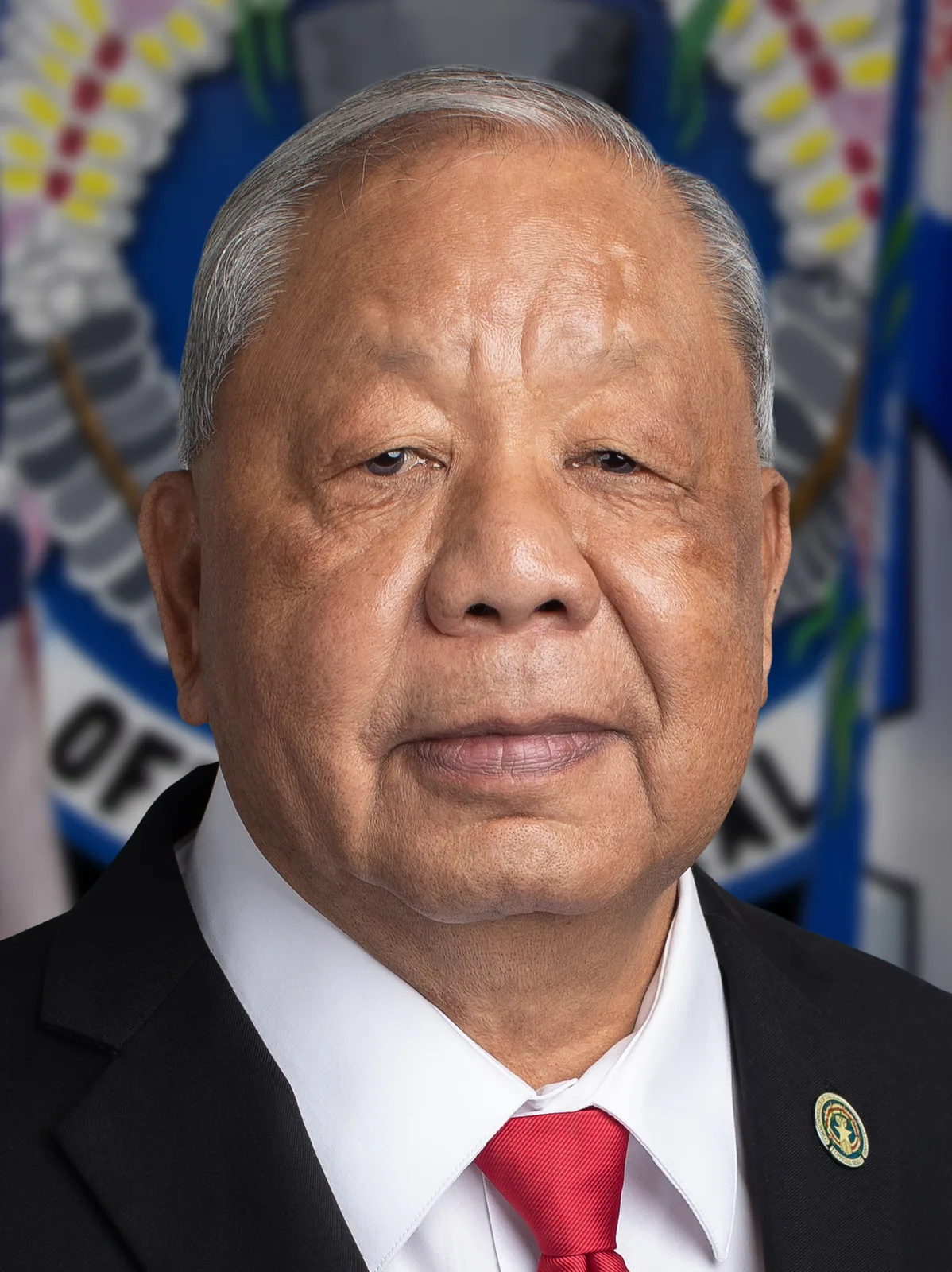
David M. Apatang
- Party
- Independent
- In Office Since
- July 23, 2025
- Term Ends
- January 2027
- Born
- July 10, 1948
- Prior Role
- CNMI Lieutenant Governor (2023-2025); Mayor of Saipan (2015-2023)
David M. Apatang became the CNMI's 11th Governor on July 23, 2025, the day Governor Arnold Palacios died in office. Palacios, a longtime Republican, had won the 2022 election as an independent, defeating incumbent Ralph Torres in a runoff, with Apatang as his running mate. Apatang, a former Mayor of Saipan and member of the CNMI House, has focused on stabilizing the territory's finances, recovery from Typhoon Yutu, and the expansion of U.S. military activity on Tinian.
Other Current Territorial Officials
Lieutenant Governor
Dennis C. Mendiola
Sworn in July 24, 2025, after Apatang became governor. A former Senate President from Rota, he was next in the constitutional line of succession. The Lieutenant Governor normally runs jointly with the Governor on a single ticket.
Attorney General
Edward Manibusan
CNMI Attorney General since 2015, re-elected in 2018 and 2022. The Attorney General is independently elected in the CNMI, not appointed by the Governor. Manibusan has focused on anti-corruption efforts, consumer protection, and labor law enforcement issues arising from the CNMI's large foreign worker population.
Senate President
Karl King-Nabors
A senator from Tinian, elected Senate President in 2025 after Dennis Mendiola became Lieutenant Governor. He presides over the 9-member CNMI Senate. The CNMI Legislature is one of the smallest bicameral legislative bodies of any U.S. jurisdiction.
The Commonwealth Legislature
CNMI Senate
- Seats: 9 senators
- Terms: 4-year terms
The upper chamber, one of the smallest senates of any U.S. jurisdiction. Three senators are elected at large from each of the three senatorial districts: Saipan and the Northern Islands, Tinian and Aguiguan, and Rota. The Senate reviews legislation passed by the House and has particular authority over executive appointments and treaty matters under the Covenant.
CNMI House of Representatives
- Seats: 20 members
- Terms: 2-year terms
The lower chamber. All 20 seats are on the ballot every two years. Representatives are elected from districts across Saipan, Tinian, and Rota. The House originates all revenue legislation and handles most day-to-day legislative business.
The CNMI's Non-Voting Delegate to Congress
U.S. House Delegate (Non-Voting)
Kimberlyn King-Hinds
Elected in November 2024 and in office since January 2025, King-Hinds is the CNMI's first Republican delegate. An attorney, she previously chaired the Commonwealth Ports Authority and served on the Commonwealth Public Utilities Commission. She succeeded Gregorio Kilili Camacho Sablan, the CNMI's first delegate (2009 to 2025), who did not seek re-election. She can vote in committee but not on the House floor.
What the Delegate cannot do: Vote on final passage of any legislation affecting the roughly 47,000 residents of the Northern Mariana Islands.
The CNMI Court System
The CNMI has its own court system for local matters, headed by the Supreme Court of the Commonwealth of the Northern Mariana Islands (three justices) as the territory's highest local court, with the Superior Court of the Commonwealth serving as the primary trial court. Unlike American Samoa, the CNMI has its own U.S. District Court for the Northern Mariana Islands, one of very few territories with a dedicated federal district court. Appeals from both the CNMI Supreme Court and the federal district court go to the U.S. Court of Appeals for the 9th Circuit, and ultimately to the U.S. Supreme Court.
📋 Current Officials
For the most current list of CNMI government officials, visit governor.cnmi.gov.
The Northern Mariana Islands Through the Years
Ancient latte stones, three colonial powers, the world's largest airfield, the atomic bomb, a sweatshop scandal, and Typhoon Yutu, the CNMI has lived more history per square mile than almost anywhere on Earth.
The Mariana Islands, including what is now the CNMI, were settled by Austronesian-speaking people roughly 3,500 to 4,000 years ago, the same ancestral group that reached Guam, in one of the longest open-ocean voyages made anywhere to that date.
The ancient Chamorro civilization that developed across the whole archipelago built the latte stone structures found throughout the islands, including the Taga site on Tinian, whose pillars reach 16 feet, the tallest in the chain. Northern and southern Chamorros shared a language and social structure and kept up maritime contact across the island chain for centuries.
Latte stones were quarried from limestone or beach rock, shaped into a shaft (haligi) and a cup-shaped cap (tasa), and set in paired rows to raise the floors of important houses and canoe sheds. Archaeologists divide the era into a Pre-Latte period and a Latte period beginning around 900 to 1000 CE, when the pillars, new pottery, and larger coastal villages appear.
Estimates of the pre-contact population of the whole Marianas range widely, from the tens of thousands into six figures. The society was matrilineal and ranked, and Spanish accounts describe skilled navigators sailing fast outrigger canoes, the flying proa, between the islands, a tradition Spanish rule later suppressed.
Spanish colonization of the Marianas, beginning in 1668 with the Jesuit Diego Luis de San Vitores, was catastrophic for the indigenous Chamorros across the whole archipelago. The Spanish-Chamorro Wars and epidemic disease cut the population of the northern islands from tens of thousands to fewer than a thousand by the early 1700s, and Spain forcibly removed the survivors to Guam under a policy called reducción.
Spain then repopulated the nearly empty northern islands, beginning in the 1810s, with Carolinian migrants from the atolls of the central Carolines, now part of the Federated States of Micronesia. Their descendants, the Carolinians, are one of the CNMI's two indigenous peoples alongside Chamorros and speak a distinct Malayo-Polynesian language; the dual heritage is a direct product of Spanish population management.
The first Carolinians reached Saipan in canoes around 1815, some fleeing a devastating typhoon in their home islands, and Spain granted them settlement rights in exchange for labor and loyalty. Chamorros were allowed back to the northern Marianas only in the mid-1800s, so both indigenous communities on Saipan today trace their local roots to the 19th century.
Spain governed the Marianas as a minor outpost of the Philippines and largely ignored the northern islands, at one point using Saipan as a penal colony for Filipino political prisoners. When Spain lost the Spanish-American War it kept none of the Marianas: Guam went to the United States and the rest went to Germany, splitting a single Chamorro homeland into two political tracks that persist today.
After the Spanish-American War Spain sold the northern Marianas, but not Guam, to Germany in 1899 for 25 million pesetas. German rule lasted only until World War I, when Japan seized the islands in 1914; a League of Nations mandate formalized Japanese control in 1920.
The Japanese period, 1914 to 1944, was transformative. Japan poured investment into sugarcane, built roads, ports, schools, and a refinery, and brought tens of thousands of Japanese, Okinawan, and Korean settlers and workers. By 1940 the Chamorro and Carolinian population was a small minority on its own islands, and Saipan was the capital of Japan's entire Pacific mandate, one of the most developed places in Micronesia.
The sugar economy was run by the South Seas Development Company under the entrepreneur Haruji Matsue, remembered locally as the 'Sugar King,' whose statue and the surviving locomotive and refinery ruins are Saipan landmarks. Japanese schools taught Chamorro and Carolinian children in Japanese, and a generation grew up bilingual, with Japanese loanwords still common in local speech.
In the 1930s Japan quietly militarized the mandate in violation of the League terms, building airfields and fortifications on Saipan, Tinian, and Aguijan. By 1944 Saipan held major military installations and a civilian population of about 25,000 Japanese and Okinawans alongside the indigenous islanders, setting the stage for one of the bloodiest battles of the Pacific.
The American invasion of Saipan, June 15 to July 9, 1944, was one of the most strategically important and humanly devastating battles of the Pacific War. Taking Saipan brought B-29 bases within bombing range of the Japanese home islands, a prize both sides knew could decide the war.
The battle killed roughly 3,100 Americans, 24,000 Japanese soldiers, and an estimated 20,000 or more Japanese civilians. The civilian toll included the mass suicides at Banzai Cliff and Suicide Cliff on the northern tip, where thousands of civilians, many with their children, jumped or were pushed to their deaths rather than surrender, after Japanese propaganda had convinced them Americans would torture and kill them.
Emperor Hirohito declared those who died national heroes, and the cliffs became and remain major pilgrimage sites for Japanese visitors. The fall of Saipan brought down Prime Minister Hideki Tojo's government and was widely understood in Japan as a signal that the war was lost.
The battle also swept in the war's other victims: Chamorros and Carolinians conscripted for labor, roughly 900 of whom died, and about 1,000 Korean laborers and 'comfort women' brought by the Japanese. Afterward the U.S. built the B-29 bases on Tinian and Saipan that carried out the firebombing of Japan and, from Tinian, the atomic missions.
After World War II the United Nations assigned the former Japanese mandated islands of Micronesia, including the Marianas, to the United States as a Strategic Trust Territory, the only one of eleven UN trust territories designated 'strategic,' which gave the U.S. wide latitude to use the islands militarily.
The Trust Territory of the Pacific Islands, run first by the Navy and then the Interior Department, governed the Marianas together with the Marshalls, the Carolines, and Palau. The U.S. tested nuclear weapons in the Marshall Islands during this period and kept extensive military facilities across Micronesia.
The CIA used a base on Saipan from 1950 to 1962 to secretly train Nationalist Chinese and Tibetan guerrillas; its buildings later became the Saipan headquarters of the Trust Territory administration. The northern Marianas were the poorest and least developed part of the Trust Territory, with little investment and heavy emigration to Guam.
The Marianas broke early from the rest of Micronesia, which wanted independence or free association; three plebiscites for reunification with Guam in the 1950s and 1960s were approved by Marianas voters but rejected by Guam. In 1972 the Marianas Political Status Commission began separate negotiations with Washington that produced the 1975 Covenant.
The CNMI reached its current status as a commonwealth in political union with the United States when the Covenant took full effect on November 3, 1986, granting residents U.S. citizenship and establishing self-government. Its first decades brought rapid growth from Japanese tourism and the garment industry, then collapse after Congress extended federal minimum-wage and immigration law to the territory between 2007 and 2009.
Typhoon Soudelor in 2015 and Typhoon Yutu in 2018, the strongest storm to strike U.S. soil since the 1935 Labor Day hurricane, caused catastrophic damage to Saipan and Tinian and set recovery back years. Ongoing strains include population decline as citizens leave for Guam and the mainland, an economy dependent on foreign guest workers, and the integration of large Filipino and other migrant communities whose legal status differs fundamentally from citizens'.
The Covenant let the CNMI keep its own immigration system, and by 2000 non-U.S. citizen guest workers outnumbered the local population. Congress ended that autonomy in the 2008 Consolidated Natural Resources Act, phasing in federal control and creating the temporary CW-1 worker visa; the transition, meant to end in 2019, has been extended repeatedly because the economy cannot function without the workers.
CNMI politics have been turbulent: Governor Benigno Fitial resigned in 2013 ahead of an impeachment for corruption and was later convicted, and the Imperial Pacific casino saga tarnished the government's regulatory reputation. The population, once close to 70,000 at the garment-and-tourism peak, has fallen toward the mid-40,000s, and much of the recovery from Yutu has been slow.
The CNMI's Defining Moments in American History
These are the events that didn't just shape the Northern Mariana Islands. They changed the course of world history and revealed enduring truths about America's relationship with its territories.
On August 6, 1945, a B-29 named Enola Gay took off from North Field on Tinian and dropped an atomic bomb on Hiroshima, killing tens of thousands instantly and, over months, an estimated 90,000 to 166,000 people. Three days later a second B-29, Bockscar, left Tinian and bombed Nagasaki.
The two missions, launched from what is now U.S. territorial soil in the CNMI, precipitated Japan's surrender and ended World War II. Tinian, today home to about 3,000 people and fields of sugarcane, is thus tied to one of the most consequential and contested decisions in human history.
The bombs arrived on Tinian by separate paths: the uranium components of 'Little Boy' came on the cruiser USS Indianapolis, which was sunk by a Japanese submarine days after delivering them with heavy loss of life, and the plutonium core of 'Fat Man' was flown in. The 509th Composite Group's crews assembled the weapons in the loading pits and raised the aircraft over them by hydraulic jack.
North Field had flown conventional bombing since late 1944, including the low-altitude firebombing raids that killed more people in Tokyo on a single March 1945 night than either atomic bomb. After the war the field was abandoned; the runways are still visible from the air, the loading pits are marked with glass plates and monuments, and Japanese and American visitors come to a site that is quiet, hot, and largely reclaimed by jungle.
As American forces closed on the northern tip of Saipan in early July 1944, thousands of Japanese civilians, brought to the island during the colonial period to work the sugar plantations, faced a choice between surrender and death. Japanese authorities and propaganda had told them American soldiers would torture, rape, and murder captured civilians.
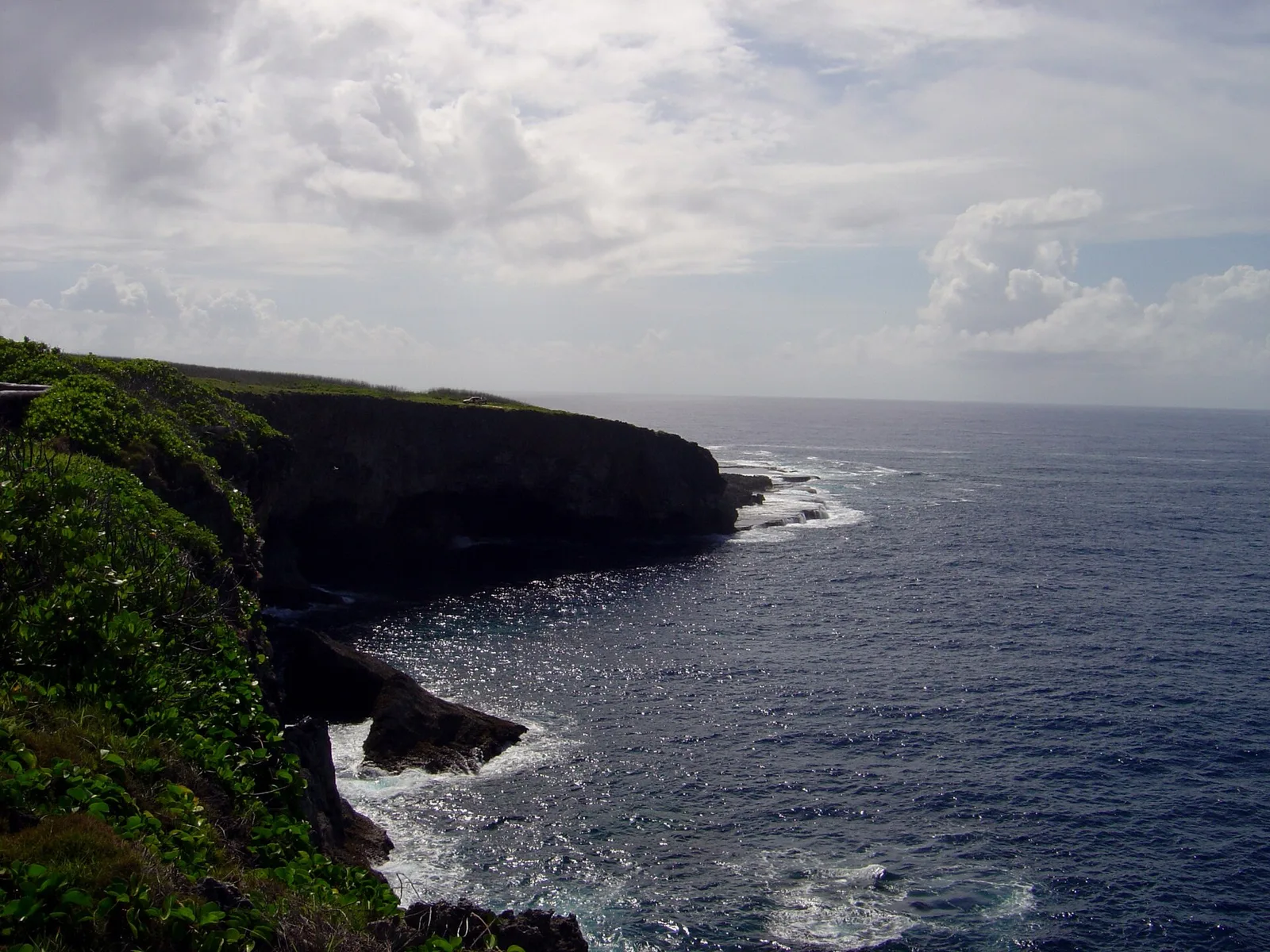
At Banzai Cliff and Suicide Cliff, an estimated 1,000 to several thousand civilians, including families with young children, jumped or were pushed to their deaths on the rocks and into the sea. American soldiers nearby tried to talk people down, some broadcasting appeals through interpreters, with limited success. The scenes shocked American commanders.
The Saipan suicides, followed by even larger civilian deaths on Okinawa in 1945, weighed on U.S. planners estimating the cost of invading the Japanese home islands and figured in the arguments for using the atomic bombs. Survivors among the indigenous islanders spent months in a U.S. internment camp at Camp Susupe before being allowed home.
The cliffs are now dense with Japanese memorials, a peace park, and a monument to the Korean laborers who also died on the island. The events are central to Saipan's identity and its enduring, ambivalent relationship with Japan, still one of its main sources of tourists and investment.
From the 1980s through the early 2000s the CNMI's garment industry exploited a legal loophole that allowed clothing made in the territory to carry 'Made in the USA' labels while the islands maintained separate immigration controls that admitted tens of thousands of Asian workers at wages below the federal minimum. Major American brands including Gap, Tommy Hilfiger, and Ralph Lauren sourced production from CNMI factories.
Congressional investigations and reporting documented widespread abuses: workers paid below promised wages, confined to labor camps, charged excessive fees by labor brokers, and subjected to unsafe conditions. Federal legislation in 1999 imposed reporting requirements, and the extension of federal minimum-wage and immigration law between 2007 and 2009 effectively ended the industry. It became a textbook case of how territorial status could be used to create a regulatory-arbitrage zone on American soil.
The CNMI government and factory owners spent millions on Washington lobbying to keep the arrangement, most notoriously hiring Jack Abramoff, who arranged all-expenses Saipan junkets for members of Congress and their staff; the contracts were central to the corruption scandal that sent Abramoff to prison in 2006 and touched a House majority leader.
A class action for roughly 30,000 workers settled for about 20 million dollars and set up factory monitoring. The industry's collapse also came from outside: when the global textile-quota system ended in 2005, China could export directly and the Saipan detour lost its point, leaving an empty industrial park and thousands of workers on soon-to-expire visas.
The political relationship between the CNMI and the United States was established not through conquest, purchase, or unilateral acquisition but through direct negotiation with the Marianas Political Status Commission and ratification by local voters, 78 percent of whom chose commonwealth status in a 1975 vote over independence or free association.
The Covenant, signed in 1975 and taking full effect in 1986, granted U.S. citizenship, established local self-government, and preserved local controls over immigration and land ownership. It is the only founding document of a U.S. territory that was negotiated and approved by the local population in a modern democratic process, though critics note that Cold War strategic interests shaped the options available.
A driving U.S. motive was land: the Covenant leased Tinian's North Field, a Saipan harbor area, and the uninhabited island of Farallon de Medinilla to the military for 50 years, renewable for another 50. Land ownership within the CNMI is restricted to people of Northern Marianas descent, a provision, like American Samoa's, meant to keep outside buyers from displacing islanders.
The Covenant declared certain provisions unchangeable without mutual consent, an unusual limit on Congress's power over a territory, and courts have mostly upheld it. But Congress overrode the immigration provision in 2008, and a federal appeals court in 2009 rejected the CNMI's claim that this breached the Covenant, showing the limits of a compact one side can rewrite.
On October 25, 2018, Typhoon Yutu struck Saipan and Tinian with sustained winds around 180 miles per hour, the second-strongest tropical cyclone on record to strike U.S. soil, behind only the 1935 Labor Day hurricane. The storm destroyed or severely damaged an estimated 95 percent of structures on Tinian and caused catastrophic damage across Saipan, leaving thousands homeless.
The federal disaster response was widely criticized as slower and less robust than responses to comparable mainland disasters, echoing criticism of the federal handling of Hurricane Maria in Puerto Rico the previous year. The storm struck a territory already struggling from the collapse of the garment industry and declining tourism, and its aftermath accelerated population decline as U.S.-citizen residents left for Guam and the mainland.
Yutu came just three years after Typhoon Soudelor devastated Saipan in 2015; the island had barely recovered. The Commonwealth Health Center, the CNMI's only hospital, lost power and roofing in Yutu and ran for weeks on generators, and schools held split sessions in tents and damaged buildings well into 2019.
FEMA housing aid was slowed by the fact that many damaged homes sat on communal or untitled land, a problem also seen in Puerto Rico, and by a shortage of contractors and materials 5,800 miles from the mainland. Recovery remains visibly incomplete years later, and Yutu is now the CNMI's baseline for how strong a storm the islands must be built to survive.
Territory Symbols and Quick Facts
| Official Name | Commonwealth of the Northern Mariana Islands (CNMI) |
| Official Status | Commonwealth in Political Union with the United States |
| Capital | Saipan |
| Largest City | Saipan |
| U.S. Territory Since | November 3, 1986 (Covenant effective date) |
| Covenant Signed | February 15, 1975 (approved by voters June 17, 1975) |
| Citizenship Status | U.S. Citizens (since 1986 Covenant) |
| Population | 47,329 (2020 Census) |
| Area | 184 sq miles (14 islands) |
| Location | Western Pacific Ocean, 15°N 145°E |
| Distance from Guam | ~40 miles (Rota) to ~120 miles (Saipan) north |
| Distance from Mainland | ~5,800 miles west of California |
| Time Zone | Chamorro Standard Time (UTC+10, no DST) |
| Official Languages | English, Chamorro, and Carolinian |
| Territorial Bird | Mariana Fruit Dove (Totot) |
| Territorial Flower | Plumeria (Pula) |
| Territorial Tree | Flame Tree (Trongkon Guafi) |
| Territorial Motto | "The Commonwealth of the Northern Mariana Islands" |
| Currency | U.S. Dollar |
| Delegate to Congress | Non-voting Delegate to U.S. House |
| Presidential Vote | None. Commonwealth residents cannot vote for President. |
Did You Know?
Tinian Island in the CNMI was the departure point for the B-29 Enola Gay on August 6, 1945, which dropped the first atomic bomb used in warfare on Hiroshima, Japan. The loading pits where the bombs were assembled are preserved as National Historic Landmarks on what is now a quiet, lightly populated island.
The CNMI and Puerto Rico are the two U.S. territories styled as commonwealths, and both are unincorporated; Puerto Rico's Spanish-language name for the status is Estado Libre Asociado. The CNMI's 'Commonwealth' status was negotiated specifically to distinguish it from both statehood and the free association status pursued by other Micronesian peoples.
Unlike Guam, Puerto Rico, and the U.S. Virgin Islands, the CNMI was not acquired by the United States through war or purchase from a colonial power. It was negotiated directly with the residents through a democratic vote in 1975, making it the only U.S. territory whose political relationship with the United States was established by mutual consent of the local population in a modern democratic process.
The CNMI once ran its own immigration system, separate from U.S. federal immigration law, under a unique provision of the 1975 Covenant. While U.S. immigration law was extended to the CNMI in 2009 as part of the Consolidated Natural Resources Act, the territory retains some special immigration provisions and a transitional worker visa program not available elsewhere in the United States.
At the Battle of Saipan in July 1944, thousands of Japanese civilians jumped to their deaths from Banzai Cliff and Suicide Cliff on the island's northern tip rather than surrender to American forces. Emperor Hirohito declared them national heroes. These sites remain major pilgrimage destinations for Japanese visitors and are among the most historically significant and somber memorial sites in U.S. territory.
The CNMI has two indigenous peoples: Chamorros, who share ancestral and cultural heritage with the Chamorro people of Guam, and Carolinians, whose ancestors were brought to the nearly depopulated northern Mariana Islands by Spanish colonial authorities in the 19th century to replace the Chamorro population decimated by warfare and disease. The Carolinian language is related to languages of the Federated States of Micronesia and Palau.
North Field on Tinian, built in 1944-1945, was the largest airfield in the world at the time of its construction, with four parallel 8,500-foot runways. At peak operations, more than 250 B-29 Superfortresses took off from Tinian daily for bombing raids on Japan. The runways are still visible from the air, though much of the infrastructure has been reclaimed by jungle.
The CNMI uses the same time zone as Guam, Chamorro Standard Time (UTC+10), despite being located to the north. This means Saipan and Honolulu are 20 hours apart, one of the largest time differences between any two U.S. jurisdictions.
Rota Island's Coral Garden is considered one of the finest snorkeling and diving destinations in Micronesia, with water visibility often exceeding 100 feet and coral diversity among the highest in the region. Unlike the heavily visited reefs of Saipan and Guam, Rota's reefs have remained largely pristine due to the island's small population and limited tourist development.
Typhoon Yutu, which struck Saipan and Tinian on October 25, 2018, was the strongest storm to strike U.S. soil since the 1935 Labor Day hurricane, with sustained winds of 180 mph and gusts exceeding 200 mph. It destroyed or severely damaged thousands of homes and set back the CNMI's already struggling economy by years.
Quick Facts and Common Questions
Short answers to the questions people most often ask about the Northern Mariana Islands: where they are, how they became part of the United States, and what that means for the people who live there.
The Commonwealth of the Northern Mariana Islands (CNMI) is a chain of 14 islands in the western Pacific Ocean, just north of Guam. Almost everyone lives on the three largest southern islands, Saipan, Tinian, and Rota, and the volcanic northern islands are largely uninhabited. About 47,000 people lived in the CNMI in the 2020 census, and the government is based on Saipan.
Guam is the southernmost island of the Mariana Islands chain, but it is a separate U.S. territory with its own government. Guam has belonged to the United States since 1898, while the rest of the chain was ruled by Spain, then Germany, then Japan, before coming under U.S. administration after World War II.
American forces captured Saipan and Tinian from Japan in 1944. In 1947 the islands became part of the Trust Territory of the Pacific Islands, which the United States ran on behalf of the United Nations. In 1975 Northern Mariana Islands voters approved a Covenant to form a commonwealth in political union with the United States, and President Gerald Ford signed it into law on March 24, 1976.
The CNMI adopted its own constitution in 1977, and its first constitutional government took office in January 1978. The trusteeship ended for the Northern Mariana Islands in November 1986.
The CNMI is a self-governing commonwealth in political union with the United States, under the 1976 Covenant. The Department of the Interior's Office of Insular Affairs classifies it as an organized, unincorporated territory, which means Congress has decided that only selected parts of the U.S. Constitution apply there. Puerto Rico is the only other U.S. commonwealth.
Yes. Under the Covenant, people born in the CNMI are U.S. citizens, and most residents at the time became U.S. citizens when the trusteeship ended in November 1986. Newcomers follow the same path to citizenship as in the rest of the country, and federal immigration law has applied in the CNMI since November 28, 2009.
Voters elect a governor and lieutenant governor to four-year terms and a two-chamber legislature, with a 9-member Senate (three senators each from Saipan, Tinian, and Rota) and a 20-member House of Representatives. The CNMI has its own Superior Court and Supreme Court, and federal cases go to the U.S. District Court for the Northern Mariana Islands. The Office of Insular Affairs coordinates federal policy and assistance.
Since January 2009 the CNMI has elected one non-voting delegate to the U.S. House of Representatives. The delegate can introduce bills, speak on the floor, and vote in committee, but cannot cast a final vote on legislation. The CNMI has no U.S. senators.
No. Only states and the District of Columbia have votes in the Electoral College, so U.S. citizens living in the CNMI cannot vote in the general election for president. The national Democratic and Republican parties do include the CNMI in their nominating contests, so residents can help choose the parties' candidates. A CNMI resident who moves to a state can vote there.
U.S. Marines and Army troops invaded Saipan on June 15, 1944, and secured it on July 9 after some of the hardest fighting of the Pacific war, then captured Tinian that summer. Airfields on Tinian became the base for B-29 bombers, and in August 1945 the Enola Gay and Bockscar took off from Tinian's North Field on the atomic bombing missions against Hiroshima and Nagasaki. American Memorial Park on Saipan, run by the National Park Service, honors those who died in the Marianas campaign.
The CNMI's constitution lists English, Chamorro, and Carolinian as official languages. Chamorro and Refaluwasch (Carolinian) are the Indigenous peoples of the islands, and many residents also speak Filipino, Chinese, Korean, and other Asian languages.
Sources & Further Reading
- Commonwealth of the Northern Mariana Islands, Office of Insular Affairs
- Definitions of Insular Area Political Organizations, Office of Insular Affairs
- The Covenant (48 U.S.C. 1801 note), Office of the Law Revision Counsel
- 2020 Census, Commonwealth of the Northern Mariana Islands, U.S. Census Bureau
- Directory of Representatives, U.S. House of Representatives
- Distribution of Electoral Votes, National Archives
- American Memorial Park, National Park Service