
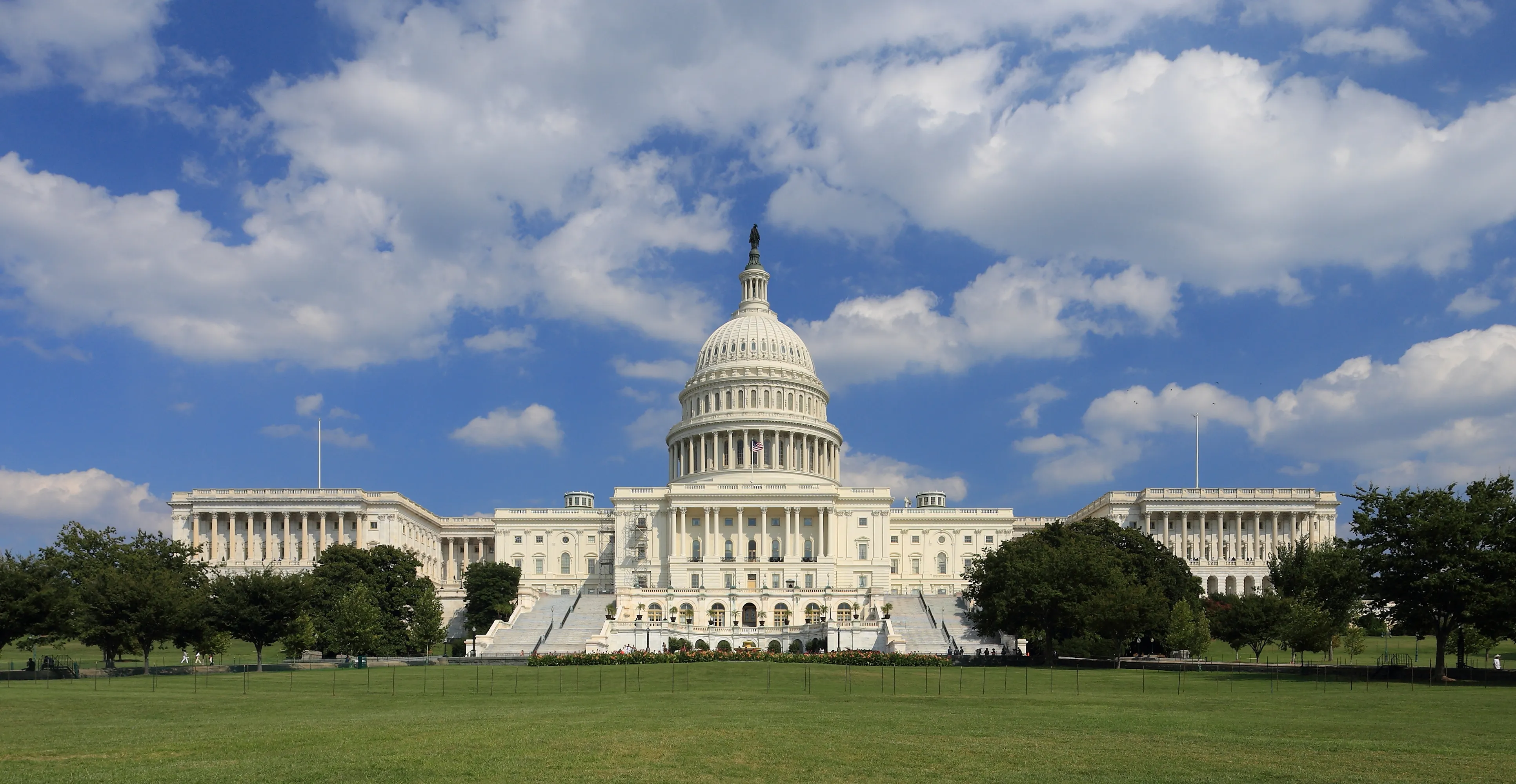
Safeguards Against Tyranny
The Constitution was built with layered, overlapping safeguards, constitutional, institutional, procedural, cultural, and geographic, so that defeating any one of them doesn't defeat the system. Here is what those safeguards actually are, how each has been tested, and where they are honestly weaker than advertised.
Layers, Not a Single Wall
No individual safeguard on this page is unbreakable on its own. What makes the American system unusually hard to capture is that it does not rely on any single one. It stacks five largely independent layers, constitutional, institutional, procedural, cultural, and geographic, so that defeating one leaves the other four still standing in the way.
The Constitution itself is written down, publicly available, and deliberately hard to change. Article V requires two-thirds of both the House and Senate, or two-thirds of state legislatures to call a convention, just to propose an amendment, and then three-fourths of the states, 38 of 50, to ratify it. That two-stage, supermajority process was built deliberately harder than passing an ordinary statute, and it has stayed that way since 1789 without a single amendment ever easing it.
In 237 years, only 27 amendments have cleared that bar, and ten of them were ratified together in 1791 as the Bill of Rights, leaving just 17 amendments in the following 235 years. Several thousand amendment proposals have been formally introduced in Congress since the founding, according to the National Archives, and the overwhelming majority never advanced past a single committee. That gap between proposals introduced and amendments ratified is itself evidence the bar functions exactly as designed.
The difficulty is deliberate rather than accidental, and the framers said so directly. Alexander Hamilton wrote in Federalist No. 85 that a process demanding such a broad consensus would make the Constitution unlikely to be overturned by any single faction, while still leaving a real path open for change when the country genuinely agreed it was needed. Every successful amendment since, from ending slavery to lowering the voting age, has required exactly that kind of broad, sustained, cross-regional consensus rather than a narrow majority's preference.
A constitution any single Congress or president could rewrite in a legislative session would not restrain anyone holding power at the moment. Because rewriting the rules of government is intentionally harder than passing an ordinary law, a faction that wins one election, or even several in a row, cannot simply legislate away the separation of powers, the Bill of Rights, or federalism itself. That protection applies equally to whichever party or faction currently holds power, since the same high bar constrains everyone who might someday want to lower it.
Power is split three ways at the federal level, legislative, executive, and judicial, and each branch has tools to check the other two. Congress can override a veto, refuse funding, or impeach; the president can veto legislation and appoint, with Senate confirmation, the judges who review it; courts can strike down acts of either branch as unconstitutional. No single office controls all three functions, and no combination of two branches acting together can permanently override the third without following the Constitution's own amendment process.
James Madison explained the underlying logic in Federalist No. 51, writing that ambition must be made to counteract ambition, because relying on parchment barriers or the good intentions of officeholders alone had failed in every prior republic the framers studied closely. Each branch was given not just formal power but a direct institutional incentive to guard its own turf against the other two, so that self-interest itself would reinforce the constitutional design rather than undermine it. That insight, that checks work best when they align with ambition rather than against it, is why the system has functioned across more than two centuries of officeholders with wildly different personal character and intentions.
That structure is then duplicated, not centralized, at the state level. Each of the 50 states runs its own legislature, its own governor, and its own court system, largely independent of Washington, and each state constitution separately enacts its own version of separated powers and checks and balances. A group trying to seize durable national control has to win, and hold, far more than one office in one city, since federal power alone cannot rewrite state constitutions or remove state officials.
The system has been tested by presidents, Congresses, and courts of every political persuasion, and it has held in each direction. Federal courts have blocked executive orders from Democratic and Republican administrations alike on statutory or constitutional grounds, Congress has overridden presidential vetoes from both parties, and presidents have successfully vetoed legislation their own party's Congress had passed. That the check operates symmetrically, restraining whichever branch or party currently holds the most power rather than favoring one side permanently, is itself part of what makes the structure durable rather than a one-time historical accident.
Federal offices are elected on staggered, fixed calendars that no single official can move. The House stands for election every two years, a third of the Senate every two years on a six-year cycle, and the presidency every four years, set by federal law to the first Tuesday after the first Monday in November. The president is limited to two terms by the 22nd Amendment, ratified in 1951, and no statute or executive order can extend that limit or delay the scheduled vote.
The staggering itself is a deliberate design choice, not an accident of scheduling. Because Senate terms overlap in thirds, no single election can replace the entire chamber at once, which means even a landslide election that sweeps the House and presidency still leaves two-thirds of the Senate answering to voters from earlier election cycles. That built-in lag slows down how quickly any single electoral wave, however large, can convert into total control of every branch simultaneously.
Because these calendars are fixed by law rather than by the discretion of whoever currently holds power, no incumbent can unilaterally postpone an election or extend a term, a point tested directly during the Civil War and both World Wars without a single federal election ever being delayed. Congress does have the constitutional authority to change the specific date of federal elections by statute, but doing so requires the same ordinary legislative process, subject to the same checks, as any other law, not a unilateral executive decision.
Removal is also available outside the election calendar altogether, through impeachment and conviction under Article II, Section 4, for a president, vice president, or federal official who commits high crimes and misdemeanors. That second track means the system does not depend solely on voters catching and removing a corrupt or lawless official at the next scheduled election, since Congress can act immediately if the House and Senate agree the conduct warrants it. Both tracks, the fixed calendar and the independent removal process, work together rather than as substitutes for each other.
Some of the strongest safeguards were never written into law at all. George Washington's voluntary retirement after two terms in 1797 established a norm of peaceful departure that held for 150 years before it was codified, and no law compelled him to walk away from the most powerful office in the young nation while he was still enormously popular. A free, adversarial press, protected by the First Amendment, has repeatedly surfaced abuses of power that formal institutions were slow to catch, from 19th-century lobbying scandals to Watergate.
A professional civil service and a military that swears its oath to the Constitution rather than to any individual official are cultural facts as much as legal ones. They mean that even a president determined to govern outside the law cannot simply order the machinery of government to comply, since career officials and officers have their own independent obligation to the Constitution, an obligation that predates and outlasts any single administration. That obligation is reinforced since 1883 by civil service protections that make the bureaucracy resistant to being purged and replaced with personal loyalists overnight.
Norms of this kind are harder to describe precisely than a statute, but they are not therefore weaker; in several documented cases they have held even when the formal legal safeguards were ambiguous or largely untested. Nixon's decision to resign in 1974 rather than fight a near-certain impeachment and conviction, covered in more depth on this page's history tab, rested substantially on a norm that a president facing overwhelming, bipartisan congressional opposition ought to leave rather than force a constitutional confrontation to its absolute limit.
Because norms depend on people continuing to honor them, they are also the layer most vulnerable to erosion over time, and this page does not claim otherwise. A norm that every officeholder has followed for two centuries can, in principle, be broken by the first one willing to pay the political cost of breaking it, which is precisely why this cultural layer works best in combination with the harder legal and institutional layers described elsewhere on this page rather than as a stand-alone protection.
The United States has no single control point the way seizing a capital city can effectively seize a small, centralized state. Elections are administered by roughly 10,000 separate state and local election jurisdictions, not one national election authority, and each jurisdiction sets and runs its own polling places, ballots, and vote-counting procedures under its own state's law. Policing is handled by close to 18,000 separate state, county, and municipal agencies, according to the Department of Justice's Bureau of Justice Statistics, not one national police force.
That fragmentation was not designed as an anti-authoritarian measure specifically, it grew out of federalism's basic structure and the country's sheer geographic size at the time of the founding, when the fastest available communication between the capital and a distant state legislature still took days or weeks. But the historical accident and the deliberate design happen to reinforce each other, since a structure built for practical administration across a large territory turns out to be exactly the kind of structure that resists rapid, centralized capture.
A group would need to simultaneously control not one government but fifty, each with its own constitution, courts, and elected officials who owe their position to their own state's voters rather than to Washington. Even total control of the federal executive branch would leave those fifty state governments, their courts, and their locally elected law enforcement leadership entirely outside that control, still bound by their own state constitutions and answerable to their own state electorates.
The country's scale compounds this further. The United States spans six time zones (more counting the territories) and about 342 million people across a landmass roughly the size of Europe, a scale at which historical attempts at rapid centralized political control, in far smaller and more geographically compact countries, still typically took organized security services years to consolidate. Nothing about American geography makes capture impossible, but it does make the logistics of simultaneous, nationwide, durable capture dramatically larger than in a small, centralized state with a single seat of government controlling most administrative functions directly.
Why this matters: A system with one point of failure, one office, one law, one norm, only needs to be broken once. A system with five independent layers needs all five broken at once, nationally, and held that way, which has no precedent in American history. The tabs that follow apply these five layers to four specific dangerous forms of government named on this page, then test the whole structure against real historical crises.
Against Oligarchy and Plutocracy
An oligarchy needs political power to stay inside a small, closed group, ideally across generations. Every safeguard below works against that specific requirement, from broad and frequent elections to the ban on hereditary titles. The section closes with the one safeguard, campaign finance disclosure, that has the most clearly documented real-world gaps.
An oligarchy depends on keeping political power inside a small, closed group, typically defined by inherited wealth, family connection, or existing political insiders. The United States moved in the opposite direction over its history: property qualifications for voting were phased out state by state in the early 1800s, the 15th Amendment (1870) barred racial voting discrimination on paper, the 19th Amendment (1920) enfranchised women, the 24th Amendment (1964) banned poll taxes in federal elections, and the 26th Amendment (1971) lowered the voting age to 18.
Each of those expansions required overcoming determined resistance from officeholders who benefited from the narrower electorate that preceded it, and none of them happened automatically or without sustained political organizing. The suffrage movement that produced the 19th Amendment took roughly 70 years of organized advocacy from the 1848 Seneca Falls Convention to ratification, and the Voting Rights Act of 1965 was needed nearly a century after the 15th Amendment to give its promise real federal enforcement teeth in the states that had evaded it.
Because federal offices face election on short, fixed cycles, every two, four, or six years, a governing elite cannot simply insulate itself once in office; it has to keep winning a broad electorate's support on a recurring schedule, and that electorate today includes essentially every adult citizen rather than a narrow property-owning or otherwise qualified class. This is a fundamentally more exposed position than a closed oligarchy's members occupy, since an oligarchy by definition does not need to win over the entire adult population to retain power.
The expansion of suffrage and the shortening of election cycles work together rather than separately. A broad electorate that only voted once a decade would still leave officeholders relatively insulated between elections, while frequent elections restricted to a narrow electorate would simply let that narrow group entrench itself more efficiently. It is the combination, a large, inclusive electorate voting on a short, fixed cycle, that makes it structurally difficult for any small group to capture and hold federal power indefinitely.
Article I, Section 9 bars the federal government from granting any title of nobility, and Section 10 bars the states from doing the same. No American office carries a hereditary title, and no American citizen may accept a foreign title of nobility without congressional consent, a restriction that has applied continuously and without exception since ratification in 1788.
The framers took this restriction seriously enough that an early, ultimately unratified constitutional amendment, sometimes called the Titles of Nobility Amendment, passed Congress in 1810 proposing to strip citizenship from any American who accepted a foreign title without consent. It fell one state short of ratification, but its near-success shows how strongly the founding generation felt about the underlying principle even beyond the Constitution's existing text.
This closes off the specific legal mechanism, a formally recognized, permanent noble class, that historical oligarchies and aristocracies used to entrench themselves across generations. The Republic of Venice's closed Golden Book of noble families, discussed elsewhere on this site's government classifications page, is a clear historical example of exactly the kind of legally codified hereditary elite the Constitution's framers were determined to prevent from ever taking root in America.
Wealth and connections can still buy influence, which is a real and separate problem addressed elsewhere on this page, but no family can convert that influence into a legally recognized title that passes automatically to their children, cannot be revoked by voters, and carries formal legal privileges unavailable to other citizens. The distinction matters: informal advantage is real and worth tracking, but it remains categorically different from a legally entrenched hereditary ruling class with rights other citizens simply do not have.
The Sherman Antitrust Act of 1890 and the Clayton Act of 1914 gave the federal government legal authority to break up companies that grow powerful enough to control an entire industry, on the theory, argued explicitly by Progressive Era reformers, that concentrated economic power left unchecked tends to convert into concentrated political power. Senator John Sherman, the act's namesake, framed the law on the Senate floor as necessary because the country would not tolerate a king in politics and should not tolerate one in trade.
The government's 1911 breakup of Standard Oil, which controlled an estimated 90 percent of U.S. oil refining before the Supreme Court ordered it split into 34 separate companies, is the defining early example, and several of those spun-off companies, including what became ExxonMobil and Chevron, remain major independent firms more than a century later rather than having quietly reconsolidated.
Antitrust enforcement has varied significantly in intensity by administration since, with vigorous enforcement in the early 20th century and again in the mid-20th century giving way to a more permissive approach from the 1980s onward, and renewed major enforcement actions against large technology firms in the 2020s. That variation itself demonstrates the tool remains a live, actively used part of federal law rather than a historical relic, subject to genuine debate about how aggressively it should be applied in any given era.
The legal tool, and the historical precedent for using it against dominant firms, has remained continuously available for more than a century regardless of which party controls the federal government, meaning no single administration can permanently disable the government's authority to break up an entrenched economic monopoly without Congress repealing the underlying statutes entirely, something that has never come close to happening in the law's 135-year history.
An oligarchy that captured only the federal government in Washington would still face 50 separately elected state governments, each with its own constitution, courts, and legislature that federal officials cannot simply override on ordinary domestic matters reserved to the states under the 10th Amendment. State governments control most day-to-day law, including criminal law, property law, family law, and the administration of elections themselves.
State governments also administer their own elections under state law, meaning a national elite could not change federal election outcomes by controlling state-level administration from Washington alone. The Constitution's Elections Clause in Article I, Section 4 gives state legislatures, not Congress or the president, the primary authority to set the times, places, and manner of holding elections for federal office, subject only to Congress's power to override those rules by ordinary statute.
Historically, entrenched economic power in one region or industry, from Gilded Age railroad interests to modern industry lobbying, has had to contend with other states' competing interests and independent electorates rather than a single unified national government to capture. A railroad monopoly that successfully captured one state's legislature in the late 19th century still faced independent, and often hostile, regulation from neighboring states whose own farmers and merchants had different economic interests.
This dynamic continues today across nearly every major industry: a company or coalition of companies that succeeds in shaping federal policy still separately confronts fifty different state regulatory regimes, fifty different state attorneys general with independent authority to sue, and fifty different state legislatures that can pass their own consumer protection or antitrust laws regardless of what Washington does. Capturing the federal government alone has never been sufficient to secure durable, unchallenged national economic control.
The First Amendment bars Congress from abridging freedom of the press, and no prior restraint on publication, a court order blocking publication before it happens, has succeeded against the American press in a major case since the Supreme Court's 1971 ruling in New York Times Co. v. United States, the Pentagon Papers case, in which the government's own attempt to block publication on national security grounds was rejected 6-3.
Investigative journalism has a long, documented record of exposing concentrated wealth's political influence specifically. The Crédit Mobilier railroad-financing scandal of 1872, in which journalists exposed a scheme by railroad executives to bribe members of Congress with discounted stock, led directly to a formal congressional censure of two implicated representatives despite the scandal's considerable political embarrassment to the party then in power.
Muckraking journalism's role in early 20th-century antitrust and labor reforms extended well beyond a single scandal. Ida Tarbell's serialized investigation of Standard Oil's business practices, published beginning in 1902, directly shaped the public and legal case that led to the company's 1911 breakup, demonstrating how a free press could translate concentrated economic power into a documented public record capable of driving formal legal consequences.
Modern reporting on campaign finance and lobbying disclosures, covered in more depth on this site's lobbying and interest groups page, continues that same tradition using tools the earlier muckrakers did not have, including the Lobbying Disclosure Act's public filing requirements and the Federal Election Commission's contribution databases. All of it relies on a press that cannot legally be silenced in advance by the government or the interests it investigates, a protection that remains legally intact regardless of which industries or officials any given story implicates.
Federal law requires lobbyists to register and report their activity under the Lobbying Disclosure Act of 1995, and federal candidates and parties must publicly report campaign contributions above set thresholds to the Federal Election Commission. These rules make concentrated political spending visible rather than hidden, at least where they apply, and the underlying disclosure filings are freely searchable by any member of the public through the FEC's and Senate's own public databases.
This safeguard is also the one with the clearest documented gaps of anything on this page, and this site does not minimize that fact. The Supreme Court's 2010 decision in Citizens United v. FEC and the related SpeechNow.org v. FEC ruling opened the door to super PACs that can raise and spend unlimited sums as long as they do not coordinate directly with a candidate's campaign, a structure that did not exist in American election law before 2010.
An estimated $2 billion in undisclosed dark money flowed through the 2024 election cycle via organizations exempt from donor-disclosure rules, according to nonpartisan campaign finance trackers, the largest total on record and a substantial increase over prior cycles. That spending flows overwhelmingly through 501(c)(4) social welfare nonprofits that federal tax law does not require to name their donors, a gap Congress has repeatedly proposed closing through versions of the DISCLOSE Act without ever passing one.
Disclosure raises the cost of concentrated influence operating in the open by forcing it into a public record rather than eliminating it outright, and it has not eliminated concentrated influence, a limit this page addresses directly and at greater length in its final section. The honest accounting is that this particular safeguard functions as intended for registered lobbying and direct campaign contributions, while remaining substantially weaker for independent expenditure spending and dark money specifically.
The 16th Amendment (1913) authorized a federal income tax, adopted partly on explicit anti-oligarchy grounds. Theodore Roosevelt and other Progressive Era reformers argued openly that concentrated, untaxed dynastic wealth threatened self-government, and Roosevelt himself called for a graduated income and inheritance tax in a 1906 speech specifically to prevent what he termed the transmission in unbroken line of vast fortunes from one generation to the next.
A federal estate tax followed in 1916, aimed specifically at limiting the size of fortunes passed intact from one generation to the next, and it was passed by a Congress that explicitly debated the tax in terms of preventing a permanent hereditary economic aristocracy from forming in a country that had constitutionally banned hereditary titles just over a century earlier.
The specific rates and exemption thresholds for both taxes have shifted substantially by era, from top marginal income tax rates exceeding 90 percent during and after World War II to far lower rates in more recent decades, and remain a matter of ordinary political debate, which this nonpartisan overview does not take a position on beyond describing the historical range those rates have actually occupied.
What has stayed constant since 1913 is the existence of the underlying legal tools, an income tax and an estate tax, that the federal government can adjust to slow the multi-generational concentration of wealth that historically underwrote oligarchic and aristocratic rule elsewhere. No administration of either party has proposed eliminating the federal income tax outright, and the estate tax, though narrowed considerably in scope over time, remains part of the federal tax code today.
Against Dictatorship and One-Man Rule
A dictatorship, whether personalist or installed by a military coup, needs one person to hold power indefinitely, unconstrained by law, election, or an independent chain of command. The safeguards below attack each of those requirements separately: fixed terms, a civil service that outlasts any administration, and a military whose obedience runs to the Constitution rather than to any individual.
The presidency is limited to two elected terms by the 22nd Amendment, ratified in 1951 after Franklin D. Roosevelt won four consecutive elections between 1932 and 1944, the only president to serve more than two terms in American history. Roosevelt died in office in April 1945, just 82 days into his fourth term, having served just over 12 years total.
Every president before and since has held to the two-term norm Washington set voluntarily in 1797, including several who might plausibly have won a third term had they sought one. Theodore Roosevelt, having served nearly two full terms after succeeding the assassinated William McKinley, chose not to run again in 1908 and later regretted that decision when he unsuccessfully sought a third, non-consecutive term in 1912.
A hard, constitutionally fixed limit closes off the single most common path to personalist dictatorship worldwide: an incumbent using the advantages of office, control of the state apparatus, name recognition, access to state media, and the power of appointment, to keep winning elections indefinitely against progressively weaker or more constrained opposition. Political scientists studying personalist authoritarian consolidation consistently identify indefinite re-election as the mechanism through which an elected leader gradually converts a democracy into a durable one-person regime.
No amount of popularity or campaign spending lets a sitting president appear on a ballot for a third term, a legal fact that applies identically regardless of the president's approval rating, the state of the economy, or any national emergency underway at the time. Unlike many of the safeguards on this page that depend on officials choosing to enforce them, the 22nd Amendment's bar functions automatically through state election officials who are legally barred from placing an ineligible candidate's name on a ballot in the first place.
Congress controls federal spending entirely, under Article I, Section 9's requirement that no money be drawn from the Treasury except by appropriations made by law. A president cannot simply fund a personal agenda the legislature refuses to pay for, no matter how urgently the president believes the spending is justified, since federal agencies and the military alike depend entirely on congressionally appropriated funds to operate.
Congress can also override a presidential veto with a two-thirds vote in both chambers, a threshold that requires substantial support from the president's own party to succeed, and the courts can enjoin executive action found to exceed legal authority, a remedy available to any party with legal standing who can show concrete harm from the action in question.
These are not abstract powers reserved for extreme constitutional crises. Federal courts have blocked executive actions from administrations of both parties on statutory or constitutional grounds throughout modern history, on subjects ranging from immigration policy to environmental regulation to federal contracting rules, and Congress has used its funding power to constrain military and foreign policy decisions on multiple occasions across different decades and different party control of the chamber.
The most notable single example is the War Powers Resolution of 1973, passed over President Nixon's veto by a Congress that included substantial numbers of his own Republican Party, specifically to limit a president's ability to commit U.S. forces to extended combat without congressional authorization. Every president since has operated, at least nominally, within its reporting and time-limit framework, even when disputing its constitutionality in specific cases.
Article II, Section 4 provides a removal mechanism for the president, vice president, and federal civil officers independent of the election calendar entirely. The House can impeach by majority vote for treason, bribery, or other high crimes and misdemeanors, and the Senate can convict and remove by a two-thirds vote, a threshold deliberately set higher than the simple majority needed to impeach in the first place.
The House has impeached a sitting president four times, Andrew Johnson in 1868, Bill Clinton in 1998, and Donald Trump in 2019 and again in 2021, and the Senate has not convicted any of them. Each acquittal fell short of the two-thirds threshold, though several fell closer than a simple majority vote would suggest, including Johnson's 1868 acquittal by a single vote.
The mechanism's mere availability functions as a check even when conviction does not occur, and the clearest evidence is the case where it was never fully used at all. The near-certainty of impeachment and conviction, once the House Judiciary Committee approved articles and Republican congressional leaders privately informed him he lacked the votes to survive a Senate trial, led Richard Nixon to resign in August 1974 rather than face that trial.
That a president facing overwhelming bipartisan opposition chose resignation over forcing the process to its conclusion demonstrates the mechanism shapes behavior even in the cases it never formally completes, a dynamic distinct from, and in some ways more powerful than, the cases where the Senate actually holds a final vote. No functioning removal mechanism exists in a personalist dictatorship, where the officeholder typically controls or has neutralized the body that would otherwise vote to remove them.
The Pendleton Civil Service Reform Act of 1883 replaced the 19th century's patronage system, in which a new administration could replace most of the federal workforce with its own loyalists after every election, with a merit-based system protecting career civil servants from being fired for political reasons. The act followed directly from the 1881 assassination of President Garfield by a disappointed office-seeker, an event that gave the reform movement the political momentum it had previously lacked.
Roughly two million career federal civilians work under these protections today across agencies a would-be dictator would need to fully control to govern effectively: tax collection at the IRS, law enforcement across dozens of federal agencies, the courts' administrative machinery, and the military's logistics and personnel systems, none of which can be staffed overnight with an incoming administration's personal loyalists under current civil service law.
A president can replace the small layer of political appointees at the top of each agency, roughly 4,000 positions government-wide according to the Plum Book Congress publishes after each presidential election, but cannot lawfully replace the career workforce beneath them with personal loyalists on short notice. Those career employees generally can be removed only for documented cause, following specific due-process procedures set out in federal civil service law. In 2025 an executive order created a "Schedule Policy/Career" category (formerly called Schedule F) meant to make some career policy positions easier to remove, and the Supreme Court allowed large reductions in force to proceed while legal challenges continued; the reach of those changes remains contested in court.
This structure means the ordinary functioning of government, tax collection continuing, benefits checks going out, federal law enforcement operating under established procedures, does not depend on any single administration's personal loyalty network, but on a permanent professional workforce whose legal protections predate, and are designed to outlast, any individual president's term in office.
Every U.S. military officer and enlisted service member swears an oath to support and defend the Constitution, not an oath of personal loyalty to the president or to any individual. The officer's oath explicitly includes the phrase 'without any mental reservation or purpose of evasion,' language written specifically to foreclose the kind of conditional or qualified loyalty a personalist regime would require of its security forces.
The Uniform Code of Military Justice, and a strong professional norm reinforced throughout officer training at institutions such as West Point and Annapolis, treats obedience to a manifestly unlawful order as itself a punishable offense rather than a legal defense. The principle traces directly back to the post-World War II Nuremberg trials, whose superior-orders rulings the U.S. military explicitly incorporated into its own doctrine and professional military education.
This is a structural feature many personalist dictatorships elsewhere have specifically lacked, or have deliberately dismantled by replacing professional officer corps with personally loyal paramilitaries answerable directly to the ruler rather than to a constitution or civilian legal chain of command. Historians of authoritarian consolidation consistently identify the replacement or purging of a professional military with a personally loyal force as one of the clearest early warning signs of a democracy converting into a personalist dictatorship.
Since the Goldwater-Nichols reforms of 1986 further professionalized the U.S. joint military command structure, the chain of command runs through statute and civilian officials at the Department of Defense, not through any individual's personal network, and every combatant commander in that chain holds their position subject to Senate-confirmed civilian oversight rather than personal appointment by an unaccountable executive.
The Posse Comitatus Act of 1878 generally prohibits using the federal Army and Air Force, and by later policy the Navy and Marine Corps, for domestic law enforcement without specific constitutional or congressional authorization. The law originated from Southern objections to the U.S. Army's role enforcing Reconstruction-era policy, but it has endured for a century and a half as a broadly accepted structural principle rather than a partisan relic of that specific dispute.
This closes off a mechanism common to historical coups and military dictatorships elsewhere: turning the national army inward against the civilian population and civilian government rather than keeping it focused outward on external defense, a separation many countries that have experienced military coups notably lack in their own legal traditions.
The Insurrection Act of 1807 provides a narrow, specific exception allowing a president to deploy federal troops domestically in cases of rebellion or when state authorities cannot enforce federal law, but its use has historically been rare, publicly justified, and subject to intense political and legal scrutiny each time it has been invoked, rather than treated as a routine or discretionary tool of ordinary governance.
Its most recent invocation came during the 1992 Los Angeles riots, at California's request. Its most notable earlier modern uses came to enforce federal court desegregation orders in the 1950s and 1960s, including President Eisenhower's 1957 deployment to Little Rock and President Kennedy's 1962 deployment to the University of Mississippi, both aimed at enforcing federal court rulings against state resistance rather than at suppressing ordinary political opposition to the government itself, a distinction that has shaped how narrowly the exception has generally been understood and applied since.
Each state's National Guard normally serves under that state's own governor, not the president, unless and until it is federalized under specific statutory conditions. This dual state-federal status, unique among American military organizations, traces back to the Militia Act of 1903 and has been repeatedly reaffirmed and clarified by Congress in the decades since.
This decentralizes military-adjacent force away from a single national chain of command that one office could unilaterally direct, spreading it across 50 governors elected by their own separate state electorates, each of whom retains independent legal authority to call up their own state's Guard for state-level emergencies without any federal involvement at all.
A president can federalize the Guard under specific statutory conditions, such as 10 U.S.C. 12406 or the Insurrection Act, some of which do not require a governor's consent. Federalization has occasionally been politically contentious: during the civil rights era, presidents federalized state Guard units to enforce desegregation orders over governors' resistance, and in June 2025 the President federalized California Guard units over Governor Gavin Newsom's objection, the first such move against a governor's wishes since 1965, followed by Guard deployments to Washington, D.C., Oregon, and Illinois that led to lawsuits, some reaching the Supreme Court.
The everyday, default legal status of the Guard as state-controlled reinforces the same fragmentation-of-force principle found in the Posse Comitatus Act and civilian control of the regular military described elsewhere on this page. A would-be authoritarian seeking to use military-adjacent force for domestic political control would need to either secure the cooperation of dozens of independently elected governors or successfully federalize Guard units against those governors' objections, a legally fraught and politically visible process rather than a quiet, unilateral action.
The Supreme Court established its own power to strike down executive and legislative acts as unconstitutional in Marbury v. Madison (1803), a power not explicitly written into the Constitution's text but accepted as settled law by every subsequent administration, Congress, and court for more than two centuries since Chief Justice John Marshall's opinion first articulated it.
Article III judges hold their positions for life during good behavior, insulating them from the political pressure of needing re-election or reappointment, a design the framers adopted specifically, according to Hamilton's Federalist No. 78, to give judges the independence necessary to rule against a popular president or Congress when the Constitution required it.
Courts have used this power against presidents from both parties across history, from Youngstown Sheet & Tube Co. v. Sawyer (1952), which blocked President Truman's attempt to seize steel mills during the Korean War despite his citing national security, to United States v. Nixon (1974), which unanimously ordered President Nixon to turn over the Watergate tapes over his own administration's direct legal objection.
Judicial review means a president's authority is legally bounded by courts that do not answer to the president who appointed them, a point demonstrated concretely by the fact that justices appointed by a given president have repeatedly ruled against that same president's administration, or against a successor from the same party, in major cases, since life tenure removes any ongoing incentive to rule in favor of whoever holds the appointing power at a given moment.
Against Hereditary Rule
Kingship specifically requires a legal mechanism for power to pass by bloodline rather than by election or appointment. American law contains no such mechanism anywhere, at any level of government, and the country's most powerful founding figure set an early, deliberate precedent against even trying.
As with oligarchy, Article I's ban on titles of nobility applies directly here: no American office can become a hereditary title, and no American may accept one from a foreign government without Congress's consent, a restriction written into the Constitution's original 1787 text rather than added later by amendment.
There is no legal category of prince or heir apparent anywhere in American law, at any level of government. No state constitution recognizes hereditary succession to any office, and no federal statute provides any legal mechanism by which a position of governmental authority could pass automatically from a parent to a child.
This is not merely a formality or a symbolic gesture toward republican values. Historical monarchies rested on a specific legal fiction, that the office itself passed automatically by bloodline, independent of any individual election or appointment, a fiction reinforced by centuries of religious and legal doctrine holding that a monarch's authority derived from birth and divine sanction rather than from the consent of the governed.
American law contains no comparable mechanism at any level of government, federal, state, or territorial, which means even a president who wished to establish a hereditary dynasty would find no existing legal pathway to do so. Establishing one would require not just seizing power once, but successfully rewriting the Constitution's amendment process, the 10th Amendment's reservation of power to the states, and every state's own constitution simultaneously.
The Presidential Succession Act of 1947 and the 25th Amendment (1967) set out exactly who takes over if a president dies, resigns, or is incapacitated, replacing an earlier, less detailed succession statute from 1886 that Congress judged inadequate after several near-crises in presidential health and succession during the late 19th and early 20th centuries.
The order runs entirely through elected and confirmed offices: the vice president, then the Speaker of the House, then the president pro tempore of the Senate, then the Cabinet in the order their departments were created, a sequence that ensures every person in the line of succession has either been directly elected by voters or confirmed by the Senate.
A president's children have no legal claim to the office whatsoever, regardless of age, competence, or public sentiment at the time of a vacancy, and no provision anywhere in the succession statute or the Constitution itself makes any reference to a departing president's family at all.
This has been tested in practice nine times when a president has died or resigned in office, most recently with Gerald Ford's succession after Richard Nixon's resignation in 1974. In every instance, power passed to the next officeholder in the statutory line, never to a relative of the departing president, including in the four presidential assassinations in American history, each of which saw the sitting vice president assume office within hours under exactly the process the law prescribed.
Article II sets the president's term at four years, and federal law, since 1845, fixes Election Day as the first Tuesday after the first Monday in November, a date no president or Congress can move unilaterally for a single election cycle without passing new legislation through the full ordinary lawmaking process.
A monarch's indefinite tenure is structurally impossible when the calendar itself is set in statute rather than at the officeholder's discretion. Unlike a monarchy, where the ruling period ends only at death, abdication, or overthrow, the American presidency has a legally predetermined expiration date that arrives regardless of the officeholder's wishes or popularity.
Even in the most severe national crises in American history, the Civil War (1861 to 1865) and World War II (1941 to 1945), presidential elections were held on schedule without interruption or postponement. Abraham Lincoln ran for and won re-election in November 1864 while the Civil War was still being fought, and he did so uncertain of victory, reportedly telling his cabinet before the results came in that he expected to lose.
Franklin Roosevelt's 1944 re-election similarly proceeded on schedule in the middle of the Second World War, with millions of American service members overseas casting ballots by mail under wartime conditions. That both of the nation's two most severe military crises produced on-schedule elections rather than any postponement establishes a strong, unbroken historical precedent against the kind of indefinite emergency rule a monarchy or dictatorship would rely on to justify suspending elections.
The Constitution contains two separate emoluments clauses: Article I, Section 9 bars federal officeholders from accepting gifts, titles, or payments from foreign governments without congressional consent, and Article II, Section 1 bars the president specifically from receiving any additional compensation from the federal government or the states beyond a fixed salary set by law.
These clauses were written specifically in response to the kind of foreign-gift and royal-patronage dynamics that sustained European monarchies and their court favorites, where a monarch's officials often depended on gifts, pensions, and honors from foreign courts as much as from their own government, creating exactly the kind of divided loyalty the framers wanted no American official to have.
The framers debated the Foreign Emoluments Clause directly during the constitutional convention, motivated in substantial part by the practice, common among European diplomats and monarchs of the era, of exchanging valuable gifts as a routine part of foreign relations. Edmund Randolph later raised the concern, at Virginia's 1788 ratifying convention, that American ministers abroad might otherwise be improperly influenced by such gifts from foreign courts.
They remain part of ordinary constitutional law today, and their application has been the subject of active litigation in recent years, which this nonpartisan page does not take a position on beyond noting the clauses exist, remain enforceable in court, and have never been repealed or narrowed by constitutional amendment since their original ratification in 1788.
In 1782, a colonel named Lewis Nicola wrote to George Washington suggesting he take the title of king, frustrated by Congress's inability to pay or properly supply the Continental Army after years of war. Washington refused in the strongest terms available to him, calling the idea abhorrent and expressing painful sensations at even being asked to consider it.
In 1783, he further declined broader executive authority some officers reportedly urged him to seize amid the unresolved Newburgh Conspiracy, in which unpaid officers openly discussed defying Congress. Washington personally intervened at a meeting of his officers, delivering a speech that, along with his visible need for reading glasses in front of his men, is credited by historians with defusing the crisis entirely.
He voluntarily resigned his military commission to Congress at the war's end in December 1783, a resignation King George III reportedly called, if the account is accurate, an act that would make Washington the greatest man in the world, precisely because European monarchs of the era found the idea of a victorious general voluntarily surrendering power almost incomprehensible.
After serving two terms as president, Washington declined to run for a third in 1796, establishing a voluntary norm against indefinite tenure that every president honored for a century and a half before it was written into the Constitution as the 22nd Amendment in 1951. The precedent that the nation's most powerful, most popular founding figure could simply walk away from power voluntarily, twice, remains one of the most consequential norms in American governance, one later presidents have cited by name when explaining their own decisions not to seek additional terms.
Against Totalitarianism and One-Party Rule
Totalitarian and fascist regimes require controlling nearly all public and private life at once: speech, the press, competing parties, the police, religion, and the courts. Each safeguard below closes off one of those specific levers, and several of them, decentralized policing and federalism especially, make total centralization logistically enormous even before any legal barrier is considered.
The First Amendment protects speech, press, religion, assembly, and the right to petition the government for redress of grievances, all in a single sentence ratified in 1791 as part of the Bill of Rights. Totalitarian regimes historically require the opposite of each of these five freedoms: a state monopoly on public speech and information, a single approved ideology or state religion, and a ban on independent assembly or organized opposition.
Modern First Amendment doctrine sets an extremely high bar for restricting political speech specifically. The Supreme Court's 1969 decision in Brandenburg v. Ohio held that even speech advocating illegal action is protected unless it is directed at inciting imminent lawless action and likely to produce it, overturning an earlier, more permissive standard that had allowed broader restrictions on political speech in the mid-20th century.
That standard makes the kind of blanket criminalization of dissent totalitarian states rely on almost impossible to accomplish through ordinary legislation without a constitutional amendment first, since any federal or state law attempting to criminalize criticism of the government generally, rather than speech meeting the specific Brandenburg standard, would face near-certain invalidation in federal court regardless of which political party or administration enacted it.
This protection has held across sharply different political eras and against speech many Americans across the political spectrum found deeply offensive, including protection for flag burning as symbolic speech in Texas v. Johnson (1989) and protection for hateful and widely condemned protest speech in Snyder v. Phelps (2011). The doctrine's willingness to protect even speech the government and much of the public actively despise is itself evidence the standard is not being selectively applied only to convenient cases.
Ballot access in the United States is governed by state law, not federal fiat, and no federal statute bans any political party from organizing, nominating candidates, or appearing on a ballot. Each state sets its own specific signature-gathering and filing requirements for a new party to qualify, but none of the fifty states categorically prohibits the formation or ballot participation of an additional party altogether.
Minor and third parties, Socialist, Libertarian, Green, and others, have run candidates in every modern election cycle without exception, and several have won state and local offices historically, including Socialist Party mayors in cities such as Milwaukee, which elected Socialist mayors for a combined 38 years across three separate mayoral tenures in the early and mid-20th century.
Third-party and independent candidates have also won statewide office more recently. Bernie Sanders has served as an independent U.S. senator from Vermont since 2007, and Minnesota elected a Reform Party governor, Jesse Ventura, in 1998, demonstrating the legal pathway for parties outside the two dominant ones remains genuinely open rather than merely theoretical.
This stands in direct contrast to the single-party states covered on this site's government classifications page, where opposition parties are formally outlawed or structurally prevented from competing through legal or physical intimidation. The American system's two-party dominance is a product of its electoral rules, particularly single-member districts and plurality voting, a well-documented phenomenon political scientists call Duverger's Law, rather than any legal prohibition on additional parties forming or competing.
The United States has no single national police force in the sense that centralized or totalitarian states have relied on, a Gestapo, an NKVD, or a Stasi answering to one political leadership with authority to operate anywhere in the country under a single unified chain of command reporting to the head of state directly.
The Department of Justice's Bureau of Justice Statistics counts nearly 18,000 separate state, county, tribal, and municipal law enforcement agencies nationwide, the overwhelming majority under local, not federal, control, employing roughly 700,000 sworn officers collectively across those thousands of separate, independently governed departments.
Federal law enforcement agencies, the FBI, the DEA, the Secret Service, and others, have specific, legally bounded jurisdictions defined by statute and cannot simply direct local police departments, which answer to their own elected mayors, county officials, and, in most states, independently elected sheriffs who owe their position to their own county's voters rather than to any federal appointment.
A national leadership seeking to use police power for political control would have to separately capture thousands of independent local departments, each with its own locally elected or appointed oversight, rather than issue one order from Washington, a logistical undertaking with no real precedent in a country of this size and this degree of decentralized law enforcement.
Totalitarian consolidation requires eliminating independent centers of authority that could organize resistance or simply refuse to comply with unlawful directives, since a would-be totalitarian government cannot tolerate any institution capable of acting as an alternative source of legitimate authority within its own borders.
American federalism builds 50 separately elected state governments, each running its own courts, its own police oversight, and, as covered above, in most circumstances its own National Guard, directly into the constitutional structure rather than leaving such decentralization to ordinary policy choice that a future Congress could simply legislate away.
A national government attempting a totalitarian consolidation would need to simultaneously override or replace 50 independently elected legislatures and governors, each accountable to a distinct state electorate under its own state constitution, a fundamentally different and far larger undertaking than centralizing control in a unitary state, covered on this site's government classifications page, with no independent subnational governments to begin with.
Even states controlled by the same political party as the federal government retain independent legal authority and their own elected officials who answer to their own state's voters rather than to federal officials, meaning party alignment alone does not collapse the structural independence federalism provides. A governor of the same party as the president remains legally free to refuse cooperation with directives that governor judges unlawful.
The First Amendment's Establishment Clause bars the government from establishing an official religion, while its Free Exercise Clause protects individuals' right to practice their own. Both clauses appear in the same single sentence that opens the Bill of Rights, reflecting the framers' view that religious liberty required restraining government from both directions at once.
Historically, several totalitarian and authoritarian regimes have fused state and religious or ideological authority into a single enforcement apparatus, using an official church or party ideology to police belief and conformity among the population, a pattern this site's government classifications page documents in its coverage of theocracy and caliphate as distinct forms of government.
The American constitutional structure blocks that specific fusion mechanism by design: there is no single state-sanctioned religious or ideological authority available for a government to capture and weaponize as an instrument of social control, since no American church or denomination holds any formal governing power, tax-supported status, or legal authority over any other citizen's conduct.
The country's religious composition is, and long has been, highly pluralistic, spanning Protestant denominations, Catholicism, Judaism, Islam, Buddhism, Hinduism, and a rapidly growing religiously unaffiliated population, according to Pew Research Center surveys. That diversity itself makes the kind of single-church fusion with state power common in some historical and contemporary authoritarian states considerably harder to construct even as a matter of raw political feasibility, independent of the legal barriers described above.
Federal judges serve for life during good behavior, a deliberate insulation from the political pressure that judges facing re-election or reappointment would face, a design choice the framers adopted specifically so that judges could rule against a popular president, Congress, or public sentiment when the law required it without fear of losing their position as a result.
Courts have repeatedly ruled against the government in politically significant cases across administrations of both parties, demonstrating functional independence rather than the rubber-stamp judiciaries typical of totalitarian states, where courts generally exist to formally ratify decisions the ruling party or leader has already made rather than to independently review them.
This site's Supreme Court page covers several such cases in depth, including Franklin Roosevelt's failed 1937 attempt to expand and effectively pack the Court after it struck down several New Deal programs, a plan Congress, including many members of Roosevelt's own party, ultimately rejected despite his overwhelming popularity at the time and his landslide re-election just months earlier.
That rejection is particularly notable because it came from a Congress controlled by the president's own party, at the height of his personal popularity, refusing a request from the most electorally dominant president in modern American history. A totalitarian regime's court system, by definition, could not have produced that outcome, since it would already have been restructured or replaced to prevent the independent rulings that provoked the plan in the first place.
Beyond the First Amendment's baseline protection, the Freedom of Information Act of 1966 gives the public and press a legal right to request and obtain federal government records, with narrow, specifically enumerated exemptions covering matters such as classified national security information, ongoing law enforcement investigations, and certain personal privacy interests.
Nearly all states have comparable public records laws for state and local government, meaning the transparency principle FOIA establishes at the federal level extends, in modified form, to the vast majority of government activity Americans actually encounter day to day, from local school board decisions to state agency spending records.
Structural transparency of this kind, a legal default of public access rather than official secrecy, is close to the opposite of the information control totalitarian regimes require to function, since a totalitarian state depends on controlling what its population can learn about the government's own conduct, a control that a legal presumption of public access to government records directly undermines by design.
Investigative reporting built on FOIA requests and whistleblower disclosures has repeatedly surfaced government misconduct that would otherwise have stayed hidden, reinforcing the free press protections covered earlier in this section. Federal whistleblower protection statutes, layered on top of FOIA's public-records access, further ensure that government employees who witness misconduct have a legally protected channel for disclosure rather than facing the threat of unchecked retaliation that whistleblowers in more closed systems typically face.
Tested By History
Every safeguard described in the tabs above is a claim about how the system is supposed to work. These seven episodes are what happened when that claim was actually put under real pressure, including one case, Japanese American internment, where the safeguards failed in the moment and the correction took decades. Both kinds of evidence belong on this page.
When farmers in western Pennsylvania violently resisted a federal excise tax on whiskey, one of the new federal government's first attempts to raise revenue under its own independent taxing authority, tensions escalated through 1794 into armed resistance, including attacks on federal tax collectors and the burning of a tax inspector's home.
President Washington personally led a militia force of roughly 13,000, larger than any army he had commanded during the Revolutionary War itself, to suppress the uprising, the only time a sitting U.S. president has commanded troops in the field. Washington rode with the army partway before returning to Philadelphia and leaving field command to Alexander Hamilton and Virginia's governor.
The rebellion dissolved almost immediately once the militia arrived, with most of the resistance evaporating without significant violence. Roughly 20 men were arrested, and only two were ultimately convicted of treason, both of whom Washington pardoned in 1795, judging further punishment unnecessary once federal authority had been demonstrated and accepted.
The episode showed the new federal government could enforce its laws without the crisis becoming a permanent military government. Once the rebellion dispersed, the militia went home, civilian authority resumed immediately, and no military government or emergency powers persisted beyond the immediate crisis. The test was whether federal authority under law could be enforced without becoming indefinite military rule, and it clearly was.
John Adams's Federalist Party lost the presidency to Thomas Jefferson's opposing Democratic-Republican Party in a bitterly contested election, the first time power would transfer between rival political parties under the new Constitution. The campaign itself was extraordinarily vicious by any era's standards, with each side's partisan press accusing the other of treason, atheism, and plotting to install a foreign-style monarchy.
The election was further complicated by a flaw in the original Constitution's electoral system, which did not distinguish between votes for president and vice president. Jefferson and his own running mate, Aaron Burr, tied in the electoral college, throwing the decision to the House of Representatives, which took 36 separate ballots over six days before finally electing Jefferson.
Many at the time worried openly that the losing side would refuse to accept the result, or that the constitutional crisis over the Jefferson-Burr tie would itself produce a breakdown. Some Federalists reportedly discussed using their lame-duck control of Congress to prevent Jefferson's inauguration entirely, though no such attempt was ultimately made.
Adams left office peacefully in March 1801, and the transition, later called the 'Revolution of 1800' by Jefferson himself for how routine and bloodless it was compared to the era's other democratic experiments, established the core precedent that electoral defeat means leaving office, not clinging to power or turning to force, a precedent Congress subsequently reinforced by passing the 12th Amendment in 1804 specifically to prevent the same electoral tie from recurring.
Eleven Southern states attempted to secede from the Union following Abraham Lincoln's election in November 1860, beginning with South Carolina's declaration of secession in December 1860 and continuing through the formation of the Confederate States of America the following February, before Lincoln had even taken office.
This was the most severe structural stress test the federal system has ever faced, an attempt to dissolve the union of states entirely rather than merely change who led it, and it produced four years of civil war fought primarily to determine whether the Constitution's union of states was permanent or whether individual states retained a unilateral right to leave it.
The war settled, at enormous human cost, an estimated 620,000 to 750,000 deaths depending on the historical estimate used, that states could not unilaterally leave the union, a question the Constitution's original text had left genuinely ambiguous and that no peaceful legal or political process had been able to resolve in the preceding decades of escalating sectional conflict.
The 13th, 14th, and 15th Amendments that followed permanently abolished slavery and rewrote the relationship between federal authority and state power, expanding federal enforcement of individual rights against the states in ways the original Constitution had not contemplated. The 14th Amendment's Citizenship and Equal Protection Clauses in particular became the legal foundation for a substantial share of 20th-century civil rights law built directly on the constitutional changes this crisis produced.
After the Supreme Court struck down several major New Deal programs, including the National Industrial Recovery Act in 1935 and the Agricultural Adjustment Act in 1936, President Franklin Roosevelt grew convinced that a narrow conservative majority on the Court was determined to dismantle his entire legislative program regardless of its specific constitutional merits.
Fresh off a landslide 1936 re-election in which he carried 46 of 48 states, arguably the most popular president in modern American history at that moment, Roosevelt proposed legislation in February 1937 to add up to six new justices, one for every sitting justice over the age of 70 who declined to retire, enough to guarantee a friendly majority on any future case.
Congress, including many members of Roosevelt's own Democratic Party, which held overwhelming majorities in both chambers at the time, rejected the plan as a threat to judicial independence. Senate Judiciary Committee Democrats issued a scathing report calling the bill a needless, futile, and utterly dangerous abandonment of constitutional principle, and it never received a floor vote in the Senate.
The episode is the clearest historical example of Congress checking a wildly popular president's attempt to restructure a co-equal branch in his own favor, and it came at genuine political cost to Roosevelt. Historians generally regard the fight as having cost him significant political capital heading into the 1938 midterms, in which his party lost a substantial number of House seats despite his continued personal popularity.
Executive Order 9066, signed by President Roosevelt in February 1942 following the Japanese attack on Pearl Harbor, authorized the forced removal and incarceration of roughly 120,000 Japanese Americans, most of them U.S. citizens, without individual charges, hearings, or trials, based solely on their ancestry.
The Supreme Court upheld the policy 6-3 in Korematsu v. United States (1944), rejecting a direct constitutional challenge and ruling that the military necessity claimed by the government outweighed the individual rights at stake, one of the clearest documented failures of the safeguards described on this page to function in real time when they were most needed.
The correction, when it came, took decades rather than years. A 1980s federal commission investigating the policy concluded it had been driven by race prejudice, war hysteria, and a failure of political leadership rather than genuine military necessity, and Congress's 1988 Civil Liberties Act formally apologized and paid $20,000 in reparations to each surviving victim, more than four decades after the internment itself began.
The Supreme Court's 2018 decision in Trump v. Hawaii explicitly repudiated Korematsu in its written opinion, stating it 'was gravely wrong the day it was decided' and 'has no place in law under the Constitution,' even though Korematsu itself was not the case directly before the Court at that time. This case belongs on this page specifically because it shows the safeguards are not automatic or instantaneous, and correction sometimes takes far longer than the original harm, a fact this page does not soften.
A break-in at the Democratic National Committee's headquarters in June 1972, traced back to President Nixon's re-election campaign through a burglar's address book and campaign committee funds discovered in the burglars' possession, unraveled over the following two years into the most consequential political scandal in modern American history.
Investigative journalism, most famously by Washington Post reporters Bob Woodward and Carl Bernstein working with a then-anonymous source later revealed to be FBI official Mark Felt, combined with congressional hearings held on live national television and a special prosecutor's inquiry, exposed a pattern of abuse of power, illegal surveillance, and obstruction of justice reaching directly into the Oval Office.
The Supreme Court's unanimous 1974 ruling in United States v. Nixon, decided 8-0 with one justice recused, ordered the president to surrender subpoenaed tape recordings over his own administration's direct legal objection that executive privilege shielded them from disclosure entirely.
Nixon resigned days later, on August 9, 1974, rather than face a near-certain Senate conviction after the House Judiciary Committee approved articles of impeachment on a bipartisan vote. Every layer covered on this page, the press, Congress, an independent prosecutor, and a unanimous Supreme Court that included justices Nixon himself had appointed, functioned as intended in the same crisis, a rare case where nearly every safeguard on this page was tested simultaneously and held.
On January 6, 2021, a crowd breached the U.S. Capitol building following a rally near the White House, forcing a temporary halt to the joint session of Congress convened to certify the Electoral College results, the specific proceeding described in Article II and the 12th Amendment that has occurred without significant incident in every prior presidential transition since the nation's founding.
Members of Congress, congressional staff, and Vice President Pence, who was presiding over the joint session in his constitutional role as president of the Senate, were evacuated as law enforcement worked to secure the building. The session was suspended for several hours while the Capitol was cleared and secured.
Congress reconvened later that same evening and completed the certification in the early hours of January 7, with both chambers voting to reject objections raised to the results in two states before the count was formally finalized and announced, following the same statutory certification process the 12th Amendment and the Electoral Count Act prescribe.
The presidential transition proceeded on the constitutionally and statutorily fixed date of January 20, unmoved by the disruption of two weeks earlier. The episode tested, under real and serious pressure, whether the certification process could be interrupted rather than completed, and the fixed calendar and reconvened proceeding held, with the transfer of power occurring on schedule as required by law.
The Honest Limits
None of the safeguards on this page are automatic or self-enforcing, and none of them are complete. Independent monitors such as Freedom House and the V-Dem Institute have documented real erosion in specific areas even as the overall structure has held. Money in politics is the most thoroughly documented gap, this site's lobbying and interest groups page covers Citizens United, super PACs, and dark money's roughly $2 billion presence in the 2024 election cycle in detail.
And as the Founders themselves warned, every safeguard described on this page depends on enough citizens understanding how it works and caring enough to defend it, a point this site's Founders' Choice page addresses directly in its own closing section. A structure this elaborate can still fail through neglect even if no single actor ever successfully attacks it directly.
Sources & Further Reading
- National Archives, The Constitution, Article V
- Library of Congress, The Federalist Papers
- National Archives, 25th Amendment and Presidential Succession
- U.S. Department of Justice, Bureau of Justice Statistics
- U.S. Office of Personnel Management
- Oyez, Korematsu v. United States (1944)
- Oyez, Trump v. Hawaii (2018)
- Freedom House, Freedom in the World Methodology
- V-Dem Institute, Varieties of Democracy
This page describes documented legal and historical safeguards. It does not predict future outcomes and takes no position on any current political dispute. Case studies are drawn from primary historical records and Supreme Court opinions; the honest-limits section is sourced to nonpartisan monitors including Freedom House and the V-Dem Institute.