About Wisconsin
Wisconsin takes its name from the Wisconsin River, whose name comes from the Miami-Illinois language. The word has been variously translated as "it lies red" (referring to the red sandstone along parts of the river), "gathering of the waters," "great rock," or "holes in the bank of a stream." French explorer Jacques Marquette recorded the river's name as "Meskousing" in 1673, and it evolved through various spellings before settling into its current form. Wisconsin Territory was organized in 1836 and became a state in 1848. Wisconsin holds a notable place in American political history as the birthplace of the Republican Party, which was founded in Ripon, Wisconsin in 1854 in opposition to the expansion of slavery.
Wisconsin is a state that contains multitudes. It is America's Dairyland, where more than a billion pounds of cheese roll out of roughly 1,200 creameries every year and cows outnumber people in dozens of rural counties. It is also the state that gave the country its progressive political tradition, the state where Robert La Follette built a model of activist government that other states spent a century copying, and then turned around and produced Joseph McCarthy. It is the birthplace of the Republican Party, yet for much of the 20th century it was one of the most reliably progressive states in the union.
The landscape is the history. The Wisconsin Glacier, whose retreat roughly 10,000 years ago left behind 15,000 lakes, the moraines and drumlins of the agricultural heartland, and the unglaciated Driftless Area with its limestone bluffs along the Mississippi, created the physical stage on which every chapter of Wisconsin's story played out. German and Scandinavian immigrants arrived in the mid-19th century and found a landscape that reminded them of home; the glacial soils of the central and western counties proved ideal for dairy farming, and the cheese traditions they brought from Europe rooted themselves so deeply that Wisconsin's dairy dominance became structural, not just historical.
Today Wisconsin is a state in genuine political tension. Its presidential elections are decided by fractions of a percent. Its cities deliver overwhelming Democratic margins while its rural counties return Republican supermajorities. The University of Wisconsin-Madison, one of the great public research universities in America, shares the state with small towns where the political culture is closer to rural Kansas than to college-town Cambridge. This is what makes Wisconsin the single most reliable barometer of where America actually stands: you cannot win a national election without understanding what Wisconsin is thinking, and what Wisconsin is thinking is always complicated.
Wisconsin's Six Regions
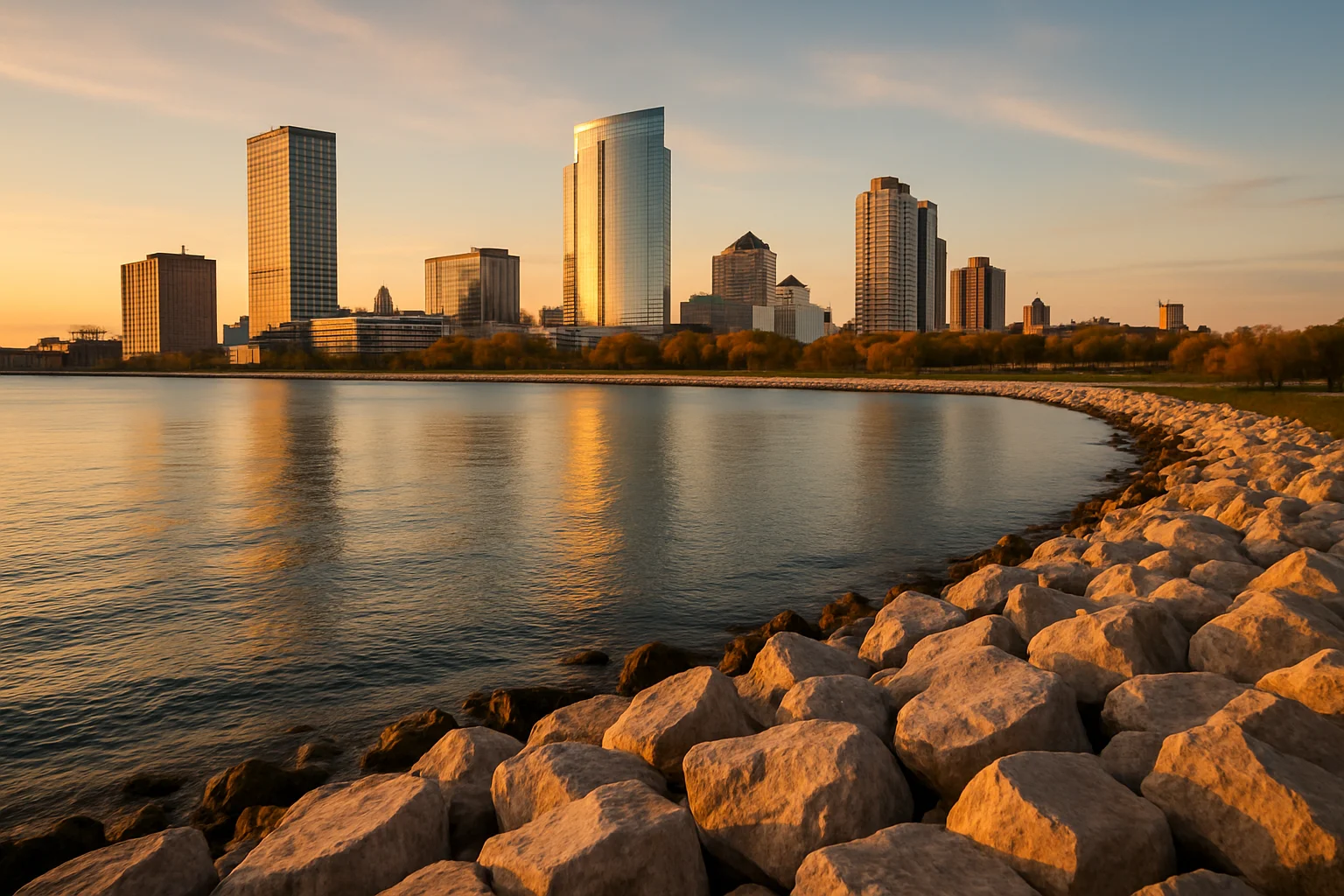
Milwaukee, Wisconsin's largest city with approximately 577,000 residents and a metropolitan area of 1.6 million, sits on the western shore of Lake Michigan at the confluence of the Milwaukee, Menomonee, and Kinnickinnic Rivers, a geography that made it a natural site for water-powered industry and Great Lakes shipping from the earliest days of American settlement. The city's German immigrant population, which arrived in massive waves after the failed 1848 revolutions in Europe and made Milwaukee the most German city in America by 1870, built the brewing industry, the Pabst and Schlitz and Blatz and Miller empires that transformed American drinking culture and gave Milwaukee its 'Brew City' identity.
That German heritage is still palpable in neighborhoods like the Historic Third Ward, the neighborhoods around Schlitz Park, and the annual Summerfest music festival on the lakefront, the world's largest music festival by attendance with approximately 800,000 visitors over its 11-day run. The Great Migration brought tens of thousands of African Americans from the Deep South in the 1940s and 1950s, creating Milwaukee's North Side neighborhoods and a vibrant Black cultural tradition including Vel R. Phillips Drive and the Civil Rights movement history of Lloyd Barbee's 1964 school boycott.
The Milwaukee Bucks (NBA) and Milwaukee Brewers (MLB) anchor the city's professional sports scene; the Bucks' Fiserv Forum, opened in 2018, catalyzed a major redevelopment of the downtown entertainment district. Marquette University (Catholic, founded 1881) and the University of Wisconsin-Milwaukee (public, 30,000 students) provide the city's academic foundation.
The lakefront, with the Milwaukee Art Museum's Quadracci Pavilion by Santiago Calatrava, its winged brise-soleil opening and closing twice daily, is one of the most architecturally dramatic public spaces in the Midwest.
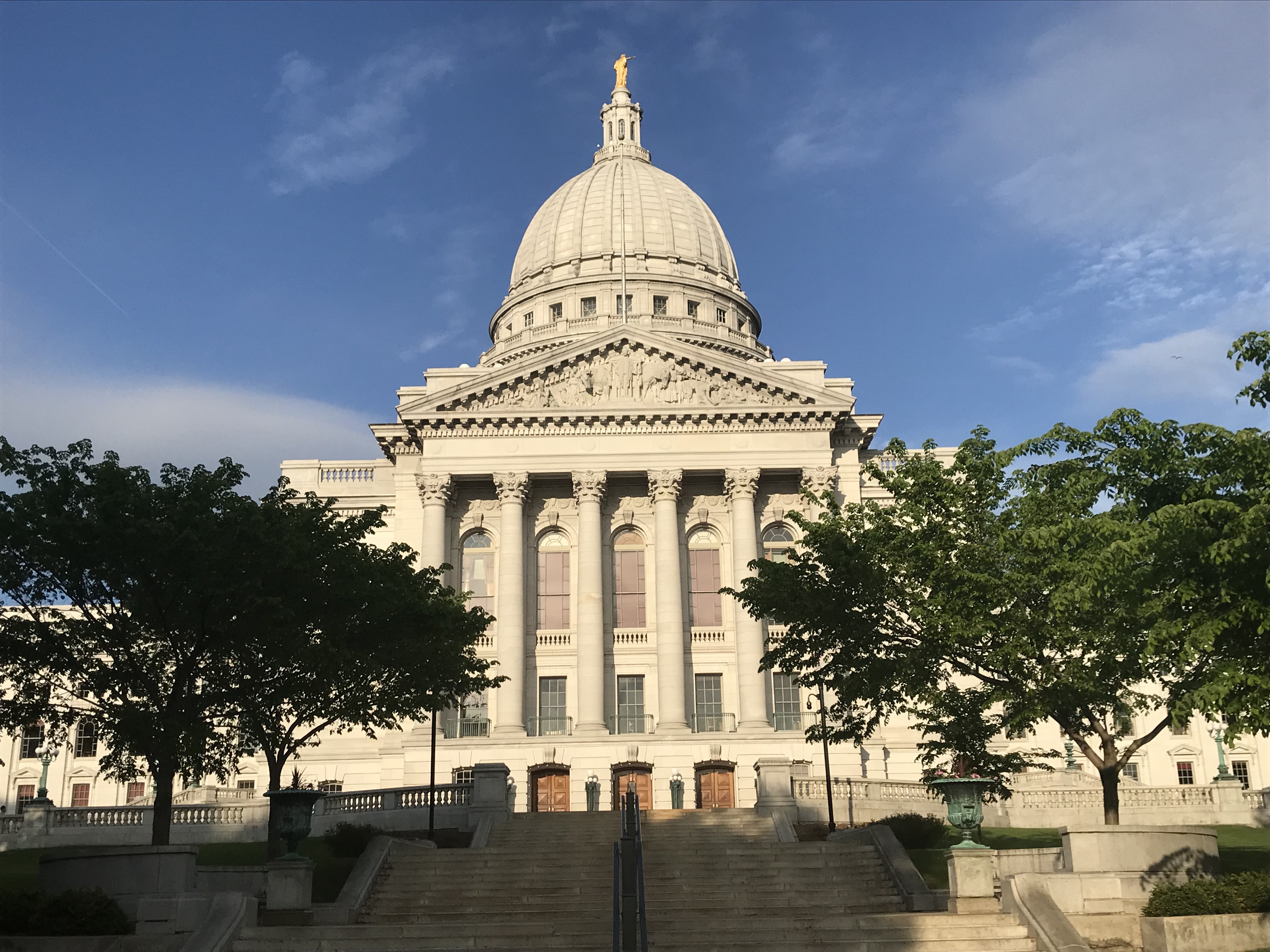
Madison, Wisconsin's capital city with approximately 270,000 residents and a metro area approaching 700,000, occupies one of the most beautiful urban sites in the Midwest: an isthmus between two glacial lakes, Mendota and Monona, connected by State Street, the pedestrian corridor linking the University of Wisconsin-Madison campus to the Wisconsin State Capitol at the top of the hill. The capitol building's dome, clad in Bethel White granite from Vermont, rises 284 feet, the only granite dome on a state capitol, and stands above a skyline otherwise kept deliberately low by city ordinance to preserve views of the lakeshores.
The University of Wisconsin-Madison (founded 1848, the same year as statehood) is a flagship Big Ten research university enrolling approximately 48,000 students and generating more than $1.5 billion in research expenditures annually; its lakefront campus, particularly the Memorial Union Terrace overlooking Lake Mendota, is one of the most photographed spots in the Midwest. The 'Wisconsin Idea,' the philosophy that the university's research and expertise should benefit all state residents and extend beyond the campus borders, has shaped the progressive political tradition for which Madison is known and which produced landmark labor protections and social welfare legislation in the early 20th century.
The technology corridor extending from Madison southwest along US-14 to Verona is home to Epic Systems and a growing cluster of medtech and software companies that have made Madison one of the fastest-growing metro areas in the Midwest.
The city's progressive political culture, which delivered 80-percent Democratic margins in recent presidential elections, makes it politically distinct from the rest of the state and the source of ongoing tension in Wisconsin's fiercely polarized political environment.
The Fox River corridor from Oshkosh north through Appleton, Neenah, Menasha, Kaukauna, and into Green Bay is the most densely industrialized region in Wisconsin and the birthplace of the American paper industry, the Fox River's powerful current, falling approximately 170 feet over 38 miles, powered dozens of paper mills that by the late 19th century made the region the paper capital of the United States. That industrial heritage persists today in specialty paper manufacturers, packaging companies, and the converting industry that transforms paper into finished products.
Green Bay, with approximately 115,000 residents, is Wisconsin's third-largest city and the smallest market in all of professional football, a distinction that makes its relationship with the Green Bay Packers, the only community-owned franchise in major professional sports, one of the most unusual and celebrated in American sports history. The Packers were incorporated as a nonprofit in 1923, are owned by more than 500,000 shareholders whose shares pay no dividends and cannot be resold, and have never, despite decades of pressure and vastly higher offers, been sold to private ownership.
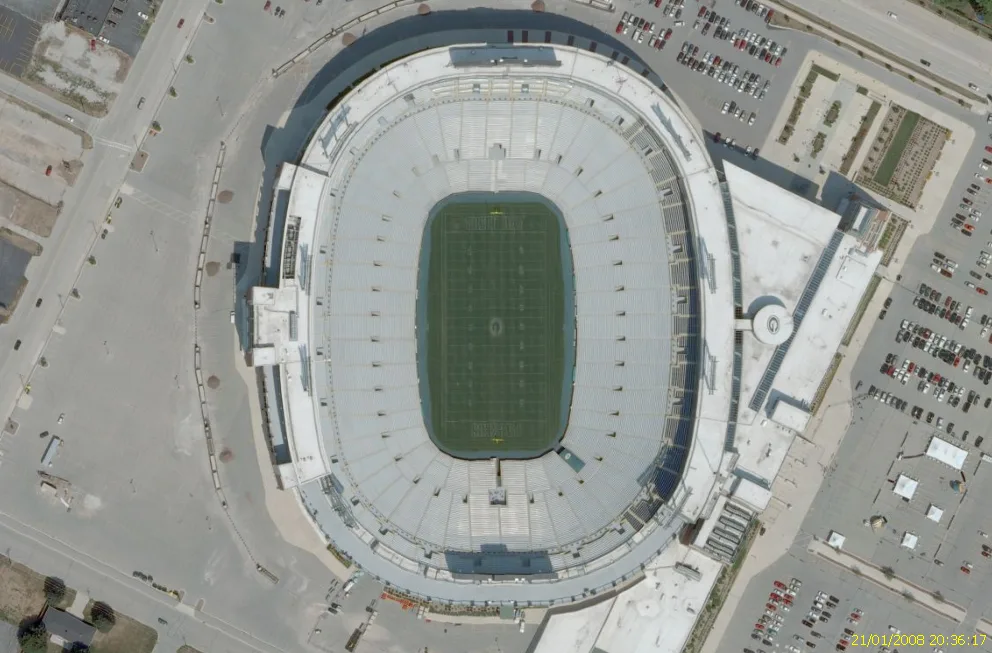
Lambeau Field, opened in 1957 and repeatedly renovated to its current 81,000-seat capacity, has not had an unsold home game since 1960, a streak of consecutive sellouts unmatched in American sports. Appleton, directly south of Green Bay with approximately 77,000 residents, is the seat of the Fox Cities metro area, home to Lawrence University (a rigorous liberal arts college founded 1847) and the childhood home of Harry Houdini, who grew up on Appleton's Appleton Street and is commemorated with a statue near the Carnegie Public Library.
The Fox Valley is also the home of Wisconsin's Hmong community, one of the largest Hmong concentrations in the United States, whose presence in Green Bay, Appleton, and Sheboygan traces to refugee resettlement after the Vietnam War.
The Northwoods region of Wisconsin, the broad swath of forest, wetland, and lake country north of a line running roughly from Stevens Point to Rhinelander, contains the iconic landscape most outsiders picture when they think of Wisconsin: pine and hardwood forests, clear-water lakes reflecting sunset, loon calls at dusk, and the summer cabin culture that has been the state's defining recreational tradition since the 19th century. Wisconsin has more than 15,000 lakes, the result of the Wisconsin Glacier's retreat approximately 10,000 years ago, which left behind a landscape scoured into tens of thousands of depressions now filled with water.
Lake Winnebago, at 137,700 acres the largest inland lake entirely within Wisconsin, is famous for its winter spearfishing season, when ice shacks dot the frozen surface and enormous lake sturgeon, the most primitive large fish in North America, are speared through holes in the ice. Hayward, in Sawyer County, bills itself as the Fresh Water Fishing Capital of the World, hosts the annual World Lumberjack Championships (log rolling, boom running, and speed chopping), and is the site of the Freshwater Fishing Hall of Fame, housed in a structure shaped like a 143-foot-long muskie.
The Northwoods was clearcut in the great logging era of the 1870s to 1900s, when the pine timber of northern Wisconsin fed the construction of Chicago, Milwaukee, and the cities of the Midwest; reforestation and the establishment of the Chequamegon-Nicolet National Forest (approximately 1.5 million acres) have restored most of the forest cover.
The Lac du Flambeau reservation, the Mille Lacs band, and other Ojibwe nations hold treaty rights to fish and hunt throughout the ceded territory of northern Wisconsin, rights that were the subject of violent 'boat landing protests' in the late 1980s and early 1990s before federal courts firmly upheld them.
Western Wisconsin along the Mississippi River and the coulee country extending east from La Crosse into the Driftless Area contains one of the most geologically unusual landscapes in the upper Midwest: a region that was never covered by the Wisconsin Glacier (or any of the preceding glaciations), leaving behind a landscape of dramatic quartzite and limestone bluffs, deep coulees and valleys, and spring-fed trout streams that would be completely erased by glacial action anywhere else in the region. The Driftless Area, named for the absence of glacial drift (the sedimentary material deposited by glaciers), spans portions of Wisconsin, Minnesota, Iowa, and Illinois, but Wisconsin contains some of its most dramatic terrain, particularly in the bluff country above the Mississippi between La Crosse and Prairie du Chien.
La Crosse, with approximately 52,000 residents, occupies a floodplain where the Black and La Crosse Rivers meet the Mississippi, flanked by towering bluffs; Granddad Bluff, rising 600 feet above the city, offers a panoramic view of three states. The region is significant in Wisconsin dairy history as well: Vernon County, southeast of La Crosse in the heart of the coulee country, has been one of the top organic dairy counties in the United States, its small family farms surviving into the 21st century in a form largely displaced by factory farming elsewhere.
Eau Claire, in western Wisconsin along the Chippewa River, is the birthplace of Justin Vernon, the musician known as Bon Iver who recorded his breakthrough album 'For Emma, Forever Ago' in a family cabin in the Northwoods after a difficult breakup; the album became one of the most influential indie folk records of the 2000s and put Eau Claire on the cultural map.
Chippewa Falls, the birthplace of the Leinenkugel brewing dynasty and home to supercomputer pioneer Seymour Cray, reflects the industrial and entrepreneurial spirit that has coexisted with the region's agricultural character.
Door County, the narrow thumb-shaped peninsula extending 70 miles north into Lake Michigan between the main body of the lake and Green Bay, is one of the Midwest's most cherished vacation destinations, its combination of Great Lakes shoreline, cherry orchards, small-town charm, and relatively cool summers drawing approximately 2 million visitors annually to a county with only 31,000 permanent residents. The peninsula's name derives from 'Porte des Morts' (Death's Door), the treacherous strait at its tip where the currents between Lake Michigan and Green Bay have claimed hundreds of ships; more than 300 wrecks lie on the lake bottom in the surrounding waters, making the Door County coastline a major destination for wreck divers.
The peninsula contains five state parks, eleven lighthouses (more lighthouses than any comparably sized area in the country), and the villages of Sister Bay, Egg Harbor, Ephraim, Fish Creek, and Baileys Harbor, each with its own character but all sharing the white clapboard, Victorian architecture, and seasonal tourism economy that defines the Door Peninsula aesthetic. Cherry orchards are the peninsula's signature agricultural product: Door County's microclimate, moderated by the surrounding Great Lakes, creates ideal conditions for tart cherry cultivation, and the peninsula produces nearly all of Wisconsin's cherry crop, blossoming spectacularly in May and drawing visitors during the annual cherry festival.
Washington Island, accessed by a 6-mile ferry crossing through Death's Door strait, is a quiet year-round community with a Scandinavian heritage and a lavender farm that is one of the most photographed in the Midwest.
The Sister Bay Bowl, a vintage bowling alley operating since the 1940s, and Al Johnson's Swedish Restaurant with its goat-grazed sod roof are among the local institutions that give Door County its irreplaceable sense of place.

Economy
Wisconsin's $380 billion economy blends one of the most enduring agricultural identities in America with a diversified manufacturing base, a dominant position in healthcare information technology, and a thriving tourism sector built on the state's extraordinary natural assets. The tension between the rural dairy economy and the urban knowledge economy shapes Wisconsin politics as much as any single policy debate.
The state produces more than 3.4 billion pounds of cheese annually, roughly 26 to 28 percent of all cheese made in the United States, a dominance built on more than 160 years of dairy farming culture transplanted from Germany, Switzerland, and Scandinavia. The phrase 'America's Dairyland' has appeared on Wisconsin license plates since 1940 and represents not merely a marketing claim but an agricultural reality: the state's roughly 1.2 million dairy cows produce approximately 31 billion pounds of milk each year. The Green County seat of Monroe, near the Illinois border, is the Swiss cheese capital of the United States; its downtown features a historic cheesemaking district, and the city hosts the biennial World Championship Cheese Contest that draws competitors from more than 30 countries.
Wisconsin's cheese production ranges from commodity mozzarella (primarily for pizza) to artisanal clothbound cheddars, Gouda, Gruyere, and state-specific varieties including brick cheese and colby, both developed in Wisconsin. Beyond dairy, the state is also the nation's leading cranberry producer, growing more than 60 percent of the national crop in the central sand counties around Warrens and Wisconsin Rapids.
Corn, soybeans, potatoes (Wisconsin ranks among the top three potato-producing states), snap beans, ginseng, and sweet corn are additional major crops. Agriculture and food processing together contribute more than $104 billion to the state's economy annually, making it by far the dominant economic sector in rural Wisconsin and the cultural spine of the state's identity.
The industry has consolidated sharply. Wisconsin lost more than half its licensed dairy farms between 2003 and 2023, falling from roughly 16,000 to about 6,000, as herd sizes grew and small operations could not absorb swings in the federal milk price. California overtook Wisconsin in total milk volume in 1993, though Wisconsin still leads the nation in cheese. Dairy's political weight shows in state law: a 1953 statute made serving yellow-colored margarine a crime and required restaurants to serve butter unless a customer asked otherwise, a restriction not fully repealed until 1967, and the University of Wisconsin's 1890 invention of the Babcock butterfat test, released without a patent, standardized how milk is priced by quality across the country.
The Fox River corridor from Oshkosh through Appleton, Neenah, Menasha, and into Green Bay developed in the 19th century as one of the most concentrated paper-producing regions in North America, its mills powered by the Fox River's reliable current and fed by the timber of the Northwoods. That paper heritage still manifests in major employers like Georgia-Pacific and Clearwater Paper, though consolidation has dramatically reduced employment from its mid-20th century peaks.
In transportation and defense equipment, Oshkosh Corporation (Oshkosh, Wisconsin) is one of the most important military and specialty vehicle manufacturers in the world, producing the L-ATV (the successor to the Humvee) for the U.S. military as well as concrete mixers, refuse trucks, and airport fire apparatus. Johnson Controls (Glendale, outside Milwaukee) is a global leader in building efficiency and HVAC systems.
Harley-Davidson, founded in Milwaukee in 1903, remains one of the most iconic American manufacturers despite production shifts and corporate restructuring; its Menomonee Valley presence in Milwaukee is a tangible connection to the city's industrial identity. Metal fabrication, plastics, and precision machining employ hundreds of thousands of Wisconsinites across the state's smaller cities and industrial parks, and medical device manufacturing has grown significantly in the Milwaukee and Madison corridors.
Manufacturing still generates roughly 18 to 20 percent of Wisconsin's economic output, one of the highest shares of any state, and employs about 470,000 people. Other large industrial employers include S.C. Johnson in Racine, the Kohler Company in the village of Kohler (founded 1873, maker of plumbing fixtures and operator of the American Club resort), Rockwell Automation in Milwaukee, and Generac in Waukesha. The state's most contentious recent manufacturing episode was the Foxconn project announced for Mount Pleasant in 2017, promoted as a $10 billion flat-panel display plant with 13,000 jobs and backed by roughly $3 billion in state and local incentives; the agreement was renegotiated in 2021 to a small fraction of that scope after the planned factory was never built.
The city's German immigrant population built the Milwaukee Brewing Corridor in the 1840s and 1850s, and by 1890 Milwaukee was producing more beer per capita than any other city in America. The great Milwaukee breweries that emerged, Pabst, Schlitz, Blatz, and Miller, each at various points the largest brewery in the United States, transformed American drinking culture from regional ales and lagers to a standardized national product consumed by millions. MillerCoors, now Molson Coors Beverage Company after its 2019 acquisition, maintains its U.S. headquarters in Milwaukee and operates the Miller Valley brewery in the Menomonee Valley, which still produces millions of barrels annually from facilities that stretch over 40 acres of the valley floor.
The craft beer revolution has flourished with particular intensity in Wisconsin, where more than 250 craft breweries operate statewide. New Glarus Brewing, in the Swiss-heritage town of New Glarus, has achieved legendary regional status for its Spotted Cow farmhouse ale, sold exclusively in Wisconsin; bottles smuggled out of state trade at premium prices. Jacob Leinenkugel Brewing Company in Chippewa Falls, founded in 1867, is one of the oldest continuously operating breweries in America.
Beyond beer, Oscar Mayer, founded in Madison in 1883, became one of the most recognized meat processing brands in American grocery history before being absorbed into Kraft Heinz. The state's food processing sector, spanning cheese factories, meatpacking, beverage production, and vegetable canning, employs more than 80,000 Wisconsinites.
Most of the old Milwaukee brewing giants did not survive. Schlitz, once the largest brewer in the world and the source of the slogan 'the beer that made Milwaukee famous,' lost its market after a 1976 recipe change and labor strife and was sold to Stroh in 1982; Blatz had already closed in 1959; and Pabst stopped brewing in Milwaukee in 1996, becoming a contract brewer with no plant of its own. Only Miller, founded by Frederick Miller in 1855, endured, passing through a 1969 Philip Morris purchase and the 2008 SABMiller joint venture to become the anchor of today's Molson Coors. The vacated Pabst complex near downtown was redeveloped in the 2010s into apartments, offices, a hotel, and a small brewery, while Madison's Great Taste of the Midwest, first held in 1987, is among the oldest and largest craft-beer festivals in the country.
Founded in 1979 by Judith 'Judy' Faulkner, who started the company with $70,000 in loans working from her basement, Epic has grown into a $5 billion privately held company that employs approximately 13,000 people in Wisconsin. Its Verona headquarters campus is one of the most unusual corporate environments in America, featuring a treehouse conference room, underground tunnels connecting buildings, and a recreation of a medieval village, all reflecting Faulkner's philosophy that creative environments produce creative software.
Faulkner, who remains CEO in her 80s, has pledged the majority of her wealth to charitable causes. Epic's dominance of hospital software is both a source of enormous Wisconsin economic pride and a subject of ongoing debate in the healthcare IT community, where critics argue that its proprietary systems complicate interoperability between health networks.
Beyond Epic, the Madison technology corridor along US-14 west of the capital has attracted a cluster of biotech, medtech, and software companies, and the University of Wisconsin-Madison's research enterprise generates significant technology transfer activity. Fiserv (Brookfield), created by a landmark 2019 merger with First Data, is one of the world's largest financial technology companies and processes trillions of dollars in payment transactions annually from its Wisconsin base.
Epic's scale has put it at the center of national health-data policy. The 21st Century Cures Act of 2016 and the federal information-blocking rules that took effect in 2021 were shaped partly by complaints that dominant vendors made it hard to move records between health systems, and Epic publicly opposed portions of the proposed rules before they were finalized. The company handled much of the technical work behind COVID-19 vaccination records and test-result reporting in 2020 and 2021. Its growth has also reshaped Dane County: thousands of high-paying jobs concentrated in Verona and Fitchburg have driven up housing demand, and Epic's practice of hiring large graduating classes and requiring in-office work makes it one of the largest entry-level technology employers in the Midwest.
Founded in Milwaukee in 1857, Northwestern Mutual manages more than $290 billion in assets, sells more individual life insurance policies than any other U.S. company, and employs approximately 8,000 people at its downtown Milwaukee headquarters complex. The company's 2017 tower addition by Kohn Pedersen Fox is one of the most architecturally distinguished new skyscrapers built in a mid-major American city in the 2010s, a glassy 32-story structure rising above the 1914 classical headquarters building on E. Wisconsin Avenue.
Manpower Group (Milwaukee), the global staffing and workforce solutions company, is one of the world's 500 largest companies by revenue and employs approximately 28,000 people globally from its Wisconsin home base, representing a different model of Wisconsin's connection to international business. Johnson Financial Group and Associated Bank (Green Bay) anchor the state's community banking sector, while CUNA Mutual Group (Madison), which serves credit union members across the country, represents Wisconsin's cooperative business tradition.
The state's insurance industry overall, including health, property/casualty, and life insurance, employs more than 50,000 Wisconsinites and generates billions in economic activity in Madison and Milwaukee.
Wisconsin's insurance concentration is more than a century old. Northwestern Mutual was founded in 1857 by John Johnston, and its early reputation rested on paying claims promptly after the 1859 Angola train wreck in New York killed two of its policyholders. Wisconsin also enacted the first workers' compensation law in the United States to survive a constitutional challenge, in 1911, which created a permanent in-state market for employers' liability coverage. American Family Insurance, founded in Madison in 1927 as Farmers Mutual to insure farmers' automobiles, is now a Fortune 500 property and casualty insurer, and in 2021 it bought the naming rights to the Milwaukee Brewers' ballpark, renamed American Family Field.
The Wisconsin Dells area in Sauk County, sometimes called the 'Waterpark Capital of the World,' has concentrated more waterparks, resorts, and entertainment venues per square mile than anywhere else in the United States; it draws approximately 5 million visitors annually to a stretch of the Wisconsin River flanked by remarkable Cambrian sandstone formations with names like Stand Rock and Witches Gulch. Door County, the thumb-shaped peninsula extending north between Lake Michigan and Green Bay, is one of the Midwest's most beloved vacation destinations, with hundreds of miles of shoreline, cherry orchards, lighthouse walks, artist galleries, and small towns like Fish Creek, Ephraim, and Sister Bay that maintain a genuine sense of place.
Lambeau Field in Green Bay draws visitors on pilgrimage to stand in the stadium of the only community-owned major professional sports franchise in American history, and Packer home games have been sold out continuously since 1960. Devil's Lake State Park, Wisconsin's most visited state park, draws more than 3 million visitors annually to a glacially formed lake surrounded by quartzite bluffs.
The state's ski industry, anchored by Granite Peak (Wausau) and various Northwoods resorts, the Door County wine trail, and the World Lumberjack Championships in Hayward, complete a tourism portfolio that stretches across all four seasons.
Several signature attractions built the modern industry. The Wisconsin Dells has run 'Duck' tours in World War II amphibious DUKW vehicles since 1946, and Tommy Bartlett's water-ski thrill show operated there from 1952 until it closed in 2020. The 1,200-mile Ice Age National Scenic Trail, one of only eleven national scenic trails in the country, traces the terminal moraine of the last glaciation across the state. Hunting is close to a civic institution: the nine-day gun deer season each November draws more than 600,000 licensed hunters, and the state's supper-club tradition of Friday fish fries, brandy old-fashioneds, and relish trays is itself a documented draw for out-of-state visitors.
How Wisconsin's Government Works
Wisconsin's state government is built on the progressive institutional framework constructed in the La Follette era and has been the site of the most consequential battles over the scope of public sector labor rights in American history. The state capital, Madison, occupies an isthmus between two lakes and houses a capitol building whose granite dome is among the tallest of any state capitol. The division between Madison's progressive university-government culture and the rest of the state is perhaps the most visible geographic expression of Wisconsin's fundamental political tension.
The 2011 passage of Act 10, which eliminated collective bargaining rights for most public sector unions, triggered 100,000-person protests at the Capitol and a recall election that Governor Scott Walker survived, making him the first governor in American history to win a recall. The decade that followed saw Republican legislative majorities maintained through aggressive redistricting until the Wisconsin Supreme Court struck down those maps in 2023 and ordered new districts drawn for the 2024 elections, fundamentally altering the partisan landscape of the legislature.
Redistricting overhaul: In December 2023, the Wisconsin Supreme Court (which flipped to a liberal majority in the April 2023 election) struck down Republican-drawn legislative district maps as an unconstitutional partisan gerrymander and ordered new maps for the 2024 elections. The resulting districts produced a significantly more competitive legislative environment compared to the heavily gerrymandered maps they replaced.
Governor of Wisconsin
Current Governor
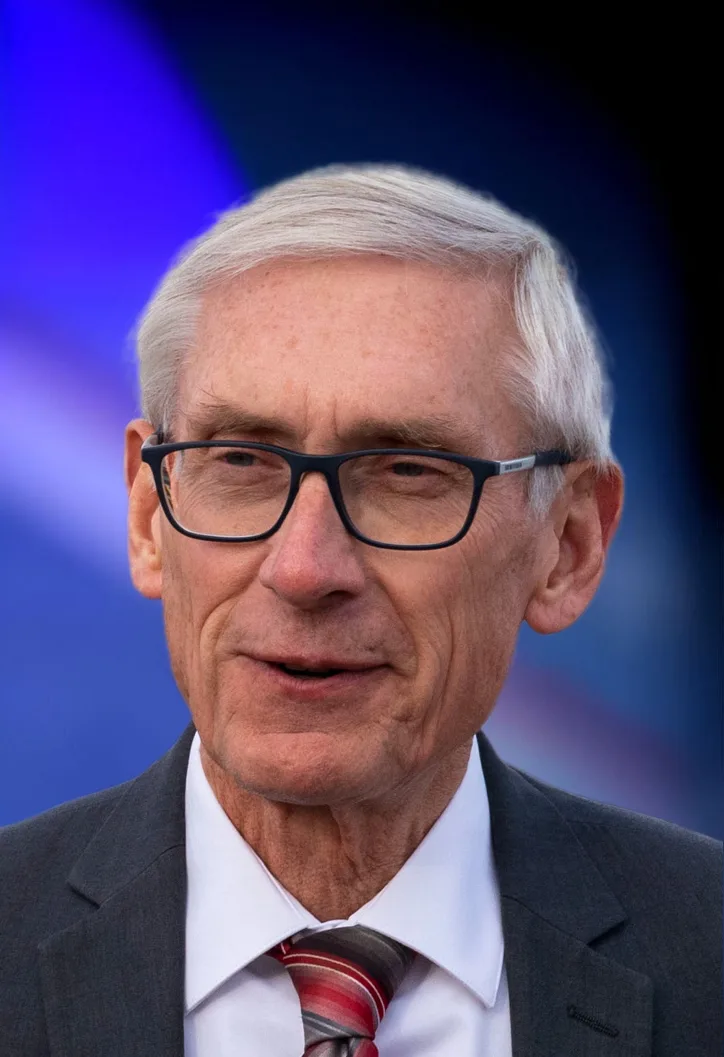
Tony Evers
- Party
- Democrat
- In Office Since
- January 7, 2019
- Born
- November 5, 1951, Plymouth, Wisconsin
- Education
- University of Wisconsin-Madison (BS, MS, PhD in Education)
- Prior Role
- Wisconsin Superintendent of Public Instruction (2009-2019)
Tony Evers is Wisconsin's 46th Governor, a former teacher, principal, and school administrator who spent 26 years in public education before serving as Wisconsin Superintendent of Public Instruction. He defeated two-term incumbent Scott Walker in 2018 by less than one percentage point in one of the closest gubernatorial elections in Wisconsin history, then won re-election in 2022 by a wider margin against businessman Tim Michels. Evers has governed as a moderate Democrat in a deeply divided state, using his veto pen more than any governor in Wisconsin history to block Republican legislative priorities while approving bipartisan legislation on criminal justice reform and infrastructure. His record partial vetoes of the state budget have produced some of the most creatively constructed veto messages in Wisconsin history.
Other Current State Officials
Lieutenant Governor
Sara Rodriguez
Lieutenant Governor since January 2023, elected alongside Governor Evers on the 2022 Democratic ticket. A registered nurse and former state Assembly representative from Brookfield, Rodriguez is the first Latina elected to statewide office in Wisconsin history. She has focused her office on healthcare access and economic equity issues and chairs the Governor's Task Force on Caregiving.
Attorney General
Josh Kaul
Attorney General since January 2019, re-elected in 2022 by a narrow margin. A former federal prosecutor (Department of Justice) and the son of former federal judge Marcia Coyne Kaul, he defeated Republican incumbent Brad Schimel in 2018 by less than a percentage point. Kaul has focused on consumer protection, opioid litigation, and environmental enforcement, and has participated in multistate legal challenges to federal environmental rollbacks.
Superintendent of Public Instruction
Jill Underly
State Superintendent of Public Instruction since 2021, re-elected in 2025. A former elementary school principal and district administrator, Underly won a competitive nonpartisan election in 2021 as the more progressive candidate. She oversees Wisconsin's K-12 public education system, including more than 830 school districts and approximately 860,000 students. The Superintendent is the only Wisconsin education office directly elected by voters and is constitutionally independent of the governor.
The Wisconsin Legislature
Wisconsin State Senate
- Seats: 33 members
- Terms: 4-year staggered terms
The upper chamber. Roughly half the 33 Senate seats are on the ballot in each two-year election cycle, with odd-numbered districts electing in midterm years and even-numbered districts in presidential years. The Senate President pro tempore presides in the absence of the Lieutenant Governor.
Wisconsin State Assembly
- Seats: 99 members
- Terms: 2-year terms
The lower chamber, known as the State Assembly rather than House of Representatives. All 99 Assembly members are up for election every two years in November of even-numbered years. The Assembly Speaker is the chamber's presiding officer and one of the most powerful positions in Wisconsin state government.
Wisconsin's U.S. Senators
U.S. Senator
Ron Johnson
Wisconsin's senior senator, first elected in 2010 in a Tea Party wave that defeated three-term incumbent Russ Feingold, re-elected in 2016 after pledging to serve only two terms, and re-elected again in 2022 despite that pledge and a competitive challenge from Lieutenant Governor Mandela Barnes. A Oshkosh businessman and manufacturer of PACUR LLC (plastic sheeting), Johnson has been one of the Senate's most prominent voices for conservative fiscal policy and government skepticism of COVID-19 pandemic response measures. He serves on the Senate Foreign Relations, Commerce, and Homeland Security committees.
U.S. Senator
Tammy Baldwin
Wisconsin's junior senator, first elected in 2012 as the first openly gay person elected to the U.S. Senate, and re-elected in November 2024 in one of the closest and most closely watched races of that cycle, narrowly defeating Republican banker Eric Hovde even as Wisconsin's presidential vote went the other way. A former U.S. House member from Wisconsin's 2nd Congressional District, Baldwin has focused on manufacturing, dairy and farm policy, and prescription drug pricing, and serves on the Senate Appropriations and Health, Education, Labor and Pensions committees.
Wisconsin Through the Years
From the Effigy Mound builders and the Ho-Chunk Nation to Jean Nicolet's canoe in Green Bay, from the schoolhouse where the Republican Party was born to the Capitol rotunda filled with 100,000 protesters in 2011, Wisconsin has lived a history as compressed and consequential as any state in the union.
The territory that would become Wisconsin was home to a succession of sophisticated Indigenous cultures long before European contact, and the physical evidence of those cultures is more visible here than almost anywhere else in the United States. The Effigy Mound builders of approximately 700 to 1100 CE constructed thousands of earthworks in the shapes of birds, bears, panthers, and other animals across the Wisconsin landscape; more effigy mounds survive in Wisconsin than anywhere else in the world, and Man Mound in Sauk County, shaped like a walking human figure 214 feet long and 48 feet wide, is the only mound in the world built in the form of a human being.
By the time of European contact, Wisconsin was home to several distinct nations: the Ho-Chunk (Winnebago), who considered themselves the original people of Wisconsin and whose oral traditions placed their origins at Green Bay; the Menominee, whose territory centered on the river bearing their name in northeastern Wisconsin; the Ojibwe (Anishinaabe or Chippewa), who occupied the northern lakes region; the Potawatomi, in the southeast and along Lake Michigan; and the Oneida, who relocated from New York in the 1820s and 1830s. The wild rice of the northern lakes was the dietary foundation of the Ojibwe and Menominee economies, and its harvest was both an economic and ceremonial event of profound cultural significance.
All five of these nations maintain federally recognized tribes in Wisconsin today, with reservations, casinos, and treaty rights that have been repeatedly litigated and upheld in federal courts.
Their modern histories diverge sharply. The Ho-Chunk were forcibly removed from Wisconsin at least four times between 1837 and 1874, shipped to reservations in Iowa, Minnesota, South Dakota, and finally Nebraska, yet families kept walking back and buying land as individuals; those returnees became the federally recognized Ho-Chunk Nation, one of the few tribes in the country with no contiguous reservation. The Menominee never left, retaining a roughly 235,000-acre homeland under the 1854 Treaty of Wolf River and practicing continuous sustainable forestry there ever since, a model now studied worldwide. Congress terminated federal recognition of the Menominee in 1961 and restored it in 1973 after a tribal campaign that helped end the national termination policy. Wisconsin is home to eleven federally recognized tribes, more than any state east of the Mississippi.
French explorer Jean Nicolet, traveling west from Quebec in search of the Northwest Passage to Asia, paddled into Green Bay in 1634 in a Chinese damask robe he had brought along in case he encountered the Emperor of China, landing instead among the Ho-Chunk people near present-day Red Banks on the Green Bay shoreline, in what is the first documented European presence in Wisconsin. The French colonial enterprise in the Great Lakes, built on the beaver fur trade that supplied Europe's insatiable demand for felt hats, established trading posts and missions throughout Wisconsin over the following century: Fort La Baye at Green Bay (1717), Fort Beauharnois on Lake Pepin, and the missionary establishment at La Pointe on Madeline Island in Lake Superior.
The fur trade created an economy of interdependence between French traders and Indigenous nations, with the mixed-heritage Metis population embodying that cultural fusion, and the trade networks that moved beaver pelts from the Wisconsin wilderness to European markets prefigured the commercial infrastructure that would be built on different commodities after American settlement. France ceded the Great Lakes territory to Britain following its defeat in the Seven Years' War (French and Indian War) in 1763.
The British period, from 1763 to American control after the Revolution, was largely a continuation of the fur trade economy, with British traders and the North West Company operating out of Mackinac Island and maintaining the Indigenous trading relationships established under French rule.
Two conflicts bracketed the French era. The Fox Wars, a series of French campaigns against the Meskwaki (Fox) nation from 1712 to 1733, were among the bloodiest Indigenous-French wars in the Great Lakes and nearly destroyed that people. Charles de Langlade, a Metis trader who settled at Green Bay around 1765 and is often called the 'Father of Wisconsin' as its first permanent resident of European descent, led Indigenous fighters against General Braddock in 1755 and for the Crown during the Revolution. Britain formally ceded the region to the United States in the 1783 Treaty of Paris, but British troops and traders held posts at Prairie du Chien and elsewhere until after the War of 1812, and the United States did not establish firm control of Wisconsin until Fort Howard and Fort Crawford were garrisoned in 1816.
The Black Hawk War of 1832 was the final armed resistance by Indigenous people east of the Mississippi River in what is now the United States and an event whose brutality permanently altered the Indigenous presence in Wisconsin. Black Hawk, a Sauk leader in his mid-60s, led approximately 1,000 Sauk and Meskwaki people, including many women, children, and elderly, back across the Mississippi into their traditional homelands in western Illinois in April 1832 after having been displaced by an 1804 treaty that most of the Sauk considered fraudulent. The U.S. Army and Illinois militia responded with a campaign that pursued Black Hawk's band north and west across Illinois and into Wisconsin, where the Battle of Wisconsin Heights (July 21, 1832) allowed part of the band to cross the Wisconsin River.
The conflict ended catastrophically at the Battle of Bad Axe (August 2, 1832) on the east bank of the Mississippi River near present-day Victory, Wisconsin, where U.S. Army troops and militia killed approximately 150 to 300 men, women, and children attempting to cross the river, with armed steamboat fire preventing escape to the western shore. The massacre at Bad Axe effectively ended all organized Indigenous resistance in the Old Northwest.
Abraham Lincoln and Jefferson Davis, future presidents of the Union and Confederacy respectively, both served in the Black Hawk War, Lincoln as a militia captain (without seeing combat), Davis as a junior officer who accepted Black Hawk's surrender. The war opened Wisconsin to rapid American settlement and drove the cession negotiations that would transfer most remaining Indigenous land to the United States within the following two decades.
In the year after Bad Axe the United States imposed treaties taking the Ho-Chunk's remaining Wisconsin lands and roughly three million acres from the Menominee. The 1837 Ho-Chunk treaty, signed in Washington by a delegation that insisted it had no authority to cede land and was reportedly told it could not go home until it did, is still cited by the Ho-Chunk as fraudulent. Black Hawk himself was imprisoned, then paraded through eastern cities where crowds treated him as a celebrity, and in 1833 he dictated an autobiography that became one of the first Native American memoirs published in the United States. Wisconsin's non-Native population, about 3,000 in 1830, passed 300,000 by statehood in 1848.
Wisconsin entered the Union as the 30th state on May 29, 1848, the same year that revolutionary upheavals across Europe launched the greatest single wave of immigration in the state's history. The failed revolutions of 1848 in Germany, Austria-Hungary, and the German states sent hundreds of thousands of educated, politically liberal 'Forty-Eighters' to the United States, and Wisconsin, with its available farmland and established German communities in Milwaukee and along the Lake Michigan shoreline, received a disproportionate share.
Milwaukee became the most German city in America by 1870, its German character visible in its brewing industry, its Turner societies (athletic and political clubs imported from Germany), its free-thinking culture, and the German-language press that thrived until World War I's anti-German hysteria effectively silenced it. Scandinavian immigrants, primarily Norwegians and Swedes, settled the western and central counties along the Mississippi River corridor, bringing their dairy farming expertise and their Lutheran church culture; villages like Westby, Mount Horeb, and New Glarus in Green County (settled by Swiss immigrants who named their town after the Swiss canton of Glarus) retain their European heritage with unusual directness.
Polish immigrants settled in Milwaukee's South Side and in the Portage County area around Stevens Point; Czech, Slovak, and Bohemian communities established themselves throughout the state. This immigration wave, concentrated in the 1850s through the 1890s, fundamentally shaped Wisconsin's culture, architecture, cuisine, and politics in ways that persist to the present day.
Wisconsin's 1848 constitution was unusually progressive for its era. It exempted homesteads from seizure for debt, guaranteed married women the right to hold property in their own names, and barred commercial banking until voters approved it in an 1852 referendum, a reflection of frontier distrust of eastern financiers; an earlier draft rejected by voters in 1846 had failed partly over the same clauses. The young state also became a center of abolitionism: in the 1854 Joshua Glover case a Milwaukee crowd broke an escaped enslaved man out of jail, and the Wisconsin Supreme Court became the only state high court to declare the federal Fugitive Slave Act unconstitutional, a ruling the U.S. Supreme Court reversed in Ableman v. Booth in 1859. By 1860 Wisconsin's population exceeded 775,000, nearly a third of it foreign-born.
On March 20, 1854, in a white schoolhouse in Ripon, Wisconsin, a meeting of anti-slavery Whigs, Free Soilers, and Democrats convened to organize resistance to the Kansas-Nebraska Act, which had reopened the question of slavery in western territories by allowing settlers to vote on whether to allow slavery in new territories, effectively repealing the Missouri Compromise of 1820 that had kept the peace for 34 years. The meeting, organized by former Congressman Alvan Bovay, resolved to create a new political party, and its participants chose the name 'Republican' as a conscious echo of Thomas Jefferson's Democratic-Republican Party and as a statement that the republic's founding ideals were incompatible with the extension of slavery.
The party spread with extraordinary speed: its first national convention was held in Pittsburgh in February 1856, and its first presidential candidate, John C. Fremont, carried 11 northern states in the 1856 election despite losing to Democrat James Buchanan. The party that was born in that Ripon schoolhouse would carry Abraham Lincoln to the presidency in 1860, fight and win the Civil War, abolish slavery with the 13th Amendment, and dominate national politics for most of the following seven decades.
The Little White Schoolhouse in Ripon is now a National Historic Landmark visited by thousands of political pilgrims annually. Wisconsin's claim as the birthplace of the Republican Party is disputed by some Michigan towns that held similar meetings around the same time, but the Ripon meeting is the most thoroughly documented and is the one recognized by the Republican National Committee itself.
The Ripon organizers moved fast: their February 28 meeting came only weeks after Stephen Douglas introduced the Kansas-Nebraska bill in January 1854, and the March 20 schoolhouse meeting preceded final passage of the act in May. Michigan's rival claim rests on a much larger convention held 'under the oaks' at Jackson on July 6, 1854, which was the first to nominate a full Republican state ticket. Alvan Bovay had floated the name 'Republican' to New York editor Horace Greeley as early as 1852. Wisconsin elected its first Republican governor, Coles Bashford, in 1855 in a contest so disputed it was settled by the state Supreme Court, and the schoolhouse itself was relocated three times within Ripon before being designated a National Historic Landmark in 1974.
Wisconsin produced the most consequential progressive political tradition in American history in the first decades of the 20th century, an era of reform so transformative that historians use the phrase 'the Wisconsin Idea' to describe a philosophy of government in which universities and experts are partners in public policy and the state actively intervenes to protect citizens from the power of corporations. The architect of that tradition was Robert M. 'Fighting Bob' La Follette Sr. (1855-1925), a small-town lawyer from Primrose who was elected Governor of Wisconsin in 1900 and proceeded to transform state government with a suite of reforms that became models for the Progressive movement nationally: the direct primary (allowing voters rather than party bosses to choose candidates), a railroad rate commission, income tax, workers' compensation, conservation policies, and the civil service merit system.
La Follette's 'laboratory of democracy' was built in explicit partnership with the University of Wisconsin in Madison: economists, political scientists, and public health experts on the faculty drafted legislation, staffed regulatory agencies, and provided the intellectual infrastructure for a governance model in which evidence and expertise shaped policy. La Follette was elected to the U.S. Senate in 1906 and became one of its most formidable progressive voices; he was one of only six senators to vote against U.S. entry into World War I in 1917, a position that cost him considerable support but reflected his consistent opposition to what he saw as unnecessary militarism.
His 1924 presidential campaign on the Progressive Party ticket, which won 17 percent of the popular vote and Wisconsin's 13 electoral votes, was the most successful third-party presidential campaign of the 20th century.
La Follette's progressive tradition produced the most comprehensive labor protections in the country, the nation's first unemployment compensation law (1932), and a political culture that has made Wisconsin a battleground between progressive and conservative visions of government ever since.
Senator Joseph McCarthy of Appleton, Wisconsin, who served in the U.S. Senate from 1947 to 1957, launched the most damaging campaign of political persecution in postwar American history from his position as chairman of the Senate Permanent Investigations Subcommittee, destroying the careers and lives of hundreds of government employees, military officers, academics, and entertainers through groundless accusations of Communist Party membership or sympathy that were largely unsupported by evidence. McCarthy's February 1950 speech in Wheeling, West Virginia, in which he claimed to hold in his hand a list of 'known Communists' in the State Department (the number varied between 57 and 205 in different tellings), launched a four-year campaign of congressional hearings that exploited Cold War anxieties and partisan politics to cast suspicion on anyone McCarthy chose to target. The term 'McCarthyism,' coined by cartoonist Herb Block, entered the language as a synonym for the abuse of investigative power and the suppression of political dissent through innuendo.
McCarthy's downfall came with the Army-McCarthy hearings of 1954, nationally televised for 36 days, in which Army counsel Joseph Welch's famous question, 'Have you no sense of decency, sir?', crystallized the public revulsion at McCarthy's tactics. The Senate censured McCarthy in December 1954, and he died in office in 1957 of hepatitis aggravated by alcoholism.
Wisconsin's relationship to McCarthy's legacy is uncomfortable: he won election twice in a state with a strong progressive tradition, and his Appleton origins are a source of ongoing reflection for a state that also produced Robert La Follette. The relationship between populist progressivism and populist demagoguery is one of the recurring themes of Wisconsin political history.
McCarthy first won his Senate seat in 1946 by defeating Robert La Follette Jr. in the Republican primary, ending the La Follette family's roughly 40-year hold on the seat, after campaigning as 'Tail-Gunner Joe' on a war record he had exaggerated. His subcommittee investigations were run by chief counsel Roy Cohn and briefly included the young Robert F. Kennedy on staff. Only Senator Ralph Flanders of Vermont moved formally to censure him, while Wisconsin's senior senator Alexander Wiley kept his distance; the censure passed 67 to 22 in December 1954. Edward R. Murrow's March 1954 'See It Now' broadcast, which assembled McCarthy's own words against him, is still taught as a turning point in the relationship between television and politics, and McCarthy is buried in Appleton.
The most nationally significant political event in Wisconsin's recent history began on February 11, 2011, when newly elected Republican Governor Scott Walker introduced Act 10, the 'Budget Repair Bill,' which proposed to eliminate collective bargaining rights for most public sector unions in Wisconsin, require public employees to contribute more to their pension and health insurance costs, and restructure the state's labor relations framework in ways that effectively defunded the political operation of the public sector unions by requiring annual recertification votes and prohibiting automatic dues collection. The response was unlike anything seen in Wisconsin in 90 years: an estimated 100,000 protesters filled and surrounded the Wisconsin State Capitol in Madison over the following weeks, Democratic state senators fled to Illinois to deny the quorum required for a budget vote (the missing senators became briefly famous as the 'Wisconsin 14'), and the Capitol rotunda was occupied continuously for nearly three weeks by protesters camping on the marble floors.
Walker and the Republican legislature ultimately passed Act 10 in March 2011 by separating the fiscal and non-fiscal components to circumvent the quorum requirement, and the governor survived a historic recall election in June 2012 by a 53-46 margin, becoming the first governor in American history to survive a recall election.
Act 10 dramatically reduced the membership and political power of Wisconsin's public sector unions, and its passage accelerated a national conservative movement to restrict public sector collective bargaining.
The Wisconsin battle was simultaneously a preview of the intense political polarization that would characterize American politics through the following decade and a case study in how institutional rules, legislative procedure, and protest politics interact in a divided democracy.
Wisconsin's status as the most closely contested large state in presidential politics was confirmed and re-confirmed in the elections of 2016 and 2020. In 2016, Donald Trump became the first Republican presidential candidate to carry Wisconsin since 1984, defeating Hillary Clinton by 22,748 votes, a margin of 0.8 percent, in an outcome that was widely attributed to Clinton's failure to campaign in the state in the final weeks and to the mobilization of working-class white voters in the Fox Valley and northern Wisconsin who felt economically left behind by Democratic trade and industrial policy.
The Wisconsin margin was small enough that multiple recounts and legal challenges followed, with no material change in the outcome. Wisconsin in 2020 was selected by the Democratic Party as the site of the first fully virtual national convention, a sign of both the state's electoral significance and the pandemic constraints of that year.
Joe Biden carried Wisconsin by 20,682 votes (0.6 percent), reversing the 2016 result but confirming the state's status as an essentially coin-flip battleground. The year 2020 also brought the police shooting of Jacob Blake in Kenosha on August 23, a Black man shot seven times in the back at close range by a Kenosha Police Department officer in front of his children, which triggered protests and unrest in Kenosha over several nights, including the killing of two protesters by a 17-year-old from Illinois named Kyle Rittenhouse, whose subsequent acquittal on self-defense grounds in November 2021 became a cause celebre in national debates about vigilantism, race, and the right to bear arms.
Wisconsin in the 2020s is a state whose economic geography, progressive cities against conservative rural and exurban areas, has made it one of the most reliable indicators of the broader national political divide.
Wisconsin's Defining Moments in American History
These are the events that didn't just shape Wisconsin, they changed the nation.
In early 1854, as Congress debated the Kansas-Nebraska Act that would let settlers vote slavery into western territories, anti-slavery Whigs, Free Soilers, and Democrats in Ripon, Wisconsin, met to break with their old parties. A gathering at the village Congregational church on February 28 resolved to form a new party if the bill passed, and a follow-up meeting in a one-room schoolhouse on March 20, 1854, organized it and adopted the name Republican. Six years later that party elected Abraham Lincoln president.
The Republican Party's founding in Ripon represents a direct through-line from Wisconsin's abolitionist convictions to the Civil War, emancipation, and the constitutional amendments that attempted to reconstruct the post-war South. Wisconsin gave America the party that saved the Union.
The name was pushed by local organizer Alvan Bovay, who had suggested 'Republican' to New York editor Horace Greeley as early as 1852 as an echo of Jefferson's Democratic-Republicans. Michigan contests the birthplace claim: a much larger convention 'under the oaks' at Jackson on July 6, 1854, was the first to nominate a full Republican state ticket. The Republican National Committee nonetheless recognizes the Ripon meeting, and the Little White Schoolhouse, moved several times within the town, was designated a National Historic Landmark in 1974.
The new party's rise was almost immediate. Its first presidential nominee, John C. Fremont, carried eleven northern states in 1856, and by 1860 the Republicans held the presidency and both houses of Congress. From that base the party prosecuted the Civil War, passed the 13th, 14th, and 15th Amendments, and held the White House for all but sixteen years between 1861 and 1933.
Robert M. La Follette Sr., governor of Wisconsin from 1901 to 1906 and U.S. Senator until his death in 1925, was the most consequential American progressive politician of the early 20th century. La Follette pioneered the direct primary, workers' compensation, railroad regulation, and progressive taxation in Wisconsin.
The 'Wisconsin Idea,' the principle that state universities should actively serve the public by providing expertise to government and citizens alike, became a national model for applied democratic governance. La Follette ran for president as a third-party candidate in 1924, winning about 17 percent of the national vote on a platform of democratic populism.
La Follette began as a conventional Republican, serving three House terms in the 1880s, and dated his break with the state party machine to an 1891 confrontation in which he said a boss tried to bribe him to fix a court case. He lost three straight races for governor before winning in 1900, then pushed through the nation's first statewide direct primary in 1903 and a tax commission that raised assessments on the railroads.
In the Senate from 1906 until his death in 1925, he was one of six senators to vote against declaring war on Germany in 1917 and led the 1922 investigation that exposed the Teapot Dome oil-lease scandal. His 1924 Progressive presidential run carried only Wisconsin's 13 electoral votes but ran second in eleven western states. His son Robert La Follette Jr. held the Senate seat until 1946, when Joseph McCarthy defeated him in the Republican primary.
The Wisconsin Idea, articulated in the early 1900s, held that the boundaries of the University of Wisconsin should be the boundaries of the state. Professors should advise legislators. Research should solve real-world problems.
Government and education should be partners in improving the lives of ordinary people. This vision produced labor laws, agricultural extension services, the workmen's compensation system, and the income tax model. The Wisconsin Idea became a template for state universities and state governments across America, and its legacy is visible in virtually every public university's extension and outreach programs today.
The phrase is usually traced to a 1904 speech by University of Wisconsin president Charles Van Hise, a college friend of La Follette, who said he would never be content until the university's influence reached every family in the state. Economist Richard Ely and his students drafted much of the era's labor and utility legislation, and the Legislative Reference Bureau created in 1901 under Charles McCarthy pioneered the professional bill-drafting service now standard in state capitols.
The idea was later written into the University of Wisconsin System's governing statute, and in 2015 it briefly became a political flashpoint when a state budget draft proposed striking the 'search for truth' and public-service language from the university's mission; the change was reversed after public objection. The agricultural extension model that grew out of the Wisconsin Idea was generalized nationally by the Smith-Lever Act of 1914, which established a Cooperative Extension Service at every land-grant university.
Wisconsin is the Dairy State, and it has been shaping what Americans eat since European settlers first brought cattle to the state in the 1840s. Wisconsin produces more cheese than any other state and more than one-third of all the cheese made in the United States.
The state's dairy industry, built on the labor of German, Swiss, Scandinavian, and Polish immigrant farmers, created the infrastructure of American food production: cooperatives, cold storage, transportation networks, and quality standards. When Americans eat pizza, grilled cheese, or macaroni and cheese, they are in all likelihood eating Wisconsin dairy products.
Wisconsin was not always dairy country. Wheat was the dominant crop until the 1870s, when soil exhaustion and the chinch bug pushed farmers toward cattle, a shift led by promoters such as William Dempster Hoard, who founded Hoard's Dairyman magazine in 1885 and was later elected governor. The University of Wisconsin's Stephen Babcock invented his milk-fat test in 1890 and declined to patent it, giving the industry a cheap, honest way to price milk by quality.
The state overtook New York as the nation's leading dairy producer around 1910 and led the country in milk output until California passed it in 1993; Wisconsin still makes more cheese than any other state, over a quarter of the national total. It lost roughly two-thirds of its dairy farms between 1990 and 2023 as herds consolidated, and a 1967 repeal finally ended the state's long prohibition on selling yellow-colored margarine.
Milwaukee, Wisconsin, was for decades one of the most politically progressive large cities in America. It elected Socialist mayors three times between 1910 and 1960, including Victor Berger, the first Socialist elected to Congress.
Milwaukee's working-class politics, driven by its large German immigrant community and its concentration of manufacturing workers, produced labor protections and city services decades ahead of most American cities. The city's union traditions contributed to the broader American labor movement, and Milwaukee's model of municipal socialism, delivering efficient public services without revolutionary rhetoric, influenced progressive governance across the country.
Milwaukee's 'sewer socialists,' so nicknamed for their focus on clean government and public works rather than revolution, elected Emil Seidel mayor in 1910, Daniel Hoan from 1916 to 1940, and Frank Zeidler from 1948 to 1960, the last Socialist mayor of a major American city. Under them the city built an award-winning park system, municipal sanitation, and publicly owned infrastructure, and it repeatedly ranked among the best-governed cities in the country.
Victor Berger, a Milwaukee newspaper editor, was elected in 1910 as the first Socialist member of Congress; the House twice refused to seat him, in 1919 and 1920, over his opposition to World War I before the Supreme Court cleared the way and voters returned him in 1922. Milwaukee's industrial base later drew the Great Migration, and in 1967 the NAACP Youth Council and Father James Groppi led 200 consecutive nights of open-housing marches across the 16th Street Viaduct, pressure that helped move the city and then Congress toward fair-housing law in 1968.
Notable Wisconsinites
Frank Lloyd Wright
Pioneering architect who designed Fallingwater and the Guggenheim Museum, born in Richland Center
Harry Houdini
World-famous escape artist and illusionist, raised in Appleton
Spencer Tracy
Two-time Academy Award-winning actor, born in Milwaukee
Thornton Wilder
Pulitzer Prize-winning playwright who wrote Our Town, born in Madison
William Rehnquist
Chief Justice of the U.S. Supreme Court from 1986 to 2005, born in Milwaukee
Liberace
Flamboyant pianist and entertainer known for his elaborate showmanship, born in West Allis
State Symbols & Quick Facts
| Nickname | "The Badger State" |
| Capital | Madison |
| Largest City | Milwaukee |
| Statehood | May 29, 1848 (30th state) |
| Population | ~5.9 million (2025 est.) |
| Area | 65,496 sq miles (23rd largest) |
| State Bird | American Robin |
| State Flower | Wood Violet |
| State Tree | Sugar Maple |
| State Animal | Badger |
| State Dog | American Water Spaniel |
| State Fish | Muskellunge (Muskie) |
| State Insect | Honeybee |
| State Rock | Red Granite |
| State Mineral | Galena |
| State Grain | Corn |
| State Song | "On, Wisconsin!" |
| State Motto | "Forward" |
| Time Zone | Central |
| Bordering States | Minnesota, Iowa, Illinois, Michigan |
Did You Know?
The Republican Party was founded in Ripon, Wisconsin, on March 20, 1854, in a white schoolhouse that still stands today as a National Historic Landmark. The party was formed specifically to oppose the Kansas-Nebraska Act and the extension of slavery into western territories, and within six years it had elected Abraham Lincoln to the presidency and was prosecuting the Civil War.
Wisconsin has more than 15,000 named lakes, the result of the Wisconsin Glacier retreating approximately 10,000 years ago and leaving behind a landscape scoured into tens of thousands of depressions now filled with water. The state's surface waters cover approximately 11,190 square miles, and residents joke that the real question is whether Wisconsin has more lakes or more taverns per capita.
Wisconsin produces approximately 26 to 28 percent of all cheese made in the United States, more than any other state, and has approximately 1,200 cheesemakers and creameries statewide. The state holds more than 100 varieties of Master Cheesemaker certifications, a rigorous program modeled on the Swiss Master Cheesemaker credential that requires 10 years of licensed cheesemaking experience.
The QWERTY keyboard layout, used on virtually every typewriter, computer keyboard, and smartphone in the world, was invented by Christopher Latham Sholes in Milwaukee in 1873. Sholes developed the layout to reduce mechanical jams in early typewriters by placing commonly paired letters apart from each other, and the layout survived the transition from mechanical to electronic typing despite being suboptimal for modern devices.
The Green Bay Packers are the only community-owned franchise in major professional North American sports, with more than 500,000 shareholders (after a 2021-2022 stock sale) who collectively own a nonprofit corporation incorporated in Green Bay. No individual owns more than 4 percent of the outstanding shares, the franchise cannot be moved out of Green Bay, and in the event of dissolution the assets would go to the Green Bay Packers Foundation and local charities, not to shareholders.
The Ringling Brothers Circus originated in Baraboo, Sauk County, Wisconsin, in 1884, when five of the seven Ringling brothers, August, Albrecht, Otto, Alfred, and Charles, formed a small traveling show that grew within two decades into the largest circus in America and then in the world. The company's winter headquarters remained in Baraboo for 35 years, and the Circus World Museum in Baraboo, on the original Ringling winter quarters site, preserves the largest collection of circus wagons in the world.
Epic Systems Corporation, headquartered in Verona, Wisconsin, manages the electronic health records of more than 305 million patients, which represents approximately 90 percent of U.S. hospital beds. Founded in 1979 by Judy Faulkner in her basement with $70,000 in loans, it is one of the most influential private companies in America in terms of its direct impact on the lives of virtually every person who has been hospitalized in the United States.
Wisconsin grows approximately 60 percent of the nation's cranberry crop, making it by far the leading cranberry-producing state in the country, ahead of Massachusetts (which has the older cranberry tradition) and New Jersey. The central sand counties around Warrens and Wisconsin Rapids are the heart of the cranberry industry; Warrens hosts the world's largest cranberry festival each September.
The Wisconsin State Capitol dome, clad in Bethel White granite from Vermont, rises 284 feet, just short of the U.S. Capitol dome (288 feet), and is the only granite dome on any state capitol. The building, completed in 1917, was designed by George B. Post and is the fourth Wisconsin state capitol on the same site; its interior features the largest granite mosaic in the world.
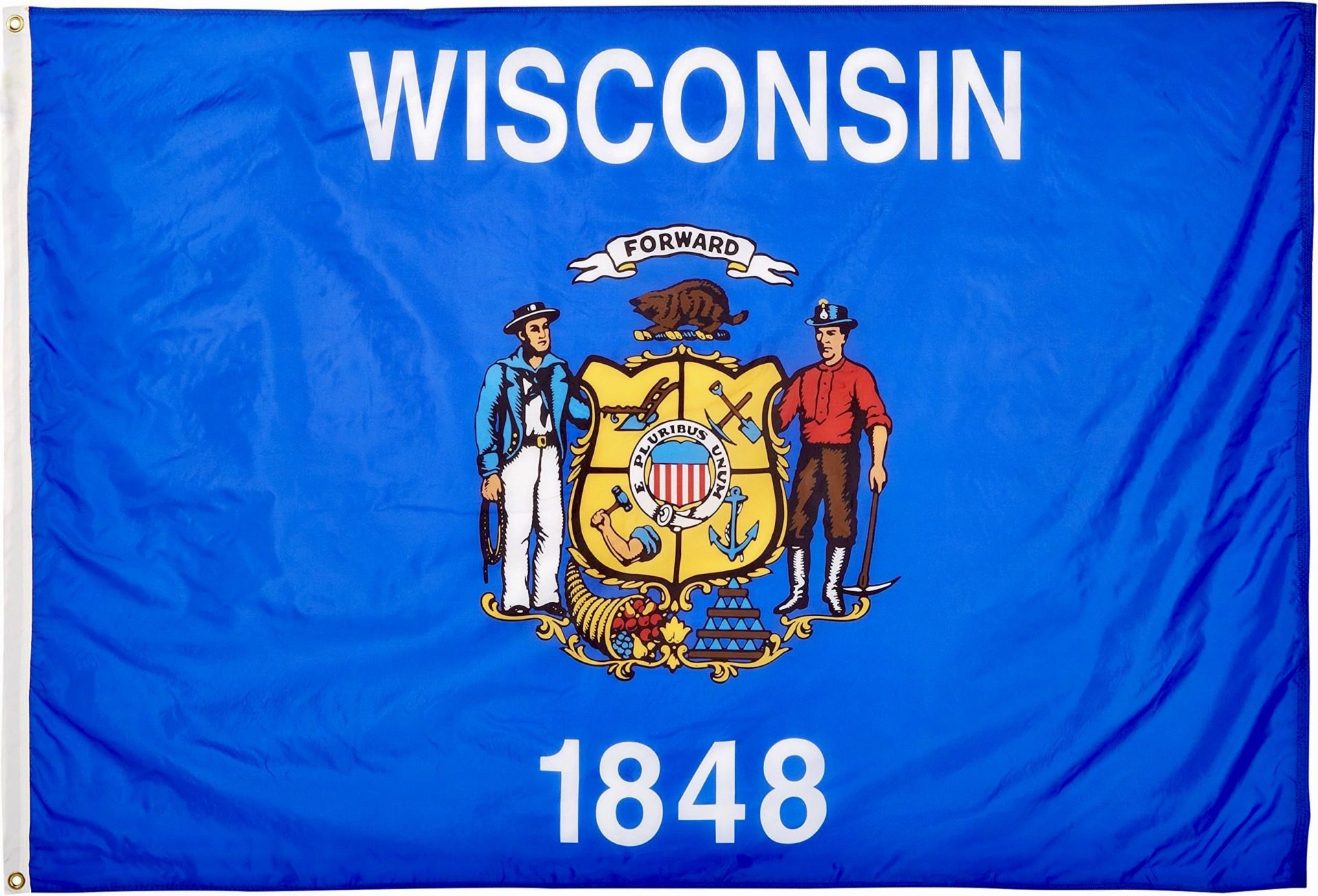
The state motto 'Forward,' adopted in 1851, is one of a handful of one-word state mottos (Rhode Island's 'Hope' is shorter). It was chosen to reflect the forward-looking spirit of the new state's founders and appears on the state seal and the state flag.
Quick Facts and Common Questions
Short answers to the questions people most often ask about Wisconsin: its abbreviation, how it became a state, its capital, and its place in Congress.
Wisconsin's two-letter postal abbreviation is WI. The U.S. Census Bureau places it in the Midwest region, in the East North Central division, and about 5.89 million people lived there in the 2020 census.
Wisconsin became the 30th state on May 29, 1848, the last state formed entirely from the old Northwest Territory. Congress had created the Wisconsin Territory in 1836.
Wisconsin is named for the Wisconsin River. French explorers recorded a Native American name for the river in 1673, spelled "Meskousing," which later became "Ouisconsin" and then "Wisconsin." Its original meaning is uncertain.
Madison has been the capital since 1838. The first territorial legislature met briefly at Belmont in 1836 and chose Madison, then an unsettled site between two lakes, as the permanent capital. The current State Capitol, completed in 1917, sits on the narrow isthmus between Lake Mendota and Lake Monona.
Wisconsin borders Michigan to the northeast, Illinois to the south, and Iowa and Minnesota to the west, where the Mississippi and St. Croix rivers form much of the boundary. It also has long shorelines on Lake Michigan to the east and Lake Superior to the north.
The nickname dates to the lead miners of southwestern Wisconsin in the 1820s and 1830s, some of whom lived in shelters dug into hillsides, like badgers. The badger became the official state animal in 1957. Wisconsin is also known as "America's Dairyland," and its motto is "Forward."
Wisconsin's state bird is the American robin, its flower is the wood violet, its tree is the sugar maple, its animal is the badger, and its dog is the American water spaniel.
The first kindergarten in the United States opened in Watertown, Wisconsin, in 1856. It was founded by Margarethe Schurz, a German immigrant who taught in German using the methods of Friedrich Froebel, the German educator who created the kindergarten.
Based on the 2020 census, Wisconsin has 8 seats in the U.S. House of Representatives, the same as before, which gives it 10 votes in the Electoral College.
Apostle Islands National Lakeshore
Twenty-Two Lake Superior Islands with Sea Caves, Lighthouses, and Ice Formations Unlike Anywhere Else in the US
About Apostle Islands National Lakeshore
Apostle Islands National Lakeshore protects 21 islands and a 12-mile strip of mainland shore on the southwestern end of Lake Superior, off the Bayfield Peninsula in northern Wisconsin. The park covers about 69,000 acres, more than 27,000 of it open water, and its islands range from tiny Gull (3 acres) to Stockton (10,000 acres).
A 22nd island, Madeline, the largest and the historic center of Ojibwe and fur-trade life on the lake, is not part of the park; it is a town with year-round residents and a car ferry. The 'Apostles' name is old and its origin uncertain, and the Ojibwe count and name the islands differently.
The lakeshore was established by Congress in 1970 after a long local campaign, and 80 percent of it, about 33,500 acres across 18 islands, was later designated the Gaylord Nelson Wilderness, named for the Wisconsin senator who founded Earth Day and pushed for the park.
The islands hold the largest collection of lighthouses in the National Park System, nine light stations on six islands, old-growth forest that was never logged because it was too remote, and, in cold winters, the ice-draped mainland sea caves that drew more than 138,000 visitors in a single six-week window in 2014.
- Designation
- National Lakeshore
- Location
- Bayfield, Wisconsin, Chequamegon Bay, Lake Superior
- Established
- 1970
- Annual Visitors
- ~270,000
Key Features
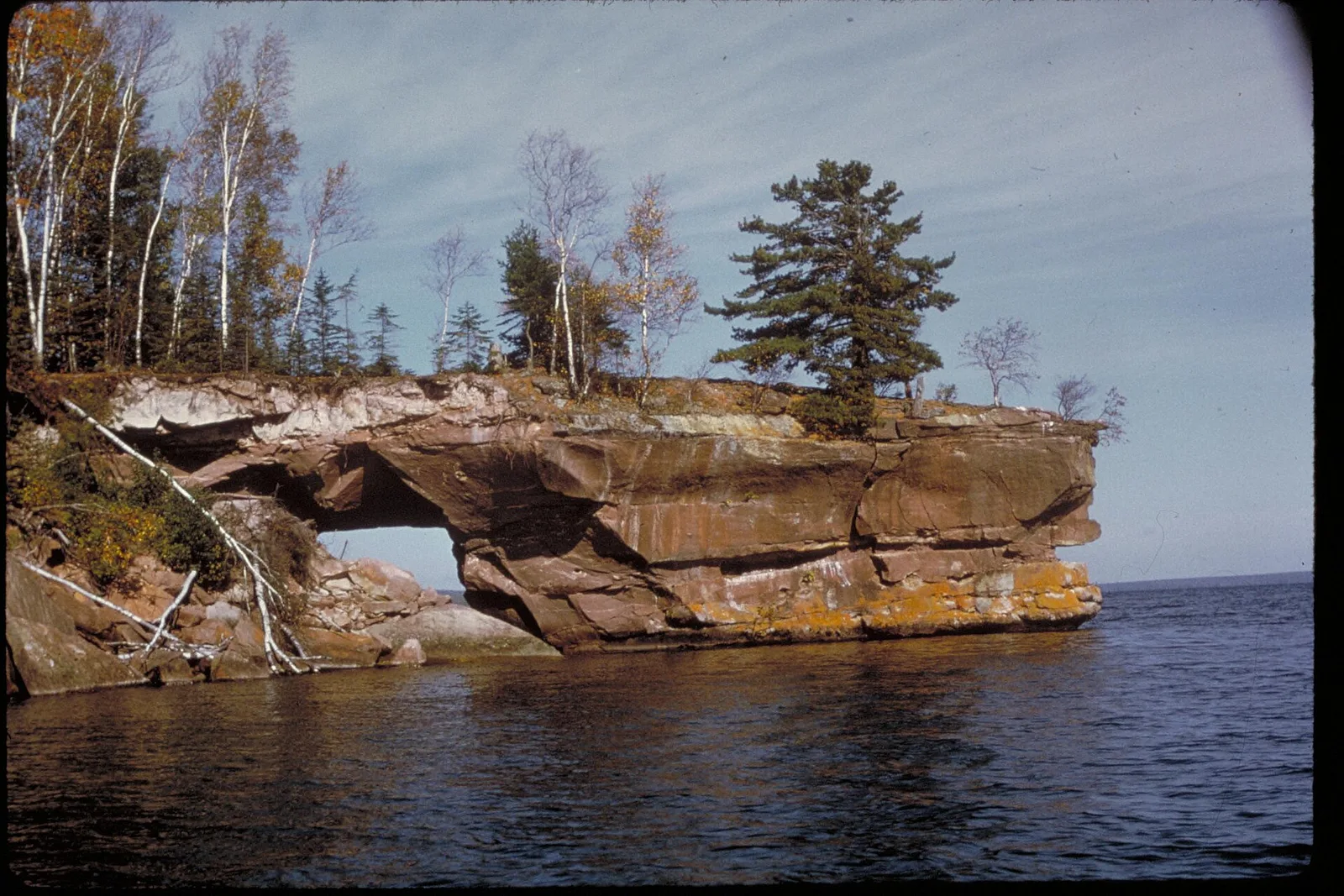
The cliffs of the western islands and the mainland shore are cut in the Chequamegon Sandstone of the Precambrian Bayfield Group, a soft red-brown sandstone deposited by rivers about a billion years ago in the rift that nearly split North America.
Lake Superior's storm waves, plus freeze-thaw wedging in winter, have hollowed the base of the cliffs into a honeycomb of chambers, arches, blowholes, and slot passages, some large enough to paddle a kayak deep inside. The mainland caves near Meyers Beach are the most accessible.
The rock erodes fast by geologic standards, so the caves are constantly changing; roof collapses, new openings, and shifting cobble floors are documented year to year, and the same softness is why the sandstone was quarried on Basswood and Hermit islands in the late 1800s for buildings in Chicago, Milwaukee, and Duluth.
In summer the caves are reached only by kayak or tour boat from Bayfield or by swimming; in winter, when the lake ice is thick and stable enough, the Park Service marks a walking route to the mainland caves, which does not happen every year.
In a hard winter, groundwater seeping through the sandstone freezes as it drips and runs, coating the mainland sea caves in curtains, columns, chandeliers, and frozen waterfalls of ice, some stained tan and orange by tannins and iron in the rock.
The caves are only reachable when a stable ice shelf bridges the roughly one-mile gap from Meyers Beach; the Park Service tests thickness and cracking daily and opens or closes the route accordingly. It has opened only a handful of times since 2009.
The banner year was 2014, when a polar-vortex winter froze the lake early and solid: the route stayed open about six weeks and drew an estimated 138,000 visitors, overwhelming the small county road and beach parking and prompting shuttle and fee systems in later attempts.
The route opened again in early 2015 for a shorter run and has mostly stayed closed since, as mild winters have kept the nearshore ice too thin or too broken, a trend scientists tie directly to Lake Superior's declining ice cover.
Six of the islands carry a total of nine light towers built between 1857 and 1891, the densest concentration of historic lighthouses anywhere in the United States. They marked the approaches to Bayfield, Ashland, and the Superior-Duluth harbor and the shoals of a stretch of lake notorious for sudden gales.
The stations vary widely: the schoolhouse-style wood light on Raspberry Island, the tall conical brick tower on Devils Island facing the open lake, the octagonal Sand Island light of local brownstone, and two successive towers on Michigan Island, the second moved in pieces from Delaware.
All were automated by the 1970s and 1980s, ending resident keepers, and the Coast Guard still maintains several as active aids to navigation while the Park Service preserves the historic structures. Volunteers live at some stations each summer as interpreters.
Raspberry Island's light and keeper's quarters have been fully restored to their early-1900s appearance and are shown on ranger tours reached by tour boat; the Park Service also runs an annual Lighthouse Celebration with special boat access to stations normally closed.
Because logging crews had to raft timber off remote islands, several Apostle Islands were cut lightly or not at all, leaving some of the best old-growth northern forest in the western Great Lakes. Outer, Devils, Raspberry, and parts of other islands hold hemlock, white pine, yellow birch, and northern white cedar 200 to 400 years old.
Stockton Island has one of the highest densities of black bears in North America, estimated at times near one bear per square mile; bears swim between islands and the mainland, and the park closes some campsites and requires bear-resistant food storage.
The islands are a migratory bird funnel, especially in spring, when warblers, thrushes, and raptors concentrate on the shorelines before crossing the open lake; more than 240 bird species have been recorded, and bald eagles and great blue heron rookeries nest on several islands.
The forests also record human use: abandoned farmsteads, a commercial fishing camp on Manitou Island preserved as a museum, brownstone quarry ruins, and old apple orchards are scattered through the woods, and the park manages the islands as recovering rather than untouched wilderness.
Indigenous Heritage
Ojibwe (Anishinaabe), specifically the Red Cliff and Bad River Bands
The Ojibwe (Anishinaabe) migrated west along the Great Lakes over centuries, guided by a prophecy to stop where food grew on the water, the wild rice of the western lakes. They made Mooningwanekaaning, Madeline Island, a spiritual and political center by the 1400s or 1500s, and it remained the heart of Lake Superior Ojibwe life through the fur-trade era.
French traders built a post at La Pointe on Madeline Island in the 1690s, and it became one of the most important fur-trade and mission sites on the upper lakes. Ojibwe families lived, fished, and gathered on many of the islands and buried their dead there.
The 1854 Treaty of La Pointe created the reservations of the Lake Superior Chippewa, including Red Cliff and Bad River adjoining the park, and reserved the right to hunt, fish, and gather on ceded lands; those off-reservation treaty rights, upheld by federal courts in the 1980s and 1990s, still govern tribal fishing in and around the lakeshore.
The Red Cliff Band of Lake Superior Chippewa and the Bad River Band of the Lake Superior Tribe of Chippewa Indians are the two federally recognized Ojibwe tribes most directly connected to the Apostle Islands. Both bands retain treaty rights to fish in Lake Superior and harvest other resources within the park. The park service maintains formal consultation relationships with both tribes, and Ojibwe cultural history is interpreted at the Apostle Islands visitor center in Bayfield.
Things To Do
Sea Cave Kayaking
Paddling the sea caves is one of the signature trips of the upper Midwest. From the Meyers Beach launch it is about 1.5 miles of open-water paddling east to the mainland caves, doable by fit intermediate paddlers only when the lake is calm.
Reaching the island caves, on Sand, Devils, and Stockton islands, means crossing miles of exposed Lake Superior where wind can build dangerous waves within an hour, so those trips are for experienced sea kayakers or guided groups.
Several Bayfield outfitters run guided half-day trips to the mainland caves and multi-day island camping tours, providing sea kayaks, spray skirts, and wetsuits; the park expects guided clients and private paddlers alike to check the marine forecast and the lake's sea cave conditions report.
Lake Superior stays cold enough all year, often in the 40s Fahrenheit near shore, that a capsize without a wetsuit or drysuit can bring on hypothermia in minutes, and rescues in the caves are difficult; the park lists paddling the caves among its highest-risk activities.
Ice Cave Walking (Winter)
When a solid ice shelf forms across the mile of lake between Meyers Beach and the mainland cliffs, the Park Service flags a walking route out to the sea caves, which then hold their winter coat of icicles, frozen falls, and floor-to-ceiling ice columns.
The route is roughly a two-mile round trip on the ice plus a scramble along the cliff base. It is physically easy but weather-brutal, with wind chills often well below zero and no shelter, and rangers require ice cleats and warn against going in fading light.
Whether it opens at all depends on daily ice measurements; it has been open only a handful of winters since 2009 and not at all in most recent years. The park posts status on a dedicated hotline and web page and does not open the route on thin or cracking ice.
In the 2014 event the crush of visitors, more than 138,000 in six weeks, snarled the two-lane county road, filled the small lot, and strained the local town of Cornucopia, so later openings have used timed parking, an entrance fee, and a shuttle.
Raspberry Island Lighthouse Tour
Raspberry Island Light Station, a white frame lighthouse with attached keeper's quarters built in 1863 and enlarged in 1906, is the most fully restored of the Apostle Islands lights and the one most set up for visitors.
The Park Service has furnished the quarters to about 1920, when two keepers' families shared the station, and rangers in period dress lead tours of the tower, kitchen, and grounds, including the restored garden the keepers kept to supplement supply-boat deliveries.
The island is reached on the Apostle Islands Cruise Service boat from Bayfield, which lands at a dock below the light; a short, steep stairway and path climb the sandstone bluff to the station, and the point gives a wide view over the western islands.
A 2007 landslide undercut part of the bluff below the lighthouse, and the Park Service stabilized the slope and moved the structure slightly back from the edge, an example of the erosion pressure on every cliff-top building in the park.
Paddling to Outer Island
Outer Island is the northeasternmost of the Apostles and the most exposed, sitting alone on the edge of the open lake. Reaching it by kayak means a crossing of about 12 miles or more from Bayfield or a shorter but still committing hop from the northern islands.
The island has old-growth hemlock and cedar, a lagoon behind a curving sand spit (a tombolo) at its south end, a designated wilderness interior, and the 1874 Outer Island Light at its north tip, the tallest tower in the park.
It is one of the least-visited spots in the lakeshore, with a small number of wilderness campsites reserved through Recreation.gov and no facilities beyond pit toilets and bear lockers; parties must carry everything and be able to wait out weather for days.
The crossing is for advanced sea kayakers only: Lake Superior here has no sheltered bailout, water temperatures that cause rapid hypothermia, and weather that can turn a flat morning into four-foot seas by afternoon.
Conservation and Challenges
Lake Superior Water Levels
Lake Superior's level swings through multi-year cycles driven by precipitation, evaporation, and ice cover, and the range from the record low of 2007 to the near-record high of 2019 and 2020 was about three feet, a large change for a lake of its size.
Low water widens beaches but strands docks, exposes rocky lakebed, and can leave the sea caves ringed by dry cobble; high water speeds cliff undercutting and collapse, floods low campsites and trails, and washed out sections of the Meyers Beach access in 2019.
Levels also affect the ice-cave route, since a higher lake with a thicker nearshore ice shelf is more likely to freeze into a walkable bridge, and shipping, since the Bayfield-area harbors and the Madeline Island ferry channel need dredging in low years.
Climate projections for the Great Lakes point to more extreme swings, wetter years and drier years both intensifying, which makes planning for docks, trails, and buildings at the lakeshore harder and pushes the park toward movable and setback infrastructure.
Invasive Species in Lake Superior
The sea lamprey, a parasitic eel-like fish that entered the upper Great Lakes after canal and lock improvements, collapsed Lake Superior's native lake trout by the 1950s. A binational control program using lampricide in spawning streams and barriers has since cut lamprey numbers by about 90 percent and let lake trout partly rebuild, though they remain below historic levels.
Zebra and later quagga mussels reached Lake Superior in ballast water; the lake's cold, low-calcium water has kept their numbers far lower than in the other Great Lakes, but they are established near the Apostle Islands and filter plankton the food web depends on.
Other watch-list invaders include the spiny water flea, already present and altering the zooplankton community, and the rusty crayfish and Eurasian watermilfoil in nearby inland waters. Ballast-water rules since 2008 have slowed but not stopped new arrivals.
On land, the park fights garlic mustard, spotted knapweed, and other invasive plants that move in on disturbed ground, campsites, and old homesteads, and it enforces firewood and boat-cleaning rules to keep pests like emerald ash borer off the islands.
Ice Cover Decline
Lake Superior's average winter ice cover has fallen sharply since the 1970s; long-term records from NOAA's Great Lakes Environmental Research Laboratory show a decline of roughly 20 to 25 percent in maximum seasonal ice, with wide year-to-year swings.
The lake is warming faster than the air above it, one of the fastest-warming lakes in the world, because less ice and a longer open-water season let it absorb more summer heat, which in turn further delays and reduces the next winter's ice, a feedback loop.
For the park, the most visible effect is the near-loss of the ice caves: a walkable route that formed most winters in the 1970s and 1980s now forms only rarely, and models project it becoming a once-in-a-generation event.
Less ice also changes the ecology, extending the growing season for algae, shifting fish spawning and cold-water habitat, exposing shorelines to winter storm erosion that ice used to buffer, and stressing the lake trout and whitefish that anchor the tribal and sport fisheries.
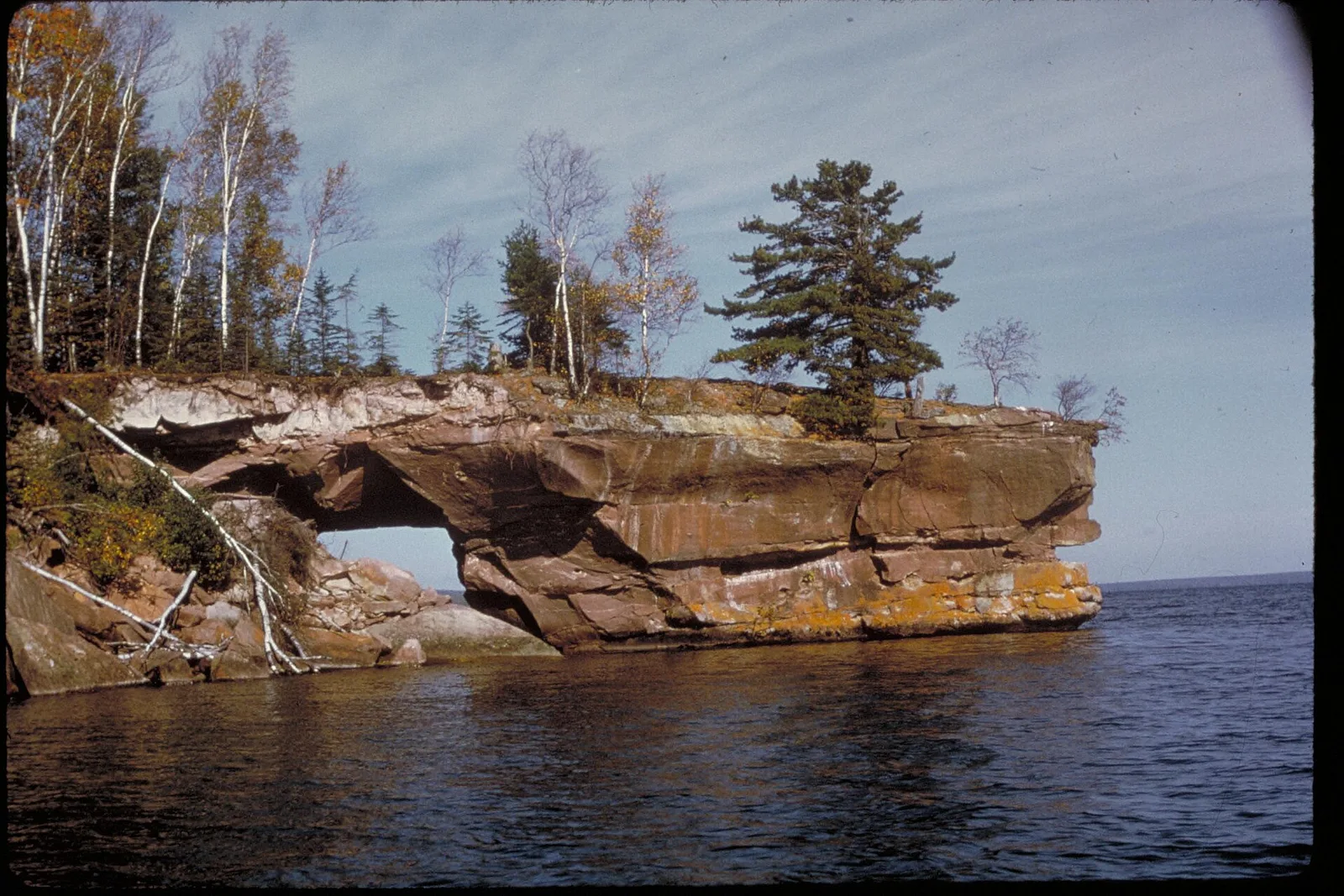
Sea cave ice formations, an extraordinary winter phenomenon on Lake Superior
Fast Facts
Did You Know?
The Apostle Islands ice caves form only in exceptional winters when Lake Superior freezes deeply enough to support walking. In 2014, an unusually severe winter produced some of the most spectacular ice formations in decades, and more than 138,000 people walked across the frozen lake to the caves over about six weeks, overwhelming the small town of Bayfield and requiring the National Park Service to implement traffic management for the first time at this park. Climate change is making such winters rarer, and the NPS projects the ice caves will form with decreasing frequency in coming decades.
The Apostle Islands contain nine historic lighthouses, the largest concentration of federally protected lighthouses in the United States. They were built between 1857 and 1891 by the U.S. Lighthouse Service to guide ships through the treacherous waters around the islands. Lake Superior has claimed hundreds of ships over the centuries, and the coastline of Wisconsin and the islands is scattered with wrecks. Gordon Lightfoot's 1976 song The Wreck of the Edmund Fitzgerald brought national attention to Lake Superior's dangers; the Edmund Fitzgerald sank in 1975 just north of the Apostle Islands.
The Ojibwe have lived on and around the Apostle Islands for centuries and call Madeline Island, the largest of the Apostle Islands, Mooningwanekaaning-minis, meaning place of the flicker (a woodpecker). La Pointe on Madeline Island was one of the most important centers of the fur trade in the western Great Lakes and a major meeting place for Ojibwe, French, British, and American interests. The Ojibwe retain treaty rights to fish and harvest resources in the park today, and the Red Cliff and Bad River bands maintain close relationships with the National Lakeshore.
Plan Your Visit
Location
Bayfield, Wisconsin, Chequamegon Bay, Lake Superior
Designation
National Lakeshore
Best Time to Visit
July and August offer the most reliable paddling weather. Fall (September) is less crowded and offers dramatic lake conditions and early foliage. Winter ice caves are extraordinary but unpredictable.
Admission
Free, National Park Service. Kayak tours, boat cruises, and the Madeline Island ferry are operated by private outfitters and charge separately.
Getting There
Bayfield, Wisconsin is the primary gateway town, located on Chequamegon Bay about 90 miles east of Duluth, Minnesota, and about 6 hours from Chicago. Bayfield is a small town; services are limited outside summer season.
Kayaking and Tours
Multiple outfitters in Bayfield offer guided kayak tours to the sea caves and islands. The Apostle Islands Cruise Service offers boat tours from Bayfield. Lake Superior conditions can be hazardous; guided tours are strongly recommended for those without sea kayaking experience.
Island Access
Most islands are accessible only by boat. The ferry to Madeline Island runs from La Pointe. Kayaking to the mainland sea caves requires a 1.5-mile paddle from Meyers Beach. Camping on the islands requires a permit.
Ice Caves
Check the park website in January and February for ice condition updates. The NPS will announce when the ice walking route is open. The route opens and closes based on daily ice thickness measurements. Do not go on the ice without an official NPS announcement that it is open.