
Navassa Island BQ
A small, rugged Caribbean island between Jamaica and Haiti, claimed by both the United States and Haiti, home to a historic lighthouse and one of the most biodiverse coral reef ecosystems in the Caribbean.
About Navassa Island
Navassa Island stands apart from every other U.S. minor outlying territory in one important way: it is in the Caribbean, not the Pacific. This small, rugged island of about 2 square miles sits in the Windward Passage between Jamaica and Haiti, rising sharply from the sea on cliffs of coral limestone. Its highest point reaches 256 feet, making it notably more elevated than its flat Pacific counterparts.
Navassa also carries the distinction of being the subject of the longest-running unresolved foreign territorial dispute involving any U.S. territory. Haiti has claimed the island since its founding constitution in 1801, a claim the United States has never recognized. The U.S. asserts sovereignty under the Guano Islands Act of 1857 and has administered the island ever since.
Its human history includes a brutal guano mining era, a landmark labor uprising in 1889, and a lighthouse that guided Caribbean shipping for decades. Today Navassa is a closed National Wildlife Refuge, and its surrounding waters rank among the most biologically rich coral reef ecosystems in the entire Caribbean.

Aerial view of Navassa Island

The Navassa Island Light, built in 1917
Navassa Island vs. a U.S. State
| Feature | Navassa Island | U.S. State |
|---|---|---|
| Permanent Population | None | Yes |
| Local Government | None | State government |
| Congressional Representation | None | Senators + Representatives |
| Voting in Federal Elections | No residents | Yes |
| U.S. Constitution Applies | Partially (by statute) | Fully |
| Administered By | Fish & Wildlife Service | Elected officials |
| Sovereignty Disputed | Yes, Haiti claims it | No |
| Public Access | Closed, no entry | Generally open |
Geography at a Glance
- Location
- Caribbean Sea
- Coordinates
- 18°24′N 75°1′W
- Land Area
- ~2 sq mi (5.2 km²)
- Coastline
- ~7.7 miles (12.4 km)
- Highest Point
- ~256 ft (78 m) above sea level
- Nearest Land
- Haiti (~40 mi east)
- Distance to PR
- ~500 miles west of Puerto Rico
- Time Zone
- UTC−5:00 (EST)
- Climate
- Tropical, hot, dry, hurricane risk
- Administration
- U.S. Fish & Wildlife Service
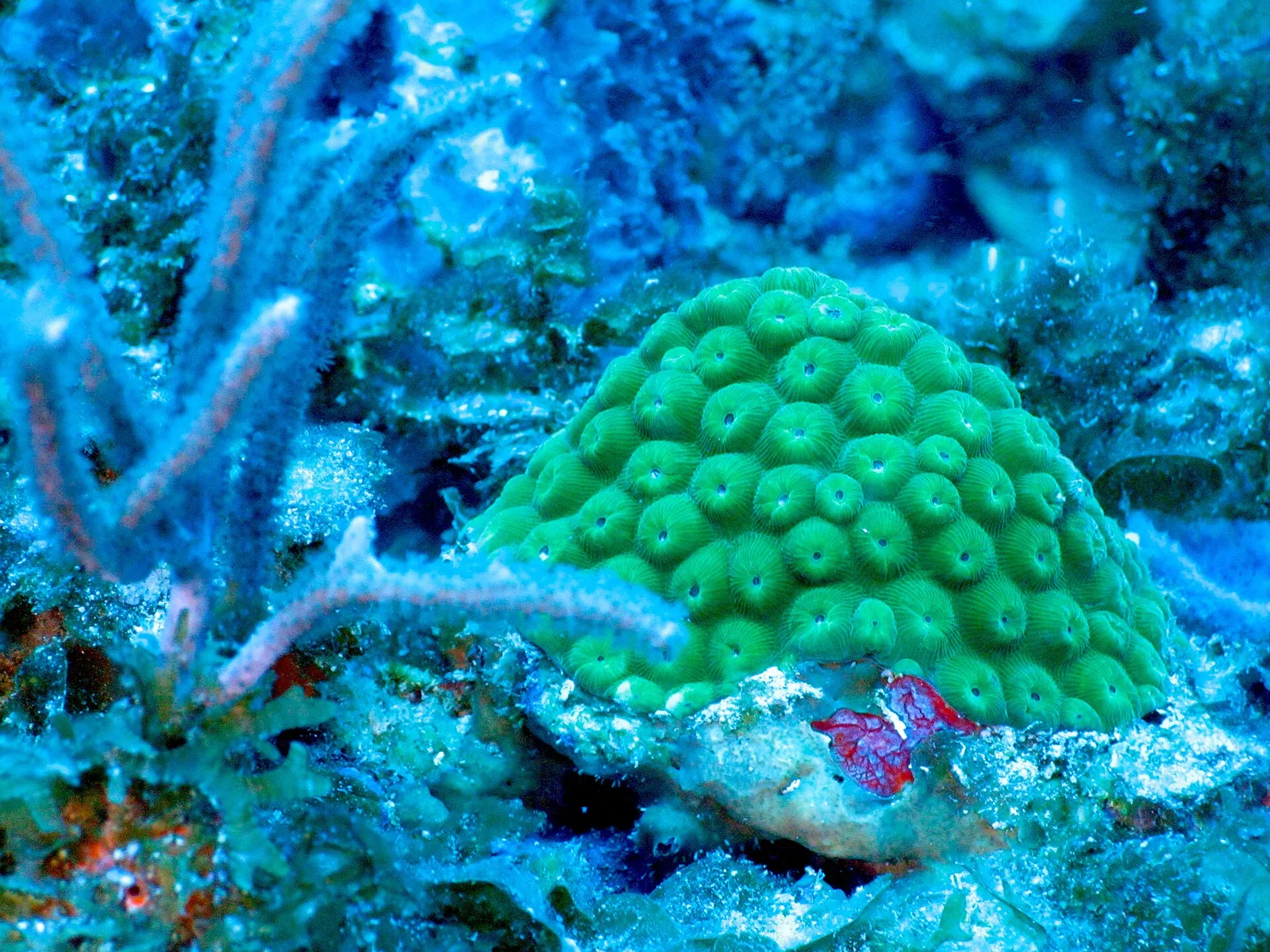
Navassa's coral reefs rank among the most pristine in the Caribbean
Wildlife of Navassa Island
Navassa's isolation in the Caribbean has produced an ecosystem of exceptional richness. Its reefs are among the most intact in a region where most coral ecosystems have been severely degraded by fishing, pollution, and development.
Navassa's surrounding reefs are among the most pristine and biodiverse in the entire Caribbean. A 2002 scientific survey found coral cover and species diversity far exceeding that of most inhabited Caribbean islands, including rare deepwater coral formations.
Navassa hosts several endemic and near-endemic lizard species found nowhere else, including the Navassa curly-tailed lizard. The island's isolation has allowed distinct reptile populations to develop over centuries.
Brown boobies, magnificent frigatebirds, and white-tailed tropicbirds nest on Navassa's rocky coastal cliffs. The island's rugged terrain and lack of ground predators make it suitable nesting habitat.
The waters around Navassa support an exceptional diversity of reef fish, sea turtles, and invertebrates. Nassau grouper, a species severely overfished throughout the Caribbean, is found here in unusually healthy numbers.
Navassa Island Through Time
- ✦1504
Columbus Stops at Navassa
Members of Christopher Columbus's fourth voyage stopped at Navassa Island in 1504, when the expedition was marooned on nearby Jamaica and sent canoes to Hispaniola for help; they found no water on the waterless limestone rock. The name likely comes from the Spanish 'nava,' meaning a flat plain.
Navassa is a two-square-mile uplifted coral plateau ringed by cliffs, with no beach, no fresh water, and no natural harbor, which is why it was never settled and rarely visited for the next three centuries.
- ✦1697
Treaty of Ryswick, Haiti Claim Established
The 1697 Treaty of Ryswick ceded the western third of Hispaniola to France, creating the colony of Saint-Domingue that became independent Haiti in 1804.
Haiti argues that Navassa, about 35 miles off its southwestern peninsula, was part of that French cession and therefore Haitian territory, a position it has never abandoned.
- ✦1801
Haitian Constitution Claims Navassa
Haiti's 1801 constitution, and later versions, explicitly listed Navassa among Haitian islands. Haiti has maintained the claim continuously ever since.
That makes Navassa one of the only U.S.-administered areas subject to a live foreign sovereignty dispute; the United States does not recognize the Haitian claim and administers the island as an unincorporated territory and wildlife refuge.
- ✦1857
U.S. Claim Under Guano Act
In 1857 an American sea captain, Peter Duncan, claimed Navassa under the Guano Islands Act of 1856 on behalf of a Baltimore syndicate, and the U.S. government backed the claim despite Haiti's protest.
The Navassa Phosphate Company of Baltimore then built a rail line, dwellings, and cisterns and began quarrying the island's thick phosphate deposits for fertilizer.
- ✦1889
The Navassa Riot
The company worked the island with roughly 140 Black laborers from the Baltimore area, held under contracts they could not leave, on 12-hour days in the tropical sun with poor food, harsh punishments, and no way off the island.
On September 14, 1889, the workers rose against the white supervisors, killing five, in one of the deadliest labor uprisings of the era. Eighteen men were tried in Baltimore, and three were sentenced to hang.
A defense campaign led by the Order of Galilean Fishermen, a Black fraternal society, and supported by Frederick Douglass argued that U.S. law barely reached the island. In 1890 the Supreme Court, in Jones v. United States, upheld federal jurisdiction over Guano Act islands, but President Benjamin Harrison then commuted the death sentences to prison terms.
- ✦1917
Navassa Island Lighthouse Built
After phosphate mining wound down, the U.S. Lighthouse Board built the Navassa Island Light in 1917, a roughly 160-foot tower on the island's highest point, to guide ships through the Windward Passage between Cuba and Haiti.
The Windward Passage was one of the busiest shipping lanes in the Caribbean and became more so after the Panama Canal opened in 1914; a small crew of keepers lived on the island to tend the light.
- ✦1929
Lighthouse Automated, Guano Era Ends
The Coast Guard automated the Navassa light in 1929, ending the need for resident keepers, and with the phosphate long exhausted the island was left uninhabited.
During World War II the U.S. briefly kept an observation post there, and Cuban and Haitian fishers have used the surrounding reefs for generations, but no one has lived on Navassa permanently since the keepers left.
- ✦1996
Transfer to Fish & Wildlife Service
In 1996 the Coast Guard decommissioned the light for good, and in 1999 administrative responsibility passed to the U.S. Fish and Wildlife Service, which made Navassa a National Wildlife Refuge.
The refuge is closed to the public, and the Haitian government formally protested the U.S. actions, restating its claim.
- ✦2002
Scientific Survey Reveals Pristine Reefs
A 2000 to 2002 survey by the Center for Marine Conservation, NOAA, and the Fish and Wildlife Service found that Navassa's isolation had left it with coral reefs and fish populations in exceptional condition, among the healthiest in the Caribbean.
The island's dry forest and cliffs also host endemic species, including several found nowhere else, and a large colony of red-footed boobies, reinforcing the case for its protected status.
Did You Know?
Interesting facts about one of America's most unusual territories.
Haiti has claimed Navassa Island since its founding constitution in 1801, making it the oldest unresolved foreign territorial dispute involving any U.S. territory. The United States does not recognize Haiti's claim.
The 1889 Navassa Uprising drew the direct involvement of Frederick Douglass, who publicly argued that the workers sentenced to death for killing their supervisors had acted in self-defense against brutal conditions. President Benjamin Harrison ultimately commuted their death sentences.
Navassa Island has the distinction of being one of the only U.S. minor territories in the Atlantic and Caribbean, rather than the Pacific. All the others, except Navassa, are Pacific islands.
A 2002 scientific survey ranked Navassa's coral reefs among the most pristine in the entire Caribbean, with coral cover and fish diversity far exceeding that of most inhabited Caribbean islands nearby.
Navassa Island is closed to the public entirely. The U.S. Fish and Wildlife Service does not issue public access permits, and the island's rocky cliffs and lack of a harbor make landing difficult even for authorized visitors.
The Navassa Island Light, first lit in 1917, still stands at 162 feet atop the island's highest point, though it has been decommissioned. It guided ships through the Windward Passage, one of the most strategically important shipping lanes in the Western Hemisphere.
Quick Facts and Common Questions
Short answers to the questions people most often ask about Navassa Island: where it is, how the United States claimed it, and why Haiti also claims it.
Navassa Island is a small, cliff-ringed island in the Caribbean Sea, about 40 miles west of Haiti and about 500 miles west of Puerto Rico. It covers about 2 square miles and has no permanent residents.
An American sea captain claimed Navassa in 1857 under the Guano Islands Act of 1856, which let U.S. citizens claim unoccupied islands holding guano, seabird droppings valued as fertilizer. A Baltimore company mined guano there for decades using Black laborers from Maryland, who worked under harsh conditions.
In 1889 laborers on Navassa revolted against their supervisors, and five supervisors were killed. Several workers were tried in federal court and sentenced to death, and in Jones v. United States (1890) the Supreme Court upheld the Guano Islands Act and U.S. jurisdiction over the island. President Benjamin Harrison later commuted the death sentences.
Yes. Haiti has claimed Navassa since before the United States did, and the dispute has never been resolved. The United States has administered the island since 1857.
Navassa is an unincorporated, unorganized territory of the United States with no local government. The U.S. Fish and Wildlife Service, part of the Department of the Interior, has managed it as Navassa Island National Wildlife Refuge since 1999, and visits require a special permit. A lighthouse built there in 1917 to guide ships headed to the Panama Canal was shut down in 1996.
No. Navassa has no residents, is not part of any state or congressional district, and has no delegate in Congress.