Executive Orders
The president's most powerful solo tool, a written directive that carries the force of law without a single congressional vote. Here's what it is, where the power comes from, what it can and can't do, and why it's so controversial.
What Is an Executive Order?
An executive order is a written, signed directive from the President of the United States that has the force of law, without needing Congress to vote on it, debate it, or approve it in any way. The president writes it, signs it, and it takes effect.
That might sound like the president writing their own laws, and in a sense, that's close to the truth. But there are important limits. Executive orders can only direct the executive branch, federal agencies, departments, and employees. They cannot create new criminal laws, spend money Congress hasn't approved, or override existing laws passed by Congress.
Where Does the Power Come From?
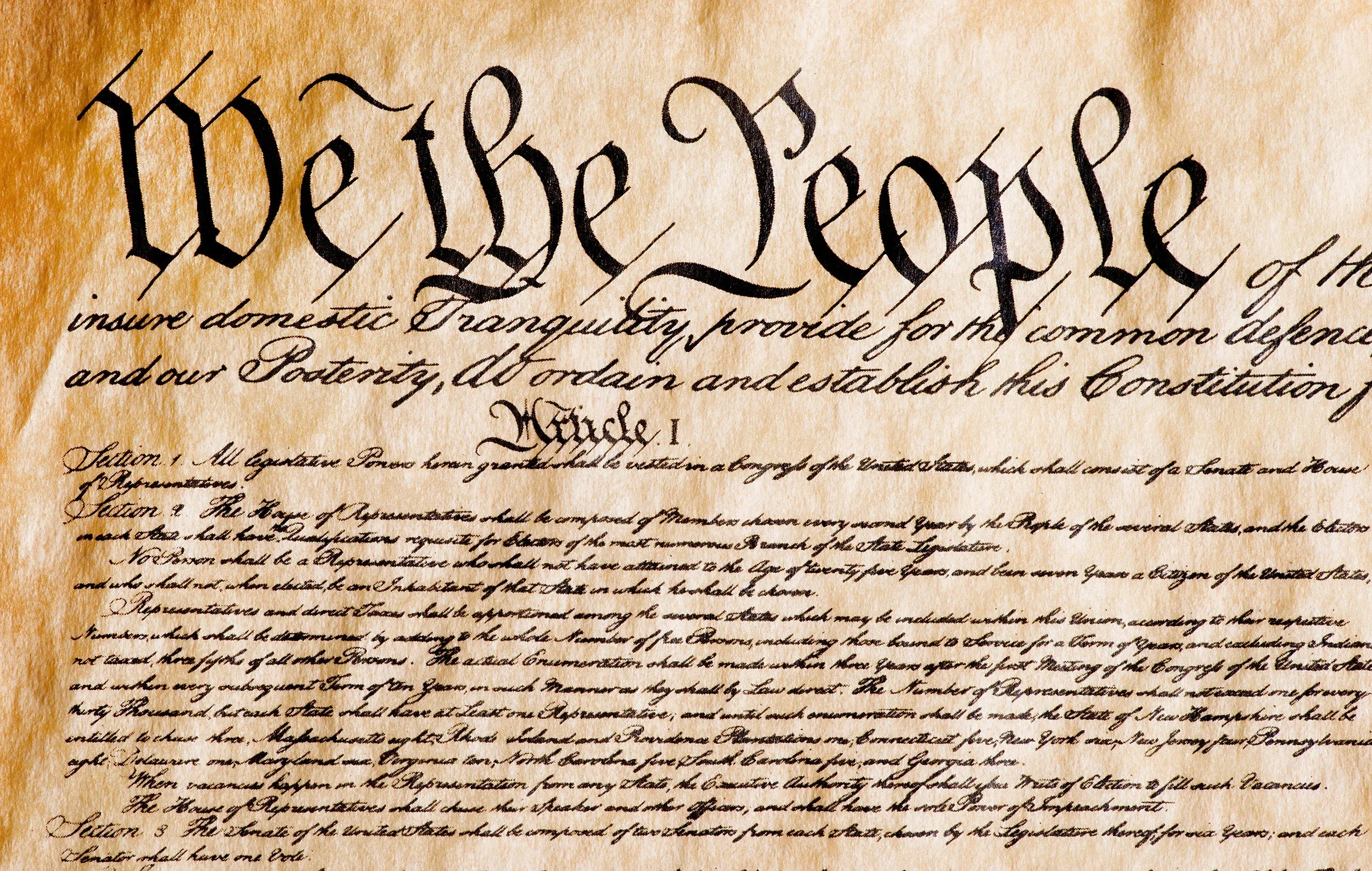
Article II, two clauses that together authorize executive orders (Public Domain)
Like the Senate Majority Leader and the filibuster, executive orders are not explicitly mentioned in the Constitution. The authority to issue them is inferred from two provisions in Article II, the Vesting Clause and the Take Care Clause. Together, they have been interpreted as giving the president broad authority to manage the executive branch through directives.
Presidents have used this authority since George Washington issued the first executive order in 1789. Congress has never passed a law formally authorizing them, it has simply accepted that the president's inherent executive power includes the ability to direct federal operations through written orders.
Article II, Section 1, The Vesting Clause
"The executive Power shall be vested in a President of the United States of America."
Article II, Section 3, The Take Care Clause
"He shall take Care that the Laws be faithfully executed."
In short: All executive power belongs to the president. The president must ensure that federal laws are carried out. Together, these have been interpreted as authorizing the president to issue binding directives to the executive branch, executive orders.
What Executive Orders Can, and Can't, Do
Executive orders are powerful but not unlimited. Understanding both what they can accomplish and where they hit a wall is essential to understanding how they actually work:
What They CAN Do
Direct federal agencies
Tell cabinet departments and federal agencies how to prioritize their work, enforce laws, allocate resources, and interpret regulations.
Set federal employment policy
Control hiring practices, workplace rules, pay scales, and conduct standards for the entire federal workforce of 4 million employees.
Establish new offices and task forces
Create new offices, councils, advisory boards, or task forces within the executive branch without congressional approval. The Peace Corps started as an EO.
Manage federal land and resources
Designate national monuments, restrict or open federal lands for development, and direct how federal natural resources are managed.
Set immigration enforcement priorities
Direct which immigration laws get prioritized for enforcement, how resources are allocated at the border, and how to process certain categories of cases.
Direct military operations
As commander in chief, the president can use EOs to direct military deployment, readiness, and rules of engagement within existing congressional authorizations.
What They CAN'T Do
Create new criminal laws
Only Congress can create criminal statutes. An executive order cannot make something a federal crime or increase criminal penalties.
Spend money Congress hasn't approved
All federal spending must be appropriated by Congress. An EO cannot redirect funds to programs Congress hasn't funded or authorized.
Override existing laws
Executive orders must operate within existing law. If Congress has passed a law on a topic, an EO that conflicts with it is illegal. Courts will strike it down.
Amend the Constitution
No executive action of any kind can change the Constitution. That requires Congress and three-quarters of states.
Bind future presidents permanently
Any future president can revoke or modify an executive order on their first day in office with a single signature. EOs are only as durable as the presidency that issued them.
Override court orders
Federal courts can and do block executive orders. If a court finds an EO violates the Constitution or existing law, the president must comply with the ruling.
How an Executive Order Is Created
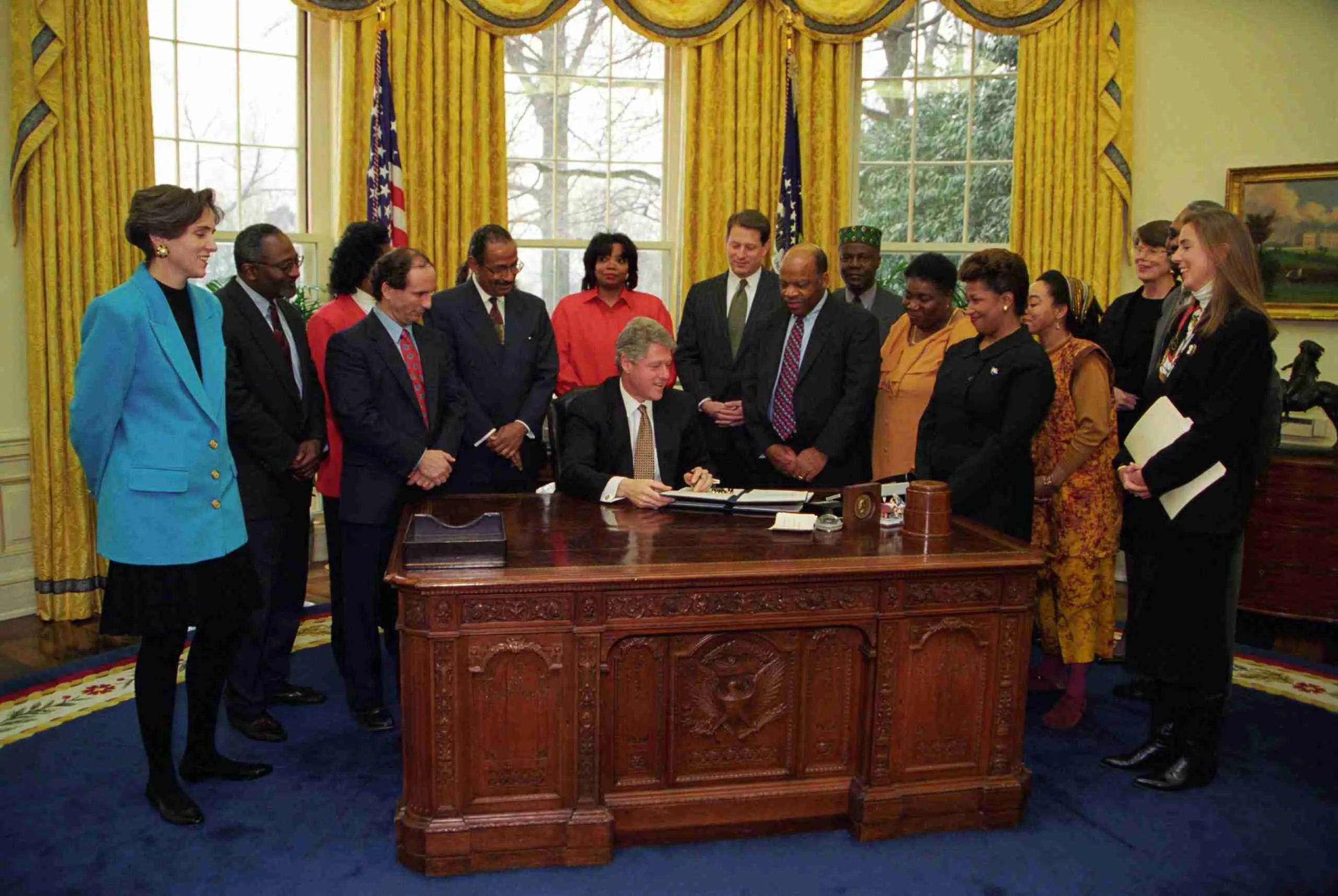
The Oval Office, where executive orders are drafted, reviewed, and signed (Public Domain)
The signing ceremony you see on TV, the president surrounded by supporters, signing with multiple pens, is the last step in a process that can take weeks or months:
Policy Decision
The president or senior White House staff decide they want to take executive action on an issue, either because Congress won't act, the president wants to move faster than legislation allows, or to reverse a previous administration's policy.
Drafted by White House Counsel
White House lawyers draft the order, carefully staying within constitutional and statutory limits. Poorly drafted orders get blocked by courts, so the legal language matters enormously. The order must cite the legal authority it draws from.
Interagency Review
Relevant federal agencies review the draft to assess its practical implications, identify potential legal problems, and estimate costs. The Office of Management and Budget (OMB) reviews the budget impact.
Office of Legal Counsel Review
The Department of Justice's Office of Legal Counsel (OLC) reviews the order for constitutional legality. An OLC opinion that an order is illegal is a serious warning, though presidents can ignore it.
Presidential Signature
The president signs the order. It is immediately effective unless the order specifies a future effective date. High-profile signings often include affected stakeholders and media cameras.
Published in the Federal Register
The signed order must be published in the Federal Register, the official daily journal of the federal government. This gives it legal effect and notifies all federal agencies of their new obligations. Without publication, an order generally cannot be enforced against the public, except against people who have actual notice of it.
How Executive Orders Can Be Stopped or Reversed
Executive orders are powerful, but they're not permanent and they're not above challenge. There are three ways they can be stopped:
Struck Down by Courts
Federal courts, from district courts all the way to the Supreme Court, can review executive orders for constitutional and statutory compliance. If a court finds the order exceeds presidential authority, violates the Constitution, or conflicts with existing law, it can issue an injunction blocking the order immediately. Court challenges move fast, in 2017, Trump's travel ban was blocked by a federal judge within hours of signing. This is the fastest and most dramatic way an EO gets stopped.
Example: Multiple versions of the Trump travel ban were blocked by courts before a modified version was upheld.
Overridden by Congress
Congress can pass legislation that supersedes an executive order, either by explicitly overriding it or by passing a law that conflicts with what the order directs. If the president vetoes that legislation, Congress can override the veto with a two-thirds supermajority in both chambers. This is slower than a court challenge but creates permanent law rather than just blocking the current order.
Example: Congress passed the National Emergencies Act specifically to limit presidential emergency powers after years of unchecked use.
Revoked by the Next President
This is the most common way executive orders end. Any president can revoke, modify, or replace any executive order with a stroke of a pen on their first day in office. There is no congressional vote, no court process, no waiting period. Presidents routinely revoke their predecessors' orders, especially when parties switch control of the White House. This is why executive orders are often criticized as impermanent, everything built by one president can be dismantled by the next.
Example: Biden revoked Trump's travel ban on his first day. Trump revoked Biden's executive orders on his first day back in 2025.
Executive Orders vs Other Presidential Actions
"Executive order" is the most well-known type of presidential directive, but it's not the only tool available. Presidents can also act through several other mechanisms, each with slightly different legal force and purpose:
Executive Orders
Most PowerfulFormal directives with full legal force, numbered sequentially, and published in the Federal Register. The strongest and most permanent form of unilateral presidential action.
Presidential Proclamations
Formal & PublicUsed for ceremonial matters (declaring holidays, national awareness months) and formal policy announcements (trade restrictions, border declarations). Also published in the Federal Register. Often used for immigration-related actions.
Presidential Memoranda
Similar to EOsSimilar legal force to executive orders but less formal, not always numbered, and sometimes not published. Often used for internal management directives to specific agencies. Sometimes used to avoid the higher profile of an executive order.
National Security Directives
ClassifiedClassified executive orders related to intelligence, military operations, and national security. These are not published publicly. The exact number issued at any time is unknown to the public.
Signing Statements
InterpretiveWritten statements issued when signing a bill into law, declaring how the president interprets certain provisions, sometimes signaling they won't enforce parts they consider unconstitutional. Controversial and not legally binding.
Executive Agreements
Foreign PolicyInternational agreements with foreign countries that don't require Senate ratification like treaties do. Easier to make than treaties but easier for future presidents to undo.
Notable Executive Orders in History
Click any card to read the full story.
Issued before the US entered World War II, EO 8802 prohibited racial and ethnic discrimination in the national defense industry and in the federal government, the first federal action against employment discrimination since Reconstruction.
Roosevelt signed it on June 25, 1941, under pressure from labor and civil rights leader A. Philip Randolph, who had organized a March on Washington Movement threatening to bring 100,000 Black Americans to the capital. Randolph called off the march after the order was issued.
The order created the Fair Employment Practices Committee to investigate complaints and hold hearings. The committee had no enforcement power of its own and relied on publicity and the threat of canceled war contracts, and Congress let its funding lapse in 1946.
Historians treat EO 8802 as a direct precursor to later federal civil rights law, including the Fair Employment Practice provisions debated through the 1940s and 1950s and ultimately Title VII of the Civil Rights Act of 1964.
Signed February 19, 1942, EO 9066 authorized the military to designate "exclusion zones" from which any person could be barred. It did not name Japanese Americans, but it was used almost entirely to remove people of Japanese ancestry from the West Coast after the attack on Pearl Harbor.
About 120,000 people were forced from their homes into War Relocation Authority camps in remote inland areas; roughly two-thirds were US citizens by birth. Families were given days to sell or store property and lost homes, farms, and businesses. Congress backed the policy with a criminal statute the next month.
The Supreme Court upheld the exclusion in Korematsu v. United States (1944), 6 to 3, while a companion case, Ex parte Endo, held the same day that the government could not continue to detain a citizen it conceded was loyal.
In its 1983 report, Personal Justice Denied, the federal commission Congress created in 1980 concluded the policy was driven by "race prejudice, war hysteria, and a failure of political leadership," not military necessity. The Civil Liberties Act of 1988 issued a formal apology and paid $20,000 to each of the roughly 82,000 surviving detainees. The Supreme Court stated in Trump v. Hawaii (2018) that Korematsu was "gravely wrong the day it was decided."
EO 9981, signed July 26, 1948, declared it to be policy that there be "equality of treatment and opportunity for all persons in the armed services without regard to race, color, religion, or national origin," and created a committee to recommend how to carry it out.
Truman acted after failing to get an anti-lynching bill and a permanent Fair Employment Practices Committee through Congress, and after lobbying by A. Philip Randolph, who had urged Black men to refuse the draft until the military was integrated. Several Southern delegates walked out of the 1948 Democratic convention over the party's civil rights plank.
Implementation was slow and uneven. The Army resisted longest; integration accelerated under the manpower pressures of the Korean War, and the last all-Black unit was disbanded in 1954.
The order is often cited as a landmark example of a president using executive authority as commander in chief to achieve a civil rights goal that Congress would not enact, six years before Brown v. Board of Education and 16 years before the Civil Rights Act of 1964.
After Arkansas Governor Orval Faubus ordered the state National Guard to block nine Black students from entering Little Rock Central High School, defying a federal court's desegregation order, Eisenhower issued EO 10730 on September 24, 1957.
The order federalized the entire Arkansas National Guard, removing it from Faubus's control, and Eisenhower separately sent about 1,000 soldiers of the Army's 101st Airborne Division to Little Rock to escort and protect the students, who became known as the Little Rock Nine.
It was the first time since Reconstruction that a president had used federal troops to enforce the rights of Black Americans in a Southern state. Regular Army units remained at the school for weeks and federalized Guardsmen for the rest of the school year.
The confrontation reached the Supreme Court in Cooper v. Aaron (1958), in which all nine justices signed an opinion holding that state officials could not nullify a federal court's constitutional rulings. Faubus responded by closing all Little Rock high schools for the 1958-59 year.
On March 1, 1961, 40 days after his inauguration, Kennedy signed EO 10924 establishing the Peace Corps on a temporary, pilot basis within the State Department, with Sargent Shriver as its first director.
The idea had been floated during the 1960 campaign, most memorably in an impromptu 2 a.m. speech Kennedy gave to students at the University of Michigan in October 1960. The first volunteers deployed to Ghana and what was then Tanganyika in August 1961.
Congress made the agency permanent and funded it through the Peace Corps Act, signed September 22, 1961. Volunteers serve two-year assignments in education, health, agriculture, and community development at the request of host-country governments.
More than 240,000 Americans have served in about 140 countries since 1961. The agency is frequently cited as a case of an executive order creating a lasting institution, though its permanence depended on Congress choosing to authorize and fund it.
Signed April 5, 1933, during a banking crisis, EO 6102 required most individuals and businesses to deliver their gold coins, gold bullion, and gold certificates to the Federal Reserve by May 1, in exchange for paper currency at $20.67 per troy ounce.
It relied on the Trading with the Enemy Act of 1917 as amended days earlier by the Emergency Banking Act. It exempted rare and collectible coins, gold used in industry and the arts, and holdings up to about $100 (roughly five ounces). Willful violation carried a fine up to $10,000 or up to ten years in prison, though prosecutions were rare.
The purpose was to stop the hoarding of gold and the draining of bank reserves, and to let the government devalue the dollar. In January 1934 the Gold Reserve Act raised the official price to $35 an ounce, an immediate paper profit for the Treasury on the gold it had just collected.
Private gold ownership stayed illegal for Americans until Congress and President Ford lifted the ban effective December 31, 1974. The order is a standard example of how far the power can reach during a declared emergency.
Signed January 27, 2017, EO 13769 suspended for 90 days entry from seven countries with majority-Muslim populations, halted the entire refugee program for 120 days, and cut the annual refugee ceiling. It took effect immediately, stranding some travelers at airports.
Federal district courts blocked key parts within days, and the Ninth Circuit declined to reinstate it, citing due-process concerns and statements by the president and advisers that challengers said showed religious purpose, which they argued violated the Establishment Clause and the Immigration and Nationality Act.
The administration replaced it with EO 13780 in March 2017 (dropping Iraq and exempting current visa holders), then with Proclamation 9645 in September 2017, which added North Korea and Venezuela and set country-specific criteria tied to information-sharing.
The Supreme Court upheld the third version 5 to 4 in Trump v. Hawaii (June 2018), holding that the Immigration and Nationality Act gives the president broad power to restrict entry and applying deferential review. The dissent argued the policy was rooted in religious animus. President Biden rescinded the proclamation in 2021.
EO 9835, signed March 21, 1947, required a loyalty investigation of every person entering federal civilian employment and authorized checks of existing employees, with removal if there were "reasonable grounds" to doubt a person's loyalty.
It set up a Loyalty Review Board within the Civil Service Commission and loyalty boards in each agency, and it directed the Attorney General to compile a list of "subversive" organizations; membership or "sympathetic association" could count against an employee.
Over its roughly six years of operation, several million employees were screened. Government figures show a few hundred were dismissed and a few thousand resigned while under investigation; critics said the standard, the reliance on anonymous informants, and the Attorney General's list chilled speech and association and offered little chance to confront evidence.
Eisenhower replaced it with a stricter "security" standard in EO 10450 in 1953, which added grounds such as "sexual perversion" and swept in more employees. The Supreme Court narrowed parts of the loyalty-security apparatus in the late 1950s, and courts and Congress curtailed the organization list over the following decades.
Signed October 8, 2001, less than a month after the September 11 attacks, EO 13228 created an Office of Homeland Security in the White House and a Homeland Security Council, and named former Pennsylvania Governor Tom Ridge as the first Homeland Security Advisor.
The office was charged with coordinating the dozens of federal agencies with a role in preventing and responding to terrorist attacks, but it had no budget or line authority over those agencies, which limited what it could compel.
The administration initially opposed creating a Cabinet department, then reversed course in 2002. Congress passed the Homeland Security Act in November 2002, merging 22 agencies and about 180,000 employees into the new Department of Homeland Security, the largest federal reorganization since the National Security Act of 1947.
The sequence, an immediate White House office by executive order followed by a statutory department, is a common pattern for major crises, seen also with the wartime agencies of the 1940s and the response to the 2008 financial crisis.
Signed March 7, 2021, on the anniversary of the 1965 "Bloody Sunday" march in Selma, EO 14019 directed federal agencies to develop plans to give the public information about voter registration and voting and, where consistent with law, to offer registration services to the people they serve.
It pointed to agencies such as the Social Security Administration, the Department of Veterans Affairs, the Indian Health Service, and federal facilities including prisons and job centers, and it invoked the National Voter Registration Act, which lets states designate additional agencies as registration sites.
Supporters framed it as using existing federal touchpoints to reduce registration gaps. Critics, including several state officials and members of Congress, called it federal involvement in election administration that the Constitution leaves primarily to the states and questioned the use of appropriated funds for it; some states sued or sought records about agency plans.
Agencies released or updated their plans over the following years, and the order remained a point of partisan dispute into the 2024 cycle. It illustrates how a single executive order on elections can be described as routine outreach or as overreach depending on the observer.
Executive Orders by President, The Numbers
Not all presidents use executive orders equally. Some have issued thousands; others, just a handful. The number alone doesn't tell the whole story, a single sweeping order can reshape the country more than a hundred minor ones. But the data does reveal each president's governing style:
| President | Orders Issued | Years in Office |
|---|---|---|
| Franklin D. Roosevelt(12 years in office, 4 terms) | 3,721 | 1933–1945 |
| Woodrow Wilson(Wartime president) | 1,803 | 1913–1921 |
| Calvin Coolidge(Often overlooked prolific user) | 1,203 | 1923–1929 |
| Herbert Hoover | 968 | 1929–1933 |
| Harry S. Truman | 907 | 1945–1953 |
| Dwight D. Eisenhower | 484 | 1953–1961 |
| Barack Obama | 276 | 2009–2017 |
| Donald Trump (1st term)(Heavy use in final weeks) | 220 | 2017–2021 |
| Bill Clinton | 364 | 1993–2001 |
| George W. Bush | 291 | 2001–2009 |
| Joe Biden | 162 | 2021–2025 |
| George Washington(First executive orders ever) | 8 | 1789–1797 |
Why the numbers have declined: Early presidents issued far more executive orders partly because there was no formal numbering system and many routine administrative actions were classified as executive orders. The modern numbered system began in 1907 and was retroactively applied to older orders. Modern presidents also face much greater congressional, judicial, and media scrutiny, making each order higher-profile and higher-stakes than in earlier eras.
Quick Facts
Where to Find It
The Most Important Case on EOs
Youngstown Sheet & Tube Co. v. Sawyer (1952) is the Supreme Court's most important ruling on executive orders. Truman had ordered the government to seize US steel mills during the Korean War to prevent a workers' strike from halting steel production. The Court struck it down 6-3.
Justice Robert Jackson wrote a famous concurrence laying out a three-category framework still used today:
Did You Know?
FDR's EO 9066 was used to justify the internment of Japanese Americans
It took over 40 years for the government to formally acknowledge this was wrong. In 1988, President Reagan signed the Civil Liberties Act, apologizing and paying $20,000 in reparations to each surviving internee.
Multiple pens are used deliberately
When presidents sign major executive orders, they often use many pens, sometimes a dozen or more, signing one letter per pen. Each pen is then given as a keepsake to the people affected by or who worked on the order.
Some EOs last for decades
Executive Order 9397 (1943) required federal agencies to use Social Security numbers as employee identifiers. It stayed on the books essentially unchanged until 2008, 65 years, before being updated. Some EOs outlast the political controversies that created them.
Day One EOs are a modern tradition
It has become standard for new presidents to sign a flurry of executive orders on their first day in office, typically revoking their predecessor's orders and establishing new priorities. Trump signed 26 on his first day back in 2025, one of the most prolific Day One signing sessions in history.