The Framers: Who Were They, and What Gave Them the Right?
In the summer of 1787, 55 men gathered in Philadelphia and wrote the document that still governs 330 million Americans. They exceeded their authority, scrapped the existing government, and produced something the world had never seen. Here is how it happened, and why it worked.
A Nation on the Brink
The United States in 1786 was not the confident global power it would become. It was a fragile collection of thirteen quarrelsome states, held together by a document called the Articles of Confederation that almost everyone agreed was failing. Congress could not collect taxes. It could not regulate commerce. It could not enforce its own laws. Foreign nations ignored it. States printed their own currencies and erected trade barriers against each other. Veterans of the Revolutionary War went unpaid. The national debt went unserviced.
Then, in the winter of 1786, an armed rebellion broke out in western Massachusetts. Daniel Shays, a Revolutionary War veteran who had fought at Bunker Hill, led hundreds of desperate farmers in an uprising against debt collectors and the courts that served them. The national government was powerless to respond. It had no army. It had no money. It could only watch as Massachusetts put down the rebellion with its own militia.
Shays' Rebellion terrified the men who had built the republic. George Washington, retired at Mount Vernon, wrote that he felt mortification and disappointment at the country's condition. James Madison was already working on a diagnosis of the political system's failures. Alexander Hamilton was calling for a stronger national government. The crisis gave them their opening.
The Road to Philadelphia
1781
Articles of Confederation take effect
America's first constitution goes into force. It creates a Congress with extremely limited power: no authority to tax, no power to regulate commerce, no ability to enforce its laws on individuals. Every major decision requires unanimous approval of all thirteen states, making reform nearly impossible.
Sept 1786
Annapolis Convention
Virginia's James Madison calls a meeting of states to address interstate commerce problems. Only five of thirteen states send delegates. The meeting accomplishes nothing directly, but Alexander Hamilton writes a report calling for a broader convention in Philadelphia the following May to address defects in the national government. Madison and Hamilton begin organizing.
Aug-Sept 1786
Shays' Rebellion begins
Armed farmers in western Massachusetts, led by Revolutionary War veteran Daniel Shays, close the courts to stop foreclosures on their land. Congress cannot raise troops or money to help. The rebellion shocks the nation's leaders and becomes the defining argument for a stronger central government.
Feb 21, 1787
Congress endorses the convention
The Confederation Congress reluctantly endorses the Philadelphia convention, authorizing it for the 'sole and express purpose of revising the Articles of Confederation.' This authorization is crucial: it gives the delegates legal standing to meet, even though they will ultimately far exceed what Congress authorized.
May 25, 1787
Convention opens in Philadelphia
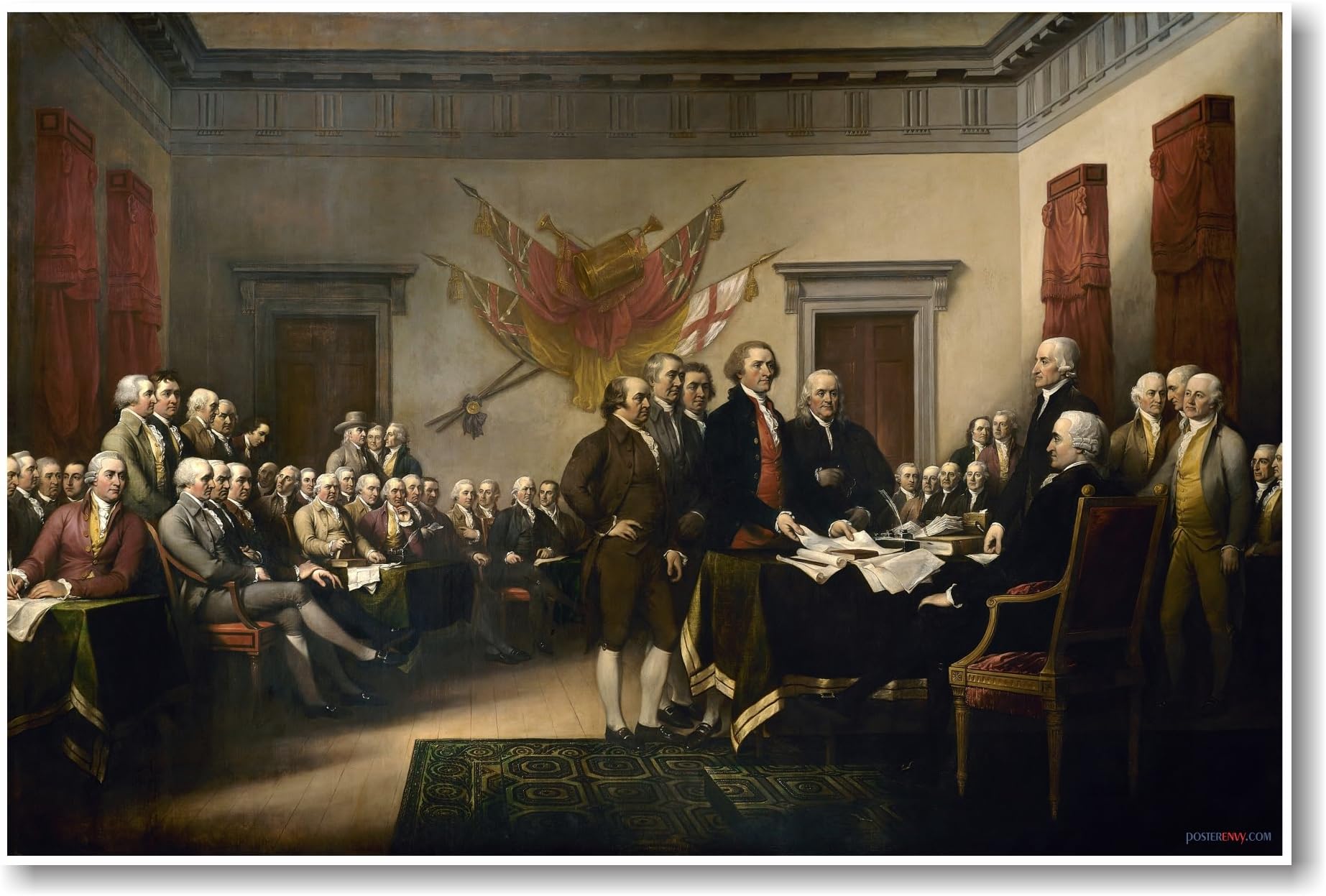
After a two-week delay waiting for enough delegates to arrive, the convention opens at Independence Hall. George Washington is unanimously elected to preside. The delegates immediately vote to keep their proceedings secret, allowing them to speak freely without public pressure.
Sept 17, 1787
Constitution signed
After 116 days of debate, compromise, and revision, 39 of the remaining 42 delegates sign the Constitution. Three refuse. The document is then sent to the states for ratification, bypassing Congress entirely and requiring approval from specially convened state ratifying conventions rather than state legislatures.
Did You Know?
Rhode Island refused to send any delegates at all. Its legislature opposed a stronger central government that might interfere with its paper money policies and profitable trade practices. Rhode Island was the last state to ratify the Constitution, doing so in May 1790, more than a year after Washington's inauguration.
The delegates shut the windows of Independence Hall and swore an oath of secrecy for the entire summer. In Philadelphia's summer heat, with windows sealed against eavesdroppers, they debated, argued, and ultimately built a government. The secrecy was so strict that the public did not know what was being discussed inside.
The delegates were only authorized to revise the Articles of Confederation, not replace them entirely. When they realized the Articles could not be fixed, they simply wrote a new document from scratch, a decision that was legally controversial even at the time.
Of the 55 delegates who attended at various points, only 39 signed the final document. Three delegates present on signing day, Elbridge Gerry of Massachusetts and Edmund Randolph and George Mason of Virginia, refused to sign, primarily over the absence of a Bill of Rights.