
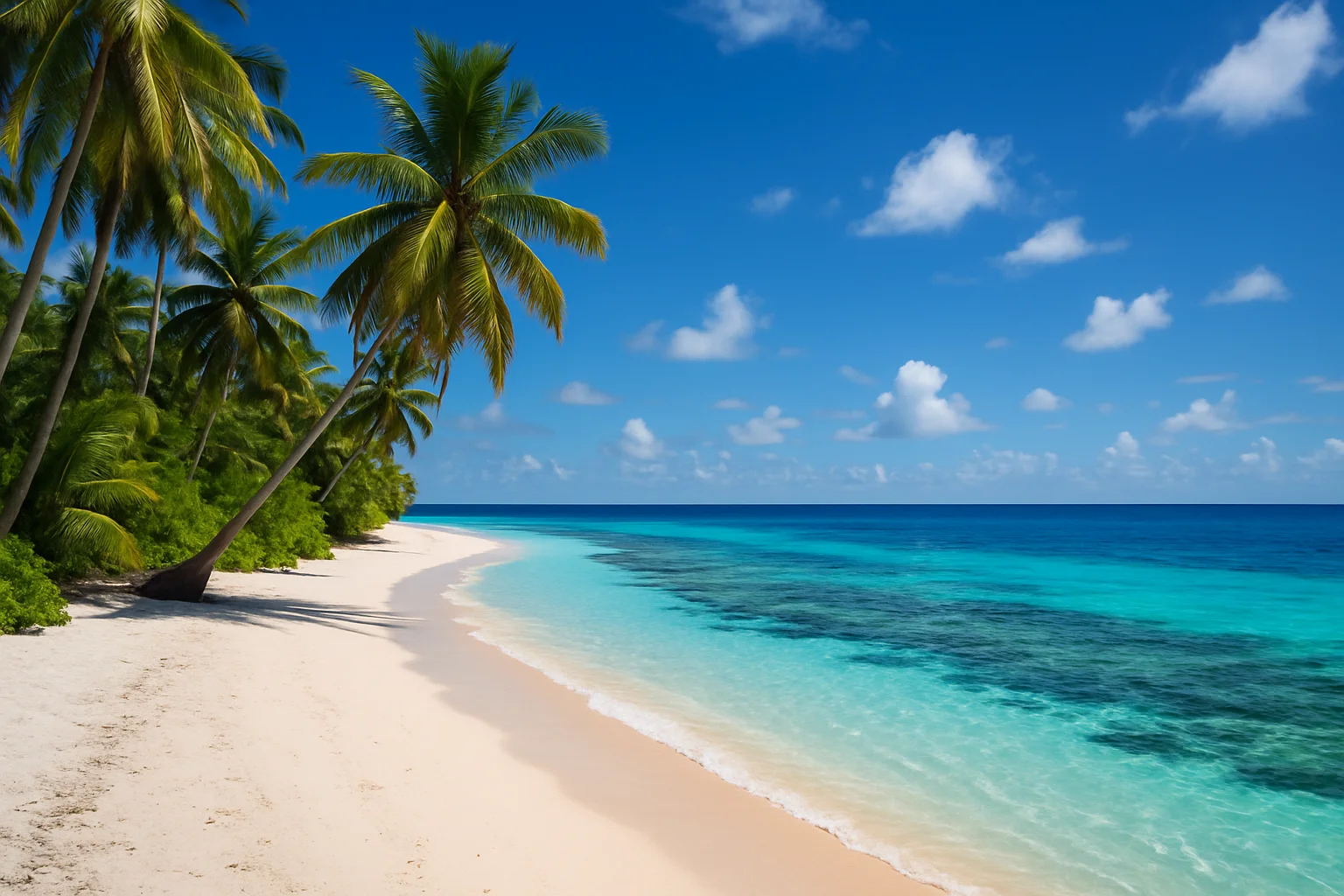
Baker Island BI
A remote, uninhabited coral atoll in the central Pacific Ocean, managed as a National Wildlife Refuge and part of the Pacific Remote Islands Marine National Monument.
About Baker Island
Baker Island is a small, flat coral atoll located in the central Pacific Ocean, just north of the equator. Roughly 0.8 square miles in size, the island is covered in sparse grasses, low shrubs, and the ruins of a long-abandoned settlement. No humans have lived here permanently since 1942.
Despite its remoteness, Baker Island has a surprisingly eventful history. It was mined for guano throughout the 19th century, briefly colonized by the U.S. government in the 1930s, and bombed by Japanese aircraft early in World War II. Today it exists in peaceful isolation as a federally protected wildlife refuge.
The island sits at the edge of the world's time zones at UTC−12, meaning it is among the very last places on Earth to begin each new calendar day. Its surrounding waters are part of the Pacific Remote Islands Marine National Monument, one of the largest marine protected areas on the planet.
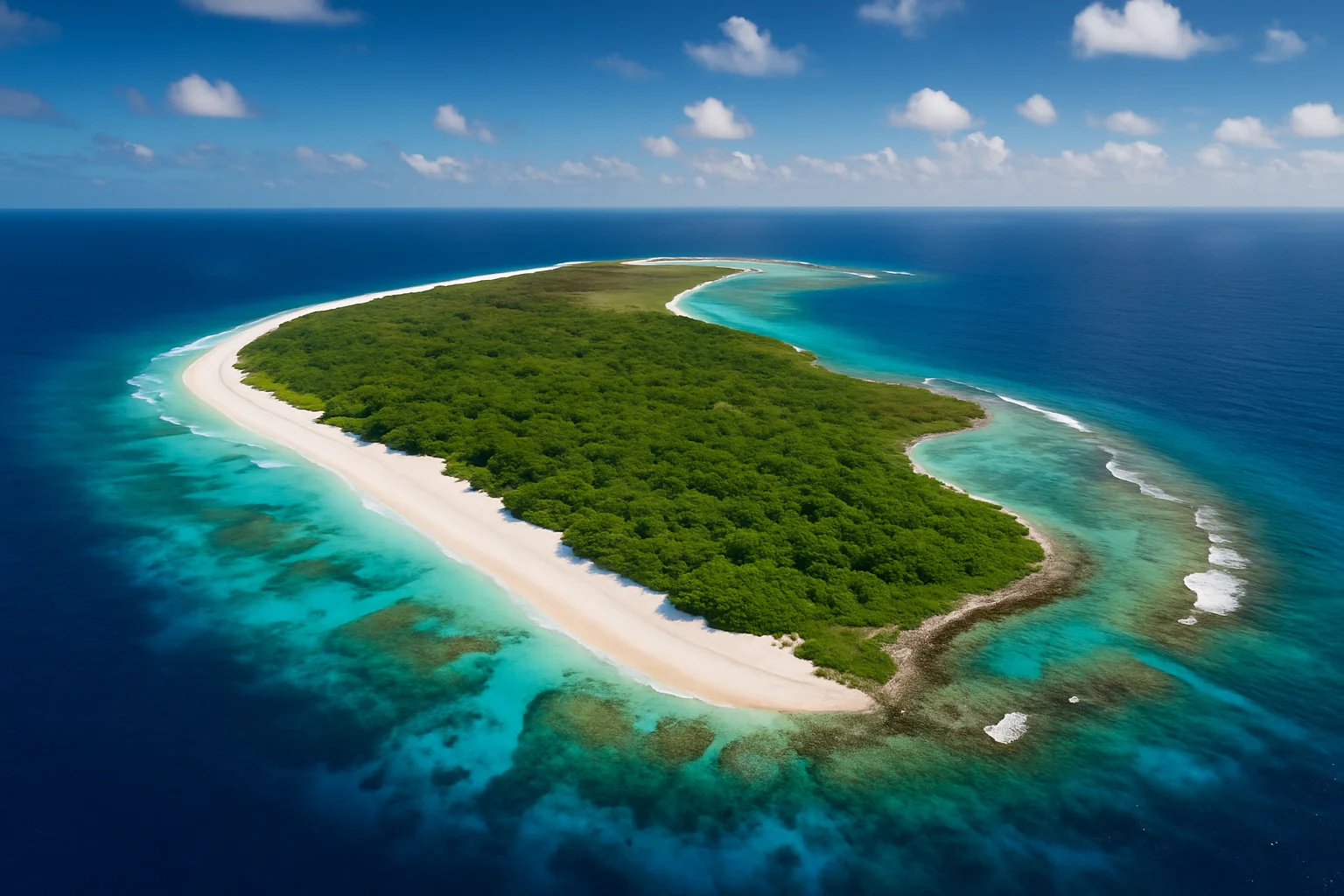
Aerial view of Baker Island
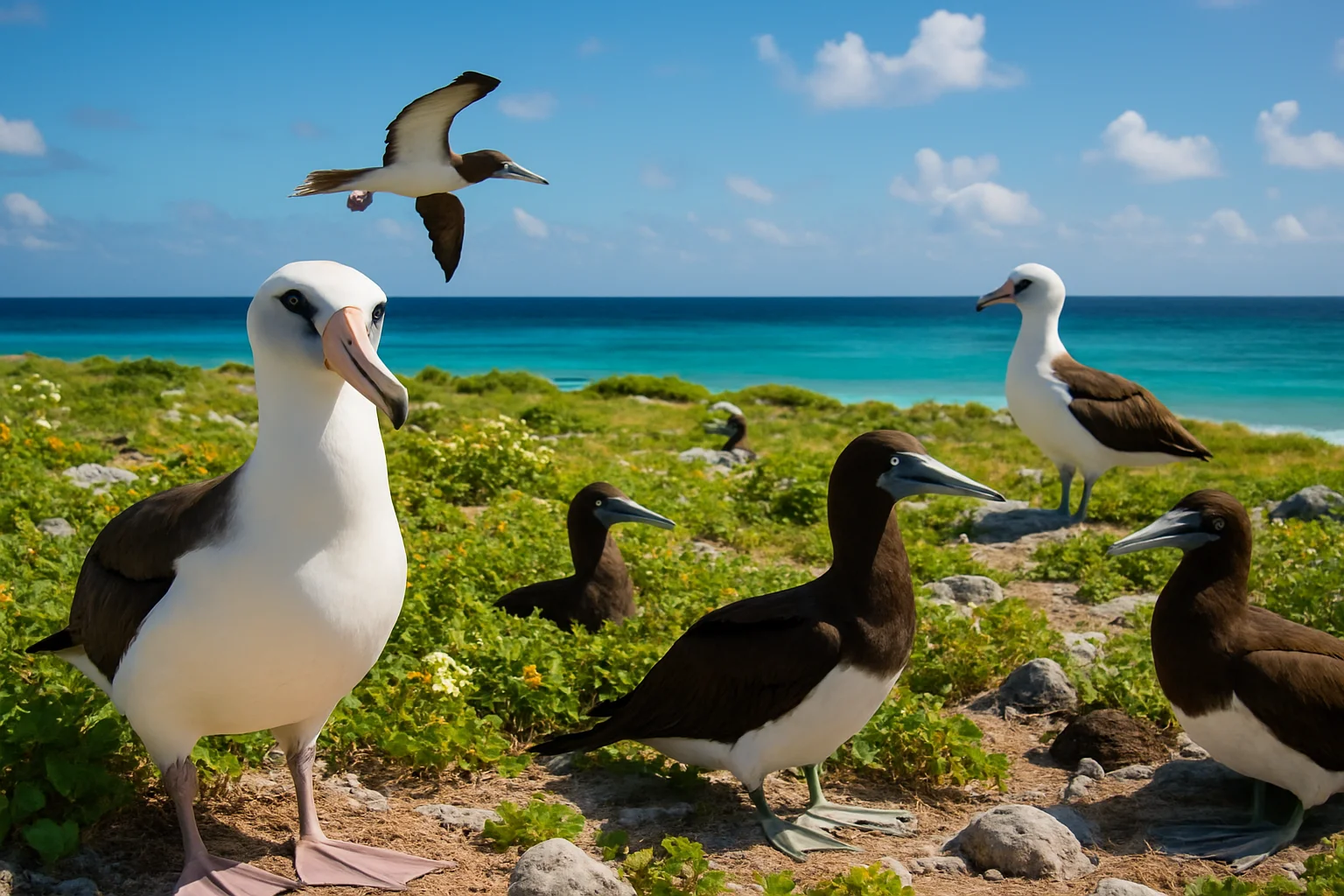
Nesting seabirds, the island's primary residents
Baker Island vs. a U.S. State
| Feature | Baker Island | U.S. State |
|---|---|---|
| Permanent Population | None | Yes |
| Local Government | None | State government |
| Congressional Representation | None | Senators + Representatives |
| Voting in Federal Elections | No residents | Yes |
| U.S. Constitution Applies | Partially (by statute) | Fully |
| Administered By | Fish & Wildlife Service | Elected officials |
| Incorporated Territory | No | Yes (as a state) |
| Public Access | Restricted permit only | Generally open |
Geography at a Glance
- Location
- Central Pacific Ocean
- Coordinates
- 0°13′N 176°28′W
- Land Area
- ~1.64 sq mi (4.25 km²)
- Coastline
- ~4.8 miles (7.7 km)
- Highest Point
- ~26 ft (8 m) above sea level
- Nearest Land
- Howland Island (~42 mi north)
- Distance to HI
- ~1,830 miles SW of Honolulu
- Time Zone
- UTC−12:00 (Baker Island Time)
- Climate
- Equatorial, hot, arid, no freshwater
- Administration
- U.S. Fish & Wildlife Service
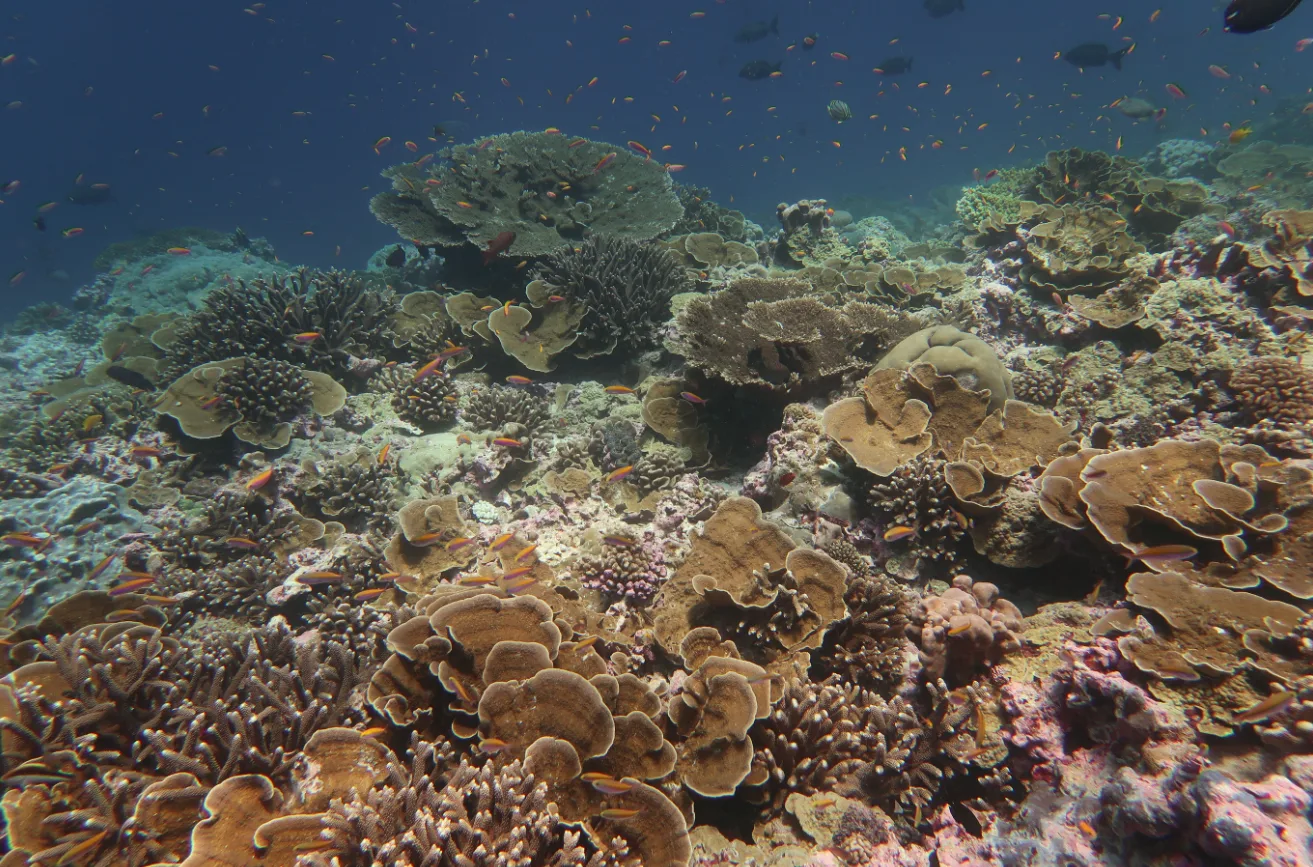
The surrounding reef is protected within the Pacific Remote Islands Marine National Monument
Wildlife of Baker Island
Though no humans live here, Baker Island is far from empty. The atoll and its surrounding waters teem with wildlife, which is precisely why it was designated a National Wildlife Refuge.
Home to large colonies of sooty terns, great frigatebirds, red-footed boobies, and brown noddies. The island is a critical nesting site for migratory Pacific seabirds.
Green sea turtles and hawksbill sea turtles nest on Baker's beaches. Both species are threatened and receive federal protection under the Endangered Species Act.
The surrounding reef and waters support hundreds of coral, fish, and invertebrate species. The area is part of the Pacific Remote Islands Marine National Monument.
Grey reef sharks, blacktip reef sharks, and manta rays frequent the waters surrounding Baker Island, protected within the monument's no-take marine zone.
Baker Island Through Time
- ✦1796
First Recorded Sighting
American Captain Elisha Folger of the ship Equator became the first to record sighting Baker Island, on October 21, 1818, and named it New Nantucket.
The atoll drew whalers and traders through the early 1800s, but with no fresh water, no trees, and only about 520 acres (about 0.8 square miles) of low coral sand, no one ever settled it.
- ✦1832
Named for Michael Baker
Captain Michael Baker of the New Bedford whaling ship Gideon Barstow visited and surveyed the island in 1832 and on later voyages, and it took his name on official charts.
Baker went on to sell his interest in the island to a New York guano company, one of the first of the many such transactions the Guano Islands Act would soon formalize.
- ✦1857
U.S. Claim Under Guano Act
The United States formally claimed Baker Island in 1857 under the Guano Islands Act of 1856, which let American citizens take possession of unclaimed, uninhabited islands holding guano and placed them under U.S. protection.
The Act, still on the books, was the legal mechanism by which the United States acquired roughly a hundred Pacific and Caribbean islands, most later abandoned; Baker, Howland, and Jarvis are among the handful still held.
- ✦1859–1878
Guano Mining Era
Between 1859 and 1878 the American Guano Company and its successors dug an estimated 2 million tons of phosphate-rich seabird droppings from Baker Island and shipped it to farms in the United States and Britain.
The work was done by contract laborers under harsh conditions on a waterless equatorial island, and when the accessible deposits ran out the operations were abandoned, leaving Baker empty again.
- ✦1935–1942
Colonization Attempt
In 1935 the U.S. government quietly began the Equatorial Islands Colonization Project, landing small groups of young men, most of them Native Hawaiian graduates of the Kamehameha Schools, on Baker, Howland, and Jarvis to establish a human presence and strengthen American claims to the islands as aviation waypoints.
The colonists lived in a cluster of small buildings, raised the flag daily, kept weather records, and endured heat, isolation, and supply ships that came only every few months.
On December 8, 1941, the day after Pearl Harbor, Japanese aircraft bombed Baker and Howland; two colonists on Howland were killed, and the survivors on all three islands were evacuated by the destroyer USS Helm on January 31, 1942. No one has lived on Baker Island since.
- ✦1974
National Wildlife Refuge
Baker Island was made a National Wildlife Refuge in 1974 and placed under the U.S. Fish and Wildlife Service, which manages it to protect nesting seabirds and the surrounding reef.
The refuge is closed to the public except by special-use permit, and the island is visited only rarely, by biologists, ship-based survey teams, and licensed amateur-radio expeditions.
- ✦2009
Marine National Monument
In January 2009 President George W. Bush included Baker Island in the new Pacific Remote Islands Marine National Monument, extending protection roughly 50 nautical miles out from the island.
In 2014 President Obama expanded the monument's seaward boundary around Jarvis, Johnston, and Wake to the full 200-nautical-mile limit, creating one of the largest marine protected areas on Earth; the protected waters around Baker and Howland stayed at 50 nautical miles. Presidential proclamations in 2025 and 2026 moved to reopen parts of the expanded waters to U.S. commercial fishing, a change still being worked out through federal rulemaking and court challenges.
Did You Know?
Interesting facts about one of America's most remote territories.
Baker Island is one of the last places on Earth to experience each new day, it sits at UTC−12, the same time zone as the International Date Line's western edge.
The island has no freshwater sources, no vegetation taller than shrubs, and no permanent residents, it has been uninhabited since 1942.
Ruins of the old guano mining operations and the colonization-era settlement are still visible on the island, including the remains of a lighthouse.
Access to Baker Island is restricted. Visitors must obtain a special use permit from the U.S. Fish and Wildlife Service, and visits are extremely rare.
Amateur radio operators occasionally receive special permits to operate from Baker Island (callsign prefix KH1), making it one of the rarest ham radio DX entities in the world.
Baker Island sits almost exactly on the equator and lies within the Pacific Remote Islands Marine National Monument, one of the largest marine protected areas on Earth.
Quick Facts and Common Questions
Short answers to the questions people most often ask about Baker Island: where it is, how the United States claimed it, and who looks after it today.
Baker Island is a small coral island in the central Pacific Ocean, just north of the equator, about 1,830 miles southwest of Honolulu and about 42 miles south of Howland Island. It covers about 1.6 square miles, has no fresh water, and has no permanent residents.
Americans claimed Baker Island in 1857 under the Guano Islands Act of 1856, a law that let U.S. citizens claim unoccupied islands holding guano, seabird droppings that were valuable as fertilizer. Guano was mined there until the late 1800s.
Baker Island is an unincorporated, unorganized territory of the United States. It has no local government and no constitution of its own, and Congress has decided that only selected parts of the U.S. Constitution apply there. It is one of the U.S. Minor Outlying Islands.
The U.S. Fish and Wildlife Service, part of the Department of the Interior, manages the island as Baker Island National Wildlife Refuge, established in 1974. It is also part of the marine national monument created in 2009 as the Pacific Remote Islands Marine National Monument and renamed the Pacific Islands Heritage Marine National Monument in 2025. Visits require a special permit.
From 1935 to 1942 the federal government sent small groups of young men, most of them from Hawaii and known as the Hui Panalāʻau, to live on Baker, Howland, and Jarvis islands to strengthen U.S. claims to them. The program ended after Japanese attacks in the area at the start of World War II, and the U.S. military built an airfield on Baker in 1943.
Baker Island is in the UTC−12 time zone, one of the last places on Earth where each day ends. Because no one lives there, the zone is best known as "Anywhere on Earth" time, used for deadlines that close only when the date has passed everywhere.
No. Baker Island has no residents, is not part of any state or congressional district, and has no delegate in Congress.