
Howland Island HQ
A remote, uninhabited coral island in the central Pacific Ocean, managed as a National Wildlife Refuge and best known as the destination Amelia Earhart never reached in 1937.
About Howland Island
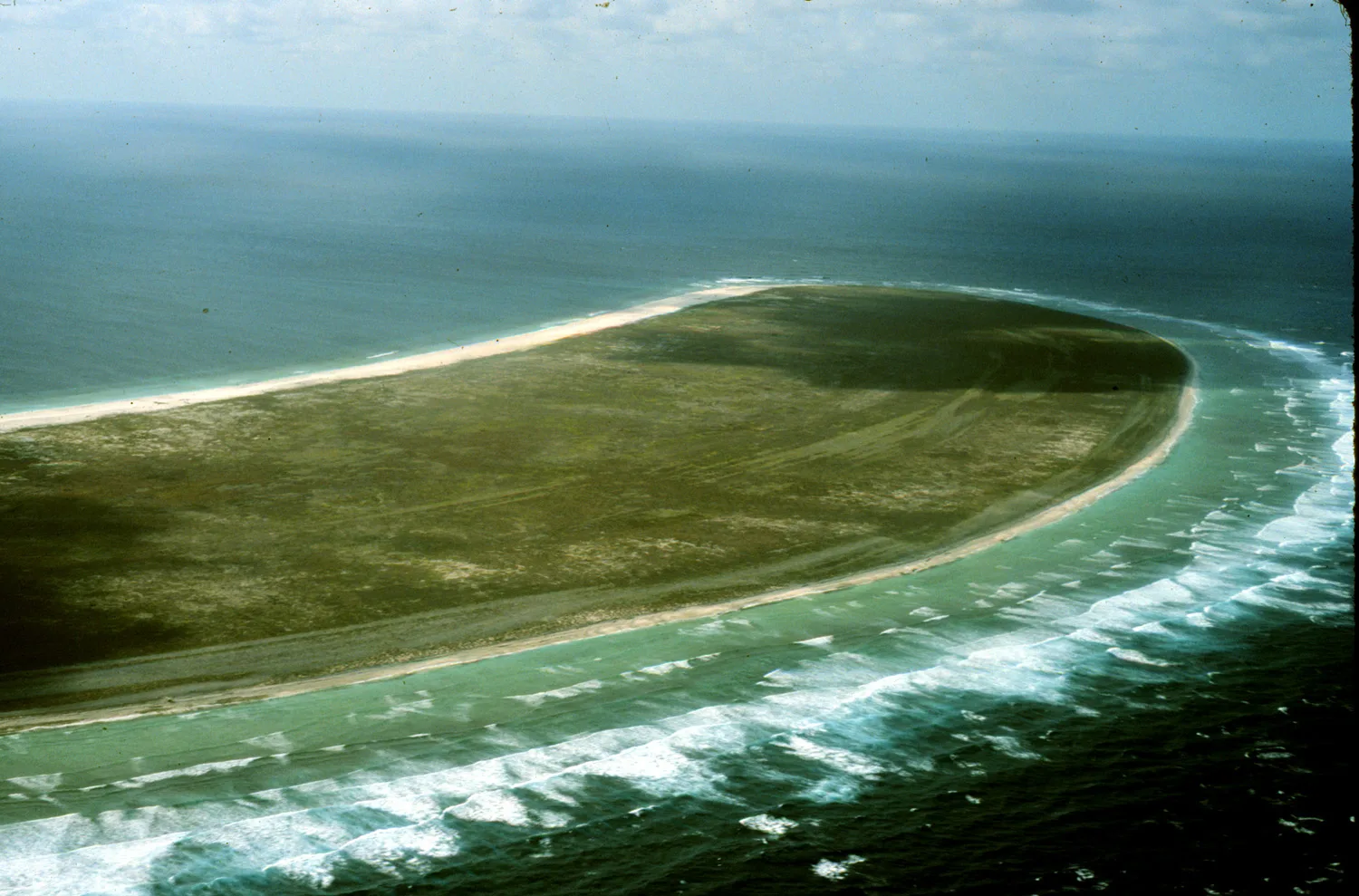
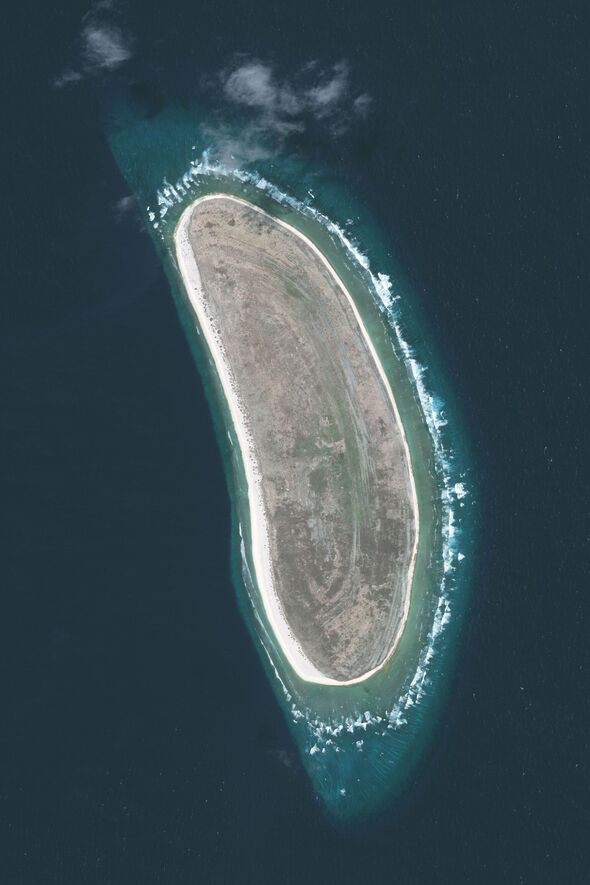
Howland Island is a small, low-lying coral island in the central Pacific Ocean, sitting just north of the equator about 42 miles from its nearest neighbor, Baker Island. Barely two-thirds of a square mile in size and rising only about ten feet above the sea, the island is a sun-bleached expanse of coral sand, grasses, and low shrubs. No humans have lived here permanently since 1942.
For such a tiny speck of land, Howland holds an outsized place in history. It was mined for guano in the 19th century, colonized by young Hawaiian settlers in the 1930s, and bombed by Japanese aircraft the day after Pearl Harbor. Most famously of all, it was the refueling stop Amelia Earhart was trying to reach when she vanished over the Pacific in July 1937.
Today Howland exists in quiet isolation as a federally protected wildlife refuge. Its surrounding waters belong to the Pacific Remote Islands Marine National Monument, one of the largest marine protected areas on the planet, and its shores belong almost entirely to the seabirds.
Aerial view of Howland Island
Nesting seabirds, the island's primary residents
Howland Island vs. a U.S. State
| Feature | Howland Island | U.S. State |
|---|---|---|
| Permanent Population | None | Yes |
| Local Government | None | State government |
| Congressional Representation | None | Senators + Representatives |
| Voting in Federal Elections | No residents | Yes |
| U.S. Constitution Applies | Partially (by statute) | Fully |
| Administered By | Fish & Wildlife Service | Elected officials |
| Incorporated Territory | No | Yes (as a state) |
| Public Access | Restricted permit only | Generally open |
Geography at a Glance
- Location
- Central Pacific Ocean
- Coordinates
- 0°48′N 176°37′W
- Land Area
- ~0.69 sq mi (1.8 km²)
- Coastline
- ~4 miles (6.4 km)
- Highest Point
- ~10 ft (3 m) above sea level
- Nearest Land
- Baker Island (~42 mi south)
- Distance to HI
- ~1,700 miles SW of Honolulu
- Time Zone
- UTC−12:00
- Climate
- Equatorial, hot, dry, no freshwater
- Administration
- U.S. Fish & Wildlife Service
Earhart Light, the day beacon named in honor of Amelia Earhart
Wildlife of Howland Island
Though no humans live here, Howland Island is bursting with life. The island and its surrounding reef were set aside as a National Wildlife Refuge precisely because they offer seabirds and marine life a rare undisturbed home in the open Pacific.
Howland hosts dense nesting colonies of sooty terns, brown noddies, frigatebirds, and boobies. Seabird populations rebounded dramatically after feral cats were eradicated from the island in the 1980s.
Green sea turtles forage in the surrounding waters and haul out on Howland's beaches. They are federally protected under the Endangered Species Act.
The fringing reef supports hundreds of species of coral, reef fish, and invertebrates, all protected within the Pacific Remote Islands Marine National Monument's no-take zone.
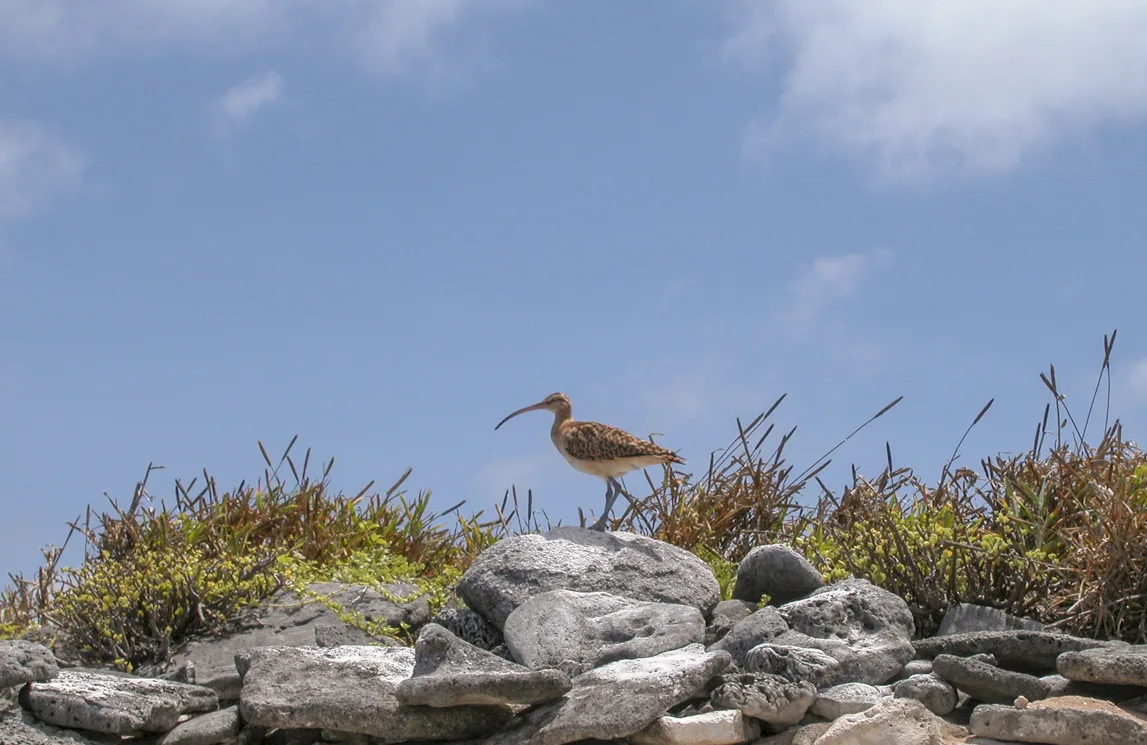
Hermit crabs scuttle across the coral rubble, and migratory shorebirds like the Pacific golden plover and bristle-thighed curlew use Howland as a critical mid-ocean stopover.
Howland Island Through Time
- ✦1842
Named for a Lookout
Howland Island takes its name from a lookout aboard the American whaleship Isabella who sighted it in 1842; earlier whalers had called it Worth Island and other names, but Howland stuck on the charts.
The island is a flat, treeless ribbon of coral sand less than a mile wide and about 400 acres in size, with no fresh water, which is why it was never settled despite being spotted by many passing ships.
- ✦1857
U.S. Claim Under Guano Act
The United States claimed Howland Island in 1857 under the Guano Islands Act of 1856, which authorized American citizens to take possession of unclaimed, uninhabited islands holding guano and placed them under U.S. protection.
Britain also asserted a claim to Howland in the same period, and the overlapping claims were not fully settled in the United States' favor until the 1930s.
- ✦1857–1878
Guano Mining Era
American firms, chiefly the American Guano Company, mined Howland's phosphate deposits for fertilizer from the late 1850s through the 1870s, shipping cargoes to the United States and Britain.
The work was done by contract laborers under harsh conditions on a waterless equatorial island, and the operations were abandoned once the accessible deposits were worked out.
- ✦1935
Colonization Attempt
In 1935 the U.S. government began the Equatorial Islands Colonization Project, landing small groups of young men, most of them Native Hawaiians recruited from the Kamehameha Schools, on Howland, Baker, and Jarvis to establish a human presence and strengthen American claims.
The Howland settlement was named Itascatown for the Coast Guard cutter Itasca that supplied it. The colonists lived in a few small buildings, kept weather records, raised the flag daily, and waited months between supply runs.
- ✦1937
Amelia Earhart's Lost Destination
A rough three-runway airstrip, Kamakaiwi Field, was graded on Howland in 1937 as a refueling stop for Amelia Earhart's attempt to fly around the world at the equator.
On July 2, 1937, Earhart and navigator Fred Noonan left Lae, New Guinea for Howland, about 2,550 miles away. The Coast Guard cutter Itasca, standing by off the island, heard Earhart's increasingly worried radio calls that morning, then nothing. She and Noonan were never found, and the airstrip was never used again.
- ✦1941–1942
World War II Attacks
On December 8, 1941, the day after Pearl Harbor and across the date line, Japanese aircraft bombed Howland Island, killing two of the colonists, Joseph Kealoha Kealiihananui and Richard Kanani Whaley. Japanese planes and a submarine attacked again over the following weeks.
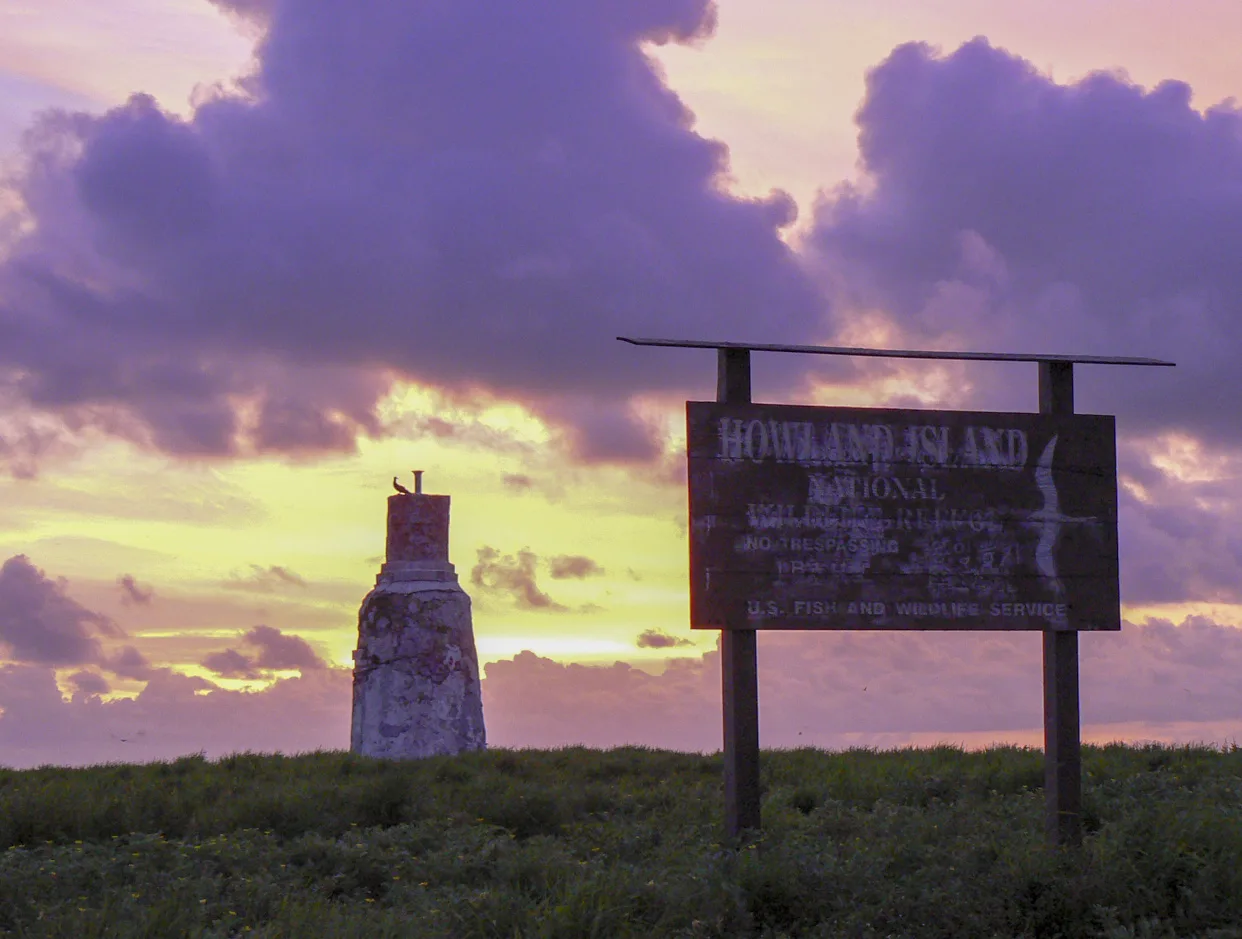
The destroyer USS Helm evacuated the four survivors on January 31, 1942, and Howland Island has been uninhabited ever since. A day beacon on the island was later named the Earhart Light in her memory.
- ✦1974
National Wildlife Refuge
Howland Island was made a National Wildlife Refuge in 1974 and placed under the U.S. Fish and Wildlife Service, which manages it for its large seabird colonies and the surrounding reef.
The refuge is closed to the public except by special-use permit, and visits are rare, limited to biologists, survey teams, and licensed amateur-radio expeditions.
- ✦2009
Marine National Monument
In January 2009 President George W. Bush included Howland Island in the new Pacific Remote Islands Marine National Monument, extending protection roughly 50 nautical miles from the island.
In 2014 President Obama expanded the monument's seaward boundary around Jarvis, Johnston, and Wake to the full 200-nautical-mile limit, creating one of the largest marine protected areas on Earth; the protected waters around Howland and Baker stayed at 50 nautical miles. Presidential proclamations in 2025 and 2026 moved to reopen parts of the expanded waters to U.S. commercial fishing, a change still being worked out through federal rulemaking and court challenges.
Did You Know?
Interesting facts about one of America's most remote territories.
Howland Island is forever linked to Amelia Earhart. The day beacon near the old settlement site is named Earhart Light in her honor. It was damaged during World War II and later rebuilt by the U.S. Coast Guard.
Kamakaiwi Field, the airstrip built for Earhart's flight, was never used by her and never used regularly by anyone else. Its three scraped runways have long since been reclaimed by vegetation and nesting birds.
Howland Island sits at UTC−12, one of the last places on Earth to experience each new day, sharing the planet's final time zone with neighboring Baker Island.
The island has no freshwater sources, no trees, and no permanent residents. It has been uninhabited since the colonists were evacuated in 1942.
Access to Howland Island is restricted. There is no harbor or anchorage, landing is by small boat through the reef, and visitors must obtain a special use permit from the U.S. Fish and Wildlife Service.
Amateur radio operators prize Howland Island as part of the Baker & Howland Islands DX entity (callsign prefix KH1), one of the rarest in the world. Operations require a rare special use permit.
Quick Facts and Common Questions
Short answers to the questions people most often ask about Howland Island: where it is, its link to Amelia Earhart, and who looks after it today.
Howland Island is a tiny, flat coral island in the central Pacific Ocean, just north of the equator, about 1,700 miles southwest of Honolulu and about 42 miles north of Baker Island. It covers less than 1 square mile and has no permanent residents.
Americans claimed Howland Island in the 1850s under the Guano Islands Act of 1856, which let U.S. citizens claim unoccupied islands holding guano, seabird droppings valued as fertilizer. Guano companies mined the island in the second half of the 1800s.
In 1937 the federal government built a small airfield on Howland as a refueling stop for Amelia Earhart's flight around the world. On July 2, 1937, Earhart and navigator Fred Noonan disappeared while flying from New Guinea toward Howland and were never found. A day beacon on the island, the Earhart Light, was built in her memory.
From 1935 the federal government kept small groups of young men, mostly from Hawaii and known as the Hui Panalāʻau, on Howland to strengthen the U.S. claim. On December 8, 1941, a day after the attack on Pearl Harbor, Japanese aircraft bombed the island and killed two of the colonists, Richard Whaley and Joseph Keliʻihananui, and the survivors were evacuated in early 1942.
Howland is an unincorporated, unorganized territory of the United States with no local government. The U.S. Fish and Wildlife Service, part of the Department of the Interior, manages it as Howland Island National Wildlife Refuge, established in 1974 and expanded in 2009 as part of the marine national monument now called the Pacific Islands Heritage Marine National Monument. Visits require a special permit.
No. Howland Island has no residents, is not part of any state or congressional district, and has no delegate in Congress.
Sources & Further Reading
- Definitions of Insular Area Political Organizations, Office of Insular Affairs
- Howland Island National Wildlife Refuge, U.S. Fish and Wildlife Service
- Pacific Islands Heritage Marine National Monument, U.S. Fish and Wildlife Service
- Guano Islands Act (48 U.S.C. 1411), Office of the Law Revision Counsel