

The United States
Senate
100 members. 6-year terms. The slower, more deliberate half of Congress, and in many ways, the more powerful one.
🏛️ So What Is the Senate?
Remember how Congress has two rooms that both have to agree before anything becomes law? The House of Representatives is the bigger, faster, noisier room. The Senate is the other one, smaller, slower, and designed to pump the brakes.
With just 100 members, two from every state, no matter how big or small, the Senate was built to be a calmer, more careful place where big decisions get a second look before they stick.
☕ Thomas Jefferson's "Cooling Saucer"
Legend has it that George Washington explained the Senate's purpose to Jefferson using a coffee analogy: you pour hot coffee into a saucer to cool it down before you drink it. The House passes things fast, the Senate is the saucer that cools things down before they become law. Whether the story is true or not, the idea stuck.
The Senate is often called the "upper chamber", not because senators are better than House members, but because historically it was modeled on the British House of Lords, which sat above the House of Commons. Today it just means it has some extra powers the House doesn't have.
📜 Why Does the Senate Exist?
The Senate was born from the same big fight that created the House, the showdown at the Constitutional Convention in 1787 between big states and small states. (If you read the House page, you already know this story.)
The deal was simple: big states got more seats in the House based on population. In exchange, small states got equal footing in the Senate, every state gets exactly 2 senators, whether you're California with 40 million people or Wyoming with 580,000.
But the Senate wasn't just created to make small states happy. The founders also wanted a group of experienced, steady-handed people who could slow down bad ideas before they became permanent. They feared that the House, elected every 2 years, directly by emotional voters, might sometimes act too fast on bad ideas.
The Senate was meant to be the wise elders of Congress. Whether it actually works that way is a whole other debate.
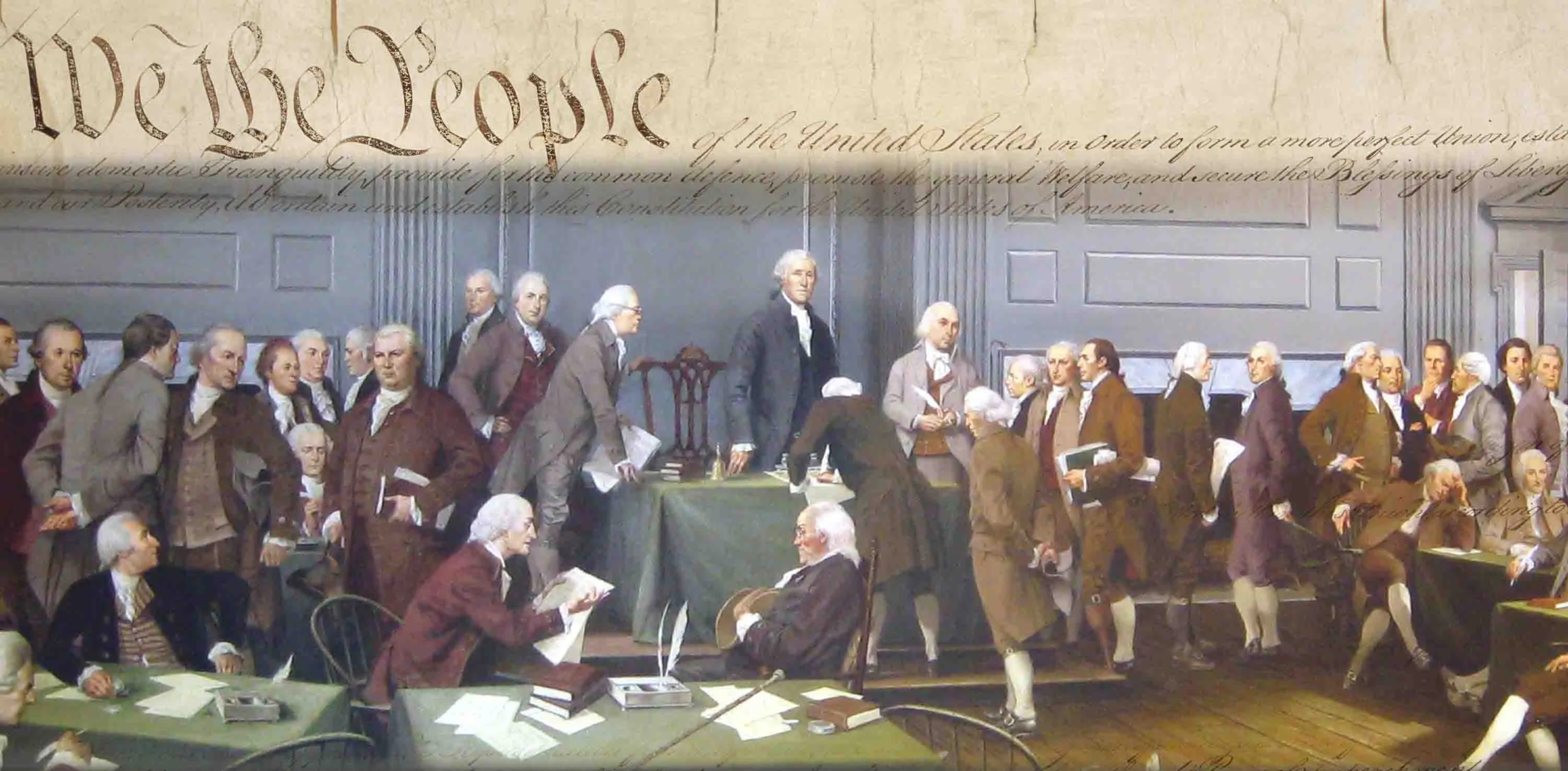
The Constitutional Convention, where the Senate was born out of compromise (Public Domain)
⚖️ The Big Difference From the House
🏛️ House of Representatives
- • 435 members
- • Seats based on population
- • 2-year terms
- • Moves fast, votes often
- • Closer to everyday voters
🏛️ Senate
- • 100 members
- • 2 seats per state, always
- • 6-year terms
- • Moves slowly, debates longer
- • More insulated from public pressure
📖 Where Does It Come From?
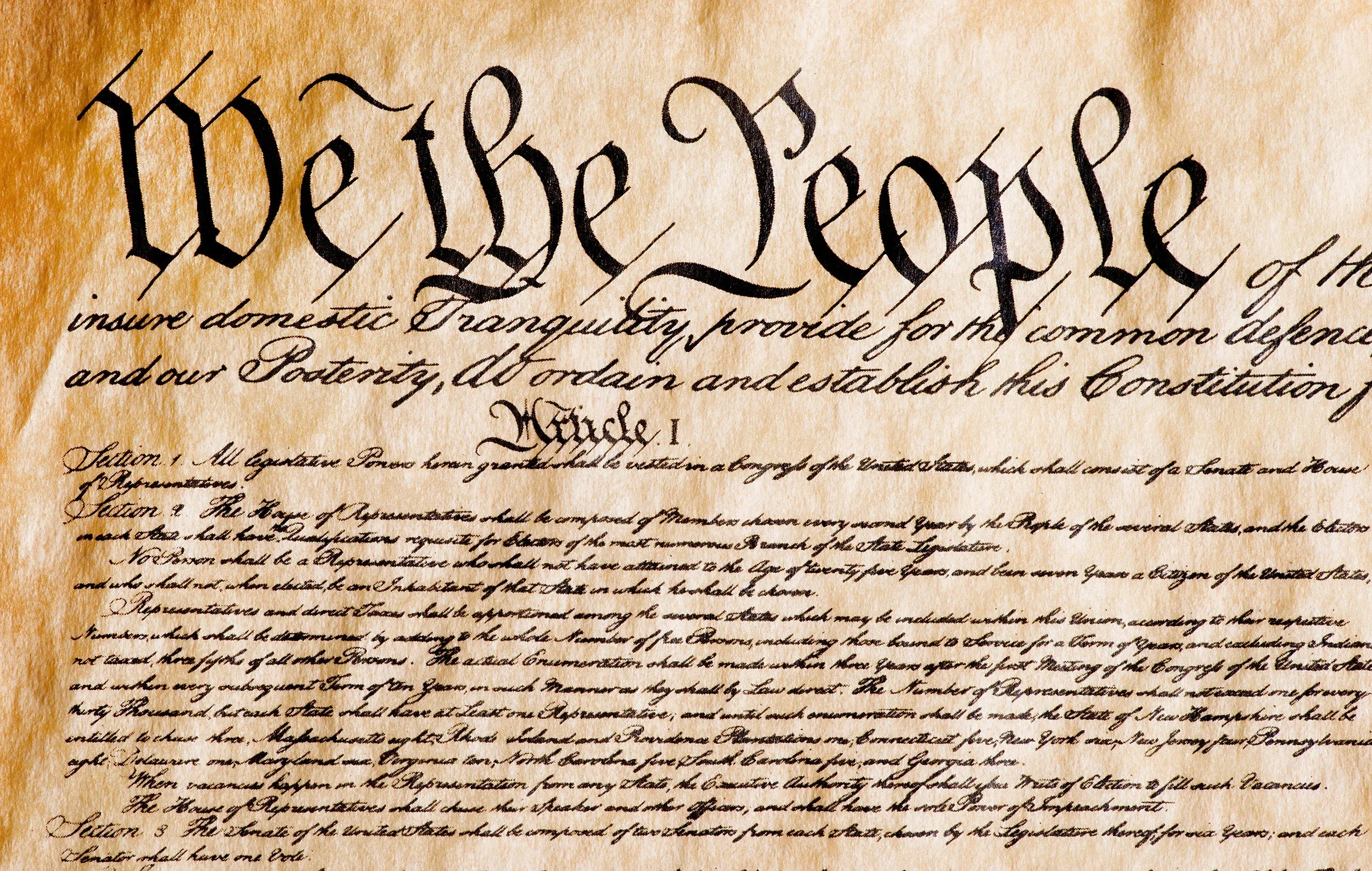
The Constitution, Article I, Section 3 creates the Senate (Public Domain)
The Senate is established in Article I, Section 3 of the Constitution, right after the section that creates the House. Same article, same document, born at the same time.
One big thing changed since 1787 though: how senators are picked. Originally, senators were chosen by their state legislatures, not by voters directly. The founders thought this would make senators more independent and less influenced by public opinion swings.
That changed in 1913 with the 17th Amendment, which switched to direct election by voters. So now you vote for your senator the same way you vote for your House member, except you vote for senators statewide, not just in your district.
"The Senate of the United States shall be composed of two Senators from each State, chosen by the Legislature thereof, for six Years; and each Senator shall have one Vote."
"No Person shall be a Senator who shall not have attained to the Age of thirty Years, and been nine Years a Citizen of the United States, and who shall not, when elected, be an Inhabitant of that State for which he shall be chosen."
"The Vice President of the United States shall be President of the Senate, but shall have no Vote, unless they be equally divided."
"The Senate shall have the sole Power to try all Impeachments."
👆 In short: 2 senators per state, 6-year terms, must be 30+ years old and a US citizen for 9+ years, must live in the state they represent. The VP runs the Senate but only votes to break a tie. And only the Senate can hold an impeachment trial.
✅ Who Can Become a Senator?
The bar is a little higher than the House, the founders wanted senators to be a bit more seasoned. There are three requirements, and they're slightly stricter than the House rules:
Five years older than the minimum for the House. The founders wanted senators to be a bit more mature and experienced, less likely to get swept up in the passion of the moment.
Two more years than the House requirement. Again, the founders wanted senators to have deeper roots in the country before representing it at the highest level.
Just like the House, you have to actually live in the state you want to represent. You're speaking for that state, you need to be from there.
🏠 vs House Requirements
🎉 Still no degree required. No law license, no wealth requirement, no political experience needed. A 30-year-old truck driver who's been a citizen for 9 years and lives in their state can run for Senate. Same democratic idea as the House, just slightly older.
🗳️ How Are Senators Chosen, And How Long Do They Serve?
Since the 17th Amendment passed in 1913, senators are elected directly by voters statewide. You don't vote by district like the House, every voter in the whole state votes for their two senators. Whoever gets the most votes in the state wins.
⏱️ 6-Year Terms, And the Smart Staggering System
Senators serve 6-year terms, three times longer than House members. This means they can take on big long-term issues without constantly worrying about the next election. It also means voters have to wait longer to hold them accountable, which is both a feature and a criticism.
🔄 How Staggered Terms Work
The 100 senators are split into three groups called classes. Only one class, about 33 or 34 senators, is up for election every two years. This means the Senate is never completely replaced all at once like the House is.
This was intentional, the founders wanted the Senate to always have experienced members even after a major election. It gives the Senate institutional memory and stability that the House doesn't have.
🔁 What If a Senate Seat Opens Up?
Unlike the House, when a senator dies or resigns, the state governor can appoint someone to fill the seat temporarily, without waiting for an election. Most states then hold a special election for the remaining time in the term. This keeps the Senate fully staffed at all times.
🚫 No Term Limits
Just like the House, there are no federal term limits for senators. Robert Byrd of West Virginia served for 51 years, the longest Senate tenure ever, until his death in 2010 at age 92. Strom Thurmond served until he was 100.
⚡ What Does the Senate Do?
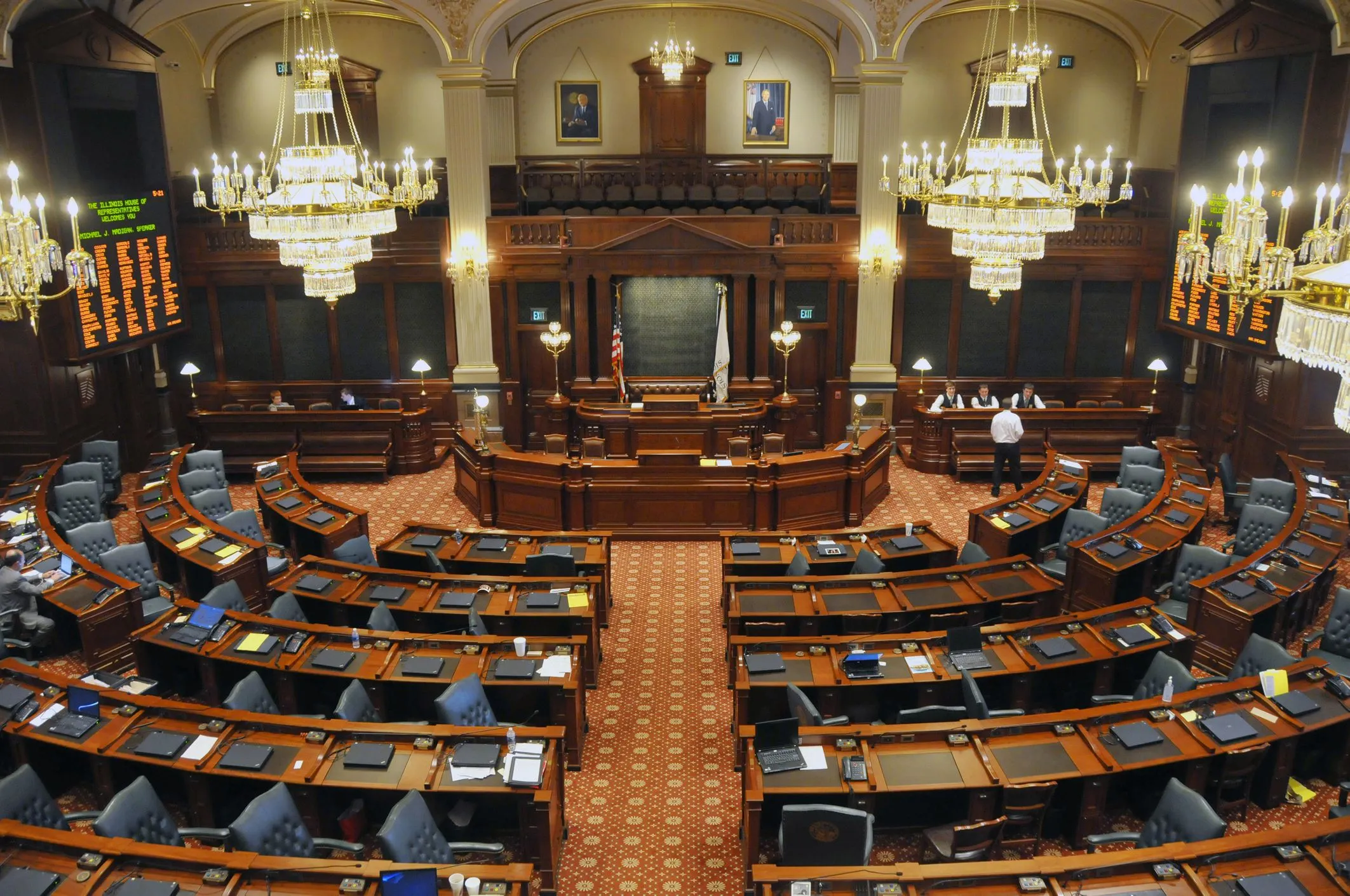
Inside the Senate chamber, 100 desks, one per senator (Public Domain)
Like the House, the Senate has to approve all laws. But it also has a set of powerful exclusive abilities that only it can do, and some of them are enormous.
🔑 Things Only the Senate Can Do
Confirm Presidential Appointments
When the president picks a Supreme Court justice, a cabinet secretary, an ambassador, or a federal judge, they can't just give them the job. The Senate has to vote to approve, or reject, the pick. This is called "advice and consent" and it's a huge check on presidential power. In recent years, Supreme Court confirmations have become some of the most dramatic events in Washington. One bad vote can reshape the country's direction for decades.
Approve International Treaties
When the US wants to make a formal agreement with another country, a treaty, the president negotiates it, but the Senate has to ratify it with a two-thirds vote (67 out of 100 senators). This is a high bar on purpose. Major treaties like NATO require broad Senate support to stick. Without Senate approval, a treaty is just a handshake that the next president can undo.
Run Impeachment Trials
When the House formally charges a president or other official with serious wrongdoing (impeachment), the case goes to the Senate for trial. Senators act as the jury. The Chief Justice of the Supreme Court presides over presidential trials. A two-thirds vote (67 senators) is needed to convict and remove someone. No president has ever been convicted and removed, though three have been impeached by the House.
📋 Powers Shared With the House
Pass Laws
Every bill needs both the House and Senate to pass it in identical form. The Senate can't be bypassed.
Control Spending
Congress controls all federal money. The Senate has a big say in the budget even though tax bills start in the House.
Declare War
Only Congress can officially declare war, though this power hasn't been formally used since World War II.
Amend the Constitution
Any constitutional amendment needs two-thirds approval in both the House AND the Senate.
Override Vetoes
If the president vetoes a bill, both chambers need two-thirds votes to overrule it.
Regulate Commerce
Trade, banking, and business rules between states are set by Congress, both chambers.
👨⚖️ Confirmation Hearings: The Senate's Biggest Spotlight

A Senate confirmation hearing, where nominees answer questions before a vote (Public Domain)
One of the Senate's most visible jobs is confirming, or rejecting, the people the president wants to hire for important positions. This includes:
Supreme Court Justices
Serve for life. These are the biggest Senate votes, a confirmed justice can shape American law for 30+ years. Senators question nominees in televised hearings before voting.
Federal Judges
Every federal district and appeals court judge in the country has to be confirmed by the Senate. Hundreds of judges over a presidential term.
Cabinet Members
The Secretary of State, Defense, Treasury, and all other cabinet positions need Senate approval. The president picks them, the Senate decides if they get the job.
Ambassadors
Every US ambassador to a foreign country has to be confirmed. Most sail through without much controversy, but some become political battles.
⚡ The Nuclear Option
Confirming nominees used to require 60 votes to overcome a filibuster (more on that below). In 2013, Democrats changed the rules so most nominees only need a simple majority (51 votes). In 2017, Republicans extended that to Supreme Court nominations too. This is called the "nuclear option", a dramatic name for a procedural rule change that permanently shifted how powerful the majority party is in the confirmation process.
🎙️ The Filibuster: The Senate's Most Controversial Rule
Here's something that trips everyone up: the filibuster is not in the Constitution. It's just a Senate rule, and it's one of the most powerful, most debated rules in American politics.
📖 What Is a Filibuster?
In the Senate, any senator can keep talking for as long as they want to delay or block a vote on a bill. As long as someone is talking, the vote can't happen. This is a filibuster. Senator Strom Thurmond once talked for 24 hours and 18 minutes straight to block a civil rights bill in 1957, the longest one-person filibuster ever recorded.
Today, filibusters are mostly a threat rather than a real talking marathon. The minority party can simply say "we'll filibuster this" and the bill stalls unless the majority can get enough votes to stop it.
🛑 How You Stop a Filibuster: Cloture
The only way to force a vote when someone is filibustering is a procedure called cloture. To invoke cloture, you need 60 out of 100 senators to vote yes. That's a high bar, it usually means you need some votes from the other party. If you can't get 60, the filibuster wins and the bill dies.
💡 Why Does This Matter?
In practice, the filibuster means most big legislation needs 60 votes to pass the Senate, not just 51. This forces the majority to work with the minority or nothing gets done. Critics say it causes gridlock. Supporters say it forces compromise and protects the minority party from being steamrolled.
🤔 Fun Fact: The word "filibuster" comes from a Dutch word for pirate, "vrijbuiter." The idea was that a filibustering senator was basically hijacking the Senate floor.
👑 Who Runs the Senate?
The Senate's leadership structure is a little different from the House's, and one of the key leaders isn't even a senator.
The Vice President, President of the Senate
The Constitution says the Vice President is technically the President of the Senate. But here's the catch, they can only vote when there's a tie. The VP almost never shows up to run daily Senate business, but when a vote is split 50-50, suddenly everyone's watching to see if the VP will break the tie. It's happened dozens of times in US history and can be a dramatic moment.
President Pro Tempore
When the VP isn't around, which is almost always, the President Pro Tempore runs the Senate. This is traditionally the longest-serving member of the majority party. It's mostly ceremonial. Day-to-day control really sits with the Majority Leader.
Majority Leader
The real boss of the Senate floor. The Majority Leader sets the schedule, decides what gets voted on, and leads their party's strategy. This is one of the most powerful jobs in Washington, arguably more powerful than the Speaker of the House in some ways.
Minority Leader
Leads the party with fewer seats. Their main tools are the filibuster threat and public pressure. When their party is in the minority, they can still block a lot of legislation just by withholding those crucial votes needed to reach 60.
🔄 How a Bill Moves Through the Senate
The Senate process looks similar to the House on paper, but it's slower, with far fewer rules about debate time. And the filibuster lurks at every step.
Either passed from the House or introduced directly in the Senate. Any senator can introduce a bill.
Like the House, the bill goes to a relevant committee. Many bills quietly die here without ever getting a vote.
Unlike the House, Senate debate has almost no time limits. Any senator can speak for as long as they want, hello, filibuster.
If someone filibusters, the majority needs 60 votes to shut debate down and force a vote. This is often the hardest step.
Simple majority wins, 51 out of 100. If it passes, it goes to the President. If the versions differ from the House bill, both chambers have to work out the differences first.
⚡ Quick Facts
📜 Where to Find It
🤔 Did You Know?
Senators have their own desks
The Senate chamber has 100 individual wooden desks, one per senator, some dating back to 1819. Senators carve their names inside their desk drawer when they leave. It's a tradition going back generations.
Originally senators weren't elected by voters
Until 1913, senators were chosen by state legislatures, not regular voters. The 17th Amendment changed that, partly because some state legislatures were corrupt and left seats empty for years.
The 'Gang of...' phenomenon
Because 60 votes are often needed to get things done, senators frequently form bipartisan 'gangs' of 8, 14, or 20 members to negotiate compromises. These informal groups can wield enormous power.
Two senators from each state, even tiny ones
Wyoming has 580,000 people and 2 senators. California has 40 million people and also 2 senators. That means one Wyoming senator represents about 290,000 people, while one California senator represents 20 million. It's a very unequal system, by design.