
What The Labor Department Does
Established March 4, 1913, The U.S. Department of Labor is one of the fifteen Cabinet-level departments of the U.S. federal government.
The Labor Department protects the rights and safety of American workers. It enforces federal minimum wage and overtime rules through the Wage and Hour Division, investigates workplace safety violations through the Occupational Safety and Health Administration (OSHA), and oversees the pension and retirement plan protections that safeguard workers' retirement savings.
The department also administers the federal-state unemployment insurance system, providing weekly benefits to workers who lose their jobs, and runs job training programs aimed at helping workers develop new skills, particularly those displaced by trade, automation, or economic downturns.
Perhaps most visibly to the broader public, the department's Bureau of Labor Statistics produces the monthly jobs report and Consumer Price Index inflation data, two of the most closely watched economic indicators in the world, capable of moving stock markets within seconds of their release.
Most of the department's roughly $14 billion discretionary budget is passed to states as grants for unemployment insurance administration, job training under the Workforce Innovation and Opportunity Act, and employment services, while its enforcement agencies, OSHA, the Wage and Hour Division, the Office of Federal Contract Compliance Programs, and the Mine Safety and Health Administration, are relatively small. It also houses the Veterans' Employment and Training Service and the Bureau of International Labor Affairs, which monitors child and forced labor in global supply chains.

The Secretary of Labor
The Secretary of Labor leads The Labor Department, sits on the President's Cabinet, and is confirmed by a majority vote of the U.S. Senate.
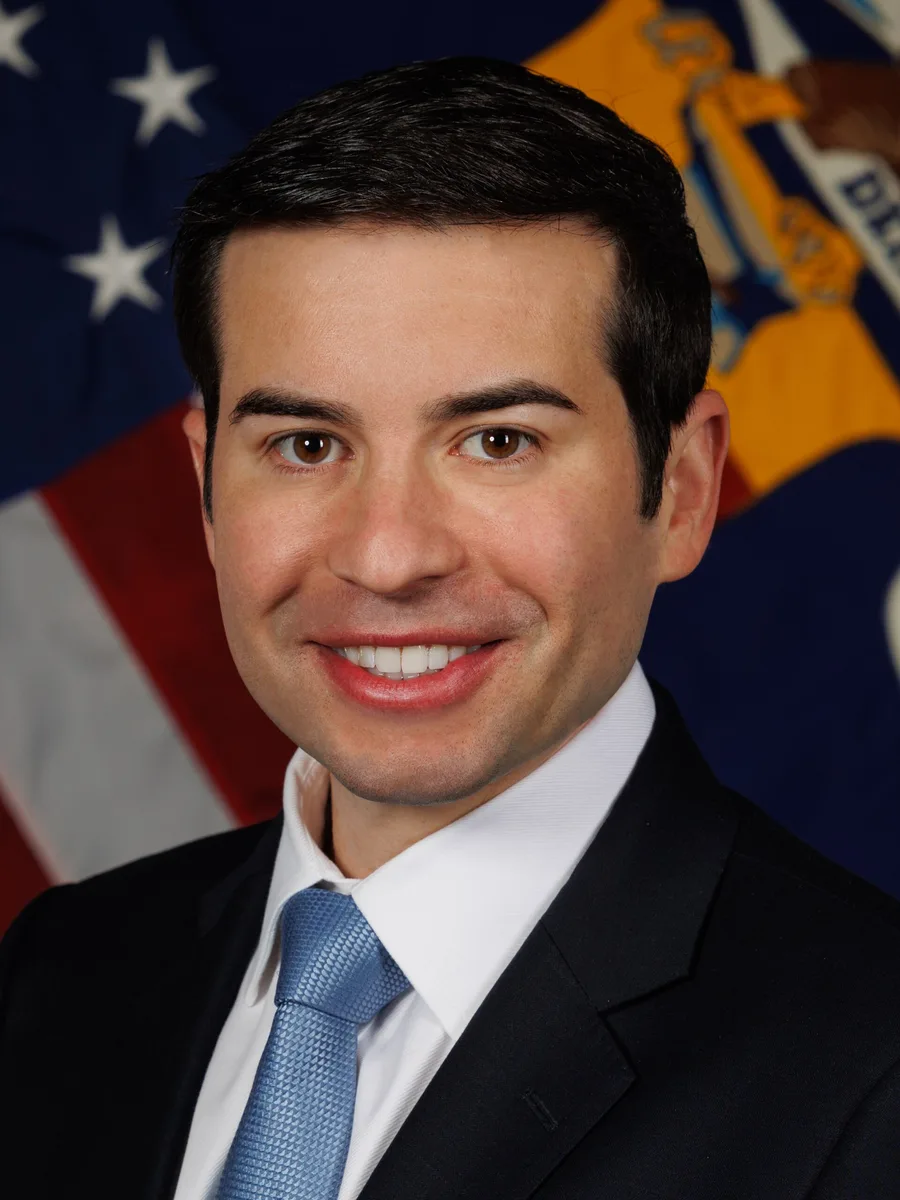
Current Secretary of Labor
Keith Sonderling
In office since
April 20, 2026 (Acting)
Prior role: Deputy Secretary of Labor; earlier, Commissioner of the Equal Employment Opportunity Commission
Keith Sonderling has served as Acting Secretary of Labor since April 20, 2026, following the resignation of Lori Chavez-DeRemer. He was confirmed as Deputy Secretary of Labor, the department's second-ranking role, in March 2025.
Sonderling previously served as a commissioner on the U.S. Equal Employment Opportunity Commission and, during the first Trump administration, as Deputy Administrator of the department's Wage and Hour Division, giving him direct prior experience inside the same department he now leads on an acting basis.
Major Sub-Agencies & Bureaus
The Labor Department carries out its mission through operating divisions and sub-agencies, each with its own specific mandate.
OSHA sets and enforces workplace safety standards covering everything from fall protection on construction sites to chemical exposure limits in factories, conducting tens of thousands of workplace inspections each year and issuing citations and fines against employers who violate safety standards.
Since its creation in 1971, OSHA is widely credited with contributing to a dramatic long-term decline in workplace fatalities, from roughly 38 worker deaths per day in 1970 to about 15 per day today, even as the size of the American workforce has more than doubled over that same period.
The agency is small for its remit, with only about 1,800 federal and state-plan inspectors for more than 10 million workplaces; the AFL-CIO estimates it would take a federal inspector about 185 years to visit every site once. About half the states run their own OSHA-approved programs covering private employers; federal OSHA covers the rest.
OSHA generally cannot write a new standard quickly: rulemaking for a single hazard, such as its 2016 silica-dust rule, has taken years or decades. Most day-to-day enforcement relies instead on the "general duty clause," which requires employers to keep workplaces "free from recognized hazards."
The Bureau of Labor Statistics is the federal government's principal economic data agency, producing the monthly jobs report (officially the Employment Situation Summary), the Consumer Price Index that measures inflation, and detailed wage and occupational data used by businesses, researchers, and policymakers nationwide.
The bureau operates independently of political direction in how it calculates and reports its statistics, a deliberate design intended to preserve public and market confidence that economic data isn't being manipulated for political advantage regardless of which party controls the White House.
It gathers its numbers from two large surveys each month: a household survey of about 60,000 homes that yields the unemployment rate, and an establishment survey of hundreds of thousands of employers that yields the payroll job count. Under an OMB directive, the data is prepared under lockup and released to everyone at exactly 8:30 a.m. Eastern.
The CPI is compiled from roughly 80,000 prices collected every month across dozens of urban areas, and it directly sets the annual cost-of-living adjustment for Social Security, federal pensions, and parts of the tax code, so a small methodological change ripples across the federal budget.
The Wage and Hour Division enforces the Fair Labor Standards Act, the federal law setting the minimum wage and overtime pay requirements, and also enforces family and medical leave protections and rules against child labor violations, recovering hundreds of millions of dollars in back wages for workers each year.
The division has increasingly focused enforcement resources on industries with historically high violation rates, including agriculture, restaurants, and construction, where wage theft and misclassification of employees as independent contractors remain persistent problems.
The federal minimum wage has been $7.25 an hour since 2009, the longest stretch without an increase since it was created in 1938, though roughly 30 states plus many cities set higher local minimums that the division also helps enforce where they exceed the federal floor.
The division has fewer than 1,000 investigators nationwide and increasingly relies on "directed" investigations of whole industries and on worker complaints. It reported a rise in child-labor cases in the 2020s, including minors found working in meatpacking plants and auto-parts factories through staffing agencies.
EBSA oversees private-sector employee retirement and health benefit plans under the Employee Retirement Income Security Act of 1974 (ERISA), protecting the retirement savings of roughly 150 million American workers and retirees held in employer-sponsored 401(k) and pension plans.
The agency investigates cases of retirement plan mismanagement and fraud, and its rules on fiduciary duty, the legal obligation for financial advisers managing retirement accounts to act in their clients' best interest, have been a recurring subject of regulatory and legal battles across multiple administrations.
EBSA oversees more than 700,000 retirement plans and millions of health and welfare plans holding tens of trillions of dollars in assets. It also administers the health-plan disclosure and appeal rules under ERISA and pieces of the Affordable Care Act that apply to employer coverage, and COBRA continuation-coverage rights.
A version of its "fiduciary rule," first proposed in 2010 and repeatedly revised, was vacated by a federal appeals court in 2018 and reproposed in 2023; the underlying question is whether a broker recommending a rollover from a 401(k) to an individual retirement account must put the saver's interest first.
From March 4, 1913 to Today
The predecessor of The Labor Department was the Bureau of Labor (1884) and later the Department of Commerce and Labor (1903). Here is how the department reached its current form.
Congress created the Bureau of Labor in 1884, an independent, non-Cabinet agency tasked with collecting and publishing labor statistics, reflecting growing national concern about industrial working conditions during the late 19th century's rapid industrialization.
The bureau operated for nearly two decades as a small statistics-focused office before organized labor's political pressure eventually helped secure a fuller Cabinet-level department dedicated specifically to workers' interests.
It was placed in the Interior Department, then briefly made an independent "Department of Labor" without Cabinet rank in 1888, then folded into the new Department of Commerce and Labor in 1903, a sequence that reflected decades of debate over how much standing workers should have in the federal government.
President Taft signed legislation creating an independent Department of Labor on March 4, 1913, his last day in office, splitting it off from the combined Commerce and Labor Department that Congress had created a decade earlier, largely in response to lobbying from the American Federation of Labor.
The new department's stated mission, set by Congress, was 'to foster, promote, and develop the welfare of the wage earners of the United States,' a mission statement whose worker-focused language distinguished it clearly from the business-focused mission Commerce retained.
For its first two decades the department's most active job was the U.S. Conciliation Service, which mediated hundreds of strikes, and, until 1940, the Bureau of Immigration and Naturalization, which processed arrivals at Ellis Island and elsewhere before that function moved to the Justice Department.
Frances Perkins, appointed Secretary of Labor by Franklin Roosevelt in 1933, became the first woman to serve in a presidential Cabinet and led the department through the creation of Social Security, the federal minimum wage, and the 40-hour workweek under the 1938 Fair Labor Standards Act.
Perkins served for twelve years, longer than any other Labor Secretary in history, and the department's current headquarters building in Washington, D.C. was renamed in her honor in 1980, recognizing her outsized role in shaping the modern American labor and social safety net system.
Perkins had told Roosevelt she would take the job only if he backed a specific list: a 40-hour week, a minimum wage, unemployment and old-age insurance, an end to child labor, and a federal employment service. Nearly all of it became law within her first five years, through Social Security (1935), the Wagner Act (1935), and the Fair Labor Standards Act (1938), which the Supreme Court upheld in 1941.
The Occupational Safety and Health Act of 1970 created OSHA to set and enforce federal workplace safety standards, responding to public concern over industrial accidents and occupational disease that state regulation had failed to consistently address across the country.
The same law also created the National Institute for Occupational Safety and Health, a separate research agency (now part of the CDC) that studies workplace hazards and recommends safety standards for OSHA to consider adopting.
The bill passed with large bipartisan majorities and was signed by President Nixon. It followed years of rising industrial deaths, dramatized by disasters such as the 1968 Farmington, West Virginia, mine explosion that killed 78 and helped pass a separate Coal Mine Health and Safety Act the year before.
The Employee Retirement Income Security Act of 1974 established federal standards for private-sector pension and health benefit plans, responding to high-profile pension failures, most notably the 1963 collapse of the Studebaker automobile company's pension plan, which left thousands of workers with little or no promised retirement income.
ERISA created the federal fiduciary duty standards and reporting requirements that the Labor Department's Employee Benefits Security Administration still enforces today, and it also established the Pension Benefit Guaranty Corporation to insure certain private pension benefits against employer plan failures.
ERISA also "preempts" most state regulation of employer benefit plans, which is why large employers can offer a single uniform health plan across all 50 states, and it enabled the 401(k), which took off after a 1978 tax-law provision and an IRS clarification in 1981 turned an obscure section of the code into the main private retirement vehicle.
Defining Moments
Events that reshaped the department's authority, structure, or public role.
Though it predates the department's creation by two years, the 1911 Triangle Shirtwaist Factory fire in New York City, which killed 146 garment workers, mostly young immigrant women, trapped behind locked exit doors, became the defining tragedy that galvanized the workplace safety movement.
Frances Perkins, later the first Secretary of Labor, witnessed the fire firsthand and cited it throughout her career as the formative moment that drove her lifelong commitment to workplace safety regulation, a direct throughline from that tragedy to OSHA's creation nearly sixty years later.
The fire led New York State to create a Factory Investigating Commission, on which Perkins served, that produced dozens of new fire-safety, sanitation, and hours laws over the next few years and became a national model. The factory owners were acquitted of manslaughter but later lost a civil suit for a token sum per victim.
Perkins called the day of the fire "the day the New Deal began," arguing that the reform network built in its aftermath supplied both the ideas and the people for the federal labor and social-insurance programs of the 1930s.
Frances Perkins's 1933 appointment as Secretary of Labor made her the first woman ever to serve in a U.S. presidential Cabinet, a historic milestone that came only 13 years after the 19th Amendment recognized women's right to vote nationwide.
Perkins used her position to push through some of the most consequential labor legislation in American history, including Social Security and the federal minimum wage, cementing her legacy as one of the most influential Cabinet secretaries of the 20th century regardless of department.
She chaired the Cabinet committee that drafted the Social Security Act and personally lobbied it through Congress in 1935. She also faced repeated attempts to remove her, including a 1939 move by a House member to impeach her for declining to deport the West Coast labor leader Harry Bridges; the Judiciary Committee dismissed it.
No woman held another Cabinet department until Oveta Culp Hobby became Secretary of Health, Education, and Welfare in 1953. Perkins remained in government afterward, serving on the Civil Service Commission until 1953, and later taught at Cornell.
The rise of app-based gig work platforms over the past decade has forced the department to repeatedly revisit how it defines who counts as an 'employee' entitled to minimum wage and overtime protections versus an 'independent contractor' who isn't, a classification question with enormous financial stakes for both workers and companies.
The department has issued and revised its independent contractor classification rule multiple times across successive administrations since 2021, reflecting one of the most actively contested and litigated areas of federal labor policy in recent memory.
The legal test turns on the "economic reality" of the relationship, how much control the company exerts, whether the worker's investment and skill create real independence, and how permanent the arrangement is. A stricter test brings more workers under the FLSA and payroll taxes; a looser one leaves more classified as contractors.
States have gone their own way: California's 2019 "ABC test" law was largely undone for ride-hail and delivery drivers by Proposition 22 in 2020, which classified them as contractors but added limited benefits. The federal rule governs FLSA wage and overtime coverage only, not tax status or eligibility for unemployment insurance, which follow separate tests.
Notable Programs & Initiatives
A selection of the programs The Labor Department runs, and what each one is actually for.
The federal-state unemployment insurance system, created under the Social Security Act of 1935, provides temporary weekly payments to workers who lose their jobs through no fault of their own, funded through payroll taxes and administered jointly by the Labor Department and individual state workforce agencies.
During the COVID-19 pandemic, Congress temporarily expanded the program to cover gig workers and the self-employed and added supplemental federal payments, an emergency expansion that demonstrated both the system's flexibility and the strain aging state unemployment insurance computer systems faced under sudden, unprecedented claim volumes.
States set their own benefit levels, durations, and eligibility rules within federal guidelines, so a laid-off worker in one state might receive roughly half their prior wage for 26 weeks while a neighboring state pays less for fewer weeks. The Labor Department certifies state programs, funds administration, and steps in with extended benefits when a state's unemployment rate is high.
The pandemic programs paid out hundreds of billions of dollars quickly but also drew large-scale fraud, much of it organized and international, that the Labor Department inspector general later estimated in the tens of billions, prompting new identity-verification requirements and a push to modernize the 1970s-era state systems.
The Bureau of Labor Statistics' monthly Employment Situation Summary, released on the first Friday of each month, reports the national unemployment rate and the number of jobs added or lost in the prior month, and is one of the single most market-moving pieces of economic data the federal government publishes.
Financial markets, the Federal Reserve, and news coverage all treat the jobs report as a critical real-time gauge of economic health, and even modest surprises relative to economist forecasts can trigger significant swings in stock and bond markets within minutes of release.
The headline job number is an early estimate that BLS revises twice as more employer responses come in, and once a year the whole payroll series is "benchmarked" to near-complete tax records, revisions that can run into the hundreds of thousands of jobs and occasionally change the economic narrative after the fact.
The unemployment rate counts only people who are jobless and actively looking, so BLS also publishes broader measures (the "U-6") that include discouraged workers and involuntary part-timers, and a labor-force-participation rate that tracks how many working-age people are in the job market at all.
The Labor Department's Office of Apprenticeship oversees registered apprenticeship programs that combine paid on-the-job training with classroom instruction, primarily in skilled trades like electrical work, plumbing, and construction, giving workers a debt-free path to a skilled career without a traditional four-year college degree.
Registered apprenticeships have grown significantly in recent years as policymakers across the political spectrum have promoted them as an alternative to college for workers seeking stable, well-paying careers, with the department reporting hundreds of thousands of active apprentices nationwide.
The system dates to the National Apprenticeship Act of 1937 (the "Fitzgerald Act"). A registered program must meet federal standards for wages that rise with skill, a written training plan, and a nationally recognized credential at completion; the department reports that most completers keep a job in their field.
Building-trades unions and their employers run many of the largest programs jointly, and recent policy has pushed to extend the model into health care, information technology, and advanced manufacturing, sectors where registered apprenticeship has historically been rare.
The Office of Workers' Compensation Programs administers federal workers' compensation benefits for injured federal employees, coal miners with black lung disease, and, notably, for the responders and survivors of the September 11, 2001 attacks through the World Trade Center Health Program.
These programs provide medical treatment and wage replacement benefits to workers injured on the job in categories where state workers' compensation systems don't apply, filling a gap for specific federal and federally regulated worker populations.
The Federal Employees' Compensation Act program covers about 2.6 million federal and postal workers and pays out roughly $3 billion a year. The Black Lung program, funded by an excise tax on coal, has paid tens of billions of dollars to miners and survivors since the 1970s, and claims rose again with a resurgence of severe disease in Appalachia.
The Energy Employees Occupational Illness Compensation Program, also run by the office, compensates workers who built the nation's nuclear weapons and were exposed to radiation and toxic materials; it has paid more than $25 billion since 2001.
How This Affects Everyday Americans
The minimum wage floor, overtime pay rules, and workplace safety standards the Labor Department enforces set the baseline protections every hourly worker in the country relies on, whether they realize it or not, every time they receive a paycheck or clock in for a shift.
The department's monthly jobs report and inflation data shape decisions well beyond Washington, from the interest rate the Federal Reserve sets on mortgages and credit cards to whether a given family feels confident enough in the economy to make a major purchase or job change.
For the millions of Americans who lose a job in any given year, the unemployment insurance system the department oversees provides a direct financial bridge while they search for new work, and for tens of millions more, the department's retirement plan protections safeguard the 401(k) or pension savings they're counting on decades from now.
The Consumer Price Index the department publishes each month is the number that raises Social Security checks, federal pensions, and many union and rental contracts each January, so its methodology quietly determines how far tens of millions of fixed incomes stretch.
Quick Facts & Figures
Key statistics and reference information about The Labor Department.
| Established | March 4, 1913 |
| Headquarters | Frances Perkins Building, Washington, D.C. |
| Current Secretary | Keith Sonderling (Acting) |
| Annual Budget | ~$14 billion (FY2025 discretionary) |
| Employees | ~16,000 |
| Predecessor Agency | Bureau of Labor (1884) |
| First Woman Cabinet Secretary | Frances Perkins (1933) |
| Website | dol.gov |
Did You Know?
OSHA, created in 1971, has helped cut the rate of workplace deaths roughly in half since its founding, even as the American workforce has more than doubled in size.
Frances Perkins, Labor Secretary from 1933 to 1945, was the first woman ever to serve in a U.S. presidential Cabinet, and the department's headquarters now carries her name.
The Labor Department is one of the smaller Cabinet departments by employee headcount, at roughly 16,000 staff; Education, HUD, and Energy's federal workforce are smaller.
The monthly jobs report the department publishes can move trillions of dollars in stock market value within minutes of its release, making it one of the most closely watched numbers in the world.
The Fair Labor Standards Act of 1938, passed under Frances Perkins, established both the federal minimum wage and the standard 40-hour workweek still in use today.