Not a Plane, a Call Sign
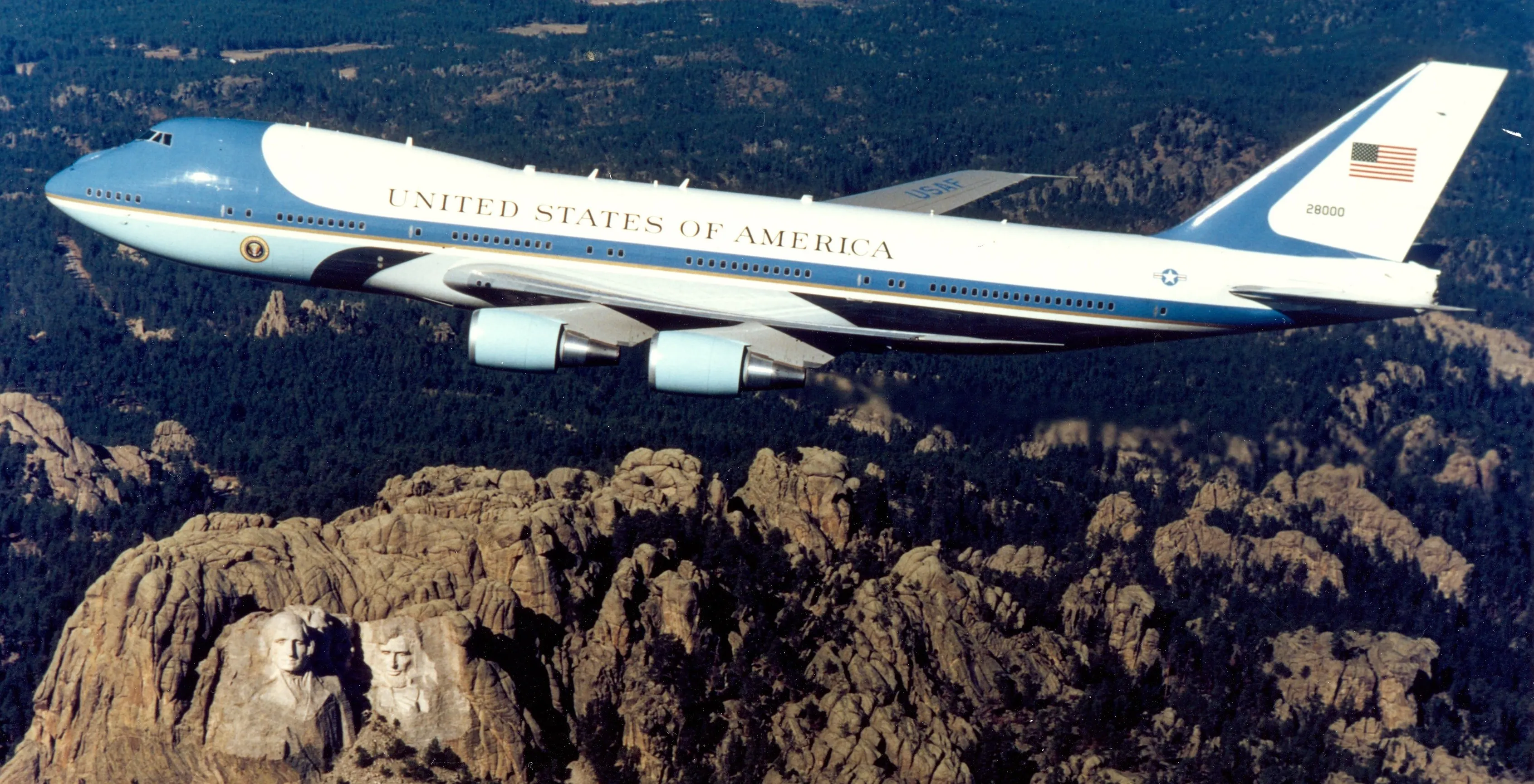
"Air Force One" is not the name of a specific airplane. It is the radio call sign given to any U.S. Air Force aircraft while the president is aboard.
Over more than 80 years, that call sign has been carried by flying boats, propeller transports, early jets, and today's militarized Boeing 747s. What has stayed constant is the aircraft's dual role: a secure way to move the commander in chief anywhere on Earth, and a visible symbol of American power the moment it touches down on foreign soil.
This page traces every aircraft that has carried that call sign, what each one could do, what it cost taxpayers, and where the program stands today with the current VC-25B Bridge aircraft and Boeing's long-delayed permanent replacement.
Every Presidential Aircraft, Start to Finish
1943
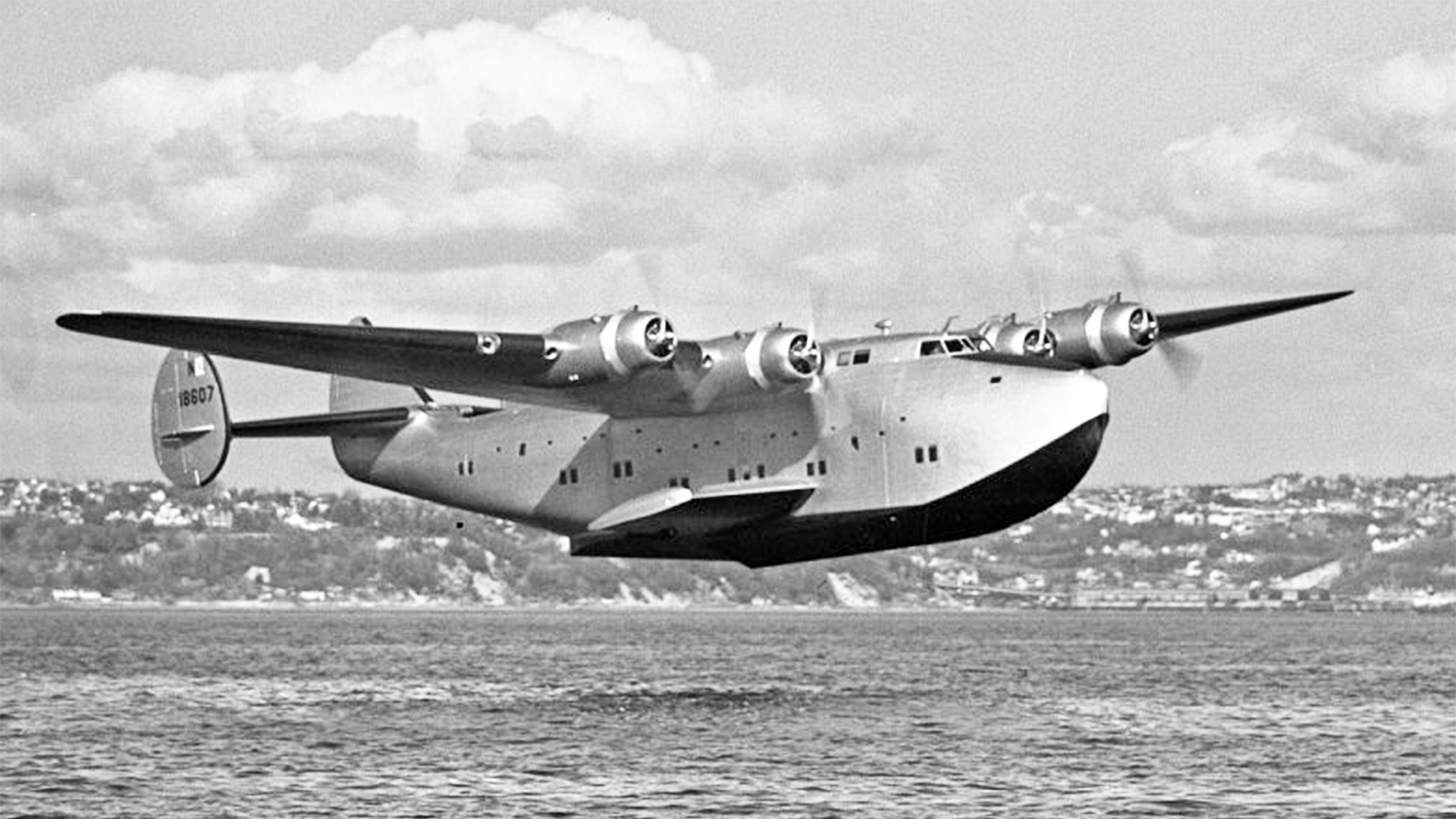
Dixie Clipper (Pan Am Boeing 314 flying boat)
Franklin D. Roosevelt
Before any aircraft was purpose-built for the presidency, Roosevelt became the first sitting president to fly while in office, traveling aboard a chartered Pan Am flying boat to the Casablanca Conference in Morocco to meet Winston Churchill. Until this trip, presidents traveled by train or ship, and a wartime flight across the Atlantic was considered too great a risk to attempt.
1943 to 1947
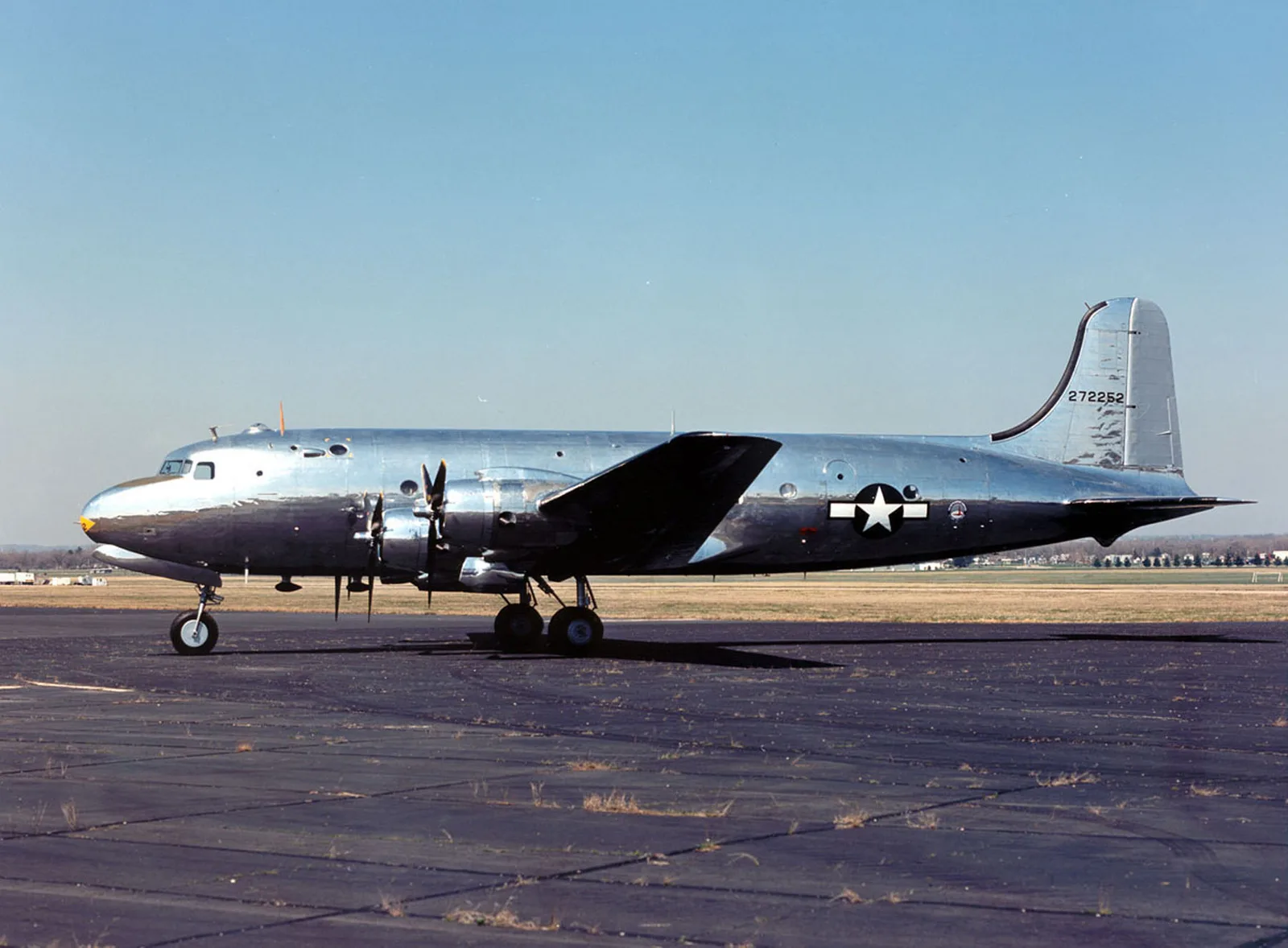
VC-54C Skymaster, "Sacred Cow"
Franklin D. Roosevelt, Harry Truman
The Sacred Cow was the first aircraft built specifically for presidential use, a modified Douglas C-54 Skymaster with a private stateroom, a battery-powered elevator to accommodate Roosevelt's wheelchair, and early secure communications gear. Roosevelt flew it once, to the Yalta Conference in early 1945. Truman used it far more extensively, and signed the National Security Act of 1947, which created the U.S. Air Force as an independent military branch, while aboard the aircraft. It is preserved today at the National Museum of the United States Air Force.
1947 to 1953
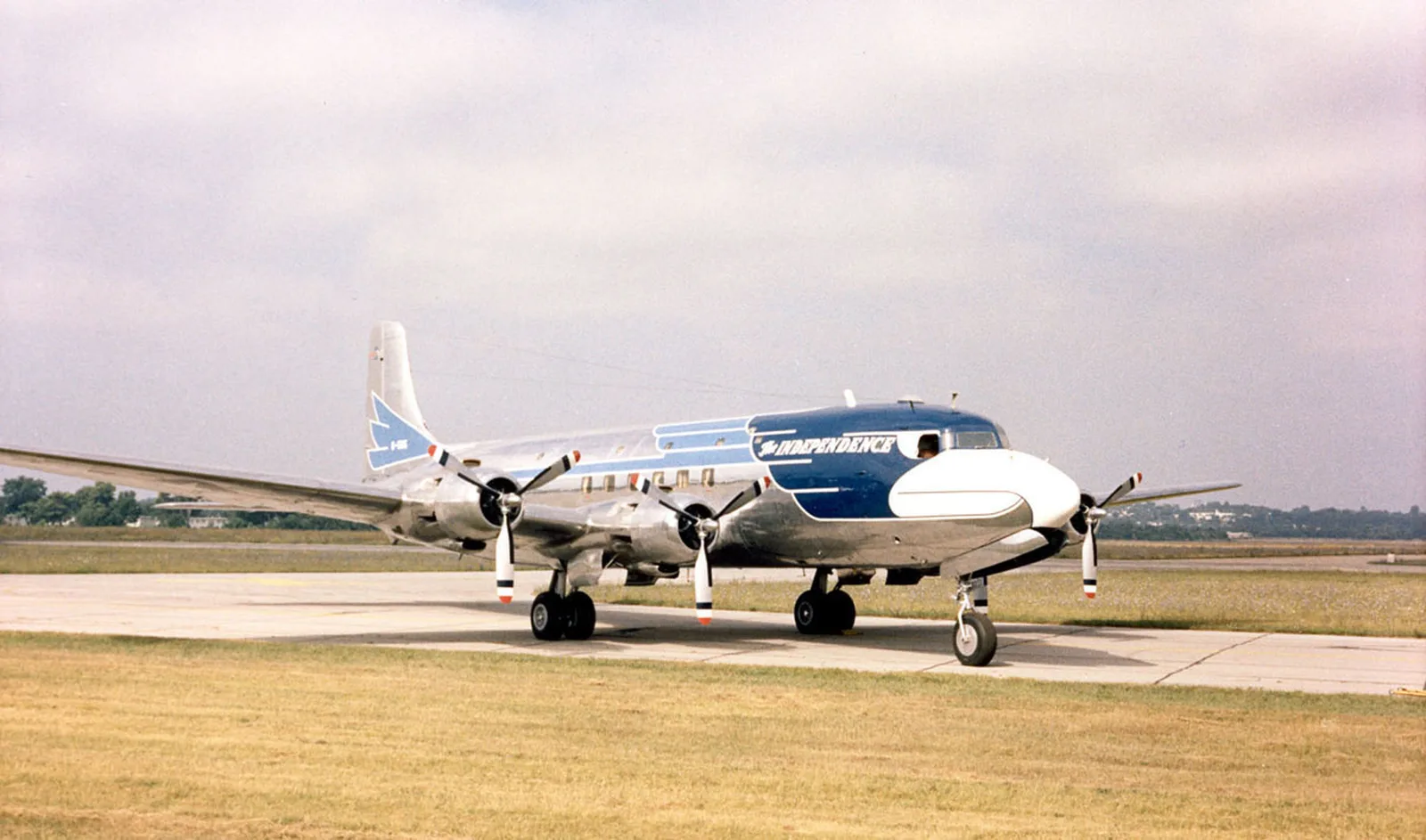
VC-118 Liftmaster, "Independence"
Harry Truman
Named for Truman's hometown of Independence, Missouri, this modified Douglas DC-6 replaced the Sacred Cow with a pressurized cabin that allowed high-altitude flight without oxygen masks, an early weather radar, and a radio teletype system. It was also the first presidential aircraft to carry distinctive exterior markings, a bald eagle painted on the nose, giving the plane a visual identity separate from any ordinary military transport.
1953 to 1961
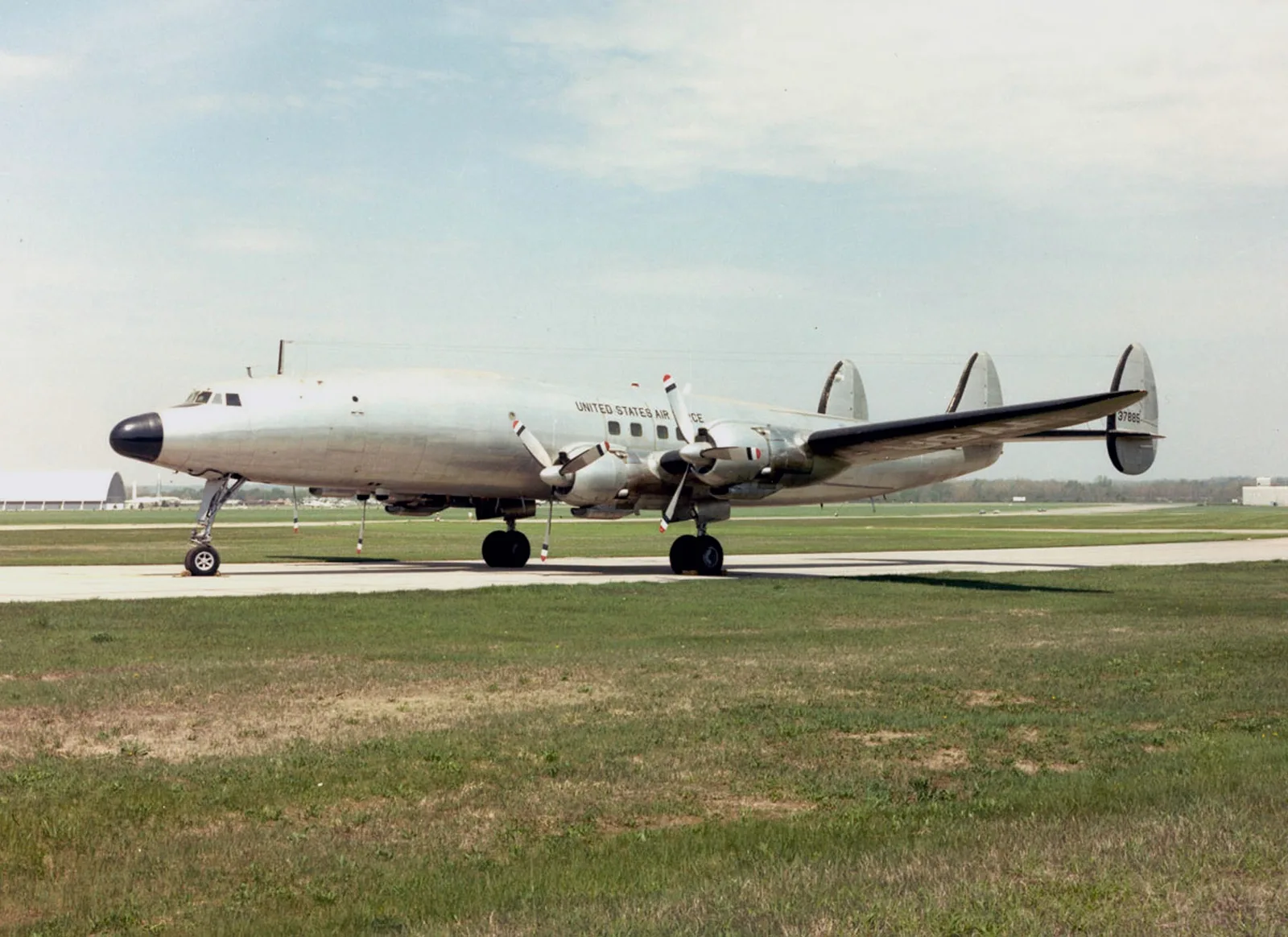
VC-121 Constellations, "Columbine II" and "Columbine III"
Dwight D. Eisenhower
Eisenhower flew a pair of Lockheed Constellations, named for Colorado's state flower in honor of his wife Mamie's adopted home state. It was aboard Columbine II, radio call sign Air Force 8610, that air traffic controllers briefly confused the president's aircraft with a same-numbered Eastern Air Lines flight in the same airspace. To prevent a repeat, the Air Force adopted the unique call sign "Air Force One" for any Air Force aircraft carrying the president, a practice that has continued ever since. Columbine III served as the primary presidential aircraft for the rest of Eisenhower's term and retired the day John F. Kennedy took office.
1959
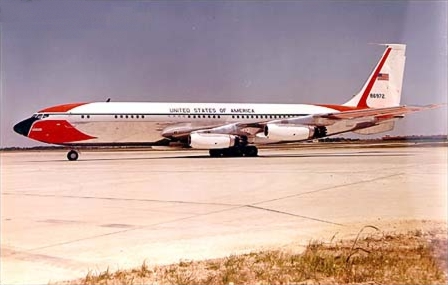
VC-137A Boeing 707, "Queenie"
Dwight D. Eisenhower
As the jet age arrived, the Air Force acquired a small fleet of Boeing 707s to begin phasing out propeller-driven transports. One of these aircraft, nicknamed Queenie, made Eisenhower the first president to fly by jet, a transition that cut travel times dramatically and set the stage for the fully jet-powered fleet that would follow.
1962 to 1998
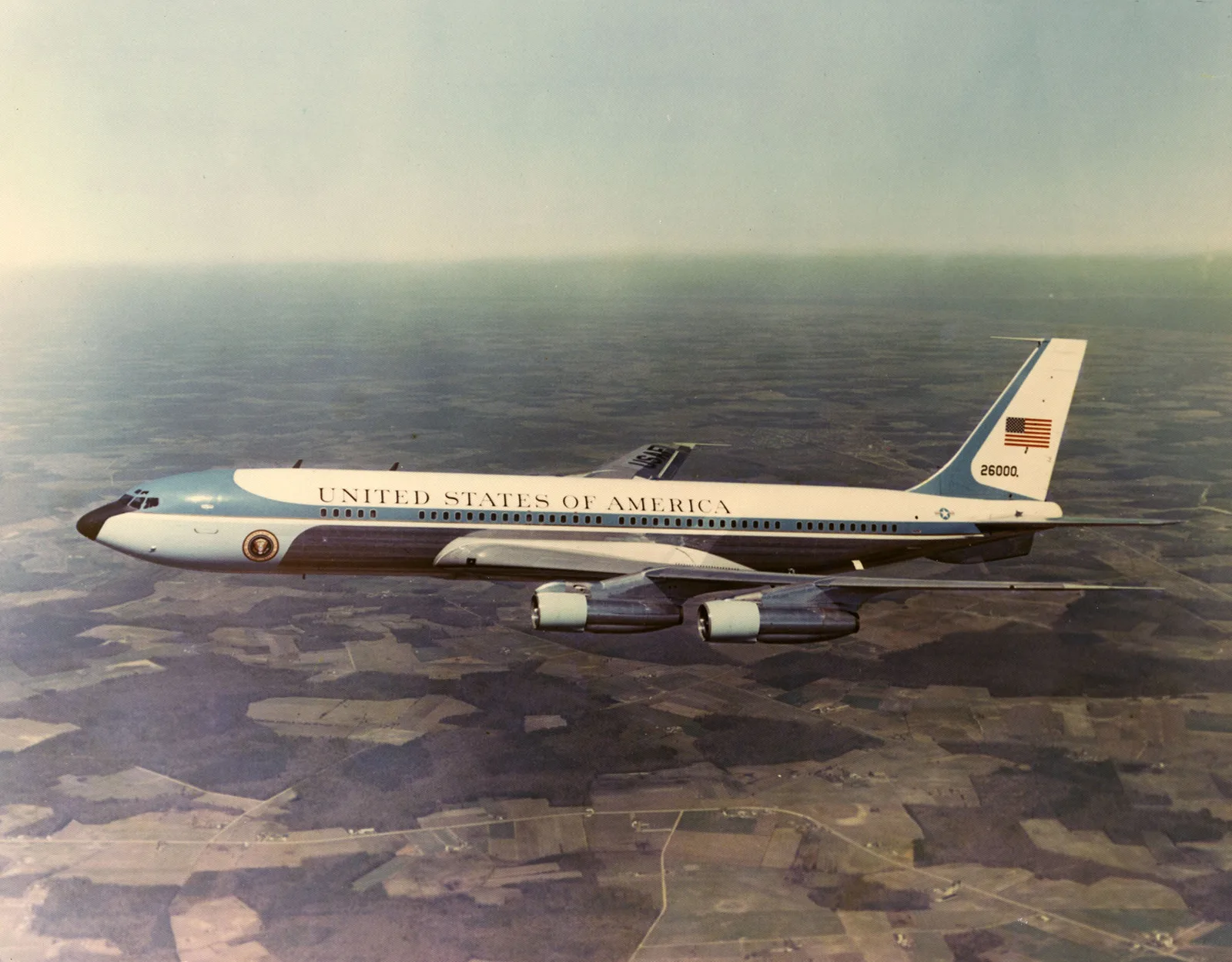
VC-137C Boeing 707, SAM 26000
John F. Kennedy through Bill Clinton
Delivered in 1962, SAM 26000 was the first jet built specifically for the presidency and introduced the blue, white, and silver livery still used today, designed at Jacqueline Kennedy's request by industrial designer Raymond Loewy. The aircraft carried President Kennedy to Dallas on November 22, 1963, returned his body to Washington that same day, and carried Lyndon B. Johnson's swearing-in en route. It went on to serve every president through Bill Clinton before retiring in 1998 after 36 years and roughly 13,000 flight hours. It is preserved at the National Museum of the United States Air Force.
1972 to 2001
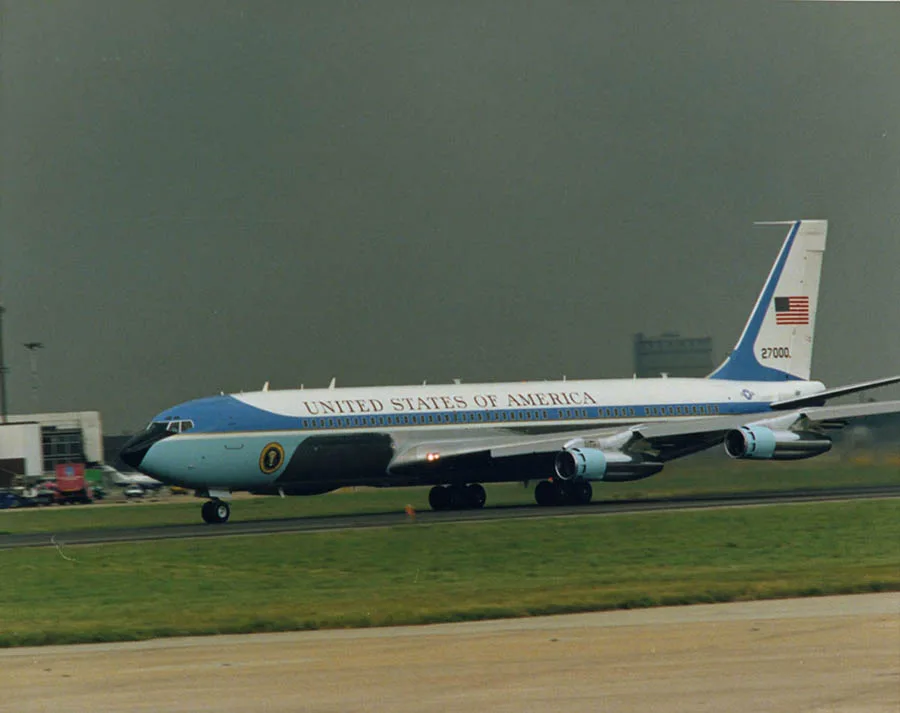
VC-137C Boeing 707, SAM 27000
Richard Nixon through George H.W. Bush
SAM 27000 joined the fleet in 1972 as a second, newer VC-137C and became the primary presidential aircraft while SAM 26000 continued as a backup. It carried Nixon on his historic 1972 trip to China and, after his resignation in 1974, flew him home to California. It went on to serve Ford, Carter, Reagan, and George H.W. Bush, including Reagan's Cold War summit diplomacy in Geneva, Reykjavik, and Moscow, before retiring in 2001. It is now displayed at the Ronald Reagan Presidential Library.
1990 to present
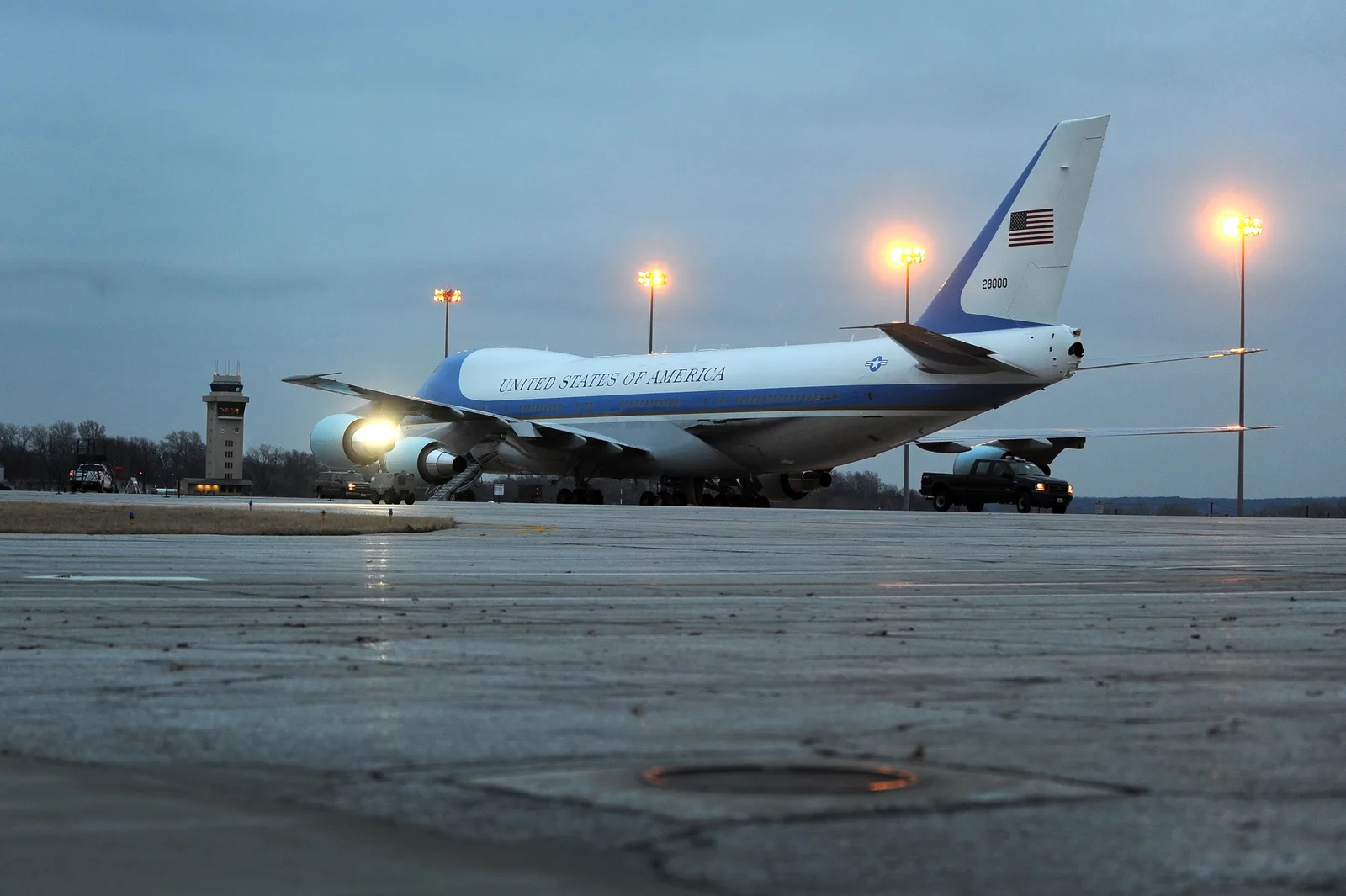
VC-25A Boeing 747-200B, tail numbers 28000 and 29000
George H.W. Bush through the current administration
Ordered under President Reagan and delivered in 1990, the two VC-25A aircraft are heavily modified Boeing 747-200B airframes and have served as the primary Air Force One fleet for more than three decades. They introduced aerial refueling capability, extensive electromagnetic pulse shielding, and a self-defense suite, and remain the aircraft most people picture when they hear the name Air Force One.
2026 to present
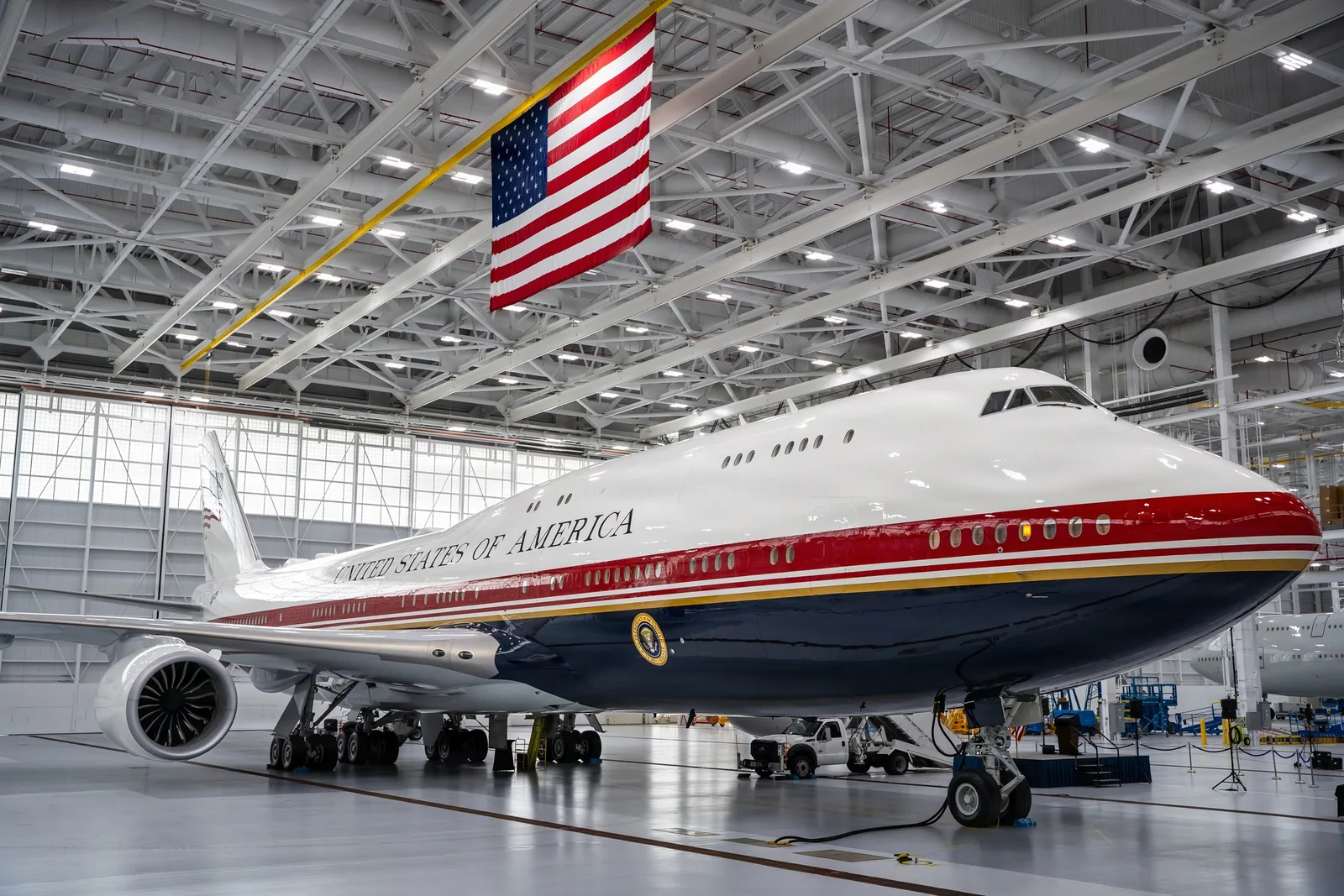
VC-25B Bridge, a converted Boeing 747-8i
Current administration
With Boeing's permanent replacement aircraft years behind schedule, the Air Force pressed a former Qatari government Boeing 747-8i into interim service. The aircraft was gifted to the U.S. government in May 2025, underwent roughly a year of modification led by defense contractor L3Harris, and was publicly unveiled at Joint Base Andrews on June 19, 2026, repainted in the traditional Air Force One livery. It is intended to bridge the gap until Boeing's purpose-built VC-25B aircraft are ready.

Expected mid-2028
VC-25B, two purpose-built Boeing 747-8 aircraft
Future administrations
The Air Force's long-term Air Force One replacement remains two new-build 747-8 airframes, originally intended for a Russian airline that never took delivery, which Boeing has been converting to military presidential standard since 2018. Repeated delays have pushed the expected delivery of the first aircraft to roughly mid-2028, four years past the original 2024 target.
Sources & Further Reading
- Air Force One and Presidential Air Travel, National Archives, Pieces of History
- Air Force One: A Timeline of Presidential Planes, HISTORY
- The Airborne Ambassador, White House Historical Association
- The Flying White House, Smithsonian Magazine
- VC-25 Air Force One, Air & Space Forces Magazine
- New Air Force One Delivery Shifts to 2028, Air & Space Forces Magazine
- Former Qatari aircraft on track for summer Air Force One delivery, Defense News
- Qatar-gifted Air Force One plane delivery expected this summer, Defense News
- Air Force One, gifted to Trump from Qatar, arrives at Joint Base Andrews, NPR
- VC-25B Air Force One, GlobalSecurity.org