About Florida
Florida takes its name from the Spanish explorer Juan Ponce de Leon, who landed on the peninsula on April 2, 1513, during the Easter season. In Spanish, the Easter season is called "Pascua Florida," meaning "flowery Easter" or "feast of flowers," a reference to the abundant wildflowers blooming at that time of year. Ponce de Leon named the land "La Florida" in honor of the season of his arrival, making it one of the oldest European place names in what is now the United States. Spain held Florida for most of the next three centuries before ceding it to the United States in 1821.
Florida occupies a peninsula jutting 500 miles into warm subtropical waters, a geography that has made it a crossroads of cultures, ecosystems, and ambitions for more than 500 years. Claimed by Spain in 1513, traded between European powers for centuries, purchased by the United States in 1821, and admitted as the 27th state in 1845, Florida has spent its entire modern history attracting people from everywhere else.
That migration has never stopped. In 1950, Florida had fewer than 3 million residents. Today it has nearly 23 million, making it the third most populous state in the country. Retirees from the Midwest, Cuban exiles, tech workers from California, and financial professionals from New York have each left their mark on a state that feels less like a single place than a collection of distinct worlds sharing a peninsula.
Florida is the only state to have hosted the beginning of America's space age, every American crewed orbital mission has launched from its shores. It is the only state where alligators and crocodiles coexist. And it is the state whose 537-vote margin in November 2000 decided the presidency of the United States.
Geography, Four Distinct Floridas
Florida's geography shifts dramatically from north to south, from Southern pine forests to subtropical wilderness, from Gulf Coast beaches to the international metropolis of Miami.
South Florida is one of the most internationally diverse metro regions in the Western Hemisphere. Greater Miami, including Broward and Palm Beach counties, is a global hub of finance, trade, fashion, and culture, with strong ties to Latin America and the Caribbean.
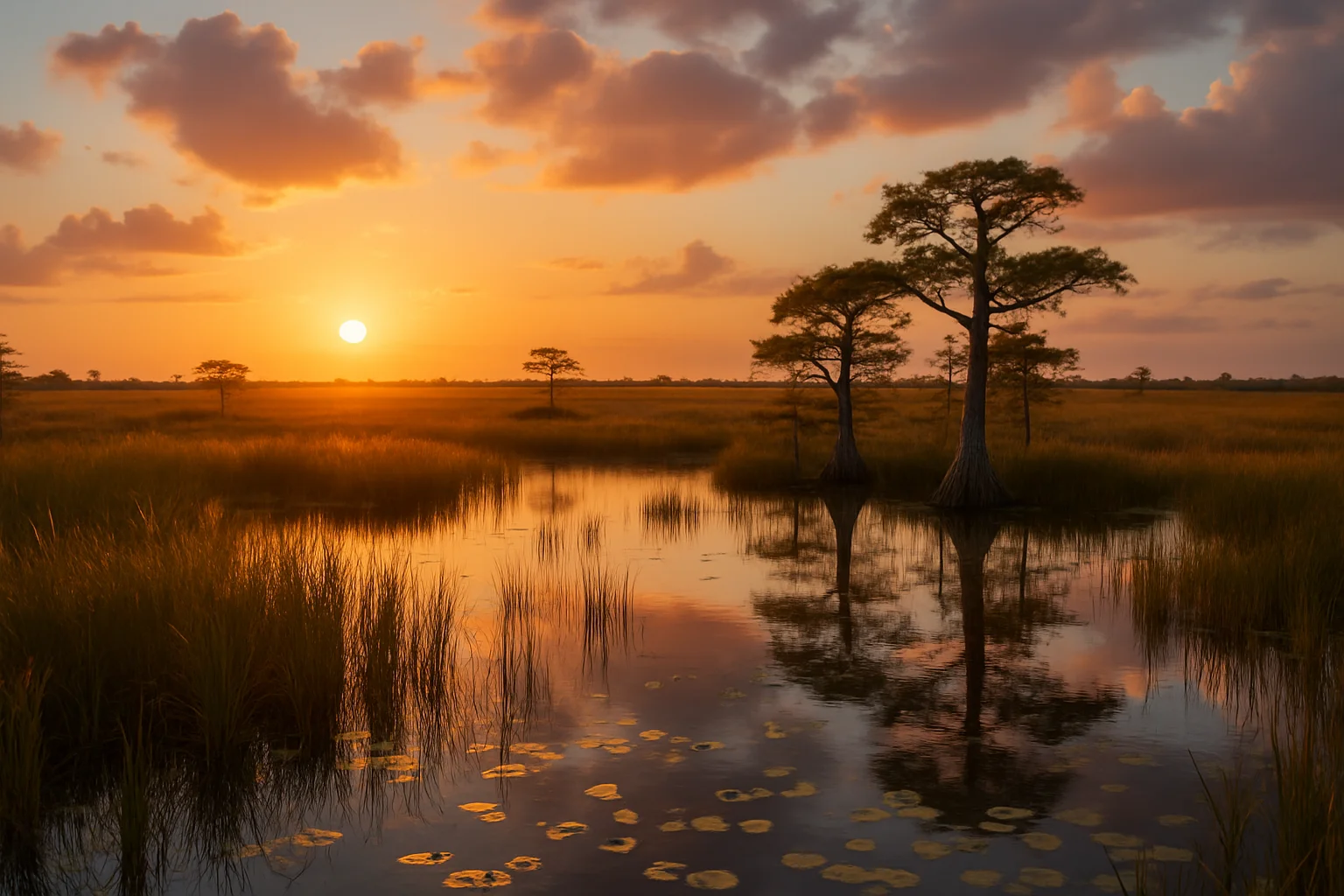
The Florida Keys extend 125 miles into the ocean, ending at Key West. Just inland lies the Everglades, a 1.5-million-acre subtropical wilderness, the largest tropical wilderness in the United States and a UNESCO World Heritage Site.
More than two-thirds of Miami-Dade County residents are Hispanic, and the region is the American capital of the Cuban diaspora, remade again by Haitian, Nicaraguan, Venezuelan, and Colombian waves; more than 70 percent of the county speaks a language other than English at home. Since about 2020 Miami has drawn hedge funds, crypto firms, and tech workers from New York and California.
South Florida is also ground zero for climate risk in the United States. Miami Beach and other low areas already flood at high tide on sunny days, the region sits on porous limestone that seawalls cannot fully stop, and greater Miami has more property value exposed to sea-level rise than anywhere in the country. Everglades restoration, a roughly $20 billion state-federal project begun in 2000, is meant partly to keep the region's drinking water from turning salty.
Central Florida is anchored by Orlando, home to Walt Disney World, Universal Studios, SeaWorld, and a constellation of theme parks that make it the most visited tourist destination in the world. Beyond tourism, Orlando has developed a major technology, defense simulation, and aerospace corridor.
The Gulf Coast cities of Tampa, St. Petersburg, and Sarasota offer beaches, a booming tech sector, and one of the fastest-growing metropolitan areas in the country.
Walt Disney World is the largest single-site employer in the United States, with about 75,000 workers, and Orlando draws more than 70 million visitors a year, more than any other American destination. The theme-park economy pays low wages, though, and metro Orlando has one of the highest rates of housing cost burden of any large U.S. metro.
Central Florida is also the national center for military training simulators: the 'Team Orlando' partnership of the Army, Navy, Air Force, and Marines writes most of the Pentagon's simulation and training contracts. Inland, the Interstate 4 corridor from Tampa through Orlando to Daytona has long held the largest bloc of swing voters in Florida.
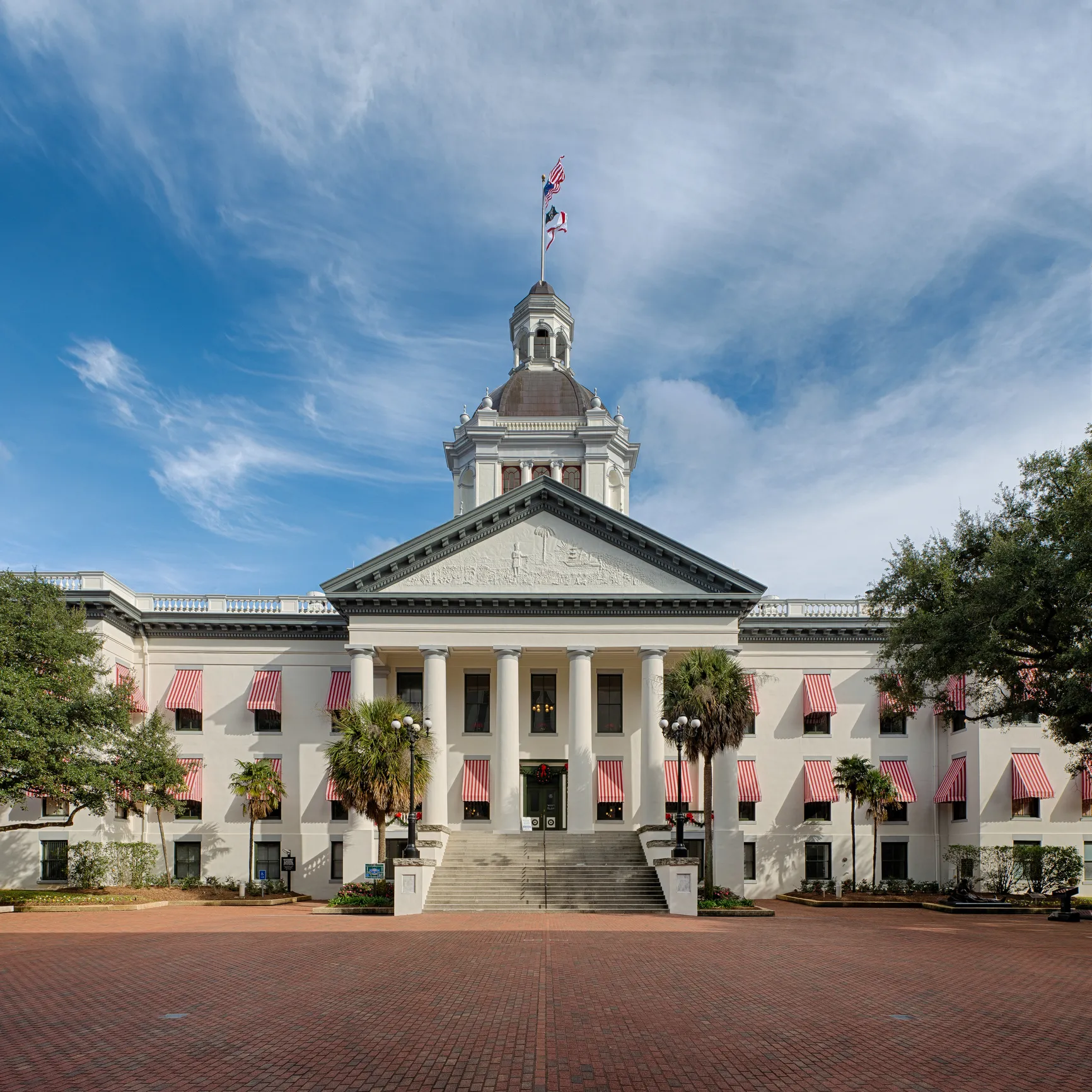
Northern Florida and the long panhandle stretching west toward Alabama and Mississippi feel distinctly different from the rest of the state, culturally more Southern, with rolling hills, pine forests, and a slower pace. Tallahassee, the state capital, sits here alongside Florida State University and Florida A&M.
The panhandle's Emerald Coast, Destin, Panama City Beach, Pensacola, boasts some of the whitest sand beaches in the world, shaped by quartz washed down from the Appalachians.
The Panhandle is a heavy military region: Eglin Air Force Base is the largest Air Force base in the world by land area, and it is joined by Hurlburt Field, Tyndall Air Force Base, and Naval Air Station Pensacola, the 'cradle of naval aviation' and home of the Blue Angels. Tyndall was nearly destroyed by Hurricane Michael in 2018, a Category 5 storm that also flattened the town of Mexico Beach.
North Florida's economy runs on timber, the state's largest crop by acreage, plus government jobs in Tallahassee and a growing logistics hub around Jacksonville, whose deep-water port and rail connections serve the largest city by land area in the contiguous United States. Unlike the peninsula, the region votes reliably Republican and has been losing population share for decades.
The Atlantic coast from Jacksonville south through Daytona, Cape Canaveral, and Vero Beach is one of America's most storied coastlines. Kennedy Space Center and Cape Canaveral Space Force Station on Merritt Island have been the launch site for virtually every American crewed space mission since 1961, from Alan Shepard's first flight to the Apollo moon landings to today's SpaceX launches.
Daytona Beach has hosted NASCAR racing since 1959. The Treasure Coast and Palm Beach coast attract retirees, tourists, and second-home owners from across the country.
Cape Canaveral has gone from a Cold War missile range to the busiest spaceport on Earth: SpaceX alone launched from Florida more than 90 times in 2024, sometimes several times a week, mostly Starlink satellites, from the same pads that sent Apollo to the moon. The commercial boom revived Brevard County, which had bled jobs when the Space Shuttle retired in 2011.
The coast north of the Cape is old Florida: Jacksonville, a Navy and insurance and port town; Daytona Beach, where cars still drive on the hard sand and NASCAR runs the Daytona 500; and St. Augustine, founded by Spain in 1565 and the oldest continuously occupied European settlement in the United States. South of the Cape, the Treasure Coast and Palm Beach draw retirees and, at Mar-a-Lago, a president's winter home.

Economy
Florida's economy is one of the largest in the nation, driven by tourism, aerospace, agriculture, healthcare, and a tax environment that draws businesses and high-income residents from across the country.
Over 130 million people visit Florida annually, more than any other state and more than most countries. Tourism generates over $100 billion for the economy each year and supports nearly 1.5 million jobs. Walt Disney World alone employs over 75,000 people and draws tens of millions of visitors annually. The cruise industry, centered in Miami and Port Canaveral, is the largest in the world.
Orlando's theme parks are the anchor: Disney's four parks, Universal's three (a fourth, Epic Universe, opened in 2025), plus SeaWorld and Legoland, form the largest concentration of theme-park attendance in the world. Disney is the state's largest private employer and, until a 2023 dispute with Governor DeSantis, effectively governed its own 25,000-acre district near Orlando.
The cruise industry is centered on Florida: PortMiami is the busiest cruise port in the world and Port Canaveral is second, and Carnival, Royal Caribbean, and Norwegian, the three largest cruise companies, are all headquartered in the Miami area.
Tourism is roughly a fifth of Florida's economy and a major reason the state can function without an income tax, since a large share of its 6 percent sales tax is paid by visitors. The trade-off is a low-wage service workforce, an economy exposed to hurricanes and recessions, and pressure on housing in tourist regions.
Florida's Space Coast is home to NASA's Kennedy Space Center, Cape Canaveral Space Force Station, and a booming commercial space sector anchored by SpaceX, Blue Origin, and United Launch Alliance. MacDill Air Force Base in Tampa houses U.S. Central Command and Special Operations Command. Florida's defense and aerospace sector employs hundreds of thousands and receives billions in federal contracts annually.
MacDill Air Force Base in Tampa hosts two four-star combatant commands, U.S. Central Command, which runs operations across the Middle East, and U.S. Special Operations Command, which oversees all American special forces. Florida also has Naval Station Mayport near Jacksonville, home to a carrier and much of the Atlantic surface fleet, and Naval Air Station Pensacola.
The commercial-space shift has been dramatic: NASA now buys rides from SpaceX and Boeing rather than operating its own rockets, and SpaceX's Florida launch cadence has made Cape Canaveral the departure point for most of the world's satellite mass. Blue Origin and others are building rockets and engines on the coast, and the state created Space Florida to court them.
Simulation is a quieter Florida defense sector: Orlando's cluster of contractors and military program offices designs most of the Pentagon's training simulators. Defense and aerospace together account for hundreds of thousands of Florida jobs and billions in federal spending.
Florida produces the vast majority of the nation's orange juice and is a top grower of tomatoes, strawberries, sugarcane, and tropical fruits. The Immokalee region is one of the country's largest tomato-producing areas. Florida agriculture faces ongoing challenges from citrus greening disease, which has dramatically reduced orange production over the past two decades, but the state continues to diversify into new crops.
Citrus was once Florida's signature: at its 2004 peak the state grew about 240 million boxes of oranges a year. Then citrus greening, a bacterial disease spread by an invasive insect and first found in Florida in 2005, along with development and hurricanes, cut production by more than 90 percent; the 2023-24 crop was under 20 million boxes, the smallest since the 1930s.
Florida is still a farm powerhouse for winter vegetables, more than half the country's fresh tomatoes come from Florida in winter, along with strawberries around Plant City, sweet corn, and bell peppers, plus sugarcane on former Everglades land south of Lake Okeechobee, sod, tropical fish, and a huge ornamental-plant industry.
Farm labor is overwhelmingly migrant, and Immokalee's tomato fields were the site of federal slavery prosecutions in the 1990s and 2000s; the Coalition of Immokalee Workers' 'Fair Food' program, which pressures buyers to pay a penny more per pound and enforce a code of conduct, grew out of that fight. Development is the bigger long-term threat, as Florida loses farmland to subdivisions faster than almost any state.
With the highest share of residents over 65 of any large state, Florida has one of the country's largest healthcare sectors. Major hospital systems, AdventHealth, HCA Healthcare, and BayCare, employ tens of thousands. The Mayo Clinic operates a major campus in Jacksonville. Florida's biotech corridor, particularly around Miami and Tampa, has grown rapidly in recent decades.
About 21 percent of Floridians are 65 or older, the highest share of any state, and hospitals, nursing homes, home health, and pharmacies are among the largest employers in nearly every metro. The Villages, a retirement community northwest of Orlando, has been the fastest-growing metro area in the country for years and is built entirely around older residents.
Florida recruited research institutes in the 2000s with large state grants: Scripps Research and the Max Planck Society opened Florida campuses in Jupiter, and Orlando's Lake Nona 'Medical City' added a University of Central Florida medical school and a VA hospital. Results have been mixed, and some institutes have since scaled back.
The other side of Florida's health economy is coverage: the state has never expanded Medicaid and has one of the highest uninsured rates in the country, so its emergency rooms and safety-net hospitals carry a heavy load of uncompensated care.
Florida is one of only nine states with no personal state income tax, a major draw for high earners, retirees, and businesses relocating from high-tax states like New York, California, and Illinois. Florida consistently leads the nation in net domestic migration.
The resulting real estate boom has made construction and financial services two of the state's largest employment sectors. Miami has also emerged as a significant financial hub, particularly for alternative investments and Latin American capital.
Florida gained roughly 2.7 million residents in the 2010s and led the nation in net domestic migration through the 2020s, drawing retirees, remote workers, and companies; the hedge fund Citadel moved its headquarters from Chicago to Miami in 2022. The state's population passed 23 million.
The boom has strained the state. Home prices roughly doubled in many markets between 2019 and 2024, and property-insurance premiums tripled or worse as hurricanes and litigation drove insurers out, leaving the state-backed insurer of last resort the largest in Florida. The 2021 Surfside condo collapse, which killed 98 people, exposed how far deferred maintenance had run in the aging coastal high-rises.
How Florida's State Government Works
Florida operates under a three-branch government. The Florida Legislature consists of a 40-member Senate (4-year terms) and a 120-member House of Representatives (2-year terms). Florida has term limits for both legislators and the governor, limiting the governor to two consecutive four-year terms.
Florida's Cabinet system is distinctive: the Attorney General, Chief Financial Officer, and Commissioner of Agriculture are all independently elected statewide, not appointed by the governor. This creates a separate accountability structure for key executive functions.
Florida has trended increasingly Republican over the past two decades. In 2022, Governor DeSantis won re-election by nearly 20 percentage points, a remarkable margin in a state that was considered a true swing state as recently as 2018 and 2020. Florida's changing political character reflects dramatic demographic shifts and realignments among Hispanic and working-class voters.
Governor of Florida
Current Governor
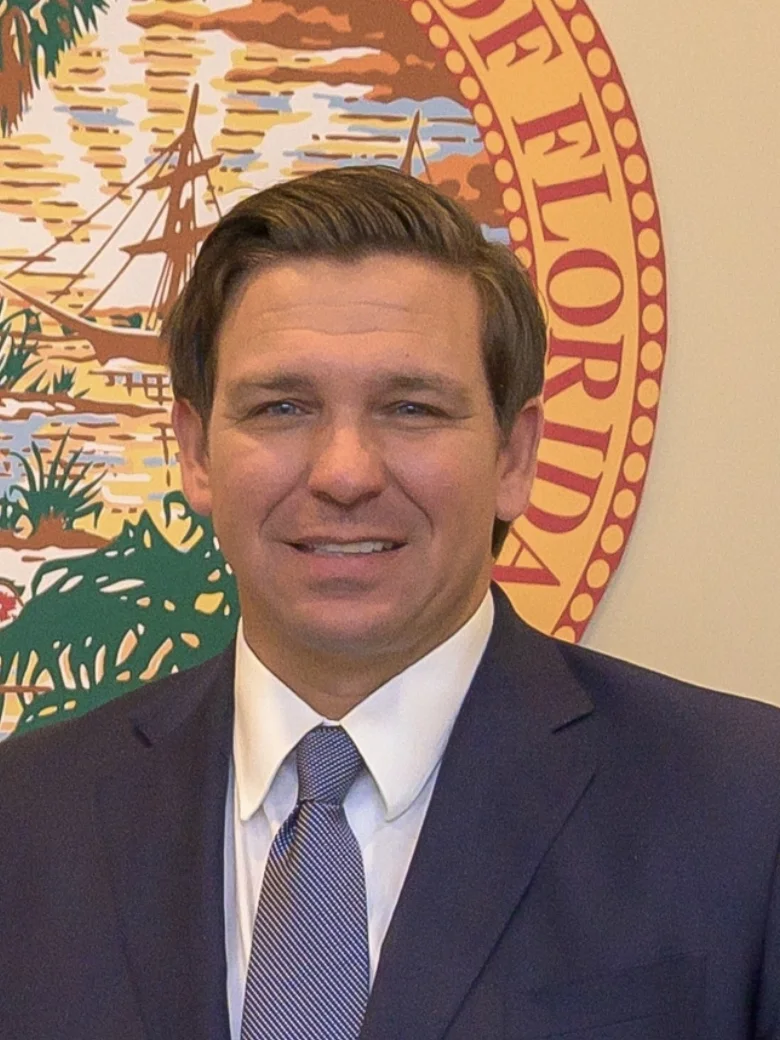
Ron DeSantis
- Party
- Republican
- In Office Since
- January 8, 2019
- Elected
- 2018, re-elected 2022 (+19 pts)
- Term Ends
- January 2027
- Born
- September 14, 1978, Jacksonville, Florida
- Education
- Yale University (BA), Harvard Law School (JD)
- Military
- U.S. Navy JAG Officer (2004-2010)
- Prior Role
- U.S. Representative, FL-6th District (2013-2019)
Ron DeSantis is the 46th Governor of Florida. A former Navy JAG officer who served in Iraq, he rose quickly through Florida politics after winning a House seat in 2012. His 2022 re-election by nearly 20 points, in what was once a true battleground, made him a leading national figure in the Republican Party.
Other Current State Officials
Lieutenant Governor
Jay Collins
Appointed by Governor DeSantis and sworn in August 12, 2025. A former Army Green Beret and state senator from Tampa, he succeeded Jeanette Núñez, Florida's first Latina lieutenant governor (2019 to 2025), who left to become president of Florida International University.
Chief Financial Officer
Blaise Ingoglia
Appointed by Governor DeSantis in July 2025 after Jimmy Patronis (CFO 2017 to 2025) won a seat in the U.S. House. A former state senator and state party chairman, the CFO oversees state financial operations, insurance regulation, and fire safety.
The Florida Legislature
Florida State Senate
- Seats: 40 members
- Terms: 4-year terms
The upper chamber. Florida's 40 senators each represent roughly 550,000 constituents. Senators serve staggered 4-year terms. Term limits restrict members to 2 consecutive 4-year terms (8 years).
Florida House of Representatives
- Seats: 120 members
- Terms: 2-year terms
The lower chamber. With 120 members serving 2-year terms, the House turns over rapidly under the state's strict term limits. Each representative serves a district of roughly 180,000 people.
Florida's U.S. Senators
U.S. Senator
Rick Scott
Former two-term Governor of Florida (2011–2019). Won a narrow Senate race in 2018, defeating incumbent Democrat Bill Nelson by fewer than 10,000 votes out of 8 million cast. Re-elected in 2024. Served as chairman of the National Republican Senatorial Committee. Focuses on fiscal conservatism, anti-communism, and Cuba/Venezuela policy.
U.S. Senator
Ashley Moody
Appointed by Governor DeSantis in January 2025 to fill the seat vacated when Marco Rubio was confirmed as U.S. Secretary of State. Previously served as Florida Attorney General (2019–2025). Former federal prosecutor and Hillsborough County judge. The second woman to represent Florida in the U.S. Senate, after Paula Hawkins (1981 to 1987); the seat is on the November 2026 special-election ballot.
Florida Through the Years
From early settlement to the present day. Tap any era to read more.
For thousands of years before European contact, Florida was home to dozens of Indigenous nations, among them the Timucua, Calusa, Apalachee, and Tequesta. The Calusa of southwest Florida built sophisticated shell mounds and controlled a network of waterways. These nations had complex societies, trade networks, and populations numbering in the hundreds of thousands before European diseases devastated them in the 16th and 17th centuries.
Spanish contact was catastrophic. Disease, slave raids, and warfare destroyed Florida's original nations almost completely; the Timucua, who may have numbered 200,000, were essentially gone by 1700, and by the time Florida became American the peninsula was nearly empty of Native people.
The Seminole are not descended from Florida's original tribes. They formed in the 1700s from Creek people moving south out of Georgia and Alabama, along with other groups and hundreds of escaped enslaved people, the 'Black Seminoles,' who found refuge in Spanish Florida, one reason the United States pushed so hard to take it.
The U.S. Army fought three Seminole Wars between 1817 and 1858, the longest and costliest of all the American wars against Native nations, forcing most Seminoles west to Oklahoma. A few hundred never surrendered and hid in the Everglades; their descendants, the Seminole Tribe of Florida and the Miccosukee Tribe, are the only American Indian nations that never signed a peace treaty with the United States.
Spanish explorer Juan Ponce de León landed on the Florida peninsula in April 1513, likely near present-day St. Augustine, and claimed it for the Spanish Crown, naming it 'La Florida' for the Easter season ('Pascua Florida,' or Feast of Flowers). The legend that he was searching for a Fountain of Youth was invented generations later.
Spain would control Florida for most of the next three centuries, ceding it to Britain briefly (1763–1783) before the United States purchased it in 1821.
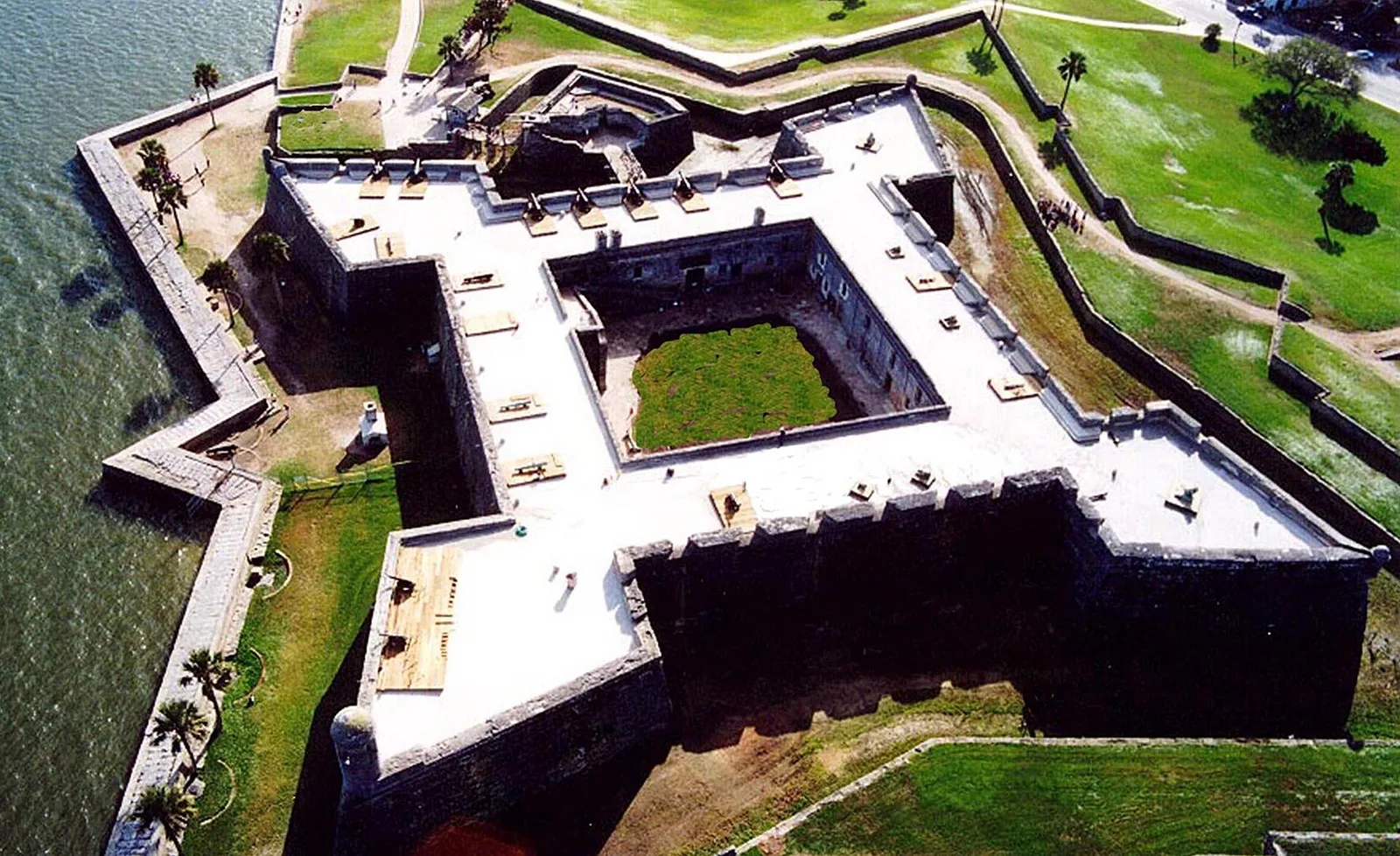
Spain's real foothold came in 1565, when Pedro Menéndez de Avilés founded St. Augustine and wiped out a nearby French Huguenot colony, killing most of the men. St. Augustine has been occupied ever since, the oldest continuously occupied European settlement in what is now the United States, and its coquina-stone fort, the Castillo de San Marcos, begun in 1672, was never taken by force.
Spanish Florida was a poor, thinly held frontier that mostly mattered as a strategic guard for the treasure fleets. It went to Britain in 1763, back to Spain in 1783, and finally to the United States in 1821 under the Adams-Onís Treaty, in which the U.S. assumed $5 million in claims against Spain and gave up its own claim to Texas, for the time being.
Florida was admitted to the Union on March 3, 1845 as the 27th state, and simultaneously Iowa was admitted as the 28th, maintaining the balance between slave and free states required under the Missouri Compromise. Florida entered as a slave state with a plantation economy in the north, while the south remained largely frontier. Just 16 years later, Florida would secede and join the Confederacy.
When Florida joined in 1845 it had about 66,000 people, roughly half of them enslaved, and its economy was a cotton-and-tobacco plantation belt across the north, centered on Tallahassee, that looked and voted like Georgia and Alabama. The peninsula south of Ocala was still frontier.
Florida seceded in January 1861, the third state to leave the Union. It sent about 15,000 men to the Confederacy and supplied beef and salt from its coasts, but saw little major fighting; the biggest battle, Olustee in 1864, was a Confederate win that kept Union forces out of the interior.
Reconstruction brought Black Floridians the vote and office, then a violent white backlash. By 1900 poll taxes and an all-white Democratic primary had cut Black turnout to almost nothing, and Florida had among the highest rates of lynching per capita of any state, including the 1920 Ocoee massacre, in which a white mob killed Black residents and burned the town after a man tried to vote.
The 1920s saw a frenzied real estate boom in Florida, millions of Americans, flush with postwar prosperity, bought lots sight unseen, often via mail. Land prices skyrocketed as speculators subdivided swamps and swamplands into suburban lots.
The bubble burst in 1926 when a major hurricane devastated Miami, and a second hurricane in 1928 killed thousands. Florida's collapse preceded the national Great Depression by three years, a preview of what was coming for the rest of the country.
The boom was driven by cheap cars, the new Dixie Highway, aggressive promoters like Carl Fisher (who built Miami Beach on a mangrove island), and the promise of a place with no state income tax, which Florida wrote into its constitution in 1924 specifically to attract wealthy migrants. Whole cities, Coral Gables, Boca Raton, Opa-locka, were platted in a few years.
The 1926 Miami hurricane killed hundreds; the 1928 Okeechobee hurricane pushed the lake over its dike and drowned an estimated 2,500 people, most of them Black farm workers, in one of the deadliest disasters in U.S. history. That flood led to the diking of Lake Okeechobee and the drainage canals that have damaged the Everglades ever since.
On May 5, 1961, Alan Shepard became the first American in space, launching from Cape Canaveral. Florida has been the center of American spaceflight ever since.
The Apollo 11 mission that landed humans on the moon launched from Kennedy Space Center on July 16, 1969. Today, Cape Canaveral hosts launches by NASA, SpaceX, Blue Origin, and United Launch Alliance, making Florida's Space Coast once again the busiest launch site in the world.
Cape Canaveral was chosen in 1949 as a missile range because rockets could be launched east over the ocean, relatively near the equator for an orbital boost, and away from cities. The Space Coast, Cocoa Beach, Titusville, Melbourne, grew up around it, and the region's fortunes have risen and fallen with NASA's budget, most sharply when the Shuttle retired in 2011 and thousands lost their jobs.
The commercial era has more than replaced them. SpaceX now launches from Florida so often, over 90 times in 2024, that sonic booms from returning boosters are routine, and the state has courted Blue Origin, United Launch Alliance, and others. NASA plans to send the Artemis moon missions from the same Kennedy Space Center complex that launched Apollo.
The 2000 presidential election between Republican George W. Bush and Democrat Al Gore came down to Florida, and its 25 electoral votes. The margin was so close that an automatic machine recount was triggered.
The ensuing 36-day legal battle over 'hanging chads,' butterfly ballots, and the scope of manual recounts consumed the nation. The U.S. Supreme Court's 5-4 decision in Bush v. Gore halted the recount, awarding Florida, and the presidency, to Bush by 537 votes out of nearly 6 million cast.
The mechanics were a mess unique to 2000. Palm Beach County's 'butterfly ballot' confused thousands of Gore voters into picking Pat Buchanan; punch-card machines left 'hanging' and 'dimpled' chads that humans had to judge; and counties used different standards. Florida's Republican secretary of state, who co-chaired Bush's state campaign, certified a Bush win while recounts were still underway.
The U.S. Supreme Court, splitting 5-4 mostly along the lines of the presidents who appointed the justices, stopped the recount on December 12, saying the varying county standards violated equal protection and there was no time to fix them. Florida overhauled its voting machines afterward, and 'Bush v. Gore' became shorthand for a disputed election decided by a court.
Florida's Defining Moments in American History
These are the events that didn't just shape Florida, they changed the nation.
Every American crewed orbital mission, from Mercury and Gemini through Apollo, Space Shuttle, and the modern commercial crew era, has launched from Florida's Space Coast. Kennedy Space Center is not just a launch facility; it is a symbol of American ambition and technical achievement.
Today, the convergence of NASA and commercial space companies at Cape Canaveral has reignited a space race with global implications.
The scale of the moon program left permanent marks on Florida: the Vehicle Assembly Building at Kennedy is one of the largest buildings by volume in the world, built to stack the 363-foot Saturn V, and the crawler-transporters that carry rockets to the pad, from Apollo through Artemis, are among the largest self-powered land vehicles ever made.
The Space Coast's revival has been driven by private money. SpaceX's reusable rockets cut launch costs and its Florida launch rate now dwarfs the Shuttle era, and a cluster of companies, Blue Origin, United Launch Alliance, Boeing, builds and flies from the coast. The Cape's dual role, government moon missions and a booming commercial launch market, is central to the U.S. position in a new space race with China.
The 2000 presidential recount in Florida produced one of the most consequential Supreme Court decisions in American history. Bush v. Gore ended manual recounts and effectively decided who would become president.
The case raised profound questions about equal protection, judicial authority, and the mechanics of democracy that American scholars and lawyers continue to debate. The 537-vote margin in Florida determined the course of the early 21st century, including the response to 9/11 and the invasion of Iraq.
The decision was unusual in ways the Court itself acknowledged: the majority wrote that its equal-protection reasoning was 'limited to the present circumstances' and should not be treated as precedent, a caveat legal scholars still argue over. Dissenting justices warned that the real loser was public confidence in the judiciary.
Florida changed how it votes because of 2000, replacing punch-card machines statewide, and Congress passed the Help America Vote Act in 2002 to fund new equipment nationwide and set minimum standards. The episode also hardened both parties' focus on election administration in swing states, a fight that has only intensified since.
Florida has been the destination of one of the largest internal migrations in American history. In 1950, Florida had fewer than 3 million people. Today it has nearly 23 million, a nearly 8-fold increase in 75 years.
Retirees from the Northeast and Midwest, immigrants from Cuba and Latin America, and more recently workers from high-tax states like New York and California have transformed Florida's culture, politics, and economy. Florida passed New York as the third most populous state in 2014 and has not looked back.
The growth came in distinct waves: retirees on the Gold Coast and Gulf Coast starting in the 1950s, more than a million Cubans after 1959 and again in the 1980 Mariel boatlift, Haitians and Central Americans through the 1990s and 2000s, and, since about 2020, remote workers and companies leaving higher-tax states. Each wave reshaped Florida's politics; the state that Bush v. Gore decided by 537 votes has since moved sharply Republican.
The strain shows in insurance and housing. Property-insurance premiums have tripled or more since 2018 as hurricanes and litigation pushed private insurers out, home prices roughly doubled in many markets after 2019, and the 2021 Surfside condo collapse, which killed 98 people, forced a reckoning over deferred maintenance in Florida's aging high-rises.
Notable Floridians
Marjorie Stoneman Douglas
Conservationist who wrote The Everglades: River of Grass and championed Everglades protection for decades
Zora Neale Hurston
Novelist and anthropologist raised in Eatonville, Florida's first Black-incorporated town
Sidney Poitier
First Black man to win Best Actor Oscar, grew up in Miami
Jim Morrison
Lead singer of The Doors, born in Melbourne
Chris Evert
Tennis champion with 18 Grand Slam singles titles, grew up in Fort Lauderdale
Faye Dunaway
Academy Award-winning actress known for Chinatown and Bonnie and Clyde, born in Bascom
State Symbols & Quick Facts
| Nickname | "The Sunshine State" |
| Capital | Tallahassee |
| Largest City | Jacksonville |
| Statehood | March 3, 1845 (27th state) |
| Population | ~23.4 million (2024 est.), 3rd largest state |
| Area | 65,758 sq mi, 22nd largest state |
| Motto | In God We Trust |
| State Bird | Northern Mockingbird |
| State Flower | Orange Blossom |
| State Tree | Sabal Palm (Cabbage Palmetto) |
| State Animal | Florida Panther |
| State Marine Mammal | West Indian Manatee |
| State Fish | Largemouth Bass (freshwater) / Atlantic Sailfish (saltwater) |
| State Song | "Old Folks at Home (Swanee River)" |
| Time Zone | Eastern (most of state) / Central (western panhandle) |
| Borders | Georgia & Alabama (N), Atlantic Ocean (E), Gulf of Mexico (W & S) |
Did You Know?
Florida is the flattest state in the continental United States. Its highest natural point, Britton Hill in the panhandle, stands just 345 feet above sea level. By comparison, the average elevation of Kansas is over 2,000 feet.
Florida receives more lightning strikes than any other state, earning the Tampa Bay area the unofficial title of 'Lightning Capital of North America.' Florida averages around 1.4 million lightning strikes per year.
The Florida Everglades is the only place in the world where both American alligators and American crocodiles coexist naturally in the wild. The two species share the same wetland ecosystem in southern Florida.
Florida has no state personal income tax, one of only nine states without one. Combined with its warm climate, this has made it one of the fastest-growing states for high-income earners and businesses relocating from states like New York and California.
St. Augustine, Florida, founded by Spanish colonists in 1565, is the oldest continuously occupied European settlement in the continental United States, predating the English settlement at Jamestown, Virginia by 42 years.
Quick Facts and Common Questions
Short answers to the questions people most often ask about Florida: its abbreviation, how it became a state, its capital, and its place in Congress.
Florida's two-letter postal abbreviation is FL. The U.S. Census Bureau places it in the South region, in the South Atlantic division. About 21.5 million people lived there in the 2020 census, the third most of any state.
Florida became the 27th state on March 3, 1845. Spain transferred Florida to the United States under the Adams-Onís Treaty, signed in 1819 and in force from 1821, and Congress organized the Florida Territory in 1822.
Spanish explorer Juan Ponce de León named the land "La Florida" when he reached its coast in 1513, during the Easter season, known in Spanish as Pascua Florida. The name also fits the Spanish word for "flowery."
Tallahassee has been the capital since 1824. Under Spanish and British rule Florida had two capitals, St. Augustine in East Florida and Pensacola in West Florida, and the territorial legislature chose Tallahassee in part because it lay between them. Tallahassee was the only Confederate state capital east of the Mississippi River not captured during the Civil War.
Florida borders only two states, Alabama and Georgia, both to the north. The rest of the state is surrounded by water: the Atlantic Ocean to the east, the Gulf of Mexico to the west, and the Straits of Florida to the south, where Key West lies about 90 miles from Cuba.
St. Augustine, founded by Spanish admiral Pedro Menéndez de Avilés in September 1565, is the oldest continuously inhabited city of European origin in the continental United States. Its Castillo de San Marcos, completed in 1695, is now a national monument.
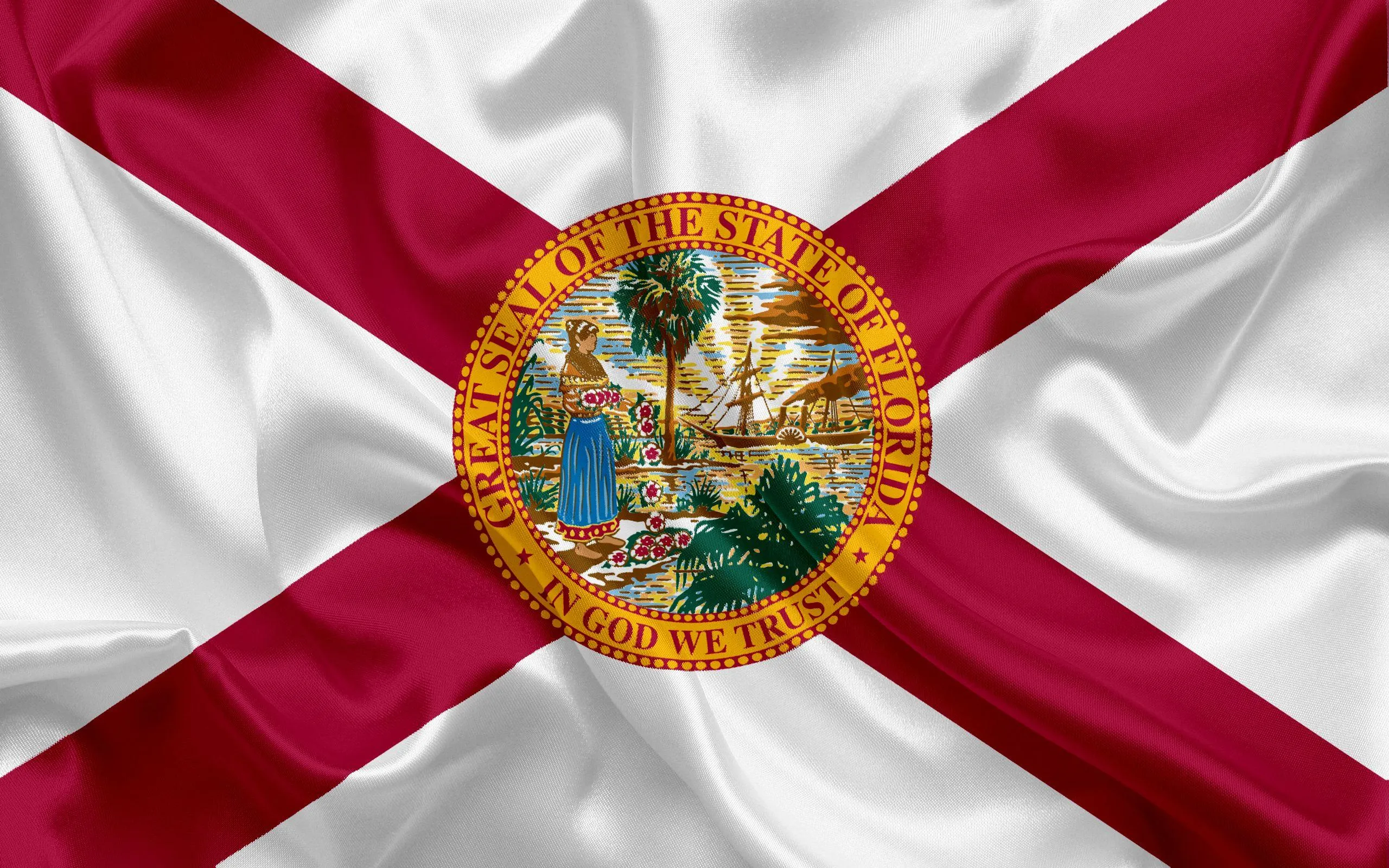
Florida is known as "The Sunshine State," a nickname the legislature adopted in 1970, and its motto is "In God We Trust." Its state bird is the northern mockingbird, its flower is the orange blossom, and its tree is the sabal palm.
Based on the 2020 census, Florida gained a seat and now has 28 in the U.S. House of Representatives, which gives it 30 votes in the Electoral College, the third most of any state.
Sources & Further Reading
Everglades National Park
The Largest Subtropical Wilderness in the United States
About Everglades National Park
Everglades National Park protects the southern end of the Florida peninsula, about 1.5 million acres, the largest subtropical wilderness in the United States and the third-largest national park in the lower 48 states.
The Everglades is not a swamp but a river: a sheet of fresh water up to 60 miles wide and only inches to a few feet deep, moving south from Lake Okeechobee toward Florida Bay at roughly a quarter mile a day over a nearly flat bed of limestone, peat, and marl.
The naturalist Ernest Coe campaigned for the park for two decades, Congress authorized it in 1934, and President Truman dedicated it on December 6, 1947, the same year Marjory Stoneman Douglas published 'The Everglades: River of Grass,' which reframed the region as a living water system rather than worthless swamp.
UNESCO named it a World Heritage Site in 1979 and a Wetland of International Importance in 1987, but it has spent much of the time since on the list of World Heritage sites 'in danger,' its water supply cut and rerouted by 2,000 miles of canals and levees built to drain land for farms and cities.
- Designation
- National Park, UNESCO World Heritage Site, Ramsar Wetland
- Location
- Southern Florida, Miami-Dade and Monroe Counties
- Established
- 1947
- Annual Visitors
- ~1.1 million
Ecosystems of the Everglades
Sawgrass marsh, hundreds of thousands of acres of it, is the landscape most people picture as the Everglades; sawgrass is not a grass but a sedge with saw-toothed edges, rooted in shallow moving water.
From a distance the prairie looks like solid grass, but it is a mosaic of sawgrass stands, open-water sloughs, and raised tree islands, and the pattern is set by differences in ground level of only a few inches.
The base of the whole food web is periphyton, a spongy mat of algae and bacteria that coats the water and plant stems and feeds the invertebrates that in turn feed the fish, wading birds, and alligators.
Alligators dig and maintain deep spots called gator holes that hold water and life through the dry season, making the animal a keystone species the rest of the marsh depends on.
Where the fresh sheet flow meets the tides, the Everglades gives way to one of the largest continuous mangrove forests in the hemisphere, red, black, and white mangroves lacing the coast and the Ten Thousand Islands.
The tangled prop roots are nursery habitat for shrimp, snapper, tarpon, and hundreds of other species that support the commercial and sport fisheries of the Gulf and Florida Bay.
Mangroves also absorb storm surge and store carbon in their waterlogged soils at rates far higher than most forests on dry land.
The mangrove belt is creeping inland as the sea rises and as reduced freshwater flow lets salt push farther up the estuaries, replacing sawgrass with salt-tolerant plants.
Tropical hardwood hammocks rise only inches above the marsh but sit high enough to escape flooding and fire, holding trees found nowhere else in the continental United States: mahogany, gumbo limbo, strangler fig, and wild coffee.
Cypress domes form where a deeper limestone solution hole holds water longer; the biggest trees grow in the wet center and smaller ones ring the edge, giving the stand its rounded profile.
Both features depend on a natural rhythm of wet and dry seasons and of periodic fire; too much or too little water, or fire at the wrong time, turns them into marsh or exotic-plant thicket.
Many hammocks contain Calusa and Seminole archaeological sites and were used as dry-season camps and gardens for centuries.
Florida Bay is a shallow, warm lagoon of about 850 square miles between the mainland and the Keys, most of it inside the park, floored with mudbanks and turtle grass.
Its seagrass meadows and mangrove shores hold the largest breeding population of the American crocodile in the United States, along with manatees, dolphins, sea turtles, and roseate spoonbills.
The bay depends on fresh water bleeding south through the park; decades of diversion made it saltier than the ocean at times, killing seagrass in the 1980s and again in a 2015 die-off that fouled the water for years.
It is the one part of the park most visitors reach by boat, and its flats are a world-famous destination for tarpon, bonefish, and permit fly fishing.
Indigenous Connections
Miccosukee Tribe of Indians of Florida
The Miccosukee descend from Creek-speaking peoples, many of them Mikasuki speakers, who moved into Florida in the 1700s and became known as Seminoles.
During and after the Seminole Wars of 1835 to 1858, a few hundred refused removal and withdrew deep into the Everglades and Big Cypress, living in scattered camps of open-sided palm-thatch chickees and traveling by dugout canoe.
This group stayed apart from the larger Seminole organization and won separate federal recognition as the Miccosukee Tribe of Indians of Florida in 1962.
The Miccosukee Tribe of Indians of Florida is a federally recognized tribe with a reservation along the Tamiami Trail on the northern boundary of Everglades National Park. The tribe operates cultural demonstrations and holds certain rights within the park.
Seminole Tribe of Florida
The Seminole formed in Florida during the 1700s and 1800s from Creek, Mikasuki, and other Native people, together with escaped enslaved Africans who allied with them as Black Seminoles.
The Second Seminole War of 1835 to 1842 was the longest and costliest of the U.S. wars against Native nations, killing about 1,500 American soldiers and costing tens of millions of dollars; the war leader Osceola was seized under a flag of truce in 1837.
Roughly 300 to 500 Seminoles were never removed and never signed a peace treaty, the basis of the tribe's description of itself as the 'Unconquered People'; it gained federal recognition in 1957.
The Seminole Tribe of Florida is one of the most economically successful Native American tribes in the United States, with business operations including Hard Rock International. Their reservation lands include areas in South Florida near the Everglades.
Exploring the Everglades
Anhinga Trail
The Anhinga Trail is a 0.8-mile boardwalk loop at Royal Palm, near the park's main entrance, running out over the Taylor Slough.
In the dry season, roughly December to April, fish and wildlife crowd into the remaining water here, and alligators, anhingas, herons, egrets, and turtles gather within feet of the walkway.
The trail is named for the anhinga, a dark diving bird that lacks waterproofing oil and must perch with its wings spread to dry after fishing.
Royal Palm sits on the site of the 1916 Royal Palm State Park, Florida's first state park, which was folded into the national park and marks where Everglades protection began.
Shark Valley Tram Tour
Shark Valley, on the Tamiami Trail on the park's north side, is a 15-mile paved loop through open sawgrass prairie, done on foot, by rented bike, or on a concessioner tram with a narrating ranger.
The loop follows a road cut in the 1940s for oil exploration; alligators, wading birds, soft-shell turtles, and river otters are visible along it year-round and in huge numbers in the dry season.
At the far point of the loop stands a 65-foot concrete observation tower, built in the 1960s, with a spiral ramp to a view over miles of the river of grass.
Because the water here drains toward the Shark River, the area is a bellwether for restoration: bridging of the Tamiami Trail just to the east is meant to send more clean water south through this basin.
Kayaking the Wilderness Waterway
The Wilderness Waterway is a 99-mile marked route between Flamingo and Everglades City through the mangrove backcountry of the western park, usually a seven- to ten-day trip.
Paddlers camp on 'chickees,' roofed platforms built over the water, and on the rare beaches and shell mounds, most of them left by the Calusa, who built much of the Ten Thousand Islands' high ground from oyster and conch shell.
Tides, wind, and insects govern the trip far more than distance; the mangrove maze has almost no landmarks, and a wrong turn can cost hours.
Shorter loops from the Gulf Coast and Flamingo visitor areas offer a taste of the same country in a half or full day.
Conservation Challenges
Water Diversion and Altered Hydrology
The Central and Southern Florida Project, begun in 1948, laced the region with about 2,000 miles of canals and levees that cut the Everglades off from Lake Okeechobee and sent much of its water to the sea instead of south.
Roughly half the original Everglades was drained for farms and cities, including some 700,000 acres of sugarcane in the Everglades Agricultural Area just south of the lake; wading bird nesting fell by an estimated 90 percent or more.
Congress authorized the Comprehensive Everglades Restoration Plan in 2000, a 30-year, cost-shared effort now expected to exceed $20 billion, to store and clean water and move more of it south.
Visible pieces are in place: 3.5 miles of the Tamiami Trail have been raised on bridges to unblock sheet flow, the Kissimmee River was reconnected to its floodplain in 2021, and a large reservoir south of Lake Okeechobee is under construction.
Invasive Species
Burmese pythons, from pet releases and a breeding facility wrecked by Hurricane Andrew in 1992, have been established in the park since about 2000 and now number in the tens of thousands or more.
A 2012 study found that raccoon, opossum, and bobcat sightings in the core python range had fallen by roughly 90 percent or more, and marsh rabbits had effectively vanished.
Florida pays contractors to hunt pythons year-round and holds an annual public 'Python Challenge'; the largest removed have exceeded 19 feet and 200 pounds, but the population keeps growing.
Pythons are only the worst of it: Brazilian pepper, melaleuca, Old World climbing fern, and a long list of exotic fish and lizards also crowd out native life across the park.
Sea Level Rise and Saltwater Intrusion
Most of the park lies less than three feet above sea level, and water at nearby stations has risen roughly a foot over the past century, with the rate accelerating.
Salt water is pushing inland along the coast and up through the porous limestone, turning freshwater sawgrass marsh into mangrove and salt flat and threatening the Biscayne Aquifer that supplies South Florida's drinking water.
Restoration is partly a defense against this: raising the freshwater level inside the park builds a head of water that slows the intrusion.
Even so, the National Park Service projects that large areas of the southern Everglades will be open water within this century under mid-range sea level scenarios.
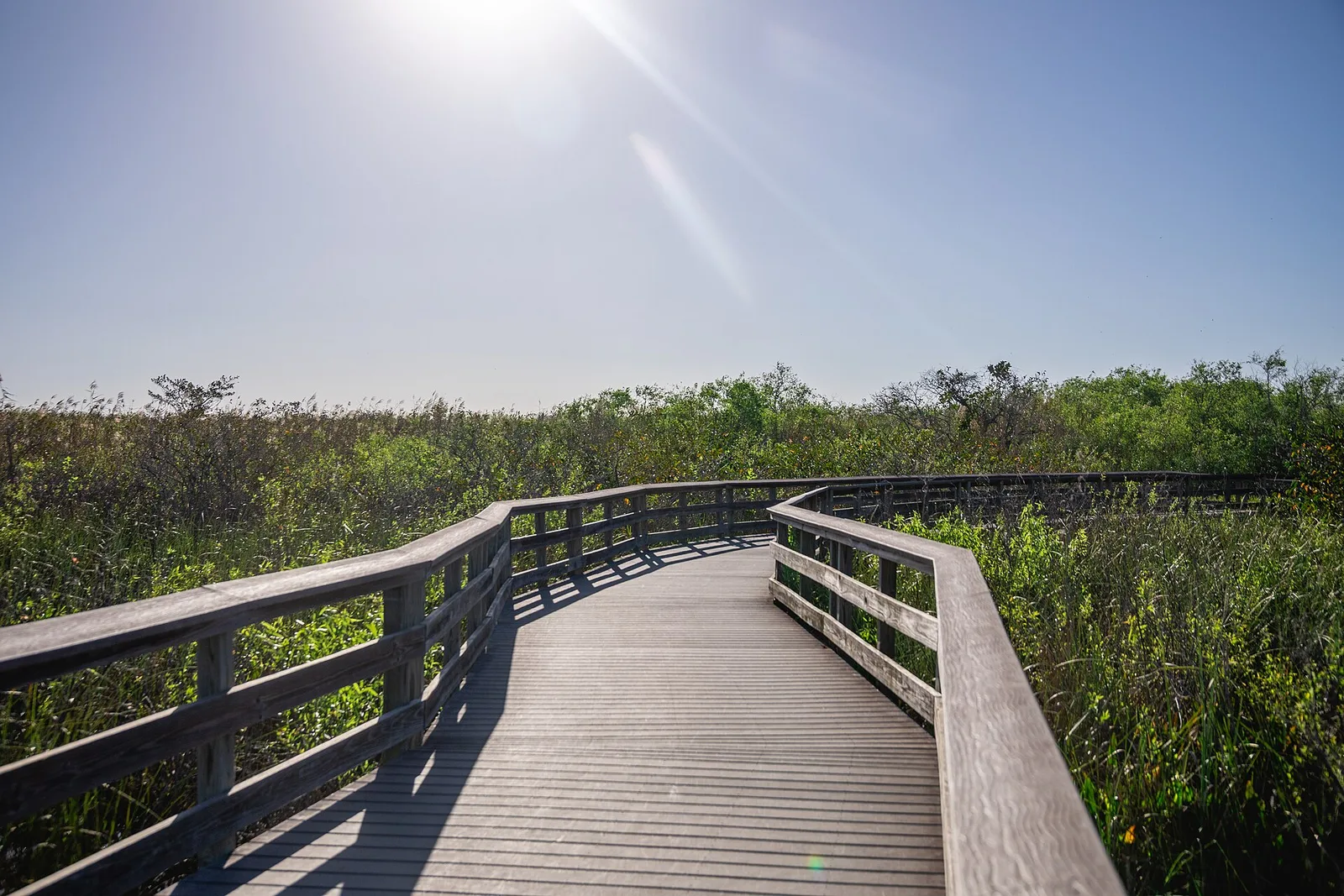
The Anhinga Trail, where wildlife approaches within feet of visitors
At a Glance
Did You Know?
Burmese pythons, released or escaped from the pet trade, have become one of the most devastating invasive species in North American history, eliminating over 90% of small mammal populations in parts of the Everglades.
The Everglades is technically a river, not a swamp. A wide, shallow sheet of water flows southward from Lake Okeechobee at about a quarter mile per day, creating the 'River of Grass' that Marjory Stoneman Douglas described in her landmark 1947 book.
Everglades National Park is the only place in the world where American alligators and American crocodiles naturally coexist. Alligators prefer freshwater, while crocodiles inhabit the saltwater and brackish coastal areas.
The Comprehensive Everglades Restoration Plan, authorized in 2000, is the largest and most expensive ecosystem restoration project in history, with a projected cost exceeding $10 billion over several decades.
Plan Your Visit
Location
Southern Florida, Miami-Dade and Monroe Counties
Designation
National Park, UNESCO World Heritage Site, Ramsar Wetland
Best Time to Visit
December through April (dry season) for best wildlife viewing and comfortable temperatures
Admission
$35 per vehicle (valid 7 days); America the Beautiful Pass accepted