
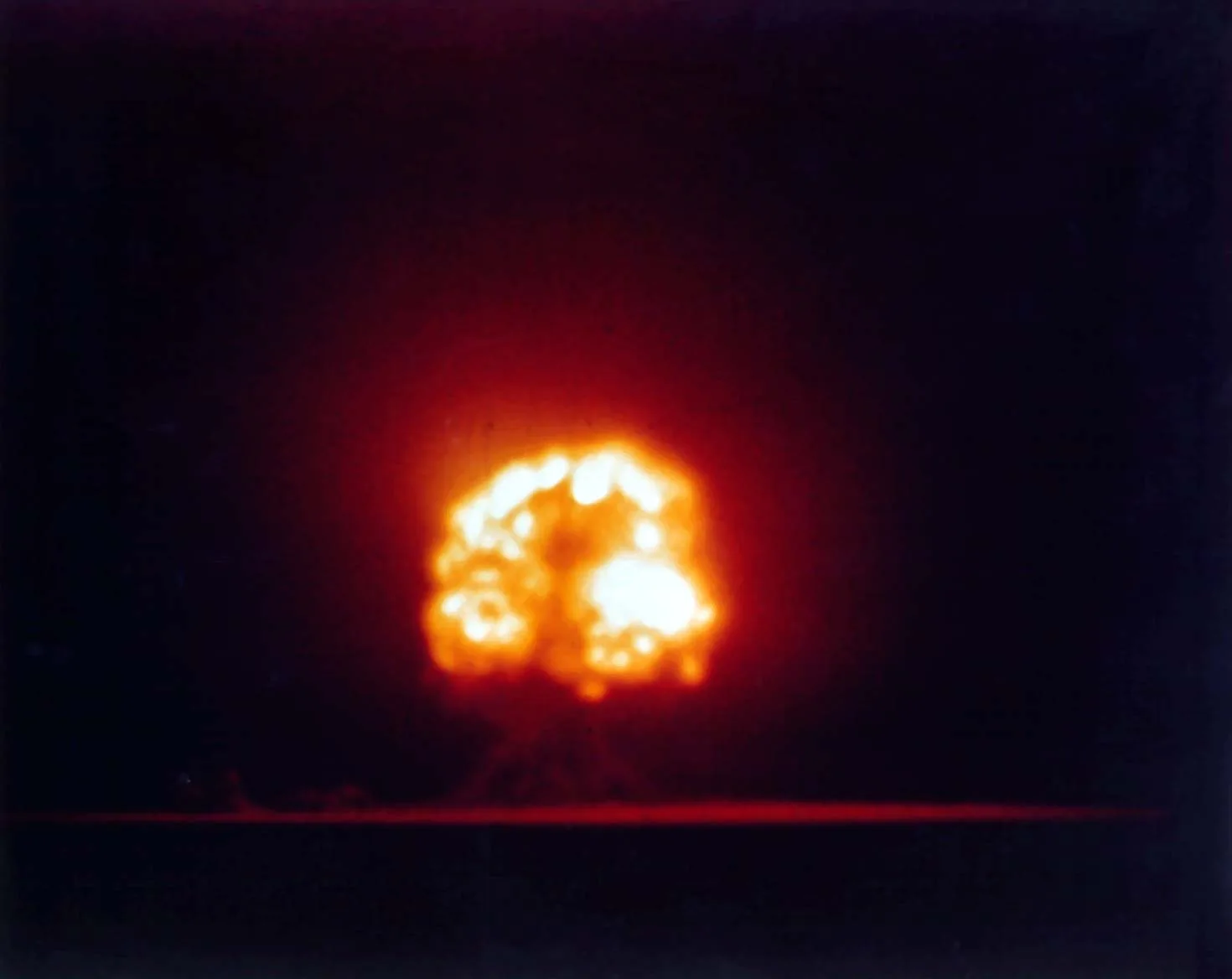
From a Warning Letter to a Multi-Trillion-Dollar Arsenal
It began with a single letter to a president and grew into the largest industrial construction effort in American history, then into a permanent, decades-long feature of national life. What follows is every major milestone in order.
The American nuclear program did not start with a single decision. It grew step by step, from a warning about German research in 1939, to a secret wartime construction project that displaced whole farming communities, to a permanent Cold War arsenal, and eventually to a civilian power industry built on the same underlying science.
What follows is sourced to the Department of Energy's Office of Legacy Management, the National Park Service, the Nuclear Regulatory Commission, the Brookings Institution, and the Federation of American Scientists, tracing every major milestone from the first shovel in the ground to today's stockpile.
Every Milestone, Start to Today
Sources & Further Reading
- The Costs of the Manhattan Project, Brookings Institution
- Atomic Audit: The Costs and Consequences of U.S. Nuclear Weapons Since 1940, Brookings Institution
- Manhattan Project National Historical Park, U.S. National Park Service
- A History of the Energy Research and Development Administration, U.S. Department of Energy, Office of Legacy Management
- Atomic Fission: The Breakup of the Atomic Energy Commission and the Energy Reorganization Act of 1974, U.S. Nuclear Regulatory Commission
- Backgrounder on the Three Mile Island Accident, U.S. Nuclear Regulatory Commission
- Fifty for 150: FBI Raids the Rocky Flats Nuclear Weapons Plant in 1989, Colorado Newsline / States Newsroom
- Projected Costs of U.S. Nuclear Forces, 2023 to 2032, Congressional Budget Office
- DOE Report: Cost to Finish Cleaning Up Hanford Site Could Exceed $589 Billion, American Nuclear Society, Nuclear Newswire
- America's Nuclear Weapons Arsenal 2024, Federation of American Scientists
- FY24 Budget Outlook: National Nuclear Security Administration, American Institute of Physics, FYI
- Radiation Exposure Compensation Act, U.S. Department of Justice, Civil Division
- Lawrence Livermore National Laboratory Achieves Fusion Ignition, Lawrence Livermore National Laboratory
- What Was Learned From Building New Nuclear Reactors?, POWER Magazine
- Sentinel ICBM Cost Grows to Nearly $141 Billion, 81% More Than Originally Forecasted, Stars and Stripes
- How Many Nuclear Power Plants Are in the United States, and Where Are They Located?, U.S. Energy Information Administration
- New START at a Glance, Arms Control Association