About Virginia
Virginia was named in honor of Queen Elizabeth I of England, who was known as the Virgin Queen because she never married and had no heirs. Sir Walter Raleigh, who sponsored the failed Roanoke colony in the 1580s, used the name Virginia for the entire eastern coast of North America claimed by England, as a tribute to Elizabeth's patronage. When the Virginia Company established the first permanent English settlement at Jamestown in 1607, the name Virginia was retained for the colony. Virginia became the most populous and prosperous of the British colonies, producing more tobacco than any other, and gave the new nation four of its first five presidents: Washington, Jefferson, Madison, and Monroe.
Virginia is a state of profound contradictions held in tense coexistence. It is simultaneously the birthplace of American democracy and the place where race-based chattel slavery was first codified in English law. It produced Washington, Jefferson, and Madison, the architects of a republic, and also the generals and politicians of the Confederacy, who nearly destroyed it. It built the Pentagon and fills it with the most powerful military machine in human history, while also hosting Monticello, where a man who wrote that all men are created equal kept 600 of them in bondage.
Geographically, Virginia is split between worlds. Northern Virginia is an extension of metropolitan Washington, dense, wealthy, diverse, and dominated by the federal government and the technology industry. Richmond is a city actively reckoning with its Confederate past while gentrifying at speed. Hampton Roads is a military fortress and the cradle of English American history in the same stretch of coastline. The Shenandoah Valley and Appalachian southwest are rural, agricultural, and increasingly left behind by an economy centered elsewhere.
Politically, Virginia was reliably Republican for most of the twentieth century. In 2008, Barack Obama carried it for the first time since Lyndon Johnson. By the 2010s it had two Democratic senators. By 2019 Democrats held the state legislature. The transformation, driven primarily by the growth of Northern Virginia and a diversifying electorate, is one of the most dramatic political shifts any state has undergone in a generation.
Geography & Five Distinct Regions
Virginia stretches from the Atlantic coast to the Appalachian highlands, encompassing five dramatically different regions with distinct economies, cultures, and histories.
Northern Virginia (NoVA) is the economic powerhouse of the state and one of the wealthiest and most densely populated suburban regions in the country. Arlington, Alexandria, Fairfax County, Loudoun County, and Prince William County together hold more than a third of Virginia's entire population. The region borders Washington D.C. and is home to the Pentagon, Reagan National Airport, and thousands of federal agencies and defense contractors.
In 2018, Amazon announced it would build one of its two second headquarters, HQ2, in National Landing, Arlington, bringing tens of thousands of tech jobs. Loudoun County, known as 'Data Center Alley,' hosts more data centers than any other place on Earth; a significant share of all global internet traffic flows through its server farms every day. Northern Virginia's economy, schools, and demographics are more similar to the D.C. metro than to the rest of Virginia.
Arlington County was part of the original 100-square-mile District of Columbia; Virginia's portion, including Alexandria, was returned to the state in 1846, partly because Alexandria residents feared Congress would abolish the slave trade in the District, which it did in 1850. The county is now one of the most educated jurisdictions in the country, with more than three-quarters of adults holding a bachelor's degree.
Loudoun County's data centers, roughly 25 million square feet of them, use so much power that Dominion Energy has warned of grid strain, and residents have fought new construction near homes and Civil War battlefields. Loudoun was the fastest-growing county in the nation for stretches of the 2000s and 2010s and swung from reliably Republican to solidly Democratic over the same period, a microcosm of the state's shift.
Richmond, the state capital, sits at the fall line of the James River, the point where river navigation from the sea meets the Piedmont Plateau. It is one of the oldest cities in the country and carries the weight of American history more visibly than almost any other place. Richmond served as the capital of the Confederacy during the Civil War, and Monument Avenue, once lined with statues of Confederate generals, became a flashpoint during the 2020 racial justice protests, when most of the monuments were removed.
Today, Richmond is a rapidly gentrifying city with a vibrant arts and restaurant scene, major universities (VCU, University of Richmond), and a growing tech sector. Charlottesville, home to the University of Virginia, is nearby. The metro is surrounded by Henrico and Chesterfield counties, which have grown enormously from suburban development.
Richmond's Shockoe Bottom was the second-largest slave-trading market in the country after New Orleans; an estimated 300,000 to 500,000 people were sold there in the decades before the Civil War, and a long-delayed memorial and museum on the site broke ground in the 2020s. When Confederate troops evacuated the city in April 1865, they set fire to warehouses and the blaze destroyed much of the business district.
The last Monument Avenue statue, a 21-foot bronze of Robert E. Lee that had stood since 1890, was removed by the state in September 2021 after a court fight, and its graffiti-covered pedestal was cut apart the next year. Richmond's economy now leans on Capital One, headquartered in the western suburbs and one of the region's largest employers, along with VCU's medical center, state government, and a fast-growing craft-brewing scene.
The Blue Ridge Mountains run the length of western Virginia, reaching their highest point at Mount Rogers (5,729 feet). Shenandoah National Park, with its famous Skyline Drive, offers some of the most scenic driving in the Eastern United States. The Appalachian Trail traces the Blue Ridge crest for over 500 miles through Virginia, more miles of trail than any other state.
The Shenandoah Valley, between the Blue Ridge and the Allegheny Mountains, is one of the most fertile agricultural regions in the East. During the Civil War it was called 'The Breadbasket of the Confederacy' and was the theater of Stonewall Jackson's brilliant 1862 Valley Campaign.
Today the valley is home to poultry farming, Virginia is a top-ten poultry producer, and a booming wine industry with over 400 wineries concentrated around Charlottesville and the Blue Ridge foothills. Harrisonburg is home to James Madison University; Staunton to the American Shakespeare Center.
The valley was a natural invasion route in the Civil War. After Jackson's 1862 campaign, Union General Philip Sheridan carried out 'The Burning' in the autumn of 1864, systematically destroying barns, mills, and crops to deny the Confederacy the valley's food, a scorched-earth campaign that foreshadowed Sherman's march. The Great Wagon Road down the valley in the 1700s had carried tens of thousands of German and Scots-Irish settlers south from Pennsylvania, which is why valley culture and building styles still differ from the Tidewater's English planter world.
Southwestern Virginia, wedged between Kentucky, West Virginia, Tennessee, and North Carolina, is one of the most economically distressed regions in the Commonwealth. The coalfields of Wise, Buchanan, and Dickenson counties once drove Virginia's industrial economy, but coal production has collapsed over the past two decades. Poverty, opioid addiction, and outmigration have hit hard.
The region is also one of the most scenic, the Blue Ridge Parkway winds through the highlands, and Virginia's section of the Appalachian Plateau contains dramatic gorges and ridgelines. Virginia Tech in Blacksburg is the region's largest institution and a growing research and technology hub. Southside Virginia, the tobacco belt between Richmond and North Carolina, has similarly struggled with the decline of tobacco farming, though new industries in craft beer, cannabis, and manufacturing are slowly diversifying the economy.
Southwest Virginia's coal counties produced more than 46 million tons a year at the 1990s peak; output has since fallen by roughly three-quarters, and Buchanan and Dickenson counties have each lost around a fifth of their population since 2000. The region has some of the highest rates of opioid overdose death in the country, and Purdue Pharma's aggressive marketing of OxyContin in the late 1990s was concentrated in far southwest Virginia and neighboring Appalachia.
The Crooked Road, a 300-mile driving trail linking old-time and bluegrass music venues from the Blue Ridge to the Cumberland Gap, and the Birthplace of Country Music Museum in Bristol, where the 1927 'Bristol Sessions' first recorded the Carter Family and Jimmie Rodgers, have turned the region's musical heritage into a tourism draw. Danville, on the Southside tobacco belt, has converted riverfront textile mills into a research campus and, since 2020, a casino, part of a slow economic pivot.

Economy
Virginia's economy is shaped by its proximity to Washington D.C., federal spending, defense contracting, and technology dominate in the north, while agriculture, tourism, and the military define other regions.
The federal government and its contractor ecosystem are the dominant economic force in Virginia. The Pentagon, for decades the world's largest office building by floor space, sits in Arlington. Within a 50-mile radius are the CIA headquarters in Langley, the National Reconnaissance Office in Chantilly, the Defense Intelligence Agency at Bolling, the National Geospatial-Intelligence Agency in Springfield, and dozens of other intelligence and defense agencies.
Booz Allen Hamilton, SAIC, Leidos, MITRE, General Dynamics IT, DXC Technology, and hundreds of smaller firms form a defense contracting ecosystem that employs hundreds of thousands. When the federal government increases defense or intelligence spending, Northern Virginia's economy booms. The region's dependence on federal contracts is a structural feature, and a structural vulnerability.
Roughly 300,000 federal civilian employees work in Virginia, more than any state but California, and federal spending on wages, contracts, and benefits has historically made up a bit under a third of the state's economy, the highest dependence of any state. That reliance makes government shutdowns and budget 'sequestration,' as in 2013, hit Virginia harder than anywhere else.
Fairfax County is home to more than 10 Fortune 500 headquarters, including General Dynamics, Northrop Grumman, and Freddie Mac, and Tysons, an 'edge city' that grew from a rural crossroads into one of the largest office markets in the country, got its own Metrorail line in 2014. Virginia has courted contractors and consultancies with a low corporate tax rate and a workforce full of active security clearances.
In 2018, Amazon selected National Landing in Arlington as one of its two HQ2 sites, eventually committing to tens of thousands of jobs. The announcement accelerated an already rapid tech buildup in Northern Virginia. The Dulles Technology Corridor along Route 28 in Loudoun and Fairfax counties hosts dozens of major technology firms.
Most significantly, Loudoun County, nicknamed 'Data Center Alley', hosts the world's largest concentration of data centers. Because of its proximity to the internet's core infrastructure (MAE-East in Tysons Corner was one of the original internet exchange points), low electricity costs, and favorable zoning, Loudoun and the surrounding region now carry an estimated 70% of the world's internet traffic. AWS, Microsoft Azure, Google Cloud, and nearly every major cloud provider has massive server infrastructure in Northern Virginia.
The cluster began with the internet's own plumbing: MAE-East, one of the first places where competing networks exchanged traffic, was set up in a Tysons Corner parking garage around 1992, and carrier-neutral hubs grew nearby. Loudoun County now draws a large share of its budget from data-center property and equipment taxes, which has let it hold down residential rates while tying its finances to the industry.
The buildout's costs have become a live political issue. Data centers are projected to roughly double Virginia's total electricity demand within about 15 years, Dominion Energy is planning new gas plants and transmission lines to serve them, and a 2024 state legislative study recommended new rules so that ordinary ratepayers do not subsidize the load. Amazon's HQ2 opened its first phase, the 'Met Park' towers, in 2023, though the company paused the more elaborate 'Helix' tower amid tech-industry layoffs.
Virginia's military footprint is staggering. Naval Station Norfolk, in the city of Norfolk, is the world's largest naval base, homeport to dozens of aircraft carriers, destroyers, submarines, and support vessels. Newport News Shipbuilding (now Huntington Ingalls Industries) in Newport News is one of only two shipyards in the United States capable of building nuclear-powered aircraft carriers and is also the primary builder of Virginia-class nuclear submarines.
Other major installations include Quantico Marine Corps Base (home of the FBI Academy and Marine Officer Candidates School), Langley Air Force Base, Fort Lee (named Fort Gregg-Adams from 2023 to 2025), and the Navy's Dam Neck and Little Creek facilities. The military is Hampton Roads' largest employer and the dominant economic and cultural force in the region.
Newport News Shipbuilding, founded in 1886, is Virginia's largest industrial employer with about 25,000 workers, and it is the only U.S. yard that builds aircraft carriers and one of two that build submarines; a single Ford-class carrier costs roughly 13 billion dollars. Its long-term backlog and the Navy's submarine expansion have made shipyard-worker recruitment a regional economic priority.
Hampton Roads has about 80,000 active-duty personnel plus hundreds of thousands of veterans and dependents, and defense spending is close to 40% of the regional economy. That concentration is also a strategic risk, and it has driven investment in resilience: the Navy has spent heavily on sea walls and raised infrastructure at Norfolk as tidal flooding worsens.
Virginia's agricultural economy has transformed dramatically from its tobacco origins. The state now has over 400 wineries, second only to California, concentrated in the Charlottesville area, the Shenandoah Valley, and the Northern Neck. Thomas Jefferson planted the first European grape varieties at Monticello, and the state's Viognier and Cabernet Franc have gained international recognition.
Virginia is also a major poultry producer, with the Shenandoah Valley's processing facilities supplying national brands. Chesapeake Bay seafood, blue crabs, oysters, and rockfish, remains economically and culturally significant, though Bay pollution and overfishing have stressed the industry for decades. The state also produces significant quantities of corn, soybeans, wheat, and cattle.
Tobacco was Virginia's defining crop for nearly 400 years, from Jamestown into the 20th century, but a 2004 federal buyout ended the quota system and acreage collapsed. A 1980s 'farm winery' law that let vineyards sell directly to visitors is credited with seeding today's roughly 300 to 400 wineries, making Virginia the fifth- or sixth-largest wine state.
Poultry, mostly turkeys and broilers processed in the Shenandoah Valley, is the top agricultural commodity by value, and it is also a major source of nutrient runoff into the Chesapeake Bay. Virginia is part of a multistate, EPA-enforced Bay cleanup plan with binding pollution limits, and the oyster harvest, which had crashed to near nothing by 1990, has partly rebounded through aquaculture and reef restoration.
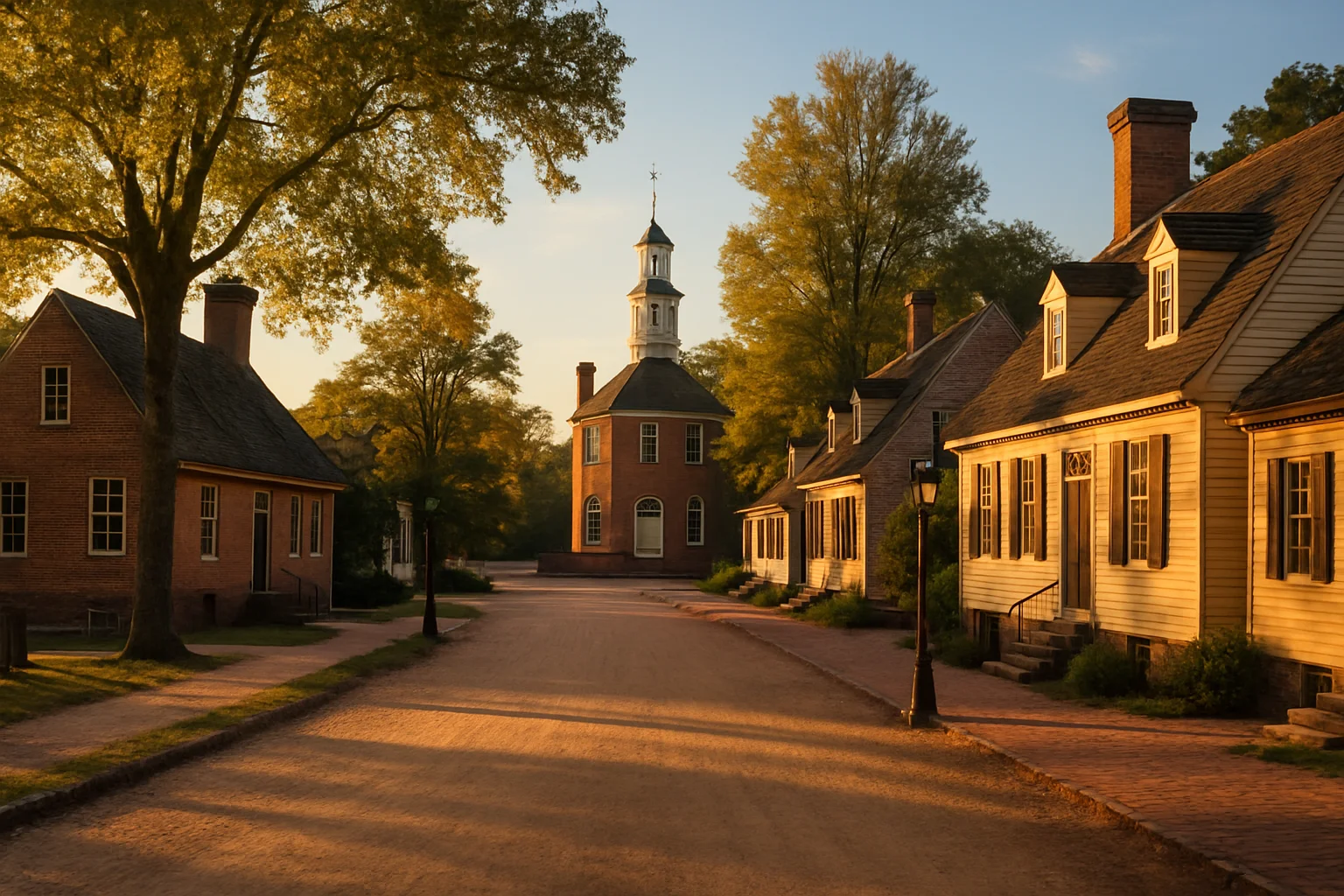
Virginia's history is its most powerful tourism asset. The 'Historic Triangle' of Jamestown, Colonial Williamsburg, and Yorktown draws millions of visitors to the Tidewater region. Colonial Williamsburg, a private foundation managing a 301-acre reconstructed colonial city, is one of the most ambitious historical preservation projects in the world.
Thomas Jefferson's Monticello near Charlottesville and George Washington's Mount Vernon near Alexandria each draw over a million visitors a year. Virginia has more Civil War battlefield sites than any other state; Fredericksburg, Chancellorsville, the Wilderness, Spotsylvania, Cold Harbor, and Petersburg all lie within a 90-mile corridor. Shenandoah National Park, Virginia Beach, and the Blue Ridge Parkway add natural tourism to the mix.
Colonial Williamsburg was funded almost entirely by John D. Rockefeller Jr. beginning in 1926, who bought and restored hundreds of buildings; the foundation ran into financial trouble in the 2010s and cut staff and hours. The Historic Triangle is linked by the Colonial Parkway, a 23-mile scenic road the National Park Service built with no commercial signage or modern development in view.
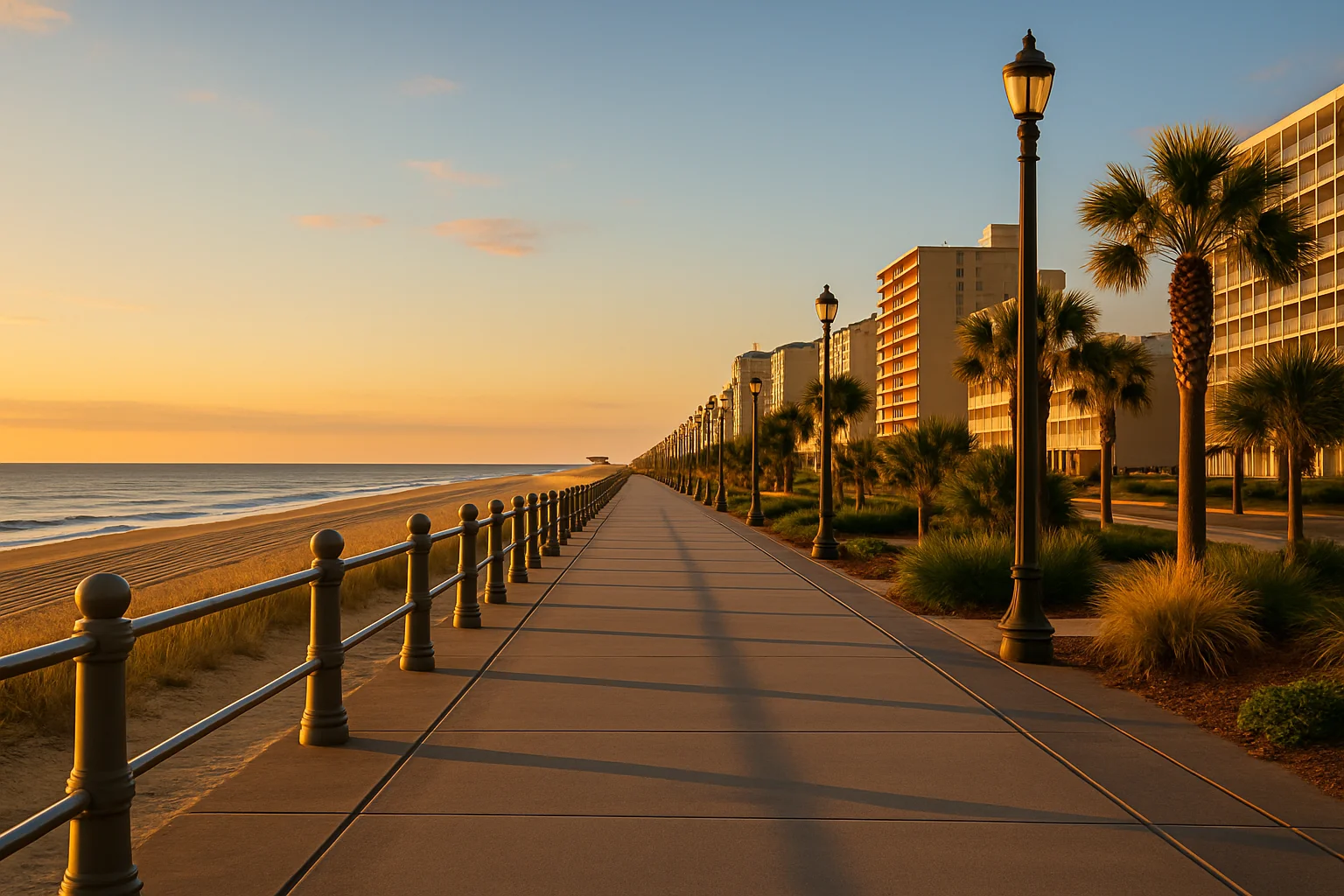
Virginia's 'Virginia is for Lovers' slogan, created in 1969, is one of the longest-running and most recognized tourism campaigns in the country. Beyond history, Virginia Beach's oceanfront is the state's single biggest leisure destination, the Chincoteague ponies on the Eastern Shore draw crowds to an annual swim, and Skyline Drive and the Blue Ridge Parkway carry millions of scenic-drive visitors a year.
How Virginia's State Government Works
Virginia is formally a Commonwealth, one of four U.S. states to use that designation (along with Kentucky, Massachusetts, and Pennsylvania). The designation has no legal significance today but reflects Virginia's origins as a royally chartered English colony governed for the common good of its citizens. Virginia operates under a constitution most recently revised in 1971.
Virginia's governor is limited to a single consecutive term, the only state with that restriction (New Jersey, which shares Virginia's odd-year election calendar, allows two consecutive terms). This has significant consequences: incoming governors begin campaigning for their successors almost immediately, and the state holds off-year elections (the year after every presidential election) that often serve as a national political barometer. A governor can run again after sitting out one term; Terry McAuliffe and Mark Warner both came back in later years.
Virginia's political trajectory has changed dramatically over the past two decades. The state was reliably Republican through the 1990s, then shifted to a battleground, and by the late 2010s had become reliably Democratic in statewide elections, driven by the explosive growth of Northern Virginia's diverse, educated, and often federal-government-employed population.
Governor of Virginia
Current Governor
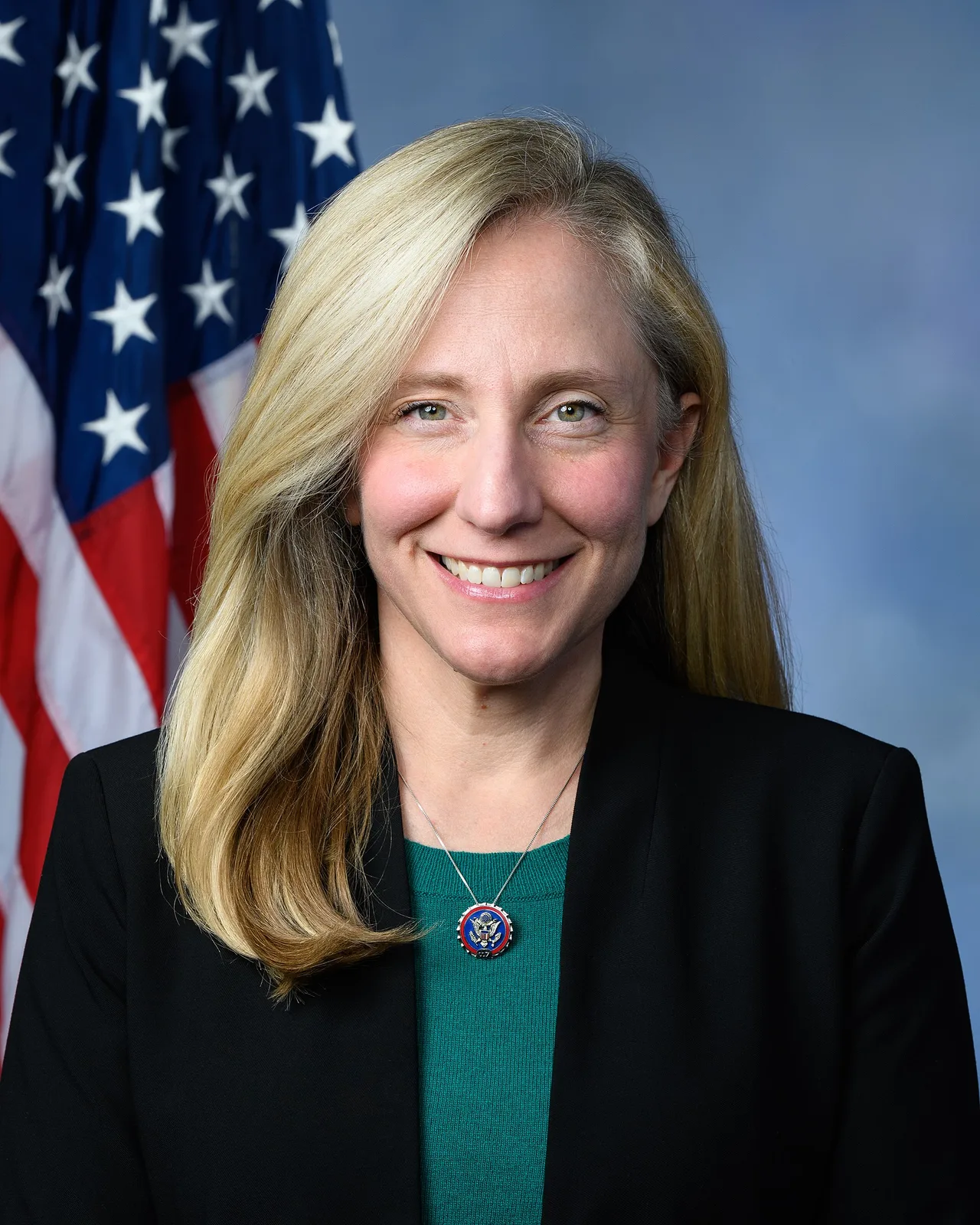
Abigail Spanberger
- Party
- Democratic
- In Office Since
- January 2026
- Term Ends
- January 2030
- Elected
- November 2025
- Prior Role
- U.S. Representative (VA-7 / VA-5, 2019-2025)
- Background
- Former CIA case officer; federal legislator
Abigail Spanberger won the 2025 Virginia gubernatorial election, defeating Republican nominee Winsome Earle-Sears. A former CIA case officer who served four terms in Congress, Spanberger built a national profile as a centrist Democrat focused on public safety, healthcare, and bipartisan dealmaking. Virginia's single consecutive term limit means she cannot seek re-election in 2029.
Other Current State Officials
Lieutenant Governor
Ghazala Hashmi
Elected on the 2025 Democratic ticket alongside Governor Spanberger. Took office January 2026. Virginia's Lt. Governor also serves as President of the State Senate.
Attorney General
Jay Jones
Elected in November 2025. The AG serves as the chief legal officer of the Commonwealth, representing the state in federal and state courts and issuing legal opinions to state agencies.
State Treasurer
David L. Richardson
Appointed by Governor Youngkin in 2022 and reappointed by Governor Spanberger in January 2026; Virginia's treasurer is appointed by the governor, subject to confirmation by the General Assembly. The State Treasurer manages Virginia's cash management, investments, and debt financing. Virginia's treasury manages one of the most complex state financial portfolios in the country.
* Official information as of early 2026. Always verify current officeholders at virginia.gov.
The Virginia General Assembly
Virginia State Senate
- Seats: 40 members
- Terms: 4-year terms
The upper chamber. Senators serve 4-year staggered terms. The Senate is presided over by the Lt. Governor, who also casts tie-breaking votes. Democrats regained a Senate majority in the 2019 elections, the first in decades.
Virginia House of Delegates
- Seats: 100 members
- Terms: 2-year terms
The lower chamber. All 100 seats are on the ballot every two years, making it highly responsive to shifting political winds. Democrats flipped the House in 2019 after Republicans had held it for nearly two decades. The chamber has seen close, competitive majorities ever since.
Virginia's U.S. Senators
Every state gets exactly two U.S. Senators, regardless of population. Virginia's senators serve 6-year terms and represent the entire state.
U.S. Senator
Mark Warner
One of the most prominent Democratic senators, Mark Warner brought a business background to the Senate after serving as Virginia's governor (2002-2006). A former telecommunications entrepreneur who made his fortune through early cellular phone company investments, Warner is known for his work on intelligence oversight (he served as Vice Chairman of the Senate Intelligence Committee), financial regulation, and technology policy. He was a key figure in the Senate's investigation into Russian interference in the 2016 election. Warner is widely considered a centrist Democrat with strong bipartisan credentials, a product of the moderate wing of the party that Virginia politics has historically rewarded. He won re-election in 2020.
U.S. Senator
Tim Kaine
Tim Kaine, a former mayor of Richmond, Virginia's governor (2006-2010), and chairman of the Democratic National Committee, was Hillary Clinton's vice-presidential running mate in 2016. Known for his Jesuit faith, fluency in Spanish, and reputation for earnest decency, Kaine has focused his Senate career on foreign policy (he served on the Armed Services and Foreign Relations committees), veterans' affairs, and the War Powers Act, he has been the most persistent Senate advocate for reasserting Congressional authority over declarations of war. Kaine won re-election in 2024 in what was considered a competitive race. He plays harmonica, a fact that has received perhaps disproportionate attention in his political coverage.
Virginia Through the Years
From early settlement to the present day. Tap any era to read more.
Long before European contact, the Chesapeake Bay region was home to Chief Wahunsenacah, known to English settlers as Powhatan, who had built a powerful confederacy of roughly 30 Algonquian-speaking tribes called Tsenacommacah. The confederacy controlled most of what is now eastern Virginia, with an estimated 14,000 to 21,000 people living in towns along the rivers and bay. Powhatan's daughter, Amonute, known to history as Pocahontas, would become the most famous Native American woman in American legend.
The confederacy's agriculture, governance, and diplomacy were sophisticated; they had navigated centuries of intertribal politics before the English arrived. Within fifty years of Jamestown's founding, epidemic disease and colonial violence had reduced the confederacy to a fraction of its former power.
Powhatan ruled from Werowocomoco on the York River and collected tribute in corn, copper, and shell beads from the tribes under him; the confederacy fought three wars with the English, in 1610-1614, 1622, and 1644, the second opening with a coordinated surprise attack in March 1622 that killed about a third of the colonists. The 1646 treaty after the third war made the surviving tribes tributaries of the colony and set some of the first reservation-style boundaries in English America.
Two Virginia tribes, the Pamunkey and the Mattaponi, still hold small reservations on their namesake rivers that date to the 1600s, the oldest in the country, and present a symbolic annual tribute of game to the governor each fall. Seven Virginia tribes finally won federal recognition through an act of Congress in 2018, after decades of denials rooted in part in the state's 1924 Racial Integrity Act, which had erased 'Indian' as a legal category on birth records.
On May 14, 1607, 104 English settlers landed at a marshy peninsula on the James River and established Jamestown, the first permanent English settlement in the Americas. The early years were catastrophic. The site was mosquito-infested, the water brackish, and the settlers ill-suited for survival. During the 'Starving Time' of 1609-10, over 400 of the 500 colonists died, the survivors reportedly resorted to cannibalism.
The colony survived only through the diplomacy of Captain John Smith, the food supplied by the Powhatan people, and the transformative introduction of tobacco. In 1612, colonist John Rolfe successfully cultivated a mild Caribbean tobacco strain that could be commercially exported. Virginia tobacco became the economic foundation of English colonization in North America. Rolfe also married Pocahontas in 1614, creating a fragile peace between the English and the Powhatan, one that would not last.
Jamestown was a business venture: the Virginia Company of London, a joint-stock company, funded it expecting gold and a passage to Asia, and when neither appeared the investors nearly gave up. The colony was saved by tobacco and by the 1618 'headright' system, which granted 50 acres of land to anyone who paid a person's passage, creating both a land rush and a demand for indentured and, later, enslaved labor.
The Virginia Company lost its charter in 1624 after the 1622 war and years of high mortality, and Virginia became a royal colony. Jamestown burned during Bacon's Rebellion in 1676, an armed uprising of frontier settlers and servants against the royal governor, and the capital moved to Williamsburg in 1699, after which Jamestown was largely abandoned and later partly eroded into the river.
The year 1619 holds two events that together defined American civilization for centuries. On July 30, the Virginia House of Burgesses held its first meeting at Jamestown church, the first elected representative legislature in the Americas, a direct precursor to the democratic tradition that would produce the Declaration of Independence and the U.S. Constitution. Then, in late August, a ship carrying 'twenty and odd' Africans, captured from a Portuguese slave ship, arrived at Point Comfort.
These were the first Africans in English North America. Within decades, Virginia would enshrine slavery in law, creating a race-based chattel system that would last for 246 years and shape every aspect of American life. The same colony produced both constitutional democracy and race-based slavery, and America has been grappling with that contradiction ever since.
The captives who landed at Point Comfort in 1619 had been seized by English privateers from a Portuguese ship carrying people from the kingdom of Ndongo in present-day Angola; a few, including a woman recorded in colonial records as 'Angela,' can be traced afterward. Their exact status, enslaved or indentured, is debated, but Virginia law hardened over the following decades into hereditary, lifelong slavery.
That code was built piecemeal: a 1662 law tied a child's status to the mother's, a 1667 law said baptism did not bring freedom, and a comprehensive 1705 act defined enslaved people as real property and stripped free Black Virginians of the vote and the right to hold office. The New York Times '1619 Project' in 2019 revived a national argument over how central that year, and slavery, are to the story of the American founding.
Virginia was the heart of the American Revolution. Patrick Henry's 'Give me liberty, or give me death!' speech in Richmond in March 1775 galvanized colonial resistance. Thomas Jefferson, a Virginia planter, wrote the Declaration of Independence in Philadelphia in 1776, a document whose ideals of equality were in direct, agonizing tension with his own ownership of more than 600 enslaved people.
Virginia contributed more men, material, and political leadership to the Revolution than any other colony. The war ended in Virginia: on October 19, 1781, British General Cornwallis surrendered to General Washington at Yorktown, the decisive military victory that effectively ended the Revolutionary War. Eight of the first twelve presidents were Virginians, earning the state the nickname 'Mother of Presidents.'
Virginia's 1776 Declaration of Rights, written mainly by George Mason, guaranteed jury trials, a free press, and the free exercise of religion, and it was the direct model for the U.S. Bill of Rights and for parts of the Declaration of Independence. Jefferson's 1786 Virginia Statute for Religious Freedom, which he ranked among his three proudest achievements, ended tax support for the established church and became the template for the First Amendment's religion clauses.
The Yorktown victory depended on a French fleet under Admiral de Grasse, which beat back the British Navy at the Battle of the Chesapeake in September 1781, sealing Cornwallis's army against the York River while Washington and Rochambeau marched south from New York. Four of the first five presidents were Virginians, and the state also produced Chief Justice John Marshall, who over 34 years established the Supreme Court's power to strike down laws.
Virginia's secession in April 1861, voted on only after Lincoln called for troops following the attack on Fort Sumter, was the pivotal event that made the Civil War a true war. Virginia was the most populous and economically powerful Southern state, and its secession brought Robert E. Lee, the most capable military leader of his generation, to the Confederate cause. Richmond became the Confederate capital. The majority of the war's eastern theater, the Wilderness, Fredericksburg, Chancellorsville, Cold Harbor, Petersburg, was fought on Virginia soil, leaving it devastated.
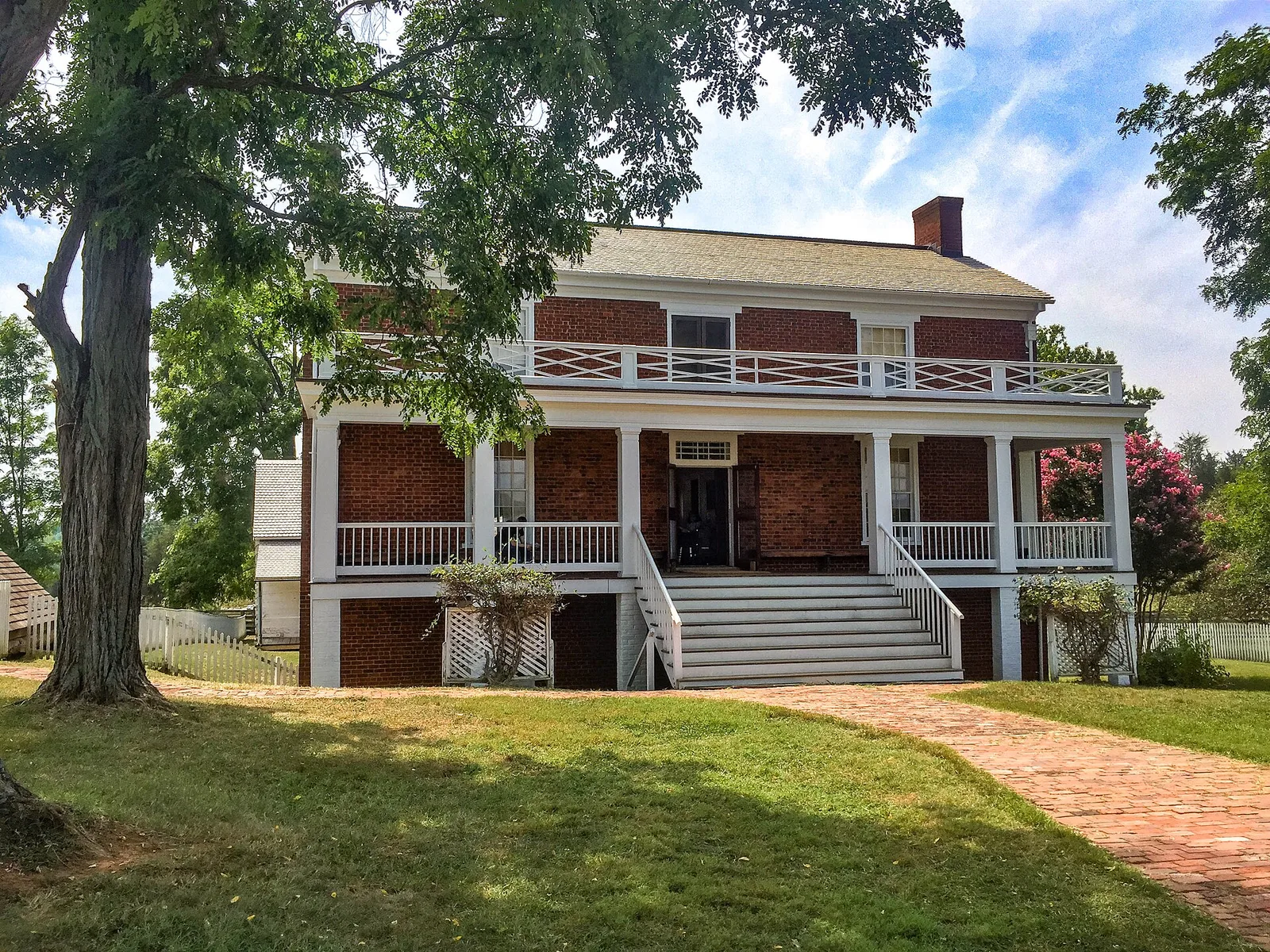
More than 60,000 Virginians died in the war. Lee surrendered to Grant at Appomattox Court House on April 9, 1865. Reconstruction was slow and contested; Virginia was the last Confederate state readmitted to the Union, in January 1870.
Richmond was chosen as the Confederate capital partly to bind Virginia to the cause, and it became the South's main industrial center: the Tredegar Iron Works there made most of the Confederacy's heavy artillery. The seven-mile trench line around Petersburg, just south of Richmond, was besieged for nearly ten months in 1864 and 1865, one of the longest sieges in American history and an early example of trench warfare.
West Virginia split off in 1863 when the state's northwestern counties, which had voted against secession, formed their own government and were admitted as a separate Union state. After the war, Virginia's 1902 constitution imposed poll taxes and literacy tests that cut the electorate roughly in half and disenfranchised nearly all Black Virginians and many poor whites, a system that stood until federal courts and the 24th Amendment dismantled it in the 1960s.
Virginia's response to the Supreme Court's Brown v. Board of Education ruling (1954) was 'Massive Resistance', a state-level campaign to defy federal school desegregation through legislative obstruction and, ultimately, school closures. Led by Governor Thomas Stanley and U.S. Senator Harry F. Byrd Sr. (who coined the term), the state passed laws cutting off funding to any school district that integrated. In 1958-59, several school districts, including Prince Edward County, shut down all public schools rather than admit Black students. In Prince Edward County, public schools remained closed for five full years (1959-1964).
White students attended private academies funded by the state; Black students had no schools at all. The Supreme Court struck down the closures in 1964. Massive Resistance stands as one of the most extreme examples of state defiance of federal civil rights law in American history.
The architect was the 'Byrd Organization,' a Democratic political machine run by Senator Harry Byrd that dominated Virginia for roughly 40 years through a tiny electorate kept small by the poll tax. When federal courts began ordering specific schools to integrate in 1958, Governor J. Lindsay Almond closed schools in Norfolk, Charlottesville, and Front Royal, locking out about 13,000 students, until state and federal courts struck the closure laws down in January 1959.
Prince Edward County held out longest, shutting its entire public school system from 1959 to 1964 rather than integrate; a private academy served white students on state tuition grants while roughly 1,700 Black children went years without formal schooling, a group later called the 'lost generation.' The Supreme Court finally ordered the county to reopen and fund integrated schools in Griffin v. County School Board (1964).
In November 1989, Douglas Wilder of Richmond was elected governor of Virginia, becoming the first African American governor ever elected in the United States. The grandson of slaves, Wilder won a state that had been a seat of the Confederacy barely 125 years earlier. His election marked a tectonic shift in Virginia politics. Over the following two decades, Virginia transformed from a reliably Republican state to a battleground and then to a Democratic-leaning state in presidential elections.
Barack Obama won Virginia in 2008, the first Democratic presidential candidate to do so since Lyndon Johnson in 1964. The transformation was driven by the explosive growth of Northern Virginia and an increasingly diverse electorate. By the 2010s, both U.S. Senate seats and the governorship had flipped to Democrats. Virginia's political evolution is one of the most dramatic in any state over the past 40 years.
Wilder, a decorated Korean War veteran and trial lawyer, had already broken barriers as the first Black member of the Virginia Senate since Reconstruction in 1969 and as lieutenant governor in 1985. His 1989 win, by fewer than 7,000 votes out of nearly 1.8 million, was close enough to require a recount, and pre-election polls had badly overstated his margin, an early case of what analysts came to call a race-of-candidate polling effect.
The state's shift accelerated after 2000: Virginia backed Republicans for president in every election from 1968 through 2004, then went Democratic in 2008 and every presidential race since, elected two Democratic U.S. senators, and by 2019 gave Democrats full control of the legislature for the first time in a generation. In 2021 Republican Glenn Youngkin won the governorship, showing the state remains genuinely competitive rather than solidly blue.
Virginia's Defining Moments in American History
These are the events that didn't just shape Virginia, they changed the nation.
No state has produced more U.S. presidents than Virginia. Eight were born there: George Washington (Westmoreland County), Thomas Jefferson (Albemarle County), James Madison (Port Conway), James Monroe (Westmoreland County), William Henry Harrison (Charles City County), John Tyler (Charles City County), Zachary Taylor (Orange County), and Woodrow Wilson (Staunton). Four of the first five presidents were Virginians, and Virginians held the office for 32 of the country's first 36 years.
Washington and Jefferson alone redefined what American leadership could be. Their homes, Mount Vernon and Monticello, are among the most visited historic sites in the country, drawing more than a million visitors each year and forcing an honest accounting of the contradiction between their democratic ideals and their enslavement of hundreds of people.
Madison, often called the 'Father of the Constitution,' drafted the Virginia Plan that framed the 1787 convention and co-wrote the Federalist Papers, and Monroe's presidency gave its name to the Monroe Doctrine. The 'Virginia dynasty' broke with the rise of Andrew Jackson, and no Virginian has been elected president since Wilson in 1912, though John Tyler and both Harrisons remain on the list.
The state's early dominance rested on a planter elite whose wealth and leisure for politics came from enslaved labor; Washington, Jefferson, Madison, and Monroe together held well over a thousand people in bondage across their lifetimes. Research at Monticello and Mount Vernon in recent decades, including DNA evidence linking Jefferson's line to the enslaved Sally Hemings, has reshaped how both sites present their founders.
On September 11, 2001, American Airlines Flight 77 was hijacked and flown into the west face of the Pentagon in Arlington, Virginia, at 9:37 a.m., 34 minutes after the second World Trade Center tower was struck. 125 people inside the Pentagon were killed, along with all 64 aboard the aircraft. The Pentagon attack is often overshadowed in national memory by the World Trade Center collapse, but it was an assault on the headquarters of the United States military, a strike at the very symbol of American military power, visible from the Capitol.
The Pentagon Memorial, opened in 2008 on the Arlington grounds, contains 184 illuminated memorial units, one for each victim, arranged by their age and the direction they were facing when the plane hit.
Flight 77 struck the one wedge of the building that had just been renovated with blast-resistant windows, reinforced steel, and fire sprinklers, which is credited with holding down the death toll and buying time to evacuate before that section of the outer ring collapsed about half an hour later. Repairs to the damaged section were finished within a year, and workers set a scorched limestone block and a small indoor chapel at the point of impact.
The 184 dead included 55 military personnel and 70 civilians inside the building, among them Army budget staff and Defense Intelligence Agency analysts, along with the 59 passengers and crew and five hijackers aboard the plane. The memorial's benches point two ways: those for people killed in the building face the Pentagon, and those for people killed on the plane face the sky along its flight path.
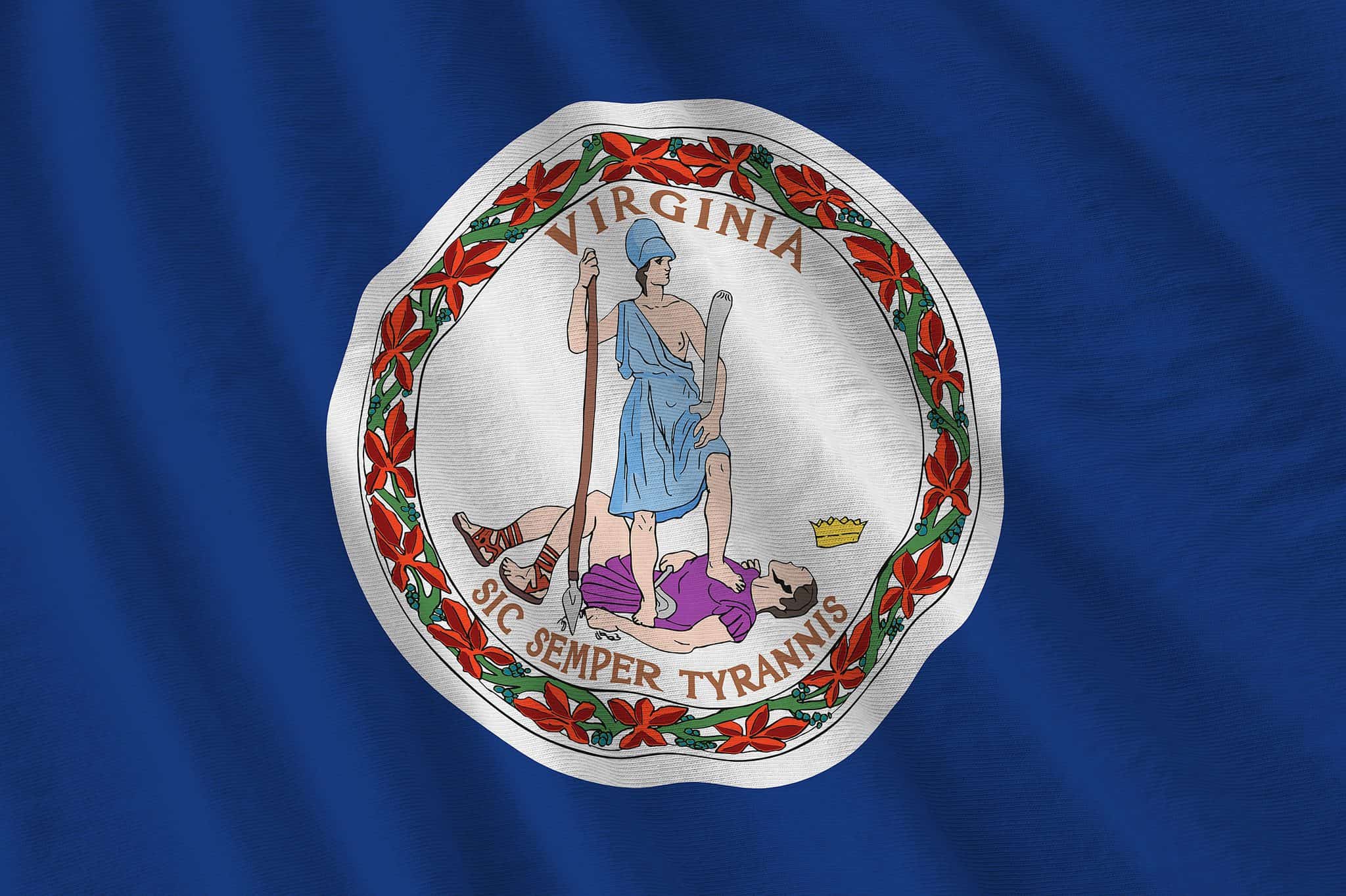
Virginia's state motto, 'Sic Semper Tyrannis,' meaning 'Thus Always to Tyrants', appears on the state seal, where the goddess Virtus stands triumphant over a defeated tyrant. The motto dates to 1776, when Virginia adopted its state constitution and seal. On the night of April 14, 1865, five days after Lee's surrender at Appomattox, John Wilkes Booth shot President Abraham Lincoln at Ford's Theatre in Washington.
After firing, Booth leapt from the presidential box to the stage, catching his spur on a bunting and breaking his leg. According to accounts of witnesses, he shouted Virginia's motto as he landed: 'Sic Semper Tyrannis!' The phrase, meant to celebrate the defeat of tyranny, became forever associated with political assassination. Virginia has kept the motto; the meaning has grown more complicated.
Booth, a well-known stage actor from a Maryland theatrical family and a Confederate sympathizer, had earlier plotted to kidnap Lincoln; the April 14 shooting was part of a wider conspiracy that also targeted the vice president and the secretary of state that night. He fled south through Maryland into Virginia, where Union cavalry cornered him in a tobacco barn near Port Royal on April 26 and shot him.
'Sic Semper Tyrannis' was chosen for the Virginia seal in 1776 by a committee that included George Mason, drawing on a phrase long associated with the assassins of Julius Caesar. Virginia kept the motto through the Confederacy and after, and it drew fresh scrutiny in 2017 when it turned up on materials tied to the deadly 'Unite the Right' rally in Charlottesville and as an online slogan among some extremists.
In 2018, Amazon launched a public competition for the location of its second headquarters, HQ2, that attracted 238 bids from cities and states across North America, with offers totaling billions in tax incentives and subsidies. The selection of National Landing in Arlington, Virginia (alongside Long Island City in New York, which later backed out) was both a validation of Northern Virginia's tech talent base and a turning point for the region.
Amazon committed to bringing 25,000 jobs paying an average of $150,000 and constructing a distinctive campus of helical glass towers along the Potomac. The HQ2 competition revealed how desperate American cities were to attract major tech employers and how much leverage Amazon had accumulated as it became one of the world's most valuable companies.
National Landing had the advantage of being steps from the Pentagon City Metro stop and minutes from Reagan National Airport.
New York's half of the deal collapsed within months when Queens officials and activists revolted over roughly 3 billion dollars in incentives; Virginia's package, about 750 million dollars in performance-based grants plus a tech-education commitment from the state's universities, drew far less backlash and was structured to pay out only as jobs arrived. By 2024 Amazon employed more than 8,000 people at the site, well short of the 25,000 target on the original timeline, and had delayed its later construction phases.
Notable Virginians
George Washington
First President of the United States and commander of the Continental Army, born in Westmoreland County
Thomas Jefferson
Third President and primary author of the Declaration of Independence, born in Shadwell
James Madison
Fourth President and Father of the Constitution, born in Port Conway
Robert E. Lee
Commander of Confederate forces in the Civil War, born in Stratford Hall
Woodrow Wilson
28th President and architect of the League of Nations, born in Staunton
Arthur Ashe
First Black man to win Wimbledon and a leading voice for social justice, born in Richmond
State Symbols & Quick Facts
| Nickname | "The Old Dominion" |
| Capital | Richmond |
| Largest City | Virginia Beach (city proper); Northern Virginia (largest metro) |
| Statehood | June 25, 1788 (10th state) |
| Population | ~8.8 million (2025 est.) |
| Area | 42,775 sq mi, 35th largest state |
| Motto | "Sic Semper Tyrannis" ("Thus Always to Tyrants") |
| State Bird | Cardinal |
| State Flower | American Dogwood |
| State Tree | Dogwood |
| State Dog | American Foxhound |
| State Fish | Brook Trout (freshwater); Striped Bass (saltwater) |
| State Insect | Tiger Swallowtail Butterfly |
| State Song | "Our Great Virginia" |
| Time Zone | Eastern |
| Borders | Maryland & Washington D.C. (N/NE), Atlantic Ocean (E), North Carolina (S), Tennessee & Kentucky (SW), West Virginia (W) |
Did You Know?
Virginia has produced more U.S. presidents than any other state, eight were born here: George Washington, Thomas Jefferson, James Madison, James Monroe, William Henry Harrison, John Tyler, Zachary Taylor, and Woodrow Wilson. Four of the first five presidents were Virginians (John Adams of Massachusetts was the exception), giving the state a grip on early American executive power that no other state has matched.
The Pentagon, located in Arlington, Virginia, held the title of world's largest office building by total floor space for eight decades, until India's Surat Diamond Bourse surpassed it in 2023, with 6.5 million square feet across five floors. It has its own zip code (20301), nearly 30,000 employees, 17.5 miles of corridors, and a central courtyard nicknamed 'Ground Zero' during the Cold War because Soviet planners assumed it was a command center for a top-secret underground bunker.
Loudoun County, Virginia, about 30 miles west of Washington D.C., is home to the world's highest concentration of data centers, earning it the nickname 'Data Center Alley.' More than 70% of all global internet traffic is estimated to flow through Northern Virginia's data centers each day. The region's server farms consume roughly the same amount of electricity as the entire state of Vermont.
Virginia's state motto, 'Sic Semper Tyrannis' ('Thus Always to Tyrants'), was John Wilkes Booth's reported exclamation after shooting President Lincoln at Ford's Theatre on April 14, 1865. The motto was adopted by Virginia in 1776 as a symbol of liberty's triumph over despotism, its association with Lincoln's assassination has given it a dark second meaning that Virginians have had to live with ever since.
In 1989, Douglas Wilder became the first African American ever elected governor of any U.S. state, and he won in Virginia, the former capital of the Confederacy. The grandson of slaves, Wilder won by just 6,741 votes out of more than 1.7 million cast. His election is considered one of the most historically significant state-level election results in American history.
Quick Facts and Common Questions
Short answers to the questions people most often ask about Virginia: its abbreviation, who it was named for, its capital, and its place in Congress.
Virginia's two-letter postal abbreviation is VA. The U.S. Census Bureau places it in the South region, in the South Atlantic division, and about 8.63 million people lived there in the 2020 census.
Virginia became the 10th state on June 25, 1788, when its convention ratified the U.S. Constitution by a vote of 89 to 79. Its official name is the Commonwealth of Virginia.
Virginia was named for Queen Elizabeth I of England, known as the "Virgin Queen." Sir Walter Raleigh, who sponsored the first English expeditions to the region in the 1580s, gave it the name with her approval.
Jamestown, founded on May 14, 1607, by the Virginia Company of London, was the first permanent English settlement in North America. In 1619 the House of Burgesses met there, the first elected legislative assembly in the English colonies, and that same year the first recorded enslaved Africans in English Virginia arrived at Point Comfort.
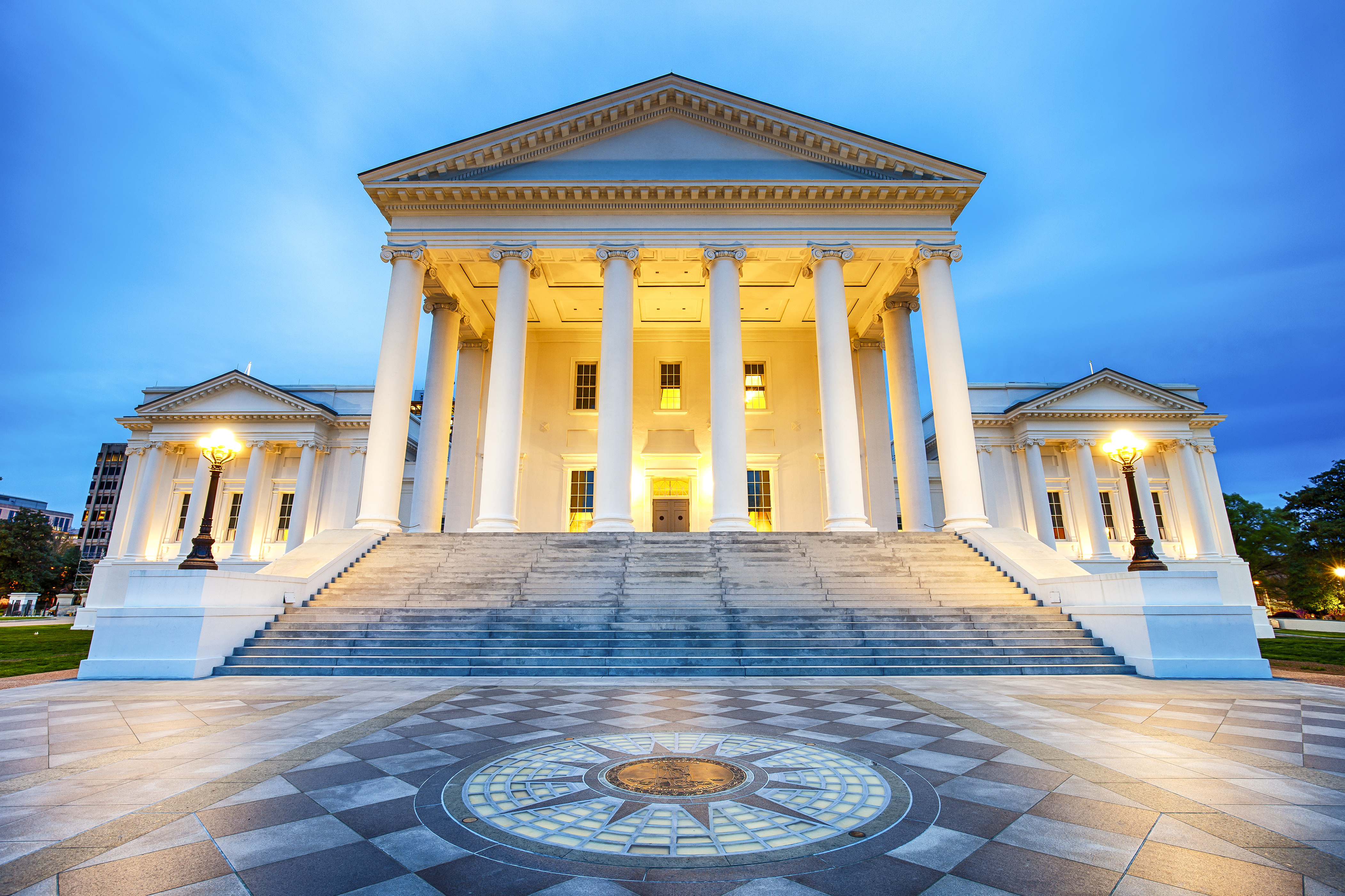
Richmond has been the capital since 1780, when Governor Thomas Jefferson moved the government from Williamsburg, which had been the colonial capital since 1699 after Jamestown. Jefferson designed the Virginia State Capitol, which lawmakers began using in 1788. Richmond was also the capital of the Confederacy from 1861 to 1865.
Virginia borders Maryland and Washington, D.C., to the north across the Potomac River, West Virginia and Kentucky to the west, and Tennessee and North Carolina to the south. Its eastern edge is Atlantic coastline and the shores of the Chesapeake Bay, including the Eastern Shore peninsula.
Eight presidents were born in Virginia, more than in any other state: George Washington, Thomas Jefferson, James Madison, James Monroe, William Henry Harrison, John Tyler, Zachary Taylor, and Woodrow Wilson.
Virginia is known as "The Old Dominion," a name tied to its status as England's oldest colony in America. Its motto is "Sic Semper Tyrannis," Latin for "Thus Always to Tyrants." Its state bird is the cardinal, and the dogwood is both its state flower and its state tree.
Based on the 2020 census, Virginia has 11 seats in the U.S. House of Representatives, the same as before, which gives it 13 votes in the Electoral College.
Shenandoah National Park and Skyline Drive
105 Miles of Ridgeline Road Through the Blue Ridge Mountains, an Hour from the Nation's Capital
About Shenandoah National Park and Skyline Drive
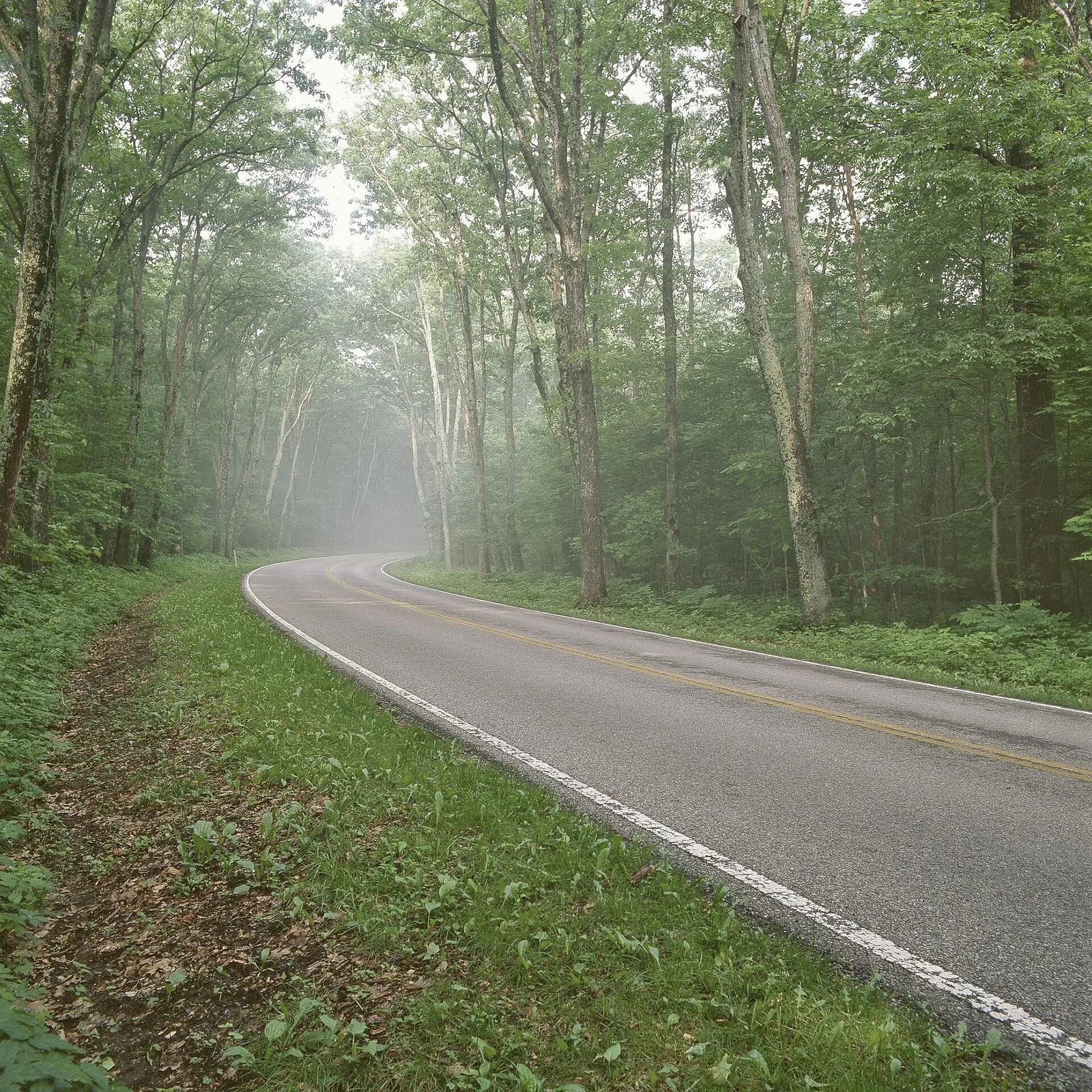
Shenandoah National Park runs about 105 miles along the crest of the Blue Ridge Mountains in Virginia, protecting 199,173 acres of hardwood forest, streams, and wildlife less than 75 miles from Washington. Skyline Drive, its only road, follows the ridgeline the whole length with 75 named overlooks looking west over the Shenandoah Valley and east across the Piedmont.
Unlike the western parks carved from public land, Shenandoah was assembled in the 1920s and 1930s from farms, orchards, and logged woodlots. Virginia used eminent domain to condemn roughly 3,000 tracts, and about 500 families were removed from the mountains, some resettled by the federal government and a few elderly residents allowed to stay for life. President Franklin Roosevelt dedicated the park in 1936.
The mountains had been so heavily cleared and grazed that the park is essentially a recovered landscape: about 40 percent of it is now designated wilderness, and the forest that regrew from abandoned fields is dense enough that visitors rarely guess how recently it was farmland. Stone walls, cemeteries, and old apple trees still mark former homesites along the trails.
Congress authorized the park in 1926, and it was fully established in 1935. It draws around 1.3 to 1.7 million visitors a year, with a sharp peak during the mid- to late-October foliage season, and it forms the northern anchor of the Blue Ridge Parkway, which continues 469 miles south to Great Smoky Mountains National Park.
- Designation
- National Park
- Location
- Luray, Virginia, Blue Ridge Mountains of Virginia
- Established
- 1935
- Annual Visitors
- ~1.4 million
Key Features
Skyline Drive is the park's only public road, a 105-mile two-lane route along the Blue Ridge crest from Front Royal in the north to Rockfish Gap in the south, where it connects to the Blue Ridge Parkway. It has 75 numbered overlooks and a 35 mph speed limit.
It was built during the Depression, partly as a make-work project; grading began in 1931 and the last section opened in 1939, with Civilian Conservation Corps camps doing much of the landscaping, stonework, and overlook construction. The road is listed as a National Historic Landmark.
Distances in the park are given in mileposts measured south from Front Royal, from Mile 0 to Mile 105, and every trailhead, overlook, and facility is keyed to that system. Elevation on the drive ranges from about 600 feet at Front Royal to 3,680 feet near Skyland.
The road closes in sections during and after winter storms, and portions can be gated for ice or fog, which is common on the ridge. The park logs frequent deer and bear on the roadway, one reason for the low speed limit.
The Appalachian Trail runs 101 miles through Shenandoah, closely paralleling Skyline Drive along the ridge and crossing it more than 30 times. Dozens of trailheads and parking areas on the drive make this one of the easiest stretches of the entire 2,190-mile trail to reach for a day hike.
The park maintains a network of trailside huts spaced roughly a day apart for AT thru-hikers, who typically pass through in May and June, plus developed campgrounds at Big Meadows, Lewis Mountain, Loft Mountain, and Mathews Arm.
The Potomac Appalachian Trail Club, founded in 1927, built much of the trail and side-trail system here and still maintains it under agreement with the Park Service; the club's early leaders were also central to the campaign that created the park.
Because the AT here is so accessible and gently graded compared with New England or the southern balds, it serves as a first long-distance experience for many hikers from the Washington-Baltimore area, and the park enforces food-storage rules to manage the resulting use.
Old Rag Mountain, at 3,291 feet, stands slightly east of the main Blue Ridge as an isolated peak, and its bare, blocky summit is one of the most recognized profiles in Virginia. The classic route is a roughly 9.3-mile loop with about 2,400 feet of climb.
The summit is Old Rag Granite, a coarse rock that crystallized about 1.1 billion years ago, among the oldest in the park. Freeze-thaw has broken it into the maze of car- and house-sized boulders that make the final mile a hands-and-feet scramble with squeeze passages, ledges, and short climbs.
Old Rag is one of the most popular hikes in the mid-Atlantic and had become dangerously crowded, with backups at the scramble and frequent rescues. In 2022 the park introduced a day-use ticket, required March through November on Fridays, Saturdays, Sundays, and holidays, capping numbers on the mountain.
The trailhead is outside the park boundary near Sperryville and is reached from the valley, not from Skyline Drive; there is a separate parking fee, and the loop combines the Ridge Trail, the summit scramble, and the Saddle and Weakley Hollow fire roads on the descent.
Luray Caverns lies in the Shenandoah Valley just west of the park near Luray and is the largest and most-visited cavern in the eastern United States, open to the public since shortly after its discovery in 1878 by a local tinsmith and his companions, who felt cool air rising from a sinkhole.
It formed in Ordovician limestone as slightly acidic groundwater dissolved the rock over millions of years, then left behind stalactites, stalagmites, flowstone, and columns as mineral-laden water dripped and evaporated. Some formations are estimated at over 7 million years old, though they grow only about an inch per century.
Its signature feature is the Great Stalacpipe Organ, built in 1956 by a Pentagon scientist, which uses electrically actuated rubber-tipped plungers to tap 37 tuned stalactites across three and a half acres of the cave, making it by area the world's largest musical instrument.
The cave holds a steady 54 degrees Fahrenheit year-round, and Dream Lake, a pool a few inches deep, mirrors the formations above so exactly that visitors routinely mistake the reflection for a deep cavern. The site is privately owned and operated, separate from the national park.
Indigenous Heritage
Monacan Indian Nation
The Blue Ridge and the valleys on both sides were part of the territory of the Monacan, a Siouan-speaking people who by the early 1600s held the Virginia Piedmont and upper James River, distinct from and often at odds with the Algonquian-speaking Powhatan chiefdom of the coastal plain. Captain John Smith's 1612 map marks Monacan towns west of the fall line.
Monacan communities farmed river bottoms, hunted the mountains, and built accretional burial mounds; Thomas Jefferson excavated one such mound near his home in the 1780s, an early instance of systematic American archaeology, and estimated it held a thousand individuals. Disease, the deerskin trade, and colonial warfare had scattered most Monacan towns by 1700.
A core community persisted around Bear Mountain in Amherst County, worshiping at a log mission chapel built in 1908. Under Virginia's 1924 Racial Integrity Act, state officials reclassified Monacan people as 'colored,' barred them from white schools, and altered birth records, a policy later called documentary genocide. The Monacan Indian Nation won Virginia recognition in 1989 and federal recognition in 2018.
The Monacan Indian Nation is headquartered at Bear Mountain in Amherst County, Virginia, and received federal recognition in 2018 after a decades-long effort. The tribe maintains a museum, cultural center, and annual powwow at Bear Mountain, and is working to reclaim cultural practices that were suppressed during the early 20th century. The tribe maintains historical and cultural connections to the Shenandoah Valley and Blue Ridge landscape.
Things To Do
Skyline Drive Scenic Drive
Driving Skyline Drive is the park's most popular activity: a 105-mile ridge route with 75 overlooks, a 35 mph limit, and enough curves and stops that the full length takes three hours or more without breaks and a full day with them.
The road is milepost-marked from Mile 0 at Front Royal southbound. Key stops include Dickey Ridge Visitor Center (Mile 4.6), the Skyland area (Mile 41-43, the highest point on the drive at about 3,680 feet), Big Meadows and the Byrd Visitor Center (Mile 51), and Rockfish Gap (Mile 105).
Foliage traffic in the second half of October can be bumper to bumper and fill the overlooks; the park recommends weekday visits, early starts, and entering from a less-used station. The drive carries a per-vehicle entrance fee good for a week.
Big Meadows, near the midpoint, is a large open upland kept clear by mowing and burning; it is the best spot in the park to see deer at dusk, is a wildflower and blueberry area, and anchors a campground, a lodge, and the trail to Dark Hollow Falls.
Old Rag Mountain
Old Rag is widely rated the best and hardest day hike in the mid-Atlantic: a 9.3-mile loop climbing about 2,400 feet, with a roughly one-mile rock scramble near the 3,291-foot summit over billion-year-old granite boulders that requires using both hands.
The circuit goes up the Ridge Trail through the scramble to the summit, then descends the Saddle Trail past Byrds Nest and Old Rag shelters to the Weakley Hollow Fire Road back to the lot. The scramble has narrow squeezes, a false-floor crevice, and short chimney moves that back people up on busy days.
Since March 2022 a day-use ticket is required on Fridays through Sundays and holidays, March 1 to November 30, bought in advance or up to five days ahead on Recreation.gov, on top of the park entrance fee and the trailhead parking fee.
The trailhead is near Sperryville, outside the Skyline Drive corridor. Rangers advise against hiking the scramble in rain, ice, or with dogs or small children, and the mountain generates a large share of the park's search-and-rescue calls.
Whiteoak Canyon Trail
Whiteoak Canyon holds six named waterfalls, the tallest 86 feet and the highest in the park, strung along Whiteoak Run as it drops off the ridge. From Skyline Drive the trail descends steeply, reaching the upper falls in about 2.3 miles and the lower falls a couple of miles farther, so most hikes are out-and-backs to a chosen falls.
From the valley side, a lower trailhead near Syria offers a shorter, gentler approach to the lower falls, and a strenuous 8-mile loop links Whiteoak Canyon with the parallel Cedar Run Trail over a connecting ridge.
The canyon's hemlocks were among the park's finest old-growth stands until the hemlock woolly adelgid killed most of the mature trees in the 2000s; the dead snags are still visible, and the forest is shifting to birch and other hardwoods.
The pools below the falls are a popular summer swimming and wading spot despite slick rock and cold water, and drownings and serious injuries from falls on the wet rock have occurred; the park discourages climbing on or around the falls.
Appalachian Trail Day Hikes
Shenandoah's stretch of the AT is one of the best places on the whole trail for day hikes, because Skyline Drive crosses or touches it constantly, letting hikers piece together routes of almost any length from marked pullouts.
Popular short options include Thornton Gap to Mary's Rock (about 3.7 miles round trip to a rock outcrop with a wide western view), Hawksbill Mountain (the park's highest point at 4,051 feet, reachable in a 2.9-mile loop), and Bearfence Mountain, a short hike with a rocky ridge scramble and a 360-degree view.
The Big Meadows area links the AT to Rapidan Camp, the rustic fishing retreat President Herbert Hoover built in 1929 on the Rapidan River and later donated to the park; three of its cabins survive and are open for tours in season.
Dark Hollow Falls, Lewis Falls, and South River Falls are other short, heavily used hikes reached from the drive, and the park asks hikers to carry the Ten Essentials, check the weather, and start early, since afternoon thunderstorms build fast on the exposed ridge.
Conservation and Challenges
Hemlock Woolly Adelgid
The hemlock woolly adelgid, an aphid-like insect from Japan, was found in Shenandoah in the late 1980s and by the mid-2000s had killed the great majority of the park's mature eastern hemlocks, which had dominated the cool, moist hollows and stream valleys.
Hemlock shade kept those streams cold enough for native brook trout, Virginia's only native trout, and for a distinctive community of salamanders and aquatic insects; as the canopy opened, several monitored streams warmed and their brook trout numbers fell.
The park has treated several thousand of the most important individual hemlocks with soil-applied or trunk-injected systemic insecticide, protecting select stands at places like Limberlost and Whiteoak Canyon, and has released predatory beetles as a longer-term control.
Most of the park's hemlock is nonetheless dead or dying, and managers now treat the surviving groves as a genetic reserve while the hollows convert to birch, tulip poplar, and rhododendron, a permanent change to those habitats.
Air Quality and Visibility
Shenandoah sits downwind of Ohio Valley power plants and the mid-Atlantic megalopolis and is a Class I air quality area, so it has long been a focus of Clean Air Act monitoring. In the 1980s average visibility from the overlooks had fallen to around 15 to 25 miles on many summer days, against a natural range near 90.
The pollutants of concern have been sulfate haze, ground-level ozone that damaged leaves on dozens of plant species and stressed hikers, and acid deposition that lowered the pH of high-elevation streams and soils and leached aluminum harmful to brook trout.
Emission controls on coal plants, the regional haze program, and cleaner vehicles have produced large gains since the 2000s: sulfate and ozone are down sharply, hazy days are fewer, and stream acidification has begun to reverse in some watersheds.
The park still records occasional unhealthy ozone on hot days and continues long-term monitoring of visibility, stream chemistry, and lichens, which are sensitive air-quality indicators, at sites across the ridge.
Deer Overbrowsing
Shenandoah carries one of the densest white-tailed deer populations in the eastern United States, a result of no hunting inside the park, the loss of predators like wolves and cougars, and abundant forest-edge habitat left from the farming era. Deer were actually scarce when the park opened and were restocked in the 1930s and 1940s.
Heavy browsing has stripped the forest understory in much of the park: tree seedlings, spring wildflowers such as trilliums and orchids, and shrubs are eaten before they can grow, leaving an open, park-like woods with little regeneration and a browse line at deer mouth height.
Long-term fenced study plots show a dramatically different forest inside the exclosures, with dense seedlings and wildflowers, demonstrating that deer, not soil or light, are the limiting factor for regeneration across large areas.
Chronic wasting disease, a fatal deer prion disease, was detected near the park in the 2020s and adds urgency; the park has studied population reduction and works with Virginia wildlife officials on surveillance, since a die-off or outbreak would ripple through the whole forest system.
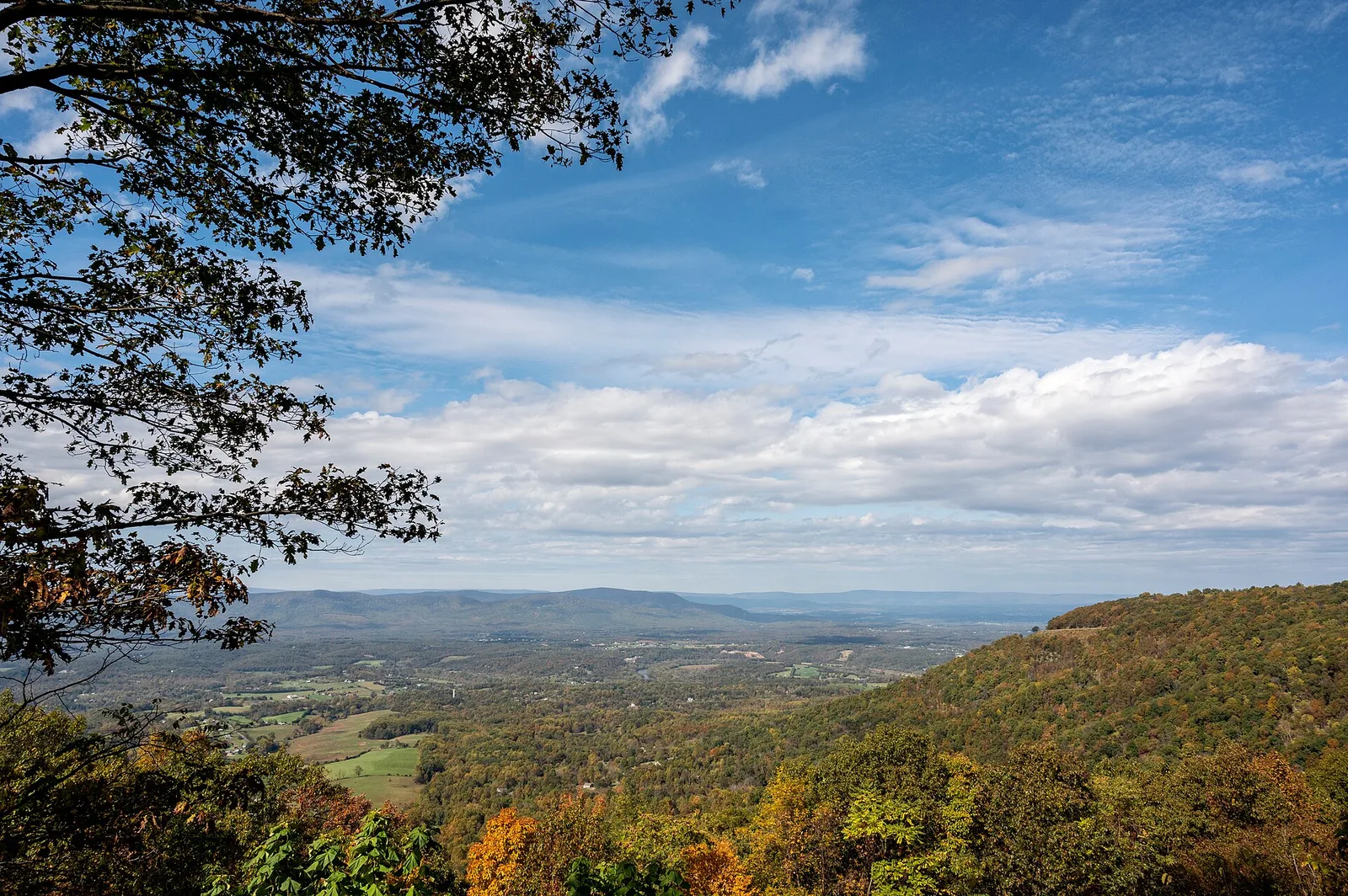
Shenandoah Valley seen from one of Skyline Drive's 75 named overlooks
Fast Facts
Did You Know?
Shenandoah National Park was established in 1935, but the land it occupies was not wilderness: it was farmland, orchards, and logged hillsides that had been cleared over centuries of European and American settlement. The federal and state governments acquired the land and moved out the families who had lived there, some of whom had farmed the same hollows for generations. The forests visible today have grown back from those cleared fields over the past 80 to 90 years and are still in relatively early stages of ecological recovery compared to old-growth forests elsewhere in the Appalachians.
Skyline Drive was built during the Great Depression by the Civilian Conservation Corps, one of President Franklin Roosevelt's New Deal programs that put unemployed young men to work on public land improvements. The CCC workers who built Skyline Drive also constructed the stone overlook walls, picnic areas, and visitor facilities that still characterize the park's infrastructure. The drive was built specifically as a recreational and scenic road, not a transportation route, which is why its 35 mph speed limit and generous overlook spacing were designed from the start for leisurely enjoyment.
Shenandoah has one of the highest white-tailed deer densities in the country, with estimates ranging from 20 to 60 deer per square mile in some sections. This is far above what the forest can sustain ecologically: the deer have reduced native wildflowers, shrubs, and tree seedlings to a fraction of their historical abundance. The problem stems from the elimination of wolves, mountain lions, and other predators plus the prohibition on hunting within the park. The park conducts periodic deer culls in some areas, but the population remains well above what the vegetation can support.
Plan Your Visit
Location
Luray, Virginia, Blue Ridge Mountains of Virginia
Designation
National Park
Fall Foliage
Peak color in Shenandoah typically occurs in mid-October. The park is heavily visited during foliage season; expect crowded parking lots and slower drive times on Skyline Drive. The best overlooks can have long waits for parking on peak weekends.
Entrance Fee
$35 per vehicle (7-day), or use an America the Beautiful annual pass. Passes can be purchased at the entrance stations.
Getting There
The North entrance at Front Royal is 75 miles west of Washington, D.C. on I-66. The South entrance at Rockfish Gap (Waynesboro) connects to I-64. Luray and Staunton are convenient gateway towns with lodging and services.
Old Rag Permit
A day-use permit is required for Old Rag Mountain on Fridays, Saturdays, Sundays, and federal holidays from March through November. Purchase on Recreation.gov. Day-before permits often remain available the morning of your visit.
Wildlife
Black bears are present throughout the park. Store all food properly in bear-resistant containers or hang it at least 10 feet from the ground. Do not approach or feed wildlife.