

Wake Island WQ
A remote North Pacific atoll forever bound to one of World War II's most heroic last stands, a Pan American Airways Clipper stopover, and a Cold War military outpost that remains under U.S. Air Force administration today.
About Wake Island
Wake Island is a small coral atoll in the western North Pacific, roughly 2,300 miles west of Honolulu and 600 miles north of Kwajalein. It consists of three low-lying islands, Wake, Wilkes, and Peale, arranged in a horseshoe shape around a central lagoon. The total land area is about 2.85 square miles, making it one of the larger U.S. minor outlying islands, though it rises no more than 21 feet above the sea.
Wake holds a place in American military memory unlike almost any other piece of territory its size. In December 1941, following the attack on Pearl Harbor, a small garrison of U.S. Marines held off a vastly superior Japanese force for 16 days, sinking two destroyers in the process. Their defiance became a rallying symbol for a nation in shock. After the garrison finally surrendered, Wake endured a brutal Japanese occupation that ended with the execution of 98 American civilian prisoners in 1943.
Today Wake remains the only U.S. minor territory still under active military administration. The U.S. Air Force and Army manage it as a strategic reserve airfield and missile defense test site. No civilian visits are permitted, and the island continues its long role as an American military outpost in the western Pacific.

Aerial view of Wake Island, Wake, Wilkes, and Peale islands

Memorial to the defenders and civilian prisoners of Wake Island
Wake Island vs. a U.S. State
| Feature | Wake Island | U.S. State |
|---|---|---|
| Permanent Population | None (civilian) | Yes |
| Local Government | None | State government |
| Congressional Representation | None | Senators + Representatives |
| Voting in Federal Elections | No residents | Yes |
| U.S. Constitution Applies | Partially (by statute) | Fully |
| Administered By | U.S. Air Force / Army | Elected officials |
| Incorporated Territory | No | Yes (as a state) |
| Public Access | Closed, military only | Generally open |
Geography at a Glance
- Location
- North Pacific Ocean
- Coordinates
- 19°17′N 166°38′E
- Land Area
- ~2.85 sq mi (7.4 km²)
- Islands
- 3 (Wake, Wilkes, Peale)
- Highest Point
- ~21 ft (6.4 m) above sea level
- Nearest Land
- ~600 miles N of Kwajalein
- Distance to HI
- ~2,300 miles W of Honolulu
- Time Zone
- UTC+12:00
- Climate
- Tropical, warm, humid, typhoon risk
- Administration
- U.S. Air Force / U.S. Army
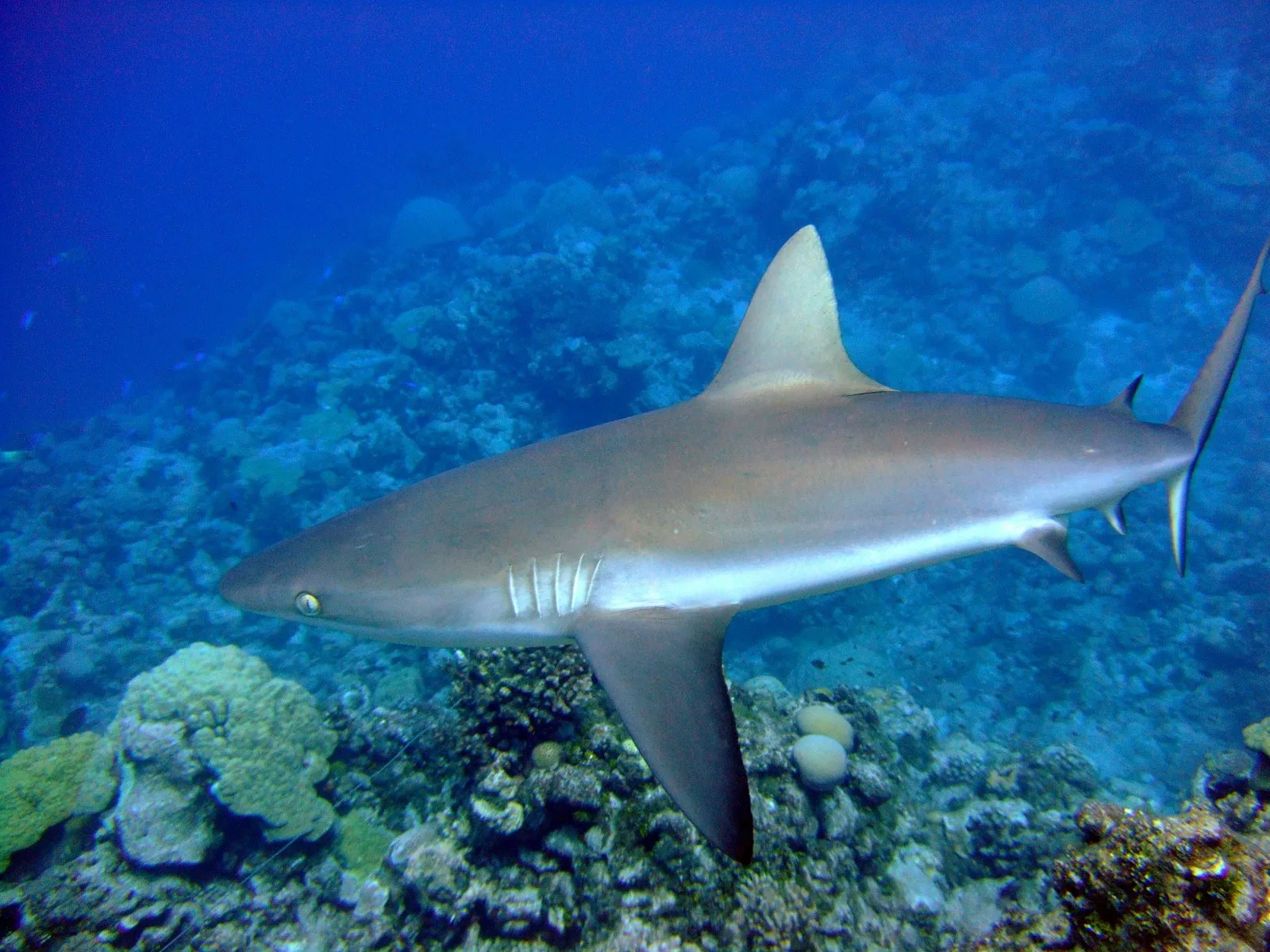
Wake Island's lagoon and reef, protected within the Pacific Remote Islands Marine National Monument
Wildlife of Wake Island
Wake Island's wildlife bears the scars of its history. Decades of intense military activity and the wartime occupation significantly impacted the atoll's ecosystem. Most tragically, Wake was home to an endemic flightless bird that exists nowhere else on Earth, and was hunted to extinction during World War II.
Brown boobies, great frigatebirds, red-tailed tropicbirds, and wedge-tailed shearwaters nest on Wake's three islands. Seabird colonies have partially recovered since the worst decades of military activity, though they remain smaller than those of more isolated atolls.
The Wake Island rail, a flightless bird unique to the atoll, was driven to extinction during the Japanese occupation of 1941 to 1945. Stranded Japanese soldiers hunted the birds for food. It stands as one of the few documented cases of a species eaten to extinction by humans during wartime.
Green sea turtles nest on Wake's beaches and forage in the surrounding lagoon. Both green and hawksbill turtles are protected under the Endangered Species Act and benefit from the atoll's relative remoteness.
Wake's surrounding reef and lagoon support a diverse array of coral, reef fish, and invertebrates. The atoll lies within the Pacific Remote Islands Marine National Monument, protecting its waters as a no-take marine zone.
Wake Island Through Time
- ✦1568
First European Sighting
The Spanish navigator Álvaro de Mendaña was the first European to record the atoll, in 1568, on a voyage west from Peru; he named it Isla de San Francisco and sailed on.
Wake is a V-shaped coral atoll of three low islets, Wake, Wilkes, and Peale, around a shallow lagoon, about 2,300 miles west of Honolulu and 1,500 miles east of Guam, with no fresh water and no native people.
- ✦1796
Named for Captain Wake
The British merchant captain William Wake of the Prince William Henry visited the atoll in 1796, and it took his name on the charts.
The U.S. Exploring Expedition under Charles Wilkes surveyed and mapped Wake in 1841, naming the two smaller islets Wilkes and Peale after members of the expedition.
- ✦1899
U.S. Annexation
On January 17, 1899, during the Spanish-American War era, Commander Edward Taussig of the USS Bennington landed and formally claimed Wake Island for the United States.
Wake was wanted as a link in a planned trans-Pacific telegraph cable and, later, as an aviation and naval waypoint on the route to the Philippines; it was placed under Navy jurisdiction in 1934.
- ✦1935–1941
Pan American Airways Clipper Base
Pan American Airways built a base on Peale Island in 1935, dredging a seaplane channel and putting up the Pan American Inn, where passengers on the China Clipper route between Honolulu and Manila stayed overnight.
For a few years Wake was one of the most glamorous stops in commercial aviation, and the Pan Am staff dug the atoll's first wells and planted its first gardens.
- ✦1941
Naval Air Station Established
In 1941 the Navy rushed to fortify Wake as war approached, with a contractor, Morrison-Knudsen, building an airfield and defenses using about 1,100 civilian workers.
When Japan attacked, the garrison was 449 U.S. Marines under Major James Devereux, plus a handful of sailors and Army radiomen and the civilian construction crew, with a dozen fighter aircraft and a few coast-defense guns.
- ✦1941
Battle of Wake Island
Japanese bombers hit Wake on December 8, 1941, hours after Pearl Harbor and across the date line, destroying most of the Marine fighters on the ground.
On December 11 the small garrison, aided by many of the civilian workers, threw back the first Japanese landing attempt, sinking two destroyers with shore guns and the last aircraft. It was the first Japanese amphibious assault of the war to be defeated.
A far larger Japanese force returned on December 23 and overwhelmed the defenders after a night of close fighting; the garrison surrendered that morning. A U.S. relief expedition, already at sea, was recalled. 'Send us more Japs,' a garbled message widely reported as the defenders' defiant reply, was a myth, but the 16-day stand became a rallying story on the American home front.
- ✦1941–1945
Japanese Occupation
Japan held Wake for the rest of the war, using it as an air base while U.S. carriers and submarines gradually cut it off and bombed it.
Most of the captured Americans were shipped to prison camps in China and Japan, but the Japanese kept about 100 civilian contractors on the island as forced labor. On October 7, 1943, fearing an invasion, the garrison commander, Rear Admiral Shigematsu Sakaibara, ordered 98 of them machine-gunned on the beach. He was tried and hanged for the massacre in 1947.
- ✦1945
Japanese Surrender at Wake
The isolated and starving Japanese garrison formally surrendered on September 4, 1945, to Brigadier General Lawson Sanderson of the Marines, among the last Japanese forces to give up in the Pacific.
The remains of the massacred civilian contractors were later recovered and reburied at the National Memorial Cemetery of the Pacific in Honolulu.
- ✦1945–1972
Cold War Base and Trans-Pacific Stopover
After the war Wake became a busy refueling stop for propeller airliners and military transports crossing the Pacific, and a staging point in the Korean and Vietnam Wars; President Truman met General Douglas MacArthur on Wake in October 1950.
In 1975 Wake housed thousands of Vietnamese evacuees in a tent city during Operation New Life.
- ✦1972–Present
Military Administration Continues
Long-range jets ended the need for a mid-Pacific fuel stop by the 1970s, and Wake settled into its current role: a runway and support base under U.S. Air Force administration, used as an emergency landing field, a missile-defense test site, and a logistics point, staffed by a small contractor workforce.
Unlike every other U.S. minor outlying island, Wake has never been transferred to the Fish and Wildlife Service and remains under military control, though it has its own postal code and time zone.
- ✦2009–2014
Pacific Remote Islands Marine National Monument
The waters around Wake were included in the Pacific Remote Islands Marine National Monument in 2009, and President Obama expanded the protected zone to the full 200-nautical-mile limit in 2014, while the land stayed under military control.
Typhoon Ioke, a Category 4 storm when it struck with 155 mph winds, swept over Wake in 2006 and forced a full evacuation; the atoll's low elevation makes it one of the most exposed pieces of U.S. territory to storms and sea-level rise.
Did You Know?
Interesting facts about one of America's most historically significant territories.
The 16-day defense of Wake Island in December 1941 became a rallying cry for the American public after Pearl Harbor. The Marines' defiant stand, sinking two Japanese destroyers, one with coastal guns and one with aircraft bombs, made headlines across the country.
After the American surrender, 98 civilian contractors were kept on the island as laborers. In October 1943, with an American naval raid approaching, Japanese commander Admiral Sakaibara ordered all 98 executed on the beach. One man escaped and scratched 'USA 98 POW' into a coral rock before being recaptured and personally beheaded by Sakaibara. Sakaibara was later convicted of war crimes.
The Wake Island rail, a small flightless bird found nowhere else on Earth, was hunted to extinction by stranded Japanese soldiers during the occupation. It is one of the only species documented to have been eaten to extinction during wartime.
Before the war, Wake Island was a glamorous mid-Pacific stop on Pan American's China Clipper route. Passengers in formal attire dined at the Pan Am Inn on Peale Island, a world away from the atoll's wartime fate just a few years later.
Wake Island sits west of the International Date Line, making it one of the first places on Earth to begin each new day. It is in the UTC+12 time zone, the opposite end of the clock from its Pacific cousins Baker and Howland at UTC-12.
Wake is the only U.S. minor territory still under active military administration. The U.S. Air Force and U.S. Army manage it as a strategic reserve airfield and missile defense test site, and it is closed to all civilian access.
Quick Facts and Common Questions
Short answers to the questions people most often ask about Wake Island: where it is, who runs it, and what happened there in World War II.
Wake Island is a coral atoll in the North Pacific Ocean, about 2,300 miles west of Honolulu and just west of the International Date Line. It is made up of three islets, Wake, Wilkes, and Peale, around a shallow lagoon. It has no permanent residents, only a small number of military personnel and contractors who work there.
The United States took formal possession of Wake Island on January 17, 1899, when the crew of the USS Bennington raised the American flag there. In 1935 Pan American Airways built a station on the atoll as a refueling stop for its flying boats crossing the Pacific.
Japanese forces attacked Wake on December 8, 1941, hours after Pearl Harbor. Its defenders, mostly U.S. Marines along with Navy personnel and civilian construction workers, turned back the first landing attempt on December 11, but the island fell on December 23 and stayed under Japanese occupation until September 1945. The battle became a symbol of resistance early in World War II, and Wake's wartime sites are a National Historic Landmark.
Wake Island is an unincorporated, unorganized territory of the United States with no local government. It is administered by the U.S. Air Force under an agreement with the Department of the Interior, and the airfield supports military flights and missile defense testing. The surrounding waters are part of the Pacific Islands Heritage Marine National Monument.
Yes. The Republic of the Marshall Islands also claims Wake, based on traditional Marshallese ties to the atoll. The United States has administered the atoll since 1899.
No. Wake Island has no permanent residents, is not part of any state or congressional district, and has no delegate in Congress.