The Rules of War, Written Down
The Geneva Conventions are the core treaties of international humanitarian law, the body of rules that seek to limit the effects of armed conflict on people who are no longer fighting, the wounded, prisoners, and civilians.
The Conventions do not attempt to outlaw war itself. Instead they set binding limits on how war can be fought, requiring humane treatment for anyone not actively fighting and placing medical personnel, hospitals, and civilians outside the scope of legitimate military targets.
Today's four Conventions, adopted in 1949, are the most widely ratified treaties in world history, accepted by every UN member state. Violating them is not merely a diplomatic breach, it is a war crime under international and, in many countries including the United States, domestic law.
One Man's Battlefield Horror
The entire modern law of war traces back to a single Swiss businessman who happened to witness the aftermath of a battle he had no part in fighting.
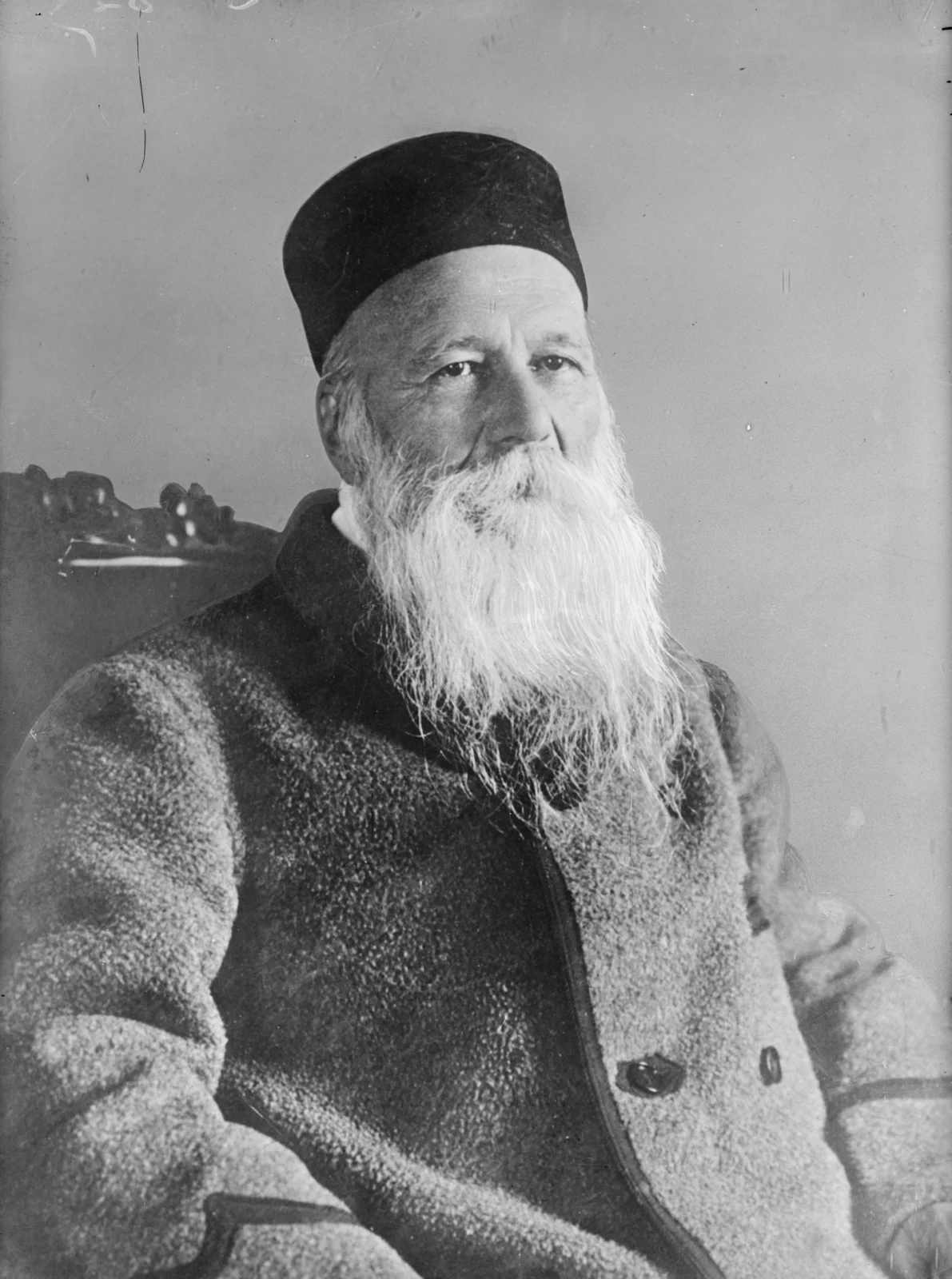
Swiss businessman Henry Dunant witnesses the aftermath of the Battle of Solferino in northern Italy, where roughly 40,000 soldiers were killed, wounded, or went missing in a single day with almost no organized medical care for the wounded.
Dunant had traveled to Solferino by coincidence, hoping to meet Emperor Napoleon III on an unrelated business matter, and arrived the evening after the fighting ended. He organized local townspeople, mostly women from nearby Castiglione, to care for the wounded of both sides under the motto 'Tutti fratelli,' meaning 'all are brothers.'
Solferino, fought on June 24, 1859, was the decisive battle of the Second Italian War of Independence, pitting a Franco-Sardinian army against Austria. Some 300,000 troops were engaged, and the fighting lasted around nine hours in fierce summer heat.
Dunant stayed for several days directing relief, buying supplies with his own money and pressing captured Austrian doctors into service. The experience so consumed him that he neglected the Algerian land-and-water business that had brought him to Italy, a venture that would later collapse into bankruptcy.
Dunant publishes an account of the battle's horrors and proposes two ideas: national relief societies to care for wounded soldiers in wartime, and an international agreement protecting those societies and the wounded they treat.
Dunant self-published the book at his own expense and personally mailed copies to European monarchs, military leaders, and philanthropists. The book's direct appeal led a Geneva public welfare society to convene the conference that founded the Red Cross the following year.
Titled Un Souvenir de Solferino, the book ran to 1,600 copies in its first printing. Its unsparing descriptions of men dying untended for want of basic care made it a sensation among Europe's political and military elite.
The Geneva Society for Public Welfare took up the proposals and, in February 1863, appointed a five-man study commission. That "Committee of Five" became the International Committee of the Red Cross.
A five-member committee in Geneva, which becomes the International Committee of the Red Cross (ICRC), forms to pursue Dunant's proposals. Dunant later receives the first Nobel Peace Prize in 1901 for this work.
The founding committee of five Genevans included lawyer Gustave Moynier and military doctor Louis Appia alongside Dunant. Dunant himself fell into bankruptcy and left Geneva in 1867, living for years in obscurity before being rediscovered and awarded the first Nobel Peace Prize in 1901.
The committee organized an international conference in Geneva in October 1863, attended by delegates from 16 states, which recommended that every country form a voluntary aid society and adopt a common protective sign for medical staff.
Dunant shared the first Nobel Peace Prize with the French pacifist Frederic Passy and, still hounded by his old debts, gave the prize money away. He died in a hospice in the village of Heiden in 1910.
Twelve nations sign the Geneva Convention for the Amelioration of the Condition of the Wounded in Armies in the Field, the first treaty of modern international humanitarian law. It adopts the red cross on a white background, the reverse of the Swiss flag, as a protective emblem for medical personnel.
The treaty was signed in Geneva on August 22, 1864, by twelve European nations; the United States did not join until 1882, largely through the advocacy of Clara Barton, who later founded the American Red Cross.
The 1864 convention had just ten articles. Its core principles were that medical facilities and staff be treated as neutral and inviolable, that wounded soldiers be cared for regardless of nationality, and that a single distinctive emblem identify protected persons.
Clara Barton, who had nursed the wounded during the American Civil War, waged a years-long campaign for U.S. ratification and founded the American Red Cross in 1881, the year before the Senate finally acted.
A 1906 revision extends protections to wounded and shipwrecked sailors. After the mass POW crisis of World War I, a 1929 convention adds detailed protections for prisoners of war for the first time.
World War I produced more than 8 million prisoners of war across all combatant nations, with treatment varying wildly by captor. The 1929 Convention drew on those experiences, though notably Japan and the Soviet Union never ratified it, a gap with severe consequences for POWs held by both countries during World War II.
The 1906 revision expanded the land convention to 33 articles, and a companion 1907 Hague convention adapted the rules to war at sea. The 1929 prisoner-of-war convention ran to 97 articles, requiring that POWs be registered, allowed to write home, and visited by a neutral "protecting power."
The gaps proved deadly. Japan had signed the 1929 POW convention but never ratified it, and the Soviet Union rejected it outright; Allied prisoners in Japanese hands and Soviet and German prisoners on the Eastern Front died at several times the rate of POWs held under the convention's terms.
In direct response to the atrocities of World War II and the Holocaust, diplomatic conferences in Geneva produce a complete revision and expansion into the four conventions still in force today, ratified within years by nearly every country on Earth.
Representatives from 59 states negotiated the revisions over four months in 1949, and the conventions entered into force the following year. Today all 196 states parties, every UN member state plus a few others such as the Holy See and the State of Palestine, have ratified all four conventions, making them among the most universally accepted treaties in world history.
The 1949 conference, hosted by Switzerland from April to August, worked from ICRC drafts and produced four separate treaties: on the wounded and sick on land, on the wounded, sick, and shipwrecked at sea, on prisoners of war, and, for the first time, on the protection of civilians.
The Conventions borrowed the individual-responsibility principle from the Nuremberg trials, defining certain "grave breaches" that every state party must prosecute or extradite. They entered into force in October 1950, and no other humanitarian treaty has since matched their near-universal ratification.
Two 1977 Additional Protocols extend protections to victims of international and non-international (civil war) conflicts. A 2005 Third Additional Protocol creates the red crystal, a religiously neutral alternative emblem to the red cross and red crescent.
The United States signed the 1977 Additional Protocols but has never ratified either one, citing concerns about provisions affecting irregular combatants. The 2005 Protocol III creating the red crystal emblem was adopted partly to give Israel's Magen David Adom relief society, which used a red Star of David not previously recognized, a path to full ICRC membership.
Additional Protocol I updated the rules for international conflicts, codifying the principles of distinction and proportionality and, controversially for some states, extending combatant status to fighters in wars of "national liberation." Additional Protocol II was the first treaty devoted entirely to internal armed conflicts, going well beyond Common Article 3.
By the mid-2020s, Protocol I had about 174 state parties and Protocol II about 169, but several major military powers, including the United States, Israel, India, Pakistan, and Iran, had not ratified Protocol I. The United States nonetheless treats many of its provisions as reflecting customary international law.
Four Treaties, One System
The 1949 Conventions divide protection by category of person, wounded soldiers on land, the wounded and shipwrecked at sea, prisoners of war, and civilians, plus one article that applies to every conflict, everywhere.
Protects wounded and sick members of armed forces in the field, along with medical personnel, ambulances, and hospitals, which must not be attacked and must be allowed to treat the wounded regardless of which side they fought for.
The original 1864 treaty had just ten articles; the 1949 revision expanded the First Convention to 64 articles covering identification of medical personnel, transport, and the protected use of the red cross and red crescent emblems.
It makes medical units, transports, and staff immune from attack so long as they are not used to commit "acts harmful to the enemy," and it requires each side to collect and care for the enemy's wounded and to record and pass on information about the dead.
Misusing the emblem, for example flying a red cross over an ammunition dump or an attacking unit, is itself a war crime known as perfidy, because it erodes the protection the emblem is meant to give everyone who wears it honestly.
Extends the same protections as the First Convention to naval warfare, covering shipwrecked sailors, hospital ships, and medical personnel at sea.
Naval protections trace back to the Hague Convention of 1907, but the 1949 Second Convention replaced and expanded them. It requires hospital ships to be painted white and marked with a large red cross, and bars them from any military use in exchange for that protection.
The Convention's 63 articles protect the shipwrecked broadly, meaning anyone in peril at sea from any cause, and oblige warships to help survivors "without distinction" after a battle when they can safely do so.
Hospital ships must be notified to the enemy before use and may be inspected; they lose protection only after a warning and a reasonable chance to comply. Medical aircraft receive similar but narrower protection, which the 1977 Protocols later broadened.
Sets detailed standards for the treatment of POWs, including humane treatment, adequate food and shelter, the right to send and receive mail, protection from torture or coercive interrogation, and repatriation at the end of active hostilities.
The Third Convention is the longest of the four, with 143 articles covering everything from labor and pay to correspondence and religious practice. Its definition of who qualifies for POW status became the center of the legal fight over Guantanamo Bay detainees after 2001.
A prisoner of war is a combatant in enemy hands, not a criminal. POWs may be held to keep them out of the fight but may be punished only for offenses committed in captivity, and must be released "without delay" once active hostilities end.
The detaining power may use enlisted POWs for non-military labor with pay and must provide canteens, religious services, and mail, and POWs have the right to correspond with the ICRC and be visited by it. Disputes over these terms shaped both the Vietnam War and the post-2001 Guantanamo cases.
Added after World War II's mass civilian casualties and deportations, this convention protects civilians in occupied territory from murder, torture, collective punishment, and forced deportation, and requires occupying powers to maintain public order and provide for civilian welfare.
Before 1949, no Geneva treaty protected civilians at all, the Fourth Convention was written specifically in response to the mass deportations, forced labor, and genocide inflicted on civilian populations during World War II. It also created a separate legal status for civilian internees, distinct from prisoners of war.
It protects "protected persons," civilians in the hands of a party or occupying power of which they are not nationals, banning collective punishment, hostage-taking, pillage, and reprisals against civilians, and requiring an occupier to allow relief supplies and to leave local law and institutions largely intact.
Article 49's bar on an occupying power transferring its own civilians into occupied territory, or deporting the local population, is among the Convention's most litigated provisions and is central to debates over Israeli settlements and other occupations.
An identical article appears in all four conventions setting minimum protections that apply even in civil wars and other conflicts not between states: no violence to life or person, no hostage-taking, no humiliating treatment, and no sentencing without a fair trial by a regularly constituted court.
Because Common Article 3 alone lacked the 'grave breach' enforcement mechanism written into the rest of the Conventions, Congress amended the U.S. War Crimes Act in 1997 to explicitly criminalize violations of it as well, closing a gap in how the provision could be enforced domestically.
Often called "a convention in miniature," Common Article 3 binds every party to an internal conflict, including armed groups that never signed anything, and its core rule is that anyone not taking active part in the fighting must be treated humanely, without adverse distinction.
The International Court of Justice, in the 1986 Nicaragua case, held that Common Article 3 reflects "elementary considerations of humanity" binding as customary law in all conflicts, and the war-crimes tribunals for the former Yugoslavia and Rwanda treated its violation as an individually punishable crime.
Rules Without an Army to Enforce Them
The Geneva Conventions have no standing court or police force of their own. Enforcement depends on national prosecution, the ICRC's monitoring role, and, when diplomacy fails, international tribunals.
Serious violations of the Conventions, willful killing, torture or inhuman treatment, willfully causing great suffering, and the deliberate targeting of civilians among them, are defined as "grave breaches."
Every state party has a legal duty to search for people alleged to have committed grave breaches, regardless of their nationality or where the crime occurred, and either to prosecute them in its own courts or hand them to a state that will. This principle is known as universal jurisdiction.
In practice, national prosecutions have been uneven. A handful of countries, including Germany, Belgium, and the United States under separate war-crimes statutes, have tried foreign nationals for grave breaches, but most alleged cases go uncharged for lack of custody or political will.
The 1998 Rome Statute built on this framework, creating the International Criminal Court to prosecute grave breaches and other war crimes when national courts cannot or will not. By the mid-2020s about 125 states were parties; the United States, Russia, China, India, and Israel were not.
The International Committee of the Red Cross, headquartered in Geneva, is a private Swiss institution given a mandate by the Conventions themselves to act as a neutral intermediary in armed conflict.
Its delegates visit prisoners of war and civilian detainees, run a Central Tracing Agency to reunite families separated by war, deliver relief, and remind belligerents of their obligations, working confidentially rather than through public condemnation, which is the price of keeping access.
The ICRC employs roughly 20,000 staff and works in more than 90 countries. It is legally separate from the roughly 190 national Red Cross and Red Crescent societies and their federation, though all three together make up the wider Red Cross Movement.
Its consistent neutrality has been recognized with the Nobel Peace Prize three times, in 1917, 1944, and 1963, more than any other laureate, and its founder Henry Dunant received the very first Peace Prize in 1901.
The International Military Tribunal at Nuremberg from 1945 to 1946, and the parallel Tokyo tribunal, tried senior Axis leaders and established that individuals, including heads of state and military commanders, bear personal criminal responsibility for war crimes, crimes against humanity, and waging aggressive war.
Nuremberg rejected the defenses that officials were merely following superior orders or were shielded by their office, and it recognized "crimes against humanity" as a distinct category covering atrocities against civilians, including a state's treatment of its own population.
These principles were codified by the UN's International Law Commission in 1950 as the "Nuremberg Principles" and written into the 1949 Geneva Conventions' grave-breaches regime, which requires the prosecution of individuals rather than only state-to-state remedies.
They resurfaced in the 1990s tribunals for the former Yugoslavia and Rwanda, in the Special Court for Sierra Leone that convicted former Liberian president Charles Taylor, and in the permanent International Criminal Court created in 1998.
The United States signed the four 1949 Conventions in 1949, and the Senate gave its advice and consent in 1955, after which they became binding domestic law under the Constitution's Supremacy Clause.
Congress passed the War Crimes Act in 1996, making grave breaches of the Conventions federal crimes when the victim or perpetrator is a U.S. national or member of the armed forces, and amended it in 1997 to also cover violations of Common Article 3.
Geneva rules are built into U.S. military practice through Department of Defense law-of-war directives, the Uniform Code of Military Justice, and required training for every service member. Violations by U.S. personnel, as at My Lai in 1968 and Abu Ghraib in 2004, have been prosecuted by courts-martial.
After the September 11 attacks, executive-branch memos argued that Geneva did not protect al-Qaeda or Taliban detainees. The Supreme Court rejected the broadest version of that position in 2006, and Congress then narrowed the War Crimes Act's Common Article 3 coverage in the Military Commissions Act.
After the September 11 attacks, the U.S. government initially argued that detainees held as "unlawful enemy combatants" at Guantanamo Bay fell outside Geneva protections, qualifying neither as prisoners of war under the Third Convention nor as protected civilians under the Fourth.
In Hamdan v. Rumsfeld (2006), the Supreme Court ruled that Common Article 3 applied to the conflict with al-Qaeda and required humane treatment and fair-trial standards for detainees, and that the military commissions the president had created violated both it and the Uniform Code of Military Justice.
The ruling meant detainees could be tried only by "a regularly constituted court affording all the judicial guarantees recognized as indispensable by civilized peoples," language drawn directly from Common Article 3.
Congress responded with the Military Commissions Acts of 2006 and 2009, authorizing revised commissions, and the Guantanamo detention facility remained open into the 2020s with a small number of detainees still held, most of them never charged.
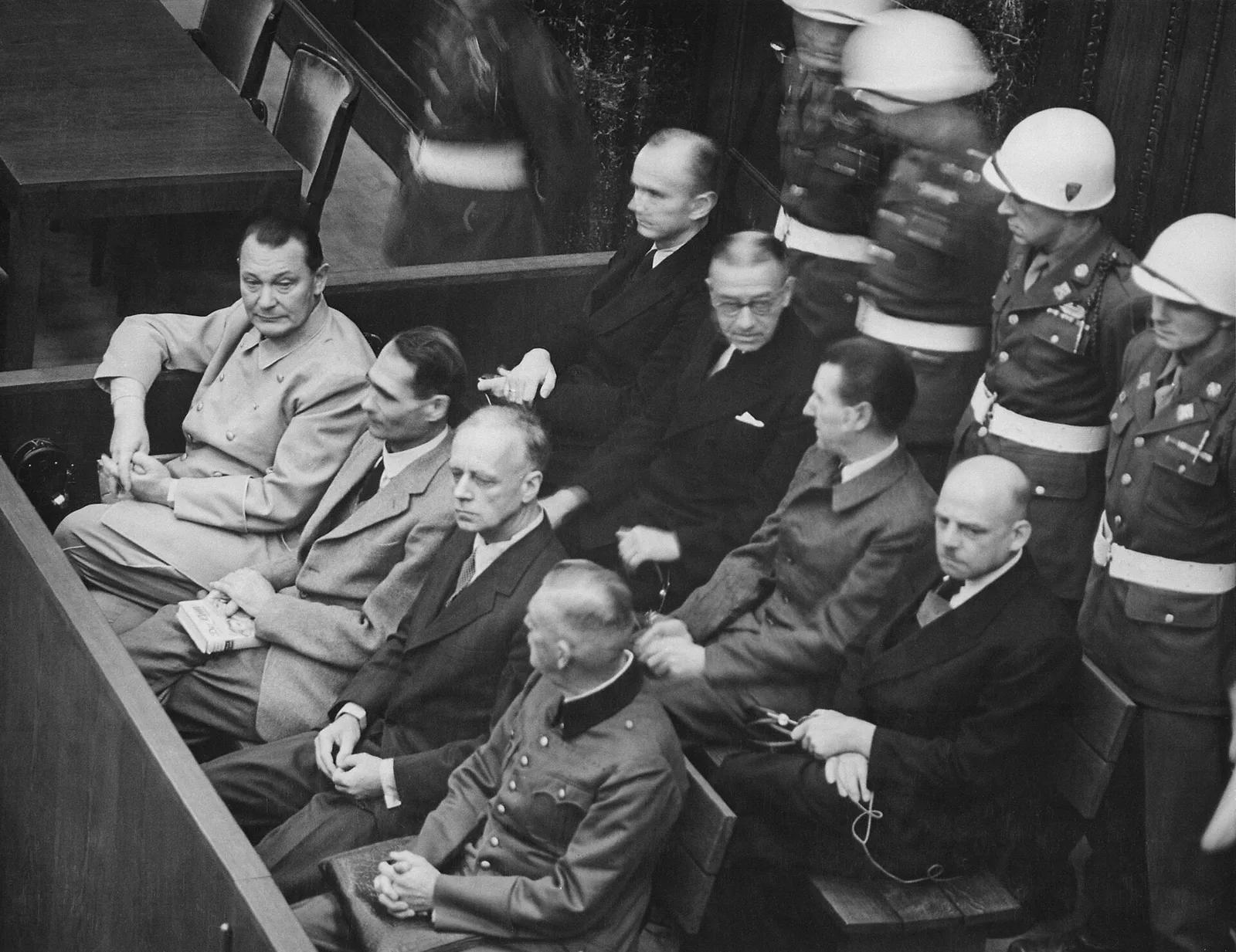
The Nuremberg trials of 1945-46 established that individuals could be held criminally responsible for war crimes, a precedent that directly shaped the 1949 Conventions.
Did You Know?
The red cross emblem is the Swiss flag with its colors reversed, a tribute to Henry Dunant's home country and the treaty's origin in Geneva.
Henry Dunant received the first Nobel Peace Prize ever awarded, in 1901, for founding the Red Cross movement.
All four 1949 Geneva Conventions have been ratified by 196 states, including every UN member state, making them among the most universally accepted treaties in world history.
The 2005 Additional Protocol III created the red crystal emblem so that countries uncomfortable with the cross or crescent's religious associations could still participate in the protective emblem system.
The Third Geneva Convention on prisoners of war grew directly out of the mass POW crises of World War I, when no detailed international standard yet existed.
Common Article 3 is sometimes called a "convention in miniature" because it is the only part of the Geneva Conventions that applies to civil wars and internal conflicts, not just wars between states.
Sources & Further Reading
- International Committee of the Red Cross, The Geneva Conventions of 1949 and Their Additional Protocols
- U.S. Department of State, Office of the Historian
- National Archives, Records of U.S. Ratified Treaties
- Britannica, Geneva Conventions
- Cornell Legal Information Institute, Hamdan v. Rumsfeld (2006), Supreme Court opinion