
A War That Redrew the Map
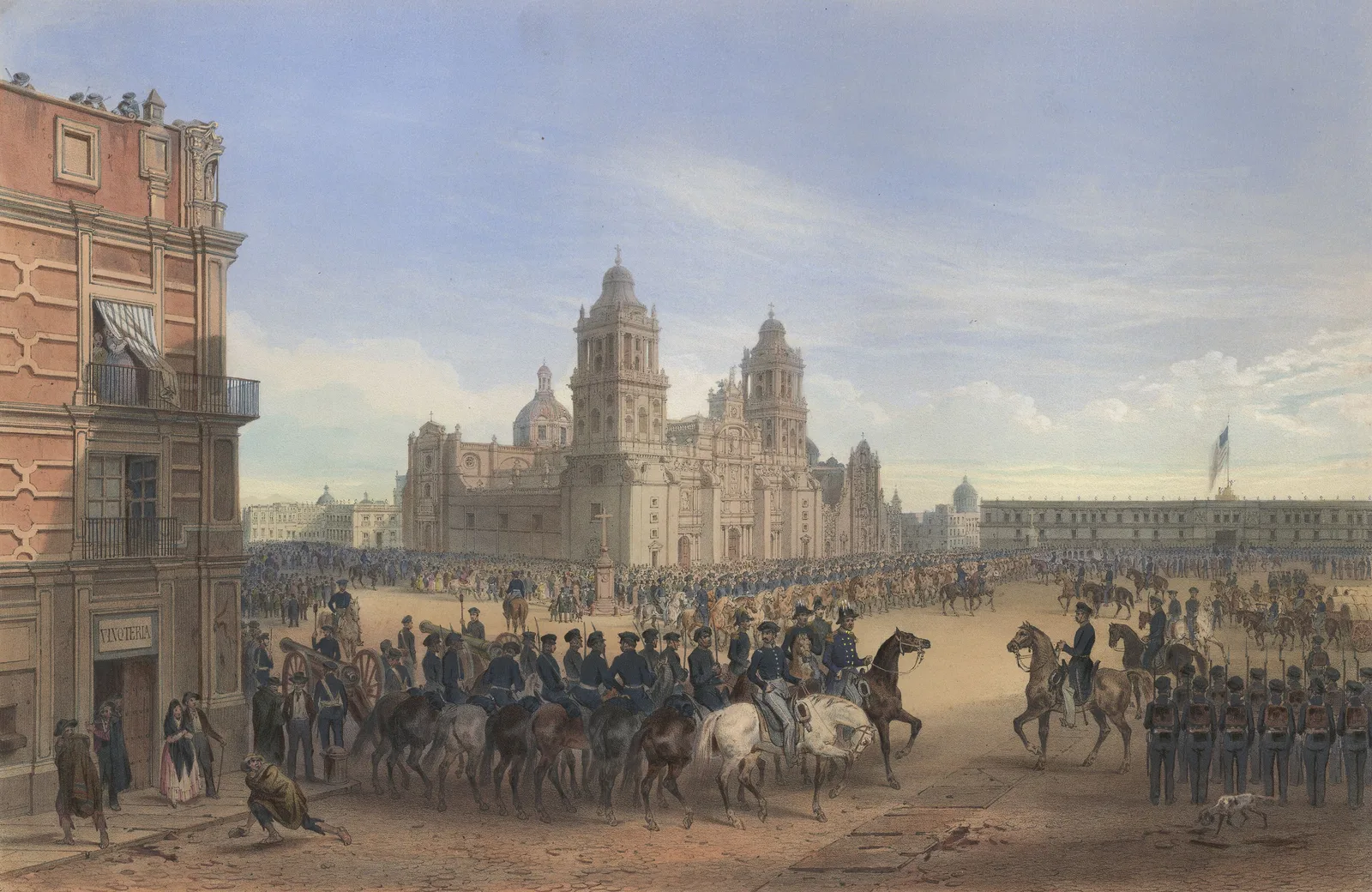
The Mexican-American War was fought from April 1846 to February 1848 between the United States and Mexico. It began with a clash between cavalry patrols in the disputed land between the Nueces River and the Rio Grande in South Texas, and it ended with U.S. troops occupying Mexico City. It is one of the most consequential and least remembered chapters in the story of the United States.
The war grew out of the U.S. annexation of Texas in 1845. Mexico had never recognized Texas's independence, and the two countries disagreed about where Texas even ended: Texas claimed the Rio Grande as its border, while Mexico held that the old boundary was the Nueces River, about 150 miles to the north. President James K. Polk also wanted California and New Mexico, and he tried to buy them before the fighting began.
U.S. forces fought on several fronts at once: Zachary Taylor's army in northern Mexico, Stephen W. Kearny's march to Santa Fe and on to California, naval landings on the Pacific coast, and finally Winfield Scott's amphibious landing at Veracruz and his campaign inland to the Mexican capital. The United States won nearly every major battle, but disease killed far more American soldiers than combat did.
The Treaty of Guadalupe Hidalgo, signed on February 2, 1848, gave the United States roughly 525,000 square miles, including all or part of present-day California, Nevada, Utah, Arizona, New Mexico, Colorado, and Wyoming, in exchange for $15 million. Counting Texas, Mexico lost about half of its territory. The new land reopened the fight over slavery in the United States, and many historians see the war as a step on the road to the Civil War.
At a Glance
1846 to 1848
Fought from April 25, 1846, to February 2, 1848
78,718
U.S. service members who took part (VA)
13,283
U.S. military deaths, most from disease (VA)
525,000 sq mi
Land Mexico ceded in 1848 (National Archives)
The Land That Changed Hands
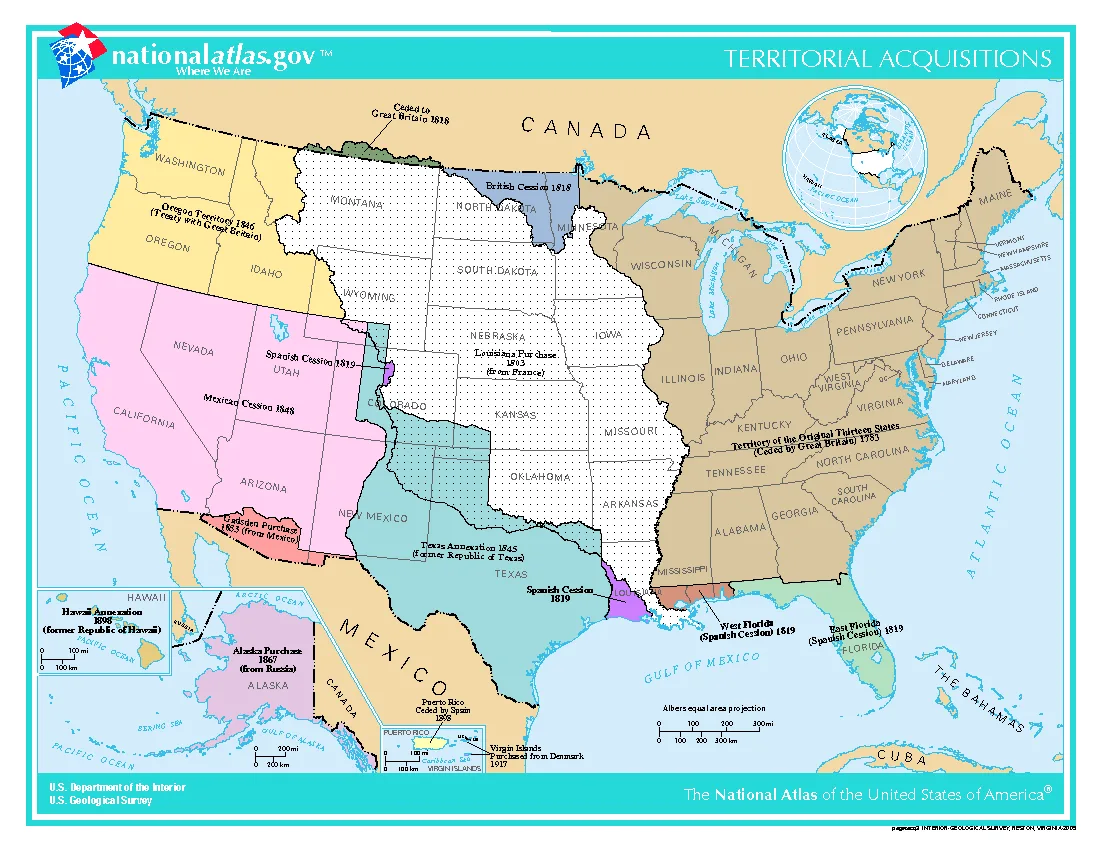
The pink area marked "Mexican Cession 1848" is the land Mexico gave up under the Treaty of Guadalupe Hidalgo. The blue-green "Texas Annexation 1845" area is the land whose border started the war, and the small orange strip along the southern edge is the 1853 Gadsden Purchase.
Did You Know?
One of Santa Anna's artificial legs, captured at Cerro Gordo in 1847, is on display at the Illinois State Military Museum in Springfield.
It was among the first U.S. wars covered by newspaper war correspondents, and reports reached the East faster than ever thanks to pony express riders, steamships, and the new telegraph, an early chapter in the story of the free press.
About 10,000 U.S. troops landed at Veracruz on March 9, 1847, in a single day without losing a man in the landing, the largest American amphibious landing up to that time.
Disease killed about 6.7 U.S. soldiers for every one killed in battle, according to Department of Veterans Affairs figures.
Gold was found in California on January 24, 1848, nine days before the treaty that made California American was signed.
Two future presidents, Zachary Taylor and Franklin Pierce, were generals in the war, and Ulysses S. Grant served as a young lieutenant.
The U.S. diplomat who negotiated the peace, Nicholas Trist, had already been fired and ordered home when he signed the treaty.
Mexico lost about half of its territory, counting Texas.
Sources & Further Reading
- The U.S.-Mexican War, National Park Service, Palo Alto Battlefield NHP
- Treaty of Guadalupe Hidalgo (1848), National Archives
- Treaty of Guadalupe Hidalgo, full text, Avalon Project, Yale Law School
- The Mexican War and After, Library of Congress
- A Guide to the Mexican War, Library of Congress
- The Annexation of Texas, the Mexican-American War, and the Treaty of Guadalupe-Hidalgo, 1845-1848, U.S. Department of State, Office of the Historian
- Gadsden Purchase, 1853-1854, U.S. Department of State, Office of the Historian
- America's Wars, U.S. Department of Veterans Affairs
- Mexican-American War, Encyclopaedia Britannica
- Personal Memoirs of U. S. Grant, Volume 1, Project Gutenberg
- The Spot Resolutions of Abraham Lincoln, U.S. House of Representatives, History, Art & Archives
U.S. troop and casualty figures come from the Department of Veterans Affairs "America's Wars" fact sheet. Mexico kept no complete count of its losses, so Mexican casualty figures are estimates and vary between historians. Battle dates and troop strengths follow the National Park Service at Palo Alto Battlefield National Historical Park. Treaty terms are quoted from the treaty text held by the National Archives and the Avalon Project at Yale Law School.