About American Samoa
American Samoa is a cluster of five volcanic islands and two coral atolls in the South Pacific Ocean, located approximately 2,600 miles southwest of Hawaii and just south of the equator. It is the southernmost territory of the United States and the only inhabited U.S. jurisdiction in the Southern Hemisphere. With a population of about 50,000 people (49,710 in the 2020 Census) spread across 76 square miles of rugged volcanic terrain and coral reef, it is also the smallest and most remote of the five inhabited U.S. territories.
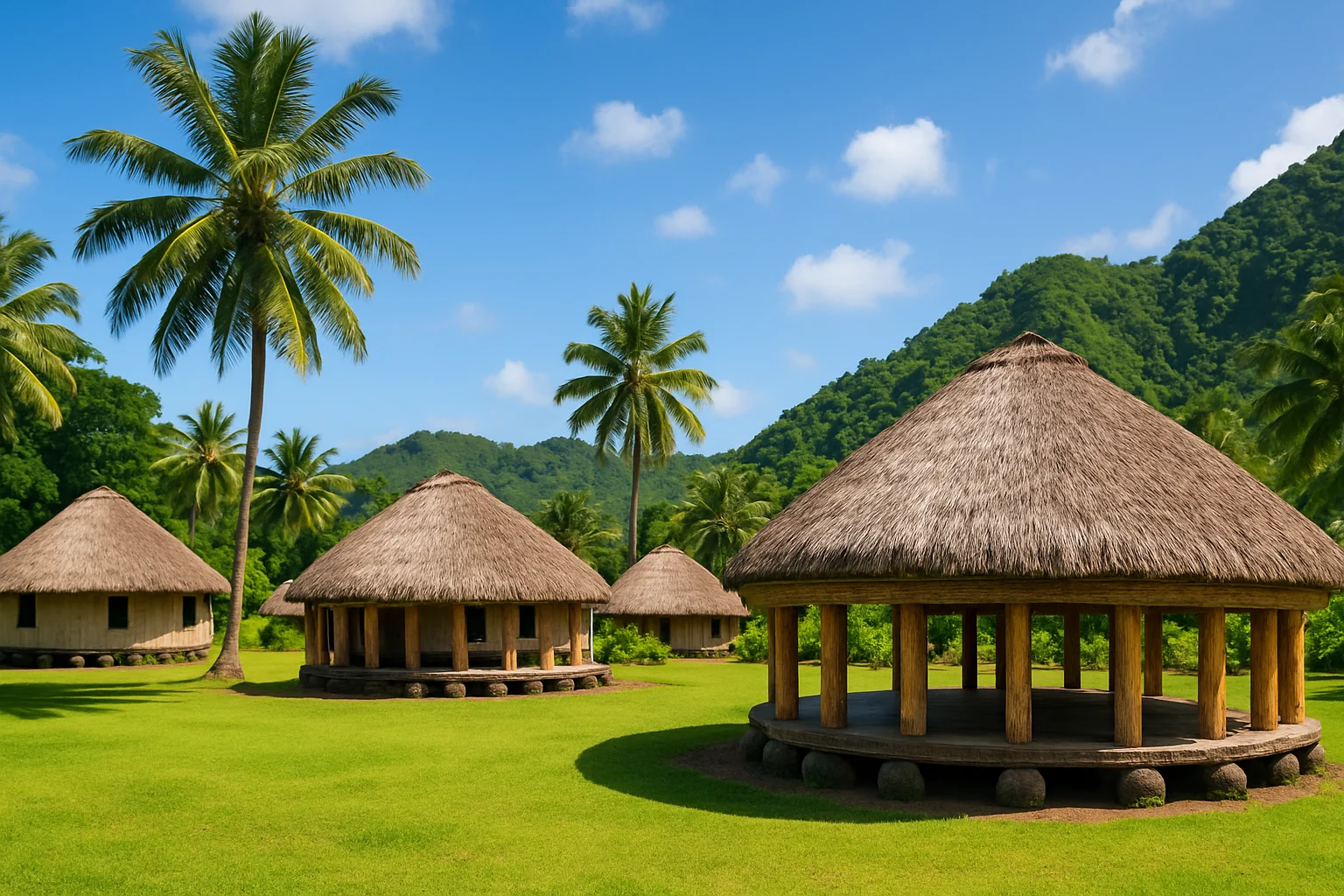
What makes American Samoa genuinely extraordinary is not its size or its geography but its culture. The fa'asamoa, the traditional Samoan way of life centered on the matai (chiefly title) system, communal land ownership, and the extended family unit called the aiga, is one of the most intact indigenous cultures in the Pacific. Land in American Samoa cannot be permanently sold to outsiders, a protection embedded in the territorial constitution that has shielded Samoan society from the dispossession that destroyed indigenous land ownership in Hawaii and many other Pacific places.
The territory occupies a unique and genuinely anomalous position in American law: its people are U.S. nationals who carry U.S. passports and can serve in the American military at some of the highest per-capita rates in the country, but are not automatic U.S. citizens, cannot vote for President, and must go through naturalization to obtain full citizenship. This status, a relic of the Insular Cases decisions of the early 20th century, has been challenged repeatedly in court. Most unusually, the American Samoa Government has itself argued against automatic citizenship, fearing it could undermine the land protections that have preserved fa'asamoa for over a century.
American Samoa's Four Island Groups
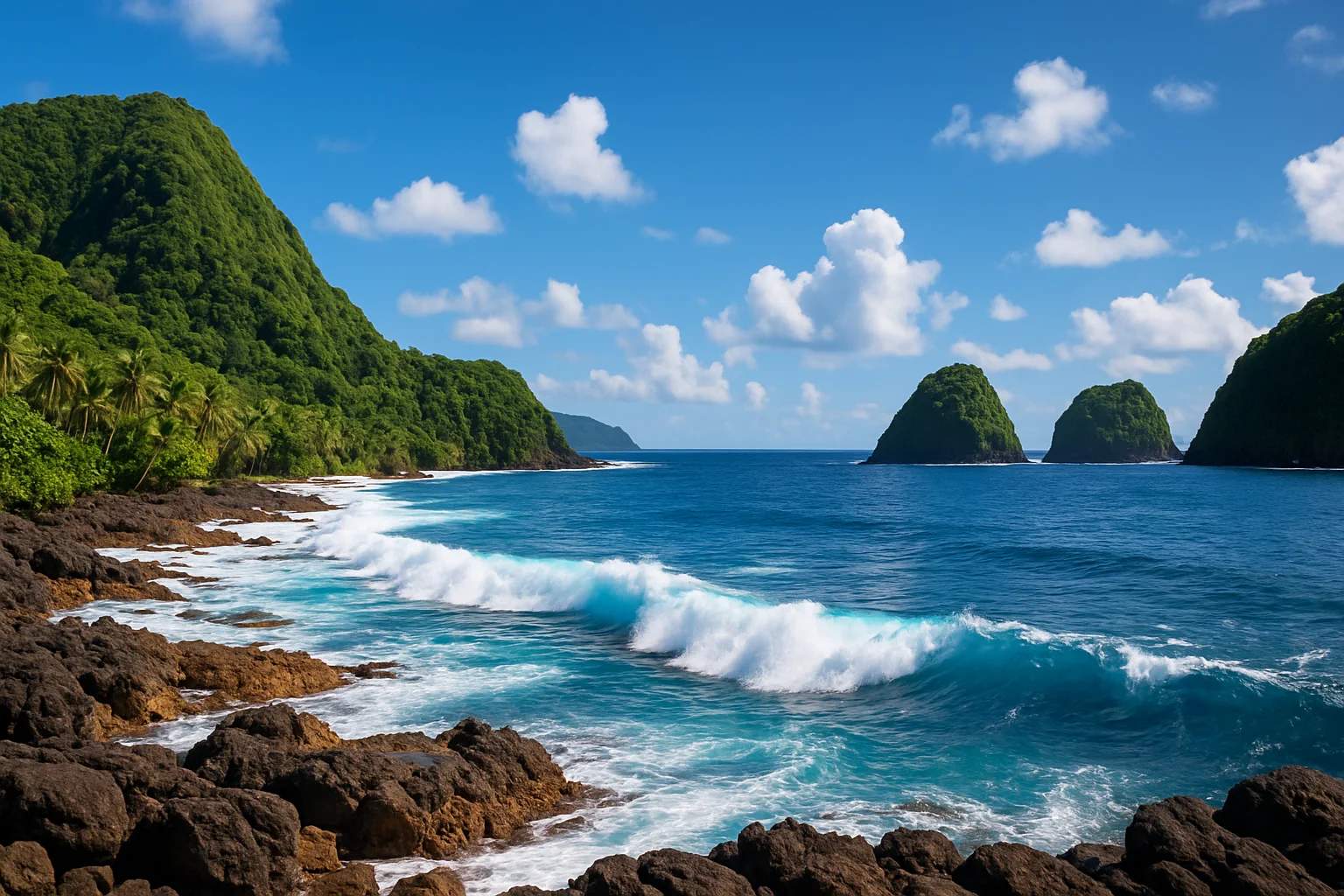
Tutuila is by far the largest and most populous island in American Samoa, home to about 95 percent of the territory's people. Its dramatic volcanic topography, with steep ridges dropping straight into the sea, makes it one of the most striking landscapes in the Pacific.
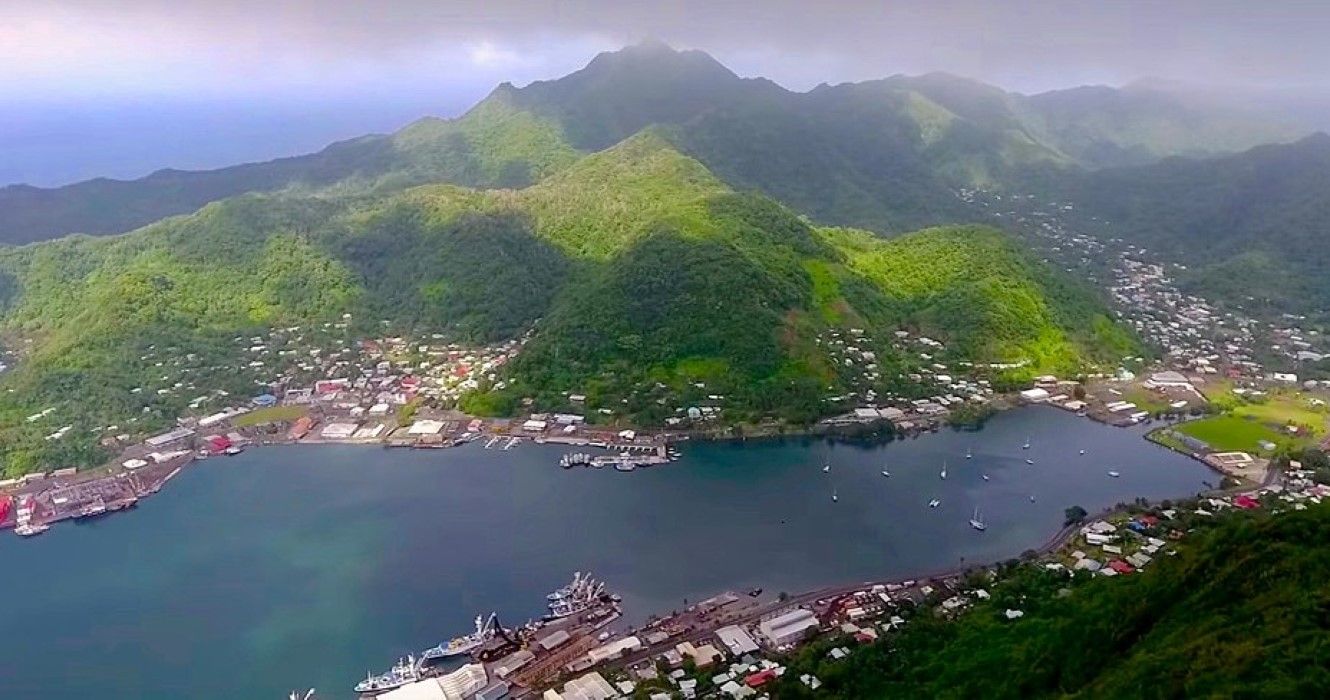
Pago Pago Harbor, a flooded volcanic caldera and one of the finest natural deep-water harbors in the South Pacific, was the original strategic reason for American interest in Samoa; it gave the U.S. Navy a coaling and supply station that shaped Pacific strategy from the 1890s through World War II. The island's coastal road links villages that still run on the matai chief system.
The 2009 Samoa earthquake and tsunami killed 34 people on Tutuila, most on the low-lying southeast and southwest coasts, and reshaped local building and evacuation planning. The island's ridgeline drops so sharply that flat, buildable land is scarce, concentrated on the one broad coastal shelf in the Tafuna plain by the airport.
Tafuna has grown into the territory's largest population center and industrial zone, holding the community college, large stores, and much of the newer housing. Most of Tutuila's north coast is roadless rainforest, part of it inside the national park, reachable only by boat or trail.
The Manu'a Islands, Ta'u, Ofu, and Olosega, lie about 65 miles east of Tutuila and are among the most remote and traditionally Samoan places in the territory. Oral tradition holds that Manu'a is the birthplace of the Samoan people and of the creator god Tagaloa, and the title of Tui Manu'a was historically considered the highest chiefly title in Polynesia.
Margaret Mead did her influential and later disputed fieldwork on Ta'u in 1925 and 1926, producing 'Coming of Age in Samoa.' Ofu's reef-protected beach, inside the national park, is regularly called one of the most beautiful in the park system.
The population has fallen steeply through emigration, and the lack of a reliable harbor means supply ships and the small inter-island ferry cannot always reach the islands in rough weather; the airstrip on Ta'u and a footbridge linking Ofu and Olosega are lifelines.
Ta'u holds the highest point in the territory, Lata Mountain at 3,170 feet, and its south side is a wall of sea cliffs among the tallest in the world. In 2016 the island's diesel generators were replaced with a solar array and battery system that briefly made Ta'u a national example of a community running almost entirely on renewable power.
Swains Island, a privately held atoll administered as part of American Samoa, and Rose Atoll, an uninhabited coral atoll at the territory's eastern edge, mark its geographic extremities. Rose Atoll Marine National Monument, created in 2009, protects one of the most pristine reef ecosystems in the Pacific and is a key nesting site for green sea turtles and seabirds.
Swains has a tiny population historically tied to the Jennings family, which has claimed the atoll since an American settler bought it from a British trader in 1856; the legal basis of that private ownership within U.S. and American Samoan law has never been fully settled.
Geographically Swains belongs to the Tokelau group, and Tokelau, a New Zealand territory, renews a claim to it at the United Nations, though the claim has no practical effect. Swains sends one non-voting member to the American Samoa House of Representatives, and its residents, mostly Jennings relatives and plantation workers, have at times numbered in the single digits.
Rose Atoll is so remote and rat-free that it became a rare successful seabird refuge; an invasive-species eradication and a 2016 cleanup of debris from a longliner aground on the reef since 1993 helped it recover. Neither island is open to casual visitors, and access requires federal and territorial permits.
Pago Pago, pronounced Pango Pango, is the territorial capital and commercial center, at the head of the deep volcanic harbor that carries its name on the south coast of Tutuila. The harbor area concentrates the government offices in Fagatogo, the LBJ hospital, the StarKist cannery, the commercial port, and Pago Pago International Airport at Tafuna.
The harbor has been both the territory's greatest asset, the strategic and commercial reason for the American presence, and its worst environmental liability: decades of tuna processing and shipping have left harbor sediments contaminated with mercury, lead, and PCBs, and Pago Pago Harbor is a long-standing cleanup priority.
The seat of government is a cluster of villages around the harbor, Fagatogo (the legislative and court district), Utulei (the executive offices and governor's residence), and Pago Pago village itself; there is no single incorporated city. A fishmeal plant, ship traffic, and a power station on the harbor still generate the smell that gave the joke about the name its edge.
The harbor formed when one wall of an ancient volcano collapsed and the sea flooded the crater, giving it depth and shelter but a single narrow entrance. Rainmaker Mountain above the harbor traps moisture and makes the Pago Pago area one of the wettest inhabited places in the U.S., with roughly 200 inches of rain a year.
How American Samoa Makes Its Living
American Samoa's economy is heavily concentrated in two sectors: tuna canning, which provides the private sector backbone, and government employment, which provides stability. Both are vulnerable to forces largely outside the territory's control.
Tuna canning has been the dominant private-sector industry in American Samoa for decades, making the territory one of the most important tuna-processing centers in the world. StarKist Samoa, owned by South Korea's Dongwon Industries, runs a large cannery in the Pago Pago area that at its peak employed more than a third of the territory's private-sector workforce.
The canneries process tuna caught across the South Pacific and ship canned product mainly to the U.S. mainland. That dominance is both a lifeline and a vulnerability: when Chicken of the Sea closed its plant in 2009 and StarKist repeatedly cut shifts, the impact was severe, driving heavy emigration to Hawaii and the mainland.
The trade runs on federal preferences. Canned tuna from American Samoa enters the mainland duty-free, a preference other producing countries have challenged, and the minimum wage is set below the mainland level on a separate schedule after the territory argued that mainland wages would push the canneries offshore to Thailand or the Philippines.
StarKist has also been in legal trouble: it pleaded guilty in 2019 to a U.S. price-fixing conspiracy among the big three tuna brands and paid a 100-million-dollar criminal fine. The company still receives large federal tax credits and a favorable long-term lease from the American Samoa Government, which treats keeping the cannery open as an existential priority.
The American Samoa Government (ASG) is the territory's largest employer by a wide margin, covering the executive agencies, the Department of Education (the single biggest employer), LBJ Tropical Medical Center (the only hospital), and the American Samoa Power Authority. Because the territory is unincorporated and unorganized, it receives federal grants and assistance at rates generally lower than other territories and far lower than states.
American Samoa gets Medicaid at capped levels, runs its own workers' compensation and unemployment systems largely outside the federal framework, and has had limited access to federal economic-development programs. Federal grants make up a large share of the territorial budget, so the government's finances rise and fall with Washington appropriations.
American Samoa is the only unorganized inhabited territory, never given an Organic Act by Congress; its government rests on a locally drafted 1967 constitution approved by the Secretary of the Interior, and a 1983 law provides that the constitution may be amended only by Act of Congress, which keeps the Interior Department from changing it on its own. The Interior Department appointed all governors until the first popular election in 1977.
The public payroll and the cannery together account for most formal employment, and the territory has among the lowest median household incomes and highest poverty rates under the U.S. flag. Emigration is a constant pressure valve: more people of American Samoan ancestry now live in Hawaii, California, Washington, and Utah than in the territory itself.
Beyond the industrial canneries, American Samoa's waters are among the most productive in the South Pacific. The territory controls an exclusive economic zone of roughly 200 nautical miles, and traditional Samoan fishing with handlines, nets, and stone fish weirs remains important to village food security.
The National Marine Sanctuary of American Samoa protects more than 13,000 square miles of ocean and some of the most pristine coral reef left in the Pacific, and aquaculture has been promoted as a diversification path with limited results.
The domestic longline fleet that supplies the cannery has shrunk sharply since the 2000s, squeezed by competition from foreign purse seiners, fuel costs, and a long legal fight over a 2016 federal rule that shrank a large-vessel no-fishing zone around the islands, which American Samoa challenged to protect its small-boat fishers; the territory won in district court in 2017, but the Ninth Circuit reversed in 2020 and the Supreme Court declined review in 2021. Most tuna processed at Pago Pago now arrives on foreign-flag boats.
American Samoa's reefs are a scientific benchmark precisely because so few people fish them: reef-fish biomass at remote Rose Atoll and Swains Island runs many times higher than on reefs near population centers. A 1993 longliner wreck on the reef at Rose Atoll spilled fuel into what is now a national monument and took years to remediate.
Tourism is small and slow-growing, held back by limited air service (a few flights a week from Honolulu), modest hotels, and no cruise industry. The National Park of American Samoa, established in 1988 across three islands, is the main attraction and one of the only national parks in the world on land leased from indigenous communities rather than owned by the federal government.
That lease arrangement flows directly from fa'asamoa, in which land belongs to the aiga and cannot be permanently sold. Agriculture, taro, breadfruit, coconut, banana, and tropical vegetables, supports village subsistence and some local-market production.
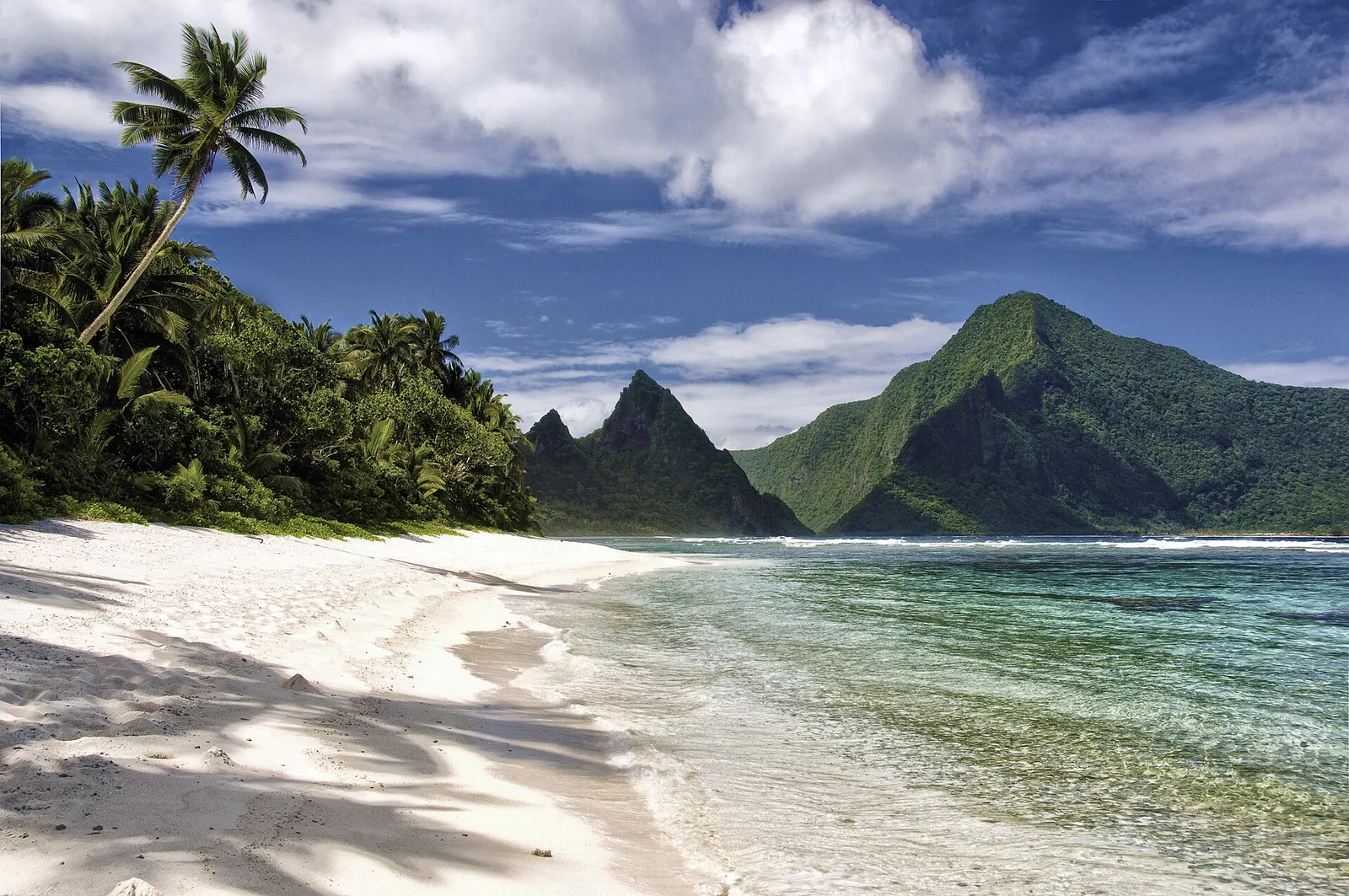
The park's 50-year leases with village councils, renewed and expanded in 2011, pay landowners rent and hire local guides, and the arrangement is studied as a model for co-managed conservation. Ofu Beach in the Manu'a group, inside the park, is routinely rated among the most beautiful beaches in the U.S. park system.
Most visitors are Samoans from the independent state of Samoa about 80 miles west, or diaspora families returning for funerals, church events, and the White Sunday children's holiday. A taro leaf-blight outbreak in the 1990s devastated the crop across the region, and the territory has since promoted blight-resistant varieties and small-scale coconut and noni processing.
What Does "Unincorporated Unorganized Territory" Mean?
American Samoa holds the most unusual legal status of any U.S. territory. It is an unincorporated unorganized territory, the only one among the five inhabited territories. "Unincorporated" means that not all provisions of the U.S. Constitution automatically apply. "Unorganized" means that Congress has never passed an Organic Act for American Samoa, the legislation that grants citizenship and establishes a civilian government framework. Every other inhabited U.S. territory has an Organic Act. American Samoa does not.
The consequence is that American Samoans born in the territory are U.S. nationals, not automatic citizens. They carry U.S. passports (marked "U.S. National" rather than "U.S. Citizen"), owe allegiance to the United States, can travel freely to the mainland, and can serve in the military, but cannot vote in federal elections and must go through the full naturalization process to become citizens. An American Samoan who moves to the mainland and lives there for three years may naturalize; one who remains in American Samoa cannot become a citizen without leaving.
The most remarkable aspect of this situation is that the American Samoa Government has itself argued against automatic citizenship in federal court cases, contending that extending 14th Amendment birthright citizenship could threaten the territorial laws that prohibit the sale of land to people of less than 50 percent Samoan ancestry, and that this land protection is the foundation of fa'asamoa and the survival of Samoan culture in the territory.
Rights: American Samoa vs. U.S. States
| Right or Benefit | American Samoa | State Residents |
|---|---|---|
| U.S. Citizenship | ❌ Nationals only (not automatic citizens) | ✅ Yes |
| Vote for President | ❌ No | ✅ Yes |
| Voting Rep. in Congress | ❌ Non-voting delegate only | ✅ Yes |
| U.S. Senate representation | ❌ None | ✅ 2 senators |
| Serve in U.S. military | ✅ Yes (at very high per-capita rates) | ✅ Yes |
| Medicaid / SNAP benefits | ⚠️ Capped (not full match) | ✅ Full federal match |
| Social Security / Medicare | ✅ Yes | ✅ Yes |
| Federal income tax | ❌ Pay American Samoa income tax instead | ✅ Pay federal income tax |
| Move freely to mainland | ✅ Yes | ✅ Yes |
| Electoral votes | ❌ None | ✅ Based on population |
How American Samoa's Government Works
American Samoa's government is organized into the standard three branches, executive, legislative, and judicial, established by the American Samoa Revised Constitution of 1967 (amended multiple times since). Because Congress has never passed an Organic Act for American Samoa, the territory's governmental framework rests on this locally drafted constitution rather than on a federal organizing statute, making it constitutionally distinct from every other U.S. territory.
The Governor is directly elected to a four-year term and may serve a maximum of two consecutive terms. The Governor heads the American Samoa Government (ASG) and administers all territorial executive functions including the Department of Education, LBJ Tropical Medical Center, and public utilities. Uniquely, the territorial constitution gives the Governor broad authority to protect fa'asamoa and the matai (chiefly) system, embedding traditional Samoan governance into the constitutional framework of American territorial government.
The Fono is American Samoa's legislature, and like the legislatures of Puerto Rico and the Northern Mariana Islands it is bicameral (two chambers). The Senate is composed entirely of matai (chiefs) selected by county councils, not by popular vote, preserving traditional Samoan chiefly governance within the formal political structure. The House of Representatives is popularly elected.
Governor of American Samoa
Current Governor
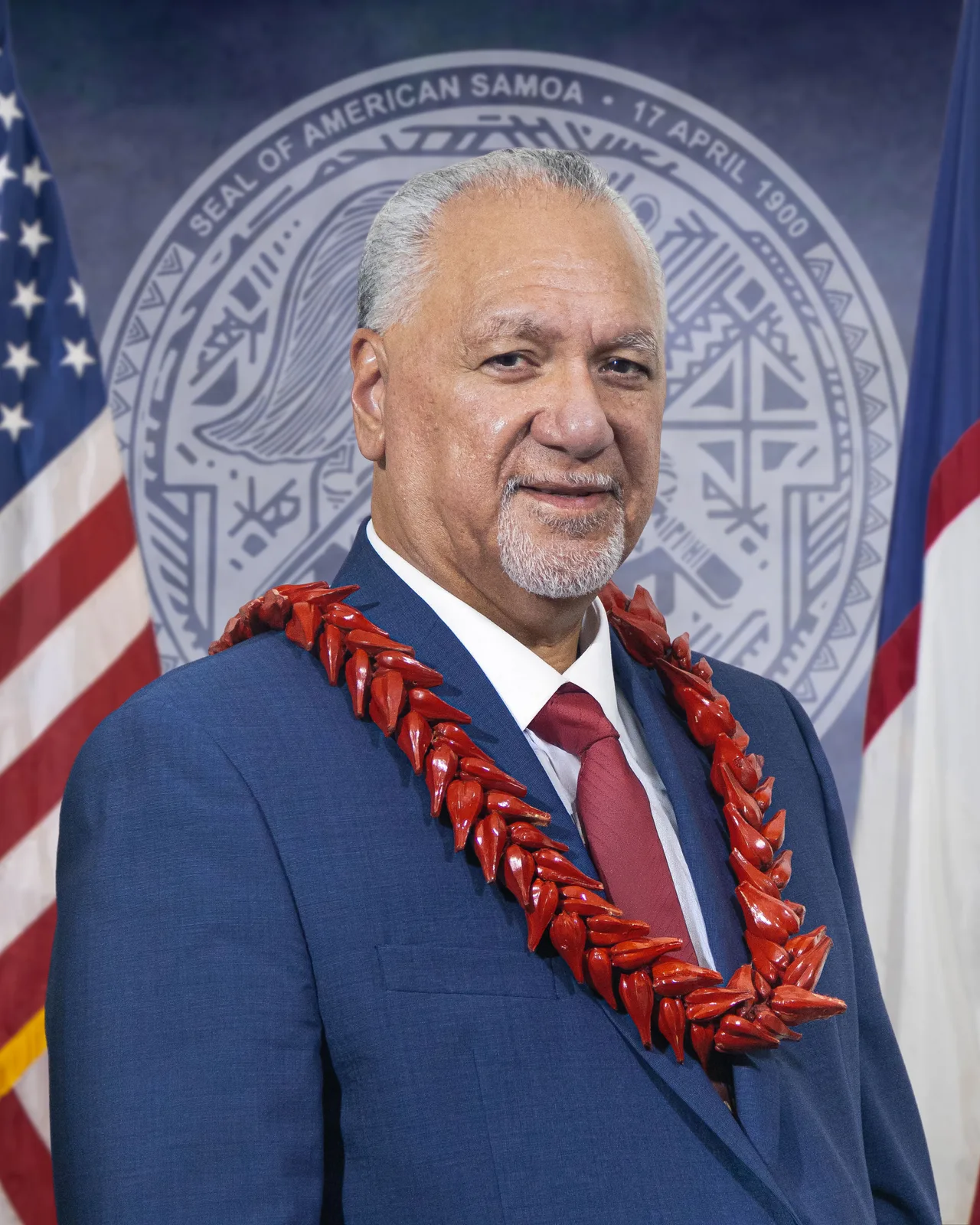
Pula Nikolao Pula
- Party
- Republican
- In Office Since
- January 3, 2025
- Term Ends
- January 2029
- Prior Role
- U.S. Interior Department, Office of Insular Affairs (1993-2022), including as its director
Pula Nikolao Pula is the ninth elected Governor of American Samoa. He defeated incumbent Democrat Lemanu Palepoi Mauga (governor 2021 to 2025) in the November 2024 runoff, becoming the territory's first Republican governor since 1993. Before running, Pula spent nearly three decades at the U.S. Interior Department's Office of Insular Affairs, the federal office that works with the territories, eventually leading it as director.
Other Current Territorial Officials
Lieutenant Governor
Pulu Ae Ae Jr.
In office since January 2025, elected on the Pula ticket. A former mayor of Pago Pago and member of the American Samoa House of Representatives. The Lieutenant Governor runs jointly with the Governor on a single ticket.
Attorney General
Gwen Tauiliili-Langkilde
Confirmed by the Fono in February 2025. American Samoa's Attorney General is appointed by the Governor rather than elected. The AG oversees the Department of Legal Affairs and represents the territorial government in litigation, including cases over citizenship and land.
President of the Fono Senate
Tuaolo Manaia Fruean
The Fono Senate President is a matai (chiefly title holder) selected by the Senate itself. The Senate is composed entirely of matai selected by county councils rather than by popular vote, preserving traditional Samoan chiefly governance within the formal legislative structure.
The Fono (American Samoa Legislature)
Senate
- Seats: 18 senators
- Terms: 4-year terms
The upper chamber. Senators are not popularly elected. They are matai (chiefly title holders) selected by county councils, preserving traditional Samoan governance. This makes the American Samoa Senate the only legislative chamber in any U.S. jurisdiction that is not chosen by popular vote.
House of Representatives
- Seats: 21 members (20 elected, plus 1 non-voting Swains Island delegate)
- Terms: 2-year terms
The lower chamber, popularly elected by district. All 20 elected seats are on the ballot every two years. The House is the more democratically accountable chamber and handles most budget and appropriations legislation.
American Samoa's Non-Voting Delegate to Congress
U.S. House Delegate (Non-Voting)
Aumua Amata Coleman Radewagen
First elected in 2014 and re-elected multiple times, Radewagen is the first woman to represent American Samoa in Congress and one of three Republicans among the five territorial delegates in 2026, with Guam's James Moylan and the Northern Mariana Islands' Kimberlyn King-Hinds. She can introduce legislation, serve on and vote in committees, and advocate for American Samoa's interests, but cannot vote on final passage of legislation on the House floor.
What the Delegate cannot do: Vote on final passage of any legislation, or participate in any floor vote that determines the law of the land for American Samoa's roughly 50,000 residents.
The American Samoa Court System
American Samoa has its own court system for local matters. The Trial Division of the High Court of American Samoa is the territory's primary trial court. The Appellate Division of the High Court of American Samoa handles appeals and is presided over by judges who include both U.S. associate justices and Samoan judges familiar with fa'asamoa and customary law. Uniquely, the High Court has a Land and Titles Division that handles matai title disputes and land cases under Samoan customary law, a function with no equivalent in any state court system. For federal matters, cases go to the U.S. District Court for the District of Hawaii (there is no separate federal district court in American Samoa), and appeals go to the U.S. Court of Appeals for the 9th Circuit, and ultimately to the U.S. Supreme Court.
📋 Current Officials
For the most current list of American Samoa government officials, visit americansamoa.gov.
American Samoa Through the Years
From the cradle of Polynesian civilization to the most unusual legal status in American territorial history, American Samoa has navigated colonialism, world war, and federal policy in ways that have preserved its ancient culture more completely than almost any other Pacific society.
Samoa is widely regarded as a cradle of Polynesian culture, the region from which the ancestors of Hawaiians, Tahitians, Maori, and other Polynesians set out on their voyages of Pacific colonization, spreading east and north over the following centuries. The archipelago was settled from western Polynesia around 3,000 years ago by makers of Lapita pottery.
The culture that developed there, built on the matai title system, the aiga, and fa'asamoa, is one of the most coherent and durable indigenous systems in the Pacific. Samoan oral tradition places the creation of humanity on the Manu'a Islands and the origin of the universe in the sky god Tagaloa.
The oldest known site in the group, at Mulifanua on the western island of Upolu, is a submerged Lapita village dated to about 2,900 years ago. The Pulemelei mound on Savai'i, a stepped stone platform roughly 200 by 165 feet, is the largest ancient structure in Polynesia.
The Tui Manu'a title-holders on Ta'u claimed spiritual precedence over all of Samoa and, in the chants, beyond it. The last Tui Manu'a, Elisala, ceded his islands to the United States in 1904 and, at U.S. insistence, agreed that the paramount title would not be formally filled again after his death in 1909.
The Dutch explorer Jacob Roggeveen became the first European to sight Samoa in 1722, and Louis-Antoine de Bougainville named the group the 'Navigator Islands' in 1768 for the Samoans' seamanship. Sustained European engagement began with London Missionary Society missionaries in 1830, led by John Williams, who found ready converts among chiefs seeking the mana and trade goods that came with Christianity.
The missionaries reduced Samoan to writing and translated the Bible, and conversion spread quickly. By the 1870s Samoa was a prize contested by the United States, Germany, and Britain, each backing rival factions in Samoan civil wars over the paramount titles.
In March 1889 a cyclone struck Apia harbor while three American and three German warships sat there in a standoff, wrecking or grounding all six and killing more than 200 sailors; the disaster forced the powers to negotiate rather than fight. Robert Louis Stevenson, who settled near Apia in 1890 and is buried on Mount Vaea, wrote a book about the crisis.
The rivalry was as much economic as strategic: German trading houses had built large copra and cotton plantations around Apia using imported labor, and the United States wanted the coaling station at Pago Pago that an 1878 treaty had already given its Navy the right to use.
The Tripartite Convention of 1899 ended the three-power contest by partitioning the archipelago: Germany took the western islands (today the independent state of Samoa), the United States took the eastern islands (American Samoa), and Britain dropped its claims in exchange for German concessions in Tonga, the Solomons, and West Africa.
Tutuila's chiefs, led by High Chief Mauga, signed a Deed of Cession to the United States on April 17, 1900. The Manu'a chiefs, under the Tui Manu'a Elisala, held out and signed their own cession on July 16, 1904; Congress did not formally ratify the combined cessions until 1929. The Samoans had no voice in the partition.
The U.S. Navy took possession at a flag-raising in Pago Pago on April 17, 1900, still marked as Flag Day, the territory's biggest holiday after Christmas, with days of traditional dancing, longboat (fautasi) races, and oratory. The first naval governor, Commander Benjamin Tilley, issued the founding regulations that became the basis of local government.
Western Samoa's path diverged sharply: it passed to New Zealand after World War I, suffered the 1918 influenza pandemic that killed roughly a fifth of the population, endured the nonviolent Mau independence movement and the 1929 'Black Saturday' shooting of its leader, and in 1962 became the first Pacific island nation to gain independence. American Samoa remained a U.S. territory.
Unlike Guam, where naval rule was harshly repressive, American Samoa's naval governance was paternalistic in a way that, paradoxically, helped preserve Samoan culture. The Navy governed through the existing matai system, recognized Samoan customary land tenure, which blocked the sale of land to outsiders and remains in force today, and taught in the Samoan language.
Naval governors held absolute authority and could be arbitrary, but the basic structure of village life survived. American Samoans served in both World Wars as nationals rather than citizens, and in World War II the territory was a major staging area whose Marine garrison briefly outnumbered the local population of about 12,000.
The one serious challenge to naval rule was the Mau movement of the 1920s, a peaceful protest demanding a written constitution, a role for chiefs in government, and civilian rule; the Navy arrested leaders and deported an American businessman who advised them, and a 1930 congressional commission recommended reforms that were mostly ignored for two decades.
A Japanese submarine briefly shelled the Pago Pago area on January 11, 1942, one of the few attacks on U.S. soil in the Pacific war, causing minor damage. Wartime construction left the airfield at Tafuna, roads, and a cash economy, and many Samoan men who had served or worked for the military left afterward for Hawaii and the mainland.
In 1951 administration passed from the Navy to the Department of the Interior, and appointed governors continued until the first popular election in 1977. The Fono, the bicameral legislature, took shape in the late 1940s, with Senate seats filled by matai chosen in the traditional way and House seats elected by popular vote.
The most unusual initiative of the era was educational television. Governor H. Rex Lee, with federal money, built a territory-wide instructional TV system in 1964 that beamed lessons from mainland teachers into every classroom, one of the most ambitious educational-television projects ever attempted, meant to modernize schooling overnight.
Results were mixed: test scores rose at first, but the system was expensive, it stunted the growth of local teaching capacity, and broadcasting mainland American content into Samoan villages had cultural effects that critics questioned. Classroom TV instruction was largely abandoned by the mid-1970s, though the stations kept broadcasting.
American Samoa adopted its own constitution in 1960, revised it in 1967, and got a non-voting delegate to the U.S. House in 1981, later than Guam or the Virgin Islands. Over time the Fono created a territorial High Court and expanded local courts, though the Interior Department still appoints the chief justice and associate justices.
The National Park of American Samoa, established in 1988 on land leased from village councils because Samoan law forbids the permanent sale of land, created the most unusual land arrangement in the park system and a model for indigenous land rights inside federal conservation.
The citizenship question has been litigated repeatedly. In Fitisemanu v. United States, a Utah federal judge ruled in 2019 that people born in American Samoa are citizens by the Fourteenth Amendment, but the Tenth Circuit reversed in 2021 and the Supreme Court declined to hear the case in 2022, leaving the nationals-not-citizens status in place. The American Samoa Government itself opposed automatic citizenship, arguing it could let courts strike down the communal-land protections.
The 2009 tsunami, the 2009 closure of the Chicken of the Sea cannery, and repeated StarKist cutbacks after federal minimum-wage increases produced the worst unemployment in the territory's modern history and heavy out-migration. Cyclones Ofa (1990), Val (1991), and Gita (2018) each caused major damage.
American Samoa draws national attention on gridiron football: an outsized number of NFL and Division I college players trace their roots to the territory or its diaspora, so much so that the sport, like the U.S. military, functions as a main route off the island. Aumua Amata Coleman Radewagen, elected in 2014, was the territory's first woman delegate to Congress.
American Samoa's Defining Moments in American History
These are the events that didn't just shape American Samoa. They revealed something essential about America's relationship with its territories and with indigenous peoples.
American Samoa occupies a legal position unlike any other U.S. jurisdiction: its people are U.S. nationals, not automatic citizens. They carry U.S. passports, can move freely to the mainland, and can serve in the military, but cannot vote in federal elections and must go through naturalization to become full citizens.
The Supreme Court has repeatedly declined to extend birthright citizenship to American Samoans, relying on the century-old Insular Cases. More unusually, the American Samoa Government has itself argued against automatic citizenship, contending that the Fourteenth Amendment could override the territorial laws that keep Samoan communal land from being sold to outsiders, protections it sees as essential to fa'asamoa.
A U.S. national's passport states that the bearer is a national and not a citizen, and naturalizing takes fees and, in practice, a move to a U.S. state. Roughly 90,000 to 100,000 people hold national status, nearly all of them American Samoans; it is a category left over from early-1900s colonial law that once also covered Filipinos.
Advocates on both sides are Samoan: some plaintiffs, backed by civil-rights groups, call the status a badge of second-class colonialism, while territorial leaders and many traditional chiefs want Congress, not the courts, to decide, so that any grant of citizenship can be written to preserve the land and matai systems. As of the mid-2020s the status was unchanged.
American Samoa is the only U.S. jurisdiction where land generally cannot be sold to anyone of less than one-half Samoan ancestry, a rule rooted in the fa'asamoa principle that land belongs to the aiga across generations and cannot be permanently alienated. The restriction is written into the territorial constitution.
It has spared American Samoa the land speculation and displacement of native people that occurred in Hawaii and much of the Pacific, and it is why the national park leases rather than owns its land. The same rule is at the heart of the citizenship fight: critics of automatic citizenship warn that Fourteenth Amendment equal-protection claims could be used to strike the land limits down as racial discrimination.
About 90 percent of land in the territory is communal, held by aiga under the authority of a matai and registered with the Territorial Registrar; the rest is individually owned or government land. Disputes over land and titles are the main business of the American Samoa High Court's Land and Titles Division, which applies Samoan custom rather than common law.
The restriction has costs as well: it makes it hard to use land as collateral for loans, complicates business investment, and gives matai significant power over family members who work the land. Courts have upheld the rule by treating 'Samoan ancestry' as a cultural rather than strictly racial category, reasoning that has never been tested at the Supreme Court.
During World War II American Samoa's position made it one of the most important U.S. staging areas in the South Pacific. After Japan's rapid 1942 advance, the United States poured in so many Marines that the military population briefly exceeded the civilian population of about 12,000.
A unit of American Samoan men, the Samoan Marines, served as a local defense battalion alongside U.S. Marines and were among the earliest Pacific Islanders in American uniform in the war. The huge garrison transformed the economy, sped up contact with mainland culture, and left lasting infrastructure, including the airfield that became Pago Pago International Airport.
The buildup began within weeks of Pearl Harbor because planners feared Japan would seize Samoa to cut the sea lane between the United States and Australia and New Zealand. On January 11, 1942 a Japanese submarine surfaced and shelled the Pago Pago naval station, one of very few attacks on U.S. territory in the Pacific; damage was minor, no one was killed, and two people were wounded.
Marine units, beginning with the 2nd Marine Brigade in January 1942, garrisoned and trained on Tutuila and in neighboring Western Samoa, and some went on to the Guadalcanal campaign; and the island hosted hospitals, ammunition dumps, and coastal gun batteries whose concrete emplacements still dot the ridgelines. The war economy and the exposure to the U.S. military set off a wave of enlistment and emigration that made military service the defining path of opportunity for American Samoan men for generations.
When 23-year-old Margaret Mead arrived on Ta'u in the Manu'a Islands in 1925, she was doing fieldwork for her mentor Franz Boas on whether adolescent turmoil is universal or shaped by culture. Her conclusion, published in 'Coming of Age in Samoa' in 1928, was that Samoan adolescence was largely free of the stress of American teenage years, implying that culture, not biology, drives human development.
The book sold hundreds of thousands of copies and became a touchstone of mid-century American thinking about human nature and social possibility. In 1983 the New Zealand anthropologist Derek Freeman published a detailed rebuttal, arguing that Mead had been misled by her young informants and that Samoan society was in fact competitive and sexually strict; the unresolved fight became one of the most bitter episodes in the history of anthropology.
Mead lived with a U.S. Navy pharmacist's family in the village of Luma, spoke limited Samoan, and did much of her interviewing through a small group of adolescent girls over about nine months. One of them, Fa'apua'a Fa'amu, said in a 1987 sworn statement that she and a friend had joked and lied to Mead about their sexual lives, a claim Mead's defenders dispute.
Many Samoans have long objected to the book on its own terms, saying it distorted fa'asamoa and Christian village life for an American audience. The episode is now taught less as a question of who was right than as a case study in the limits of short fieldwork, the pull of a researcher's expectations, and the politics of who gets to describe a culture.
The tuna-canning industry has been both American Samoa's economic lifeline and the source of recurring policy battles with Washington. The sharpest has been over the federal minimum wage. When Congress applied mainland minimum-wage increases to the territory in 2007, the government and cannery operators warned that higher labor costs would make the plants uncompetitive with overseas canneries and trigger mass layoffs.
The warnings largely came true: Chicken of the Sea closed its plant in 2009 and StarKist repeatedly cut shifts, producing the highest unemployment in the territory's modern history and heavy emigration. Congress responded by freezing and then slowing the scheduled increases, so American Samoa's minimum wage still sits below the mainland's on a separate ladder.
The industry also runs on a tariff preference: canned tuna from American Samoa enters the U.S. mainland duty-free while imports from Thailand and other producers pay a tariff. Trade deals such as a proposed U.S. agreement with Thailand and the Trans-Pacific Partnership repeatedly threatened that edge, and the territory lobbied hard, and mostly successfully, to keep it.
StarKist pleaded guilty in 2019 to fixing canned-tuna prices with its two main competitors and paid a 100-million-dollar U.S. criminal fine, and it has faced repeated wage-and-hour and worker-safety complaints at the Pago Pago plant. The episode captures the bind: the cannery is close to the only large private employer, so keeping it open has meant accepting a lower wage floor and a single foreign-owned firm with outsized leverage.
Territory Symbols and Quick Facts
| Official Status | Unincorporated Unorganized U.S. Territory |
| Capital | Pago Pago |
| Largest Village | Tafuna |
| U.S. Territory Since | April 17, 1900 (Deed of Cession, Tutuila) |
| Full Cession Complete | February 20, 1929 (Manu'a Islands) |
| Citizenship Status | U.S. Nationals (not automatic citizens) |
| Population | 49,710 (2020 Census) |
| Area | 76 sq miles (5 main islands) |
| Location | South Pacific Ocean, 14°S 170°W |
| Distance from Mainland | ~2,600 miles southwest of Hawaii |
| Time Zone | Samoa Standard Time (UTC-11, no DST) |
| Official Languages | Samoan and English |
| Territorial Bird | Manuma (Tooth-billed Pigeon) |
| Territorial Plant | Paogo (Ava) |
| Territorial Motto | "Samoa, Muamua le Atua" (Samoa, Let God Be First) |
| Currency | U.S. Dollar |
| Legislature | Fono (bicameral: Senate and House of Representatives) |
| Delegate to Congress | Non-voting Delegate to U.S. House |
| Presidential Vote | None. Nationals cannot vote for President. |
Did You Know?
American Samoa is the only U.S. jurisdiction where residents are U.S. nationals but not automatic U.S. citizens. They cannot vote in federal elections and carry U.S. passports marked 'U.S. National' rather than 'U.S. Citizen.' Uniquely, the American Samoa Government has itself opposed automatic citizenship, arguing it could threaten the traditional land tenure system that protects Samoan culture.
American Samoa produces approximately 17 percent of all canned tuna sold in the United States, making it one of the most important tuna processing centers in the world despite having a population of only about 50,000 people.
The National Park of American Samoa is one of the only national parks in the United States that operates on land it does not own. The federal government leases the land from Samoan villages under 50-year agreements because Samoan customary law prohibits the permanent alienation (sale) of land outside the aiga (extended family).
American Samoa is the southernmost territory of the United States, located in the Southern Hemisphere at approximately 14 degrees south latitude. The Southern Cross rides high in its night sky, though the constellation can also be seen low on the horizon from Hawaii, Guam, Puerto Rico, and the southern tips of Texas and Florida.
Samoa is widely considered the cradle of Polynesian culture, the archipelago from which the ancestors of Hawaiians, Maori, Tahitians, and other Polynesian peoples set out on their extraordinary ocean voyages beginning around 1000 CE. The oral tradition of the Manu'a Islands holds that humanity itself was created there.
American Samoans enlist in the U.S. military at one of the highest per-capita rates of any U.S. jurisdiction, despite being nationals rather than citizens. The military has historically been one of the most significant paths to economic opportunity and eventual U.S. citizenship for American Samoans.
Pago Pago Harbor, the territorial capital, sits inside a flooded volcanic caldera and is considered one of the finest natural deepwater harbors in the South Pacific. Its strategic value as a naval coaling station was the primary reason the United States sought to acquire American Samoa in the late 19th century.
Margaret Mead's 1928 book 'Coming of Age in Samoa,' based on fieldwork conducted on Ta'u in the Manu'a Islands, became one of the best-selling works of anthropology ever published and shaped American popular and academic understanding of adolescence, sexuality, and culture for decades. Her findings were later disputed by anthropologist Derek Freeman, touching off one of the most contentious debates in the history of the social sciences.
American Samoa uses the UTC-11 time zone, making it one of the last places on Earth to begin each new day. It is 1 hour behind Hawaii and 6 hours behind the U.S. East Coast (7 hours during Eastern Daylight Time).
The fa'asamoa, the traditional Samoan way of life centered on the matai (chiefly title) system, the aiga (extended family), and communal land ownership, remains one of the most intact indigenous cultural systems in the Pacific. American Samoa's constitution explicitly protects fa'asamoa and Samoan customary land law, making it unique among U.S. territories.
Quick Facts and Common Questions
Short answers to the questions people most often ask about American Samoa: where it is, how it became part of the United States, and why its people are U.S. nationals.
American Samoa is in the South Pacific Ocean, about 2,600 miles southwest of Hawaii. It is made up of five volcanic islands, Tutuila, Aunu'u, Ofu, Olosega, and Ta'u, plus two coral atolls, Rose Atoll and Swains Island. About 49,700 people lived there in the 2020 census, and it is the only inhabited U.S. territory south of the equator. Pago Pago is its capital.
No. The independent country of Samoa, formerly Western Samoa, lies just to the west. In 1899 the United States, Germany, and Great Britain divided the Samoan islands, and the eastern islands became American Samoa. Western Samoa was later governed by New Zealand and became independent in 1962.
After the 1899 agreement, the chiefs of Tutuila and Aunu'u ceded their islands to the United States on April 17, 1900, and the chiefs of the Manu'a islands followed in 1904. Swains Island was added in 1925, and Congress formally accepted the cessions in 1929. The Navy governed the territory until 1951, when the Department of the Interior took over.
American Samoa is an unincorporated and unorganized territory: Congress has never passed an organic act to set up its government. Instead it governs itself under its own constitution, adopted in 1967 under the authority of the Secretary of the Interior, who retains broad power over the territory.
No. People born in American Samoa are U.S. nationals, not U.S. citizens. They owe allegiance to the United States, carry U.S. passports, and can live and work anywhere in the country, but they cannot vote in federal elections or hold some jobs unless they become citizens, which they can do through naturalization. In 2021 a federal appeals court ruled in Fitisemanu v. United States that the Constitution does not automatically make them citizens, and the Supreme Court declined to review the case in 2022.
Voters have elected their own governor since 1977. The legislature, called the Fono, has a Senate of 18 members chosen by county councils according to Samoan custom, all of whom must be matai (chiefs), and a House of Representatives of 20 elected members plus a non-voting delegate from Swains Island. The High Court of American Samoa is the territory's top court, and there is no federal district court in the territory.
Since 1981 American Samoa has elected one non-voting delegate to the U.S. House of Representatives, who can vote in committee but not on the final passage of bills. The territory has no votes in the Electoral College, so residents cannot vote in the general election for president, though the parties include it in their nominating contests.
Most land in American Samoa, about 90 percent, is communal land held by extended families under the authority of their matai, according to fa'a Samoa, the Samoan way of life. Territorial law restricts transfers of communal and native land to people of at least 50 percent Samoan ancestry.
Sources & Further Reading
- American Samoa, Office of Insular Affairs
- Definitions of Insular Area Political Organizations, Office of Insular Affairs
- 2020 Census Island Areas Data Products, U.S. Census Bureau
- Nationals but not citizens of the United States at birth (8 U.S.C. 1408), Office of the Law Revision Counsel
- National Park of American Samoa, National Park Service
- Directory of Representatives, U.S. House of Representatives