
The U.S. Government

Because democracy only works when we understand it

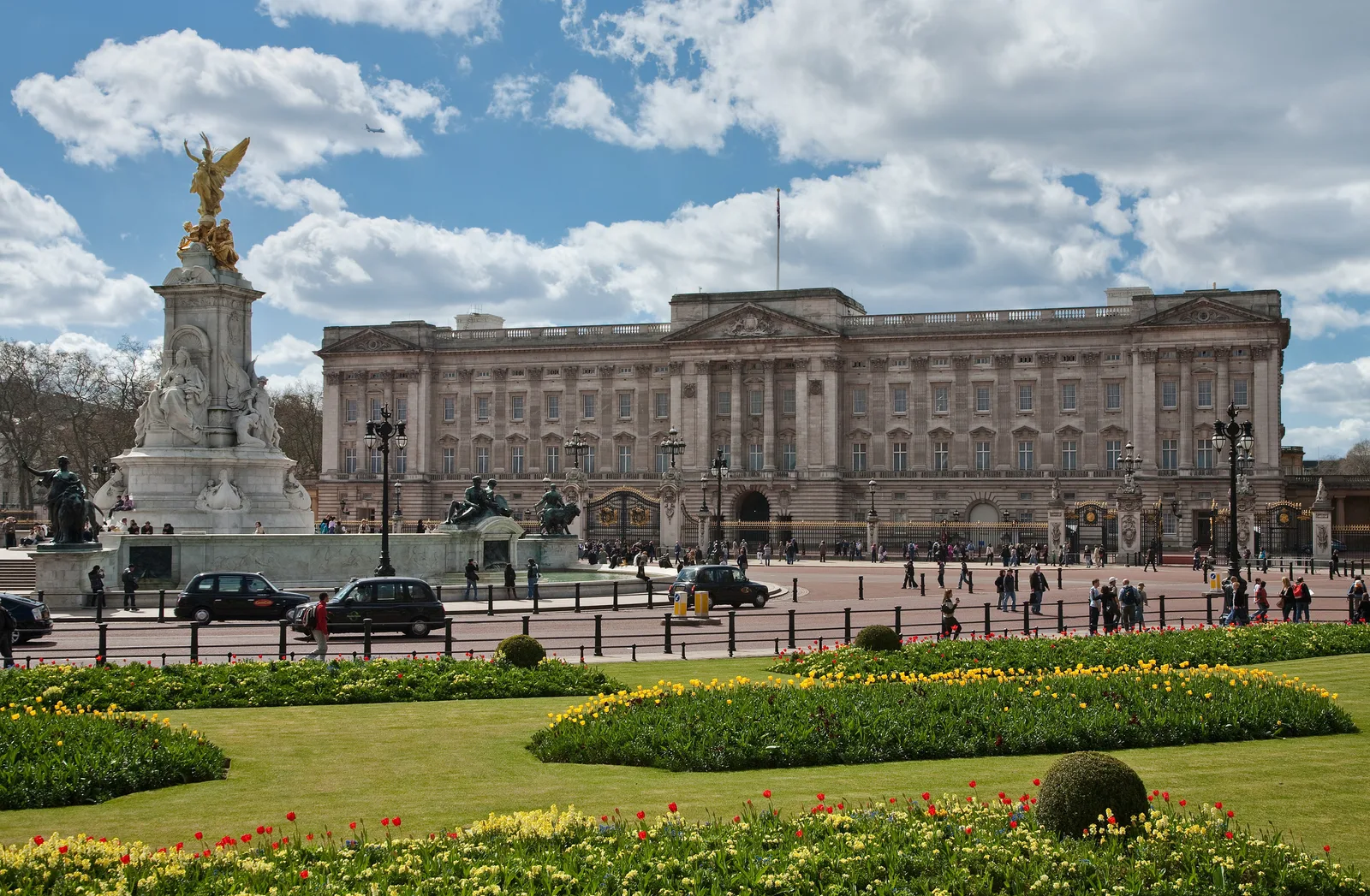
Buckingham Palace in London on a spring day, with the gilded Victoria Memorial on the left, black taxis on the road, visitors at the gates, and beds of tulips in the foreground
Government through Stories: Monarchy

The Bell, the Hero, and the Crown No Vote Could Take Back

A worn-out republic votes its greatest hero into power, then for life, then a crown. Every vote is a landslide, and none of them can be taken back.

Political system7 minute read

The Bell, the Hero, and the Crown No Vote Could Take Back

Imagine a river town in a high valley called Valdore.

For two hundred years, Valdore belonged to the Lords of the Hill, and their word was the law. Then one hard summer the people rose up, sent the last lord over the mountains, and took the town for themselves.

They wrote a constitution. The people would elect a council to make the laws and a mayor to carry them out, and no one could hold power for long. A court could strike down any law that broke the constitution. Anyone could print a newspaper, and soon Valdore had dozens.

Then they took the last lord's gold crown, melted it down, and cast it into a bell. They hung it in the square, and it rang on every election day. "No one will ever wear this again," they said. "From now on, it calls the people to choose."

The new republic was born angry. For one terrible year, people were jailed on a neighbor's word. The council printed paper money until a week's wages wouldn't buy a sack of flour. Councils rose and fell so fast that people stopped learning the members' names. And the lords of the neighboring valleys, afraid Valdore's ideas would spread, sent armies over the passes.

Through all of it, the town school was half closed, and the teachers who were left taught the songs of the uprising, not the articles of the constitution. A generation grew up knowing why the lords had to go, but not why the new rules mattered.

After ten years, the people of Valdore were tired. They stopped asking, "Does the constitution allow it?" They started asking a different question: "Who can make it stop?"

Everyone knew the answer. His name was Captain Arlo Venn.

Venn was young, brilliant, and lucky. He had led the town's ragged militia over the passes and beaten the valley lords again and again, and the newspapers printed his victories on the front page. Children played at being him.

On a cold November night, a few tired council members made a plan with him. They announced a plot against the town, moved the council out to the old hunting lodge "for its safety," and put Venn in charge of guarding it. When the members realized what was happening, they shouted for his arrest, and his soldiers cleared the hall. That night, the few who stayed behind voted the old government out of existence (a coup).

In the morning, the bell did not ring. Most of Valdore shrugged. Some were relieved. They had seen governments fall before.

Venn's friends wrote a new constitution. The council could no longer write laws, only vote yes or no on the ones Venn's advisers sent it. The court that could strike down laws gave way to a senate Venn's government chose. Three wardens would run the town, and Venn was named First Warden for ten years (first consul). The other two could only give advice.

Then Venn asked the people to approve it. Every voter would sign his name in one of two books: the yes book or the no book (a plebiscite). The yes book filled up. Ah, but the man who counted the books was Venn's own brother, and years later, people who went back through the books found that he had padded the count.

Still, most of the people who signed really did want him.

And for a while, Valdore got exactly what it had asked for.

The roads were safe again. A new town bank replaced the paper money with coins that held their value. Venn made peace with the old temple the uprising had shut, and for a time with the valley lords. His lawyers turned the town's tangle of old rules into one book every judge had to follow: no special courts for noble families, the same law for every man, rich or poor (a legal code). Wives, it's true, came out with fewer rights than their husbands, but no one was shut out by birth anymore. Venn opened new schools and gave medals to farmers' sons as well as nobles' sons, for what they did instead of who their fathers were.

People who had lived through the chaos wept with relief.

There were quieter changes too.

Valdore's dozens of newspapers became a handful, all printing what the First Warden's office approved (a free press). A new police chief put a listener in every tavern and kept a file on anyone worth watching (a secret police). The council members who argued too much were quietly not reappointed.

Two years later, with peace signed and the shops full, the town was asked again: should Arlo Venn be First Warden for life?

The yes book filled up again. The no book had only a few pages of names.

Then a plot against Venn's life was uncovered. If he died, his supporters said, the chaos would come back. The only way to make the order last was to let it pass to his heirs.

To show what happened to plotters, Venn's soldiers crossed the border at night and seized a young man from the old lords' family on a report that he was part of the plot. He was tried before dawn and shot by morning.

Then the senate named Venn Emperor of the Valley, and the people were asked to sign the books once more: should the crown pass to his sons?

Yes, said the books. Almost no one wrote no.

On coronation day, the High Abbot came down from the mountain to crown him, as abbots had once crowned the old lords. But when the moment came, Venn lifted the new crown from its cushion and set it on his own head.

Up in the square, the bell rang. It had been cast from the last crown the town had ever known, to call the people to choose. Now it rang because the choosing was over.

The people had voted for every step.

For the next ten years, the bell rang mostly for victories.

A man who had won his crown on the battlefield could not afford to stop winning. The valley lords kept forming new alliances against him, and he kept marching. Every spring, the recruiters came to Valdore with their lists, and more sons left. At last Venn marched the biggest army the valley had ever raised into the frozen lands to the east. Fewer than one in five came home.

There was no newspaper left to ask whether the war was wise. There was no council left that could say no. There was no election left that could change his mind.

In the end, it wasn't a vote that took the crown away. It was the armies of every valley he had fought, marching together into Valdore's square. They brought back with them the family the town had thrown out twenty-five years before: the Lords of the Hill.

The new lord kept Venn's book of laws. It was too good, and too popular, to throw away.

Years later, an old woman who had signed the yes book three times sat in the square under the bell. Her grandson asked whether she would do it again.

She thought of the chaos before Venn: the jailings, the worthless money, the councils that never lasted. She thought of the book of laws, and of the farmer's son down the road who had become a judge. Then she thought of her own two sons, who had marched east and never come back.

"I don't know," she said. "I truly don't know."

Valdore voted the crown onto Arlo Venn's head three times, each time by a landslide. It never got a vote to take it off.

Giving it away took three afternoons with a pen. It was more than thirty years before the people of Valdore elected their own leader again.

The Real Lesson

This story isn't saying that every king or queen is a tyrant, or that a strong leader who brings order is always a villain. Norway, Japan, and many other countries have monarchs today and are free democracies. Nor is it saying the people of Valdore were fools. They had lived through ten years of chaos, and what they got in return was real: safe roads, sound money, and a book of laws that still shapes much of the world.

The real issue is what the votes were for. Each one asked the people to hand over power with no way to take it back: no term limit, no court that could say no, no free press to report what went wrong. A vote can choose a leader. It cannot make that leader answer to anyone once the means of answering are gone.

A modern constitutional monarch is different for exactly that reason. The crown carries almost no power; an elected parliament governs, and the voters can replace it. The danger in Valdore was never the crown itself. It was everything the voters handed over along with it.

Watch for the warning signs: a celebrated hero treated as the only one who can save the country; votes that ask the people only to approve, never to choose between candidates; newspapers thinned out "for now"; and a term that grows from ten years, to life, to forever.

The real lesson is this: power handed over by a popular vote is still power without limits. A free people can vote a crown onto someone's head in an afternoon, but once the limits are gone, no vote can lift it off again.

Where That Road Led

Napoleon Bonaparte took power in the coup of 18 Brumaire, November 9 and 10, 1799. On February 7, 1800, his brother Lucien, the interior minister, announced that voters had approved the new constitution 3,011,007 to 1,562; historian Malcolm Crook writes that Lucien had effectively doubled the number of votes cast. On August 2, 1802, Napoleon was proclaimed consul for life after a vote of 3,653,600 to 8,272. The Senate proclaimed him Emperor of the French on May 18, 1804, a plebiscite approved the hereditary empire 3,521,675 to 2,579, and on December 2, 1804, in Notre-Dame, with Pope Pius VII present, he crowned himself.

About 2.2 million Frenchmen were called to arms between 1800 and 1815. Historians estimate that 900,000 to 1 million French soldiers died, and that the armies France fought lost about 2 million more. Of the more than 600,000 men Napoleon led into Russia in 1812, only about 112,000 made it back to the frontier (Britannica). He abdicated in April 1814, returned in 1815, lost at Waterloo on June 18, 1815, and the Bourbon kings came back. They kept his Civil Code, which is still in force in France today, heavily amended.

Rome took the same road eighteen centuries earlier. In January of 27 BC, after years of civil war, Octavian announced that he was returning the Republic to the Senate and people; the grateful Senate gave him the name Augustus, and he kept command of the armies. The Senate went on meeting and the old offices kept their names, but Rome never again chose its rulers in free elections.

What Was Lost

The story starts in a constitutional republic. These are the safeguards it had, and how each one was lost.

  • Safeguard: Voters who asked, "Does the constitution allow it?"

    How it was lost: After ten years of chaos, they asked only, "Who can make it stop?" Every vote after that was a vote for whoever could promise order.

  • Safeguard: Knowing what the constitution is for

    How it was lost: The half-closed school taught the songs of the uprising, not the articles of the constitution. A generation knew why the lords had to go, but not why the limits mattered.

  • Safeguard: A legislature that writes the laws

    How it was lost: The new council could only vote yes or no on laws Venn's advisers wrote, and members who argued too much were not reappointed. France's Legislative Body voted on laws without debating them; the Tribunate, which could debate, was purged in 1802 and abolished in 1807.

  • Safeguard: Courts that can strike down laws

    How it was lost: The court was replaced by a senate chosen by Venn's government, which approved each new step instead of checking it, as France's Senate did when it proclaimed the Empire in 1804.

  • Safeguard: Elections that offer a real choice

    How it was lost: The people were never again asked to choose between candidates, only to sign the yes book or the no book on a question the government had already decided.

  • Safeguard: Limits on how long anyone holds power

    How it was lost: Ten years became life, and life became a crown that passed to his sons.

  • Safeguard: A free press

    How it was lost: Dozens of newspapers became a handful, all printing what the First Warden's office approved. In France, a January 1800 decree closed 60 of the 78 papers in Paris, and by 1811 only four were left.

  • Safeguard: Freedom from a secret police

    How it was lost: A police chief put a listener in every tavern and kept files on anyone worth watching. Under Joseph Fouché, Napoleon's minister of police, that office also controlled the press.

  • Safeguard: A fair trial

    How it was lost: A young man from the old lords' family was seized across the border, tried before dawn, and shot by morning.

  • Safeguard: A government that answers for its wars

    How it was lost: With no press, council, or election left to say no, one man decided every war, and the wars never stopped.

What the Story Shows

  • In the story: They melted the last lord's crown into a bell

    In real life: France's revolution overthrew its king, Louis XVI, and declared a republic in 1792. Like Valdore, it began with high hopes and years of turmoil, including the Terror of 1793 and 1794.

  • In the story: Wages that wouldn't buy a sack of flour, and armies over the passes

    In real life: Revolutionary France paid its bills with paper money that lost most of its value, and from 1792 it fought coalitions of European monarchies afraid the revolution would spread to their own countries.

  • In the story: Captain Arlo Venn, young, brilliant, and lucky

    In real life: Napoleon Bonaparte became a national hero through his victories in Italy in 1796 and 1797, and he made sure the newspapers told the story.

  • In the story: The council moved to the hunting lodge "for its safety," and the hall cleared by soldiers

    In real life: In the coup of 18 Brumaire (November 9 and 10, 1799), the legislature was moved out of Paris to Saint-Cloud over a supposed plot. When deputies of the Council of Five Hundred turned on Bonaparte, his brother Lucien called in the troops, who drove them out of the hall.

  • In the story: Most of Valdore shrugged. Some were relieved.

    In real life: Historian Malcolm Crook describes the public reaction to Brumaire as widespread apathy, with relief in some places that the Republic had been saved.

  • In the story: Venn was named First Warden for ten years

    In real life: The Constitution of the Year VIII made Bonaparte First Consul for ten years. The other two consuls could only advise.

  • In the story: The man who counted the books was Venn's own brother

    In real life: Lucien Bonaparte, the interior minister, announced on February 7, 1800, that the constitution had passed 3,011,007 to 1,562. Historian Malcolm Crook writes that Lucien effectively doubled the number of votes cast.

  • In the story: A new town bank, and peace with the old temple

    In real life: The Bank of France was founded on February 13, 1800. The Concordat with the Catholic Church was signed on July 15, 1801, and the Peace of Amiens with Britain on March 27, 1802.

  • In the story: One book of laws that every judge had to follow

    In real life: The Civil Code of March 21, 1804, later called the Napoleonic Code, made all men equal before the law and ended privileges of birth, though it gave wives fewer rights than their husbands. It was copied or adapted across Europe and Latin America.

  • In the story: Medals for farmers' sons as well as nobles' sons

    In real life: The Legion of Honour, created on May 19, 1802, rewarded soldiers and civilians for merit rather than birth, and a law of May 1, 1802, created a state lycée (high school) in every département.

  • In the story: Should Arlo Venn be First Warden for life?

    In real life: After the Peace of Amiens, a plebiscite made Napoleon consul for life, proclaimed on August 2, 1802, by 3,653,600 votes to 8,272.

  • In the story: A young man from the old lords' family, seized across the border

    In real life: In March 1804, French troops seized the Duke of Enghien, a member of the Bourbon royal family, in Baden on intelligence linking him to a royalist plot. A military court tried him at Vincennes, and he was shot on March 21, 1804.

  • In the story: Venn lifted the crown and set it on his own head

    In real life: The Senate proclaimed Napoleon emperor on May 18, 1804, and a plebiscite approved the hereditary empire 3,521,675 to 2,579. At his coronation in Notre-Dame on December 2, 1804, with Pope Pius VII present, he crowned himself.

  • In the story: Into the frozen lands to the east. Fewer than one in five came home.

    In real life: More than 600,000 men marched into Russia in June 1812; Britannica puts the number who made it back to the frontier at about 112,000. Historians estimate that 900,000 to 1 million French soldiers died in the wars of 1800 to 1815.

In real history

France voted Napoleon Bonaparte from First Consul to hereditary emperor between 1799 and 1804, and Rome's Augustus kept the Republic's offices while ruling alone from 27 BC. Today's monarchies range from absolute ones, such as Saudi Arabia, to constitutional ones, such as Norway and Japan, where the monarch reigns but elected governments rule.

You Decide

What draws people to it

  • Order after chaos. After ten years of revolution, the Terror, and runaway paper money, the Consulate brought safe roads, the Bank of France (1800), and peace with the Church and, for a time, with Britain.
  • Laws that last. The Civil Code of 1804 ended privileges of birth and is still in force in France, heavily amended, more than two centuries later.
  • A head of state above party politics. In 1905, Norwegians voted 259,563 to 69,264 to keep a monarchy, and Prince Carl of Denmark became King Haakon VII. Japan's 1947 constitution makes the emperor "the symbol of the State and of the unity of the People" with no "powers related to government."
  • Freedom and a crown can live together. Freedom House's Freedom in the World 2026 rates Norway, a constitutional monarchy, Free, 99 out of 100.

What it costs

  • Endless war. With no one able to say no, Napoleon's wars ran from 1803 to 1815, and historians estimate that 900,000 to 1 million French soldiers died, with about 2 million more lost by the armies France fought.
  • Silence. In 1800, a decree closed 60 of the 78 newspapers in Paris; by 1811 only four were left, and the minister of police, Joseph Fouché, oversaw the press.
  • No way to choose. In an absolute monarchy, rule passes by birth. Freedom House rates Saudi Arabia, an absolute monarchy where no national officials are elected, Not Free, 9 out of 100.
  • A crown can reach for power again. On February 1, 2005, Nepal's King Gyanendra dismissed the government and took direct rule; in 2008, an elected assembly abolished the monarchy by a vote of 560 to 4.

France voted three times, by huge majorities, to give one man more power, and got order, a lasting code of laws, and a decade of war. Norway voted for a king in 1905 and stayed free, because its king had no power to take. When people are worn out by chaos, how much power should they hand to someone who promises to end it, and what should they make sure they can always take back?

Read the opposite road, a kingdom that slowly becomes a democracy, in The King, the Council, and the Guards That Took 800 Years, see why the American founders chose a republic over a crown on The Founders' Choice, and see how the Constitution keeps any one person from taking total control on Safeguards Against Tyranny.

Why a republic is easy to lose and hard to win back

See all the stories in Government through Stories

Last updated: