

What The Interior Department Does
Established March 3, 1849, The U.S. Department of the Interior is one of the fifteen Cabinet-level departments of the U.S. federal government.
The Interior Department manages America's public lands and natural resources, roughly 500 million acres, an area larger than Alaska and Texas combined, including national parks, wildlife refuges, and land overseen by the Bureau of Land Management. It also manages offshore energy leasing in federal waters and the natural resources beneath public lands.
A significant part of the department's mission involves its government-to-government relationship with 574 federally recognized Native American tribes, administered through the Bureau of Indian Affairs, which manages tribal trust lands, funds tribal governments, and oversees federal treaty obligations dating back over a century.
The department also runs the National Park Service, which welcomes more than 300 million visitors annually across 400-plus park units, the U.S. Fish and Wildlife Service, which protects endangered species and migratory birds, and the U.S. Geological Survey, which monitors earthquakes, volcanoes, and the nation's water resources.
Interior is also a major revenue collector: its Office of Natural Resources Revenue takes in roughly $10 to $15 billion a year in royalties, rents, and bonus bids from oil, gas, coal, and hardrock mining on federal and tribal land and offshore, most of which is shared with states, tribes, and conservation funds. In the arid West it operates the Bureau of Reclamation's dams and canals, which store and deliver water to about 10 million acres of farmland and 31 million people.

The Secretary of the Interior
The Secretary of the Interior leads The Interior Department, sits on the President's Cabinet, and is confirmed by a majority vote of the U.S. Senate.
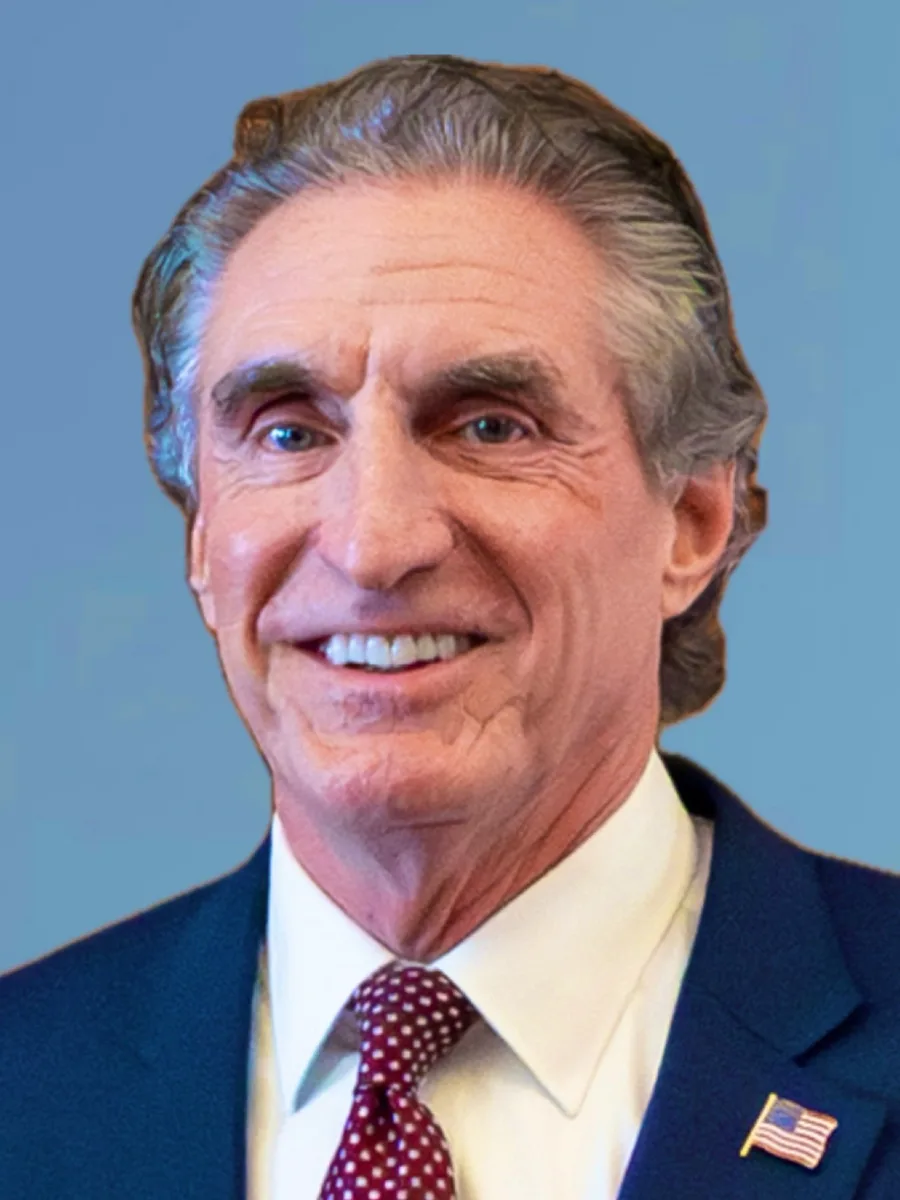
Current Secretary of the Interior
Doug Burgum
In office since
January 30, 2025
Prior role: Governor of North Dakota (2016-2025)
Doug Burgum was confirmed as Secretary of the Interior on January 30, 2025, by an 80-17 vote, after serving two terms as governor of North Dakota, where energy production and natural resource management were central issues throughout his tenure. He also briefly ran for the 2024 Republican presidential nomination.
Before entering politics, Burgum built a career in software and technology, serving as an executive at Microsoft after it acquired Great Plains Software, the company he had previously led as CEO. He also chairs the newly created National Energy Council, coordinating energy policy across multiple federal agencies.
Major Sub-Agencies & Bureaus
The Interior Department carries out its mission through operating divisions and sub-agencies, each with its own specific mandate.
The National Park Service manages 400-plus park units, including 63 sites carrying the formal designation 'National Park,' from Yellowstone to the Grand Canyon, along with national monuments, historic sites, and battlefields, drawing more than 300 million visitors each year, more than the combined attendance of every major American professional sports league.
Created in 1916 with a dual mission that requires the agency to both preserve park resources unimpaired for future generations and make them accessible to the public today, a balancing act that generates recurring policy debates over development, overcrowding, and conservation funding.
The service has about 20,000 permanent and seasonal employees plus hundreds of thousands of volunteers, and its parks span more than 85 million acres. It also runs the National Register of Historic Places and administers preservation grants and the Historic Preservation Tax Incentives program.
It carries a deferred-maintenance backlog long estimated at more than $20 billion, for roads, trails, water systems, and historic buildings; the 2020 Great American Outdoors Act created a dedicated fund, drawn from energy revenue, to work it down over five years.
The Bureau of Indian Affairs administers the federal government's trust responsibilities to the 574 federally recognized tribes, managing tribal trust lands and natural resources, funding tribal governments and social services, and overseeing law enforcement on many reservations through the Bureau of Indian Affairs Office of Justice Services.
The bureau's relationship with tribal nations is grounded in treaties, federal statutes, and the unique legal doctrine of tribal sovereignty, which recognizes tribes as distinct governments with a government-to-government relationship to the United States rather than simply another category of domestic constituency.
The BIA is one of the oldest federal agencies, established within the War Department in 1824 and moved to the new Interior Department in 1849. Its history includes running the boarding-school system that forcibly assimilated Native children, a legacy Interior's Federal Indian Boarding School Initiative formally documented; its 2024 final report identified 417 such schools and at least 973 child deaths.
The related Bureau of Indian Education funds or operates 183 schools serving about 46,000 students, and the Bureau of Trust Funds Administration manages tens of billions of dollars in tribal and individual Indian trust accounts, the subject of the long-running Cobell litigation that the government settled for $3.4 billion in 2010.
The Bureau of Land Management oversees roughly 245 million acres of public land, more than any other federal agency, managing grazing leases, mining and energy development, recreation, and wildlife habitat under a 'multiple use' mandate that requires balancing competing demands on the same land.
The agency manages the vast majority of federal land in the western United States, where BLM parcels are frequently interspersed with private and state land in a checkerboard pattern that dates back to 19th-century railroad land grants, complicating land-use planning to this day.
Its "multiple use and sustained yield" mandate comes from the Federal Land Policy and Management Act of 1976, which ended the era of routinely selling off public land and directed the BLM to keep most of it in federal hands and plan its uses. It also manages about 700 million acres of subsurface mineral rights beneath land owned by others.
The BLM administers the 1872 General Mining Law, which still lets prospectors stake hardrock claims for gold, silver, copper, and lithium with no federal royalty, a rule critics have tried to change for decades. It also runs the wild horse and burro program, which manages tens of thousands of animals on the range and in holding facilities.
The Fish and Wildlife Service administers the Endangered Species Act, protecting more than 1,600 species listed as threatened or endangered, and manages the National Wildlife Refuge System, which spans more than 850 million acres of land and water dedicated to conservation.
The agency is widely credited with the recovery of iconic species including the bald eagle, which was removed from the endangered species list in 2007 after decades of protection, though it remains protected under separate federal laws specific to eagles.
It also enforces the Migratory Bird Treaty Act of 1918 and the Lacey Act against wildlife trafficking, runs national fish hatcheries, and administers the Duck Stamp, a hunting-license stamp whose sales have funded the purchase of millions of acres of wetland refuge since 1934.
Refuge System revenue is boosted by the Pittman-Robertson Act of 1937, an excise tax on firearms and ammunition that channels hundreds of millions of dollars a year to state wildlife agencies, one of the earliest and most durable "user pays" conservation funding models in the country.
From March 3, 1849 to Today
The predecessor of The Interior Department was land, Indian affairs, and pension functions scattered across the Treasury, War, and State Departments. Here is how the department reached its current form.
Congress established the Interior Department in 1849 as a catch-all domestic agency, consolidating the General Land Office, the Bureau of Indian Affairs, the Pension Office, and the Patent Office, functions that had previously been scattered across the Treasury, War, and State Departments.
Because it absorbed such a wide range of unrelated functions, the department was sometimes derisively called the 'Department of Everything Else' in its early decades, and it has shed several of its original responsibilities over time, including the Patent Office, which later moved to Commerce.
Over the years it also ran, and then handed off, the census, federal prisons, the territories, and even for a time the water and sewer systems and the police of Washington, D.C. Its remaining core, land, water, wildlife, minerals, and Indian affairs, took shape mainly in the conservation era of the early 20th century.
Congress established Yellowstone as the world's first national park in 1872, placing it under Interior Department administration and setting a global precedent for government-protected natural areas that dozens of other countries later followed with their own national park systems.
For its first decades, Yellowstone was managed with minimal federal staff and even relied on the U.S. Army for law enforcement and protection between 1886 and 1918, before the newly created National Park Service took over permanent civilian management.
The creation of the park also displaced Native peoples who had used the region for millennia, a pattern repeated at other early parks. The "Yellowstone model" of uninhabited wilderness preservation was later widely copied and, in recent decades, widely reexamined for that reason.
The National Park Service Organic Act of 1916 created a dedicated bureau to manage the growing collection of national parks and monuments, giving it the dual mandate to conserve park resources unimpaired while also providing for public enjoyment, language still cited in park management decisions today.
Stephen Mather, a wealthy borax industrialist and the Park Service's first director, personally funded early park infrastructure and publicity campaigns out of pocket, helping build the public support that sustained the fledgling agency through its first years.
The Antiquities Act of 1906 had already given presidents the power to protect land as national monuments by proclamation, without Congress; presidents of both parties have used it hundreds of times, from Devils Tower to the Grand Canyon (later made a park) to large marine monuments, and some designations and reductions have been fiercely contested.
The Indian Reorganization Act of 1934 reversed decades of federal policy that had broken up tribal lands through allotment, instead encouraging tribes to reestablish self-governing structures and restoring some tribal land bases, a major shift in how the Bureau of Indian Affairs approached its relationship with tribal nations.
The law is often described as the beginning of the 'Indian New Deal,' reflecting the broader reformist spirit of the era, though its implementation was uneven and many of its self-governance goals were not fully realized until further reforms decades later.
Before 1934, the 1887 Dawes Act had cut tribal landholdings from about 138 million acres to roughly 48 million by transferring "surplus" land to non-Native settlers. The self-determination era, in which tribes contract to run their own federal programs, was cemented by the Indian Self-Determination and Education Assistance Act of 1975.
The Endangered Species Act of 1973 gave the Fish and Wildlife Service (jointly with NOAA Fisheries for marine species) broad authority to list species as threatened or endangered and to protect their critical habitat, becoming one of the strongest environmental protection laws in the world.
The law has been credited with preventing the extinction of numerous species, including the bald eagle and the American alligator, though it remains a frequent flashpoint in disputes between conservation goals and land development or resource extraction interests.
The Supreme Court affirmed the law's force in TVA v. Hill (1978), halting a nearly finished dam to protect the tiny snail darter; Congress responded by creating a Cabinet-level "God Squad" that can exempt projects, though it has almost never done so. Fights over the northern spotted owl and Pacific Northwest logging in the 1990s made the act a national political symbol.
Defining Moments
Events that reshaped the department's authority, structure, or public role.
Interior Secretary Albert Fall secretly leased Navy petroleum reserves at Teapot Dome, Wyoming to private oil companies in exchange for personal bribes, a scandal that led to Fall's conviction, making him the first Cabinet secretary in U.S. history imprisoned for actions taken in office.
The scandal prompted lasting reforms to how federal officials handle public land leasing decisions and remained the standard reference point for government corruption in American politics until the Watergate scandal five decades later eclipsed it in public memory.
Fall had persuaded President Harding to transfer the reserves from the Navy to Interior, then leased Teapot Dome to Harry Sinclair and the Elk Hills reserve in California to Edward Doheny without competitive bidding, in exchange for roughly $400,000 in cash and cattle disguised as a "loan."
The Supreme Court voided the leases in 1927, holding they had been obtained by fraud. The affair produced McGrain v. Daugherty (1927), a landmark ruling affirming Congress's power to compel testimony in investigations, a precedent still cited in modern subpoena fights.
The Dust Bowl of the 1930s, a severe drought and soil erosion crisis across the Great Plains, prompted the Interior Department and other federal agencies to launch major land conservation and soil management programs, reshaping federal land-use policy for decades afterward.
The crisis drove home the consequences of unsustainable agricultural practices on marginal public and private lands, and it directly influenced the creation of federal soil conservation programs that continue to guide how the Bureau of Land Management approaches rangeland health today.
The Taylor Grazing Act of 1934, administered by an Interior agency that later became part of the BLM, ended the open, unregulated grazing of the public domain by creating grazing districts, permits, and fees, the framework still in use on about 155 million acres of BLM rangeland.
Interior Secretary Harold Ickes, who held the job for a record 13 years under Franklin Roosevelt, also ran the Public Works Administration and pushed large dam and irrigation projects, expanding the Bureau of Reclamation's role in the West at the same time.
The Standing Rock Sioux Tribe's 2016 protests against the Dakota Access Pipeline, which was routed near tribal water sources and land the tribe considers sacred, drew national attention to the Interior Department's role in balancing energy development against tribal sovereignty and environmental concerns.
The dispute, which involved the Army Corps of Engineers' permitting authority as much as the Interior Department's own jurisdiction, became a landmark moment in the broader national conversation about tribal consultation requirements in federal infrastructure and energy permitting decisions.
Thousands of people, including members of hundreds of tribes, camped near the site for months. In December 2016 the Obama administration declined to grant the final easement and ordered a full environmental review; the incoming administration reversed that in early 2017 and the pipeline began operating.
A federal court later found the environmental review inadequate and, in 2020, ordered the pipeline emptied pending a new one, before an appeals court allowed oil to keep flowing while the review proceeded. The case is frequently cited in debates over the National Environmental Policy Act and tribal consultation.
Notable Programs & Initiatives
A selection of the programs The Interior Department runs, and what each one is actually for.
Created in 1965 and funded largely through royalties paid by offshore oil and gas drilling, this fund has provided billions of dollars to acquire and protect parkland and support outdoor recreation projects in nearly every county in the country, from national parks down to local neighborhood playgrounds.
Congress permanently and fully funded the program at $900 million annually starting in 2020 through the Great American Outdoors Act, ending decades of inconsistent, year-to-year funding battles that had previously left much of its authorized funding diverted to other purposes.
The design is deliberate: revenue from the depletion of one public resource, offshore oil, is reinvested in permanent public assets, parks and recreation land. About half the money historically goes to federal land acquisition and half to matching grants for state and local parks.
Since 1965 the fund has supported projects in more than 98 percent of U.S. counties, and its state-grant side has helped build or improve tens of thousands of local ballfields, trails, and swimming pools that most users never connect to a federal program.
The Bureau of Ocean Energy Management leases federal offshore areas for oil, gas, and, increasingly, wind energy development, generating billions of dollars in royalty revenue for the federal treasury and coastal states while managing the environmental review process required before drilling or construction can begin.
Offshore leasing policy shifts significantly between administrations, with recent years seeing expanded leasing for oil and gas alongside a rapidly growing federal offshore wind program intended to supply power to East Coast population centers.
The federal offshore area, the Outer Continental Shelf, is governed by a 1953 law and produces roughly 15 percent of U.S. crude oil, almost all of it from the Gulf of Mexico; Pacific, Atlantic, and eastern Gulf waters have been under leasing moratoriums for decades. A companion safety agency, the Bureau of Safety and Environmental Enforcement, was split off after the 2010 Deepwater Horizon blowout, which killed 11 workers and caused the largest marine oil spill in U.S. history.
The first commercial-scale U.S. offshore wind farms began delivering power off the Northeast in the mid-2020s, and BOEM has held lease auctions raising billions of dollars for wind areas off the Atlantic, Gulf, and California coasts.
The U.S. Geological Survey operates the nation's earthquake, volcano, and streamflow monitoring networks, providing the real-time data that powers earthquake early-warning alerts, volcano eruption forecasts, and flood predictions used by emergency managers across the country.
USGS scientists also maintain the long-term water and mineral resource data the country relies on for everything from urban water planning to assessing the domestic supply of critical minerals needed for defense and clean energy technology.
The agency runs about 8,000 streamgages, the ShakeAlert earthquake early-warning system now live on the West Coast, and volcano observatories in Alaska, the Cascades, Yellowstone, Hawaii, and California. It is the science agency of the department and does no regulation itself.
USGS also produces the National Seismic Hazard Maps that underlie building codes, publishes the annual Mineral Commodity Summaries that track U.S. import reliance on materials like rare earths, and makes the Landsat satellite imagery archive freely available, an early and influential open-data program.
Federal law and executive orders require Interior and other agencies to formally consult with tribal governments before taking actions that could affect tribal lands, resources, or treaty rights, a process meant to give tribes a meaningful voice in decisions ranging from pipeline permits to national monument designations.
The consultation requirement has become an increasingly prominent feature of major infrastructure and energy project reviews, and disputes over whether consultation was conducted adequately have repeatedly ended up in federal court in recent years.
The current framework rests on Executive Order 13175 (2000), which every administration since has reaffirmed, plus statutes such as the National Historic Preservation Act and the Native American Graves Protection and Repatriation Act of 1990. Consultation is a process obligation, not a veto: agencies must seek tribal input in good faith but can still proceed over tribal objection.
Recent practice has expanded to recognizing tribal "Indigenous Knowledge" in federal science and land decisions and to co-stewardship agreements letting tribes help manage ancestral lands now inside national parks, forests, and monuments such as Bears Ears in Utah.
How This Affects Everyday Americans
Any American who has visited a national park, hiked on public land, or fished in a national wildlife refuge has experienced the Interior Department's work directly. The 300 million-plus annual national park visits alone make it one of the most tangible, visible parts of the federal government in ordinary people's lives.
Interior's management of offshore and onshore energy leasing on public lands affects domestic energy prices and production levels, while its Endangered Species Act enforcement can directly shape what kinds of development are permitted on private land near protected habitat.
For the members of the 574 federally recognized tribes (about 9.7 million Americans identified as American Indian or Alaska Native, alone or in combination, in the 2020 Census), Interior's Bureau of Indian Affairs and Bureau of Trust Funds Administration manage billions of dollars in tribal trust assets and directly administer federal treaty and trust obligations that shape daily governance on reservations nationwide.
In the West, the Bureau of Reclamation's dams and canals supply drinking water to cities from Denver to Los Angeles and irrigation to a large share of the region's farms, so Interior's decisions on how to divide a shrinking Colorado River reach millions of faucets and much of the nation's winter produce.
Quick Facts & Figures
Key statistics and reference information about The Interior Department.
| Established | March 3, 1849 |
| Headquarters | Stewart Lee Udall Interior Building, Washington, D.C. |
| Current Secretary | Doug Burgum |
| Annual Budget | ~$18 billion (FY2025 enacted) |
| Employees | ~67,000 |
| Public Land Managed | ~500 million acres |
| Federally Recognized Tribes | 574 |
| Succession Order | 8th in line for the presidency |
Did You Know?
Interior manages about 500 million acres of federal land, roughly the size of Alaska and Texas combined, and about one-fifth of all land in the United States.
Yellowstone, established in 1872, was the world's first national park and predates the National Park Service itself by 44 years; the Army actually patrolled it for over three decades.
The Interior Secretary chairs the newly created National Energy Council, coordinating energy policy across multiple federal agencies as of 2025.
The National Park Service welcomes more than 300 million visitors a year, more than attend every major U.S. professional sports league's games combined.
Interior Secretary Albert Fall became the first Cabinet secretary in U.S. history imprisoned for crimes committed in office, following the 1920s Teapot Dome bribery scandal.