
About Alaska
The name Alaska comes from the Aleut word "Alyeska," meaning "the great land" or "the mainland," used by the indigenous Unangan people to distinguish the Alaskan mainland from the surrounding islands. Russian explorers and fur traders adopted the name in the 18th century when they established a presence in the region, and it passed into English when the United States purchased the territory from Russia in 1867. Secretary of State William Seward, who negotiated the purchase, was mocked at the time with the nickname "Seward's Folly," but Alaska proved to be anything but.
Alaska is not just the largest state, it is so much larger than everything else that it exists in a category of its own. At 663,268 square miles, it is bigger than the next three largest states combined. If it were a country, it would rank as the 18th largest in the world, just behind Iran.
Yet fewer people live in Alaska than in the city of Memphis, Tennessee. Most of the state has no roads, no power lines, and no running water. Hundreds of communities are accessible only by small plane or boat. In winter, some parts of Alaska see temperatures of −60°F and darkness for months at a time. In summer, the sun doesn't set for weeks.
Alaska's story is one of extraordinary natural wealth, in fish, fur, gold, and oil, and the complicated history of who got to benefit from it. The Indigenous peoples who have lived here for thousands of years, the Russian colonizers, the American government, the oil companies, and the Alaskans who built a modern state in one of the harshest environments on Earth have all shaped it into something genuinely unlike anywhere else in America.
Geography, Six Distinct Regions
Alaska's sheer size means it contains an extraordinary range of landscapes, from temperate rainforests to Arctic tundra, volcanic islands to glacier-carved fjords.
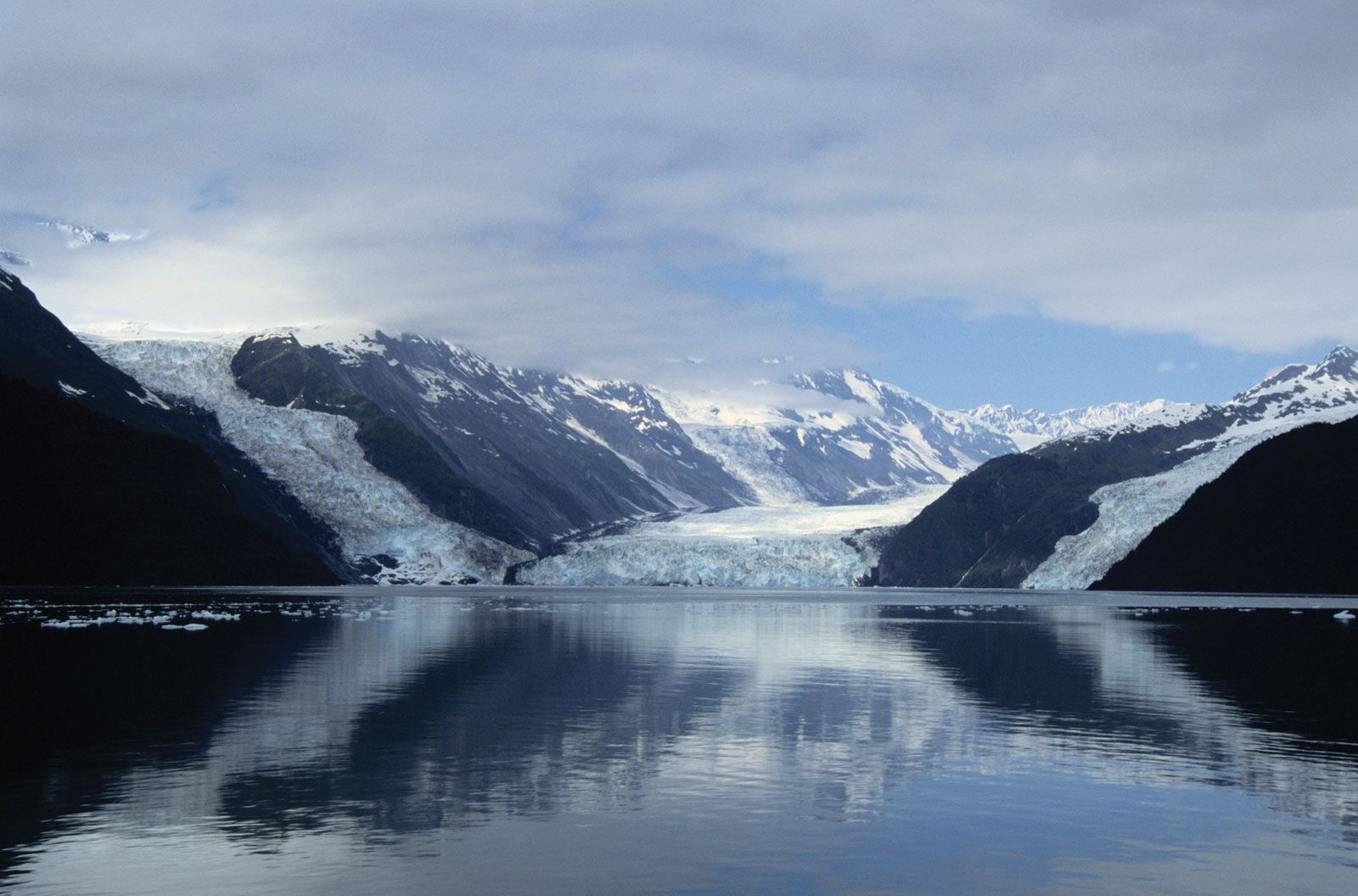
A long narrow strip of coastline clinging to the edge of Canada, cut through with fjords, glaciers, and temperate rainforest. This is where the capital, Juneau, sits, accessible only by sea or air, making it one of the most unusual state capitals in the country.
Glacier Bay National Park, the Tongass National Forest (the largest national forest in the U.S.), and the Inside Passage cruise route are all here. Rainfall is heavy and the scenery is extraordinary.
The Tongass covers about 16.7 million acres, roughly the size of West Virginia, and holds the largest tracts of old-growth temperate rainforest left on Earth. It was the focus of a decades-long fight over the federal Roadless Rule, which was lifted for the Tongass in 2020 and reinstated in 2023. Southeast's economy has shifted from timber, which collapsed after the region's two big pulp mills closed in Sitka in 1993 and Ketchikan in 1997, toward tourism, fishing, and government jobs.
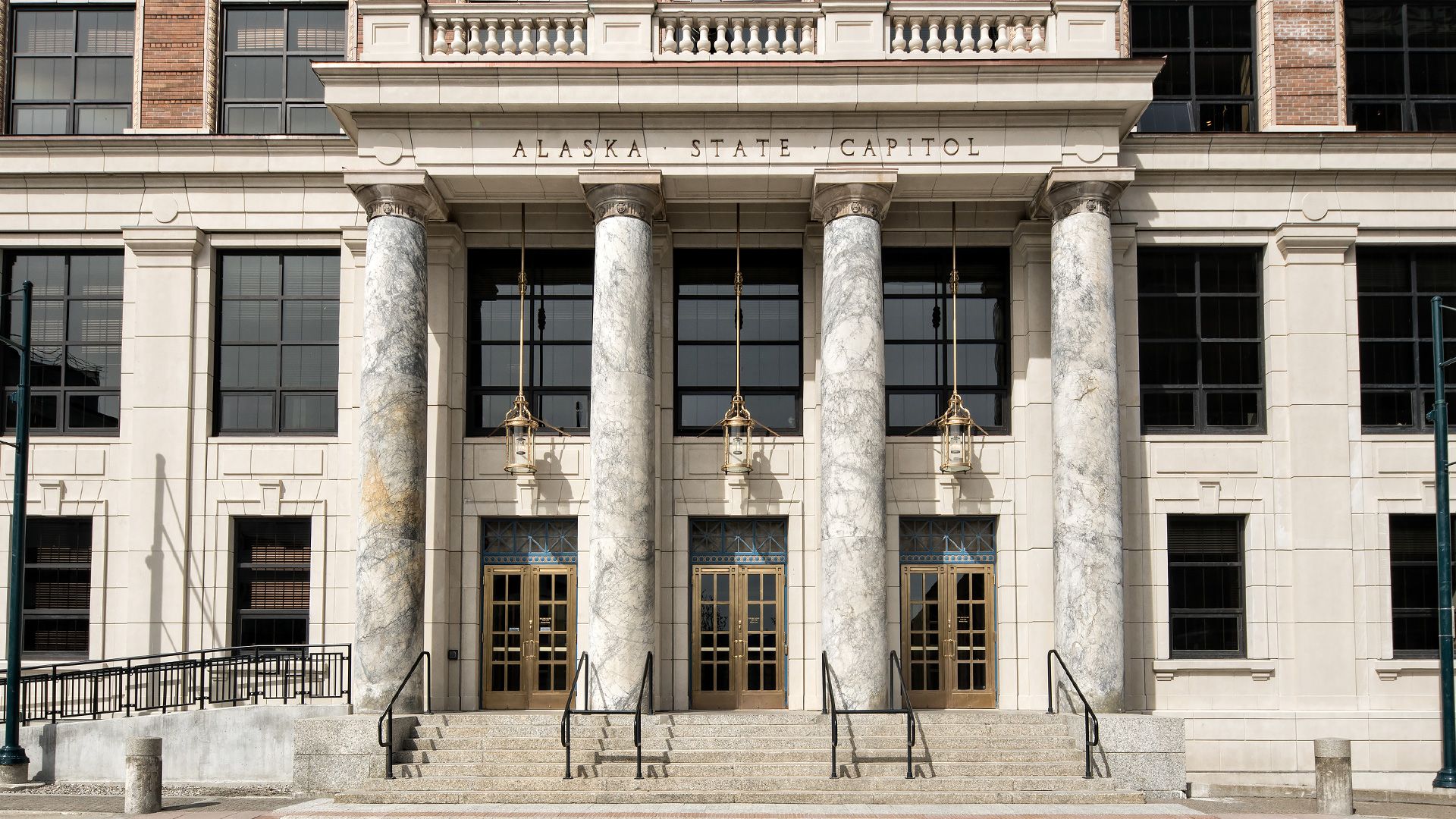
The region is the heart of Tlingit and Haida country, and Sitka was the capital of Russian America until the 1867 transfer. The capital moved to Juneau in 1906, decades after gold was found there in 1880, and repeated ballot measures since the 1970s to move it again to a road-connected site near Anchorage have all failed over the cost of building a new city. Most Panhandle towns have no roads out; the state-run Alaska Marine Highway ferry system is their only surface link.
Home to more than half of Alaska's entire population, anchored by Anchorage, the state's largest city and economic hub. The Kenai Peninsula juts south into the Gulf of Alaska, famous for king salmon fishing and the Kenai Fjords.
Prince William Sound, site of the 1989 Exxon Valdez disaster, is one of the most beautiful and biologically productive marine environments in North America. The Chugach Mountains frame Anchorage to the east.
The Matanuska-Susitna Borough north of Anchorage is the fastest-growing part of the state, its population having roughly doubled since 2000 to more than 100,000 as commuters priced out of Anchorage move north. The New Deal-era Matanuska Colony resettled about 200 farm families from the Upper Midwest into the valley in 1935, and the Mat-Su is still Alaska's main commercial farm district, known for giant vegetables grown under long summer daylight; a 138-pound cabbage set a world record at the Alaska State Fair in 2012.
Anchorage holds roughly 40 percent of the state's people, and the Port of Alaska there receives about half of all goods entering the state. The 1964 Good Friday earthquake destroyed the Turnagain and Fourth Avenue neighborhoods, and the slide areas are preserved today as Earthquake Park. Whittier, the region's Prince William Sound port, is reached only through a one-lane, 2.5-mile tunnel shared by cars and trains that reverses direction on a schedule.
The vast heart of the state, dominated by the Alaska Range (including Denali, the highest peak in North America at 20,310 feet), the Yukon River, and sweeping boreal forest (taiga). Fairbanks is the main city: the second-largest in Alaska and a hub for northern adventure, dog mushing culture, and aurora viewing.
Temperatures here are the most extreme in the state, winter lows can reach −60°F, while summer highs can top 90°F.
Fairbanks began as a 1901 trading post and boomed after gold was found nearby in 1902; large gold dredges worked the creeks into the 1960s, and the Fort Knox open-pit mine northeast of town is still a major employer. The University of Alaska Fairbanks, founded in 1917 as a land-grant college, is now a leading center for Arctic and space-weather research, home to the Geophysical Institute and the HAARP ionospheric research facility at nearby Gakona.
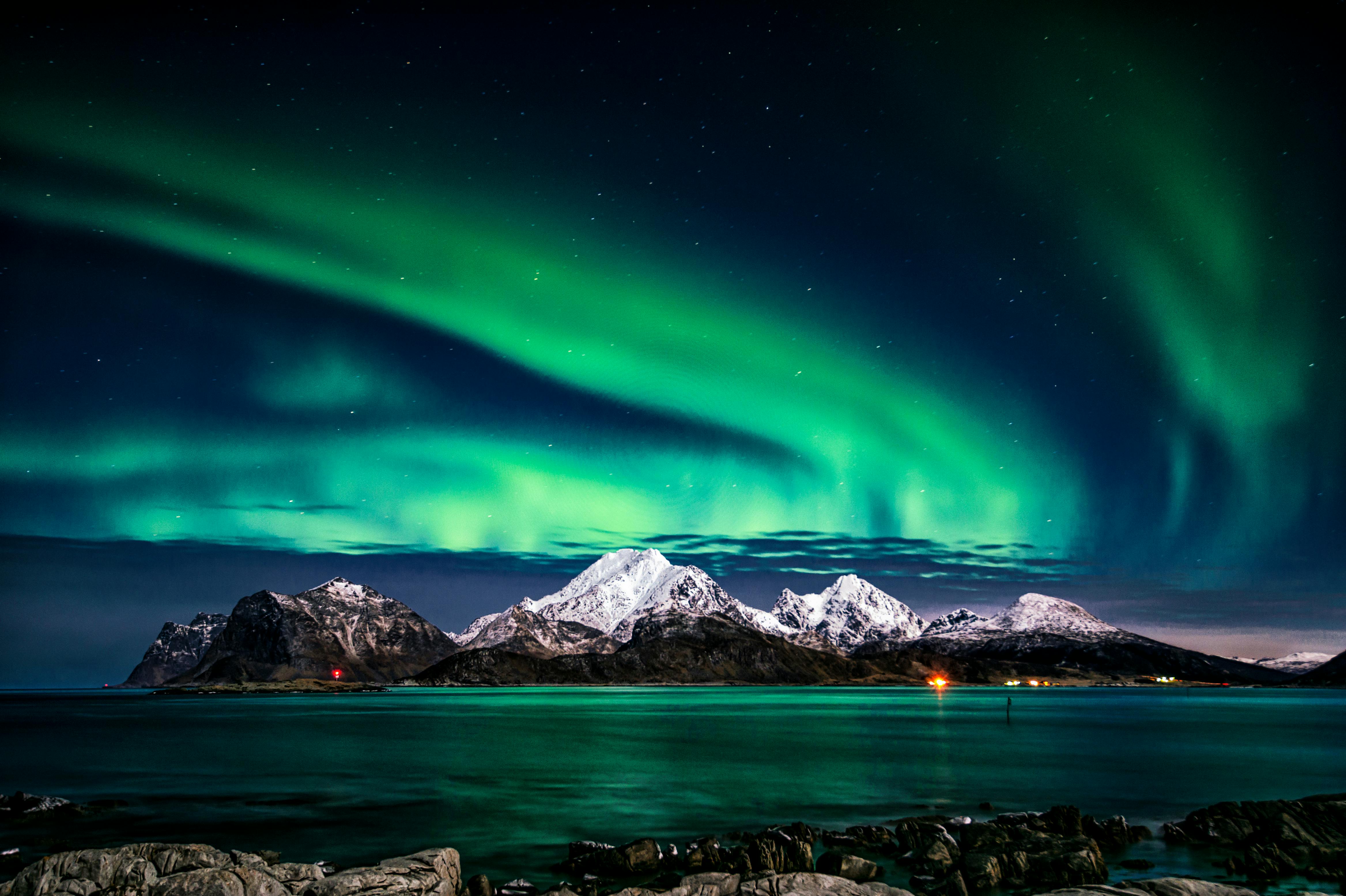
The Interior sits directly under the auroral oval and its clear, cold winters make it one of the best places on Earth to see the northern lights, a significant winter tourism draw. The region is threaded by the Alaska Railroad, completed between Seward and Fairbanks in 1923, and by the Dalton Highway, a mostly gravel haul road built alongside the pipeline in the 1970s that runs 414 miles north to Deadhorse at Prudhoe Bay.
The Alaska Peninsula extends southwest into a 1,200-mile arc of volcanic islands, the Aleutian Islands, stretching almost to Russia. This is one of the most remote and weather-battered places in the world. Bristol Bay, at the base of the peninsula, hosts the largest sockeye salmon run on Earth.
Kodiak Island is home to the famous Kodiak brown bear, one of the largest land predators alive. During WWII, the Japanese occupied Attu and Kiska, the only U.S. soil held by a foreign power in the war.
The Aleutian arc has more than 40 historically active volcanoes and is the most seismically active region in the United States. The 1912 eruption of Novarupta near Katmai was the largest anywhere in the world in the 20th century, burying the Valley of Ten Thousand Smokes in ash up to 700 feet deep. Unalaska, with its port at Dutch Harbor, has for years ranked as the top U.S. fishing port by volume, landing hundreds of millions of pounds of pollock, cod, and crab a year.
In June 1942 the U.S. forcibly evacuated about 880 Unangan (Aleut) people from the islands to crowded camps in Southeast Alaska, where roughly one in ten died; Congress apologized and paid reparations in the 1988 Civil Liberties Act. Katmai National Park's Brooks Falls, where brown bears line up to catch salmon, is now watched worldwide through a live 'bear cam' and the annual 'Fat Bear Week' contest.
The Yukon-Kuskokwim Delta, one of the largest river deltas in the world, dominates this vast, roadless region along the Bering Sea coast. This is the heart of Yup'ik Alaska: most communities are accessible only by small plane or snowmobile.
Nome sits on the Seward Peninsula and is famous as the finish line of the Iditarod Trail Sled Dog Race. The region's subsistence-based way of life, hunting, fishing, and gathering, sustains communities that have lived here for thousands of years.
The Yukon Delta is one of North America's largest wetland complexes and a globally important nesting ground for waterfowl and shorebirds; the Yukon Delta National Wildlife Refuge covers about 19 million acres. Bethel, the regional hub of roughly 6,300 people, has no road connection to anywhere and is served by one of the busiest single-runway airports in the country.
The 1925 'serum run to Nome,' in which dog teams relayed diphtheria antitoxin 674 miles in about five and a half days during a winter epidemic, is the direct inspiration for the Iditarod and for the statue of the lead dog Balto in New York's Central Park. Gold found on Nome's beaches in 1899 drew a stampede of roughly 20,000 people, and the public beach is still open to anyone who wants to pan it.
Above the Brooks Range lies the North Slope, a vast, flat tundra plain extending to the Arctic Ocean. Prudhoe Bay sits here, the largest oil field in North American history. The Arctic National Wildlife Refuge (ANWR), at 19 million acres, one of the largest protected areas on Earth, occupies the northeastern corner and has been the subject of decades of debate over oil drilling.
The Inupiaq people have called this region home for millennia. Barrow (now Utqiaġvik), the northernmost city in the U.S., experiences 82 consecutive days of midnight sun each summer.
Prudhoe Bay, discovered in 1968, originally held an estimated 25 billion barrels of oil. Its development forced Congress to resolve Alaska Native land claims first, producing the 1971 Alaska Native Claims Settlement Act, which extinguished aboriginal title in exchange for 44 million acres and about $1 billion, paid out through 12 regional Native corporations. One of them, Arctic Slope Regional Corporation, headquartered in Utqiaġvik, is now among the largest companies in Alaska.
The North Slope Borough, created in 1972, taxes the oil infrastructure and uses the money to run schools, clinics, and water systems in eight mostly Inupiaq villages spread across an area the size of Minnesota. Utqiaġvik voted to restore its Inupiaq name in place of 'Barrow' in 2016. Subsistence bowhead whaling, managed under a quota negotiated through the International Whaling Commission, remains central to Inupiaq life on the Slope.
Economy
Alaska's economy is built on natural resources, oil above all else, plus fishing, tourism, and an outsized federal and military presence.
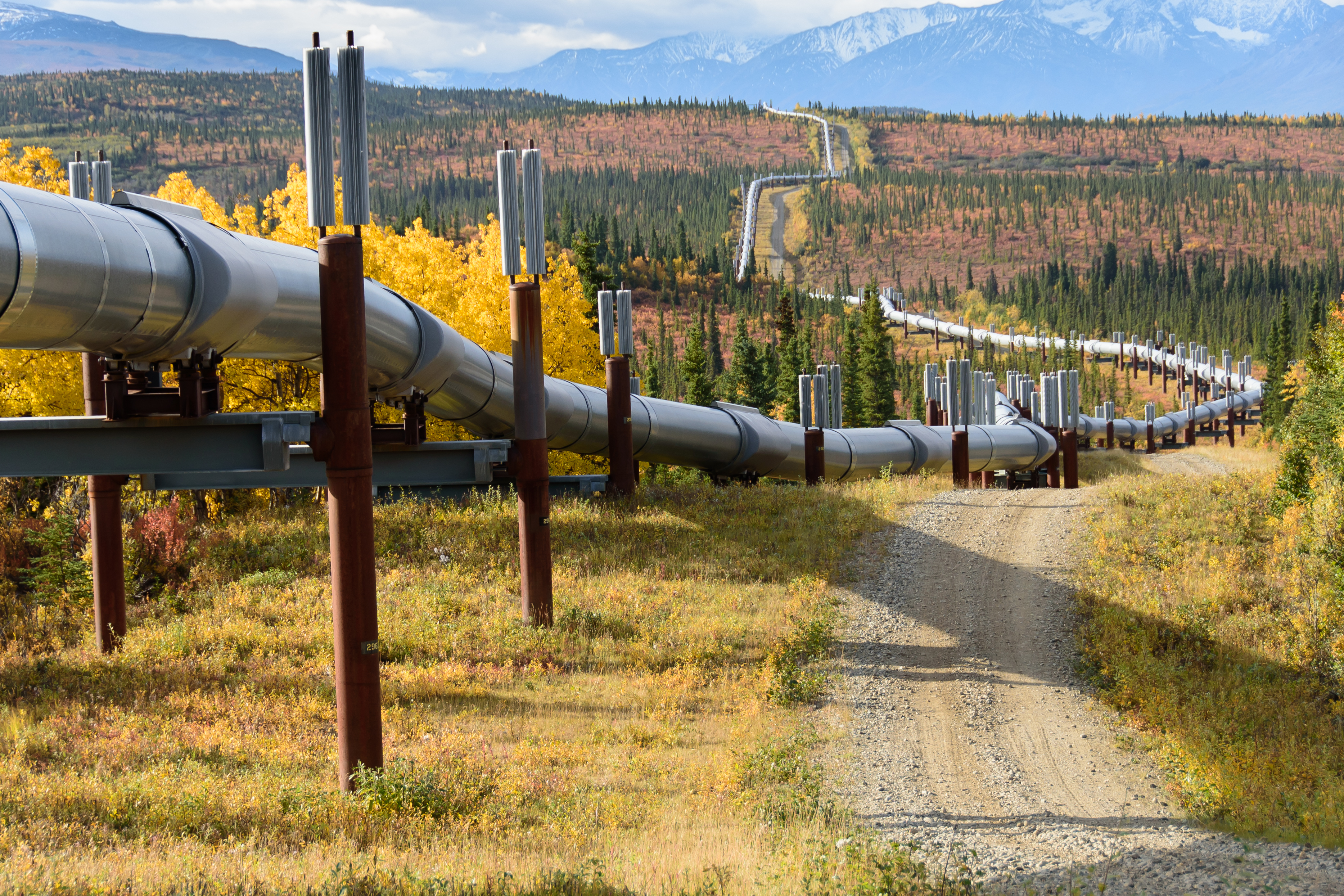
Oil is the foundation of Alaska's economy. The Prudhoe Bay field on the North Slope, discovered in 1968, is the largest oil field ever found in North America. The 800-mile Trans-Alaska Pipeline System (TAPS) carries crude oil from Prudhoe Bay south to the ice-free port of Valdez, one of the great engineering feats of the 20th century.
Oil revenues fund roughly 90% of Alaska's state government. The Alaska Permanent Fund, created in 1976, saves a portion of oil revenues and distributes an annual dividend check to every eligible Alaska resident. The Permanent Fund Dividend (PFD) has ranged from a few hundred to over $3,000 per person per year.
North Slope production peaked at about 2 million barrels a day in 1988 and has since fallen below 500,000, though the pipeline still moves a meaningful share of U.S. domestic crude. The 2017 federal tax law opened the ANWR coastal plain to leasing, but a January 2021 lease sale drew almost no commercial bidders, and the leases were then canceled, reinstated, and canceled again as administrations changed.
Alaska has no state sales tax and no personal income tax; the legislature repealed the income tax in 1980 once oil money began flowing. That leaves the budget unusually exposed to the price of crude, and the annual fight over how much to pay in dividends versus how much to spend on schools and services has dominated state politics since oil prices crashed in the mid-2010s. A long-proposed pipeline to carry North Slope natural gas to tidewater for export has never been built.
Alaska is the undisputed king of American commercial fishing. The state produces more wild-caught seafood than all other U.S. states combined, including king crab, snow crab, halibut, pollock (used in fish sticks and McDonald's Filet-O-Fish), Pacific cod, and five species of wild salmon.
Bristol Bay's annual sockeye salmon run is the largest in the world. The fishing industry is not just an industry, for many Alaska Native communities, subsistence fishing is the foundation of culture and survival.
Alaska's fisheries are managed for the long term under the state constitution, which requires fish and wildlife to be maintained 'on the sustained yield principle,' and the state has never suffered a stock collapse on the scale that closed the Atlantic cod fishery. The Bering Sea pollock fishery is the largest in the United States by volume and one of the largest in the world, and seafood is Alaska's leading export by value, most of it shipped to Asia and Europe.
The industry has been under severe strain in the 2020s. Bering Sea snow crab crashed, with billions of crab vanishing in a marine heat wave, and the fishery was closed entirely in 2022 and 2023. Chinook and chum salmon runs on the Yukon and Kuskokwim rivers have collapsed so far that subsistence fishing, a legal priority under both state and federal law, has been shut down for years in a row, a crisis for the Yup'ik and Athabascan communities that depend on it.
Tourism is a major and growing economic force. Cruise ship passengers, over a million per year, flood Southeast Alaska ports in summer. Denali National Park draws hundreds of thousands of visitors.
Wildlife viewing (bears, whales, eagles, moose, caribou), sport fishing, mountaineering, glacier trekking, aurora viewing, and flightseeing all draw visitors who spend billions in the state economy. Ecotourism is increasingly important as Alaska markets its wilderness as a finite and precious resource.
In a typical recent year roughly 2.5 to 3 million people visit Alaska, more than triple the state's population, and about half arrive by cruise ship. Juneau alone hosts well over a million cruise passengers in a four-month season and in 2023 struck a first-of-its-kind agreement with the cruise lines to cap the number of ships per day after residents pushed back on the crowding.
Tourism is the state's largest private-sector employer, supporting tens of thousands of mostly seasonal jobs. Winter travel built around aurora viewing, centered on Fairbanks, has grown fast and draws large numbers of visitors from Japan, South Korea, and China. The Alaska Railroad, state-owned since it was bought from the federal government in 1985, runs glass-domed summer cars that are a draw in their own right.
Alaska hosts several major U.S. military installations: Joint Base Elmendorf-Richardson (Anchorage), Fort Wainwright (Fairbanks), Eielson Air Force Base, and Fort Greely, home to the U.S. Ground-Based Midcourse Defense system, part of America's missile defense shield. The military is one of the state's largest employers.
Roughly 20,000 active-duty personnel are stationed in Alaska. Eielson Air Force Base near Fairbanks received two squadrons of F-35 fighters between 2020 and 2022, and with the F-22s at Joint Base Elmendorf-Richardson, Alaska now has one of the highest concentrations of fifth-generation fighters anywhere in the world. JBER is also home to Alaskan Command, which runs homeland air defense for the region.
Fort Greely, southeast of Fairbanks, holds about 40 of the roughly 44 ground-based interceptors that make up the entire U.S. system for defending the homeland against a limited long-range missile strike, and Clear Space Force Station operates a large early-warning radar. This footprint, along with the remains of the Cold War-era DEW Line radar chain, reflects Alaska's position on the shortest air routes between North America and Asia.
The Alaska National Guard keeps scout battalions staffed largely by residents of remote Native villages, and they double as the state's search-and-rescue and disaster-response force. Alaska sends a disproportionately large share of its population into military service, and base construction and operations put well over a billion dollars a year into the economy, concentrated around Anchorage and Fairbanks.
Gold sparked Alaska's development during the Klondike (1896) and Nome (1900) rushes. Today mining continues, the Red Dog Mine near Kotzebue is one of the world's largest zinc producers.
Gold, coal, copper, and molybdenum are also mined. The proposed Pebble Mine near Bristol Bay has been the subject of intense controversy for decades, with supporters citing its enormous copper and gold reserves and opponents warning of catastrophic harm to the world's greatest sockeye salmon fishery.
Alaska's largest operating mines are Red Dog (zinc and lead), Fort Knox and Pogo (gold, near Fairbanks), Greens Creek and Kensington (near Juneau), and the Usibelli coal mine near Healy, the only operating coal mine in the state. Red Dog sits on land owned by NANA, an Alaska Native regional corporation, which shares its royalties with the other 11 regional corporations under a revenue-sharing clause in the 1971 land-claims act.
The EPA blocked Pebble Mine under the Clean Water Act in 2014, withdrew the block, and reissued it in 2023 after Bristol Bay's tribes, commercial fishermen, and sport lodges spent two decades fighting the project. Interest in Alaska mining has revived with demand for the copper, zinc, and graphite used in batteries, and the proposed 211-mile Ambler industrial road into a mineral belt in the Brooks Range foothills is the next major flashpoint.
The federal government owns approximately 61% of Alaska's land, national parks, wildlife refuges, military bases, and BLM lands. Federal employment (civilian and military) is one of the state's largest economic sectors.
That federal estate, about 222 million acres, includes the two largest national parks in the country (Wrangell-St. Elias at 13.2 million acres and Gates of the Arctic at 8.5 million), the two largest national forests, and the two largest national wildlife refuges. Most of it was set aside by the Alaska National Interest Lands Conservation Act of 1980, the single largest land-protection law in U.S. history, which President Carter signed after using the Antiquities Act to protect the areas by proclamation when Congress stalled.
Alaska has drawn among the highest federal spending per capita of any state for decades, a pattern cemented by Senator Ted Stevens, who chaired the Senate Appropriations Committee and steered billions to Alaska infrastructure before losing his seat in 2008. The state and Native corporations still litigate boundaries, subsistence rights, and road access across the federal holdings, most visibly the decades-long fight over a gravel road through the Izembek refuge to the isolated town of King Cove.
Land ownership in Alaska breaks down to roughly 60 percent federal, about 28 percent state, around 12 percent Alaska Native corporation land, and only a sliver otherwise private. More than 50 years after the 1971 settlement act, the Bureau of Land Management has still not finished transferring all the land the corporations and the state are owed. This mix, wanting federal dollars while resenting federal land control, drives much of Alaska's political character.
How Alaska's State Government Works
Alaska follows the same three-branch structure as the federal government and every other state: an executive branch (the Governor), a bicameral legislature (Senate and House), and a court system. The state constitution was adopted in 1956, three years before statehood, and is considered one of the most modern and well-designed state constitutions in the country.
Alaska has a unique political character. It is a reliably Republican state at the federal level, but its state politics are more complicated, driven by battles over oil revenues, federal land management, and the rights of Alaska Natives. Libertarian-leaning independence is a strong thread in Alaska's political culture: many Alaskans deeply distrust government, including their own, while simultaneously depending on it heavily for services and infrastructure.
In 2020, Alaska adopted Ranked Choice Voting (RCV) for statewide elections, making it one of only a handful of states to use that system. Voters rank candidates in order of preference rather than picking just one.
Governor of Alaska
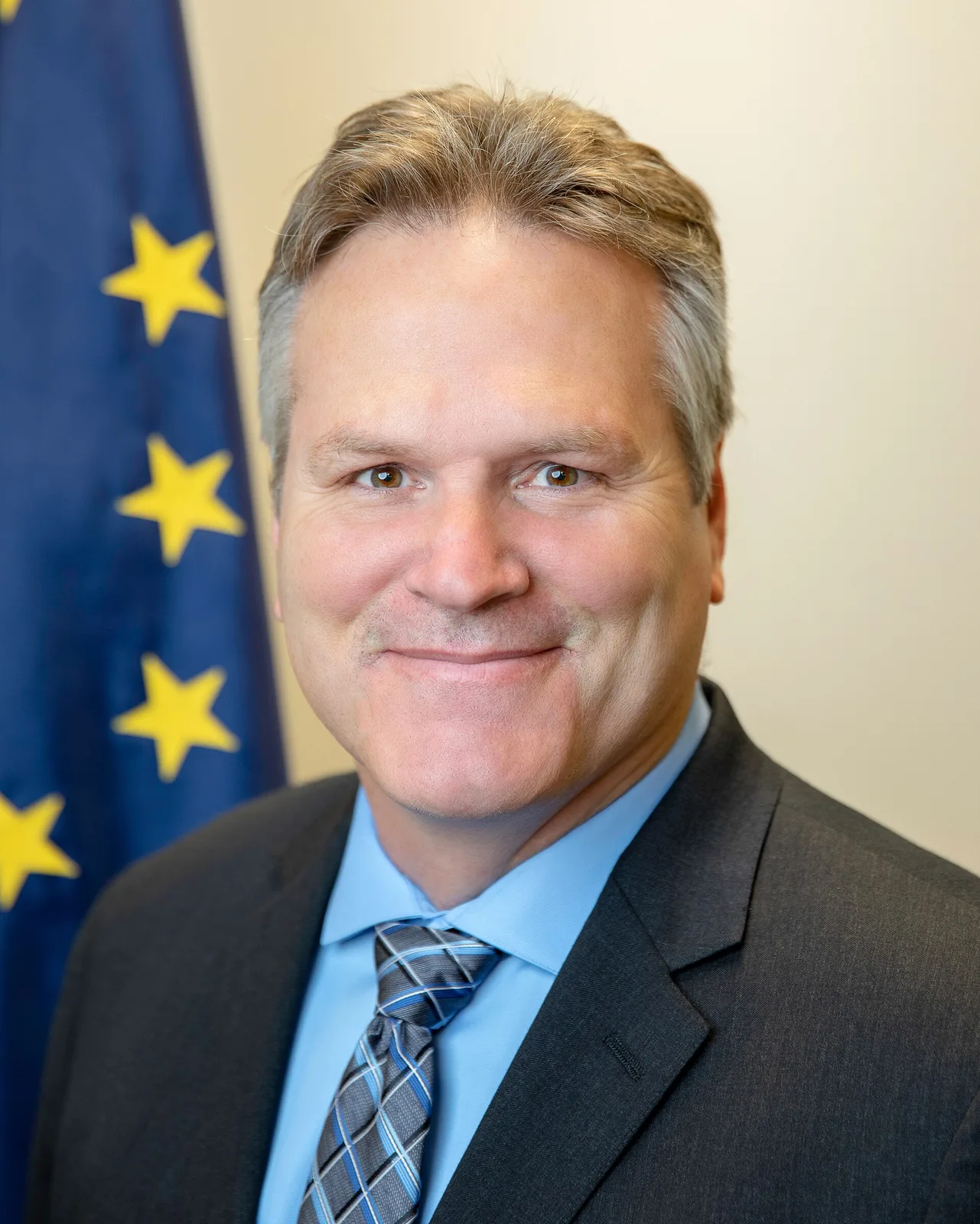
Current Governor
Mike Dunleavy
- Party
- Republican
- In Office Since
- December 3, 2018
- Elected
- 2018 (first term), re-elected 2022
- Term Ends
- December 2026
- Born
- May 10, 1964, Scranton, Pennsylvania
- Education
- B.S., Duquesne University; M.Ed., University of Alaska Fairbanks
- Prior Role
- Alaska State Senate (2013-2018)
Mike Dunleavy is a former teacher and school principal who spent six years in the Alaska Senate before winning the governorship. His administration has focused on maximizing the Permanent Fund Dividend, reducing state spending, and pushing for expanded oil and gas development, including in ANWR. He is the tallest governor currently serving, at 6'7".
Other Current State Officials
Lieutenant Governor
Nancy Dahlstrom
In office since December 2022, elected on the Dunleavy ticket. Alaska's Lieutenant Governor also oversees the Division of Elections.
Attorney General
Cori Mills (Acting)
Alaska's Attorney General is appointed by the governor and confirmed by the Legislature. Treg Taylor served from 2020 to August 2025; the Legislature rejected his successor, Stephen Cox, 29 to 31 on May 14, 2026, and longtime Department of Law attorney Cori Mills became acting attorney general.
* Officeholders current as of September 2026; see alaska.gov for any later changes.
The Alaska State Legislature
Alaska State Senate
- Seats: 20 members
- Terms: 4-year terms
The upper chamber. Senators represent geographic districts across the state. With only 20 members, it is one of the smallest state senates in the country.
Alaska State House
- Seats: 40 members
- Terms: 2-year terms
The lower chamber. With 40 members for a state this size, each representative covers an enormous geographic area, some districts are larger than many U.S. states.
Alaska's U.S. Senators
U.S. Senator
Lisa Murkowski
Appointed in 2002 by her father, Governor Frank Murkowski, then won re-election on her own. One of the most independent Republican voices in the Senate, she was one of only seven Republicans who voted to convict Donald Trump in his second impeachment trial.
U.S. Senator
Dan Sullivan
A Marine Corps Reserve officer and former Alaska Attorney General who won election in 2014, defeating incumbent Democrat Mark Begich. Known for his focus on defense, energy, and Arctic policy.
Alaska's U.S. House Delegation
Alaska has just 1 at-large congressional seat, the entire state is a single congressional district. The representative speaks for all Alaskans in the House. This is one of only six at-large House districts in the country (Montana gained a second seat after the 2020 census).
In 2022, Mary Peltola (D) became the first Alaska Native ever elected to Congress, winning the seat under Alaska's new ranked choice voting system. She defeated former Governor Sarah Palin in a high-profile race that drew national attention. Republican Nick Begich III defeated Peltola in 2024 and has held the seat since January 2025.
📋 Verify Current Representative
House seats change every two years. For the current representative, visit house.gov and search Alaska.
Alaska Through the Years
From the first people to cross the land bridge from Asia, to the oil pipeline that funds the modern state, Alaska's history is as vast as its geography.
Humans have lived in Alaska for at least 10,000 to 15,000 years, among the longest continuous human habitation records on the continent. The land bridge connecting Asia and North America (Beringia) was covered by Alaska's western coast, making this region the gateway through which the ancestors of all Indigenous Americans first arrived.
Alaska today is home to more than 220 federally recognized tribes and some of the most linguistically and culturally diverse Indigenous peoples in the world, including the Inupiaq, Yup'ik, Cup'ik, Unangan (Aleut), Alutiiq, Athabascan, Tlingit, Haida, and Tsimshian.
Coastal peoples built some of the most sophisticated maritime cultures in the world, hunting bowhead whales from skin boats along the Arctic coast and raising large cedar-plank houses and totem poles in the Southeast. The Tlingit and Haida ran long-distance trade networks down the coast and inland along 'grease trails' used to carry eulachon fish oil.
Alaska Native peoples were never removed to reservations on the model used in the Lower 48; instead the 1971 land-claims act converted their claims into shares in regional corporations. About 20 Alaska Native languages are still spoken, most of them severely endangered, and in 2014 the legislature made all of them official state languages alongside English.
Danish explorer Vitus Bering, sailing for Russia, led the first European expedition to reach Alaska. The voyage opened the door to Russian colonization, primarily driven by the fur trade.
Russian hunters decimated sea otter populations across the Aleutian Islands and enslaved or killed large numbers of the Unangan (Aleut) people to work as fur hunters. The legacy of Russian rule is still visible in Alaska today, in Orthodox church steeples in remote villages, in place names, and in Alaska Native heritage.
The Russian-American Company, chartered in 1799, ran Alaska as a commercial colony from its capital at New Archangel (Sitka), and the Russian population never exceeded about 800. In 1802 the Tlingit destroyed the Russian fort at Sitka and killed most of its occupants; the Russians retook the site in 1804 after bombarding it from ships, in what is remembered as the last major armed stand of the Tlingit.
By the 1860s the sea otter was nearly gone, the fur trade was no longer profitable, and Russia, weakened by the Crimean War and afraid it could lose Alaska to Britain in any future conflict, decided to sell. The Russian Orthodox Church stayed on after the transfer and is still a strong presence in Aleut, Alutiiq, and Yup'ik villages, with more than 80 parishes in the state.
U.S. Secretary of State William Seward negotiated the purchase of Alaska from Russia for $7.2 million, roughly 2 cents per acre. The American press mocked the deal mercilessly, calling it 'Seward's Folly,' 'Seward's Icebox,' and 'Walrussia.' Seward was convinced it was a strategic and resource masterstroke.
He was right. The purchase transferred roughly 586,000 square miles of territory, a bargain that would prove to be one of the greatest real estate deals in history.
The Senate ratified the treaty in April 1867 by a wide margin, but the House delayed appropriating the money for more than a year amid accusations that Russian agents had bribed newspaper editors and members of Congress to ease its passage. The formal handover took place at Sitka on October 18, 1867, a date still marked as Alaska Day.
For its first 17 years Alaska had almost no civil government, run in turn by the Army, the Navy, and the Treasury's revenue cutters. Congress did not pass an organic act giving the territory a governor and courts until 1884, and Alaska Natives were not made U.S. citizens until the Indian Citizenship Act of 1924.
The discovery of gold in Canada's Yukon in 1896 sparked the Klondike Gold Rush, sending over 100,000 prospectors north, most of them through Alaska. Skagway and Dyea became boomtowns overnight.
Then in 1899, gold was found on the beaches of Nome, setting off another rush. Alaska's population exploded, infrastructure was built, and the territory's character was permanently shaped by the prospector culture, independent, resourceful, and deeply suspicious of outside authority.
Most Klondike stampeders landed at Skagway or Dyea and hauled their gear over the Chilkoot or White Pass trails into Canada, where the Northwest Mounted Police required each person to bring a 'ton of goods,' a full year's supplies, before allowing them across the border. The White Pass and Yukon Route railway, blasted through the coast mountains in 1898-1900, made the trails obsolete almost as soon as it opened.
The rushes seeded Alaska's first substantial non-Native towns and its first serious push for self-government. Gold at Fairbanks in 1902 and copper at Kennecott starting in 1911 kept a mining economy going, but the easy gold was largely gone by 1910, and Alaska's population actually fell over the following two decades.
In June 1942, Japanese forces occupied the islands of Attu and Kiska in the western Aleutians, the only U.S. soil seized by a foreign enemy in World War II. The occupation lasted over a year.
American and Canadian forces retook Attu in May 1943 in one of the costliest battles in the Pacific theater, 549 Americans killed and almost 3,000 wounded, while nearly all 2,500 Japanese defenders died fighting. When Allied forces landed on Kiska expecting similar resistance, they found it abandoned, the Japanese had evacuated under the cover of fog without being detected.
The weather, not the enemy, was the deadliest factor in the campaign: more American aircraft and men were lost to fog, sudden williwaw winds, and blind 'fog flying' than to Japanese fire. Measured against the number of troops engaged, Attu was the second-bloodiest battle of the Pacific war after Iwo Jima.
To supply the fight, the Army built the 1,400-mile Alaska Highway through Canada in just eight months in 1942, and roughly a third of the soldiers who cut it served in segregated Black engineer regiments. The airfields, roads, and ports left behind became a central argument for Alaska statehood a decade later.
Alaska became the 49th state on January 3, 1959, the first state admitted in 47 years and the first non-contiguous state in U.S. history. The push for statehood had been building for decades, driven by Alaskans who were tired of being governed by a distant federal administration without full representation in Congress.
Statehood was controversial in Washington, partly because of the potential for more Democratic representation, and partly because of the enormous federal land management questions it raised.
Alaska held a constitutional convention at the University of Alaska in 1955-56 and produced a constitution widely praised as a national model. Voters also approved the 'Alaska-Tennessee Plan,' electing a shadow congressional delegation to go to Washington and lobby for admission. The Statehood Act cleared Congress in 1958, and President Eisenhower signed the proclamation on January 3, 1959.
The Act let the new state select about 104 million acres of federal land, more than a quarter of Alaska, over 25 years, plus a 90 percent share of mineral royalties from the federal land that remained. Hawaii followed as the 50th state seven months later, and the U.S. flag has carried 50 stars since July 4, 1960.
On March 27, 1964, Good Friday, a magnitude 9.2 earthquake struck south-central Alaska. It is the most powerful earthquake ever recorded in North American history and the second most powerful ever recorded in the world. The quake and the tsunamis it generated devastated Anchorage, destroyed the towns of Valdez, Chenega, and Seward, and killed 131 people.
The ground in Anchorage shifted dramatically, neighborhoods rose or fell by up to 30 feet. The event reshaped building codes and tsunami warning systems across the Pacific.
The rupture lasted about four and a half minutes and released more energy than all the world's earthquakes in the previous year combined. Most of the 131 deaths came from tsunamis, which killed people as far south as Crescent City, California. In Anchorage the Turnagain Heights neighborhood slid toward the sea on a buried layer of collapsed clay.
The quake produced the first close scientific study of a great subduction-zone earthquake and helped confirm the then-new theory of plate tectonics. It led directly to the creation of the tsunami warning center at Palmer, Alaska, and, years later, to the National Earthquake Hazards Reduction Program.
The Trans-Alaska Pipeline System (TAPS), 800 miles of 48-inch steel pipe running from Prudhoe Bay on the Arctic Ocean to the port of Valdez, was completed in 1977, four years after construction began. It remains one of the largest and most complex pipeline systems ever built, crossing three mountain ranges, 34 major rivers, and some of the most unstable permafrost terrain on Earth.
At peak production in 1988, it carried 2 million barrels of oil per day. It transformed Alaska from a cash-strapped territory into a wealthy state.
Construction was blocked for years by lawsuits over environmental review and by unsettled Alaska Native land claims. Congress cleared both at once, passing the land-claims act in 1971 and then, days after the 1973 oil embargo began, a law that authorized the pipeline and barred further court challenges. At times more than 20,000 people worked on it, and Valdez and the pipeline camps became bywords for high wages and lawlessness.
About half the line is elevated on more than 78,000 supports fitted with heat pipes that keep the surrounding permafrost frozen, and it is built in a deliberate zigzag so it can flex sideways in an earthquake; it rode out a magnitude 7.9 quake that crossed the fault beneath it in 2002 with no spill. Throughput has now fallen so far below the 1988 peak that keeping the oil warm enough to flow through the Arctic winter has become an engineering problem in itself.
On March 24, 1989, the oil tanker Exxon Valdez ran aground on Bligh Reef in Prince William Sound, spilling approximately 11 million gallons of crude oil, the worst oil spill in U.S. history at the time. The oil coated over 1,300 miles of coastline, killing an estimated 250,000 seabirds, 2,800 sea otters, 300 harbor seals, 250 bald eagles, and billions of salmon and herring eggs.
The disaster triggered sweeping changes to federal oil spill law, including the Oil Pollution Act of 1990, which requires double-hulled tankers. Prince William Sound has largely recovered, though some scientists say the ecosystem was permanently altered.
The captain had left the bridge, and a third mate not certified for those waters was steering when the ship missed a turn made to avoid ice and struck the reef just after midnight. The response was slow and undersupplied, and a storm three days later drove the oil across the Sound before it could be contained; the cleanup eventually put more than 11,000 workers on the beaches and cost Exxon over $2 billion.
A jury awarded $5 billion in punitive damages in 1994, but after 14 years of appeals the Supreme Court cut the figure to about $500 million in 2008. Herring never recovered and that fishery is still closed; some sea otter and sea duck populations took two decades to rebound. Every loaded tanker leaving Valdez now travels with tugboat escorts.
Alaska's Defining Moments in American History
Alaska's story keeps intersecting with the biggest questions in American life, strategic power, environmental responsibility, Indigenous rights, and the cost of natural resource wealth.
When William Seward bought Alaska for $7.2 million in 1867, he was ridiculed. Within three decades, the Klondike Gold Rush alone generated more gold than the purchase price.
Add the oil wealth of the 20th century, worth hundreds of billions of dollars, and Seward's Folly stands as perhaps the greatest financial bargain in American history. The purchase also kept Alaska out of British hands, shaping the entire geopolitical map of the North Pacific.
It was a strategic move as much as a bargain: Russia preferred selling to the United States over the risk of losing Alaska to Britain in a war, and Seward viewed it as a step toward American dominance of the whole Pacific coast. The Senate approved the treaty 37 to 2, but the House nearly refused to pay for it amid the bribery allegations that swirled around the appropriation.
Because Alaska returned almost nothing to the Treasury for decades and had barely any government, the 'folly' label stuck well into the 20th century. Klondike gold, the salmon canneries, the copper at Kennecott, and finally Prudhoe Bay oil reversed the verdict, and by any accounting the $7.2 million has been repaid hundreds of times over.
The Aleutian Campaign of 1942–1943 is one of the most overlooked chapters of World War II. Japan's occupation of Attu and Kiska, American soil, was a profound psychological blow and a genuine strategic threat to the West Coast.
The brutal Battle of Attu, fought in freezing fog and volcanic terrain, saw nearly the entire Japanese garrison of 2,500 fight to the death rather than surrender. The campaign tied down significant American resources and led to a massive buildup of military infrastructure in Alaska that continues to define the state today.
The campaign also had a dark side at home. The U.S. evacuated about 880 Unangan (Aleut) people from their islands to internment camps in Southeast Alaska, where roughly one in ten died of disease and exposure, and many returned to find their homes and churches looted by American troops. Congress formally apologized and paid reparations in the 1988 Civil Liberties Act, the same law that compensated interned Japanese Americans.
The wartime buildup, the Alaska Highway, dozens of airfields, and the ports at Whittier and Seward, handed Alaskans the infrastructure and the argument they used to win statehood in 1959. Alaska has kept an outsized military presence ever since because of its place on the polar routes between the United States and Asia.
Alaska created something no other U.S. state has ever tried: a sovereign wealth fund that distributes annual cash dividends to every resident. Created by constitutional amendment in 1976, the Alaska Permanent Fund holds Alaska's oil revenues in trust. Every year, eligible Alaska residents receive a Permanent Fund Dividend (PFD) check, no strings attached.
It is the closest thing to a universal basic income ever implemented in America, and it has largely eliminated extreme poverty in the state. The fund is worth over $70 billion.
Voters approved the constitutional amendment two to one, specifically so a future legislature could not spend the oil savings down: at least a quarter of certain mineral revenues must be deposited, and the principal cannot be touched without another vote of the people. The dividend program itself was added in 1982, and the first check was $1,000.
Economists have studied the dividend as a rare real-world test of unconditional cash. Research has found it did not measurably reduce employment, and it is credited with giving Alaska one of the lowest poverty rates and least income inequality of any state. Since oil revenue fell in the mid-2010s, the legislature has repeatedly trimmed the dividend to help pay for government, and the 'right' size of the PFD is now the central fight in Alaska politics.
The 1989 Exxon Valdez disaster was a turning point in American environmental policy. The images of oil-soaked wildlife and ruined coastline shocked the public and Congress into action.
The Oil Pollution Act of 1990 required double-hulled oil tankers, created massive new liability frameworks for spills, and funded the largest environmental cleanup ever attempted at that time. The disaster also accelerated the environmental movement and permanently changed how Americans think about the cost of fossil fuel dependence.
The 1990 law also phased in a double-hull requirement for all tankers in U.S. waters by 2015, raised liability limits, financed a federal oil-spill trust fund through a per-barrel tax, and created the citizen advisory councils that still monitor the Valdez terminal and Cook Inlet.
The spill hardened public opposition to drilling in the Arctic National Wildlife Refuge, which was moving through Congress at the time, and the ANWR coastal plain stayed closed for another 27 years. The 1994 punitive award of $5 billion, cut to about $500 million by the Supreme Court in 2008, became a landmark on the limits of punitive damages in maritime law.
Denali (formerly known by its federal name Mount McKinley until 2015) at 20,310 feet is the highest peak in North America and one of the Seven Summits. What makes Denali exceptional isn't just its height, it's its vertical rise.
Measured from base to summit, Denali rises approximately 18,000 feet from its base, making its vertical relief greater than Everest's. It sits in Denali National Park, one of the largest national parks in the world, where grizzly bears, wolves, moose, and caribou roam freely across 6 million acres of roadless wilderness.
The peak carried the name Mount McKinley from 1896, when a prospector named it for the presidential candidate William McKinley, until 2015, when the Interior Department restored the Koyukon Athabascan name Denali; Ohio's congressional delegation, protecting its native son, had blocked the change for nearly 40 years. In 2025 the federal government ordered the name switched back to McKinley, though Alaska law and most Alaskans still say Denali.
The first verified summit came in 1913, by a party led by the Episcopal archdeacon Hudson Stuck, with the Alaska Native climber Walter Harper the first person actually to stand on top. About 1,000 people now attempt the climb each year, most by the West Buttress route pioneered by Bradford Washburn in 1951, and roughly half reach the summit.
Few places in America have been more fiercely contested than the Arctic National Wildlife Refuge (ANWR), 19.6 million acres of Arctic wilderness in northeast Alaska. The debate over whether to allow oil drilling in ANWR's coastal plain has raged in Congress for over 40 years. Supporters argue it holds billions of barrels of recoverable oil that could reduce foreign dependence.
Opponents, including most Alaska Native groups in the region, particularly the Gwich'in people, whose culture depends on the Porcupine caribou herd that calves in ANWR, argue drilling would cause irreversible harm to a pristine ecosystem. The battle has seesawed with every change of administration.
The area began as an 8.9-million-acre range set aside by President Eisenhower in 1960 and was roughly doubled by the 1980 lands act, which carved out the 1.5-million-acre coastal plain, 'Area 1002,' for a study of its oil potential and left the drilling decision to Congress. The U.S. Geological Survey has estimated the plain could hold on the order of several billion to more than 10 billion barrels of recoverable oil, with the economic share heavily dependent on price.
Drilling was finally approved in the 2017 federal tax law, but the first lease sale in January 2021 drew almost no commercial bidders, major banks announced they would not finance Arctic drilling, and the leases were canceled and reinstated as administrations changed. The Gwich'in, who call the coastal plain 'the sacred place where life begins,' and the Inupiaq village of Kaktovik, which sits inside the refuge and is more open to development, remain on opposite sides.
Notable Alaskans
Jewel
Singer-songwriter who grew up in Homer, Alaska, and rose to fame with Pieces of You
Sarah Palin
First female Governor of Alaska (2006-2009) and 2008 Republican vice-presidential nominee
Ted Stevens
U.S. Senator who served Alaska for 40 years, longest-serving Republican senator at the time
Benny Benson
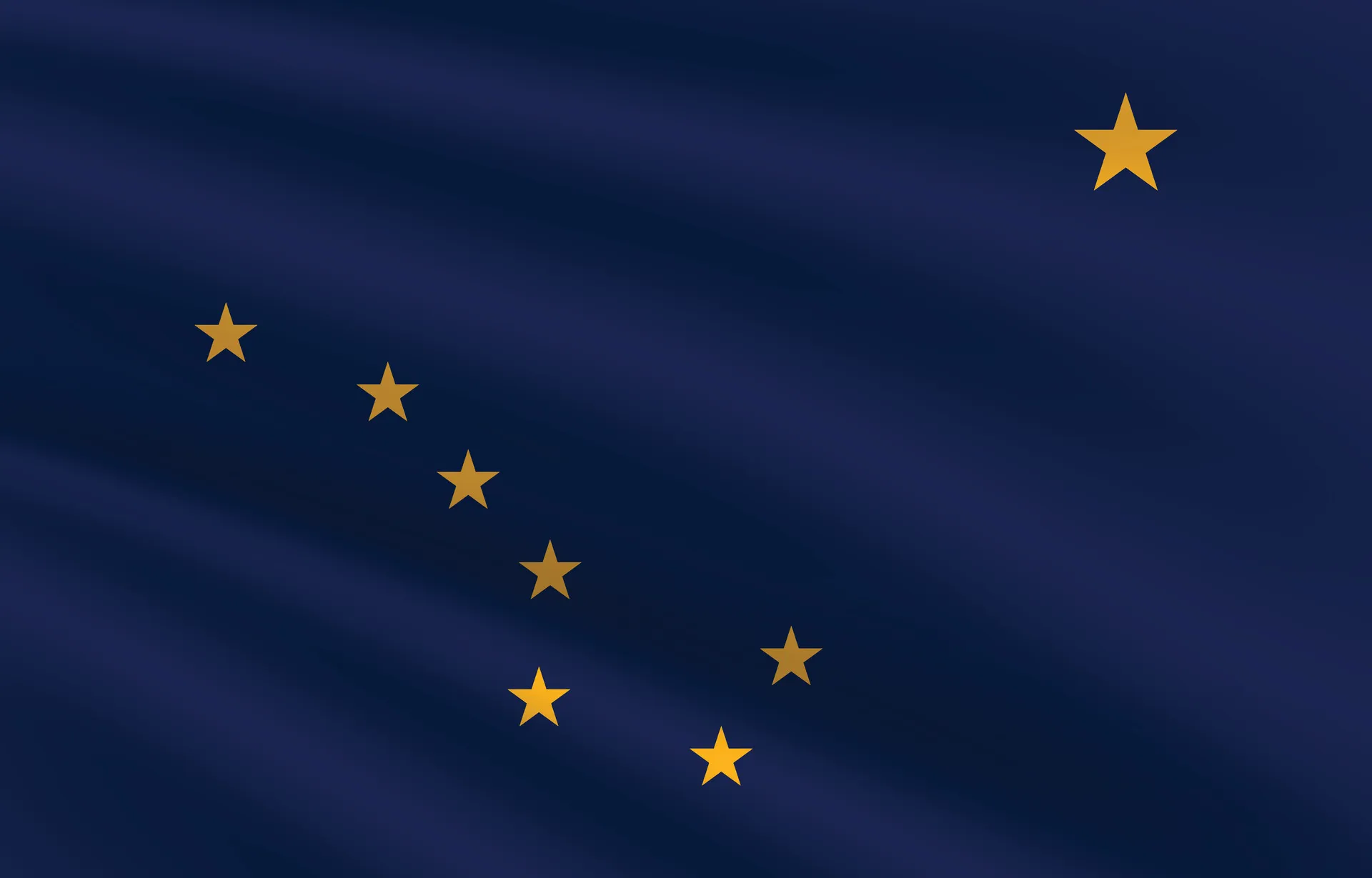
Designed the Alaska state flag at age 13 as part of a territorial contest
Susan Butcher
Four-time Iditarod Trail Sled Dog Race champion, one of the most decorated mushers in history
Mary Peltola
First Alaska Native elected to the U.S. Congress, won using Alaska's ranked choice voting system in 2022
State Symbols & Quick Facts
| Nickname | "The Last Frontier" |
| Capital | Juneau |
| Largest City | Anchorage |
| Statehood | January 3, 1959 (49th state) |
| Population | ~733,000 (2023 est.), least densely populated |
| Area | 663,268 sq mi, larger than Texas, California & Montana combined |
| Motto | North to the Future |
| State Bird | Willow Ptarmigan |
| State Flower | Forget-Me-Not |
| State Tree | Sitka Spruce |
| State Fish | King Salmon (Chinook) |
| State Fossil | Woolly Mammoth |
| State Gem | Jade |
| State Mineral | Gold |
| State Marine Mammal | Bowhead Whale |
| State Land Mammal | Moose |
| State Song | "Alaska's Flag" |
| Time Zone | Alaska Time (UTC−9/−8); Aleutian Islands: UTC−10/−9 |
| Borders | Canada (E), Arctic Ocean (N), Pacific Ocean (S), Bering Sea (W) |
Did You Know?
Alaska is so large that if you superimposed it on the contiguous 48 states, it would stretch from Florida to California and from the Gulf Coast to the Canadian border.
Juneau is the only U.S. state capital not accessible by road. You can only get there by boat or plane.
Alaska has about 6,640 miles of general coastline, more than all other U.S. states combined, and about 33,904 miles of shoreline when every bay and inlet is traced.
In Utqiaġvik (Barrow), the sun doesn't set for 82 consecutive days in summer, and doesn't rise for 67 consecutive days in winter.
Alaska has more pilots and registered aircraft per capita than any other state. Bush planes are a practical necessity, not a hobby, for communities with no road access.
The Little Diomede Island (Alaska) and Big Diomede Island (Russia) are only 2.4 miles apart, and separated by the International Date Line, meaning they're nearly a full day apart in time.
Alaska has more than 3 million lakes, far more than any other U.S. state.
The Iditarod Trail Sled Dog Race, run every March from Anchorage to Nome, covers roughly 1,000 miles through some of the most brutal terrain on Earth.
The Good Friday Earthquake of 1964 (magnitude 9.2) was so powerful it caused the ground to oscillate in Louisiana, over 3,000 miles away.
Alaska was purchased from Russia for $7.2 million in 1867, about 2 cents per acre. The Prudhoe Bay oil field alone has produced over $100 billion in revenue.
Quick Facts and Common Questions
Short answers to the questions people most often ask about Alaska: its abbreviation, how the United States acquired it, its capital, and its place in Congress.
Alaska's two-letter postal abbreviation is AK. The U.S. Census Bureau places it in the West region, in the Pacific division, and about 733,000 people lived there in the 2020 census, which makes it one of the least populous states.
Alaska became the 49th state on January 3, 1959. President Dwight D. Eisenhower signed the Alaska Statehood Act in July 1958, and Alaska voters approved statehood that August.
The United States bought Alaska from Russia in a treaty signed on March 30, 1867, for $7.2 million, a deal negotiated by Secretary of State William Seward. Alaska was governed as a military and then civil district, became the District of Alaska in 1884, and became the Territory of Alaska in 1912.
The name comes from an Aleut (Unangax̂) word usually translated as "mainland" or "the object toward which the action of the sea is directed." Russian explorers first used it for the Alaska Peninsula, and it was later applied to the whole region.
Juneau has been the capital since 1906, when the seat of government moved there from Sitka, the former Russian colonial capital. Juneau has no road connection to the rest of North America, so visitors arrive by air or sea. Voters approved moving the capital in 1974, but in 1982 they rejected paying for the move, and Juneau remained the capital.
Alaska does not border any other U.S. state. It shares a land border with Canada (Yukon and British Columbia) and is surrounded by the Arctic Ocean, the Bering Sea, and the Pacific Ocean. Across the Bering Strait, Russia lies about 55 miles away, and the Diomede Islands of the two countries are less than 3 miles apart.
Alaska is by far the largest state, with about 665,000 square miles of total area, more than twice the size of Texas. It also has more coastline than all the other states combined.
Alaska is known as "The Last Frontier," and its motto is "North to the Future." Its state bird is the willow ptarmigan, its flower is the forget-me-not, and its tree is the Sitka spruce.
Based on the 2020 census, Alaska has 1 seat in the U.S. House of Representatives, elected statewide, which gives it 3 votes in the Electoral College, the minimum for any state.
Signed in December 1971, the Alaska Native Claims Settlement Act settled Alaska Native land claims by transferring about 44 million acres of land and $962.5 million to Alaska Native regional and village corporations created under the law. The settlement cleared the way for the Trans-Alaska Pipeline, which began carrying oil from Prudhoe Bay in 1977.
Sources & Further Reading
- Census Regions and Divisions, U.S. Census Bureau
- 2020 Census Apportionment Results, U.S. Census Bureau
- Distribution of Electoral Votes, National Archives
- Treaty with Russia for the Purchase of Alaska, National Archives
- Purchase of Alaska, 1867, Office of the Historian, U.S. Department of State
- Alaska State Legislature
- Alaska Native Claims Settlement Act, Bureau of Land Management
Denali National Park and Preserve
North America's Highest Peak in Six Million Acres of Wilderness
About Denali National Park and Preserve
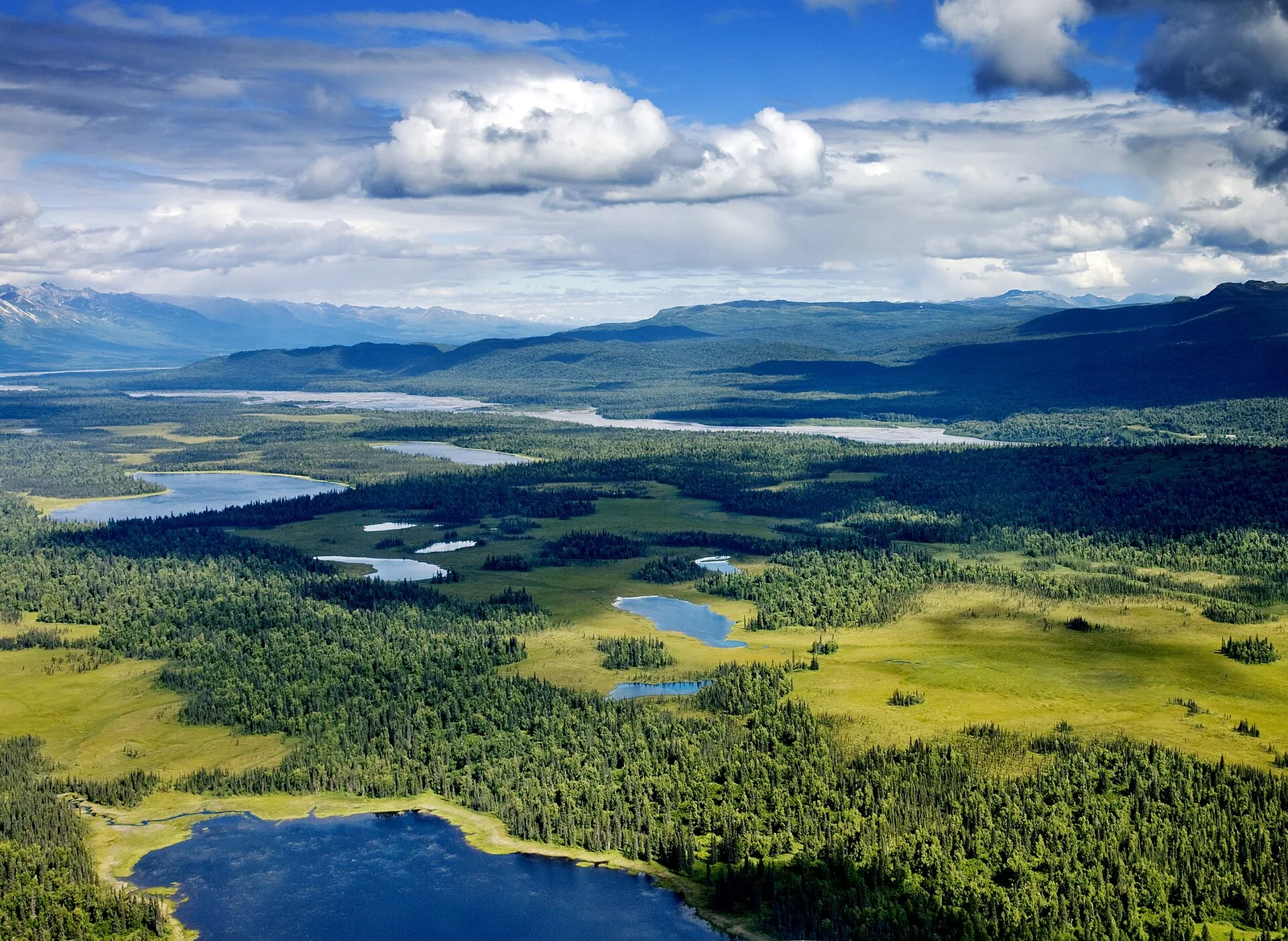
Denali National Park and Preserve encompasses roughly six million acres of interior Alaska, anchored by Denali itself, the highest peak in North America. A 2015 U.S. Geological Survey GPS survey fixed the summit at 20,310 feet, revising the 20,320-foot figure carried on maps since 1953. A single 92-mile road, gravel beyond mile 15 and served mostly by concession buses, threads through boreal forest, open tundra, glacial valleys, and braided river floodplains.
The park was established on February 26, 1917, as Mount McKinley National Park, the first national park created primarily to protect wildlife rather than scenery. The naturalist Charles Sheldon, who studied Dall sheep in the Alaska Range in 1906 through 1908, led the campaign for it alongside the Boone and Crockett Club. Harry Karstens, co-leader of the first verified ascent of the mountain, became the park's first superintendent in 1921.
The Alaska National Interest Lands Conservation Act of December 2, 1980, roughly tripled the protected area, added the national preserve units, renamed the whole unit Denali, and designated the original 1917 park as more than two million acres of wilderness. The federal government restored the Koyukon Athabascan name Denali, commonly translated 'the high one,' on August 28, 2015; Alaska had used that name officially since 1975. Prospector William Dickey had renamed the peak for presidential candidate William McKinley in 1896.
The first verified summit came on June 7, 1913, when Hudson Stuck, Harry Karstens, Robert Tatum, and Walter Harper reached the top; Harper, an Alaska Native, was first to stand on the summit. A 1910 party of Kantishna miners, the Sourdough Expedition, had already climbed the lower North Peak and planted a spruce pole there. Today roughly 1,000 to 1,200 mountaineers attempt the climb each year, most by the West Buttress route pioneered by Bradford Washburn in 1951, and about 60 percent reach the top.
- Designation
- National Park and Preserve
- Location
- Interior Alaska, south of Fairbanks
- Established
- 1917
- Annual Visitors
- ~600,000
Ecological Zones of Denali
The park's lowest elevations, below about 2,500 feet, carry boreal forest of white spruce, paper birch, quaking aspen, balsam poplar, and willow. This taiga zone is prime moose habitat; the animals browse willow thickets and feed on aquatic plants in the ponds and sloughs along river corridors.
Much of this lowland sits on discontinuous permafrost. Where the frozen ground thaws unevenly, black spruce stands tilt into the leaning 'drunken forests' that Park Service ecologists use as a visible marker of warming soils.
Snowshoe hare numbers here rise and crash on a cycle of roughly eight to eleven years, and Canada lynx populations track that cycle closely, one of the clearest predator-prey oscillations documented in the North American boreal zone.
Denali's interior rivers are glacial, silty, and nearly salmon-free, so the park's grizzlies are largely vegetarian and noticeably smaller than coastal brown bears. Bears emerge from dens in April and May to graze new growth and overwintered berries before shifting to ground squirrels and moose calves in early summer.
Above treeline, open tundra carpets the rolling hills and alpine slopes from roughly 2,500 to 5,000 feet. This is the best wildlife-viewing zone in the park: caribou move through in loose bands, wolves hunt across open ground, and Dall sheep hold the rocky ridges. Blueberry, crowberry, and dwarf birch turn the ground crimson and gold in late August.
The Denali caribou herd numbers about 2,000 animals today, down from an estimated 20,000 in the early 1940s. Park biologists have counted it since the 1950s, making it one of the longest continuous caribou records in North America; hard or icy snow that seals off forage is a recurring cause of the crashes.
Dall sheep, numbering roughly 2,000 in the park, were the animal Charles Sheldon came to study, and protecting them from market hunters was the original argument for creating the park. The Alaska Range herd sits at the northern edge of the species' world range.
Adolph Murie's field study of the Toklat-area wolves in 1939 through 1941 produced 'The Wolves of Mount McKinley' (1944), the first rigorous scientific defense of predators inside a national park and a document that helped end the Park Service's earlier policy of shooting wolves and coyotes.
Glaciers pour off Denali's flanks in every direction. The Kahiltna, at about 44 miles, is the longest in the Alaska Range; its Southeast Fork holds the mountaineering base camp at roughly 7,200 feet, reached only by ski-equipped bush plane from Talkeetna.
Above 5,000 feet the terrain becomes a world of seracs, crevasse fields, and wind-scoured ridges. The Muldrow Glacier on the north side is one of the few in North America known to 'surge': after decades nearly stationary it sped up in the winter of 2020 and 2021, at times moving several inches an hour.
The West Buttress climbing route was pioneered by Bradford Washburn's 1951 expedition. Washburn's aerial photographs and his 1960 large-scale map of the mountain are still used to plan ascents.
Because Denali sits at 63 degrees north, barometric pressure at its summit is closer to that of a Himalayan peak several thousand feet taller, so frostbite and altitude illness are common. Park mountaineering rangers run a camp with medical staff at 14,200 feet through the climbing season.
Denali has two summits. The 1910 Sourdough party climbed the North Peak at 19,470 feet and planted a spruce pole that was later confirmed through a telescope; the true South Peak at 20,310 feet was not reached until 1913.
The rise from the surrounding 2,000-foot lowlands to the summit is roughly 18,000 feet, one of the greatest base-to-peak reliefs of any mountain that stands on land rather than rising from the sea floor.
The Alaska Range curves about 400 miles across south-central Alaska and is still being pushed up along the Denali Fault, a major strike-slip fracture that produced a magnitude 7.9 earthquake in November 2002.
The peak makes its own weather. Winds over 100 miles per hour and temperatures below minus 40 degrees have been recorded high on the mountain, and it is fully clear of cloud as seen from the park road only about 30 percent of days.
Indigenous Connections
Athabascan People (Dena and Koyukon)
Dene, or Athabascan, peoples have lived in the Nenana, Kantishna, and Toklat drainages for millennia, moving seasonally to hunt caribou, moose, and Dall sheep and to fish for grayling and whitefish. The mountain sits where the territories of several Dene groups meet, including Lower Tanana, Koyukon, and Dena'ina speakers.
'Denali' is the Koyukon name, usually translated 'the high one' or 'the tall one'; neighboring languages have their own names for the peak, such as the Dena'ina 'Dghelay Ka'a.' The gold rush that swept the Kantishna Hills on the park's north side in 1905 pushed thousands of prospectors briefly through Dene hunting country.
The railroad town of Cantwell, just outside the park's south boundary, was settled by Ahtna and Dene families who relocated to the Alaska Railroad line in the 1910s and 1920s. Their descendants still hold and use land in the area.
Cantwell and other Ahtna and Dene communities remain in the region, and eligible rural residents retain federal subsistence hunting and fishing rights on the ANILCA-added park lands and in the preserve. The National Park Service consults with area tribes and Alaska Native corporations on cultural resources and subsistence management.
Interior-Coastal Trade and the Preserve Framework
Interior Dene communities were tied to the coast by long-standing trade routes that moved native copper out of the Ahtna country, marine oil and hides inland, and dentalium shell used as valuables. Those networks connected the Denali region indirectly to the Alutiiq of the Gulf of Alaska and the Yup'ik of the Bering Sea coast.
Anthropologists including Frederica de Laguna and Cornelius Osgood documented these interior-coastal exchanges in the early and mid 20th century, showing that no Alaska Native group lived in isolation from its neighbors.
When Congress passed ANILCA in 1980 it wrapped national preserve units around the core park specifically so that customary subsistence harvest by rural Alaskans, including Alaska Native peoples, could continue on lands added to the unit. Sport hunting and trapping are also allowed in the preserve, but not in the park.
Subsistence harvest is permitted on the ANILCA-added park lands and in the two Denali National Preserve units, but not within the original 1917 park, now managed as designated wilderness. The Park Service co-manages subsistence with a system of regional advisory councils.
Exploring Denali
Denali Park Road Bus Tour
Private vehicles may drive only the first 15 miles, to the Savage River. Beyond that the gravel road is served by park concession buses: hop-on, hop-off transit buses and fully narrated tour buses. Wildlife viewing from the bus is the core Denali experience, and drivers stop for animals on or near the road.
The road was laid out in the 1920s and completed to the mining district at Kantishna in 1938. Its narrow, largely single-lane gravel character is kept deliberately to hold down traffic speed and volume and to limit disturbance to wildlife.
Since 2021 the road has been closed at Mile 45 because of the Pretty Rocks landslide, a permafrost-thaw failure in the Polychrome area that had been creeping for years and then accelerated sharply. Bus service now turns around well short of the western half of the route.
A replacement bridge spanning the unstable ground is funded at more than $100 million through federal emergency highway relief, with the road expected to reopen to Kantishna in 2026.
Backcountry Hiking
Denali has almost no maintained trails past the entrance area. The backcountry is divided into numbered units, most with a nightly quota, and overnight visitors receive a free permit only after a required orientation covering bear encounters and river crossings.
Travel is entirely cross-country, over spongy tundra, glacial moraine, and gravel bars, with no bridges and no marked routes. Parties navigate by map, compass, and terrain, often covering only a few miles a day.
A bear-resistant food container is mandatory for every backcountry group. Denali's grizzlies are not habituated to people, and the container rule is credited with keeping bear-obtained-food incidents rare compared with parks farther south.
Glacial rivers such as the Toklat and the McKinley can rise several feet within hours of rain or warm weather; drowning on an unbridged crossing is the most common cause of backcountry death in the park, so the Park Service steers most visitors to the day-hike areas along the road.
Mountaineering on Denali
About 1,000 to 1,200 climbers register each year and roughly 60 percent reach the summit. The season runs from late April through early July, when the glaciers are still frozen enough for ski-plane landings and travel.
Nearly all expeditions use the West Buttress route from the roughly 7,200-foot base camp on the Southeast Fork of the Kahiltna Glacier. Every party checks in with NPS mountaineering rangers in Talkeetna and pays a special-use fee before flying in.
Rangers staff a medical camp at 14,200 feet. Frostbite, high-altitude pulmonary and cerebral edema, and falls into crevasses are the leading causes of rescues, and the Park Service recommends prior experience on other high, cold peaks before attempting Denali.
More than 120 climbers have died on the mountain since record-keeping began. The worst single incident was a July 1967 storm on the Muldrow Glacier route that killed seven members of a twelve-person expedition, at the time the deadliest mountaineering accident in North American history.
Conservation Challenges
Climate Change and Glacial Retreat
Interior Alaska has warmed roughly 3 to 4 degrees Fahrenheit since the mid-20th century, faster than the global average. Denali's glaciers are thinning and retreating, and the normally sluggish Muldrow Glacier surged in 2020 and 2021, at times advancing several inches an hour.
Thawing permafrost is the direct cause of the Pretty Rocks landslide that severed the park road at Mile 45 in 2021. Park geologists now monitor several other thaw-driven slumps along the road corridor.
Park researchers have tracked snowpack, river-breakup dates, and glacier mass balance for decades. Earlier snowmelt is shifting the timing of plant growth and of caribou and bear movement, changes documented against those long baselines.
Denali serves as a reference site for the National Park Service's Central Alaska Inventory and Monitoring Network, a relatively undisturbed landscape used to separate climate signals from local human impacts across the region.
Wildlife Population Monitoring
The Denali caribou herd has been counted since the 1950s and now sits near 2,000, far below the roughly 20,000 of the 1940s. Deep or ice-crusted snow that blocks access to forage is a recurring driver of the declines.
Wolf sightings in the road corridor dropped sharply after Alaska eliminated, around 2010, a state buffer zone that had protected park wolves from trapping and hunting just outside the boundary. The buffer remains a running dispute between the state and the Park Service.
Long-term studies of Dall sheep, moose, and grizzly bears in Denali are among the oldest large-mammal datasets in the national park system, reaching back to Adolph Murie's work in the 1930s and 1940s.
Because the original park unit is closed to hunting, biologists use it as a control landscape, comparing its wildlife with that of hunted state lands nearby to separate the effects of harvest from those of weather and habitat.
Visitor Impact Management
The single bus-based road, with private vehicles stopped at Mile 15, is itself the park's main tool for limiting habitat fragmentation and wildlife disturbance across six million acres.
Roughly 600,000 people visit each year, the great majority between late May and mid-September, concentrating nearly all use into a short season and a narrow corridor.
Backcountry unit quotas, mandatory bear-resistant food storage, and a pack-out policy for human waste in heavily used areas are the tools used to keep dispersed travel from degrading the wilderness.
The 2021 road closure at Mile 45 cut bus access to the western half of the route, sharply concentrating visitors in the first 43 miles and prompting a new management planning effort for how use will be spread once the road reopens.
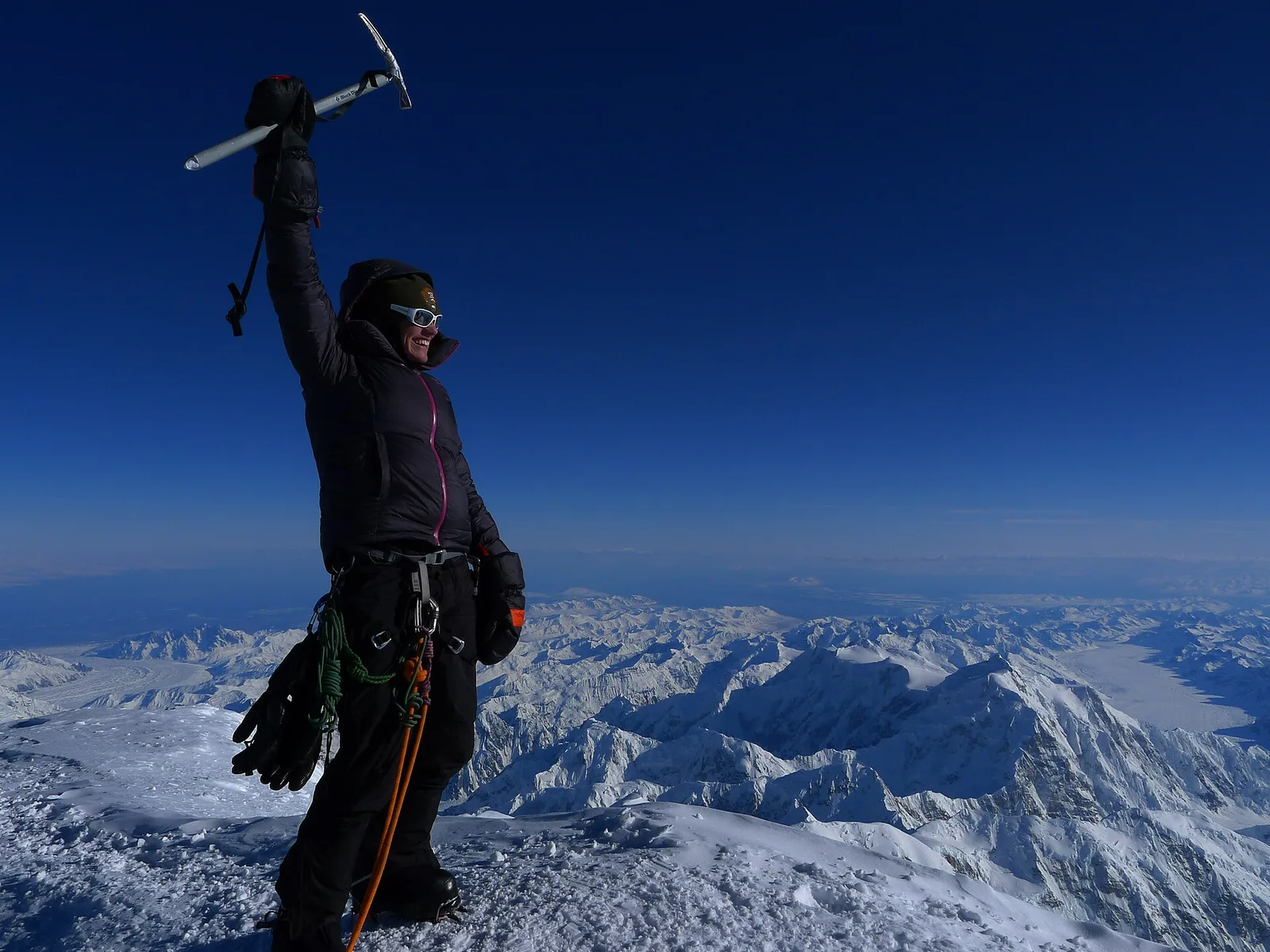
Denali's summit at 20,310 feet, the highest point in North America
At a Glance
Did You Know?
Denali's summit is so far north that the effective altitude felt by climbers is closer to 23,000 feet due to the thinner atmosphere at high latitudes, making it more demanding than peaks of similar elevation in the tropics.
The single 92-mile park road was built without any private vehicle access beyond mile 15, a deliberate decision made decades ago to preserve the wilderness character and prevent the kind of wildlife disruption seen in more road-accessible parks.
Denali's Kahiltna Glacier, the primary base camp approach for climbers, is 44 miles long and one of the largest glaciers in the Alaska Range.
The park has no fences or barriers, and wolves, grizzlies, and caribou move freely in and out of park boundaries throughout the year.
Plan Your Visit
Location
Interior Alaska, south of Fairbanks
Designation
National Park and Preserve
Best Time to Visit
Mid-May through September, park road buses operate June through mid-September
Admission
$15 per person entry fee (America the Beautiful Pass accepted)