About Illinois
Illinois takes its name from the Illinois Confederation, a group of Algonquian-speaking peoples who lived in the region when French explorers arrived in the late 1600s. French missionaries and explorers, including Jacques Marquette and Louis Jolliet, who explored the Mississippi River in 1673, recorded the name as "Illiniwek" or "Illini," which appears to mean "he speaks the regular way" or simply "men" in the Miami-Illinois language. French colonizers added the suffix "-ois" in the French style, creating "Illinois." The "s" at the end is silent, following French pronunciation rules, which is why it is pronounced "Ill-ih-NOY" rather than "Ill-ih-NOYZ."
Illinois is a state of extraordinary duality. Chicago, its dominant city, is a global metropolis of 2.7 million people, one of the great cultural and financial capitals of the world. But Illinois is also a flat prairie state where corn and soybean fields stretch to the horizon, small towns anchor agricultural communities, and Springfield, the state capital, has population of barely 110,000.
The tension between Chicago and "downstate" Illinois is among the most pronounced urban-rural divides in American politics. The city and its suburbs reliably vote Democratic; much of the rest of the state just as reliably votes Republican. Because the population is concentrated in the metro area, Illinois votes Democratic in statewide elections, but the political map below Chicago looks nothing like New York or California.
Historically, Illinois is the Land of Lincoln, the state where Abraham Lincoln built his career, launched his presidency, and was buried. It is also the state that gave America the skyscraper, improv comedy, the blues, and financial futures. And it holds the dubious distinction of having sent more governors to federal prison than any other state, a political corruption tradition that has defined and plagued its governance for generations.
Geography, Four Distinct Regions
Illinois runs 380 miles north to south, from the lakefront skyscrapers of Chicago to the river bluffs of "Little Egypt" in the south.
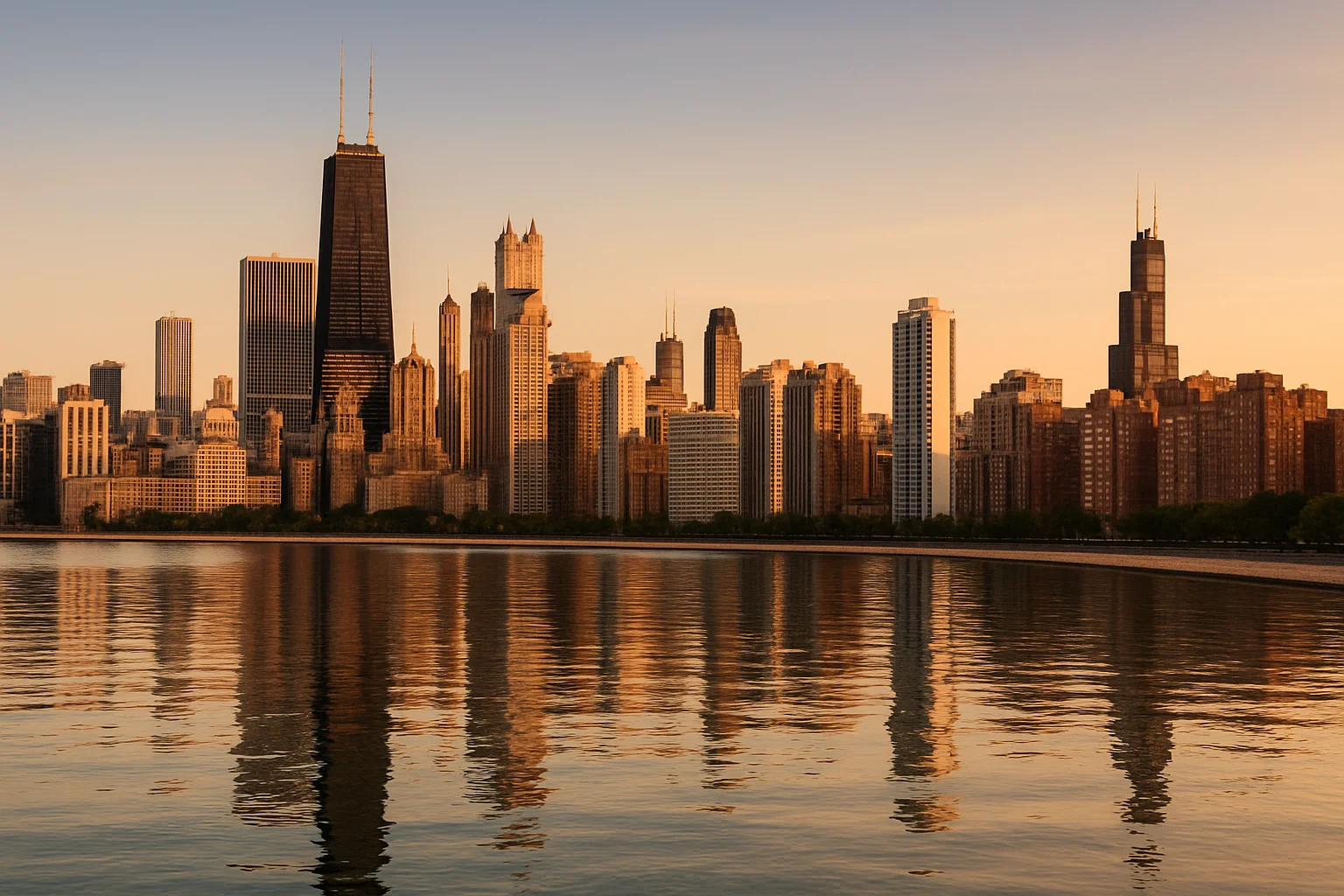
Greater Chicago dominates Illinois, roughly two-thirds of the state's population lives in the Chicago metropolitan area. Chicago proper, with 2.7 million people, is the third-largest city in the United States. It sits at the southern tip of Lake Michigan, its famous skyline of skyscrapers rising from the flat prairie.
The city is a global center of finance, architecture, food, music, comedy, and trade. O'Hare International Airport is one of the world's busiest. Suburban Cook County and the collar counties, DuPage, Lake, Will, Kane, McHenry, house millions more and contain some of the wealthiest communities in the country.
Chicago grew from about 4,000 people in 1840 to 1.7 million by 1900, one of the fastest large-city expansions in world history, powered by the rail network that made it the nation's freight interchange and by the Union Stock Yards, which processed much of the country's meat from 1865 until the 1970s. The 1900 reversal of the Chicago River, engineered to carry the city's sewage away from its Lake Michigan drinking water and down toward the Mississippi, is still regarded as one of the great feats of civil engineering.
The metropolitan area holds roughly 9.5 million people and spills into Indiana and Wisconsin, but it has been losing population since the mid-2010s, with Cook County shrinking while some collar counties still grow. The city also carries among the largest unfunded public-pension liabilities of any U.S. municipality. O'Hare handled about 74 million passengers in 2023, and the region's rail yards interchange close to a quarter of all U.S. freight rail traffic.
Central Illinois is quintessential American prairie, flat, fertile, and deeply agricultural. Corn and soybean fields stretch to the horizon across some of the most productive farmland on Earth.
Springfield, the state capital, sits in the heart of this region and is defined by its association with Abraham Lincoln, who practiced law there, represented the region in Congress, and launched his presidential campaign from its train station. Peoria, home to Caterpillar's global headquarters, and Bloomington-Normal anchor the regional economy.
This is the Grand Prairie, a nearly treeless grassland early settlers avoided because the thick sod was almost impossible to break until John Deere built his self-scouring steel plow at Grand Detour, Illinois, in 1837. Beneath much of the region lies the Mahomet Aquifer, a buried glacial river valley that supplies drinking water to roughly a million people.
Springfield became the capital in 1839, moved from Vandalia after lobbying by a group of legislators that included Lincoln. Decatur grew up around the corn-processing works of Archer Daniels Midland, which was founded there, and the U.S. Department of Agriculture's research lab in Peoria developed the deep-tank fermentation method that made mass production of penicillin possible during World War II. Bloomington is the headquarters of State Farm, the country's largest auto and home insurer.
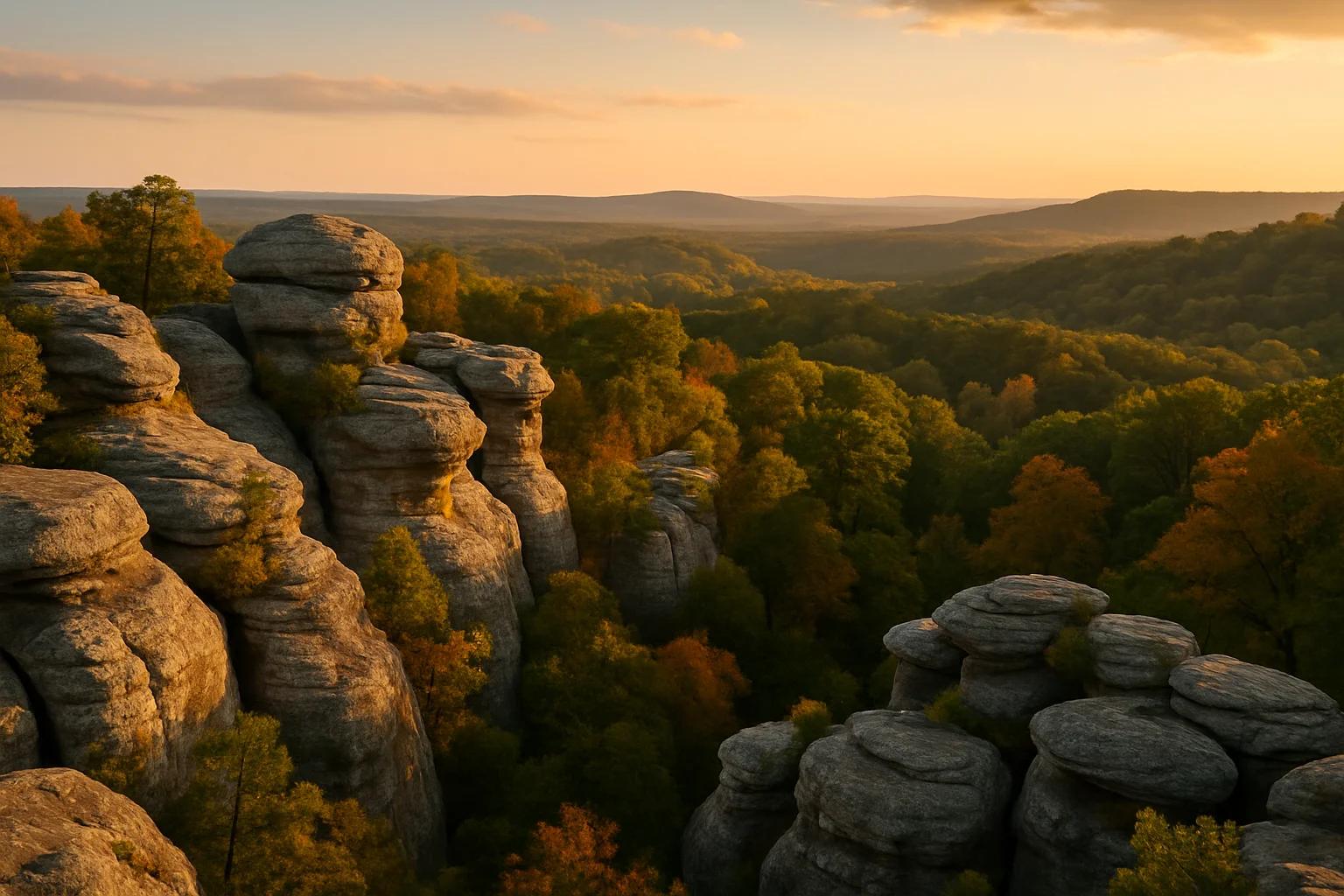
Southern Illinois, nicknamed 'Little Egypt' for reasons debated by historians, possibly because its location at the confluence of the Ohio and Mississippi rivers resembled the Nile Delta, is a world apart from the Chicago metro. The Shawnee National Forest covers 280,000 acres of hills, bluffs, and forest that look nothing like the prairies to the north.
Garden of the Gods, the Giant City State Park, and the Trail of Tears State Forest offer dramatic scenery. The region has historically been tied to coal mining, agriculture, and river trade, and shares cultural characteristics with the border South.
The southern tip of the state at Cairo lies farther south than Richmond, Virginia. Sitting where the Ohio meets the Mississippi, Cairo was a key Union base in the Civil War, the place where Ulysses S. Grant took field command in 1861, but the town later collapsed from about 15,000 residents in 1920 to under 2,000 today after decades of racial conflict and a long economic boycott by Black residents in the early 1970s.
The Shawnee Hills escaped the glaciers that flattened the rest of Illinois, leaving sandstone bluffs, box canyons, and the state's only congressionally designated wilderness areas. The region produced most of Illinois coal for a century, and Illinois still holds the largest bituminous coal reserves of any state, but the high sulfur content and the federal Clean Air Act cut deep-mining jobs from tens of thousands to a few thousand.
Illinois' entire western border is defined by the Mississippi River, one of the most storied waterways in American history and a critical commercial artery. The Illinois River runs diagonally across the state, connecting the Chicago area to the Mississippi, and was the original route by which French explorers penetrated the interior of the continent.
The river valleys contain rich bottomland agriculture, historic river towns like Nauvoo and Galena, and the Cahokia Mounds, the largest pre-Columbian city north of Mexico.
Galena, in the far northwest, was a lead-mining boomtown that in the 1840s shipped a large share of the nation's lead and was briefly a bigger place than Chicago; it was Ulysses S. Grant's hometown when the Civil War broke out. Downriver, Nauvoo was built in the early 1840s by Latter-day Saint refugees into one of the largest cities in Illinois, until founder Joseph Smith was killed by a mob at the Carthage jail in 1844 and the Mormons were forced west.
The Illinois Waterway, finished in 1933, ties Lake Michigan to the Mississippi through a series of locks and the Chicago Sanitary and Ship Canal, letting barges run from the Great Lakes all the way to the Gulf of Mexico. That same artificial connection now lets invasive carp move toward Lake Michigan, and the Army Corps of Engineers is building a roughly one-billion-dollar barrier system at Brandon Road near Joliet to block them.

Economy
Illinois has the fifth-largest state economy in the nation, anchored by Chicago's financial and tech sectors and balanced by one of the most productive agricultural regions on Earth.
The CME Group, formed from the merger of the Chicago Mercantile Exchange and the Chicago Board of Trade, is the world's largest and most diverse derivatives marketplace, handling trillions of dollars in transactions daily. Chicago invented financial futures trading in the 1970s, and the innovation transformed global finance.
The city is also home to major investment firms, insurance giants, and commodity traders. Financial services is one of Illinois' largest economic sectors.
The Chicago Board of Trade, founded in 1848, created the standardized grain futures contract that let farmers and buyers lock in prices months ahead, and the Chicago Mercantile Exchange launched the first financial futures, on foreign currencies, in 1972, followed by interest-rate and stock-index contracts. The open-outcry trading pits have almost entirely given way to electronic markets since the 2000s.
CME Group, which also absorbed the New York Mercantile Exchange, now clears billions of contracts a year. Chicago is likewise home to the Chicago Board Options Exchange, which introduced listed stock options in 1973 and runs the VIX volatility index, to Northern Trust, and to the insurers Allstate and a large Blue Cross Blue Shield operation; hedge fund Citadel grew up in the city before moving its headquarters to Miami in 2022.
Illinois consistently ranks first or second nationally in soybean production and among the top three in corn. The state's deep, fertile glacial soils produce enormous agricultural output. Beyond the fields, Illinois is a major center for food processing, Archer Daniels Midland (ADM), headquartered in Chicago, is one of the world's largest agricultural processors. Illinois farms ship commodities via the Mississippi River to global markets.
Illinois farmers plant roughly 22 million acres of corn and soybeans across about 71,000 farms, and the state is regularly first or second in the country in soybeans and near the top in corn, with around 40% of the corn crop going to ethanol. Its dark 'prairie soils,' built up over thousands of years under tallgrass, are among the most naturally productive on Earth.
Archer Daniels Midland, founded in Decatur and now headquartered in Chicago, is one of the four global grain-trading giants; it agreed to a 100-million-dollar settlement with the SEC in 2024 over accounting in its nutrition unit. Much of the state's grain moves by barge from river terminals to export elevators near New Orleans, and Illinois consistently ranks among the top three states for agricultural exports.
Caterpillar, headquartered in Deerfield (formerly Peoria), manufactures heavy equipment sold worldwide. John Deere, though headquartered in Iowa, has major operations in the Quad Cities. Illinois' central geographic location, at the convergence of major rail lines, highways, and the Mississippi and Illinois rivers, makes it one of the most important logistics and distribution hubs in the country. Chicago's Union Station is the second-busiest Amtrak station in the nation.
Illinois is one of the largest manufacturing states by output, making construction and farm machinery, processed food, and pharmaceuticals; AbbVie, spun off from north-suburban Abbott Laboratories in 2013, is one of the world's biggest drugmakers. Manufacturing still employs roughly 570,000 people in the state.
Six of the seven Class I railroads meet in Chicago, making it the busiest rail hub in North America, and a freight car can still take more than a day to work its way across the metro area; the multi-agency CREATE program has spent years untangling the worst crossings. BNSF's Logistics Park near Elwood and Joliet, built on a former Army arsenal, is one of the largest inland intermodal terminals in the country.
Chicago has emerged as a major technology hub, home to companies like Motorola Solutions, Morningstar, Grubhub, and a growing startup ecosystem. The city's universities, University of Chicago, Northwestern, University of Illinois, produce world-class research talent. The Illinois Medical District in Chicago is one of the largest concentrations of medical facilities and research institutions in the world. Illinois ranks in the top ten states for NIH research funding.
The city's tech scene is anchored by 1871, a startup incubator in the Merchandise Mart named for the year of the Great Fire, and by firms that grew out of the trading exchanges. Google, Salesforce, and Amazon all run large Chicago offices, and the metro has drawn several billion dollars a year in venture capital in recent years.
Argonne National Laboratory and Fermilab, both federal research labs in the western suburbs, run major programs in physics, materials, and supercomputing; Fermilab operated the world's highest-energy particle collider, the Tevatron, until 2011 and now hosts the international DUNE neutrino experiment. The University of Chicago has been associated with roughly 100 Nobel laureates, and the first controlled nuclear chain reaction was produced under its old football stands in December 1942.
Chicago's cultural institutions are world-class: the Art Institute of Chicago houses one of the finest art collections on Earth. The Chicago Symphony Orchestra is among the finest ensembles in the world. The city gave birth to Chicago Blues, Chicago jazz, house music, and is the home of improvisational comedy (Second City).
The architectural legacy of the skyscraper, born in Chicago, draws architects and design students from around the globe. Millennium Park's 'Cloud Gate' sculpture is one of the most photographed public art works in America.
Chicago draws around 50 million visitors a year in a normal year. Navy Pier is among the most-visited attractions in the Midwest, and McCormick Place is the largest convention center in North America. The restaurant scene runs from the birthplace of deep-dish pizza in 1943 to some of the most decorated fine-dining rooms in the country.
The city gave the world the amplified Chicago blues of Muddy Waters and Chess Records, house music, named for the Warehouse club around 1980, and the improv tradition of The Second City, whose alumni have filled decades of 'Saturday Night Live' casts. Lollapalooza has been rooted in Grant Park since 2005 and is one of the largest music festivals in the United States.
How Illinois' State Government Works
Illinois operates a three-branch state government under a constitution last revised in 1970. The General Assembly consists of a 59-member Senate (four-year terms, staggered) and a 118-member House of Representatives (two-year terms). Illinois has no term limits for the governor or state legislators.
Illinois' political corruption legacy is well-documented and bipartisan. Four of the state's last ten governors have been convicted of federal crimes: Otto Kerner (D), Dan Walker (D), George Ryan (R), and Rod Blagojevich (D). Blagojevich was impeached by the Illinois House 117-1 in 2009 after being recorded trying to sell Barack Obama's vacant Senate seat, "a golden thing," in his words. His sentence was commuted by President Trump in 2020.
Illinois faces serious long-term fiscal challenges, including one of the most severely underfunded public pension systems in the country. The state's constitution prohibits reducing public pension benefits, creating a legal and fiscal bind that has been the central challenge of Illinois governance for decades.
Governor of Illinois
Current Governor
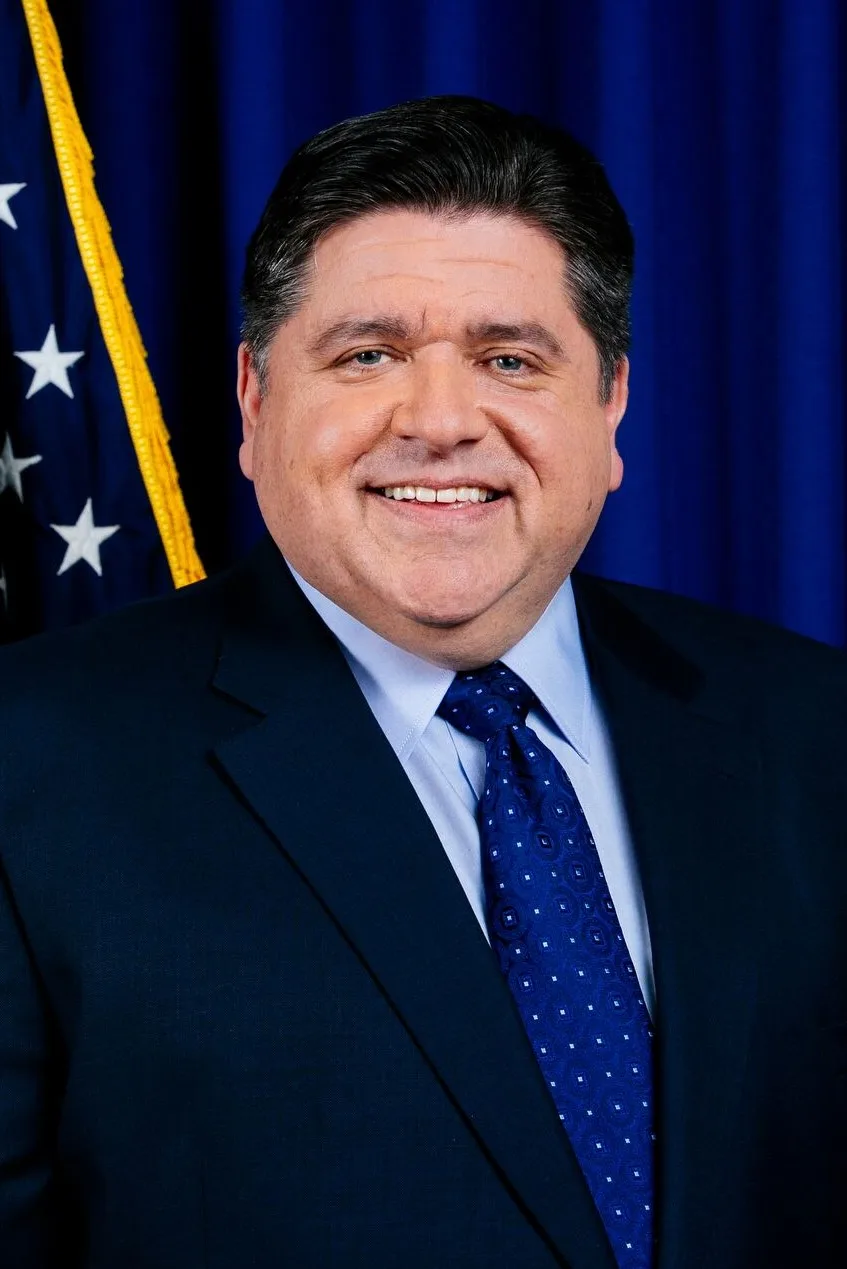
JB Pritzker
- Party
- Democrat
- In Office Since
- January 14, 2019
- Elected
- 2018, re-elected 2022
- Term Ends
- January 2027
- Born
- January 19, 1965, Chicago, Illinois
- Education
- Duke University, Northwestern Law School
- Background
- Businessman; heir to the Hyatt Hotels fortune
JB Pritzker is the 43rd Governor of Illinois. An heir to the Hyatt hotel fortune and longtime Democratic donor, he defeated incumbent Republican Bruce Rauner in 2018 and won re-election comfortably in 2022. He has focused on raising the minimum wage, legalizing cannabis, expanding early childhood education, and stabilizing the state's chronic budget crises.
Other Current State Officials
Lieutenant Governor
Juliana Stratton
In office since January 2019, re-elected 2022. First African American Lieutenant Governor of Illinois. Former state representative from Chicago's South Side.
Attorney General
Kwame Raoul
In office since January 2019, re-elected 2022. Former state senator who held Barack Obama's Illinois Senate seat after Obama won the U.S. Senate. Focus on consumer protection and civil rights.
Secretary of State
Alexi Giannoulias
In office since January 2023. Former Illinois State Treasurer (2007–2011) and former NBA player for the Boston Celtics' summer league. Focus on digital modernization and election access.
The Illinois General Assembly
Illinois State Senate
- Seats: 59 members
- Terms: 2- and 4-year terms
The upper chamber. Illinois senators serve a unique staggered arrangement, in each 10-year redistricting cycle, senators serve one 2-year term and two 4-year terms (or vice versa), synchronized with redistricting.
Illinois House of Representatives
- Seats: 118 members
- Terms: 2-year terms
The lower chamber. All 118 House seats are on the ballot every two years. The Speaker of the Illinois House is one of the most powerful state legislative leaders in the country, controlling committee assignments and floor scheduling.
Illinois' U.S. Senators
U.S. Senator
Dick Durbin
The longest-serving U.S. Senator from Illinois, Durbin has served as the Senate Democratic Whip, the party's second-ranking leader, since 2005, in the majority and the minority, making him one of the most powerful figures in the Democratic caucus. He announced in April 2025 that he will not seek re-election in 2026. Focuses on criminal justice reform, immigration, and veteran health care.
U.S. Senator
Tammy Duckworth
An Army National Guard lieutenant colonel who lost both legs when her Black Hawk helicopter was shot down in Iraq in 2004. The first disabled woman elected to Congress, the first senator to give birth while in office (2018), and the first U.S. senator to bring her infant onto the Senate floor. Re-elected in 2022. Focuses on veterans' issues, disability rights, and national security.
Illinois Through the Years
From early settlement to the present day. Tap any era to read more.
Before any European set foot in Illinois, the region was home to one of the most remarkable cities in the ancient world. Cahokia, located near present-day Collinsville, just east of St. Louis, was the largest pre-Columbian city north of Mexico, with a peak population of 10,000 to 20,000 people around 1100 AD. The city's central feature, Monks Mound, is larger at its base than the Great Pyramid of Giza.
Cahokia was a sophisticated urban center with planned streets, a massive central plaza, and complex trade networks stretching across the continent. It is now a UNESCO World Heritage Site.
At its height around 1100 the city covered roughly six square miles and likely held more people than London did at the time. Monks Mound rises 100 feet in four terraces and contains an estimated 22 million cubic feet of earth, all carried basket by basket. Archaeologists have mapped a 'Woodhenge' of cedar posts aligned to the solstices and, in Mound 72, mass burials that point to ritual human sacrifice.
Cahokia was largely abandoned by about 1350, before Europeans arrived, for reasons still debated, deforestation and flooding, crop failure, political breakdown, or disease. French colonists later attached the name of the unrelated Cahokia tribe living nearby. The site became an Illinois state historic site and, in 1982, a UNESCO World Heritage Site, one of only about two dozen in the United States.
Illinois was admitted to the Union on December 3, 1818, becoming the 21st state. It entered as a free state, but only barely.
Its first constitution prohibited slavery in principle while allowing existing enslaved workers in salt mines to remain in bondage. The state's early settlers came largely from the border South, Kentucky, Tennessee, and Virginia, giving it a complex relationship with slavery and race that would play out dramatically in the Lincoln era.
Congress pushed the new state's northern border about 41 miles north of the line set by the Northwest Ordinance, at the urging of territorial delegate Nathaniel Pope, so Illinois would include a stretch of Lake Michigan shoreline and a lake port. That redrawn strip is where Chicago now sits, together with roughly half the state's present population.
In referendums held from 1822 to 1824, pro-slavery forces tried and narrowly failed to call a convention that would have legalized slavery outright, defeated after a bitter fight led by Governor Edward Coles, a Virginian who had freed his own enslaved people and settled them on Illinois farmland. A system of indentured 'servants' and leased laborers at the Shawneetown salt works kept a form of bondage legal in the state into the 1840s.
Abraham Lincoln moved to Illinois at age 21, settling in New Salem and later Springfield, where he practiced law and entered politics. He served four terms in the Illinois state legislature and one term in Congress.
The Lincoln-Douglas debates of 1858, held across Illinois as Lincoln challenged incumbent Senator Stephen Douglas, brought national attention to the slavery question and made Lincoln a household name. He departed Springfield for Washington in February 1861 never to return alive; his body was brought back to be buried at Oak Ridge Cemetery.
Lincoln clerked in a New Salem store, served as a captain in the 1832 Black Hawk War without seeing combat, and won his first legislative election in 1834. As a Whig lawmaker he helped push through the 1837 move of the capital to Springfield and, that same year, joined a rare formal protest against slavery entered in the legislative record.
For years he rode the Eighth Judicial Circuit as one of Illinois' busiest trial lawyers, arguing more than 300 cases before the state Supreme Court and famously winning an 1858 murder acquittal by using an almanac to discredit an eyewitness who claimed to have seen the killing by moonlight. After his assassination, a funeral train retraced much of his 1861 route over 13 days, and about a million people filed past the coffin before burial at Oak Ridge on May 4, 1865.
On the night of October 8, 1871, fire broke out in a barn on the city's southwest side, legend blames Mrs. O'Leary's cow, though the origin was never proven. Driven by dry conditions and a southwest wind, the fire burned for two days and nights, destroying 17,000 buildings across 2,100 acres, killing an estimated 300 people, and leaving 100,000 homeless.
The fire destroyed nearly the entire city center. What came next was even more remarkable: Chicago rebuilt itself faster than any city in history, and in the process invented modern urban architecture, including the skyscraper.
The blaze jumped the Chicago River twice and consumed the business district, the courthouse, and most of the city's records; the loss was put at about 200 million dollars, roughly a third of Chicago's total value. Newspaper publisher Joseph Medill was elected mayor weeks later on a 'Fireproof' ticket, and the city passed ordinances requiring masonry construction downtown.
Reconstruction pulled architects and capital from across the country, and within two decades Chicago had the world's first steel-frame skyscraper. The 1893 World's Columbian Exposition, staged to mark 400 years since Columbus, turned a South Side swamp into a temporary 'White City,' drew about 27 million visits, and introduced the Ferris wheel. The Chicago City Council formally exonerated Catherine O'Leary and her cow in 1997.
The Haymarket affair in Chicago is one of the most consequential events in American labor history. During a rally in support of an eight-hour workday, someone threw a bomb at police, killing seven officers and wounding dozens. The subsequent trial of eight anarchist labor leaders, seven of whom were sentenced to death, became an international cause célèbre.
The date of the Haymarket protest, May 1, is now observed as International Workers' Day in most of the world (though not in the United States). The eight-hour workday that workers died for is now universal.
The rally on May 4, 1886 followed a national general strike for the eight-hour day and a clash the day before at the McCormick Reaper Works in which police killed at least two strikers. Only one officer was clearly killed by the bomb itself; most of the rest were hit by police gunfire in the confusion, and the bomb-thrower was never identified.
Four of the convicted men were hanged in 1887 and one died by suicide in his cell; the case rested largely on their speeches and writings rather than on proof they planned the attack. Illinois Governor John Peter Altgeld pardoned the three survivors in 1893, calling the trial a fraud, an act widely blamed for ending his political career. The Haymarket Martyrs' Monument in Forest Park is now a National Historic Landmark.
The 1968 Democratic National Convention in Chicago became a defining moment in American political history. As delegates inside the International Amphitheatre nominated Hubert Humphrey, thousands of anti-Vietnam War protesters gathered outside. Mayor Richard J. Daley ordered police to clear Grant Park.
What followed, broadcast live on national television, was a police riot: officers beat protesters, journalists, and bystanders indiscriminately. The images shocked the nation, fractured the Democratic Party, and helped elect Richard Nixon. The phrase 'the whole world is watching', chanted by protesters as they were beaten, entered the American political vocabulary.
The convention met in the shadow of the assassinations of Martin Luther King Jr. in April and Robert Kennedy in June and of President Johnson's decision not to run again. Daley put roughly 12,000 police, 6,000 National Guard troops, and 6,000 Army soldiers on the streets, and the worst violence came the night of August 28 outside the Conrad Hilton hotel on Michigan Avenue.
A federal commission later called it a 'police riot.' Eight organizers were charged under a new federal anti-riot law in the trial of the 'Chicago Seven' (originally eight, until Bobby Seale's case was split off), and the convictions were thrown out on appeal in 1972. The fiasco pushed the Democratic Party to create the McGovern-Fraser commission, whose rules moved nominating power away from party bosses and toward primary voters.
Illinois's Defining Moments in American History
These are the events that didn't just shape Illinois, they changed the nation.
Abraham Lincoln is Illinois' most enduring legacy. He arrived as a penniless 21-year-old and left as the 16th President of the United States. His years in Springfield as a lawyer and politician shaped his thinking on law, democracy, and human rights.
The Lincoln Presidential Library and Museum in Springfield houses the world's largest collection of Lincoln artifacts. Lincoln's tomb at Oak Ridge Cemetery draws over 300,000 visitors annually. Illinois' license plates have read 'Land of Lincoln' since 1954.
Lincoln's roughly 22 years as a working lawyer, much of it riding the circuit, earned him a reputation for plain dealing and for representing railroads and ordinary debtors alike; he won the 1857 'Effie Afton' case that helped establish the right of railroads to bridge navigable rivers. He served a single term in the U.S. House from 1847 to 1849, where his criticism of the Mexican War made him unpopular back home.
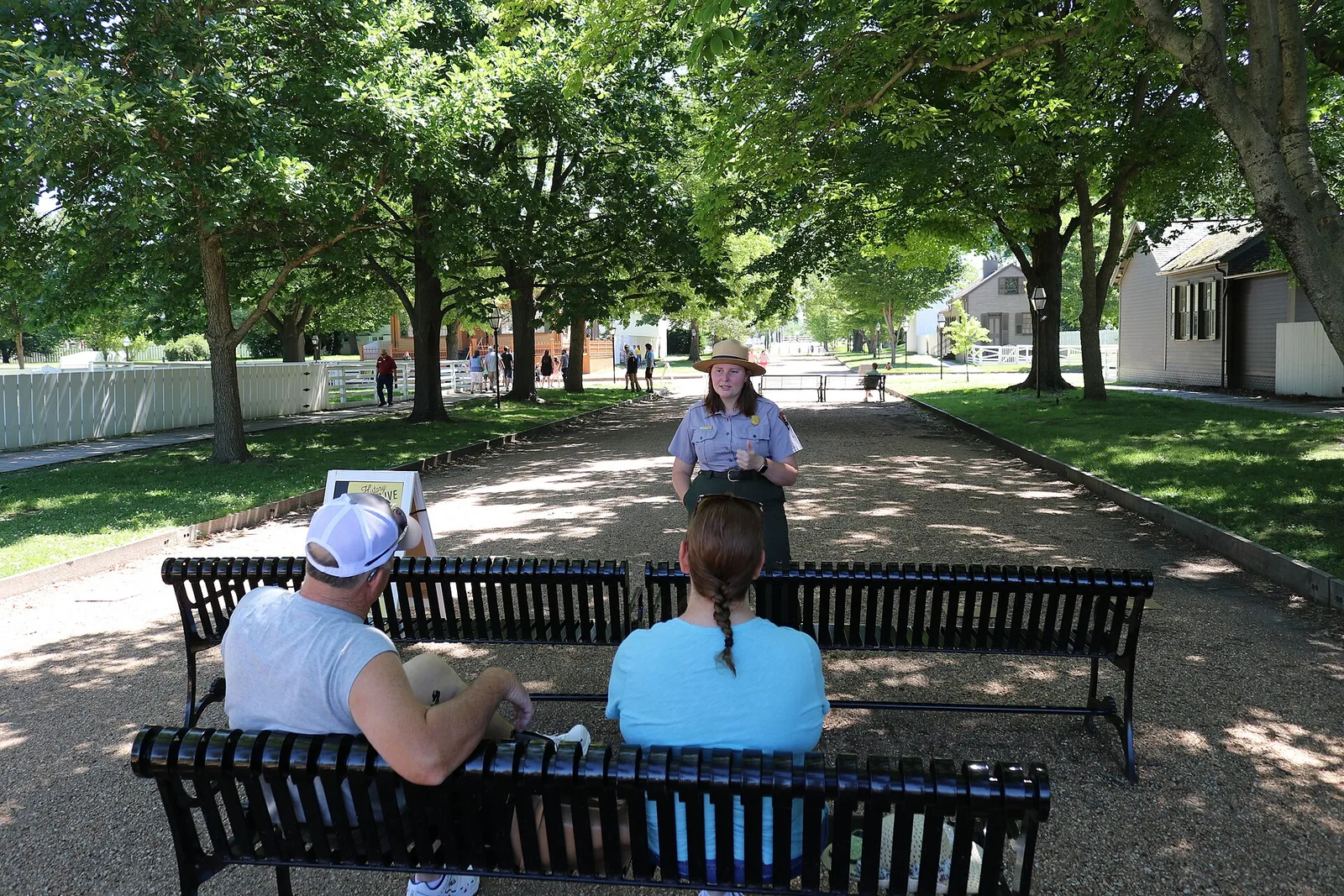
The Lincoln-Douglas debates of 1858 were seven three-hour outdoor contests before crowds as large as 15,000; Lincoln lost that Senate race, but the published transcripts carried him to the 1860 Republican nomination. Illinois has built its public identity around him, from the 'Land of Lincoln' plates to the Springfield museum that opened in 2005 and the preserved four-block neighborhood around the only house he ever owned.
The Great Chicago Fire of 1871 was a catastrophe, and an opportunity. In the two decades that followed, Chicago architects including Louis Sullivan, Daniel Burnham, and William Le Baron Jenney pioneered a new approach to urban building. The Home Insurance Building, completed in 1885, is widely considered the world's first skyscraper.
The Chicago School of Architecture that emerged from this era, emphasizing function, steel-frame construction, and the curtain wall, transformed cities worldwide. Chicago's architectural legacy is so significant that the city offers an internationally renowned architecture boat tour of its riverfront skyline.
Jenney's Home Insurance Building was the first tall structure carried on a metal skeleton rather than thick load-bearing walls, the breakthrough that made true skyscrapers possible. Louis Sullivan coined the phrase 'form follows function,' and his young draftsman Frank Lloyd Wright went on to develop the Prairie School from a studio in suburban Oak Park.
Daniel Burnham's 1909 Plan of Chicago fixed the continuous public lakefront, the broad boulevards, and Navy Pier. A second wave arrived with Ludwig Mies van der Rohe, who fled Nazi Germany to lead the architecture school at what became the Illinois Institute of Technology in 1938 and whose steel-and-glass towers set the pattern for the postwar corporate high-rise. The Willis Tower, built as the Sears Tower, was the tallest building in the world from 1973 to 1998.
Barack Obama's political career was made in Illinois. He served in the Illinois State Senate representing Chicago's South Side from 1997 to 2004, then won election to the U.S. Senate in a landslide in 2004, delivering a keynote address at the Democratic National Convention that made him a national figure overnight. He announced his presidential campaign at the Old State Capitol in Springfield in February 2007.
Elected the 44th President in 2008, he was the first African American to hold the office. His presidential center is under construction on Chicago's South Side.
Obama came to Chicago in 1985 to work as a community organizer in South Side neighborhoods hit by steel-mill closures, then taught constitutional law at the University of Chicago for 12 years and married Chicago native Michelle Robinson in 1992. He lost a 2000 Democratic primary challenge for a U.S. House seat before his 2004 Senate breakthrough.
His 2008 election-night rally filled Grant Park with an estimated 240,000 people, on the same ground where police had beaten demonstrators in 1968. The Obama Presidential Center, a roughly 830-million-dollar project in Jackson Park, broke ground in 2021 after years of lawsuits over building in a historic public park and opened to the public on June 19, 2026.
Notable Illinoisans
Abraham Lincoln
16th President, shaped his legal and political career in Springfield before the White House
Barack Obama
44th President, represented Illinois in the U.S. Senate
Ernest Hemingway
Nobel Prize-winning author of The Old Man and the Sea, born in Oak Park
Walt Disney
Entertainment visionary and creator of Mickey Mouse, born in Chicago
Ulysses S. Grant
18th President and Union general who secured victory in the Civil War, lived in Galena
Oprah Winfrey
Media mogul, philanthropist, and actress who built her career in Chicago
State Symbols & Quick Facts
| Nickname | "The Prairie State" |
| Capital | Springfield |
| Largest City | Chicago |
| Statehood | December 3, 1818 (21st state) |
| Population | ~12.5 million (2025 est.), 6th most populous state |
| Area | 57,914 sq mi, 25th largest state |
| Motto | State Sovereignty, National Union |
| State Bird | Northern Cardinal |
| State Flower | Violet |
| State Tree | White Oak |
| State Animal | White-tailed Deer |
| State Fish | Bluegill |
| State Insect | Monarch Butterfly |
| State Song | "Illinois" |
| Time Zone | Central Time (UTC−6 / UTC−5) |
| Borders | Wisconsin (N), Indiana & Lake Michigan (E), Kentucky (SE), Missouri & Iowa (W) |
Did You Know?
Illinois has had four governors sentenced to prison for corruption, more than any other state. They include Rod Blagojevich, who was impeached and convicted of trying to sell Barack Obama's vacant Senate seat to the highest bidder.
The world's first skyscraper was built in Chicago in 1885. The Home Insurance Building stood 10 stories tall and used a steel frame to support its weight, a revolutionary idea that made tall buildings possible everywhere on Earth.
Route 66, 'The Mother Road', begins in Chicago on Adams Street and ends 2,400 miles later in Santa Monica, California. The highway, commissioned in 1926, was the main route for migrants heading west during the Dust Bowl and the Great Depression.
The improv comedy tradition that gave America Saturday Night Live, SCTV, and countless comedians was born at The Second City theater in Chicago. Alumni include Bill Murray, John Belushi, Tina Fey, Stephen Colbert, Steve Carell, and dozens more.
Illinois produces more nuclear power than any other state, about half of the electricity consumed in Illinois comes from nuclear plants. The state has 6 nuclear plants with 11 reactors, more than any other state.
Quick Facts and Common Questions
Short answers to the questions people most often ask about Illinois: its abbreviation, how it became a state, its capital, and its place in Congress.
Illinois's two-letter postal abbreviation is IL. The U.S. Census Bureau places it in the Midwest region, in the East North Central division, and about 12.8 million people lived there in the 2020 census.
Illinois became the 21st state on December 3, 1818. Its land was part of the Northwest Territory, then the Indiana Territory, and became the Illinois Territory in 1809. Before statehood, territorial delegate Nathaniel Pope persuaded Congress to move the planned northern border about 41 miles north, which put the future site of Chicago inside Illinois.
The name comes from the French spelling of the name of the Illinois Confederation, a group of Native American peoples who lived along the Illinois and Mississippi rivers. Linguists trace it to a Miami-Illinois word meaning roughly "he speaks the ordinary way."
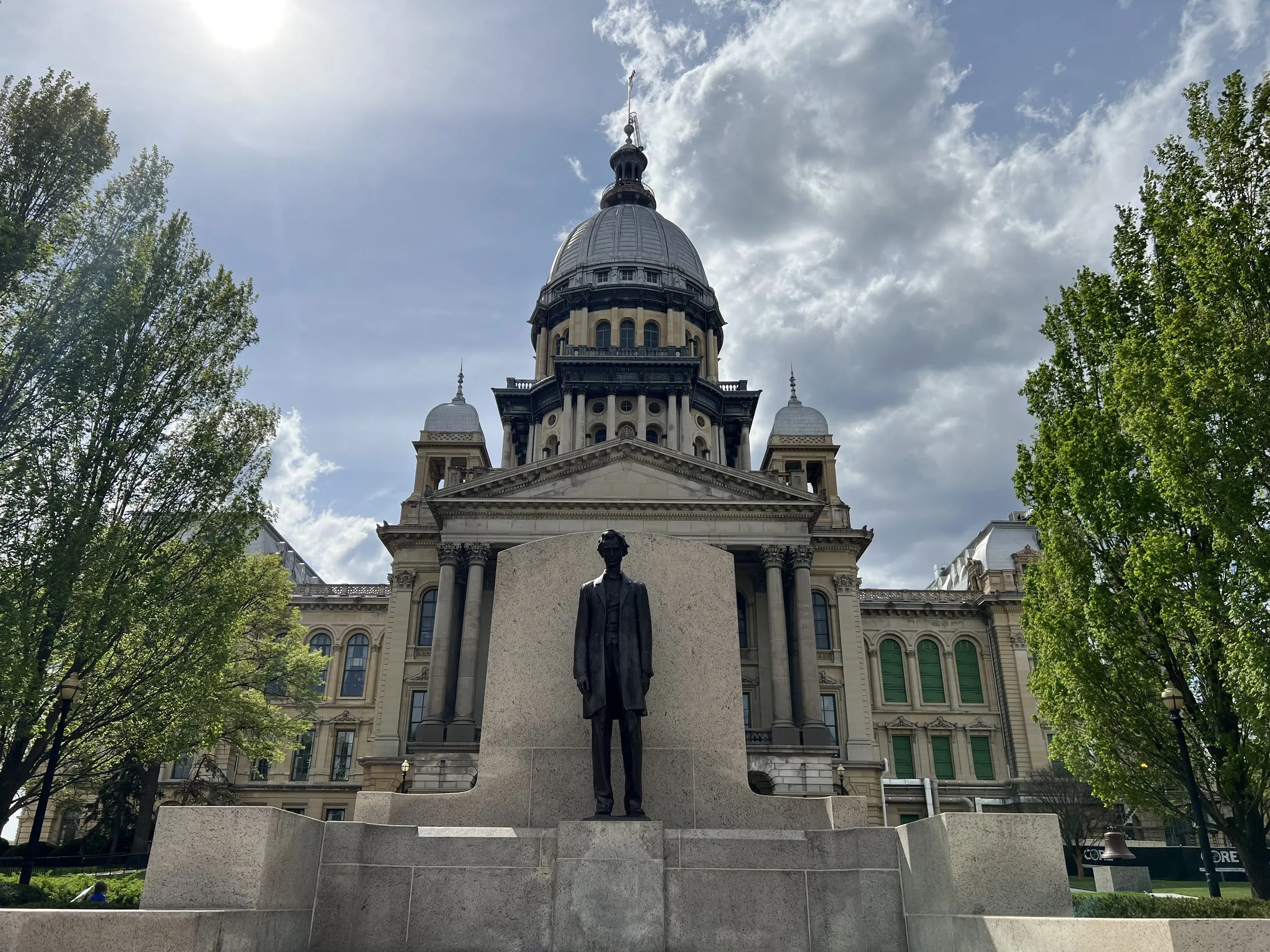
Springfield has been the capital since 1839. The first capital was Kaskaskia, from 1818 to 1820, followed by Vandalia from 1820 to 1839. Abraham Lincoln, then a young state legislator, was one of the lawmakers who pushed to move the capital to Springfield, and the current State Capitol was completed in 1888.
Illinois borders Wisconsin to the north, Indiana to the east, Kentucky to the southeast across the Ohio River, and Missouri and Iowa to the west across the Mississippi River. In the northeast it has a shoreline on Lake Michigan, across which lies the state of Michigan.
Abraham Lincoln lived in Illinois from 1830 until he left Springfield for Washington in 1861, and he is buried in Springfield. "Land of Lincoln" is the state's official slogan and appears on its license plates, while "The Prairie State" is its traditional nickname.
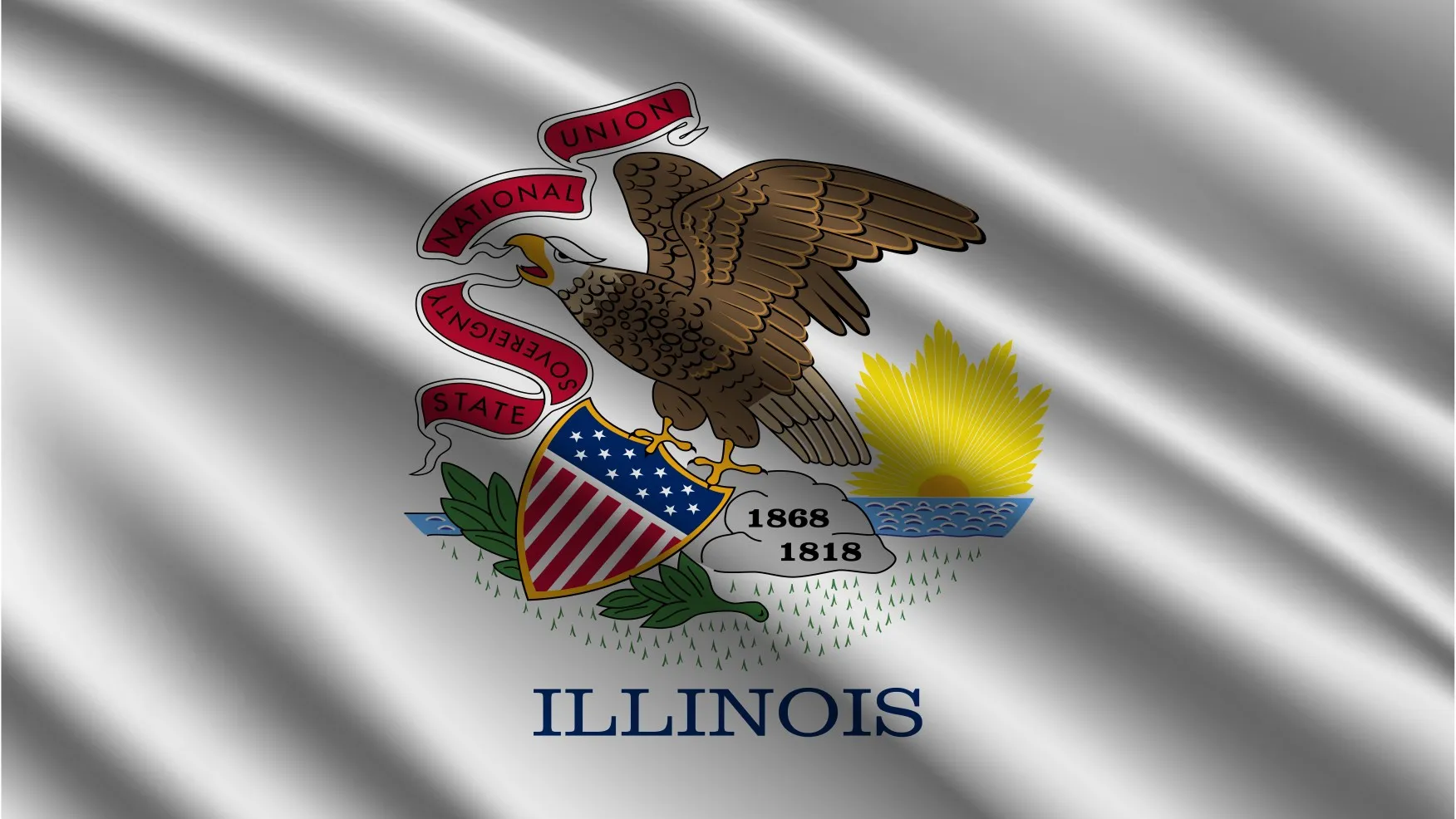
Illinois's motto is "State Sovereignty, National Union." Its state bird is the northern cardinal, its flower is the violet, its tree is the white oak, and its insect is the monarch butterfly.
Based on the 2020 census, Illinois lost a seat and now has 17 in the U.S. House of Representatives, which gives it 19 votes in the Electoral College.
Ronald Reagan, born in Tampico in 1911, is the only president born in Illinois. Abraham Lincoln, Ulysses S. Grant, and Barack Obama were born elsewhere but built their careers in Illinois before reaching the White House.
Starved Rock State Park
18 Canyons, Sandstone Cliffs, and Frozen Waterfalls Along the Illinois River
About Starved Rock State Park
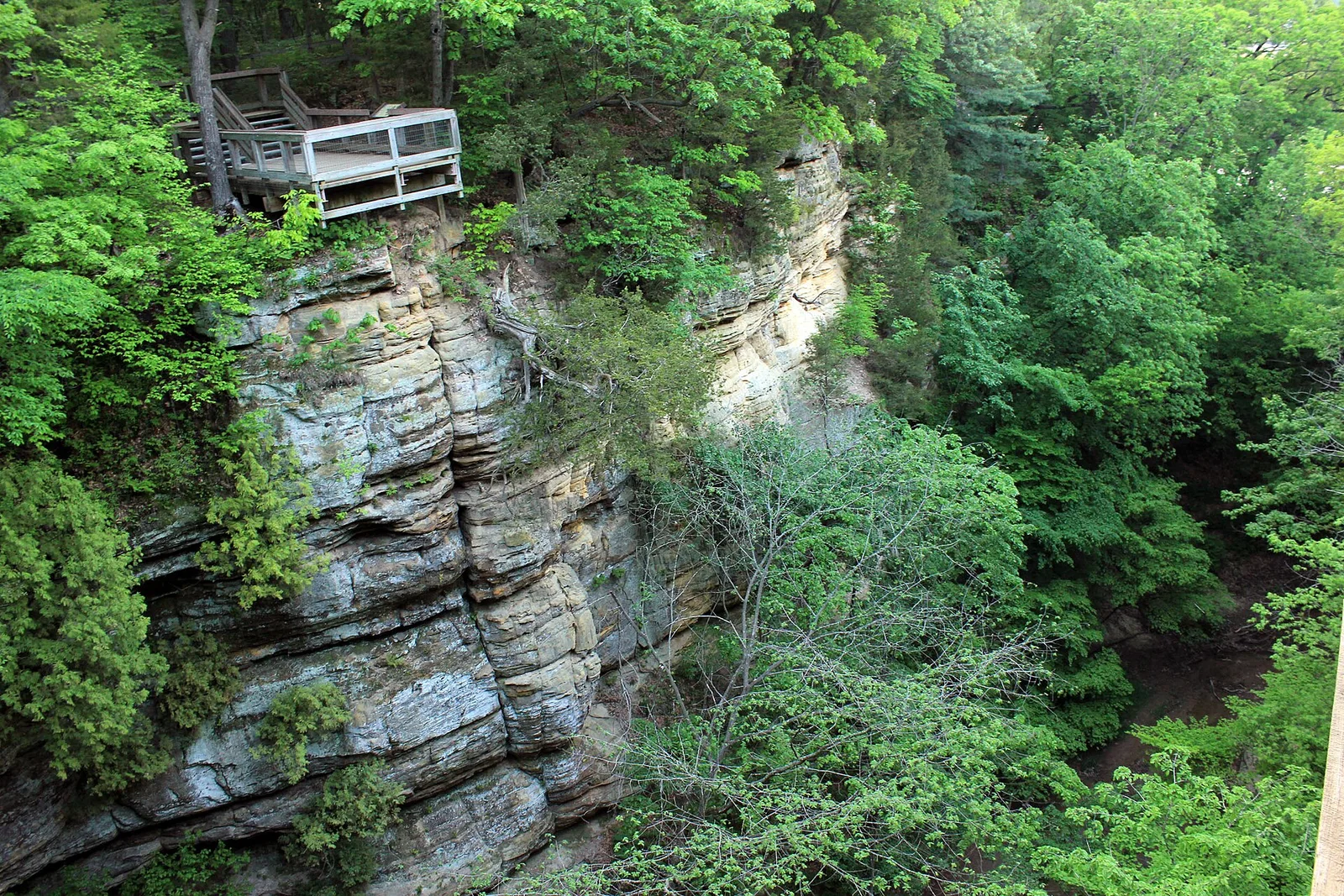
Starved Rock State Park runs along about five miles of the Illinois River near Utica, where St. Peter Sandstone bluffs rise 80 to 100 feet above the water and 18 side canyons cut back into the rock, several with waterfalls at their heads.
Illinois bought the land in 1911, making Starved Rock one of its first state parks; it is now the most visited, drawing well over two million people a year to a canyon landscape that surprises visitors expecting only flat farmland.
The canyons were cut mainly by meltwater floods, the Kankakee Torrent, that roared down the Illinois Valley as the last glacier melted roughly 14,000 to 19,000 years ago, and they are still being deepened slowly by groundwater seeping out of the porous sandstone.
The rock at the park's center, 'Starved Rock,' is a 125-foot butte where La Salle and Henri de Tonti built Fort St. Louis in the winter of 1682 to 1683, a hub of the French fur trade and a refuge for the Illinois against Iroquois raids; the name comes from a later legend of a besieged band of Illinois who starved there.
- Designation
- Illinois State Park, National Historic Landmark
- Location
- Utica, LaSalle County, Illinois
- Established
- 1911
- Annual Visitors
- ~2 million
What Makes Starved Rock Unique
The buff and white cliffs are St. Peter Sandstone, laid down as clean beach and dune sand along an Ordovician sea about 460 million years ago and later cemented with silica.
The sand is almost pure quartz, roughly 99 percent silica, and elsewhere in the region the same formation is quarried for glassmaking and industrial sand.
The rock is durable enough to stand in vertical cliffs but soft enough to erode along its joints and bedding, which is why the canyons are narrow slots that follow straight fracture lines.
Freeze-thaw, root wedging, and the constant seep of groundwater keep undercutting the cliff bases and the canyon heads, so the landscape is actively, if slowly, changing.
Each canyon has its own character: French Canyon is a tight sculpted slot, Wildcat Canyon has the tallest waterfall at roughly 80 feet, LaSalle Canyon lets hikers walk behind the falls, and Ottawa and Kaskaskia canyons are draped in ferns.
The main cutting happened fast, during the meltwater floods at the end of the ice age, when water far larger than today's river tore into the sandstone along its fractures.
The cold, shaded, north-facing canyons hold 'glacial relict' plants, white pine, Canada yew, and northern wildflowers, stranded here since the ice age when the climate was colder.
Wooden staircases and boardwalks now lead into about a dozen of the canyons; the rest are left without trails to limit erosion.
Water percolating down through the sandstone emerges at the canyon heads as waterfalls, biggest in spring after snowmelt and after heavy rain, and reduced to a trickle in dry late summer.
In hard winters the falls freeze into columns 30 to 40 feet high, and ice climbing and ice-formation photography draw thousands of visitors in January and February.
The perpetually wet walls grow 'hanging gardens' of maidenhair fern, walking fern, liverworts, and mosses, a cool micro-habitat unusual for central Illinois.
Because the seepage never fully stops, the canyon floors stay slick year-round, and traction devices are recommended even in summer.
The Starved Rock Lock and Dam, built in 1933 as part of the Illinois Waterway, keeps a stretch of the river open and ice-free in winter and concentrates fish below the spillway.
That open water draws one of the largest wintering gatherings of bald eagles in the Midwest, often hundreds of birds from November through March, and the park holds 'Eagle Watch' weekends in late January.
The bluff tops above the river give long views over the Illinois Valley and support nesting red-tailed hawks and, in recent years, nesting bald eagles.
Across the river near Utica lay the Grand Village of the Illinois, one of the largest Native towns in North America in the 1670s, tied to the same river resources the park overlooks.
Indigenous Connections
Illinois (Illiniwek) Confederation
The Illinois, or Inoca, a group of Algonquian-speaking bands including the Kaskaskia and Peoria, held the central Illinois River valley, and their Grand Village stood on the north bank across from Starved Rock.
Marquette and Jolliet visited that village in 1673, and by La Salle's count in the early 1680s it held hundreds of longhouses and several thousand people.
Iroquois war parties destroyed the Grand Village in 1680 during the Beaver Wars; La Salle built Fort St. Louis on the rock two years later partly to shelter the Illinois, but disease and continued warfare cut the confederation to a few hundred people by the late 1700s.
Warfare with the Iroquois and later with the Council of Three Fires reduced the confederation drastically through the 1700s. Its survivors merged with related nations, and their descendants are enrolled today in the federally recognized Peoria Tribe of Indians of Oklahoma.
Potawatomi, Ottawa, and Ojibwe
As the Illinois declined, the Potawatomi, Ottawa, and Ojibwe, allied as the Council of Three Fires, moved south and west into northern Illinois through the 1700s.
The Potawatomi in particular held much of northeastern Illinois into the 1830s and were prominent in the fur trade and in the founding of Chicago.
A run of treaties in the 1820s and 1830s, ending with the 1833 Treaty of Chicago, forced these nations to cede their Illinois land and move west of the Mississippi; the removal is remembered as the Potawatomi 'Trail of Death' of 1838.
Multiple federally recognized Potawatomi, Ottawa, and Ojibwe tribal nations are located primarily in the Great Lakes states and Oklahoma. The Forest County Potawatomi, Pokagon Band of Potawatomi, and several other groups maintain historical connections to Illinois.
What to Do at Starved Rock
Canyon Hiking Loop
About 13 miles of marked trail link the canyons and the bluff tops, and hikers assemble loops of whatever length they want from the visitor center or the lodge.
The most common outing is a 3- to 5-mile circuit taking in French, Wildcat, and LaSalle canyons, the ones with the biggest waterfalls and the most dramatic walls.
Wooden staircases descend into the canyon floors, and the bluff-top trail connects a string of river overlooks including Lover's Leap and Eagle Cliff.
Because the park is so heavily used, the state routes almost all foot traffic onto these built trails and boardwalks and closes badly eroded spurs.
Winter Ice Canyon Hike
In cold winters the canyon-head waterfalls build into free-standing ice columns 30 to 40 feet tall, blue-white against the tan sandstone.
French Canyon, Wildcat Canyon, and Tonty Canyon hold the most reliable formations, and January and February are the prime weeks.
Ice climbers are allowed on some formations by permit, and the park's winter weekends draw large crowds of hikers and photographers.
The same seepage that builds the ice glazes the canyon floors, so microspikes or crampons are genuinely necessary, and the state closes canyons when the ice turns unstable.
Eagle Watching on the Illinois River
From November into March, bald eagles gather below the Starved Rock dam to fish the open, churned water, and dozens to hundreds can be in view at once.
The best vantage points are the Starved Rock overlook, the visitor center deck, and the lock-and-dam viewing area operated by the Army Corps across the river.
The park and the lodge run 'Eagle Watch Weekend' in late January with spotting scopes, live raptor programs, and bus tours.
Eagles were nearly gone from Illinois in the mid-1900s; their winter return here is one of the visible results of the DDT ban and decades of protection.
Conservation Challenges
Trail Erosion and Overuse
Starved Rock draws well over two million visitors a year onto a small footprint of soft sandstone, and on peak weekends the lots fill by mid-morning and traffic backs up in Utica.
Off-trail scrambling breaks down cliff edges and canyon rims, tramples the seep-fed plant communities, and has caused fatal falls.
The Illinois Department of Natural Resources has rebuilt staircases and boardwalks, hardened the busiest paths, and added parking and restrooms, but capacity has not kept pace with demand.
Managers have periodically floated a reservation or timed-entry system like those crowded national parks have adopted, though none has been put in place.
Invasive Plant Species
Garlic mustard, Japanese barberry, bush honeysuckle, and autumn olive have spread through the park's upland and canyon forests, shading out the spring wildflowers and tree seedlings beneath them.
Garlic mustard is especially damaging because it releases chemicals that suppress the soil fungi native trees depend on.
The state and volunteer groups pull, cut, and spot-spray invasives every year and burn the upland prairie and savanna remnants.
The scale of use makes reinvasion constant, since seeds arrive on boots, tires, and floodwater faster than crews can clear the plants already there.
Water Quality in the Illinois River
The Illinois River drains a heavily farmed watershed, and runoff carries nitrogen, phosphorus, and sediment that degrade water quality along its whole length.
That nutrient load feeds algae blooms and low-oxygen zones and is part of the Illinois contribution to the Gulf of Mexico 'dead zone' far downstream.
Sediment also fills the river's backwaters and side channels, reducing habitat for the fish that eagles and other wildlife depend on.
Improvement depends on watershed-wide changes in farm practice and is largely outside the park's control, though state and federal programs target the worst tributaries.
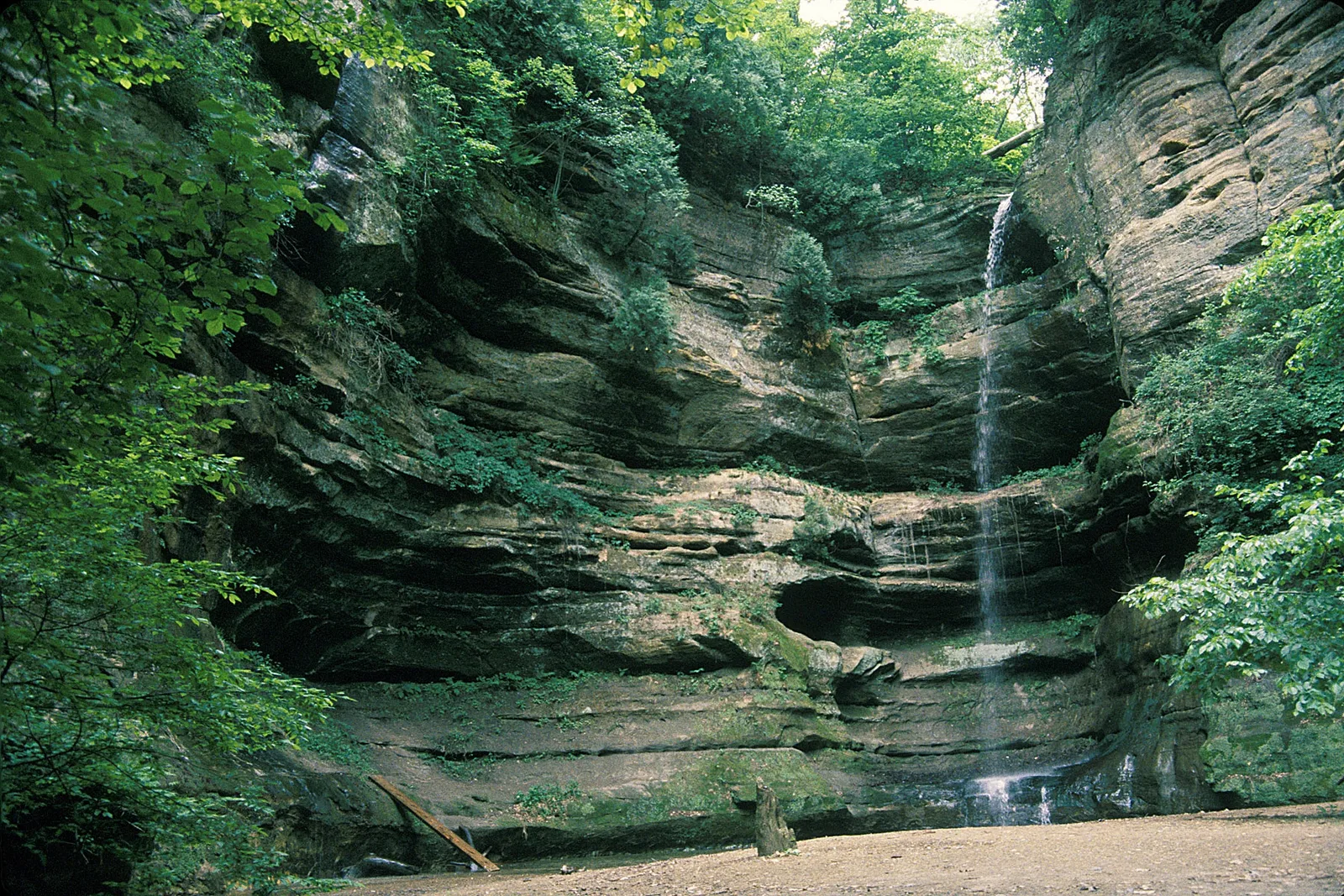
One of 18 glacial canyons carved into St. Peter Sandstone
At a Glance
Did You Know?
Starved Rock's canyon waterfalls freeze into spectacular ice sculptures every winter, transforming the canyons into a blue-and-white wonderland that looks more like Iceland than central Illinois.
Hundreds of bald eagles winter along the Illinois River at Starved Rock from November through March, making it one of the premier eagle watching destinations in the entire Midwest.
The Starved Rock Lodge was built entirely by the Civilian Conservation Corps during the 1930s New Deal era. The massive log and stone building and its surrounding cabins are a National Historic Landmark and continue operating as a resort today.
The 18 canyons were carved by glacial meltwater floods following the last ice age, when catastrophic floods from retreating glaciers carved into the sandstone bedrock over just a few thousand years.
Plan Your Visit
Location
Utica, LaSalle County, Illinois
Designation
Illinois State Park, National Historic Landmark
Best Time to Visit
Winter for ice canyons; spring for waterfalls; fall for foliage
Admission
Free day use; overnight camping fees apply