
America at War
From Valley Forge to Fallujah, the battles, sacrifices, speeches, and social movements that shaped the United States
Wars don't just produce battles and policy, they produce cultural earthquakes. Every major American conflict sparked speeches, movements, and protests that changed the country as profoundly as the fighting itself.
Revolutionary War (1775–1783)
The American Revolution was not just a war, it was an idea made real by force of arms. Thirteen colonies, outgunned and outmanned by the world's most powerful military, fought for eight years to establish something that had never existed before: a republic of citizens governed by their own consent.
Tensions had been building since the 1760s. The British Parliament, deeply in debt after the French and Indian War, taxed the colonies without giving them a seat in Parliament. 'No taxation without representation' became the rallying cry. After the Boston Massacre (1770) and Boston Tea Party (1773), open conflict broke out at Lexington and Concord on April 19, 1775. The Second Continental Congress convened, appointed George Washington commander of the Continental Army, and on July 4, 1776, adopted the Declaration of Independence.
Major Battles
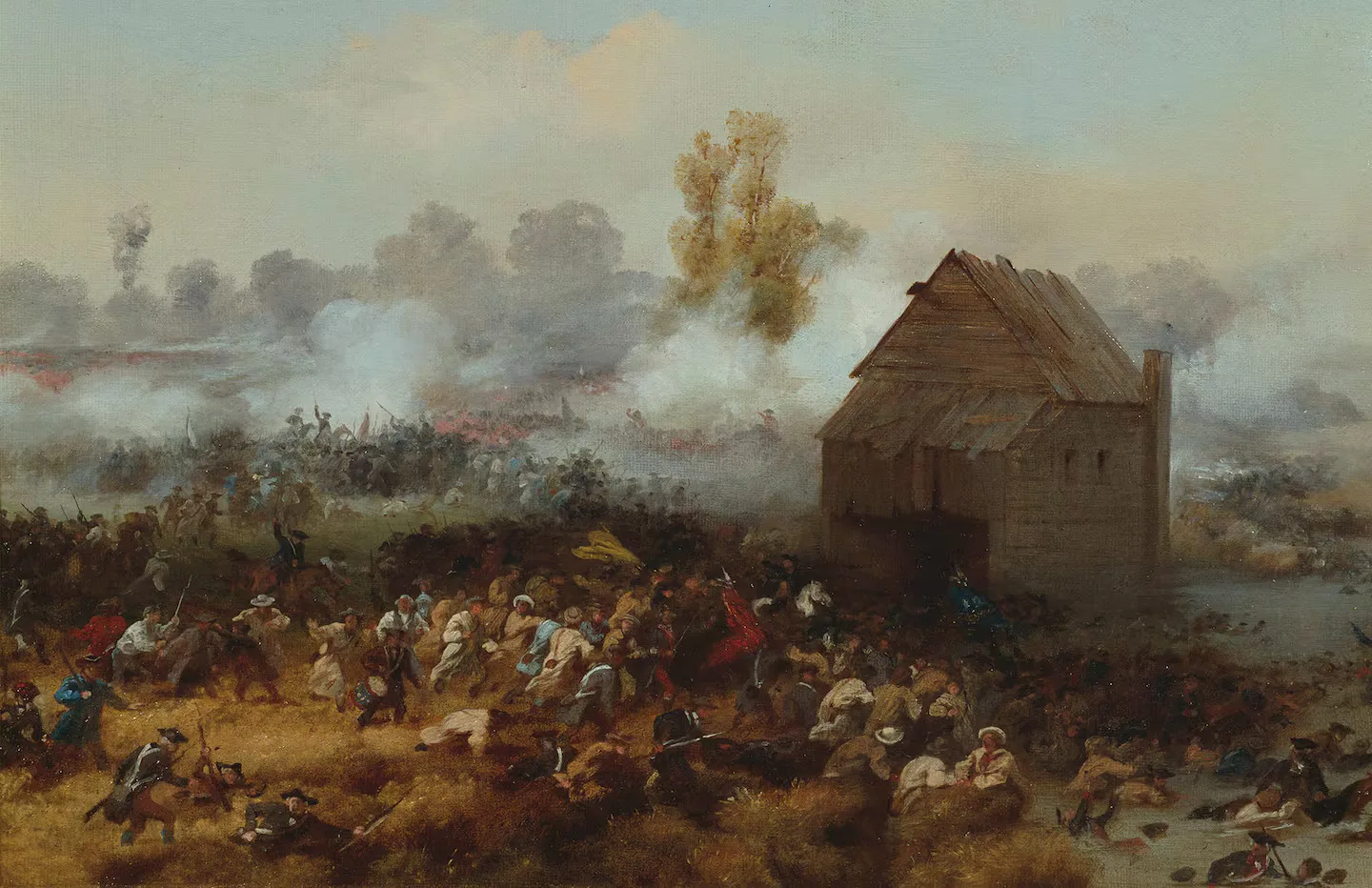
- Commanders
- Col. James Barrett (American) vs. Lt. Col. Francis Smith (British)
- Forces Engaged
- ~3,800 Minutemen (total day) vs. ~1,700 British Regulars
- Casualties
- Americans: 49 killed, 39 wounded | British: 73 killed, 174 wounded
What Happened
The 'Shot Heard Round the World.' British troops marched to seize colonial arms stored at Concord. Local Minutemen faced them at Lexington Green in the first exchange of fire. By the time the British retreated to Boston, they had been harassed by militia fire from every direction, suffering far more casualties than they inflicted.
Military Significance
The opening engagement of the Revolutionary War. Proved that colonial militia could confront and bloody professional British troops. Transformed a political dispute into armed rebellion.
Impact on Government & Policy
Forced the Second Continental Congress to take control of the militias and appoint Washington as commander-in-chief. Set in motion the formal break from Britain and the eventual drafting of the Declaration of Independence.
Noteworthy Details
- Paul Revere's midnight ride the night before warned the colonists that 'the Regulars are out.'
- The phrase 'shot heard round the world' was coined decades later by Ralph Waldo Emerson in his 1837 poem 'Concord Hymn.'
- The Minutemen were so named because they pledged to be ready to fight on a minute's notice.
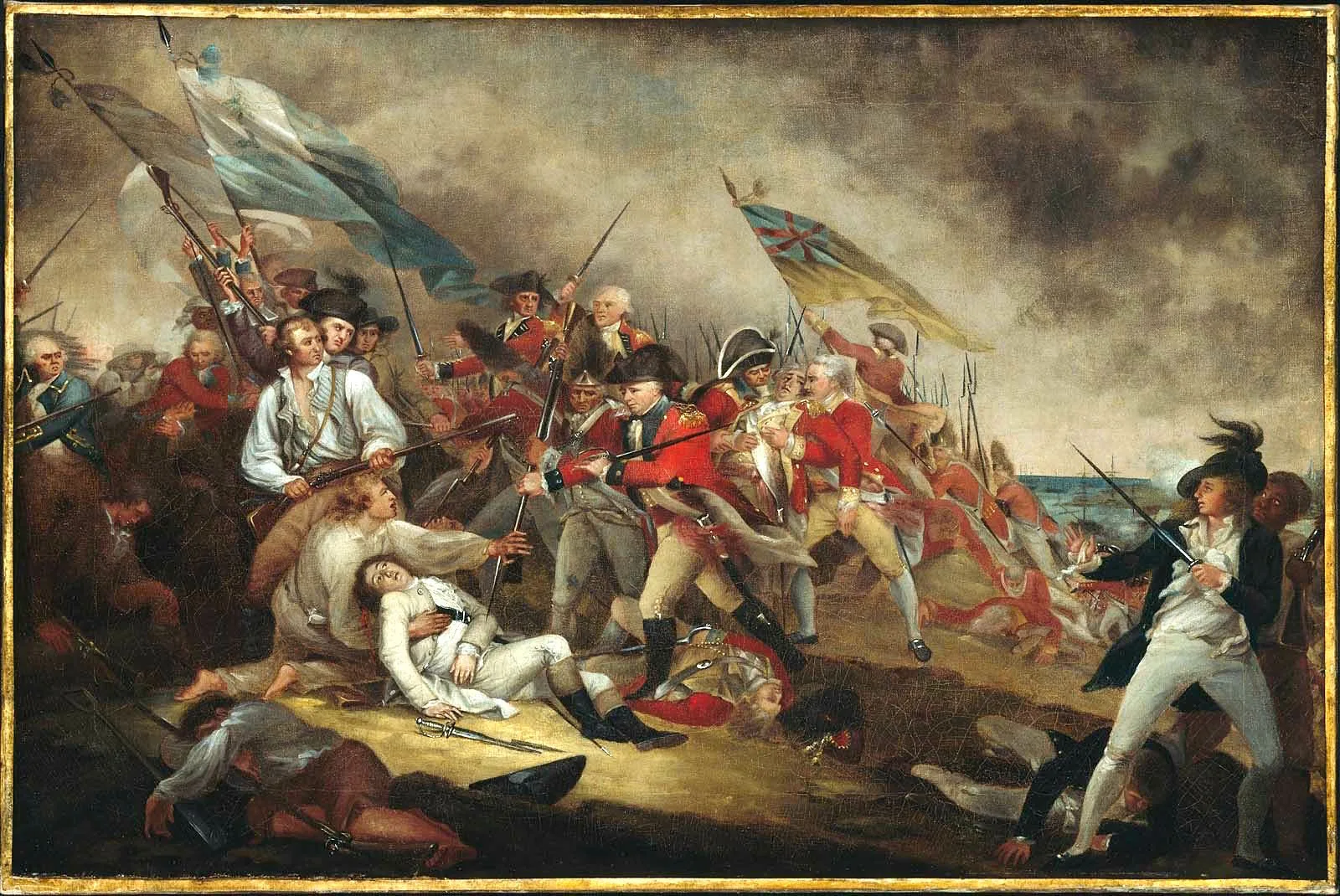
- Commanders
- Col. William Prescott (American) vs. Maj. Gen. William Howe (British)
- Forces Engaged
- ~1,500 colonial militia vs. ~3,000 British Regulars
- Casualties
- Americans: ~450 killed/wounded | British: ~1,054 killed/wounded (40% of attacking force)
What Happened
Technically a British victory, the colonists ran out of ammunition and were forced to retreat, but at catastrophic cost. The famous order 'Don't fire until you see the whites of their eyes' was a tactical necessity to conserve powder. The British took the hill but were shaken by their losses.
Military Significance
Demonstrated that colonial forces could stand up to British regulars in open battle. The British casualty rate was so high that the victory felt like a defeat in London.
Impact on Government & Policy
Hardened colonial resolve. Persuaded fence-sitters that reconciliation was unlikely. Washington used the lesson to avoid set-piece battles and adopt a strategy of attrition and maneuver.
Noteworthy Details
- The battle was actually fought mostly on Breed's Hill, a navigational error that stuck in the history books.
- Dr. Joseph Warren, one of the most prominent patriot leaders, was killed in the final British assault.
- The British suffered more officer casualties here than in any other single engagement of the entire war.
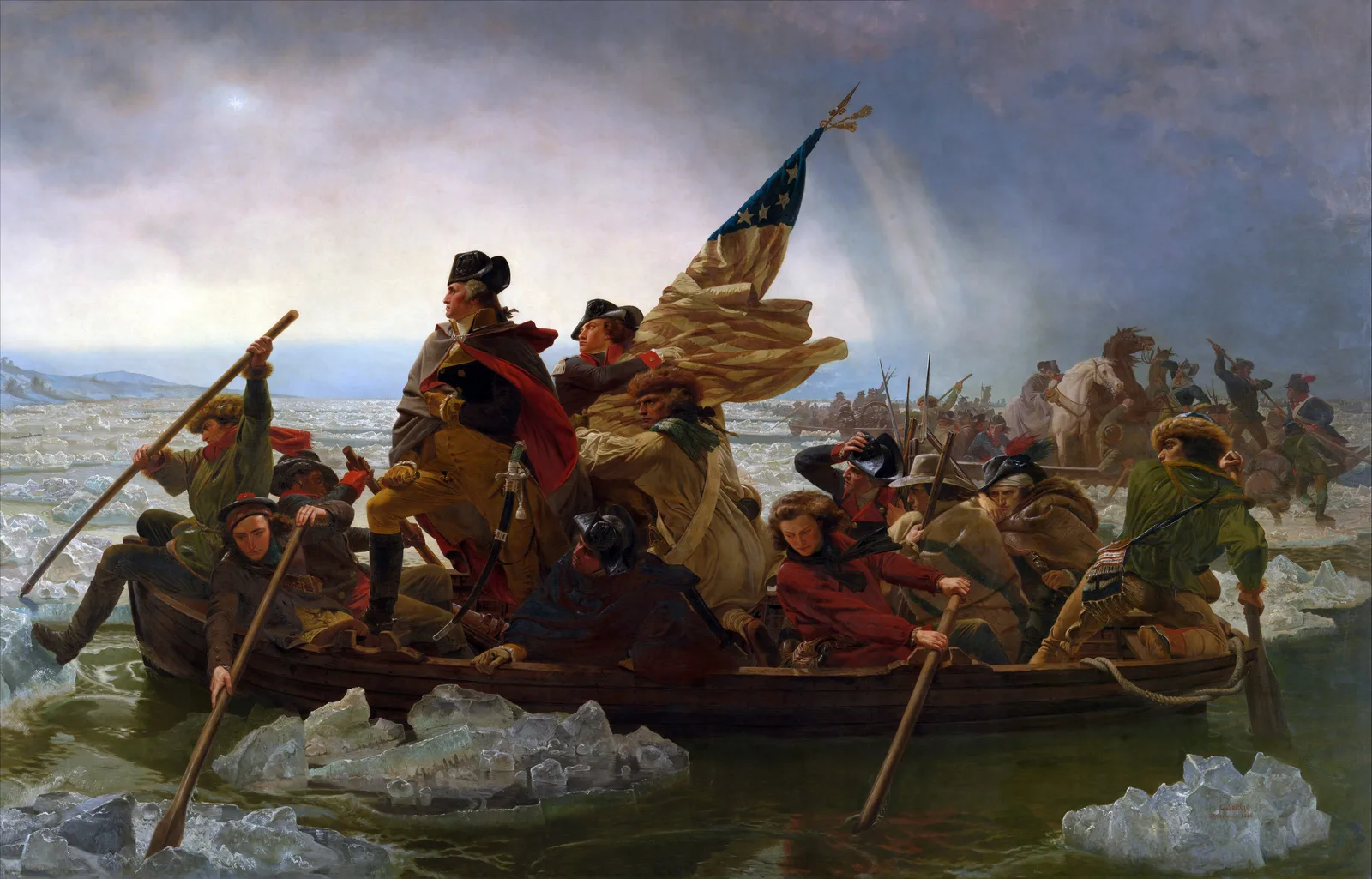
- Commanders
- Gen. George Washington vs. Col. Johann Rall (Hessian)
- Forces Engaged
- ~2,400 Continental soldiers vs. ~1,400 Hessian troops
- Casualties
- Americans: 2 frozen to death, 5 wounded | Hessians: 22 killed, 83 wounded, ~900 captured
What Happened
With the Continental Army on the verge of collapse, Washington launched a desperate surprise attack on the morning after Christmas. He crossed the icy Delaware River at night in a blinding sleet storm and fell on the Hessian garrison at Trenton at dawn. About 900 of the garrison were captured in under two hours, though several hundred Hessians escaped.
Military Significance
Arguably the most consequential single operation of the war. Restored public confidence in the Revolution at its darkest hour.
Impact on Government & Policy
Prevented the complete collapse of the Continental Army. Extended enlistments, rekindled recruitment, and gave Congress breathing room to continue funding the war.
Noteworthy Details
- Washington's password for the crossing was 'Victory or Death.'
- The temperature was 18°F with sleet and snow during the crossing.
- The Hessians were German mercenary soldiers hired by King George III, about 30,000 served in the war.
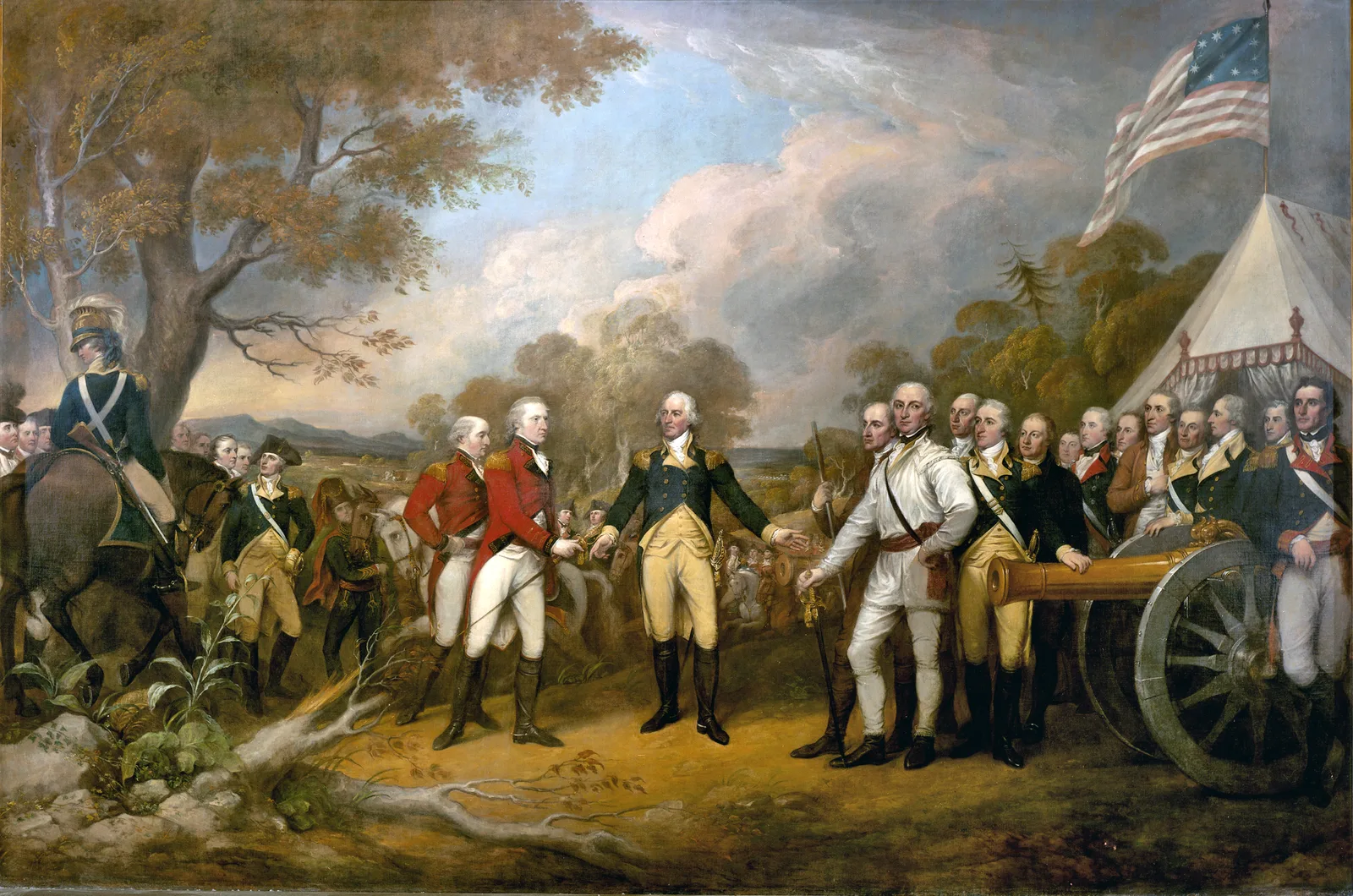
- Commanders
- Gen. Horatio Gates & Gen. Benedict Arnold (American) vs. Gen. John Burgoyne (British)
- Forces Engaged
- ~13,000 Americans vs. ~8,000 British and Hessians
- Casualties
- Americans: ~90 killed, 240 wounded | British: ~1,200 killed/wounded, 5,895 surrendered
What Happened
A two-battle campaign that ended with the surrender of an entire British army. Burgoyne had planned a three-pronged invasion to split the colonies along the Hudson River. The plan collapsed when supporting columns failed to arrive. Benedict Arnold (before his treason) led a ferocious charge that broke the British lines.
Military Significance
The turning point of the entire Revolutionary War. Burgoyne's surrender of nearly 6,000 men convinced France that the Americans could actually win.
Impact on Government & Policy
Directly triggered the French Alliance of February 1778. France recognized American independence and declared war on Britain. What had been a colonial rebellion became a world war.
Noteworthy Details
- France had been secretly supplying weapons and money since 1776, but Saratoga convinced them to enter openly.
- Gen. Burgoyne was known as 'Gentleman Johnny', he reportedly brought 30 wagons of personal luggage on the campaign.
- American riflemen's accuracy was deadly enough that they deliberately targeted British officers, a practice the British condemned.
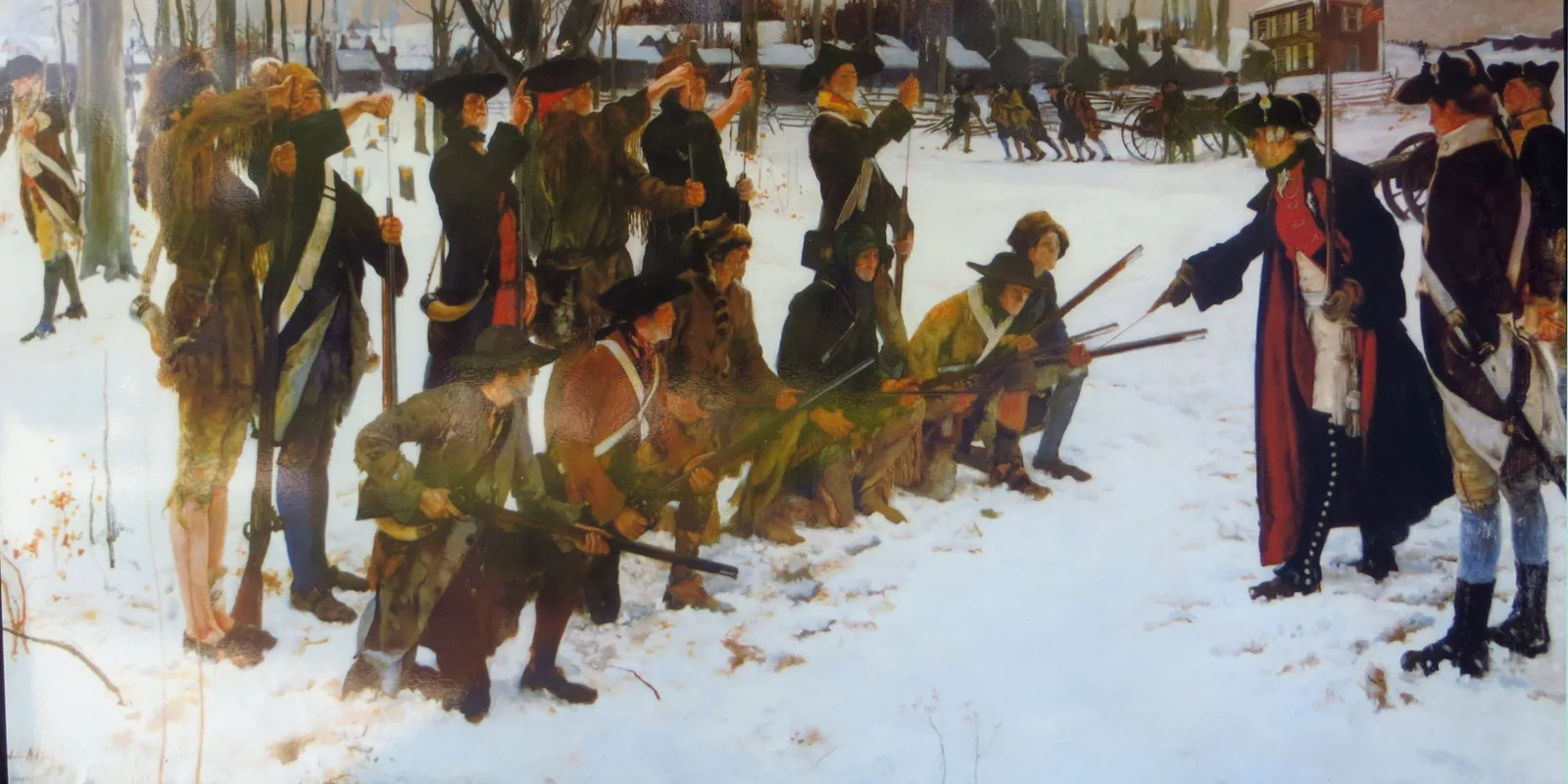
- Commanders
- Gen. George Washington commanding; Baron Friedrich von Steuben (training)
- Forces Engaged
- ~11,000 Continental soldiers entered; ~2,000 died; survivors emerged as a professional army
- Casualties
- ~2,000 died of disease, exposure, and starvation (no combat)
What Happened
Valley Forge was not a battle, it was a crucible. The Continental Army went into winter quarters broken, shoeless, starving, and diseased. Prussian drillmaster Baron Friedrich von Steuben arrived in February and systematically taught the soldiers to march, maneuver, and fight as a professional force.
Military Significance
Valley Forge is where the Continental Army became a real army. Von Steuben's drilling introduced bayonet tactics and military discipline the Americans had lacked.
Impact on Government & Policy
Exposed the catastrophic failures of the Continental Congress to supply its army. Led directly to reforms in the supply system and eventually to the stronger federal government framework of the Constitution.
Noteworthy Details
- Soldiers had no shoes and left bloody footprints in the snow.
- Von Steuben wrote his drill manual in French and it was translated paragraph by paragraph as he taught.
- The encampment was only 18 miles from Philadelphia, where British General Howe was hosting dances.
- Martha Washington spent the winter at Valley Forge nursing sick soldiers.
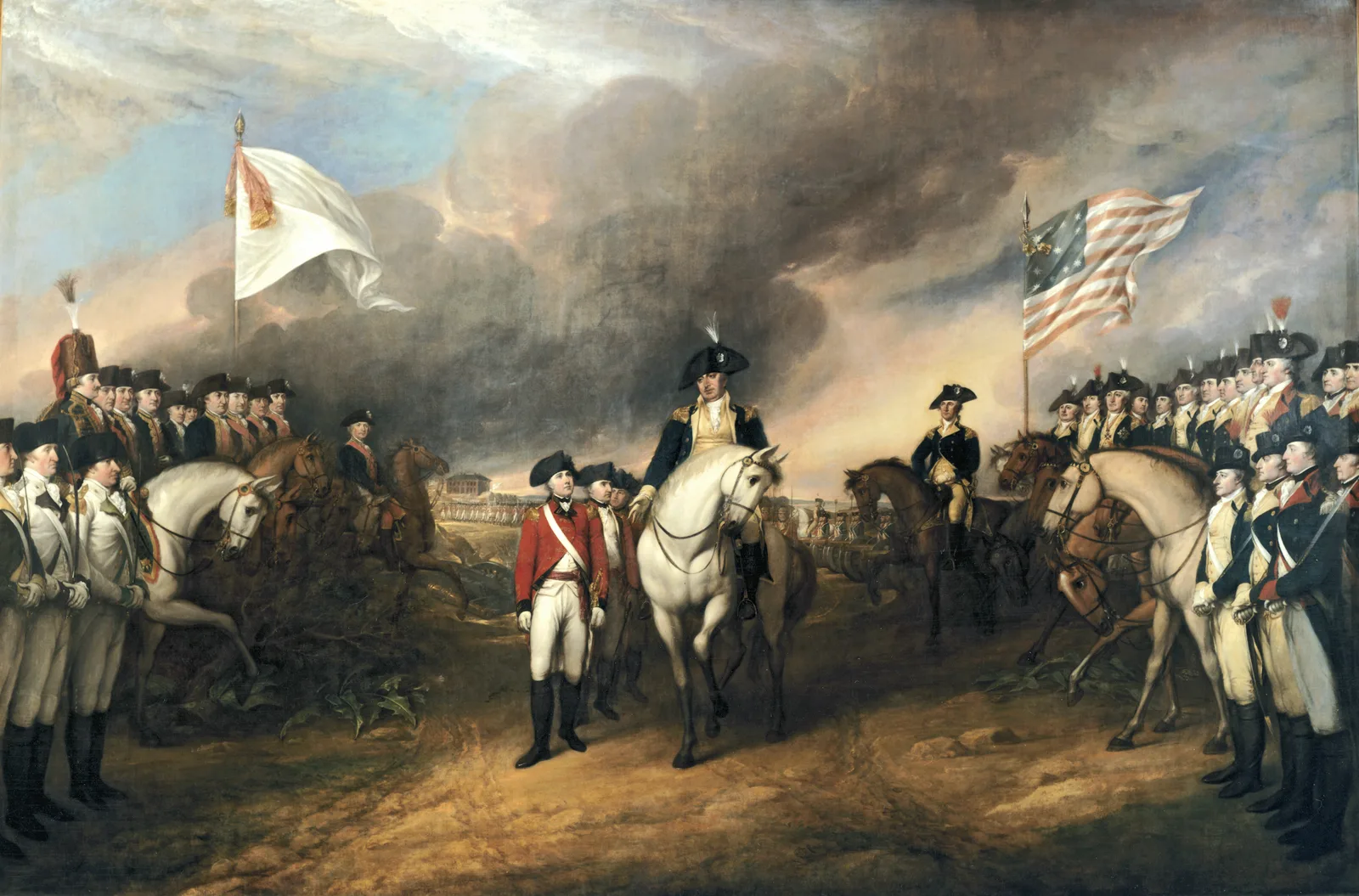
- Commanders
- Gen. George Washington & Gen. Rochambeau (Allied) vs. Gen. Charles Cornwallis (British)
- Forces Engaged
- ~17,000 American & French troops vs. ~8,300 British
- Casualties
- Allied: ~72 killed, 180 wounded | British: 156 killed, 326 wounded, 7,087 surrendered
What Happened
The final major land battle of the Revolutionary War. After a French naval victory cut off British relief by sea, Washington and Rochambeau surrounded Cornwallis at Yorktown. With no escape, Cornwallis surrendered on October 19, 1781, claiming illness and sending a subordinate to hand over his sword.
Military Significance
Effectively ended major combat operations. The Treaty of Paris (1783) recognized American independence.
Impact on Government & Policy
Created the United States as a sovereign nation. Washington's decision to surrender power peacefully, resisting pressure to become a monarch, established the crucial precedent of civilian control of the military.
Noteworthy Details
- The British band played 'The World Turned Upside Down' during the surrender ceremony.
- Washington secretly moved his army from New York to Virginia, about 450 miles partly by water, in roughly five weeks, completing the surprise.
- Cornwallis sent a subordinate to surrender in his place, Washington responded by sending his own subordinate to receive the sword.
Speeches and Social Movements
Wars don't just reshape governments, they ignite speeches, movements, and cultural explosions that define generations. These are the words and movements that changed how Americans thought, voted, and lived.
What It Was
A 47-page pamphlet written by recent immigrant Thomas Paine that demolished the case for monarchy and reconciliation with Britain. Written in plain, direct language any citizen could understand, it sold 100,000 copies in three months, the equivalent of 10 million copies today. Paine argued that kings were not divinely ordained but a corrupt institution, and that American independence was not just possible but morally necessary.
Why It Mattered
Shifted public opinion from reform to revolution. Washington ordered it read aloud to his troops. A remark crediting it with making the Revolution possible is often attributed to John Adams, but that attribution is not verified. Paine donated all his royalties to buy mittens for Washington's army.
What It Was
Jefferson's founding document did far more than announce separation from Britain, it proclaimed universal human equality and the right of people to overthrow governments that failed them. 'We hold these truths to be self-evident, that all men are created equal...' Those words became a social time bomb that abolitionists, suffragettes, and civil rights leaders would cite for the next two centuries to demand that America live up to its own founding promise.
Why It Mattered
Instantly became the moral charter of the American experiment, and the most quoted document in the history of democratic movements worldwide, from the French Revolution to Ho Chi Minh's Vietnamese Declaration of Independence (1945), which opens with Jefferson's words.
What It Was
A series of 16 pamphlets published throughout the war. The first, written as Washington's army fell back across New Jersey, opened with the immortal words: 'These are the times that try men's souls.' Washington ordered it read to every regiment on Christmas Eve 1776, the night before the crossing of the Delaware.
Why It Mattered
Kept revolutionary morale alive during the war's darkest hours. Demonstrated the power of political writing as a tool of warfare, the first great example of what we would now call 'information operations' in American history.
What It Was
The Revolution was also a civil war, perhaps 20% of colonists (Loyalists) actively supported Britain, and another 40% tried to stay neutral. An estimated 60,000–80,000 Loyalists fled to Canada, Britain, and the Caribbean after the war. They were the first Americans to lose everything for backing the wrong side of history.
Why It Mattered
The treatment of Loyalists established a bitter template: political loyalty tests, property confiscation, mob violence, and exile. The debate over how to treat political opponents, with mercy or punishment, has never fully left American politics.
What It Was
In a letter to her husband John Adams as he prepared to write new laws for the nation, Abigail Adams wrote: 'Remember the Ladies, and be more generous and favourable to them than your ancestors. Do not put such unlimited power into the hands of the Husbands.' John Adams brushed it off. The letter became one of the earliest feminist political documents in American history.
Why It Mattered
Planted the seed of the women's rights movement 72 years before the Seneca Falls Convention (1848). Revealed the fundamental contradiction at the heart of the Revolution: liberty and equality proclaimed for all, granted to few.
Key Figures
Led the army through eight years of war despite constant shortages. His strategic patience, avoiding decisive defeat while keeping the army in the field, was the central factor in American victory.
After the war, Washington voluntarily resigned his commission to Congress in 1783 rather than retain personal power, a decision that set the enduring precedent of civilian control over the U.S. military. He went on to preside over the 1787 Constitutional Convention and become the nation's first President in 1789.
Prussian drillmaster who transformed raw militia into a professional fighting force at Valley Forge. His drill manual shaped the U.S. Army for decades.
Steuben arrived at Valley Forge in February 1778 unable to speak English, drilling soldiers through translators, and personally wrote the 'Blue Book' regulations that remained the Army's standard drill manual for decades. Pennsylvania (1783-84) and New York (1786) granted him citizenship in recognition of his service, before federal naturalization existed.
Immigrant pamphleteer whose words may have done more to launch and sustain the Revolution than any single general. Common Sense and The Crisis shaped public opinion at decisive moments.
Common Sense sold hundreds of thousands of copies within its first year, an extraordinary reach for a colonial population of roughly 2.5 million. Washington had the opening lines of Paine's essay 'The American Crisis' read aloud to his freezing, dwindling army just before it crossed the Delaware in December 1776.
Perhaps the most underappreciated general of the war. His 'fight, retreat, fight again' campaign in the South wore out Cornwallis and drove him to Yorktown.
Greene entered the war with no formal military training and rose quickly to major general largely through self-study of military strategy. Washington trusted him so completely that Greene was the officer expected to assume command of the entire Continental Army had Washington been killed or captured.
How This Era Shaped American Government
The Revolution produced the Articles of Confederation (1781), the Declaration of Independence (1776), and, after the articles proved too weak, the U.S. Constitution (1787). The military failures exposed at Valley Forge directly shaped the Framers' decision to give Congress the power to raise and fund a standing army. The war also established the critical principle of civilian control of the military.
Did You Know?
The Continental Army was so poorly funded that Washington's soldiers sometimes went months without pay. At one point, half the army had no shoes.
The Continental Navy began with just two converted merchant ships. It grew to 53 vessels and captured over 200 British ships during the war.
The Revolutionary War became a world war, France, Spain, and the Netherlands all declared war on Britain, fighting across the Caribbean, Mediterranean, and Indian Ocean.
An estimated 25,000 American patriots died during the Revolution, more from disease and prison ships than combat. An estimated 11,500 died in British prison ships in New York harbor alone.