About Louisiana
Louisiana was named by the French explorer Rene-Robert Cavelier, Sieur de La Salle, who claimed the entire Mississippi River basin for France in 1682 and named it "La Louisiane" in honor of King Louis XIV of France. The name honored one of the most powerful monarchs in European history, whose reign from 1643 to 1715 made France the dominant power on the continent. French colonizers established New Orleans in 1718, which became the capital of the territory and a major port city. France transferred Louisiana to Spain in 1762, Spain returned it to France in 1800, and Napoleon sold it to the United States in the Louisiana Purchase of 1803, doubling the size of the young republic.
Louisiana is unlike any other state in America. Its legal system is based on French and Spanish civil law rather than English common law. Its territory is divided into parishes, not counties. Its largest city, New Orleans, was built below sea level on a swamp at the mouth of the continent's greatest river. And its culture, a centuries-old fusion of French, Spanish, African, Native American, and Caribbean influences, produced jazz music, Creole cuisine, Mardi Gras, and an architectural heritage found nowhere else in the United States.
The state's geography is equally distinctive. Louisiana sits where the Mississippi River empties into the Gulf of Mexico, creating one of the most productive coastal ecosystems in the world, and one of the most vulnerable. The state is losing its coastline to the Gulf at a rate that makes it a front line of the global climate crisis. Entire communities have been swallowed by the sea. The land itself is sinking even as the water rises.
Politically, Louisiana has shifted from a Democratic stronghold, defined by the populist legacy of Huey Long, to one of the most reliably Republican states in the nation. But its politics have always been colorful, personal, and unpredictable, shaped by the same cultural complexity that defines everything else here.
Louisiana's Five Regions
The cultural and economic capital of Louisiana sits at the mouth of the Mississippi River, partially below sea level, protected by a system of levees. New Orleans is one of the most culturally distinct cities in America, a fusion of French, Spanish, African, Caribbean, and American traditions that produced jazz, Creole cuisine, Mardi Gras, and a unique architectural heritage.
The devastation of Hurricane Katrina in 2005 and the city's long, uneven recovery remain defining chapters in Louisiana's modern history.
New Orleans has fewer people today, about 380,000, than it did in 1960, when it topped 620,000; Katrina alone roughly halved the population before a partial rebound. The city is majority Black, was a major hub of the domestic slave trade before the Civil War, and its Creole identity still shapes neighborhoods from Tremé, one of the oldest Black neighborhoods in the country, to the historically Creole 7th Ward.
The metro's economy runs on the port, tourism, oil-and-gas services, and a growing but fragile tech and film sector. It sits in a bowl below sea level ringed by levees, floodwalls, and the country's largest pumping system, rebuilt by the Army Corps after Katrina at a cost of about 14.5 billion dollars, and it faces chronic street flooding, subsidence, and some of the highest property-insurance costs in the nation.
South-central and southwest Louisiana is home to the Cajun people, descendants of French-speaking Acadians expelled from Nova Scotia by the British in the 1750s. Lafayette is the unofficial capital of Cajun culture.
The region is known for its distinctive French-influenced music (zydeco, Cajun), food (gumbo, boudin, étouffée), language (Louisiana French is still spoken), and Catholic faith. The bayous and marshes of Acadiana are also the heart of Louisiana's shrimping and crawfish industries.
The 1755 expulsion the Cajuns call Le Grand Dérangement scattered about 10,000 Acadians; several thousand made their way to Spanish Louisiana over the following decades and settled the prairies and bayous west of New Orleans. Louisiana banned French from public schools in its 1921 constitution and punished children for speaking it, before reversing course in 1968 by creating CODOFIL to promote the language.
The 22-parish region of roughly a million people also includes Creoles of color, whose zydeco music grew up alongside Cajun music, and the Houma and other Native communities of the coastal bayous. Lafayette is an oil-services hub whose economy swings with energy prices, but the region's festivals and restaurants have made Cajun food and culture a national brand.
The Mississippi River corridor from New Orleans to Baton Rouge is lined with antebellum plantation homes, petrochemical plants, and refinery complexes. Baton Rouge, the state capital, is home to Louisiana State University, a major research university and the center of Cajun football culture. The River Road represents both Louisiana's plantation history and its industrial present in close, often uncomfortable proximity.
The German Coast and sugar parishes along this stretch held some of the largest and most brutal slave plantations in the country; the 1811 German Coast uprising, in which enslaved people marched on New Orleans, was the largest slave revolt in U.S. history and was crushed within days, with dozens executed and their heads displayed on poles along the road.
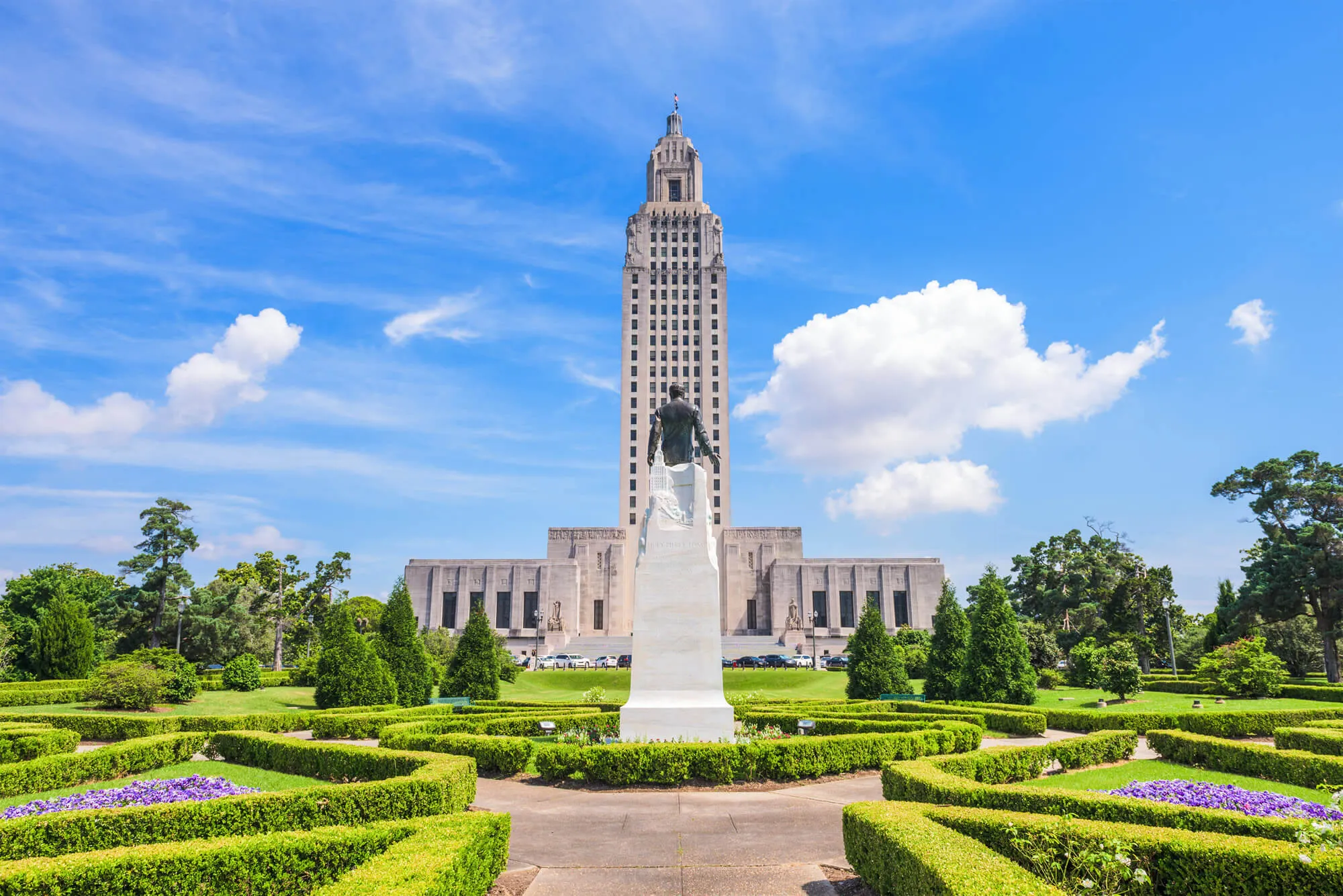
Baton Rouge, the capital since 1849 apart from the Civil War years, has about 220,000 residents and 870,000 in the metro. Its skyline is dominated by the 34-story Art Deco Louisiana State Capitol, the tallest capitol in the country, built by Governor Huey Long in 1932 and the building where Long was assassinated in 1935.
The corridor is now one of the densest petrochemical zones in the hemisphere: the ExxonMobil Baton Rouge refinery, the Dow complex at Plaquemine, and dozens of others line the river. Predominantly Black communities wedged between the plants, and the settlement of Reveilletown, which a chemical company bought out and demolished in the 1990s, have made 'Cancer Alley' a national environmental-justice cause.
Northern Louisiana is culturally and geographically distinct from the rest of the state, more closely tied to the American South than to the French-Catholic culture of the south. Shreveport-Bossier City is the region's major metro area. The region is more Protestant, more conservative, and more rural. The Red River valley, pine forests, and hill country of the north are home to important natural gas production, timber, and agriculture.
Shreveport grew as a cotton and steamboat town after Captain Henry Shreve cleared the 'Great Raft,' a 160-mile logjam that had blocked the Red River, in the 1830s. It briefly served as the Confederate state capital and the Trans-Mississippi Department headquarters in 1863 to 1865, and a 1914 well nearby helped launch the northern Louisiana oil field.
The Haynesville Shale, discovered around 2008 under the northwestern pine hills, is one of the largest natural-gas fields in the country and set off a drilling and leasing boom, and later bust, in DeSoto, Caddo, and Bossier parishes. Timber and paper mills, poultry, and Barksdale Air Force Base near Bossier City, home of Air Force Global Strike Command, which oversees the nation's bombers and land-based nuclear missiles, are other anchors.
The region votes far more Republican than south Louisiana and has more in common culturally with Arkansas, Mississippi, and east Texas. Shreveport and Bossier City drew Texas gamblers to riverboat casinos after Louisiana legalized them in 1991, and the metro has struggled with population loss and the long decline of General Motors and other manufacturing.
Louisiana's coastline is one of the most ecologically productive and geologically fragile landscapes in North America. The Mississippi River delta, barrier islands, and coastal marshes support enormous fisheries and provide storm protection for inland communities.
But Louisiana is losing its coast at one of the fastest rates anywhere on Earth, decades of flood control, oil and gas extraction, and sea level rise have accelerated land loss to the point where entire communities have disappeared into the Gulf.
The delta parishes, Plaquemines, St. Bernard, Terrebonne, Lafourche, and Cameron, are among the most hurricane-exposed places in the country; Cameron Parish was all but erased by Hurricanes Rita in 2005 and Laura in 2020, and the town of Isle de Jean Charles has shrunk to a sliver on a road that regularly floods.
The marshes are the nursery for the Gulf's shrimp, crab, and menhaden fisheries and a wintering ground for millions of migratory birds on the Mississippi Flyway. They also absorb storm surge, and studies estimate that every few miles of healthy marsh knocks a foot or more off a hurricane's surge, which is why coastal restoration is framed in Louisiana as hurricane protection, not just conservation.

Economy
Louisiana's economy is built on energy, ports, seafood, and tourism, industries deeply tied to the land and water that define the state.
The Gulf of Mexico offshore oil fields, onshore production in the northwest, and a massive petrochemical corridor along the Mississippi River between Baton Rouge and New Orleans, known as 'Cancer Alley' to critics, make energy the backbone of the state economy. Louisiana refineries process a significant share of the nation's crude oil and the state is a major exporter of liquefied natural gas (LNG).
Louisiana holds roughly a fifth of U.S. refining capacity across about 15 refineries, including ExxonMobil's Baton Rouge complex, one of the largest in the country, and it is threaded with more than 30,000 miles of pipeline. The 85-mile 'Chemical Corridor' from Baton Rouge to New Orleans holds more than 150 plants, and the EPA and community groups have documented some of the highest cancer-risk air pollution in the nation in majority-Black towns such as St. James and Reserve.
The state is now the center of the U.S. liquefied natural gas export boom: Cheniere's Sabine Pass and Calcasieu Pass, Venture Global, and Sempra's Cameron LNG on the southwest coast have made Louisiana the largest LNG-exporting state, with several more multibillion-dollar terminals permitted or under construction. A 2024 federal pause on new LNG export approvals struck directly at projects planned there.
Energy funds a large share of state government through severance taxes and royalties, so the budget swings sharply with oil prices; the 2015 and 2016 price crash blew a roughly 2-billion-dollar hole in it. Offshore drilling supports tens of thousands of jobs out of Port Fourchon, which services most of the deepwater Gulf, and the canals dug for pipelines and rigs are also a leading cause of the coastal land loss that now threatens the industry itself.
The state's coastal wetlands and bayous make it one of the most productive fisheries in the country. Agriculture, especially sugarcane, rice, soybeans, and cotton, also plays an important role, Louisiana has grown sugarcane commercially since the 1790s.
Louisiana produces the large majority of U.S. farm-raised crawfish, most of it grown in flooded rice fields in Acadiana, and its wild shrimp, oyster, and blue-crab harvests lead or nearly lead the Gulf. The seafood industry is worth over 2 billion dollars a year but has been battered by hurricanes, the 2010 Deepwater Horizon spill, cheap imported shrimp, and freshwater diversions that have killed oyster beds.
Sugarcane is a roughly 3-billion-dollar industry concentrated in the southern parishes, and Louisiana and Florida together grow nearly all U.S. sugarcane; the state also ranks near the top in sweet potatoes, the 'Louisiana yam,' and grows large amounts of rice, soybeans, corn, and cotton along the rivers and in the northeast.
The Port of South Louisiana and the river ports move most of the Midwest's grain exports, so Louisiana agriculture is tied to global trade far beyond what it grows. Tabasco sauce has been made on Avery Island by the McIlhenny family since 1868, and Louisiana hot sauce, chicory coffee, and Creole and Cajun seasoning blends are nationally marketed food products rooted in the state.
Tourism generates billions in economic activity and employs a significant portion of the state's workforce. The film and television industry has also grown dramatically since Louisiana introduced generous production tax credits, earning the nickname 'Hollywood South.'
New Orleans draws around 17 to 19 million visitors a year in a normal year, and tourism is the metro's largest private industry; Mardi Gras alone generates hundreds of millions of dollars and involves dozens of parading 'krewes,' some dating to the 1850s. The National WWII Museum, among the most visited museums in the country, the French Quarter, and the Garden District anchor the visitor economy.
Louisiana's film tax credit, created in 2002, was the first of its kind in the nation and made the state a top production center for a decade, shooting films and series around New Orleans and Baton Rouge; the state capped the credit in 2015 amid budget pressure and questions about its return, and production has since fluctuated with the cap and with competition from Georgia.
Beyond New Orleans, tourism includes the River Road plantation museums, several of which, like the Whitney, now center the story of slavery; the swamp tours and festivals of Cajun Country; and the casinos of Lake Charles, Bossier City, and New Orleans, legalized in the early 1990s and now a significant tax source. Jazz Fest draws hundreds of thousands each spring.
The Port of New Orleans handles millions of tons of cargo annually. Louisiana's position at the mouth of the Mississippi River makes it the gateway for a significant share of U.S. agricultural exports, grain from the Midwest flows down the river and out to global markets through Louisiana's ports.
The four deep-draft ports on the lower Mississippi, South Louisiana, New Orleans, Baton Rouge, and St. Bernard, together handle more tonnage than any other port complex in the country, and roughly 60 percent of all U.S. grain exports and a large share of coal, petrochemicals, and steel move through them. The Port of South Louisiana at LaPlace stretches 54 miles along the river.
The river mouth requires constant dredging by the Army Corps of Engineers to keep a 50-foot channel open, deepened to the Gulf in 2022, and the Corps also runs the Old River Control Structure upstream, which forcibly holds the Mississippi in its bed and stops it from switching course into the Atchafalaya and cutting Baton Rouge and New Orleans off from the sea.
The Port of New Orleans handles most of the region's containers and cruise traffic and is building a new roughly 1.8-billion-dollar container terminal downriver at Violet. Port Fourchon, small in tonnage but critical, services around 90 percent of deepwater Gulf oil and gas activity and is reachable by a single vulnerable highway, La. 1, that floods regularly and is being elevated.
Major systems include Ochsner Health, LCMC Health, and Willis-Knighton. Louisiana State University Health Sciences Center operates campuses in New Orleans and Shreveport, training physicians and researchers. Tulane University is a major private research institution. The state has invested in biomedical research corridors, particularly in New Orleans and Baton Rouge.
Ochsner Health is the largest private employer in Louisiana, with more than 40 hospitals and over 30,000 employees across the Gulf South. Louisiana consistently ranks near the bottom of national health rankings, with high rates of obesity, diabetes, heart disease, and infant mortality, and it expanded Medicaid in 2016 under Governor John Bel Edwards, adding roughly half a million people to coverage.
The old Charity Hospital system, which for generations treated the uninsured and trained most of the state's doctors, was closed after Katrina flooded the New Orleans Charity building in 2005; it was replaced by the 1.1-billion-dollar University Medical Center that opened in 2015, while the towering 1930s Charity building has sat empty for two decades awaiting redevelopment.
LSU is the state's flagship, with about 40,000 students in Baton Rouge; Tulane and Xavier University of Louisiana, the only historically Black Catholic university in the country and the leading producer of Black students who go on to medical school, are both in New Orleans. Public K-12 education ranks low nationally, and post-Katrina New Orleans became the first major U.S. city with an almost entirely charter-school district.
The state loses approximately a football field of land to the Gulf of Mexico every 100 minutes due to subsidence, sea level rise, and the loss of sediment from Mississippi River levee systems. Coastal restoration has become a major industry and policy priority. The state's master plan for coastal protection represents one of the largest infrastructure and environmental investments in American history.
Louisiana has lost roughly 2,000 square miles of land since the 1930s, an area larger than Delaware, to subsidence, canal dredging, saltwater intrusion, and the leveeing of the Mississippi, which now fires its land-building sediment off the edge of the continental shelf instead of spreading it across the marsh.
The state's Coastal Master Plan, updated every six years, is a roughly 50-billion-dollar, 50-year program of sediment diversions, marsh creation, barrier-island rebuilding, and levees; its centerpiece, the 2.9-billion-dollar Mid-Barataria Sediment Diversion, would cut a controlled channel through the levee to rebuild wetland with river mud, but it has been fought by shrimpers and oyster growers and was paused in 2025.
Much of the money comes from the 2010 BP settlement and from a share of federal offshore oil royalties under the 2006 GOMESA law. The Isle de Jean Charles band of the Biloxi-Chitimacha-Choctaw became, in 2016, one of the first U.S. communities to get a federal grant to relocate an entire town off vanishing land.
How Louisiana's Government Works
Like the federal government, Louisiana's state government is divided into three branches: the Executive (led by the Governor), the Legislative (the Louisiana Legislature), and the Judicial (the state court system, which is unique in being based on civil law rather than common law).
The Governor serves a four-year term and is limited to two consecutive terms. Louisiana uses a unique "jungle primary" system for state elections (since 2026, congressional races use closed party primaries instead), all candidates from all parties appear on the same ballot. If no candidate wins a majority, the top two finishers advance to a runoff, regardless of party.
The Louisiana Legislature consists of a Senate (39 members, 4-year terms) and a House of Representatives (105 members, 4-year terms). Republicans hold strong majorities in both chambers as of 2026. Louisiana also has a Republican triplex, the governor, attorney general, and secretary of state are all Republican.
Louisiana is the only U.S. state whose legal system is based on civil law, derived from French and Spanish legal codes, rather than the English common law used by every other state. This affects everything from property rights to contract law to how courts interpret statutes.
Governor of Louisiana
Current Governor
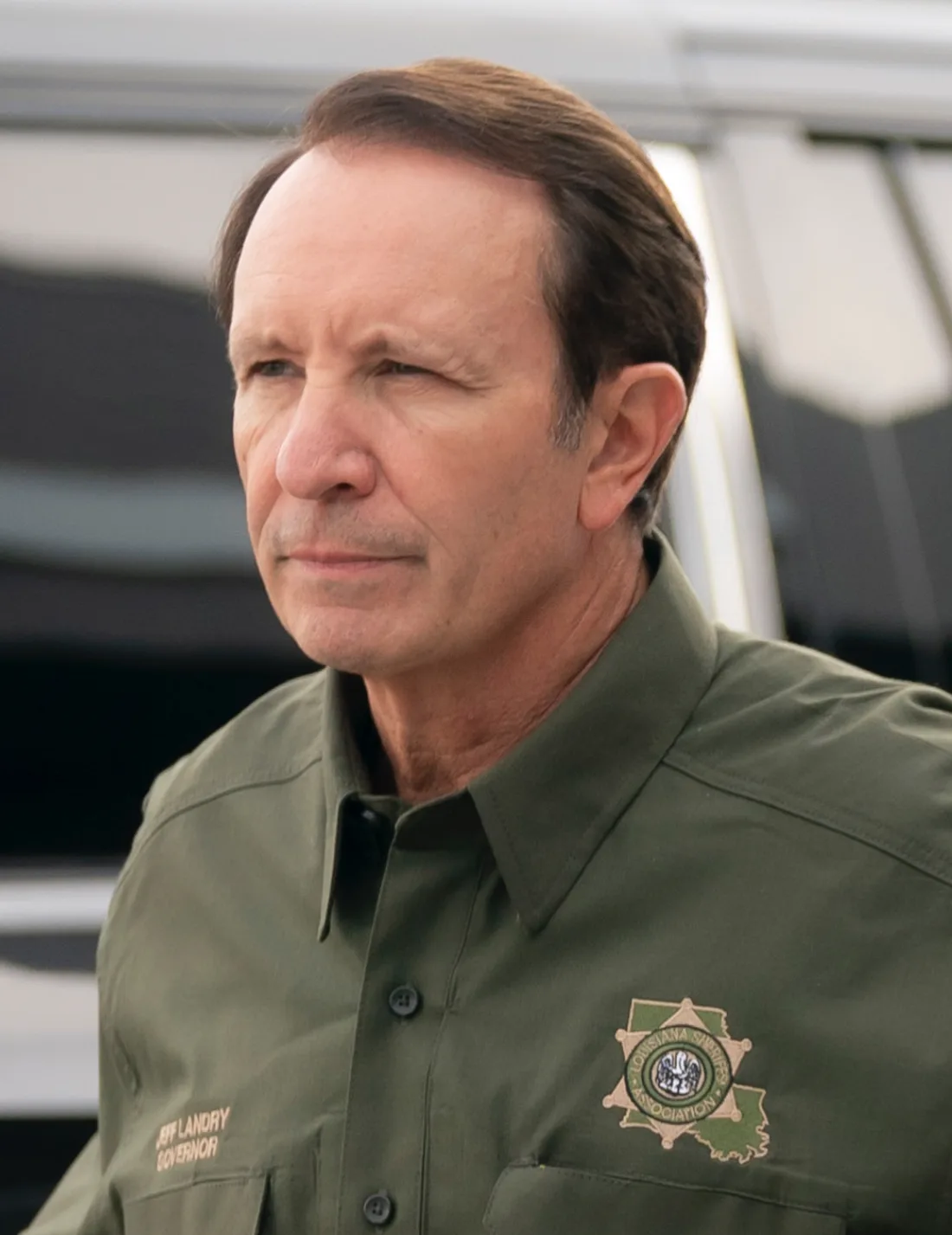
Jeff Landry
- Party
- Republican
- In Office Since
- January 8, 2024
- Elected
- October 2023 (jungle primary, first round)
- Term Ends
- January 2028
- Born
- December 23, 1970, St. Martinville, LA
- Education
- University of Louisiana at Lafayette, Loyola University New Orleans (JD)
- Prior Role
- Louisiana Attorney General (2016–2024)
Jeff Landry is the 57th Governor of Louisiana. A veteran of Operation Desert Storm, former police officer, and small business owner, Landry served as a U.S. Congressman before becoming Louisiana's Attorney General for eight years. He won the 2023 gubernatorial election outright in the first round of Louisiana's jungle primary, a rare achievement. As governor, he has focused on tax cuts, school choice, public safety, and energy development.
Other Current State Officials
Lieutenant Governor
Billy Nungesser
In office since January 2016, re-elected 2019 and 2023. Former president of Plaquemines Parish, known for his response to the Deepwater Horizon oil spill. Focuses on tourism, coastal restoration, and rural development.
Attorney General
Liz Murrill
In office since January 2024. Former Louisiana Solicitor General who succeeded Jeff Landry when he became governor. Known for aggressive litigation against federal regulations and immigration policies.
Secretary of State
Nancy Landry
In office since January 2024. Former Louisiana state representative and LSU-trained attorney. Not related to Governor Jeff Landry despite sharing the same last name. Focuses on election administration and business services.
The Louisiana State Legislature
Louisiana State Senate
- Seats: 39 members
- Terms: 4-year terms
The upper chamber. Unlike most states, all Louisiana Senate seats are on the ballot in the same election cycle rather than being staggered. Senators are subject to a 12-year cumulative term limit.
Louisiana House of Representatives
- Seats: 105 members
- Terms: 4-year terms
The lower chamber. Louisiana is one of the very few states where the House also serves 4-year terms rather than 2-year terms. Like the Senate, all seats turn over at once, and members are subject to 12-year cumulative term limits.
Louisiana's U.S. Senators
U.S. Senator
Bill Cassidy
A physician and two-term senator, Cassidy chairs the Senate Health, Education, Labor and Pensions Committee. He is one of seven Republican senators who voted to convict President Trump in the 2021 impeachment trial, a vote that made him a primary target in Louisiana. Under the state's new closed party primaries for Congress, he finished third in the May 16, 2026 Republican primary, and Representative Julia Letlow, endorsed by President Trump, won the June 27 runoff for the party's nomination; Cassidy's term ends in January 2027.
U.S. Senator
John Kennedy
A former Louisiana State Treasurer who won his Senate seat in 2016, Kennedy is known for sharp-tongued questioning of nominees and witnesses in Senate hearings, making him one of the more recognizable figures on Capitol Hill. He serves on the Senate Appropriations and Judiciary Committees. His term ends in 2029.
Louisiana Through the Years
From French colonial outpost to the Louisiana Purchase to Hurricane Katrina, Louisiana's history is as layered and complex as its culture.
Before European arrival, Louisiana was home to dozens of Indigenous nations including the Caddo, Atakapa, Tunica, Natchitoches, and Chitimacha peoples. The lower Mississippi Valley was one of the most densely populated regions of pre-Columbian North America, with complex societies, trade networks, and mound-building cultures stretching back thousands of years.
The Poverty Point earthworks in the northeast, built between about 1700 and 1100 BCE, are among the largest and oldest monumental constructions in North America, with concentric ridges and a bird-shaped mound covering hundreds of acres; the site became a UNESCO World Heritage Site in 2014. Later Mississippian and Plaquemine peoples raised temple mounds across the state, some still standing on the LSU campus.
Four tribes in Louisiana have federal recognition today, the Chitimacha, Coushatta, Tunica-Biloxi, and Jena Band of Choctaw, and several more, including the United Houma Nation with over 17,000 members, are recognized only by the state. Many coastal Native communities are now on the front line of land loss, and the Chitimacha near Charenton hold the only reservation in Louisiana that has never left tribal hands.
French explorer René-Robert Cavelier, Sieur de La Salle, descended the Mississippi River to its mouth in 1682 and claimed the entire river basin for France, naming it 'La Louisiane' in honor of King Louis XIV. The claim established France's vast North American empire and set the stage for over a century of French colonial rule.
La Salle's follow-up expedition to plant a colony at the river's mouth in 1685 missed the Mississippi entirely, landed on the Texas coast, and collapsed; he was murdered by his own men in 1687. France did not build a permanent Louisiana settlement until 1699, when Pierre Le Moyne d'Iberville and his brother Bienville founded a fort near present-day Biloxi.
For its first two decades the colony was a money-losing frontier of a few hundred people, and the crown handed it to the merchant Antoine Crozat in 1712 and then, in 1717, to John Law's Company of the West, whose speculative 'Mississippi Bubble' collapsed spectacularly in 1720 after propaganda that lured German and Swiss settlers to the Gulf Coast.
French colonial governor Jean-Baptiste Le Moyne de Bienville founded New Orleans in 1718 on a crescent bend of the Mississippi River. Despite being built on swampy, flood-prone land, the city's strategic position at the mouth of the continent's greatest river made it one of the most important ports in the Western Hemisphere within decades.
The company laid out the original city, today's Vieux Carré or French Quarter, on a grid around a central square, the Place d'Armes, now Jackson Square, and made it the colonial capital in 1722, the year a hurricane leveled most of the flimsy first buildings. Enslaved Africans, brought in large numbers beginning in 1719, built the levees and drainage ditches that made the site habitable.
Under the French Code Noir, enslaved people in Louisiana had limited legal rights, including to marry and to buy their freedom, and a large free community of color developed that had no real parallel elsewhere in the future United States. The city stayed small, roughly 8,000 people at the Louisiana Purchase, but holding it meant controlling the commerce of the entire Mississippi Valley.
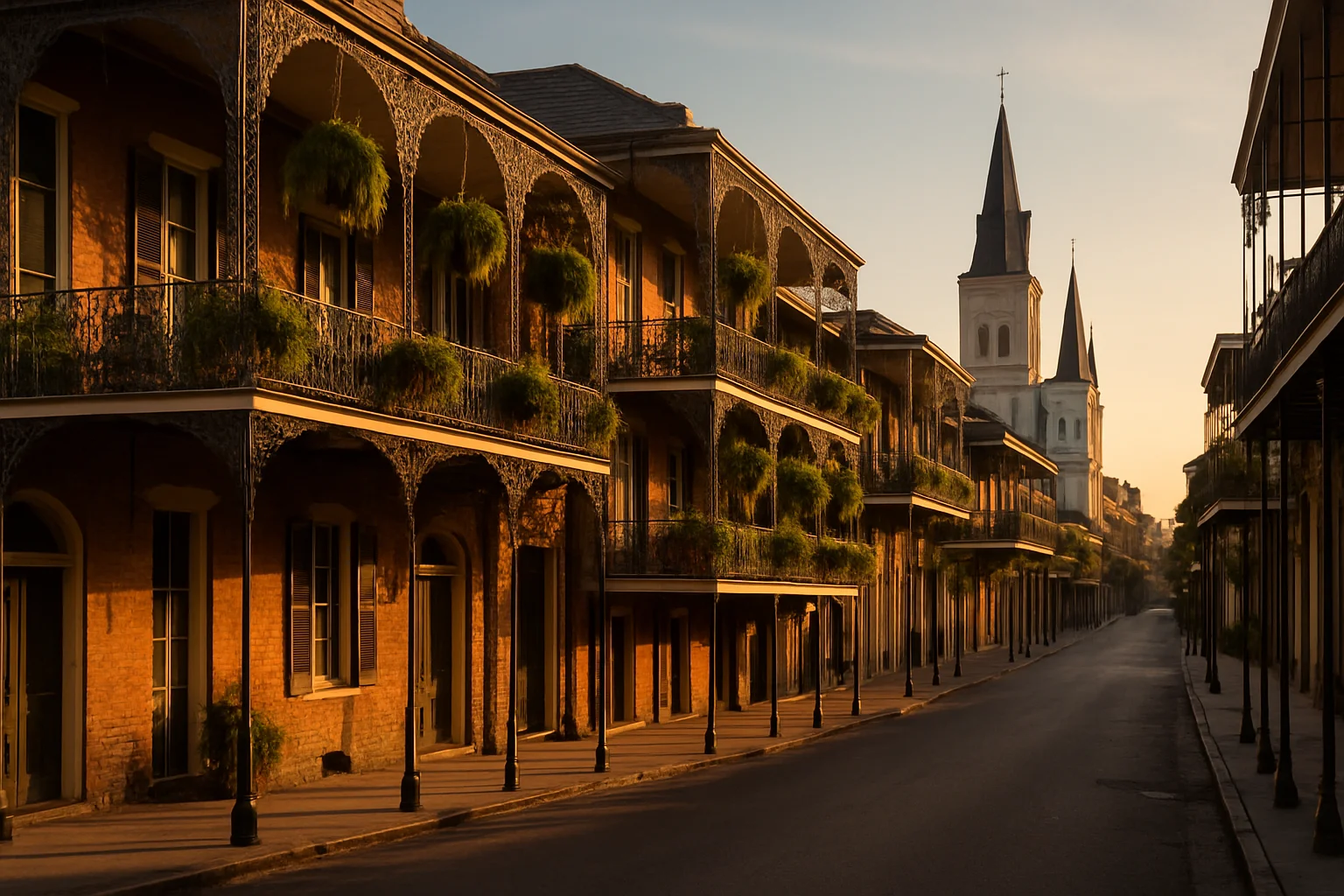
France secretly ceded Louisiana to Spain in 1762 via the Treaty of Fontainebleau. Spanish rule lasted nearly four decades and left a lasting imprint on New Orleans's architecture, the iconic French Quarter buildings are largely Spanish colonial in style, rebuilt after fires in 1788 and 1794. France briefly reclaimed the territory in 1800 before selling it to the United States.
Spain took formal control only in 1769, after Governor Alejandro O'Reilly crushed a 1768 revolt by French colonists and executed its leaders. Spanish rule was more liberal on freeing enslaved people, and the free Black population grew; Spain also welcomed the Acadian refugees and the Canary Islander 'Isleños,' whose descendants still live in St. Bernard Parish.
The 1788 Good Friday fire destroyed about 850 buildings and another in 1794 burned 200 more, which is why the 'French' Quarter is architecturally Spanish, with courtyards, arcades, and wrought-iron balconies. By the sale to the United States in 1803 most residents still spoke French, and few Spanish colonists had actually settled.
Napoleon Bonaparte, facing war in Europe and the loss of Haiti to revolution, sold the entire Louisiana Territory to the United States for $15 million, roughly three cents an acre, doubling the size of the young nation overnight. President Thomas Jefferson's purchase remains one of the most consequential real estate transactions in history. The territory covered all or part of 15 present-day states.
Jefferson had sent James Monroe and Robert Livingston to Paris to try to buy just New Orleans and West Florida for up to 10 million dollars; Napoleon, having lost 50,000 troops trying and failing to retake Haiti and needing cash for war with Britain, abruptly offered the whole territory, and the negotiators signed on April 30, 1803.
Jefferson, a strict constructionist, privately doubted the Constitution allowed the purchase but pushed it through the Senate anyway. The boundaries were left vague, sparking decades of disputes with Spain over Texas and West Florida, and the treaty promised the territory's residents eventual statehood and citizenship, the first time the U.S. had to absorb a large non-English-speaking population.
Louisiana was admitted to the Union on April 30, 1812, the first state carved out of the Louisiana Purchase territory. It was also the first state admitted to the Union with a majority non-Anglo population, reflecting its unique French, Spanish, and African Creole heritage.
Congress debated whether a French-speaking, Catholic, majority-Black-and-Creole territory could be trusted with statehood, and the enabling act required Louisiana to conduct government and courts in English and to respect the existing population's land titles and customs. The 1812 constitution limited voting to white male property owners and said nothing of the free people of color who were a large share of New Orleans.
Louisiana joined weeks before the War of 1812 began, and the Battle of New Orleans two years later bound the new state to the Union in the national imagination. The state has since had eleven constitutions, more than any other, the current one dating to 1974, a record that reflects a long habit of using constitutional conventions to entrench or dismantle political power.
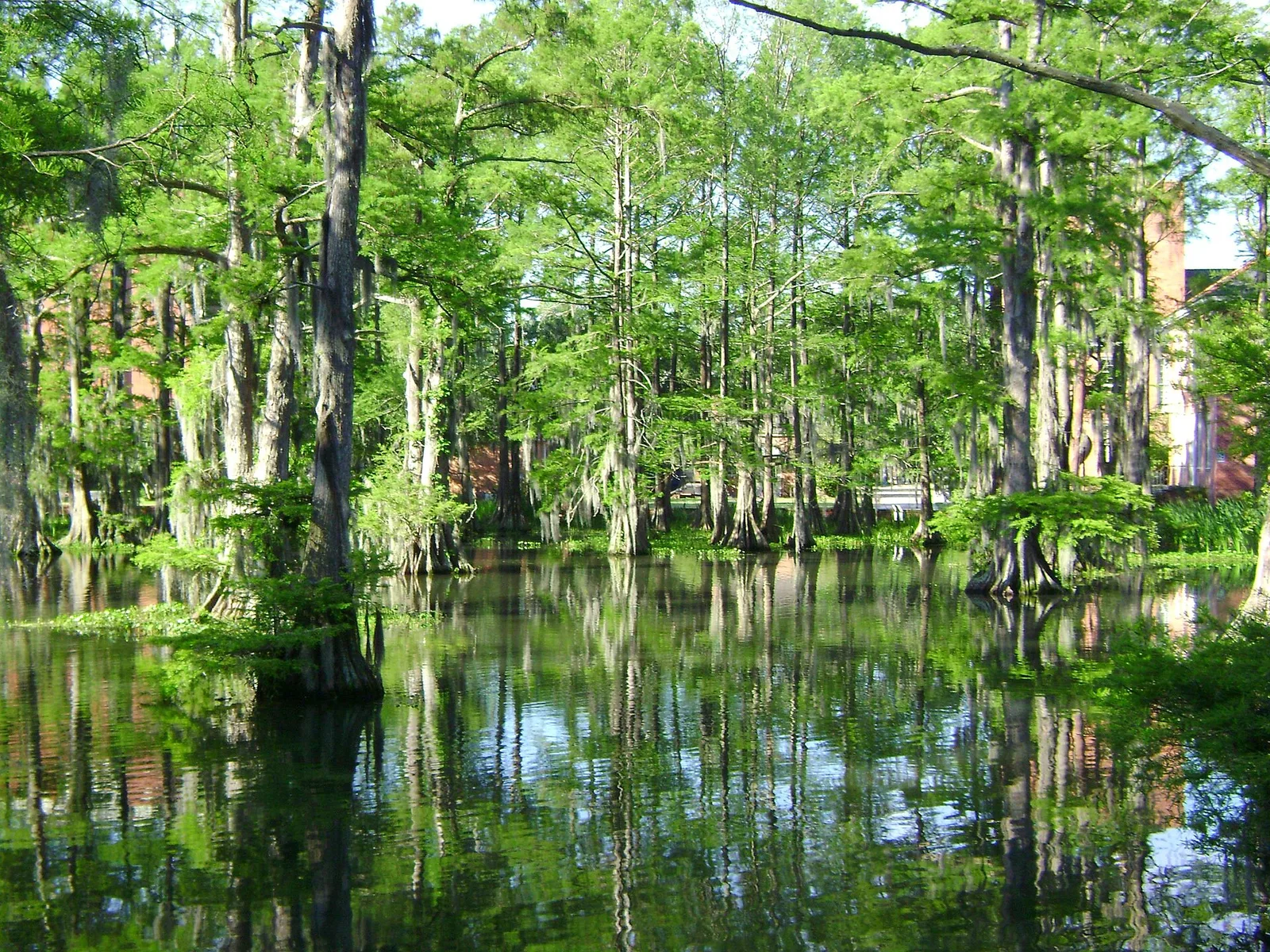
General Andrew Jackson's ragtag army of regulars, militia, free Black soldiers, Choctaw warriors, and Jean Lafitte's pirates defeated a vastly superior British force at the Battle of New Orleans on January 8, 1815, two weeks after the War of 1812 had officially ended by treaty. The battle made Jackson a national hero and cemented New Orleans's place in the American mythology of the frontier.
The main assault lasted about 30 minutes: Jackson's roughly 4,500 men, dug in behind the Rodriguez Canal at Chalmette, cut down a frontal attack by around 8,000 British regulars, inflicting about 2,000 casualties, including the death of the British commander, General Edward Pakenham, while losing only a few dozen men.
The Treaty of Ghent had been signed on December 24, 1814, but not yet ratified or carried across the Atlantic, so the victory still mattered by ensuring Britain could not use possession of New Orleans as a bargaining chip. Jackson also imposed martial law, jailed a judge who challenged it, and was later fined for contempt; the free Black soldiers he had promised equal pay and land were largely denied both.
Louisiana seceded from the Union in January 1861 and was one of the original Confederate states. New Orleans fell to Union forces in April 1862, earlier than almost any other major Southern city, and remained under Union control for the rest of the war.
Reconstruction brought the first Reconstruction-era state constitution guaranteeing civil rights, and Black Louisianans held significant political power briefly before the Redeemer movement violently ended Reconstruction in the 1870s.
Union General Benjamin Butler's occupation of New Orleans was so harsh, he hanged a man for tearing down a U.S. flag and issued an order threatening to treat women who insulted Union troops as prostitutes, that Confederates nicknamed him 'Beast' and Jefferson Davis declared him an outlaw. Louisiana's 1868 constitution was one of the most progressive in the South, guaranteeing integrated schools and public accommodations and enfranchising Black men.
P.B.S. Pinchback briefly served as the first Black governor of any U.S. state in 1872 and 1873, and about half the legislature was Black. White paramilitary violence, the 1866 New Orleans massacre, the 1873 Colfax massacre in which a mob killed roughly 150 Black men, and the 1874 Battle of Liberty Place, in which the White League held the state government for three days, ended Reconstruction in Louisiana with the withdrawal of federal troops after the disputed 1876 election.
On August 29, 2005, Hurricane Katrina made landfall near the Louisiana-Mississippi border as a Category 3 storm. The levee system protecting New Orleans catastrophically failed, flooding 80% of the city and killing over 1,800 people statewide.
Katrina was the deadliest hurricane in modern American history and one of the costliest natural disasters ever recorded. The storm exposed deep fault lines of race, class, and government capacity, and the city's long, uneven recovery became a national story about equity and resilience.
Investigations by the Army Corps of Engineers and independent engineers concluded the flooding was primarily an engineering failure: floodwalls collapsed at the 17th Street and London Avenue canals and the Industrial Canal because of design flaws and weak soils, not because they were overtopped. About 80 percent of the city flooded, some neighborhoods under more than 10 feet of water for weeks.
The population fell from about 455,000 before the storm to roughly 210,000 in mid-2006, and the Lower Ninth Ward and New Orleans East never fully came back. The state seized control of most New Orleans public schools and converted the district to charters, closed Charity Hospital, and demolished four large public-housing projects. The Corps' 14.5-billion-dollar levee-and-floodwall system, finished in 2018, now rings the metro and is already sinking.
Louisiana's Defining Moments in American History
These are the events that didn't just shape Louisiana, they changed the nation.
In 1803, President Thomas Jefferson purchased the Louisiana Territory from Napoleon's France for approximately $15 million, or about 4 cents per acre. The purchase doubled the size of the United States overnight, adding 828,000 square miles of territory that would eventually become all or part of 15 states.
It was the largest land acquisition in American history and set the stage for the nation's westward expansion. The territory was transferred to American control in New Orleans on December 20, 1803.
Jefferson had wanted only New Orleans and the Florida coast for up to 10 million dollars; Napoleon, bled white by the failed effort to retake Haiti and short of money for war with Britain, offered the entire territory, and the American negotiators seized it without waiting for instructions. Jefferson privately worried the Constitution did not authorize buying land, then pushed the treaty through the Senate anyway.
The purchase removed a European power from the Mississippi and guaranteed American farmers an outlet to the sea, but it also more than doubled the land open to the expansion of slavery, and the fights over whether each new state carved from it, Missouri, Kansas, and the rest, would be free or slave drove the country toward civil war.
On January 8, 1815, General Andrew Jackson led a ragtag army of regular soldiers, militia, pirates, and free Black men to a stunning victory over British forces in the Battle of New Orleans. The catch: the War of 1812 had officially ended two weeks earlier with the signing of the Treaty of Ghent.
News traveled slowly, and neither side knew. The battle made Jackson a national hero, launched his path to the presidency, and has been mythologized in American culture ever since.
Behind their earthworks at Chalmette, Jackson's mixed force, U.S. regulars, Tennessee and Kentucky riflemen, two battalions of free men of color, Choctaw fighters, and Baratarian privateers under Jean Lafitte, broke a frontal British assault in about half an hour on January 8, 1815, killing General Pakenham and inflicting roughly 2,000 casualties while losing only a few dozen men.
The lopsided victory gave Americans a triumphant end to a war that had gone badly, fed a surge of national pride, and made Jackson a folk hero whose self-made frontier-warrior image carried him to the presidency in 1828. January 8 was a national holiday for decades, and the battle inspired a 1959 Johnny Horton song that topped the pop charts.
New Orleans is the undisputed birthplace of jazz, the most purely American art form ever created. In the late 19th and early 20th centuries, musicians in New Orleans synthesized African rhythms, blues, ragtime, and European harmonic traditions into something entirely new.
The city's unique cultural mix, its African American Creole community, the brass bands of funerals and parades, and the freewheeling atmosphere of Storyville all contributed to jazz's birth. Louis Armstrong, born in a New Orleans slum, carried the music to the world.
The music grew out of a specific place: Congo Square, where enslaved and free Black people had gathered on Sundays to drum and dance since the 1700s; the brass-band tradition of second-line parades and 'jazz funerals'; and the Storyville red-light district, where pianists like Jelly Roll Morton played. Cornetist Buddy Bolden, active around 1900, is often called the first jazz musician, though no recording of him survives.
Segregation and the Navy's 1917 closing of Storyville pushed musicians north, carrying jazz to Chicago, New York, and Kansas City, where it became the dominant American popular music of the 1920s through the 1940s. New Orleans still treats the music as living civic culture, taught in schools, played at funerals, and celebrated at the Jazz and Heritage Festival, which since 1970 has drawn hundreds of thousands each spring.
When Hurricane Katrina made landfall on August 29, 2005, the storm itself was devastating. But the catastrophe that followed, the flooding of New Orleans after its federal levees failed, was entirely man-made. Over 1,800 people died, most of them poor Black residents who had no means to evacuate.
The federal government's slow and chaotic response shocked the nation. Katrina became a defining moment in American debates about race, poverty, infrastructure, and governmental competence, and it reshaped how emergency management is conducted nationwide.
Engineering reviews found the disaster was mostly man-made: federally built floodwalls failed at three canals because of design and soil flaws before the water ever reached their tops. Thousands were stranded on rooftops and at the Superdome and Convention Center for days, and FEMA director Michael Brown resigned days after President Bush praised him.
New Orleans lost more than half its population in the year after the storm, and the recovery permanently reshaped the city: nearly all public schools became charters, the Charity Hospital system was closed, and four large public-housing complexes were demolished and rebuilt as mixed-income developments. The Army Corps spent 14.5 billion dollars on a new ring of levees, walls, and gates, completed in 2018 and already subsiding.
On April 20, 2010, the Deepwater Horizon oil rig exploded in the Gulf of Mexico off Louisiana's coast, killing 11 workers and triggering the largest accidental marine oil spill in history. For 87 days, nearly 5 million barrels of crude oil poured into the Gulf.
Louisiana's fishing industry, coastal ecosystem, and tourism economy were devastated. The disaster resulted in $65 billion in settlement costs for BP, triggered sweeping reforms in offshore drilling regulation, and raised fundamental questions about the true cost of fossil fuel dependence.
The blowout at BP's Macondo well a mile underwater killed 11 rig workers and released an estimated 3.2 to 4.9 million barrels of oil before it was capped after 87 days; response crews burned oil, skimmed it, and sprayed nearly 2 million gallons of chemical dispersant, some of it into the wellhead a mile down, at a scale never tried before.
A 2016 federal settlement required BP to pay about 20.8 billion dollars, the largest environmental settlement in U.S. history, with a large share flowing to Louisiana's coastal-restoration fund. Oil still washes up during storms, deep-sea coral and dolphin populations took years to recover, and the disaster forced a rewrite of federal offshore-drilling safety rules and the breakup of the agency that had both promoted and policed drilling.
Notable Louisianans
Louis Armstrong
Jazz trumpeter and singer, born in New Orleans, one of the most influential musicians in American history
Andrew Jackson
7th President of the United States, hero of the Battle of New Orleans
Huey Long
Populist governor and U.S. Senator nicknamed 'The Kingfish,' one of the most powerful political figures in American history
Fats Domino
Rock and roll pioneer, born in New Orleans
Mahalia Jackson
Queen of Gospel music, born in New Orleans
Truman Capote
Author of In Cold Blood and Breakfast at Tiffany's, born in New Orleans
Britney Spears
Pop music icon, born in McComb (raised in Kentwood, LA)
Ellen DeGeneres
Comedian and television host, born in Metairie
Peyton Manning
NFL Hall of Fame quarterback, born in New Orleans
Anne Rice
Author of Interview with the Vampire, born in New Orleans
State Symbols & Quick Facts
| Nickname | "The Pelican State" |
| Capital | Baton Rouge |
| Largest City | New Orleans |
| Statehood | April 30, 1812 (18th state) |
| Population | ~4.6 million (2025 est.) |
| Area | 52,378 sq miles (31st largest) |
| State Bird | Brown Pelican |
| State Flower | Magnolia |
| State Tree | Bald Cypress |
| State Crustacean | Crawfish |
| State Reptile | American Alligator |
| State Song | "Give Me Louisiana" |
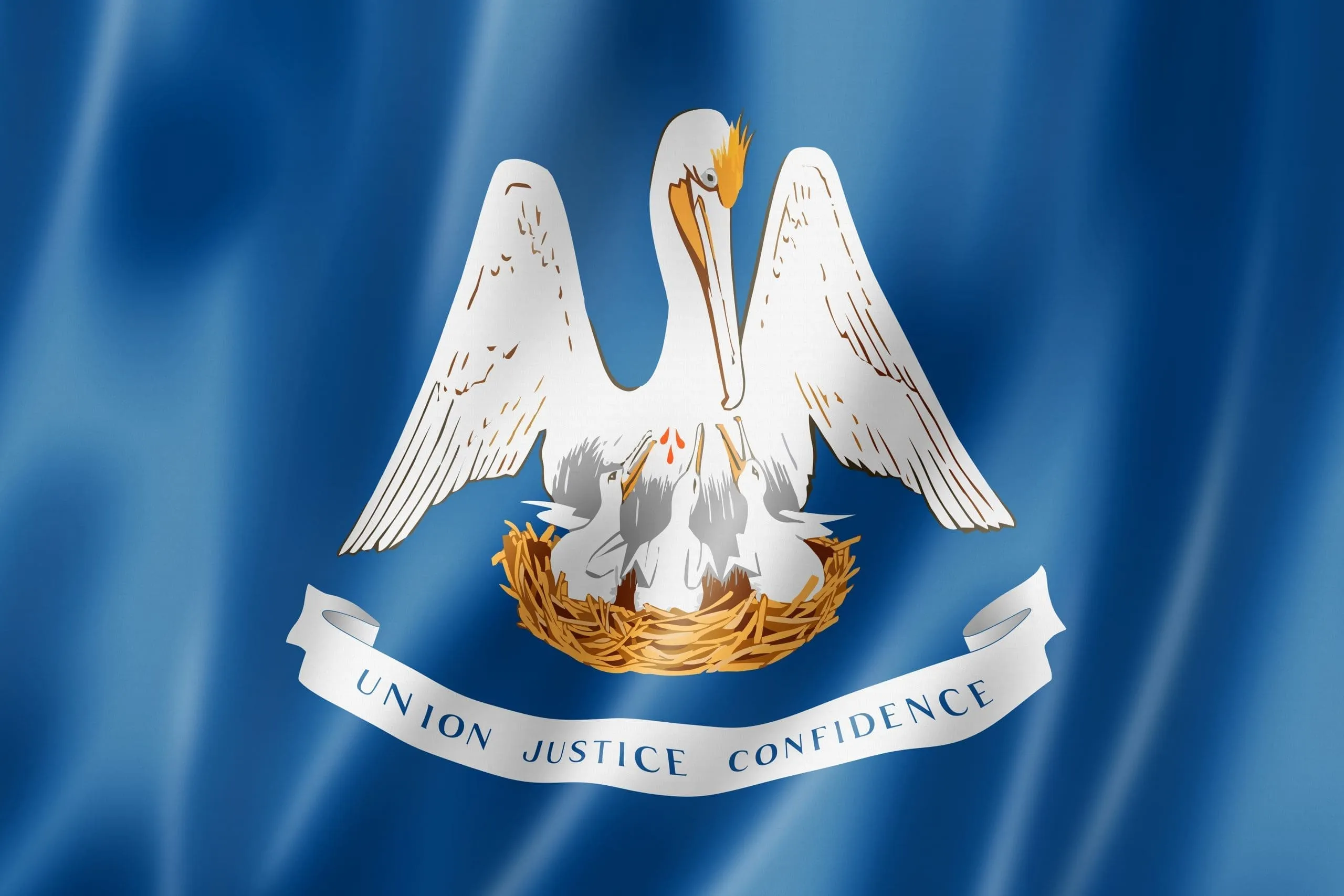
| State Motto | Union, Justice, and Confidence |
| Time Zone | Central Time |
| Bordering States | TX, AR, MS |
| Legal System | Civil law (based on French/Spanish), unique in the U.S. |
Did You Know?
Louisiana is the only U.S. state whose legal system is based on civil law rather than common law, a legacy of its French and Spanish colonial heritage. This means Louisiana's laws are more similar to France or Spain than to the other 49 states.
New Orleans's Mardi Gras is one of the oldest and largest annual celebrations in the United States, with roots dating to French colonial celebrations in the early 1700s.
Louisiana has one of the most extensive inland waterway systems of any state, a web of rivers, bayous, and canals anchored by the Mississippi and the Gulf Intracoastal Waterway.
The Port of South Louisiana, between New Orleans and Baton Rouge, is the largest port by tonnage in the Western Hemisphere.
Louisiana is losing land to the Gulf of Mexico faster than almost anywhere else on Earth, approximately a football field of coastal wetland every 100 minutes.
Crawfish étouffée, gumbo, jambalaya, beignets, and po'boys are all Louisiana originals. New Orleans is consistently ranked among the top food cities in the world.
Louisiana is the only state that divides its territory into 'parishes' rather than counties, a legacy of the French Catholic church administrative system.
The 1803 Louisiana Purchase, which doubled the size of the United States, cost roughly three cents per acre, $15 million total for 828,000 square miles.
Jazz music was born in New Orleans around the turn of the 20th century, emerging from a fusion of African rhythms, blues, ragtime, and European harmonics.
Louisiana's Atchafalaya Basin is the largest river swamp in the United States, a 1.4-million-acre wilderness of bayous, cypress forests, and wetlands.
Quick Facts and Common Questions
Short answers to the questions people most often ask about Louisiana: its abbreviation, who it was named for, its capital, and why it has parishes.
Louisiana's two-letter postal abbreviation is LA. The U.S. Census Bureau places it in the South region, in the West South Central division, and about 4.66 million people lived there in the 2020 census.
Louisiana became the 18th state on April 30, 1812, nine years to the day after the Louisiana Purchase treaty with France was signed. Before statehood it was governed as the Territory of Orleans, the southern part of the land bought from France.
French explorer René-Robert Cavelier, Sieur de La Salle, claimed the Mississippi River valley for France in 1682 and named it "La Louisiane" in honor of King Louis XIV.
Baton Rouge has been the capital since 1880, and also served from 1849 to 1862. New Orleans was the capital for most of the state's early years, and during the Civil War the Confederate state government moved to Opelousas and then Shreveport. The current State Capitol, completed in 1932, is the tallest state capitol in the country, at 450 feet.
Louisiana borders three states: Arkansas to the north, Mississippi to the east, and Texas to the west. To the south lies the Gulf of Mexico, where the Mississippi River reaches the sea.
Louisiana's 64 local government units are called parishes, a name dating to French and Spanish rule, when church parishes also served as civil districts. Louisiana's legal system also reflects that history: its civil law tradition, rooted in French and Spanish law, sets it apart from the common law system of the other 49 states.
Louisiana is known as "The Pelican State." Its motto is "Union, Justice, and Confidence." Its state bird is the brown pelican, its flower is the magnolia, its tree is the bald cypress, and its reptile is the American alligator.
Based on the 2020 census, Louisiana has 6 seats in the U.S. House of Representatives, the same as before, which gives it 8 votes in the Electoral College.
On January 8, 1815, American forces under General Andrew Jackson defeated a British army trying to capture New Orleans, the last major battle of the War of 1812. The peace treaty had already been signed in December 1814, but news had not yet reached America, and the victory made Jackson a national hero.
Sources & Further Reading
- Census Regions and Divisions, U.S. Census Bureau
- 2020 Census Apportionment Results, U.S. Census Bureau
- Distribution of Electoral Votes, National Archives
- 64 Parishes, Louisiana Endowment for the Humanities
- Louisiana Secretary of State
- Chalmette Battlefield, Jean Lafitte National Historical Park, National Park Service
Jean Lafitte National Historical Park and Preserve
Six Sites Preserving the Natural and Cultural Mosaic of Louisiana's Delta Country
About Jean Lafitte National Historical Park and Preserve
Jean Lafitte National Historical Park and Preserve is not one place but six, scattered across south Louisiana from the French Quarter to the Cajun prairie, together telling the story of the delta's Creole, Cajun, Native American, African American, Isleno, and Filipino communities and the wetlands that shaped them.
Congress created it on November 10, 1978, folding in the older Chalmette site, where Andrew Jackson's mixed army, U.S. regulars, Louisiana and Kentucky militia, free Black soldiers, Choctaw fighters, and Jean Lafitte's Baratarian smugglers, beat a larger British force on January 8, 1815, two weeks after the war-ending Treaty of Ghent had been signed.
The park is named for Jean Lafitte, who ran a smuggling and privateering operation out of Barataria Bay; the British tried to hire him first, but he warned the Americans and his men fought for a pardon.
Its largest natural piece, the Barataria Preserve near Marrero, protects about 26,000 acres of cypress swamp, freshwater marsh, and bayou, one of the easiest places to walk into the delta wetland that defines the region.
- Designation
- National Historical Park and Preserve
- Location
- South Louisiana, spanning New Orleans to the Atchafalaya Basin
- Established
- November 10, 1978
- Annual Visitors
- ~500,000
Louisiana's Wetland Ecosystems
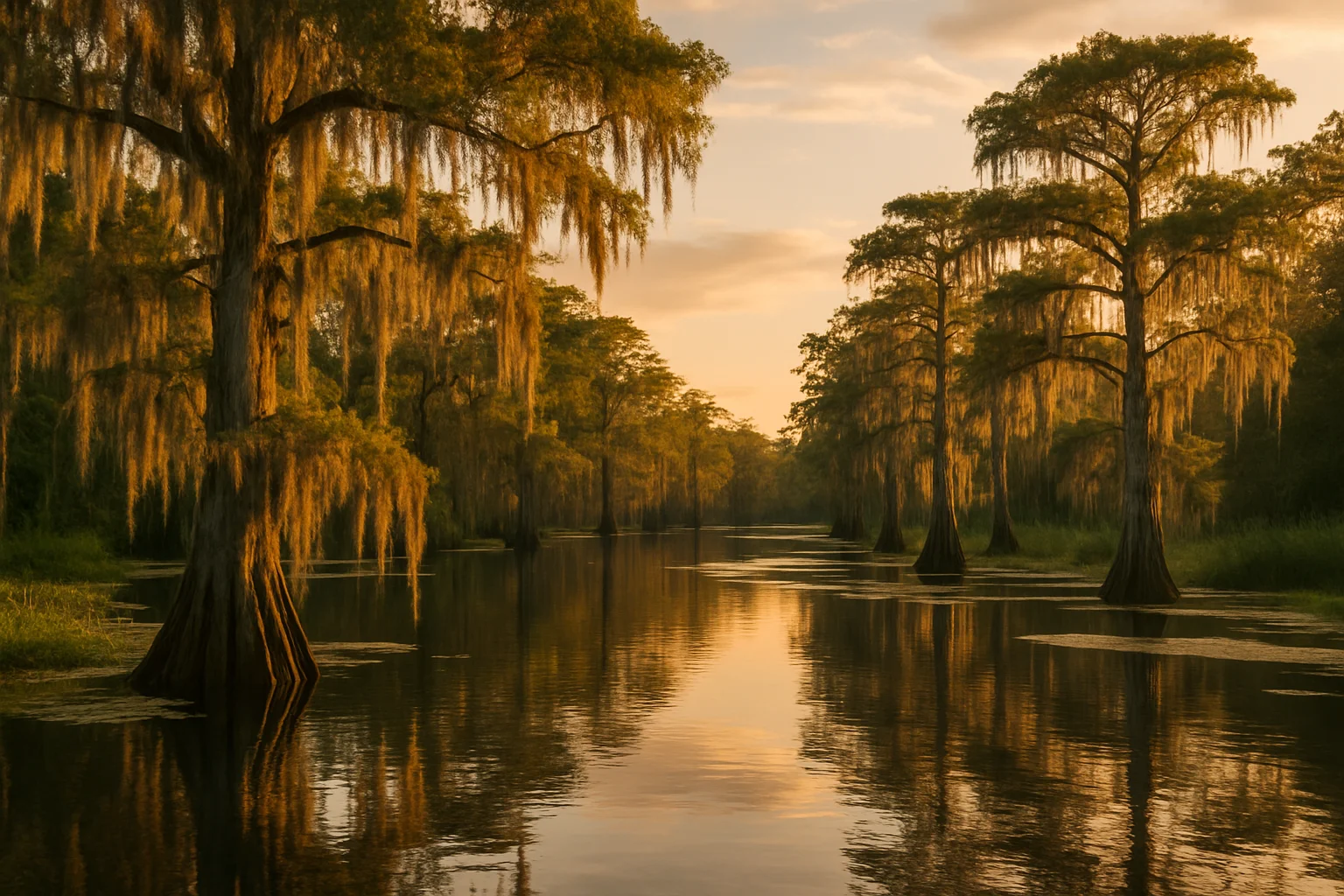
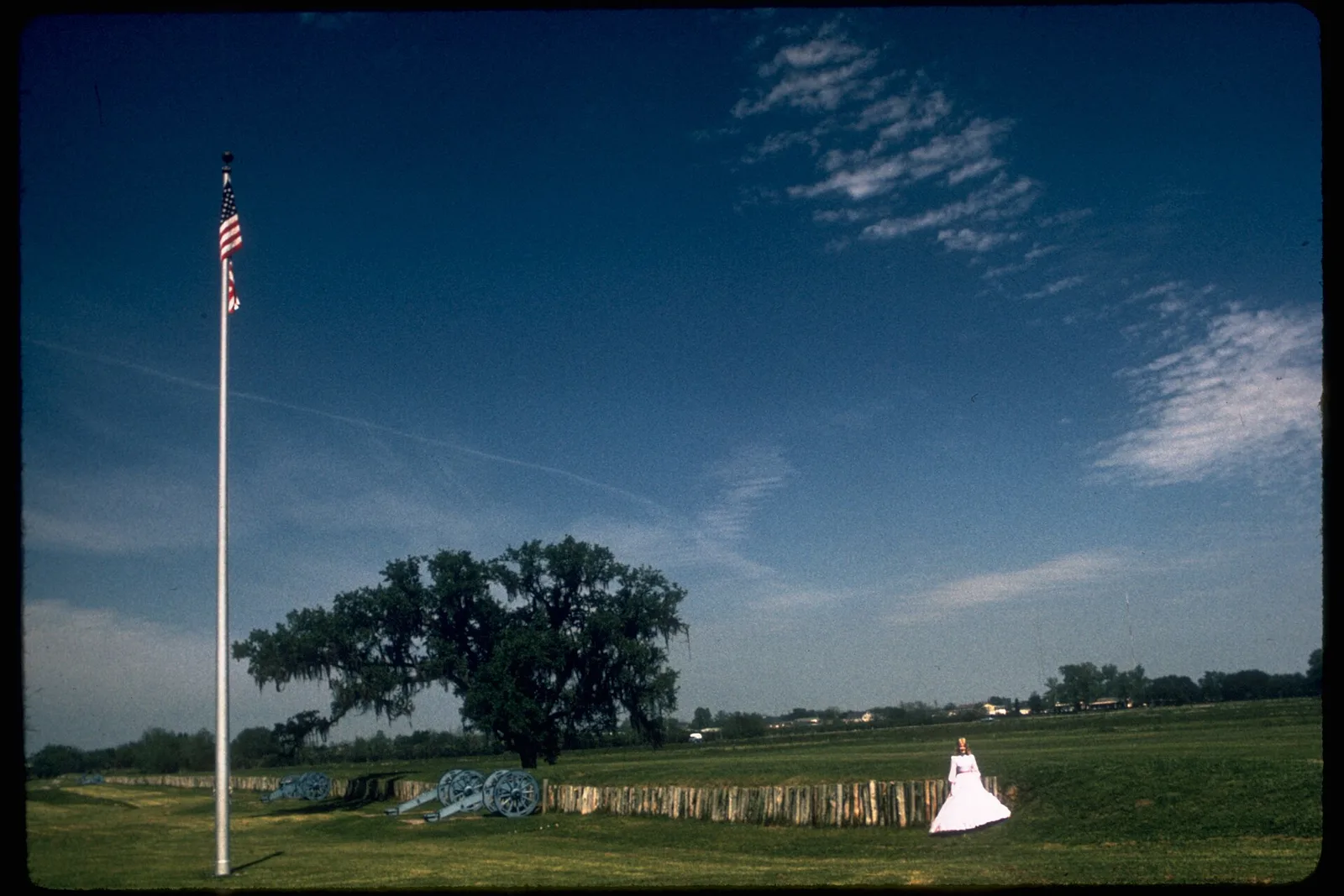
Bald cypress and water tupelo grow straight out of standing water on flared, buttressed trunks, hung with Spanish moss, which is not a moss at all but a flowering plant in the pineapple family.
The biggest cypress in the preserve are a few centuries old; the true giants, over a thousand years, were nearly all cut in a logging boom between about 1890 and 1925 that took most of Louisiana's old-growth cypress.
The flooded forest is a nursery for shrimp, crabs, and fish and a rookery for herons, egrets, and ibis, and it soaks up storm surge before it reaches the towns behind it.
These swamps are dying back where the levees have cut off the Mississippi's fresh water and sediment: with no new mud and salt creeping in, drowned 'ghost forests' of gray cypress trunks now stand across south Louisiana.
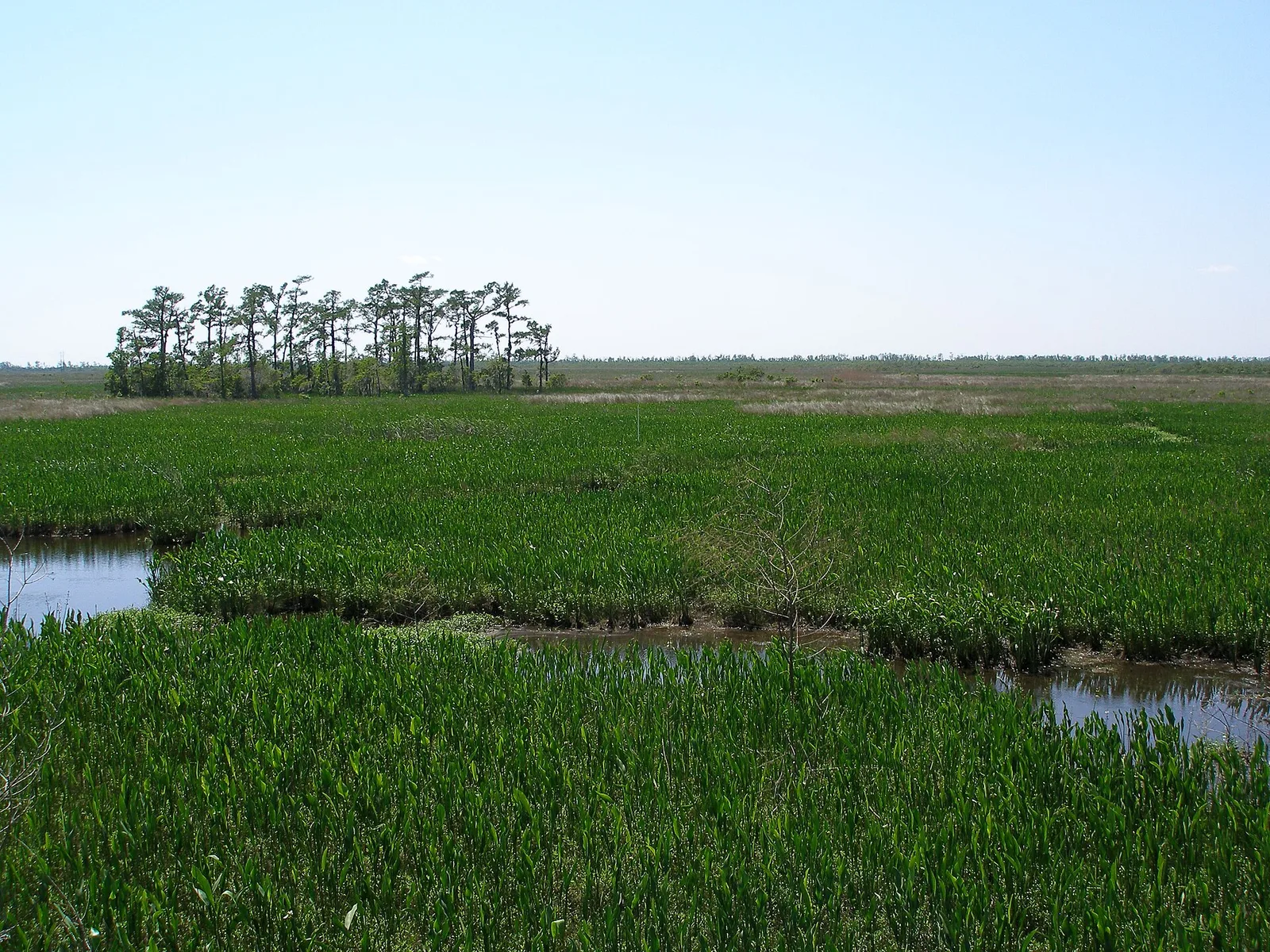
Beyond the tree line the swamp opens into freshwater marsh, a floating and rooted mat of maidencane, bulltongue, alligator weed, and pickerelweed over soft peat.
The marsh is thick with nutria, muskrat, otter, and alligators, and it is a critical refueling stop for waterfowl and songbirds on the Mississippi Flyway, one of the continent's main migration routes.
Much of it is only inches above sea level and is turning to open water as the ground sinks and the plants drown, a change visible on aerial photos over just a few decades.
Non-native nutria make it worse by chewing out the roots that hold the marsh together, clearing bare 'eat-out' patches that then erode.
On the natural levees, ridges of sediment a few feet higher than the surrounding swamp, grows drier forest of live oak, water oak, hackberry, and palmetto.
These low ridges were the only solid ground, so Native people, then trappers and farmers, built their camps and fields along them, and the preserve's trails still follow them.
In spring and fall the ridges fill with migrating warblers, tanagers, and buntings dropping in after crossing the Gulf, which makes the preserve a well-known birding stop.
The hardwood forest is the preserve's most stable habitat, but it too depends on the levees staying just high enough to keep salt water out.
Bayous, slow, tea-colored channels, and the lakes and dredged canals that link them, are the natural roads of the delta, and for generations they were the only way in and out of the wetland settlements.
Cajun, Isleno, and other families made a living here trapping muskrat and nutria, fishing and shrimping, and harvesting Spanish moss, which was dried, ginned, and sold as furniture and mattress stuffing into the 1950s.
A Filipino shrimp-drying village, Manila Village, stood on stilts in Barataria Bay from at least the 1800s until Hurricane Betsy destroyed it in 1965; it is often cited as one of the oldest Filipino settlements in the country.
The preserve's canoe and kayak trails follow bayous once run by pirogues loaded with pelts and fish, though many old canals were cut for oil and gas access and now channel salt water inland.
Indigenous Connections
Chitimacha Nation
The Chitimacha have lived in the Atchafalaya Basin and the lower delta for at least 3,000 years, in towns along the bayous, living by fishing, clamming, and farming the levee ridges, and by weaving the double-woven rivercane baskets they are still known for.
A 1706 killing of a French missionary set off a war in which the French and their allies attacked Chitimacha towns and enslaved many of the people; the fighting lasted into 1718.
The survivors held onto a stretch of Bayou Teche near Charenton, and the Chitimacha are the only Louisiana tribe still living on part of their original homeland.
The Chitimacha Tribe of Louisiana is a federally recognized nation. Their reservation includes a casino and cultural center. The tribe maintains a language revitalization program to preserve Chitimacha, which is a language isolate with no known linguistic relatives.
Atakapa-Ishak Nation
The Ishak, called Atakapa by outsiders, held the coastal prairie and marsh from southwestern Louisiana into southeastern Texas, living in small bands along the bays and rivers.
'Atakapa' is a Choctaw word for 'man-eater,' attached to them by neighbors over disputed accounts of ritual cannibalism; the people call themselves Ishak, 'the people.'
Epidemic disease and slave raids in the 1700s and 1800s scattered the Ishak, and by the early 1900s the language had few or no fluent speakers; descendants have organized as the Atakapa-Ishak Nation and are seeking federal recognition.
The Atakapa-Ishak Nation seeks federal recognition. Community members maintain cultural practices and genealogical records connecting them to the historic Atakapa people. They are actively engaged in advocacy for recognition and preservation of coastal wetlands central to their traditional territory.
Exploring Jean Lafitte
Bayou Coquille Trail
The Bayou Coquille Trail runs from levee-ridge hardwood forest down through cypress swamp to the edge of a marsh at Kenta Canal, about 2.4 miles round trip, much of it on boardwalk.
The name, 'shell bayou,' points to the shell middens left by Native people who camped on the ridge for centuries.
Alligators bask on the banks in warm months, and the boardwalk is a reliable place to see herons, ibis, barred owls, and, in spring, migrant songbirds.
It connects to the Marsh Overlook Trail, which ends at a platform looking out over open marsh and the slow conversion of that marsh to water.
Canoeing the Bayou des Familles
Bayou des Familles and the connected Kenta Canal and Bayou Coquille give several miles of flatwater paddling through swamp, marsh, and open lake with no current to speak of.
The black, tannin-stained water mirrors the cypress and moss, and paddlers regularly see herons, spoonbills, wood ducks, turtles, and alligators.
Rangers lead free guided canoe trips on some weekends, outfitters rent boats near the preserve, and no permit is needed for a day trip.
Wind on the open lakes and afternoon thunderstorms are the main hazards, and the maze of look-alike canals makes a map or GPS worthwhile.
French Quarter Visitor Center
The French Quarter Visitor Center on Decatur Street is the park's cultural gateway, with exhibits on the peoples, music, food, and river geography of the delta.
Rangers give free talks most days on New Orleans history and lead walking tours of the Quarter connecting its buildings to the wider Creole and Cajun story.
The park's other cultural sites carry the same thread: the Acadian Cultural Center in Lafayette, the Prairie Acadian Cultural Center in Eunice, and the Wetlands Acadian Cultural Center in Thibodaux.
The Chalmette Battlefield, six miles downriver, completes the set, with the 1815 battle line, the marble Chalmette Monument, and a national cemetery holding mostly Civil War dead.
Conservation Challenges
Coastal Land Loss
Louisiana has lost roughly 2,000 square miles of coastal land since the 1930s, an area larger than Delaware, and still loses ground every year, one of the fastest rates on Earth.
The causes stack up: leveeing the Mississippi cut off the sediment that built the delta, dredged canals let salt water in, oil and gas withdrawal and natural compaction make the land sink, and the sea is rising.
The Barataria Basin, which the preserve sits in, is one of the hardest-hit areas, and much of the preserve is only two to four feet above sea level.
Louisiana's roughly $50 billion Coastal Master Plan, funded largely by the Deepwater Horizon oil-spill settlement, counts on rebuilding marsh here; its centerpiece, the Mid-Barataria Sediment Diversion, began construction in 2023 and was paused by the state in 2024 over cost and fishing-industry objections.
Invasive Nutria and Marsh Destruction
Nutria, a large South American rodent, were brought to Louisiana for fur farming in the 1930s and were loose in the wild by the 1940s.
They breed fast and eat the base of marsh plants, and by the 1990s they were clearing tens of thousands of acres of marsh a year into open water.
Since 2002 the state has run a bounty program paying trappers several dollars per nutria tail, which removes on the order of 200,000 to 400,000 animals a year and has slowed but not stopped the damage.
The fur market that once held nutria numbers down collapsed decades ago, so the bounty is now the main check on the population.
Saltwater Intrusion
Thousands of miles of canals were dredged through the coastal marshes in the 20th century for oil and gas pipelines and drilling access.
Those straight, deep cuts let Gulf salt water push far inland along routes that the natural, meandering bayous never allowed.
Salt kills freshwater marsh grasses and, more slowly, the cypress and tupelo, leaving the gray 'ghost forests' now common across south Louisiana.
The damage continues even where drilling stopped long ago, because the canals stay open and often widen, and closing or plugging them is slow, costly, and legally tangled.
Millennium-old cypress trees in the Barataria Preserve, Louisiana's ancient swamp forest
At a Glance
Did You Know?
Jean Lafitte, the park's namesake, was a privateer and smuggler who built a criminal empire in Barataria Bay. When the British offered him a commission to attack New Orleans in 1814, he instead warned Andrew Jackson and supplied men, ammunition, and gunpowder that helped win the Battle of New Orleans.
Some of the bald cypress trees in the Barataria Preserve are estimated to be over 1,000 years old, meaning they were already mature when Columbus arrived in the Americas.
The Barataria Preserve lies directly on the Mississippi Flyway, one of the world's great bird migration corridors. On a single spring morning, birders have recorded over 100 species in the park.
Plan Your Visit
Location
South Louisiana, spanning New Orleans to the Atchafalaya Basin
Designation
National Historical Park and Preserve
Best Time to Visit
October through April; summer heat and humidity are intense and mosquitoes are abundant
Admission
Free; Barataria Preserve open daily, visitor center in Marrero