About Texas
Texas takes its name from the Caddo word "taysha" or "tejas," meaning "friends" or "allies," which Spanish missionaries heard the Caddo use to greet them in the late 1600s. The Spanish recorded the greeting as "Tejas" and applied it first to the Caddo Confederacy and then to the entire region. Spain colonized the area to counter French expansion from Louisiana, establishing missions and settlements throughout present-day Texas. Texas won its independence from Mexico in 1836 and existed as an independent republic for nine years before being annexed by the United States in 1845. Its annexation helped trigger the Mexican-American War and the acquisition of the entire American Southwest.
Texas defies easy summary. It is the second largest state by area and the second most populous. It produces more oil than any other state, and more wind energy than any other state. It contains the fourth-largest city in the United States (Houston) and the fastest-growing major city in America (Austin). Its border with Mexico, 1,254 miles, shapes everything from its economy to its culture to its politics.
Texas was an independent republic for nine years before joining the United States, and that history is not merely folklore, it informs how Texans govern, how they tax (no state income tax), and how they talk about themselves. The state has its own power grid, its own mythology, and an instinctive suspicion of federal authority that runs across party lines.
Modern Texas is reliably Republican at the statewide level, but its major cities, Houston, Austin, Dallas, San Antonio, vote heavily Democratic. Demographic change driven by immigration and corporate relocation has made Texas genuinely competitive in presidential elections for the first time in a generation, and political analysts watch it more closely than almost any other state.
Geography, Six Distinct Regions
Texas is large enough to contain multiple distinct climates, landscapes, and cultures, from pine forest to Chihuahuan Desert, Gulf Coast to High Plains, and everything in between.
The Dallas-Fort Worth Metroplex is the 4th largest metropolitan area in the United States, with over 7.5 million people spread across 13 counties. Dallas grew as a banking and oil-trading hub; Fort Worth became the western gateway and a center for ranching and the railroads. Together they anchor an economy with a GDP larger than most countries, DFW hosts more Fortune 500 headquarters than any other metropolitan area in the world, including AT&T, American Airlines, Exxon Mobil, Toyota North America, and dozens more.
DFW International Airport is the 4th busiest in the world. The Metroplex has absorbed massive corporate relocations from California, New York, and Illinois over the past decade, cementing its position as the dominant business corridor in the American South.
The 'Metroplex' name was coined by a regional chamber of commerce in 1972; Dallas and Fort Worth, about 30 miles apart, were bitter civic rivals into the 1960s, and DFW Airport, opened in 1974 on land straddling the line between them, was built specifically to force them to cooperate. The airport covers more ground than the island of Manhattan.
DFW has been the fastest-growing large metro in the country for much of the 2010s and 2020s, adding roughly 170,000 people a year, and Collin County north of Dallas is among the fastest-growing counties in the nation. Toyota moved its North American headquarters from California to Plano in 2017, and Caterpillar, CBRE, and Charles Schwab followed to the area, part of a corporate migration the state recruits with cash from the Texas Enterprise Fund.
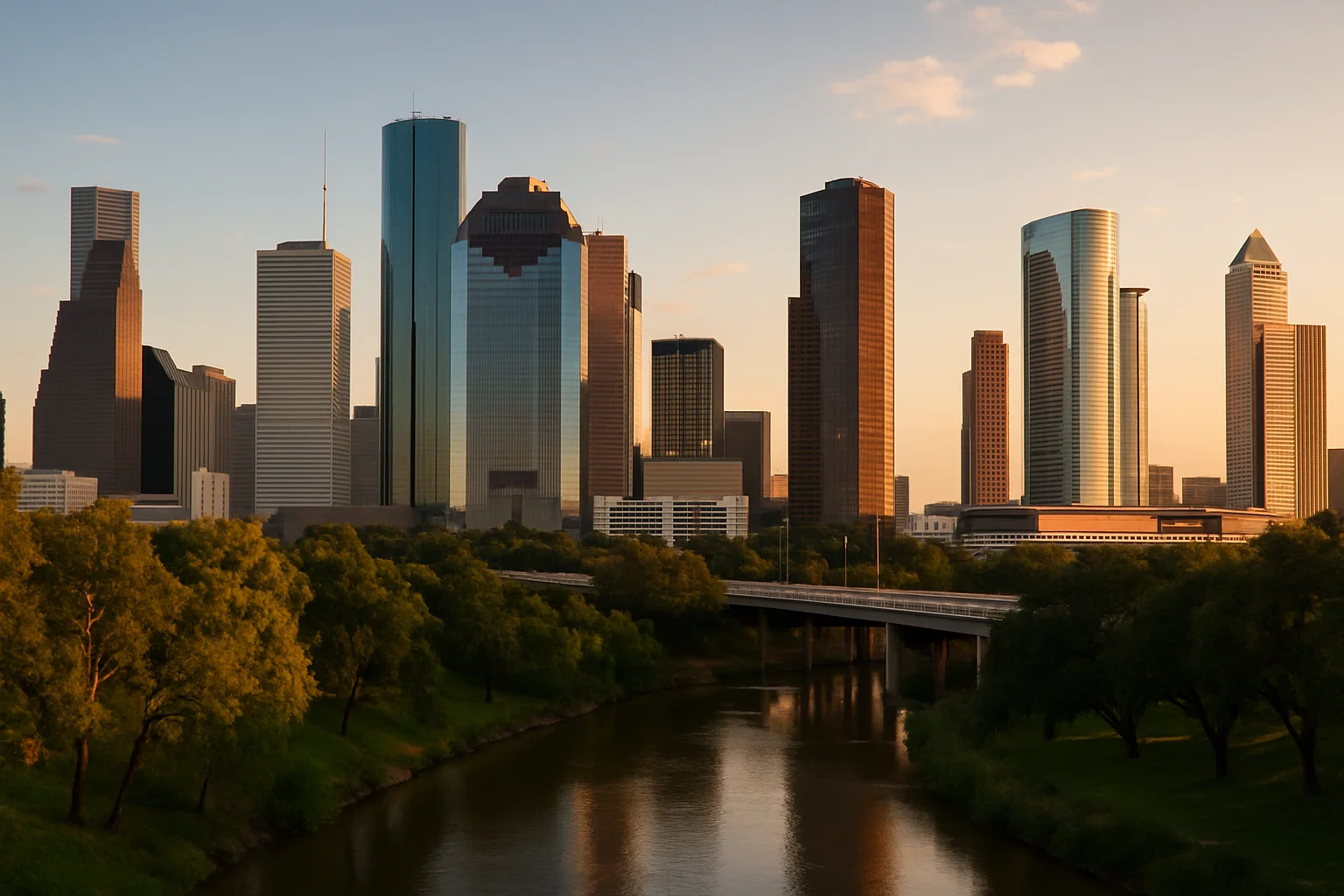
Houston is the 4th largest city in the United States and the undisputed energy capital of the world. The Port of Houston, extending 50 miles inland via the Ship Channel, is one of the busiest in the country and essential to the vast petrochemical industry along its banks.
The Texas Medical Center is the largest medical complex in the world, employing over 100,000 people. NASA's Johnson Space Center in Clear Lake, the mission control for every American human spaceflight program since the 1960s, defines Houston's identity as 'Space City.' Houston is also among the most ethnically diverse major cities in the United States, with no ethnic majority and residents from over 145 countries, a genuine global metropolis shaped as much by immigration as by oil.
Houston was founded in 1836 by the Allen brothers, New York land speculators who named the townsite for Sam Houston and sold swampy bayou lots as a future great city; it twice served as capital of the Republic of Texas. The Ship Channel was dredged deep inland after the 1900 Galveston hurricane, the deadliest natural disaster in U.S. history with 6,000 to 12,000 dead, convinced shippers to move off the exposed coast.
Houston has no zoning code, the only major U.S. city without one, which produces a sprawling, low-cost, fast-building landscape and repeated catastrophic flooding: Hurricane Harvey in 2017 dropped more than 50 inches of rain, flooded an estimated 300,000 structures, and caused around 125 billion dollars in damage. The metro passed 7 million people in the 2020s, and Harris County is now more than 40% Hispanic.
West Texas is enormous, sparsely populated, and unlike any other part of the state. The Trans-Pecos region, Chihuahuan Desert, Davis Mountains, and dramatic canyons, is the only true desert in Texas. Big Bend National Park, covering over 800,000 acres along the Rio Grande at the U.S.-Mexico border, is one of the most remote and spectacular national parks in the country.
Midland and Odessa sit at the heart of the Permian Basin, the most productive oil-producing region in the world, responsible for roughly 40% of U.S. domestic oil output. The Permian Basin has been called 'Saudi Arabia on the High Plains,' and its fortunes, boom and bust, driven by global crude prices, drive the entire state's fiscal health.
The Permian Basin covers about 75,000 square miles and had produced oil since the 1920s, but horizontal drilling and hydraulic fracturing after 2008 unlocked its stacked shale layers and roughly tripled its output; by 2019 the basin alone pumped more oil than any OPEC country except Saudi Arabia. The boom has strained Midland and Odessa with housing shortages, worker 'man camps,' and some of the worst traffic-fatality rates in the country.
Far to the south, the town of Marfa, once a cavalry post and cattle-shipping point, became an unlikely contemporary-art destination after the minimalist artist Donald Judd moved there in the 1970s and filled former army buildings with permanent installations. The McDonald Observatory in the Davis Mountains sits under some of the darkest skies in the continental United States, protected by a regional outdoor-lighting ordinance.
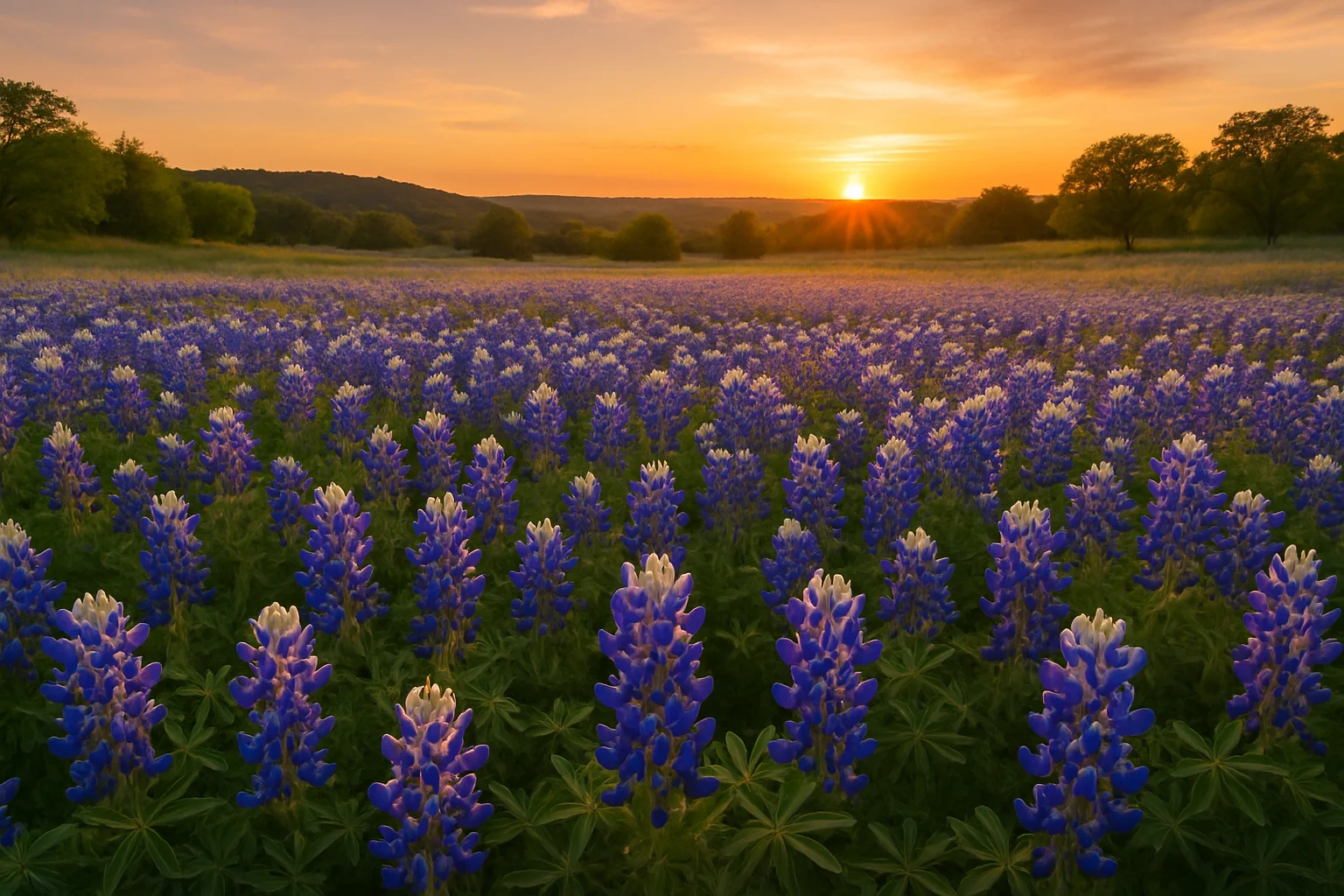
The Hill Country of Central Texas, limestone hills, crystal-clear spring-fed rivers, and fields of bluebonnets in spring, is one of the most beloved landscapes in the state. Austin, the state capital, has transformed over 30 years from a mid-sized college town into a technology powerhouse and the fastest-growing large city in America. The University of Texas at Austin anchors the city's intellectual life.
Tesla, Apple, Oracle, Dell, and hundreds of tech companies have located major operations here. South by Southwest (SXSW), the annual music, film, and technology festival, has become one of the most important events in American creative culture. Austin's politics, liberal, progressive, create a striking contrast with the rural conservatism of the surrounding Hill Country.
The Hill Country sits on the Balcones Escarpment, a fault line where the Edwards Plateau drops toward the coastal plain; the Edwards Aquifer beneath it feeds Barton Springs and much of San Antonio's water and is one of the most tightly regulated aquifers in the country. The thin limestone soils defeated cotton farming, so the region was settled heavily by German immigrants in the 1840s and 1850s, and towns like Fredericksburg and New Braunfels still hold Oktoberfest and keep a fading 'Texas German' dialect.
Austin's population roughly doubled between 2000 and 2020 to nearly a million, and the metro grew faster than almost any other; the University of Texas, one of the largest universities in the country, and state government were the anchors before tech arrived. Samsung is building a roughly 17-billion-dollar chip fab in nearby Taylor, and soaring home prices and property taxes have pushed longtime residents, and much of Austin's Black population, out of the urban core.
East Texas is the least stereotypically Texan part of Texas, pine forests, red clay soil, and a Deep South character that echoes neighboring Louisiana and Arkansas more than the western plains. This is where Texas petroleum wealth was born: Beaumont (near Spindletop), Longview, and Tyler sit atop the East Texas Oil Field, discovered in 1930 as one of the largest ever found in the U.S. The Big Thicket National Preserve protects a remarkable biological corridor where eastern forests, Gulf prairie, desert, and Appalachian upland species converge.
Nacogdoches, founded in 1779, is one of the oldest continuously inhabited towns in Texas. The region remains more culturally Southern than Western, a distinct identity within a state full of them.
The East Texas Oil Field, discovered near Kilgore in 1930 by wildcatter Columbus 'Dad' Joiner, was the largest ever found in the lower 48 at the time, roughly 140,000 acres, and it pumped so much crude that prices collapsed to about ten cents a barrel. The governor declared martial law and sent the National Guard to shut wells in, and the Texas Railroad Commission got the production-quota power it used to steady oil prices for decades.
The Piney Woods hold most of Texas's commercial timber, feeding paper mills and plywood plants, and the region was the center of the state's plantation cotton economy before the Civil War, which is why its Black population share is the highest in Texas. Nacogdoches was a repeated flashpoint of early Anglo unrest, the site of the 1832 Battle of Nacogdoches and the short-lived 1826 Fredonian Rebellion, the first attempt by Anglo colonists to break from Mexico.
South Texas is a land of brush country, citrus groves, and the great border cities that straddle the Rio Grande. The Rio Grande Valley, the southernmost tip of Texas, is one of the most culturally distinctive regions in the United States. Laredo is the largest inland port on the U.S.-Mexico border by cargo volume.
McAllen and Brownsville anchor a region that is among the fastest-growing in the state, driven by international trade, agriculture, and border crossings. San Antonio, just north of the brush country, is Texas's second-largest city, home to the Alamo, the River Walk, five military bases, and a deeply rooted Tejano culture that predates Texas independence by a century. More than anywhere else in Texas, South Texas reflects the binational, bilingual reality of the borderlands.
The Rio Grande has marked the international line since the 1848 Treaty of Guadalupe Hidalgo, but the river shifts course, and a 1963 treaty finally settled the century-old 'Chamizal' dispute over land El Paso gained when the channel moved. The Valley's four counties rank among the poorest in the country by income yet among the fastest-growing, about 90% of residents are Hispanic, and many live in unincorporated subdivisions called 'colonias' that long lacked water and sewer service.
SpaceX began building its Starship launch and factory site, 'Starbase,' at Boca Chica beach near Brownsville in 2014, and in 2025 its roughly 500 residents voted to incorporate it as a city. San Antonio was the largest town in Texas until about 1930 and is now the seventh-largest U.S. city, and its Spanish colonial missions, including the Alamo, were named a UNESCO World Heritage Site in 2015, the only one in Texas.

Economy
Texas has the second-largest economy of any U.S. state and an extraordinary range of sectors, from Permian Basin crude oil to Austin software startups to King Ranch cattle operations.
Texas produces roughly 40% of U.S. domestic oil from the Permian Basin alone; if Texas were a country, it would rank among the top ten oil-producing nations in the world. Natural gas production is equally dominant. But Texas is simultaneously the nation's leading wind energy producer, and one of its top solar markets, the same flat, windy, sun-drenched landscape that made agriculture and cattle ranching possible now makes Texas a paradoxical leader in renewable energy.
The state operates its own independent power grid (ERCOT), separate from the rest of the U.S. grid, a decision rooted in avoiding federal regulation. That independence was tested catastrophically by Winter Storm Uri in February 2021, when the grid failed for days and over 250 people died in the cold.
Texas has produced oil commercially since strikes at Corsicana in 1894 and Spindletop in 1901, and it created the Railroad Commission, which despite its name has regulated oil and gas since 1919 and effectively set world crude prices by rationing Texas output until OPEC took over that role in the early 1970s. The state still holds roughly a third of U.S. refining capacity, most of it along the Gulf Coast.
Wind passed coal in the Texas generation mix in the late 2010s, and the state now produces more than a quarter of all U.S. wind power, concentrated in West Texas and the Panhandle and carried east on transmission lines the legislature funded in 2005. Solar and battery storage have grown even faster since 2020, and ERCOT set record demand peaks nearly every summer of the 2020s as population and data-center load climbed.
Tesla relocated its global headquarters to Austin in 2021. Oracle, Hewlett Packard Enterprise, and Charles Schwab followed. Apple operates its second-largest campus outside Cupertino in Austin. Dell has been headquartered there for decades.
The appeal is consistent: no state income tax, a young and educated workforce from UT Austin, dramatically lower real estate costs than San Francisco, and a state government that is explicitly pro-business. Dallas-Fort Worth hosts AT&T's global headquarters and a major technology employment corridor. The tech boom has transformed Austin's housing market, median home prices quadrupled between 2012 and 2022, and created sharp debates about affordability, growth, and the character of the city.
The seed of Austin's tech industry was planted in 1983, when the research consortium MCC picked Austin over dozens of competing cities, followed by the chip consortium SEMATECH in 1988; both were lured with land and University of Texas endowment money and trained a generation of local engineers and executives. Dell was founded in a UT dorm room in 1984.
Texas has won a large share of federal CHIPS Act money: Samsung is building in Taylor, Texas Instruments is spending tens of billions on new fabs in Sherman and Richardson, and the state added its own multibillion-dollar semiconductor incentive fund in 2023. Critics note the tech influx has strained Austin's roads, water, and housing, and that several marquee relocations came with tax abatements and cash grants.
Texas agriculture is immense by any measure. The state has approximately 130 million acres of farmland, nearly twice California's total. It leads the nation in beef cattle numbers, cotton production, and total number of farms. The King Ranch in South Texas covers 825,000 acres, larger than the entire state of Rhode Island, and remains an operational cattle ranch that developed the Santa Gertrudis breed, the first American beef cattle breed.
The Rio Grande Valley produces vast quantities of citrus, vegetables, and grain sorghum. Despite oil wealth, ranching and farming are deeply embedded in Texas identity. The vaquero tradition, rooted in Spanish and Mexican horsemanship culture, is the source of much of what Americans think of as Western cowboy culture.
Texas leads the nation in cattle, about 12 million head, and in cotton, roughly 40% of the U.S. crop, most of it grown on the High Plains around Lubbock and irrigated from the shrinking Ogallala Aquifer. It is also first in hay, sheep, goats, and mohair, and a leading producer of pecans, the state tree, along with grapefruit, watermelons, and sorghum.
The state has about 230,000 farms and ranches, more than any other, and roughly 95% of its land is privately owned, the highest share in the West. Drought is the recurring threat: the 2011 drought, the worst single-year drought in Texas history, cost agriculture more than 7 billion dollars and killed a large share of the state cattle herd, which took years to rebuild.
Fort Hood near Killeen (named Fort Cavazos from 2023 to 2025) is the largest active-duty armored military installation in the world. Joint Base San Antonio is one of the largest military complexes in the United States, encompassing Lackland Air Force Base, Randolph Air Force Base, and Fort Sam Houston. NASA's Johnson Space Center in Houston has served as mission control for every American human spaceflight program since the 1960s, Mercury, Gemini, Apollo, Skylab, Space Shuttle, and the International Space Station.
Lockheed Martin, Raytheon, Boeing, and Bell Helicopter all have major Texas operations. Texas's congressional delegation is aggressive in protecting and expanding this footprint, and defense spending is a structural pillar of the state economy.
Texas ranks among the top states for defense spending, with major installations that also include Naval Air Station Corpus Christi, Dyess Air Force Base at Abilene, Sheppard at Wichita Falls, and Laughlin at Del Rio. Lockheed Martin's Fort Worth plant builds the F-35 and built the F-16 before it, and Bell, also in Fort Worth, is developing the Army's next assault aircraft, the V-280 Valor tiltrotor.
NASA's Johnson Space Center employs and contracts for tens of thousands of people in the Houston area and leads astronaut training and the International Space Station program; Houston is competing to keep a central role as NASA shifts toward commercial space stations and the Artemis Moon program. SpaceX runs Starship development at Boca Chica and rocket-engine testing at McGregor, near Waco.
Texas has no state income tax and no corporate income tax on most business entities, an enormous competitive advantage over California and New York. This has driven a wave of corporate relocations: Goldman Sachs, Charles Schwab, CBRE, Toyota North America, and dozens of other major firms have moved headquarters to Texas since 2015. Dallas is the second-largest insurance market in the United States after New York.
The Texas real estate market, while transformed by pandemic-era price increases, remains more affordable than coastal alternatives. The Texas Comptroller manages a Permanent School Fund and Permanent University Fund that together hold over $100 billion in assets, oil and gas royalties invested for public education over generations.
The absence of a personal income tax is locked in by a 2019 constitutional amendment requiring a statewide vote to impose one, so the state leans on sales tax and some of the highest property tax rates in the country to fund schools and local government. The comptroller's revenue forecast, driven heavily by oil and gas severance taxes, sets the ceiling for the Legislature's two-year budget.
The Permanent School Fund, seeded with public land at statehood and now the largest educational endowment in the country at over 50 billion dollars, and the Permanent University Fund, funded by royalties from 2.1 million acres of West Texas land, channel resource wealth into public education. In 2025 the New York Stock Exchange announced a Dallas-based 'NYSE Texas' and a separate group launched the 'Texas Stock Exchange,' both pitching a lighter-regulation alternative to New York.
Texas exports more goods than any other state, about $430 billion annually, and Mexico is its largest trading partner by a substantial margin. The 1,254 miles of U.S.-Mexico border Texas shares is the longest of any state, and the trade crossing at Laredo is the busiest inland port in the United States by cargo volume, processing roughly 20,000 commercial trucks per week. El Paso and Ciudad Juárez together form a binational metropolitan area of over 2.5 million people.
The maquiladora system along the border, manufacturing operations that move components back and forth across the line during production, integrates the two economies intimately. Texas's economic health is structurally tied to U.S.-Mexico relations, and trade disruptions at the border are felt immediately in both states.
Roughly a third of all U.S.-Mexico trade crosses through Texas, most of it by truck over Laredo's World Trade Bridge, which handles more freight than any other land port in the hemisphere; a large share is auto parts and finished vehicles shuttling between plants on both sides. The 1994 North American Free Trade Agreement and its 2020 successor, the USMCA, deepened that integration.
The border is also the state's sharpest political fault line. Texas spent roughly 11 billion dollars on 'Operation Lone Star' beginning in 2021, busing migrants to Democratic-led cities, stringing buoy barriers in the Rio Grande, and arresting crossers on state trespassing charges, which set up repeated court fights with the federal government over who controls immigration enforcement. Heavily Latino El Paso and the Rio Grande Valley, long reliably Democratic, shifted sharply toward Republicans in the 2020s.
How Texas's State Government Works
Texas operates under a constitution adopted in 1876, its fifth state constitution, that was deliberately designed to limit government power after the perceived excesses of Reconstruction. It is one of the longest and most amended state constitutions in the country, with over 500 amendments, because major policy changes often require constitutional amendments rather than legislation.
The Texas Legislature is bicameral, with a 31-member Senate and a 150-member House of Representatives. In a structural feature unique among large states, the legislature meets biennially, only in odd-numbered years, for a single 140-day session. This forces compressed decision-making and gives the governor significant leverage through the power to call special sessions for specific topics between regular sessions.
Texas Republicans have held every statewide elected office since 1994 and hold supermajorities in both legislative chambers. The state has voted Republican in every presidential election since 1980. However, its five largest cities, Houston, San Antonio, Dallas, Austin, and Fort Worth, all vote Democratic, creating a persistent state vs. city tension that drives much of the legislative agenda.
Governor of Texas
Current Governor
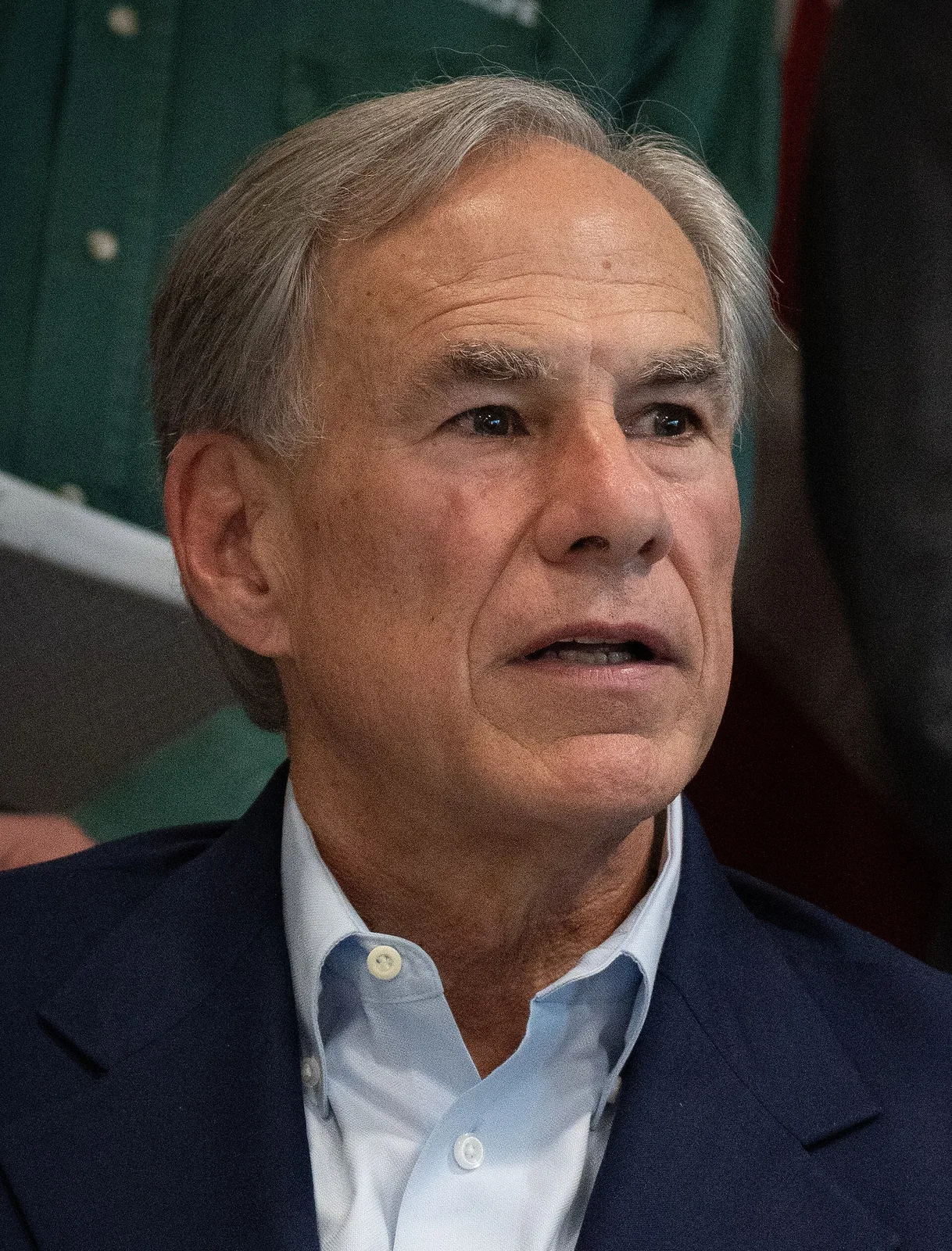
Greg Abbott
- Party
- Republican
- In Office Since
- January 2015
- Re-elected
- 2018, 2022
- Term Ends
- January 2027
- Prior Role
- Texas Attorney General (2002–2015)
- Background
- Former Texas Supreme Court Justice; lawyer; paraplegic since 1984 accident
Greg Abbott has served as governor since 2015 and is one of the most prominent Republican governors in the country. A former Texas Attorney General and Texas Supreme Court Justice, Abbott has made aggressive use of executive power, deploying National Guard troops to the southern border under "Operation Lone Star," busing migrants to northern Democratic cities, and suing the Biden administration dozens of times on immigration, environmental, and vaccine mandate issues. He has been paralyzed from the waist down since a tree fell on him during a jog in 1984 and has governed from a wheelchair throughout his political career.
Other Current State Officials
Lieutenant Governor
Dan Patrick
In office since January 2015. One of the most powerful figures in Texas government, the Lt. Governor presides over the Texas Senate, controls committee assignments, and sets the legislative agenda. Former radio talk show host and state senator. An influential voice in Republican Party politics nationally.
Attorney General
Ken Paxton
In office since January 2015. Paxton led the Texas AG's high-profile legal challenges against the Affordable Care Act and the 2020 election results. He was impeached by the Texas House in May 2023 over corruption allegations but acquitted by the Texas Senate in September 2023 and remains in office.
Comptroller of Public Accounts
Don Huffines (Acting)
Appointed by Governor Abbott and in office since August 1, 2026, after acting comptroller Kelly Hancock resigned; Glenn Hegar, comptroller from 2015, left in July 2025 to lead the Texas A&M University System. Huffines, a former state senator from Dallas, is the Republican nominee for the office in November 2026. The comptroller manages the state's treasury and revenue forecasting. Oversees collection of state taxes and the Permanent School Fund. His revenue estimates are critical to the biennial legislative budget process.
The Texas Legislature
Texas State Senate
- Seats: 31 members
- Terms: 4-year staggered terms (half elected every 2 years)
The upper chamber. Senators serve 4-year terms, with roughly half the seats on the ballot each election cycle. The Lt. Governor presides over the Senate with broad appointment and scheduling powers, a uniquely powerful position in Texas government. Republicans currently hold a supermajority.
Texas House of Representatives
- Seats: 150 members
- Terms: 2-year terms
The lower chamber and one of the largest state legislative bodies in the country. All 150 seats are on the ballot every two years. The House Speaker is elected by House members and wields significant control over the legislative agenda. Republicans hold a supermajority in the current House.
Texas's U.S. Senators
U.S. Senator
John Cornyn
One of the most senior Republican senators in Washington, Cornyn has represented Texas since 2002 and has served as Senate Majority Whip, the second-ranking Republican in the Senate. He is a former Texas Attorney General and Texas Supreme Court Justice, known for working across the aisle on criminal justice reform (he co-authored the First Step Act) and immigration policy. Cornyn is a reliable conservative but operates more in the legislative-insider mold than the media-confrontational style favored by his colleague Ted Cruz. He won re-election in 2020 by a comfortable margin. He lost the 2026 Republican primary to Attorney General Ken Paxton, so a new senator will take this seat in January 2027.
U.S. Senator
Ted Cruz
One of the most nationally prominent figures in the Republican Party, Cruz was elected in 2012 with strong Tea Party support and quickly became a leading conservative voice. He ran for president in 2016, finishing second to Donald Trump in the Republican primary after a bitter campaign. Cruz narrowly survived a 2018 challenge from Democrat Beto O'Rourke and won re-election in 2024 against Democrat Colin Allred by a comfortable margin. He has chaired the Senate Commerce Committee since January 2025 and also serves on the Judiciary Committee. A Harvard Law graduate and former solicitor general of Texas, Cruz argued nine cases before the U.S. Supreme Court before entering the Senate.
Texas Through the Years
From early settlement to the present day. Tap any era to read more.
By the 18th century, the Comanche had become the most powerful military force on the Southern Plains. The Comanche Empire, Comanchería, stretched from present-day Kansas to northern Mexico, and for over a century checked Spanish, Mexican, and American expansion into the Texas interior. Mounted Comanche warriors were among the most formidable cavalry in the world.
They acquired horses in the early 1700s and within a generation built an economy, culture, and military strategy around them. The Comanche controlled the vast bison herds of the Southern Plains, traded across the region, and raided deep into Mexico.
Their downfall came not from military defeat alone but from the systematic slaughter of the southern buffalo herd in the early 1870s, when hide hunters killed an estimated 3–4 million bison in a few years, destroying the foundation of Plains life. Quanah Parker, son of a Comanche chief and the white captive Cynthia Ann Parker, led the last free Comanche band and became a prominent advocate for his people after the end of the Red River War in 1875.
The Comanche were confined to a reservation at Lawton in Indian Territory, now Oklahoma, and the tribe today numbers about 17,000; there is no Comanche land in Texas. The state removed nearly all Native people by the 1870s, and its only reservations are the small Alabama-Coushatta near Livingston, the Tigua (Ysleta del Sur Pueblo) at El Paso, and the Kickapoo at Eagle Pass. The name 'Texas' itself comes from the Caddo word 'taysha,' meaning friend or ally, which the Spanish applied to the region.
Spanish explorers entered Texas as early as 1519, when Alonso Álvarez de Pineda mapped the Gulf Coast. Álvar Núñez Cabeza de Vaca spent eight years shipwrecked and captive among Texas Indigenous peoples beginning in 1528, producing the first detailed European account of the Texas interior. Spain established missions across Texas, including San Antonio de Béxar in 1718, which would grow into San Antonio, as a strategy to convert Native peoples and assert sovereignty against French pressure from Louisiana.
Spanish Texas was always a frontier outpost: sparsely populated, chronically underfunded, and perpetually raided by the Comanche from the north. By the time Mexico won independence from Spain in 1821, Spanish Texas had fewer than 4,000 non-Indigenous settlers, a thinly held frontier on the edge of an empire.
The five San Antonio missions, built between 1718 and 1731, were as much forts and farms as churches; Mission San Antonio de Valero, later called the Alamo, was secularized in 1793 and its fields distributed to the remaining Native residents. In the 1750s Spain pushed north to the San Saba mission near Menard, which Comanche and allied raiders destroyed in 1758, effectively ending Spanish ambitions on the southern plains.
A short-lived 1812-13 invasion known as the Gutierrez-Magee expedition, a mix of Mexican rebels and American adventurers, briefly declared Texas independent before Spanish royalists crushed it at the Battle of Medina in 1813, the bloodiest battle ever fought on Texas soil, with roughly 1,300 killed. Not long before Mexican independence, Moses Austin won a Spanish grant to settle 300 American families in Texas, and his son Stephen carried the plan out.
When Mexico won independence from Spain in 1821, Texas became part of the new nation as the province of Coahuila y Tejas. The Mexican government, desperate to populate its northern frontier and buffer U.S. expansion, invited American empresarios, land agents, to bring settlers. Stephen F. Austin led the most successful colonization effort, establishing Austin's Colony along the Brazos and Colorado rivers.
By 1835, American settlers outnumbered Tejano Mexicans by roughly 30,000 to 8,000. Tensions mounted over slavery (Mexico had abolished it), cultural differences, distance from the capital, and a new centralist constitution that abolished the federal structure Texans depended on. The charismatic and authoritarian Antonio López de Santa Anna assumed control of the Mexican government and abolished state legislatures, a move that sent Texas toward open rebellion.
Mexico's 1824 colonization law offered settlers cheap land and a decade free of taxes, and Austin's colony prospered on cotton and, despite Mexican law, slavery, which colonists preserved by converting enslaved people to lifelong 'indentured servants' after the 1829 abolition decree. The Law of April 6, 1830 tried to stop further American immigration and impose customs duties, convincing many colonists the relationship was breaking down.
A convention at San Felipe in 1833 sent Stephen Austin to Mexico City to request separate statehood for Texas within Mexico; instead he was jailed for over a year on suspicion of stirring revolt, and he came home in 1835 convinced war was unavoidable. The first shots came at Gonzales that October, when colonists refused to hand back a small cannon and flew a banner reading 'Come and Take It.'
The Texas Revolution began in October 1835 and ended decisively at the Battle of San Jacinto on April 21, 1836. The most famous episode was the Siege of the Alamo, a former Spanish mission in San Antonio, from February 23 to March 6, 1836. Santa Anna's force of several thousand besieged approximately 189 Texas defenders, who held for 13 days before being overwhelmed and killed.
Among the dead: James Bowie, Davy Crockett, and commander William Barret Travis, who wrote his famous 'Victory or Death' letter during the siege. 'Remember the Alamo!' became the battle cry at San Jacinto six weeks later, where Sam Houston routed Santa Anna's army in 18 minutes and captured Santa Anna himself.
The battle secured Texas independence and produced the Republic of Texas. The Alamo's story has been mythologized for nearly two centuries, and complicated by historians who note that many defenders owned enslaved people and that Tejanos who fought for Texas independence have largely been written out of the popular narrative.
Between the Alamo and San Jacinto came the Goliad Massacre: on March 27, 1836, Santa Anna ordered roughly 350 Texan prisoners who had surrendered at Coleto Creek to be executed, which hardened Texan resolve and turned international opinion against him. Sam Houston's army retreated east for weeks in the panicked civilian flight known as the 'Runaway Scrape' before turning to fight at San Jacinto, where 11 Texans were killed against about 650 of Santa Anna's men dead and 700 captured.
The Republic of Texas existed as a sovereign, independent nation for nine years after winning independence from Mexico. Sam Houston was elected its first president.
The republic was recognized by the United States, France, and Britain, but it was perpetually broke, perpetually threatened by Mexico (which never accepted Texas independence), and unable to defend its enormous claimed territory, which included parts of present-day New Mexico, Colorado, Kansas, Oklahoma, and Wyoming. The republic's debt was crushing, and annexation to the United States became a matter of survival.
Texas joined the Union in December 1845 with a unique provision: it retained the right to divide itself into up to five states at any time, a right that technically still exists and has never been exercised. The 'Republic of Texas' identity remains powerful in state culture, constantly invoked to explain the state's fierce independence, its resistance to federal authority, and its conviction that Texas is simply different from everywhere else.
The republic's capital moved several times before settling at the new town of Austin in 1839; when Sam Houston, in his second term, tried to relocate it during a Mexican raid scare in 1842, armed Austin residents blocked the wagons in what became known as the 'Archive War.' The republic ran up roughly 10 million dollars in debt, issued nearly worthless paper money nicknamed 'redbacks,' and saw its 1841 expedition to claim eastern New Mexico end with the entire party captured and marched to prison in Mexico City.
Texas seceded from the United States in February 1861, joining the Confederacy over the fierce opposition of Governor Sam Houston, who was removed from office when he refused to swear allegiance to the Confederate government. Texas contributed significant troops to the Confederate Army, and the last battle of the Civil War was fought at Palmito Ranch near Brownsville on May 12–13, 1865, over a month after Lee's surrender at Appomattox. On June 19, 1865, Union troops arrived in Galveston and announced that the war was over and that enslaved people were free.
This date, Juneteenth, became the most important celebration of Black emancipation in American history, a Texas-born holiday that was declared a federal holiday in 2021. Reconstruction in Texas was bitter and relatively brief; federal troops withdrew by 1870, and Democrats reasserted control that would last until the 1960s.
Texas had about 182,000 enslaved people in 1860, roughly 30% of its population, and the number grew during the war as slaveholders from Louisiana, Arkansas, and Mississippi sent people to Texas for safekeeping beyond Union reach. Little fighting reached Texas soil; the state's main role was supplying cattle and cotton, the latter run out through Mexican ports to slip past the blockade.
General Gordon Granger's General Order No. 3, read in Galveston on June 19, 1865, freed roughly 250,000 people, the last large enslaved population in the Confederacy. Freedpeople began marking the day within a year and bought land such as Houston's Emancipation Park in 1872 to hold the celebration; Texas made Juneteenth a state holiday in 1980, the first state to do so.
On January 10, 1901, a drilling crew near Beaumont struck oil at a depth of 1,139 feet, and the resulting gusher, the Lucas Geyser at Spindletop Hill, shot petroleum 150 feet into the air for nine days before it could be capped. The well produced 100,000 barrels per day, more than all other oil wells in the United States combined at that moment.
Within months, Spindletop field was surrounded by thousands of wells. The companies formed by Spindletop investors became Gulf Oil and Texaco, two of the 'Seven Sisters' that would dominate global petroleum for the rest of the century.
Cheap Texas oil fueled the American automobile revolution, created the synthetic chemicals that made plastics and nylon possible, and gave the United States its strategic petroleum independence through both World Wars. The wildcatter culture it launched, drilling on speculation, boom-town economies, fortunes made and lost overnight, shaped Texas identity through most of the 20th century.
Spindletop also fed a wave of fraud: 'Swindletop' stock schemes sold shares in wells nowhere near the field, and the shanty town of Gladys City that sprang up around it burned repeatedly. The shallow flush production was largely exhausted by 1902, though a deeper layer found in 1925 revived the field, and the salt dome site is now a Lamar University museum with a reconstructed boomtown.
On November 22, 1963, President John F. Kennedy was assassinated as his motorcade passed through Dealey Plaza in Dallas. Kennedy was shot twice and died at Parkland Memorial Hospital at 1:00 PM.
Vice President Lyndon Baines Johnson, a Texas senator who had served as Senate Majority Leader before becoming VP, was sworn in as president aboard Air Force One at Dallas Love Field, with Jacqueline Kennedy standing beside him in her blood-stained pink suit. Lee Harvey Oswald was arrested that afternoon and identified as the shooter; two days later, Oswald was shot and killed by Dallas nightclub owner Jack Ruby in the basement of Dallas Police Headquarters on live television.
The Warren Commission concluded Oswald acted alone, but a majority of Americans have never accepted that finding. Dallas spent decades suppressing commemoration of the assassination before embracing it through the Sixth Floor Museum at the Texas School Book Depository, one of the most visited historic sites in the country.
The House Select Committee on Assassinations concluded in 1979 that Kennedy was 'probably assassinated as a result of a conspiracy,' based largely on acoustic evidence that was later discredited, leaving the official record contradictory. A 1992 law ordered the remaining sealed federal files released, and most were made public between 2017 and 2025. Governor John Connally, riding in the same car, was seriously wounded, and Dallas police officer J.D. Tippit was shot dead by Oswald about 45 minutes after the president.
Texas's Defining Moments in American History
These are the events that didn't just shape Texas, they changed the nation.
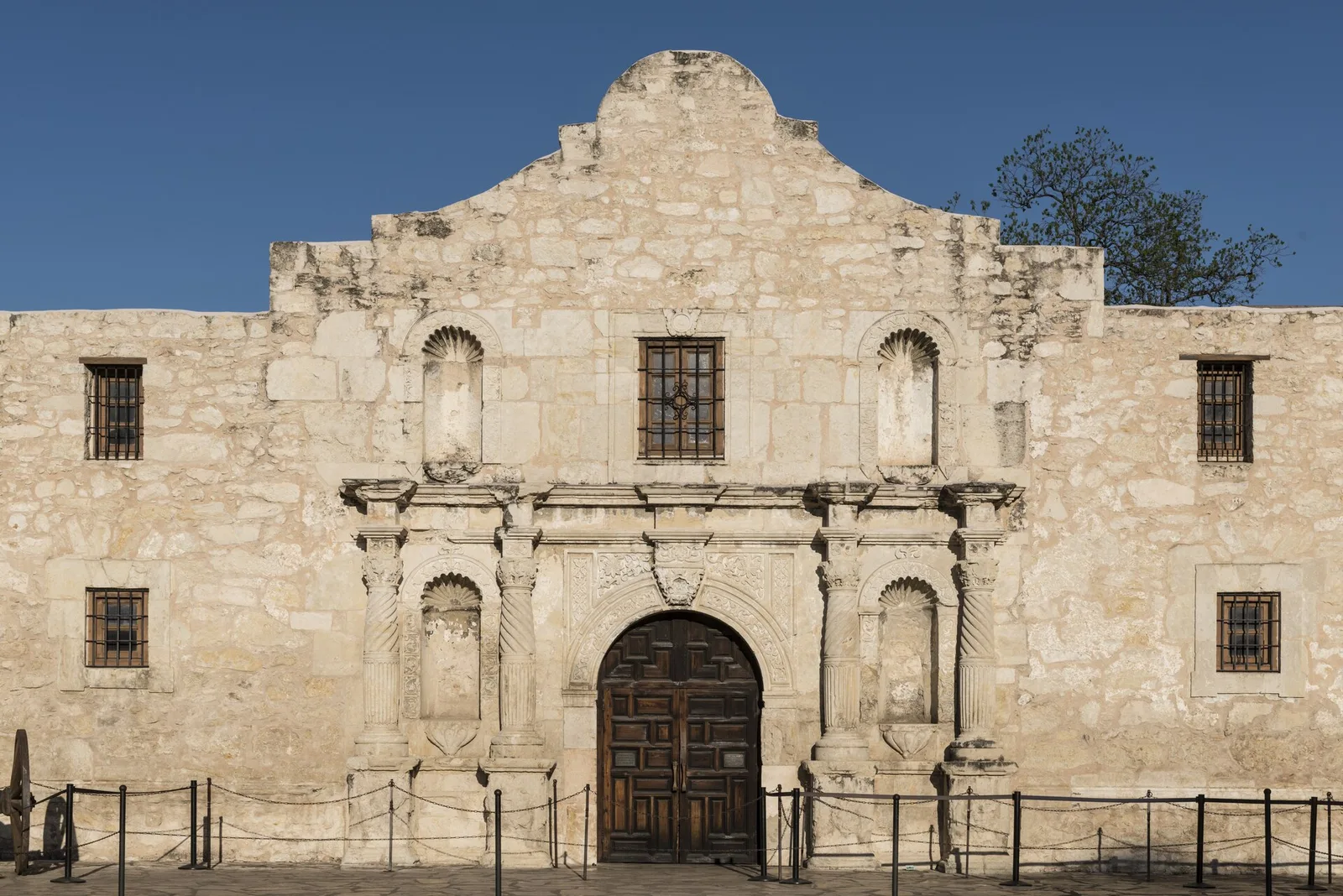
The Battle of the Alamo (February 23 – March 6, 1836) is one of the most mythologized events in American history. Approximately 189 Texas volunteers held a former Spanish mission in San Antonio against a Mexican army of several thousand for thirteen days, knowing relief was unlikely and surrender terms were death.
Every defender was killed. 'Remember the Alamo!' became the battle cry at San Jacinto six weeks later, where Sam Houston defeated Santa Anna in 18 minutes.
The Alamo story has been told thousands of times, in films, books, and cultural memory, but recent scholarship has complicated the dominant narrative: some defenders owned enslaved people; the Texas Revolution's causes included the protection of slavery; and Tejanos who fought for Texas independence have largely been omitted from the popular story. The Alamo itself is the most visited historic site in Texas and a symbol so central to the state's identity that legislation in the 2020s addressed its management, ownership, and interpretation.
Most of the 1836 defenders were recent arrivals from the United States and Europe rather than native Texans, and among them were Tejano volunteers led by Juan Seguin, who was away carrying a message when the mission fell and who later served as mayor of San Antonio before anti-Mexican hostility drove him into exile. The Daughters of the Republic of Texas ran the site from 1905 until the state took control in 2015, and a long-running roughly 400-million-dollar redevelopment plan has fought over whether to move the 1930s Cenotaph and how to tell the story of the site's earlier life as a Native and Spanish settlement.
The Spindletop gusher of January 10, 1901 did not just make Texas rich, it transformed the global energy economy. Before Spindletop, the United States produced about 64 million barrels of oil per year, mostly from Pennsylvania fields. Within months of the discovery, the Spindletop field alone was producing nearly that much.
The companies formed by Spindletop investors became Texaco and Gulf Oil, two of the 'Seven Sisters' that dominated global petroleum through most of the 20th century. Cheap Texas oil fueled the automobile revolution, enabled the synthetic chemistry revolution, and provided U.S. strategic petroleum independence in both World Wars.
The wildcatter culture, drilling on speculation, fortunes won and lost overnight, created the Texas personality: self-reliant, risk-tolerant, contemptuous of caution, and deeply suspicious of government. No single event did more to shape what Texas is.
Spindletop's real technical breakthrough was rotary drilling through a mud-filled borehole, a method the Hamill brothers adapted that let the bit punch through the loose Gulf Coast sand and clay that had stopped older cable-tool rigs; within a decade rotary drilling was standard around the world. Beaumont's population roughly tripled in months, from about 10,000 to 30,000, in one of the first great American oil boomtowns.
The assassination of President Kennedy in Dallas created a wound that the city spent decades trying to heal. Dallas in 1963 had a reputation for right-wing extremism, Adlai Stevenson had been physically attacked there just weeks before the assassination, and the national sense that Dallas bore some moral responsibility for Kennedy's death was intense.
The city suppressed commemoration for years; there was no official city memorial to Kennedy for nearly a decade. The transformation came gradually: the Sixth Floor Museum at the Texas School Book Depository opened in 1989 and became one of the most thoughtfully designed historical museums in the country, drawing millions.
Today Dealey Plaza is a site of genuine historical pilgrimage. The assassination also brought Lyndon Johnson to the presidency, directly producing the Civil Rights Act of 1964 and the Voting Rights Act of 1965, a profound historical irony.
Kennedy had come to Texas to patch up a feud in the state Democratic Party ahead of the 1964 election, and Governor Connally had resisted the Dallas stop as too hostile. Johnson's sudden elevation put a Southerner in the White House just as civil-rights legislation had stalled; he invoked Kennedy's memory to force the Civil Rights Act through in 1964, won a landslide that November, then signed the Voting Rights Act and launched the Great Society before Vietnam consumed his presidency.
In 1961, NASA chose Houston's Clear Lake area as the site of the Manned Spacecraft Center, today the Johnson Space Center, to direct U.S. human spaceflight. Houston became mission control for every American human spaceflight program: Mercury, Gemini, Apollo, Skylab, the Space Shuttle, and the International Space Station.
'Houston, we have a problem', adapted from Apollo 13 astronaut Jack Swigert's actual words 'Houston, we've had a problem', entered the English language as a universal shorthand for crisis. Houston controlled the Apollo 11 Moon landing in 1969, the Apollo 13 emergency in 1970, and all 135 Space Shuttle missions.
The phrase transformed Houston's identity from oil town to 'Space City.' The Johnson Space Center remains NASA's primary center for human spaceflight training and mission operations, and Houston's space identity is one of the few things the city's deeply divided political factions agree on celebrating.
Houston won the center largely through political muscle: Vice President Johnson chaired the national space council, and Representative Albert Thomas of Houston chaired the House subcommittee that funded NASA, while Rice University donated the Clear Lake land. The complex was renamed for Johnson after his death in 1973. Big layoffs after Apollo, and again after the Space Shuttle's 2011 retirement, hit the Clear Lake economy hard, and the Artemis Moon program and commercial space stations are now the center's bid to stay central to human spaceflight.
Notable Texans
Lyndon B. Johnson
36th President of the United States who signed the Civil Rights Act and Great Society legislation, born in Stonewall
Sam Houston
First President of the Republic of Texas and hero of San Jacinto, later served as Governor
Buddy Holly
Rock and roll pioneer who influenced generations of musicians, born in Lubbock
Howard Hughes
Eccentric aviation pioneer, filmmaker, and industrialist, born in Humble
Audie Murphy
Most decorated American combat soldier of WWII and later a Hollywood actor, born in Kingston
Lady Bird Johnson
First Lady known for highway beautification and conservation, born in Karnack
State Symbols & Quick Facts
| Nickname | "The Lone Star State" |
| Capital | Austin |
| Largest City | Houston |
| Statehood | December 29, 1845 (28th state) |
| Population | ~31.3 million (2024 est.) |
| Area | 268,596 sq mi, 2nd largest state |
| Motto | "Friendship" |
| State Bird | Northern Mockingbird |
| State Flower | Bluebonnet |
| State Tree | Pecan |
| State Large Mammal | Longhorn |
| State Small Mammal | Armadillo |
| State Fish | Guadalupe Bass |
| State Insect | Monarch Butterfly |
| State Song | "Texas, Our Texas" |
| Time Zone | Central (most of state); Mountain (El Paso/Trans-Pecos) |
| Borders | New Mexico (NW), Oklahoma (N), Arkansas (NE), Louisiana (E), Gulf of Mexico (SE), Mexico (S/SW) |
Did You Know?
Texas was an independent republic from 1836 to 1845, nine full years as a sovereign nation recognized by the United States, France, and Britain. When it negotiated annexation to the United States, Texas retained a unique provision: the right to divide itself into up to five states at any time. That provision still technically exists in the annexation treaty and has never been exercised.
'Don't Mess With Texas' is one of the most recognized slogans in the country, but it started as an anti-littering campaign by the Texas Department of Transportation in 1985, featuring Texas musicians and athletes. It was spectacularly successful: highway litter dropped 72% in the first few years. The slogan has since been absorbed into Texas identity so completely that most people assume it was always a statement about toughness rather than roadside garbage.
Texas is so large that El Paso, in the far west, is closer to Los Angeles than it is to Beaumont, in the far east. The state stretches 801 miles from east to west and 773 miles from north to south. If Texas were a country, it would be the 39th largest nation on earth, larger than every country in Europe.
Texas has no state income tax, written into the Texas Constitution. The state funds itself primarily through property and sales taxes, which are among the highest in the country. In 2021 and 2022, Texas received more corporate headquarters relocations than any other state. Tesla, Oracle, Hewlett Packard Enterprise, and dozens of major corporations moved from California to Texas over the past decade.
The King Ranch in South Texas covers 825,000 acres, larger than the entire state of Rhode Island, and remains an operational cattle operation. Founded by Richard King in 1853, it developed the Santa Gertrudis breed, the first American beef cattle breed, by crossing Brahman and Shorthorn cattle. It also operates a thoroughbred horse racing program that has produced Kentucky Derby winners.
Quick Facts and Common Questions
Short answers to the questions people most often ask about Texas: its abbreviation, its years as a republic, its capital, and its place in Congress.
Texas's two-letter postal abbreviation is TX. The U.S. Census Bureau places it in the South region, in the West South Central division. About 29.1 million people lived there in the 2020 census, the second most of any state, and it is the second-largest state by area after Alaska.
Yes. Texas declared independence from Mexico on March 2, 1836. After the fall of the Alamo on March 6, Texan forces under Sam Houston defeated the Mexican army at San Jacinto on April 21, 1836, and the Republic of Texas existed as an independent nation for nearly ten years, recognized by the United States, France, and Great Britain, among others.
Texas became the 28th state on December 29, 1845. Congress approved annexation by a joint resolution in early 1845, and Texas voters accepted the terms that fall. Texas kept ownership of its public lands, which is why most land in Texas is privately owned rather than federal.
The name comes from the Caddo word "táysha," meaning "friends" or "allies." Spanish explorers wrote it as "Tejas" and used it for the Caddo people and later the region. "Friendship" became the state motto in 1930.
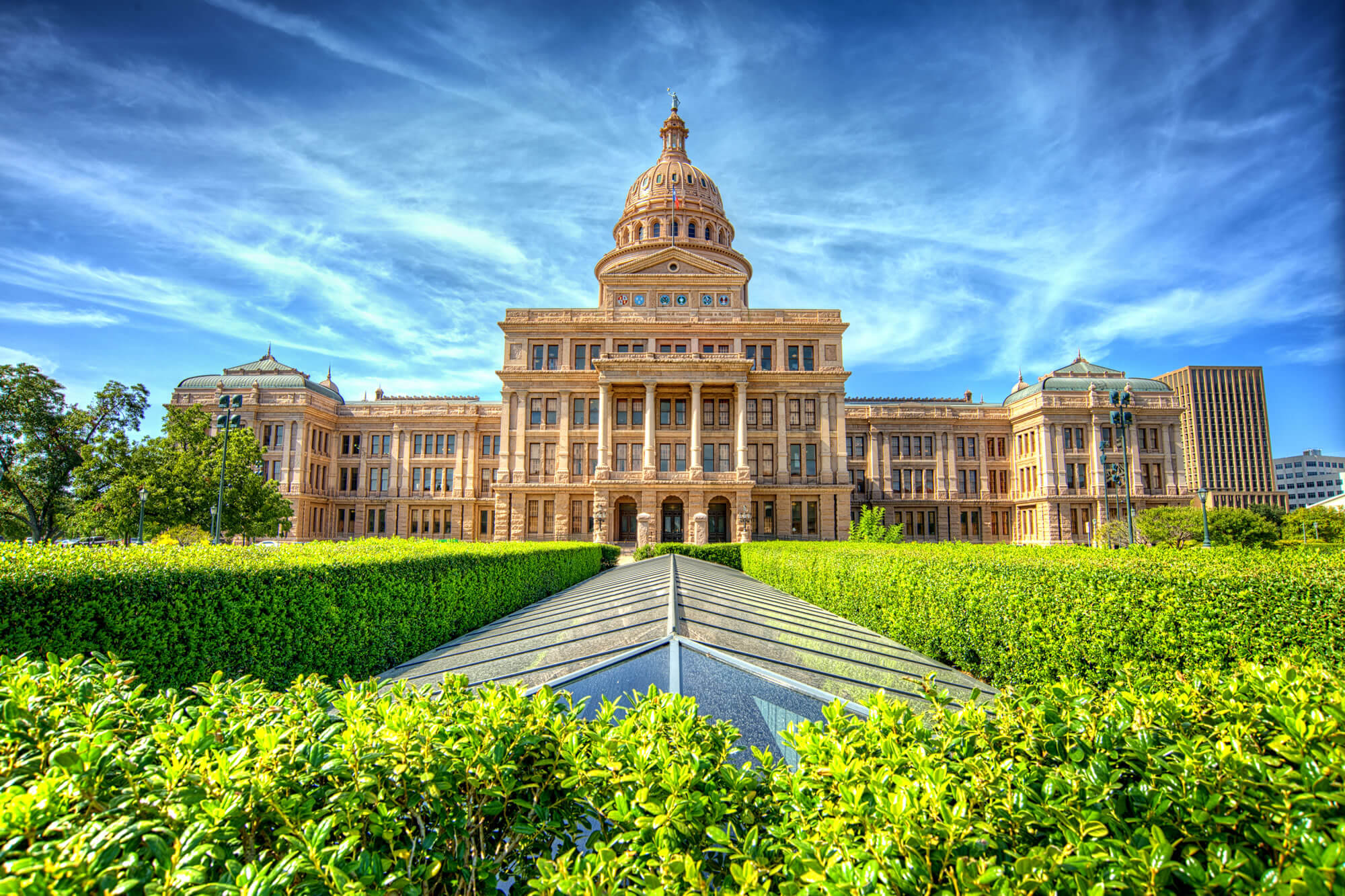
Austin has been the capital since 1839, when the Republic of Texas chose a site on the Colorado River. During the republic years the government also met in places including Houston and Washington-on-the-Brazos. The State Capitol, completed in 1888, is taller than the U.S. Capitol in Washington.
Texas borders four states: New Mexico to the west, Oklahoma to the north, Arkansas to the northeast, and Louisiana to the east. To the south and southwest, along the Rio Grande, it borders the Mexican states of Chihuahua, Coahuila, Nuevo León, and Tamaulipas, and its southeastern coast lies on the Gulf of Mexico.
The 1845 joint resolution annexing Texas says up to four additional states may be formed from its territory with the consent of Texas. Any new state would still need the approval of Congress under the U.S. Constitution, and Texas has never used the provision.
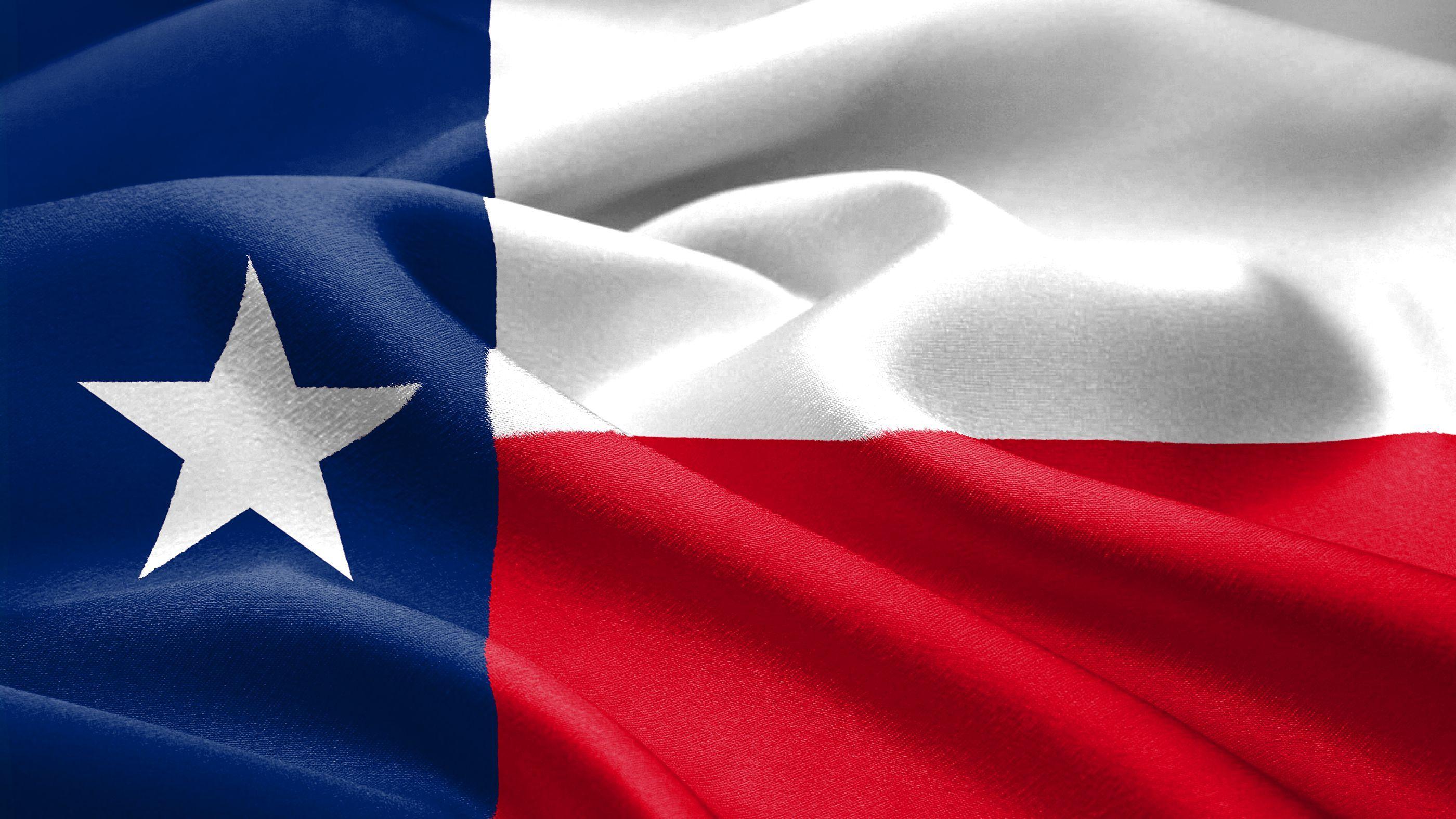
Texas is known as "The Lone Star State," for the single star on its flag, a symbol of its time as an independent republic. Its state bird is the northern mockingbird, its flower is the bluebonnet, its tree is the pecan, and its large mammal is the longhorn.
Based on the 2020 census, Texas gained two seats, the most of any state, and now has 38 in the U.S. House of Representatives. That gives it 40 votes in the Electoral College, second only to California.
Sources & Further Reading
Big Bend National Park
Where the Rio Grande Curves Through a Desert Wilderness Larger Than the State of Rhode Island
About Big Bend National Park
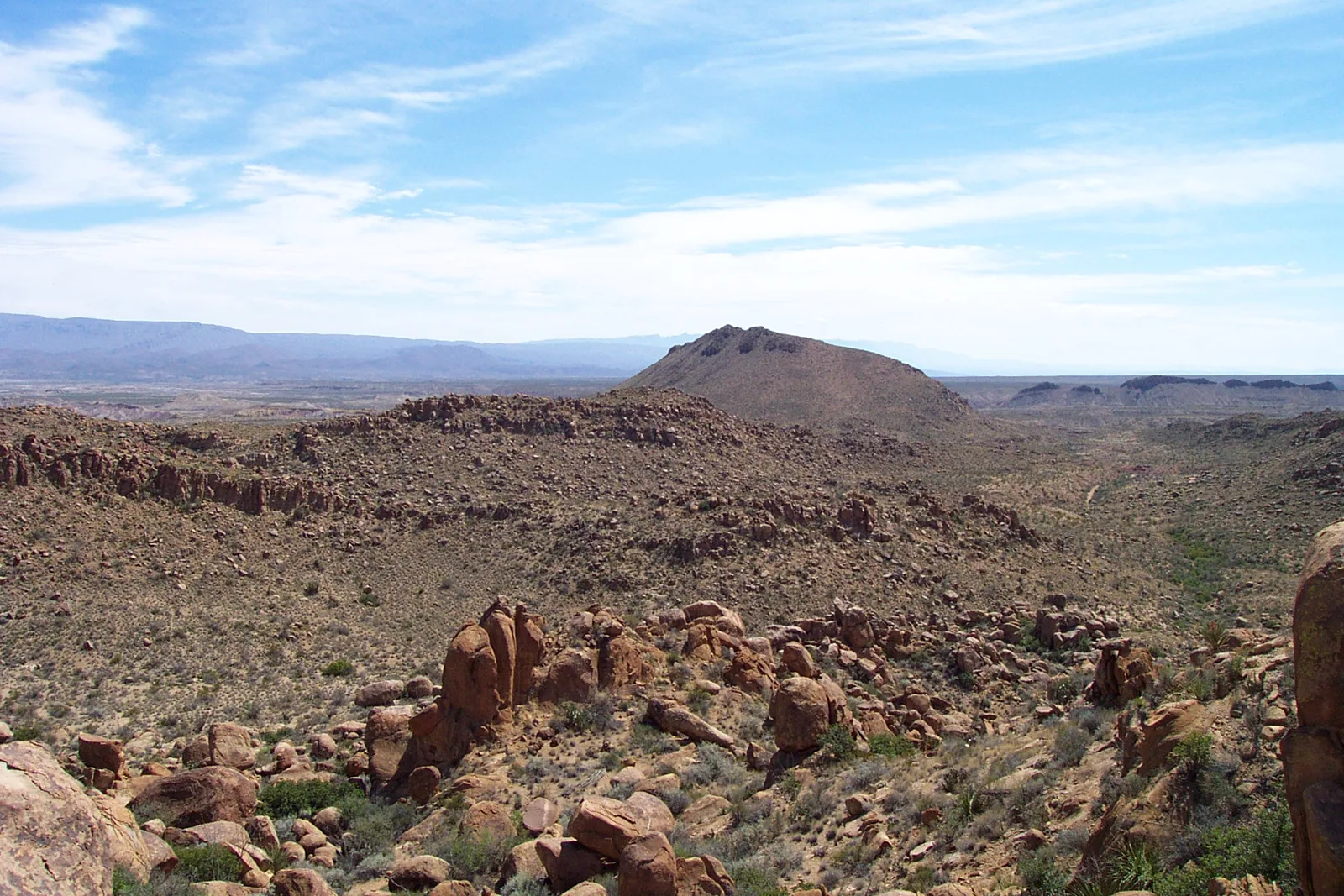
Big Bend National Park covers 801,163 acres of the Chihuahuan Desert in far southwest Texas, where the Rio Grande turns sharply northeast in the 'big bend' that names the region. It is one of the largest and least-visited national parks in the lower 48, drawing about 500,000 people a year to a place more than three hours' drive from the nearest interstate.
The park stacks three environments: hot desert lowlands below about 3,500 feet, a green river corridor along 118 miles of the Rio Grande, and the Chisos Mountains, a forested sky island that tops out at 7,832 feet on Emory Peak. That range of elevation and habitat gives the park exceptional biological variety.
More than 450 bird species have been recorded here, the most of any US national park, along with about 75 mammal, 56 reptile, and 1,200 plant species, some found nowhere else. The Chisos alone hold plants and animals whose nearest relatives are hundreds of miles away in the mountains of Mexico or the Rockies.
The park was authorized in 1935, assembled from ranch land bought with state funds and private donations, and established in 1944; Mexico set aside adjoining protected land, and the two countries have discussed a joint international park for decades. Big Bend is an International Biosphere Reserve and a certified International Dark Sky Park.
- Designation
- National Park, International Biosphere Reserve
- Location
- Marathon and Terlingua, Texas, Big Bend region of southwest Texas
- Established
- Established 1944
- Annual Visitors
- ~500,000
Key Features
The Chihuahuan Desert is the largest hot desert in North America, spanning parts of Texas, New Mexico, and five Mexican states, and Big Bend protects one of its most intact stretches. Most of the park lies within it, below roughly 3,500 feet.
It is a high desert, sitting at 1,800 to 3,500 feet, with most of its 10 or so inches of annual rain falling in late-summer thunderstorms. Signature plants include lechuguilla (an agave found only in this desert and used to define it), creosote bush, ocotillo, candelilla, and more than 60 species of cactus.
Desert wildlife adapted to heat and drought includes javelina, black-tailed jackrabbit, kangaroo rats, roadrunners, the Texas horned lizard, and a rich reptile fauna. Peregrine falcons nest on the cliffs, and the park is a stronghold for them.
After good rains the desert can bloom spectacularly, with the Big Bend bluebonnet reaching three feet or more, and the park's fossil beds show the same basin held a lush coastal plain 70 million years ago, when huge crocodilians and the giant pterosaur Quetzalcoatlus, with a wingspan near 35 feet, lived here.
The Rio Grande has cut three deep canyons along the park's southern edge as uplifted blocks of limestone rose across its path: Santa Elena in the west, Mariscal at the southern tip of the bend, and Boquillas in the east. Their walls stand up to about 1,500 feet above the water.
Santa Elena Canyon is the most visited: a short trail leads into its mouth, where the sheer Mesa de Anguila cliffs in the United States and the Sierra Ponce in Mexico rise straight from the river. Boquillas Canyon is the longest, running about 20 miles.
The river corridor is a thin ribbon of cottonwood, willow, seepwillow, and cane that supports beaver, turtles, the Rio Grande leopard frog, and heavy bird use, in sharp contrast to the desert a few feet up the bank. The endangered Big Bend gambusia, a tiny fish, survives only in a spring-fed pond near Rio Grande Village.
Running the canyons by raft or canoe is a premier wilderness river trip, with everything from flatwater to Class IV rapids depending on flow. Because the river is the international boundary, boaters need permits and must not camp or land on the Mexican side without authorization.
The Chisos Mountains are the only mountain range entirely contained within a US national park. They are the eroded remains of volcanic activity 30 to 40 million years ago, and they rise as an island of cool, moist forest more than 3,000 feet above the surrounding desert.
Higher rainfall and lower temperatures let ponderosa pine, Douglas fir, quaking aspen, bigtooth maple, and Arizona cypress grow in sheltered canyons like Boot Canyon, species whose main ranges lie far to the north and west and that are relicts left behind as the climate warmed after the last ice age.
The Chisos are the only US home of the Colima warbler, a small gray-and-yellow bird that nests in the oak-pine zone from April to September and draws birders from around the world; roughly 30 pairs breed in the mountains.
The range shelters most of the park's black bears, which recolonized on their own from Mexico in the 1980s after being wiped out locally, along with mountain lions, the small Carmen Mountains white-tailed deer, and the endemic Chisos Mountains hedgehog cactus. The Chisos Basin, a bowl at 5,400 feet ringed by peaks, holds the park's only mountain lodge and campground.
Big Bend has among the darkest measured night skies in the lower 48 states. The nearest cities of any size, El Paso and Midland-Odessa, are more than 200 miles away, and the whole Trans-Pecos region is thinly populated.
The International Dark-Sky Association certified the park as a Dark Sky Park in 2012, and in 2024 the surrounding Greater Big Bend region, including the park, Big Bend Ranch State Park, and land across the river in Mexico, was designated the world's largest International Dark Sky Reserve.
On a clear moonless night the Milky Way casts faint shadows, and observers can see stars to about magnitude 7, past normal naked-eye limits. Zodiacal light, airglow, and meteor showers are routinely visible.
The park runs regular ranger star parties and hosts astronomy events with the nearby McDonald Observatory, has converted its own lighting to shielded warm-color fixtures, and works with gateway towns like Terlingua and Marathon to hold regional light pollution down.
Indigenous Heritage
Chisos and Mescalero Apache, Comanche, and earlier peoples
People have lived in the Big Bend for at least 10,000 years; rock shelters and open sites in the park hold projectile points, grinding stones, pictographs, and plant-fiber artifacts spanning that whole span, and farming villages along the river date to roughly 1500, growing corn, beans, and squash.
The Chisos, a small group for whom the mountains are named, occupied the area at Spanish contact and were largely gone, absorbed, missionized, or killed, by 1700. The Mescalero Apache then used the mountains as hunting territory and refuge.
The Comanche drove a major raiding route, the Comanche Trail, across the region toward Mexico, crossing the river near what is now the park each fall by the light of the 'Comanche Moon.' The US Army and Texas Rangers had pushed the Apache and Comanche out by the 1880s, opening the country to ranching.
The Mescalero Apache Tribe is headquartered in New Mexico, where they maintain a reservation. No federally recognized tribe is headquartered in the Big Bend region today, though several tribes maintain cultural and historical connections to the area. The park interprets the Indigenous history of the region at the visitor centers.
Things To Do
Santa Elena Canyon Trail
The Santa Elena Canyon Trail is a 1.7-mile round trip at the western end of the park that leads into the mouth of the most dramatic of the three canyons, where limestone walls climb about 1,500 feet straight from the Rio Grande.
The route first crosses Terlingua Creek, often a mud flat but sometimes knee-deep or higher after rain, then climbs a set of concrete-and-rock switchbacks onto a ledge and descends to the riverbank inside the canyon, ending where the walls pinch in.
The canyon is cut through the Mesa de Anguila, an uplifted block along the Terlingua fault; the cliff on the right bank is in Mexico and the one on the left is in the United States, with the river as the line between them.
Going deeper into the canyon requires a float trip and a river permit. Flash floods on Terlingua Creek and the river can rise fast and have trapped hikers, so the park closes or posts warnings on the trail when storms are upstream.
Lost Mine Trail
The Lost Mine Trail climbs 4.8 miles round trip and about 1,100 feet from a trailhead on the Chisos Basin Road, rising through pinyon-juniper-oak woodland to a ridge with long views into Mexico and across the desert.
It is self-guided with a numbered brochure keyed to plants and geology; early stops look across Green Gulch to Casa Grande, a 7,325-foot volcanic butte that is the park's most recognizable peak, and the ridge-top finish overlooks Juniper Canyon and the Sierra del Carmen.
The name comes from a legend of a rich Spanish colonial silver mine worked with forced Native labor and hidden when the workers revolted, said to be visible from Lost Mine Peak at a certain time of day. No such mine has ever been found.
Parking at the trailhead is very limited and fills by early morning in cool months; the park asks hikers to start early or use the Chisos Basin as a base, and Colima warblers are among the birds seen in the oak zone in late spring and summer.
Rio Grande Float Trips
Floating the Rio Grande through Big Bend is one of the more remote multi-day river trips in the country. The classic runs are Santa Elena Canyon (about 20 miles, with the Class IV Rock Slide rapid), the shorter Mariscal Canyon, and Boquillas Canyon (about 33 miles of mostly calm water), plus the long Lower Canyons downstream of the park.
All overnight trips need a backcountry permit from the park, and flow is the limiting factor: in dry years the upper river can be too low to float, while the Rio Conchos, joining from Mexico near Presidio, provides most of the water below that point.
Several outfitters in Terlingua and Study Butte run guided trips and rent gear and shuttles. Because the river is the border, boaters must carry passports, may not set foot on the Mexican bank except at the legal Boquillas crossing, and should file a float plan.
The canyons have no cell service and few exit points, so parties must be self-sufficient and ready for self-rescue, heat, cold nights, and the chance of a fast rise from upstream rain.
Window Trail and Chisos Basin
The Window Trail runs 5.6 miles round trip from the Chisos Basin, descending about 800 feet through Oak Creek Canyon to 'the Window,' the notch where all the basin's drainage funnels toward a smooth stone pour-off with a sheer drop to the desert below.
The framed view through the Window toward the western desert, especially at sunset, is one of the park's iconic scenes; it can also be seen from a distance on the short, paved Window View Trail near the trailhead.
Because the trail loses elevation on the way out and gains it coming back, the climb home is in the afternoon heat; the park advises carrying plenty of water and warns of the slick rock at the pour-off edge, where there is no railing and a long fall.
The Chisos Basin itself, at about 5,400 feet, runs 10 to 20 degrees cooler than the desert floor and holds the Chisos Mountains Lodge, a campground, a store, and the trailheads for most of the mountain hikes; its aging facilities are slated for a major redevelopment.
Conservation and Challenges
Water Scarcity and Rio Grande Flow
By the time the Rio Grande reaches Big Bend it has been almost entirely consumed. Upstream dams and diversions in Colorado, New Mexico, and around El Paso take nearly all of its native flow, and for a stretch above the park the channel is often dry, a reach known as the 'Forgotten River.'
Most of the water in the park comes from Mexico's Rio Conchos, which joins at Presidio under a 1944 US-Mexico treaty that allocates Rio Grande water between the two countries. Mexican drought and its own water debts to the United States make that supply uncertain.
Low flows let sediment and invasive plants build up, narrowing the channel into a 'vegetation wall' of cane and saltcedar that slows the river further and worsens flooding when big releases do come. Native cottonwood and willow, which need scouring floods to regenerate, are declining.
The park, the International Boundary and Water Commission, the river's Wild and Scenic designation below the park, and binational working groups all aim to restore a more natural flow, but the water is fully claimed and gains are slow.
Border and Visitor Access Issues
Big Bend's 118-mile river boundary with Mexico shapes its management. For generations, residents of the tiny village of Boquillas del Carmen crossed freely to sell crafts and work in the park, and Americans rowed over for a meal.
After the September 11, 2001 attacks, the United States closed all the informal crossings in 2002, cutting Boquillas off from its main economy and access to supplies and causing real hardship in the village.
A formal, staffed Boquillas Crossing port of entry opened in 2013, using a part-time kiosk and a remote video link to inspectors; visitors with a passport can now legally cross by rowboat and burro for the day, and the village has partly recovered.
Border enforcement still intersects with park use: checkpoints on the exit highways, occasional patrols, and proposals for barriers along the river all raise questions about wildlife movement, wilderness character, and the binational conservation vision for the region.
Invasive Plants along the Rio Grande
Saltcedar (tamarisk), a shrubby tree from Eurasia, and giant reed (Arundo donax), a bamboo-like grass, have taken over long stretches of the river corridor, forming dense monocultures where native cottonwood-willow gallery forest used to be.
Both use large amounts of water, giant reed can transpire far more than native vegetation, and both burn hot and recover fast after fire, turning a corridor that historically rarely burned into one that carries fire. Saltcedar also concentrates salt in the soil beneath it, discouraging natives.
The dense stands trap sediment, choke side channels, block wildlife and boater access to the water, and give poor habitat compared with native trees. They spread relentlessly from seed and root fragments carried down from infested reaches upstream.
The park cuts, treats, and burns priority areas and has worked with Mexican partners and researchers on the tamarisk leaf beetle, a biological control released elsewhere on the Rio Grande, but constant reinvasion from upstream keeps the work at containment rather than eradication.
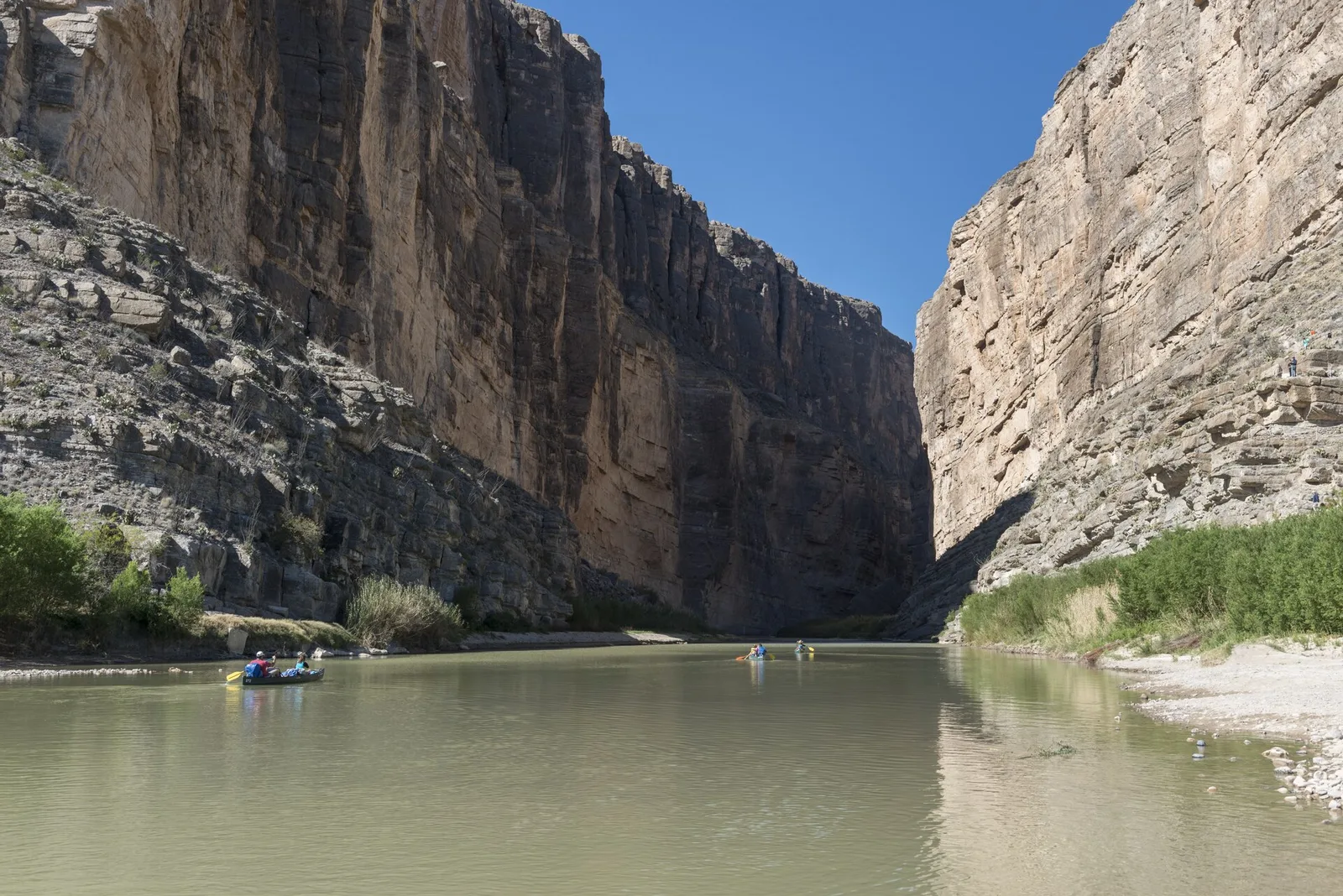
Santa Elena Canyon, where 1,500-foot walls rise above the Rio Grande
Fast Facts
Did You Know?
More species of birds have been recorded at Big Bend National Park than at any other national park in the United States, with over 450 species documented. The park sits at the convergence of several flyways and ecoregions, and the diverse habitats from desert lowlands to mountain forest attract an extraordinary variety of species. The Colima warbler, a small gray-and-yellow warbler, breeds in the Chisos Mountains and nowhere else in the United States, making Big Bend the only place to see the species north of Mexico.
Big Bend National Park is one of the least light-polluted places in the lower 48 states and is designated an International Dark Sky Park. The nearest large city is more than four hours away, and the park sits in one of the most sparsely populated regions of the country. On clear nights the Milky Way is visible as a broad band across the sky, and dedicated observers have recorded thousands of stars with the naked eye. The park offers ranger-led astronomy programs and the Chisos Basin campground amphitheater hosts star talks on summer evenings.
The Rio Grande at Big Bend forms 118 miles of the international boundary between the United States and Mexico, and visitors can legally cross to small Mexican villages at designated points. For decades, visitors crossed the river informally to visit the village of Boquillas del Carmen, Mexico, where local residents sell crafts and provide boat transport. The crossing was closed after September 11, 2001, but reopened in 2013 as an official port of entry. Today visitors can cross with a valid passport and experience an authentic Mexican border village just across the river from the park.
Plan Your Visit
Location
Marathon and Terlingua, Texas, Big Bend region of southwest Texas
Designation
National Park, International Biosphere Reserve
Getting There
Big Bend is extremely remote. The nearest large city is El Paso (4+ hours) or San Antonio (4+ hours). Marathon and Alpine are the closest towns with services. There is no public transit. Bring a full tank of gas; fill up before entering.
Entrance Fee
$35 per vehicle (7-day), or use an America the Beautiful pass. The park charges the fee at the entrance stations.
Water
The desert is extremely hot and dry. Bring at least one gallon of water per person per day for hiking. Many trails have no shade. Hike early morning and avoid midday in summer when temperatures exceed 100°F in the lowlands.
Cell Service
Essentially nonexistent throughout the park interior. Download maps and trail information before arrival. Let someone know your plans before heading into the backcountry.
Boquillas Crossing
A valid US passport or passport card is required to cross to Boquillas del Carmen, Mexico. The crossing is a brief rowboat ride. The village offers authentic Mexican food and handicrafts. Return crossing to the US requires the same documentation.