

About Oregon
The origin of the name Oregon is one of the great mysteries of American place names. No one has definitively established where it comes from. The most popular theory holds that it derives from a 1715 French map that showed a river labeled "Ouaricon-sint" or "Ouaricon," which may have been an early name for the Columbia River. Other theories suggest it comes from a Spanish word, a Native American language, or even a misreading of the Wisconsin River from an old French map. The name "Oregon" appeared in print in 1778 when Major Robert Rogers petitioned the British government for an expedition to find a river he called the "Ouragon." However it originated, the name stuck and Oregon became a state in 1859.
Oregon is a state of extremes and contradictions. It is the 9th largest state by area but holds less than 1.5% of the national population, most of it concentrated in a narrow green valley between two mountain ranges. The same state that gave the world Nike, pioneered vote-by-mail, and legalized physician-assisted death also contains hundreds of ghost towns, the most isolated cattle ranches in the Lower 48, and communities that have more in common with rural Idaho than with Portland.
The Cascades divide Oregon into two worlds. West of the mountains: rain-soaked forests, world-class wine country, a tech-driven urban economy, and one of the most politically progressive populations in the country. East of the mountains: high desert, volcanic rock, enormous ranches, and one of the most conservative rural electorates in the West. This tension between Oregon's two halves shapes everything about its politics, economy, and culture.
Oregon has been a pioneer in environmental and social policy for over half a century, land-use planning laws, bottle deposits, the spotted owl controversy, death with dignity, and drug decriminalization all began here. The state's motto, "She Flies With Her Own Wings," captures something real about Oregon's self-image: independent, unconventional, and not particularly interested in what the rest of the country thinks.
Geography, Four Distinct Regions
Oregon spans from Pacific beaches in the west to high desert plateaus in the east, one of the most geographically diverse states in the nation, divided sharply by the Cascade Range.
The Willamette Valley is a 150-mile-long trough between the Coast Range and the Cascades, containing more than 70% of Oregon's population. Portland, Oregon's largest city with 650,000 people in the city and over 2.5 million in the metro, dominates the northern end of the valley. The valley's mild, wet climate makes it ideal for agriculture, it produces world-class Pinot Noir wine, hazelnuts, grass seed, and berries.
Salem, the state capital, sits in the central valley. Eugene, home of the University of Oregon, anchors the southern end. The valley is also Oregon's tech and business corridor.
The valley floor was shaped by the Missoula Floods, a series of Ice Age torrents released when an ice dam holding back glacial Lake Missoula repeatedly failed between roughly 15,000 and 13,000 years ago; the floodwater backed up hundreds of feet deep in the valley and dropped the fine, deep soils that made it Oregon's farm belt. Portland, at the meeting of the Willamette and Columbia rivers, was named by a coin toss in 1845, the loser had wanted to call it Boston.
The Portland region is overseen in part by Metro, the only directly elected regional government in the United States, which since 1979 has enforced an urban growth boundary that concentrates building and protects surrounding farmland. The valley grows most of the world's cool-season grass seed and nearly the entire U.S. hazelnut crop, and its more than 900 wineries have made Oregon Pinot Noir a serious rival to Burgundy.
Oregon's 363-mile Pacific coastline is one of the most dramatic and accessible in the country, and uniquely, every inch of it is public land. A 1967 state law guarantees public access to the entire beach below the vegetation line. The coast is defined by rugged headlands, sea stacks, crashing surf, and dense coastal rainforest rather than the sandy resort beaches of warmer states.
Astoria, at the mouth of the Columbia River, is the oldest American city west of the Rockies. The coast receives 60 to 100 inches of rain per year and is cool even in summer, making it a refuge from inland heat rather than a tropical destination.
The public-beach tradition began with Governor Oswald West, who in 1913 had the entire wet-sand strip declared a state highway to keep it out of private hands; the 1967 Beach Bill extended that protection up to the line of vegetation, a guarantee no other coastal state matches. U.S. Highway 101 runs the full length of the coast and was largely built with New Deal labor in the 1930s, including a chain of Conde McCullough bridges now on the National Register of Historic Places.
Astoria was founded in 1811 as John Jacob Astor's fur-trading post, the first permanent U.S. settlement on the Pacific coast, and it briefly fell under British control during the War of 1812. The Columbia River bar just offshore, where the river current meets Pacific swells, is nicknamed the 'Graveyard of the Pacific' for the roughly 2,000 vessels lost there since 1792.
The Cascade Range runs north to south through the middle of Oregon, a spine of volcanic peaks that divides the wet west from the dry east. Mt. Hood, at 11,249 feet, is the state's highest peak and the most-climbed glaciated mountain in North America. Crater Lake, in the southern Cascades, is the deepest lake in the United States at 1,943 feet, formed when the volcano Mount Mazama collapsed 7,700 years ago after a massive eruption.
The Cascades also contain Three Sisters, Mt. Jefferson, and dozens of other peaks. The range creates Oregon's famous climate divide: Portland gets 36 inches of rain per year; Bend, on the east side, gets just 12.
The Cascade volcanoes rise above the Cascadia Subduction Zone, where the Juan de Fuca plate slides under North America. The zone last ruptured in a magnitude-9 earthquake on January 26, 1700, a date pinned down by a tsunami recorded in Japan and by Native oral accounts, and geologists expect it to produce another great quake. Mount Hood itself last erupted in the 1780s and 1790s, only a few years before Lewis and Clark passed nearby.
Timberline Lodge, built on Mount Hood's south slope by Works Progress Administration craftsmen in 1936 and 1937 and dedicated by President Franklin Roosevelt, is a National Historic Landmark, and its exterior stood in for the Overlook Hotel in the film 'The Shining.' Crater Lake has no streams flowing in or out and is refilled only by rain and snow; its water has been measured clear to a depth of 142 feet, among the greatest clarity of any lake on Earth.
East of the Cascades, Oregon transforms entirely. The high desert stretches across two-thirds of the state's land area but holds only about 10% of its population. Bend, the largest city in eastern Oregon, has boomed into a major outdoor recreation and tech hub over the past two decades.
The Painted Hills, John Day Fossil Beds, and the dramatic Steens Mountain are among the most striking landscapes in the American West. Ranching, wheat farming, and timber define the rural economy. The region has a distinct culture, politically conservative, fiercely independent, and culturally closer to Idaho and Nevada than to Portland.
Much of eastern Oregon drains into the closed Great Basin and never reaches the sea. It includes the Alvord Desert, a dry lakebed that gets under 7 inches of rain a year in the rain shadow of Steens Mountain, a 30-mile fault-block ridge that climbs about a mile above the desert floor, and the Owyhee Canyonlands in the far southeast, sometimes called 'Oregon's Grand Canyon.'
Harney County is larger than nine U.S. states but has only about 7,500 residents. In early 2016 an armed group led by Ammon and Ryan Bundy occupied the headquarters of the Malheur National Wildlife Refuge near Burns for 41 days to protest federal land ownership; the standoff ended with one occupier shot dead by state police and the rest arrested, though a federal jury later acquitted the leaders of conspiracy. Federal agencies manage more than half of all land in Oregon and the great majority of the eastern counties.

Economy
Oregon's economy has transformed from a timber-and-agriculture base into a diversified mix of technology, manufacturing, wine, and outdoor recreation, with Intel and Nike anchoring the corporate landscape.
Intel's largest campus in the world is in Hillsboro, Oregon, employing over 20,000 people and producing a significant share of the world's most advanced chips. Nike's global headquarters is in Beaverton. Adidas North America is headquartered in Portland.
Columbia Sportswear and Daimler Trucks North America are also based in the metro area. The region earned the nickname 'Silicon Forest' for its combination of tech industry, semiconductor manufacturing, and forest setting. Oregon's lack of a sales tax has historically made it attractive for large retail and manufacturing operations.
Intel is Oregon's largest private employer, with roughly 22,000 workers spread across its Hillsboro campuses, and it does much of its process-technology research there, so each new generation of Intel chip is developed in Oregon before high-volume production moves elsewhere. Tektronix, the Beaverton oscilloscope maker founded in 1946, seeded the region's electronics industry, and many local firms are Tektronix spinoffs.
Oregon is one of only five states with no sales tax, which has pulled in distribution centers and data centers; Amazon, Google, Apple, and Facebook have all built large server farms in tax-favored counties along the Columbia at The Dalles and Prineville. Nike and Adidas anchor a Portland-area sportswear-design cluster that also includes Columbia Sportswear, Keen, and Leatherman.
Oregon's Willamette Valley has become one of the premier wine regions in the world, renowned especially for Pinot Noir and Pinot Gris. The valley's climate, similar to Burgundy, France, produces wines of exceptional elegance. Oregon also grows 99% of the domestically produced hazelnuts in the United States.
The state is the largest producer of grass seed in the country, supplying much of the nation's lawn, turf, and pasture seed. Christmas trees, berries, hops, and cut flowers round out a diverse agricultural portfolio.
Oregon farms produce more than 220 different commodities, one of the most diverse mixes of any state; the biggest earners are greenhouse and nursery plants, cattle, hay, milk, grass seed, and wheat. The Willamette Valley grows roughly two-thirds of the world's cool-season grass seed for lawns and golf courses, and by legislative act Oregon officially calls the crop a 'hazelnut' rather than the older name 'filbert.'
Oregon wine scarcely existed before 1965, when David Lett planted Pinot Noir in the Dundee Hills on the theory that the cool valley matched Burgundy; an Oregon Pinot placed near the top of blind Paris tastings in 1979 and 1980, putting the region on the world map. Oregon now has more than 1,000 wineries and an unusually strict labeling law requiring wines named for a place to contain a high percentage of grapes from that appellation.
For most of the 20th century, Oregon's timber industry was the backbone of its economy, and the state remains a major producer of softwood lumber, plywood, and paper products. The industry underwent a dramatic contraction in the 1990s following the listing of the northern spotted owl as a threatened species, which restricted logging on federal lands.
The 'timber wars' of the 1980s and 1990s became one of the defining environmental and economic conflicts in American history. Today, the industry has stabilized at a smaller scale, with private timber lands filling the gap left by federal restrictions.
At its peak in the 1950s through the 1970s Oregon cut more than 8 billion board feet of timber a year and led the nation; by the 2010s the harvest had fallen to roughly 3 to 4 billion, and timber employment dropped from about 80,000 in 1979 to under 30,000. The 1994 federal Northwest Forest Plan set aside most old growth on federal land and cut the federal harvest by around 80%.
Ownership of Oregon's timberland is now split among the state, private companies such as Weyerhaeuser and investment landowners, and the 'O&C lands,' about 2.4 million acres of former railroad-grant land whose timber receipts once funded 18 western Oregon counties and whose decline has left several, notably Curry and Josephine, in chronic budget crises. Wood-products firms including Roseburg Forest Products remain major rural employers.
Oregon's outdoor recreation economy is one of the largest in the country relative to population. Mt. Hood alone hosts several ski resorts, including Timberline Lodge, which offers year-round skiing. The Columbia River Gorge is a world-class windsurfing and kiteboarding destination.
The Oregon Coast draws tens of millions of visitors annually. Crater Lake National Park, Smith Rock State Park, and the Painted Hills attract hikers and photographers from around the world. Portland has become a major destination for food, culture, and outdoor access, drawing significant tourism and relocation from California.
Federal Bureau of Economic Analysis figures put Oregon's outdoor-recreation economy at several billion dollars a year, supporting tens of thousands of jobs. The Columbia River Gorge, a National Scenic Area since 1986, is one of the world's premier windsurfing and kiteboarding sites because summer winds funnel through the only sea-level gap in the Cascades.
Crater Lake draws roughly 500,000 to 700,000 visitors a year despite being buried in snow for much of it, and the Oregon Shakespeare Festival in Ashland, running since 1935, is among the largest regional theater companies in the country. The 2017 total solar eclipse made its first U.S. landfall over central Oregon and brought hundreds of thousands of visitors to Madras and the high desert.
Beyond Intel's massive Hillsboro presence, Oregon hosts a growing cluster of semiconductor and advanced manufacturing operations. Intel's D1X and D1D fabs in Hillsboro are among the most advanced chip-manufacturing facilities in the world.
The state has invested heavily in semiconductor workforce development and infrastructure. The CHIPS and Science Act (2022) directed significant federal investment toward domestic chip production, and Oregon is positioned to receive a major share of that investment given its existing Intel infrastructure and trained workforce.
Oregon's chip cluster employs around 40,000 people statewide, across Intel and dozens of smaller firms and equipment makers. In 2023 the legislature passed its own roughly 210-million-dollar 'Oregon CHIPS Act' to add grants and to make it easier to bring land inside urban growth boundaries for new fabs, complementing the federal program.
Intel announced a multibillion-dollar expansion and modernization of its Hillsboro campus tied to the federal CHIPS money, though the company's broader financial troubles and 2024 layoffs, including thousands of Oregon jobs, clouded the outlook. Chipmaking is highly water- and energy-intensive, and Intel's Hillsboro operation is among the single largest water users in the state.
How Oregon's State Government Works
Oregon operates under a constitution adopted in 1857, just before statehood. The state legislature, the Oregon Legislative Assembly, consists of a 30-member Senate and a 60-member House of Representatives. Oregon holds legislative sessions every year, alternating between long sessions (odd years) and shorter sessions (even years).
Oregon is one of the bluest states in the country at the statewide level. Democrats hold the governorship and both U.S. Senate seats, and have controlled both chambers of the state legislature for most of the 21st century. However, the deep urban-rural divide means that eastern Oregon is reliably Republican and has periodically produced movements to secede and join Idaho, the "Greater Idaho" movement gained enough traction that several eastern Oregon counties passed advisory votes in favor of the idea.
Oregon has a notably strong initiative and referendum system. Citizens can pass laws and constitutional amendments directly through ballot measures, bypassing the legislature entirely. Many of Oregon's most significant policy changes, from the Death with Dignity Act to drug decriminalization to minimum wage increases, came through the ballot initiative process rather than the legislature.
Governor of Oregon
Current Governor
Tina Kotek

- Party
- Democrat
- In Office Since
- January 9, 2023
- Elected
- 2022
- Term Ends
- January 2027
- Born
- July 24, 1968, Wilmington, Delaware
- Education
- Haverford College (BA, Political Science)
- Prior Role
- Speaker, Oregon House of Representatives (2013-2023)
Tina Kotek is the 39th Governor of Oregon. She served as Speaker of the Oregon House for a decade, making her one of the longest-serving Speakers in state history. Kotek and Massachusetts's Maura Healey, elected the same night in November 2022, are the first two openly lesbian governors in U.S. history. Her administration has focused heavily on Oregon's severe housing and homelessness crisis, which was a central issue in the 2022 campaign.
Other Current State Officials
Attorney General
Dan Rayfield
In office since January 2023. Former Speaker of the Oregon House of Representatives. First AG elected in Oregon since 1992 (the position was previously appointed). Focuses on consumer protection, housing, and reproductive rights.
Secretary of State
Tobias Read
Elected in 2024 and in office since January 2025, after two terms as State Treasurer. He succeeded LaVonne Griffin-Valade, appointed in 2023 after Shemia Fagan resigned. Oregon's Secretary of State also serves as the state auditor, a combination not found in most states.
State Treasurer
Elizabeth Steiner
In office since January 2025. Former State Senator and physician. Oversees the Oregon State Treasury, including the state's $100+ billion investment portfolio.
The Oregon Legislative Assembly
Oregon State Senate
- Seats: 30 members
- Terms: 4-year terms
The upper chamber. Senators serve 4-year staggered terms so roughly half the Senate is on the ballot every two years. The Senate President controls the chamber agenda and committee assignments.
Oregon House of Representatives
- Seats: 60 members
- Terms: 2-year terms
The lower chamber. All 60 House seats are on the ballot every two years. Democrats have held a supermajority in recent sessions, allowing them to pass legislation and revenue bills without any Republican votes.
Oregon's U.S. Senators
U.S. Senator
Ron Wyden
One of the longest-serving senators in Oregon history, first elected to the Senate in a 1996 special election. Wyden previously served in the U.S. House for 15 years. As the senior Democrat on the Senate Finance Committee, he has been a central figure in tax policy, healthcare legislation, and internet privacy. A leading advocate for digital civil liberties, he co-authored Section 230 of the Communications Decency Act, the law that shaped the modern internet. Born in Kansas City but a lifelong Oregonian, he is known for holding hundreds of town halls in every county of the state.
U.S. Senator
Jeff Merkley
Former Speaker of the Oregon House of Representatives, elected to the Senate in 2008 by defeating incumbent Republican Gordon Smith. Merkley is one of the Senate's most progressive members, an early and consistent advocate for ending the filibuster, expanding voting rights, and aggressive climate action. He was the only senator to endorse Bernie Sanders in the 2016 Democratic primary. Merkley has been particularly active on housing policy, drawing on Oregon's national profile as a state grappling with severe housing affordability and homelessness crises.
Oregon Through the Years
From early settlement to the present day. Tap any era to read more.
Oregon was home to hundreds of distinct Native groups before European contact. The Chinook people dominated the Columbia River trade network, which stretched from the Pacific coast to the Rocky Mountains and made them one of the most commercially sophisticated peoples in North America. The Kalapuya lived in the Willamette Valley, managing the landscape with controlled burns that maintained the open, fertile conditions that made the valley so attractive to settlers.
The Nez Perce controlled much of northeastern Oregon and Idaho. Disease epidemics, beginning with the 1775 smallpox epidemic, devastated coastal populations before most tribes had ever seen a European face.
Celilo Falls on the Columbia near The Dalles was one of the oldest continuously inhabited places in North America and the greatest Native fishing and trading site on the river, used for at least 15,000 years, until it was drowned by The Dalles Dam in 1957 over tribal objection. Chinook Jargon, a trade pidgin blending Chinookan, Nuu-chah-nulth, French, and English words, was spoken along the coast from Alaska to California.
After treaties signed between 1853 and 1855, most western Oregon tribes were forced onto the Grand Ronde and Siletz reservations, some on brutal winter marches. In the 1950s Congress 'terminated' federal recognition of more than 60 Oregon tribes and bands, stripping their trust land and services; the Siletz regained recognition in 1977 and Grand Ronde in 1983, and Oregon today has nine federally recognized tribes.
The Lewis and Clark Expedition, commissioned by President Jefferson to explore the Louisiana Purchase territory, reached the Pacific Ocean at the mouth of the Columbia River in November 1805. The Corps of Discovery spent the winter at Fort Clatsop near present-day Astoria before returning east in 1806. Their detailed journals describing Oregon's geography, resources, and Native peoples sparked enormous American interest in the Pacific Northwest.
Sacagawea, the Shoshone woman who guided them through the Rockies, had relatives in the region. The expedition established American claims to the Oregon Country, setting the stage for decades of diplomatic conflict with Britain.
At the Columbia estuary in November 1805 the party held a vote on where to spend the winter that included York, an enslaved man owned by Clark, and Sacagawea, probably the first time both a Black person and a Native woman cast votes recorded by a U.S. government expedition. They built Fort Clatsop and endured a winter in which it rained on all but 12 days.
The expedition traded away nearly all its remaining goods for food and left in March 1806 almost destitute, taking a Clatsop canoe as partial payment for an earlier theft. Their reports that sea otter pelts sold for high prices in China helped set off the maritime fur trade, drawing American and British ships to the coast and sharpening the competing claims to the Oregon Country.
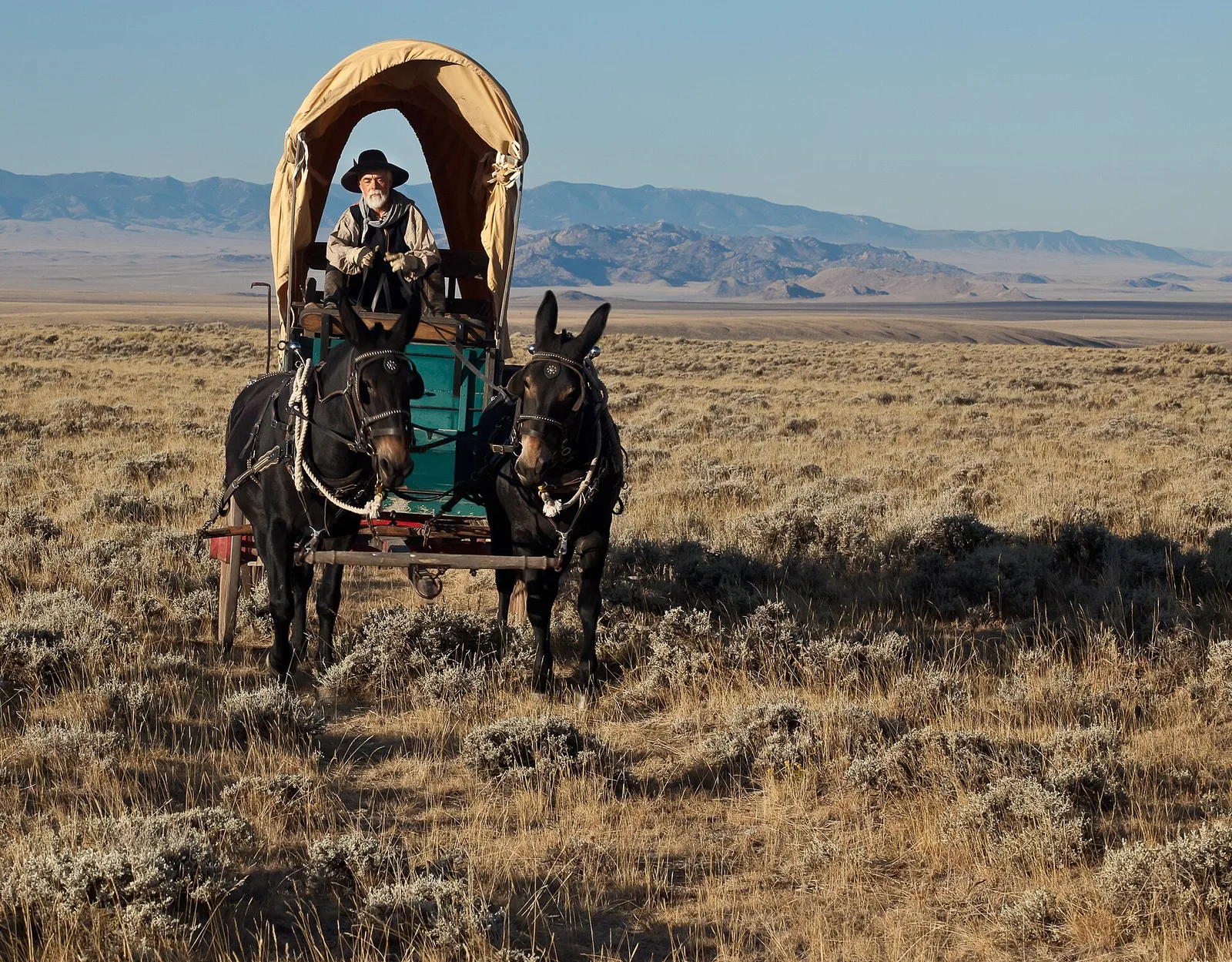
Between 1843 and the 1860s, roughly 400,000 Americans made the 2,000-mile journey from Missouri to Oregon along the Oregon Trail, one of the greatest overland migrations in human history. The journey took five to six months, crossed two mountain ranges, multiple major rivers, and the Great Plains. An estimated 10% of migrants died en route, from disease, accident, and exhaustion.
The migration was driven by the promise of the Donation Land Claim Act (1850), which offered 320 acres of free land to white male settlers. Oregon was admitted to the Union on February 14, 1859, as the 33rd state, and notoriously, its original constitution explicitly excluded Black Americans from living in the state.
The route followed the Platte, Sweetwater, and Snake rivers over South Pass in Wyoming, the one place wagons could cross the Continental Divide, then down the Columbia; until the Barlow Road opened around Mount Hood in 1846, families had to raft the last stretch through the Gorge rapids, which drowned many. The peak years ran from the 'Great Migration' of about 900 people in 1843 through the Gold Rush surge of 1849 to 1852.
American settlers had organized their own provisional government at Champoeg in 1843, by a reported margin of two votes, before any treaty settled who owned the country. The 1857 constitution written for statehood banned slavery but also forbade free Black people from living, owning property, or making contracts in Oregon, the only Black exclusion clause ever written into a state admitted to the Union; Oregon voters did not repeal it until 1926.
In 1990, the northern spotted owl was listed as a threatened species under the Endangered Species Act. Because the owl depends on old-growth forest, the listing effectively restricted logging on millions of acres of federal land in Oregon, Washington, and northern California. The result was devastating for timber-dependent communities: tens of thousands of jobs disappeared, mills closed, and small towns hollowed out.
The conflict pitted environmentalists against loggers in a bitter, sometimes violent cultural war. A famous bumper sticker read: 'Save a Logger, Eat an Owl.' The 'timber wars' remain one of the most consequential environmental and economic conflicts in American history.
The fight escalated through the 1980s with tree-sits, road blockades, and 'tree spiking,' driving metal spikes into trunks to damage saw blades, a tactic Earth First! used and later renounced after a California mill worker was badly hurt. Federal judge William Dwyer halted most federal logging in the region in 1991, and the Clinton administration convened a 1993 'forest summit' in Portland that produced the Northwest Forest Plan.
Federal timber sales in the Northwest fell about 80%, and Oregon lost an estimated 30,000 wood-products jobs in the 1990s, though automation and raw-log exports had been shrinking employment for a decade already. The spotted owl kept declining anyway, mostly because the invasive barred owl moved in and outcompeted it, and the government has since experimented with shooting barred owls to buy the native species time.
Oregon pioneered a series of progressive policy experiments that influenced the rest of the country. Oregon became the first state to legalize physician-assisted death with the Death with Dignity Act (1997). It was the first state to conduct all elections entirely by mail (2000), a model later adopted by several other states.
Oregon was the first state to decriminalize possession of small amounts of hard drugs (Measure 110, 2020), though the measure was later partially walked back in 2024 due to implementation challenges. The state also banned clear-cutting on state forests, established land-use planning laws that contain urban sprawl, and created some of the nation's strongest environmental protections.
Oregon's 1902 adoption of the statewide initiative and referendum, the 'Oregon System,' made it a national pioneer of direct democracy, and citizen ballot measures still drive much of its policy. Oregon enacted the country's first gas tax in 1919, the first 'bottle bill' container deposit in 1971, and in 1973 the first statewide land-use planning law, which drew growth boundaries around every city.
The Death with Dignity Act survived a 1997 repeal vote and a U.S. Supreme Court challenge in Gonzales v. Oregon (2006) and became the model for laws now in about a dozen states and D.C. Vote-by-mail, adopted by initiative in 1998, has given Oregon among the highest turnout in the nation with no significant fraud. Measure 110's drug decriminalization passed with 58% in 2020 but was largely reversed by the legislature in 2024 amid a fentanyl surge and complaints that treatment funding lagged.
Portland became a national symbol of both progressive urban policy and its unintended consequences. The city's permissive approach to homeless camping, combined with soaring housing costs driven by in-migration from California and the tech boom, created one of the most visible homelessness crises of any American city.
Portland also became a flashpoint for political conflict: protests and counter-protests in 2020, including the deployment of federal agents by the Trump administration, drew national attention. Oregon has continued to grapple with housing affordability, fentanyl, and how to balance civil liberties with public safety, debates that have reshaped the state's politics considerably.
Oregon has one of the highest rates of unsheltered homelessness in the country, tied to a housing shortage state economists put at more than 100,000 units after Portland-area rents roughly doubled between 2010 and 2020. In 2019 Oregon became the first state to pass statewide rent control, and that same year it legalized duplexes and other 'middle housing' on most residential land, effectively ending single-family-only zoning statewide.
The 2020 Portland protests after George Floyd's murder ran more than 100 straight nights and drew a contested federal deployment to guard the downtown federal courthouse. Portland's population fell for the first time in decades in the early 2020s, downtown office vacancy passed 30%, and in 2024 the state recriminalized public drug use; Governor Tina Kotek declared a homelessness state of emergency on her first day in office in 2023.
Oregon's Defining Moments in American History
These are the events that didn't just shape Oregon, they changed the nation.
Crater Lake, in the southern Oregon Cascades, is the deepest lake in the United States at 1,943 feet and one of the most strikingly beautiful natural features in North America. It was formed approximately 7,700 years ago when the volcano Mount Mazama, once taller than Mt. Rainier, erupted catastrophically and collapsed into itself. The Klamath people witnessed the eruption and preserved oral histories of the event for millennia.
The lake's extraordinary depth and clarity give it an intense, almost unnatural blue color. Crater Lake National Park was established in 1902 and is Oregon's only national park.
Mount Mazama stood an estimated 12,000 feet before it blew, releasing roughly 50 cubic kilometers of magma, more than 40 times the volume of the 1980 Mount St. Helens eruption, and dropping a recognizable ash layer across much of the western United States and Canada; tree rings and ice cores date the event to about 5677 BC. Wizard Island, the cinder cone rising from the water, erupted after the caldera had already formed.
No river flows into or out of Crater Lake; its level stays almost constant because evaporation and seepage balance the rain and snow that fall on it. Newspaper publisher William Gladstone Steel campaigned for 17 years to protect the lake, and Congress made it the nation's fifth national park in 1902.
Nike was founded in Eugene, Oregon in 1964 by University of Oregon track coach Bill Bowerman and his former athlete Phil Knight as 'Blue Ribbon Sports,' becoming Nike in 1971. The company grew from selling imported Japanese running shoes out of the trunk of a car at track meets into the largest athletic footwear and apparel company in the world, with over $50 billion in annual revenue.
Nike's global headquarters campus in Beaverton employs over 12,000 people. The company's cultural impact, from the Air Jordan to the 'Just Do It' campaign to athlete endorsement as a marketing strategy, reshaped global sports, fashion, and advertising.
Bill Bowerman poured rubber into his family's waffle iron in 1971 to make the 'waffle' outsole that became Nike's first hit running shoe. The name and the swoosh logo both date to 1971, the logo bought from a Portland State design student for 35 dollars; Nike went public in 1980, moved to its Beaverton campus in 1990, and named its buildings for athletes such as Michael Jordan, Tiger Woods, and Mia Hamm.
The 1988 'Just Do It' campaign and the Air Jordan line, launched in 1984 with a shoe the NBA at first fined Jordan for wearing, made athlete endorsement the central strategy of the sportswear business. Nike has also faced sustained criticism over labor conditions in its Asian contract factories, exposed in the 1990s, and over a 2018 internal reckoning with gender discrimination among its own executives.
The Oregon Trail was the most important land migration route in American history. Between 1843 and the late 1860s, roughly 400,000 people, families, farmers, and fortune-seekers, made the 2,000-mile journey from Independence, Missouri to the Willamette Valley.
The trail established American settlement of the Pacific Northwest, resolved the disputed Oregon Territory boundary with Britain (the 1846 Oregon Treaty set the border at the 49th parallel), and created the demographic foundation of the modern American West. For a generation of Americans, 'going to Oregon' was synonymous with starting over.
Wagons averaged about 15 miles a day, and their ruts are still visible in places across Nebraska, Wyoming, and Idaho, alongside landmarks every emigrant knew such as Chimney Rock, Fort Laramie, and South Pass. Cholera, spread along the crowded river corridors, was the single biggest killer on the trail, not the Native attacks of popular legend, which accounted for only a small share of deaths.
The trail's cultural afterlife is enormous: 'The Oregon Trail,' an educational computer game first written in Minnesota in 1971 and played by generations of schoolchildren, made 'you have died of dysentery' a national catchphrase. The migration also fell hard on the tribes along the route, spreading disease, stripping grass and game, and provoking the wars that came as the wagon track hardened into a permanent road west.
Notable Oregonians
Linus Pauling
Only person to win two unshared Nobel Prizes (Chemistry and Peace), born in Portland
Matt Groening
Creator of The Simpsons and Futurama, born in Portland
Phil Knight
Co-founder of Nike and one of the world's most successful entrepreneurs, born in Portland
Chief Joseph
Nez Perce leader who led a remarkable 1,100-mile retreat toward Canada in 1877
Beverly Cleary
Author of the beloved Ramona and Henry Huggins children's series, born in McMinnville
Mark Hatfield
U.S. Senator and anti-war advocate who championed civil liberties, born in Dallas
State Symbols & Quick Facts
| Nickname | "The Beaver State" |
| Capital | Salem |
| Largest City | Portland |
| Statehood | February 14, 1859 (33rd state) |
| Population | ~4.3 million (2025 est.) |
| Area | 98,379 sq mi, 9th largest state |
| Motto | "Alis Volat Propriis" (She Flies With Her Own Wings) |
| State Bird | Western Meadowlark |
| State Flower | Oregon Grape |
| State Tree | Douglas Fir |
| State Animal | American Beaver |
| State Fish | Chinook Salmon |
| State Nut | Hazelnut |
| State Song | "Oregon, My Oregon" |
| Time Zone | Pacific Time (UTC−8/−7); eastern OR uses Mountain |
| Borders | Washington (N), Idaho (E), Nevada & California (S), Pacific Ocean (W) |
Did You Know?
Oregon is the only U.S. state with a two-sided state flag. The front shows the state seal; the back shows a beaver. No other state flag has a different design on each side.
Oregon produces approximately 99% of all domestically grown hazelnuts in the United States. The hazelnut is Oregon's official state nut, and the Willamette Valley's climate is almost uniquely suited to growing them at commercial scale.
Crater Lake is the deepest lake in the United States at 1,943 feet, deep enough to submerge the Empire State Building with roughly 700 feet of water to spare. Its water is so clear and pure that you can see objects 100 feet below the surface.
Oregon has more ghost towns than any other state in the continental U.S., over 200 documented abandoned settlements, most of them remnants of the mining, logging, and railroad booms of the 19th and early 20th centuries.
Nike was founded in Eugene, Oregon, in 1964. Co-founder Bill Bowerman, the University of Oregon track coach, famously poured rubber into his wife's waffle iron to experiment with a new sole design, creating the iconic 'waffle trainer' that launched Nike's rise to dominance.
Quick Facts and Common Questions
Short answers to the questions people most often ask about Oregon: its abbreviation, how it became a state, its capital, and how it votes.
Oregon's two-letter postal abbreviation is OR. The U.S. Census Bureau places it in the West region, in the Pacific division, and about 4.24 million people lived there in the 2020 census.
Oregon became the 33rd state on February 14, 1859. The 1846 Oregon Treaty with Great Britain set the border at the 49th parallel, and Congress created the Oregon Territory in 1848, after thousands of settlers had arrived over the Oregon Trail.
The origin is uncertain. The name first appeared in writing as "Ouragon" in a 1765 petition by English army officer Robert Rogers, who used it for a great river of the West, and historians have proposed several explanations without settling on one.
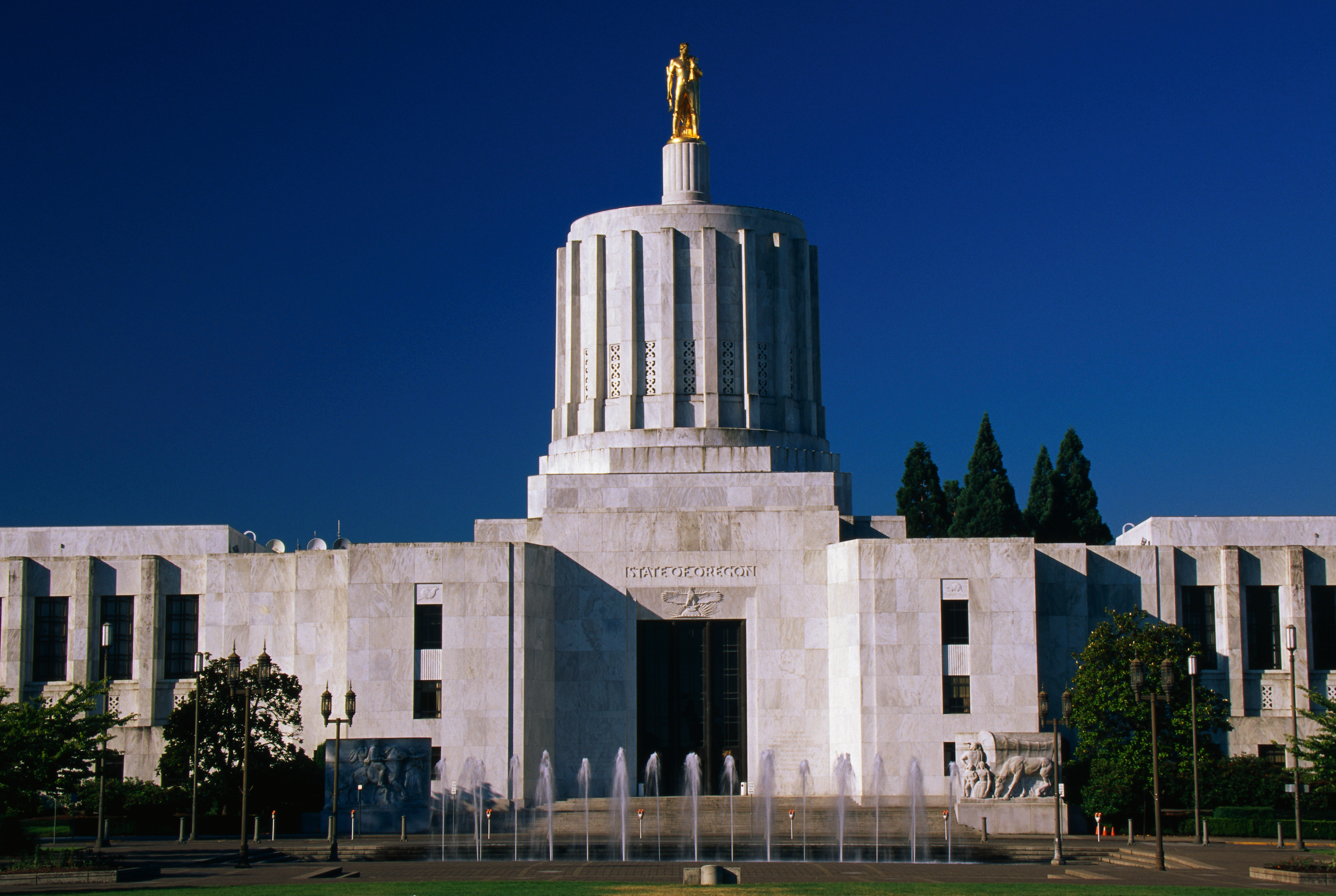
Salem has been the capital since the territorial government moved there from Oregon City in the early 1850s, apart from a brief move to Corvallis in 1855. The current State Capitol was completed in 1938 after fire destroyed the earlier building, and it is topped by a gold-covered statue called the Oregon Pioneer.
Oregon borders Washington to the north, much of it along the Columbia River, Idaho to the east, much of it along the Snake River, and Nevada and California to the south. Its western edge is Pacific Ocean coastline.
Yes. In 1998 Oregon voters approved a measure to conduct elections by mail, and in 2000 Oregon became the first state to hold a presidential election entirely by mail. Ballots are mailed to every registered voter. Learn more about how elections work.
Oregon is known as "The Beaver State." Its motto is "She Flies With Her Own Wings." Its state bird is the western meadowlark, its flower is the Oregon grape, its tree is the Douglas fir, and its animal is the American beaver.
Based on the 2020 census, Oregon gained a seat and now has 6 in the U.S. House of Representatives, which gives it 8 votes in the Electoral College.
Crater Lake in southern Oregon, formed in the collapsed volcano Mount Mazama about 7,700 years ago, is the deepest lake in the United States at 1,943 feet. It is the centerpiece of Crater Lake National Park, Oregon's only national park, established in 1902.
Sources & Further Reading
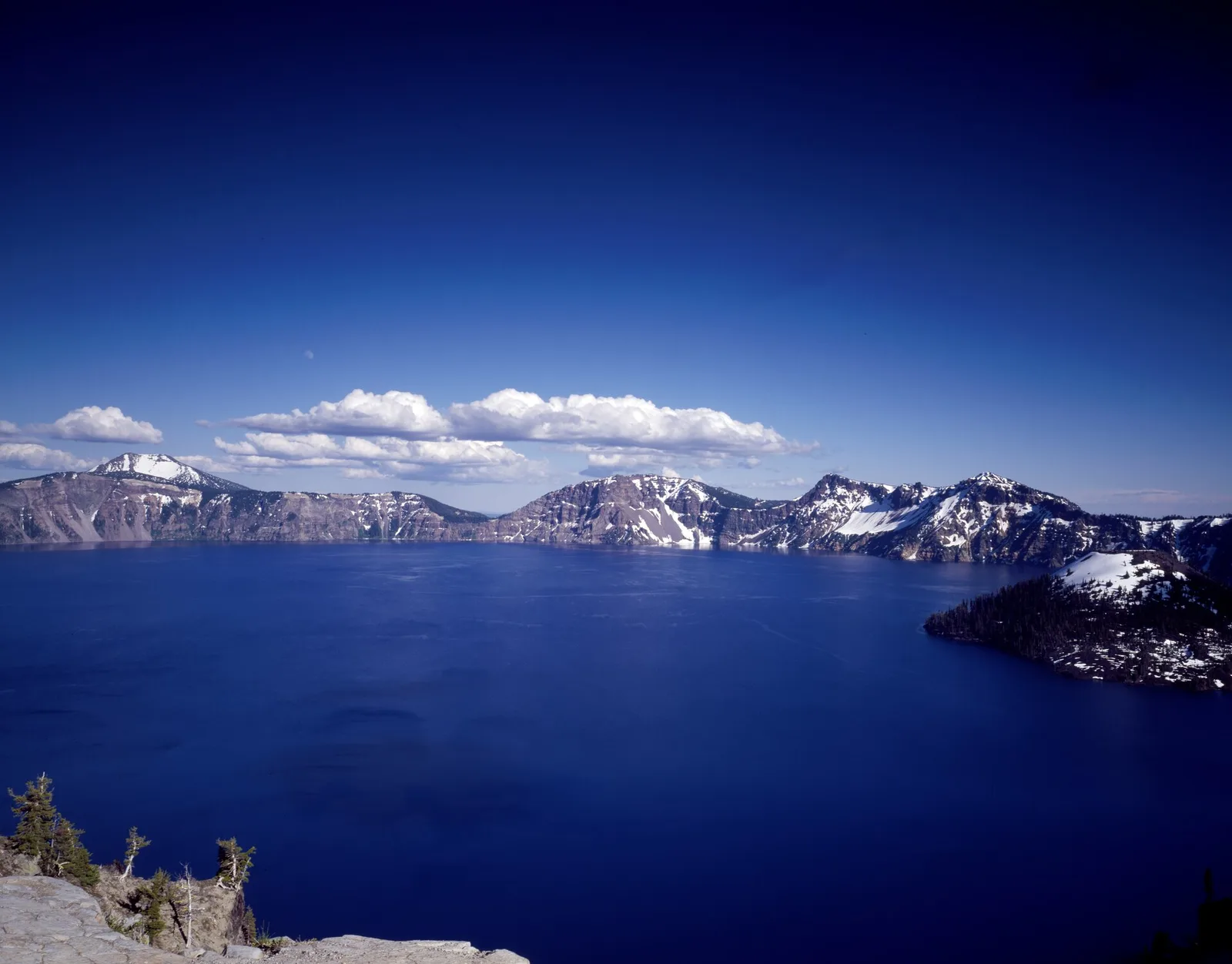
Crater Lake National Park
The Deepest Lake in the United States, Born from a Volcanic Catastrophe 7,700 Years Ago
About Crater Lake National Park
Crater Lake National Park protects the deepest lake in the United States, filling the caldera of Mount Mazama, a Cascade Range volcano that collapsed in a catastrophic eruption about 7,700 years ago. The eruption expelled roughly 12 cubic miles of magma, on the order of 40 times the volume of the 1980 Mount St. Helens eruption, and the emptied summit fell inward to form a basin 5 to 6 miles across.
The lake has no rivers flowing in or out. It is fed only by rain and snowmelt and loses water only to evaporation and seepage, which keeps its level nearly constant year to year. At 1,943 feet it is the deepest lake in the country and among the ten deepest in the world, holding roughly 4.6 trillion gallons of water.
Crater Lake is renowned for an intense blue color that comes from its clarity and depth. With almost no incoming sediment or nutrients, the water absorbs the longer red wavelengths of sunlight and scatters the blue, and a white Secchi disk has been seen as deep as 142 feet, among the clearest readings ever recorded for a natural lake.
Congress established the park on May 22, 1902, the fifth national park and the only one in Oregon, largely through the 17-year campaign of William Gladstone Steel. The park covers 183,224 acres, records more than 40 feet of snow in an average winter, and draws around 700,000 visitors a year, most between July and September.
- Designation
- National Park
- Location
- Klamath County, south-central Oregon, Cascade Range
- Established
- May 22, 1902
- Annual Visitors
- ~750,000
Geology and Landscape
Mount Mazama was a cluster of overlapping stratovolcanoes that grew over roughly 400,000 years to an estimated 12,000 feet. The climactic eruption began with a towering Plinian column of pumice and ash from a vent on the northeast flank, then shifted to fast-moving pyroclastic flows that swept up to 40 miles down surrounding valleys.
As the magma chamber emptied, the summit lost its support and collapsed along ring fractures, dropping the equivalent of a small mountain into the void and creating the caldera. The event is dated to about 7,700 years ago from tree-ring-calibrated radiocarbon and from the Mazama ash layer, found across the Pacific Northwest, into Canada, and in Greenland ice cores.
Native people of the region witnessed the eruption: sandals and other artifacts have been found buried under Mazama pumice at sites in central Oregon, and Klamath oral tradition preserves an account of the mountain's destruction.
The caldera then filled with water over an estimated 250 to 750 years as precipitation accumulated faster than it could seep out. The lake is now in rough balance, with inflow from about 66 inches of annual precipitation offset by evaporation and leakage through the caldera walls.
Wizard Island is a cinder cone that erupted on the caldera floor within a few centuries of the collapse, building a cone that rises 763 feet above the lake and about 2,700 feet from the caldera floor. A 90-foot-deep summit crater, nicknamed the 'Witches Cauldron,' caps it.
Lava flows from Wizard Island spread across the western caldera floor before the lake rose to its present level; their blocky margins are now submerged. Merriam Cone, a symmetrical volcano on the northern caldera floor, also formed after the collapse but never breached the surface, reaching to within about 100 to 500 feet of it.
A third feature, a low rhyodacite dome on the eastern floor, has been dated to roughly 4,800 years ago, the youngest known eruption at Crater Lake. The US Geological Survey classifies Mazama as dormant rather than extinct and monitors it through the Cascades Volcano Observatory.
In a normal summer the park runs boat tours from Cleetwood Cove (none run in 2026, 2027, or 2028 while the Cleetwood Cove Trail is rebuilt), and one route lands on Wizard Island, where visitors can hike to the crater rim or around the shore. The number of island landings is limited, and access ends when the boats are pulled for the season.
Crater Lake is one of the clearest large water bodies on Earth. Secchi-disk readings, taken since 1896, have reached 142 to 143 feet, and light meters detect sunlight to about 400 feet; a monitoring program run with Oregon State University has measured clarity every summer since 1983.
The clarity exists because nothing flows in. Every drop enters as rain or snow onto the lake or its steep inner walls, so no streams deliver silt, farm runoff, or nutrients, and plankton growth is limited by scarce nitrogen and phosphorus.
The lake is also very pure chemically and holds a deep layer of cold, oxygen-rich water. Hydrothermal vents on the deep floor add small amounts of dissolved salts and were confirmed by submersible dives in 1988 and 1989, settling a debate over whether the deep lake was chemically active.
Clarity varies year to year with snowpack, dust, algae, and wildfire ash, and researchers watch it as a gauge of the lake's health. A dip in average clarity in the late 1990s prompted expanded monitoring; readings have since fluctuated without a clear long-term trend.
The caldera rim stands roughly 1,000 feet above the water, from about 7,000 feet at Rim Village to 8,929 feet at Hillman Peak, a remnant of a Mazama-flank volcano sliced in half by the collapse. The 33-mile Rim Drive follows the crest with about 30 pullouts.
The Pumice Desert, on the park's north side, is a flat plain of pumice and ash 50 or more feet deep laid down by the pyroclastic flows. Nearly 8,000 years later it still supports only sparse lodgepole pine and a few hardy plants, because the coarse pumice drains almost instantly and holds little nitrogen.
The Pinnacles, along Sand and Wheeler creeks on the southeast side, are spires up to 100 feet tall of pumice and ash welded hard by hot gas rising through the deposits as fumaroles after the eruption. Erosion stripped the softer material around them, leaving fossil gas pipes standing as hollow towers.
The rim rock also records Mazama's older history: layered andesite and dacite flows, glacial valleys such as Kerr Notch and Sun Notch cut before the eruption, and the Phantom Ship, a jagged islet of 400,000-year-old lava that is the oldest exposed rock in the caldera.
Indigenous Peoples of the Crater Lake Region
Klamath Tribes
The Klamath, Modoc, and Yahooskin Paiute peoples, today the Klamath Tribes, have lived around the lake for thousands of years and knew it as 'giiwas,' a sacred place used for spirit quests. Tribal members traditionally did not speak of the lake casually or bring outsiders to its rim.
Klamath oral tradition recounts the eruption as a battle between Llao, chief of the below world inside Mount Mazama, and Skell, chief of the above world at Mount Shasta, ending with Llao driven underground and the mountaintop falling in. Archaeologists treat the account as a transmitted memory of the eruption, since people were present: a pair of sagebrush sandals was found buried under Mazama ash at Fort Rock Cave.
An 1864 treaty ceded about 22 million acres and confined the tribes to the Klamath Reservation, which supported a prosperous timber economy until Congress terminated the Klamath Tribes in 1954, liquidating 1.8 million acres of forest. Federal recognition was restored in 1986, though the tribes did not regain a reservation land base.
The Klamath Tribes are headquartered in Chiloquin, Oregon. The Klamath Reservation was terminated by Congress in 1954, selling off 1.8 million acres of the Klamath Forest and distributing the proceeds to tribal members, scattering the community and ending tribal government. Federal recognition was restored in 1986, and the Klamath Tribes have since worked to reacquire land and restore cultural and natural resources, including the reintroduction of wolves to the former reservation area.
What to Do
Rim Drive Scenic Tour
Rim Drive is a 33-mile loop around the caldera at 7,000 to nearly 8,000 feet, with roughly 30 overlooks and pullouts. Driven without stops it takes about an hour; with stops, half a day. It usually opens fully in early to mid-July and closes with the first heavy snow, often in October.
Highlights along the loop include the Sinnott Memorial Overlook at Rim Village, Discovery Point (where a prospector party first saw the lake in 1853), the Watchman, Cloudcap Overlook (the highest paved point in Oregon at 7,960 feet), and Phantom Ship Overlook. The Pinnacles Road and the Pumice Desert branch off it.
Rim Village, on the south rim, has the 1915 Crater Lake Lodge, the Sinnott Memorial with an exhibit gallery built into the caldera wall, a cafe, and the main visitor services. The historic lodge reopened in 1995 after a full structural rebuild.
West Rim Drive is plowed and open by early summer; East Rim Drive opens later and clears last. In winter the road is groomed for cross-country skiing and snowshoeing, and ranger-led snowshoe walks run on weekends from the rim.
Cleetwood Cove Trail and Boat Tour
The Cleetwood Cove Trail is the only legal route to the shoreline, dropping about 700 feet in 1.1 miles of switchbacks on the north rim. The climb back out is the equivalent of a 65-story building, at 6,000 to 6,500 feet elevation.
In seasons when the trail is open, concession boats run two-hour narrated tours around the lake and shuttle tours that drop hikers on Wizard Island for a few hours. Boats and gear are lowered to the lake by helicopter each spring and removed each fall.
The trail is closed for the 2026, 2027, and 2028 seasons while the National Park Service rehabilitates it, reduces rockfall hazards, and rebuilds the failing marina and restrooms at the cove. With the trail closed there is no shoreline access, swimming, or public boat tours; the park expects it to reopen in summer 2029, so check the park's current status before planning a visit.
When the trail is open, swimming is allowed at Cleetwood Cove, and jumping from the low rocks is a long tradition despite surface water around 55 to 60 degrees in summer and near freezing below. There are no lifeguards, and the hike out has triggered heat and cardiac emergencies.
Watchman Peak Trail
The Watchman Peak Trail climbs 0.8 mile and about 420 feet from a Rim Drive pullout to a fire lookout at 8,013 feet, directly above Wizard Island. It is one of the shortest routes to a high rim viewpoint and a favorite for sunset.
The stone-and-timber lookout was built by the Civilian Conservation Corps in 1932 and is still used to spot wildfires in and around the park in summer. The trail switchbacks up an old roadbed through whitebark pine, a high-elevation tree now in decline from blister rust.
The summit looks straight down on Wizard Island and across to the Klamath Basin; on clear days Mount Shasta stands on the southern horizon about 100 miles away, with Mount Thielsen and Diamond Peak visible to the north.
The Watchman is named for its use during the first accurate survey of the lake in 1886, when a US Geological Survey party ran soundings from a boat with a piano-wire line and used the high point to map the shoreline.
Garfield Peak Trail
The Garfield Peak Trail runs 1.7 miles one way and climbs about 1,010 feet from behind Crater Lake Lodge to an 8,054-foot summit, giving what many consider the most complete view of the lake from the rim.
The trail traverses open slopes with midsummer displays of lupine, paintbrush, and phlox, passes ledges where pikas and golden-mantled ground squirrels are common, and holds snow across its upper switchbacks into July most years.
From the top the entire lake, Wizard Island, Phantom Ship, and the Klamath Basin spread out below, and the exposure makes it a poor place to be in an afternoon thunderstorm, which build quickly over the rim in summer.
Garfield Peak is named for James R. Garfield, Secretary of the Interior under Theodore Roosevelt, who visited the park in 1907. The trail was built in the 1920s as part of the early development of Rim Village.
Conservation Challenges
Climate Change and Snowpack
Crater Lake's entire water budget is precipitation, and about 80 percent of that falls as snow; the rim averages more than 40 feet of snowfall a year. Cascade snowpack has declined over recent decades as more winter precipitation falls as rain and melt comes earlier.
Park records show full ice cover on the lake has become rare; the surface last froze completely in 1949, and partial-ice years are increasingly short. The average freeze-over date has shifted later.
Long-term monitoring has detected a slow warming of the lake's surface and upper waters. Warmer surface water strengthens summer stratification, which can reduce the deep mixing that keeps the bottom water oxygenated and helps hold clarity.
Reduced snowpack also lengthens the fire season, stresses the park's forests, and shortens the window when Rim Drive and the trails are usable, concentrating visitation into a narrower summer season.
Invasive Species in the Lake
Crater Lake had no fish before 1888, when William Steel and others began stocking it. Over the next 53 years the park planted about 1.8 million fish of six species; only two established, kokanee salmon and rainbow trout, which now number in the hundreds of thousands.
The introduced fish prey on the lake's native invertebrates and newts and compete with the zooplankton community that had evolved in a fishless lake. The park stopped stocking in 1941 and now allows unrestricted fishing with no license and no limit to suppress the fish, but eradication is not feasible.
A more recent threat is the signal crayfish, introduced as bait or food around 1915. Once confined to a small area, it has spread around most of the shoreline as the lake has warmed, preying on the eggs and larvae of the Mazama newt, a subspecies found nowhere else.
The park now enforces gear decontamination for research boats and any watercraft, screens for invasive mussels and plants, and studies whether the Mazama newt can be protected in shoreline refuges the crayfish have not yet reached.
Air Quality and Visibility
Crater Lake is a designated Class I air quality area under the Clean Air Act, the highest level of protection, and its remote setting normally gives visibility well over 100 miles.
That baseline is increasingly broken by wildfire smoke. Large fires in the southern Oregon Cascades and Klamath Basin, including fires inside the park such as the 2017 Spruce Lake and Blanket fires, now routinely fill the caldera with smoke for days or weeks in late summer, hiding the lake and pushing the air quality index into unhealthy or hazardous ranges.
In smoke-free conditions the park still monitors haze from regional agriculture, industry, and highway traffic as part of the national IMPROVE visibility network.
Climate projections for the region point to hotter, drier summers and larger fires, so the park expects more frequent smoke episodes during its short peak season and has added air-quality advisories to its trip-planning information.
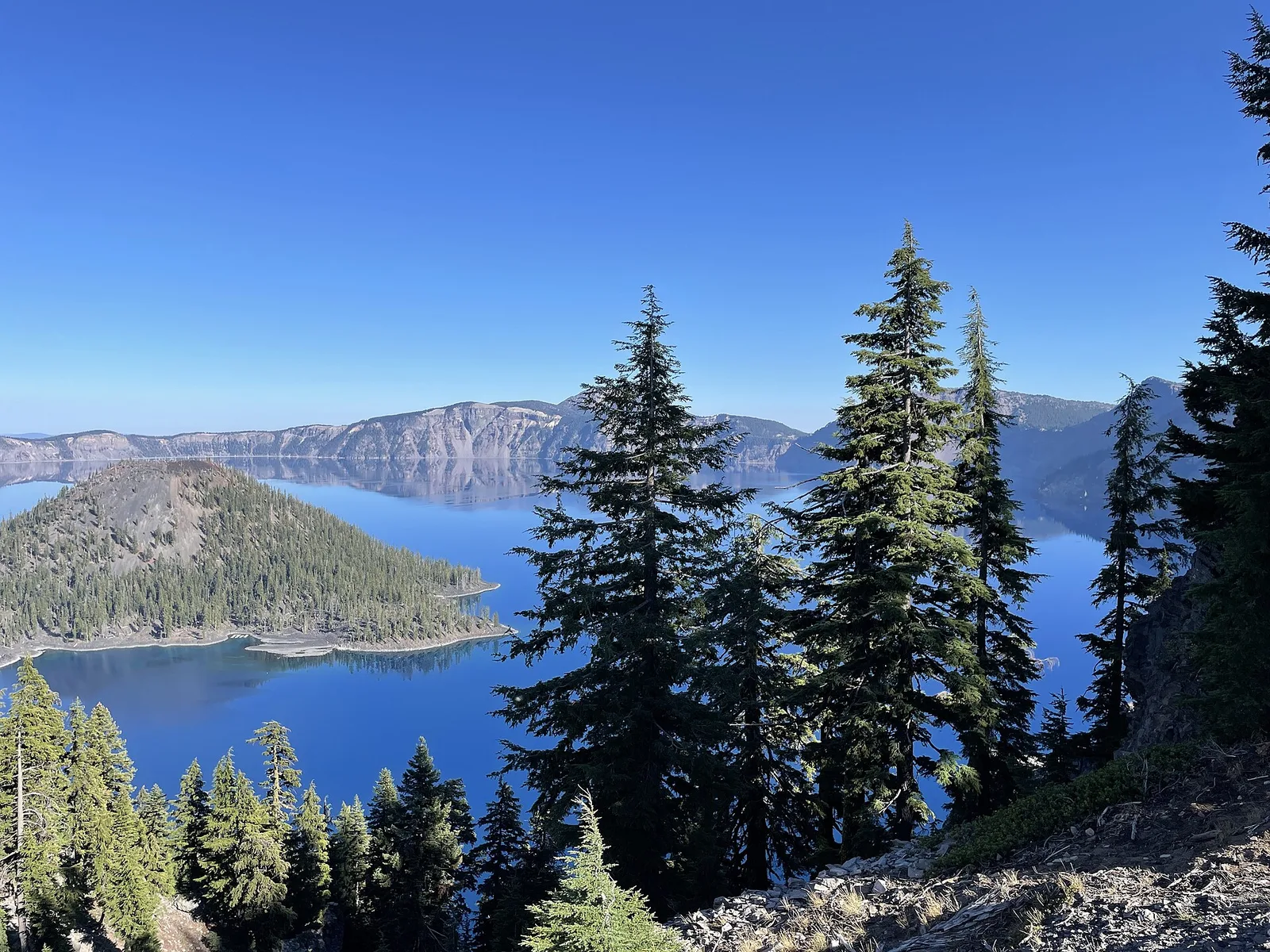
Wizard Island, Crater Lake National Park
Fast Facts
Did You Know?
The eruption that created Crater Lake approximately 7,700 years ago was one of the largest volcanic events in North America during the Holocene epoch. The eruption ejected approximately 12 cubic miles of material, enough to fill a cube 1.5 miles on each side, and deposited ash across much of the Pacific Northwest and as far as Canada.
Crater Lake has no rivers flowing in or out. All the water comes from precipitation and snowmelt, and leaves only by evaporation and groundwater seepage. This isolation keeps the water exceptionally clear, and the lake's famous deep blue color results from sunlight penetrating hundreds of feet into the purest water in North America.
The Klamath Tribes' oral traditions describe the formation of Crater Lake as a battle between mountain spirits, with Mount Mazama's collapse representing the defeat of Llao, the spirit of the Below World. The oral tradition accurately describes the catastrophic nature of the eruption, preserving knowledge of a geological event across 300 or more generations.
Plan Your Visit
Location
Klamath County, south-central Oregon, Cascade Range
Designation
National Park
Best Seasons
July through September for Rim Drive; May and June for wildflowers; winter for snowshoeing
Entrance Fee
$35 per vehicle (7-day pass)
Visitor Center
1 Sager Building, Crater Lake, OR 97604
Park Hours
Park open year-round; Rim Drive open late June through October
Getting There
OR-62 from Medford or Klamath Falls to park south entrance; 75 miles from Medford
More Info
nps.gov/crla
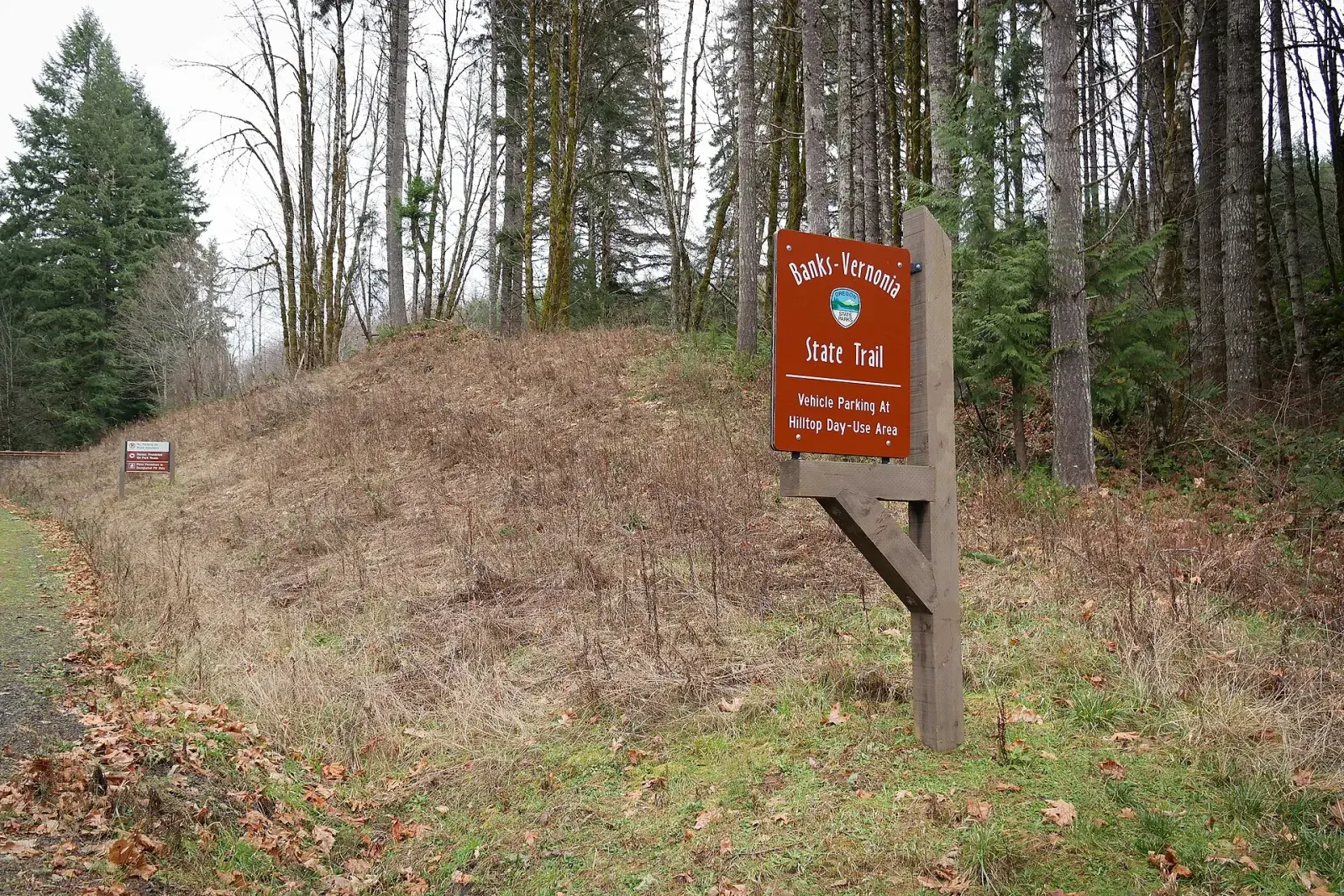
Bike & Hike: Oregon's Coast Range Rail-Trails
Two abandoned railroad grades being turned into a continuous route from the Portland-area foothills to the Pacific
The Rail-Trail Story
Oregon's Tualatin Mountains and northern Coast Range hold three connected rail-trail corridors that, laid end to end, trace a nearly continuous non-motorized route from the Columbia River to the Pacific Ocean. From the Portland side toward the coast they are: the Crown Zellerbach Trail, a roughly 25-mile Columbia County trail on an old logging railroad and truck haul road from Scappoose to Vernonia; the Banks-Vernonia State Trail, a 21-mile paved path from Vernonia to Banks that was Oregon's first rails-to-trails conversion; and the Salmonberry Trail, a planned corridor of roughly 82 miles, with published estimates ranging from 82 to 86, that would carry on from Banks through the Tillamook State Forest and the Salmonberry River canyon to Tillamook.
All three sit on railroad grades abandoned after the traffic that built them, timber and coastal dairy, either ran out or was destroyed. The Crown Zellerbach line stopped hauling logs by rail in 1943 and spent the next half-century as a private logging-truck road. The Banks-Vernonia grade lost its sawmill traffic in 1957 and had its rails pulled up in the early 1970s. The coastal line through the Salmonberry canyon was severed by a single catastrophic storm in December 2007 and never rebuilt. In each case a public agency, Columbia County in the first instance and the State of Oregon in the other two, ended up holding a graded, continuous corridor with no realistic rail future.
A rail grade is close to an ideal trail. It was engineered for locomotives, so its ruling grade rarely exceeds two or three percent, its curves are broad, and its bridges and tunnels already span the hardest terrain. Converting one is mostly a matter of decking bridges, stabilizing slopes, and surfacing the tread rather than route-finding through mountains. Not every mile is gentle, the Crown Zellerbach corridor was partly re-graded for trucks and has some steep pitches, but the bones of a mountain route are already in place. That is why Oregon, like dozens of other states, has come to treat its dead rail lines as recreation assets rather than liabilities.
This tab traces the full arc: why the trains came to this corner of Oregon, what they carried, why they stopped, and how their abandoned grades are being turned back into public routes for people on foot, on bikes, and on horseback. The Crown Zellerbach and Banks-Vernonia trails are open today and meet at Vernonia. The Salmonberry Trail is under construction only in short demonstration segments and is not yet open to the public.
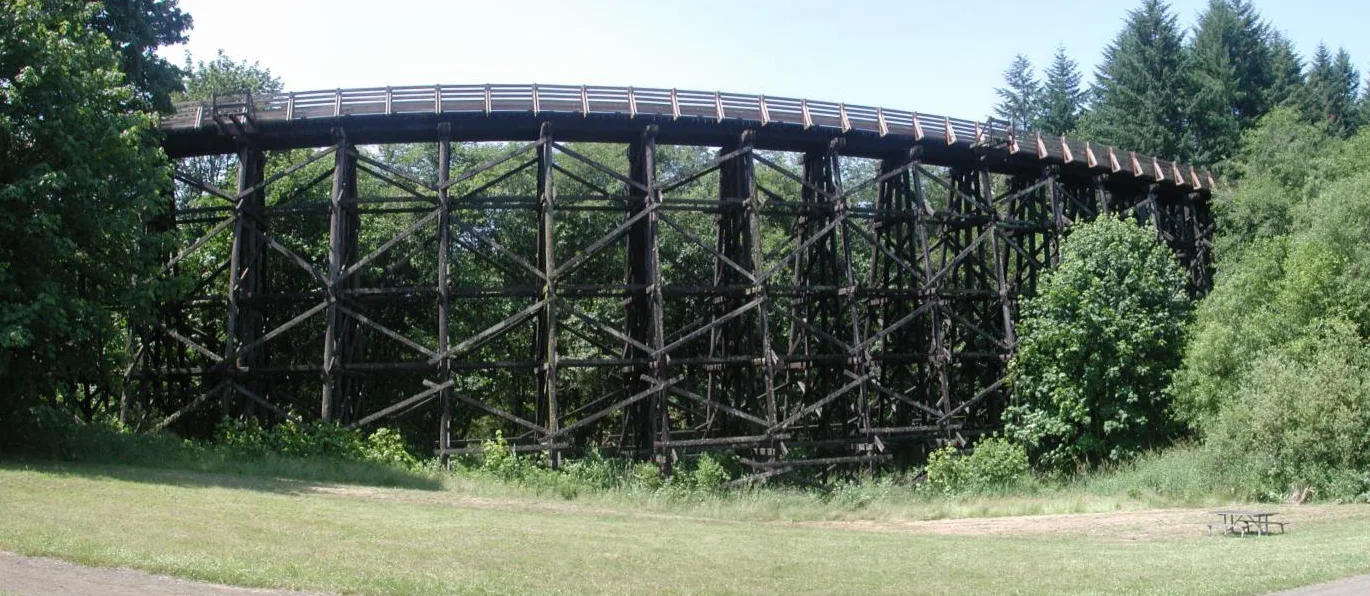
Why the Trains Ran
Two railroads pushed into the northern Coast Range in the early 1900s, one chasing coastal dairy and freight, the other chasing timber.
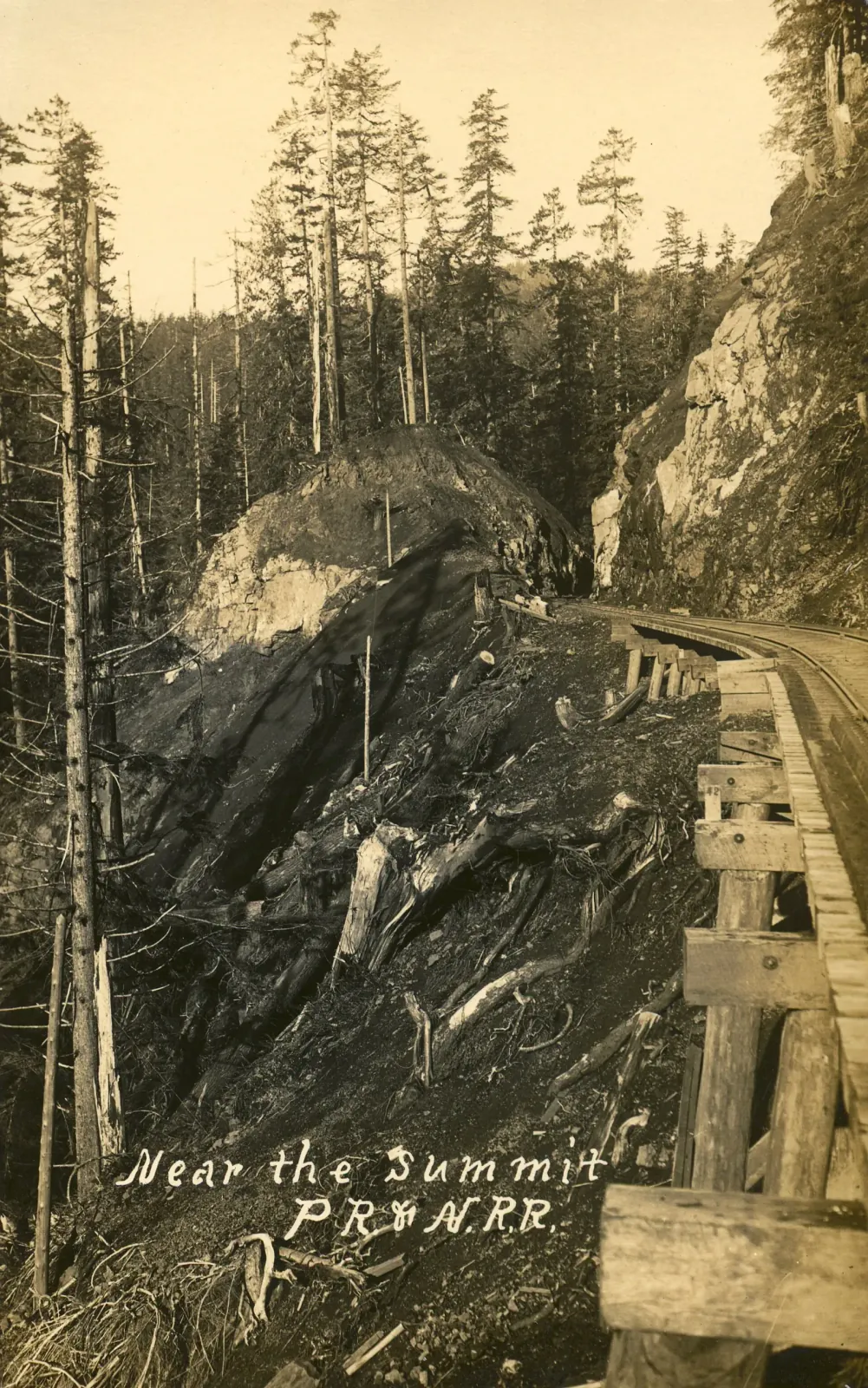
Tillamook County spent its first fifty years of American settlement almost completely cut off from the rest of Oregon. The Coast Range walled it off to the east, and the only reliable link to Portland was by coastal steamship across the dangerous Tillamook bar. In 1905 the brothers Elmer and Charles Lytle incorporated the Pacific Railway & Navigation Company to change that, and in 1906 they began building a standard-gauge line inland from Tillamook and westward from Hillsboro at the same time, aiming to meet somewhere in the mountains.
The route they chose followed the Nehalem River and then the narrow canyon of its tributary, the Salmonberry, because that was the only grade gentle enough for a railroad through the range. It was brutal country to build in. Crews worked through near-constant rain, unstable slopes, and repeated washouts, and the line's reporting mark, PR&N, was soon being read as the 'Punk, Rotten and Nasty' by the men laying its track. The canyon section alone required roughly a dozen tunnels and dozens of timber trestles, some of them well over a hundred feet tall.
The last spike went in and the first through train ran between Hillsboro and Tillamook on October 9, 1911, over a line of roughly 91 miles. For Tillamook's dairy farmers the change was immediate: cheese and butter that had moved out slowly by boat could now reach Portland markets in a single day, and manufactured goods, mail, and passengers came back the other way. It was the railroad, not any road, that ended the county's isolation.
The Southern Pacific had seen the line's value early. It took a financial interest in the PR&N in 1906, assumed operating control on June 5, 1909, and bought the company outright on July 1, 1915, folding it into the SP system as the Tillamook Branch. From then until the 1990s the coastal rail line was run by one of the largest railroads in the American West.
Under Southern Pacific the Tillamook Branch settled into a long, steady, marginal existence. Its signature outbound cargo was dairy: the Tillamook County Creamery Association, founded in 1909, shipped its cheese to national markets over these rails for decades. Southbound trains also carried lumber and logs from Coast Range mills, and nearly everything a rural county needed came in the same way, from canned goods to automobiles.
The branch was never cheap to operate. Its profile through the Salmonberry canyon combined sharp curves, grades near the limit of what conventional locomotives could pull, and a long string of wooden trestles that had to be inspected and repaired constantly in a wet, timber-rotting climate. Slides and small washouts were a routine maintenance expense, not a rare emergency.
Scheduled passenger service on the line ended in the 1930s as paved highways reached the coast, leaving freight as the sole reason to keep the rails. Through the middle of the twentieth century that freight was enough: the mills were running, the creamery was growing, and there was no truck route over the mountains that could match a train for bulk tonnage.
By the 1980s the economics had turned. Southern Pacific, like most American railroads of that era, was shedding lightly used branch lines across its system, and a slow, slide-prone mountain line serving a handful of remaining customers was an obvious candidate. SP began pulling back from the Tillamook Branch, setting up the sale that would hand the line to a local public agency in 1990.
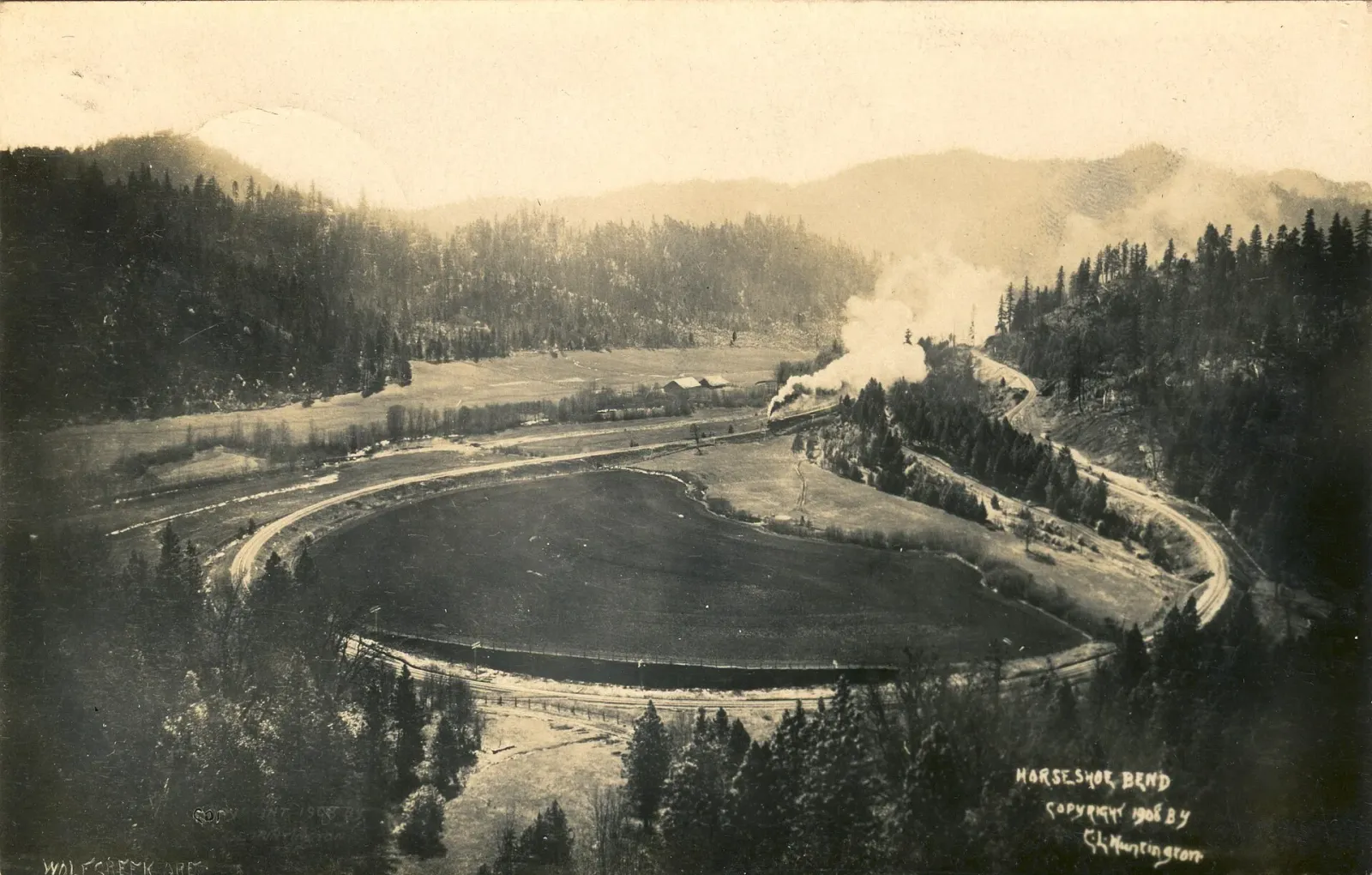
The second corridor had a single purpose: timber. In the years after World War I, investors organized to log the heavily forested hills around Vernonia in Columbia County, and a rail connection south to the Spokane, Portland & Seattle main line at Banks was the way to get the lumber to market. The Portland, Astoria & Pacific Railroad completed a line from Banks through Vernonia to Keasey in the early 1920s.
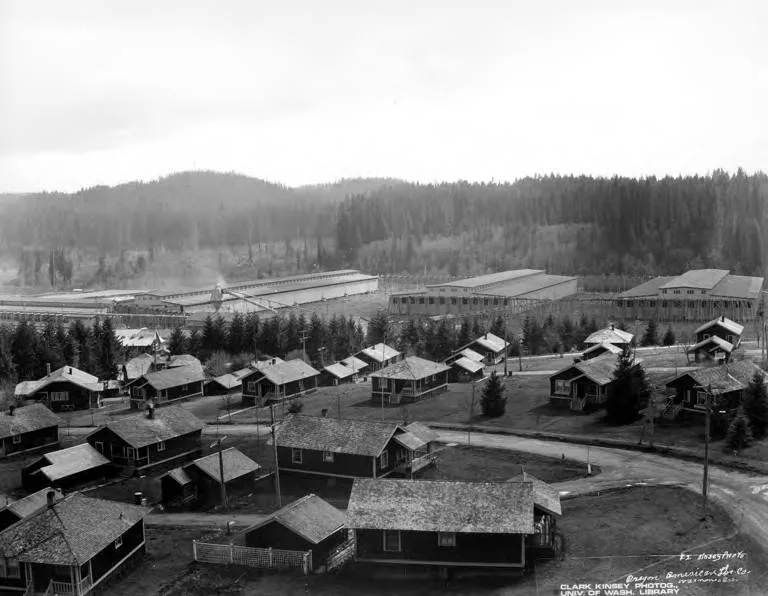
The anchor customer was the Oregon-American Lumber Company, which built one of the largest sawmills in the state at Vernonia in the mid-1920s. Log trains ran down from the woods around Keasey to the mill, and finished-lumber trains ran south from the mill through Buxton and Banks toward Portland and beyond. The operating railroad, United Railways, was absorbed into the Spokane, Portland & Seattle system, which ran the branch for the mill.
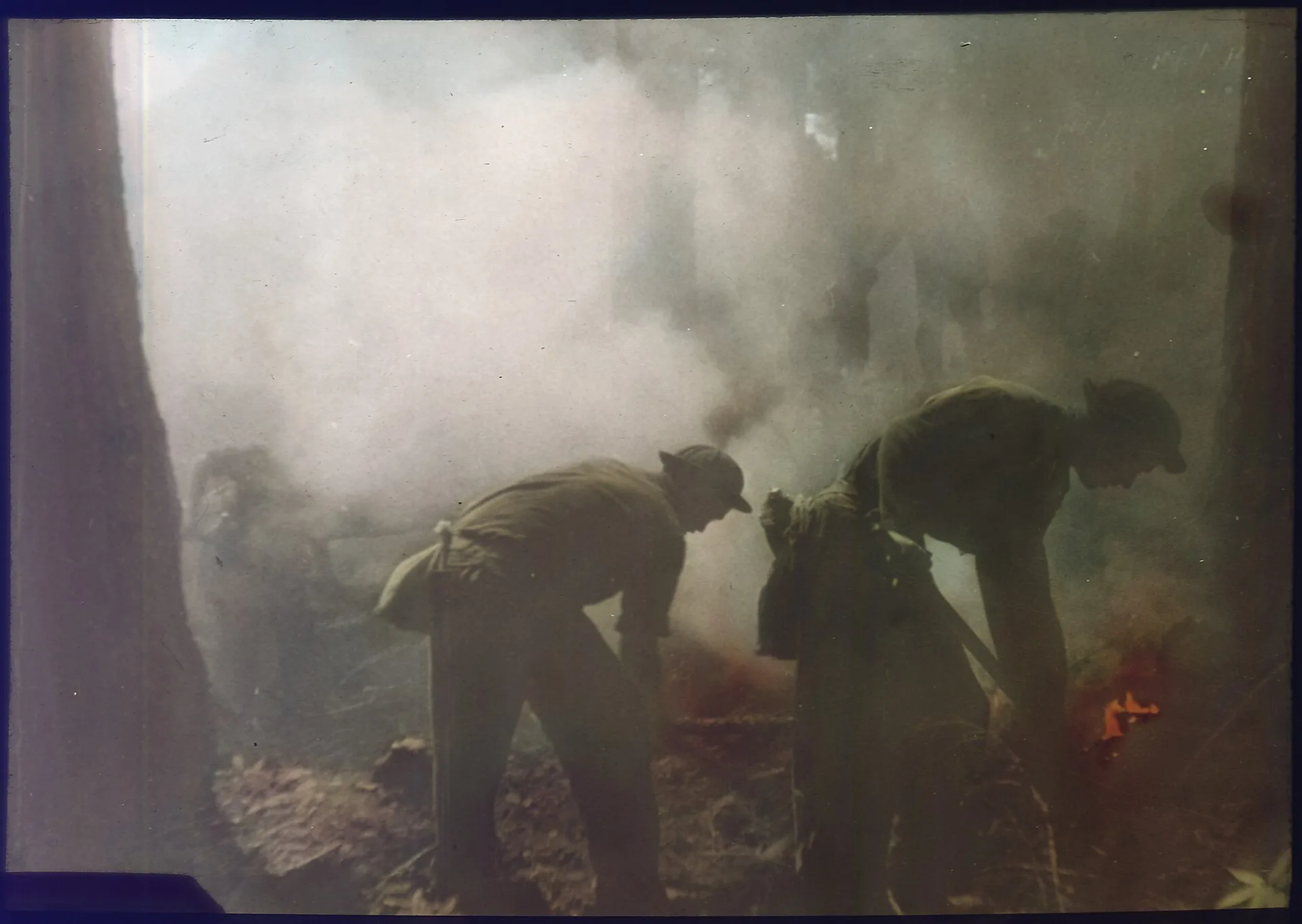
For roughly thirty years this was a classic company-town rail line. Vernonia's economy was the mill, the mill's output moved by rail, and the town's population rose and fell with lumber demand. The catastrophic Tillamook Burn, a series of fires that struck the Coast Range repeatedly between 1933 and 1951 and destroyed roughly 350,000 acres of timber, added years of salvage-logging traffic as crews raced to haul out fire-killed trees before they rotted.
The old-growth ran out in the 1950s. Ownership of the mill and line passed to Long-Bell Lumber in 1953 and then to International Paper in 1956, and by September 1957 the traffic was gone. The mill closed, and with no other significant shipper on the branch, the railroad's reason to exist went with it.
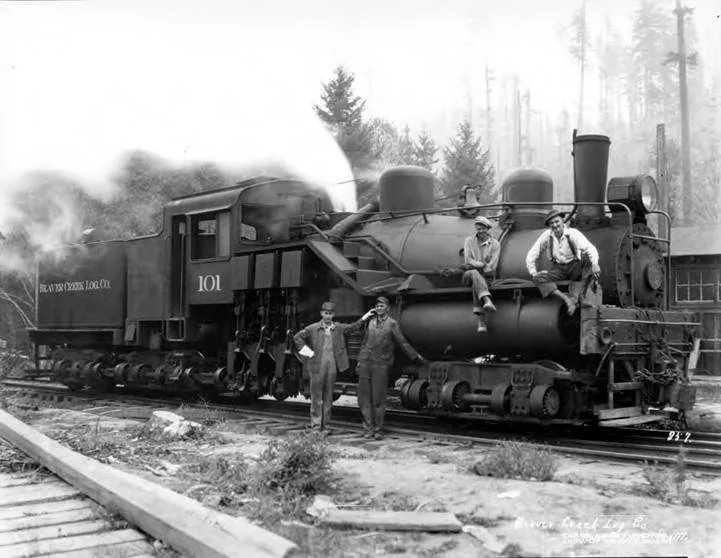
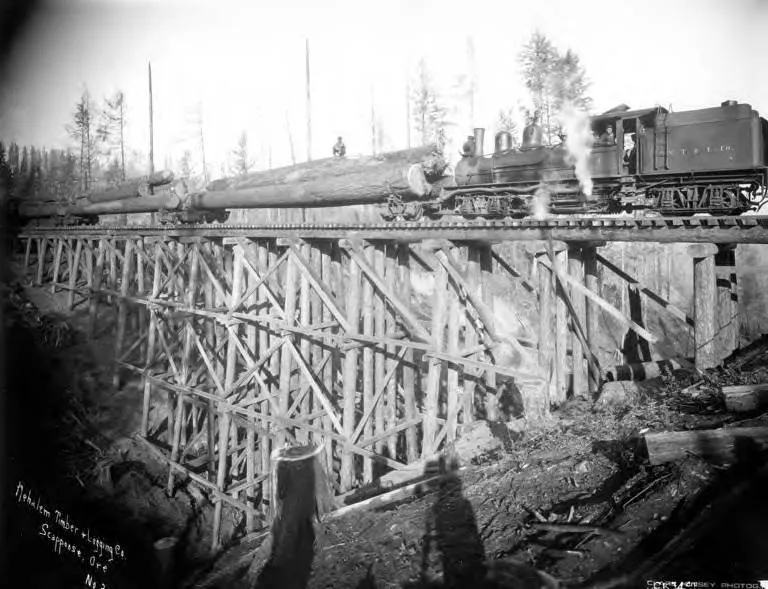
A third rail corridor climbed into these same hills, this one entirely about timber and entirely in Columbia County. Logging by rail here began in 1906, when Fred and Simcoe Chapman started building the Portland & Southwestern Railroad inland from the settlement of Chapman, on the Multnomah Channel near Scappoose, laying the line in stages and cutting timber as the grade advanced. It was one of Oregon's earliest purpose-built logging railroads.
The point of the line was to reach big timber and get it to water. Logs were hauled down to the Columbia River near Scappoose, dumped in, and rafted downstream to mills. As the cut moved deeper into the hills the railroad was extended to follow it, the standard pattern for a logging road, which grows and retreats with the timber rather than serving fixed towns.
The railroad was tied from the start to particular timber companies, not the public. The Nehalem Timber & Logging Company, organized in Portland in 1905 and working the country around Scappoose, owned the Portland & Southwestern Railway outright and used it to move logs toward Portland. The larger Clark & Wilson Lumber Company, run by two Clark brothers and two Wilsons who had come west from Wisconsin and operated mills at Linnton and Prescott and camps at Scappoose and Wilark, controlled the operation. In a four-way merger reported in October 1927, Clark & Wilson absorbed Nehalem Timber & Logging, the Portland & Southwestern Railway, and the Beaver Lumber Company of Prescott, becoming the line's principal operator with O.M. Clark as president.
This was a substantial logging railroad, not a short spur. Its main stem ran from Chapman over the divide and down toward the Nehalem River, and a branch known as the '500 Line,' named for the 500 million board feet of timber it was meant to open, crossed the Nehalem at Pittsburg and continued along the river's north bank toward the Apiary Road area. At Wilark the Portland & Southwestern connected with the Goble, Nehalem & Pacific Railway, giving its owners a second outlet for logs. In its busiest years the operation is said to have moved on the order of a million board feet of timber a day, pulling logs from as far as the Vernonia country and across the Nehalem Valley out to the Columbia.
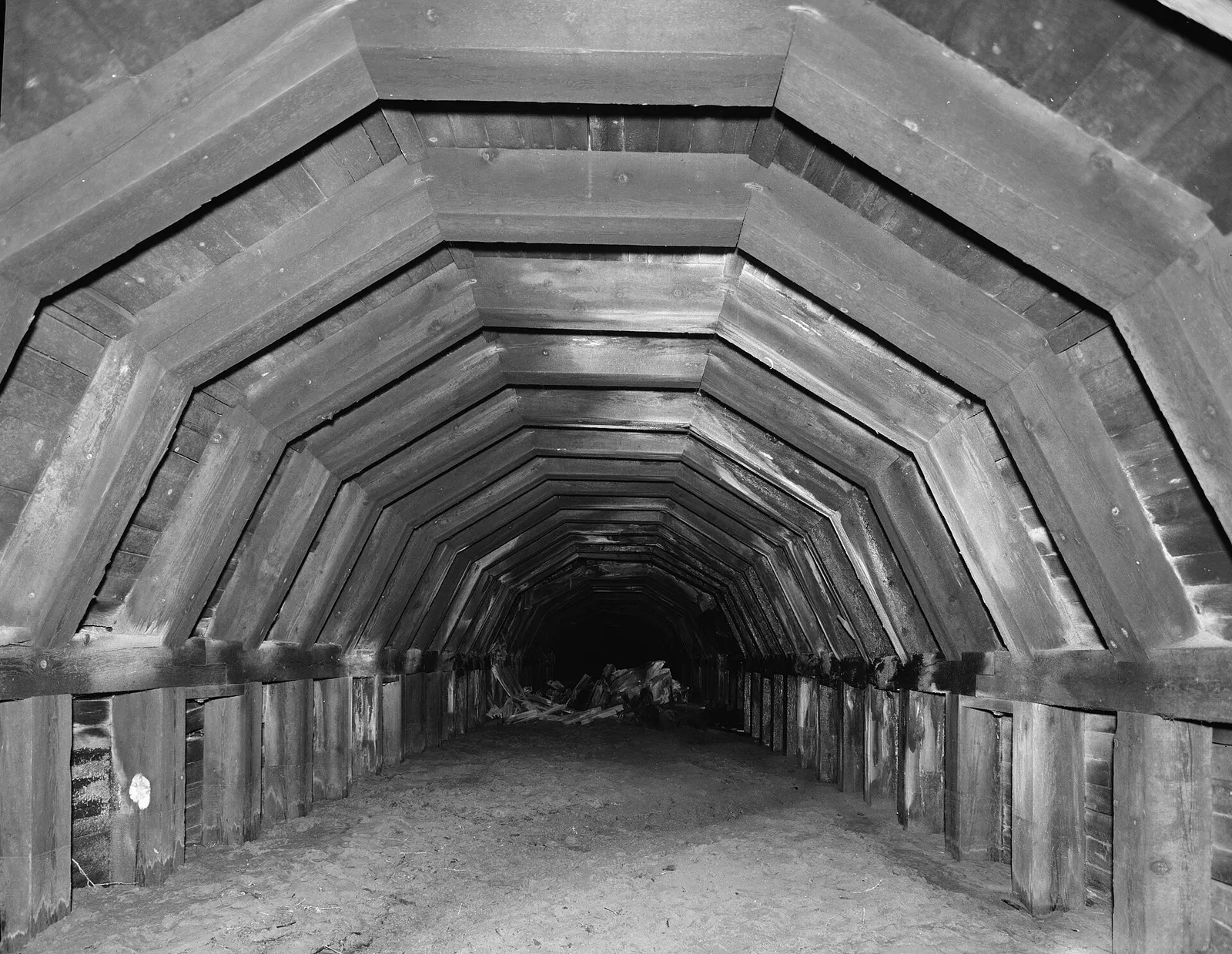
The hardest piece of engineering was the crossing of the Nehalem Divide, the low ridge between the Columbia and Nehalem drainages and one of the lowest gaps anywhere in the Oregon Coast Range. Rather than switchback over the top, the builders bored straight through. Preliminary work on the tunnel began around 1910, but the main drive was carried out in 1918 and 1919, much of it by hand through loose sandstone, and the finished bore, 1,712 feet long, had to be lined its whole length with timber because the rock would not stand on its own. It is the only tunnel ever driven through the divide of the Oregon Coast Range.
The Historic American Engineering Record documented the tunnel as survey OR-3, and it was added to the National Register of Historic Places on August 17, 1981, as a rare surviving example of all-timber tunnel construction from before concrete linings became standard. Its portals still stand a short marked spur off the modern trail, though the bore itself is wet, unlit, partly collapsed, and closed to through travel.
The Portland & Southwestern ran logs over this grade for a little under four decades. Slides and roof falls in the timber-lined tunnel made the through route a constant expense, and by 1943, with the maintenance mounting and the original timber worked out, Clark & Wilson gave up on the line, and the land and corridor passed to the Crown Zellerbach Corporation. Trains kept running on parts of it into the mid-1940s, until Crown Zellerbach pulled up the rails and rebuilt the grade as a private logging-truck road, routing the trucks up and over the divide because they could not fit the low tunnel. The human cost of the railroad years is recorded too: Taijiro 'George' Kumazawa, a Japanese immigrant who had worked on these trains since about 1916 and farmed at Chapman, was killed in a fall from one of the line's trestles in 1935.
Why the Trains Stopped
One line lost its industry and was dismantled. The other was torn apart by a storm and judged too costly to rebuild.
When the Oregon-American mill shut down in 1957, the Banks-Vernonia branch went quiet almost overnight. There was no diversified local economy to fall back on, no grain elevators or factories or other mills along the line, just a graded corridor running through cut-over timberland from one small town to a junction.
The rails did not disappear immediately. From about 1965 to 1969 a tourist operation, the Vernonia, South Park & Sunset Railroad, ran steam excursion trains on part of the line, a brief second life as a heritage attraction rather than a freight carrier. When that venture ended, the corridor sat unused.
The line was formally abandoned in 1973 and the track was salvaged for scrap. At that point the right-of-way could easily have been broken up and sold off piece by piece to adjacent landowners, which is what happened to many abandoned rail corridors and what makes them nearly impossible to reassemble later.
Instead, the State of Oregon stepped in. The Oregon Department of Transportation bought the intact right-of-way in 1974 and held it as a single continuous property. In 1990 management passed to the Oregon Parks and Recreation Department, which developed it into the state's first linear rail-trail park. Trail construction continued for two decades, with the final segment and the Banks trailhead completed around 2010.
Southern Pacific's retreat from the Tillamook Branch in the 1980s put the coastal line at a crossroads. Outright abandonment would have meant losing rail service to Tillamook County entirely and, most likely, the fragmentation of the corridor into hundreds of separately owned parcels. Local leaders decided the connection was worth keeping in public hands.
In 1990 the Port of Tillamook Bay, a public port district, bought the entire branch from Southern Pacific. The Port ran it as a short line, the Port of Tillamook Bay Railroad, hauling what freight remained, primarily lumber and forest products, and it leased the scenic coastal segment for excursion service.
That excursion service became the Oregon Coast Scenic Railroad, which still operates vintage steam and diesel trains between Garibaldi, Rockaway Beach, and Wheeler on the intact coastal portion of the line. It is the one stretch of the old PR&N where regular trains still run today.
The Port's freight operation, though, was living on thin margins over expensive mountain infrastructure. The inland line through the Salmonberry canyon still had the same aging trestles, the same slide-prone slopes, and a shrinking list of customers. It needed only one bad winter to break it.
On December 2 and 3, 2007, a powerful storm system now known as the Great Coastal Gale struck the Oregon and Washington coasts. It brought hurricane-force wind gusts and, more damaging for the railroad, a warm atmospheric-river deluge that dropped well over a foot of rain on the already saturated Coast Range in roughly 48 hours.
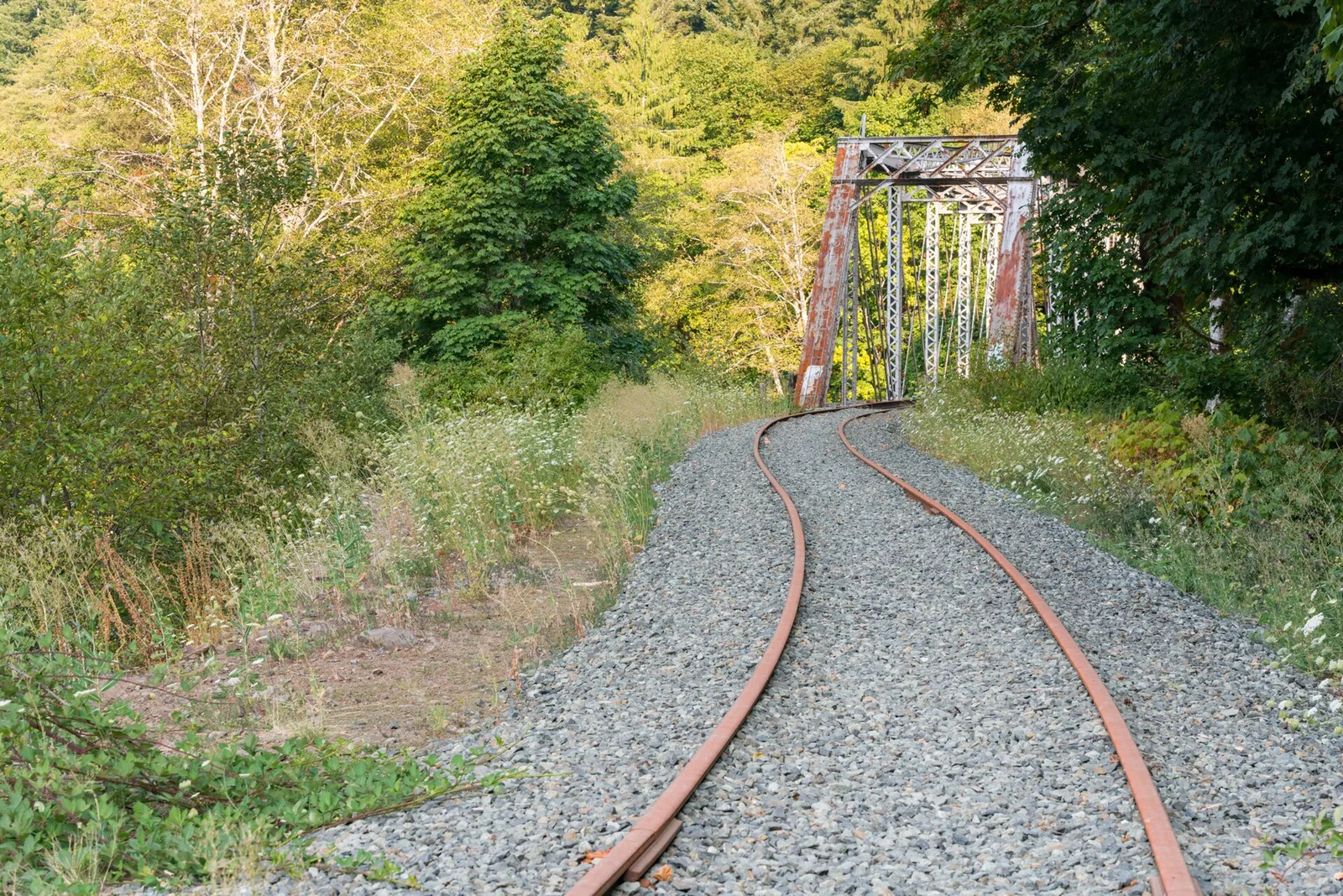
The Salmonberry River canyon, the hardest place to build the line a century earlier, was the hardest hit. The river rose violently and tore out entire sections of railbed. Landslides buried the track in some places and undercut it in others. Tunnels filled with mud and debris, and bridges and trestles were knocked out of alignment or destroyed outright. Miles of the inland line were left unusable.
Damage assessments carried out with the Federal Emergency Management Agency put the cost of restoring the line to pre-storm freight condition at roughly 57 to 60 million dollars. That was an enormous sum for a short line whose remaining freight revenue was modest, and there was no longer a mill or shipper on the far side large enough to justify the rebuild.
The inland rail line was never restored. Freight trains stopped running between the Willamette Valley and the coast, and the Salmonberry canyon segment of the corridor has been closed to through traffic ever since. What survived was a spectacular, publicly owned grade of more than 80 miles running through state forest with no realistic railroad future, exactly the raw material a rail-trail is made from.
The buyer of the idle Portland & Southwestern grade was Crown Zellerbach, one of the largest pulp and paper companies in the country. It had been formed in 1928 by the merger of the San Francisco paper distributor Zellerbach Paper and the Oregon mill operator Crown Willamette Paper, and it held hundreds of thousands of acres of Pacific Northwest timberland, including large blocks in Columbia County.
In 1944 Crown Zellerbach bought the disused line, pulled up the rails, and rebuilt the roadbed as a private logging-truck haul road. By then trucks had largely replaced rail for moving logs in the Coast Range: they were cheaper for a company that owned both the land and the road, and they could follow the cut without laying new track. The old rail grade, wide and gently benched, made an ideal truck road, though the rebuild added steeper pitches the railroad had been engineered to avoid, and the low, narrow Nehalem Divide tunnel was bypassed by a road cut over the top.
For roughly half a century the corridor served Crown Zellerbach's working forest, feeding logs toward the company's mills, including the large pulp and paper mill it built at Wauna on the lower Columbia, which opened in 1965 and still runs today under later owners. The trees along the corridor were cut, replanted, and cut again on the cycle of an industrial tree farm.
Crown Zellerbach itself did not last. The company was broken up in a 1985 takeover, and its Northwest timberlands passed through a series of owners; much of the land along the corridor is now part of Weyerhaeuser's Northwest Oregon tree farm. As the haul road fell out of regular use, Columbia County began assembling the right-of-way, piece by piece and easement by easement, for a public trail.
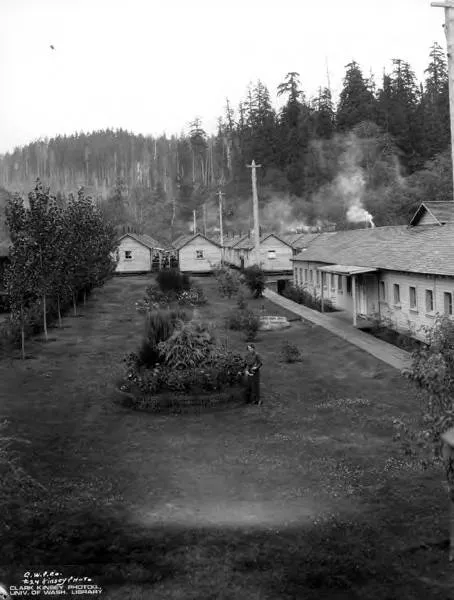
Why a Trail, and Why Now
After 2007, converting the dead line to a public trail became the most credible plan for the corridor.
Before the haul road there was a railroad corridor, and what Columbia County set out to reassemble was not raw ground but what had already been engineered twice over. The Portland & Southwestern logging railroad surveyed and graded the route inland from Chapman beginning in 1906, and by about 1920 its crews had done the expensive work, the rock cuts, the timber fills, and the 1,712-foot timber-lined tunnel through the Nehalem Divide before the rail logging in the center of the county contracted sharply around 1933 in the Depression and much of the branch trackage was pulled for scrap, but the graded right-of-way over the divide survived. Crown Zellerbach bought the land in 1943 and by the mid-1940s had lifted the remaining rails and widened the bed into a private logging-truck road (a haul road), bypassing the low tunnel with a cut over the ridge. When the county began acquiring the corridor decades later it was inheriting a mountain route that a railroad had located for close to ninety years.
Turning the haul road into a public trail took about three decades of patient work by Columbia County and local advocates. Unlike the Banks-Vernonia corridor, which the state bought intact in a single 1974 purchase, the Crown Zellerbach corridor had to be reassembled from many separately held segments, with easements granted by timber companies including Weyerhaeuser and the Holce Logging Company across land they still actively log.
The county completed the core of its acquisition in the mid-2000s and opened the Crown Z Trail to the public in 2014, managed by Columbia County Parks. Funding came from sources such as Travel Oregon and regional economic-development money rather than a single large state appropriation, and much of the trail-building was done incrementally as segments were secured.
Because the corridor runs through a working forest owned by others, the trail's story is deliberately about modern forestry as much as history. Beginning in 2022, Weyerhaeuser's regional foresters worked with the Crown Z Trail Advisory Committee to install interpretive signs at points where trail users can see active timber management, explaining working forests, replanting, and how much the industry has changed in a century.
The county describes the trail as substantially complete but still a work in progress: a few segments remain rough or rely on quiet road connections, and improvements continue as money and easements allow. Its western end at the Holce trailhead in Vernonia sits beside Vernonia Lake, a short distance from the eastern end of the Banks-Vernonia State Trail.
In the years right after the 2007 storm the corridor was essentially frozen. The Port of Tillamook Bay still held the right-of-way and periodically studied rebuilding, but no funding source of the needed size ever materialized, and the case for spending tens of millions to restore freight service kept weakening as the forest-products economy shifted.
What the corridor did have going for it was its geography. It ran continuously from the edge of the Portland metro area, through the largest block of state forest in Oregon, down a wild river canyon, and out to Tillamook Bay, passing several coastal towns on the way. As a recreational route, that combination is close to unique in the state.
Trail advocates, local governments, and state agencies began seriously discussing a conversion around 2012. The core argument was the same one that had produced the Banks-Vernonia trail a generation earlier: the expensive part, a graded and bridged route through the mountains, already existed, and letting it revert to brush or be sold off would waste a public asset that could never be recreated.
The proposal that emerged was for a non-motorized trail from Banks to Tillamook, sharing the coastal segment with the still-active Oregon Coast Scenic Railroad as a rail-with-trail arrangement and running on the abandoned grade everywhere else. It would tie directly into the Banks-Vernonia State Trail at its eastern end, in effect extending that finished trail all the way to the sea.
To coordinate a project crossing two counties, multiple cities, state forest land, and a port district, the partners formed the Salmonberry Trail Intergovernmental Agency, or STIA, in 2018. Its members include the Oregon Parks and Recreation Department, the Oregon Department of Forestry, Tillamook and Washington counties, corridor cities such as Banks, Vernonia, and Wheeler, and the Port of Tillamook Bay. A separate nonprofit, the Salmonberry Trail Foundation, raises private money and organizes volunteers.
The plan divides the route into four segments with very different characters and costs. The Valley segment runs roughly 25 miles from Banks to the Cochran area inside the Tillamook State Forest. The Nehalem segment continues about 16 miles along the Nehalem River. The Salmonberry, or canyon, segment covers the wildest 17 miles or so along the Salmonberry River. The Coastal segment runs about 26 miles from Wheeler south through Rockaway Beach and Garibaldi to Tillamook.
Across the whole corridor the plan inherits roughly ten railroad tunnels and more than seventy trestles and bridges, most of which need major repair or full replacement before they can carry trail users. Rails-to-Trails Conservancy has estimated total build-out at around 150 million dollars, with completion planned in phases over a period reaching into the 2030s.
Governance is still evolving. Through 2025 and 2026 the partners have been moving toward a more streamlined structure, with the Oregon Parks and Recreation Department taking a larger direct role in delivering the trail rather than the corridor being managed entirely through the intergovernmental agency.
The eastern anchor is already finished and open: the 21-mile Banks-Vernonia State Trail, in continuous public use for years. Any progress on the Salmonberry Trail effectively lengthens that existing trail westward.
The first newly built piece of the Salmonberry Trail broke ground at Wheeler, on the coast, on July 12, 2025. It is a short demonstration segment, on the order of half a mile, meant to show what the finished trail surface and structures will look like and to build public momentum for the larger project.
On the valley end, planners have prioritized a roughly three-mile connector in Washington County linking the Manning area to L.L. Stub Stewart State Park, along with a proposed 'Catalyst Loop' that would join the Salmonberry corridor to the Banks-Vernonia trail and the state park's own trail network. Completing that link would give the Portland area a continuous graded ride from Banks deep into the Coast Range.
The long-term vision is a single continuous non-motorized route well over a hundred miles long, counting the Crown Zellerbach and Banks-Vernonia trails on the east end, running from the Columbia River at Scappoose to Tillamook Bay and usable end to end by hikers, cyclists, and, on the sections built to take them, equestrians. Until the canyon segments are built, though, the middle of the corridor stays closed to the public.
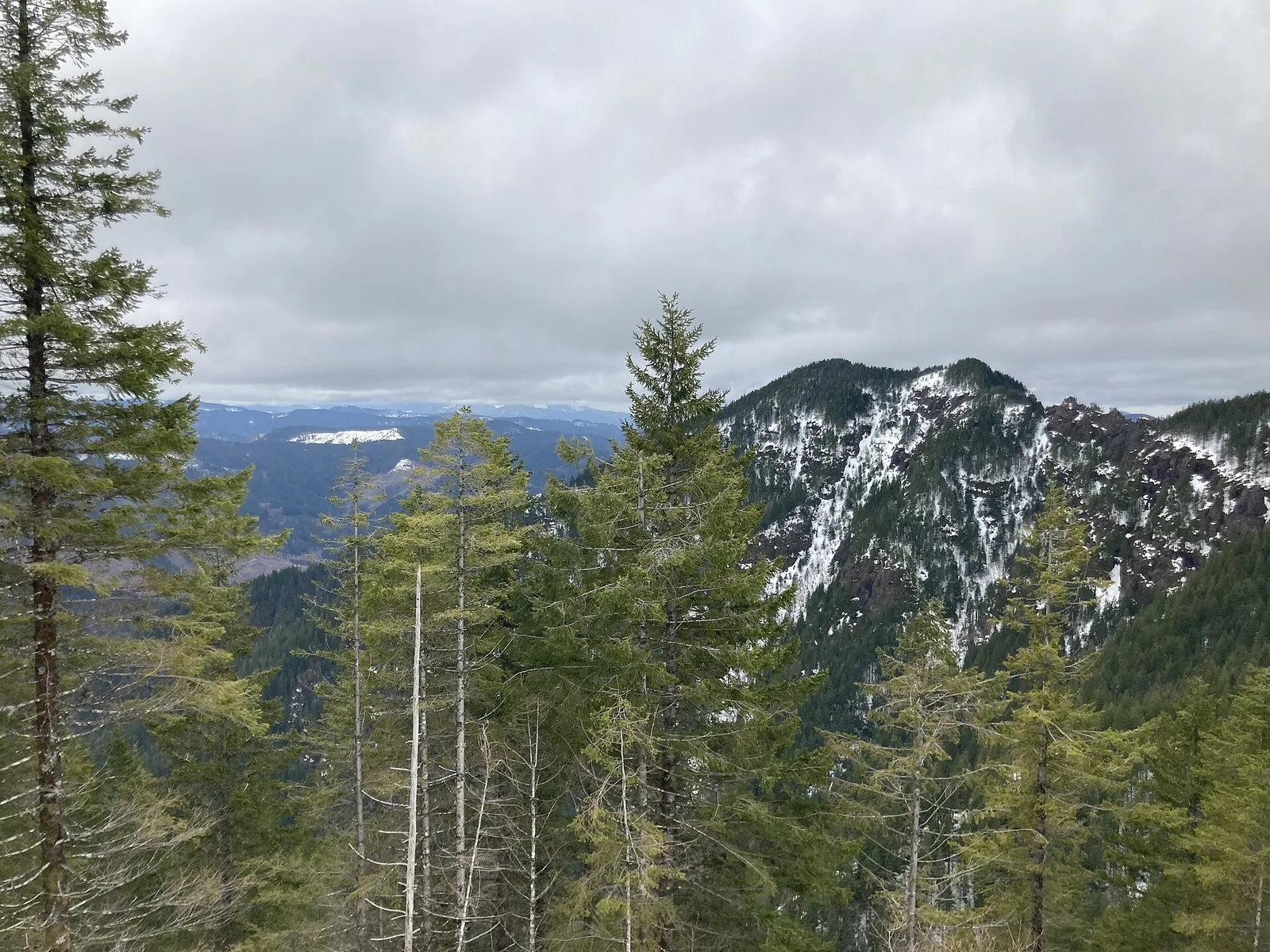
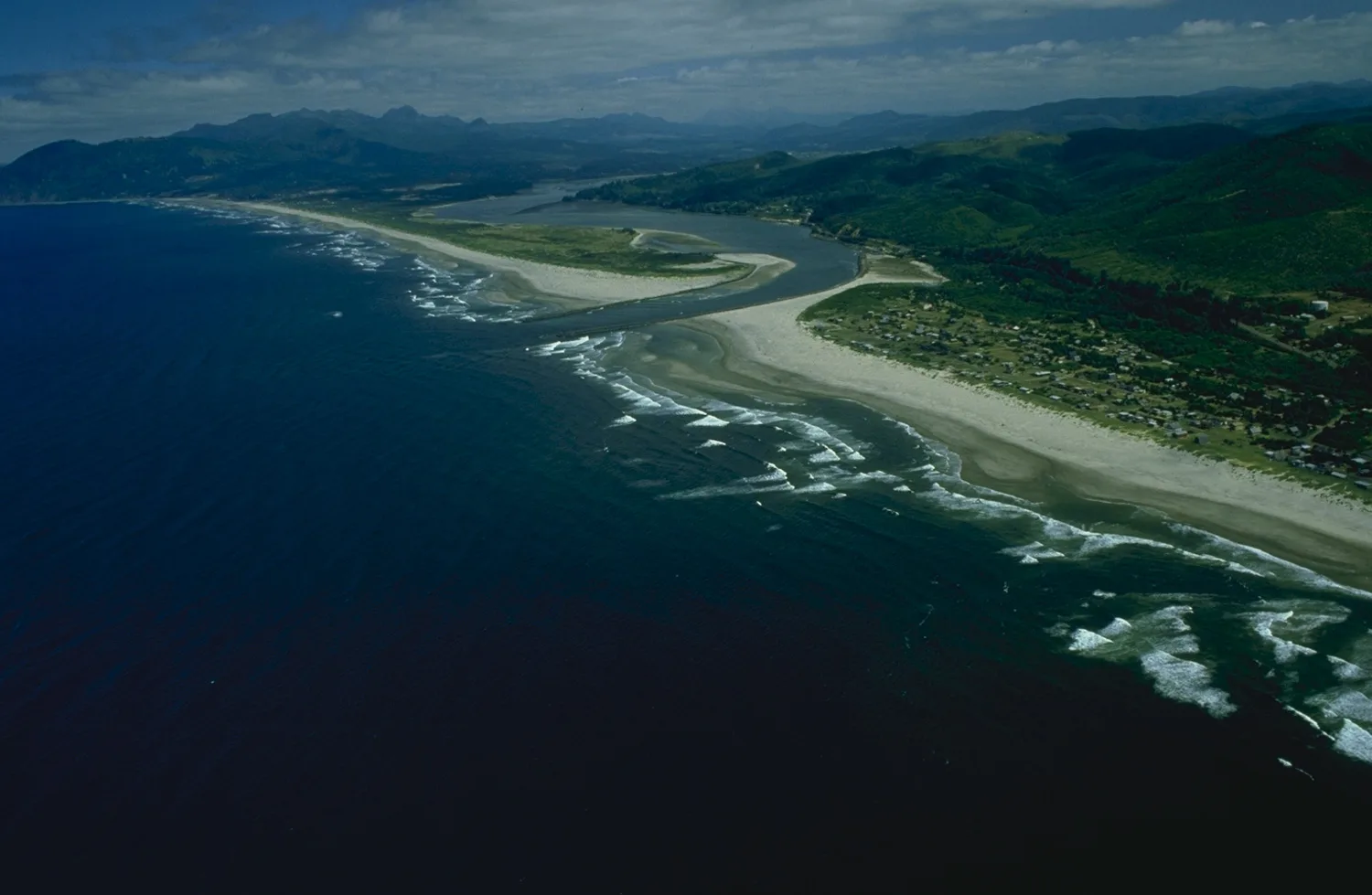
Riding and Hiking the Trails Today
Two trails are open, one park is their hub, and the rest of the corridor is guided-access only.
The Banks-Vernonia State Trail runs 21 miles between the small towns of Banks, in Washington County, and Vernonia, in Columbia County. The main tread is an 8-foot-wide paved path built for hikers and cyclists, and for most of its length a separate 4-foot gravel tread runs alongside it for horses. Electric bikes are allowed within the usual state-park limits on motor size and speed.
The grade is easy but not flat. From the Banks trailhead at roughly 200 feet of elevation the trail climbs steadily to a high point near Tophill at just over 800 feet, then descends toward Vernonia. Because it follows a rail grade the climb is spread over many miles and never gets steep, which is what makes the full traverse realistic for casual riders and for families.
The signature structure is the Buxton Trestle, a curving wooden railroad bridge that the Oregon Parks and Recreation Department restored and decked for trail use. It carries the paved path roughly 80 feet above Mendenhall Creek and several hundred feet across; equestrians take a marked bypass down to a creek crossing rather than the trestle deck. A second high trestle near Tophill was lost to fire in 1986 and is bypassed by a set of switchbacks.
There are five trailheads with parking and restrooms, at Banks, Manning, Buxton, Tophill, and Beaver Creek near Vernonia, plus a small covered whistle-stop shelter at Buxton. The trail was Oregon's first rails-to-trails conversion and remains one of its most popular, drawing riders from the Portland area for a half-day out-and-back or a full point-to-point ride with a car shuttle.
Almost exactly midway along the Banks-Vernonia trail, the paved path runs straight through L.L. 'Stub' Stewart State Park, a roughly 1,800-acre forest park in the hills near Buxton. It opened in 2007 and was the first full-service state park Oregon had built in decades.
The park is named for Loran L. 'Stub' Stewart, a timber-industry figure and longtime member of the state parks commission. Its terrain is second-growth Coast Range forest, logged and burned during the twentieth century and now grown back, which is typical of the country the whole rail corridor passes through.
Stub Stewart adds about 25 miles of its own trails to the corridor, purpose-built and signed for mountain biking, hiking, and horseback riding and ranging from easy loops to technical singletrack. That turns the Banks-Vernonia trail from a straight-line route into a hub-and-spoke network where riders can spend a full day.
The park also provides what a rail-trail on its own cannot: a full campground with tent sites, cabins, and RV hookups, plus a day-use area, flush restrooms, and drinking water. For anyone riding the trail over two days it is the logical overnight stop, and it is the reason the eastern end of the future Salmonberry route already has visitor infrastructure in place.
The Crown Zellerbach Trail, almost always called the Crown Z Trail, runs roughly 24 to 26 miles between Chapman Landing on the Multnomah Channel in Scappoose and the Holce trailhead at Vernonia Lake in Vernonia, entirely within Columbia County. About two paved miles near the Scappoose end are wheelchair accessible; the rest is packed gravel over the old rail-and-haul-road grade.
It is a harder outing than the paved Banks-Vernonia trail. Grades stay under five percent for the first eleven miles or so out of Scappoose, then steepen on the climb to the Nehalem Divide, reaching about ten to twelve percent near the top and pitches as steep as twenty percent on the descent toward Vernonia, because the haul-road rebuild was not held to a railroad's gentle ruling grade. The high point is a little over 1,200 feet at the divide.
The signature feature is the abandoned Nehalem Divide railroad tunnel, the 1,712-foot bore completed in 1920, reached by a short marked spur off the main trail near the summit. It is on the National Register of Historic Places, and while the portals can be viewed, the tunnel itself is unlit, wet, and not maintained for through travel.
Seven trailheads give access along the route, at Chapman Landing, Scappoose, Pisgah, Bonnie Falls, Ruley, Floeter, and Holce. Use is non-motorized: walking, mountain biking, horseback riding, and cross-country skiing in winter. Interpretive kiosks along the way cover the Portland & Southwestern Railroad, the logging camps at Wilark and Camp 8, modern working-forest practices, and homestead families who lived along the corridor, including the Japanese American Kumazawa family.
West of the Banks-Vernonia trail and Stub Stewart, the corridor is not a trail yet and is not open to the public. The abandoned grade through the Tillamook State Forest and the Salmonberry River canyon still carries the damage the 2007 storm left behind: unstable slopes, slide debris, tunnels in poor condition, and wooden trestles that have had no maintenance in nearly two decades.
Walking the canyon grade without authorization is both trespassing on a working corridor and genuinely dangerous. There is no cell coverage for long stretches, the river runs high and cold much of the year, some trestle decks are missing or rotten, and a turned ankle miles from a road in that terrain is a serious emergency.
The legitimate way to see it is with the Salmonberry Trail Foundation, which runs scheduled guided hikes on portions of the corridor and organizes volunteer work parties that have put in tens of thousands of hours clearing brush, documenting structures, and preparing the route. These outings are how the public gets a look at the canyon while the trail is being planned and funded.
On the coast, the Oregon Coast Scenic Railroad offers the other sanctioned way onto the historic line, riding a vintage train along Tillamook Bay between Garibaldi and Wheeler. When the Salmonberry Trail's coastal segment is built, trail users and those excursion trains will share the corridor, the same rail-with-trail model used elsewhere in Oregon.
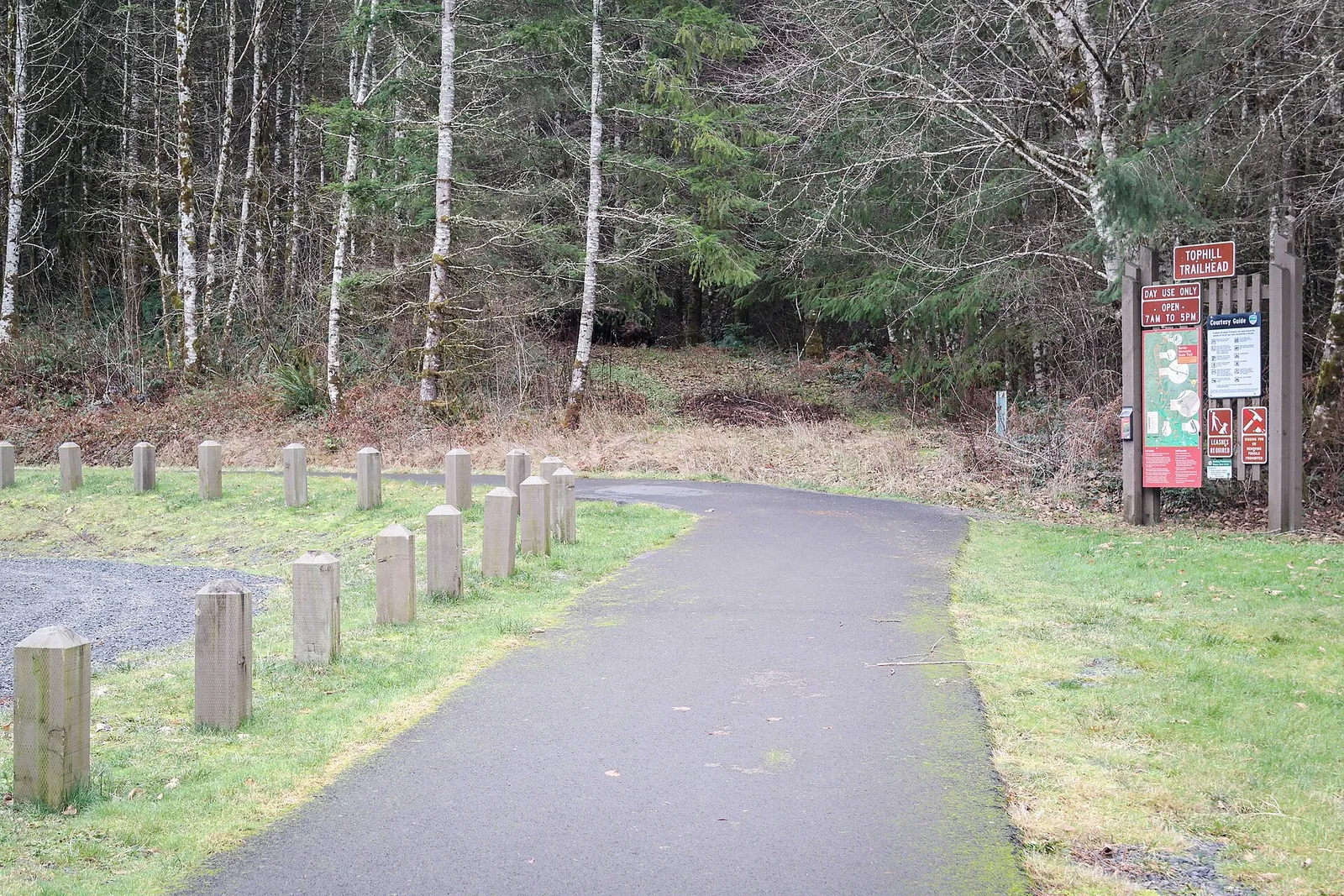
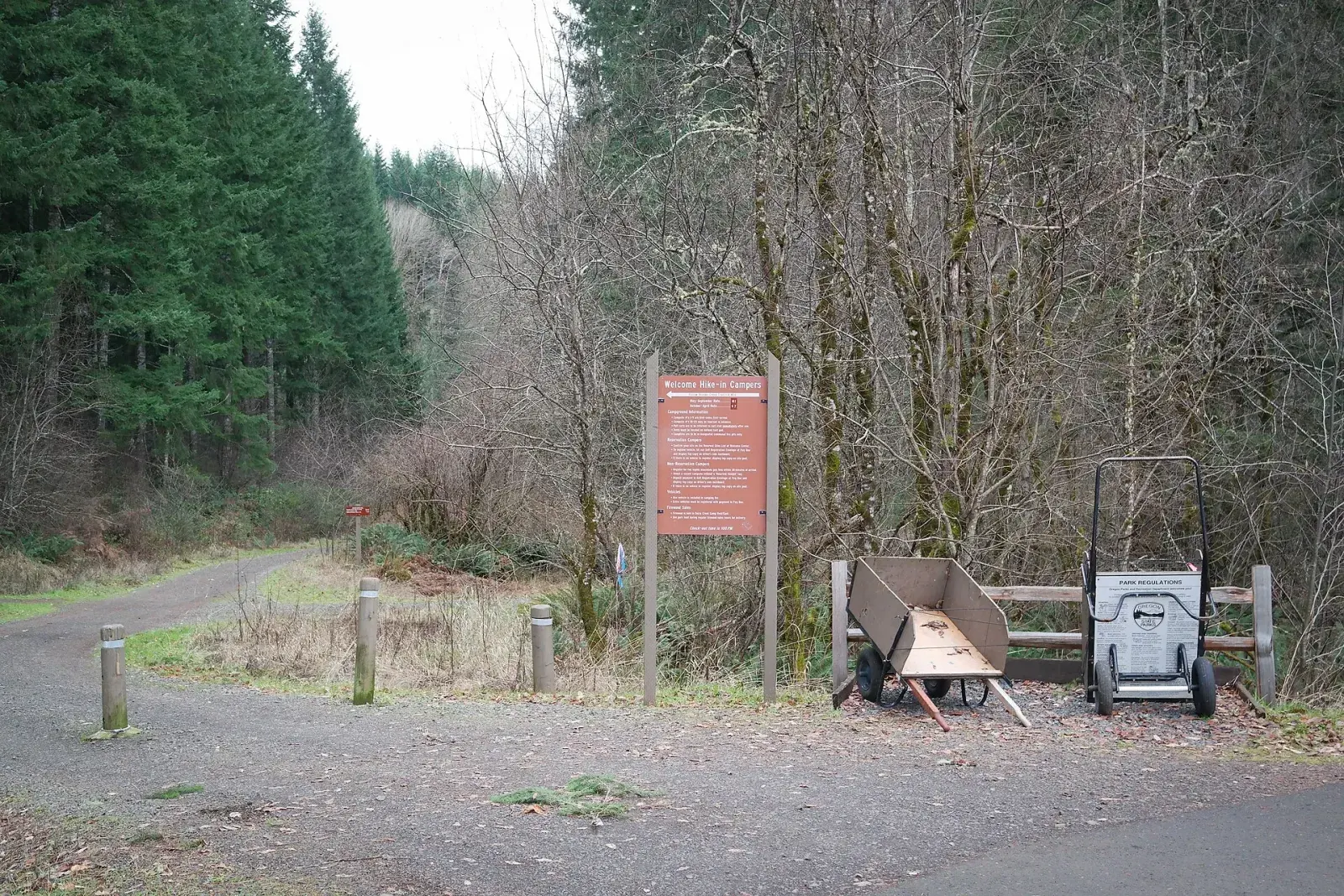
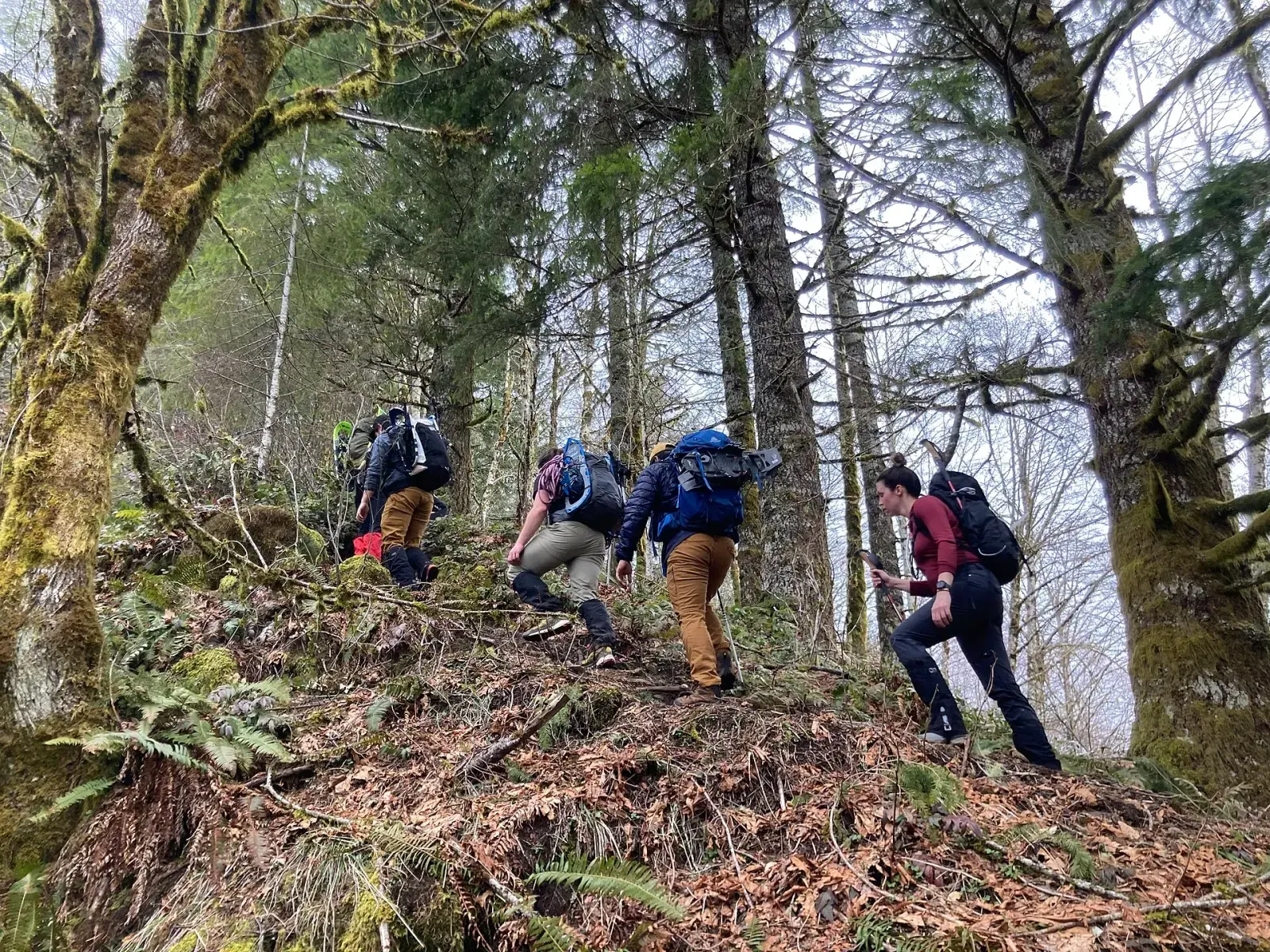
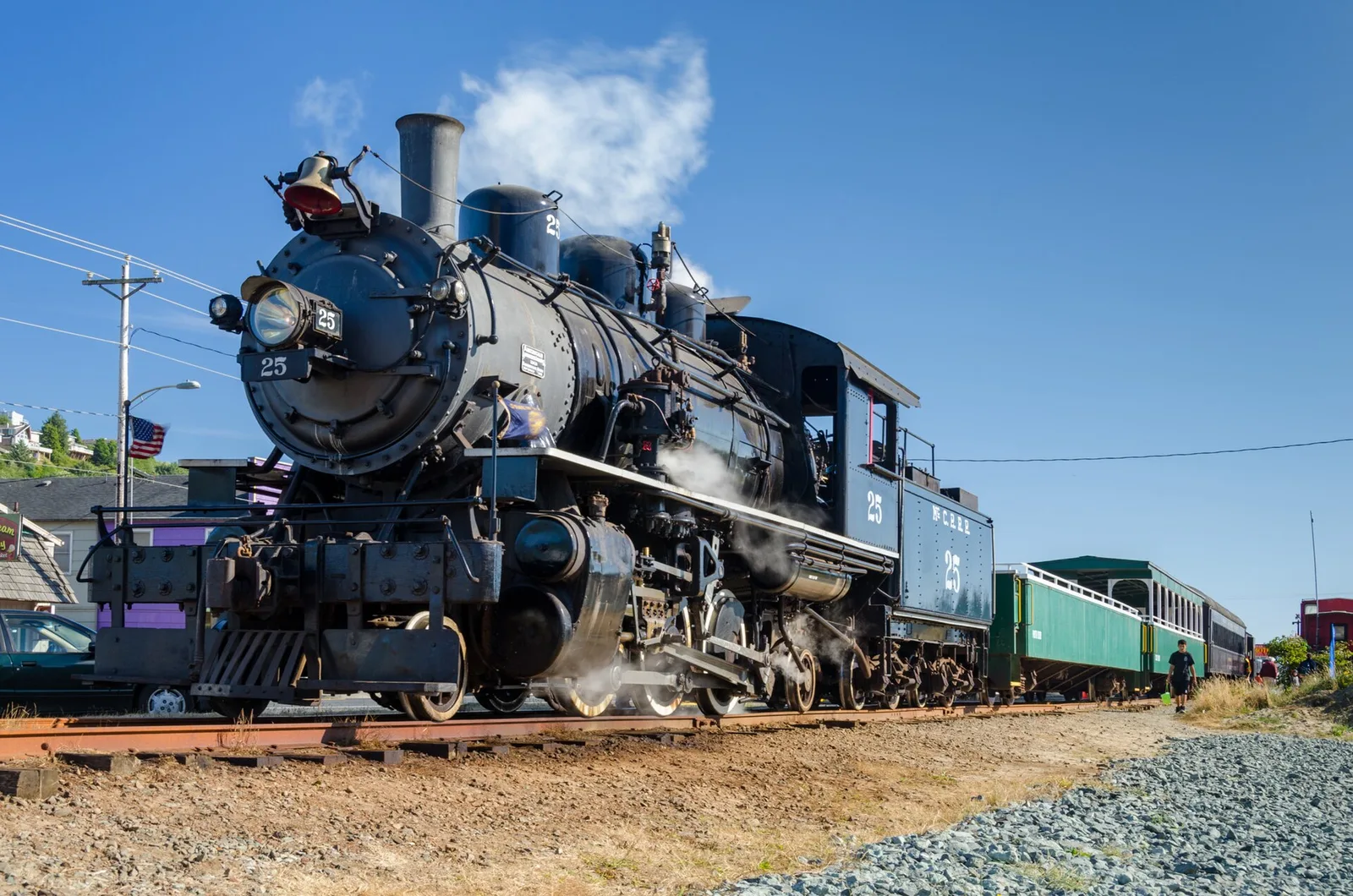
Fast Facts
Did You Know?
Railroad crews building the Pacific Railway & Navigation line through the Coast Range so hated the rain and mud that they turned the PR&N reporting mark into a nickname: the 'Punk, Rotten and Nasty.' The line still opened close to schedule, with the first through train running from Hillsboro to Tillamook on October 9, 1911.
The forest the trails run through burned repeatedly in the Tillamook Burn, a series of major wildfires between 1933 and 1951 that destroyed roughly 350,000 acres. Salvage-logging trains hauled fire-killed timber out for years, and the replanted second-growth forest is what trail users ride through today.
For decades the main thing shipped out of Tillamook County by rail was cheese. The Tillamook County Creamery Association, formed in 1909, relied on the Southern Pacific branch line to reach national markets before trucks and highways took over.
When it is finished, the Salmonberry Trail, plus the existing Banks-Vernonia and Crown Zellerbach trails on the east end, would form a continuous non-motorized route well over 100 miles long, from the Columbia River at Scappoose to the Pacific at Tillamook Bay.
The high point of the Crown Z Trail is the abandoned Nehalem Divide railroad tunnel, a 1,712-foot bore completed in 1920 for the Portland & Southwestern logging railroad. When the line became a truck haul road it was too low and narrow for loaded log trucks, so it was bypassed by a cut over the ridge and left alone. It is now on the National Register of Historic Places and reachable by a short spur off the trail.
Sources & Further Reading
- Oregon State Parks, Banks-Vernonia State Trail
- The Salmonberry Trail (Intergovernmental Agency and Foundation)
- Rails-to-Trails Conservancy, Salmonberry Trail case study
- Wikipedia, Salmonberry Trail
- Wikipedia, Banks-Vernonia State Trail
- Wikipedia, Port of Tillamook Bay Railroad
- American-Rails.com, Port of Tillamook Bay Railroad
- TrailLink, Banks-Vernonia State Trail rail-trail history
- The Oregon Encyclopedia, Tillamook Burn
- Wikipedia, L.L. 'Stub' Stewart State Park
- Crown Z Trail (Crown Z Trail Advisory Committee)
- Rails-to-Trails Conservancy, Oregon's Crown Zellerbach Trail
- Library of Congress, HAER OR-3: Portland & Southwestern Railroad Tunnel
- VanNattaBros.com, Columbia County Logging Railroads
- Wild Columbia County, The old tunnel through Nehalem Divide
- Columbia County, Oregon, Parks (Crown Z Trail)
- Wikipedia, Crown Zellerbach
- TrailLink, Crown Zellerbach Trail
Railroad and trail history draws on Oregon State Parks, the Salmonberry Trail Intergovernmental Agency and Foundation, Rails-to-Trails Conservancy, the Oregon Encyclopedia, and published histories of the Pacific Railway & Navigation Company and the Port of Tillamook Bay Railroad. Mileage and cost figures for the in-progress Salmonberry Trail are planning estimates and change as segments are designed and funded.