
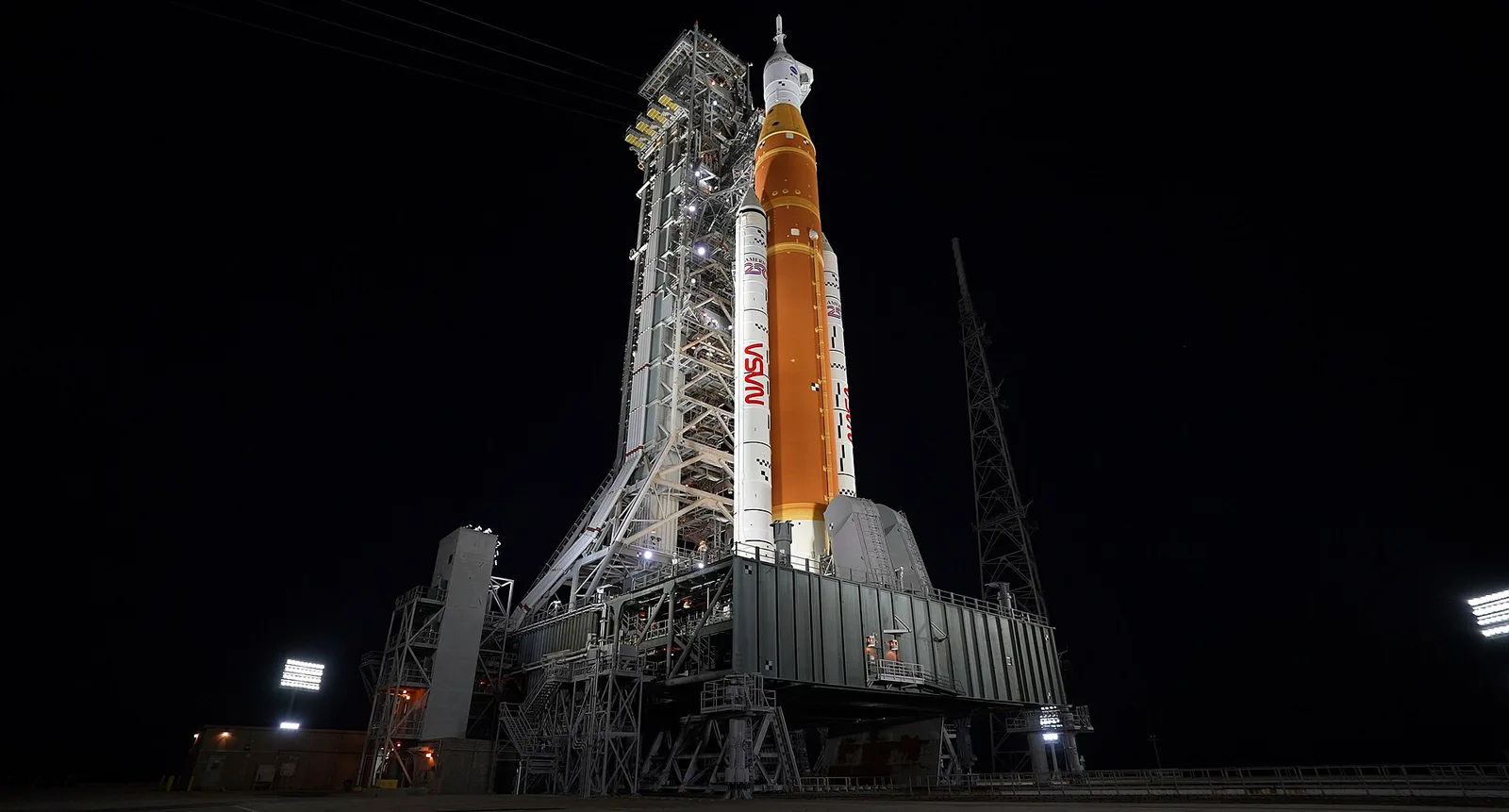
The U.S. Government

Because democracy only works when we understand it

Menu
American Achievements

NASA & the American Space Program

The history of NASA from Project Mercury through Artemis II: the missions, the astronauts, the triumphs, and the tragedies of the American space program.

Founded July 29, 195810 Field Centers97 Crewed Missions Since MercuryArtemis II Flew April 2026

About NASA

The National Aeronautics and Space Administration was created by the National Aeronautics and Space Act, signed by President Dwight D. Eisenhower on July 29, 1958, and opened for business on October 1, 1958. It absorbed the National Advisory Committee for Aeronautics, a smaller agency that had studied flight since 1915, and was built in direct response to the Soviet Union's launch of Sputnik 1 the previous year.

In the decades since, NASA has flown every American crewed spaceflight program, from Mercury and Gemini through Apollo, the Space Shuttle, the International Space Station, and now Artemis, while also operating robotic missions across the solar system and telescopes that observe the edge of the observable universe. The agency operates through 10 major field centers across the country, coordinated from its Washington, D.C. headquarters.

NASA's history includes extraordinary triumphs and hard losses. This page walks through both, along with the astronauts, engineers, and scientists, including many women and pioneers of color who broke barriers along the way, who made the American space program possible.
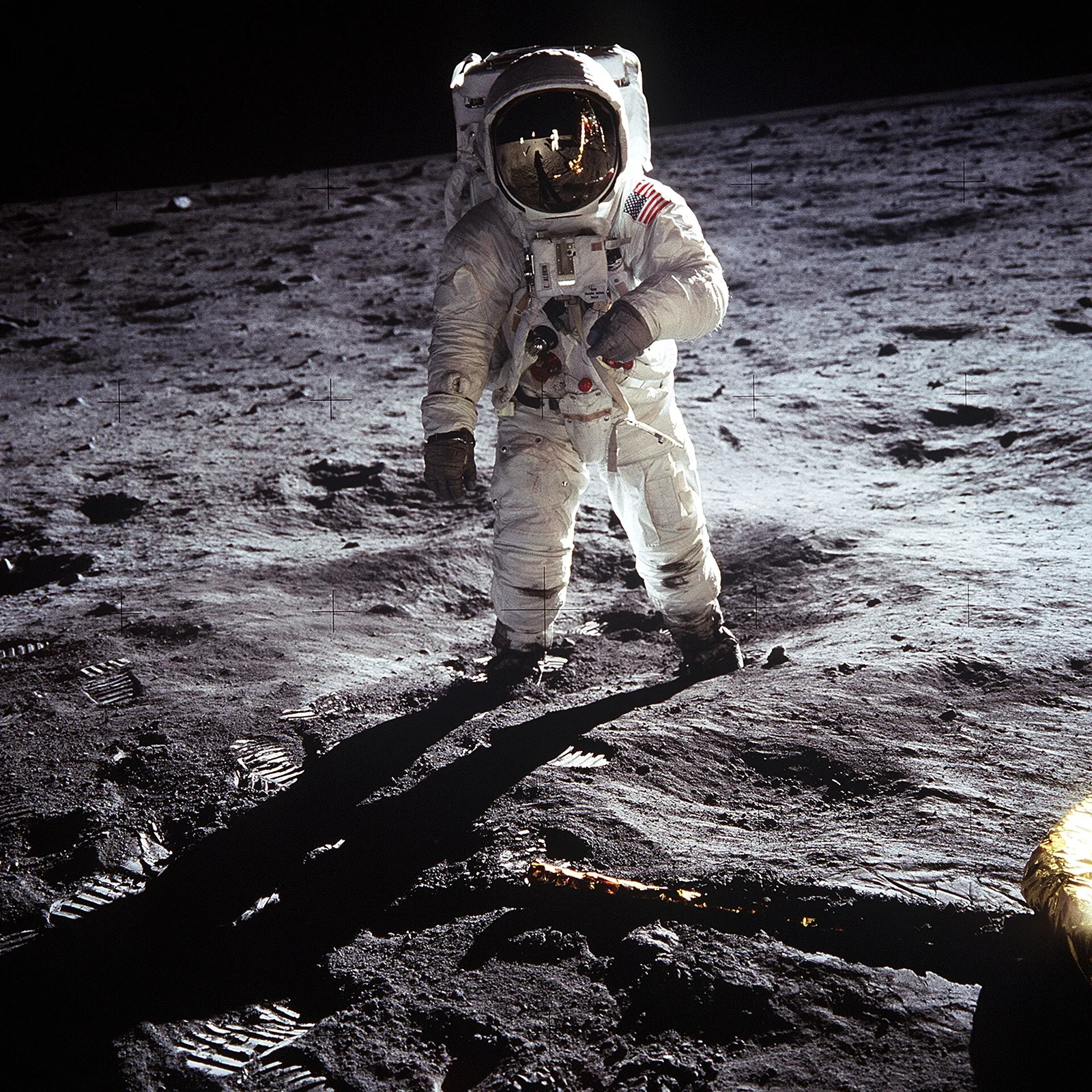
Apollo 11 astronaut Buzz Aldrin standing on the lunar surface, photographed by Neil Armstrong

Eras of American Spaceflight

  1. NASA Founded

    The National Aeronautics and Space Administration opens for business on October 1, 1958, absorbing the National Advisory Committee for Aeronautics.

  2. First American in Space

    Alan Shepard flies a 15-minute suborbital mission aboard Freedom 7.

  3. First American Orbits Earth

    John Glenn completes three orbits aboard Friendship 7.

  4. First American Spacewalk

    Ed White exits Gemini 4 for a 23-minute walk in space.

  5. Apollo 11 Moon Landing

    Neil Armstrong and Buzz Aldrin land on the Moon; Michael Collins orbits above.

  6. Skylab Launches

    America's first space station reaches orbit, later hosting three crews.

  7. First Shuttle Flight

    Space Shuttle Columbia flies STS-1, the first crewed flight of a reusable orbiter.

  8. Hubble Deployed

    Space Shuttle Discovery deploys the Hubble Space Telescope.

  9. ISS Construction Begins

    The Zarya and Unity modules launch, starting station assembly in orbit.

  10. Curiosity Lands on Mars

    The car-sized rover touches down in Gale Crater to search for signs of past habitability.

  11. Webb Telescope Launches

    The James Webb Space Telescope lifts off on Christmas Day, bound for deep space.

  12. Artemis I

    An uncrewed SLS-Orion test flight travels around the Moon and back.

  13. Artemis II

    The first crewed Artemis mission carries four astronauts on a lunar flyby and returns them safely to Earth.

Sources & Further Reading

  • NASA History Office, history.nasa.gov
  • NASA, "Artemis II" mission pages, nasa.gov/mission/artemis-ii
  • Rogers Commission Report on the Space Shuttle Challenger Accident (1986)
  • Columbia Accident Investigation Board, Final Report (2003)
  • Smithsonian National Air and Space Museum
  • NASA Langley Research Center, biographies of Katherine Johnson, Dorothy Vaughan, and Mary Jackson
  • National Archives, records of the National Aeronautics and Space Act of 1958