About West Virginia
West Virginia takes its name from Virginia, from which it separated during the Civil War. When Virginia voted to secede from the Union in April 1861, the counties of the western part of the state, which had fewer enslaved people, weaker ties to the plantation economy, and stronger economic connections to the North, refused to go along. Delegates from the western counties met, declared Virginia's secession ordinance void, formed a loyal state government, and petitioned Congress for admission as a separate state. West Virginia was admitted to the union on June 20, 1863, in the middle of the Civil War, making it the only state to have been formed by seceding from a Confederate state. The name West Virginia was chosen simply to reflect the region's geographical relationship to the original Virginia.
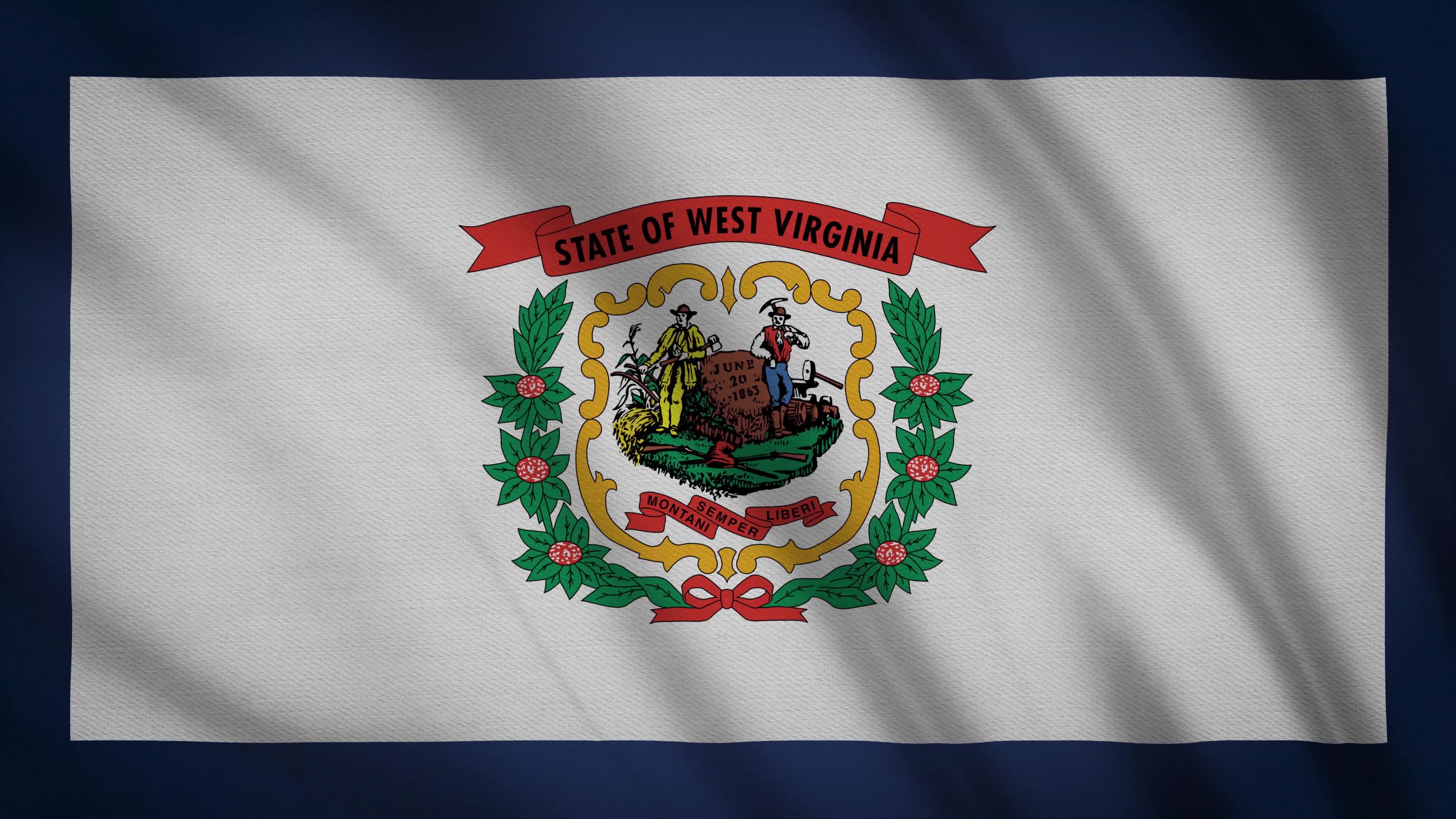
West Virginia is the only state born from the Civil War on the Union side, carved from Virginia by Unionist mountaineers who refused to follow a slaveholders' secession in which they had no stake and no interest. "Montani Semper Liberi" (Mountaineers Are Always Free) is not merely a motto. It is the operating principle of a state that has spent 160 years asserting its independence against coal companies, federal regulators, and anyone else who presumed to tell it what to do.
The state's geography tells the story: there are no flat plains here, no coastal lowlands, no navigable rivers that made tobacco or cotton agriculture possible. West Virginia is mountain on mountain, gorge on gorge, a landscape that kept out the plantation economy, made small-farm subsistence the dominant culture, and made the state's working people uniquely suited to the hard work of extracting coal from narrow seams deep underground. When the coal companies came with their railroads and their scrip and their company stores, they found a population that had never been broken to servitude and that eventually fought back, literally, with rifles, at Blair Mountain in 1921.
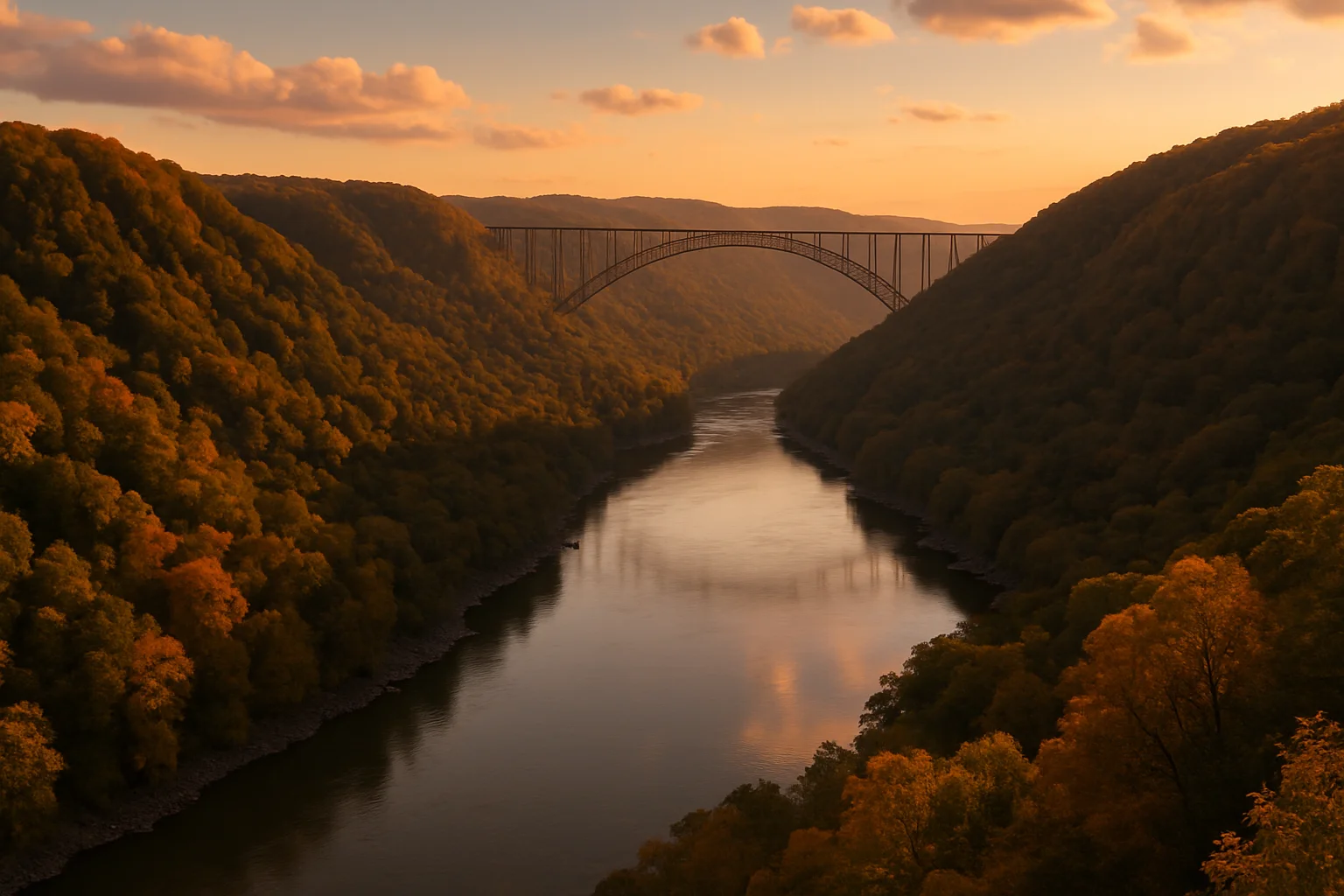
The Mountain State today is grappling with the consequences of dependence on a single industry now in irreversible decline, the opioid epidemic that has killed tens of thousands of its people, and the challenge of finding a new economic identity without losing the landscape and culture that make West Virginia genuinely unlike anywhere else in America. New River Gorge National Park, the youngest major national park in the eastern United States, offers one path forward. The mountains have never been the problem. They have always been the point.
West Virginia's Six Regions
The Eastern Panhandle, a narrow strip of land between Maryland and Virginia, with the Potomac River forming its northern boundary, is the most economically dynamic region of West Virginia and the most closely integrated with the broader Washington-Baltimore metropolitan economy. Berkeley County, anchored by Martinsburg, and Jefferson County, home to Harpers Ferry, have experienced rapid suburban growth as DC-area residents and remote workers seek lower housing costs while maintaining access to the capital.
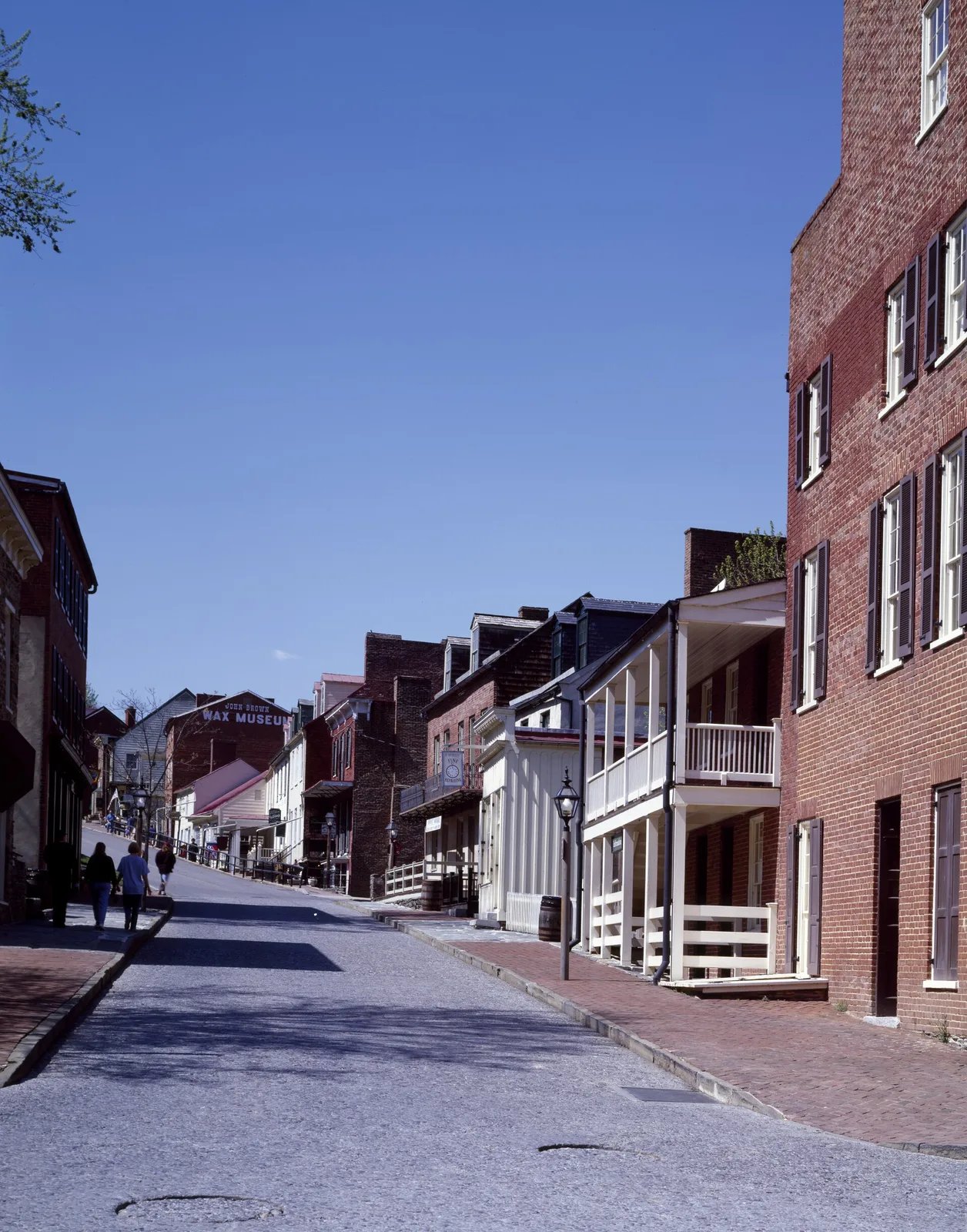
The region's Amtrak service to Washington (via the Capitol Limited and the MARC commuter rail) makes it the most transit-accessible part of West Virginia. Harpers Ferry, where the Shenandoah River meets the Potomac at a gap in the Blue Ridge, is one of the most historically freighted landscapes in America: the site of John Brown's 1859 arsenal raid that accelerated the coming of the Civil War, a Civil War battleground that changed hands eight times, and a National Historical Park that preserves the 19th-century village with remarkable integrity.
The region's history extends to the Appalachian Trail, which crosses the Potomac at Harpers Ferry and draws thousands of thru-hikers annually through the town. The economic contrast between the Eastern Panhandle's relative prosperity, driven by commuters, federal employees, and logistics facilities along I-81, and the struggling southern coalfield counties to the west illustrates the geographic inequality that defines West Virginia's economic landscape.
The Panhandle is West Virginia's growth engine and its cultural outlier. Berkeley County has been among the fastest-growing counties in the country in percentage terms, its population more than doubling since 1990, and the region votes, shops, and works oriented toward Washington rather than Charleston, three to four hours away over the mountains. Shepherdstown, the state's oldest town (chartered 1762) and home to Shepherd University, has a New England-college feel, and Charles Town has a Hollywood Casino at its historic thoroughbred track.
Harpers Ferry was also the site, in 1906, of the second meeting of the Niagara Movement, W.E.B. Du Bois's civil-rights organization and a forerunner of the NAACP; the delegates walked barefoot at dawn to the spot where John Brown's fort had stood. Storer College, one of the earliest schools for freedpeople in the South, operated in the town from 1867 until 1955 and its campus is now part of the national park.
North central West Virginia, centered on Morgantown and Monongalia County, is the state's most economically resilient region and the closest thing West Virginia has to a knowledge economy hub, anchored by West Virginia University's approximately 26,000 students, its WVU Medicine hospital system, and the growing cluster of technology and federal research facilities along the I-79 corridor. Morgantown consistently ranks among the better-performing small cities in Appalachia on economic and quality-of-life measures, a result of the stabilizing effect of a major state university that buffers the community from the boom-and-bust cycles of the surrounding energy economy.
The NASA IV&V Facility in Fairmont employs hundreds of engineers and has seeded technology company formation throughout the region. The WVU PRT (Personal Rapid Transit system), a federally funded experiment built in the 1970s to connect WVU's campus districts, is one of the only operational PRT systems in the United States and is a quirky artifact of 1970s transportation futurism that has, despite decades of skepticism, continued to function and move students between campuses.
Clarksburg, one county south of Morgantown, is the birthplace of Confederate General Thomas 'Stonewall' Jackson and the home of the FBI's Criminal Justice Information Services Division, the largest single-site FBI installation in the country, which maintains the national fingerprint database and background check systems. The region's population has been more stable than the coalfield counties, and its diversified economy has made it the base for much of the state's professional workforce.
Morgantown sits at the northern end of the Marcellus and Utica shale gas play, and Monongalia County has led the state in job and population growth for two decades, buffered by WVU's roughly 26,000 students and its status as the state's flagship, teaching, land-grant, and research campus in one. WVU competes in the Big 12 Conference, and its football and men's basketball programs are the closest thing the state has to a unifying professional franchise.
The Fairmont area was once a coal city in its own right, the family of Senator and coal operator Johnson N. Camden and, later, the Watson and Hutchinson families built fortunes there, and the 1907 Monongah mine explosion in Marion County killed at least 362 men and boys, the deadliest mining disaster in U.S. history and a spur to the 1910 creation of the federal Bureau of Mines. The region has since traded coal for the NASA verification center, an aerospace park along I-79, and a growing biometrics-contractor cluster around the FBI campus.
The Kanawha Valley, stretching from Charleston west along the Kanawha River to its junction with the Ohio, is West Virginia's metropolitan core, home to the state capital, the state's largest hospital system, and the chemical manufacturing corridor that has been the backbone of the state's industrial economy for more than a century. Charleston, with a city population of approximately 49,000 and a metropolitan area of roughly 230,000, is the smallest state capital east of the Mississippi by population and one of the most economically challenged, having lost more than a third of its population since its 1960s peak.
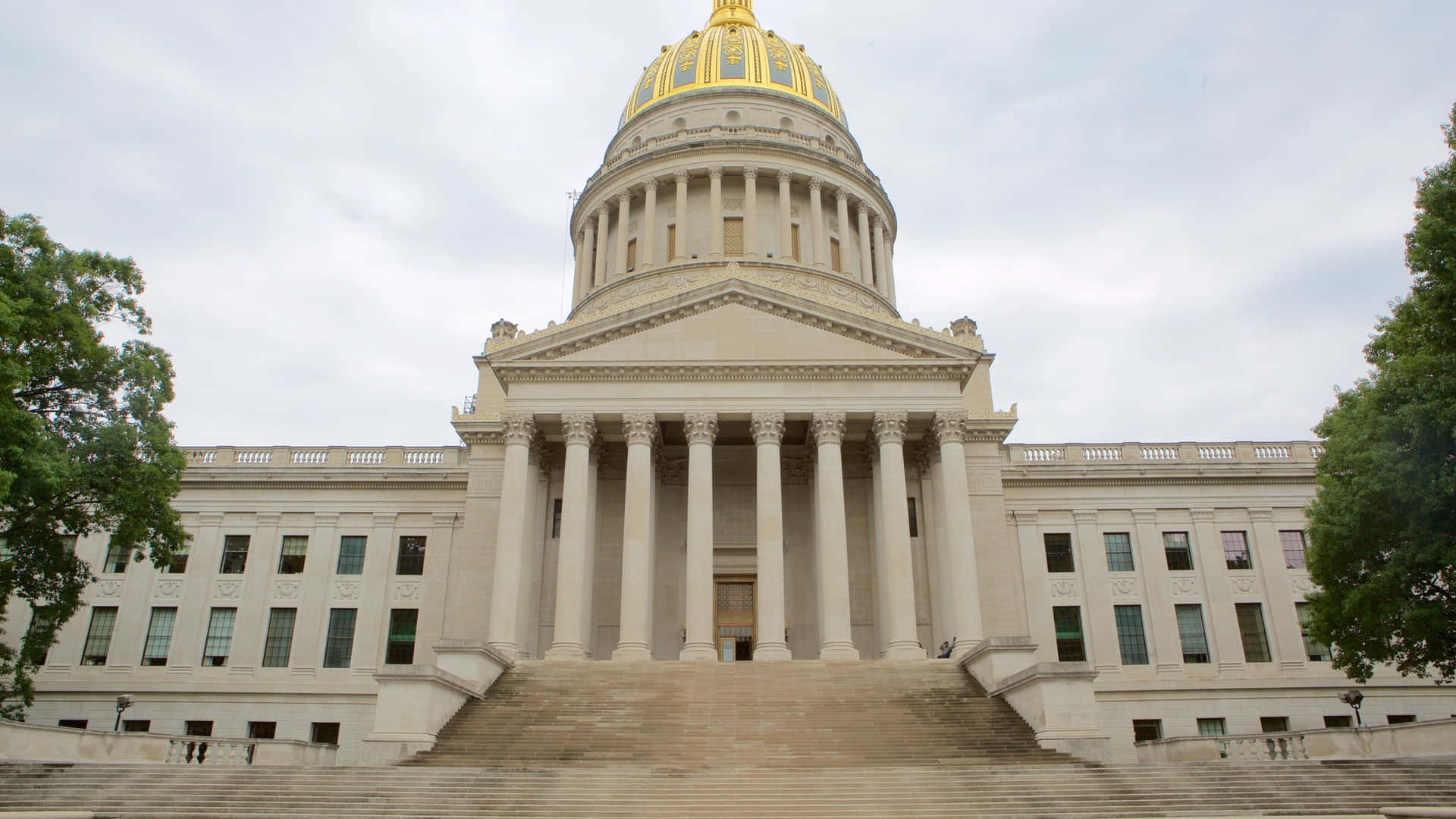
The West Virginia State Capitol, completed in 1932 and designed by Cass Gilbert (who also designed the U.S. Supreme Court building and the Woolworth Building in New York), is one of the most architecturally distinguished state capitols in the country, its gold-leafed dome stands 16 feet taller than the dome of the United States Capitol. The Kanawha Valley's Chemical Valley, the stretch of river from South Charleston to St. Albans, contains dozens of chemical plants that have generated both industrial employment and significant environmental contamination.
The January 2014 Freedom Industries chemical spill, which contaminated the tap water of 300,000 residents with crude MCHM, was the region's most visible industrial disaster in decades and sparked a national conversation about chemical storage regulations near water supplies. Despite its challenges, Charleston remains the political, legal, and medical center of the state, home to the state government, the federal district courthouse, and Charleston Area Medical Center.
Charleston grew up around Fort Lee, a 1780s frontier stockade, and around the Kanawha salt industry: brine wells along the river produced salt for the Ohio Valley meatpacking trade from the 1810s, some worked by enslaved and leased Black labor, and the associated natural gas that bubbled up with the brine was one of the first industrial uses of natural gas anywhere in the world. The Kanawha Valley's later chemical plants were a direct outgrowth of that salt-and-gas chemistry.
The city has repeatedly punched above its size culturally: the West Virginia Symphony Orchestra is one of the oldest in the country, the FestivALL arts festival fills its downtown each June, and the Clay Center for the Arts and Sciences opened in 2003 as the state's largest cultural venue. Charleston also lost its two-newspaper competition in 2015 when the crusading Gazette absorbed the rival Daily Mail.
The southern coalfield counties, McDowell, Mingo, Logan, Boone, Wyoming, and their neighbors, represent both the historical heart of West Virginia's industrial identity and the most acute example of the economic devastation wrought by coal's decline. McDowell County, which once produced more coal than any county in America and in the 1950s had a population of nearly 100,000, now counts fewer than 19,000 residents, a 80-percent population loss in 70 years that has left behind empty storefronts, abandoned schools, and communities struggling with poverty, addiction, and out-migration.
The opioid crisis hit these counties with particular force: McDowell County had the highest drug overdose death rate of any county in the United States for multiple years, a reflection of the intersection of economic despair, physical pain from mining injuries, and the deliberate flooding of the market with opioid prescriptions by distributors and manufacturers. The region's landscape bears the marks of generations of coal extraction: mountaintop removal mining has permanently altered the topography of thousands of acres, filling valleys with overburden and draining the headwater streams that once supported brook trout and diverse aquatic life.
Yet the southern coalfields also contain some of the most important labor history in America: the Paint Creek–Cabin Creek Strike of 1912–1913 and the Battle of Blair Mountain in 1921, when approximately 10,000 armed miners marched to liberate colleagues from the gun-thugs of the Logan County sheriff, in the largest armed labor insurrection in American history after the Civil War, took place in these hollows.
The region's coal identity runs deep, and political opposition to the energy transition that is eliminating these jobs has made the southern coalfields among the most reliably Republican precincts in the country.
The eastern highlands of West Virginia, Greenbrier, Pocahontas, Randolph, Pendleton, and Grant counties, form the most geographically rugged and scenic part of the state, a high-altitude landscape of forested ridges, limestone valleys, and some of the most dramatic rock formations in the eastern United States. The Greenbrier Valley, centered on the gracious county seat of Lewisburg (a town of 3,600 that punches far above its weight in restaurants, arts, and architectural quality), is home to The Greenbrier resort in White Sulphur Springs, a National Historic Landmark that has operated as a resort since 1778 and served as a Confederate hospital during the Civil War, a prisoner of war internment facility for Japanese and German diplomats after Pearl Harbor, and the location of the top-secret congressional bunker (Project Greek Island, kept hidden for 30 years) before its current incarnation as a luxury hotel and golf resort owned by Jim Justice.
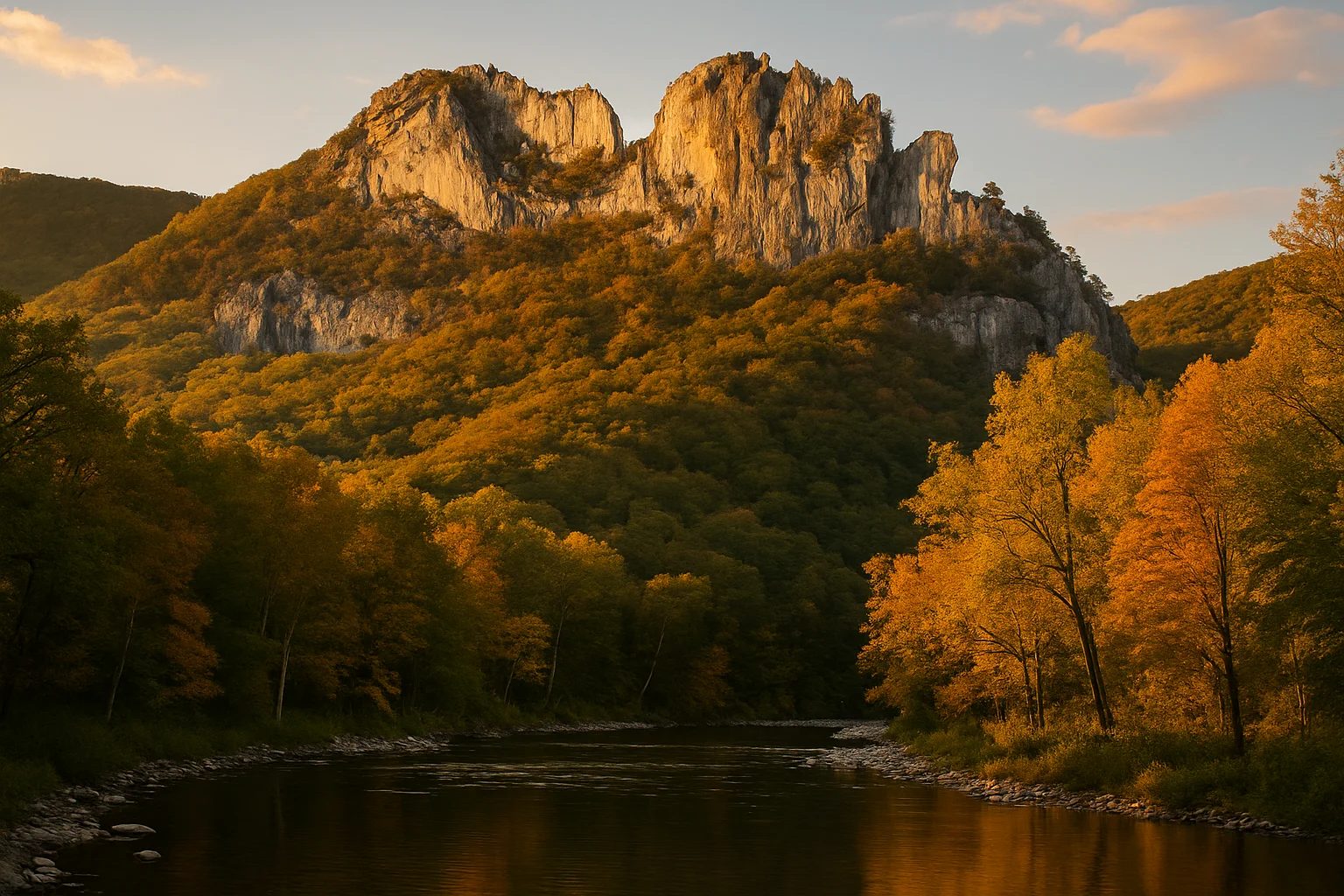
Seneca Rocks, in Pendleton County, is the most dramatic single geological feature in the eastern United States, twin quartzite fins that rise 900 feet above the North Fork Valley and have been a premier technical rock climbing destination since WWII. Blackwater Falls State Park, in Tucker County, centers on the dramatic amber-colored waterfall that gives the park its name, the color created by tannic acid leaching from fallen hemlock needles into the Blackwater River.
The Monongahela National Forest covers most of the eastern highlands, and the Dolly Sods Wilderness and Spruce Knob (the highest point in West Virginia at 4,863 feet) draw hikers and naturalists seeking a landscape that feels more like northern Canada than central Appalachia.
The highlands sit in a rain shadow-free zone that makes them among the snowiest and coldest places in the mid-Atlantic: Canaan Valley in Tucker County, a high glacial-relict bog at 3,200 feet, records winters worthy of Vermont and hosts two ski areas, a state park lodge, and the Canaan Valley National Wildlife Refuge, established in 1994 as the 500th refuge in the system. Dolly Sods was used as a live-fire artillery range during World War II, and unexploded shells are still occasionally found there.
Pocahontas County, headwaters of eight rivers and nicknamed 'the birthplace of rivers,' holds the Green Bank radio observatory and its Quiet Zone, the Cass Scenic Railroad (a preserved logging steam line up Bald Knob), and the Snowshoe resort, and its low population and dark skies have made high-country tourism, not timber, its main economy. Lewisburg, repeatedly named one of 'America's coolest small towns,' anchors the Greenbrier Valley with a medical school, an arts center, and the Greenbrier resort a few miles east.
The northern tier of West Virginia, running along the Ohio River from Wheeling south to Parkersburg and Point Pleasant, is the state's most historically industrial region, a landscape of river-bottom manufacturing towns and steel-era cities that tied the state's economy to the industrial Midwest long before coal came to dominate. Wheeling, West Virginia's northernmost significant city and its largest city before Charleston surpassed it, served as the state's first capital (from statehood in 1863 to 1870) and was the commercial and manufacturing center of the state through the mid-20th century; its historic downtown, centered on Market Street and the ornate 1890s Market Square, retains significant Victorian architecture from its industrial peak.
The Wheeling Suspension Bridge, completed in 1849 and at the time the longest suspension bridge in the world, was the first fixed bridge across the Ohio River and was a critical link on the National Road, making Wheeling a major gateway to the American West in the pre-railroad era.
Parkersburg, at the confluence of the Little Kanawha and Ohio Rivers, is home to the WV Oil and Gas Museum (reflecting the state's history as one of the earliest oil-producing regions in America, the Drake Well in Pennsylvania is better known, but WV had active oil production in the 1850s and 1860s) and is the site of a major DuPont/Chemours plant that has been the subject of litigation over PFAS contamination of the local water supply, the real-world case that partly inspired the film Dark Waters (2019).
The Washington Works plant near Parkersburg made Teflon from the 1950s on and for decades discharged the 'forever chemical' PFOA (C8) into the Ohio River and local water; the litigation that followed produced a science panel that linked the chemical to six diseases, a class of about 70,000 affected residents, and settlements that DuPont and Chemours have valued in the billions of dollars, and it drove PFOA out of U.S. manufacturing by 2015.
Wheeling has bet its revival on tourism and history: the restored Capitol Theatre and Wheeling Suspension Bridge, the Oglebay resort park with its holiday light show, and the West Virginia Independence Hall where the state was founded. Point Pleasant, at the far southern end of the river tier, draws visitors to the battlefield monument and, less earnestly, to a Mothman statue and museum commemorating the 1966 to 1967 'Mothman' sightings and the 1967 Silver Bridge collapse that killed 46 people and led to the national bridge-inspection program.

Economy
West Virginia's $40 billion economy has long been built on extraction, coal, natural gas, chemicals, and the transition away from those industries toward healthcare, tourism, and technology is incomplete, uneven, and contested. The state consistently ranks last or near-last on per capita income and economic output measures, a reflection of its structural dependence on sectors in decline rather than any failure of its people.
At its peak in the mid-20th century, West Virginia was the second-largest coal-producing state in the nation, fueling the steel mills of Pittsburgh and the power plants of the Northeast and Midwest with high-quality bituminous coal from the Appalachian plateau. The southern coalfields, McDowell, Mingo, Logan, Boone, and Wyoming counties, were company towns where coal operators owned the land, the houses, the company stores, and in practical terms the lives of the miners who worked for them.
Coal employment in West Virginia peaked at approximately 130,000 miners in the 1940s and has declined to fewer than 12,000 today, a collapse driven by automation, competition from cheaper surface-mined Western coal from Wyoming and Montana, the shift from coal to natural gas for electricity generation, and the ongoing economics of the energy transition. The Marcellus and Utica shale formations underlying much of West Virginia have made the state one of the most important natural gas producers in the country, with natural gas production now exceeding coal's economic contribution in most years.
The state's coal decline and its political response, West Virginia became one of the most reliably Republican states in the country in the 2010s and 2020s, with Donald Trump winning by 39 points in 2020, is one of the most studied political transformations in recent American history. The state is exploring carbon capture technology through the Appalachian Storage Hub and Mountaineer Carbon Capture projects as it navigates the transition away from coal while preserving energy industry employment.
The state's fiscal structure is unusually exposed to the coal cycle: severance taxes on coal, oil, and gas fund a large share of the state budget and local school and government revenue in the coalfield counties, so a bad year for prices, like 2015 to 2016 or 2020, forces mid-year budget cuts, while the 2021 to 2022 price spike after Russia's invasion of Ukraine briefly filled the treasury with surpluses. A barrel-style tax on aging natural-gas and coal-mine property adds further volatility.
Union Carbide established a plant at Institute, West Virginia in 1920, just outside Charleston, that became the prototype for dozens of subsequent chemical facilities drawn by the Valley's abundant natural gas feedstocks, river transportation, and proximity to Midwest and East Coast markets. At its height, Chemical Valley employed tens of thousands of workers at facilities operated by Dow Chemical, DuPont/Chemours, Bayer CropScience, FMC Corporation, and dozens of others.
The industrial legacy has been accompanied by significant environmental costs: the Kanawha Valley has some of the highest concentrations of air toxics and industrial pollution in the United States. The January 2014 Freedom Industries chemical spill, in which approximately 10,000 gallons of crude MCHM (methylcyclohexane methanol, used to process coal) leaked from a storage tank into the Elk River just upstream from Charleston's water intake, contaminated the drinking water supply of approximately 300,000 people for weeks and exposed the fragility of industrial chemical storage in a region where dozens of similar tanks line the riverbanks.
The 1985 methyl isocyanate leak at the Union Carbide plant in Institute, a smaller version of the 1984 Bhopal disaster in India, injured 135 workers and nearby residents and presaged the regulatory arguments about chemical facility safety that continue today. Despite the environmental controversies, the chemical industry remains a major employer, and natural gas from the Marcellus Shale has attracted new petrochemical investment in the Ohio Valley.
The 2014 Elk River spill led West Virginia to pass one of the first state laws in the country regulating aboveground chemical storage tanks near drinking-water intakes, though the legislature weakened it within two years. The Institute plant's Bhopal-linked history is more than an analogy: the Institute facility was for years the only place in the United States where methyl isocyanate, the gas that killed thousands in India in 1984, was manufactured and stored in bulk, until Bayer ended MIC production there in 2011 after a 2008 explosion at the plant killed two workers.
The Marcellus and Utica shale boom has revived talk of an 'Appalachian petrochemical hub' to crack ethane from the gas into plastics feedstock near where it is produced; Shell built a large cracker just over the line in Pennsylvania, and West Virginia has long sought one of its own, with a proposed Appalachian Storage and Trading Hub for natural-gas liquids winning federal loan-guarantee eligibility but no plant yet built.
West Virginia has the oldest, sickest, and in many measures most economically precarious population of any state in the country: the state ranks last or near-last in most health outcomes measures including obesity rates, diabetes prevalence, heart disease mortality, and drug overdose deaths. These grim statistics translate directly into a healthcare economy larger in employment terms than any other sector. Charleston Area Medical Center (CAMC), the state's largest hospital system with approximately 900 licensed beds across four facilities in the capital region, is one of the state's largest employers.
WVU Medicine, the academic medical system affiliated with West Virginia University, has grown aggressively and operates hospitals and clinics across northern and central West Virginia. The opioid crisis, which hit West Virginia harder than virtually any other state in the nation, with McDowell County at one point having the highest overdose death rate of any county in the country, has both devastated communities and generated enormous healthcare spending on addiction treatment, emergency medicine, foster care, and recovery services.
The pharmaceutical distributor McKesson Corporation reached a $350 million settlement with West Virginia in 2021 after litigation established that McKesson had shipped more than 100 million oxycodone and hydrocodone pills to WV pharmacies over a five-year period, a staggering volume for a state with only 1.8 million people. The healthcare sector now employs approximately 100,000 West Virginians and is the primary economic lifeline of many communities that lost coal and manufacturing jobs.
West Virginia is one of the most Medicare- and Medicaid-dependent states in the country: it expanded Medicaid under the Affordable Care Act in 2014, adding more than 150,000 people, and roughly a third of residents are now on Medicaid, while its high share of retirees and disabled workers, the state has among the nation's highest rates of Social Security Disability Insurance receipt, makes federal health and retirement transfers a huge slice of personal income. That dependence makes federal budget fights over Medicaid a top-tier state economic issue.
The hospital system is fragile at the edges: several rural hospitals, including facilities in Fairmont, Williamson, and Wheeling, have closed or entered bankruptcy since 2019, and WVU Medicine has expanded partly by absorbing struggling community hospitals across the state. Charleston Area Medical Center and WVU Medicine are consistently the two largest private employers in West Virginia.
New River Gorge, carved by one of the oldest rivers on the continent through a thousand-foot-deep chasm in the Allegheny Plateau, had been a National River since 1978; its redesignation as the nation's 63rd national park immediately increased visitor numbers. The New River and the nearby Gauley River offer some of the most technically challenging white-water rafting in the eastern United States, with Class IV and V rapids on the Lower Gauley drawing experienced paddlers from across the country.
Seneca Rocks, twin quartzite fins rising 900 feet above the North Fork Valley in Pendleton County, is the most dramatic rock formation in the eastern United States and has been a major rock climbing destination since the Army's 10th Mountain Division trained on its faces during World War II. Snowshoe Mountain Resort in Pocahontas County is the largest ski resort in the South.
The Greenbrier resort in White Sulphur Springs, a National Historic Landmark operating continuously since 1778, was the site of the top-secret congressional Cold War bunker, hidden beneath the resort for 30 years before its existence was revealed in 1992, that was designed to house all of Congress in the event of nuclear attack. The New River Gorge Bridge hosts Bridge Day each October, the only day of the year when BASE jumping off the bridge is legally permitted, drawing approximately 80,000 visitors for one of the most unusual annual festivals in the United States.
West Virginia has leaned into the ATV trade with the Hatfield-McCoy Trails, a network of more than 1,000 miles of off-road trails opened in 2000 on leased private timber and reclaimed mine land across nine southern counties, which draws hundreds of thousands of riders a year and has spawned lodging and outfitting businesses in former coal towns that had none. The state also runs a Boy Scouts of America high-adventure base, the Summit Bechtel Reserve, on a reclaimed strip mine near the New River Gorge, built to host the National Scout Jamboree.
The tourism pitch is now central to state branding, the marketing slogan 'Almost Heaven' borrows John Denver's 1971 song, and visitor spending has been estimated around 5 to 7 billion dollars a year, but the sector's wages are far below what coal and chemicals paid, and much of the growth is concentrated in the New River Gorge, the Eastern Panhandle, and the Canaan Valley ski area rather than statewide.
The state's forests support a timber and wood products industry that produces hardwood lumber, particularly oak, cherry, maple, and poplar, prized for furniture, flooring, and specialty woodworking. Appalachian hardwood forests are among the most biodiverse temperate forests on earth; West Virginia's eastern highlands harbor numerous plant and animal species found only in the southern Appalachian ecosystem.
The Dolly Sods Wilderness in Tucker and Grant counties, a high-altitude plateau with a sub-boreal ecosystem more reminiscent of Canada than Appalachia, shaped by a combination of high elevation, exposed sandstone bedrock, and the catastrophic clear-cutting and subsequent wildfires of the early 20th century, is one of the most ecologically unusual landscapes in the eastern United States, where boreal plants like sphagnum moss, blueberries, and red spruce grow alongside Appalachian hardwood species.
The state's coal mine reclamation programs and forest recovery efforts have been ongoing since the mid-20th century, with mixed results: surface mining (mountaintop removal) in the southern coalfields has permanently altered thousands of acres of former ridge tops, filling valleys with overburden and eliminating headwater streams that once supported diverse aquatic ecosystems.
West Virginia's forest is itself second- or third-growth: the timber boom of roughly 1880 to 1920 cut nearly the entire state, floating logs down the Cheat, Greenbrier, and Elk rivers and running the town of Davis and the Cass mill at full tilt, and the slash fires that followed burned the soil off the high plateaus, which is why Dolly Sods looks the way it does. The Monongahela National Forest was created in 1920 specifically to buy up and rehabilitate that ruined land.
A landmark of forestry law came from West Virginia: a 1975 clearcutting lawsuit over the Monongahela National Forest, West Virginia Division of the Izaak Walton League v. Butz, held that the Forest Service's timber-sale practices violated the 1897 Organic Act and forced Congress to pass the 1976 National Forest Management Act, which still governs logging on all national forests.
The eastern highlands also hold rare and recovering wildlife: the West Virginia northern flying squirrel was taken off the endangered-species list in 2013 after red-spruce restoration, the Cheat Mountain salamander survives only on a few high ridges, and elk, extirpated from the state in the 1870s, were reintroduced to reclaimed mine land in the southern coalfields starting in 2016.
WVU, founded in 1867 as a land-grant institution, enrolls approximately 26,000 students and is the state's only doctoral research university; its engineering, medicine, law, and business programs are the principal generators of the state's professional workforce, and its economic impact on Morgantown and Monongalia County, which has consistently outperformed the rest of the state economically, is outsized. The NASA Independent Verification and Validation (IV&V) Facility in Fairmont, established in 1993, performs software safety assessments for all NASA missions and is one of the most important federal technology facilities in the region, employing several hundred engineers and scientists who have attracted technology companies to the surrounding I-79 Technology Park corridor.
The National Radio Astronomy Observatory's Green Bank Telescope in Pocahontas County, the world's largest fully steerable radio telescope at 100 meters in diameter, sits within the National Radio Quiet Zone, a federally designated area where radio transmissions are restricted to prevent interference with the telescope.
The Quiet Zone has paradoxically made Green Bank an unusual refuge: people with electromagnetic hypersensitivity have relocated there, and the absence of cell towers and WiFi in the surrounding area makes Green Bank one of the most striking technological anomalies in the 21st-century American landscape.
The 100-meter Green Bank Telescope was built after its predecessor, a 300-foot dish, collapsed suddenly in 1988 from metal fatigue; the replacement, completed in 2000, is an off-axis design with an unobstructed aperture and remains the world's largest fully steerable radio telescope. After the National Science Foundation cut its funding in the 2010s, the observatory became a semi-independent nonprofit that keeps operating on a mix of federal, state, and private support.
The FBI's Criminal Justice Information Services division in Clarksburg, opened in 1995 as the bureau's largest facility, runs the national fingerprint and criminal-history databases, the NICS gun background-check system, and a growing biometrics operation, and employs several thousand people, making it one of north-central West Virginia's economic anchors alongside the NASA software-verification center in Fairmont.
West Virginia has tried to convert its low cost of living and scenery into a talent-attraction strategy: the state's 'Ascend West Virginia' program, funded by an Intuit founder, pays remote workers roughly 12,000 dollars plus outdoor-recreation perks to move to towns like Morgantown, Lewisburg, and Shepherdstown, an explicit bet that broadband and mountains can partly offset the loss of extraction jobs.
How West Virginia's Government Works
West Virginia's political transformation is one of the most dramatic in modern American history. The state that gave the nation the union movement, the New Deal's most enthusiastic supporters, and decades of Democratic senators and governors, voting Democratic in every presidential election from 1932 to 1996 except 1956 and 1972, has become one of the most reliably Republican states in the country. Donald Trump carried West Virginia by 39 points in 2020. Republicans hold supermajorities in both chambers of the legislature.
The transformation was driven by the collapse of the coal industry, the identification of Democratic energy policy with the destruction of coal jobs, and a broader cultural realignment that made white working-class voters without college degrees, the dominant demographic of the West Virginia coalfields, reliably Republican across the country. Senator Joe Manchin, a Democrat who won statewide election four times by cultivating a carefully centrist image, chose not to seek re-election in 2024 after the math became impossible.
West Virginia does not have a separately elected Lieutenant Governor. The President of the West Virginia Senate is next in the constitutional line of gubernatorial succession and performs the functions typically associated with the office of Lieutenant Governor. This is one of several structural features that distinguish West Virginia's government from the typical American state model.
Governor of West Virginia
Current Governor
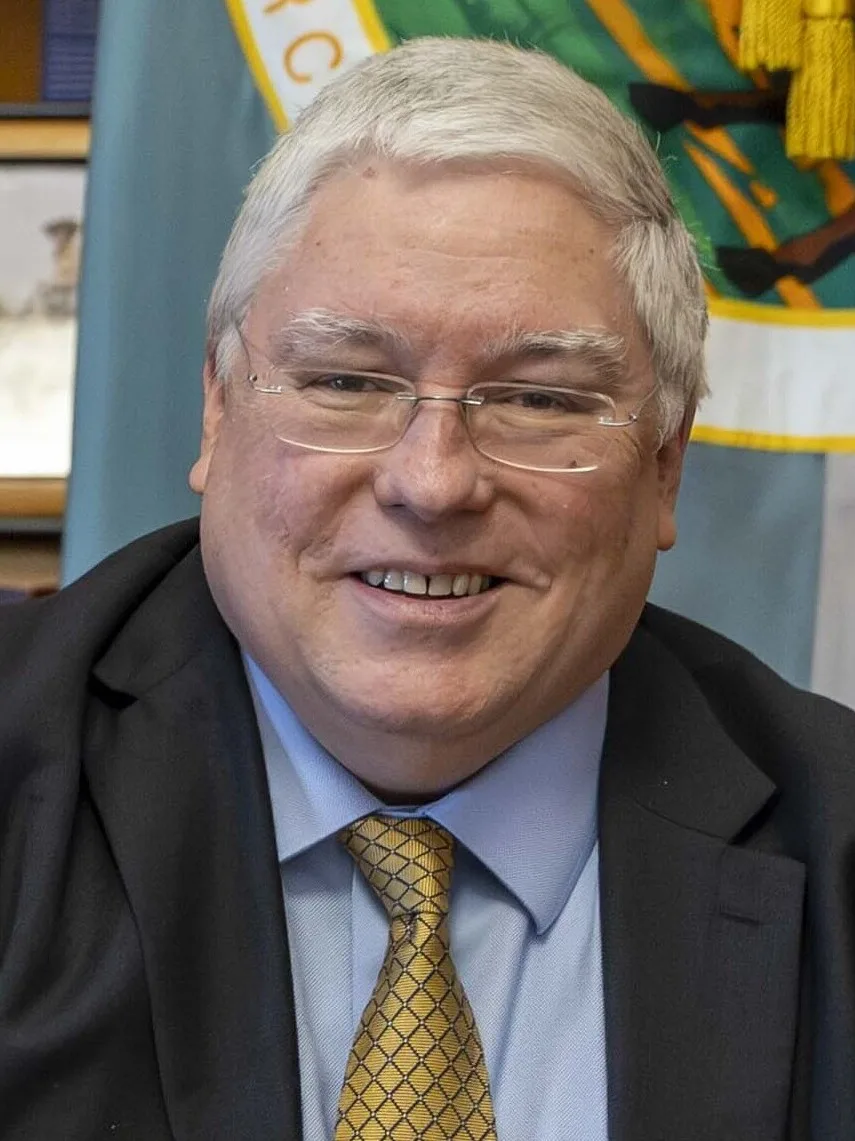
Patrick Morrisey
- Party
- Republican
- In Office Since
- January 13, 2025
- Born
- January 26, 1967, Rockaway Township, New Jersey
- Education
- Georgetown University (BA), Harvard Law School (JD)
- Prior Role
- West Virginia Attorney General (2013-2025)
Patrick Morrisey is West Virginia's 37th Governor, a New Jersey-born attorney who made his political career in West Virginia as the state's Attorney General from 2013 to 2021, during which time he led or joined dozens of multistate lawsuits challenging Obama-era environmental and healthcare regulations, including the landmark West Virginia v. EPA (2022), in which the Supreme Court restricted the EPA's authority to broadly regulate carbon emissions from power plants. He lost the 2018 U.S. Senate race to Joe Manchin by three points but won the 2024 gubernatorial election to succeed Jim Justice, who vacated the office to become a U.S. Senator.
Other Current State Officials
Senate President and Lieutenant Governor
Randy Smith
Senate President since January 2025, representing Tucker and Preston counties. As Senate President, Smith also holds the title of Lieutenant Governor and is next in the constitutional line of succession to the governorship. He succeeded Craig Blair (Senate President 2021 to 2025), who lost his 2024 primary.
Attorney General
John B. McCuskey
Attorney General since January 2025, elected in 2024 to succeed Patrick Morrisey (who became governor). A Charleston attorney who served as West Virginia State Auditor from 2017 to 2025, McCuskey ran on a platform of combating the opioid crisis, protecting parental rights, and continuing the multi-state litigation of the Morrisey era. He is one of the newer faces in a statewide Republican leadership that has consolidated dramatically since 2014.
Secretary of State
Kris Warner
Secretary of State since January 2025, elected in 2024 to succeed his brother, Mac Warner (Secretary of State 2017 to 2025). A former chairman of the state Republican Party, Warner oversees elections and business filings. He is part of the generation of Republican officials who swept into statewide office as West Virginia completed its partisan realignment from a reliably Democratic state to one of the most Republican in the country.
The West Virginia Legislature
West Virginia State Senate
- Seats: 34 members
- Terms: 4-year staggered terms
The upper chamber. Senators serve 4-year terms with roughly half the seats on the ballot every two years. Republicans hold a supermajority exceeding two-thirds. The Senate President serves as the constitutional equivalent of Lt. Governor and is next in the line of gubernatorial succession.
West Virginia House of Delegates
- Seats: 100 members
- Terms: 2-year terms
The lower chamber, officially called the House of Delegates rather than House of Representatives. All 100 delegates are up for election every two years. Republicans hold a supermajority exceeding two-thirds. The chamber made national news in 2014 when Republicans won a majority for the first time in 82 years, completing the state's partisan realignment.
West Virginia's U.S. Senators
U.S. Senator
Shelley Moore Capito
West Virginia's senior senator, first elected in 2014 and re-elected in 2020. Born in Glen Dale, West Virginia, she is the daughter of former Governor Arch Moore (who served three terms, 1969-1977 and 1985-1989) and is one of the few current senators who can claim a multi-generational West Virginia political dynasty. She served seven terms in the U.S. House (2001-2015) before moving to the Senate, where she serves on the Appropriations and Environment and Public Works committees. A moderate within Senate Republican ranks, she has focused on infrastructure, broadband access, and Appalachian economic development.
U.S. Senator
Jim Justice
West Virginia's junior senator, elected in 2024 to succeed retiring Democrat Joe Manchin. A billionaire businessman who owns The Greenbrier resort and numerous coal and agricultural operations across several states, Justice served as West Virginia's Governor from 2017 to 2025, initially as a Democrat before switching to Republican at a 2017 rally with President Trump. His tenure as governor was marked by significant income tax cuts and combative public communications style. He defeated Democratic candidate Glenn Elliott by approximately 28 points in 2024.
West Virginia Through the Years
From the Adena mound builders and the Shawnee Nation to John Brown's raid and the Civil War birth of a state, from the company towns and the Mine Wars to the opioid epidemic and New River Gorge National Park, West Virginia has lived one of the most turbulent and consequential histories of any state in the Union.
The territory that would become West Virginia was home to a succession of sophisticated Indigenous cultures before European contact. The Adena culture (800 BCE–100 CE) and the related Hopewell tradition built the monumental earthworks that dot the river valleys of the region: the Grave Creek Mound in Moundsville, constructed by the Adena people around 250–150 BCE, is the largest conical earthwork in the United States, 69 feet tall and 295 feet in diameter, and was the center of a ceremonial and trade network that connected Appalachian communities across hundreds of miles.
By the time of European contact, the region was primarily claimed and used by the Shawnee people, whose territory stretched across much of the Ohio Valley, and the Cherokee, who considered the southern mountain passes part of their ancestral homeland. The Shawnee were among the most formidable military powers in the eastern woodlands and mounted sustained resistance to Euro-American settlement along the Ohio Valley frontier throughout the 18th century.
Harpers Ferry and the Kanawha Valley were significant sites in the pre-contact Indigenous landscape; the name 'Kanawha' is derived from a word meaning 'place of the white stone' in the Algonquian language family.
The Grave Creek Mound at Moundsville was excavated by amateurs in 1838, who tunneled straight into it and built a saloon and museum inside; it yielded a small inscribed stone, the 'Grave Creek Tablet,' that fueled more than a century of fringe theories before scholars concluded it was almost certainly a 19th-century hoax. The genuine finds, copper ornaments, marine shell, and mica from distant sources, show the Adena tied into a trade network reaching the Gulf and the Great Lakes.
By the 1670s the Ohio Valley including present-day West Virginia had been largely depopulated of permanent villages by the 'Beaver Wars,' in which the Iroquois Confederacy raided and drove out other nations to control the fur trade, turning the region into a contested hunting ground used by the Shawnee, Cherokee, Delaware, Mingo, and others but claimed outright by none.
That is why colonial treaties dealt with the land through the Iroquois: the 1768 Treaty of Fort Stanwix, in which the Six Nations sold their claim to the country south of the Ohio, opened West Virginia to a rush of squatters and speculators, George Washington among them, that neither the Shawnee nor the Crown had agreed to.
Euro-American settlement of the region that would become West Virginia was driven by German and Scots-Irish settlers moving south through the Shenandoah Valley from Pennsylvania during the 18th century, establishing farms in the limestone valleys of the Eastern Panhandle and gradually pushing into the rugged interior. Settlement proceeded despite continuous conflict with the Shawnee and other Ohio Valley nations who correctly perceived the settlers as the leading edge of dispossession.
The Battle of Point Pleasant on October 10, 1774, fought at the confluence of the Kanawha and Ohio Rivers between Virginia militia under Colonel Andrew Lewis and a Shawnee force under Chief Cornstalk, was the culminating engagement of Lord Dunmore's War and opened the Ohio Valley frontier to further settlement. The battle is commemorated as a significant, if disputed, event in West Virginia's identity: some historians and Virginia's General Assembly have designated it the first battle of the American Revolution, a characterization that Ohio and other states dispute.
Fort Henry at Wheeling (1774) anchored the Ohio River frontier and was the site of the last battle of the Revolutionary War, an attack by British-allied forces on September 11–13, 1782, months after Yorktown, in which Elizabeth Zane famously ran through enemy fire to retrieve gunpowder from her brother's cabin, though the details of the account are disputed by historians.
The killing of Chief Cornstalk cast a long shadow. He had kept the Shawnee largely neutral after Point Pleasant, and in 1777 he came to the American fort at Point Pleasant under a flag of truce to warn of British pressure; the garrison seized him as a hostage and, after a soldier was killed nearby, militiamen murdered Cornstalk, his son, and two other Shawnee in their cell. The atrocity pushed the Shawnee firmly onto the British side for the rest of the Revolution.
Frontier warfare here was total and mutual: settlers and Shawnee raided each other's settlements, took captives, and killed civilians, and the 1782 Gnadenhutten massacre of peaceful Christian Delaware just across the Ohio, by Pennsylvania militia, hardened the cycle. Simon Girty, a white man raised by the Seneca who fought alongside Native forces, became the frontier's most hated bogeyman.
By the 1790s Anthony Wayne's victory at Fallen Timbers (1794) and the Treaty of Greenville (1795) had broken organized Native resistance north of the Ohio, and the mountainous interior of present-day West Virginia filled in with scattered subsistence farms on land held under conflicting Virginia grants, a tangle of titles that kept the region poor and litigious for generations.
On the night of October 16, 1859, the radical abolitionist John Brown led a party of 21 men, 16 white and five Black, in a raid on the United States arsenal at Harpers Ferry, Virginia (now West Virginia), seizing the armory and its 100,000 muskets and rifles with the intention of arming a massive slave insurrection that would spread through the South. Brown had planned the raid for years and believed that God had chosen him to strike the blow that would end slavery.
The insurrection failed catastrophically. No enslaved people joined the uprising, local militia and townspeople surrounded the armory, and a company of U.S. Marines commanded by Army Lieutenant Colonel Robert E. Lee, with Lieutenant J.E.B. Stuart as his aide, stormed the engine house where Brown and his survivors had taken refuge. Ten of Brown's men were killed, including two of his sons; Brown was captured, tried for treason against Virginia in the Charles Town courthouse within days, and hanged on December 2, 1859, at age 59.
The consequences were immediate and profound. The raid electrified the South into a panic that Northern abolitionists were planning a race war, hardened secessionist sentiment, and helped split the Democratic Party along sectional lines, making the 1860 election of Abraham Lincoln both possible and, in Southern eyes, intolerable. Brown became a martyr to Northern abolitionists, whose marching song, 'John Brown's body lies a-mouldering in the grave, his soul is marching on,' Julia Ward Howe later reworked into 'The Battle Hymn of the Republic.'
The list of witnesses reads like a roll call of the war to come: Lee and Stuart would command Confederate armies, the future Confederate raider John Wilkes Booth watched Brown hang as a borrowed militiaman, and Thomas J. Jackson, not yet 'Stonewall,' was there with Virginia Military Institute cadets. Harpers Ferry itself, at the strategic gap where the Shenandoah meets the Potomac, changed hands roughly eight times during the Civil War and is now a national historical park.
West Virginia is the only state in American history created by seceding from a state that had itself seceded from the Union, a constitutional improvisation born of necessity and Unionist conviction in the Appalachian counties of Virginia that rejected the plantation economy and slave culture of the Virginia Tidewater. When Virginia voted to secede on April 17, 1861, the western mountain counties, which had long chafed at eastern Virginia's political and economic dominance and which had almost no enslaved population, refused to follow. Unionist delegates convening in Wheeling in May 1861 formed the Reorganized Government of Virginia (recognized by the Lincoln administration as the legitimate government of Virginia) and began the legal process of separating the western counties from the Commonwealth.
The constitutional path to statehood was tortuous: Article IV, Section 3 of the Constitution requires the consent of the affected state's legislature to create a new state, so the Reorganized Government of Virginia, a government of the secessionist state's Unionist minority, voted to consent to its own dismemberment. The Lincoln administration and Congress accepted this constitutional fiction, and West Virginia was admitted to the Union on June 20, 1863, becoming the 35th state in the middle of the Civil War.
The new state's western and northern counties provided approximately 36,000 soldiers to the Union Army; the eastern and southern counties sent soldiers to both sides. The Civil War battles of Rich Mountain (1861), where a young George McClellan won the engagement that made him famous enough to command the Army of the Potomac, and Droop Mountain (1863) were fought on what is now West Virginia soil.
The 1863 state constitution abolished slavery only gradually, freeing children born after July 4, 1863, and those under 21 as they came of age; an 1865 amendment ended slavery outright before the 13th Amendment was ratified. Postwar 'test oaths' barring former Confederates from voting, holding office, or practicing law kept a Republican Unionist government in power until a Democratic 'Redeemer' coalition of returned Confederates won control in 1870 and wrote a new constitution in 1872.
The old grievance did not fully die: Virginia spent 40 years suing over West Virginia's share of the antebellum state debt, and the Supreme Court's 1911 and 1918 rulings in Virginia v. West Virginia, ordering payment of about 12 million dollars plus interest, are still cited for the proposition that the Court can enforce a money judgment against a state.
Statehood also permanently split a family and a people: the Eastern Panhandle counties added by wartime referendum gave West Virginia the B&O Railroad main line and the Harpers Ferry armory town, while thousands of southern West Virginians had fought for the Confederacy, which is why the state's postwar politics, monuments, and memory long leaned Confederate despite its Union birth.
The industrial transformation of West Virginia in the decades after the Civil War was driven almost entirely by coal, and the coal economy shaped the state's social geography in ways that persist to the present day. The extension of railroad lines into the southern mountain counties in the 1870s and 1880s, the Chesapeake & Ohio into the New River Gorge region, the Norfolk & Western into McDowell County, opened coal seams that had been geologically inaccessible and triggered a rush of investment and migration that transformed the landscape in a generation.
The coal companies that followed the railroads typically bought or leased entire watersheds, every hollow and ridge in a county might belong to a single operator, and built the company towns that defined Appalachian coal culture: rows of identical houses rented from the company, company stores where workers paid with scrip redeemable only at that store, company churches, company doctors, and company police (called 'mine guards' or 'Baldwin-Felts detectives') who enforced the company's authority with violence when necessary. Immigration drove the labor supply: the southern coalfields received waves of immigrants from southern and eastern Europe, Poles, Italians, Hungarians, Slovaks, and many others, alongside African American migrants from the Deep South and white Appalachian workers from the surrounding mountains.
The resulting cultural mixture, compressed into narrow hollows under company control, was the social environment in which the United Mine Workers of America attempted to organize, an effort that the coal operators resisted with lethal force, setting the stage for the Mine Wars of the following decade.
West Virginia coal was often bought cheaply through a peculiarity of law and speculation: the 'broad form deed,' by which outside land companies acquired mineral rights from mountain farmers in the 1880s and 1890s for as little as 50 cents an acre, deeds later read by courts to permit any mining method, including, decades on, blasting away the surface. Much of the southern coalfield's land and mineral wealth remains owned by out-of-state corporations and land trusts to this day.
The C&O and N&W railroads that unlocked the coal also created West Virginia's second Black community: tens of thousands of African Americans moved from Virginia and the Deep South to work the mines of McDowell and neighboring counties, which by 1910 had a Black population share above 30 percent, elected Black legislators, and supported Black newspapers, churches, and the state's Black land-grant college at Institute.
Coal made West Virginia's population and wealth peak: the state grew from about 442,000 people in 1870 to nearly 1.5 million by 1920, and mine output rose from a few million tons a year to well over 100 million, but the wealth flowed out to Pittsburgh, Philadelphia, and New York while the counties that produced it stayed among the poorest in the nation.
The labor conflict that defined West Virginia's coal era reached its violent climax in two episodes that rank among the most dramatic confrontations between capital and labor in American history. The Paint Creek–Cabin Creek Strike of 1912–1913, triggered by the Baldwin-Felts detective agency's eviction of striking miners from company housing and its use of armored trains mounted with machine guns to terrorize mining communities, brought Mary Harris 'Mother' Jones, the 76-year-old labor organizer who was perhaps the most effective agitator in the American union movement, to West Virginia to lead and publicize the miners' cause. The strike ended with a partial settlement and a temporary improvement in conditions that the companies largely reversed.
The Battle of Blair Mountain in August 1921 was the climax: approximately 10,000 armed miners from Kanawha, Boone, and other counties marched south to Logan County to free imprisoned union members held by Sheriff Don Chafin, an instrument of the coal companies who commanded a private army of mine guards. For five days, the miners fought Sheriff Chafin's forces and arriving Army units in the densely forested ridges above Blair, with federal bombing raids (the first use of military aircraft against American civilians) eventually forcing a retreat.
Approximately one million rounds were fired during the battle; dozens were killed. The subsequent prosecution of union leaders for treason effectively crushed the UMWA in West Virginia for a decade, until the New Deal and the National Industrial Recovery Act of 1933 finally gave miners the federal protection to organize without fear of company violence.
The spark for the 1921 march was the killing of Sid Hatfield, the Matewan police chief who had backed the miners in the deadly May 1920 'Matewan Massacre' shootout with Baldwin-Felts agents; Hatfield and Ed Chambers were shot down, unarmed, on the McDowell County courthouse steps in August 1921 as their wives looked on, and no one was convicted. Miners on the march wore red bandanas as a field sign, and 'rednecks' is one proposed origin of the term.
Union leader Frank Keeney and the UMWA District 17 led the march; the miners fought Chafin's roughly 3,000 deputies and volunteers along a 10-mile front of ridgelines. President Harding sent about 2,100 federal troops and an Army air unit under General Billy Mitchell, and private planes hired by the coal operators dropped homemade bombs on the miners' positions, one of the few times aircraft have been used against U.S. citizens on U.S. soil.
The battlefield itself became a fight decades later: coal companies held permits to strip-mine the ridges, and archaeologists, historians, and a 2011 protest march traced the miners' route to win National Register of Historic Places protection for the core of the battlefield, secured in 2018 after years of legal back-and-forth.
The Great Depression devastated West Virginia's already precarious coal economy, with coal prices collapsing and hundreds of thousands of miners facing destitution in an era before meaningful federal safety-net programs. The New Deal of Franklin Roosevelt's administration transformed the state: the National Industrial Recovery Act (1933) guaranteed miners the right to organize, allowing the UMWA to rapidly unionize the coalfields that had resisted organization for decades; federal public works programs built roads, schools, courthouses, and bridges across the state; and the establishment of Civilian Conservation Corps camps employed thousands of young men in reforestation and erosion control work in the national forests.
West Virginia's coal production rebounded dramatically during World War II as wartime demand for coal to power steel mills and industrial plants overwhelmed supply: the state produced record quantities of coal in 1944 and 1945, and coal miners were granted draft deferments as essential war workers. Chemical production in the Kanawha Valley likewise surged, with Union Carbide and other manufacturers producing synthetic rubber, explosives, and war chemicals at a pace that permanently expanded the Chemical Valley's industrial footprint.
The postwar era brought the peak of West Virginia's industrial prosperity, the late 1940s and 1950s were the apex of coal employment, population, and relative prosperity, before mechanization and fuel switching began the long economic decline that would define the state's subsequent history.
The 1946 nationwide coal strike led by UMWA president John L. Lewis, and the government seizure of the mines that followed, ended with the Krug-Lewis Agreement creating the union's Welfare and Retirement Fund, financed by a per-ton royalty, which built a network of ten modern 'Miners' Memorial' hospitals across the Appalachian coalfields between 1953 and 1956, several of them in West Virginia.
Wartime chemical work at Institute and South Charleston left a lasting mark: a government plant built there in 1943 to make butadiene for synthetic rubber, and Union Carbide's expansion around it, made the Kanawha Valley one of the densest concentrations of chemical manufacturing in the country, a status that outlasted the war by decades.
The state's 1950 population of about 2.0 million was its all-time high; it has never recovered that number and by the 2020s had fallen below 1.8 million, the only state whose population was lower in 2020 than in 1950.
West Virginia's postwar economic decline was among the most severe of any state in the 20th century. Coal employment fell from approximately 130,000 in 1948 to fewer than 30,000 by 1980, as continuous mining machines and roof-bolting equipment displaced the men who had previously performed this work by hand; steel declined and with it the demand for metallurgical coal; and natural gas and oil displaced coal for heating and electricity generation.
The state lost nearly 400,000 residents between 1950 and 1980, close to 20 percent of its population, as young West Virginians migrated to Cleveland, Detroit, Baltimore, Columbus, and Pittsburgh in search of industrial work. The out-migration was so severe and so disproportionately affected young adults that it left behind an older, poorer, sicker population that would shape the state's demographics and politics for generations.
President Lyndon Johnson's visit to an impoverished family in Inez, Martin County, Kentucky, just across the border from Mingo County, in April 1964 produced the photographs that launched the War on Poverty, and federal programs including Medicaid, Medicare, food stamps, and expanded Social Security provided essential support to Appalachian communities that had few other resources. West Virginia University's growth, the development of the interstate highway system (I-64, I-79, I-77 crossing the state), and attempts to attract manufacturing diversification brought some economic stabilization, but the state's structural dependence on extraction industries meant that recovery was always partial and vulnerable to commodity price cycles.
The federal Appalachian Regional Commission, created by Congress in 1965 after the poverty tour and a landmark 1964 report, has spent billions over the following decades on highways, water systems, and job training in West Virginia, whose entire territory falls within the ARC's map; the still-unfinished Corridor H and other 'Appalachian Development Highways' are its most visible legacy.
Coal's mechanization was matched by a wave of disasters that drove federal safety law: the 1968 Farmington mine explosion in Marion County killed 78 men and led directly to the 1969 Federal Coal Mine Health and Safety Act, which created black-lung compensation and modern mine inspection, and the 1972 Buffalo Creek dam failure, when a coal-slurry impoundment burst and killed 125 people in a Logan County hollow, forced the first federal rules on coal-waste dams.
The 1980s hit bottom: the collapse of the domestic steel industry gutted the market for West Virginia's metallurgical coal, unemployment in some southern counties topped 20 percent, and a bitter 1989 to 1990 strike against the Pittston Coal Company over retiree health benefits, centered just across the Virginia line but drawing thousands of West Virginia miners, became a national labor cause.
West Virginia experienced the opioid epidemic earlier, more intensely, and with more devastating demographic consequences than any other state in America, making it ground zero for what became a national public health catastrophe. The epidemic's architecture in West Virginia followed a pattern that investigators later documented with precision: pharmaceutical manufacturers (primarily Purdue Pharma) aggressively marketed OxyContin and other opioid painkillers as non-addictive solutions to chronic pain; drug distributors (McKesson, Cardinal Health, AmerisourceBergen) shipped quantities of pills wildly disproportionate to the population, millions of oxycodone and hydrocodone tablets annually to small rural pharmacies in counties with a few thousand residents; and local pill mills (pain clinics that prescribed opioids with minimal medical evaluation) dispensed prescriptions that were filled by distributors and then diverted to street use.
West Virginia counties like Mingo, McDowell, and Logan County had overdose death rates multiples above the national average by the early 2010s. The opioid crisis devastated families, overwhelmed foster care systems as parents became addicted or died, hollowed out communities already struggling from coal's decline, and generated a massive secondary epidemic of hepatitis C and HIV from injection drug use.
West Virginia's lawsuits against opioid manufacturers and distributors produced landmark settlements: McKesson alone paid $350 million to the state in 2021, and the pharmaceutical industry paid billions more in subsequent national settlements. The human cost, tens of thousands of lives lost across the state, cannot be measured in settlement dollars.
A 2016 investigation by the Charleston Gazette-Mail, which won a Pulitzer Prize, documented that drug wholesalers had shipped about 780 million hydrocodone and oxycodone pills into West Virginia over six years, roughly 433 for every resident, including 9 million pills to a single pharmacy in the 400-person town of Kermit. West Virginia's overdose death rate has been the highest in the nation for most of the past decade, exceeding 80 deaths per 100,000 people in the worst years, more than double the U.S. average.
West Virginia was one of the first states to sue Purdue Pharma, settling in 2004 for 10 million dollars, and later declined to join a multistate deal so it could pursue its own claims, which have brought the state and its local governments well over 1 billion dollars from manufacturers, distributors, and pharmacy chains, funneled into a state First Foundation for treatment and prevention. A separate bellwether trial in Huntington ended in 2022 with a federal judge ruling for the distributors, a decision under appeal.
The epidemic reshaped state institutions: West Virginia leads the nation in the share of children removed from their homes and placed in foster care, grandparents raising grandchildren is common enough to have its own state support programs, and Huntington's needle-exchange and overdose-response efforts have been studied nationally after the city recorded 26 overdoses in a four-hour span in 2016.
The designation of New River Gorge National Park on December 27, 2020, signed into law by President Trump as part of the Consolidated Appropriations Act, 2021, was a major milestone in West Virginia's public lands history and a signal of the state's pivot toward outdoor recreation as an economic driver. The New River Gorge had been a National River since 1978, protecting 70,000 acres of the gorge and its surroundings from development, but national park status brought increased federal resources, higher national profile, and a measurable increase in visitor numbers.
The redesignation was broadly popular across the political spectrum in a state that is otherwise deeply conservative on federal land management questions. West Virginia's political transformation from a Democratic stronghold (it voted for the Democratic presidential candidate in every election from 1932 to 1996 except 1956 and 1972) to one of the most reliably Republican states in the country was essentially complete by 2020, when Donald Trump carried the state by 39 points.
The transition was driven by the collapse of coal industry employment, cultural realignment on social issues, and the identification of Democratic energy policy with the destruction of the coal economy. The state continues to grapple with outmigration, an aging population, the aftermath of the opioid crisis, and the challenge of economic diversification while preserving what makes West Virginia genuinely distinctive: its mountain landscape, its fierce independence, and the Appalachian culture that has produced some of the most interesting American music, literature, and characters of the past century.
Jim Justice, a billionaire coal and agriculture operator who owns The Greenbrier, was elected governor as a Democrat in 2016 and switched to the Republican Party at a Trump rally seven months later, and in 2024 he was elected to the U.S. Senate, replacing Joe Manchin, whose own break with the Democrats that year left West Virginia with no Democrat in statewide office for the first time in generations.
The 2018 statewide teachers' strike, a nine-day walkout by every one of West Virginia's 55 counties over pay and health-insurance costs, won a 5 percent raise and touched off a wave of copycat teacher strikes in Oklahoma, Arizona, and Kentucky, a rare instance of West Virginia labor action setting a national pattern in the 21st century.
Outdoor recreation has become the state's clearest growth story: New River Gorge's national-park status, expanding whitewater and climbing tourism around Fayetteville, and the Hatfield-McCoy Trails, a 1,000-plus-mile ATV network built on reclaimed and private timber land in the southern coalfields, have brought new lodging, restaurants, and outfitters to counties that lost their mines, though the jobs are fewer and lower-paid than the ones they replace.
West Virginia's Defining Moments in American History
These are the events that didn't just shape West Virginia, they changed the nation.
West Virginia is the only state in American history to form by seceding from a Confederate state. When Virginia voted to leave the Union in 1861, the western counties, which had few enslaved people and close economic ties to the North via the Baltimore and Ohio Railroad, refused to follow. They formed a new state government, which Congress admitted to the Union as West Virginia on June 20, 1863.
West Virginia's creation required both Congressional action and a Supreme Court decision (Virginia v. West Virginia) to ultimately settle. It is a permanent reminder that the Civil War remade not only the nation's politics but its map.
The legal maneuver rested on a fiction: the Constitution bars carving a new state out of an existing one without that state's legislature consenting, so Unionists in Wheeling declared themselves the true 'Reorganized Government of Virginia,' and that body, representing a fraction of the state, voted to approve its own division. Lincoln's cabinet split on whether this was constitutional; Lincoln signed the admission bill in December 1862, calling it a war measure that was 'expedient.'
The western counties' grievance was decades old. Eastern, slaveholding Virginia had dominated the state through a constitution that counted enslaved people for apportionment while denying western counties proportional representation, underfunded roads and schools in the mountains, and taxed western land more heavily than eastern enslaved property, so 'statehood' was in part the settling of a long internal fight.
The Supreme Court did not finish the business until 1911, in Virginia v. West Virginia, ordering West Virginia to pay Virginia roughly 12.4 million dollars as its share of the pre-war state debt, a sum West Virginia paid off only in 1939. The two Berkeley and Jefferson county referendums that added the Eastern Panhandle, taken while much of the male population was away at war, were also long contested.
In August and September 1921, approximately 10,000 armed coal miners marched through southern West Virginia toward Logan County to free imprisoned union organizers and combat the private armies that mine operators used to enforce anti-union policies. Federal troops and airplanes were deployed against them in the Battle of Blair Mountain, the largest armed insurrection in America since the Civil War.
The miners were defeated, and hundreds were charged with murder and treason. Blair Mountain demonstrated both the raw power of corporate control in coal country and the willingness of American workers to fight back against it by any means necessary.
The march was set off by the August 1921 assassination of Sid Hatfield, the Matewan police chief who had sided with miners in a deadly 1920 shootout with Baldwin-Felts detectives, gunned down with his friend Ed Chambers on the McDowell County courthouse steps in front of their wives while unarmed. Many marchers tied red bandanas around their necks to identify one another, and one popular etymology holds that this is the origin of the term 'redneck.'
President Warren Harding threatened to send the Army and did dispatch about 2,000 federal troops and a bomber squadron under General Billy Mitchell; some Army planes flew reconnaissance and privately hired planes dropped homemade gas and explosive bombs on the miners' lines, though most of the roughly 20 to 100 deaths came from rifle fire across the ridges. The miners, unwilling to fire on U.S. soldiers, largely stood down when the regulars arrived on September 2.
The defeat gutted the United Mine Workers in southern West Virginia: membership in the state collapsed, treason and murder trials dragged on for years, and the coalfields were not effectively unionized until the 1933 National Industrial Recovery Act. Archaeologists later recovered thousands of spent cartridges from the ridges, and a long fight over strip-mining permits on the battlefield ended with much of it protected on the National Register of Historic Places.
Between 1930 and 1931, thousands of workers, mostly poor Black migrants from the South, drilled a tunnel through Gauley Mountain in West Virginia for a Union Carbide hydroelectric project. The rock they drilled through was nearly pure silica. Workers were given no protective equipment.
The dust they inhaled caused acute silicosis, a fatal lung disease. Estimates of the death toll range from 476 to over 700, making the Hawks Nest Tunnel Disaster the deadliest industrial accident in American history. Congressional hearings followed, and the tragedy eventually contributed to the development of federal occupational safety standards that protect American workers today.
Union Carbide's contractor, Rinehart and Dennis, drove the roughly three-mile tunnel through Gauley Mountain between 1930 and 1932 to divert the New River to a hydroelectric plant that would power a Carbide ferroalloy operation at Alloy. Company doctors knew the rock was up to 90 percent silica and that the same dry-drilling methods used underground caused disease; workers outside the tunnel were sometimes made to wet-drill for show while the men inside had no masks or ventilation.
The dead were disposed of quickly and cheaply. A local undertaker was paid about 55 dollars a body to bury Black workers, many in unmarked graves in a field near Summersville, and families were often not notified; the company's own settlement of about 200 lawsuits in 1933 paid survivors a few hundred dollars each, with half going to their lawyers.
A 1936 congressional subcommittee called it 'a story of a condition that shocks the conscience of any thinking person,' and the disaster helped drive states to add silicosis to their workers'-compensation laws and, decades later, informed the 1970 Occupational Safety and Health Act. The poet Muriel Rukeyser's 1938 documentary poem sequence 'The Book of the Dead' is built from the hearing transcripts and interviews with the dying.
The legend of John Henry, a Black steel-driving man who raced against a steam drill and won, then died with his hammer in his hand, was born in the railroad tunnels of southern West Virginia. The story, rooted in the real experience of Black workers building the Chesapeake and Ohio Railway through the mountains in the 1870s, became one of America's most enduring folk legends.
John Henry represents the dignity of physical labor, the tragedy of technology displacing workers, and the particular burden borne by Black Americans whose extraordinary contributions to building America were too often unacknowledged and unrewarded.
The likeliest setting is the Big Bend Tunnel, a 1.25-mile bore the C&O drove through a mountain near Talcott, West Virginia, from 1870 to 1872 using thousands of laborers, many of them Black men newly freed from slavery and some working under convict-lease contracts. Steel drivers swung sledgehammers to pound drill bits into rock so the holes could be packed with explosives, brutal, lethal work in choking dust, and steam drills were being introduced at exactly this time and place.
Historian Scott Nelson's research points to a real Henry, possibly a New Jersey man convicted in Virginia and leased to the railroad, whose death and burial near the tunnel or a Virginia prison may sit behind the ballad; hundreds of tunnel workers died of accidents and silicosis and were buried anonymously nearby. The song circulated among Black railroad and levee crews for decades before folklorists began collecting it around 1900.
West Virginia has embraced the legend: a state park and an annual festival at Talcott mark the tunnel, a statue of Henry stands on the mountain above it, and the story has been retold in blues and folk recordings by artists from Lead Belly to Bruce Springsteen, and in children's books, plays, and a 1940s Broadway musical.
West Virginia's coal industry powered American industry for more than a century. At its peak in the 1940s, West Virginia's mines employed more than 130,000 workers. The state's entire culture, economy, and political identity was built around coal.
As coal has declined, replaced first by natural gas and increasingly by renewable energy, West Virginia has become the most visible symbol of a community struggling to adapt to economic transformation not of its own making. West Virginia's experience is a mirror in which America can see the human cost of energy transitions and the communities that are left behind by economic change.
The decline is measurable and steep: West Virginia coal employment fell from roughly 62,000 in the late 1970s to about 11,000 to 14,000 in the 2020s, and national coal-fired power generation dropped from about half of U.S. electricity in 2008 to under 20 percent, driven mainly by cheap fracked natural gas rather than by regulation. West Virginia still generates around 90 percent of its own electricity from coal, one of the highest shares in the country.
The politics realigned completely. West Virginia had backed the Democratic presidential nominee in all but two elections from 1932 to 1996 and elected Democratic governors and legislatures for decades; it then swung to give Donald Trump 68 percent in 2016 and 69 percent in 2020, and the state legislature flipped to Republican control in 2014 for the first time since 1931. Senator Joe Manchin, a conservative Democrat, spent years as a pivotal swing vote in Washington over energy and climate legislation before leaving the party in 2024.
Diversification efforts have been real but limited: a share of federal opioid and infrastructure money, the Great American Outdoors Act, the 2022 climate law's incentives for carbon capture and hydrogen, and a large planned Nucor steel mill and Form Energy battery plant point one way, while the state has also fought federal power-plant rules and courted data centers and remaining coal buyers. The core problem, an older, shrinking, less-healthy population, persists.
Notable West Virginians
Thomas 'Stonewall' Jackson
Born in Clarksburg, Virginia (now West Virginia), January 21, 1824. Confederate general and one of the most brilliant tactical commanders in American military history, his Shenandoah Valley Campaign of 1862 and flanking attack at Chancellorsville are studied in military academies worldwide. His nickname came from the Battle of First Bull Run (1861). He was accidentally shot by his own troops at Chancellorsville on May 2, 1863, and died eight days later. Died 1863.
Chuck Yeager
Born in Myra, Lincoln County, West Virginia, February 13, 1923. Fighter ace and test pilot who became the first human being confirmed to have broken the sound barrier, flying the Bell X-1 experimental aircraft at Mach 1.06 over the Mojave Desert on October 14, 1947. His remarkable story was told in Tom Wolfe's 'The Right Stuff' (1979) and the film of the same name. Yeager flew combat missions in World War II and Korea and logged more than 10,000 hours of flight time. Died December 7, 2020.
Pearl S. Buck
Born in Hillsboro, Pocahontas County, West Virginia, June 26, 1892. Novelist and humanitarian who grew up in China as the daughter of Presbyterian missionaries and wrote 'The Good Earth' (1931), a sweeping novel of Chinese peasant life that sold more than a million copies in its first year and won the Pulitzer Prize. She was awarded the Nobel Prize in Literature in 1938, the first American woman to receive it. Her Pearl S. Buck International organization, which she founded in 1949, has aided hundreds of thousands of children. Died 1973.
Jerry West
Born in Chelyan, Kanawha County, West Virginia, May 28, 1938. NBA legend whose silhouette, dribbling on the fastbreak, became the official logo of the National Basketball Association, a distinction so complete that he is simply known as 'The Logo.' He played 14 seasons for the Los Angeles Lakers, averaging 27 points per game, and later became one of the most accomplished executives in league history as general manager of the Lakers, Golden State Warriors, and Memphis Grizzlies. WVU's home court is named Jerry West Court. Died June 12, 2024.
Mary Lou Retton
Born in Fairmont, Marion County, West Virginia, January 24, 1968. Gymnast who became an American icon at the 1984 Los Angeles Olympics when she scored a perfect 10 on the vault in the final rotation of the all-around competition, securing the gold medal by a tenth of a point in one of the most dramatic moments in Olympic history. She was the first American woman to win the Olympic all-around gymnastics title. Her beaming, gymnast's smile was ubiquitous on cereal boxes and magazine covers throughout the mid-1980s.
Don Knotts
Born in Morgantown, Monongalia County, West Virginia, July 21, 1924. Actor and comedian best known for his portrayal of the nervy, incompetent deputy Barney Fife in 'The Andy Griffith Show' (1960-1965), a role that won him five Emmy Awards. He later played Ralph Furley in 'Three's Company' (1979-1984). His physical comedy and perfectly calibrated anxious neurosis made Barney Fife one of the most beloved television characters in American history. Born to a desperately poor family, Knotts overcame childhood hardship to become one of the most decorated comedic actors in television history. Died 2006.
Brad Paisley
Born in Glen Dale, Marshall County, West Virginia, October 28, 1972. Country music singer, songwriter, and guitarist who has been one of the genre's most consistently successful and critically respected artists since his debut in 1999. Known for his guitar virtuosity (he has been ranked among the greatest country guitarists by multiple polls), his clever songwriting, and his willingness to engage with substantive subject matter including race in America ('Accidental Racist,' 2013). He has released 11 studio albums and earned three Grammy Awards.
Steve Harvey
Born in Welch, McDowell County, West Virginia, January 17, 1957, and raised in Cleveland, Ohio. Comedian, television host, actor, and entrepreneur who has become one of the most successful entertainers in American media through 'The Steve Harvey Morning Show,' 'Family Feud,' 'Steve Harvey' (talk show), and multiple stand-up specials. His path from West Virginia poverty to celebrity wealth exemplifies the out-migration story of the southern coalfields; his McDowell County origins remain a touchstone in his public identity.
Henry Louis Gates Jr.
Born in Keyser, Mineral County, West Virginia, September 16, 1950. Literary critic, historian, filmmaker, and Harvard professor who is one of the most prominent public intellectuals in America and the director of Harvard's Hutchins Center for African and African American Research. Best known for 'Finding Your Roots' (PBS), his many PBS documentaries on African American history, and his scholarship on African American literature and culture. He was the subject of a national controversy in 2009 when he was arrested at his own home in Cambridge, Massachusetts, leading to President Obama's 'beer summit.'
Walter Reuther
Born in Wheeling, Ohio County, West Virginia, September 1, 1907. President of the United Auto Workers (UAW) from 1946 until his death in 1970 and one of the most effective labor leaders in American history. He led the UAW to the landmark 1950 'Treaty of Detroit' with General Motors, which established the model of employer-provided health insurance and pensions that defined postwar American labor relations, and was a significant figure in the civil rights movement, marching alongside Martin Luther King Jr. and helping fund the movement. Died in a plane crash, May 9, 1970.
State Symbols & Quick Facts
| Nickname | "The Mountain State" |
| Capital | Charleston |
| Largest City | Charleston |
| Statehood | June 20, 1863 (35th state) |
| Population | ~1.8 million (2025 est.) |
| Area | 24,230 sq miles (41st largest) |
| State Bird | Cardinal |
| State Flower | Rhododendron |
| State Tree | Sugar Maple |
| State Animal | Black Bear |
| State Fish | Brook Trout |
| State Insect | Honeybee |
| State Gem | Mississippian Fossil Coral (Lithostrotionella) |
| State Stone | Bituminous Coal |
| State Fruit | Golden Delicious Apple |
| State Songs | "Take Me Home, Country Roads," "The West Virginia Hills," "This Is My West Virginia," "West Virginia, My Home Sweet Home" |
| State Motto | "Montani Semper Liberi" (Mountaineers Are Always Free) |
| Time Zone | Eastern |
| Bordering States | Maryland, Virginia, Kentucky, Ohio, Pennsylvania |
Did You Know?
West Virginia is the only state in American history created by seceding from a state that had itself seceded from the Union. When Virginia voted to leave the United States in 1861, the western counties refused to follow, forming their own state government and joining the Union on June 20, 1863, in the middle of the Civil War.
West Virginia has the highest average elevation east of the Mississippi River, a fitting distinction for 'The Mountain State.' The entire state lies within the Appalachian plateau, with no coastal plain, no prairies, and no low-lying river delta territory. Spruce Knob in Pendleton County stands at 4,863 feet, the highest point in the state.
The New River is paradoxically one of the oldest rivers in North America. While its name suggests youth, geologists estimate the New River is at least 65 million years old, older than the Appalachian Mountains it flows through. It is one of only a few rivers in North America that flows northward.
The Battle of Blair Mountain in August 1921, in which approximately 10,000 armed coal miners fought the Baldwin-Felts detectives and Logan County sheriff's forces for five days in the wooded ridges of Logan County, was the largest armed labor insurrection in United States history after the Civil War. Federal troops and Army Air Service biplanes were dispatched to end the uprising.
The Golden Delicious apple, one of the most widely grown apple varieties in the world and a parent variety of dozens of others, was discovered growing wild on a farm in Clay County, West Virginia in 1905 by Anderson Mullins. Stark Brothers Nurseries of Missouri paid Mullins $5,000 (roughly $170,000 in 2025 dollars) for the exclusive right to propagate the new variety.
John Denver co-wrote 'Take Me Home, Country Roads', now one of the four official state songs of West Virginia, with Bill Danoff and Taffy Nivert in 1971. Denver has said he had never actually been to West Virginia when he wrote the song; he was thinking of the Maryland mountains along the Shenandoah Valley, and the lyric 'Blue Ridge Mountains, Shenandoah River' technically describes Virginia and Maryland, not West Virginia.
Chuck Yeager, born in Myra, West Virginia, became the first human being to travel faster than the speed of sound on October 14, 1947, flying the Bell X-1 experimental rocket plane over the Mojave Desert at an altitude of 45,000 feet. The flight was kept secret for months. Yeager named the X-1 'Glamorous Glennis' after his wife, and the aircraft is now in the National Air and Space Museum in Washington, D.C.
The Greenbrier resort in White Sulphur Springs concealed a fully operational congressional bunker, codenamed 'Project Greek Island', beneath its West Virginia Wing from 1958 until 1992. The facility was designed to house all 535 members of Congress and their staffs in the event of a nuclear attack, with dormitories, a decontamination chamber, a TV broadcasting studio, and supplies for 60 days. The Washington Post revealed its existence in 1992, and the government decommissioned the bunker.
West Virginia is the only state created by separating from a Confederate state during the Civil War; admitted in 1863, its name distinguished it from the Virginia that remained in the Confederacy. It is one of two state names that contain another state's full name, along with Arkansas (Kansas).
McDowell County, West Virginia, once producing more coal than any county in America and home to nearly 100,000 people in the 1950s, now counts fewer than 19,000 residents, a population loss exceeding 80 percent in seven decades. At the peak of the opioid crisis, McDowell County had the highest drug overdose death rate of any county in the United States.
Quick Facts and Common Questions
Short answers to the questions people most often ask about West Virginia: its abbreviation, how it split from Virginia, its capital, and its place in Congress.
West Virginia's two-letter postal abbreviation is WV. The U.S. Census Bureau places it in the South region, in the South Atlantic division. It is also the only state that lies entirely within the Appalachian Region defined by the federal Appalachian Regional Commission. About 1.79 million people lived there in the 2020 census.
West Virginia became the 35th state on June 20, 1863, in the middle of the Civil War. President Abraham Lincoln signed the statehood bill on December 31, 1862, and issued a proclamation on April 20, 1863, that took effect 60 days later.
When Virginia voted to secede from the Union in 1861, delegates from the northwestern counties, who had long disagreed with the eastern part of the state over taxes, representation, and slavery, met in Wheeling to oppose secession. They formed the Restored Government of Virginia, loyal to the Union, which then gave the consent the U.S. Constitution requires before a new state can be created from an existing one.
Congress approved statehood on the condition that the new state gradually end slavery, and voters accepted that change in March 1863. West Virginia is the only state formed by breaking away from a Confederate state during the Civil War.
After the war, Virginia went to the U.S. Supreme Court to recover Berkeley and Jefferson counties, which had joined West Virginia in 1863. In Virginia v. West Virginia (1871), the Court ruled that the two counties belonged to West Virginia, which settled the state's border.
The name comes from Virginia, which was named for Queen Elizabeth I of England, known as the "Virgin Queen." When the new state was first proposed in 1861 it was called Kanawha, after the Kanawha River, but the delegates who wrote its first constitution chose the name West Virginia instead.
Charleston is the capital, but it was not the first. The capital was in Wheeling from 1863 to 1870, moved to Charleston from 1870 to 1875, returned to Wheeling from 1875 to 1885, and has been in Charleston since 1885 after a statewide vote in 1877 chose that city. The current capitol building, designed by architect Cass Gilbert, was completed in 1932.
West Virginia borders five states: Pennsylvania, Maryland, Virginia, Kentucky, and Ohio. The Ohio River forms its border with Ohio, the Big Sandy and Tug Fork rivers form its border with Kentucky, and the Potomac River forms most of its border with Maryland. It is landlocked and does not touch another country.
West Virginia's nickname is "The Mountain State," for its rugged terrain; its average elevation is the highest of any state east of the Mississippi River. Its motto is "Montani Semper Liberi," Latin for "Mountaineers Are Always Free." Its state bird is the northern cardinal, its state flower is the rhododendron, and its state tree is the sugar maple.
Based on the 2020 census, West Virginia has 2 seats in the U.S. House of Representatives, down from 3, which gives it 4 votes in the Electoral College (its 2 House seats plus its 2 senators).
No. West Virginia and Virginia are two separate states with their own governors, legislatures, and constitutions. They share a long border, and West Virginia's land was part of Virginia until 1863.
In October 1859, abolitionist John Brown and a group of about 20 men seized the federal armory at Harpers Ferry, then part of Virginia, hoping to start an uprising against slavery. U.S. Marines commanded by Lieutenant Colonel Robert E. Lee, then a U.S. Army officer, captured Brown, who was tried and hanged in December 1859. The raid deepened the divide between North and South in the years just before the Civil War, and the town is now Harpers Ferry National Historical Park.
Sources & Further Reading
- Census Regions and Divisions, U.S. Census Bureau
- 2020 Census Apportionment Results, U.S. Census Bureau
- Distribution of Electoral Votes, National Archives
- West Virginia Archives and History
- e-WV: The West Virginia Encyclopedia
- Virginia v. West Virginia, 78 U.S. 39 (1871), Library of Congress
- The Appalachian Region, Appalachian Regional Commission
- Harpers Ferry National Historical Park, National Park Service
- Directory of Representatives, U.S. House of Representatives
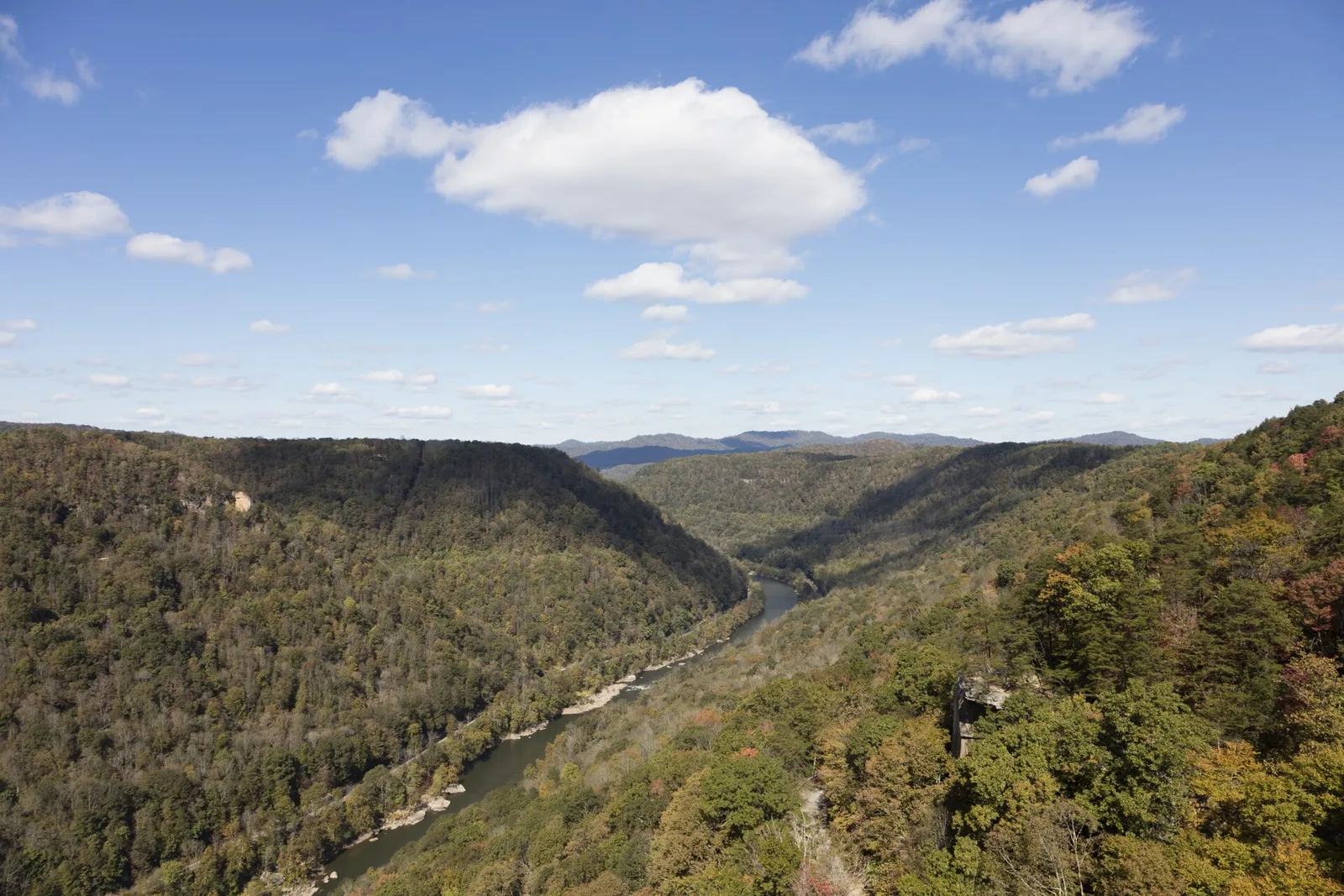
New River Gorge National Park
America's Newest National Park, Where a 1,000-Foot Deep Gorge Cuts Through the Appalachian Plateau
About New River Gorge National Park
New River Gorge became the country's 63rd national park in December 2020, when Congress redesignated the former New River Gorge National River, managed by the Park Service since 1978, as New River Gorge National Park and Preserve. The change split the land into about 7,000 acres of park where hunting is barred and roughly 65,000 acres of preserve where regulated hunting continues.
The park protects 53 miles of the New River as it cuts a gorge up to 1,000 feet deep through the Appalachian Plateau in southern West Virginia. Despite its name, the New River is among the oldest rivers on the continent, old enough that it kept its course while the mountains rose around it, and it flows north, unusual for the eastern United States, into the Gauley and then the Kanawha.
The gorge was one of Appalachia's great coal and coke districts from the 1870s to the 1950s. Rail lines threaded the canyon floor, and dozens of company towns, Thurmond, Nuttallburg, Kaymoor, Sewell, clung to the walls; their ruins, tipples, coke ovens, and cemeteries are scattered through the woods today.
The gorge is now a premier outdoor-recreation destination for whitewater rafting, sandstone rock climbing (more than 1,400 routes), mountain biking, and hiking, and it draws around 1.7 million visitors a year. Bridge Day, the third Saturday in October, closes the New River Gorge Bridge to traffic for BASE jumpers, rappellers, and pedestrians and is West Virginia's largest single-day festival.
- Designation
- National Park (2020), formerly National River (1978)
- Location
- Oak Hill, West Virginia, southern West Virginia
- Established
- 2020
- Annual Visitors
- ~1.7 million
Key Features
The New River is a geological paradox: its name comes from 18th-century settlers who thought it new, but geologists rank it among the oldest rivers in North America, with estimates ranging from a few million to more than 300 million years, possibly a remnant of the ancient Teays River system.
The river is antecedent, meaning it was already there when the land rose; as the Appalachian Plateau was uplifted, the New cut down through it fast enough to keep its channel, carving the gorge into flat-lying Pennsylvanian sandstone and shale with coal seams between the layers.
The gorge is one of the deepest and longest canyons in the Appalachians, up to 1,000 feet from rim to river over its southern reach. The exposed rock records a Carboniferous coastal plain: river channels, swamp deposits that became coal, and marine bands, stacked hundreds of feet thick.
The New flows north out of North Carolina and Virginia, drops through the gorge, and joins the Gauley River near Gauley Bridge to form the Kanawha, which reaches the Ohio; the New-Kanawha line is a major eastern drainage that predates the modern Appalachians in places.
The New River Gorge Bridge, opened in 1977, carries US 19 across the canyon on a single steel arch 3,030 feet long, with the roadway 876 feet above the water. It was the world's longest steel single-span arch bridge when built and remains the longest in the Western Hemisphere.
Before it, crossing the gorge meant a narrow, switchbacking drive down to Fayette Station, over an 1889 truss bridge at river level, and back up, about 40 minutes; the new bridge cut that to under a minute and reshaped travel and development in southern West Virginia.
The arch was built by cantilevering both halves out from the rim on cables anchored to towers and joining them at the center, a method used to avoid falsework in the deep canyon. The steel is a weathering alloy meant to form a stable rust patina and never be painted.
The bridge is a state emblem, appearing on the West Virginia quarter issued in 2005, and since 2013 the Park Service has run Bridge Walk tours out along the maintenance catwalk beneath the roadway, harnessed to a cable, 851 feet above the river.
The completion of the Chesapeake and Ohio Railway through the gorge in 1873 opened the New River coalfield, which produced a low-ash, low-sulfur smokeless coal prized for steamships, the US Navy, and metallurgical coke. At its height the district had more than 50 mining operations and dozens of company towns.
Company towns were owned outright by the coal operators: the company built the houses, ran the store, issued scrip (private tokens) in place of cash between paydays, and often controlled the church, school, and doctor. Nuttallburg, worked from 1873 to 1958 and once leased by Henry Ford, is preserved with its tipple, conveyor, coke ovens, and town site.
The workforce was diverse and segregated: European immigrants and African Americans recruited from the South worked alongside local white miners, often in separate sections of town. Thurmond, a rail town with no through street, was a booming commercial center in the 1910s and is now a near-ghost town with a restored depot.
The coalfield declined after the 1920s as competing fields opened and demand shifted, and most towns were abandoned by the 1960s. The Park Service now stabilizes ruins, maintains interpretive trails at Kaymoor and Nuttallburg, and treats the industrial landscape as a co-equal resource with the natural one.
The Lower New River, from Cunard to the bridge, drops through about 10 miles of Class III to V rapids, Surprise, Upper and Lower Railroad, Double Z, Greyhound Bend, and the notorious undercut boulders of Miller's Folly, making it one of the premier commercially rafted rivers in the East.
Flows are rain-driven and swing widely; spring runoff brings the biggest water and hardest lines, while late summer can drop the river to a technical rock garden. Just north, dam releases from Summersville on the Gauley River create a world-famous fall whitewater season.
The gorge's cliffs are hard Nuttall Sandstone, a fine, high-friction rock split by vertical cracks, and hold more than 1,400 recorded climbing routes from beginner slabs to elite testpieces at Endless Wall, Kaymoor, Beauty Mountain, and the Bridge Buttress. Climbing here took off in the 1980s.
The park's growing trail network, much of it on old mine haul roads and rail grades like the Kaymoor and Arrowhead systems, has made it a mountain-biking destination as well, and the mix of river, rock, and trail is central to the recreation economy of Fayetteville and the surrounding towns.
Indigenous Heritage
Cherokee, Shawnee, and earlier peoples
Native people used the New River gorge for at least 10,000 years, leaving rock shelters, campsites, and petroglyphs; the flat-topped ridges and river terraces held seasonal camps for hunting, fishing, and gathering nuts and plants, though the steep gorge itself was hard to live in year-round.
In the 1600s and 1700s the wider region was a contested hunting ground and travel corridor between the Cherokee to the south, the Shawnee to the north and west, and Iroquois (Haudenosaunee) war and hunting parties. The 1671 Batts and Fallam expedition, the first documented English party to reach the New River, was guided in part along Native routes.
Treaties and warfare through the Revolution and the 1790s pushed Native residents out of what became West Virginia; the 1768 Treaty of Fort Stanwix and the 1774 Battle of Point Pleasant on the Kanawha were turning points. No tribe is based in the gorge region today, and the park interprets this history at its visitor centers.
No federally recognized tribe is headquartered in the New River Gorge region today. The Cherokee Nation and Eastern Band of Cherokee Indians maintain historical connections to the area as part of their broader Appalachian homeland. West Virginia's Indigenous history is interpreted at the park visitor center in Glen Jean.
Things To Do
Whitewater Rafting (Lower New River)
Rafting the Lower New is the signature adventure of the park. Guided trips, run by licensed outfitters based mostly in Fayetteville, cover about 8 to 12 miles of Class III to V water in a half to full day, ending at the take-out beneath the New River Gorge Bridge.
The named rapids, Surprise, the Keeneys, Double Z, Greyhound Bend, and Miller's Folly with its undercut rocks, are pool-drop, meaning calmer stretches separate the big drops. Difficulty depends heavily on flow: the same rapid can be a fun wave train at low water and a serious hazard at high water.
The Upper New, above Thurmond, is gentle Class I to III and is the family option, with time to swim and float; some outfitters combine it with riverside history stops. Minimum ages and swim tests apply on the Lower New.
Spring, fed by snowmelt and rain, brings the highest and pushiest water; summer is warmer and lower; and the adjacent Gauley River's dam-release season each September and October draws paddlers from around the world and books outfitters solid.
Rock Climbing at Endless Wall
Endless Wall is the most popular climbing area in the gorge, a nearly continuous line of 60- to 120-foot Nuttall Sandstone cliff on the north rim reached by a 0.7-mile trail from the Fern Point or Nuttall trailheads, with steel ladders down to the cliff base.
Across the park, more than 1,400 routes are documented on hard, high-friction sandstone with mostly vertical cracks and pockets, from 5.4 slabs to 5.14 projects; other major crags include Kaymoor, Beauty Mountain, and the roadside Bridge Buttress.
Routes are traditional or bolted sport depending on the line, and there is no equipment rental in the park, though Fayetteville shops sell and rent gear and guide services operate under Park Service permits. The Diamond Point overlook on the Endless Wall Trail gives a classic bridge view.
The rock is fragile when wet, so climbers wait 24 to 48 hours after rain, and the park works with the climbing community on trail hardening, fixed-anchor policy, and seasonal closures to protect nesting peregrine falcons and rare cliff plants.
Bridge Day Festival
Bridge Day, held the third Saturday of October, is the largest extreme-sports event in the country and West Virginia's biggest single-day festival, drawing crowds estimated around 60,000 to 100,000. The New River Gorge Bridge closes to vehicles for about six hours and opens to pedestrians.
It is the one day a year BASE jumping is legal from the bridge: several hundred registered jumpers leap from a platform on the east side, 876 feet up, with 3 to 4 seconds of freefall before the parachute, landing on a gravel bar or in the river, where a boat crew stands by.
Rappellers descend and ascend fixed ropes from the catwalk, vendors line the bridge approaches, and a shuttle system moves spectators from off-site parking because roads into Fayetteville jam for hours.
The event began in 1980, three years after the bridge opened, and has run every year since except 2001, canceled after the September 11 attacks, and 2020, scaled back for the pandemic. Jumper deaths have occurred on a handful of occasions over its history.
Long Point Trail
The Long Point Trail is a 3.2-mile round trip on the south rim to a narrow sandstone promontory that juts into the gorge directly across from and slightly below the New River Gorge Bridge, giving the single best photograph of the arch with the river beneath it.
From the trailhead off Newton Road near Fayetteville, the route runs nearly level through second-growth oak and hickory forest and old homestead clearings, then drops gently to the point over the last half mile; it usually takes 1.5 to 2 hours round trip.
The final rock nose is exposed on three sides with a sheer drop and no railing, and the park warns hikers to keep well back from the edge, especially in wind or when the rock is wet or icy.
Long Point connects to the Butcher Branch and Kaymoor trails, allowing longer loops that descend toward the river past the Kaymoor mine site and its 821-step stairway, one of the park's most demanding day hikes.
Conservation and Challenges
Coal Mine Runoff
A century of mining left the New River watershed dotted with abandoned mines, waste piles, and coke-oven sites that still discharge acid mine drainage: when air and water reach pyrite in exposed coal and rock, they form sulfuric acid that dissolves iron, aluminum, and manganese.
The drainage turns streams orange or milky, coats streambeds with iron hydroxide known as yellow boy, drops the pH below what most fish and insects can tolerate, and has left some gorge tributaries nearly lifeless. Wolf Creek, Arbuckle Creek, and Laurel Creek are among the affected streams.
West Virginia's abandoned mine land program, funded by a federal per-ton coal fee, and partners including the Park Service and watershed groups treat the worst sites with limestone drains, settling ponds, and dosing systems, and some treated streams have seen fish and mayflies return.
The main stem of the New is large enough to dilute much of the pollution and supports smallmouth bass, muskie, and a nationally significant freshwater mussel fauna, but full recovery of the mined tributaries is a multi-decade, partial effort rather than a finished job.
Forest Health and Invasive Species
The emerald ash borer, an Asian beetle first found in West Virginia in 2007, has killed essentially all the untreated mature white and green ash in the gorge; standing dead ash along trails and roads is now a hazard-tree removal problem for the park.
Hemlock woolly adelgid threatens the eastern hemlocks that shade the cool, moist cove forests and side-canyon streams; the park treats selected hemlock stands with systemic insecticide and has released predatory beetles, but expects broad hemlock loss.
Invasive plants, Japanese knotweed along the riverbanks, tree-of-heaven and paulownia on old mine benches, garlic mustard, mile-a-minute, and Japanese stiltgrass in the understory, colonize the abundant disturbed ground left by mining, roads, and floods.
The gorge's forest is nearly all second growth that regrew after the mining-era clearcuts, and the park manages it toward a more diverse, native structure through invasive control, prescribed fire on the dry ridges, and monitoring, within limited staff and budget.
Recreation Management
National-park designation in 2020 sharply raised the gorge's profile: visitation rose from roughly 1.4 million in 2020 to about 1.7 million by 2023, concentrated at a handful of sites, the bridge overlooks, Endless Wall, Long Point, Grandview, and the Fayetteville-area trailheads.
Heavier use has worn trails, widened social paths to viewpoints and crags, compacted climber staging areas at the base of cliffs, and strained small parking lots, and the park has begun hardening trails, adding lots and toilets, and studying a shuttle for the busiest corridors.
The park is writing its first general management plan as a national park, which will set where and how much development, camping, and commercial guiding the gorge can absorb while protecting the river, the rare cliff and river-scour plant communities, and the historic mining sites.
Because the surrounding towns depend on the recreation economy, the tension is over managing growth rather than capping it, and the Park Service coordinates with West Virginia state parks, the regional development authority, and outfitters on the shared load.
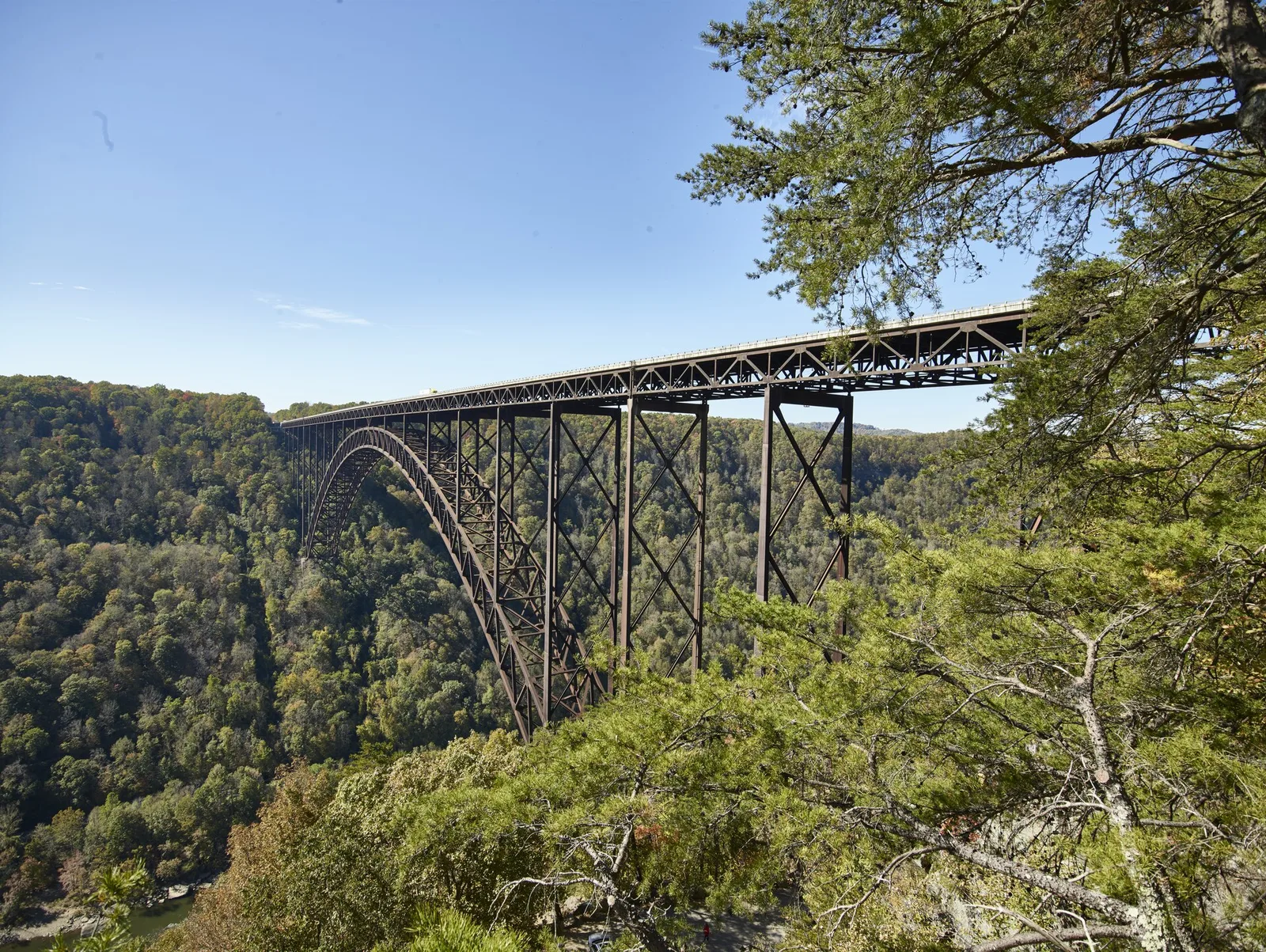
New River Gorge Bridge, 876 feet above the river, longest steel arch span in the Western Hemisphere
Fast Facts
Did You Know?
New River Gorge became America's 63rd national park on December 27, 2020, when President Trump signed the year-end government funding bill, the Consolidated Appropriations Act, 2021, that included the park's upgrade from National River to National Park status. The upgrade was a decades-long goal of West Virginia's political leaders and outdoor recreation advocates. The change immediately increased the park's national profile and accelerated the growth of tourism in the region around Fayetteville, West Virginia.
Despite its name, the New River is one of the oldest rivers in North America. The name comes from the perspective of 18th century European settlers who encountered the river from the east, where no major river had been previously mapped. Geologists estimate the New River is between 3 and 65 million years old depending on methodology, predating the uplift of the Appalachian Plateau around it. As the plateau rose, the river maintained its course by cutting downward, creating the gorge. The New River flows north, one of the few rivers in the eastern US to do so.
The New River Gorge was one of the most intensively developed coal mining regions in Appalachia from the 1870s through the 1950s. At the peak of the coal era, more than 50 company towns operated in the gorge, each entirely owned and controlled by the coal company. Miners were paid in company scrip rather than U.S. currency, required to live in company houses, and purchase all goods at the company store. The towns were abandoned as coal declined in the mid-20th century and their ruins, including coke ovens, mine portals, and building foundations, are preserved throughout the park as industrial heritage.
Plan Your Visit
Location
Oak Hill, West Virginia, southern West Virginia
Designation
National Park (2020), formerly National River (1978)
Bridge Day
Held the third Saturday of October. Traffic management is extensive; arrive very early. The bridge opens to pedestrians from 9am to 3pm. BASE jumping takes place all day from the bridge railing.
Entrance Fee
Free. New River Gorge National Park has no entrance fee.
Getting There
The park is located near Oak Hill and Fayetteville, West Virginia, along US-19 between I-64 (at Beckley) and I-79. Fayetteville is the main gateway town with outfitters, restaurants, and lodging. Charleston is about 1 hour away.
Whitewater Outfitters
Multiple licensed outfitters are based in and around Fayetteville offering guided rafting trips on the New and Gauley rivers. Spring through fall is the primary rafting season. The Gauley River Festival in September is a major event when dam releases create exceptional flows.
Rock Climbing
Outfitters in Fayetteville offer guided climbing instruction and gear rental. The Endless Wall parking area is the most common access point for intermediate to advanced climbers.