
A Right That Had to Be Won
The Declaration of Independence proclaimed that all men are created equal, but the Constitution that followed did not define who could vote. That question was left to the states, and for most of American history, the answer was deeply exclusionary. Property ownership, race, sex, age, and the ability to pay a fee all served at various points as conditions for participating in democracy.
The expansion of voting rights in America is not a smooth upward line. It is a series of hard-won advances, brutal reversals, and incomplete victories. The 15th Amendment was ratified in 1870 but effectively nullified for Black Americans in the South for the next century. Women won the vote in 1920 but faced their own set of barriers. The Voting Rights Act of 1965 was a transformative law that was significantly weakened by a Supreme Court decision in 2013.
Understanding the history of voting rights means understanding that democracy is not self-sustaining. It requires constant legal protection, public vigilance, and political will. The timeline below traces the major milestones, from the founding to the present day.

Voting Rights Through the Years
Key constitutional amendments, Supreme Court decisions, and federal laws that shaped who could vote in America.
The original Constitution did not define who could vote. It left that entirely to the states. Most states limited voting to white male property owners, meaning only a small fraction of the population could participate in elections.
Article I, Section 2 tied the federal franchise to state rules by providing that voters for the U.S. House "shall have the Qualifications requisite for Electors of the most numerous Branch of the State Legislature." The Constitutional Convention debated a national property qualification and rejected it as unworkable across states with very different economies.
Estimates by historians at the time of the first federal elections put the eligible electorate at roughly 6 percent of the total population. New Jersey's 1776 constitution briefly enfranchised unmarried women and free Black residents who met the property test, but the state legislature closed both openings in 1807.
The framers left open the possibility of change: the Constitution's amendment process in Article V is the route every later expansion of the vote has taken, and four separate amendments (the 15th, 19th, 24th, and 26th) address voting directly.
The 15th Amendment prohibited denying the right to vote based on race, color, or previous condition of servitude. It was ratified after the Civil War as part of Reconstruction. Despite its promise, states quickly found workarounds including poll taxes, literacy tests, grandfather clauses, and outright violence to keep Black Americans from voting for nearly another century.
Congress passed enforcement statutes almost immediately, the Enforcement Acts of 1870 and 1871, which made it a federal crime to use force, bribery, or fraud to block voters and authorized federal supervisors and troops. Federal prosecutors brought thousands of cases against the Ku Klux Klan in the early 1870s.
The Supreme Court narrowed the amendment's reach in United States v. Reese (1876) and the Civil Rights Cases (1883), and after the disputed 1876 election and the withdrawal of federal troops in 1877, enforcement collapsed. Between 1890 and 1908 every former Confederate state rewrote its constitution or election laws to disenfranchise Black voters while formally avoiding the word "race."
Black registration in the affected states fell dramatically: in Louisiana it dropped from roughly 130,000 in 1896 to about 1,300 by 1904. The 15th Amendment's guarantee would not be broadly enforced until the Voting Rights Act of 1965, 95 years later.
The 19th Amendment extended the right to vote to women after a 72-year campaign by the suffrage movement. The struggle began formally at Seneca Falls in 1848. Wyoming had already granted women the vote in 1869 as a territory, and several western states followed before federal action.
The amendment's text was written by Susan B. Anthony and first introduced in Congress in 1878, where it was reintroduced in every session for four decades. The House passed it in May 1919 and the Senate in June 1919, sending it to the states.
Ratification came down to Tennessee in August 1920. The state House was tied 48-48 until 24-year-old representative Harry Burn, carrying a letter from his mother urging him to "be a good boy" and vote yes, switched his vote, making Tennessee the decisive 36th state.
The amendment did not enfranchise all women in practice. Black women in the South faced the same poll taxes, literacy tests, and intimidation that suppressed Black men's votes, and many Native American, Asian American, and Latina women remained barred by citizenship and language rules for decades more.
Congress granted U.S. citizenship to all Native Americans born in the United States. However, several states still found ways to block Native Americans from voting, using residency rules, literacy tests, and other barriers. Full practical access to the ballot took decades more.
Before 1924, about two-thirds of Native Americans had already gained citizenship through treaties, military service (notably in World War I), or the allotment provisions of the 1887 Dawes Act. The Indian Citizenship Act, signed by President Coolidge on June 2, 1924, covered the remaining roughly 125,000 people.
Citizenship did not automatically bring the vote, because the Constitution lets states set voter qualifications. Arizona and New Mexico continued to bar reservation residents from voting into the 1940s, arguing they were not state residents or were "under guardianship."
Court rulings finally opened the ballot: Arizona's ban fell in Harrison v. Laveen (1948) and New Mexico's in Trujillo v. Garley the same year. Utah was the last state to lift its restriction, in 1962. The Voting Rights Act's later language-assistance provisions addressed remaining barriers for voters who primarily spoke a Native language.
The Supreme Court ruled that all-white Democratic primary elections in Texas were unconstitutional. Because the South was a one-party region at the time, winning the Democratic primary was equivalent to winning the election itself, making white-only primaries an effective tool of exclusion. This decision struck down the practice.
Texas had tried several versions of the white primary. After the Court struck down a state law mandating it in Nixon v. Herndon (1927) and a party-committee rule in Nixon v. Condon (1932), the state party itself adopted the rule by convention vote, which the Court had upheld in Grovey v. Townsend (1935).
Smith v. Allwright, argued by NAACP lawyer Thurgood Marshall, overruled Grovey 8-1. Justice Stanley Reed wrote that because the state regulated primaries and they were an integral part of choosing officials, party discrimination in them was state action barred by the 15th Amendment.
The ruling had measurable effect: Black registration across the South rose from roughly 3 percent of voting-age Black adults in 1940 to about 12 percent by 1947. South Carolina and a few other states experimented with fully "private" party clubs to evade the decision until those too were struck down in the late 1940s.
The 23rd Amendment gave residents of Washington D.C. the right to vote for President for the first time. D.C. still has no voting representation in Congress. Its residents pay federal taxes and serve in the military but have only a non-voting delegate in the House and no senators.
The amendment gives the District a number of electoral votes equal to what it would have if it were a state, but no more than the least populous state, so D.C. has had three electoral votes since 1964 despite a population larger than Wyoming or Vermont.
It moved unusually fast, passing Congress in June 1960 and reaching the three-fourths ratification threshold in March 1961, about nine months. D.C. cast its first presidential votes in the 1964 election.
Congress separately granted D.C. a non-voting House delegate in 1970 and limited home rule with an elected mayor and council in 1973, but retains authority to review the District's laws and budget. Bills for D.C. statehood or a full House seat have passed the House twice, in 2020 and 2021, and stalled in the Senate.
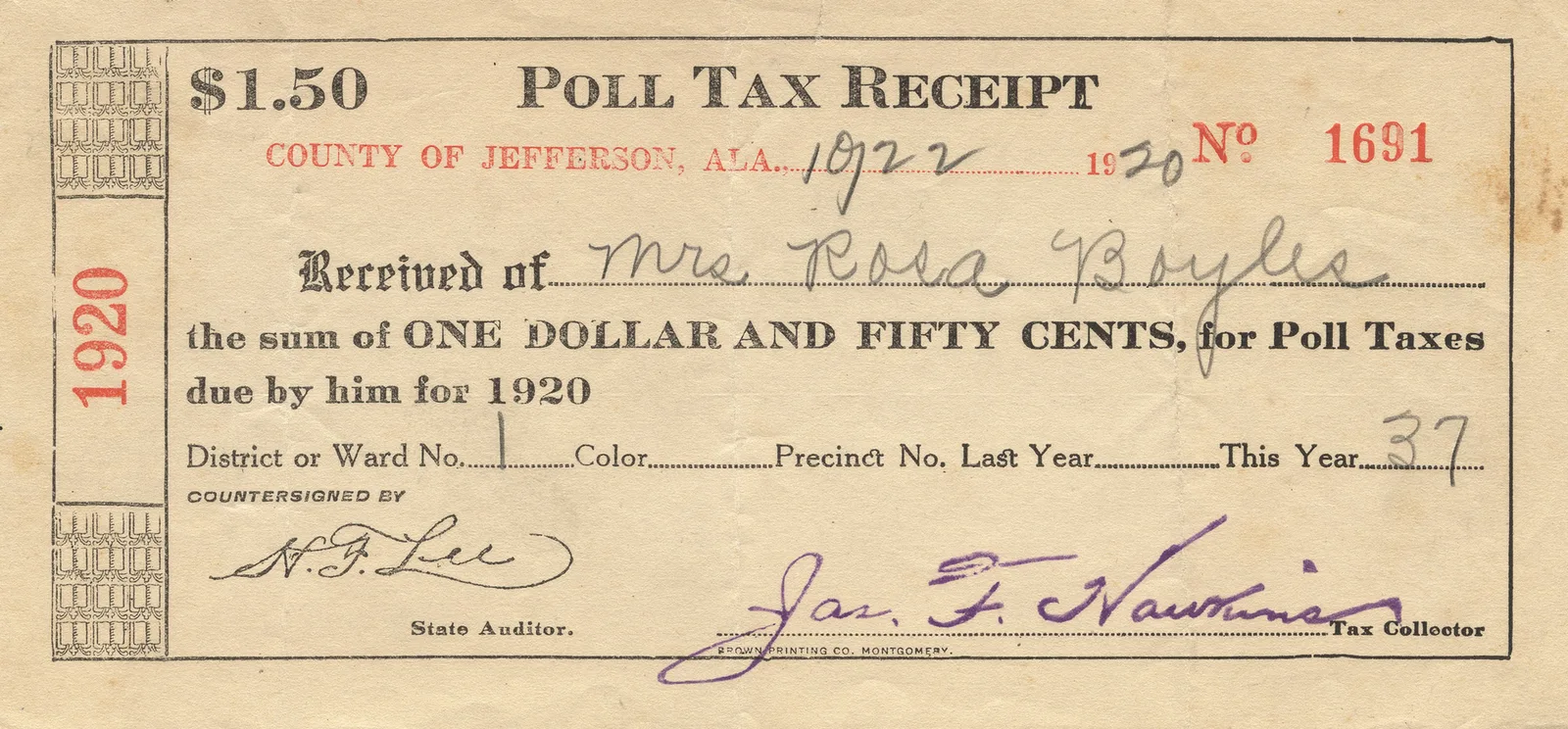
The 24th Amendment abolished poll taxes in federal elections. Poll taxes were fees charged to vote, deliberately set at amounts that would exclude poor Black and white voters in the South. The Supreme Court extended this ban to state elections in 1966 in Harper v. Virginia State Board of Elections.
By the time the amendment was ratified in January 1964, only five states still required a poll tax to vote: Alabama, Arkansas, Mississippi, Texas, and Virginia. Some had made the tax cumulative, so a voter who had skipped past elections owed several years of back taxes at once.
Virginia responded to the amendment by offering federal-election voters a choice between paying the tax and filing a certificate of residence six months early, a substitute the Supreme Court struck down in Harman v. Forssenius (1965).
Harper v. Virginia (1966) finished the job for state elections, with Justice William O. Douglas writing that wealth or fee-paying "has no relation to voting qualifications." The decision rested on the 14th Amendment's Equal Protection Clause rather than the 24th, which applies only to federal races.
The Voting Rights Act is widely considered the most effective piece of civil rights legislation in American history. It outlawed discriminatory voting practices, required federal oversight of elections in states with histories of discrimination (preclearance), banned literacy tests, and authorized federal examiners to register voters directly. It followed the violent attack on marchers at the Edmund Pettus Bridge in Selma, Alabama on March 7, 1965, Bloody Sunday.
President Johnson signed it on August 6, 1965, days after Congress gave the final version its approval (the House 328-74 on August 3 and the Senate 79-18 on August 4), both with majorities of each party. Section 5 required covered jurisdictions to get federal approval before changing any voting rule; Section 4 set the formula for which places were covered, mainly Southern states that had used a test or device and had turnout below 50 percent in 1964.
The effect was rapid. In Mississippi, Black registration rose from about 6.7 percent of voting-age Black adults in 1965 to nearly 60 percent by 1967. Across the covered states the number of Black elected officials grew from a few dozen to thousands within two decades.
Congress reauthorized and amended the Act in 1970, 1975 (adding protections for language-minority voters), 1982, and 2006, each time by wide bipartisan margins; the 2006 renewal passed the Senate 98-0. The Supreme Court upheld the Act against constitutional challenge in South Carolina v. Katzenbach (1966).
The 26th Amendment lowered the voting age from 21 to 18. The central argument was that 18-year-olds were being drafted to fight in Vietnam but could not vote for the leaders who sent them. Oregon v. Mitchell (1970) had already allowed 18-year-olds to vote in federal elections, but the amendment extended this to all elections.
The slogan "old enough to fight, old enough to vote" dated to World War II, when President Roosevelt endorsed the idea and Congress lowered the draft age to 18 in 1942. Georgia and Kentucky had already set an 18 voting age for state elections.
Oregon v. Mitchell created an administrative headache: states would have had to keep two sets of registration rolls and ballots, one for voters 18 to 20 in federal races only. That practical problem pushed Congress to act on an amendment.
It is the fastest amendment ever ratified. Congress passed it on March 23, 1971, and the 38th state, North Carolina, ratified on July 1, 1971, just over three months later. About 11 million new voters became eligible for the 1972 election.
Also called the Motor Voter Act, this law required states to offer voter registration when citizens applied for or renewed a driver's license, applied for social services, or registered with the military. It dramatically expanded the pool of registered voters by embedding registration into everyday government transactions.
The bill passed Congress largely along party lines and was signed by President Clinton on May 20, 1993, taking effect in 1995, after a version had been vetoed by President George H.W. Bush in 1992. It exempted North Dakota, which has no registration, and states that had allowed Election Day registration since before 1994.
The law also set rules for keeping rolls current: states must make a reasonable effort to remove voters who die or move, but cannot remove someone solely for not voting, and must complete any systematic purge at least 90 days before a federal election.
By 1996 the Election Assistance Commission's predecessor reported tens of millions of registration applications processed through motor-vehicle offices. The list-maintenance provisions have generated recurring litigation, including the Supreme Court's 5-4 decision in Husted v. A. Philip Randolph Institute (2018) upholding Ohio's process of using non-voting as one trigger for a removal notice.
Passed in response to the contested 2000 presidential election and the hanging chad debacle in Florida, HAVA set minimum federal standards for election administration. It required provisional ballots for voters whose eligibility is challenged, mandated accessible voting systems for disabled voters, created the Election Assistance Commission, and began the shift away from punch-card ballots.
The 2000 election was decided by 537 votes in Florida after a 36-day recount fight that ended with the Supreme Court's Bush v. Gore ruling. Studies afterward estimated that punch-card and other faulty equipment nationwide had spoiled or failed to record on the order of one to two million ballots.
HAVA passed 357-48 in the House and 92-2 in the Senate and authorized roughly $3.9 billion to help states replace equipment and build statewide voter-registration databases. Many jurisdictions used the money to buy touchscreen machines, some of which were later retired over security concerns about the lack of a paper record.
The Election Assistance Commission it created sets voluntary voting-system guidelines and distributes federal election funds, but it has often lacked a full slate of commissioners and has no power to mandate state practices, leaving election administration highly decentralized across roughly 10,000 local jurisdictions.
The Supreme Court struck down the coverage formula in Section 4 of the Voting Rights Act, which determined which states and counties needed federal preclearance before changing voting laws. The Court held the formula was outdated. Critics argued the ruling gutted the VRA's enforcement mechanism. Within hours of the decision, several states moved to implement voting restrictions that had previously been blocked.
The 5-4 majority, in an opinion by Chief Justice Roberts, held that the formula based on 1960s and 1970s data violated the "equal sovereignty" of the states and that "things have changed dramatically" in the South. The Court did not strike down preclearance itself, and said Congress could enact a new formula based on current conditions.
In dissent, Justice Ruth Bader Ginsburg wrote that throwing out preclearance because it had worked was "like throwing away your umbrella in a rainstorm because you are not getting wet," and cited the 2006 reauthorization record Congress had compiled.
Congress has not passed a new coverage formula in the years since. Bills to do so, most prominently the John Lewis Voting Rights Advancement Act, have passed the House more than once but have not overcome a Senate filibuster. Section 2 of the Act, which allows lawsuits after a discriminatory practice is adopted, remains in force nationwide.

The Tools of Voter Suppression
After the 15th Amendment prohibited outright racial exclusion from voting, Southern states developed a toolkit of race-neutral laws that had the intended effect of disenfranchising Black voters while technically complying with the Constitution.
Poll Taxes
A fee required to vote. Set at amounts equivalent to a day's wages for poor laborers. Abolished for federal elections by the 24th Amendment in 1964 and for all elections by the Supreme Court in 1966.
Literacy Tests
Tests administered at the discretion of registrars, who asked Black applicants complex constitutional questions while passing white applicants on basic reading. The tests had no uniform standard and were administered arbitrarily. Banned by the Voting Rights Act in 1965.
Grandfather Clauses
Laws that allowed voting only if your grandfather had voted, effectively exempting white families while excluding Black families whose grandfathers had been enslaved and therefore unable to vote. Struck down by the Supreme Court in 1915.
White Primaries
In the one-party South, winning the Democratic primary was the election. Whites-only primaries excluded Black voters from the only vote that mattered. Struck down in Smith v. Allwright (1944).
Intimidation and Violence
Economic retaliation against Black voters, threats, beatings, bombings of churches used as registration sites, and targeted murders of civil rights workers. This was the backdrop against which legal barriers operated and which gave them their force.
How Americans Vote Today
Voting in the United States is not administered by a single federal system. It is run by approximately 10,000 local jurisdictions, each with its own procedures, equipment, deadlines, and rules. The result is a patchwork that can look dramatically different depending on which state and county you live in.
Federal law sets a floor of minimum standards, but states have broad authority to shape how elections are conducted. This section explains the core mechanics that apply across the country and where they diverge.
The Mechanics of Voting
From registration to casting your ballot, here is how the process works and where the rules vary.
Unlike many democracies, the United States does not automatically register citizens to vote. Voters must actively register, usually by a deadline before the election. As of 2024, 22 states and Washington D.C. offer automatic voter registration, enrolling eligible citizens when they interact with government agencies like the DMV unless they opt out. 19 states and D.C. allow same-day registration at the polls. North Dakota is the only state with no registration requirement at all.
Registration in the U.S. was largely a 19th- and early-20th-century development, adopted state by state, originally as an anti-fraud measure in growing cities. Because there is no national voter roll, a citizen who moves across a state line generally has to register again from scratch.
Deadlines vary widely. Some states cut off registration 30 days before an election, the maximum the National Voter Registration Act allows for mail registration in federal races, while same-day states let a voter register and vote in one trip with proof of residence. The Census Bureau's post-election surveys consistently find "did not register in time" and "not interested" among the top reasons eligible non-voters give for sitting out.
Oregon adopted the first automatic registration law in 2015, using motor-vehicle records to register eligible citizens unless they opt out; the state reported hundreds of thousands added to the rolls in the first two years. Supporters say automatic systems produce more accurate lists; some officials in non-AVR states cite cost and concern about registering non-citizens who hold driver's licenses as reasons they have not adopted it.
In-person voting takes place at polling places, usually schools, churches, community centers, or government buildings. Voters typically check in with a poll worker, verify their identity (requirements vary by state), receive a ballot, mark it privately, and submit it. Federal law requires that polling places be accessible to voters with disabilities.
Most states have moved from mechanical lever machines and punch cards to optical-scan paper ballots or ballot-marking devices that print a paper record. After the 2016 election, security researchers and the Department of Homeland Security pushed states toward systems with a voter-verifiable paper trail; by 2024 roughly 95 percent of votes were cast on paper or with a paper backup, up from about 80 percent in 2016.
The federal Election Day is set by an 1845 law as the Tuesday after the first Monday in November. It is not a national holiday, though about a dozen states make it a state holiday or require employers to give workers paid time to vote.
Polling-place resources are set locally, and studies by the Bipartisan Policy Center and academic researchers have documented wide variation in wait times, from a few minutes in most precincts to several hours in some, often concentrated in dense urban precincts and correlated with the number of machines and poll workers a jurisdiction assigns.
Early voting lets eligible voters cast ballots in person during a window of days or weeks before Election Day, without needing an excuse. As of 2024, 47 states and D.C. offer some form of early in-person voting. The number of days, locations, and hours varies widely; Texas offers about two weeks, while a few states open only a handful of days.
Early voting spread quickly after Texas piloted it statewide in 1988. The Bipartisan Policy Center and MIT Election Lab report that a large majority of votes in recent presidential elections were cast before Election Day, combining early in-person and mail ballots.
Supporters say it reduces Election Day congestion, gives poll workers time to resolve registration problems, and helps people with inflexible work schedules or transportation limits. Some election officials note it also lets them test equipment and staffing before the peak day.
Debate continues over the length of the window. Some states expanded early voting in 2020 and then trimmed it afterward, while others added Sunday hours; academic studies of turnout effects are mixed, generally finding early voting shifts when people vote more than whether they vote.
The Help America Vote Act of 2002 requires all states to offer provisional ballots. If a poll worker cannot confirm your registration or eligibility on Election Day, you have the right to cast a provisional ballot. Your ballot is set aside and verified by election officials after the polls close.
Common reasons for a provisional ballot include a name missing from the poll book, voting at the wrong precinct, an unresolved name or address change, a flagged ID question, or a record showing the voter requested a mail ballot. The voter is given information on how to check whether it counted.
Rules on counting differ sharply by state. Some count a provisional ballot cast anywhere in the correct county for the races the voter was eligible for; others reject any ballot cast outside the assigned precinct entirely. The Election Assistance Commission's biennial survey has reported that in recent federal elections roughly 2 to 2.5 million provisional ballots were cast and that about one in five was ultimately rejected.
Provisional ballots were central to post-2000 reform because Florida in 2000 had no uniform way to handle voters wrongly left off the rolls. They function as a fail-safe, but a high provisional rate in a jurisdiction is also read by election analysts as a sign of registration-list or precinct-assignment problems.
Voter ID laws range from strict photo ID requirements (such as Indiana, Georgia, and Wisconsin) to no document requirement for most in-person voters (such as California and Pennsylvania, which rely on signature matching or the registration process). Strict photo-ID states require a government-issued photo ID such as a driver's license or passport; non-strict states may accept a utility bill, bank statement, or a signed affidavit.
The Supreme Court upheld Indiana's strict photo-ID law in Crawford v. Marion County Election Board (2008), finding the state's interest in preventing fraud and building confidence sufficient and the burden not shown to be excessive on the record before it. Lower courts have since struck down or narrowed ID provisions in North Carolina, Texas, and other states after finding a discriminatory purpose or effect.
Supporters argue that requiring identification is a routine safeguard against impersonation and that polls consistently show broad public support across parties. They note that most states with photo-ID rules provide a free ID and a provisional-ballot cure process.
Critics point to studies finding in-person impersonation fraud is extremely rare, and to research estimating that a meaningful share of citizens, disproportionately elderly, low-income, Black, and Hispanic adults, lack a current qualifying photo ID or the underlying documents (such as a birth certificate) needed to get one. The measured turnout effect of ID laws in the research literature is debated and generally found to be small.
Only Maine, Vermont, and the District of Columbia never remove the vote, allowing people to vote from prison. Every other state suspends voting rights for at least the period of incarceration, and many extend the loss through parole, probation, or beyond.
The Supreme Court held in Richardson v. Ramirez (1974) that the 14th Amendment's language about abridging the vote "for participation in rebellion, or other crime" affirmatively permits states to disenfranchise people with convictions, which is why these laws have generally survived constitutional challenge.
The trend since the late 1990s has been toward restoration. More than two dozen states have eased their rules; most now restore the vote automatically once a sentence, or a sentence plus supervision, is complete. Virginia has shifted approach with each governor, from automatic restoration to case-by-case gubernatorial action.
Florida is the most litigated example: voters passed Amendment 4 in 2018 to restore rights after "completion of sentence," and the legislature then defined that to include payment of all fines, fees, and restitution. A federal appeals court upheld that requirement in 2020. The Sentencing Project estimates roughly 4 million Americans could not vote in 2024 because of a felony record, with rates several times higher among Black adults.
Who Actually Runs Elections?
Presidential elections feel like a single national event, but they are actually 50 separate state elections plus Washington D.C., conducted by thousands of county and local election offices. The secretary of state in most states oversees elections at the state level, but counties and municipalities handle the actual administration, hiring poll workers, selecting voting equipment, setting polling place locations, and counting ballots.
The Election Assistance Commission (EAC), created by HAVA in 2002, provides voluntary guidelines, certifies voting equipment, and distributes federal funds to states, but it has no enforcement authority over state election procedures.
Why This Structure Matters
The decentralized structure means elections are resilient against a single point of failure or manipulation, but it also means that resource disparities between wealthy and poor counties can lead to very different voting experiences. Affluent suburbs may have modern equipment, short lines, and well-trained poll workers. Underfunded urban precincts may have aging machines, hours-long waits, and undertrained staff.
Voting by Mail: From Civil War Soldiers to 2020
Mail voting is not a new invention. Its roots in American democracy stretch back to the Civil War, when states began allowing soldiers in the field to cast ballots without traveling home. What has changed is the scale, the technology, and the political controversy surrounding it.
For most of the 20th century, absentee voting was a narrow exception available to people who could not physically reach a polling place on Election Day, with a required excuse like illness or travel. Starting in the late 1970s, states began eliminating the excuse requirement. By 2020, the COVID-19 pandemic triggered the largest single-year expansion of mail voting in history.
Today, mail voting is a permanent, routine part of elections in much of the country, and one of the most actively debated aspects of election administration.
The History of Mail-In Voting
How mail ballots went from a wartime accommodation to a routine part of elections in half the country.
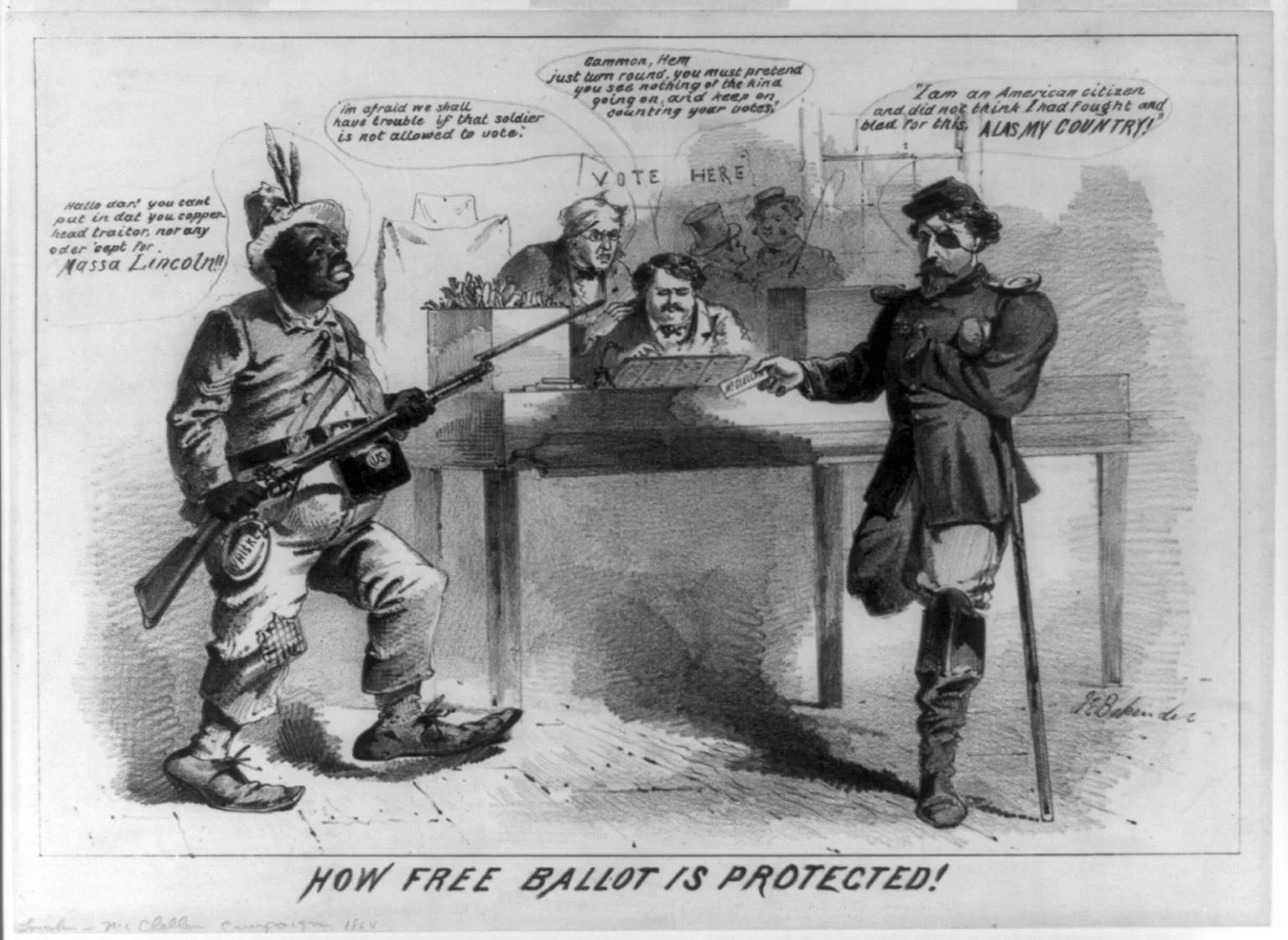
The modern concept of absentee voting in America traces to the Civil War. Nineteen Union states passed laws allowing soldiers in the field to cast ballots, and the 1864 presidential election was the first major test.
The methods varied: some states sent commissioners to army camps with ballots, while others let soldiers mail a ballot home or authorize a proxy to vote for them. Roughly 150,000 soldier votes were recorded, and Lincoln won about 78 percent of them, better than his 55 percent share among civilians.
It was a partisan fight at the time. Republican-controlled legislatures generally passed soldier-voting laws; several Democratic-controlled ones, including in Indiana and New Jersey, blocked them, and the practice drew court challenges over whether a ballot could be cast outside the voter's home district.
Most of these wartime measures lapsed when the war ended, but they established the precedent that a voter's physical absence on Election Day need not mean losing the vote, an idea states would revive piecemeal over the next century.
Vermont enacted the first permanent absentee voting law in the country, establishing a formal process for voters who would be absent on Election Day to cast ballots by mail. The early laws were narrow, requiring voters to provide a specific excuse such as illness, disability, travel for work, or religious observance.
Other states followed slowly. By 1924, according to voting historians, about 45 states had some form of absentee provision, most limited to voters who could show they would be out of the county on business or were physically unable to reach the polls.
The typical process required the voter to apply in advance, often with a witnessed or notarized signature, receive a ballot by mail, and return it in sealed envelopes, the double-envelope design still used for signature verification today.
These excuse-based systems remained the norm for civilians for decades. As late as 1980, most states still required a reason to vote absentee, and absentee ballots were a small single-digit share of the national vote.
Congress passed the Soldier Voting Act to help the millions of Americans serving abroad in World War II cast ballots. The act created a federal absentee ballot for service members and waived state poll taxes and registration requirements for them in federal races.
Turnout under it was low. Fewer than 30,000 federal ballots were used in 1942, partly because many states refused to accept the federal ballot and insisted on their own forms, and partly because of the logistical difficulty of reaching troops in combat theaters.
A stronger 1944 version created a bipartisan U.S. War Ballot Commission and pushed the state-versus-federal ballot fight into a national debate, with some Southern members of Congress objecting that a federal ballot bypassing the poll tax was an intrusion on state control of elections.
By the 1944 election roughly 2.7 million service members voted absentee. The wartime experience directly shaped the permanent overseas-voting laws Congress would pass in the 1950s, 1970s, and 1980s.
Congress extended absentee voting protections to American civilians living abroad, not just military personnel, covering diplomats, journalists, employees of American companies overseas, missionaries, students, and retirees who kept their U.S. citizenship.
The law guaranteed these citizens the right to register and vote by absentee ballot in federal elections in the state where they last resided, even if they no longer maintained a home or paid property tax there.
It built on the earlier Federal Voting Assistance Act of 1955 and a 1968 law for the military, consolidating a patchwork of state rules that had often left long-term expatriates with no clear voting home.
The State Department estimates several million U.S. citizens of voting age live abroad; the Federal Voting Assistance Program reports overseas-civilian turnout is typically well below the domestic rate, with ballot transit time the most cited obstacle.
UOCAVA consolidated and strengthened protections for military and overseas voters. It requires states to allow these voters to register and request ballots with a single federal form and to vote absentee in all federal elections, and it created a federal write-in ballot as a backup if a regular ballot does not arrive in time.
The law is administered together by the states and the Federal Voting Assistance Program in the Department of Defense, which runs voter-assistance offices on military installations worldwide.
Congress strengthened it with the Military and Overseas Voter Empowerment (MOVE) Act of 2009, which requires states to send requested absentee ballots at least 45 days before a federal election and to offer electronic delivery of blank ballots.
Roughly 1 million UOCAVA ballots are transmitted in a presidential election year. The Election Assistance Commission has reported that a notable share are never returned and that rejected UOCAVA ballots are most often those that arrive after the state deadline.
California moved to allow any registered voter to request an absentee ballot without providing a reason. Before this, most states required an excuse such as illness, disability, or travel out of the county.
The change was gradual in effect: absentee ballots were about 5 percent of California's vote in the early 1980s and rose past 25 percent by the early 2000s and to a majority of the vote by the late 2010s, as the state added permanent absentee status.
The no-excuse model spread across the country over the following decades. By 2020, according to the National Conference of State Legislatures, about two-thirds of states and D.C. allowed no-excuse absentee voting, with the rest still requiring a listed reason.
Election administrators generally credit no-excuse rules with smoothing Election Day operations, while some officials in excuse-required states cite chain-of-custody and verification concerns as reasons they have kept the older system.
Oregon conducted its first all-mail statewide election, a U.S. Senate special election, in December 1995 and January 1996, sending every registered voter a ballot and eliminating traditional polling places.
The state had been building toward it since a 1981 pilot for local elections. In November 1998 Oregon voters approved Ballot Measure 60 by about 69 percent, making vote-by-mail permanent for all elections.
Under the system, ballots are mailed roughly two to three weeks out and can be returned by mail or dropped at official drop sites; signatures on the return envelope are checked against the voter's registration record before the ballot is counted.
Oregon has since regularly reported turnout among the highest in the nation, and state audits and academic studies have found very low rates of documented fraud. Oregon later paired the system with automatic voter registration in 2016.
Washington moved to all-mail voting county by county. State law let each county choose vote-by-mail, and by 2009 all but one county had switched; in 2011 the legislature required every county to conduct mail elections.
Washington's model differs slightly from Oregon's in offering more staffed voting centers for in-person help, accessible equipment, and same-day registration, alongside the mailed ballot every voter receives.
The state uses ballot tracking that lets voters see online when their ballot was mailed, received, and accepted, a feature many other states adopted afterward.
By the mid-2010s Oregon, Washington, and Colorado (which converted in 2013) formed the core group of universal vote-by-mail states, and their combined experience became the main evidence base cited in later national debates over expanding mail voting.
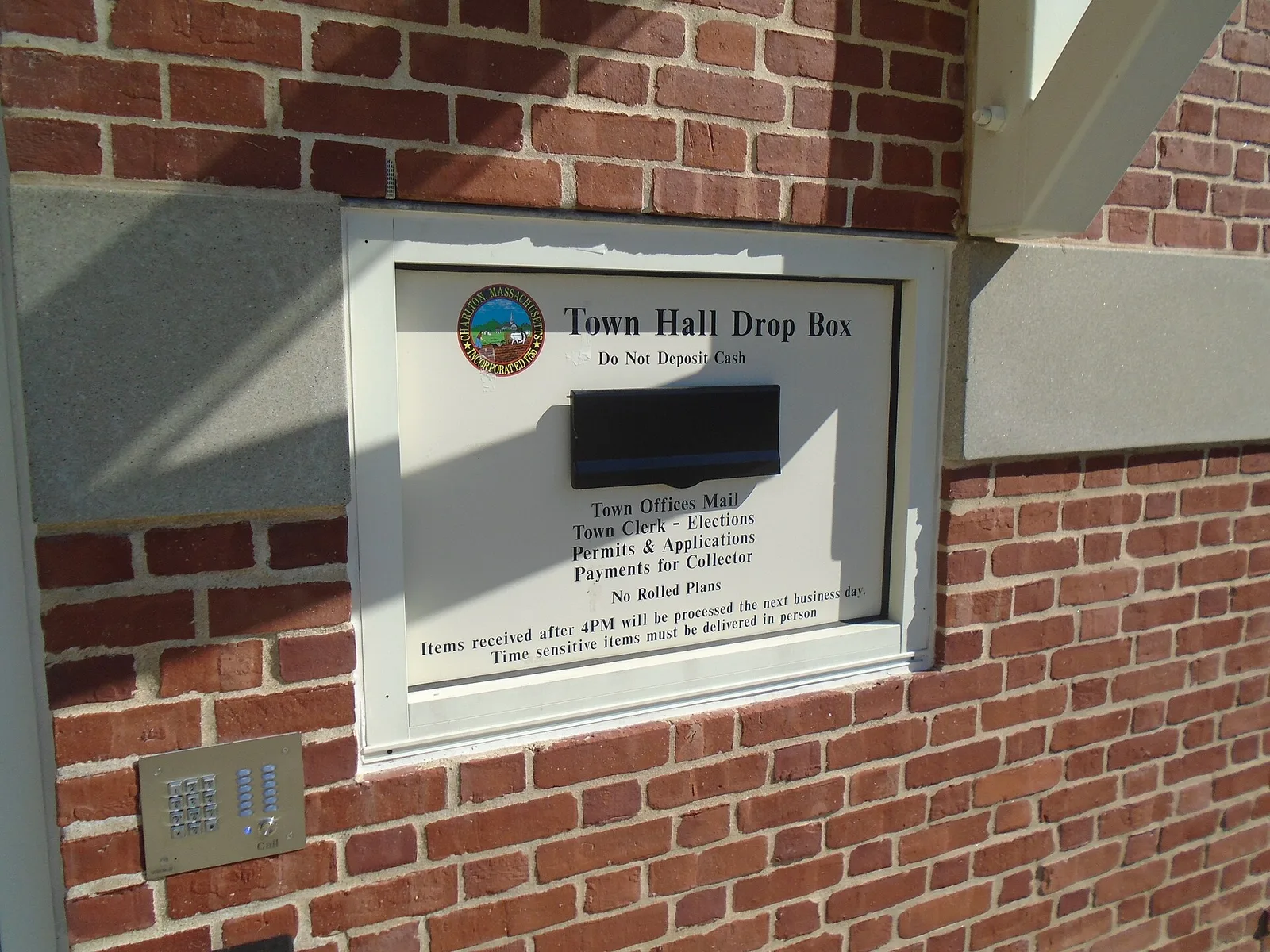
The COVID-19 pandemic prompted the largest single-year expansion of mail voting in American history. Many states relaxed or waived excuse requirements, extended deadlines, added drop boxes, or mailed ballots or ballot applications to all registered voters.
About 43 to 46 percent of 2020 votes were cast by mail, roughly double the 2016 share, and another quarter were cast early in person, so a large majority of the electorate did not vote at a precinct on Election Day.
Because many states count mail ballots more slowly than in-person votes, and some are barred from processing them before Election Day, results in several states took days to finalize. The changes drew numerous lawsuits over drop-box rules, signature-cure procedures, and ballot-receipt deadlines, including at the Supreme Court.
Post-election reviews, audits, and recounts by state officials of both parties, and federal cybersecurity and law-enforcement agencies, reported no evidence of fraud that would have changed the national outcome. Some states later passed laws tightening mail-ballot rules, while others made the pandemic-era expansions permanent, and public opinion on mail voting became sharply divided along partisan lines.
As of 2024, eight states plus D.C. conduct elections primarily by mail, sending a ballot to every registered voter: Colorado, Hawaii, Nevada, Oregon, Utah, Vermont, Washington, and California, with California and Nevada having adopted the model after 2020.
About three dozen states and D.C. allow any voter to request a mail ballot without an excuse, while the remaining states still require the voter to cite a reason such as illness, disability, age, or absence from the county.
States diverge on deadlines and verification: some count ballots postmarked by Election Day and received days later, others require receipt by the time polls close; most check the return-envelope signature, and about half offer a formal process to "cure" a missing or mismatched signature.
Litigation over these rules is now a fixed feature of election cycles, covering drop-box availability, postmark and receipt deadlines, signature-match standards, and whether ballots with minor envelope errors must be counted.
How Mail Voting Works Step by Step
The process varies by state, but this is the general framework across most of the country.
- 1
Request or Receive Your Ballot
In 27 states and D.C., any registered voter can request a mail ballot without a reason. In 8 states, ballots are automatically mailed to all registered voters. In the remaining states, you must provide an excuse such as disability, illness, or expected absence on Election Day.
- 2
Complete Your Ballot
You mark your ballot at home, usually using a black or blue pen. Instructions must be followed carefully. Common mistakes include using the wrong pen, failing to mark within designated areas, or voting for more candidates than allowed (overvoting).
- 3
Sign and Seal
Most states require you to sign the outer envelope and, in many cases, have a witness sign as well. Some states require a notary. The signature is the primary verification tool, matched against your registration record by election officials.
- 4
Return Your Ballot
You can typically return your ballot by mail, at a drop box, or in person at an election office. Many states have moved ballot return deadlines to Election Day receipt, but some require ballots to be received by Election Day. Deadlines vary widely and missing them is the most common reason ballots are rejected.
- 5
Signature Verification
Election workers compare your signature on the return envelope to the signature on your voter registration. This is the main security check for mail ballots. If signatures don't match, most states allow a 'cure' period where you can verify your identity before your ballot is rejected.
- 6
Ballot Processing and Counting
After verification, ballots are separated from their envelopes (to preserve the secret ballot) and processed. Many states do not begin counting mail ballots until Election Day or even after, which is why mail ballot results often come in after in-person results in major elections.
Why Mail Ballots Get Rejected
Mail ballots are rejected at higher rates than in-person ballots. The overall rejection rate nationally is low, typically under 1%, but that adds up to hundreds of thousands of uncounted votes in large elections. The most common reasons:
Signature Missing or Non-Matching
Most common reason in most states
Returned After Deadline
Strict in many states
Missing or Incorrect Envelope
Varies by state requirements
Missing Witness or Notary Signature
Required in about 10 states
Already Voted in Person
System catches duplicates
Voter Not Registered
Registration had lapsed or was never processed
Ballot Curing
Most states allow voters to "cure" a rejected mail ballot, meaning you can fix the problem (add a missing signature, verify your identity) before the final count. The deadline for curing varies by state, and not all states offer it. Voters whose ballots are rejected are not always notified in time to cure.
The Active Debates
Voting in America is genuinely contested terrain. That is not just political rhetoric. Real legal, empirical, and constitutional disputes exist about how elections should be run, who should be able to vote, and what safeguards are appropriate. These debates have been litigated in federal and state courts, debated in legislatures, and argued in public for decades.
This section presents the major controversies as fairly as possible, with the strongest version of both sides. These are not questions with simple right answers. They involve genuine tradeoffs between security, access, cost, convenience, and public trust. Readers should evaluate the evidence and arguments for themselves.
Pros, Cons, and the Real Arguments
The Case For
- +Verifying identity is a basic safeguard against impersonation fraud and unauthorized voting.
- +Public confidence in elections matters for democratic legitimacy. Polling consistently shows broad public support for some form of voter ID across party lines.
- +Many other democracies, including Germany, Canada, and the UK, require ID to vote. The U.S. is not unusual in imposing this requirement.
- +Free ID programs in most states mean cost is not an insurmountable barrier for determined voters.
The Case Against
- -Studies consistently find that in-person voter impersonation fraud, the specific type ID laws address, is extremely rare. One analysis found 31 credible cases out of over 1 billion ballots cast between 2000 and 2014.
- -An estimated 11% of U.S. citizens, disproportionately elderly, low-income, Black, and Hispanic adults, lack qualifying government photo ID.
- -Obtaining qualifying ID often requires underlying documents like a birth certificate, which itself costs money and time. This creates a chain of obstacles that effectively functions as a barrier even when ID itself is free.
- -Courts have repeatedly found that strict voter ID laws have racially disparate effects, raising 15th Amendment concerns.
Context
The debate often involves people talking past each other. Supporters focus on the principle and public perception; critics focus on the documented rarity of the targeted fraud and the real-world burden on specific communities. Both concerns are legitimate, and the specific design of an ID law, whether alternatives are available, whether free IDs are easily accessible, whether there is same-day cure for ID problems, matters enormously.
The Case For
- +States like Oregon and Colorado have used universal mail voting for years with high turnout and no documented large-scale fraud.
- +Mail voting eliminates barriers like transportation, work schedules, disability, and long lines that disproportionately affect working-class and elderly voters.
- +Voters have more time to research their ballot at home, which may improve the quality of participation.
- +Paper ballots create a physical audit trail that is more verifiable than some electronic systems.
The Case Against
- -The chain of custody for a ballot is longer with mail voting, creating more opportunities for error or manipulation between the voter and the counting machine.
- -Ballot harvesting, the collection of large numbers of ballots by third parties, is legal in some states and creates the theoretical risk of coercion or selective delivery.
- -Signature matching, the main verification tool for mail ballots, is an imprecise science. Signatures change over time and vary by the individual. Error rates and standards vary widely across states and counties.
- -Voters who make mistakes on mail ballots, forgot to sign, wrong envelope, smudged ink, may not know their ballot was rejected until it is too late.
Context
The empirical evidence of large-scale mail ballot fraud in recent U.S. elections is limited. Audits and recounts in contested states after 2020 found no evidence of fraud sufficient to change outcomes. At the same time, the theoretical vulnerabilities critics describe are real. The practical question is whether the safeguards, signature matching, cure processes, and ballot tracking, are adequate, and whether they are applied consistently.
The Case For Maintenance
- +Outdated voter rolls with deceased voters, people who have moved, and duplicate entries are a real administrative problem and a source of public distrust.
- +The National Voter Registration Act requires states to maintain accurate rolls as a matter of federal law.
- +Clean rolls reduce the risk of ballots being mailed to outdated addresses or fraudulent absentee ballot requests in someone else's name.
- +Regular maintenance is standard practice in well-run election systems.
The Case Against Aggressive Purges
- -Aggressive purges have repeatedly removed eligible voters, particularly people who simply have not voted recently but remain legal residents.
- -Match-based purge systems, which compare voter rolls to other databases, frequently produce false positives due to common names and minor discrepancies in spelling or hyphenation.
- -Georgia canceled about 313,000 registrations in 2019 under its use-it-or-lose-it process; an outside analysis found about 22,000 of them had been flagged in error, though courts declined to block the process. Ohio's similar process was upheld by the Supreme Court in Husted v. A. Philip Randolph Institute (2018).
- -Voters removed in error often do not find out until they arrive at the polls, at which point the cure options may be limited or unavailable.
Context
The National Voter Registration Act strikes a deliberate balance, requiring accurate rolls but also prohibiting purges within 90 days of a federal election and limiting the reasons for removal. The debate is largely about where to draw that line and how aggressively to enforce it.
Arguments in Defense
- +The Constitution assigns redistricting authority to state legislatures, which are elected by voters. Party control of redistricting is an inherent feature of a system where elections have consequences.
- +Majority-minority districts, one form of intentional racial gerrymandering, have been upheld by courts as a tool for ensuring minority representation.
- +Both major parties practice gerrymandering when they have the opportunity. Critics of one party's maps often support equivalent maps drawn by their own party.
- +Independent commissions have their own biases and do not always produce more competitive maps.
Arguments Against
- -Extreme partisan gerrymandering can effectively predetermine election outcomes before a single vote is cast, undermining the concept of competitive elections.
- -Racial gerrymandering specifically designed to dilute minority voting power violates the Equal Protection Clause and the Voting Rights Act.
- -Modern computer modeling allows parties to draw districts with surgical precision that was impossible in earlier eras, making the problem qualitatively worse.
- -The Supreme Court ruled in Rucho v. Common Cause (2019) that federal courts cannot intervene in partisan gerrymandering cases, leaving it to state courts and legislatures.
Context
Gerrymandering predates the United States. The term comes from Massachusetts Governor Elbridge Gerry, who in 1812 signed a bill creating a salamander-shaped district. The modern debate is about whether technology has made the practice so powerful that it fundamentally distorts representative government, and what if any legal remedy exists.
Arguments For Fewer Restrictions
- +The Supreme Court has repeatedly held that political spending is a form of protected speech under the First Amendment.
- +Contribution limits and disclosure requirements restrict who can participate in democracy based on how much money they have, which has its own democratic legitimacy problems.
- +Political campaigns require resources to communicate with voters. Restricting spending can entrench incumbents who already have name recognition.
- +Outside spending on political advertising has existed as long as mass media. The question is who regulates it and how.
Arguments For More Restrictions
- -Citizens United v. FEC (2010) opened the door to unlimited corporate and union independent expenditures, dramatically increasing the role of outside money in elections.
- -Super PACs can raise unlimited funds from corporations, unions, and individuals, as long as they do not officially coordinate with campaigns, a distinction critics call fictitious in practice.
- -Dark money groups organized as nonprofits can spend on elections without disclosing their donors at all, making it impossible for voters to know who is funding political messaging.
- -Studies on whether campaign spending actually buys votes are mixed, but the perception of corruption, the sense that large donors get policy results, has measurable effects on public trust.
Context
The constitutional framework for campaign finance was significantly reshaped by Citizens United (2010) and subsequent decisions. The debate now turns less on whether unlimited spending exists, it does, and more on whether disclosure requirements can be enforced and whether contribution limits to candidates themselves can be sustained.
Case for Preclearance
- +Preclearance was demonstrably effective. DOJ objections blocked hundreds of discriminatory voting changes in covered jurisdictions between 1965 and 2013.
- +The history of voter suppression in covered states was severe enough to justify ongoing federal oversight even decades later.
- +Within hours of Shelby County, several states implemented restrictions that DOJ had previously blocked. Critics say this proves preclearance was still necessary.
- +Minority voter registration and turnout dropped measurably in several states after Shelby County removed federal oversight requirements.
Case Against (or for Reform)
- -The Supreme Court majority in Shelby County argued the 40-year-old coverage formula no longer reflected current conditions and amounted to treating states unequally.
- -States have sovereignty over their own elections under Article I and the 10th Amendment. Indefinite federal supervision of some states but not others is constitutionally and federally unusual.
- -Congress could update the VRA formula to reflect current data. Its failure to do so is a legislative choice, not a constitutional requirement.
- -Section 2 of the VRA, which allows litigation after the fact, remains in force and provides an avenue to challenge discriminatory practices, though Louisiana v. Callais (2026) narrowed how states may draw race-based districts to comply with it.
Context
Congress has not updated the VRA preclearance formula since Shelby County. Multiple bills to do so, including the John Lewis Voting Rights Advancement Act, have passed the House but stalled in the Senate. The result is that preclearance, as a practical matter, remains inactive.
The 2000 Election and Its Aftermath
The 2000 presidential election between George W. Bush and Al Gore was decided by 537 votes in Florida after weeks of recounts, court battles, and national controversy over punch-card ballot technology. The Supreme Court's decision in Bush v. Gore stopped the recount, awarding Florida's electoral votes and the presidency to Bush.
The term "hanging chad" entered the American vocabulary, referring to the partially punched paper squares that punch-card machines left ambiguously attached to ballots, making voter intent unclear. The crisis exposed the degree to which election administration infrastructure had been neglected.
Congress responded with the Help America Vote Act (HAVA) in 2002, providing $3.9 billion to upgrade voting equipment, establish provisional ballots, and create minimum federal standards. The crisis accelerated the national shift away from punch cards and lever machines toward optical scan and direct-recording electronic (DRE) systems. It also permanently elevated election administration from a sleepy local government function to a subject of national political attention.
The Laws That Shape How America Votes
Voting rights in the United States are shaped by a combination of constitutional amendments, federal statutes, and Supreme Court decisions. No single document defines the right to vote. Instead, it is the product of more than two centuries of legal accretion, with each major piece of legislation responding to a specific failure, injustice, or crisis in the system.
The list below covers the most consequential. Note that a Supreme Court decision is not a law but can be as consequential as one.
Key Laws, Amendments, and Decisions
Prohibited denying the vote based on race. Circumvented by states for nearly 100 years through poll taxes, literacy tests, grandfather clauses, and violence.
Congress passed enforcement legislation, including the Enforcement Acts of 1870 and 1871, to prosecute officials and private citizens who used violence or fraud to block Black voters, though enforcement collapsed after Reconstruction ended in 1877.
Extended the right to vote to women after a 72-year campaign. Several countries, including New Zealand (1893) and Finland (1906), had already granted women the vote.
The amendment passed Congress in 1919 and needed ratification by three-fourths of the states; Tennessee became the decisive 36th state to ratify in August 1920, reportedly by a single vote in its state legislature.
Abolished poll taxes in federal elections. The Supreme Court extended the prohibition to state elections in 1966.
Poll taxes had been used for decades specifically to disenfranchise poor voters, disproportionately Black Americans in the South, by charging a fee to vote that many could not afford.
Outlawed discriminatory voting practices, banned literacy tests, required federal preclearance for changes in covered jurisdictions, and authorized federal examiners to register voters. Significantly weakened by Shelby County v. Holder (2013).
The preclearance system required certain states and counties with a history of discriminatory voting practices to get approval from the Department of Justice or a federal court before changing any voting law, a requirement that applied for nearly 50 years until Shelby County v. Holder.
Lowered the voting age to 18. Ratified during the Vietnam War era when the disconnect between draft eligibility and voting eligibility became politically untenable.
It was ratified faster than any other constitutional amendment in U.S. history, taking just over three months from passage in Congress to reaching the required three-fourths of states.
Uniformed and Overseas Citizens Absentee Voting Act. Required states to allow military and overseas citizens to register and vote absentee in federal elections.
The law was later expanded by the Military and Overseas Voter Empowerment (MOVE) Act of 2009, which set deadlines requiring states to send absentee ballots to military and overseas voters at least 45 days before a federal election.
The Motor Voter Act. Required states to offer voter registration at DMVs, social service agencies, and military offices. Dramatically expanded the registered voter pool.
The law also restricted how states could remove voters from registration rolls, requiring specific notice and waiting periods before someone could be purged for inactivity, provisions that remain a frequent subject of litigation.
Response to the 2000 election crisis in Florida. Required provisional ballots, accessible voting systems, statewide voter registration databases, and created the Election Assistance Commission.
HAVA provided billions of dollars in federal funding to help states replace outdated punch-card and lever voting machines, the same technology at the center of the disputed 2000 Florida recount.
Supreme Court decision, not a law, that struck down the VRA preclearance formula, effectively suspending federal pre-approval requirements for election law changes in historically discriminatory states.
The 5-4 ruling held that the formula Congress used in 1965 to decide which states and counties needed preclearance was outdated, but it left open the possibility that Congress could pass an updated formula, something Congress has not yet done.
Did You Know?
Voter turnout in the 1876 presidential election was approximately 81.8%, one of the highest in American history. In 2020, record turnout hit 66.8%, the highest since 1900.
Wyoming was the first U.S. territory to grant women full voting rights, in 1869, more than 50 years before the 19th Amendment.
Oregon has conducted all-mail elections since 2000. Its turnout has consistently exceeded the national average by double digits.
The word 'gerrymandering' is a portmanteau of Elbridge Gerry, Governor of Massachusetts, and salamander, because a district he approved in 1812 was said to resemble the reptile.
26 countries in the world have compulsory voting laws, including Australia, Belgium, and Brazil. Australia fines citizens who do not vote without a valid excuse.
The Voting Rights Act of 1965 was signed by President Lyndon B. Johnson on August 6, 1965, about 95 years after the 15th Amendment was certified on March 30, 1870.
About 4 million Americans, roughly 1.7% of the voting-age population, could not vote in 2024 because of felony convictions (The Sentencing Project), down from 4.6 million in 2022. The rate is significantly higher for Black men.
In the 2020 election, some counties in Georgia had voters waiting in line for up to 10 hours to cast their ballot, highlighting persistent disparities in polling place resources.