
Johnston Atoll JQ
A remote Pacific atoll with a Cold War past as a nuclear test site and chemical weapons storage facility, now a recovering National Wildlife Refuge under joint military and Fish & Wildlife administration.
About Johnston Atoll
Johnston Atoll is a small coral atoll in the central North Pacific Ocean, about 825 miles southwest of Honolulu. It consists of four islands totaling just over a square mile of land, two of which were artificially created during military construction in the 1960s. No civilians have ever lived here permanently, and today the atoll is closed to all public access.
Of all the U.S. minor outlying islands, Johnston Atoll has the most troubled history. It served as a staging base in World War II, a launch site for high-altitude nuclear weapons tests in the early 1960s, and a storage and incineration facility for chemical weapons stockpiles from 1971 to 2000. Rocket accidents in 1962 and 1963 left plutonium contamination across parts of the main island that required years of cleanup to address.
The last military personnel departed in 2004, and management transferred to the U.S. Fish and Wildlife Service. The atoll is now a National Wildlife Refuge in recovery, and its surrounding waters are part of the Pacific Remote Islands Marine National Monument. Seabird colonies and reef life are gradually returning, a quiet counterpoint to the atoll's turbulent 20th century.

Aerial view of Johnston Atoll

Recovering seabird colonies on Johnston Atoll
Johnston Atoll vs. a U.S. State
| Feature | Johnston Atoll | U.S. State |
|---|---|---|
| Permanent Population | None | Yes |
| Local Government | None | State government |
| Congressional Representation | None | Senators + Representatives |
| Voting in Federal Elections | No residents | Yes |
| U.S. Constitution Applies | Partially (by statute) | Fully |
| Administered By | FWS & DoD (joint) | Elected officials |
| Incorporated Territory | No | Yes (as a state) |
| Public Access | Closed, no entry | Generally open |
Geography at a Glance
- Location
- Central North Pacific Ocean
- Coordinates
- 16°44′N 169°31′W
- Land Area
- ~1.03 sq mi (2.67 km²)
- Islands
- 4 (Johnston, Sand, Hikina, Akau)
- Highest Point
- ~12 ft (3.7 m) above sea level
- Nearest Land
- ~825 miles WSW of Honolulu
- Distance to HI
- ~825 miles WSW of Honolulu
- Time Zone
- UTC−10:00
- Climate
- Tropical, hot, humid, trade winds
- Administration
- U.S. Fish & Wildlife / DoD
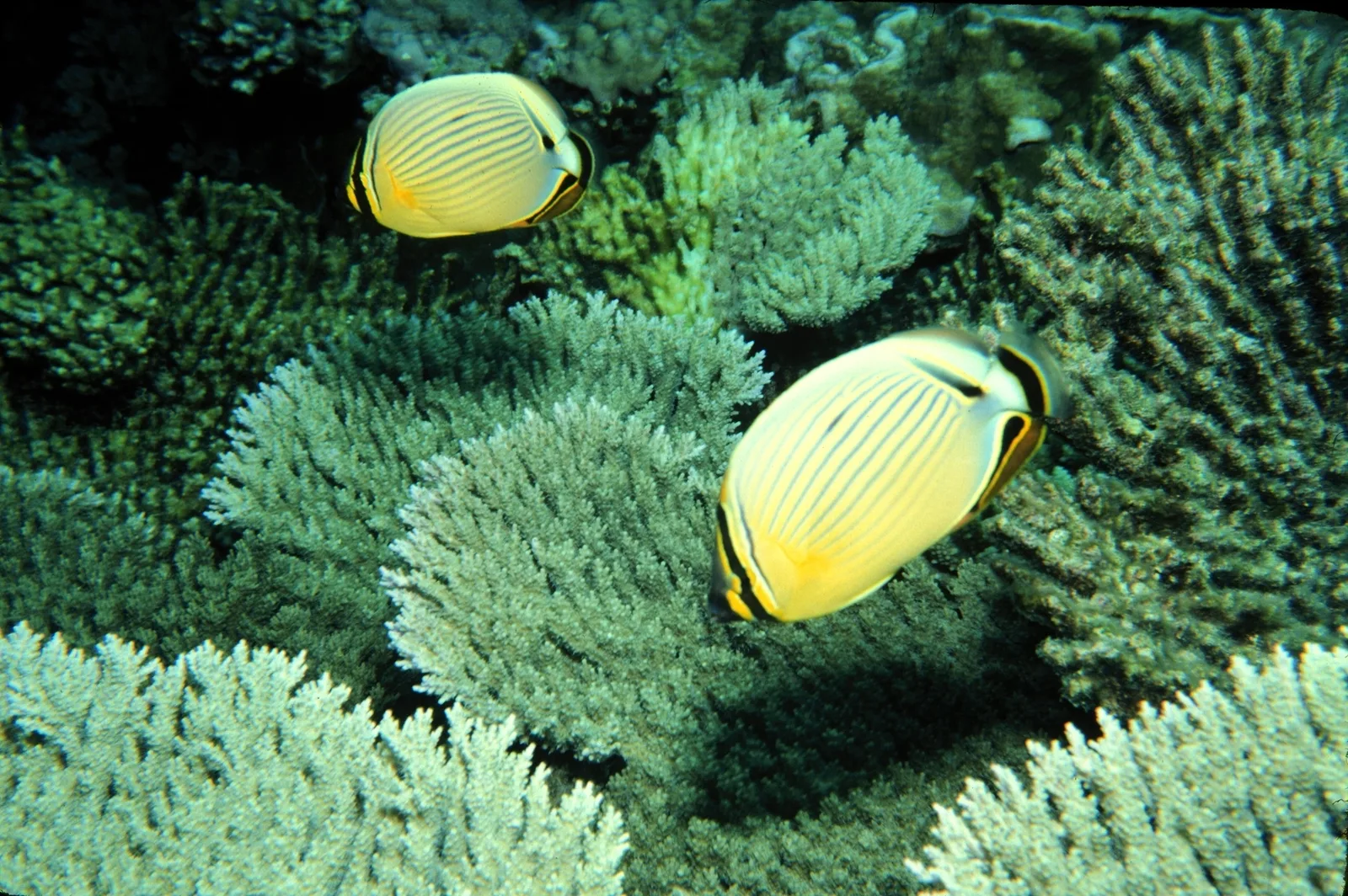
Johnston Atoll's reef system, now protected within the Pacific Remote Islands Marine National Monument
Wildlife of Johnston Atoll
Johnston Atoll is a story of ecological recovery. Decades of military activity, chemical weapons storage, and nuclear contamination took a severe toll on the atoll's ecosystem. Since the military's departure in 2004, wildlife has been steadily returning.
Despite its contaminated past, Johnston Atoll now hosts recovering colonies of red-tailed tropicbirds, great frigatebirds, brown noddies, and sooty terns. Seabird populations have rebounded significantly since cleanup operations ended.
Green sea turtles and hawksbill sea turtles forage in Johnston Atoll's surrounding waters, both protected under the Endangered Species Act. The atoll's remote location means they face minimal human disturbance.
The surrounding reef system supports a rich diversity of coral, reef fish, and invertebrates. The atoll lies within the Pacific Remote Islands Marine National Monument, protecting its waters as a no-take marine zone.
Hawaiian spiny lobster and a variety of crustaceans and invertebrates populate the reef flats. The cessation of commercial and military activity has allowed invertebrate populations to recover slowly over recent decades.
Johnston Atoll Through Time
- ✦1796
First Recorded Western Sighting
The American brig Sally sighted the atoll in 1796, and it was charted in 1807 by Captain Charles Johnston of HMS Cornwallis, whose name it took.
Johnston is a small triangular reef about 825 miles west-southwest of Honolulu with only two natural islets, Johnston and Sand, totaling a few hundred acres; there was no fresh water and no permanent inhabitants, though Native Hawaiians appear to have used it.
- ✦1858
U.S. Claim Under Guano Act
Both the United States and the Kingdom of Hawaii claimed Johnston Atoll in 1858 under guano laws, and American companies mined its bird-dung deposits for fertilizer over the following decades.
The competing U.S. and Hawaiian claims became moot after the United States annexed Hawaii in 1898, and Johnston has been under sole U.S. control since.
- ✦1926
Hawaiian Islands Bird Reservation
In 1926 President Calvin Coolidge added Johnston Atoll to a federal bird reservation to protect its large colonies of boobies, terns, and other seabirds, with the Department of Agriculture responsible for it.
The refuge designation, unusual for its time, would coexist uneasily for the next 75 years with an intensifying military use of the same tiny islands.
- ✦1934
U.S. Navy Takes Control
In 1934 President Franklin Roosevelt placed Johnston Atoll under U.S. Navy control, recognizing its value as a fueling and communications point roughly halfway between Hawaii and the Marshall Islands.
The Navy dredged the lagoon, enlarged Johnston and Sand islands with coral fill, and built a seaplane base, beginning a transformation that would eventually expand the two natural islets into four and quadruple the atoll's land area.
- ✦1941–1945
World War II
A Japanese submarine shelled Johnston Atoll on December 15, 1941, days after Pearl Harbor, and the atoll served throughout the war as a refueling and staging base and a submarine patrol point in the central Pacific.
The Navy heavily expanded the runway and facilities on Johnston Island, and thousands of personnel rotated through the isolated outpost during the war years.
- ✦1958–1962
Nuclear Testing
From 1958 the atoll became a launch site for high-altitude nuclear tests, including shots in Operation Hardtack I and Operation Dominic, meant to study the effects of detonations at the edge of space.
The largest, Starfish Prime, on July 9, 1962, detonated a 1.4-megaton warhead about 250 miles above Johnston. The blast created an artificial aurora seen across the Pacific and an electromagnetic pulse that knocked out streetlights, telephone links, and burglar alarms in Honolulu, roughly 900 miles away, and disabled several satellites over the following months.
- ✦1962–1963
Failed Launches and Plutonium Contamination
Two Thor missiles carrying nuclear warheads were destroyed by range safety shortly after launch from Johnston Island, one in June 1962 and one in July 1962, scattering plutonium debris across the island and lagoon.
The plutonium contamination was only partially cleaned up at the time; decades later the Defense Nuclear Agency removed radioactive coral and soil, sealing much of it in a capped disposal cell on the island that remains a long-term monitoring site.
- ✦1971–2000
Herbicide and Chemical Weapons Storage
Johnston stored surplus Agent Orange from the Vietnam War from 1972 until the herbicide was incinerated at sea in 1977, leaving dioxin contamination in the soil.
From 1971 the atoll also held part of the U.S. chemical-weapons stockpile, and beginning in 1990 the Johnston Atoll Chemical Agent Disposal System (JACADS) incinerated about 2,031 tons (more than 4 million pounds) of sarin, VX, and mustard agent, including weapons shipped back from a U.S. depot in Germany, finishing in November 2000.
- ✦2003–2004
Military Departure and Cleanup
After JACADS closed, the military demolished most structures, capped contaminated areas, and left Johnston Atoll in 2004, ending 70 years of continuous armed-forces presence.
Full administrative control returned to the U.S. Fish and Wildlife Service, which manages the atoll as a National Wildlife Refuge; the Air Force retains a role because of the plutonium and dioxin sites.
- ✦2009–2014
Marine National Monument
Johnston Atoll was included in the Pacific Remote Islands Marine National Monument created in 2009, and President Obama expanded the surrounding protected waters to the full 200-nautical-mile limit in 2014.
Despite its history, the reefs around Johnston have recovered strongly and are now among the more studied remote reef systems in the Pacific, in part because the runway allows scientists to fly in.
Did You Know?
Interesting facts about one of America's most unusual territories.
The Starfish Prime nuclear test in 1962 detonated a 1.4 megaton hydrogen bomb 250 miles above Johnston Atoll. The resulting electromagnetic pulse knocked out streetlights and tripped circuit breakers in Honolulu, 900 miles away.
Johnston Atoll once stored some of the most dangerous chemical weapons in the U.S. arsenal, including nerve agents sarin and VX. The on-site incineration program, completed in 2000, destroyed over 400,000 munitions.
Plutonium contamination from 1960s rocket accidents was discovered in sediment and soil across parts of Johnston Island during cleanup. The remediation program removed thousands of cubic yards of contaminated material.
Despite its toxic past, Johnston Atoll's wildlife is recovering. Seabird colonies have rebounded substantially since the military departed, and the surrounding reef is considered one of the healthier ecosystems in the central Pacific.
Johnston Atoll is closed to the public entirely. Unlike other minor U.S. territories where a special use permit might allow a rare visit, Johnston remains off-limits due to ongoing environmental concerns and residual contamination.
Two of Johnston Atoll's four islands, Hikina and Akau, are entirely artificial. They were created by dredging and filling operations during the military buildup of the 1960s to expand the usable land area of the atoll.
Quick Facts and Common Questions
Short answers to the questions people most often ask about Johnston Atoll: where it is, its military history, and who looks after it today.
Johnston Atoll is a group of four small islands in the central North Pacific Ocean, about 825 miles west-southwest of Honolulu. It has no permanent residents; the military personnel and contractors who once lived there left after the base closed in 2004.
In 1858 both the United States, under the Guano Islands Act, and the Kingdom of Hawaii claimed the atoll. It came firmly under U.S. control after the annexation of Hawaii in 1898, and it was left out of the state of Hawaii when Hawaii became a state in 1959. In 1926 President Calvin Coolidge set it aside as a federal bird refuge.
Johnston Atoll is an unincorporated, unorganized territory of the United States with no local government. The U.S. Fish and Wildlife Service, part of the Department of the Interior, manages it as Johnston Atoll National Wildlife Refuge, and the Air Force retains some responsibilities from its military past. Visits require a special permit.
The Navy took control in 1934 and built an air station, and the atoll served as a military base for 70 years. In 1958 and 1962 rockets launched from Johnston carried nuclear weapons for high-altitude tests, including Starfish Prime in July 1962.
Yes. The Army stored chemical weapons on the atoll and built the Johnston Atoll Chemical Agent Disposal System, the first full-scale U.S. plant to destroy them. It operated from 1990 to 2000 and destroyed the entire stockpile stored there, and cleanup was completed before the base closed in 2004.
No. Johnston Atoll has no residents, is not part of any state or congressional district, and has no delegate in Congress.
Sources & Further Reading
- Definitions of Insular Area Political Organizations, Office of Insular Affairs
- Johnston Atoll National Wildlife Refuge, U.S. Fish and Wildlife Service
- Pacific Islands Heritage Marine National Monument, U.S. Fish and Wildlife Service
- Guano Islands Act (48 U.S.C. 1411), Office of the Law Revision Counsel