A Relationship Built Gradually, Not Instantly
It is easy to assume the close U.S.-Israel alliance existed from the moment Israel was founded in 1948. It did not. The relationship familiar today, built on billions of dollars in annual military aid and deep defense cooperation, took roughly a quarter century to develop, and even then it grew out of specific wars, specific presidents, and specific decisions that could have gone differently.
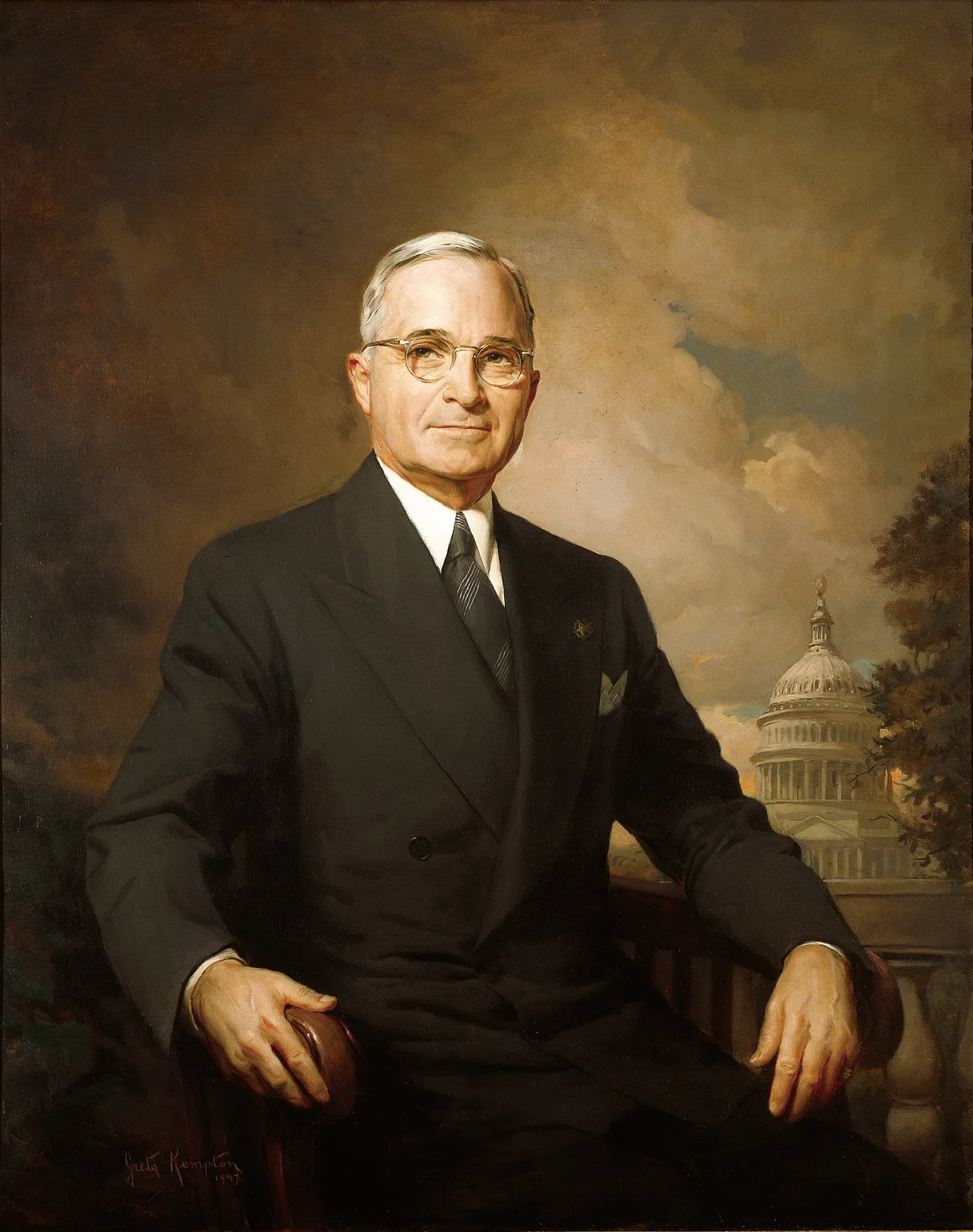
President Truman recognized Israel within 11 minutes of its May 1948 declaration of independence, against his own Secretary of State's advice.
On November 29, 1947, the UN General Assembly adopted Resolution 181, recommending that Mandatory Palestine be divided into separate Arab and Jewish states, with Jerusalem placed under international administration. The vote passed 33 to 13, with 10 abstentions. Arab governments rejected the plan; Jewish leaders in Palestine accepted it. The resolution set the stage for the declaration of the State of Israel less than six months later.
The partition plan was never implemented on the ground: civil war broke out in Mandatory Palestine within weeks of the vote, and full-scale war followed Israel's declaration of independence the next May. Jerusalem's proposed status as a UN-administered international city, a central feature of Resolution 181, never took effect; the city was instead divided by armistice lines between Israel and Jordan until 1967.
The United States and the Soviet Union both voted for Resolution 181, a rare instance of Cold War superpower alignment; the Truman administration lobbied several smaller nations to support it in the days before the vote. Britain, the mandatory power, abstained and announced it would end its Mandate on May 15, 1948.
The plan allotted roughly 55 percent of the territory to the proposed Jewish state, which then had about a third of the population, and 45 percent to the proposed Arab state, with an economic union between them. The Arab Higher Committee and the Arab League rejected partition; the Jewish Agency accepted it while objecting to the borders.
When the Jewish Agency proclaimed the State of Israel on May 14, 1948, President Harry Truman recognized the new provisional government as a de facto authority within 11 minutes, over the objections of his own Secretary of State, George Marshall, who worried recognition would damage relations with Arab oil-producing states. Truman released the recognition statement to the press without notifying his UN delegation first, angering U.S. diplomats at the UN who were still debating a trusteeship compromise. The U.S. extended full de jure recognition on January 31, 1949.
The United States was the first country in the world to recognize the new state; the Soviet Union extended recognition just three days later, on May 17, 1948. Secretary Marshall's opposition was serious enough that, according to later accounts from Truman aide Clark Clifford, Marshall told Truman privately he would vote against him in the 1948 election if recognition proceeded, though Marshall did not ultimately break with the administration publicly.
The State Department had spent months developing a UN trusteeship proposal as an alternative to immediate statehood, and U.S. ambassador Warren Austin presented it at the UN in March 1948, unaware Truman would reverse course. The episode is a standard case study in histories of U.S. foreign-policy decision-making for the gap it exposed between the White House and the professional diplomatic corps.
Historians have variously attributed Truman's decision to humanitarian concern for Holocaust survivors, domestic political calculation in an election year, the advocacy of aides such as Clark Clifford and Truman's former business partner Eddie Jacobson, and Truman's own reading of the Bible; the Truman Library's collection preserves documents supporting several interpretations.
For nearly two decades after independence, the United States was not Israel's primary arms supplier. France filled that role through the 1950s and into the mid-1960s, providing Mirage jets and AMX tanks, a relationship that ended after France's 1962 withdrawal from Algeria and President Charles de Gaulle's subsequent arms embargo on Israel. The close U.S.-Israel military relationship familiar today did not exist at the founding. It was built gradually, starting in the early 1960s.
Beyond conventional arms, France's cooperation with Israel during this period extended to nuclear technology: French assistance was central to the construction of Israel's Dimona reactor beginning in the late 1950s, a program that later became the foundation of Israel's undeclared nuclear capability, a policy of deliberate ambiguity Israel has maintained ever since.
The Eisenhower administration kept the United States at arm's length from Israeli arms requests through the 1950s, partly to avoid pushing Arab states toward the Soviet bloc, a concern heightened after Egypt's 1955 arms deal with Czechoslovakia. Israel obtained Sherman tanks and other surplus equipment through third parties and West Germany rather than directly from Washington.
De Gaulle's 1967 embargo, imposed on the eve of the Six-Day War, left Israel searching for a new supplier; Israeli engineers later reverse-engineered the embargoed Mirage 5 as the domestically built Nesher and Kfir. The shift of Israel's primary patronage from Paris to Washington was gradual and was not complete until after the 1973 war.
In August 1962, President John F. Kennedy approved the sale of Hawk anti-aircraft missiles to Israel, the first major direct U.S. arms sale to the country and the effective end of an informal U.S. arms embargo that had been in place since 1948. It was a modest, defensive weapons system, but it opened the door to the far larger U.S.-Israel military relationship that followed.
The decision came shortly after West Germany's secret arms deals with Israel were publicly exposed and Bonn, facing pressure from Arab governments, agreed to halt them, leaving a gap in Israel's supply of Western weapons that the Kennedy administration chose to fill directly rather than let go unmet.
The Hawk sale was accompanied by private U.S. efforts to obtain Israeli assurances about the Dimona nuclear program; Kennedy pressed for U.S. inspection visits, and the resulting inspections between 1961 and 1969 were widely regarded by later analysts as too limited to detect the program's military dimension.
In a December 1962 meeting with Israeli foreign minister Golda Meir, Kennedy used the phrase "special relationship" to describe U.S. ties to Israel, comparing it to the U.S. relationship with Britain, one of the earliest uses of a term that later became standard in official descriptions of the relationship.
The Six-Day War of 1967 and the Yom Kippur War of 1973 transformed the relationship. After 1967, as France distanced itself from Israel, the United States stepped in as Israel's primary source of advanced military equipment. The shift became permanent after 1973, when Israel's dependence on rapid U.S. resupply during the Yom Kippur War demonstrated how central American support had become to Israeli military planning.
The 1967 war also produced UN Security Council Resolution 242, adopted that November with active U.S. involvement in the drafting, calling for Israeli withdrawal from territories occupied in the conflict in exchange for peace and recognition, a land-for-peace framework that has shaped nearly every subsequent U.S.-brokered negotiation in the region.
Before the 1967 war the Johnson administration sold Israel A-4 Skyhawk attack jets (agreed 1966) and, after the war, F-4 Phantom fighters (agreed 1968), the first U.S. sale of a top-line combat aircraft to Israel and a marker of the deepening supply relationship.
The 1969 to 1970 War of Attrition along the Suez Canal, in which Soviet air-defense crews became directly involved on Egypt's side, further tied U.S. policy to Israeli military needs. By the early 1970s Washington had effectively become the guarantor of Israel's qualitative military edge, a concept later written into U.S. law.
After Egypt and Syria launched a surprise attack on Israel on Yom Kippur, October 6, 1973, Israeli Prime Minister Golda Meir made an urgent appeal to Washington for resupply. President Richard Nixon authorized Operation Nickel Grass, a strategic airlift that ran October 13 through November 14, 1973. U.S. Air Force C-141s and C-5s flew 567 missions and delivered 22,318 tons of tanks, artillery, and ammunition, at the time the largest airlift in American history. It is widely credited with enabling Israel's counteroffensive across the Suez Canal.
The Arab oil-producing states responded to the U.S. airlift by launching an oil embargo against the United States and other Israel-aligned countries, quadrupling oil prices within months and triggering the 1973-74 energy crisis, a direct economic consequence, felt by ordinary Americans at the gas pump, of the U.S. decision to resupply Israel during the war.
The airlift began after Soviet resupply flights to Egypt and Syria were detected and after Israeli losses in the war's first week proved heavier than expected; Nixon ordered the use of military transports rather than the chartered civilian aircraft Defense Secretary James Schlesinger initially favored. A parallel sealift delivered far greater tonnage over the following months.
Congress responded with a $2.2 billion emergency military aid appropriation for Israel in October 1973, a then-unprecedented sum that converted much prior loan-based aid to grants and set a precedent for the grant-based Foreign Military Financing that has continued since.
President Jimmy Carter brokered a peace framework between Israeli Prime Minister Menachem Begin and Egyptian President Anwar Sadat at Camp David in September 1978, leading to the Egypt-Israel Peace Treaty signed on March 26, 1979. To secure both governments' agreement, the U.S. committed to a linked annual military aid package that continues in modified form today: roughly $3 billion a year to Israel and $1.3 billion a year to Egypt.
Begin and Sadat jointly received the 1978 Nobel Peace Prize for the framework, though the peace proved costly for Sadat domestically: he was assassinated in October 1981 by Islamist militants within the Egyptian military who opposed the treaty, one of the clearest examples of the political risk the agreement carried for its Arab signatory.
The 13 days of talks nearly collapsed several times; Carter shuttled between cabins with draft after draft, and the final framework left the question of Palestinian autonomy and the West Bank and Gaza deliberately vague, an ambiguity that became a source of later dispute. Egypt regained the entire Sinai by 1982.
The linked aid packages made Israel and Egypt the two largest recipients of U.S. foreign assistance for decades afterward, and Egypt's suspension from the Arab League until 1989 showed the diplomatic cost of the separate peace. The treaty has held for more than 45 years and is generally regarded as the most durable achievement of U.S. mediation in the conflict.
Israel was among the first countries designated a Major Non-NATO Ally when the U.S. Congress created the category in 1987, alongside Australia, Egypt, Japan, and South Korea. The designation carries no mutual-defense commitment, but it grants expanded access to U.S. defense technology, streamlined arms-sale reviews, and eligibility to bid on certain Defense Department contracts, formalizing a level of military cooperation that had built up over the preceding two decades.
The United States has since extended Major Non-NATO Ally status to roughly twenty countries worldwide, including Jordan, Morocco, and Bahrain in the same region as Israel; the designation is a policy tool for deepening defense cooperation short of a formal mutual-defense treaty, which the U.S. has never extended to Israel or any other Middle Eastern country.
The 1987 statute created the category and named Israel, Egypt, Japan, South Korea, and Australia; it was partly a response to concerns that non-NATO partners were disadvantaged in defense-cooperation programs. The status lets a country stockpile U.S. war-reserve materiel on its territory, join certain cooperative research, and receive priority delivery of Excess Defense Articles.
Israel's cooperation also runs through mechanisms beyond the status: a standing Joint Political Military Group (since 1983), prepositioned U.S. equipment stocks in Israel, and, since 2021, Israel's transfer within the U.S. military's command structure from European Command to Central Command, aligning it operationally with Arab states in the region.
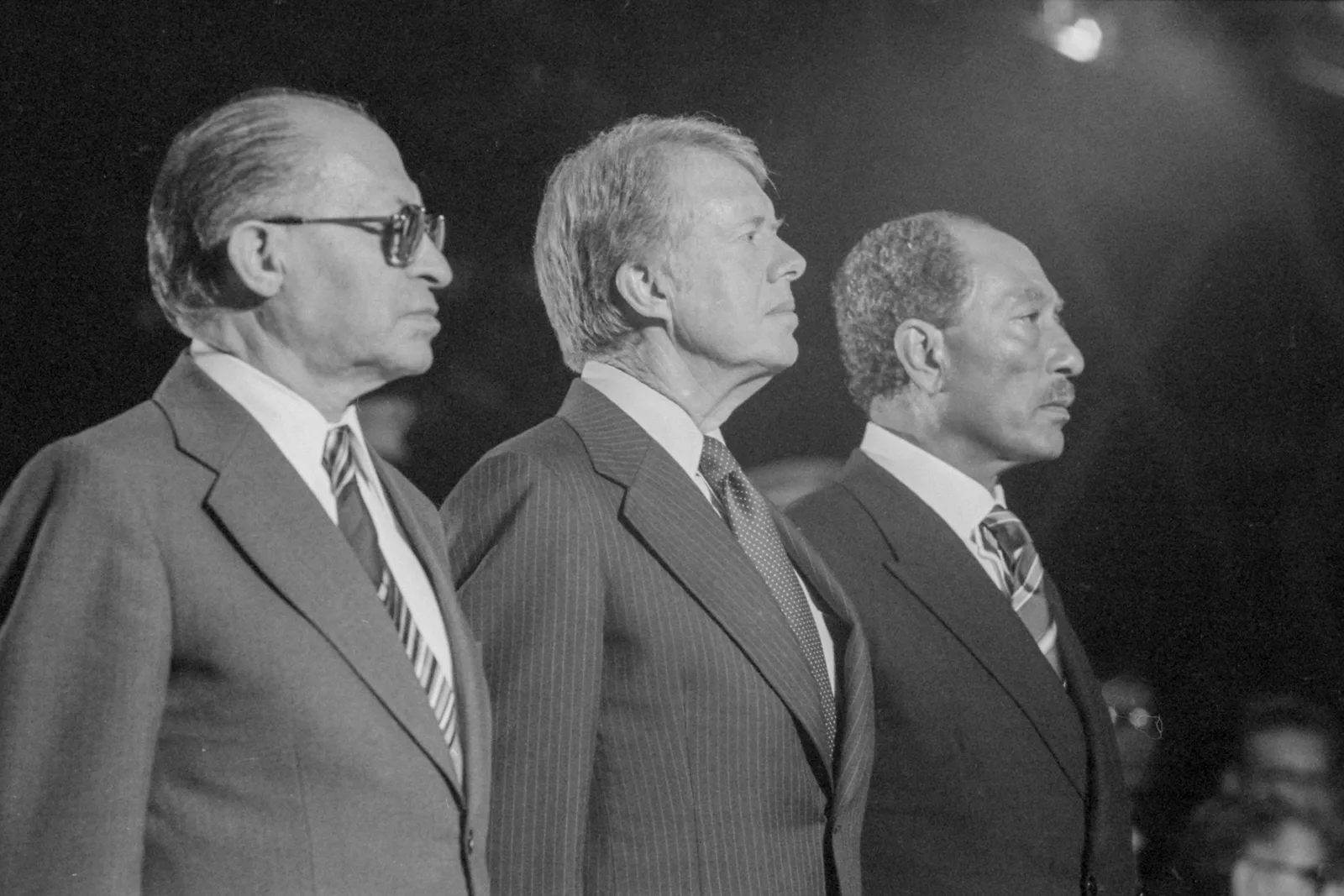
The 1978-79 Camp David Accords set the template for the linked annual U.S. aid packages to Israel and Egypt that continue, in modified form, today.
No Single Reason Explains It
Ask why the United States supports Israel so consistently, and you will get several different, overlapping answers depending on who is asked. Strategic interest, shared democratic institutions, organized domestic political advocacy, religious conviction, and documented technology and intelligence value all play a real role. Some of these explanations are more contested among scholars than others, and this page presents the genuine disagreement rather than picking a single winner.
The Congressional Research Service, which produces the government's standard reference reports on the relationship, describes it this way: successive U.S. presidents and many members of Congress have treated Israel's security as a matter of sustained American commitment since 1948. During the Cold War, Israel was widely viewed in Washington as the region's most reliable pro-Western military power, positioned against Soviet-aligned Arab states such as Egypt and Syria. After the Cold War, that framing shifted toward shared counterterrorism priorities and, more recently, shared concern about Iran's regional influence and nuclear program.
This strategic framing was formalized in a 1981 Memorandum of Understanding on Strategic Cooperation between the Reagan administration and Israel, though the agreement was briefly suspended that same year after Israel extended Israeli law to the Golan Heights; the U.S. and Israel reinstated a strategic cooperation agreement in 1983, establishing the joint political-military group that still meets today.
U.S. law has since codified aspects of this commitment. The 2008 Naval Vessel Transfer Act and later statutes require the executive branch to ensure Israel retains a "qualitative military edge" over regional militaries and to report to Congress on any arms sale to another Middle Eastern state that could erode it, a legal test unique to Israel among U.S. security partners.
Analysts differ on how much concrete strategic value the U.S. derives versus how much the commitment is political and historical; the Congressional Research Service presents the strategic rationale as one U.S. officials have consistently asserted rather than as an independently established fact, and notes that some scholars have questioned it during periods when U.S. and Israeli regional priorities diverged.
U.S. officials across administrations of both parties have consistently described Israel as a fellow democracy in a region with few of them, and have framed the relationship in terms of shared political values and institutions. This is the framing most often used in official U.S. government statements. It is worth noting as a documented rationale offered by U.S. policymakers themselves, distinct from the strategic and domestic-political explanations below, though the three are not mutually exclusive and scholars disagree about how much weight each one actually carries in practice.
Independent democracy indices back part of this framing in a narrow, technical sense: organizations such as Freedom House have long rated Israel as the only country in its immediate region classified as "free," citing its multi-party parliament, independent courts, and regular competitive elections, though such ratings typically apply only to Israel within the Green Line and do not extend that classification to the West Bank.
Presidents of both parties have used the "shared values" language, describing Israel in official documents as America's "closest ally" in the region and a fellow democracy. Critics of this framing, including some scholars and human-rights organizations, argue it understates the situation of Palestinians under Israeli control in the West Bank and Gaza; defenders argue the comparison is to Israel's internal democratic institutions.
Freedom House rates Israel proper and the territories separately, classifying the West Bank and Gaza "not free" in its published assessments, a distinction the organization makes explicit in its methodology. This page notes the framing as a stated U.S. government rationale and a contested analytical claim, not as a settled conclusion.
Pro-Israel advocacy groups, most prominently the American Israel Public Affairs Committee (AIPAC), lobby Congress and support candidates who back close U.S.-Israel ties, and this domestic political dimension is a real and documented part of the relationship. How much it actually explains U.S. policy is genuinely contested among scholars. Political scientists John Mearsheimer and Stephen Walt argued in their 2007 book The Israel Lobby and U.S. Foreign Policy that lobbying substantially shapes U.S. Middle East policy in ways that diverge from the national interest. That thesis drew significant pushback: a Brookings Institution analysis, along with reviewers such as Leslie Gelb, argued the book understates the role of other powerful actors and interests in U.S. foreign policy and does not adequately explain instances where lobbying pressure failed to change U.S. decisions, including arms sales to Arab states over Israeli objections. Both the existence of organized advocacy and the scholarly dispute over its actual influence are part of an accurate picture of this issue.
Pro-Israel advocacy is not a single unified bloc: J Street, founded in 2008, describes itself as a pro-Israel, pro-peace lobbying organization and has pushed for policies AIPAC has often opposed, including conditioning some aid on settlement policy, illustrating that domestic political support for Israel spans a real range of views on specific policy questions even among groups that share the same basic pro-Israel label.
Empirically, U.S. policy has at times moved against the stated preferences of the largest pro-Israel lobbying groups, as when the Reagan administration sold AWACS surveillance aircraft to Saudi Arabia in 1981 over AIPAC's opposition, and when the Obama administration concluded the 2015 Iran nuclear agreement despite an intensive lobbying campaign against it. Scholars cite these episodes on different sides of the debate over the lobby's actual influence.
Campaign-finance data compiled by OpenSecrets shows pro-Israel PACs and individual donors give across both parties, historically more to Democrats and, in recent cycles, an increasing share to Republicans, reflecting a partisan shift in the issue. The scale of this spending is modest relative to other sectors, which both proponents and critics of the "lobby" thesis cite in support of their positions.
A significant bloc of American evangelical Christians supports Israel on theological grounds, a tradition often called Christian Zionism, which holds that the return of Jews to the land of Israel fulfills biblical prophecy. Christians United for Israel, the largest pro-Israel advocacy organization in the country, reports a membership in the millions, larger than the total adult Jewish population of the United States (roughly 5.8 million, per Pew Research Center). Because evangelical Christians make up a substantial share of the Republican Party's base, this constituency is a documented factor in sustained congressional support for Israel, distinct from and larger in raw numbers than Jewish-American advocacy specifically.
Pastor John Hagee founded Christians United for Israel in 2006, building on a strand of American Protestant theology called dispensationalism that dates to the 19th century and holds that biblical end-times prophecy is tied to a Jewish return to the land of Israel, a theological tradition distinct from, and considerably older than, the organization itself.
Polling consistently finds white evangelical Protestants more supportive of Israel than any other large U.S. religious group, and on some specific policy questions more supportive on average than American Jews; a 2017 LifeWay Research survey found strong majorities of evangelicals citing biblical reasons for that support. Younger evangelicals show somewhat weaker attachment in more recent surveys.
Christian Zionism has critics within American Christianity, including mainline Protestant denominations that have at times endorsed boycott or divestment measures, and some evangelical writers who reject dispensationalist theology. The constituency's political weight comes less from lobbying spending than from its size and its concentration in the Republican electorate.
American Jewish organizations and individual donors and voters are another documented constituency supporting close U.S.-Israel ties, active in lobbying, political giving, and public advocacy. This community's views on specific Israeli policies are not monolithic; American Jewish public opinion polling regularly shows a range of views on issues like settlement expansion and the Gaza war, similar to the range found in Israeli society itself. It is one voice among the several described in this section, not the only one, and should not be conflated with evangelical Christian support, which is numerically larger.
A 2021 Pew Research Center survey of American Jews found that 82 percent said caring about Israel was an essential or important part of what being Jewish means to them, even as the same survey documented significant internal disagreement over Israeli government policy, illustrating that broad attachment to Israel and agreement with any specific policy are measurably different things within the same community.
American Jewish organizations span a wide institutional range, from AIPAC and the Conference of Presidents of Major American Jewish Organizations to J Street, Americans for Peace Now, and, further left, groups such as Jewish Voice for Peace that are sharply critical of Israeli government policy and of U.S. aid. Surveys show younger American Jews on average more critical of Israeli policy than older cohorts.
The 2021 Pew survey found American Jews divided on whether the Israeli government is making a sincere effort toward peace and whether U.S. support is "about right," with denominational and age gaps as large as the gaps between American Jews and the general public. This internal diversity is why analysts caution against treating "the Jewish vote" as a monolithic bloc on Israel policy.
Beyond political and historical explanations, the relationship also delivers concrete operational value to the United States: intelligence sharing on regional threats and counterterrorism, joint military exercises, and access to Israeli-developed defense technology that the U.S. military has adopted for its own forces, detailed further in the Financial Aid and What the U.S. Gets Back sections of this page. This technical and intelligence cooperation is one of the more measurable, less contested elements of the relationship.
This cooperation is institutionalized through dedicated joint bodies such as the U.S.-Israel Binational Industrial Research and Development (BIRD) Foundation, established in 1977, which has funded several hundred joint commercial technology projects between American and Israeli companies over its history, separate from, and older than, the direct military aid relationship.
Concrete examples of U.S. adoption of Israeli defense technology include the Trophy active protection system now on U.S. Army Abrams tanks, U.S. purchases of Israeli tactical radios and loitering munitions, and shared missile-defense architecture, detailed in the What the U.S. Gets Back tab. U.S. and Israeli agencies have publicly acknowledged cooperation on counterterrorism and on tracking Iran's nuclear program.
The BIRD Foundation was joined by a parallel Binational Science Foundation (1972) and Binational Agricultural Research and Development Fund (1978), each capitalized by both governments. These bodies predate the modern aid relationship and are frequently cited as evidence that scientific and commercial ties developed on a separate track from military assistance.
A Close Relationship Has Not Meant Automatic Agreement
Every U.S. president since Eisenhower has, at some point, publicly disagreed with an Israeli government decision, from military strikes to settlement construction to specific wartime conduct. The timeline below presents documented instances of friction in chronological order, each sourced to a named government document, international body, or contemporaneous news report, including the most recent and most sensitive period following the October 7, 2023 Hamas attack and the Gaza war that followed. This is not a complete list of every disagreement in 75 years of relations, but it captures the most significant and best-documented instances.
After Egyptian President Gamal Abdel Nasser nationalized the Suez Canal in July 1956, Israel invaded Egypt's Sinai Peninsula in October, coordinated secretly with Britain and France, which then occupied the canal zone. President Dwight Eisenhower, who learned of the secret coordination through U.S. intelligence rather than through his allies, was furious that Israel and its European partners had acted without consulting Washington during an election year. The United States backed UN resolutions demanding withdrawal and applied financial pressure on Britain. All foreign forces withdrew by early 1957, with Israel completing its Sinai withdrawal in March.
The crisis unfolded the same week as the Soviet invasion of Hungary, forcing Eisenhower to publicly oppose actions by close allies while also condemning Soviet aggression. The episode strained U.S. relations with Britain and France as much as with Israel, marking one of the clearest instances of Washington prioritizing broader Cold War alliance management over the immediate wishes of a regional partner.
Eisenhower went on national television on October 31, 1956 to declare the U.S. would not condone the use of force by any nation, ally or not, and pushed a UN General Assembly resolution, the first use of the "Uniting for Peace" procedure, calling for a ceasefire and withdrawal. Washington also declined to help Britain defend the pound against a run, financial pressure that forced London to accept a ceasefire within days.
The episode is often cited as marking the end of Britain and France as first-rank powers in the Middle East. Israel withdrew from Sinai in March 1957 in exchange for a UN Emergency Force and U.S. assurances on navigation through the Straits of Tiran, assurances whose withdrawal in 1967 was among the triggers of the Six-Day War.
In March 1975, after Israel refused to agree to a second-stage Sinai troop withdrawal sought by Secretary of State Henry Kissinger's shuttle diplomacy, President Gerald Ford announced a formal "reassessment" of U.S. policy toward Israel, freezing new arms agreements, including F-15 fighter jets, and instructing U.S. agencies to slow-walk Israeli requests. Seventy-six U.S. senators signed a letter that May urging Ford to continue robust support for Israel. The pressure campaign ended a few months later when Israel and Egypt signed the Sinai II interim agreement in September 1975.
The Sinai II agreement that ended the reassessment period included separate U.S. commitments beyond arms sales: Washington pledged guaranteed oil supplies to Israel in case of an embargo and stationed American civilian technicians at early-warning monitoring stations in the Sinai, arrangements that went beyond the immediate arms freeze dispute and became long-running features of the peace process infrastructure.
The reassessment lasted about six months and held up not just F-15s but also Lance and Pershing missiles and other pending items, the most sustained use of arms-supply leverage against Israel by any administration to that point.
The 76-senator letter, organized with AIPAC's involvement, is frequently cited as an early demonstration of Congress's capacity to constrain an administration's Israel policy. The Sinai II agreement was accompanied by a U.S.-Israel memorandum pledging that the U.S. would not recognize or negotiate with the PLO as long as it did not recognize Israel, a commitment that shaped U.S. policy until 1988.
On June 7, 1981, Israeli F-16s bombed and destroyed Iraq's Osirak nuclear reactor in a strike Israel said was necessary to prevent Iraq from developing nuclear weapons. The UN Security Council unanimously condemned the strike in Resolution 487. President Ronald Reagan publicly criticized the raid and suspended delivery of additional F-16 fighter jets to Israel for about two months pending a review of whether Israel had violated U.S. arms-use agreements limiting American weapons to defensive purposes. Deliveries resumed in August 1981.
Israel's justification for the strike later became known as the "Begin Doctrine," the position that Israel would act preemptively against hostile states developing nuclear weapons rather than wait for a completed program; Israeli officials invoked the same reasoning again in 2007, when Israeli aircraft destroyed a suspected Syrian nuclear reactor under construction.
The strike, code-named Operation Opera, used eight F-16s escorted by six F-15s on a long low-altitude route over Jordan and Saudi Arabia. Reagan's short suspension of F-16 deliveries was paired with U.S. support for the unanimous Security Council condemnation, though the U.S. resisted Iraqi and Soviet demands for sanctions on Israel.
Assessments of the strike's effect on Iraq's program vary: some analysts credit it with setting the program back years, while others, citing post-1991 inspection findings, argue it pushed Iraq toward a more dispersed, clandestine effort. Israel did not officially acknowledge the 2007 Syria strike until 2018.
Jonathan Pollard, a U.S. Navy intelligence analyst, was arrested in November 1985 for spying for Israel, having sold classified material including U.S. signals-intelligence methods and information that could identify American intelligence sources. He was sentenced to life in prison in March 1987. The case caused acute strain in the relationship; Israeli Prime Minister Shimon Peres apologized to the United States and disbanded the small intelligence unit responsible for running Pollard. He was paroled in 2015 and moved to Israel in December 2020.
Israel did not formally acknowledge that Pollard had been an Israeli intelligence agent until 1998, more than a decade after his arrest, and only granted him Israeli citizenship in 1995 while he was still imprisoned in the United States. His case remains one of the few instances of a close U.S. ally being confirmed to have run an active espionage operation against the United States that resulted in a life sentence for the American involved.
Pollard passed roughly 1,500 classified documents to his Israeli handlers over about 18 months, including material on U.S. collection against Arab states and the Soviet Union. A 1987 U.S. damage assessment and successive defense and intelligence officials described the disclosures as among the most damaging by a single individual, and CIA and Defense Department leaders repeatedly opposed clemency in later years.
Israeli governments lobbied for Pollard's release for decades, and several U.S. presidents considered and rejected clemency, with Bill Clinton reportedly weighing it at the 1998 Wye River talks before intelligence officials threatened to resign. He completed a 30-year sentence, was paroled in 2015, and had his parole travel ban lifted in 2020 before emigrating to Israel.
In 1991, Israel sought $10 billion in U.S. loan guarantees to help resettle Soviet Jewish immigrants. Secretary of State James Baker, under President George H.W. Bush, withheld the guarantees, arguing that the housing they would help finance was being built in West Bank and Gaza settlements under Prime Minister Yitzhak Shamir's government. The Senate granted a 120-day postponement in October 1991, and Bush threatened a veto to keep the issue from moving forward on Congress's terms. The guarantees were not released until 1992, after Israeli voters elected the more moderate government of Yitzhak Rabin, who agreed to substantially restrict settlement construction.
The loan guarantee standoff is widely cited by historians as a contributing factor in Shamir's defeat in Israel's June 1992 election, one of the clearer instances in which a U.S. policy dispute is understood to have measurably affected the outcome of an Israeli election, though Israeli domestic economic issues were also central to that race.
Loan guarantees cost the U.S. Treasury little directly, they lower a borrower's interest rate by backstopping repayment, but Baker's use of them as leverage was the sharpest public U.S.-Israel confrontation over settlements to that point. Bush's September 1991 remark about facing "1,000 lobbyists on the Hill" working against him drew accusations of insensitivity from Jewish organizations.
The guarantees, eventually $10 billion over five years, were released in 1992 after Rabin's Labor government agreed to a formula deducting an amount equal to Israeli spending on settlements from each year's guarantee, a mechanism the U.S. applied through the program's end in 2003. It remains the clearest instance of a U.S. administration attaching a settlement-related financial condition to assistance.
House Speaker John Boehner invited Israeli Prime Minister Benjamin Netanyahu to address a joint session of Congress on March 3, 2015, without consulting the Obama White House, an unusual break in protocol. Netanyahu used the speech to argue forcefully against the nuclear agreement then being negotiated with Iran, calling it "a very bad deal." President Obama declined to meet with Netanyahu during the visit, and National Security Adviser Susan Rice called the visit "destructive" to the relationship. More than 50 congressional Democrats skipped the speech. The Iran deal, known as the JCPOA, was signed that July despite Netanyahu's opposition.
The episode was widely described at the time as diplomatically unusual: a sitting foreign head of government addressing Congress specifically to argue against an active, ongoing negotiation being conducted by the sitting U.S. president, arranged through the opposition party's congressional leadership rather than through the White House, a sequence with few modern parallels among close U.S. allies.
The speech was arranged by Speaker Boehner and Israeli ambassador Ron Dermer without advance notice to the State Department or White House, a departure from the usual practice of coordinating foreign leaders' congressional addresses through the executive branch. About 58 Democratic lawmakers did not attend.
The JCPOA was concluded in July 2015 and implemented in January 2016; a Senate resolution of disapproval failed to overcome a filibuster that September. The United States withdrew from the agreement in 2018 under the Trump administration and reimposed sanctions, a sequence in which the 2015 dispute is often treated as an early marker of the issue's partisan polarization.
On December 23, 2016, the UN Security Council passed Resolution 2334, condemning Israeli settlement construction in the West Bank and East Jerusalem as a "flagrant violation" of international law. The vote was 14 to 0, with the United States abstaining rather than using its veto, one of the sharpest breaks between the two governments during the Obama administration, which had otherwise generally shielded Israel from Security Council censure through its veto.
Netanyahu's office publicly denounced the U.S. abstention, and Israel recalled its ambassadors from New Zealand and Senegal, two of the resolution's co-sponsors, in protest. The dispute carried into the presidential transition: incoming President-elect Trump publicly urged Obama to veto the measure in the days before the vote, an unusual public intervention by an incoming president into a sitting president's foreign policy decision.
The U.S. abstention allowed a settlements resolution to pass without a veto for the first time since 1980. Secretary of State John Kerry defended the decision in a lengthy speech days later, arguing settlement growth was making a two-state outcome impossible; the outgoing administration said it had warned Israel that continued expansion would cost it U.S. protection at the UN.
Congress responded on a bipartisan basis with resolutions objecting to the abstention, and the incoming administration reversed course, later recognizing Jerusalem as Israel's capital (2017), moving the U.S. embassy there (2018), and issuing a 2019 legal opinion that settlements are "not per se inconsistent with international law," a position the next administration in turn reversed in 2024.
In February 2024, the Biden administration issued National Security Memorandum 20, requiring countries receiving U.S. weapons in active conflicts, including Israel, to provide written assurances of compliance with international humanitarian law and non-obstruction of U.S.-funded humanitarian aid. The State Department's required report, delivered in May 2024, found Israel's assurances credible enough to continue arms transfers, but also concluded it was "reasonable to assess" that U.S.-provided weapons had been used by Israeli forces in ways inconsistent with humanitarian law in specific incidents. Senator Chris Van Hollen, who authored the legislative provision behind the memorandum, said the report "ducks the ultimate questions" it was designed to answer.
The reporting requirement was itself written into the same supplemental funding legislation that provided the wartime aid described in the Financial Aid tab, meaning Congress tied continued arms transfers and an accountability report to the same bill, a structure the requirement's critics said gave the administration wide discretion to reach the conclusion it reached.
NSM-20 applied to all countries receiving U.S. defense articles for use in active conflict, but attention focused on Israel. The State Department's roughly 40-page May 2024 report said it could not verify specific incidents given the wartime environment and lack of independent access, and did not make a formal finding that Israel had violated the assurances, which would have triggered an aid cutoff.
Critics in Congress said the report avoided a definitive judgment; the administration said it reflected genuine uncertainty about individual strikes. Human-rights organizations and some UN bodies had by then issued their own assessments alleging violations, while Israel maintained it operated within the law of armed conflict and blamed civilian harm on Hamas's use of populated areas.
In early May 2024, the Biden administration paused a shipment of roughly 3,500 bombs, including 2,000-pound and 500-pound munitions, over concerns they would be used in a planned Israeli offensive in Rafah in southern Gaza. National Security Adviser Jake Sullivan said the U.S. did not believe the bombs "should be dropped in densely populated cities." President Biden said in a CNN interview that further weapons could be withheld if Israel proceeded with a major Rafah ground invasion. It was a rare public halt of a specific, named arms shipment. The pause was reversed by the incoming Trump administration in January 2025.
It marked the first time since the war began in October 2023 that the Biden administration had paused a specific, individually named weapons shipment over conduct-of-war concerns, after months of continuing broader arms transfers despite public criticism. Israel ultimately proceeded with a more limited Rafah operation than initially planned, and additional U.S. munitions shipments continued through the remainder of 2024.
The paused shipment consisted of about 1,800 2,000-pound bombs and 1,700 500-pound bombs; U.S. officials cited the blast radius of the larger munitions in dense urban areas. Biden's May 2024 CNN interview was the first time a sitting president had publicly conditioned a category of arms on Israeli conduct in the war.
The pause drew criticism from congressional Republicans and some Democrats as undercutting an ally at war, and from progressive Democrats as too limited given continued broader transfers. The 2,000-pound bombs were released in late January 2025 by the next administration and arrived in Israel in February 2025, and that administration also lifted other Biden-era holds.
On March 25, 2024, the UN Security Council adopted Resolution 2728, demanding an immediate Gaza ceasefire for the remainder of Ramadan and the unconditional release of hostages. The United States abstained rather than veto the measure, having blocked earlier draft resolutions it viewed as insufficiently critical of Hamas. Israeli Prime Minister Netanyahu canceled a planned delegation visit to Washington in response to the U.S. abstention.
The adopted resolution did not explicitly condemn Hamas by name, a gap the United States had cited as its reason for blocking three earlier draft versions between October 2023 and March 2024. U.S. Ambassador to the UN Linda Thomas-Greenfield said afterward that the resolution's ceasefire language was non-binding, even as the U.S. allowed the measure to pass by abstaining rather than exercising its veto.
Resolution 2728 was the first Security Council resolution to call for a Gaza ceasefire; the U.S. had vetoed three earlier drafts (October and December 2023, February 2024) it said failed to condemn Hamas or link a ceasefire to hostage releases, and had itself put forward drafts that other members rejected or that Russia and China vetoed.
After the vote, members disputed whether the resolution was legally binding; Security Council resolutions adopted under Chapter VII are binding, and this one did not cite Chapter VII expressly, leaving the question contested. The ceasefire it demanded did not take hold, and fighting continued past the end of Ramadan.
South Africa filed a case at the International Court of Justice on December 29, 2023, accusing Israel of violating the Genocide Convention in its conduct of the Gaza war. The United States is not a party to the case, but a White House spokesman called the filing "meritless," and U.S. officials publicly argued that the charge of genocide was unfounded. Several other countries, including Germany, announced interventions. The case remains before the court.
In January 2024, the ICJ issued provisional measures ordering Israel to take steps to prevent genocidal acts and ensure humanitarian aid access, while stopping short of ordering an immediate ceasefire, the specific remedy South Africa had requested. The provisional ruling addressed only the case's emergency phase; the court has not yet ruled on the underlying genocide allegation itself, a process that could take years.
South Africa, a party to the Genocide Convention, invoked the Convention's compromissory clause to bring the case; Israel, also a party, contested jurisdiction and the merits, arguing its operations targeted Hamas and that it was mitigating civilian harm. Several countries filed declarations of intervention on South Africa's side, while the U.S. and, in some phases, Germany filed on issues favorable to Israel's position.
The January 2024 provisional-measures order, by a large majority, found it "plausible" that some rights under the Convention were at risk and ordered Israel to prevent genocidal acts, punish incitement, and enable humanitarian access, and to report back. Provisional measures are legally binding, but the ICJ has no direct enforcement power, and a final judgment on whether genocide occurred was not expected for years.
On June 13, 2025, Israel launched a wide air campaign against Iran's nuclear program and military leadership, and Iran answered with waves of ballistic missiles and drones against Israel. The United States helped Israel intercept many of the incoming missiles.
On June 22, 2025, the United States joined the conflict directly, striking Iranian nuclear sites at Fordow, Natanz, and Isfahan with B-2 bombers and submarine-launched cruise missiles. Iran fired missiles at the U.S. base at Al Udeid in Qatar the next day, causing no U.S. casualties.
A ceasefire between Israel and Iran announced by President Trump took hold on June 24, 2025. How much the strikes set back Iran's nuclear program remained a subject of dispute among U.S. and Israeli officials and outside analysts.
The strikes renewed debate in Congress over presidential war powers; the Senate voted down a resolution in late June 2025 that would have required congressional approval for further military action against Iran.
In late September 2025 the Trump administration released a 20-point plan to end the Gaza war, calling for a ceasefire, the release of all hostages, Hamas's disarmament, a phased Israeli withdrawal, and a transitional governing structure for Gaza.
A ceasefire under the first phase of the plan took effect on October 10, 2025, and on October 13 the last living Israeli hostages were released in exchange for the release of about 2,000 Palestinian prisoners and detainees, with the remains of deceased hostages returned over the following weeks.
On November 17, 2025, the UN Security Council adopted Resolution 2803 endorsing the plan and authorizing a temporary international stabilization force and a transitional "Board of Peace" for Gaza, with Russia and China abstaining.
Carrying out the later phases, including disarmament and reconstruction, remained contested, and supporters and critics of the plan disagreed over how durable the ceasefire would prove.
The Largest Cumulative Recipient of U.S. Aid Since World War II
According to the Congressional Research Service, Israel has received roughly $175 billion in current dollars in cumulative U.S. assistance since 1946, more than $300 billion when adjusted for inflation, more than any other country since the end of World War II. Nearly all of it now flows through a single mechanism, Foreign Military Financing, governed by a series of ten-year agreements between the two governments.
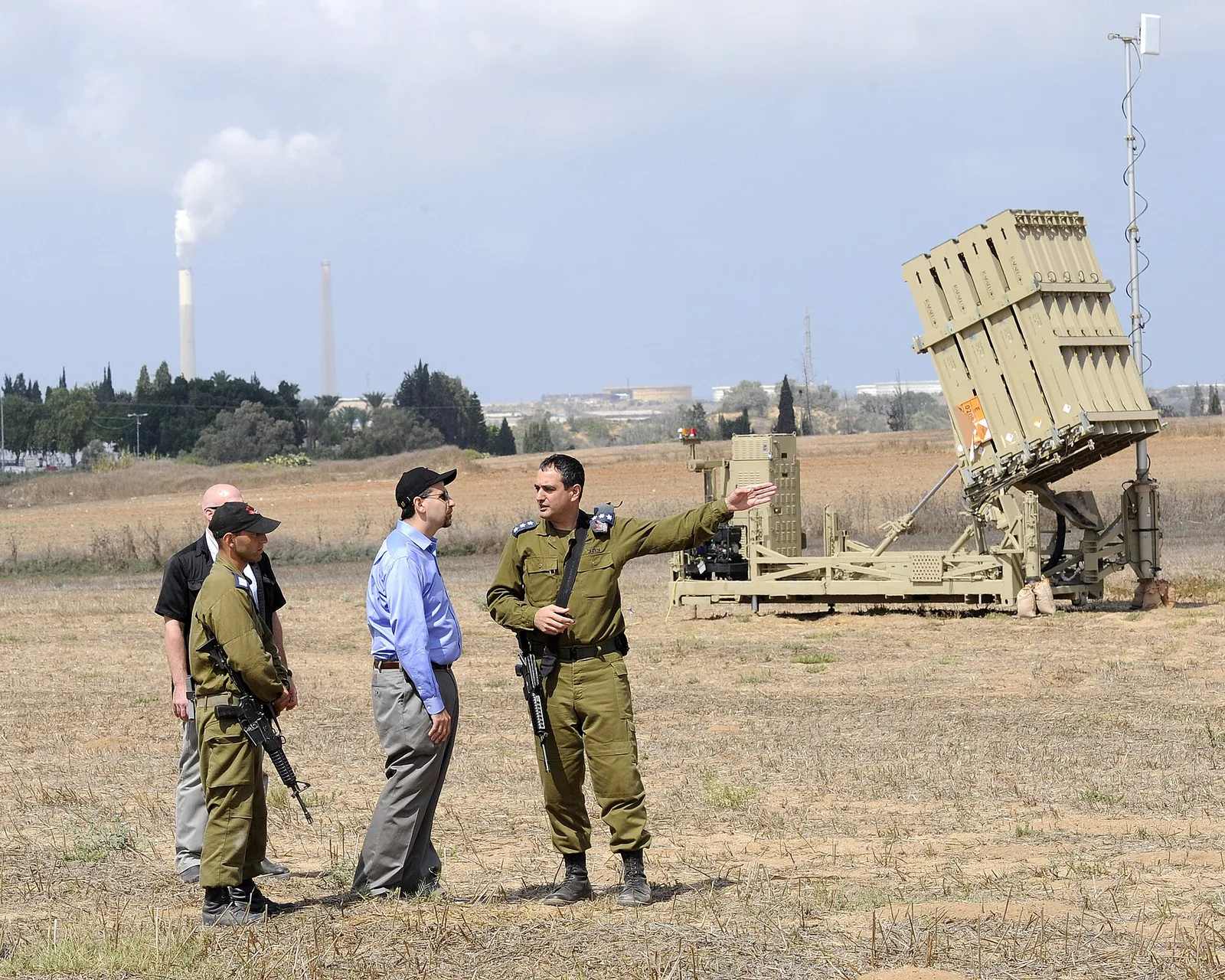
The U.S. has covered the majority of Iron Dome's costs since 2011 and now co-manufactures components at a U.S. facility.
Three Agreements, Three Different Deals
The first formal multi-year aid agreement, sometimes called the Wye River understanding, committed $26.7 billion total over ten years, of which $21.3 billion was military assistance. Its defining feature was a gradual phase-out of direct economic assistance to Israel, which had been a separate category of non-military aid since the 1970s, on the premise that Israel's economy no longer needed it. By the end of the period, U.S. aid to Israel was almost entirely military.
The phase-out of economic assistance coincided with Israel's own 1985 Economic Stabilization Plan, which successfully ended a period of hyperinflation that had exceeded 400 percent annually, giving U.S. negotiators a concrete economic basis for arguing separate non-military aid was no longer necessary.
Before this agreement, U.S. aid to Israel had two main tracks: Economic Support Fund grants (around $1.2 billion a year in the 1990s) and Foreign Military Financing (around $1.8 billion). The 1998 understanding cut the economic grant by about $120 million a year while raising military financing by about $60 million a year, for a gradual overall decline.
The agreement reflected a bipartisan view in Congress that Israel, by then a high-income economy, should transition off general budget support even as security assistance continued. Egypt's linked economic aid was reduced on a parallel schedule, though less steeply.
The second ten-year agreement, signed in 2007, committed $30 billion in Foreign Military Financing (FMF), all of it military. It preserved a provision called Offshore Procurement, unique to Israel among U.S. aid recipients, that allowed Israel to spend roughly 26.3 percent of its annual FMF grant on equipment made by its own domestic defense industry rather than requiring the money be spent on American-made weapons.
The agreement was signed roughly a year after the 2006 Israel-Hezbollah war in Lebanon, a conflict that renewed congressional and executive-branch attention to Israel's military readiness against non-state, rocket-armed adversaries, and was frequently cited in the negotiations leading up to the larger ten-year commitment that followed.
The 2007 MOU raised annual Foreign Military Financing from about $2.4 billion toward $3.1 billion by the agreement's end, all in grant form. It kept the roughly one-quarter Offshore Procurement carve-out and the "cash-flow financing" arrangement, unique to Israel, that lets it sign contracts against future years' appropriations.
The agreement was negotiated by the George W. Bush administration and honored across the transition to the Obama administration, illustrating the multi-decade, cross-party continuity of the aid framework even as specific policy disputes flared.
Signed by the Obama administration on September 14, 2016, the current ten-year agreement is the largest single pledge of military assistance in U.S. history: $38 billion total, made up of $33 billion in Foreign Military Financing ($3.3 billion a year) and $5 billion dedicated to missile defense ($500 million a year). It phases out the Offshore Procurement allowance entirely by FY2028, meaning nearly all FMF must be spent on U.S.-made defense products going forward. The Obama administration's stated rationale was that Israel's defense industry, by then a top-five global arms exporter in its own right, no longer needed a domestic-spending subsidy.
Negotiations over this MOU took place against the backdrop of continued tension between the Obama administration and Netanyahu following the 2015 congressional speech described in the Disagreements tab, and Israeli officials reportedly sought additional commitments, including further U.S. protection at the UN Security Council, that the outgoing administration did not include in the final signed agreement.
The $38 billion figure averages $3.8 billion a year, up from $3.1 billion under the prior deal. The agreement contains a non-binding understanding that Israel will not lobby Congress for appropriations above the agreed levels, and that any extra Congress adds will be treated as an advance against future years, a provision tested by the wartime supplementals after 2023.
Israel is the largest cumulative recipient of U.S. foreign aid since World War II; the Congressional Research Service's running total is more than $300 billion in inflation-adjusted terms through the mid-2020s, the great majority military assistance since the 1980s. There is no longer an economic-aid component.
Missile Defense Is Funded Separately
The United States has funded the majority of Iron Dome's development and production costs since 2011, more than $6 billion cumulatively. In August 2020, Raytheon (now RTX) and Israel's Rafael Advanced Defense Systems formed a joint venture, Raytheon Rafael Area Protection Systems, to build Iron Dome components in the United States, the first Iron Dome production facility outside Israel. Iron Dome has performed more than 2,500 operational intercepts with a publicly reported success rate above 90 percent.
Iron Dome first saw combat use in April 2011, just weeks after its initial batteries entered service, intercepting a rocket fired from Gaza. Congress significantly increased emergency Iron Dome funding following surges in rocket fire during the 2021 and 2023-24 Gaza conflicts, when interceptor stockpiles were used at a faster rate than in prior, smaller-scale exchanges.
Iron Dome, made by Rafael with radar by Israel Aerospace Industries, calculates whether an incoming rocket, shell, or mortar will strike a protected zone and fires a Tamir interceptor only if it will. Each battery covers roughly 60 to 100 square kilometers, and Israel has fielded at least ten.
The U.S. Army acquired two Iron Dome batteries in 2019 for its own evaluation of a short-range air-defense gap, though it later decided not to integrate them permanently. Congress passed a $1 billion Iron Dome replenishment in 2021 after an 11-day Gaza conflict.
David's Sling, designed to intercept medium and long-range threats, has received more than $3.8 billion in cumulative U.S. funding since a 2008 development agreement. A 2018 co-production agreement lets U.S. contractor RTX manufacture the Stunner interceptor used in the system, another example of a jointly built rather than simply purchased defense system.
David's Sling reached initial operational capability in 2017 and has since been used operationally against threats including rockets fired from Syria and, more recently, longer-range missiles and drones launched from Yemen and Iran during the escalations that followed the 2023-24 Gaza war.
David's Sling, also called Magic Wand, is built by Rafael and RTX and fills the gap between Iron Dome and the Arrow family, targeting large rockets, cruise missiles, and aircraft at ranges of roughly 40 to 300 kilometers. It replaced aging U.S.-supplied Hawk and Patriot systems in Israeli service.
Its Stunner interceptor uses no explosive warhead, destroying targets by direct impact, which the manufacturers say lowers cost and collateral risk. It was first used in combat in 2018 against rockets from Syria.
The Arrow missile defense family, aimed at long-range ballistic missile threats, has received roughly $4.75 billion in cumulative U.S. funding since 1990, co-developed by Boeing and Israel Aerospace Industries. A 2019 co-production agreement extended manufacturing of Arrow-3 components to the United States. Annual U.S. appropriations for the Arrow program have run roughly $214 to $253 million a year in recent years.
Arrow 3 recorded what is widely described as one of the first operational combat uses of an exo-atmospheric missile interceptor anywhere in the world when it shot down a long-range missile fired from Yemen in November 2023, a milestone noted closely by missile-defense analysts and the U.S. Missile Defense Agency, which helped fund the system's development.
Arrow is Israel's top-tier layer, designed to destroy ballistic missiles in the upper atmosphere (Arrow 2) or in space before reentry (Arrow 3). It grew out of a 1986 U.S.-Israel agreement under the Reagan-era Strategic Defense Initiative and is managed jointly by the Israel Missile Defense Organization and the U.S. Missile Defense Agency.
Germany agreed in 2023 to buy Arrow 3 for about 4 billion euros, its largest-ever defense procurement and the first export of the system, which required U.S. approval because of the co-development arrangement.
The April 2024 emergency supplemental included the first dedicated U.S. funding, $1.2 billion, for Iron Beam, a laser-based interception system intended to complement Iron Dome against short-range threats like rockets and drones at lower cost per intercept than missile-based systems.
Iron Beam is intended to address a persistent cost problem in missile defense: a single Iron Dome interceptor can cost tens of thousands of dollars against a homemade rocket that costs only a few hundred, and laser interception is intended to bring that cost per engagement down dramatically. Israel's Defense Ministry reported operational laser interceptions in 2024 and 2025 and said it delivered the first operational Iron Beam systems to the military in late 2025.
Iron Beam uses a high-energy fiber laser to burn through a target's skin in a few seconds; its marginal cost per shot is often cited as a few dollars of electricity versus tens of thousands for a missile interceptor. Its main limitations are weather, since clouds, fog, and dust degrade the beam, and the need to hold the beam on one target at a time.
Rafael and the Israeli Defense Ministry have said Iron Beam would operate alongside, not replace, Iron Dome, handling cheaper close-in threats while missiles handle the rest. The $1.2 billion in the April 2024 U.S. supplemental was the first dedicated American funding for the system.
Since October 7, 2023: The Wartime Supplementals
Congress passed the first post-October 7 supplemental in March 2024, providing the scheduled MOU baseline of $3.3 billion in Foreign Military Financing and $500 million in missile defense funding, plus $95.5 million for counter-tunnel and counter-drone systems and related programs.
This narrower package passed after a broader supplemental combining Ukraine, Israel, and border security funding had stalled in Congress for months over disagreements on the unrelated border provisions, illustrating how domestic legislative disputes on other issues can delay funding earmarked for Israel even when that specific funding itself has broad bipartisan support.
P.L. 118-47 was one of six full-year appropriations bills Congress finally enacted in March 2024, roughly six months into the fiscal year, after a series of continuing resolutions. The Israel security funding in it was the regular MOU baseline, not emergency wartime money, which came the following month.
The counter-tunnel and counter-drone line reflects a program cost-shared with Israel since roughly 2016 to develop systems for detecting cross-border attack tunnels, technology U.S. Customs and Border Protection has also examined for the southwest border.
The larger national security supplemental, covering Ukraine, Israel, and Taiwan, passed in April 2024 and added $3.5 billion in Foreign Military Financing (with up to $769.3 million available for Israeli-manufactured equipment), $4 billion for missile defense, and the first-ever dedicated $1.2 billion for Iron Beam. Combined with the March package, itemized emergency wartime funding for Israel through this supplemental totals roughly $12.5 billion, on top of the regular annual MOU baseline; broader public tallies that include additional munitions and cooperative programs have cited figures as high as $16.3 billion depending on what is counted.
The same legislation that delivered this expanded wartime funding also contained the statutory basis for the humanitarian-law compliance reporting requirement discussed in the Disagreements tab, meaning Congress linked a major funding increase and a new accountability mechanism within a single bill, a pairing that reflected the genuinely mixed congressional mood toward the war at the time.
The April 2024 package passed the House in separate votes on Ukraine, Israel, Taiwan, and a fourth bill after months of impasse, then was combined for the Senate; the Israel title drew near-unanimous Republican support and a split among Democrats. Counting FMF, missile defense, Iron Beam, and replenishment of U.S. stocks drawn down for Israel, its total is commonly put between $12.5 billion and $16.3 billion depending on the accounting.
The same law's humanitarian-law assurances provision applied government-wide to arms recipients in active conflict, not to Israel alone, and its reporting requirement produced the May 2024 State Department report discussed in the Disagreements tab. Pairing an aid increase with an oversight mechanism in one bill reflected the divided congressional mood at that stage of the war.
The State Department notified Congress of potential arms sales in August 2024 totaling about $20 billion, led by an $18.82 billion sale of up to 50 new F-15IA fighter jets and upgrades to Israel's existing F-15 fleet, along with air-to-air missiles, tank and mortar rounds, and tactical vehicles.
A congressional arms-sale notification is a required legal step before a sale can proceed, not evidence that the equipment is delivered or even under contract yet; aircraft orders of this scale typically take several years to manufacture, meaning this notification represented a multi-year future commitment to Israel's air force rather than equipment intended for immediate use in the ongoing conflict.
Formal notification to the Senate Foreign Relations and House Foreign Affairs committees starts a review period, 15 days for close allies such as Israel, during which Congress may pass a joint resolution of disapproval; none has ever successfully blocked a sale. The F-15 aircraft in this notification were not expected to be delivered until 2029 or later.
Several senators, including Bernie Sanders, sought votes on resolutions of disapproval for portions of the 2024 offensive-weapons transfers; the resolutions were defeated by wide margins but recorded the largest Senate votes against Israel arms sales in decades.
The March 15, 2025 full-year continuing resolution (which followed a December 2024 stopgap, P.L. 118-158) funded the FY2025 MOU baseline of $3.3 billion in Foreign Military Financing, $450.3 million in remaining Offshore Procurement allowance, and $500 million in missile defense funding, and established a $500-million-a-year War Reserve Stockpile for Allies (Israel) cap through FY2027.
As a continuing resolution rather than a new supplemental, this legislation largely extended prior-year funding levels and formulas rather than creating new programs, a more routine legislative vehicle than the emergency wartime supplementals passed earlier in 2024, reflecting Congress's return to the regular annual MOU baseline once the immediate wartime funding fights had concluded.
The War Reserve Stockpile for Allies-Israel is a cache of U.S. military equipment stored in Israel that the U.S. owns and can draw on for its own forces, or transfer or sell to Israel in a crisis. The CR set an annual replenishment cap of $500 million through FY2027 after large drawdowns during the 2023-24 war depleted parts of the stock.
Continuing resolutions freeze programs at prior-year levels, so this vehicle carried the Israel MOU baseline forward without the policy fights that accompanied the emergency supplementals, an indication that once wartime surge funding was in place, Israel assistance reverted to its long-standing annual track.
In February 2025, the incoming Trump administration notified Congress of roughly $8.4 billion across four separate arms sales, the largest a $6.75 billion package of precision munitions and guidance kits, followed by an emergency notification of approximately $4 billion covering bombs, JDAM guidance kits, and armored bulldozers. Israel's Defense Ministry reported that, as of late May 2025, roughly 800 transport-aircraft flights and 140 ships had delivered more than 90,000 tons of U.S. armaments and equipment since October 2023.
For part of this package, the administration invoked emergency notification procedures that bypass the standard congressional review waiting period normally required before a foreign arms sale can proceed, a procedural tool used only rarely for Israel-related sales by prior administrations and one that drew criticism from some members of Congress over reduced oversight time.
The February 2025 notifications covered bombs, JDAM tail kits that convert unguided bombs into precision munitions, Hellfire missiles, and D9 armored bulldozers, and the administration also released Biden-era holds on 2,000-pound bombs and other items.
The Arms Export Control Act lets the Secretary of State waive the congressional review period by certifying an emergency; the George W. Bush, Obama, and Trump administrations had each used the authority for Middle East sales a small number of times, most controversially for Saudi Arabia and the UAE in 2019. Its use for Israel-related munitions in 2024 and 2025 drew objections from lawmakers who said it curtailed oversight during an active war.
The Aid Requirement That Feeds Back Into the U.S. Economy
U.S. aid to Israel differs from most foreign assistance in one structural way: nearly all of it must be spent on American-made defense products. That single requirement, combined with joint technology development and a decades-old trade agreement, produces measurable economic and strategic benefits back to the United States, distinct from the security rationale covered elsewhere on this page.
Unlike most U.S. foreign assistance, Israeli military aid is structured so that, once the current agreement's Offshore Procurement allowance phases out completely by FY2028, essentially 100 percent of Foreign Military Financing must be spent on American-made defense equipment. That requirement functions as a direct subsidy to the U.S. defense industrial base, sustaining production lines and contracts at companies including Lockheed Martin (F-35 jets), Boeing, RTX (formerly Raytheon), and General Dynamics. Independent researchers have not published an agreed-upon, credible figure for how many U.S. jobs this specific arrangement supports; the documented benefit is the contractual requirement that the money be spent domestically, not a specific job-count claim, which this page does not assert.
Government Accountability Office and Congressional Research Service reports have noted that phasing out the Offshore Procurement allowance was pursued specifically in response to concerns from U.S. defense contractors and their congressional supporters about lost domestic manufacturing contracts under the earlier MOUs, meaning the domestic-industry benefit was an explicit negotiating objective for the U.S. side, not merely an incidental side effect.
Foreign Military Financing to Israel has historically been spent disproportionately on major platforms: F-35 and F-15 aircraft from Lockheed Martin and Boeing, munitions from General Dynamics and RTX, and helicopters from Sikorsky. Israel was the first foreign country to declare the F-35 operational, in December 2017, and the first to use it in combat, in 2018.
The "cash-flow financing" mechanism, letting Israel obligate future years' FMF now, means U.S. contractors can book multi-year Israeli orders against the aid pipeline, smoothing production. The Congressional Research Service describes the aid as functioning partly as an industrial-base support program, a characterization U.S. officials have not disputed.
Trophy, an active protection system developed by Israel's Rafael Advanced Defense Systems that detects and intercepts incoming rockets and anti-tank missiles before they hit a vehicle, was adopted by the U.S. Army for its M1 Abrams tanks. Leonardo DRS, Rafael's American industrial partner, was awarded a $193 million contract, and deliveries equipping four tank brigades were completed in January 2021. It is a direct case of Israeli-developed technology being fielded by U.S. forces, funded in part through the same cooperative defense relationship that produces Israel's aid package.
The Army's selection of Trophy followed a competitive review of several active protection system candidates, including U.S.-developed alternatives, after operational experience in earlier conflicts had identified an urgent need for tank protection against portable anti-tank weapons; Trophy was chosen specifically because it was the only system mature and combat-proven enough to meet the Army's fielding timeline.
Trophy detects an incoming projectile with radar and fires a spread of small projectiles to defeat it a few meters from the vehicle; it has an Israeli combat record dating to 2011. The U.S. Army began urgent fielding on Abrams tanks in 2018 after studying tank losses in Ukraine and the Middle East to portable anti-tank missiles.
Leonardo DRS integrates and sustains the system domestically. The Army has also evaluated Trophy or competitors for the Bradley fighting vehicle and Stryker, and the Marine Corps has tested it, making the Israeli-origin system a candidate for broader U.S. armored-vehicle protection.
Iron Dome, David's Sling, and the Arrow system are jointly developed and, increasingly, jointly manufactured. RTX builds Iron Dome components at a U.S. facility through its Raytheon Rafael Area Protection Systems joint venture and supplies the interceptor used in David's Sling; Boeing co-develops Arrow with Israel Aerospace Industries. This means U.S. aid dollars fund the development of systems that American defense contractors then help build, sell, and potentially field for other U.S. allies, rather than a one-directional transfer.
Some of these jointly developed systems have also drawn interest from third countries; Arrow, for example, has been discussed in the context of potential sales to other U.S. allies seeking advanced ballistic missile defense, illustrating how co-development can extend the commercial reach of the underlying U.S. investment beyond the immediate American and Israeli militaries.
The co-development model is written into the missile-defense line of the current MOU ($500 million a year) separately from Foreign Military Financing, and each system has a formal U.S.-Israel project agreement specifying work shares. RTX's Iron Dome components plant in Camden, Arkansas opened in the early 2020s, and Boeing builds Arrow sections in Alabama.
Because the intellectual property is shared, U.S. approval is required for exports; Germany's 2023 Arrow 3 purchase and other countries' interest in Israeli systems all pass through a U.S. sign-off, giving Washington a stake in the commercial success of technology it helped fund.
The 1985 U.S.-Israel Free Trade Agreement was the first free trade agreement the United States ever signed with any country. U.S. exports to Israel have grown 473 percent since it took effect. In 2024, total U.S.-Israel goods and services trade reached roughly $55 billion, with $14.8 billion in U.S. exports to Israel and $22.2 billion in U.S. imports from Israel, leaving the United States with a $7.4 billion goods trade deficit that year, according to the U.S. Trade Representative.
A significant share of U.S. imports from Israel comes from pharmaceuticals, medical devices, and semiconductor-related components, reflecting Israel's specialization in advanced manufacturing and life sciences rather than only the software and digital services more commonly associated with its "Startup Nation" reputation.
The 1985 agreement eliminated tariffs on almost all goods trade over a ten-year phase-in and served as a template for later U.S. free trade agreements. It has since been supplemented by agreements on agriculture and on mutual recognition of certain product certifications.
Israel is a mid-sized U.S. trading partner, on the order of the 25th-largest, but outsized in specific high-value categories: cut diamonds, generic and specialty pharmaceuticals (Teva is among the world's largest generic drug makers), and semiconductor design and equipment inputs.
Israel's technology sector, often called Startup Nation, raised roughly $12.2 billion in 2024, up about 31 percent from the prior year, much of it from international investors including major American venture capital firms and corporate investment arms such as Intel Capital, Microsoft's M12, Dell Technologies Capital, and Citi Ventures, which maintain a direct presence in the Israeli market. This commercial and innovation relationship, concentrated in cybersecurity, artificial intelligence, and defense technology, operates alongside the security relationship and predates much of it.
Intel is the largest single example of this investment relationship: the company has operated chip manufacturing and design facilities in Israel for decades and committed tens of billions of dollars to expanding its Kiryat Gat semiconductor fabrication plant, among the largest foreign direct investments by an American company in Israel's history.
Major U.S. technology companies operate large R&D centers in Israel, including Intel (its largest outside the U.S.), Microsoft, Google, Apple, Nvidia, and Meta, and several key products, from Intel's Centrino and Core chip architectures to elements of cybersecurity tools, were developed at least partly in Israeli labs.
U.S. corporate acquisitions of Israeli firms are frequent and sometimes very large: Intel's $15.3 billion purchase of Mobileye (2017), Nvidia's $6.9 billion purchase of Mellanox (2019), and Google's roughly $32 billion agreement to acquire the cybersecurity firm Wiz (announced 2025). This deal flow is a channel through which Israeli innovation is absorbed into U.S. industry.
The U.S. and Israeli militaries and intelligence services conduct joint exercises and share intelligence on regional threats, and the relationship provides the U.S. military with a degree of strategic access and interoperability in the Eastern Mediterranean. This is a widely cited, real dimension of the relationship, though it is less precisely documented in public, unclassified figures than the financial and technology-transfer benefits described above, and readers should treat specific quantitative claims about its value with appropriate caution.
The two militaries hold a recurring large-scale joint exercise, most recently named Juniper Oak, that specifically tests integrated air and missile defense coordination and command-level interoperability between U.S. and Israeli forces, one of the more publicly documented examples of the exercise cooperation described in general terms above.
Publicly acknowledged cooperation includes joint work against Iran's nuclear and missile programs, shared imagery and signals intelligence on regional militant groups, and Israeli assistance to U.S. operations after events such as the 1983 Beirut barracks bombing. The relationship has had friction, including the 1985 Pollard case and periodic U.S. concern about Israeli technology transfers to third countries such as China in the 1990s and 2000s.
The U.S. does not maintain permanent bases in Israel but operates a jointly staffed X-band missile-warning radar at Israel's Nevatim air base (since 2008) and prepositions equipment there. Israel's 2021 move into the U.S. Central Command area of responsibility was designed to make U.S.-Israeli and U.S.-Arab military coordination easier to conduct together.
Ten Facts Worth Knowing
A quick-reference set of facts drawn from the sourced material throughout this page, useful for a fast read or a classroom discussion starter.
President Truman recognized the State of Israel just 11 minutes after its declaration of independence, over the objections of his own Secretary of State.
Until 1962, the United States had never made a major arms sale to Israel. France was Israel's principal weapons supplier through the 1950s.
Operation Nickel Grass in 1973 was, at the time, the largest airlift in American history, delivering more than 22,000 tons of military supplies in barely a month.
The 1985 U.S.-Israel Free Trade Agreement was the very first free trade agreement the United States ever signed with any nation.
Israel is the largest cumulative recipient of U.S. foreign assistance since World War II, roughly $175 billion in current dollars, or more than $300 billion adjusted for inflation, since 1946.
Under the current ten-year agreement (2019-2028), nearly 100 percent of U.S. military aid to Israel must be spent on American-made weapons, a requirement most recipients of U.S. aid do not have.
The U.S. Army equips its own Abrams tanks with Trophy, a defense system originally designed in Israel, under a program that also helps fund Israel's own military.
In December 2016, the U.S. abstained rather than veto a UN resolution condemning Israeli settlements, only the second time in the Obama presidency the U.S. did not shield Israel from Security Council censure.
In May 2024, the U.S. paused a shipment of thousands of bombs to Israel over concerns about a planned military operation in Rafah, a rare public halt of a specific, named arms shipment.
Gallup's February 2025 polling found American sympathy toward Israelis at its lowest point in 25 years of tracking, with a sharp partisan divide between Republicans and Democrats.
Sources & Further Reading
- Congressional Research Service, "U.S. Foreign Aid to Israel" (RL33222)
- Congressional Research Service, "Israel: Major Issues and U.S. Relations" (R44245)
- The White House, Fact Sheet: Memorandum of Understanding Reached with Israel (2016)
- Foundation for Defense of Democracies, The 2016 MOU on U.S. Defense Aid to Israel
- U.S. Trade Representative, Israel Free Trade Agreement
- Harry S. Truman Presidential Library and Museum, Recognition of the State of Israel
- United Nations, Security Council Resolution 2334 (2016)
- United Nations, Security Council Resolution 2728 (2024) Meeting Coverage
- Gallup, Israelis No Longer Ahead in Americans' Middle East Sympathies (2025)
- Air Mobility Command Museum, Operation Nickel Grass
- U.S. Department of State, Major Non-NATO Ally Status
- Encyclopaedia Britannica, Suez Crisis
- Encyclopaedia Britannica, Jonathan Pollard
- National Security Archive, Israeli Attack on Iraq's Osirak, 1981
- NPR, In Speech to Congress, Netanyahu Blasts 'A Very Bad Deal' With Iran (2015)
- The Washington Post, Baker Bars Israeli Loan Aid Unless Settlements Are Halted (1992)
- Just Security, Key Takeaways from the Biden Administration Report on Israeli Use of U.S. Weapons (2024)
- Leonardo DRS, Final Trophy Active Protection Systems Delivered to the U.S. Army
- RTX, Raytheon and RAFAEL to Establish U.S.-Based Iron Dome Production Facility (2020)
- Brookings Institution, Testing the "Israel Lobby" Thesis
- Startup Nation Central, Israel's Tech Sector Surpassed $12 Billion in Funding in 2024
- The Avalon Project, Yale Law School, UN General Assembly Resolution 181 (1947)
This page draws primarily on the Congressional Research Service's recurring reports on U.S.-Israel relations and foreign aid, official State Department and White House documents, United Nations Security Council records, and dated, named reporting from outlets including NPR, the Washington Post, and Just Security. Where sources disagree, such as the total value of wartime supplemental aid since October 2023 or the actual influence of domestic political advocacy on U.S. policy, that disagreement is noted rather than resolved in favor of one side. Figures are current as of mid-2025 CRS reporting and will shift as new appropriations and agreements are enacted.