
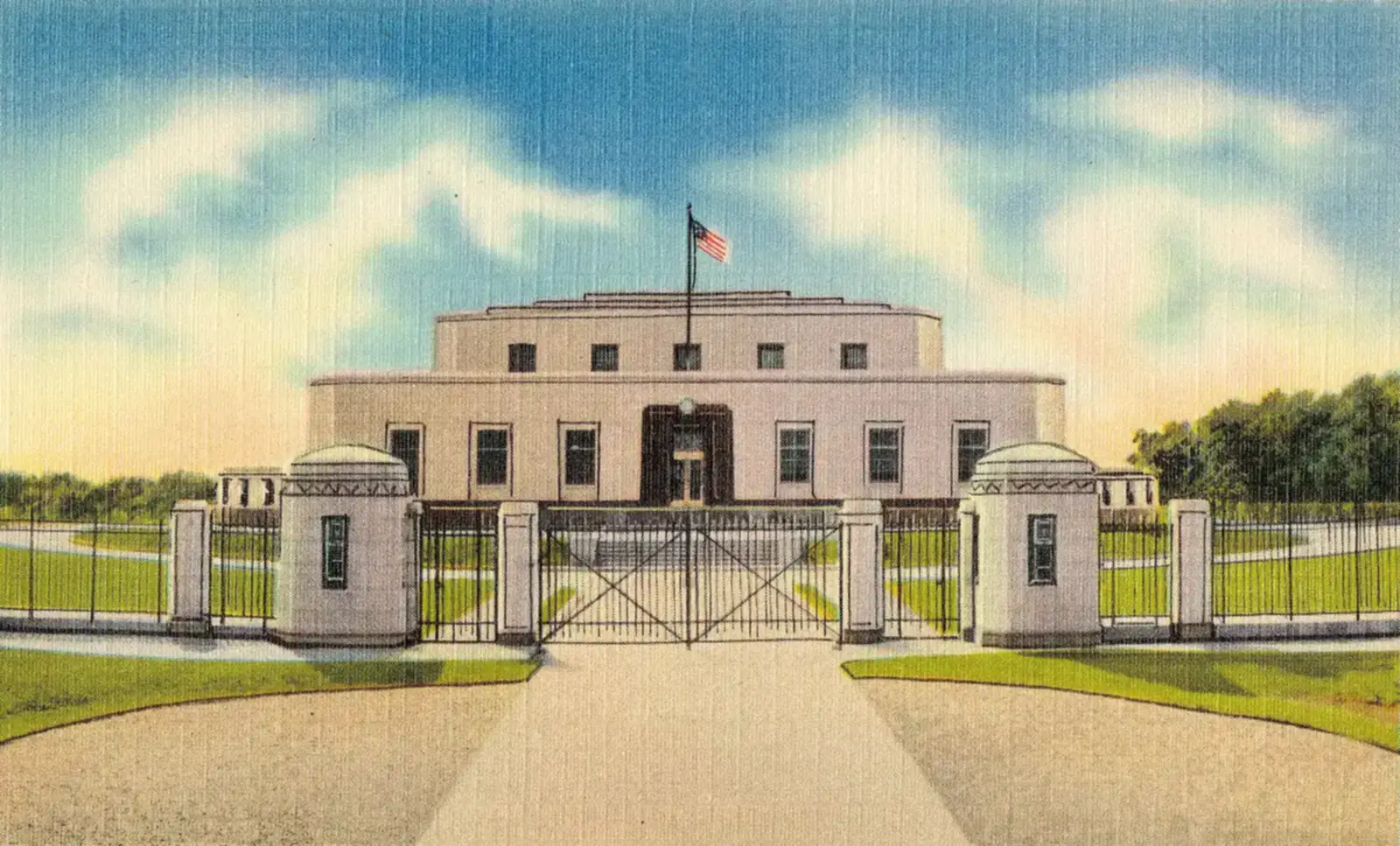
Two Places With One Famous Name
"Fort Knox" means two different things that sit side by side in north-central Kentucky, about 35 miles southwest of Louisville. The first is a U.S. Army post that began as a World War I training camp in 1918. The second is the United States Bullion Depository, a granite vault built on land taken from the post in 1936, where the Treasury keeps about half of the nation's gold.
The Army post is named for Henry Knox, George Washington's chief of artillery in the Revolutionary War and the first Secretary of War. In the 1930s it became the home of the Army's mechanized cavalry, and in 1940 it became the headquarters of the new Armored Force, the organization that built the tank divisions of World War II. For decades afterward it was the Army's Armor Center, the school for tank crews, and a key part of American military history.
The Bullion Depository is run by the U.S. Mint, part of the Department of the Treasury, and guarded by the U.S. Mint Police. It holds 147,341,858.382 fine troy ounces of gold, according to the Mint. No visitors are allowed, and only a few outside groups have ever seen inside the vault.
Fort Knox's fame goes beyond soldiers and gold. During World War II the depository protected the Declaration of Independence and the Constitution. The name became shorthand for anything heavily guarded ("as safe as Fort Knox"), and it has appeared in films such as the 1964 James Bond movie Goldfinger. Today the post is headquarters for the Army's personnel, recruiting, and ROTC commands and hosts the Army's largest yearly training event.
At a Glance
1918
Camp Knox founded as a World War I artillery camp
147.3M oz
Gold held in the depository today (U.S. Mint)
649.6M oz
Record gold holdings, December 31, 1941 (U.S. Mint)
$560,000
Cost to build the depository in 1936 (U.S. Mint)
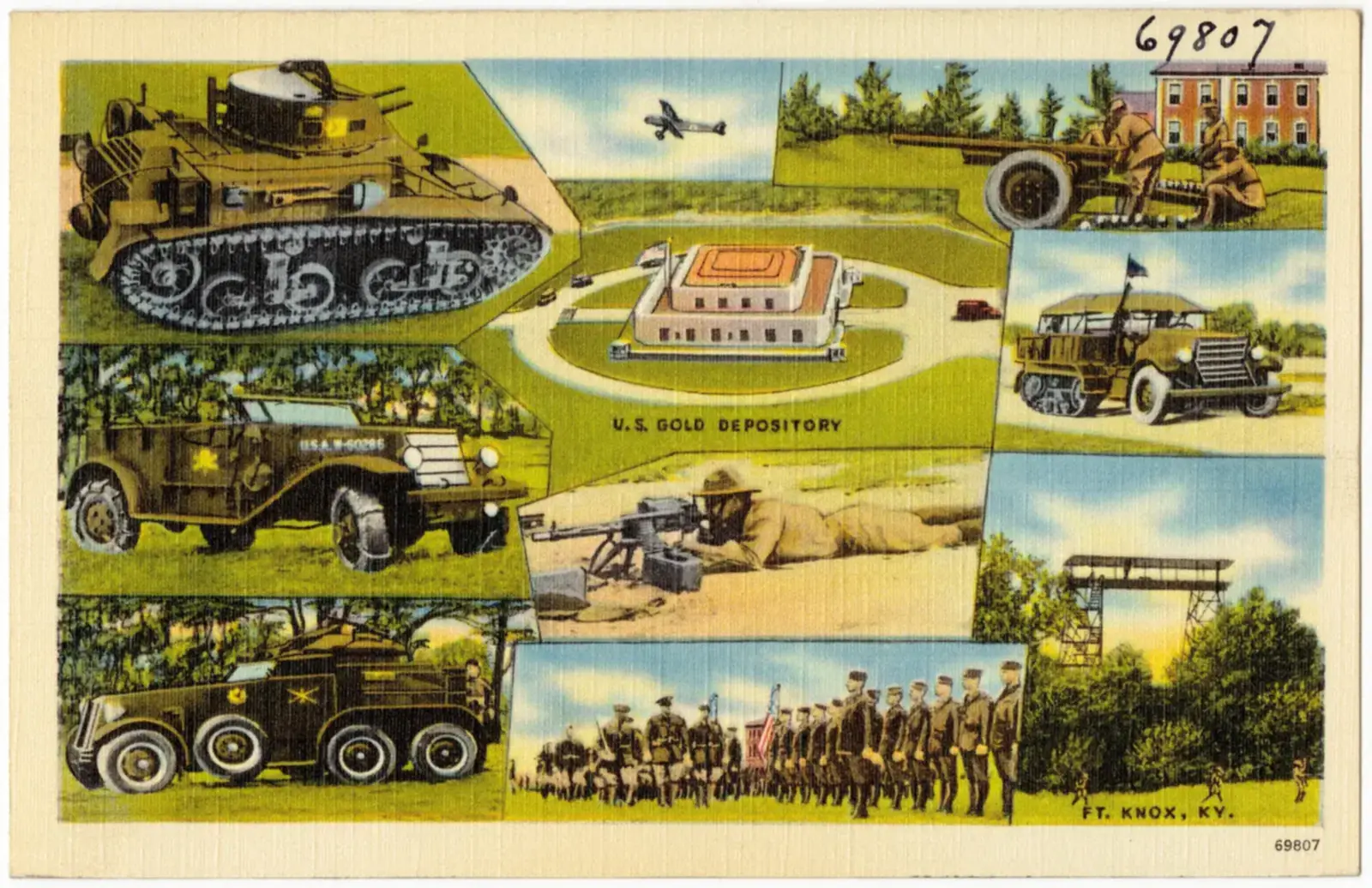
A postcard sold at Fort Knox around 1940 put the new gold depository at the center of the post's tanks, armored cars, and soldiers.
Did You Know?
The first gold shipped to Fort Knox in 1937 traveled as registered U.S. Mail on guarded trains.
No single person knows all the procedures to open the vault; several staff members each know only their own combination (U.S. Mint).
Franklin D. Roosevelt was the only outsider to enter the vault before a group of journalists and members of Congress in 1974.
The Declaration of Independence and the Constitution were hidden at Fort Knox from late 1941 until 1944.
From 1925 to 1928 the land was officially the Camp Henry Knox National Forest.
Engineers at Fort Knox solved the tank-exhaust problem for the Navy's Landing Ship, Tank in 1942 using a full-size wooden mock-up.
The Fort Knox gold is valued on the government's books at just $42.2222 an ounce, a price set by law in 1973 and far below the market price.
The 1964 film Goldfinger's famous vault set was imagined, because no filmmakers were allowed inside the real one.
Sources & Further Reading
- Fort Knox Bullion Depository, U.S. Mint
- History of Fort Knox, U.S. Army Garrison Fort Knox
- Status Report of U.S. Government Gold Reserve, U.S. Department of the Treasury, Fiscal Data
- Gold Reserve Act of 1934, Federal Reserve History
- Executive Order 6102, The American Presidency Project, UC Santa Barbara
- Tuskegee Airmen, National Park Service
- Benjamin O. Davis Jr., U.S. Air Force
- Nellie Tayloe Ross, National Governors Association
- Henry Knox, George Washington's Mount Vernon
- Fort Knox, Encyclopaedia Britannica
Gold holdings, construction figures, bar sizes, and visit dates come from the U.S. Mint's Fort Knox Bullion Depository page. The history of the Army post follows the U.S. Army Garrison Fort Knox history. Details on the founding documents come from the Library of Congress and the National Archives. Market values of gold change daily, so dollar figures based on the market price are approximate.