When Words Became Law
A president cannot pass a law. Under the Constitution, only Congress writes laws, and a president's power to act alone is limited. What a president can do is persuade: ask Congress for a law, explain a decision to the country, or announce a new direction that the rest of the government then follows. This page collects the speeches where that persuasion worked, or at least changed what happened next. To see how the powers are divided, read about the separation of powers.
The rule for choosing them was simple and strict. A speech is here only if a documented change followed it: Congress declared war or passed a law, the president signed an order, a program was created, a policy began or ended, or a president left office. A speech that is famous but changed nothing is not on the list, and a speech that is on the list is not here because anyone agrees with it.
The list covers 51 speeches by 23 presidents, from George Washington's Farewell Address in 1796 to Joe Biden's 2021 announcement ending the war in Afghanistan. Some were given in person to Congress, some over the radio or television, and a few were never spoken at all but printed or sent as written messages. Each entry explains the moment, quotes the official text, and describes what changed. For a president-by-president summary of results, see the presidential accomplishments page.
Many of these speeches were controversial in their own time, and several still are. The page describes what each president said and what followed, using the National Archives, the presidential libraries, the Office of the Historian, and the Congressional Record. It does not judge whether a policy was right. Where historians disagree about how much a speech caused, the entry says so.
How a Speech Made the List
- It led directly to a law passed by Congress, such as the Voting Rights Act of 1965.
- It announced a policy that the government then carried out, such as the Truman Doctrine.
- It asked Congress to declare war or authorize force, and Congress did.
- It marked a turning point in direction, such as a resignation or a new foreign policy doctrine.
At a Glance
51
Speeches that changed a law, a policy, or the country's direction
23
Presidents, from George Washington to Joe Biden
1796
Earliest: Washington's Farewell Address, printed in a newspaper
3
Speeches that asked Congress to declare war; each time Congress did so within days
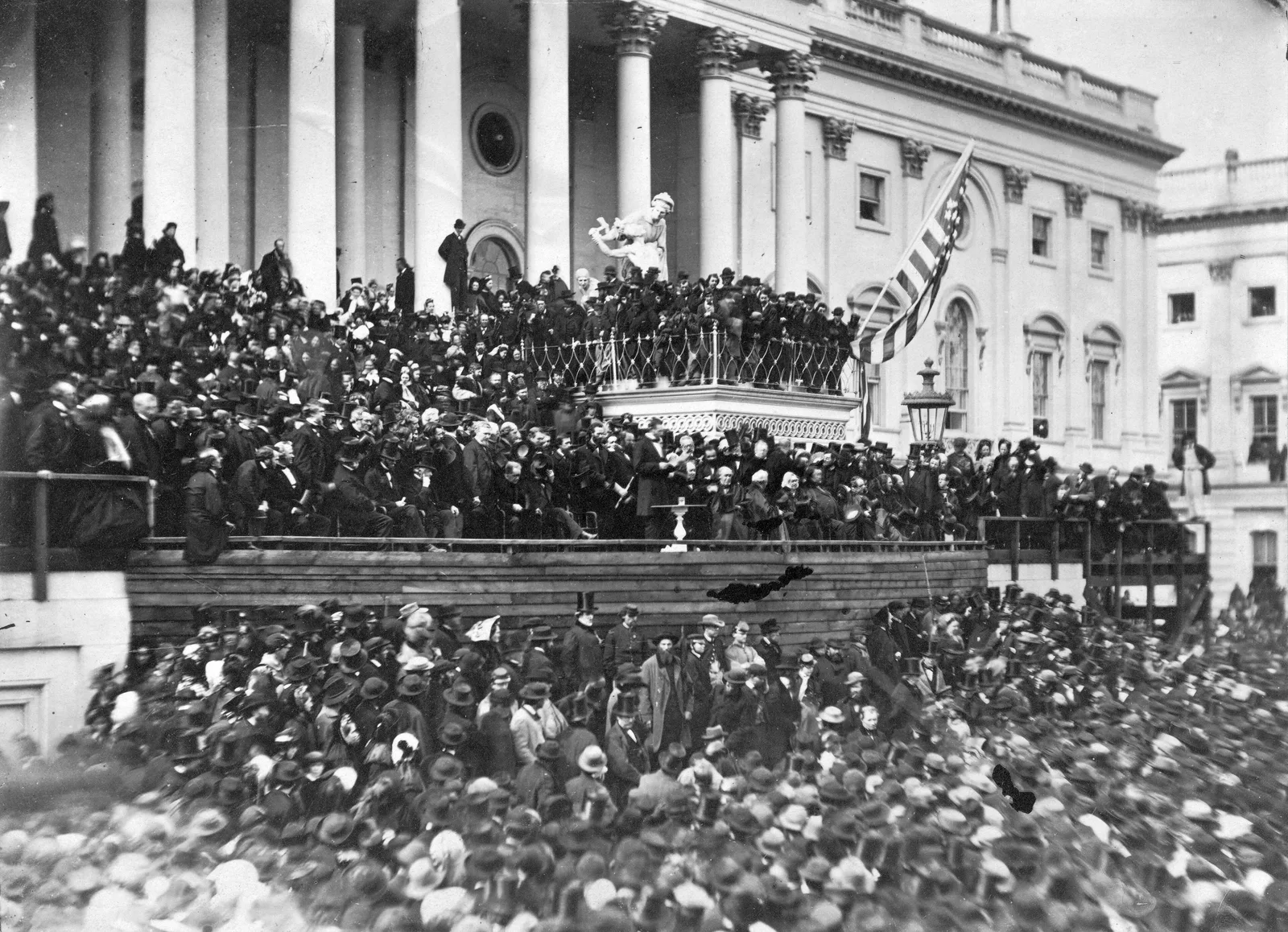
Abraham Lincoln gives his second inaugural address at the U.S. Capitol on March 4, 1865, a month before the Civil War ended.
Did You Know?
Washington's Farewell Address was never spoken aloud by Washington. It was printed in a Philadelphia newspaper, and since 1896 a senator has read it on the Senate floor every year.
The shortest inaugural address was Washington's second, at 135 words. The longest was William Henry Harrison's in 1841, at about 8,400 words.
For 112 years, from Jefferson in 1801 to Wilson in 1913, no president delivered an annual message to Congress in person.
The only confirmed photograph of Lincoln at Gettysburg was not identified until 1952, when an archivist at the National Archives spotted him in the crowd.
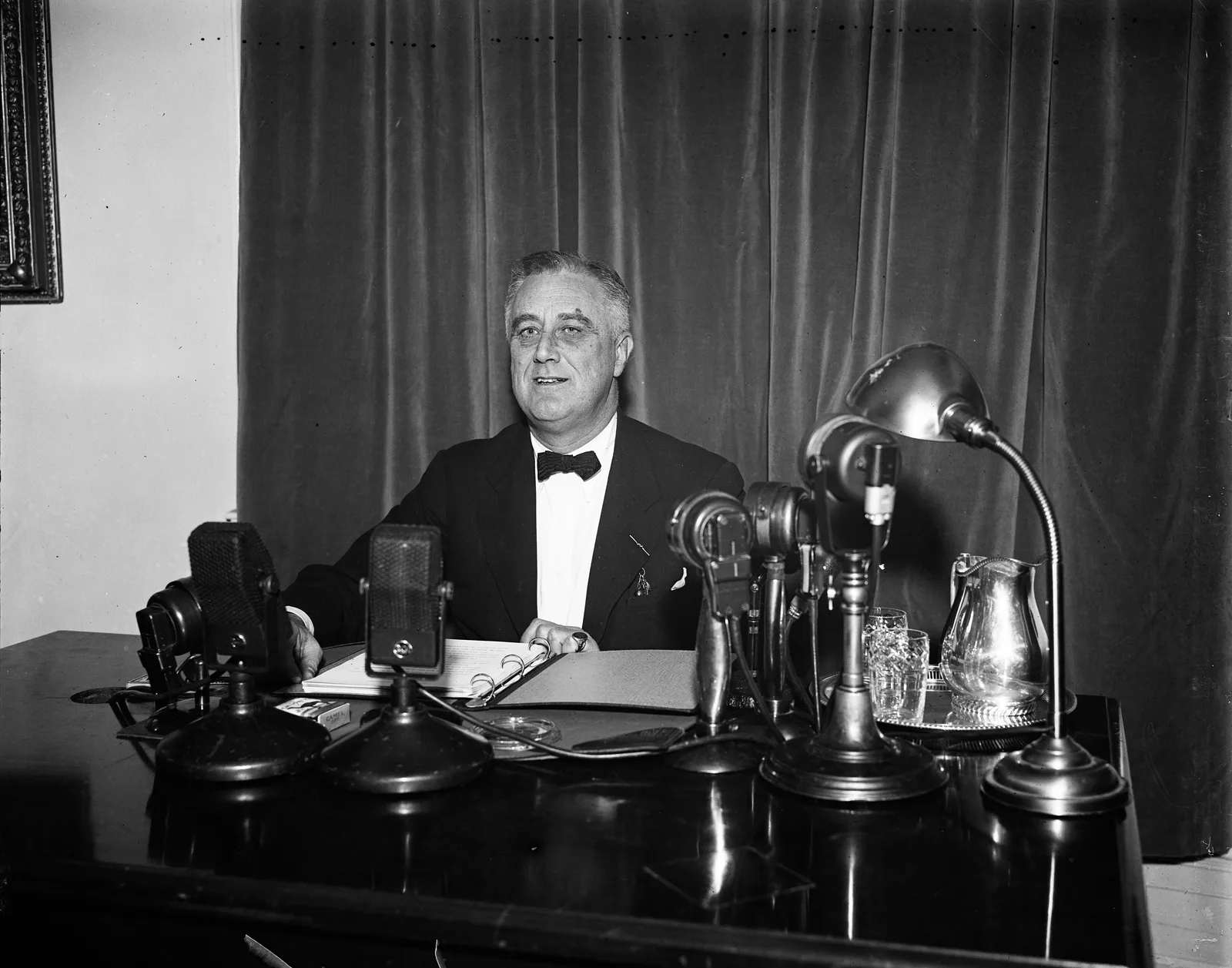
After Franklin Roosevelt's first fireside chat, more money was deposited than withdrawn when the banks reopened the next day.
One member of Congress voted against declaring war after Pearl Harbor: Jeannette Rankin of Montana, the first woman elected to Congress.
Sources & Further Reading
- Presidential Speeches archive, Miller Center, University of Virginia
- The American Presidency Project, University of California, Santa Barbara
- Milestone Documents (Farewell Address, Monroe Doctrine, Truman Doctrine, and more), National Archives
- Milestones in the History of U.S. Foreign Relations, Office of the Historian, U.S. Department of State
- State of the Union Addresses and Messages, History, Art & Archives, U.S. House of Representatives
- Washington's Farewell Address and the Senate, U.S. Senate Historical Office
- The Gettysburg Address, Library of Congress
- Fireside Chats of Franklin D. Roosevelt, Franklin D. Roosevelt Presidential Library and Museum
- Civil Rights Address, June 11, 1963, John F. Kennedy Presidential Library and Museum
- Speeches of Lyndon B. Johnson, LBJ Presidential Library
- Historical Highlights and Votes, U.S. Senate Historical Office
- Congress.gov, bills and laws, Library of Congress
Speech texts and dates follow the National Archives, the presidential libraries, and the American Presidency Project at the University of California, Santa Barbara. Vote counts and dates of laws come from the Congressional Record, Congress.gov, and the U.S. Senate and House historical offices. Quotations are exact except that em dashes in the original texts are shown as commas, following this site's style. The list of speeches is a selection made by a clear rule (a documented change in law, policy, or national direction followed the speech); inclusion is not an endorsement of any president or policy.