

How the Military Death Penalty Works
Service members are tried under their own code of law, in their own courts, with appeals that can end at the U.S. Supreme Court and a final decision that only the President can make.
Members of the armed forces are subject to the Uniform Code of Military Justice (UCMJ), a federal law Congress passed under its constitutional power to make rules for the government of the military. President Harry Truman signed it on May 5, 1950, and it took effect on May 31, 1951, replacing the Army's old Articles of War and the Navy's separate code. It works alongside, not instead of, the civilian death penalty described on the death penalty across the 50 states.
Serious crimes are tried by general courts-martial, military trials with a military judge and a panel of service members who act as the jury. Only a general court-martial can impose a death sentence.
The military death penalty is separate from the federal death penalty for civilians. A service member can be tried by a court-martial even for a crime committed off base, and in some cases after a civilian court has already tried the same conduct, because the military is treated as a separate sovereign.
Military commissions, such as those at Guantánamo Bay for people accused of terrorism, are a different system. They can impose death, but none has done so, according to DPIC.
The UCMJ allows the death penalty for 15 offenses, according to DPIC. In peacetime the main capital crimes are premeditated murder and felony murder (Article 118), and espionage. Others, such as desertion, misbehavior before the enemy, and a sentry sleeping on post, carry death only in time of war.
Everyone sentenced to death by a court-martial since 1984 was convicted of murder.
No one can be sentenced to death for a crime committed before age 18.
Since crimes committed on or after November 18, 1997, courts-martial have also had the option of life without the possibility of parole.
A commanding officer known as the convening authority decides whether to send a case to a court-martial and whether to seek the death penalty. That officer also selects the panel members, and if the accused asks, at least one-third must be enlisted members.
Since January 1, 2019, under the Military Justice Act of 2016, a capital case must be heard by a panel of 12 members. Before then, panels could be smaller. A death sentence requires a unanimous jury of service members: they must agree on guilt, on at least one aggravating factor, and on death.
The aggravating factors are set not by Congress but by the President, in Rule for Courts-Martial 1004. In 1983, in United States v. Matthews, the military's highest court struck down the old capital sentencing procedures for failing to require findings of individual aggravating circumstances. In January 1984, President Ronald Reagan signed an executive order adopting detailed rules and a list of aggravating factors, which restored the military death penalty.
In Loving v. United States (1996), the U.S. Supreme Court unanimously upheld that arrangement, ruling that Congress could delegate to the President, as commander in chief, the power to set the aggravating factors for military capital cases.
After the trial, the convening authority reviews the case and may approve or reduce the sentence. Two commanders did exactly that in the 1980s and 1990s, sparing the men sentenced to death in their cases.
Every death sentence is then reviewed automatically by the service's Court of Criminal Appeals (the Army, Navy-Marine Corps, Air Force, or Coast Guard court) under Article 66 of the UCMJ, and then by the Court of Appeals for the Armed Forces (CAAF) under Article 67, a court of five civilian judges appointed by the President.
After CAAF, the prisoner can ask the U.S. Supreme Court to hear the case directly, under 28 U.S.C. 1259, the same final step described in how a case reaches the Supreme Court.
These appeals take many years. Ronald Gray was sentenced in 1988 and his direct appeals ended in 2001; Nidal Hasan was sentenced in 2013 and his ended in 2025.
Once the President approves a death sentence, the prisoner can ask a civilian federal court to review the case through a petition for habeas corpus under 28 U.S.C. 2241. Because military death row is at Fort Leavenworth, those petitions are filed in the U.S. District Court for the District of Kansas.
Federal courts give military convictions limited review. Under the standard that grew out of the Supreme Court's decision in Burns v. Wilson (1953), a civilian court generally will not reconsider a claim the military courts have already given full and fair consideration.
That stage can still take years. In Ronald Gray's case, a federal judge stayed his execution in November 2008, two weeks before the date set, and the habeas case and related military appeals continued until 2018.
Army Regulation 190-55, last revised in October 2023, governs military executions. After the President approves a sentence, the Secretary of the Army sets the date, which must fall between 60 and 150 days after the approval, and designates the method.
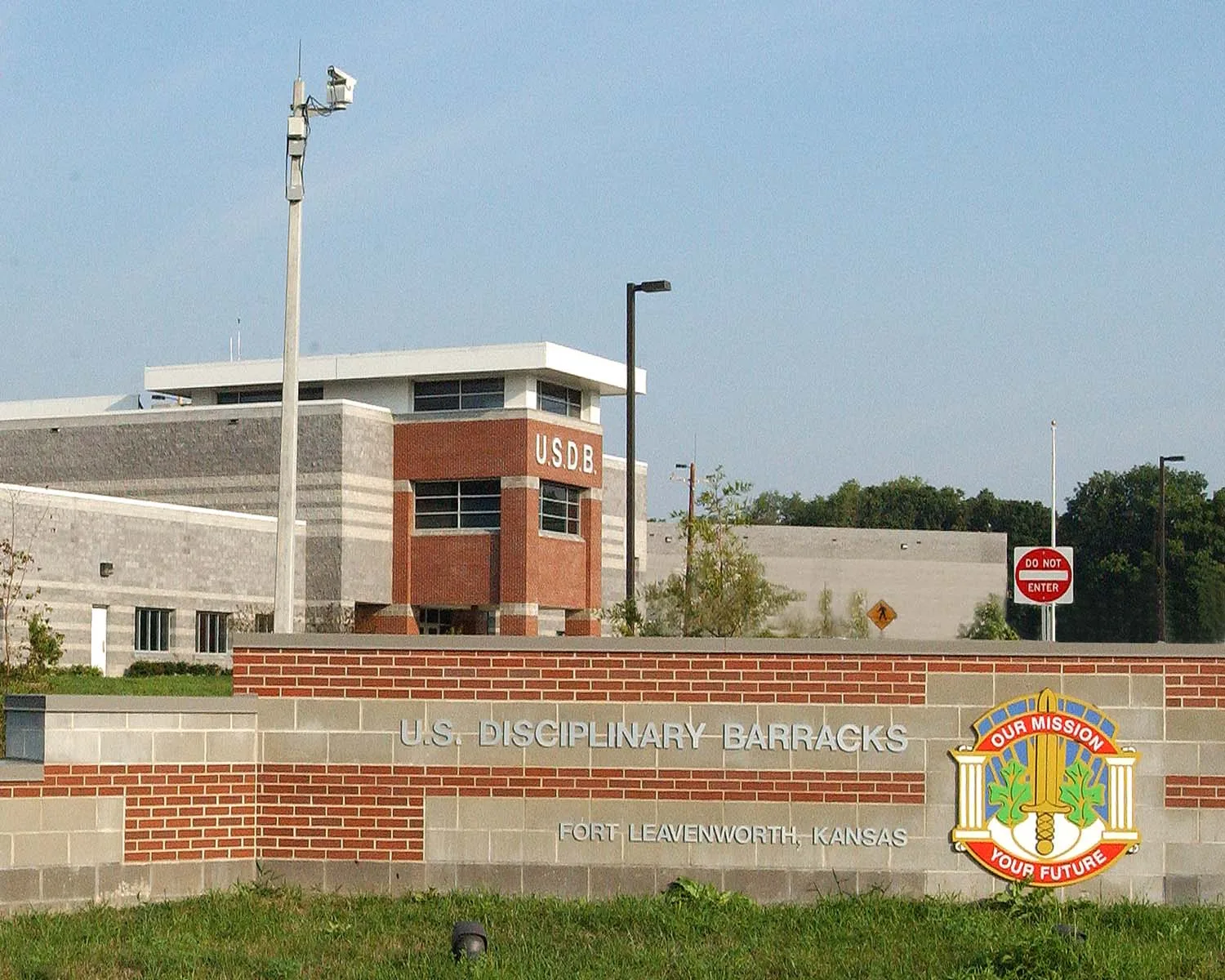
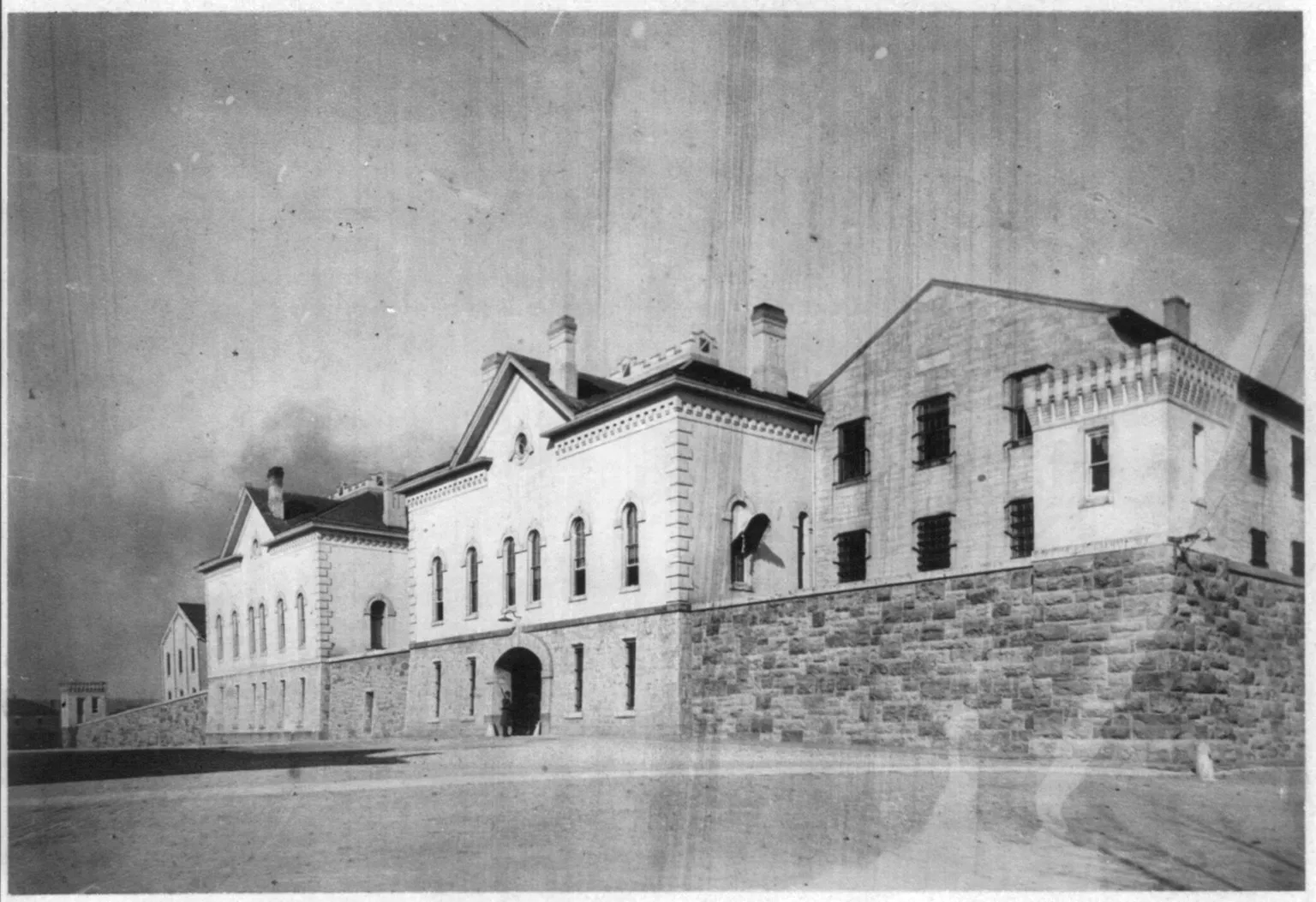
All ten military executions since 1951 were hangings at Fort Leavenworth: the first four at the Kansas State Penitentiary near Lansing, and the rest in the boiler room of the old U.S. Disciplinary Barracks.
In 2026, an internal Army plan called Operation Resolute Justice prepared for possible executions in coordination with the federal Bureau of Prisons at its execution facility in Terre Haute, Indiana, according to ABC News and Military.com.
The first execution actually scheduled, Nidal Hasan's, was set instead for Fort Hood, Texas, by firing squad, on December 3, 2026. The Defense Secretary said the public would be able to watch a livestream.
The President's Role
Every military death sentence must be personally approved by the President before it can be carried out. Here is every presidential decision since the Uniform Code of Military Justice took effect in 1951.
Article 57(a)(3) of the UCMJ (10 U.S.C. 857) provides: "If the sentence of the court-martial extends to death, that part of the sentence providing for death may not be executed until approved by the President. In such a case, the President may commute, remit, or suspend the sentence, or any part thereof, as the President sees fit. That part of the sentence providing for death may not be suspended."
The same rule appeared in Article 71(a) from 1951 until the Military Justice Act of 2016 moved it to Article 57, effective January 1, 2019.
The requirement reflects the President's role as commander in chief: the decision to execute a member of the armed forces rests with the highest civilian official in the chain of command. No other American death sentence needs a President's signature; federal civilian executions are carried out without one, and state executions are decided by governors and state courts.
Before 1951, under the Articles of War, commanding generals in the field could confirm most wartime death sentences themselves, which is why many World War II executions never reached the President. The UCMJ made presidential approval mandatory for every military execution.
After the appeals are finished, the Judge Advocate General of the service sends the trial record, any clemency petitions, and a recommendation to the service secretary. The Secretary of the Army then forwards the case to the Secretary of Defense, now called the Secretary of War, who makes a further recommendation to the President, according to the Army.
In Ronald Gray's case, the Army transferred the file to the Secretary of the Army in March 2003; the Secretary recommended approval in 2005; the Justice Department finished its own review and returned the file to the White House on August 1, 2007; and President George W. Bush approved the sentence on July 28, 2008.
In Nidal Hasan's case, the Supreme Court denied review on March 31, 2025. Defense Secretary Pete Hegseth recommended approval, President Trump approved the sentence on October 2, 2026, and Acting Secretary of the Army Adam Telle signed the execution order on October 6, 2026.
The President can also refuse to approve, or commute the sentence. There is no deadline for the President to decide, which is one reason some cases have waited for years.
Truman signed the UCMJ in 1950, but no execution under it took place during his presidency.
Every execution carried out under the UCMJ, ten in all from July 1954 to April 1961, required the approval of President Dwight Eisenhower. Nine of the ten men were Black. During the same years, the Los Angeles Times reported, Eisenhower commuted the death sentences of at least four other soldiers, all white, and courts spared two more.
Eisenhower approved the death sentence of Army Private John A. Bennett, convicted of raping and attempting to kill an 11-year-old girl in Austria. By the time Bennett's execution came, John F. Kennedy was President. Kennedy's staff reviewed the racial pattern in military executions, military law professor Eugene Fidell told CNN, but Kennedy declined to intervene, and Bennett was hanged at Fort Leavenworth on April 13, 1961.
On February 12, 1962, Kennedy commuted the death sentence of Navy seaman Jimmie Henderson to life in prison. Fox News described Kennedy as the last President to face a military death sentence decision for 46 years.
No military death sentence reached a President for decision between 1962 and 2008. President Reagan's 1984 executive order restored the death penalty procedures, and military courts again began sentencing people to death that year.
On July 28, 2008, George W. Bush approved Ronald Gray's death sentence, the first presidential approval of a military execution since Eisenhower. A federal judge stayed the execution that November, and it has not taken place.
On January 17, 2017, three days before leaving office, Barack Obama commuted the death sentence of Dwight Loving to life without parole, the first presidential commutation of a military death sentence since Kennedy's in 1962.
In December 2024, Joe Biden commuted the sentences of 37 of the 40 men on federal death row, but that action did not include the four men under military death sentences. On October 2, 2026, President Donald Trump approved the death sentence of Nidal Hasan.
| President | Prisoner | What happened |
|---|---|---|
| Dwight D. Eisenhower | Bernard J. O'Brien (Army)Approved | ExecutedHanged July 31, 1954, for the murder of his wife in Germany |
| Dwight D. Eisenhower | Chastine Beverly (Army)Approved | ExecutedHanged March 1, 1955, for a murder at Fort Leonard Wood, Missouri |
| Dwight D. Eisenhower | Louis M. Suttles (Army)Approved | ExecutedHanged March 1, 1955, for the same Fort Leonard Wood murder |
| Dwight D. Eisenhower | James L. Riggins (Army)Approved | ExecutedHanged March 1, 1955, for the same Fort Leonard Wood murder |
| Dwight D. Eisenhower | Thomas J. Edwards (Army)Approved | ExecutedHanged February 14, 1957, for a murder in Germany |
| Dwight D. Eisenhower | Winfred D. Moore (Army)Approved | ExecutedHanged February 14, 1957, for a murder at Fort Bragg, North Carolina |
| Dwight D. Eisenhower | Ernest L. Ransom (Army)Approved | ExecutedHanged April 3, 1957, for murder and rape in Korea |
| Dwight D. Eisenhower | Abraham Thomas (Army)Approved | ExecutedHanged in 1957 or 1958 (records differ) for four murders in Germany |
| Dwight D. Eisenhower | John E. Day Jr. (Army)Approved | ExecutedHanged September 23, 1959, for a murder in Korea |
| Dwight D. Eisenhower | John A. Bennett (Army)Approved (1957) | ExecutedHanged April 13, 1961, for rape and attempted murder in Austria; the last military execution |
| John F. Kennedy | John A. Bennett (Army)Declined to intervene (1961) | Did not interveneExecution went forward April 13, 1961 |
| John F. Kennedy | Jimmie Henderson (Navy)Commuted February 12, 1962 | CommutedDeath sentence reduced to life in prison |
| George W. Bush | Ronald Gray (Army)Approved July 28, 2008 | Stayed by a courtExecution set for December 10, 2008; stayed by a federal court November 26, 2008; still on death row |
| Barack Obama | Dwight Loving (Army)Commuted January 17, 2017 | CommutedDeath sentence reduced to life without parole |
| Donald Trump | Nidal Hasan (Army)Approved October 2, 2026 | Execution scheduledExecution by firing squad set for December 3, 2026, at Fort Hood, Texas |
Under the Uniform Code of Military Justice, no military death sentence can be carried out without the President's approval, so each of the ten executions from 1954 to 1961 was approved during Dwight Eisenhower's presidency. Dates for the 1950s executions come from the Army records compiled by DPIC; one 1955 name appears in some records as James Bibbins, and records differ on whether Abraham Thomas was executed in 1957 or 1958. The Los Angeles Times reported that Eisenhower also commuted at least four military death sentences; their names are not listed here.
Military Death Row Today
Four men are under military death sentences at the U.S. Disciplinary Barracks at Fort Leavenworth, Kansas. Each case has spent years, and in one case nearly four decades, in the courts.
Ronald Gray, an Army specialist at Fort Bragg, North Carolina, was convicted of raping and murdering two women in late 1986 and early 1987: Kimberly Ann Ruggles, 23, a civilian cab driver, and Private Laura Lee Vickery-Clay, 18. He was also convicted of attacking and trying to kill Private Mary Ann Lang Nameth, 20, who survived. On November 2, 1987, he separately pleaded guilty in a North Carolina court to other murders and rapes and received three consecutive and five concurrent life sentences.
A general court-martial at Fort Bragg convicted him in early April 1988 of two premeditated murders, an attempted premeditated murder, three rapes, and other crimes, and on April 12, 1988, the panel unanimously sentenced him to death. The commanding general of the 82nd Airborne Division approved the sentence on July 29, 1988.
The Army Court of Military Review affirmed the conviction and sentence in 1992 and, after considering more arguments, again in 1993. The Court of Appeals for the Armed Forces affirmed in 1999 (United States v. Gray, 51 M.J. 1). The U.S. Supreme Court denied review on March 19, 2001, and refused to reconsider on April 16, 2001, ending his direct appeals.
The case went to the Secretary of the Army in March 2003, and the Secretary recommended approval in 2005. After a Justice Department review, President George W. Bush approved the death sentence on July 28, 2008. On August 14, 2008, Gray was told the Secretary of the Army had set his execution for December 10, 2008, at 10 p.m.
On November 26, 2008, U.S. District Judge Richard Rogers in Kansas stayed the execution so Gray could file a habeas petition, which he did on April 1, 2009, raising issues including the size and selection of his court-martial panel and the President's power to set aggravating factors. While that case was pending, Gray asked the military courts for a writ of error coram nobis; the Army court denied it on January 26, 2012, and CAAF affirmed on April 17, 2012.
On September 29, 2015, Judge J. Thomas Marten denied Gray's habeas petition. The Tenth Circuit Court of Appeals found that the judge had handled a mix of exhausted and unexhausted claims the wrong way and sent the case back, and on October 26, 2016, the court dismissed the whole petition without prejudice so Gray could first return to the military courts. On December 20, 2016, the judge ruled that the 2008 stay was no longer in effect.
Gray went back to the Army Court of Criminal Appeals, which rejected his new petition in May 2017. On November 13, 2017, CAAF dismissed his appeal, ruling it lacked jurisdiction to grant coram nobis relief (United States v. Gray, 77 M.J. 5). The Supreme Court denied review on June 28, 2018, and denied rehearing on August 24, 2018.
As of October 2026, no new execution date had been set. Gray, sentenced in 1988, has been under a military death sentence longer than anyone else on military death row.
On March 23, 2003, during the opening days of the Iraq War, Army Sergeant Hasan Akbar threw grenades into tents and fired on fellow soldiers at Camp Pennsylvania in Kuwait. He killed Army Captain Christopher Seifert and Air Force Major Gregory Stone and wounded 14 others.
A general court-martial at Fort Bragg convicted him on April 21, 2005, of two premeditated murders and three attempted premeditated murders, and on April 28, 2005 the panel sentenced him to death. The commander of the XVIII Airborne Corps approved the sentence. His case was one of a handful from the Iraq War era to produce a military death sentence.
The Army Court of Criminal Appeals affirmed on July 13, 2012. On August 19, 2015, CAAF affirmed by a 3 to 2 vote. The main issue was whether his lawyers had been ineffective in how they prepared and presented his case at sentencing; the two dissenting judges, Judges Baker and Erdmann, would have ruled for Akbar on that claim.
Akbar asked the U.S. Supreme Court to decide whether the President, rather than Congress, may prescribe the aggravating factors in military capital cases. The Court denied review in October 2016.
As of October 2026, there had been no public presidential decision on his sentence and no execution date.
On May 10, 1985, Kathryn Eastburn, the wife of an Air Force captain, and her daughters, ages 5 and 3, were raped and murdered in their home in Fayetteville, North Carolina, near Fort Bragg. Her infant daughter was found alive in her crib two days later. Army Sergeant Timothy Hennis had visited the home days earlier to adopt the family's dog.
North Carolina tried Hennis, and in July 1986 a state jury convicted him and sentenced him to death. In 1988, the North Carolina Supreme Court ordered a new trial because the jury had been shown an excessive number of gruesome photographs. At the retrial, on April 19, 1989, he was acquitted.
Hennis stayed in the Army and retired on July 31, 2004. In 2006, DNA testing of evidence preserved from the crime scene pointed to Hennis. The Constitution's ban on double jeopardy barred North Carolina from trying him again, but because the military is a separate sovereign, the Army recalled him to active duty and charged him with three premeditated murders in November 2006.
Hennis challenged the Army's power to try him. The Army Court of Criminal Appeals briefly paused the case in May 2008 but rejected his petitions that June, and the federal courts, including the Fourth Circuit Court of Appeals, declined to intervene. A court-martial at Fort Bragg convicted him on April 8, 2010, and sentenced him to death on April 15, 2010.
The Army Court of Criminal Appeals, sitting as a full court, affirmed. On February 28, 2020, CAAF affirmed (United States v. Hennis, 79 M.J. 370), rejecting his arguments that a brief gap in his service in 1989 ended the Army's jurisdiction and that his trial violated double jeopardy. The U.S. Supreme Court denied review on January 11, 2021.
DPIC had once counted Hennis among people exonerated from death row after his 1989 acquittal. As of October 2026, there had been no public presidential decision on his sentence.
On November 5, 2009, Army Major Nidal Hasan, a psychiatrist, opened fire inside the Soldier Readiness Processing Center at Fort Hood, Texas, killing 13 people, 12 soldiers and one civilian, and shooting 31 others. Police shot him outside the building, and he was left paralyzed from the waist down. According to DPIC, he believed the attack would aid Islamic insurgents in countries where the United States had a military presence.
Hasan represented himself at his court-martial at Fort Hood. On August 23, 2013, the panel found him guilty of all charges, including 13 specifications of premeditated murder and 32 of attempted premeditated murder, and on August 28, 2013, it unanimously sentenced him to death.
The Army Court of Criminal Appeals, sitting as a full court, affirmed (United States v. Hasan, 80 M.J. 682). On March 4, 2024, CAAF unanimously affirmed in an opinion by Chief Judge Kevin Ohlson. The U.S. Supreme Court denied review on March 31, 2025.
The Secretary of Defense recommended approval, and on October 2, 2026, President Trump approved the death sentence. On October 6, 2026, Acting Secretary of the Army Adam Telle ordered the execution carried out by firing squad at Fort Hood on December 3, 2026, at 1 p.m. Central time, according to the Army.
If carried out, it would be the first U.S. military execution since 1961 and the military's first execution by firing squad since World War II. The Defense Secretary said the public would be able to watch a livestream.
Hasan can still ask a federal court in a habeas petition to stay the execution, which could delay it, as happened in Ronald Gray's case in 2008.
Death Sentences Overturned and Commuted
Since the modern military death penalty began in 1984, courts-martial have sentenced 17 people to death. Most of those sentences did not stand.
| Name | Sentenced | What happened |
|---|---|---|
| Todd A. DockArmy | 1984 | Set asideConviction and death sentence set aside on appeal |
| Melvin TurnerArmy | 1985 | Reduced by commanderDeath sentence reduced by the convening authority before appeal |
| Ronnie A. CurtisMarine Corps | 1987 | Set asideDeath sentence later set aside |
| Joseph L. ThomasNot reported | 1988 | Set asideDeath sentence later set aside |
| Ronald GrayArmy | 1988 | On death rowApproved by President Bush in 2008; execution stayed; still on death row |
| James T. MurphyArmy | Late 1980s (1987 crime) | Set asideDeath sentence set aside; serving life |
| Dwight LovingArmy | 1989 | CommutedCommuted to life without parole by President Obama, 2017 |
| Curtis A. GibbsNot reported | 1990 | Reduced by commanderDeath sentence reduced by the convening authority before appeal |
| Jose F. SimoyAir Force | 1992 | Set asideDeath sentence later set aside |
| Wade WalkerMarine Corps | 1993 | Set asideDeath sentence set aside; resentenced to life in 2010 |
| Kenneth ParkerMarine Corps | 1995 | Set asideDeath sentence reversed in 2012; serving life |
| William KreutzerArmy | 1996 | Set asideDeath sentence set aside; serving life |
| Jessie QuintanillaMarine Corps | 1998 | Set asideDeath sentence set aside; resentenced to life without parole in 2010 |
| Hasan AkbarArmy | 2005 | On death rowStill on death row; appeals exhausted in 2016 |
| Andrew WittAir Force | 2005 | Set asideDeath sentence reversed in 2016; resentenced to life without parole in 2018 |
| Timothy HennisArmy | 2010 | On death rowStill on death row; appeals exhausted in 2021 |
| Nidal HasanArmy | 2013 | Execution approvedApproved by President Trump in 2026; execution set for December 3, 2026 |
Compiled from DPIC's case descriptions and court records. Some sentencing years for the 1980s and 1990s cases are approximate in public records.
In December 1988, Army Private First Class Dwight Loving robbed and shot two cab drivers near Fort Hood, Texas: Private Christopher Fay, 20, a soldier who drove a taxi part time, and retired Army Sergeant Bobby Sharbino, 44. He also tried to kill a third driver, who survived, and later gave a videotaped confession.
A court-martial at Fort Hood convicted him on April 3, 1989, and sentenced him to death. Military appeals courts affirmed.
Loving argued that his sentence was invalid because the aggravating factors had been set by the President, not Congress. In Loving v. United States (1996), one of the Court's landmark rulings on the military death penalty, the Supreme Court unanimously rejected that argument, holding that Congress could delegate that power to the President as commander in chief.
Loving applied for clemency in 2003 and continued to challenge his sentence in the military courts. On January 17, 2017, President Obama commuted his sentence to life without parole, on the condition that he never be eligible for parole. It was among 209 commutations Obama granted that day.
Air Force Senior Airman Andrew Witt stabbed Senior Airman Andy Schliepsiek and his wife to death at Robins Air Force Base, Georgia, and seriously injured Staff Sergeant Jason King. An Air Force court-martial sentenced him to death on October 13, 2005.
On August 9, 2013, the Air Force Court of Criminal Appeals overturned the death sentence, finding his lawyers had been ineffective. The government appealed, and in July 2014 the same court, reconsidering the case, reinstated it.
On July 19, 2016, CAAF reversed the death sentence again and ordered a new sentencing hearing. On July 6, 2018, the new panel sentenced Witt to life without parole.
Army Sergeant William Kreutzer opened fire on a formation at Fort Bragg on October 27, 1995, killing Major Stephen Mark Badger and wounding 18 soldiers. His death sentence was later set aside, and he is serving life.
Marine Corporal Jessie Quintanilla was sentenced to death in 1998 for murdering Lieutenant Colonel Daniel Kidd at Camp Pendleton, California. His death sentence was set aside, and he was resentenced to life without parole in 2010.
Marine Lance Corporals Wade Walker and Kenneth Parker of Camp Lejeune, North Carolina, were sentenced to death, Walker in 1993 and Parker in 1995, for murdering two other lance corporals in nearby Jacksonville. Walker was resentenced to life in 2010, and on August 22, 2012, the Navy-Marine Corps Court of Criminal Appeals reversed Parker's death sentence and one of his murder convictions.
In two cases, those of Melvin Turner (1985) and Curtis Gibbs (1990), the commanding officer who convened the court-martial reduced the death sentence before any appeal, according to DPIC.
During World War II, the Army executed 70 soldiers in Europe, and 55 of them were Black, at a time when Black soldiers were less than 10 percent of the Army, military law expert Dwight Sullivan wrote in an analysis for DPIC.
Nine of the ten men executed under the UCMJ from 1954 to 1961 were Black. The Los Angeles Times reported that while eight Black soldiers were executed during the six years between John Bennett's trial and his execution, the six white soldiers then on death row were spared by commutation or by the courts.
A 2012 study of military capital cases from 1984 to 2005, co-authored by Catherine Grosso of Michigan State University's College of Law, found that minority defendants were about twice as likely as white defendants to be sentenced to death, according to CNN.
A History of Military Executions
From the Continental Army to the order signed in October 2026.
The Continental Congress adopted Articles of War in 1775 that allowed death for crimes such as mutiny and desertion.
General George Washington, as commander in chief of the Continental Army, approved some executions and pardoned many condemned soldiers.
During the Civil War, the Union Army executed about 267 soldiers, according to historian Robert Alotta, most for desertion, murder, or rape. President Abraham Lincoln reviewed many death sentences and was known for pardoning soldiers condemned for desertion or falling asleep on guard duty.
In December 1862, after the U.S.-Dakota War, Lincoln reviewed the military commission trials of 303 Dakota men and approved the executions of 38, who were hanged together at Mankato, Minnesota, on December 26, 1862, the largest mass execution in U.S. history.
After the Houston riot of August 1917, in which Black soldiers of the 24th Infantry clashed with police and residents, 13 soldiers were hanged on December 11, 1917, before their cases could be reviewed in Washington. The War Department changed its rules in 1918 to require review before executions in the United States; six more soldiers were later hanged, and President Woodrow Wilson commuted other death sentences.
In November 2023, the Army set aside the convictions of all 110 Black soldiers convicted in the Houston courts-martial, including the 19 who were executed, finding that they had not received fair trials.
On January 31, 1945, Private Eddie Slovik was executed by firing squad in France for desertion, the only American soldier executed for desertion since the Civil War. His sentence was confirmed by General Dwight Eisenhower as Supreme Allied Commander, not by the President.
DPIC counts 135 executions by the Army from 1916 through 1961.
President Harry Truman signed the UCMJ on May 5, 1950, and it took effect on May 31, 1951. It required the President's personal approval for every military execution.
Ten soldiers were executed under it, all by hanging at Fort Leavenworth, beginning with Bernard O'Brien on July 31, 1954.
Army Private John A. Bennett was hanged at Fort Leavenworth on April 13, 1961, after President Eisenhower approved his sentence and President Kennedy declined to intervene.
In February 1962, Kennedy commuted the death sentence of Navy seaman Jimmie Henderson.
In 1983, the Court of Military Appeals struck down the military's capital sentencing procedures in United States v. Matthews. In January 1984, President Ronald Reagan signed an executive order setting new rules and aggravating factors.
Courts-martial sentenced 17 people to death under the new rules through 2013.
The Supreme Court unanimously upheld the President's power to set aggravating factors for military capital cases.
The next year, Congress made life without parole available for military crimes committed on or after November 18, 1997.
On July 28, 2008, President George W. Bush approved Ronald Gray's death sentence, the first presidential approval since the 1950s.
A federal judge stayed the December 10, 2008, execution on November 26, 2008.
President Barack Obama commuted Dwight Loving's death sentence on January 17, 2017.
The next year, the Supreme Court declined to hear Ronald Gray's last petition.
The Military Justice Act of 2016 took effect on January 1, 2019, requiring 12-member panels in capital cases and moving the presidential approval rule from Article 71 to Article 57.
In 2023, the Army revised Army Regulation 190-55, its rules for carrying out executions.
President Donald Trump approved Nidal Hasan's death sentence on October 2, 2026, and the Army set his execution by firing squad for December 3, 2026, at Fort Hood, Texas.
Three other men, Ronald Gray, Hasan Akbar, and Timothy Hennis, remain on military death row.
Fast Facts
The numbers at a glance.
Sources & Further Reading
- 10 U.S.C. 857: UCMJ Article 57 (Approval of Sentence of Death)
- Army Regulation 190-55: Procedures for Military Executions (2023)
- U.S. Army: Army Sets Execution Date for Nidal Hasan (October 2026)
- CAAF: United States v. Hasan (2024)
- CAAF: United States v. Akbar (2015)
- D. Kan.: Gray v. Gray, Memorandum and Order (2015)
- Supreme Court Docket: Hennis v. United States, No. 20-301
- Oyez: Loving v. United States (1996)
- DPIC: Military Death Penalty Facts and Figures
- DPIC: Cases of Those Sentenced to Death in the U.S. Military
- DPIC: Historic Military Executions
- CNN: A Look at the Last U.S. Soldier Executed by the Military (2013)
- Military.com: Army Lays Groundwork for First Military Executions Since 1961 (2026)
Court dates come from the opinions and dockets of the Court of Appeals for the Armed Forces, the U.S. District Court for the District of Kansas, and the U.S. Supreme Court; the Hasan execution order from the Army's October 2026 announcement. Lists of executions and death sentences come from the Death Penalty Information Center (DPIC), which opposes the death penalty as currently used, and the Army records it has published. Historical accounts of the Bennett case come from the Los Angeles Times as reported by CNN. Checked October 9, 2026.