About Washington, D.C.
Washington, D.C., officially the District of Columbia, is the capital of the United States and the seat of all three branches of the federal government. It is not part of any state. The Constitution gives Congress the power to govern a federal district as the national capital, and the District was created for that purpose by the Residence Act of 1790.
The city is named for George Washington, who chose its site on the Potomac River. 'Columbia,' a poetic name for the United States in the 1700s, honored Christopher Columbus. Today the city of Washington and the District of Columbia cover exactly the same land and have one government.
About 694,000 people lived in the District in 2025, according to the Census Bureau. They elect a mayor and a 13-member Council, and they vote for president, but they have no voting member of the U.S. House or Senate, and Congress can overturn their local laws.
Beyond the monuments and federal buildings, Washington is a city of distinct neighborhoods, from the 1700s port town of Georgetown to the rowhouse blocks of Capitol Hill and the historic Black neighborhoods of Shaw and Anacostia, home to a long tradition of Black culture, music, and civil rights leadership.
Geography, Four Quadrants Meeting at the Capitol
Every D.C. address belongs to one of four quadrants, Northwest, Northeast, Southeast, and Southwest, which meet at the U.S. Capitol. The city is also divided into eight wards for electing the Council.
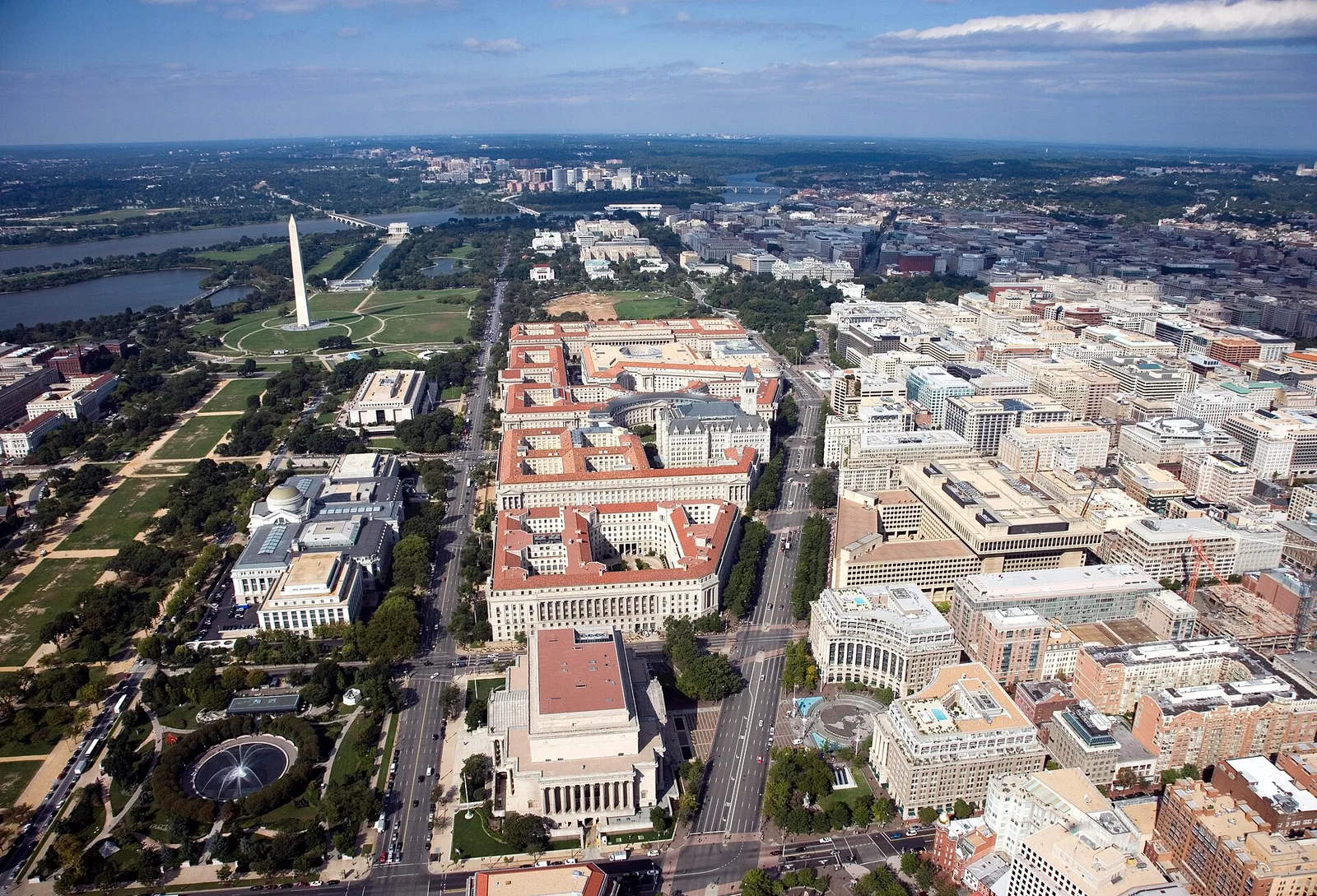
The District is divided into four quadrants that meet at the U.S. Capitol, and every street address carries one of them: NW, NE, SE, or SW. Northwest is by far the largest, covering roughly 40 percent of the city's land, and it holds most of the federal core, downtown's office district, and many of the city's oldest neighborhoods.
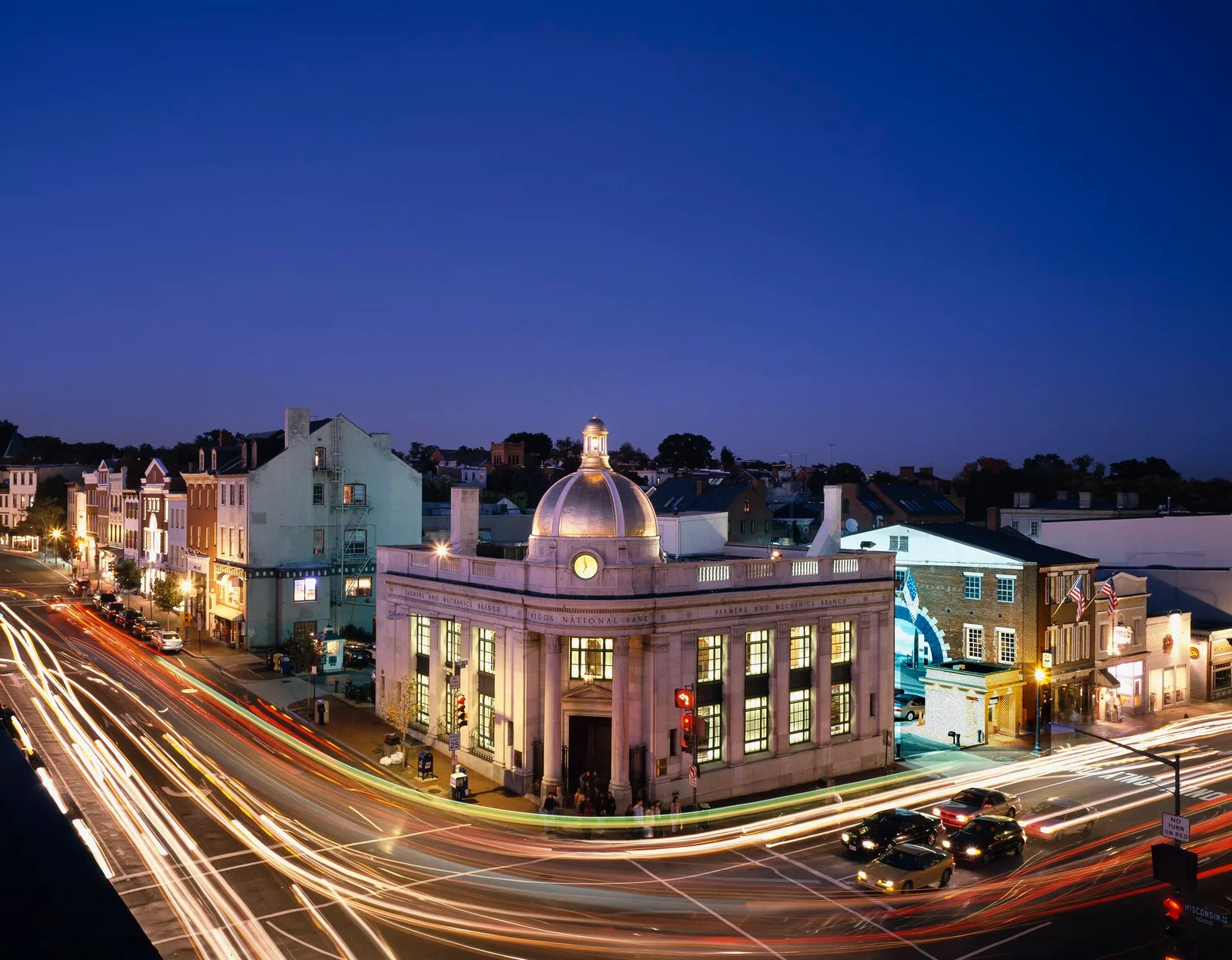
Georgetown, at the quadrant's western edge, is older than the capital itself. It was a Maryland tobacco port chartered in 1751 and was absorbed into the District when it was created; Congress merged it into a single city government with Washington in 1871. Its brick row houses, cobbled side streets, and the C&O Canal towpath still reflect that port-town past.
Rock Creek Park cuts north to south through Northwest. Congress set it aside in 1890, making it one of the oldest federally managed urban parks in the country, and at about 1,750 acres it is larger than New York's Central Park. The National Zoo sits along the creek near its southern end.
Massachusetts Avenue's Embassy Row, Dupont Circle, Adams Morgan, and Columbia Heights give Northwest much of its international and immigrant character, and the city's highest point, Fort Reno at about 409 feet, is in the quadrant's upland northern neighborhoods.
Northeast stretches from Union Station and Capitol Hill's north side out to the Maryland line. It is largely residential, a mix of rowhouse neighborhoods such as Trinidad and Eckington and quieter, almost suburban streets in places like Michigan Park and Fort Lincoln.
Union Station, opened in 1907, is the city's rail gateway and one of the busiest Amtrak stations in the country, and the NoMa (North of Massachusetts Avenue) area around it has filled with apartment towers since a Metro station opened there in 2004.
Brookland, in the quadrant's north, is known as Little Rome for its concentration of Catholic institutions, including the Catholic University of America and the Basilica of the National Shrine of the Immaculate Conception, the largest Catholic church in North America. Gallaudet University, the world's leading university for deaf and hard-of-hearing students, sits nearby on Florida Avenue.
The U.S. National Arboretum, a 446-acre research arboretum run by the Department of Agriculture, occupies the quadrant's eastern edge along the Anacostia River, and is home to the 22 original Capitol columns removed from the building's east front in 1958.
Southwest is the smallest quadrant, a wedge between the National Mall, the Washington Channel, and the Anacostia's mouth. Much of it was razed in the 1950s and 1960s in one of the country's largest urban renewal projects, which displaced thousands of mostly Black residents and replaced old rowhouse blocks with modernist apartment towers and townhouses.
The Wharf, a mile-long waterfront development of homes, hotels, music venues, and piers that opened in stages from 2017, has transformed the Washington Channel shoreline, and the Maine Avenue Fish Market there has operated since 1805, making it one of the oldest continuously operating open-air fish markets in the country.
Fort Lesley J. McNair, at the quadrant's southern tip, is one of the oldest Army posts in the country and home to the National War College. The conspirators in Abraham Lincoln's assassination were tried there in 1865, and four of them were hanged on its grounds.
Buzzard Point, where the Anacostia meets the Potomac, now holds Audi Field, the D.C. United soccer stadium that opened in 2018.
How D.C. Makes Its Living
Washington's economy is built around the federal government and the many businesses, organizations, and institutions that want to be near it.
Congress, the White House, the Supreme Court, and the headquarters of nearly every federal department and agency are in or near the District, and federal jobs, federal contracts, and the businesses that serve them are the backbone of the local economy.
The federal presence also shapes the city's finances. Federal property, which covers a large share of the District's land, pays no property tax, and the Home Rule Act bars D.C. from taxing the income of the many commuters who work in the city but live in Maryland or Virginia.
Federal spending cuts reach D.C. first. Federal job reductions in 2025 cut into city revenue, and the District's own financial reports warned of slower growth as a result.
Congress also provides a direct federal payment each year, about $878 million in the FY2026 appropriations act, according to the Congressional Research Service, a small share of a city budget of roughly $22 billion that is mostly paid for with local taxes.
Because federal laws, regulations, and contracts are made here, Washington has an unusually large concentration of law firms, lobbying shops, trade associations, consulting firms, and policy research groups, many of them along the K Street corridor downtown.
Thousands of national organizations, from professional societies to advocacy groups on every side of public debates, keep their headquarters in the District to be close to Congress and the agencies.
The city also hosts international institutions, including the headquarters of the World Bank and the International Monetary Fund, and more than 170 foreign embassies, which bring diplomats, staff, and visitors from around the world.
Professional and business services are, after government, the largest source of jobs in the District, and they generate much of the income tax the city collects from its residents.
The National Mall's memorials and the Smithsonian Institution's free museums make Washington one of the most visited cities in the country, and hotels, restaurants, and attractions employ tens of thousands of residents.
The Smithsonian was founded in 1846 with a bequest from British scientist James Smithson, who never visited the United States, and it now runs more than a dozen museums and the National Zoo in the District, all with free admission.
Presidential inaugurations, the National Cherry Blossom Festival, Fourth of July celebrations on the Mall, and large marches and demonstrations bring waves of visitors throughout the year.
Conventions and business travel tied to the federal government add to the flow, which is why sales and hotel taxes are an important part of the city's revenue.
The District is home to Georgetown University (founded 1789), The George Washington University, Howard University, American University, the Catholic University of America, Gallaudet University, and the University of the District of Columbia, the city's public university.
Howard University, chartered by Congress in 1867, is one of the country's leading historically Black universities, and its alumni include Vice President Kamala Harris, Supreme Court Justice Thurgood Marshall, and novelist Toni Morrison.
Hospital systems such as MedStar, Children's National, and the George Washington University Hospital, along with university research, make education and health care among the largest private sources of jobs.
Students, faculty, and patients from across the region and the world add to a daytime population that, with commuters, is far larger than the number of people who actually live in the District.
How D.C.'s Government Works
Since the Home Rule Act of 1973, District voters have elected a mayor, who runs city agencies and proposes the budget, and a 13-member Council that passes local laws: a chairman and four members elected citywide and one member from each of eight wards. All serve four-year terms. The District has no counties or separate city government; the D.C. government handles the work that states, counties, and cities do elsewhere.
Below the Council, about four dozen elected Advisory Neighborhood Commissions, unpaid neighborhood representatives each elected by roughly 2,000 residents, advise the city on zoning, liquor licenses, and other local decisions, and the city must give their views 'great weight.'
Congress keeps the final word. Every District law goes to Congress before it takes effect, after 30 legislative days for most laws and 60 for criminal laws, and Congress can block it by passing a resolution that the president signs. The District's budget, even the part paid for with local taxes, takes effect only after Congress passes it as part of the federal budget process.
The District's local judges, on the Superior Court and the D.C. Court of Appeals, are nominated by the president and confirmed by the Senate. Most adult criminal cases are prosecuted by the U.S. Attorney for the District of Columbia, part of the Justice Department, rather than by a locally elected prosecutor; the District's elected attorney general handles juvenile cases and some minor offenses.
Mayor of the District of Columbia
Current Mayor
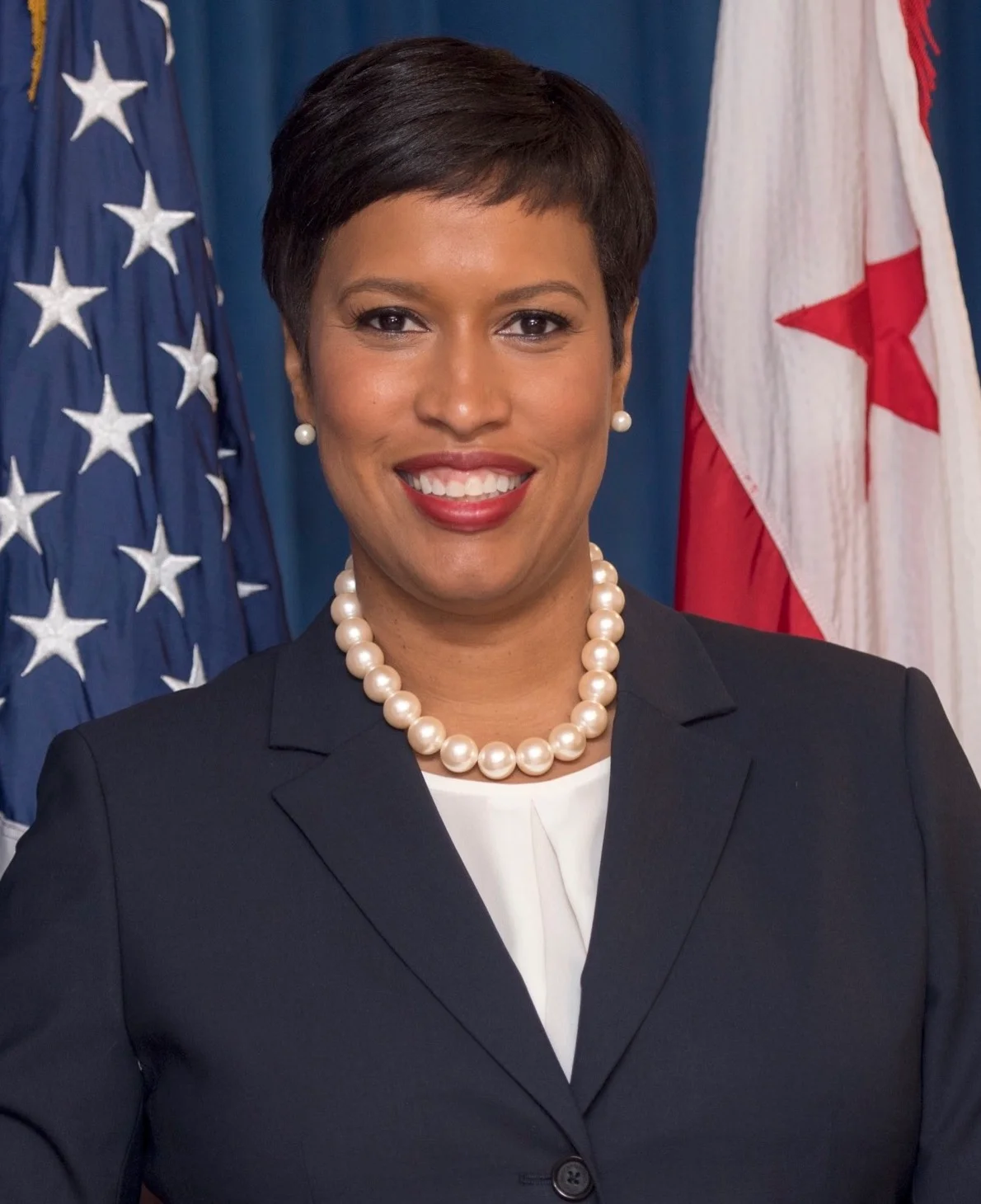
Muriel Bowser
- Party
- Democrat
- In Office Since
- January 2015
- Elected
- 2014, re-elected 2018 and 2022
- Term Ends
- January 2, 2027
- Successor
- Mayor-elect Janeese Lewis George
- Prior Role
- Ward 4 Councilmember (2007-2015)
Muriel Bowser, a Washington native, is the District's second woman mayor, after Sharon Pratt. A former Ward 4 Councilmember, she was first elected in 2014 and re-elected in 2018 and 2022. She announced on November 25, 2025 that she would not seek a fourth term, and Mayor-elect Janeese Lewis George takes office on January 2, 2027.
Other Current D.C. Officials
Mayor-elect
Janeese Lewis George
Won the November 3, 2026 election to succeed Mayor Bowser and takes office January 2, 2027. A Ward 4 Councilmember since 2021, she is the first mayor associated with democratic socialist politics elected in the city, according to the Associated Press.
Chairman of the Council
Phil Mendelson
Chairman since 2012 and a Councilmember since 1999. He was re-elected chairman on November 3, 2026, winning about 92 percent of the vote in unofficial returns.
Attorney General
Brian Schwalb
In office since January 2023 and re-elected on November 3, 2026. D.C. has elected its attorney general since 2014. His office brought the lawsuit challenging the 2025 National Guard deployment in the city.
Delegate to the U.S. House
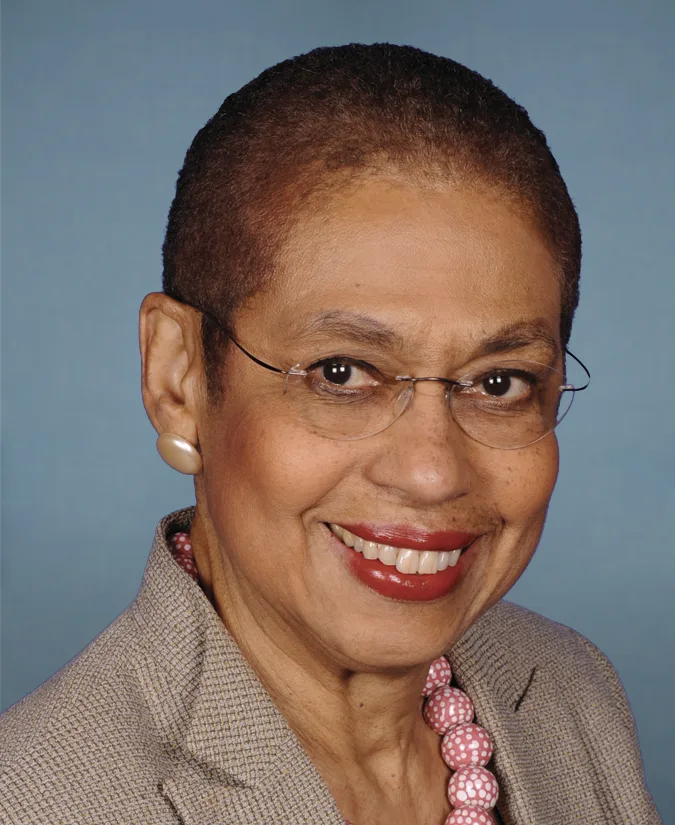
Eleanor Holmes Norton
Delegate since January 1991 and the lead sponsor of the D.C. statehood bill. She announced in January 2026 that she would not seek another term, and her service ends January 3, 2027.
Delegate-elect
Robert White
A longtime at-large Councilmember who resigned his seat days before the election, he won the November 3, 2026 race to succeed Delegate Norton and takes office January 3, 2027, the District's first new member of Congress since 1991.
The Council of the District of Columbia
Council of the District of Columbia
- Seats: 13 members: a chairman, 4 at-large, and 8 ward members
- Terms: 4-year staggered terms
- Meets in: The John A. Wilson Building
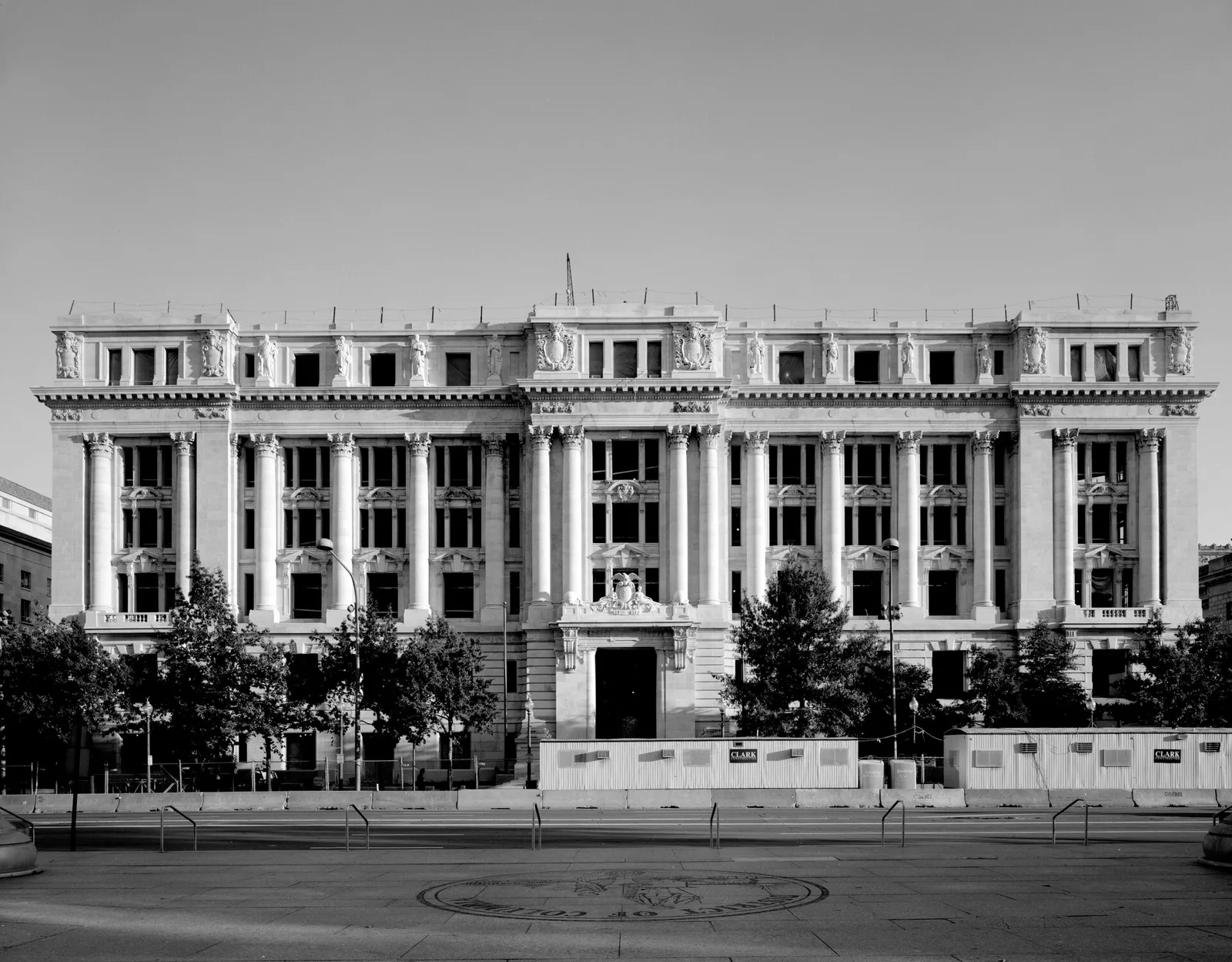
The District has a one-chamber legislature, like Nebraska's. The Council passes local laws, approves the budget it sends to Congress, and confirms many of the mayor's appointees. It meets in the John A. Wilson Building on Pennsylvania Avenue, the District's city hall, completed in 1908.
D.C. in the U.S. Senate
D.C. has no U.S. senators. Instead, its voters elect two 'shadow senators' to lobby Congress for statehood. They are not seated in the Senate, cannot vote, and are not paid by the federal government.
Shadow U.S. Senator (not seated)
Paul Strauss
D.C.'s shadow senator since 1997, first elected in 1996. His seat was on the November 3, 2026 ballot for another six-year term. Shadow senators lobby Congress for D.C. statehood and voting rights but have no Senate seat or vote.
Shadow U.S. Senator (not seated)
Ankit Jain
Elected in 2024 to succeed Mike Brown and took office in January 2025. Like every shadow senator, he is chosen by D.C. voters to advocate for statehood and is not recognized as a member by the Senate.
D.C.'s Delegate in the U.S. House
Instead of a voting representative, the District elects one delegate to the House for a two-year term. The delegate can introduce bills, speak on the floor, and vote in committee, but cannot cast a final vote on legislation.
Eleanor Holmes Norton has held the seat since 1991. Robert White won the November 3, 2026 election to succeed her and takes office on January 3, 2027. D.C. voters also elect a shadow representative, who, like the shadow senators, lobbies for statehood without a seat.
📋 Find your delegate's office
The House lists every member and delegate on its directory of representatives.
D.C. Through the Years
From a diamond of land on the Potomac to a city of nearly 700,000 people. Tap any era to read more.
The Constitution let Congress govern a federal district of up to ten miles square, ceded by the states, as the permanent seat of government. Where to put it was one of the bitterest fights of the first Congress, and it was settled by the Compromise of 1790: Southern members agreed to Alexander Hamilton's plan for the federal government to take on the states' war debts, and in exchange the capital would go south, to the Potomac.
President George Washington signed the Residence Act on July 16, 1790, and chose the exact site himself, a diamond-shaped square of land straddling the Potomac, carved from Maryland and Virginia and including the existing ports of Georgetown and Alexandria.
Surveyor Andrew Ellicott and Benjamin Banneker, a self-taught free Black astronomer and mathematician from Maryland, made the astronomical observations that fixed the boundary in 1791, and 40 sandstone boundary stones were set a mile apart along its edges; most of them still stand.
The law gave the government ten years to get ready, with Philadelphia serving as the temporary capital until December 1800.
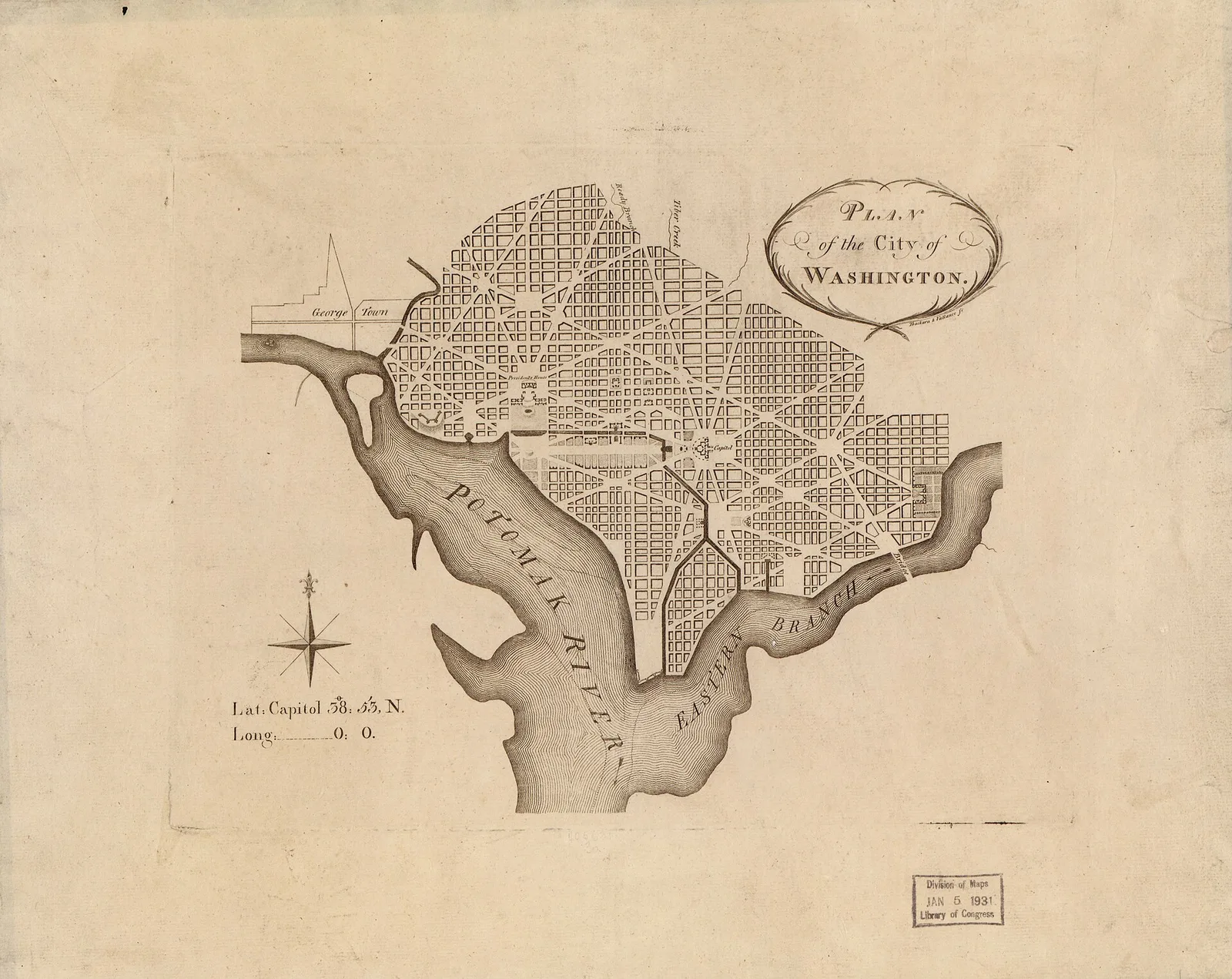
Washington hired Pierre Charles L'Enfant, a French-born engineer who had served in the Continental Army, to design the city. His 1791 plan placed the Capitol on Jenkins Hill and the President's House a mile and a half away, linked them with a grand avenue, and laid broad diagonal avenues named for the states over a grid of streets, with circles and squares where they met.
L'Enfant clashed with the commissioners overseeing the work and was dismissed in early 1792. Ellicott redrew the plan from memory and notes, and the engraved 1792 version, which credited Ellicott, became the city's official map.
The plan's open public garden between the Capitol and the Potomac, which L'Enfant called a 'grand avenue,' became today's National Mall, and its avenues, circles, and long sightlines still define how the city looks.
In 1901 and 1902 the Senate's McMillan Commission revived L'Enfant's vision, clearing a railroad station and tracks from the Mall and planning the monumental core of memorials and museums that exists today.
The federal government moved from Philadelphia in 1800. President John Adams moved into the unfinished President's House on November 1, and Congress first met in the unfinished Capitol on November 17.
Until then, people living in the federal district had voted as citizens of Maryland or Virginia. The Organic Act of 1801 put the district under the direct control of Congress, and with it residents lost their votes for Congress and, later, for president.
That change is the root of the question the District still argues about today: whether the people who live in the nation's capital should have the same voice in the national government as other Americans.
Washington remained a small, unfinished town for decades; in 1800 the entire district had about 14,000 residents, including more than 3,000 enslaved people.
During the War of 1812, British troops defeated American forces at Bladensburg, Maryland, and marched into Washington on August 24, 1814. They set fire to the Capitol, the President's House, the Treasury, and other public buildings. (The site's military history page covers the war itself.)
President James Madison and much of the government fled. Before leaving the President's House, First Lady Dolley Madison and the household saved Gilbert Stuart's full-length portrait of George Washington, which still hangs in the White House.
A severe thunderstorm the next day helped put out the fires, and the British withdrew after about a day. It is the only time a foreign power has occupied the U.S. capital.
Congress narrowly voted to rebuild in Washington rather than move the capital, and President James Monroe moved into the rebuilt President's House in 1817.
Residents of Alexandria, the part of the district south of the Potomac, complained that Congress neglected them and that the federal government was building nothing on their side of the river.
Many also feared that Congress would end the slave trade in the District, which would have hurt Alexandria, then one of the country's largest slave-trading ports.
Congress voted in 1846 to return the land to Virginia, and Virginia accepted it in 1847. The District shrank to the roughly 68 square miles that had come from Maryland.
The retrocession is still cited in the statehood debate, by supporters as proof that Congress can change the District's borders by ordinary law, and by others as a model for returning most of today's District to Maryland.
On April 16, 1862, nine months before the Emancipation Proclamation, President Abraham Lincoln signed the District of Columbia Compensated Emancipation Act, freeing about 3,100 people enslaved in the District.
It was the only time the federal government paid slaveholders to free enslaved people: owners loyal to the Union could claim up to $300 per person. The act also set aside money to help freed people who chose to emigrate.
The District marks April 16 as Emancipation Day, a city holiday since 2005.
In January 1867 Congress, overriding President Andrew Johnson's veto, gave Black men in the District the right to vote in local elections, years before the 15th Amendment.
The Organic Act of 1871 merged the cities of Washington and Georgetown and the rest of the District into one territorial government, with an appointed governor, an elected House of Delegates, and a nonvoting delegate to Congress.
Alexander 'Boss' Shepherd, who led the Board of Public Works and later served as governor, paved streets, laid sewers, and planted tens of thousands of trees, but his spending drove the District deep into debt.
Congress abolished the territorial government in 1874 and replaced it with three commissioners appointed by the president, a system made permanent in 1878. For nearly a century, District residents elected no local officials at all.
Congress ran the city through its District committees, which were often chaired by members from other parts of the country who had little reason to answer to the city's residents.
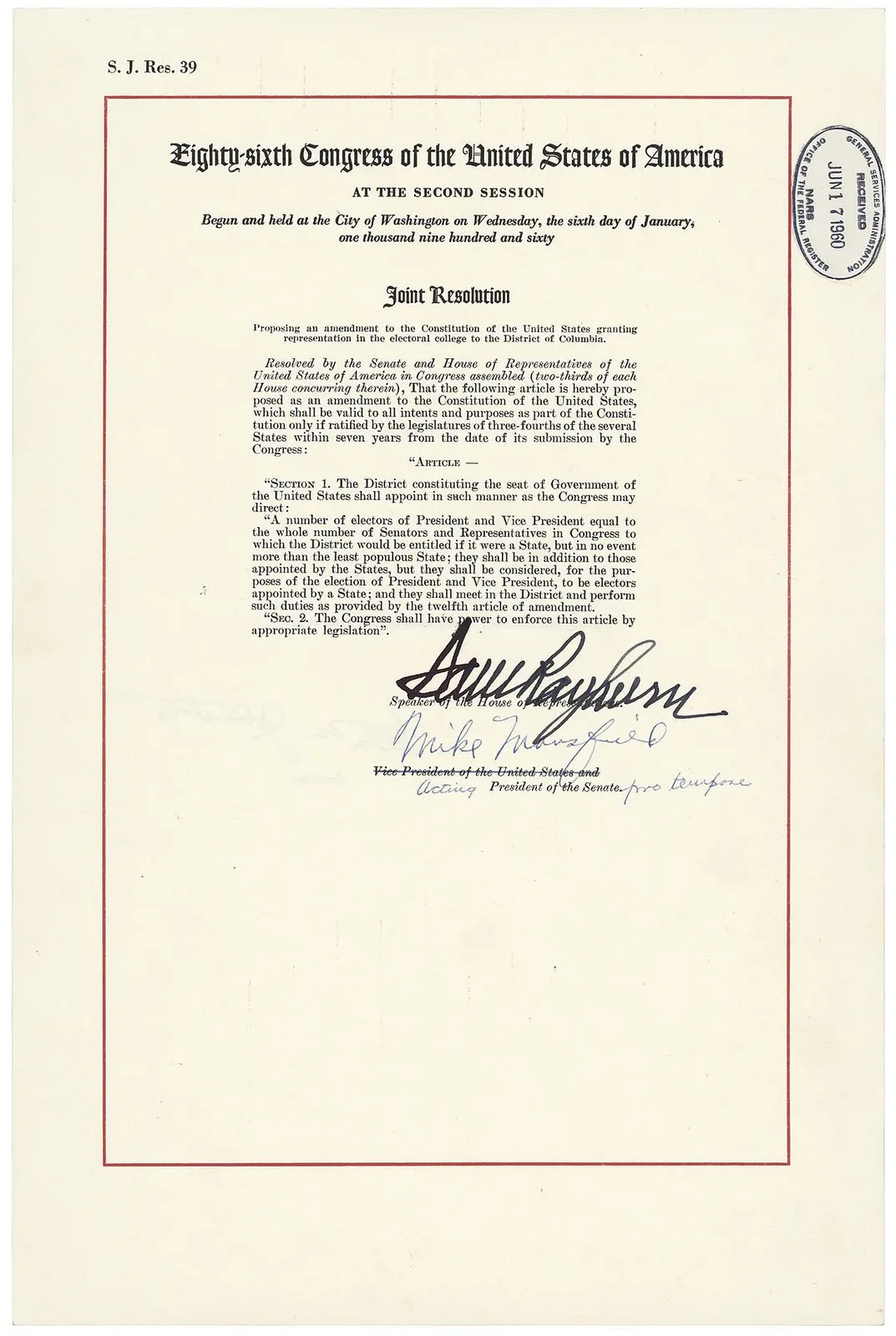
The 23rd Amendment, ratified on March 29, 1961, gave the District electors in the Electoral College as if it were a state, but never more than the least populous state. That has meant three electoral votes.
District residents first voted for president in 1964, more than 160 years after they had lost that right.
The amendment gave the District no seats in Congress. Residents still had no voting member in the House or Senate.
Because the amendment refers to 'the District constituting the seat of Government,' it comes up in every statehood debate: if most of today's District became a state, the electoral votes would, unless the amendment were repealed, belong to the small federal area left behind.
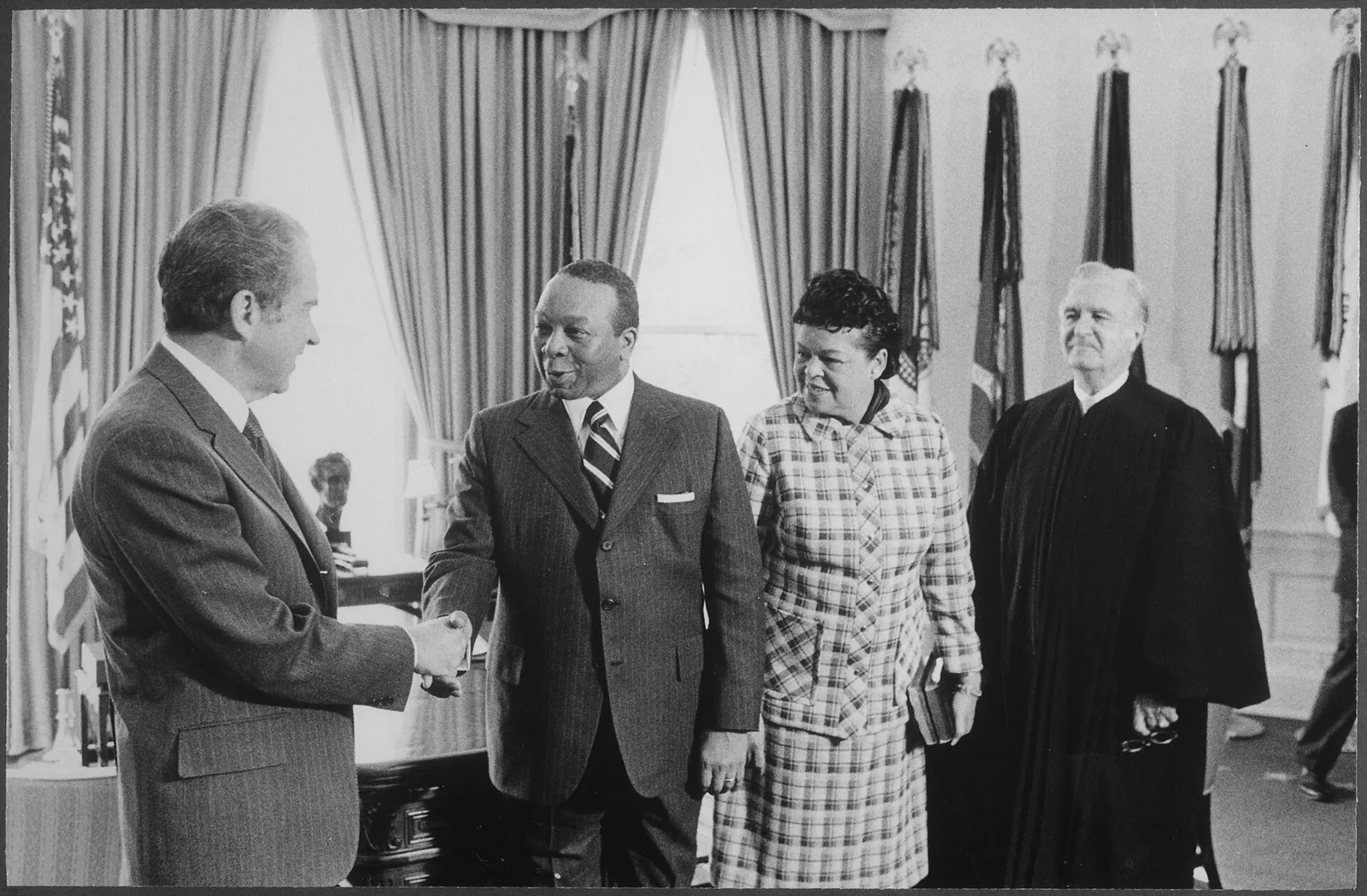
In 1967 President Lyndon Johnson replaced the three commissioners with an appointed mayor-commissioner, Walter Washington, and an appointed council. In 1970 Congress gave the District a nonvoting delegate in the House, and Walter Fauntroy took the seat in 1971.
The District of Columbia Home Rule Act, signed on December 24, 1973, let District voters elect a mayor and a 13-member Council for the first time in a century. Walter Washington became the first elected mayor on January 2, 1975.
Home Rule came with limits. Congress kept the power to block or rewrite any District law, the District's budget still has to pass Congress, the president still appoints its judges, and the act bars a commuter income tax.
Section 740 of the act also lets the president direct the Metropolitan Police Department for federal purposes in an emergency, for up to 30 days unless Congress extends it.
By the mid-1990s the District faced a deep budget deficit, crumbling services, and a falling population, and its credit had dropped to junk status.
In April 1995 Congress created the District of Columbia Financial Responsibility and Management Assistance Authority, known as the Control Board, which took over much of the elected government's power over the budget and city agencies.
The 1997 Revitalization Act shifted some costs, including prisons, courts, and part of the pension burden, to the federal government in exchange for reduced federal payments.
After four straight balanced budgets, the board's powers were suspended in 2001. The District has since built large cash reserves and earned strong credit ratings.
On August 11, 2025, President Donald Trump issued Executive Order 14333, declaring a crime emergency in the District and invoking Section 740 of the Home Rule Act for the first time to direct the Metropolitan Police Department. He also deployed National Guard troops in the city.
The administration cited crime in the District as the reason; Mayor Muriel Bowser and other local officials disputed that crime was surging, pointing to city data showing violent crime had fallen.
Congress did not extend the emergency, and federal direction of the police ended on September 10, 2025, after 30 days. Mayor Bowser issued an order continuing the city's cooperation with most federal law enforcement agencies, and many federal officers and the Guard remained.
D.C. Attorney General Brian Schwalb sued over the Guard deployment. A federal district judge ruled it unlawful in November 2025, but the U.S. Court of Appeals for the D.C. Circuit allowed the troops to stay while it considers the case; it heard arguments on October 14, 2026, and its decision was still pending when this page was written.
D.C.'s Defining Moments in American History
As the capital, Washington has been the stage for some of the country's most important moments.
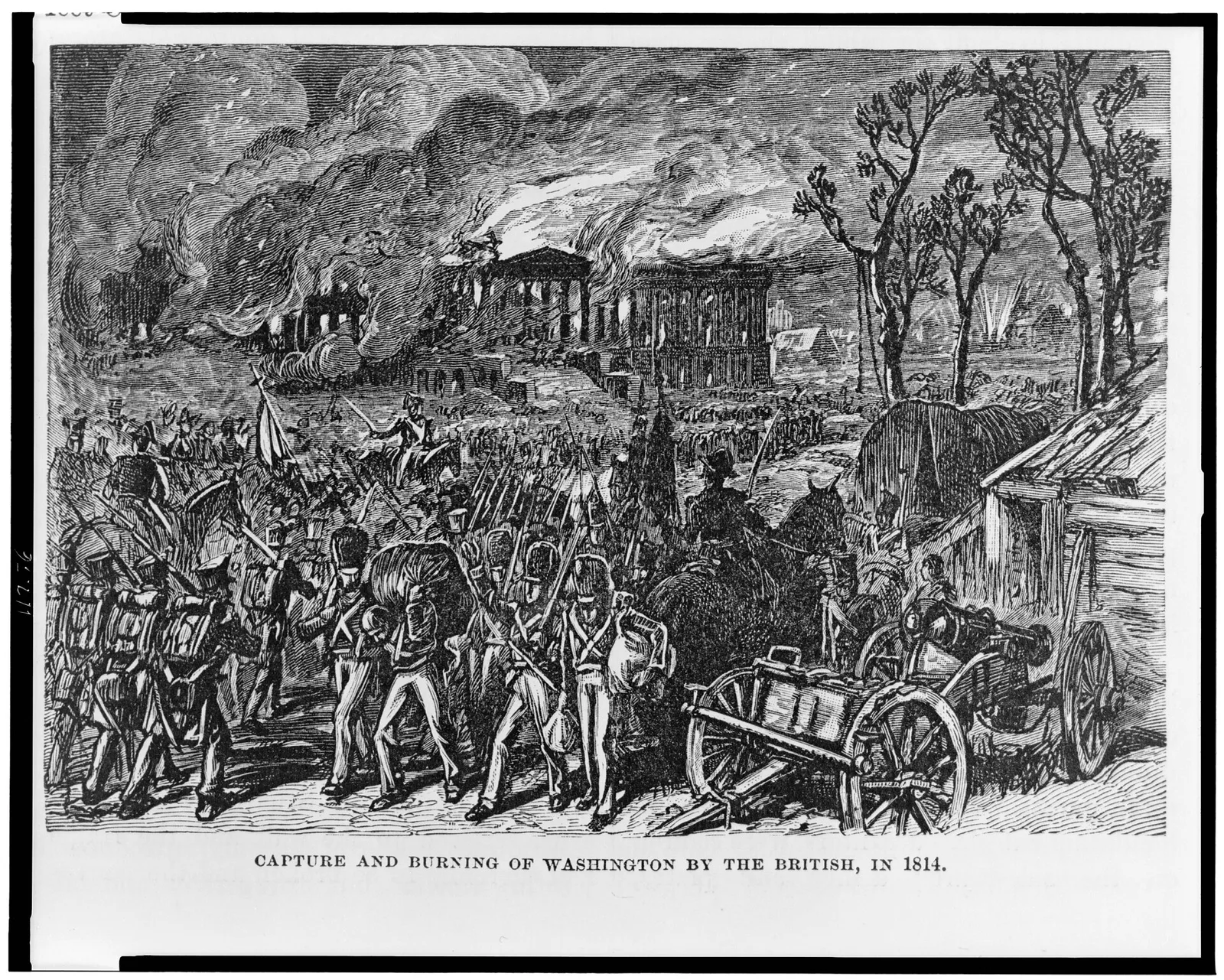
The British attack on August 24, 1814 was meant as retaliation for American troops' burning of York, the capital of Upper Canada, the year before.
The fire gutted the Capitol, including the Library of Congress inside it. To replace the lost books, Congress bought Thomas Jefferson's personal library of more than 6,000 volumes in 1815, the start of the modern collection.
Three weeks later, the British failure to take Baltimore's Fort McHenry inspired Francis Scott Key to write the poem that became the national anthem.
The government's decision to stay and rebuild settled, for good, that Washington would remain the capital.
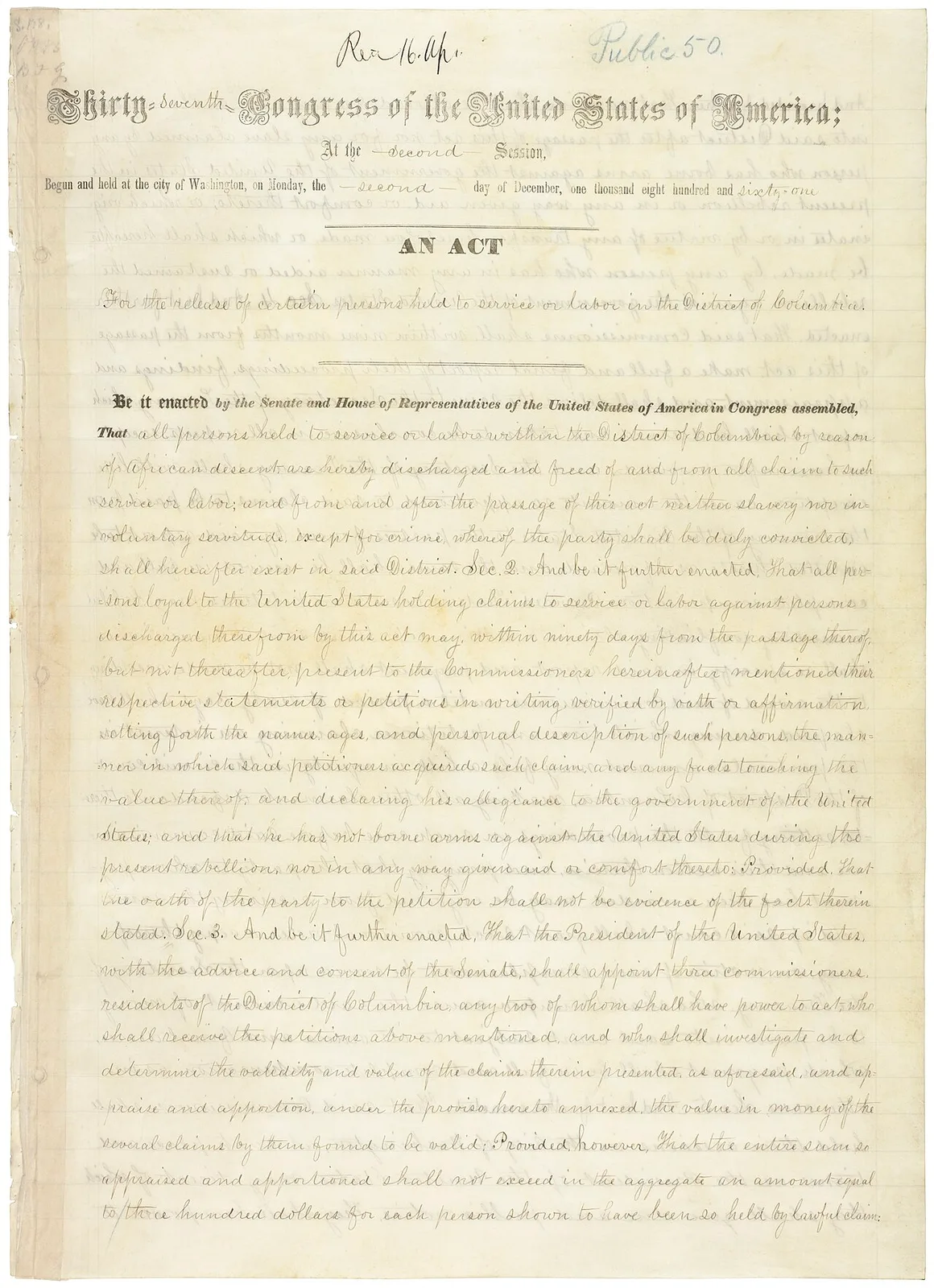
Abolitionists had targeted slavery in the District for decades, because Congress governed it directly and could end slavery there without touching the states. The slave trade, but not slavery itself, was banned in the District as part of the Compromise of 1850. (The site's Black American history page traces the longer story.)
With Southern members gone from Congress during the Civil War, the Compensated Emancipation Act passed in April 1862, freeing about 3,100 people.
A three-member commission reviewed about 1,000 petitions from slaveholders and paid out nearly $1 million in total.
Freedom drew thousands of people escaping slavery in Maryland and Virginia to the capital during the war, and the District's Black population roughly tripled between the 1860 and 1870 censuses.
In 1939 the Daughters of the American Revolution refused to let Marian Anderson, one of the world's most celebrated singers, perform at their Constitution Hall because she was Black, and the city's segregated school board also turned her away.
First Lady Eleanor Roosevelt resigned from the DAR in protest, and Interior Secretary Harold Ickes arranged for Anderson to sing outdoors on the steps of the Lincoln Memorial.
On Easter Sunday, April 9, 1939, about 75,000 people gathered to hear her open with 'My Country, 'Tis of Thee,' and millions more listened on the radio.
The concert made the Lincoln Memorial a stage for the civil rights movement, a role it would play again 24 years later.
On August 28, 1963, about 250,000 people gathered on the National Mall for the March on Washington for Jobs and Freedom, one of the largest demonstrations in American history to that point.
From the steps of the Lincoln Memorial, Dr. Martin Luther King Jr. delivered the speech remembered for its refrain, 'I have a dream.'
The march helped build support for the Civil Rights Act of 1964 and the Voting Rights Act of 1965. (See the site's civil rights history.)
It also set the pattern that has made the Mall the country's main stage for mass protest, used since by movements across the political spectrum.
Notable Washingtonians
Duke Ellington
Jazz composer and bandleader, born in Washington in 1899 and raised in the Shaw neighborhood
Frederick Douglass
Abolitionist, writer, and statesman who spent his last years at Cedar Hill in Anacostia
John Philip Sousa
The 'March King,' born near the Navy Yard in 1854 and later leader of the U.S. Marine Band
Marvin Gaye
Soul singer and songwriter, born in Washington in 1939
Benjamin Banneker
Astronomer and mathematician who helped survey the District's boundaries in 1791
Walter E. Washington
The District's first elected mayor, who took office in 1975
D.C. Symbols & Quick Facts
| Nickname | "The Nation's Capital" (also: "The District") |
| Status | Federal district, not part of any state |
| Created | Residence Act, July 16, 1790 |
| Seat of Government | Since November 1800 |
| Population | 693,645 (July 1, 2025 Census Bureau estimate) |
| Area | 68.3 sq mi total, about 61 sq mi of land |
| Motto | Justitia Omnibus (Justice for All) |
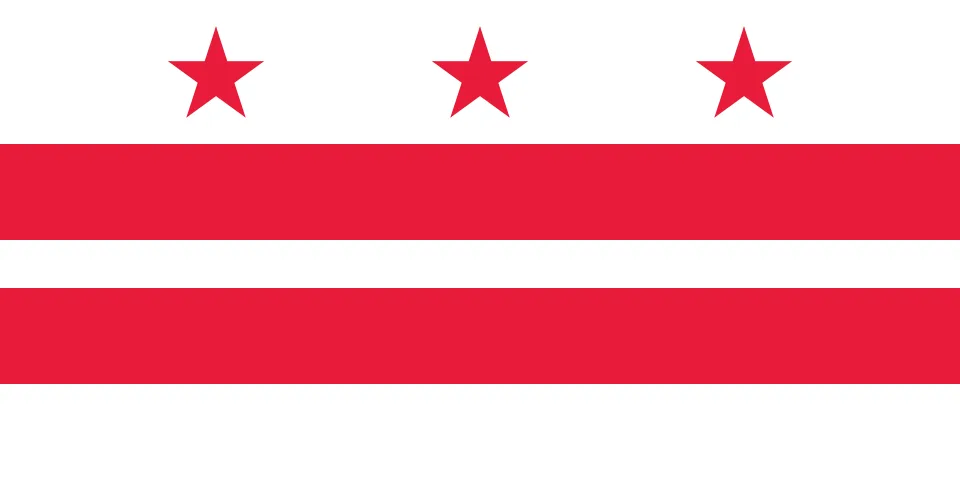
| Flag | Three red stars over two red bars, from George Washington's family coat of arms (adopted 1938) |
| Bird | Wood Thrush |
| Flower | American Beauty Rose |
| Tree | Scarlet Oak |
| Dinosaur | Capitalsaurus (named 1998) |
| Electoral Votes | 3 (23rd Amendment, 1961) |
| Time Zone | Eastern Time (UTC−5 / UTC−4) |
| Borders | Maryland (N, E, and S), Virginia (W, across the Potomac River) |
Did You Know?
D.C. has more residents than Wyoming or Vermont, according to the Census Bureau's 2025 estimates, yet it has no voting member of Congress.
The District's license plates read 'End Taxation Without Representation,' a slogan the city added to its plates in 2000 and strengthened in 2017.
The Height of Buildings Act of 1910 limits most buildings to the width of the street in front plus 20 feet, which is why the city has no skyscrapers.
In 1998 the District named an official dinosaur, Capitalsaurus, from a fossil vertebra found during sewer work in 1898.
The cherry trees around the Tidal Basin began with a gift of more than 3,000 trees from the mayor of Tokyo in 1912.
The Washington Monument changes color about a quarter of the way up, where construction stopped for 25 years and resumed with stone from a different quarry.
Quick Facts and Common Questions
Short answers to the questions people most often ask about Washington, D.C.: what D.C. stands for, why it is not a state, and what representation its residents have.
D.C. stands for the District of Columbia, the federal district created as the nation's capital. 'Columbia' was a popular poetic name for the United States, after Christopher Columbus. The city of Washington, named for George Washington, covers the entire District.
No. The Constitution created a federal district under the authority of Congress, separate from any state, to serve as the seat of government. D.C. elects its own mayor and Council, but Congress can overturn its laws and must approve its budget.
The framers wanted the national government to be independent of any single state. In 1783 the Continental Congress had been forced to leave Philadelphia when Pennsylvania would not protect it from unpaid soldiers, and James Madison argued in Federalist No. 43 that the capital should not depend on a state for its safety.
D.C. has no senators and no voting representative. It elects one delegate to the House, who can introduce bills and vote in committee but not on final passage. Its voters also elect two shadow senators and a shadow representative, who lobby for statehood but are not seated.
Yes. Since the 23rd Amendment was ratified in 1961, D.C. has had three electoral votes, the same as the least populous state. Residents first voted for president in 1964. (See the site's guide to how elections work.)
An elected mayor and a 13-member Council run the city under the Home Rule Act of 1973. Muriel Bowser has been mayor since 2015, and Mayor-elect Janeese Lewis George takes office on January 2, 2027. Congress keeps the final say over the District's laws and budget.
Yes. D.C. residents pay federal income taxes like other Americans, which is the basis for the city's slogan 'End Taxation Without Representation,' printed on its license plates.
The House voted on statehood three times: it rejected a bill in 1993 and passed H.R. 51 in 2020 and again in 2021. The Senate has never voted on it, so it has not become law.
Sources & Further Reading
- U.S. Census Bureau, QuickFacts: District of Columbia
- National Archives, The Constitution: Article I, Section 8
- Council of the District of Columbia
- Executive Office of the Mayor, District of Columbia
- D.C. Board of Elections, election results
- National Park Service, National Mall and Memorial Parks
- Library of Congress, Plan of the City of Washington (1792)
- Office of the Historian, U.S. House: District of Columbia Delegates
The National Mall
Two Miles of Memorials, Museums, and Protest, from the Capitol to the Potomac
About The National Mall
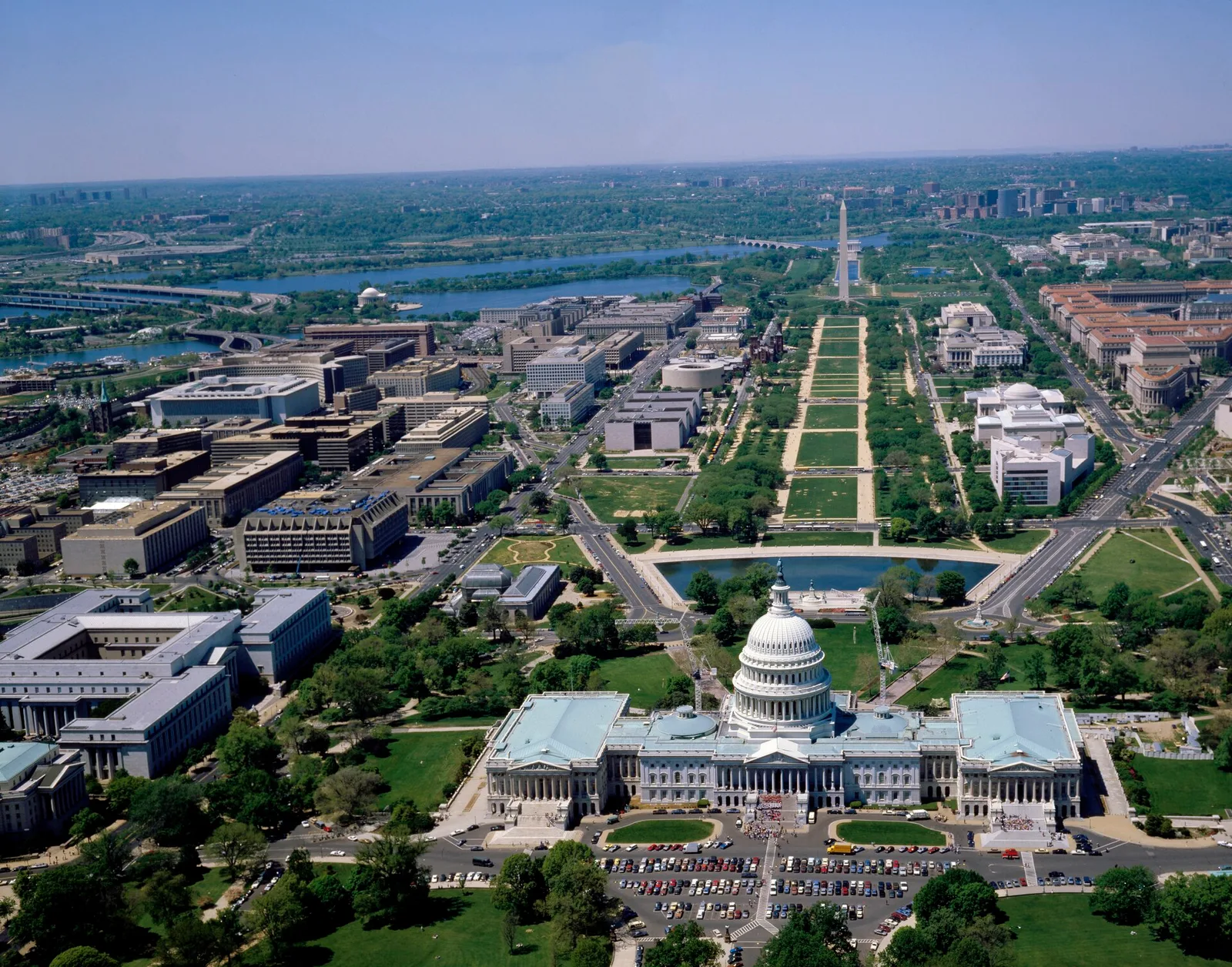
The National Mall is the long open park that runs about two miles west from the U.S. Capitol to the Lincoln Memorial, with the Washington Monument near its center and the Tidal Basin and its memorials to the south. The National Park Service manages it as part of National Mall and Memorial Parks.
Pierre L'Enfant's 1791 plan imagined a grand public avenue here. For much of the 1800s it was a patchwork of gardens, grazing land, and even a railroad station, until the McMillan Commission of 1901 and 1902 cleared it and laid out the formal lawns and long views that exist today.
Much of the western Mall, including the ground under the Lincoln Memorial and the Reflecting Pool, did not exist in L'Enfant's day. It was built up from the Potomac's mudflats in the late 1800s.
The Mall is where the country gathers: for inaugurations, Fourth of July fireworks, festivals, and many of the largest protests and marches in American history.
- Designation
- National Park Service unit (National Mall and Memorial Parks)
- Location
- Washington, D.C., between the U.S. Capitol and the Potomac River
- Planned
- 1791 (L'Enfant plan)
- Annual Visitors
- Millions each year
The Mall from East to West
The Mall's eastern end begins at the U.S. Capitol, where both chambers of Congress meet. Its cornerstone was laid by George Washington in 1793, and its cast-iron dome was completed during the Civil War.
Below the Capitol's west front, Union Square holds the Ulysses S. Grant Memorial, one of the largest equestrian statues in the world, and the Capitol Reflecting Pool.
The west front terrace is where most presidential inaugurations have been held since 1981.
The U.S. Botanic Garden, one of the oldest botanic gardens in the country, sits at the foot of Capitol Hill.
Between the Capitol and the Washington Monument, Smithsonian museums and the National Gallery of Art line both sides of the Mall, all with free admission.
The red sandstone Smithsonian Institution Building, known as the Castle, was completed in 1855 and is the institution's original home.
The National Air and Space Museum, the National Museum of Natural History, and the National Museum of American History are among the most visited museums in the world.
The National Museum of African American History and Culture, which opened in 2016 next to the Washington Monument, was the newest museum on the Mall when it opened.
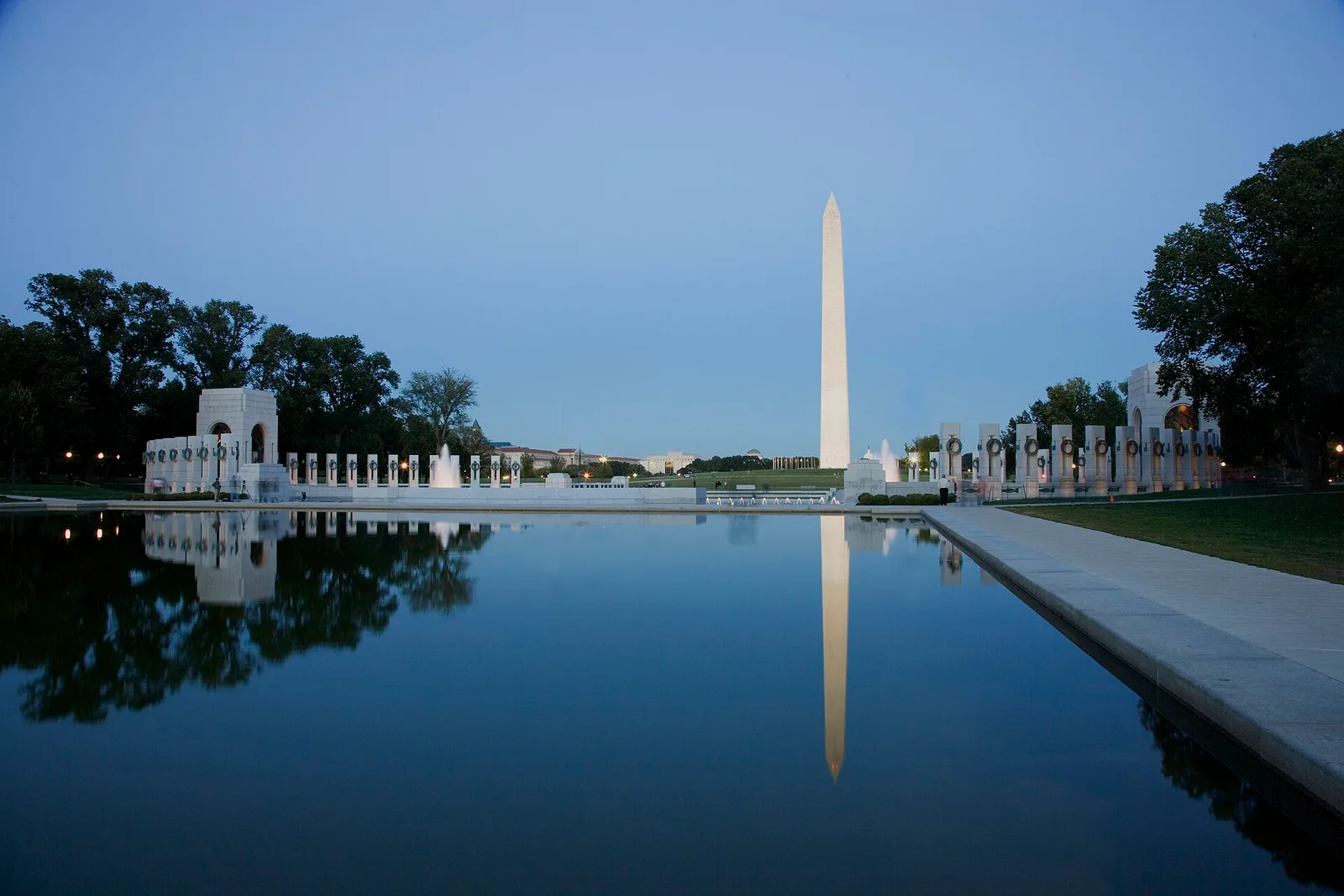
The Washington Monument, a marble obelisk 555 feet tall, was begun in 1848. Construction stopped in 1854, when money ran out, and stayed stopped through the Civil War until work resumed in 1879; the change in stone color marks the pause.
Completed in 1884 and opened to the public in 1888, it was briefly the tallest structure in the world, until the Eiffel Tower surpassed it in 1889.
An elevator takes visitors to an observation level near the top, with free timed tickets from the Park Service.
The monument's grounds, ringed by flags, have hosted rallies, concerts, and the Fourth of July fireworks for generations.
West of the monument, the Reflecting Pool leads to the Lincoln Memorial, dedicated in 1922, with the World War II Memorial at its eastern end and the Vietnam Veterans and Korean War Veterans Memorials on either side.
Around the Tidal Basin to the south stand the Jefferson Memorial, the Franklin Delano Roosevelt Memorial, and the Martin Luther King Jr. Memorial, the first on the Mall honoring an African American, which opened in 2011.
The Tidal Basin's cherry trees bloom each spring, usually in late March or early April, during the National Cherry Blossom Festival.
This western section sits on land reclaimed from the Potomac River in the late 1800s, which is why parts of it are prone to flooding.
Indigenous Connections
Nacotchtank (Anacostan) and Piscataway Peoples
Long before the federal city, the land where the Anacostia and Potomac rivers meet was home to Algonquian-speaking peoples. The Nacotchtank, whose name survives as Anacostia, had a village along the river's eastern shore when English explorer John Smith sailed up the Potomac in 1608.
The Nacotchtank were part of a wider network of communities tied to the Piscataway, the paramount chiefdom of what is now southern Maryland.
Disease, war, and colonial settlement pushed the Nacotchtank from the area by the late 1600s, and many joined other Piscataway communities.
The Piscataway Conoy Tribe and the Piscataway Indian Nation are recognized by the State of Maryland, which granted recognition in 2012, and Piscataway descendants still live in the region. Archaeological finds along the Anacostia continue to turn up evidence of thousands of years of Native life there.
Things to Do on the Mall
Walk the Monuments and Memorials
The walk from the Capitol to the Lincoln Memorial covers about two miles, and a loop around the Tidal Basin adds roughly two more.
Most memorials are open around the clock, and many visitors find them most striking at night, when they are lit.
Park rangers staff the major memorials during the day and give short talks.
Distances are longer than they look, so comfortable shoes and water help, especially in summer heat.
Visit the Smithsonian Museums
Admission to every Smithsonian museum on the Mall is free.
Highlights include the Wright Flyer and Apollo 11 command module at Air and Space, the Hope Diamond at Natural History, and the Star-Spangled Banner flag at American History.
The National Museum of African American History and Culture often requires free timed-entry passes, released in advance and on the day.
Most museums are open daily except December 25, with security screening at the entrance.
Go Up the Washington Monument
An elevator carries visitors to the observation level near the top of the 555-foot obelisk.
From the windows, the view takes in the Capitol, the White House, the Lincoln Memorial, Arlington National Cemetery, and the Potomac.
Tickets are free but timed, and are reserved through the Park Service or picked up the same day.
On the ride down, the elevator slows to show some of the commemorative stones set into the interior walls by states, cities, and organizations in the 1800s.
Conservation Challenges
The Sinking Tidal Basin Seawalls
The seawalls around the Tidal Basin and West Potomac Park have settled by as much as several feet since they were built in the late 1800s and early 1900s, and parts of the walkways now flood at high tide twice a day.
The National Park Service began rebuilding about 6,800 feet of seawall in 2024 and finished the Tidal Basin portion in late 2025, a project that required removing about 300 trees, including 158 cherry trees, which are being replaced with 455 new trees, 274 of them cherries.
Rising sea levels in the tidal Potomac make the problem worse each decade.
Wear and Tear from Heavy Use
Millions of visitors, festivals, and large events wore the Mall's central lawns down to bare dirt by the early 2000s.
From 2012 to 2016 the Park Service rebuilt the turf between the Capitol and the Washington Monument with new soil, irrigation, and drainage, and now protects it during events.
Keeping the lawns green while hosting the country's biggest gatherings is a constant balancing act.
Flood Risk
Much of the western Mall sits on low, reclaimed land beside the Potomac.
The Potomac Park levee, completed in its current form in 2014 with a closure structure across 17th Street, is designed to protect downtown and the Federal Triangle from major river floods.
Heavy rainstorms have also flooded museums and federal buildings near the Mall, prompting new drainage work.
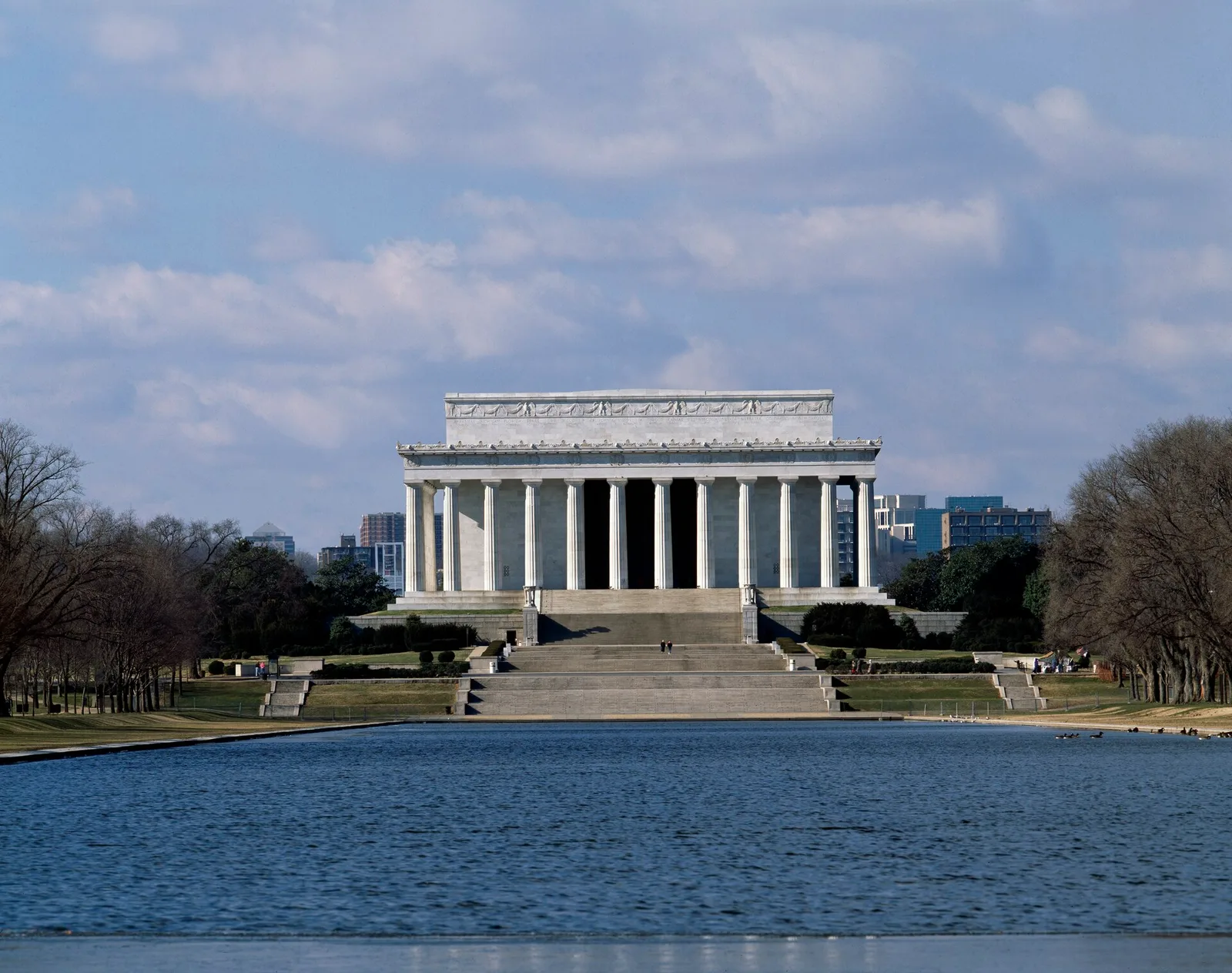
The Lincoln Memorial, dedicated in 1922, at the Mall's western end
At a Glance
Did You Know?
In the late 1800s a railroad station stood on the Mall, roughly where the National Gallery of Art's West Building is today. President James Garfield was shot there in 1881.
After the British burned the Capitol in 1814, Thomas Jefferson sold Congress his library to replace the books that were lost.
The Lincoln Memorial and the Reflecting Pool sit on land that was part of the Potomac River in the 1870s.
Plan Your Visit
Location
Washington, D.C., between the U.S. Capitol and the Potomac River
Designation
National Park Service unit (National Mall and Memorial Parks)
Best Time to Visit
Spring for the cherry blossoms (late March to early April) and fall for milder weather; memorials are open around the clock
Admission
Free for the Mall, memorials, and Smithsonian museums; some sites use free timed passes
Should D.C. Be a State?
Why the nation's capital has no vote in Congress, and the long debate over changing that.
Taxation Without Representation?
About 700,000 Americans live in the District of Columbia. They pay federal taxes, serve in the military, and serve on federal juries, but they have no voting representative in the House or Senate, and Congress has the final say over their local laws and budget.
Whether that should change, and how, is one of the longest-running debates in American government. Supporters of statehood argue that D.C. residents deserve the same voice in Congress and the same control over local affairs as other citizens. Opponents argue that the framers deliberately kept the capital outside any state, that statehood would require a constitutional amendment, and that other remedies fit better.
The House of Representatives has passed a D.C. statehood bill twice, in 2020 and 2021, but the Senate has never voted on one, and no D.C. statehood bill has become law.
This tab lays out how the District came to be governed the way it is, what has been tried, the main arguments on each side, and what would have to happen for anything to change. It presents the debate without taking a side.
How D.C. Lost, and Partly Regained, Its Voice
From 1801 to today, the District's residents have won back some of the rights other Americans take for granted, one step at a time.
Article I, Section 8, Clause 17 of the Constitution gives Congress power 'to exercise exclusive Legislation in all Cases whatsoever' over a federal district of up to ten miles square that would become the seat of government.
James Madison defended the clause in Federalist No. 43, arguing that the national government should not have to depend on any single state for its safety, after the Continental Congress had been forced out of Philadelphia in 1783 by unpaid soldiers when Pennsylvania declined to protect it.
When the Organic Act of 1801 placed the district under Congress, its residents stopped voting as citizens of Maryland or Virginia. Some members of Congress objected at the time that the change would leave them without representation.
For the next 160 years, District residents could vote for neither president nor Congress.
The 23rd Amendment, ratified in 1961, gave the District electoral votes for president, equal to those of the least populous state, which has always meant three.
Residents cast their first presidential votes in 1964.
The amendment was a partial fix. It did nothing about representation in Congress or about Congress's power over local laws.
Its wording, which ties the electoral votes to 'the District constituting the seat of Government,' is one reason the statehood debate is legally complicated today.
In 1970 Congress created a nonvoting delegate seat for the District in the House of Representatives. The delegate can introduce bills, speak on the floor, and vote in committee, but cannot cast a final vote on legislation.
The Home Rule Act of 1973 gave residents an elected mayor and Council, the first elected local government since 1874.
Congress kept the final word. It reviews every District law before it takes effect, must pass the District's budget, and has used riders in that budget to block local policies on issues ranging from abortion funding to marijuana sales.
In 2023 Congress passed, and President Joe Biden signed, a resolution overturning the District's rewrite of its criminal code, the first time in more than 30 years that Congress had blocked a District law that way.
The Statehood Campaign
Since the 1970s, District voters and their delegates have tried a constitutional amendment, a statehood constitution, and a statehood bill.
In 1978 Congress approved a constitutional amendment that would have treated the District as a state for representation in Congress, giving it two senators and at least one House member, and full participation in the Electoral College.
Amendments need ratification by three-fourths of the states, 38 at the time. The D.C. amendment had a seven-year deadline.
When the deadline passed in August 1985, only 16 states had ratified it, and the amendment died.
After that failure, District activists turned from an amendment to statehood, which they argued Congress could grant by ordinary law.
District voters approved a statehood initiative in 1980, and in 1982 they ratified a constitution for a proposed 'State of New Columbia.'
The District began electing shadow senators and a shadow representative in 1990 to lobby Congress, offices that still exist today.
In November 1993 the House held its first floor vote on D.C. statehood. The bill failed, 153 to 277. (The site's guide to how a bill becomes law explains what a floor vote involves.)
Statehood did not return to the House floor for another 27 years.
In November 2016 about 86 percent of District voters approved an advisory referendum supporting statehood, and the Council later approved a constitution for a 'State of Washington, Douglass Commonwealth,' named for George Washington and Frederick Douglass.
The House passed H.R. 51, the Washington, D.C. Admission Act, on June 26, 2020, by 232 to 180, and passed it again on April 22, 2021, by 216 to 208.
The bill would have admitted most of the District as a state with two senators and one House member, while keeping a much smaller federal district around the Capitol, the White House, the Supreme Court, and the National Mall. In the Senate, it never came to a vote, and it could not have overcome a filibuster.
Delegate Eleanor Holmes Norton, the bill's lead sponsor, has reintroduced statehood legislation in later Congresses, but it has not received another vote.
The Arguments
The case for and against statehood, and the constitutional questions in between, as each side makes them.
Supporters argue that District residents are American citizens who pay federal taxes, serve in the armed forces, and are bound by federal law, and should have the same voting representation in Congress as everyone else. They point out that D.C. has more residents than Wyoming or Vermont.
They argue that Congress's power over local laws and the local budget denies residents self-government, and they cite examples such as Congress overturning the District's criminal code in 2023 and the 2025 spending law that forced the city to cut a budget it had already passed.
They argue that Congress can admit a new state by simple majority under Article IV of the Constitution, as it has 37 times, and can shrink the federal district by ordinary law, as it did when it returned Alexandria to Virginia in 1846.
Many supporters also frame statehood as a civil rights issue, since the District has a large Black population and its residents have historically had less self-government than other Americans.
Opponents argue that the framers deliberately placed the capital outside any state so that no single state would host, and potentially pressure, the national government, and that this reasoning still applies.
They argue that statehood for the District cannot be done by ordinary law, because the Constitution's references to the federal district and the 23rd Amendment presume its current status, and that a constitutional amendment would be required.
Some argue that a city of fewer than 700,000 people, without the farmland, industry, or range of local governments of other states, would be an unusual state, and that statehood would give it two senators mainly for partisan reasons, since the District votes overwhelmingly for Democrats.
Others favor alternatives, such as returning most of the District to Maryland, that they argue would give residents congressional representation without creating a new state.
Scholars disagree about whether statehood requires a constitutional amendment. The Constitution says new states may be admitted by Congress but no new state may be formed from the territory of another state without that state's consent, and Maryland originally ceded the District's land. (The site's guide to the Constitution covers these clauses.)
The 23rd Amendment poses a practical puzzle: if most of the District became a state, the amendment's three electoral votes would go to the tiny federal district left behind, home to very few residents, unless the amendment were repealed. H.R. 51 called for its expedited repeal.
Justice Department lawyers in past administrations have concluded that statehood by ordinary legislation would raise serious constitutional problems; supporters cite legal scholars who argue that Congress has the power to do it.
Because the Senate has never voted on statehood, the courts have never had to decide these questions.
Retrocession would return most of the District's residential land to Maryland, as Alexandria was returned to Virginia, giving residents Maryland's senators and representatives. Maryland would have to agree, and its leaders have generally opposed the idea.
A constitutional amendment, like the failed 1978 amendment, could give the District representation without making it a state, but needs approval by two-thirds of Congress and three-fourths of the states.
Legislation to give the District a single voting House member, without senators, passed the Senate in 2009, 61 to 37, but stalled in the House after a gun-law amendment was attached.
Some have also proposed letting District residents vote in Maryland's federal elections without changing borders, an idea that has never advanced in Congress.
Where Things Stand
How Congress and the president use their power over the District today, and what would have to happen for statehood to become law.
In 2023 Congress overturned the District's revised criminal code. In 2025 a full-year federal spending law held the District's locally raised money to the prior year's levels, which, according to the District's budget officials, meant a projected cut of about $1.13 billion from the budget it had already approved; the mayor's office says the cuts actually made came to about $410 million.
In August 2025 President Trump invoked Section 740 of the Home Rule Act for the first time, directing the Metropolitan Police Department for 30 days and deploying the National Guard; the administration cited crime, and local officials disputed that crime was rising.
The District's attorney general challenged the Guard deployment in court. A district judge ruled it unlawful, the appeals court let the troops stay while it decides, and the case was still pending as of November 2026.
Supporters of statehood cite these episodes as evidence that District residents lack control over their own city; others argue they show why Congress and the president need authority over the capital.
A statehood bill would need to pass both the House and the Senate and be signed by the president. In the Senate it would need 60 votes to end debate unless the filibuster rule were changed for it.
Any law admitting the District would almost certainly be challenged in court on the constitutional questions above.
A constitutional amendment, the other main path, would need two-thirds of both chambers and ratification by 38 states.
Meanwhile, residents can contact the delegate, their shadow senators, and the members of Congress who sit on the committees that oversee the District. The site's guide to contacting your elected officials explains how.
Statehood by the Numbers
Did You Know?
D.C. voters have elected shadow senators since 1990. They campaign for statehood in the Capitol's hallways, but the Senate does not seat them or let them vote.
If D.C. became a state, the U.S. flag would need a 51st star. A new flag takes effect on the Fourth of July after a state's admission.
District residents serve on federal juries and in the armed forces, but before 1961 they could not vote for the president who commanded those forces.
The Home Rule Act bars D.C. from taxing the income of commuters who work in the city but live in Maryland or Virginia, a limit no state faces.
Sources & Further Reading
- Congressional Research Service, FY2026 District of Columbia Budget and Appropriations
- Congress.gov, H.R. 51 (117th Congress), Washington, D.C. Admission Act
- National Archives, The 23rd Amendment
- Council of the District of Columbia
- Federal Register, 2025 Executive Orders (including Executive Order 14333)
- D.C. Office of the Attorney General, National Guard lawsuit
- The Federalist No. 43, Library of Congress
- U.S. Census Bureau, QuickFacts: District of Columbia
Arguments are summarized as each side makes them, not endorsed. Vote counts are from the Clerk of the House and Congress.gov; 2026 election results are unofficial until certified by the D.C. Board of Elections.