
The Civil Rights Movement
What some historians call the second American Revolution: how ordinary people organized, marched, and died to win the rights guaranteed by the Constitution but systematically denied for nearly 100 years after the Civil War.

Jim Crow laws mandated racial segregation in virtually every public space across the South, from schools and restaurants to water fountains and hospital waiting rooms.
The World Before
1865–1954
When the Civil War ended in 1865, four million formerly enslaved people were legally free, but freedom and equality are not the same thing. Over the following 90 years, white supremacists across the South (and much of the North) built a system of racial oppression so thorough that historians often call it American apartheid. Understanding Jim Crow is not background to the Civil Rights Movement, it IS the Civil Rights Movement. You cannot understand what those marchers were risking, or what they were fighting against, unless you understand what daily life looked like for Black Americans in the decades before the marches began.
Key Topics
What Happened
Reconstruction, from 1865 to 1877, was genuinely remarkable. The Thirteenth Amendment abolished slavery, the Fourteenth established birthright citizenship and equal protection, and the Fifteenth barred denying the vote on account of race. Black men voted and held office across the South for the first time, including two U.S. senators from Mississippi, and Freedmen's Bureau agents built schools and helped formerly enslaved people find relatives and negotiate wages.
The resistance was organized and violent from the start. The Ku Klux Klan, founded in 1865 and soon led by former Confederate general Nathan Bedford Forrest, used murder, arson, and terror to drive Black voters and Republican officials from power, while groups like the Red Shirts and the White League massacred voters and overthrew elected governments outright. The Colfax massacre in Louisiana in 1873 killed an estimated 150 Black men.
The federal government prosecuted Klansmen under the Enforcement Acts, but the Supreme Court hollowed those laws out in the 1870s and 1880s, in United States v. Cruikshank and the Civil Rights Cases, stripping Washington of much of its power to protect Black citizens.
The disputed 1876 election was settled by the Compromise of 1877: Rutherford B. Hayes got the presidency, and the last federal troops left the South. Black political power collapsed within a few years, and by the 1890s poll taxes, literacy tests, grandfather clauses, white primaries, and violence had erased nearly all Black voting. The Reconstruction amendments would go largely unenforced for another 70 years.
Why It Matters
Many historians see the failure of Reconstruction not as an accident or an oversight but as a political choice to sacrifice the rights of Black Americans for the sake of sectional reconciliation. Every injustice that the Civil Rights Movement would fight against 80 years later, every Jim Crow law, every lynching, every denied vote, had its roots in the decision to end Reconstruction. The Civil Rights Movement was, in many ways, Reconstruction's unfinished business.
What Happened
The term 'Jim Crow' comes from a racist blackface minstrel character of the 1830s, and by the 1890s it was shorthand for the system of segregation laws enacted across the South and, in many forms, the North. These laws mandated separate schools, hospitals, waiting rooms, water fountains, restrooms, streetcar and train sections, and even separate courtroom Bibles for Black and white witnesses.
In 1896 the Supreme Court gave the system its constitutional blessing. In Plessy v. Ferguson the Court held 7-to-1 that 'separate but equal' facilities satisfied the Fourteenth Amendment. The lone dissenter, Justice John Marshall Harlan, wrote that 'our Constitution is color-blind,' and was ignored for 58 years.
'Separate but equal' was never equal. Black schools received a fraction of the per-pupil funding of white schools, Black hospitals were inferior and often out of reach, and Black neighborhoods were cut off from mortgages and city services through redlining, a practice in which banks and a federal agency literally drew red lines around Black areas and refused to lend there.
The daily degradation was constant and deliberate. A Black physician could treat white patients in their homes but not eat in the same restaurant; a Black soldier could fight and die for the country but could not vote, stay in a whites-only hotel, or use a whites-only restroom.
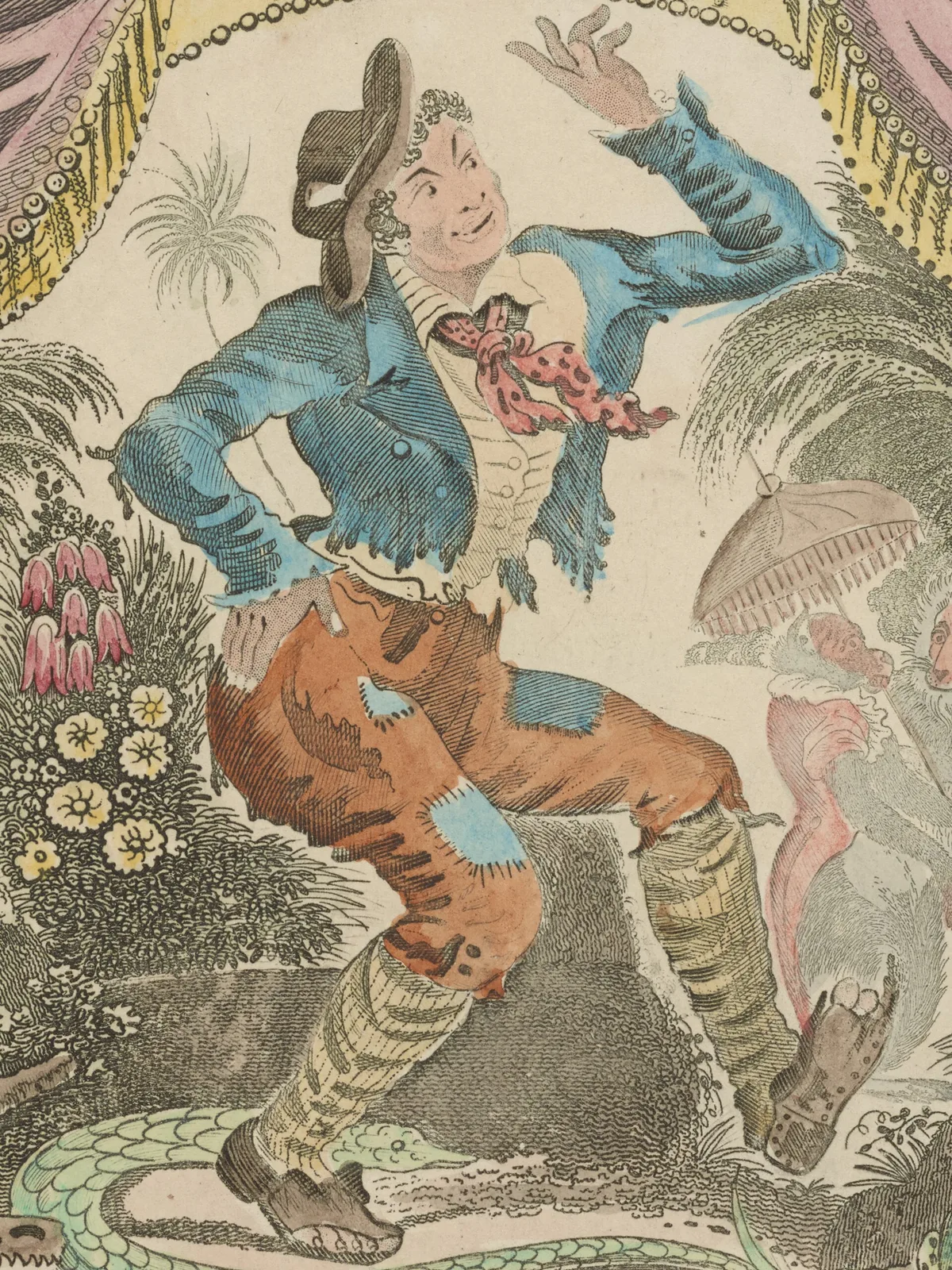
Thomas Dartmouth 'Daddy' Rice popularized the Jim Crow minstrel character in the 1830s, a racist caricature performed in blackface that mocked Black Americans. By the 1890s, his character's name had become synonymous with the entire system of racial segregation laws.
Why It Matters
Jim Crow wasn't just inconvenient or insulting, it was a comprehensive system of economic exploitation and political exclusion enforced by the constant threat of violence. Understanding the totality of Jim Crow explains why the Civil Rights Movement required so much courage: the activists were not merely challenging customs or social preferences. They were challenging a system that had the full weight of state law, local police, and the threat of death behind it.
58 years
Years Plessy v. Ferguson stood as law
17+
States with Jim Crow laws at peak
19.3%
Black voter registration in AL (1965)
6.7%
Black voter registration in MS (1964)
What Happened
The word 'lynching' understates the reality. These were not rushed, secret killings but public spectacles, often announced in advance, attended by crowds of hundreds or thousands, photographed and sold as postcards, and carried out with the knowledge and frequently the participation of local police.
The Equal Justice Initiative, which has done the most thorough accounting, has documented more than 4,400 racial terror lynchings between 1877 and 1950 (its 2015 first edition counted 4,084 in twelve Southern states), and the true number is higher. People were killed over fabricated accusations, over 'insolence' toward a white person, over economic competition, or simply for being prosperous.
Ida B. Wells, a Black journalist, published rigorous investigations in the 1890s showing that most lynching victims had not been accused of any crime; a white mob destroyed her Memphis newspaper office and she had to leave the South.
Congress never acted. Between 1882 and 1968, roughly 200 anti-lynching bills were introduced; three passed the House and none the Senate, blocked each time by Southern filibuster. Not until 2022, when President Biden signed the Emmett Till Anti-Lynching Act, did lynching become a specific federal crime.
Why It Matters
Lynching was the mechanism that made Jim Crow function. Without the constant threat of mob murder, the system of legal oppression could not have been maintained, because without that terror, Black Americans would have organized, voted, and demanded their rights far earlier and more effectively. Understanding lynching is understanding the climate of fear in which every Black American in the South lived, and understanding why the courage of Civil Rights Movement activists was as extraordinary as it was.
4,400+
Documented lynchings (1877–1950)
3 (of ~200 introduced)
Anti-lynching bills passed by House
0 (until 2022)
Anti-lynching bills that passed Senate
2022
Year federal anti-lynching law passed

The Great Migration (1910–1970): approximately 6 million Black Americans left the South, fleeing racial terror and seeking economic opportunity in Northern and Western cities.
What Happened
The Great Migration was one of the largest internal movements of people in American history. In the first wave, from about 1910 to 1940, roughly 1.6 million Black Americans left the South for jobs in Chicago's packinghouses, Detroit's auto plants, and Pittsburgh's steel mills, pushed by the terror that followed Reconstruction.
A second, larger wave of about 5 million followed between 1940 and 1970, filling Chicago, Detroit, New York, Philadelphia, Los Angeles, and Oakland. Black districts such as Harlem and Chicago's Bronzeville became centers of cultural and political life, home to the Harlem Renaissance, the influential Chicago Defender, and a strengthened Northern NAACP.
Migrants found that racism was not only a Southern institution. Northern cities enforced housing discrimination through redlining and restrictive covenants, job discrimination, and informal segregation that was comprehensive if less explicit.
But in the North, Black Americans could vote, and in cities with large Black populations that translated into political weight. The migration built the constituency the Civil Rights Movement would depend on: an organized Northern Black electorate that could pressure Congress, elect allies, and fund and sustain the struggle in the South.
Why It Matters
The Great Migration was an act of collective resistance. Six million people looked at a system designed to trap them in poverty and subjugation and said no with their feet. It transformed American cities, American culture, and American politics, and it made the Civil Rights Movement possible.
What Happened
The National Association for the Advancement of Colored People was founded on February 12, 1909, the centennial of Lincoln's birth, by Black and white activists including W. E. B. Du Bois, Ida B. Wells, Mary White Ovington, and Moorfield Storey. It grew partly out of revulsion at a deadly 1908 race riot in Springfield, Illinois, Lincoln's home town.
Du Bois, a Harvard-trained historian and the leading Black intellectual of his generation, edited the NAACP's journal, The Crisis, which reached about 100,000 readers at its peak. For decades the organization worked on two fronts at once: lawsuits against segregation and public campaigns documenting racial violence.
Its Legal Defense Fund, led from 1940 by Thurgood Marshall, set out to dismantle 'separate but equal' case by case, building an evidentiary record that formal equality was a fiction. It won equal pay for Black teachers in the 1940s and, ruling by ruling, forced open graduate and professional schools.
By the time Marshall argued Brown v. Board before the Supreme Court in 1952 and 1953, the strategy had been 20 years in the making. Over his career as an NAACP lawyer, Marshall argued 32 cases before the Court and won 29.
Why It Matters
The NAACP's legal strategy is often overlooked because it was less dramatic than the marches and sit-ins that followed. But without those 45 years of legal groundwork, there would have been no Brown v. Board, no constitutional foundation for the Civil Rights Act, and no Thurgood Marshall on the Supreme Court. The marches of the 1960s stood on a legal structure that the NAACP had spent decades building.
What Happened
When the United States entered World War II in December 1941, Black Americans faced a hard choice: serve a country that treated them as second-class citizens, or refuse to fight for a democracy that excluded them. Most chose to fight, and to fight on two fronts at once.
In February 1942 the Pittsburgh Courier, a leading Black newspaper, launched the Double V campaign, victory over fascism abroad and victory over racism at home, and the twin-V symbol appeared on lapels and in windows across the country.
More than a million Black Americans served, in segregated units under white officers. The Tuskegee Airmen flew thousands of escort sorties over Europe, and the 761st Tank Battalion fought for 183 straight days. Yet returning veterans, still in uniform, came home to segregated buses, closed voting rolls, and the threat of violence, and some were murdered in their uniforms.
The 1946 blinding of Sergeant Isaac Woodard, a decorated veteran attacked by a South Carolina police chief hours after his discharge, drew national attention. Partly in response to such cases, President Truman ordered the armed forces desegregated in 1948, and the organizing this generation of veterans did, figures like Medgar Evers and Amzie Moore, fed directly into the movement to come.
Why It Matters
World War II veterans were among the most important early civil rights organizers. Medgar Evers, Amzie Moore, Aaron Henry, and many others who would become central to the Mississippi movement were veterans who had seen a wider world and come home unwilling to accept second-class status. Their experience, having proven their courage and capability in the most demanding circumstances imaginable, gave them both the moral authority and the personal determination to demand their rights.
What Happened
The strategy behind Brown v. Board did not begin with Brown. In the 1930s, Thurgood Marshall and his mentor Charles Hamilton Houston began attacking segregation where it was least defensible, in graduate and professional schools, where states could not even pretend to run 'separate but equal' programs for Black students.
The cases built on one another. Missouri ex rel. Gaines v. Canada (1938) forced Missouri to admit Black students to its law school or build an equal one. Sipuel v. Board of Regents (1948) required Oklahoma to provide legal education to a Black applicant. Sweatt v. Painter (1950) forced Texas to admit Heman Sweatt because the hurried Black law school it built was obviously inferior in faculty, library, and reputation.
In McLaurin v. Oklahoma State Regents (1950), the Court held that once a Black doctoral student was admitted, the university could not seat him at a separate desk behind a rail. Each ruling established that equality had to be real, not nominal.
By 1952, Marshall was ready to argue that segregation itself was inherently unequal, because it told Black children they were inferior, and he introduced the psychologist Kenneth Clark, whose 'doll tests' showed Black children choosing white dolls. On May 17, 1954, Chief Justice Earl Warren announced the unanimous ruling: 'Separate educational facilities are inherently unequal.'
Why It Matters
The legal strategy of the NAACP established a crucial principle: that the Constitution's guarantee of equal protection meant actual equality, not nominal equality. This principle, that the government cannot provide formally equal but substantively unequal treatment, became the legal engine of the Civil Rights Movement and continues to shape constitutional law today.
Sources & Further Reading
- National Archives
- Library of Congress
- Smithsonian National Museum of African American History and Culture
- National Park Service, Civil Rights
- The Martin Luther King, Jr. Research and Education Institute, Stanford University
- Equal Justice Initiative
Lynching counts, voter registration figures, march attendance, and dates above are drawn from the Equal Justice Initiative, the National Archives, the Library of Congress, the Smithsonian National Museum of African American History and Culture, and the sources linked here. Where sources differ on a count, such as total lynchings documented or the size of a given march, this page states the most commonly cited estimate rather than a single disputed figure.