
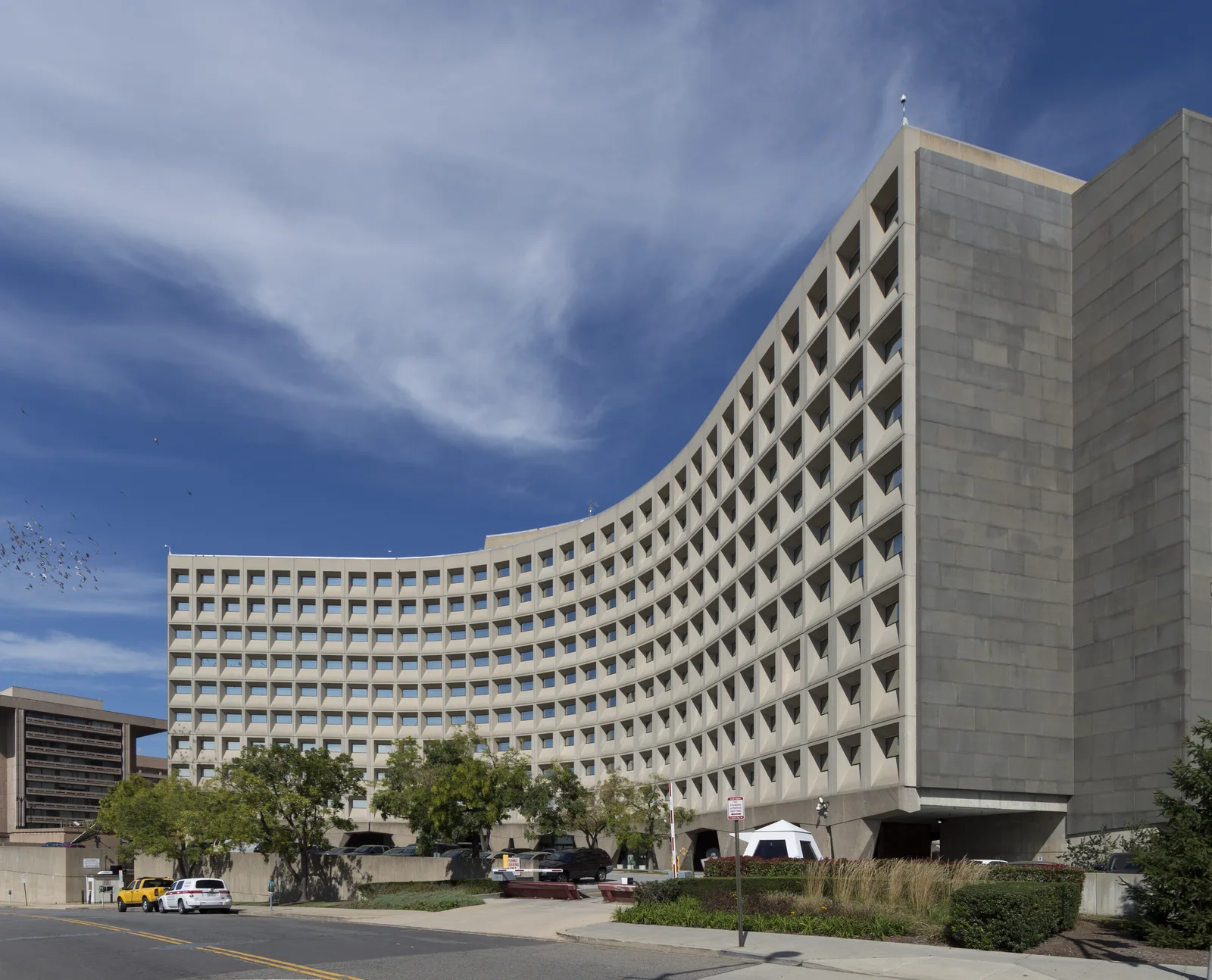
What HUD Does
Established September 9, 1965, The U.S. Department of Housing and Urban Development is one of the fifteen Cabinet-level departments of the U.S. federal government.
HUD's mission is to ensure Americans have access to safe, decent, and affordable housing. It enforces the federal Fair Housing Act, which prohibits discrimination in housing based on race, religion, national origin, sex, disability, and familial status, and investigates thousands of housing discrimination complaints each year.
The department's Federal Housing Administration insures mortgages issued by private lenders, allowing millions of homebuyers, particularly first-time buyers and those with smaller down payments, to qualify for financing they might not otherwise access, and has backed more than 47 million home mortgages since its creation in 1934.
HUD also funds public housing authorities and the Housing Choice Voucher program (commonly known as Section 8), which subsidizes rent for millions of low-income households, and distributes Community Development Block Grants that cities and towns use for infrastructure, affordable housing, and neighborhood revitalization projects.
HUD is one of the smallest Cabinet departments in staff but moves a large budget almost entirely as payments to others: about 85 percent of its money goes to rental assistance, and most of the rest to block grants for cities and states and to homeless programs. Its rental programs reach only about one in four eligible low-income households, because Congress funds them at a fixed level each year rather than as an entitlement, so most of the effort goes to managing waiting lists.

The Secretary of Housing and Urban Development
The Secretary of Housing and Urban Development leads HUD, sits on the President's Cabinet, and is confirmed by a majority vote of the U.S. Senate.
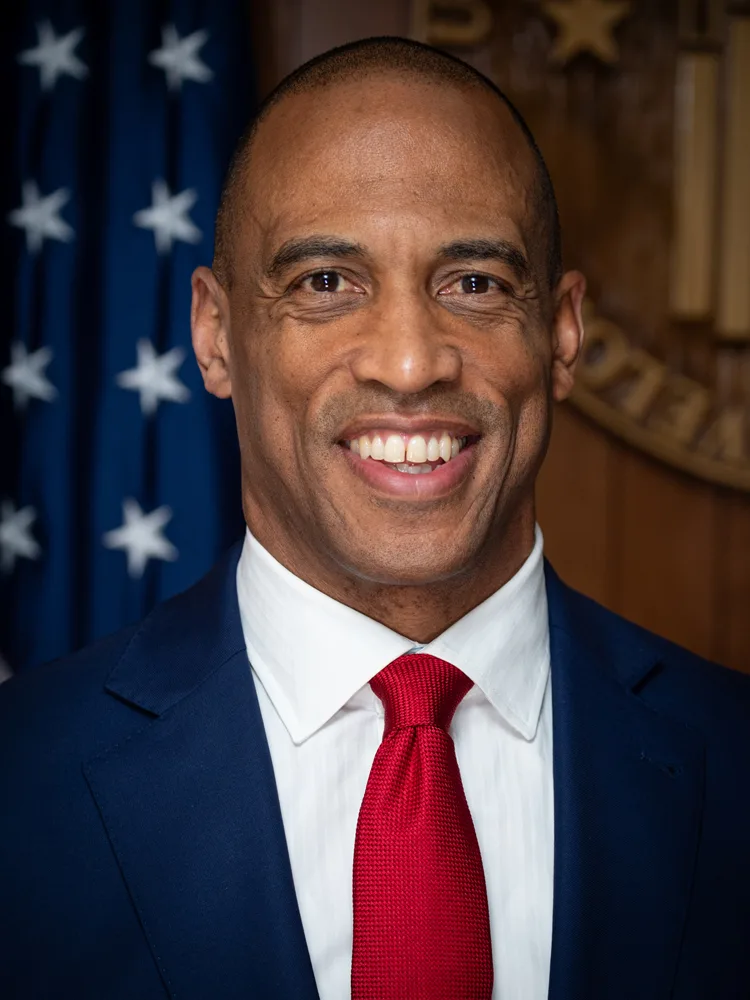
Current Secretary of Housing and Urban Development
Scott Turner
In office since
February 5, 2025
Prior role: Executive Director, White House Opportunity and Revitalization Council (2019-2021); former NFL player
Scott Turner was confirmed as HUD Secretary on February 5, 2025. During the first Trump administration, he led the White House Opportunity and Revitalization Council, which coordinated federal investment in Opportunity Zones, the low-income community tax incentive program created by the 2017 tax law.
Before entering public service, Turner played nine seasons (1995-2003) as a cornerback in the NFL for the San Diego Chargers, Washington, and Denver Broncos, and later served as a Texas state representative, giving him a combined background in professional sports, state legislative work, and federal housing policy.
Major Sub-Agencies & Bureaus
HUD carries out its mission through operating divisions and sub-agencies, each with its own specific mandate.
The FHA insures mortgages made by approved private lenders, protecting the lender against loss if a borrower defaults, which allows lenders to offer mortgages with lower down payments and more flexible credit requirements than many conventional loans require, particularly benefiting first-time and lower-income homebuyers.
Created in 1934 during the Great Depression, when private mortgage markets had largely frozen up, the FHA is credited with helping establish the modern 30-year fixed-rate mortgage as the standard American home loan product, a structure that remains the default choice for most homebuyers today.
The FHA insures about 15 percent of new home-purchase mortgages, allows down payments as low as 3.5 percent, and is funded by the premiums borrowers pay rather than by tax dollars in most years; its Mutual Mortgage Insurance Fund is required by law to hold reserves of at least 2 percent of insured loan value. Roughly a third of FHA borrowers are Black or Hispanic, a far higher share than in the conventional market.
The FHA also insures loans for apartment buildings, hospitals, and nursing homes, and runs the Home Equity Conversion Mortgage, the government-insured reverse mortgage for homeowners 62 and older. The government-owned Ginnie Mae, also housed at HUD, packages FHA and VA loans into the mortgage-backed securities that channel global investment into U.S. home lending.
This office funds roughly 3,000 local public housing authorities across the country, which own and operate public housing developments and administer the Housing Choice Voucher (Section 8) program, which subsidizes rent for low-income households in privately owned housing rather than government-owned developments.
The office also administers housing programs specifically for Native American tribes and Alaska Native villages, funding tribal housing authorities that operate largely independently under separate statutory authority from the mainstream public housing system.
The public housing stock has shrunk from a peak of about 1.4 million units to under 900,000, as the 1998 Faircloth Amendment barred building net new units and HUD instead used programs like HOPE VI and Rental Assistance Demonstration to demolish or convert aging projects, often to mixed-income developments run by private managers. The stock carries a repair backlog long estimated in the tens of billions of dollars.
The tribal housing block grant, created by the 1996 NAHASDA law, gives federally recognized tribes an annual formula grant to run their own housing programs, a self-determination model similar to how tribes contract to run other federal services.
This office enforces the Fair Housing Act of 1968, investigating complaints of housing discrimination, whether from landlords refusing to rent to families with children, lenders denying mortgages based on race, or developers designing buildings that violate accessibility requirements for people with disabilities.
HUD can pursue administrative enforcement actions or refer serious cases to the Justice Department for federal litigation, and the office also funds fair housing testing organizations across the country that send matched pairs of testers to identify discriminatory treatment landlords and lenders might otherwise successfully conceal.
HUD and its funded partners handle on the order of 30,000 fair-housing complaints a year, the largest share alleging disability discrimination (such as refusing a reasonable accommodation), followed by race and familial status. HUD's paired-testing studies have repeatedly documented minority renters and buyers being shown fewer units than equally qualified white testers.
The Act also requires HUD grantees to "affirmatively further fair housing," an obligation whose meaning, whether it requires local governments to actively reduce segregation, has been defined, rescinded, and redefined by regulation across the Obama, Trump, and Biden administrations and remains contested.
This office administers the Community Development Block Grant program, which provides flexible funding directly to cities and counties for affordable housing, infrastructure, and neighborhood revitalization projects, along with the HOME Investment Partnerships Program, which specifically funds affordable housing construction and rehabilitation.
These block grant programs give local governments significant discretion over exactly how the federal funding gets spent within broad federal guidelines, a design intended to let communities address their own specific, locally identified housing and development priorities.
The office also runs the homeless-assistance grants and, critically, is the channel for disaster recovery aid: Congress routinely appropriates tens of billions of dollars in "CDBG Disaster Recovery" money after major hurricanes and wildfires, which states use for rebuilding housing and infrastructure years after FEMA's immediate response ends.
HOME, created in 1990, is the largest federal block grant aimed specifically at building and preserving affordable rental and owner housing, and it typically requires state and local recipients to match a quarter of the federal money with their own funds.
From September 9, 1965 to Today
The predecessor of HUD was the Housing and Home Finance Agency (1947-1965). Here is how the department reached its current form.
Congress created the Federal Housing Administration in 1934 as part of the New Deal response to the collapse of the private mortgage market during the Great Depression, when short-term loans with large balloon payments had left many homeowners unable to refinance and facing foreclosure.
The FHA's insurance program encouraged lenders to offer the longer-term, fully amortizing mortgages that eventually became the standard American home loan, fundamentally reshaping how homeownership was financed in the United States for generations afterward.
The FHA's early underwriting manuals explicitly instructed appraisers to lower ratings for neighborhoods with "inharmonious racial groups," and the agency's color-coded maps of "declining" areas gave the practice of redlining its name. For roughly three decades, FHA-backed lending flowed overwhelmingly to new white suburbs and away from Black urban neighborhoods, a policy the government did not formally abandon until the 1960s.
Congress consolidated several existing federal housing programs, including the FHA and the U.S. Housing Authority, into the Housing and Home Finance Agency in 1947, an independent but non-Cabinet-level agency that served as HUD's direct organizational predecessor for the next eighteen years.
This consolidation reflected the post-World War II housing shortage crisis, as millions of returning veterans and their new families needed housing that existing federal programs, scattered across several separate agencies, were poorly organized to address efficiently.
The Housing Act of 1949 set an official national goal of "a decent home and a suitable living environment for every American family" and authorized large-scale public housing and "urban renewal," a slum-clearance program that over the next two decades demolished hundreds of thousands of housing units, disproportionately in Black neighborhoods, often replacing them with highways, civic buildings, or higher-cost housing.
President Lyndon Johnson signed legislation creating HUD as a full Cabinet department in 1965, part of his broader Great Society agenda, and appointed Robert C. Weaver as the first secretary, making him the first African American to serve in any presidential Cabinet in U.S. history.
HUD's creation reflected growing federal attention to urban poverty, housing discrimination, and inner-city decline during the 1960s, issues that had become increasingly visible amid the era's broader civil rights movement and urban unrest.
Weaver's nomination had been blocked in 1961 partly over his race; Johnson deliberately delayed creating the department until he could get Weaver confirmed as its first head. The Kerner Commission, appointed by Johnson after the 1967 urban riots, concluded in 1968 that the nation was "moving toward two societies, one black, one white, separate and unequal," and called for a major expansion of the housing programs HUD ran.
Congress passed the Fair Housing Act in April 1968, just days after the assassination of Martin Luther King Jr., prohibiting discrimination in the sale, rental, and financing of housing based on race, religion, and national origin, with sex added in 1974 and disability and familial status added in 1988.
HUD was given primary responsibility for enforcing the new law, and the act remains one of the most significant civil rights statutes in American history, though housing discrimination complaints and fair housing testing studies continue to document ongoing violations decades after its passage.
The 1968 law had weak enforcement, HUD could only "conference, conciliate, and persuade," until the Fair Housing Amendments Act of 1988 gave it the power to bring administrative charges and levy penalties, and added the disability and familial-status protections. The 1988 amendments also required most new multifamily housing to be built accessible to people with disabilities.
During the 2008 financial crisis, triggered substantially by risky subprime mortgage lending outside HUD's traditional FHA insurance program, the department expanded FHA lending to help stabilize a collapsing housing market, and FHA's market share of new mortgages grew dramatically as private lenders pulled back.
The crisis prompted Congress to strengthen mortgage lending oversight more broadly through the 2010 Dodd-Frank Act, and HUD's FHA program has since played a countercyclical role, expanding its lending activity during subsequent periods of tight private credit.
FHA's share of new purchase mortgages jumped from a few percent before the crisis to around 30 percent by 2010. Rising defaults pushed its insurance fund below its required 2 percent reserve, and in 2013 the FHA drew about $1.7 billion from the Treasury, the only mandatory appropriation in its history, before premiums restored the fund within a few years.
Defining Moments
Events that reshaped the department's authority, structure, or public role.
Robert C. Weaver's 1966 appointment as HUD's first secretary made him the first African American to serve in a presidential Cabinet in U.S. history, a milestone that came during the height of the civil rights movement and reflected HUD's mission focus on cities and communities disproportionately affected by housing discrimination.
Weaver had spent decades as a housing policy expert before his appointment, and his leadership helped establish HUD's early institutional focus on fair housing enforcement as a core mission rather than a peripheral concern, a legacy that shaped the department's identity for decades afterward.
Weaver was a Harvard-trained economist who had served in the New Deal's informal "Black Cabinet" of advisers under Franklin Roosevelt and had written a 1948 book, The Negro Ghetto, documenting how federal housing policy created and reinforced segregation. His appointment to run the department that had done much of that was widely noted at the time.
The Weaver building in Washington still carries his name, and the department renamed a fair-housing award for him. No Black American had held a Cabinet post in the 177 years between Washington's first Cabinet and Weaver's confirmation.
The Fair Housing Act had stalled in Congress for years before finally passing in April 1968, and its ultimate passage came only in the emotionally charged days immediately following Martin Luther King Jr.'s assassination, which shifted enough congressional votes to finally overcome years of legislative resistance.
The law's passage under such circumstances is frequently cited by historians as an example of how a single galvanizing national tragedy can break a long legislative logjam, and HUD's enforcement of the act remains one of its most consequential and closely watched responsibilities.
A fair-housing bill had failed in 1966 and 1967 against Senate filibusters; Senator Everett Dirksen, who had opposed it, switched to support a compromise version in early 1968. King was killed on April 4, riots broke out in more than 100 cities, and the House passed the Senate's bill unamended on April 10; President Johnson signed it the next day.
The 1968 law also included "Section 235" homeownership subsidies for low-income buyers, which became mired in scandal within a few years as some FHA appraisers and speculators steered poor families into overpriced, deteriorating homes, an episode that made Congress and HUD wary of direct homeownership subsidies for decades.
The 2008 financial crisis exposed how risky lending practices largely outside HUD's regulated FHA insurance system, particularly subprime mortgages sold by unregulated private lenders, could still trigger a housing market collapse severe enough to threaten the entire national economy.
The crisis led to a significant reassessment of federal housing finance policy overall, and HUD's own FHA lending standards, along with the broader mortgage market rules Congress and financial regulators subsequently tightened, reflect lasting lessons drawn directly from that period.
U.S. home prices fell by roughly a third from their 2006 peak, about 10 million households lost homes to foreclosure or distressed sale over the following years, and Black and Hispanic homeowners, who had been disproportionately sold high-cost subprime loans, lost wealth at higher rates, widening the racial homeownership gap.
The 2010 Dodd-Frank Act created the Consumer Financial Protection Bureau and a federal "ability to repay" rule for mortgages. HUD had been given a role in setting affordable-housing goals for Fannie Mae and Freddie Mac before the crisis; after the two were placed in federal conservatorship in 2008, that oversight moved to the new Federal Housing Finance Agency, and the two firms remain in conservatorship.
Notable Programs & Initiatives
A selection of the programs HUD runs, and what each one is actually for.
The Housing Choice Voucher program subsidizes rent for roughly 2.3 million low-income households, allowing voucher holders to rent housing in the private market rather than living in government-owned public housing developments, with HUD paying the difference between what a household can afford and the local fair market rent.
Demand for vouchers far exceeds the available funding in most cities, and many public housing authorities maintain waiting lists that can run years long, making voucher availability one of the most persistent bottlenecks in the broader effort to expand access to affordable rental housing.
A household generally pays 30 percent of its income toward rent, and the voucher covers the rest up to a local payment standard tied to HUD's Fair Market Rent estimates. Only about one in four eligible households nationally receives any rental assistance, and studies find a large share of voucher holders struggle to find a landlord who will accept one, especially in high-opportunity neighborhoods; some states and cities have made "source of income" discrimination illegal in response.
Research using the Moving to Opportunity experiment and later studies found that children whose families used vouchers to move to lower-poverty areas at a young age had higher adult earnings and college attendance, and HUD has since piloted "mobility" counseling to help families use vouchers in more neighborhoods.
Created in 1974, the CDBG program provides flexible annual funding directly to more than 1,200 cities, counties, and states, which use the money for a wide range of local priorities including affordable housing construction, infrastructure repair, and public services in low-income neighborhoods.
The program's flexibility, letting local officials decide exactly how to spend funds within broad federal guidelines, has made it one of HUD's most enduringly popular programs with local governments of both political parties, even as its overall funding level has fluctuated significantly over the decades.
CDBG folded seven older "categorical" grant programs into one, and at least 70 percent of a grantee's spending must benefit low- and moderate-income people. Its regular annual funding, around $3.3 billion, has fallen by more than half in inflation-adjusted terms since 1980, so many cities now use it heavily for basic tasks like housing rehab, code enforcement, and public facilities.
The disaster-recovery version of CDBG has, since Hurricane Katrina, become one of the largest sources of long-term rebuilding money in the country, but because Congress creates it ad hoc after each disaster with different rules, the Government Accountability Office has repeatedly urged making it a permanent, standardized program.
HUD's Continuum of Care program funds local coalitions of homeless service providers, shelters, and housing agencies across the country, supporting both emergency shelter and permanent supportive housing models aimed at moving people experiencing homelessness into stable housing.
HUD's annual Point-in-Time Count, a nationwide one-night tally of people experiencing homelessness, is the most widely cited national homelessness data source, though researchers note it likely undercounts the true scope of the problem, particularly among people who are unsheltered or doubled up with family.
The 2024 count recorded about 771,000 people experiencing homelessness on a single night, the highest since the count began, driven largely by rising rents and by families and older adults becoming homeless for the first time. HUD's approach since the 2000s has emphasized "Housing First," placing people in permanent housing before requiring treatment or sobriety, a model credited with sharply reducing chronic and veteran homelessness in the 2010s and debated in the 2020s as overall numbers rose.
HUD, the VA, and other agencies coordinate through the U.S. Interagency Council on Homelessness. Veteran homelessness fell by roughly half between 2010 and the mid-2020s, largely through a joint HUD-VA voucher program (HUD-VASH) that pairs rental subsidies with VA case management.
Created by the 2017 Tax Cuts and Jobs Act, Opportunity Zones offer capital gains tax incentives to investors who fund development projects in designated low-income census tracts, a program HUD helps coordinate through the interagency council Secretary Turner previously led during the first Trump administration.
Studies of the program's early years produced mixed results, with some finding genuine new investment flowing into distressed communities and others finding that funding sometimes flowed toward projects that would likely have happened anyway, an ongoing subject of policy debate as the program continues.
Governors designated about 8,700 tracts, roughly 12 percent of all U.S. census tracts, as zones in 2018. The tax break defers and reduces capital gains tax on money reinvested in a "qualified opportunity fund," and eliminates tax on the fund's own gains if held 10 years; it is administered mainly through the tax code by the Treasury and IRS rather than by HUD directly.
Early research found investment concentrated in a minority of zones, often those already gentrifying, and heavily in real estate rather than operating businesses or jobs. Congress required no reporting on outcomes in the original law; the 2025 reconciliation law (P.L. 119-21) made the program permanent, with new rolling 10-year zone designations and added reporting requirements.
How This Affects Everyday Americans
Millions of Americans directly depend on HUD-backed mortgages to buy their homes, since FHA-insured loans remain one of the most common financing paths for first-time buyers and those with limited savings for a down payment, making HUD a direct factor in whether many families can become homeowners at all.
For the roughly 2.3 million households receiving Housing Choice Vouchers and the residents of public housing developments nationwide, HUD funding is the direct difference between stable housing and housing insecurity, and cuts or expansions to HUD's budget translate immediately into waiting list lengths and voucher availability.
HUD's fair housing enforcement protects renters and homebuyers from discrimination in a process, buying or renting a home, that represents one of the largest financial and personal decisions most Americans ever make, and its Community Development Block Grants fund visible local projects, from sidewalks to community centers, in thousands of towns and cities.
After a major hurricane or wildfire, the money that rebuilds damaged homes and neighborhoods over the following years usually flows through HUD's disaster-recovery block grants, long after the initial FEMA response has ended, so the department shapes how, and how quickly, disaster-hit communities come back.
Quick Facts & Figures
Key statistics and reference information about HUD.
| Established | September 9, 1965 |
| Headquarters | Robert C. Weaver Federal Building, Washington, D.C. |
| Current Secretary | Scott Turner |
| Annual Budget | ~$73 billion (FY2025 enacted) |
| Employees | ~8,000 |
| First Secretary | Robert C. Weaver, first Black Cabinet secretary (1966) |
| FHA-Backed Mortgages Since 1934 | 47 million+ |
| Website | hud.gov |
Did You Know?
HUD's Federal Housing Administration has backed more than 47 million home mortgages since 1934, making homeownership possible for millions who couldn't qualify for conventional loans.
Robert C. Weaver, HUD's first secretary, was the first African American to serve in any U.S. presidential Cabinet, appointed in 1966.
The Fair Housing Act passed Congress just days after Martin Luther King Jr.'s assassination in April 1968, after having stalled in Congress for years beforehand.
HUD is one of the smallest Cabinet departments by employee headcount, at roughly 8,000 staff, despite overseeing tens of billions of dollars in annual housing spending.
HUD Secretary Scott Turner played nine seasons as an NFL cornerback before entering politics and eventually leading the department.