
The U.S. Government

Because democracy only works when we understand it

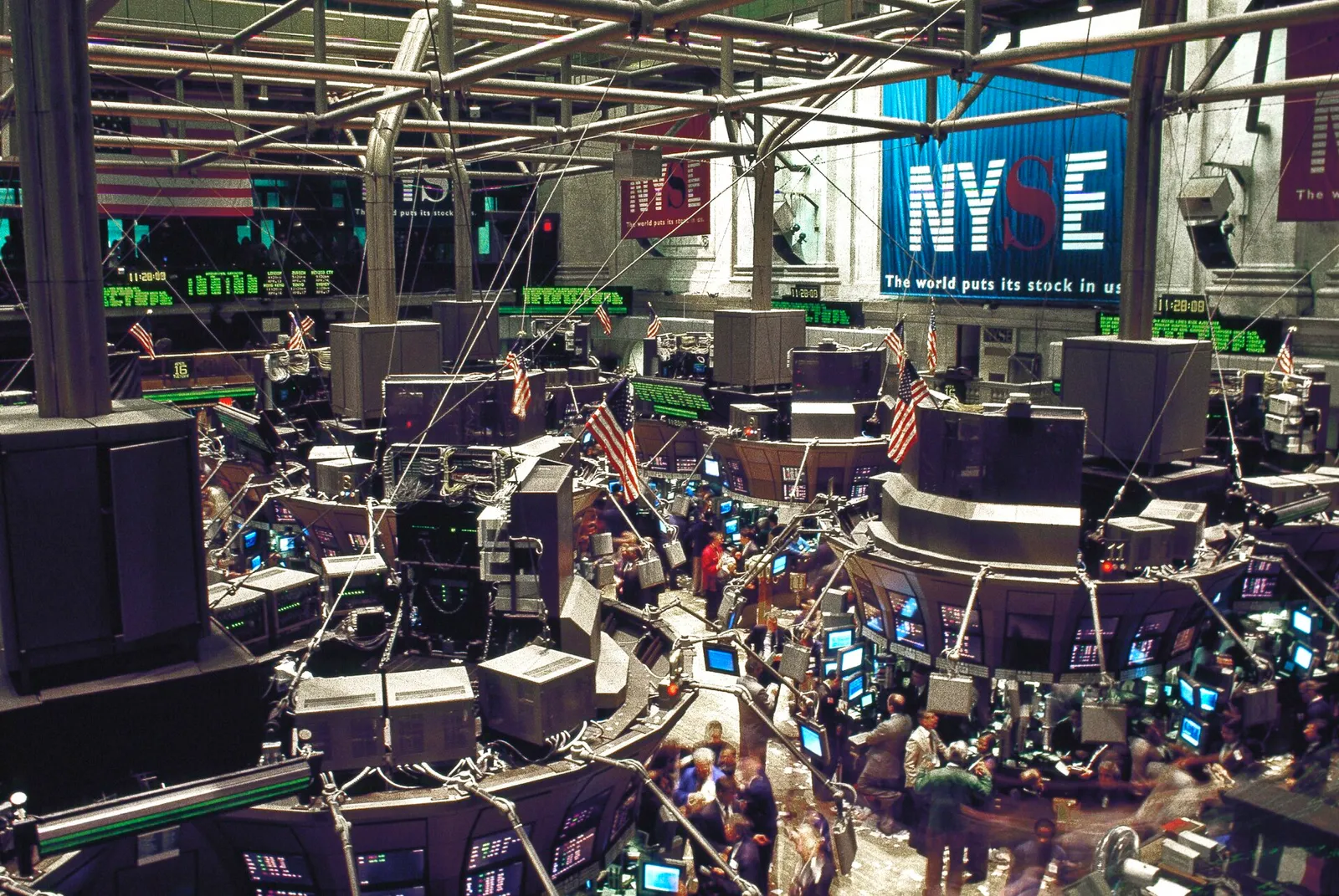
The trading floor of the New York Stock Exchange on Wall Street, crowded with traders at circular trading posts lined with computer screens, under green ticker boards, American flags, and a blue NYSE banner
Government through Stories: Capitalism

The Ball Game, the Referee, and the Rules of Capitalism

Capitalism in a constitutional republic is like a big ball game with a referee. There are two ways to ruin the game, and they come from opposite sides of the bleachers.

Economic system6 minute read

The Ball Game, the Referee, and the Rules of Capitalism

Capitalism in a constitutional republic is like a big ball game with a referee.

The players are everyone: the farmer, the baker, the kid with a lemonade stand, and the company with ten thousand workers. Each player owns what they bring onto the field. Each decides how to play: what to make, what to charge, whom to hire, and whether to take a chance on something nobody has tried before. Each gets to keep what they earn.

Nobody hands out all the plays. Nobody decides in advance who will succeed. The game runs on millions of individual choices, and the scoreboard reflects what people are willing to buy, what they value, and what they are willing to pay.

That's the basic idea behind capitalism: people are free to own property, start businesses, compete, make agreements, take risks, and benefit from their successes. They are also responsible for their failures.

The referee is the government.

Before the game begins, the referee swears an oath to follow the rulebook: the Constitution. The referee doesn't play the game, doesn't pick a favorite team, and doesn't decide who deserves to win. The job is to enforce the rules fairly and make sure everyone has a chance to compete.

Keep your promises. That's contract law.

Don't steal another player's ball. That's property rights.

Don't cheat, deceive, or rig the game. That's protection against fraud.

Don't use your position to prevent anyone else from competing. That's where competition and antitrust laws come in.

The referee isn't supposed to guarantee that everyone scores the same number of points. The referee is supposed to make sure the rules apply equally to everyone.

When the game works, it's loud, competitive, and messy. Nobody is always happy with the outcome. Some players score big. Some lose. Some work hard and still fail. Others come up with a better idea and knock the reigning champion off the field.

And that's an important part of the game. Success isn't supposed to be permanent, and failure isn't supposed to be the end. Competition gives new players the opportunity to challenge established ones. It encourages people to improve, invent, work harder, and find better ways to serve others.

But there are two ways to ruin the game, and they come from opposite sides of the bleachers.

The first is when the richest players buy the referee.

A gift here, a favor there, and suddenly the calls start going their way. They convince the referee to create rules that make it harder for new players to enter the game. They get special treatment, government contracts, subsidies, or protection from competition. Penalties that apply to everyone else somehow don't apply to them.

The big players stop competing and start using their political connections to protect their positions.

The game still looks like capitalism, but the rules are no longer being applied equally.

That's crony capitalism: when businesses use government power to gain advantages they couldn't earn through competition.

The second is when the crowd, tired of watching some players win more than others, tells the referee to take over the game.

"Just for a while," they say. "Just until things are fair."

So the referee starts calling the plays, then choosing the players, then deciding what everyone should produce, what things should cost, and who gets what.

Eventually, the referee isn't just enforcing the rules. The referee owns the ball, controls the teams, and decides the final score before the game even begins.

Everyone may be told they are equal, but nobody has much reason to take risks, work harder, or come up with a better idea when the rewards and decisions are controlled from above.

The game becomes less about competition and more about following instructions.

That's a command economy: when government replaces the decisions of individuals and businesses with centralized control over production and distribution.

Either way, the referee stops being a referee.

One version allows the wealthiest players to control the game. The other gives the referee control over every player. In both cases, the ordinary person loses the freedom to compete under fair and consistent rules.

The rulebook was never written to guarantee that everyone wins. It was written to make sure nobody, not the richest player, the loudest crowd, or the government itself, is above the rules.

And that's why the Constitution matters. It establishes limits on government power and protects the individual freedoms that allow people to participate in the game in the first place.

How many rules the game needs, how strictly the referee should enforce them, and how much successful players should contribute toward helping those who have fallen behind are questions every generation of voters must decide.

Those are legitimate debates, and having them is part of the game.

The Real Lesson

The lesson isn't that capitalism guarantees success, that wealth is always earned fairly, or that government has no role to play. Markets can fail, businesses can abuse their power, and people can face circumstances that make it difficult to compete. A constitutional republic needs laws, accountability, and public debate to address those problems.

The lesson is that economic freedom depends on political freedom. People need the ability to own property, make decisions, start businesses, compete, speak freely, and challenge those who hold power.

Government has an important role in protecting those freedoms, enforcing fair rules, preventing fraud, and keeping competition open. But when government becomes a tool for politically connected businesses, capitalism loses its competitive foundation. And when government takes control of the entire economy, individual freedom can disappear along with economic choice.

A healthy system requires both a free marketplace and a government limited by the Constitution.

The real lesson is this: The purpose of the referee is to protect the game, not to play it. When the wealthy control the referee, the game becomes rigged. When the referee controls the game, the players lose their freedom. A constitutional republic depends on keeping both the players and the referee accountable to the same rulebook.

Real Referees Who Held

The referee has held against presidents of both parties. In April 1952, during the Korean War, Democratic President Harry Truman ordered the government to seize the nation's steel mills to stop a strike (Executive Order 10340). On June 2, 1952, the Supreme Court ruled 6 to 3 in Youngstown Sheet & Tube Co. v. Sawyer that he had no power to do it.

In the 1920s, Interior Secretary Albert Fall, in Republican President Warren Harding's cabinet, leased the Navy's oil reserves at Teapot Dome, Wyoming, and Elk Hills, California, to private oil men without competitive bidding, after taking a $100,000 "loan" from one of them. A Senate investigation led by Senator Thomas Walsh (D-Montana) exposed it. In 1927 the Supreme Court canceled the Teapot Dome lease as obtained through fraud (Mammoth Oil Co. v. United States), and in 1929 Fall was convicted of taking a bribe, the first former cabinet member sent to prison.

And in 1911, the Supreme Court upheld the breakup of Standard Oil, which had controlled about 90 percent of U.S. oil refining, under the Sherman Antitrust Act (Standard Oil Co. of New Jersey v. United States). It was split into 34 companies. Our page on landmark Supreme Court cases covers more of the rulings that shaped the rules of the game.

The Rules of the Game

The referee in the story answers to a rulebook. These are some of the real rules in the U.S. Constitution and federal law that keep the game fair, and what the game would look like without each one.

  • Safeguard: Private property can't be taken without fair payment (Fifth Amendment)

    Without it: The referee could take any player's ball whenever the crowd demanded it, and no one would build anything worth taking.

  • Safeguard: States can't pass laws canceling contracts (Article I, Section 10)

    Without it: Any deal could be undone by a vote, and no one could trust a promise long enough to build a business on it.

  • Safeguard: One national field: Congress regulates trade among the states (Article I, Section 8)

    Without it: Each state could fence off its own field. Under the Articles of Confederation, Congress had no power to regulate trade between the states; the Constitution made the country one market.

  • Safeguard: Rewards for new ideas: patents and copyrights (Article I, Section 8, Clause 8)

    Without it: A player with a new idea could have it copied the moment it worked, so fewer players would try.

  • Safeguard: No rigging the game: the Sherman Antitrust Act (1890)

    Without it: The biggest players could join forces to shut everyone else out. Standard Oil controlled about 90 percent of U.S. oil refining before it was broken up in 1911.

  • Safeguard: Senators elected by the voters (Seventeenth Amendment, 1913)

    Without it: Before it, state legislatures chose U.S. senators, and the Senate heard nine bribery cases over Senate seats between 1866 and 1906. Buying a referee was easier when only a few people chose him.

  • Safeguard: Same rules for every player: due process and equal protection (Fifth and Fourteenth Amendments)

    Without it: The referee could write a penalty for one team only.

  • Safeguard: Courts that can tell a President no

    Without it: A President could take over an industry by order. In 1952 the Supreme Court stopped President Truman from seizing the steel mills.

  • Safeguard: A free press and congressional investigations

    Without it: A bought referee could stay hidden. A Senate investigation exposed the Teapot Dome bribes in the 1920s.

  • Safeguard: Free elections

    Without it: The crowd would have only one way to change the game: grabbing the ball. Elections let voters change the rules without taking it.

What the Story Shows

  • In the story: The game runs on millions of individual choices

    In real life: In The Wealth of Nations (1776), Adam Smith wrote that people pursuing their own gain are "led by an invisible hand" to benefit others. In 1945, Friedrich Hayek argued that prices pull together knowledge spread among millions of people that no central planner could gather.

  • In the story: The kid with a lemonade stand, and the company with ten thousand workers

    In real life: Most players are small. The U.S. Small Business Administration counts 36.2 million small businesses, 99.9 percent of all U.S. businesses, employing nearly half of private-sector workers.

  • In the story: Others come up with a better idea and knock the reigning champion off the field

    In real life: Economist Joseph Schumpeter popularized the term "creative destruction" in 1942. A Kodak engineer built the first digital camera in 1975; digital photography later helped push Kodak into bankruptcy in 2012.

  • In the story: Success isn't supposed to be permanent, and failure isn't supposed to be the end

    In real life: Failure is common. About 1 in 5 new U.S. business establishments close within their first year, and about half within five years (Bureau of Labor Statistics).

  • In the story: The richest players buy the referee

    In real life: In 1899, William A. Clark of Montana was accused of bribing state legislators for his U.S. Senate seat. A Senate committee unanimously found him not entitled to it, and he resigned in May 1900. The Seventeenth Amendment, ratified in 1913, let voters elect senators directly.

  • In the story: Rules that make it harder for new players to enter the game

    In real life: Economist George Stigler, who won the 1982 Nobel Prize in economics, argued in 1971 that regulation is often sought by the industry it regulates and shaped for its benefit, an idea known as regulatory capture.

  • In the story: The big players stop competing and start using their political connections

    In real life: By 1880, Standard Oil controlled about 90 percent of U.S. oil refining. The Sherman Antitrust Act of 1890 outlawed combinations that restrain trade, and the Supreme Court used it to break Standard Oil into 34 companies in 1911.

  • In the story: The crowd tells the referee to take over the game

    In real life: After the 1917 revolution, the Soviet state took over large industry, and under Stalin's first Five-Year Plan (1928), central planners set production quotas for all of it.

  • In the story: Nobody has much reason to take risks, work harder, or come up with a better idea

    In real life: Soviet managers worked to predetermined quotas rather than prices, and the Library of Congress notes widespread shortages of consumer goods. The Soviet Union's flag came down for the last time on December 25, 1991.

  • In the story: The referee owns the ball, controls the teams, and decides the final score

    In real life: When the state owns every business, it is every worker's employer and every shopper's only store. In the Soviet Union, the Communist Party ran both the government and the economy.

  • In the story: How strictly the referee should enforce the rules

    In real life: Republics keep adding rules by vote. The Fair Labor Standards Act of 1938 set a 25-cent minimum wage, a 44-hour maximum workweek with overtime pay beyond it, and limits on child labor.

  • In the story: How much successful players should contribute toward helping those who have fallen behind

    In real life: Many rules came after someone was hurt. The 1911 Triangle Shirtwaist Factory fire in New York killed 146 garment workers and led to new fire safety and factory inspection laws.

In real history

Capitalism grew alongside the Industrial Revolution in Britain in the 1700s and 1800s. Adam Smith described it in The Wealth of Nations, published in 1776, the same year as the Declaration of Independence. Today most countries, the United States included, have mixed economies: markets do most of the work, and governments set rules, collect taxes, and run some programs. How big that government role should be is one of the oldest arguments in American politics.

You Decide

What draws people to it

  • Freedom to choose: your work, what you buy, and whether to start a business of your own. The United States has 36.2 million small businesses.
  • New ideas. Competition and patents reward players who find a better way, which is why a camera company can be overtaken by a better camera.
  • Prosperity. Over the four decades since China began its market reforms, close to 800 million people there rose out of extreme poverty, according to the World Bank.
  • No one has to plan everything. Prices carry information from millions of buyers and sellers that no central planner could collect, as Friedrich Hayek argued in 1945.

What it costs

  • Booms and busts. U.S. unemployment reached about 25 percent in 1933, during the Great Depression, and 10.0 percent in October 2009, after the 2008 financial crisis.
  • Unequal results. The wealthiest 10 percent of U.S. households hold about 69 percent of household wealth, according to the Federal Reserve.
  • Winners can try to buy the referee or lock in their lead, as the Standard Oil trust and the Senate bribery cases of the Gilded Age showed.
  • People get hurt along the way, and many protections came only after disasters like the Triangle Shirtwaist fire, not before them.

Nearly every country with a market economy argues about the referee. How many rules does a fair game need? When the referee blows the whistle on a player, is that protecting the game or taking the ball? And who should decide: the players, the crowd, or the rulebook?

See how capitalism compares with socialism, communism, and other systems on Modern Systems of Government, how the Constitution keeps any one part of government from taking total control on Safeguards Against Tyranny, and where federal tax dollars go on the Federal Budget Breakdown page.

Why a republic is easy to lose and hard to win back

See all the stories in Government through Stories

Sources & Further Reading

The story and its characters are invented. The historical facts in the boxes below the story are drawn from the sources above.

Last updated: