About Maryland
Maryland was named in honor of Queen Henrietta Maria, the French-born Catholic wife of King Charles I of England, who granted the charter for the colony to George Calvert, the 1st Baron Baltimore, in 1632. Henrietta Maria was a controversial figure in England because of her Catholic faith in a predominantly Protestant country, and the Maryland colony was founded in part as a refuge for English Catholics. "Maryland" was a Latinized form of "Henrietta Maria." The queen never visited the colony named for her. Maryland passed the Maryland Toleration Act in 1649, the first law in British North America mandating religious tolerance for all Christians, a landmark in the history of religious freedom.
Maryland occupies one of the most consequential pieces of geography in American history. Wedged between the Mid-Atlantic and the South, straddling the Chesapeake Bay, and wrapping around Washington D.C. on three sides, it has been at the crossroads of every major event in American life, from the founding of the republic to the Civil War to the construction of the modern federal government.
It is a state of striking contradictions. It is the birthplace of Frederick Douglass and Harriet Tubman, two of the most important freedom fighters in American history, and also hosted one of the largest slave-trading operations in the antebellum South. It is one of the wealthiest states per capita in the country, driven by its proximity to federal spending, yet Baltimore struggles with poverty and inequality that rival any major American city. It is home to Johns Hopkins, the NSA, the Naval Academy, and the NIH, and also to watermen still harvesting blue crabs from the Chesapeake Bay with methods little changed in a century.
Politically, Maryland is one of the most reliably Democratic states in the country, a blue wall built on the massive DC suburban counties and Baltimore City, which consistently overwhelm the more conservative rural areas. Yet it has a tradition of electing Republican governors, Larry Hogan served two popular terms from 2015 to 2023 before Democrat Wes Moore, the state's first Black governor, took office.
Maryland's Five Regions
Maryland's largest city sits at the head of the Patapsco River where it enters the Chesapeake Bay. Baltimore is a city of distinct working-class neighborhoods, world-class institutions, and deep historical contradictions. It was a major center of both the slave trade and the abolitionist movement. Edgar Allan Poe lived and died here.
Babe Ruth was born here. Thurgood Marshall grew up here and later transformed American law as the attorney who argued Brown v. Board of Education and as the first Black Supreme Court Justice. Today Baltimore struggles with high poverty and violent crime concentrated in certain neighborhoods, while simultaneously hosting Johns Hopkins, the University of Maryland Medical Center, a thriving arts scene, and one of the most distinctive urban cultures in America.
Baltimore was the third-largest U.S. city in 1830 and grew on flour milling, the B&O Railroad (chartered 1827, the first common-carrier railroad in the country), shipbuilding of fast 'Baltimore clipper' schooners, and later steel: the Bethlehem Steel plant at Sparrows Point was for a time the largest steel mill in the world, employing about 30,000 workers before its long decline and 2012 bankruptcy. The city peaked near 950,000 people in 1950 and has since fallen below 570,000.
The 1968 riots after the assassination of Martin Luther King Jr. burned out much of the city's commercial corridors and accelerated white and middle-class flight, and the 2015 death of Freddie Gray in police custody set off renewed unrest, a Justice Department civil-rights investigation, and a federal consent decree governing the police department that remains in force. The HBO series 'The Wire,' filmed in the city in the 2000s, made Baltimore a national shorthand for the problems of deindustrialized cities.
Baltimore is a city of rowhouses and fiercely local identity, from the marble front steps and painted window screens of the old ethnic neighborhoods to Formstone-clad blocks, the Lexington Market (founded 1782, one of the oldest continuously operating public markets in the country), and traditions like the Preakness Stakes at Pimlico, the middle jewel of the Triple Crown, run since 1873. The state approved a roughly 400 million dollar rebuild of the aging Pimlico track in 2024.
The two counties immediately bordering Washington D.C. are the most populous in Maryland and among the wealthiest jurisdictions in the United States. Montgomery County, home to Bethesda, Rockville, Silver Spring, and Chevy Chase, has one of the highest median household incomes of any county in the country. It is home to the NIH, the I-270 biotech corridor, and a large federal workforce.
Prince George's County borders D.C. on the east and northeast, home to the University of Maryland's flagship campus in College Park, Joint Base Andrews (home of Air Force One), NASA Goddard, and a large and diverse population. Together these two counties drive a significant share of Maryland's tax base.
Montgomery County has more than a million residents, making it Maryland's most populous jurisdiction, and its schools, tax base, and biotech corridor along Interstate 270 give it outsized weight in Annapolis; it has repeatedly passed policies ahead of the state, including one of the first county minimum-wage increases to 15 dollars an hour. Silver Spring and Wheaton are among the most linguistically diverse communities in the country, and the county's foreign-born share exceeds one-third.
Prince George's County is the wealthiest majority-Black county in the United States, a status built over decades as Black families moved out from Washington, D.C., and it is home to the University of Maryland flagship at College Park (about 40,000 students) and to Bowie State and the University of Maryland Global Campus. It has long argued that it receives less commercial investment and fewer amenities than its income and population would predict, a grievance central to the debate over where to put a new FBI headquarters.
The Purple Line, a 16-mile light-rail line under construction to connect Bethesda in Montgomery County to New Carrollton in Prince George's without passing through D.C., is one of the largest transit projects in the country; a contractor walkout and lawsuits pushed its cost past 10 billion dollars and its opening into the late 2020s. Joint Base Andrews in Prince George's is the home field for the presidential aircraft and a frequent arrival point for foreign leaders.
Maryland's Eastern Shore, the portion of the Delmarva Peninsula west of Delaware, is one of the most culturally and geographically distinct regions in the Mid-Atlantic. Flat, rural, and defined by the rhythms of the Chesapeake Bay and its tributaries, the Eastern Shore has historically been a place apart from the rest of Maryland.
It is the birthplace of Harriet Tubman, Frederick Douglass, and Josiah Henson, three of the most important figures in the American abolitionist movement, all of whom were born into slavery on the Eastern Shore. Today the region is known for its watermen culture, blue crab and oyster harvesting, poultry farming, and the beach resort town of Ocean City.
The Shore has repeatedly floated separating from Maryland, most seriously in 1833, 1835, and a 1998 legislative proposal, out of a sense that Annapolis governs for the populous western shore. It was long the most conservative part of a Democratic-leaning state and remains reliably Republican in state elections, and the redrawing of Maryland's 1st congressional district to keep it Republican-leaning has been part of the state's high-profile gerrymandering fights.
Smith Island, a cluster of marshy islands 12 miles offshore reachable only by boat, is the last inhabited offshore island in the Maryland Chesapeake and is losing land and population to erosion and sea-level rise; its residents still speak a distinctive Restoration-era English dialect, and the many-layered Smith Island Cake is the official state dessert. Hoopers Island and the town of Crisfield, the self-styled 'Crab Capital of the World,' anchor the working-waterfront economy.
The Harriet Tubman Underground Railroad National Historical Park, established in 2013 and 2014 near Church Creek in Dorchester County, and the Frederick Douglass birthplace area in Talbot County have made civil-rights heritage a growing draw. Salisbury, the largest city on the Maryland Shore, is a regional hub for the poultry industry, Salisbury University, and a medical center serving the lower Delmarva Peninsula.
Southern Maryland, Calvert, Charles, and St. Mary's counties, occupies the western shore of the Chesapeake Bay south of Washington. St. Mary's City, founded in 1634, was Maryland's original colonial capital and the site of one of the earliest experiments in religious toleration in North America.
The region was historically defined by tobacco farming, and Southern Maryland tobacco retains a niche identity even as the region has increasingly become a bedroom community for Washington D.C. workers. Naval Air Station Patuxent River in St. Mary's County is a major naval aviation test and evaluation facility and one of the region's largest employers.
Maryland's tobacco economy dated to the 1630s and shaped the whole colony, its labor system, its dispersed plantation settlement pattern, and its use of tobacco leaf as legal currency into the 1700s. It faded fast after 2000, when Maryland used money from the 1998 national tobacco settlement to pay Southern Maryland farmers to permanently stop growing the crop, and thousands of acres of tobacco barns now stand empty across Calvert, Charles, and St. Mary's counties.
St. Mary's City, the 1634 landing site and colonial capital until 1695, is preserved as Historic St. Mary's City, an archaeological park and reconstructed 17th-century town, and in 2021 researchers there located the long-lost 1667 statehouse foundations. The colony's early experiment in Catholic-Protestant coexistence, codified in the 1649 Toleration Act, was overturned within decades as Protestant factions took power and briefly outlawed Catholic worship.
Naval Air Station Patuxent River, opened in 1943, is the Navy's principal aircraft test and evaluation center and home of the U.S. Naval Test Pilot School, and with the associated Naval Air Warfare Center it employs more than 20,000 people, making defense by far the largest part of the modern Southern Maryland economy. The Calvert Cliffs Nuclear Power Plant on the Bay, operating since 1975, supplies a large share of Maryland's carbon-free electricity.
The westernmost counties of Maryland, Frederick, Washington, Allegany, and Garrett, are geographically and culturally distinct from the rest of the state. The terrain rises from the Piedmont through the Blue Ridge into the Allegheny Mountains, giving Western Maryland landscapes that feel more like West Virginia or Pennsylvania than the Chesapeake tidewater. Frederick is a rapidly growing city with a well-preserved historic downtown.
The Antietam National Battlefield, site of the bloodiest single day in American history (September 17, 1862), is near Sharpsburg in Washington County. Garrett County, in Maryland's far western corner, is home to Deep Creek Lake, the state's largest freshwater lake and a popular ski and outdoor recreation destination.
Western Maryland was the corridor of early westward expansion: the Cumberland Road, authorized by Congress in 1806 as the nation's first federally funded highway, began at Cumberland and pushed toward the Ohio country, and the Chesapeake and Ohio Canal was dug 184.5 miles up the Potomac from Georgetown to Cumberland between 1828 and 1850 before the faster B&O Railroad made it obsolete. Both routes are now the C&O Canal National Historical Park and, continuing west, the Great Allegheny Passage rail-trail to Pittsburgh.
The narrowest point of Maryland, near Hancock in Washington County, is less than two miles wide between the Potomac and the Pennsylvania line, the result of the colonial-era Mason-Dixon survey and the river boundary. The Blue Ridge crest at South Mountain, where a September 1862 battle preceded Antietam by three days, and the Catoctin Mountain forest, home to the presidential retreat Camp David, run through Frederick and Washington counties.
Garrett County, the highest and coldest part of Maryland, records some of the state's heaviest snowfall, supports the Wisp ski resort, and sits atop Marcellus Shale gas; Maryland banned hydraulic fracturing statewide by law in 2017 before any wells were drilled. Cumberland, once a booming coal, rail, and manufacturing city known as the 'Queen City' and the second-largest in Maryland around 1900, has lost more than half its peak population and anchors an Appalachian economy very different from the Chesapeake tidewater.

Economy
Maryland's economy is driven by federal spending, world-class research institutions, a critical East Coast port, and the cultural identity of the Chesapeake Bay.
The National Security Agency (NSA), U.S. Cyber Command, Defense Information Systems Agency, and dozens of other federal agencies are headquartered at Fort Meade. The National Institutes of Health (NIH) campus in Bethesda is the world's largest biomedical research facility. NASA's Goddard Space Flight Center in Greenbelt employs thousands of scientists and engineers.
The U.S. Naval Academy in Annapolis and Aberdeen Proving Ground add further military economic weight. Federal spending, salaries, contracts, procurement, flows into Maryland at a rate that makes government the engine underneath nearly every other sector.
Roughly 145,000 to 160,000 Marylanders work directly for the federal government, one of the highest per-capita concentrations of any state, and federal contracts and grants add tens of billions more; analyses have put total federal spending in Maryland above 100 billion dollars a year and around a third of the state's economy. Maryland has the highest median household income of any state, in part because so many residents hold professional and technical federal or contractor jobs.
That dependence cuts both ways. The 2013 across-the-board budget cuts known as sequestration, the 2018 to 2019 partial government shutdown that lasted 35 days, and the 2025 federal workforce reductions each hit Maryland harder than almost anywhere else, and state budget forecasters treat federal employment as the single biggest risk to Maryland's revenue.
The state actively courts more federal work: it won the relocation of the FDA headquarters to a consolidated White Oak campus in Silver Spring, fought unsuccessfully to keep the FBI headquarters decision from favoring a Virginia site, and lobbies continually over the future of agencies such as the Bureau of Alcohol, Tobacco, Firearms and Explosives and the Census Bureau, both headquartered in Maryland suburbs.
The University of Maryland Medical System, Medstar Health, and Luminis Health anchor a healthcare sector that employs hundreds of thousands across the state. The NIH campus makes Bethesda and the DC suburbs a global center for biomedical research. Maryland's pharmaceutical and biotechnology clusters, concentrated in the I-270 corridor, have attracted significant investment in gene therapy, oncology, and infectious disease research.
Johns Hopkins University, founded in 1876 as the first American research university on the German model, and its affiliated hospital, opened in 1889, together form the largest private employer in Maryland with more than 50,000 workers, and Hopkins has led all U.S. universities in research spending for more than 40 straight years, exceeding 3 billion dollars a year, much of it from NASA and the Defense Department as well as NIH. The Applied Physics Laboratory in Laurel builds spacecraft, including the Parker Solar Probe and the New Horizons Pluto mission.
The NIH campus in Bethesda spans more than 300 acres and includes the 200-bed Clinical Center, the largest hospital in the world devoted entirely to research, and NIH's roughly 48 billion dollar annual budget funds laboratories nationwide but concentrates staff and spending in Montgomery County. The Food and Drug Administration, which regulates products accounting for about a fifth of U.S. consumer spending, is headquartered on the White Oak campus in Silver Spring.
Maryland uses a unique all-payer hospital rate-setting system, in place since the 1970s and updated in a 2014 federal agreement, under which an independent state commission sets the price every hospital charges every insurer, including Medicare, for a given service. Supporters credit it with slowing cost growth and keeping struggling urban and rural hospitals open; it exists in no other state.
Fort Meade, home to the NSA and U.S. Cyber Command, has spawned an enormous private-sector ecosystem of defense contractors, intelligence firms, and cybersecurity companies. The greater Baltimore-Washington corridor is home to more cleared defense contractors per square mile than virtually anywhere in the country.
Companies including Northrop Grumman, Leidos, Booz Allen Hamilton, and SAIC have major Maryland presences. The state has invested heavily in building a commercial tech economy on top of this defense foundation, particularly through the I-270 Technology Corridor.
The National Security Agency, created in 1952 and long so secret that insiders joked the initials stood for 'No Such Agency,' is the largest employer at Fort Meade and one of the largest single-site employers in Maryland, with a workforce generally estimated in the tens of thousands. U.S. Cyber Command, established in 2009 and elevated to a full combatant command in 2018, shares the Fort Meade campus and its director.
The state has poured money into converting that concentration of talent into a private industry, funding the DreamPort innovation center in Columbia, cybersecurity investment tax credits, and degree programs at the University of Maryland, Baltimore County and other schools; Maryland regularly ranks first or second among states in cybersecurity jobs per capita. The contractor Tenable, the password manager and identity firms clustered around Baltimore, and dozens of venture-backed startups have grown out of this base.
The same corridor was an early internet hub: much of the early ARPANET and the .mil and .gov domain infrastructure ran through Maryland, and the state remains a major data-center market. UMBC, founded in 1966, has become nationally known for producing cybersecurity and information-security graduates and for its research park next to a large NSA-adjacent contractor cluster at BWI Airport.
Its central Mid-Atlantic location and rail connections to the Midwest make it a critical logistics hub. The port supports tens of thousands of direct and indirect jobs across the state.
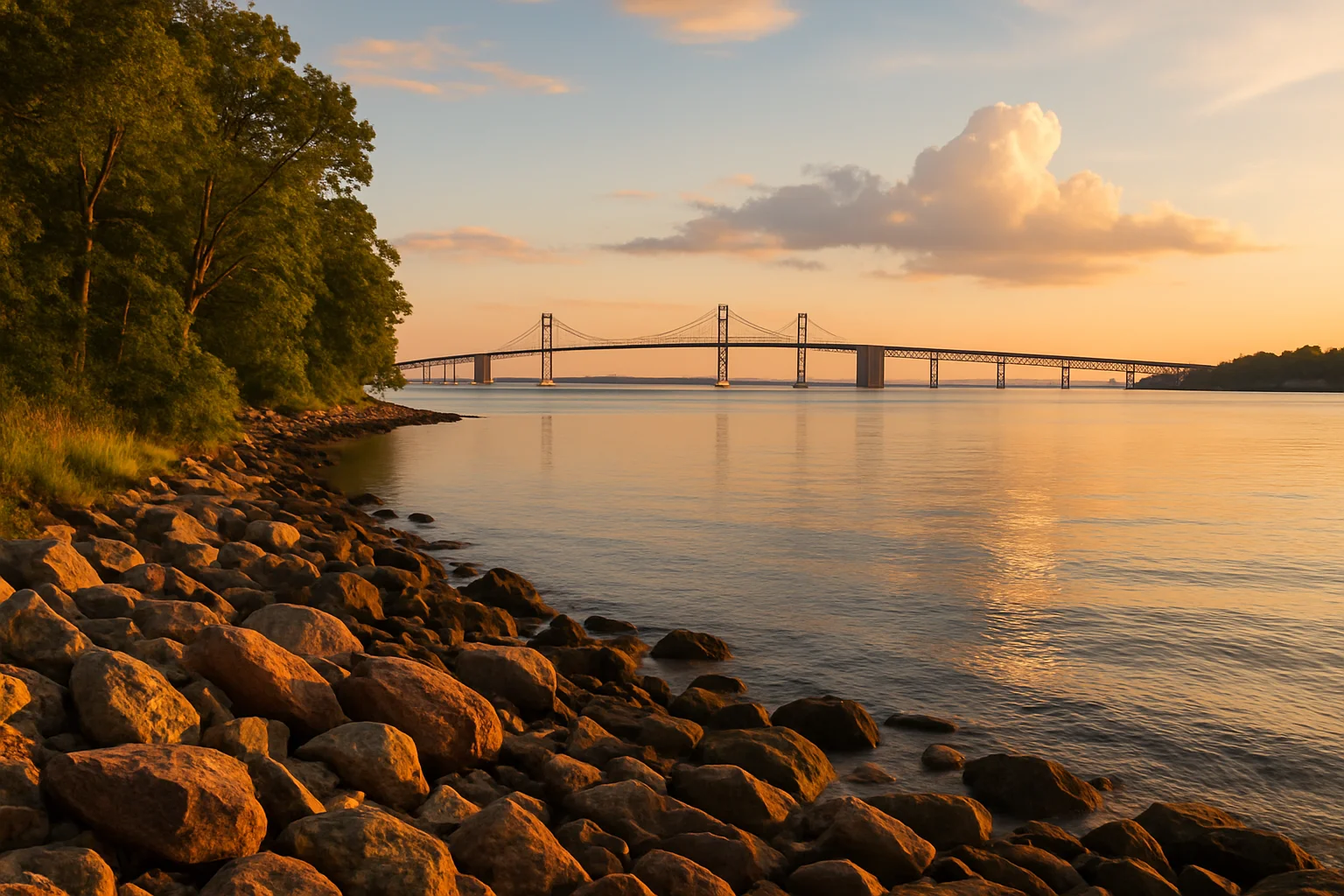
In March 2024, the Francis Scott Key Bridge, which spanned the Patapsco River near the port, collapsed after being struck by a container ship, temporarily disrupting port operations and prompting a major federal and state infrastructure response. The bridge is scheduled for reconstruction with federal funding.
The Port of Baltimore has handled more automobiles and light trucks than any other U.S. port for more than a decade, over 750,000 vehicles in a typical year, and also leads in farm and construction machinery and imported gypsum and sugar; the Domino Sugar refinery on the harbor, marked by its landmark neon sign, has operated since 1922. The port's advantage is geography: it reaches about 40 miles inland from the Chesapeake, putting it closer to the Midwest than any other East Coast port and linking directly to CSX and Norfolk Southern rail.
A 50-foot main channel, deepened in stages and matched by a 2021 expansion of the Howard Street rail tunnel to take double-stacked containers, lets Baltimore handle the largest ships that pass through the enlarged Panama Canal. Public and private marine terminal operations together support roughly 15,000 direct jobs and tens of thousands more indirectly.
The Key Bridge collapse on March 26, 2024, when the container ship Dali lost power and struck a support pier, killed six road-maintenance workers and closed the port's main shipping channel for about 11 weeks while crews cleared an estimated 50,000 tons of steel and concrete. Congress and the state funded a replacement bridge estimated near 2 billion dollars, with completion targeted for the late 2020s, and the federal government sued the ship's owner and manager for cleanup costs.
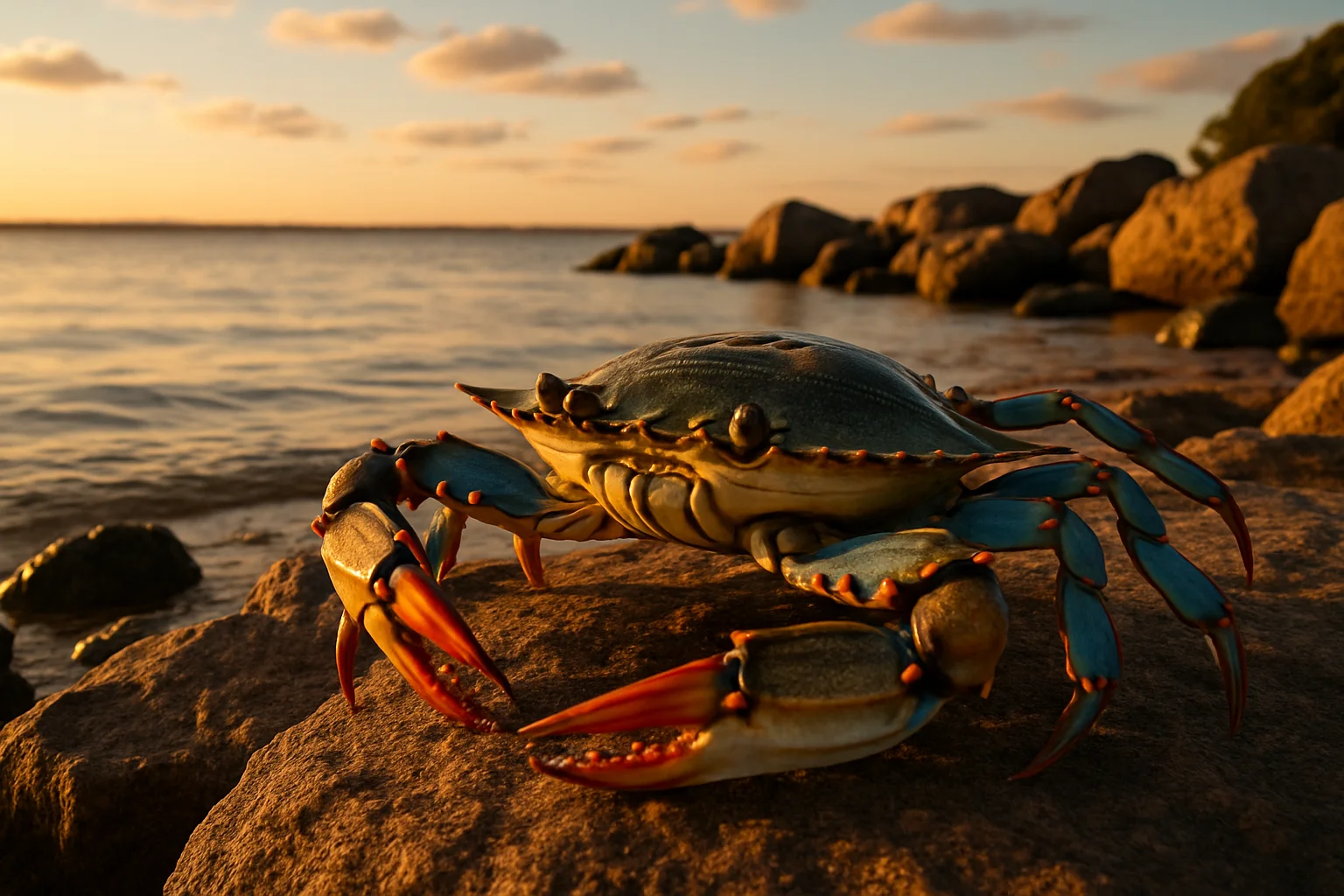
Maryland is also a significant producer of oysters, striped bass (rockfish), and soft-shell crabs. The Eastern Shore is prime agricultural land, producing corn, soybeans, poultry (Delmarva Peninsula is one of the top broiler chicken-producing regions in the country), and vegetables. Though agriculture represents a smaller share of the economy than in past decades, it remains culturally and economically important, especially on the Eastern Shore.
The Chesapeake blue crab harvest swings widely with the weather and the health of the Bay's underwater grass beds; a coastwide winter dredge survey estimated the crab population at about 227 million in 2024, near a record low, prompting tighter catch limits. Maryland and Virginia have coordinated crab management through the Chesapeake Bay Program since the 1990s, and the state's picking houses on the lower Eastern Shore now rely heavily on seasonal foreign guest workers to process the catch.
The Bay's oyster population is a small fraction of its 19th-century size after a century of overharvesting, the diseases MSX and Dermo, and habitat loss, and Maryland has responded with large sanctuary reefs, the biggest at Harris Creek, and a fast-growing oyster-farming (aquaculture) industry that leases Bay bottom to private growers. Native rockfish, driven to a moratorium from 1985 to 1990, recovered strongly but face renewed catch cuts in the 2020s.
Poultry is Maryland's single largest agricultural sector by value: the lower Eastern Shore is part of the Delmarva broiler industry that raises hundreds of millions of chickens a year for companies such as Perdue, headquartered in Salisbury, and Mountaire. Managing the manure from that industry, a major source of the nitrogen and phosphorus that fuel Bay algae blooms, has been the focus of Maryland's contentious Phosphorus Management Tool regulations.
Annapolis, with its colonial waterfront and Naval Academy, is one of the most-visited small cities on the East Coast. Baltimore's Inner Harbor, the National Aquarium, Fort McHenry National Monument, and the vibrant neighborhoods of Fells Point and Canton draw significant tourist traffic. Civil War battlefield sites, Antietam, Monocacy, attract history tourism from across the country.
Ocean City stretches about 10 miles along a barrier island and swells from roughly 7,000 year-round residents to an estimated 300,000 or more on a peak summer weekend; its wooden Boardwalk dates to the 1900s, and the town markets itself heavily to the Baltimore-Washington drive market a few hours away. The nearby Assateague Island National Seashore offers the undeveloped alternative, complete with the wild ponies.
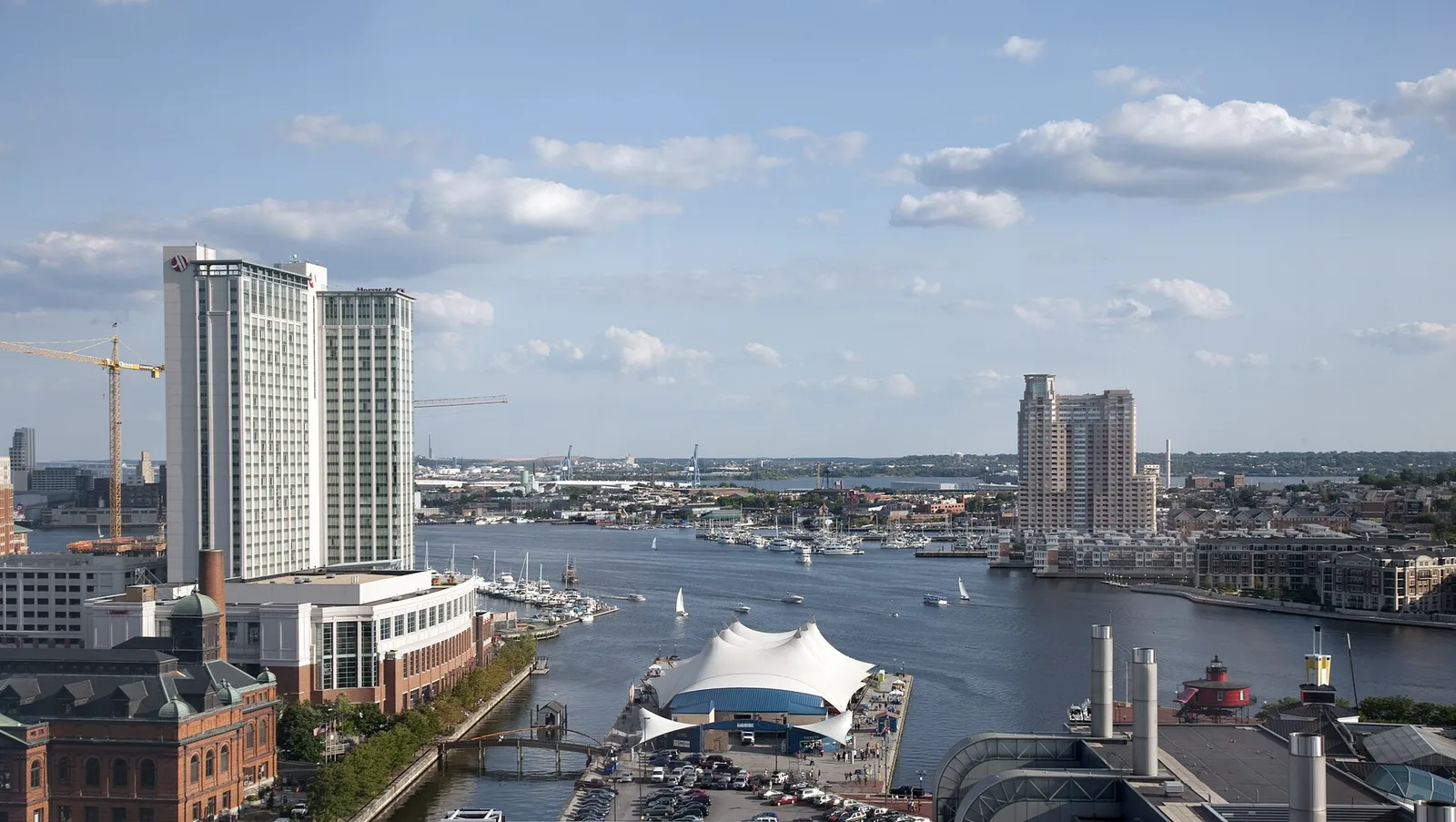
Baltimore's Inner Harbor redevelopment, opening with Harborplace in 1980, was a nationally copied model of festival-marketplace waterfront tourism, and the National Aquarium there has drawn more than 1.5 million visitors a year. By the 2020s Harborplace had fallen into decline and vacancy, and the city approved a controversial private plan in 2024 to redevelop it with apartments and new retail.
History tourism is a major segment: Antietam National Battlefield near Sharpsburg, Fort McHenry, the Harriet Tubman Underground Railroad Byway and visitor center on the Eastern Shore, the C&O Canal towpath running 184 miles from Georgetown to Cumberland, and the Antietam and Monocacy sites together draw well over a million visitors a year and anchor rural Western Maryland and Eastern Shore economies.
How Maryland's Government Works
Maryland's state government follows the standard three-branch structure: the Executive (Governor), the Legislative (the Maryland General Assembly), and the Judicial (the Maryland Court of Appeals, which is the state's highest court, Maryland uses "Court of Appeals" rather than "Supreme Court" for its highest court, a colonial-era naming convention).
The Governor serves a four-year term and is limited to two consecutive terms. Maryland holds its gubernatorial elections in midterm years (non-presidential election years). The Governor has strong executive authority and the power to make appointments to key state agencies, commissions, and judgeships.
The Maryland General Assembly is a part-time legislature consisting of a Senate (47 members, 4-year terms) and a House of Delegates (141 members, 4-year terms). Democrats hold overwhelming supermajorities in both chambers as of 2026. The General Assembly meets for a 90-day session each year beginning in January.
Maryland's highest court is called the Court of Appeals, not the Supreme Court. The intermediate appellate court is called the Court of Special Appeals. This terminology dates to Maryland's colonial charter and was retained through statehood.
Governor of Maryland
Current Governor
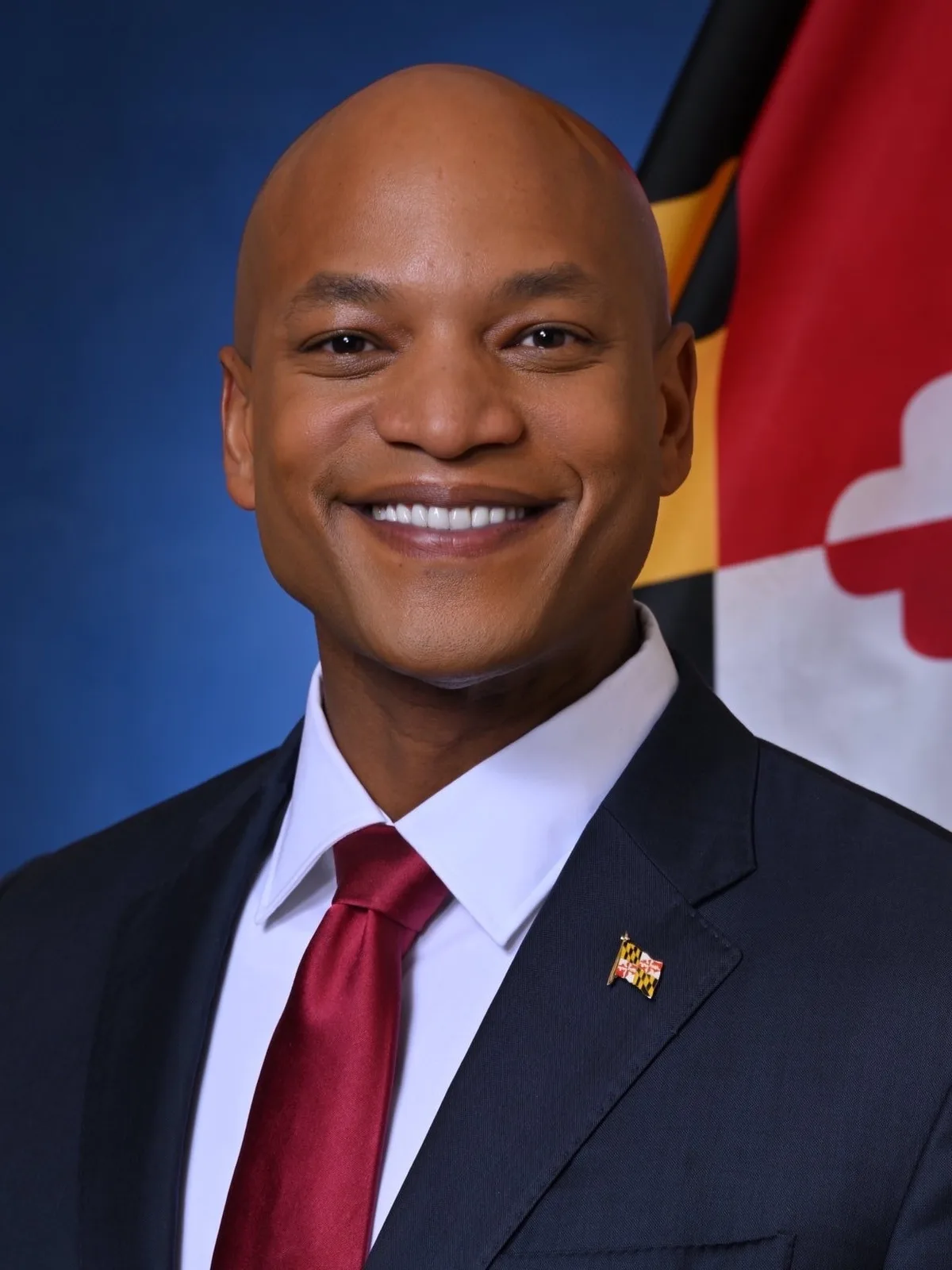
Wes Moore
- Party
- Democrat
- In Office Since
- January 18, 2023
- Elected
- November 8, 2022
- Term Ends
- January 2027
- Born
- October 15, 1978, Takoma Park, MD
- Education
- Valley Forge Military College; Johns Hopkins University (BA); Oxford University (Rhodes Scholar, MA)
- Prior Role
- CEO, Robin Hood Foundation; U.S. Army Captain (combat veteran, Afghanistan)
Wes Moore is the 63rd Governor of Maryland and the first Black governor in the state's history. A decorated Army veteran who served in Afghanistan, a Rhodes Scholar, and the author of the bestselling memoir "The Other Wes Moore," Moore won the 2022 gubernatorial election by nearly 33 percentage points. He has focused on economic opportunity, public safety, and education, framing his governorship around the theme that "leaving no one behind" is not just a moral imperative but an economic one.
Other Current State Officials
Lieutenant Governor
Aruna Miller
In office since January 2023. Born in India, Miller became the first immigrant to serve as Maryland's Lieutenant Governor. A former civil engineer and three-term member of the Maryland House of Delegates representing Montgomery County, she oversees infrastructure, broadband access, and rural affairs.
Attorney General
Anthony Brown
In office since January 2023. A former U.S. Congressman, Maryland Lieutenant Governor under Martin O'Malley, and Army Reserve Colonel who served in Iraq, Brown is the first Black Attorney General in Maryland history. He focuses on consumer protection, civil rights enforcement, and gun violence prevention.
Comptroller
Brooke Lierman
In office since January 2023. The first woman elected as Maryland Comptroller. A former member of the Maryland House of Delegates representing Baltimore City, Lierman oversees state tax collection and financial management for the state's $60+ billion budget.
The Maryland General Assembly
Maryland State Senate
- Seats: 47 members
- Terms: 4-year terms
The upper chamber. All 47 Maryland Senate seats are up for election at the same time rather than on a staggered schedule. Democrats hold an overwhelming supermajority.
Maryland House of Delegates
- Seats: 141 members
- Terms: 4-year terms
The lower chamber. Maryland's lower house is officially the House of Delegates, not the House of Representatives, a colonial-era title retained from Maryland's original charter. Like the Senate, all 141 delegates serve 4-year terms.
Maryland's U.S. Senators
U.S. Senator
Chris Van Hollen
Maryland's senior senator, Van Hollen previously served eight terms in the U.S. House representing Maryland's 8th Congressional District. He sits on the Senate Appropriations and Foreign Relations Committees and is known for his focus on gun safety legislation, affordable housing, and international human rights. He was re-elected in 2022 and his current term runs until January 2029.
U.S. Senator
Angela Alsobrooks
Maryland's junior senator, Alsobrooks previously served as Prince George's County Executive from 2018 to 2025. She won the November 2024 Senate election against Republican former Governor Larry Hogan, becoming Maryland's first Black U.S. senator. She and Delaware's Lisa Blunt Rochester, elected the same night, became the first two Black women to serve in the Senate at the same time. She took office in January 2025.
Maryland Through the Years
From the first Catholic colony in America to the Star-Spangled Banner to the Civil Rights movement, Maryland has been at the center of American history at every turn.
Before European arrival, the lands around the Chesapeake Bay were home to dozens of Algonquian-speaking peoples, the most prominent of which was the Piscataway Confederacy. The Nanticoke, Powhatan, and many smaller nations also inhabited the region.
The Chesapeake Bay, the largest estuary in North America, provided extraordinary abundance: fish, shellfish, waterfowl, and fertile river valleys for agriculture. Piscataway descendants maintain a tribal identity and presence in Maryland to this day.
The Piscataway paramount chief, whose title was the tayac, governed a network of towns along the Potomac from a seat at Moyaone, near present-day Piscataway Park across the river from Mount Vernon. When the Ark and the Dove arrived in 1634, the Piscataway allowed the newcomers to settle at Yaocomaco, a village whose residents were already planning to move to escape raids by the Susquehannock, a powerful Iroquoian nation to the north.
European disease, land pressure, and warfare with the Susquehannock and later the Iroquois shattered the Piscataway world within a few generations, and many left Maryland in the 1690s, some moving north into Pennsylvania and eventually merging with other nations. Others stayed quietly in Charles and Prince George's counties, marrying within their community and holding onto an identity through the centuries when Maryland law and census takers classified them simply as 'colored.'
Maryland has no federally recognized tribe, but the state formally recognized the Piscataway Indian Nation and the Piscataway Conoy Tribe in 2012 after decades of petitioning. The Accokeek Foundation and the National Park Service co-steward Piscataway Park, and the community holds an annual gathering there.
King Charles I granted a royal charter to George Calvert, 1st Lord Baltimore, to establish a colony north of Virginia. George Calvert died before the charter was finalized, so his son Cecil Calvert, 2nd Lord Baltimore, became the colony's proprietor.
The Calverts were Catholic, and Maryland was envisioned partly as a refuge for English Catholics facing persecution at home. This religious origin made Maryland unusual among the American colonies, and led directly to the first religious toleration law in the Western Hemisphere.
The 1632 charter made the Calverts 'lords proprietary' with near-royal powers: they owned all the land, appointed the governor and officials, and could grant manors and titles, a feudal arrangement more sweeping than any other English colonial grant. The colony was named for Queen Henrietta Maria, the Catholic wife of Charles I, and 'Terra Mariae,' Mary Land, deliberately echoed the Virgin Mary for Catholic ears while sounding harmless to Protestant ones.
George Calvert had earlier tried and abandoned a colony in Newfoundland called Avalon after a bitter winter, and had resigned as one of Charles I's secretaries of state in 1625 when he converted to Catholicism and could no longer take the required anti-Catholic oath. He died in April 1632, weeks before the Maryland charter passed the seals, and it was issued to his 25-year-old son Cecil.
The Calverts held the proprietorship, with two interruptions, until the Revolution: Parliament stripped them of it during the English Civil War and the 1689 Protestant Revolution in Maryland, which made it a royal colony from 1692 to 1715. The family regained control only after the fourth Lord Baltimore conformed to the Church of England, and Maryland remained a Calvert possession until independence.
The first colonists arrived on two ships, the Ark and the Dove, and established Maryland's first settlement at St. Mary's City on the western shore of the Chesapeake. Unlike the early years of Jamestown, the Maryland colonists negotiated with local Piscataway leaders and avoided the catastrophic starvation and conflict of earlier Virginia settlements.
St. Mary's City served as Maryland's capital for over 60 years and is now an outdoor living history museum and archaeological site.
The roughly 140 passengers who sailed in 1633 to 1634 included two Jesuit priests and a mix of Catholic gentlemen and mostly Protestant laborers and servants, and Lord Baltimore instructed them to keep their Catholicism private aboard ship and to treat Protestants gently, an early recognition that the colony could only survive as a mixed community. They bought the townsite and standing houses from the Yaocomaco with cloth, axes, and hoes.
Maryland's early years were violent despite the peaceful landing. A trader named William Claiborne, who had a Virginia claim to Kent Island in the upper Bay, fought the Calverts for years, and during the English Civil War a Claiborne ally, Richard Ingle, seized St. Mary's City in 1645 in an episode Marylanders called 'the Plundering Time,' burning records and sending the governor fleeing to Virginia.
The capital moved to the growing Protestant town of Anne Arundel's Towne, renamed Annapolis, in 1695, and St. Mary's City was almost completely abandoned; its brick statehouse was dismantled for a church. That abandonment is why the site is one of the best-preserved 17th-century English colonial sites in North America, still yielding lead coffins, building foundations, and, in 2021, the lost 1667 statehouse itself.
The Maryland General Assembly passed the Act Concerning Religion, known as the Maryland Toleration Act, in 1649, establishing one of the earliest laws protecting freedom of religion in the Western world. The act guaranteed religious toleration to all Christians, preventing the persecution of any Christian denomination.
Though limited by modern standards (it applied only to Christians and imposed the death penalty for denying the Trinity), it was a remarkable step toward religious liberty and influenced later American thinking about the separation of church and state.
The act was a practical measure as much as a principled one: by 1649 Protestants outnumbered Catholics in Maryland, Puritan refugees from Virginia had just been allowed to settle at Providence (now Annapolis), and Cecil Calvert drafted the law and pressed his assembly to pass it to protect the Catholic minority that ran the colony. It also fined anyone who insulted a neighbor with sectarian slurs like 'papist,' 'puritan,' or 'heretic.'
The peace it declared did not last. Puritan settlers took control of the assembly in 1654, repealed the act, barred Catholics from voting, and defeated a proprietary force at the Battle of the Severn in 1655, briefly the only pitched battle of the English Civil War fought in North America. The Toleration Act was restored, repealed again after 1689, and Catholics in Maryland were then barred from voting, holding office, and worshiping publicly for most of the 1700s.
Even so, the 1649 law is regularly cited as a direct ancestor of the First Amendment's religion clauses, and its language influenced later colonial charters. Maryland did not fully restore Catholic civil rights until its 1776 state constitution, and a Jewish Marylander could not hold office until an 1826 law, the so-called 'Jew Bill,' finally dropped the Christian requirement.
Maryland ratified the United States Constitution on April 28, 1788, becoming the seventh state to do so, by a lopsided convention vote of 63 to 11 after a brief, sharp debate led on the losing side by Samuel Chase and Luther Martin, who feared the new federal government would swallow the states.
Maryland had already been central to the founding once before. It was the last state to ratify the Articles of Confederation, holding out until 1781 and refusing to sign until Virginia and the other large states gave up their claims to western lands, insisting that the west become a common national domain, which it did. The Confederation Congress met in the Maryland State House in Annapolis in 1783 and 1784, where it accepted George Washington's resignation as commander in chief and ratified the Treaty of Paris ending the Revolution.
In December 1790 Maryland, joined by Virginia, ceded land along the Potomac for a permanent national capital under the residence provision of the 1790 Compromise; the federal government took the Maryland portion, about 60 square miles on the northeast bank, which is all that remains of the District after Congress returned Virginia's share in 1846. The city of Washington was laid out on land that had been Maryland tobacco plantations and the ports of Georgetown and Bladensburg.
Maryland's early state politics were turbulent: its 1776 constitution created one of the most property-restricted, elite-dominated governments of any state, with an indirectly elected senate, and a Baltimore mob in 1812 attacked a Federalist newspaper office in riots that killed several people, including a Revolutionary War general. The state amended its constitution repeatedly and adopted its current one in 1867.
During the War of 1812, a British naval fleet bombarded Fort McHenry at the entrance to Baltimore Harbor on the night of September 13–14, 1814. An American lawyer named Francis Scott Key, watching from a British ship where he was negotiating a prisoner release, was moved by the sight of the American flag still flying over the fort at dawn.
He wrote the poem that became 'The Star-Spangled Banner', set to music and eventually adopted as the U.S. national anthem in 1931. Fort McHenry is now a national monument in Baltimore Harbor.
The bombardment came weeks after British forces had burned Washington on August 24, 1814, having brushed aside American militia at the Battle of Bladensburg in Prince George's County. When the same army and fleet moved on Baltimore in September, the city was ready: militia under Samuel Smith had fortified the eastern approaches, and the death of the British land commander, General Robert Ross, at North Point on September 12 blunted the attack.
Fort McHenry's guns and the sunken ships blocking the harbor channel kept the Royal Navy at a distance during roughly 25 hours of shelling with rockets and mortar bombs, the 'rockets' red glare' and 'bombs bursting in air' of the poem, and the fort held. The garrison then raised an enormous 30-by-42-foot garrison flag, sewn in Baltimore by Mary Pickersgill, that Key could see from about eight miles down the river.
Key's four verses were printed as a handbill within days, set to the tune of the English club song 'To Anacreon in Heaven,' and were popular through the 19th century, especially in the Union army. The song became the official anthem only by act of Congress in 1931, and the tattered original flag is now a centerpiece of the Smithsonian's National Museum of American History.
The United States Naval Academy was established in Annapolis in 1845 by Secretary of the Navy George Bancroft, who used existing funds to found the school without requiring Congressional approval. Located on a 338-acre campus at the confluence of the Severn River and Chesapeake Bay, the Naval Academy has trained generations of naval officers and is one of the most prestigious military schools in the world.
Bancroft, a historian, moved officer training off ships and into a classroom at Fort Severn, an old Army post he had transferred to the Navy, opening the 'Naval School' with about 50 midshipmen and seven faculty. It was reorganized as the United States Naval Academy in 1850, and during the Civil War the campus was moved to Newport, Rhode Island, for safety and returned to Annapolis in 1865.
The current campus, a national historic landmark of Beaux-Arts buildings designed largely by Ernest Flagg around 1900, was built partly on land reclaimed from the Severn River, and its centerpiece, the Bancroft Hall dormitory, houses the entire 4,000-plus student brigade under one roof and is among the largest single dormitories in the world. The crypt of naval hero John Paul Jones lies beneath the domed chapel.
Graduates are commissioned as Navy or Marine Corps officers and include President Jimmy Carter, the astronauts Alan Shepard and Jim Lovell, senators John McCain and Jim Webb, and dozens of chiefs of naval operations. The academy admitted its first women in 1976 and its first Black midshipman to graduate, Wesley Brown, in 1949.
On September 17, 1862, Union and Confederate forces clashed near Sharpsburg, Maryland in what remains the bloodiest single day in American military history. Approximately 23,000 soldiers were killed, wounded, or missing in a single day of fighting.
The battle was a tactical draw but a strategic Union victory, it halted Confederate General Robert E. Lee's first invasion of the North and gave President Lincoln the political opportunity to issue the Emancipation Proclamation five days later. The Antietam National Battlefield is one of the best-preserved Civil War sites in the country.
Maryland was a slave state that stayed in the Union, and Lincoln kept it there by force: after a Baltimore mob attacked Massachusetts troops passing through the city on April 19, 1861, killing four soldiers and several civilians in what are sometimes called the first deaths of the war, the federal government occupied Baltimore, jailed the mayor, police chief, and dozens of legislators without trial, and suspended habeas corpus. Chief Justice Roger Taney, a Marylander, ruled the suspension unconstitutional in Ex parte Merryman, and Lincoln ignored him.
Lee crossed the Potomac in September 1862 hoping a victory on Northern soil would bring foreign recognition and swing the fall elections, and he expected Marylanders to rise for the Confederacy; few did. A Union soldier found a copy of Lee's marching orders wrapped around cigars, giving General George McClellan a rare look at the divided Confederate army before the two forces met along Antietam Creek.
The battle's roughly 23,000 casualties in about twelve hours exceeded American losses on any other single day of any war, and photographs of the dead taken by Alexander Gardner and displayed in Mathew Brady's New York gallery brought the reality of the war to the Northern public for the first time. Lincoln, who had drafted an emancipation order that summer, waited for a battlefield success to announce it and issued the preliminary Emancipation Proclamation on September 22, reframing the war as a fight against slavery.
Thurgood Marshall, a Baltimore native and graduate of Frederick Douglass High School and Howard University Law School, argued the landmark Brown v. Board of Education case before the Supreme Court in 1952–1954. The Court's unanimous decision declaring racially segregated schools unconstitutional was one of the most consequential rulings in American legal history.
Marshall went on to become the first Black Solicitor General of the United States and, in 1967, the first Black Justice of the Supreme Court.
Marshall was rejected by the University of Maryland School of Law because he was Black, and one of his first major victories, Murray v. Pearson in 1935, forced that same law school to admit its first Black student, Donald Gaines Murray. As lead counsel for the NAACP Legal Defense Fund from 1940, Marshall argued 32 cases before the Supreme Court and won 29, including Smith v. Allwright against the all-white primary and Shelley v. Kraemer against racially restrictive housing covenants.
Brown v. Board consolidated five cases from Kansas, South Carolina, Virginia, Delaware, and the District of Columbia, and Marshall's team built the argument around social-science evidence, including psychologist Kenneth Clark's 'doll tests' showing the damage segregation did to Black children's self-image. Chief Justice Earl Warren assembled a unanimous 9 to 0 decision on May 17, 1954, holding that 'separate educational facilities are inherently unequal.'
Enforcement was slow and bitterly resisted, and a 1955 follow-up ordered desegregation 'with all deliberate speed,' a phrase that permitted years of delay. Marshall served on the federal appeals court in New York, then as Solicitor General under Lyndon Johnson, and sat on the Supreme Court from 1967 to 1991, where he was its most consistent voice against the death penalty and for civil liberties.
Wes Moore was inaugurated as the 63rd Governor of Maryland on January 18, 2023, becoming the first Black governor in Maryland's history and only the third Black governor elected in United States history. Moore, an Army veteran, Rhodes Scholar, and author, won the 2022 gubernatorial election as a Democrat.
His election in a state with a complicated racial history, birthplace of both Harriet Tubman and Frederick Douglass, and also home to one of the largest slave-trading operations in the antebellum South, carried particular historical weight.
Moore grew up partly in the Bronx and Maryland after his father died when he was three, was briefly enrolled in military school as a teenager, then graduated from Johns Hopkins, won a Rhodes Scholarship, served as a paratrooper officer in Afghanistan, and ran the New York anti-poverty organization Robin Hood before entering politics. He had never held elected office before winning the governorship, defeating a Trump-endorsed Republican by roughly 32 points in 2022.
Maryland has elected only Democratic and Republican governors in modern times but leans strongly Democratic in federal elections, and Moore succeeded the popular two-term Republican Larry Hogan. Only two other Black Americans had been elected governor of any state before him: Douglas Wilder of Virginia in 1989 and Deval Patrick of Massachusetts in 2006.
Moore's early agenda included a service-year option for high school graduates, a push to end child poverty in the state, and, in 2024, mass pardons for more than 175,000 low-level marijuana convictions following Maryland voters' 2022 legalization of recreational cannabis. His term has also been shaped by the March 2024 Key Bridge collapse and by budget strains from slowing federal-sector growth.
Maryland's Defining Moments in American History
These are the events that didn't just shape Maryland, they changed the nation.
On the night of September 13-14, 1814, British warships bombarded Fort McHenry in Baltimore Harbor. Francis Scott Key, a lawyer watching from a ship, saw the American flag still flying the next morning and was inspired to write a poem he titled 'Defence of Fort M'Henry.' Set to the tune of a popular British drinking song, it became 'The Star-Spangled Banner,' adopted as the national anthem in 1931.
The battle, the flag, and Key's words transformed a military skirmish into one of America's most enduring national symbols.
Key, a Georgetown lawyer, had rowed out to the British fleet under a flag of truce to secure the release of a civilian physician, Dr. William Beanes, and was held aboard ship through the bombardment because he had seen the fleet's plans. The flag he watched for was deliberately huge: Major George Armistead had commissioned a 30-by-42-foot ensign so the British would 'have no difficulty seeing it from a distance,' and Baltimore flagmaker Mary Pickersgill and her workers sewed it in 1813 for 405 dollars.
The Royal Navy fired an estimated 1,500 to 1,800 bombs and Congreve rockets over about 25 hours but could not get close enough to do decisive damage, and the land assault stalled after General Ross was killed. When Key saw the garrison flag raised at dawn on September 14, he began drafting the poem on the back of a letter.
The verses spread fast as 'Defence of Fort M'Henry,' were matched to the tune of a British gentlemen's-club song, and were widely sung for over a century, but the United States had no official anthem until President Herbert Hoover signed a law designating 'The Star-Spangled Banner' on March 3, 1931. The surviving flag, now missing a star and part of a stripe cut away as souvenirs over the years, is displayed in a special low-light chamber at the Smithsonian.
The Mason-Dixon Line, surveyed by Charles Mason and Jeremiah Dixon between 1763 and 1767, was intended to settle a border dispute between Pennsylvania and Maryland. Over time, it became the cultural and political boundary between the North and South, the free and slave states.
When Missouri asked to join the Union as a slave state in 1820, Congress debated whether new states above the Mason-Dixon line should be free. The line continues to serve as a shorthand for America's deepest regional and cultural divisions.
The dispute the two English astronomers were hired to settle was 80 years old: the 1632 Maryland charter and the 1681 Pennsylvania charter described overlapping boundaries, and armed clashes between settlers, including 'Cresap's War' in the 1730s, had killed people near the line. Mason and Dixon ran a precise survey west from near Philadelphia, setting carved limestone markers every mile, many shipped from England with the Penn and Calvert coats of arms, and stopped in 1767 when Native guides would go no farther near the Ohio country.
Their line fixed the Maryland-Pennsylvania border at 39 degrees 43 minutes north, plus the north-south Delaware boundary and the 12-mile arc around New Castle, and it did not become a slavery boundary until later: Pennsylvania began gradual abolition in 1780 while Maryland kept slavery, so the surveyors' line happened to separate a free state from a slave state.
By the 1830s abolitionists and Southern politicians alike were using 'Mason and Dixon's line' to mean the boundary between free and slave America, and it kept that meaning through the Civil War and into the 20th century as a name for the cultural divide between North and South. Original stone markers still stand along back roads, and the National Park Service and the two states have worked to survey and preserve them.
Frederick Douglass was born into slavery in Talbot County, Maryland, around 1818. He taught himself to read in secret, an act that was illegal and that he credited with his awakening. He escaped from Baltimore in 1838 disguised as a sailor.
What followed was one of the most extraordinary lives in American history: orator, author, abolitionist, editor, advisor to presidents, and the most photographed American of the 19th century. His 1845 Narrative of the Life of Frederick Douglass laid bare the reality of slavery for a Northern audience that had preferred not to look.
As a boy Douglass was sent to Baltimore, where the wife of the household began teaching him the alphabet until her husband forbade it, telling her that literacy would make a slave 'unmanageable'; Douglass later said that lesson showed him 'the pathway from slavery to freedom,' and he traded bread to poor white children for reading lessons in the street. He was hired out to a farm and to Baltimore shipyards as a caulker, and in 1838 escaped north by train and steamboat using a free Black sailor's papers and borrowed clothes.
The 1845 Narrative was so detailed and verifiable, naming his owners and the county, that friends feared it would lead to his recapture, and Douglass sailed to Britain for nearly two years, during which supporters raised the money to buy his legal freedom. Back in the United States he settled in Rochester, New York, published the newspaper The North Star, helped people escape on the Underground Railroad, and broke with William Lloyd Garrison over whether the Constitution was a proslavery document, Douglass came to argue it was not.
During the Civil War he pressed Lincoln to enlist Black soldiers and to make emancipation a war aim, and two of his sons served in the 54th Massachusetts. He later held federal posts as U.S. marshal for the District of Columbia and minister to Haiti, and by his death in 1895 was among the most recognized Americans in the world; the Maryland statehouse, which once barred Black visitors from its galleries, unveiled a statue of him in 2020.
On September 17, 1862, Union and Confederate forces clashed at Antietam Creek near Sharpsburg, Maryland, in the bloodiest single day of combat in American history. More than 23,000 soldiers were killed, wounded, or missing. The battle stopped the Confederate invasion of the North.
Five days later, Lincoln issued the preliminary Emancipation Proclamation. The battle did not end the Civil War, but it changed the war's fundamental character, transforming it from a conflict over union into one over slavery and freedom.
The fighting fell into three phases across a few square miles of farmland: the morning battle in the Cornfield and West Woods, where regiments were shattered in minutes; the midday fight along a sunken farm lane afterward known as Bloody Lane, where about 5,500 men fell; and the afternoon struggle for a stone bridge over Antietam Creek that Union general Ambrose Burnside took only after hours of failed assaults, too late to trap Lee's army.
Lee, badly outnumbered, held his ground on September 18 and then withdrew across the Potomac into Virginia unpursued, which is why the battle counts as a Union strategic victory despite the even casualties. Lincoln, frustrated that McClellan let Lee escape, removed him from command that November.
Britain and France had been moving toward recognizing the Confederacy, and Antietam plus the Emancipation Proclamation ended that possibility, since neither government could align with a slaveholding power against an emancipating one. Clara Barton, who tended the wounded on the field and later founded the American Red Cross, earned the nickname 'Angel of the Battlefield' at Antietam.
The Chesapeake Bay, the largest estuary in the United States, has been at the center of American environmental policy debates for decades. By the 1970s and 80s, decades of pollution had devastated the bay's blue crab, oyster, and rockfish populations.
Maryland's response, including the 1983 Chesapeake Bay Agreement and subsequent restoration programs, became a national model for watershed management and inter-state environmental cooperation. The bay's ongoing recovery story illustrates both the scale of environmental damage humans can cause and the resilience of natural systems when protected.
The Bay's 64,000-square-mile watershed drains parts of six states and the District of Columbia, so no single state can fix it: the 1983 agreement first brought Maryland, Virginia, Pennsylvania, the District, and the federal Environmental Protection Agency to one table, and a 1987 update set the first numeric goal, a 40 percent cut in nitrogen and phosphorus. Progress stalled for decades against farm runoff, sewage, and sprawl.
In 2010 the EPA imposed a legally binding 'pollution diet,' the Chesapeake Bay Total Maximum Daily Load, the largest such cleanup plan ever written in the United States, assigning each state and major river a cap on nutrients and sediment. Farm and homebuilder groups and 21 other states challenged it as federal overreach, but the courts upheld it, and the Supreme Court declined to hear the case in 2016.
Maryland has paired the federal framework with its own measures: a 2004 'flush tax' surcharge on sewer and septic bills that has funded upgrades to dozens of treatment plants, a ban on phosphorus lawn fertilizer, oyster sanctuaries, and 2010s limits on where poultry manure can be spread. The 2025 deadline for meeting the pollution diet passed with the states, especially Pennsylvania, well short, and the partners agreed to negotiate new goals rather than abandon the effort.
Notable Marylanders
Frederick Douglass
Abolitionist, author, and statesman; born into slavery on Maryland's Eastern Shore; one of the most important Americans of the 19th century
Harriet Tubman
Escaped slavery in Dorchester County and returned 13 times to lead approximately 70 people to freedom via the Underground Railroad
Thurgood Marshall
Baltimore native; argued Brown v. Board of Education; first Black Solicitor General and first Black Supreme Court Justice
Francis Scott Key
Wrote the poem that became The Star-Spangled Banner after watching the Battle of Baltimore in 1814
Babe Ruth
"The Sultan of Swat", baseball's greatest legend, born in Baltimore in 1895; the Babe Ruth Birthplace and Museum is a block from Camden Yards
Edgar Allan Poe
Gothic fiction master who lived much of his adult life in Baltimore, died there in 1849; buried in Westminster Hall churchyard
Cal Ripken Jr.
Hall of Fame shortstop and third baseman, born in Havre de Grace; played 2,632 consecutive games, the Iron Man streak
H.L. Mencken
Baltimore-born journalist, satirist, and cultural critic; "The Sage of Baltimore" was one of the most influential American writers of the early 20th century
Billie Holiday
Jazz and blues singer born in Philadelphia but raised in Baltimore; one of the greatest vocalists in American music history
Philip Glass
Minimalist composer, born in Baltimore; one of the most influential composers of the late 20th century
State Symbols & Quick Facts
| Nickname | "The Old Line State" (also: "Free State") |
| Capital | Annapolis |
| Largest City | Baltimore |
| Statehood | April 28, 1788 (7th state) |
| Population | ~6.2 million (2025 est.) |
| Area | 12,407 sq miles (42nd largest) |
| State Bird | Baltimore Oriole |
| State Flower | Black-Eyed Susan |
| State Tree | White Oak |
| State Fish | Rockfish (Striped Bass) |
| State Crustacean | Blue Crab |
| State Insect | Baltimore Checkerspot Butterfly |
| State Song | None ("Maryland, My Maryland" repealed 2021) |
| State Motto | Fatti maschii, parole femine ("Strong deeds, gentle words") |
| Time Zone | Eastern Time |
| Bordering States | PA, DE, VA, WV (and Washington D.C.) |
| Chesapeake Bay | Largest estuary in the United States |
Did You Know?
Maryland donated the land that became Washington D.C., without Maryland's 1791 land cession, the nation's capital would not exist in its current location.
The Star-Spangled Banner was written by a Marylander watching a Baltimore battle. Francis Scott Key observed the British bombardment of Fort McHenry on the night of September 13–14, 1814, and wrote the poem that became the national anthem.
The Chesapeake Bay is the largest estuary in the United States, stretching 200 miles from the Susquehanna River in the north to the Atlantic Ocean in the south, with over 11,600 miles of shoreline.
Maryland is the birthplace of both Frederick Douglass and Harriet Tubman, two of the most consequential figures in American history, both born into slavery on the Eastern Shore.
The Battle of Antietam (September 17, 1862) remains the bloodiest single day in American military history, with approximately 23,000 casualties on both sides in a single day of fighting near Sharpsburg.
Annapolis has more 18th-century colonial-era buildings surviving in original condition than any other city in the United States, earning it the title "The Athens of America" in its colonial heyday.
The Maryland Toleration Act of 1649 was one of the first laws protecting religious freedom in the Western Hemisphere, written over 140 years before the First Amendment.
Maryland is one of the smallest states by land area (42nd), yet one of the most densely populated and wealthiest per capita in the country, largely due to its proximity to the federal government.
The U.S. Naval Academy in Annapolis has been training naval officers since 1845. Every surface warfare officer, naval aviator, and submarine officer in the Navy traces their professional lineage to Annapolis.
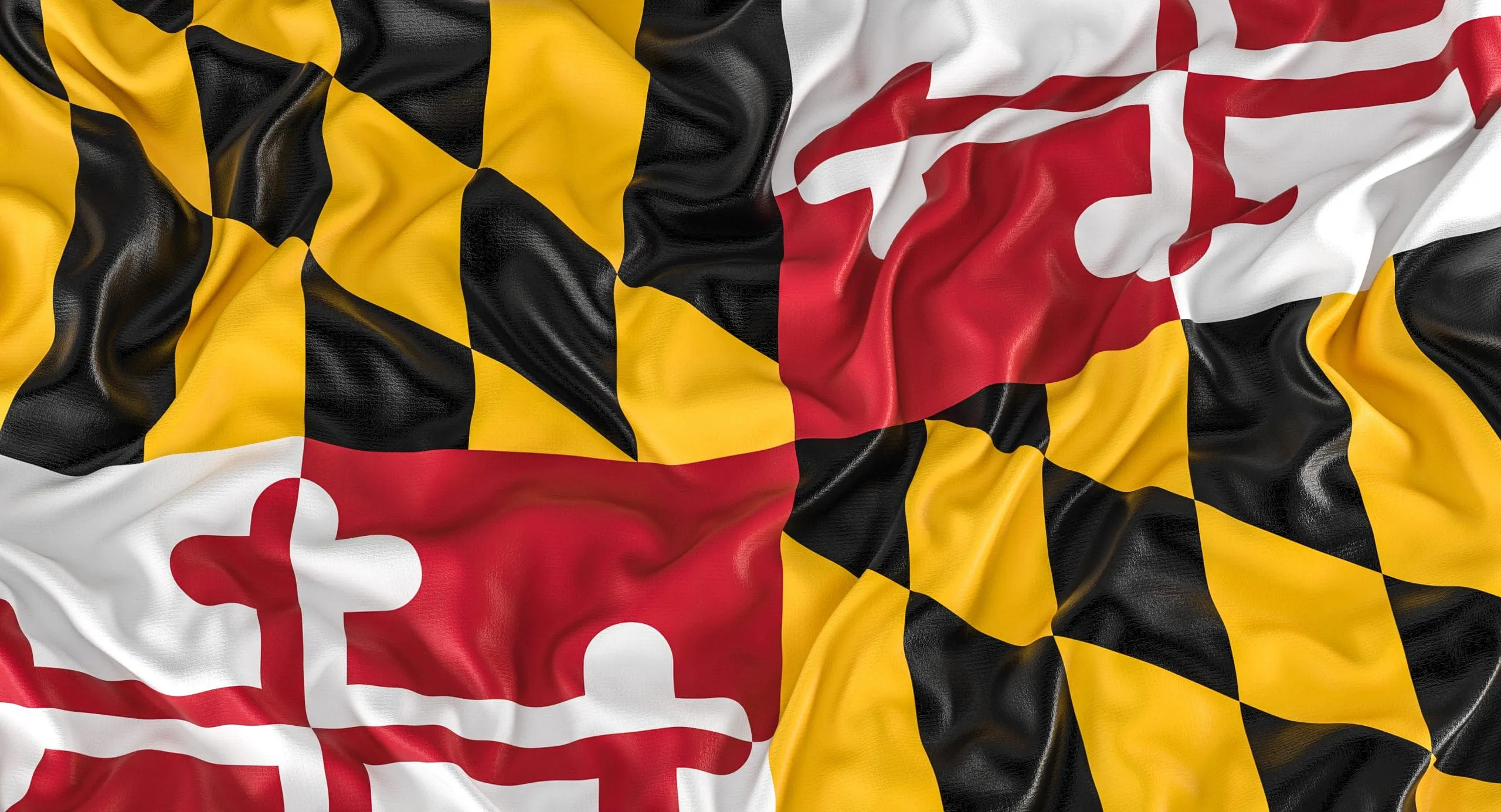
Maryland's state flag, quartered in the gold-and-black Calvert family arms and the red-and-white Crossland family arms, is widely considered one of the most distinctive and visually striking state flags in the nation.
Quick Facts and Common Questions
Short answers to the questions people most often ask about Maryland: its abbreviation, who it was named for, its capital, and its place in Congress.
Maryland's two-letter postal abbreviation is MD. The U.S. Census Bureau places it in the South region, in the South Atlantic division, and about 6.18 million people lived there in the 2020 census.
Maryland became the 7th state on April 28, 1788, when its convention ratified the U.S. Constitution. It was one of the original 13 colonies.
Maryland was named for Queen Henrietta Maria, wife of King Charles I of England, who granted the colony's charter to Cecil Calvert, the second Lord Baltimore, in 1632. The Calverts founded the colony in 1634 partly as a refuge for English Catholics, and its 1649 Toleration Act protected freedom of worship for Christians.
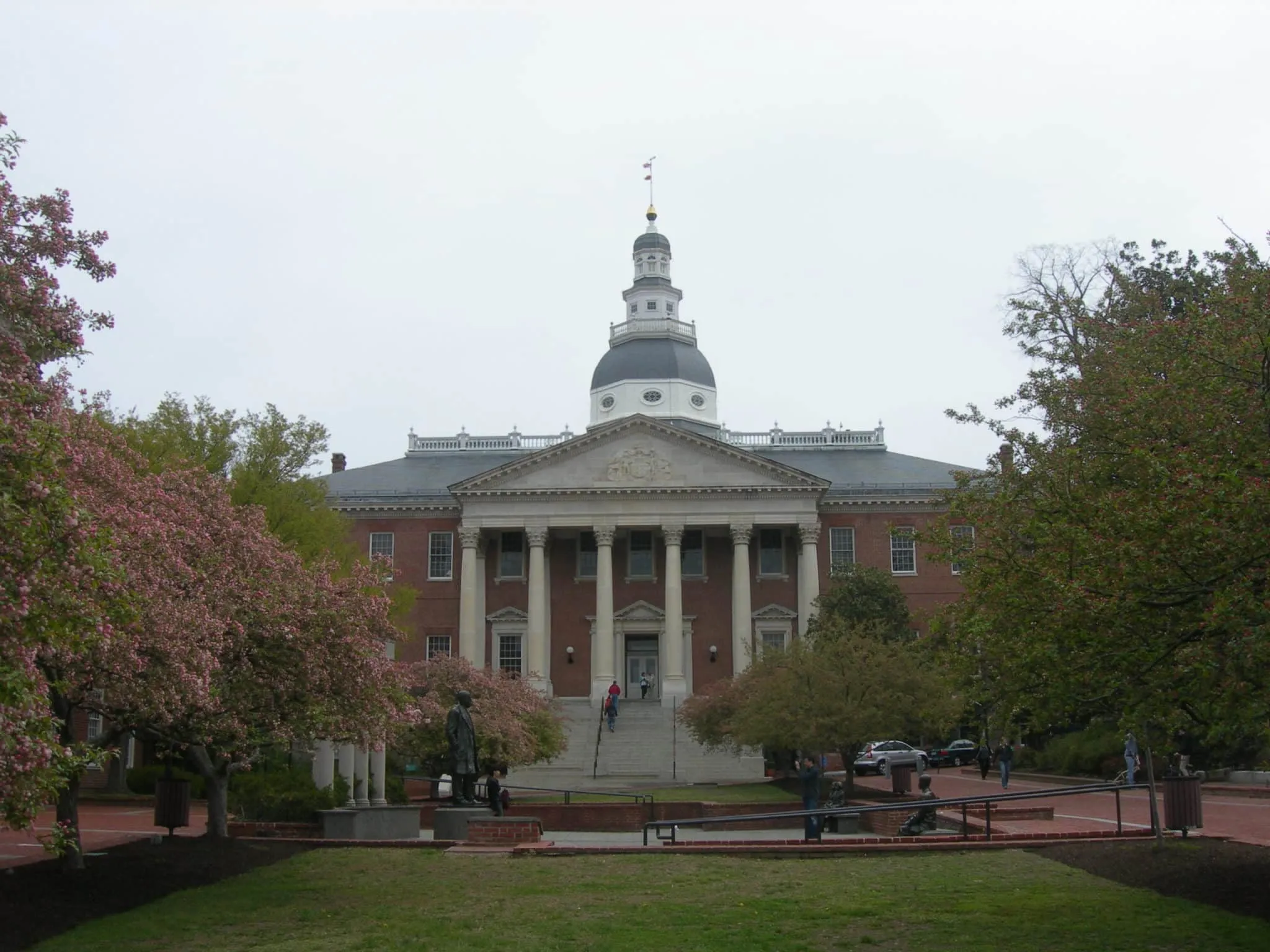
Annapolis has been the capital since 1694, when it replaced St. Mary's City. The Maryland State House, in use since 1772, is the oldest state capitol still in continuous legislative use. It also served as the U.S. capitol from November 1783 to August 1784, when George Washington resigned his commission there and Congress ratified the Treaty of Paris that ended the Revolutionary War.
Maryland borders Pennsylvania to the north, along the Mason-Dixon line, Delaware to the east, and Virginia and West Virginia to the south and west, where the Potomac River forms much of the border. It also surrounds most of Washington, D.C. The Chesapeake Bay nearly splits the state in two, and its eastern shore reaches the Atlantic Ocean.
Yes. In 1791 Maryland and Virginia ceded land to create the federal capital district. Virginia's portion, south of the Potomac River, was returned to Virginia in 1846, so all of today's District of Columbia was originally Maryland land.
Maryland is called "The Old Line State," after the Maryland Line, the state's regular troops in the Continental Army during the Revolutionary War, and also "The Free State." Its state bird is the Baltimore oriole, its flower is the black-eyed Susan, its tree is the white oak, and its crustacean is the blue crab.
Based on the 2020 census, Maryland has 8 seats in the U.S. House of Representatives, the same as before, which gives it 10 votes in the Electoral College.
Assateague Island National Seashore
37 Miles of Undeveloped Atlantic Barrier Island, Home to Wild Ponies and Pristine Shores
About Assateague Island National Seashore
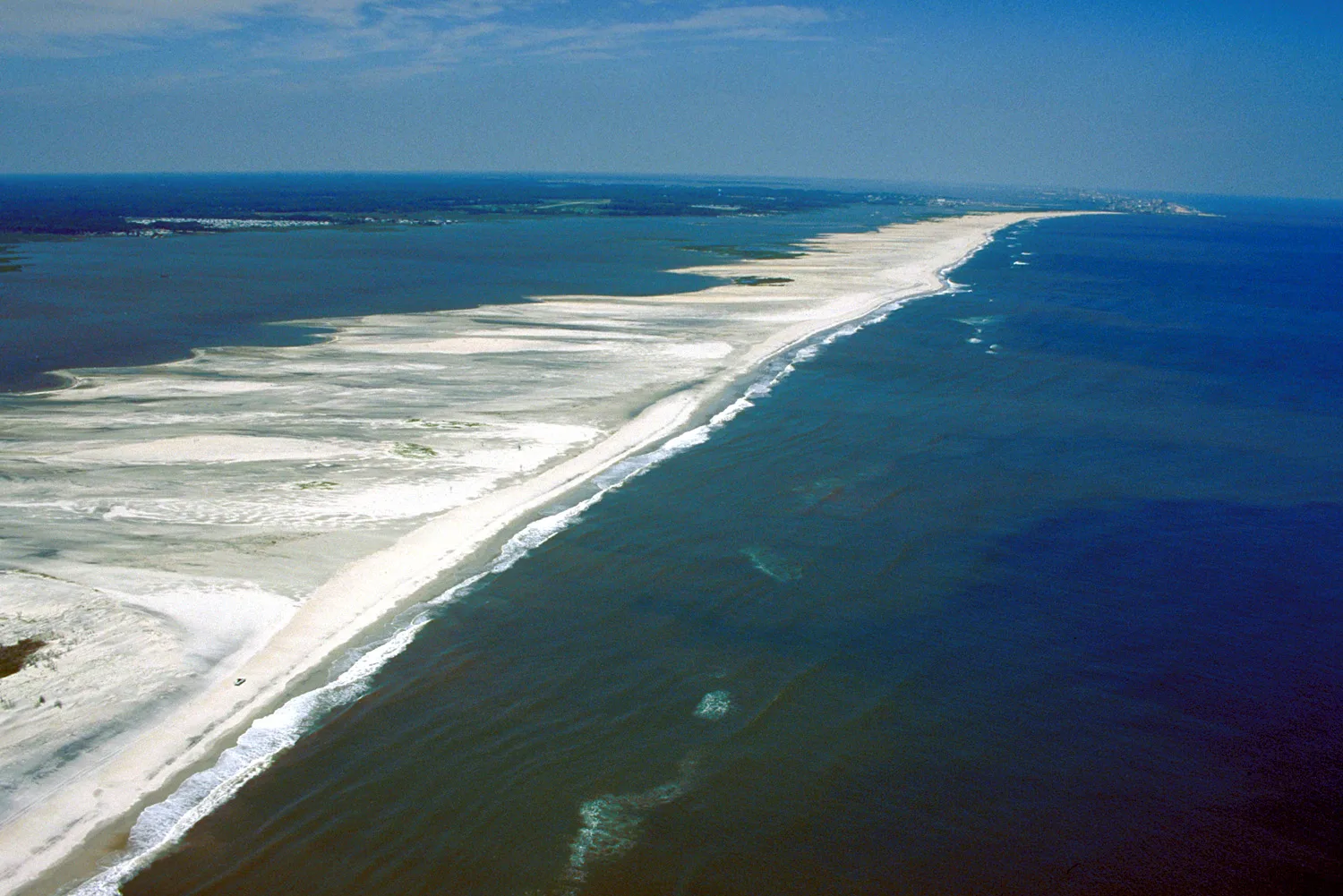
Assateague Island National Seashore protects a 37-mile barrier island of sand, dune, forest, and marsh between the Atlantic and Chincoteague Bay, one of the longest stretches of undeveloped shore on the East Coast.
The island straddles the Maryland-Virginia line and is run by three agencies: the National Park Service over most of it, the U.S. Fish and Wildlife Service on the Virginia end as Chincoteague National Wildlife Refuge, and the state of Maryland on a two-mile stretch as Assateague State Park.
It became a national seashore on September 21, 1965, three years after the Ash Wednesday Storm of 1962 wrecked a partly built beach subdivision on the Maryland end; the ruined streets and lost lots made public ownership possible.
A barrier island is not a fixed place: Assateague is slowly migrating landward as storms wash sand from the ocean side to the bay side, and the Park Service manages it as a moving natural system rather than trying to hold the shoreline still.
- Designation
- National Seashore
- Location
- Worcester County, Maryland and Accomack County, Virginia
- Established
- September 21, 1965
- Annual Visitors
- ~2.4 million
Assateague's Barrier Island Habitats
The ocean beach is the island's most active edge, rebuilt and torn down constantly by waves, longshore currents, and storms, with no seawalls or buildings to interrupt it.
In big storms, waves run right over the low dunes and carry sand across the island to the bay, 'overwash' that is the main way a barrier island moves and rebuilds itself.
The north end has been starving for sand since a 1933 hurricane opened the Ocean City Inlet and the Army Corps jettied it; that end of Assateague has shifted more than 1,000 feet west, and since 2004 a pump program moves sand around the inlet to slow the loss.
Loggerhead sea turtles nest on the upper beach in summer near the northern limit of their range, and piping plovers, least terns, and skimmers nest on the open sand, which closes long stretches to vehicles and dogs from spring into fall.
A line of low foredunes, held together by American beachgrass, is the island's first defense against ocean storms; behind it, sheltered backdunes grow bayberry, wax myrtle, and seaside goldenrod.
The feral horses graze the dune grasses hard, cropping them short and shifting which plants grow where, an effect no native grazer on the island produces.
Where beachgrass is trampled or buried, a dune can blow out into a gap that storm water then exploits, so the Park Service fences and replants the worst spots.
Over-sand vehicle routes and pedestrian crossings are cut through set points in the dunes to keep traffic from breaking the whole line down.
In the island's wider, more sheltered middle, loblolly pine forest and dense greenbrier and bayberry thicket grow on old dune ridges just high enough to escape salt water.
This forest is uncommon on the mid-Atlantic coast and gives cover to the horses and the sika deer in storms and cold, and nesting and stopover habitat to migrating songbirds.
Sika deer, a small Asian elk released on the island in 1923, are now common here and are hunted in season to keep their numbers down.
Salt spray shears the seaward edge of the forest into a smooth, sloping wall, a 'salt-pruned' canopy that marks how far the wind-borne salt reaches.
The bay side is a broad mosaic of salt marsh, tidal guts, and shallow flats, flooded twice a day and among the most productive habitat on the coast.
Marsh cordgrass and its detritus feed the crabs, shrimp, and young fish that in turn feed the herons, egrets, ibis, and terns; more than 320 bird species have been recorded on the island.
The bayside marshes are also the poorest forage the horses eat, and the high salt in that diet is why the 'wild ponies' drink so much fresh water and look bloated and stocky.
As the island rolls landward, new marsh forms on the bay side from overwash sand while the ocean edge erodes, so the whole island shifts west without necessarily shrinking.
Indigenous Connections
Assateague People
The island's name comes from the Assateague, an Algonquian-speaking people of Maryland's lower Eastern Shore who used the barrier islands and bay shore for fishing, waterfowling, and shellfishing.
In the 1600s the colony of Maryland set aside small reservations for the Assateague and neighboring bands on the mainland, but settlers pressed onto them and the tribes' land was steadily whittled away.
Through the 1700s the surviving Assateague merged with the Nanticoke and other Eastern Shore peoples or moved north, and by the Revolution they had largely left the area as a distinct group.
No federally recognized tribe claims specific descent from the historic Assateague, but Maryland state-recognizes several Eastern Shore tribes, including the Nause-Waiwash Band of Indians and the Pocomoke Indian Nation, whose members trace connections to the region's Algonquian peoples.
Exploring Assateague Island
Pony Watching and Wildlife Tours
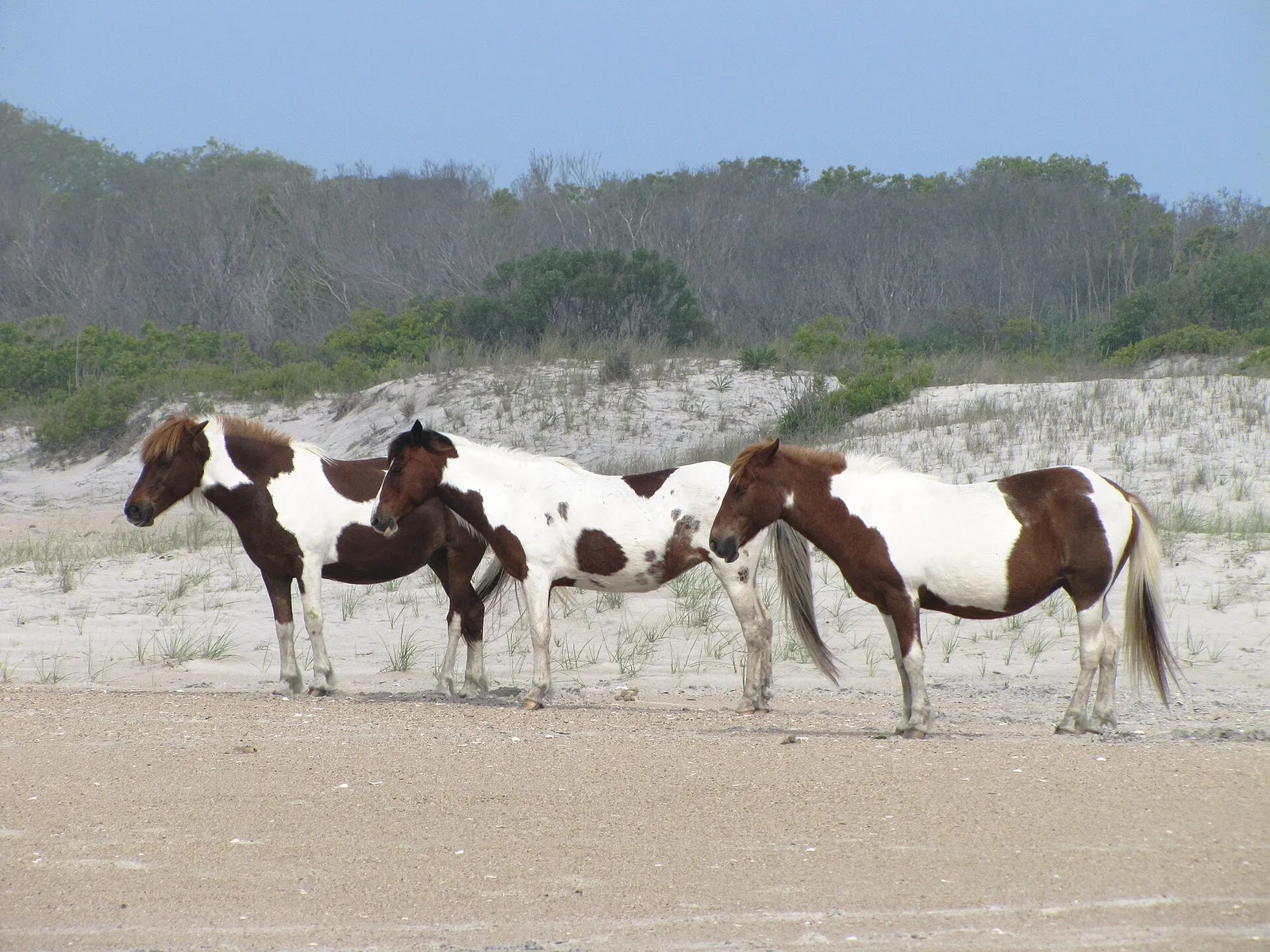
The Maryland herd of roughly 80 to 100 horses roams the whole national seashore, and visitors regularly see them along the beach road, around the campgrounds, and on the Life of the Dunes trail.
They are feral, not tame: the Park Service requires people to stay at least 40 feet away, and horses that kick, bite, or raid coolers are a common cause of injuries and citations.
The two herds are kept apart by a fence at the Maryland-Virginia line; the Virginia herd is owned by the Chincoteague Volunteer Fire Company and is not part of the seashore's animals.
Rangers run programs on the horses' history, most likely descended from livestock that mainland owners pastured here in the 1600s to dodge fencing laws and taxes, rather than from any shipwreck.
Swimming and Surf Fishing
The Maryland day-use area has lifeguarded ocean swimming beaches in summer, and the rest of the 37 miles is open, unguarded shore.
Surf fishing runs year-round for striped bass, bluefish, kingfish, and flounder, and is best in the spring and fall runs.
An over-sand vehicle permit lets four-wheel-drive vehicles onto a stretch of beach beyond the developed area, subject to seasonal closures for nesting birds.
The surf here has strong rip currents and no bottom features to break the waves, so the Park Service stresses swimming only at the guarded beaches.
Kayaking Chincoteague Bay
Launching from the bay side drops paddlers straight into the salt marsh, with osprey, herons, egrets, and, in season, migrating shorebirds all around.
The water is shallow and usually calm, good for beginners, though an afternoon sea breeze can build a short, sharp chop on the open bay.
A chain of backcountry canoe-in campsites along the bay shore makes multi-day trips possible with a free Park Service permit.
Biting flies and mosquitoes are fierce from late spring through summer, and the marsh has almost no shade, so trips are easier in the cooler months.
Conservation Challenges
Barrier Island Migration and Sea Level Rise
Assateague has been rolling landward for thousands of years: the ocean erodes the front, storms wash sand over the top, and new marsh builds on the bay side, so the whole island moves west.
Rising sea level speeds that up, and on the north end the jettied Ocean City Inlet, by cutting off the natural southward flow of sand, has made the erosion far worse than nature alone would.
The Park Service's policy is to let the island migrate rather than armor it, because seawalls on a barrier island tend to lock the beach in place until it drowns.
That means roads, bathhouses, and campgrounds are built to be moved or lost; the main Maryland parking area and road have already been relocated once and are expected to be again.
Pony Herd Management
Without predators or hunting, the horse herd would grow until it overgrazed the dunes and marsh, so since 1994 the Park Service has darted mares with a contraceptive vaccine, PZP.
It was one of the first uses of immunocontraception to manage a wild population and is now a model copied for other feral-horse and deer herds.
Biologists know every horse in the Maryland herd by sight, track births and deaths, and adjust how many mares get the vaccine to hold the herd near 80 to 100.
Even at that size the horses reshape the island, and researchers still debate how much of Assateague's dune and marsh structure is natural and how much is a product of three centuries of grazing.
Plastic Pollution and Beach Debris
Ocean currents deliver a steady load of marine debris to Assateague's beaches: plastic bottles and fragments, foam, bottle caps, and lost or discarded fishing line, rope, and nets.
Lost fishing gear and six-pack rings entangle and kill shorebirds, sea turtles, and seals, and small plastic pieces are eaten by birds and fish.
Volunteer cleanups, including the annual International Coastal Cleanup, haul tons of trash off the island each year, but the supply from the ocean does not stop.
Balloons released far inland are among the most common finds, which is why the seashore and Maryland have campaigned against outdoor balloon releases.
37 miles of undeveloped Atlantic shoreline, one of the longest on the East Coast
At a Glance
Did You Know?
One popular legend holds that Assateague's ponies descended from survivors of a Spanish shipwreck in the 1500s. More likely they were placed on the island by 17th-century colonists to avoid mainland livestock taxes, but the shipwreck story endures.
Every July, the Chincoteague Volunteer Fire Company rounds up the Virginia herd and swims them across the channel to Chincoteague Island for an auction. The tradition has continued since 1925 and was immortalized in the 1947 novel 'Misty of Chincoteague.'
Assateague Island is slowly migrating westward at a rate of several feet per year. The island has shifted so dramatically since the 1930s that the Ocean City, Maryland inlet, dredged in 1933, fundamentally altered the sediment flow that once kept Assateague replenished.
Plan Your Visit
Location
Worcester County, Maryland and Accomack County, Virginia
Designation
National Seashore
Best Time to Visit
Late spring through fall for swimming; fall and spring for birding and pony viewing with fewer crowds
Admission
$25 per vehicle (7-day pass); Maryland state park fees also apply at the state park portion