About South Dakota
South Dakota, like North Dakota, takes its name from the Dakota people, one of the three divisions of the Great Sioux Nation. "Dakota" means "allies" or "friends" in the Lakota-Dakota-Nakota language. The Dakota Territory was organized by Congress in 1861. After years of debate over whether to admit the territory as one state or two, Congress chose to divide it and admitted North Dakota and South Dakota simultaneously on November 2, 1889. South Dakota is home to Mount Rushmore, the Badlands, the Black Hills, and the Pine Ridge Indian Reservation, one of the largest reservations in the United States. The Black Hills, sacred to the Lakota Sioux, were seized by the federal government after gold was discovered there in 1874, a taking the Supreme Court ruled in 1980 to have been illegal.
South Dakota is a state of dramatic contrasts. East of the Missouri River, it is flat, fertile, and agricultural, an extension of the Corn Belt where Sioux Falls has quietly grown into one of the most economically dynamic mid-sized cities in the country. West of the Missouri, everything changes: the land rises into pine-covered hills, volcanic rock formations, and the alien terrain of the Badlands, a landscape that looks like nothing else on earth.
South Dakota's history is defined by the collision between westward American expansion and the Lakota Sioux, one of the most powerful Indigenous nations in North America. The Black Hills, seized in violation of a federal treaty, became the site of Mount Rushmore, one of the most iconic images in American history. The land claim dispute that followed produced a court judgment, now grown past $2 billion with interest, that the Lakota refuse to accept because they want the land, not the money.
Modern South Dakota is reliably Republican, increasingly prosperous in Sioux Falls, home to a powerful credit card industry, and slowly grappling with the legacy of Wounded Knee and the ongoing poverty of its reservation communities, which remain among the most economically distressed places in the United States.
Geography, Four Distinct Regions
The Missouri River divides South Dakota into two worlds, the flat agricultural east and the rugged, iconic west, including the Black Hills and the Badlands.
East of the Missouri River, South Dakota is flat, fertile, and firmly part of the Corn Belt. Sioux Falls, the state's largest city with over 200,000 people, drives much of South Dakota's economic activity, it is a financial services hub, healthcare center, and one of the fastest-growing mid-sized cities in the country. The region receives more rainfall than the west, supporting intensive corn, soybean, and wheat production.
The Minnesota border brings it culturally and economically close to the Twin Cities. Brookings, home of South Dakota State University, and Aberdeen anchor the northern plains.
East River holds about two-thirds of South Dakota's people on roughly a third of its land. Sioux Falls grew up around the falls of the Big Sioux River and a meatpacking plant opened in 1909, now run by Smithfield and one of the largest pork plants in the country; it was an early COVID-19 hot spot in April 2020, when an outbreak among its mostly immigrant workforce forced a brief shutdown. Sanford Health, built up with gifts from banker T. Denny Sanford, is one of the largest rural nonprofit health systems in the country.
This is the wet end of the state, getting about 25 inches of rain a year against under 17 in the far west, and the James River valley and the Prairie Pothole wetlands make it prime duck and pheasant habitat. The glacial lakes near Watertown and Madison are recreation centers, and the Coteau des Prairies, a plateau shaped by ice-age glaciers, runs up the eastern edge.
The Missouri River, called 'The Big Muddy,' cuts through the center of South Dakota from north to south, forming the cultural and geographic divide between East River and West River, two South Dakotas with distinctly different identities. Pierre (pronounced 'Peer' by locals), the state capital, sits on the river's east bank and is one of the most isolated state capitals in the country, it has fewer than 15,000 residents and sits roughly 200 miles from any major city.
The Missouri River reservoir system, including Lake Oahe, provides hydroelectric power and recreation across the central region.
Six large dams built by the Army Corps of Engineers between the 1940s and 1960s under the Pick-Sloan plan turned this stretch of river into a chain of reservoirs, four of them in South Dakota. Lake Oahe behind Oahe Dam near Pierre is about 230 miles long, one of the largest reservoirs in the country. The dams provide power and flood control, but they drowned roughly 200,000 acres of prime bottomland on the Cheyenne River, Standing Rock, Lower Brule, and Crow Creek reservations, forcing relocations for which tribes are still seeking full compensation.
Pierre, chosen as capital in 1889 and confirmed by a 1904 vote over Mitchell, has about 14,000 residents and is the second-smallest state capital after Montpelier, Vermont. The river is the sharp line in state politics: East River is more populous, agricultural, and Republican with a populist streak, while West River is ranch country, more libertarian, and contains most of the reservations and the Black Hills.
The Black Hills, called Pahá Sápa by the Lakota, 'hills that are black', rise dramatically from the surrounding plains, reaching 7,242 feet at Harney Peak (Black Elk Peak). They are the sacred homeland of the Lakota Sioux and the site of the 1874 gold rush that sparked the Great Sioux War. Today the Black Hills are South Dakota's primary tourist destination.
Mount Rushmore, Crazy Horse Memorial, Custer State Park (one of the largest state parks in the U.S.), Wind Cave National Park, and the historic gambling town of Deadwood all draw millions of visitors annually. The Sturgis Motorcycle Rally, held every August in a town of 7,000, brings nearly half a million bikers to the region each year.
The Black Hills are a domed uplift of some of the oldest rock in North America, pushed up about 60 million years ago, and they hold the Homestake Mine in Lead, which from 1876 until it closed in 2002 was the largest and deepest gold mine in the Western Hemisphere, yielding roughly 40 million ounces. Its mile-deep shafts are now the Sanford Underground Research Facility, where physicists run neutrino and dark-matter experiments shielded from cosmic rays.
Black Elk Peak, renamed from Harney Peak in 2016 for the Oglala holy man Black Elk, is the highest point in the United States east of the Rockies. Within two years of the 1874 gold discovery, Deadwood was a lawless boomtown where Wild Bill Hickok was shot dead holding a poker hand of aces and eights, the 'dead man's hand'; the town legalized limited-stakes gambling in 1989 to pay for restoring its Gold Rush-era buildings.
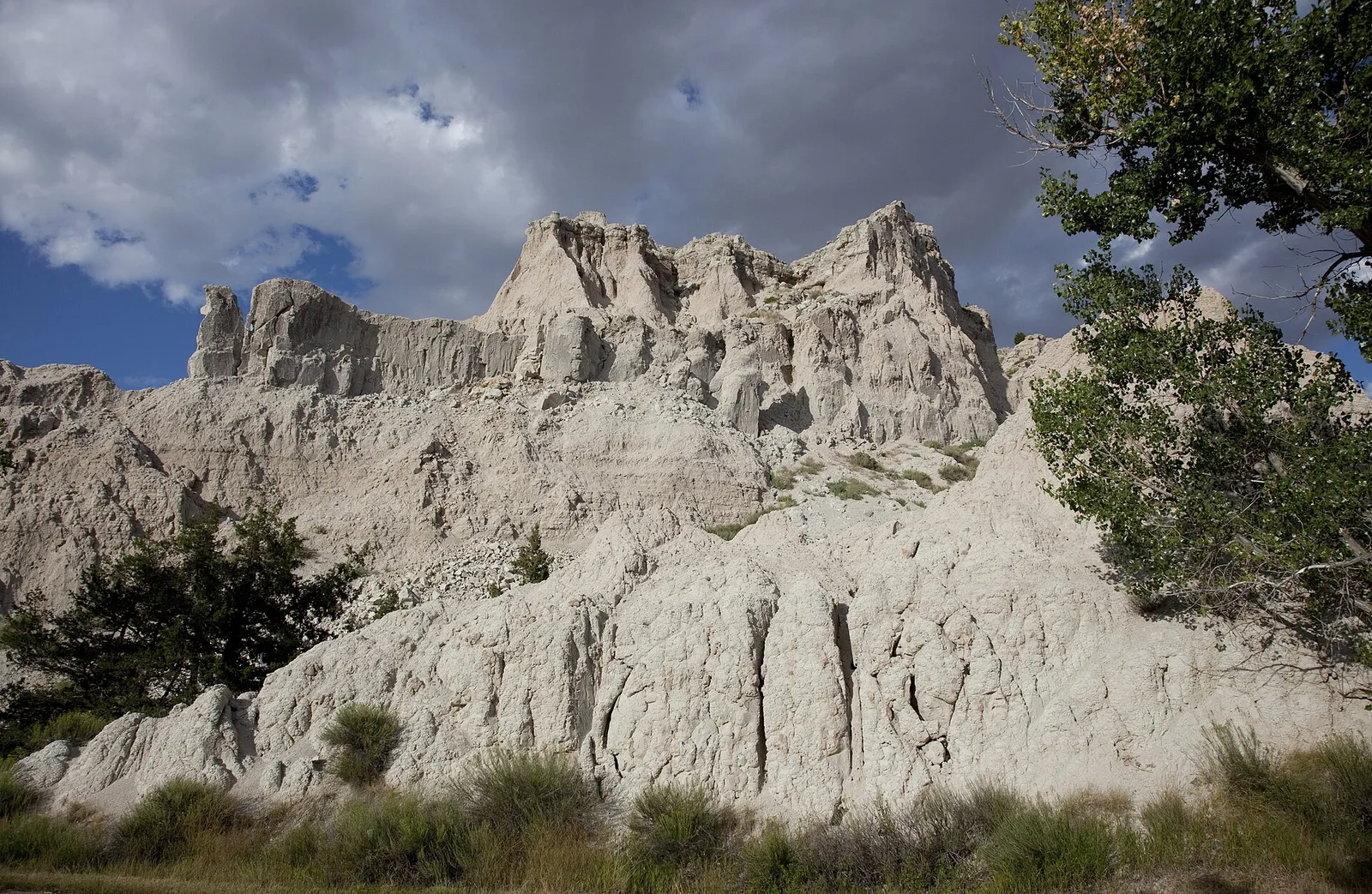
The Badlands of southwestern South Dakota are one of the most otherworldly landscapes in North America, a vast, eroded terrain of sharply sculptured buttes, pinnacles, and spires in shades of gray, tan, and rust, stretching across 244,000 acres of Badlands National Park. The formations were created over millions of years as ancient sea beds were deposited, uplifted, and eroded by wind and water.
The Badlands contain one of the world's richest fossil beds, yielding remains of ancient horses, saber-toothed cats, and three-toed horses. The surrounding mixed-grass prairie is home to one of the largest black-footed ferret populations in the world and a thriving bison herd.
The Lakota called the region 'mako sica' and French trappers 'les mauvaises terres a traverser,' both meaning 'bad lands to travel through.' The rock is soft clay and volcanic ash that erodes roughly an inch a year, one of the fastest rates anywhere, so the landscape is visibly shrinking and constantly exposing new fossils; its layers span about 75 million years.
The Stronghold Unit of the park lies inside the Pine Ridge Reservation and is co-managed with the Oglala Sioux Tribe; the Army seized it as a gunnery and bombing range in World War II, displacing families, and unexploded ordnance is still being cleared. Bison, bighorn sheep, and the black-footed ferret, once believed extinct until a Wyoming ranch dog carried one home in 1981, have all been reintroduced to the park's prairie.
Economy
South Dakota's economy blends its agricultural heartland with a surprisingly large financial services sector, a major tourism industry, and one of the most business-friendly tax environments in the country.
South Dakota is a major agricultural producer across multiple categories. The state ranks among the top producers of corn, soybeans, winter wheat, sunflowers, and oats. Beef cattle production is enormous, the state has more cattle than people by a wide margin.
South Dakota also leads the nation in pheasant hunting, a significant draw for rural tourism. The agricultural sector supports a large network of processing, equipment, and logistics businesses, and the ethanol industry has grown substantially in the east.
Agriculture and its processing make up roughly a quarter of South Dakota's economy, the highest share of any state, and there are about four to five cattle for every resident. The state is regularly first or second in the nation for bison, near the top for sunflowers and honey, and a top-five producer of corn, soybeans, and wheat.
East River's roughly 15 ethanol plants consume a large slice of the corn crop, while West River is mostly large cattle and sheep ranches on native shortgrass, much of it leased federal and tribal land. Drought is the constant threat: the 2012 drought and Winter Storm Atlas in October 2013, which killed tens of thousands of cattle caught before their winter coats grew in, both hit ranchers hard.
In 1980, South Dakota eliminated its usury laws, the caps on interest rates that lenders could charge, at the request of Citibank, which was struggling under New York's interest rate limits. Citibank relocated its credit card operations to Sioux Falls, and other major financial institutions followed.
Today, many of the largest credit card issuers in the United States, Citibank, Wells Fargo, Capital One, and others, have significant operations in South Dakota. The state also has no corporate income tax and no personal income tax, making it a legal domicile for trusts and financial entities from around the world.
The 1980 bill was drafted with Citibank's help and passed in a single special session, with the bank promising 400 jobs in return; the credit-card industry it seeded now employs tens of thousands in Sioux Falls. It was made possible by the U.S. Supreme Court's 1978 Marquette decision, which let a bank charge borrowers anywhere the interest rate allowed in the bank's home state.
South Dakota later became a global center for perpetual 'dynasty' trusts by abolishing the old rule against perpetuities and adding strong asset-protection and privacy laws on top of having no income, capital-gains, or inheritance tax. Trust assets held in the state have grown past 500 billion dollars, and reporting after the 2021 'Pandora Papers' leak drew international criticism that South Dakota had become a haven for hiding foreign wealth.
South Dakota draws millions of visitors annually, primarily to the Black Hills and Badlands regions. Mount Rushmore alone attracts nearly 3 million visitors per year. Custer State Park, Wind Cave, Jewel Cave, and Badlands National Park together host millions more.
Deadwood, a historic gold rush town, has operated legal gambling since 1989 and is one of the most visited historic districts in the Great Plains. The Sturgis Motorcycle Rally, held annually in August, is one of the largest motorcycle gatherings in the world, injecting hundreds of millions of dollars into the state's economy in a single week.
Tourism is the state's second-largest industry, worth roughly 4 billion dollars a year, and it is overwhelmingly a Black Hills summer business. Custer State Park's September buffalo roundup, when riders herd about 1,300 bison into corrals, has itself become a ticketed spectator event.
Wall Drug, a drugstore in a town of about 750 that started giving Depression-era travelers free ice water in 1936, now covers a city block and is one of the most heavily advertised roadside attractions in the world, with signs once posted as far away as Antarctica. The Corn Palace in Mitchell, its exterior murals redone every year in colored corn, has drawn tourists since 1892.
Ellsworth Air Force Base, located near Rapid City in the Black Hills, is home to the 28th Bomb Wing and its fleet of B-21 Raider stealth bombers, the most advanced bomber aircraft in the world. Ellsworth is one of only two bases in the U.S. that operates the B-21.
The base employs thousands of military personnel and civilian workers and is a major economic driver for the Rapid City region. The military's presence in South Dakota has been a consistent focus of the state's congressional delegation, who have fought to preserve and expand Ellsworth's mission.
Ellsworth opened in 1942 as a B-17 training field and was renamed in 1953 for a general killed in a B-36 crash; it flew B-1B Lancer bombers for decades and survived a 2005 base-closure recommendation after the state's delegation fought it off. In 2021 the Air Force chose Ellsworth as the first operational home for the B-21 Raider, a decision expected to add several thousand personnel and set off a housing boom in Box Elder and Rapid City.
During the Cold War, 150 Minuteman intercontinental missiles sat in silos scattered across western South Dakota and controlled from Ellsworth; one silo and its launch control center are now the Minuteman Missile National Historic Site off Interstate 90, the only place the public can see an intact ICBM complex. The Sentinel modernization program will rebuild silos in neighboring states over the coming decades.
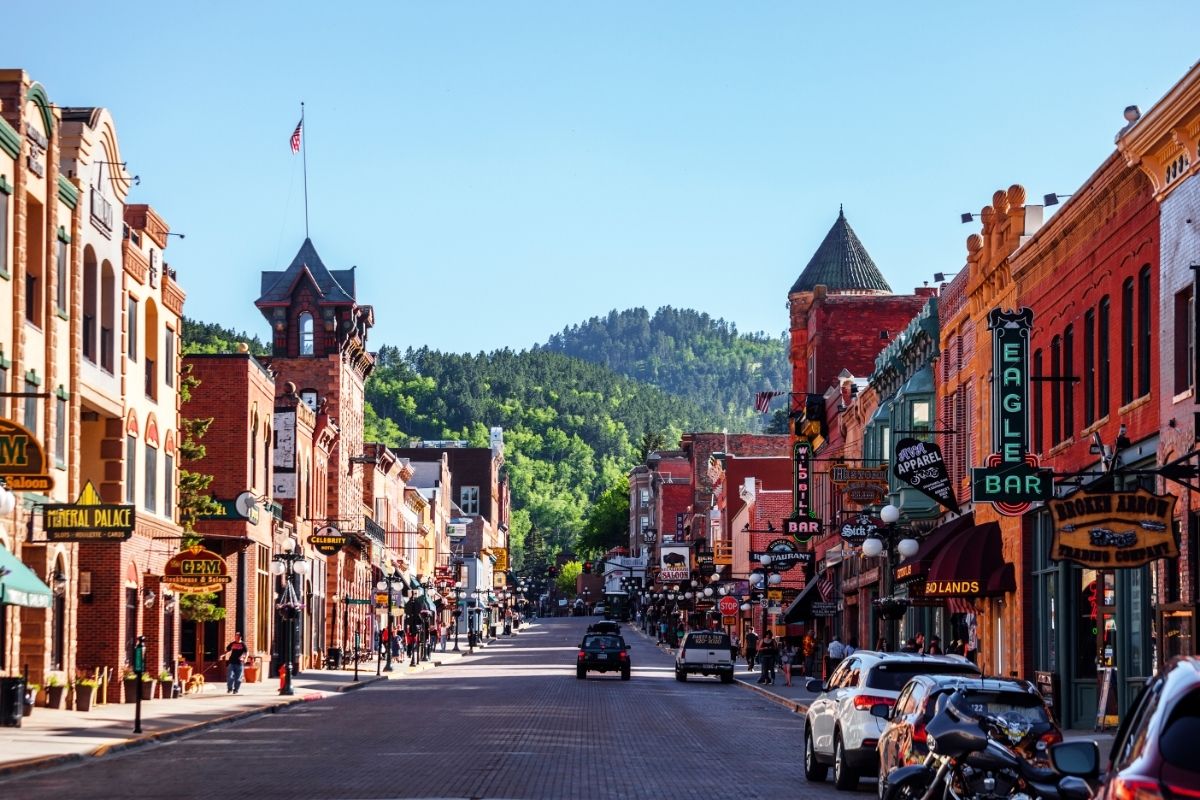
In 1989, South Dakota voters approved a constitutional amendment legalizing limited-stakes gambling in Deadwood, the historic gold rush town in the Black Hills. The move was intended to fund historic preservation in the deteriorating 19th-century buildings. It worked: Deadwood has been extensively restored and draws visitors from across the region.
Video lottery terminals are also legal throughout South Dakota at bars and other establishments, generating significant state revenue. The gambling industry has been a modest but consistent contributor to the state budget for over three decades.
Deadwood's 1989 vote made it only the third place in the country with legal casino gambling, after Nevada and Atlantic City. Bets were capped at five dollars at first; voters raised the limit to 100 dollars in 2000 and to 1,000 dollars in 2012, and added sports betting in 2021. Part of the tax take is set aside by law to preserve the town's Gold Rush architecture, a National Historic Landmark district.
Elsewhere, the nine tribes in South Dakota run their own casinos under the 1988 federal Indian Gaming Regulatory Act, and video lottery terminals, legalized statewide in 1989, sit in bars and convenience stores across the state and now send well over 100 million dollars a year to the general fund, more than the Deadwood casinos and the tribal compacts combined.
How South Dakota's State Government Works
South Dakota operates under a constitution adopted at statehood in 1889. The legislature, the South Dakota Legislature, consists of a 35-member Senate and a 70-member House of Representatives, meeting for a single session of approximately 40 days each year in Pierre.
South Dakota is one of the most reliably Republican states in the country. The GOP has controlled the governorship for all but a few years since 1979 and holds supermajorities in both legislative chambers. The state has voted Republican in every presidential election since 1972.
South Dakota has term limits for the governor (two consecutive terms) and for state legislators (four consecutive terms in each chamber). The initiative and referendum process is strong, voters have used it to legalize medical marijuana, raise the minimum wage, and pass other measures that the Republican legislature would not have passed on its own.
The South Dakota Constitution, adopted in 1889 and amended more than 100 times since, created a plural executive in which the governor shares power with separately elected officials such as the attorney general, secretary of state, and state treasurer, each independently accountable to voters rather than appointed by the governor. South Dakota selects its Supreme Court justices through a merit-based nominating process, with the governor appointing from a list submitted by a judicial qualifications commission, followed by periodic retention elections.
Governor of South Dakota
Current Governor
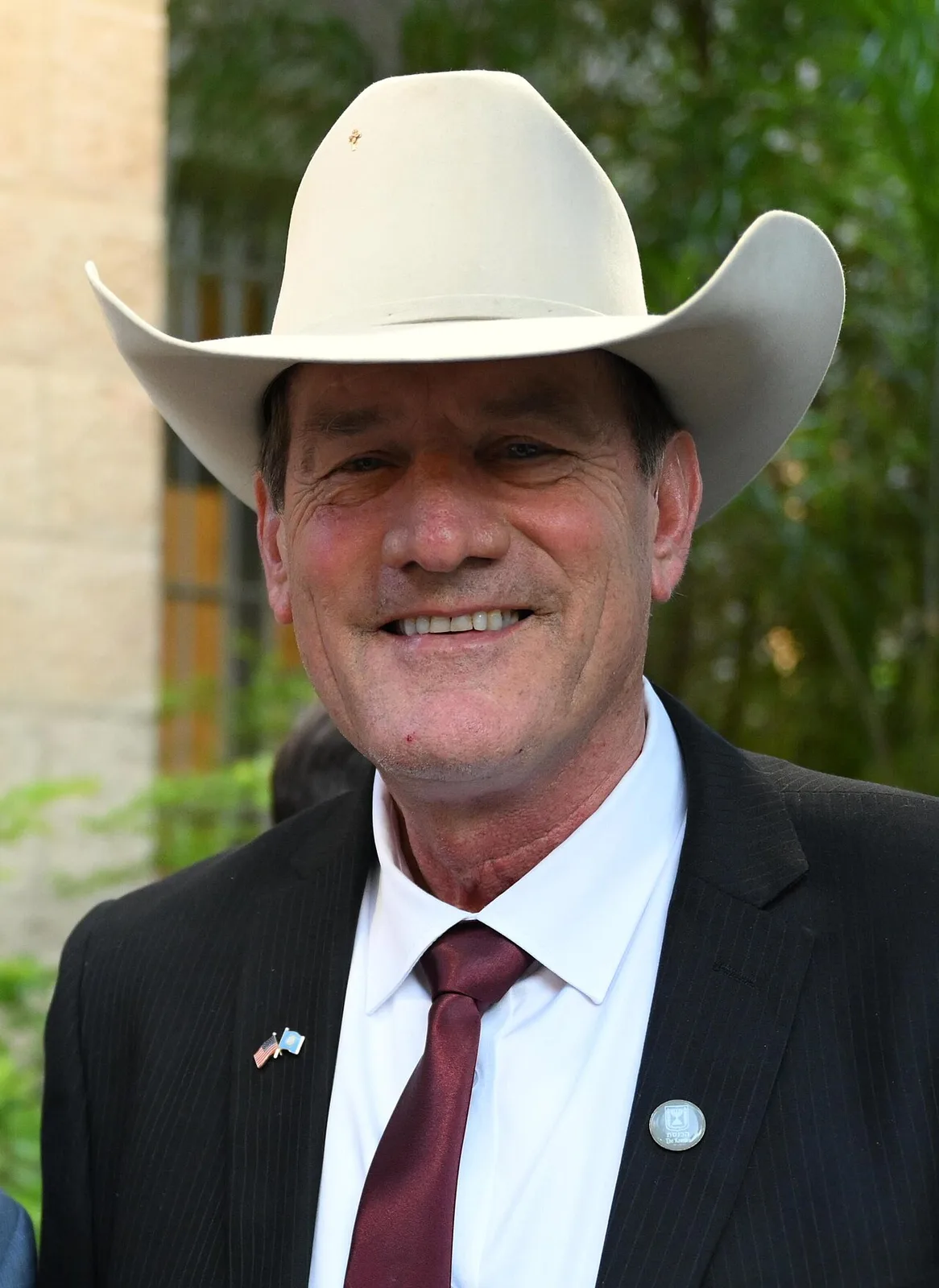
Larry Rhoden
- Party
- Republican
- In Office Since
- January 2025
- Path to Office
- Succeeded Gov. Kristi Noem
- Term Ends
- January 2027 (running for a full term in November 2026)
- Prior Role
- Lt. Governor under Gov. Noem (2019-2025)
- Background
- Rancher; former state legislator
Larry Rhoden became governor of South Dakota when Kristi Noem resigned in January 2025 to become Secretary of Homeland Security. Rhoden, who had been Noem's lieutenant governor, then appointed Tony Venhuizen, Noem's former chief of staff and a state representative, as lieutenant governor. Rhoden and Venhuizen are running together as the Republican ticket in the November 2026 election.
Other Current State Officials
Lieutenant Governor
Tony Venhuizen
Appointed by Gov. Larry Rhoden and unanimously confirmed by the Legislature in January 2025 as South Dakota's 40th lieutenant governor. Served 10 years in the Governor's Office, including as chief of staff to Govs. Dennis Daugaard and Kristi Noem, and was a state representative from 2023 until his appointment. Rhoden's running mate in the November 3, 2026 general election.
Attorney General
Marty Jackley
In office since January 2023 (previously served 2009-2019). Former U.S. Attorney for the District of South Dakota. Focuses on drug enforcement, human trafficking, and election integrity.
Secretary of State
Monae Johnson
In office since January 2023. First Native American Secretary of State in South Dakota history. Focuses on election administration and business services.
State Treasurer
Josh Haeder
In office since January 2019, re-elected in 2022. Manages the state's cash, unclaimed property, and trust fund operations.
The South Dakota Legislature
South Dakota State Senate
- Seats: 35 members
- Terms: 2-year terms (4 consecutive term limit)
The upper chamber. Senators serve 2-year terms and face a term limit of four consecutive terms in the same chamber. Republicans hold a supermajority, giving them veto-proof control.
South Dakota House of Representatives
- Seats: 70 members
- Terms: 2-year terms (4 consecutive term limit)
The lower chamber. All 70 seats are on the ballot every two years. The legislature meets for a short 40-day session each year, keeping government intentionally limited, a reflection of the state's strong conservative governing philosophy.
South Dakota's U.S. Senators
U.S. Senator
John Thune
One of the most powerful figures in the U.S. Senate, Thune was elected Senate Majority Leader following the 2024 elections, succeeding Mitch McConnell. He has represented South Dakota since 2005, winning his first Senate race by defeating incumbent Democrat Tom Daschle, then the Senate Minority Leader, in an upset that reshaped Senate politics. Thune is a former U.S. House member and a trusted voice on agriculture, tax policy, and technology in the Senate. Tall, amiable, and consistently conservative, he has been mentioned as a potential presidential candidate multiple times over his career.
U.S. Senator
Mike Rounds
Former two-term Governor of South Dakota (2003-2011), elected to the Senate in 2014. Rounds serves on the Armed Services and Banking committees and has been a strong advocate for Ellsworth Air Force Base, the B-21 bomber program, and South Dakota's agricultural interests. In 2022 he said publicly that the 2020 presidential election had been fair, drawing criticism from former President Trump. Rounds won re-election in 2020 by a comfortable margin.
South Dakota Through the Years
From early settlement to the present day. Tap any era to read more.
The Lakota Sioux dominated the Great Plains of what is now South Dakota for centuries before European contact, arriving in the region in the early 18th century after acquiring horses, which transformed their culture, economy, and military power. They became the most formidable Plains nation, controlling territory from the Black Hills to the Platte River.
The Black Hills, Pahá Sápa, were sacred to the Lakota as the center of the universe and a place of spiritual power. Seven major bands of Lakota, including the Oglala, Hunkpapa, and Brulé, roamed the plains in one of the most sophisticated nomadic cultures in the world, organized around the bison hunt.
The Sioux, or Oceti Sakowin ('Seven Council Fires'), came from the woodlands of Minnesota and split into three broad divisions, the Dakota, Nakota, and Lakota, as they moved west onto the plains through the 1700s. Getting horses from Spanish sources to the south around 1730 to 1750 turned the westernmost Lakota into mounted bison hunters and the dominant military power between the Missouri River and the Rockies.
The Lakota took the Black Hills from the Cheyenne and Kiowa around 1776 and made Pahá Sápa the spiritual center of their world; Bear Butte, near modern Sturgis, is still a site of vision quests for Lakota and Cheyenne alike. Bands kept 'winter counts,' pictographic calendars painted on hide that recorded one memorable event per year, several of which survive in museum collections and serve as historical records.
The Lewis and Clark Expedition passed through what is now South Dakota twice, heading west in 1804 and east in 1806. Their journals describe the Missouri River villages of the Arikara, Mandan, and Sioux peoples, and the vast bison herds that darkened the plains horizon.
They encountered the Teton Sioux (Lakota) on the Missouri River in September 1804 in a tense confrontation that nearly turned violent. Lewis and Clark's detailed accounts of the region's resources, geography, and peoples sparked American interest in the Upper Missouri and laid the groundwork for the fur trade era that would transform the region over the following decades.
The September 1804 standoff with the Brule Lakota near the site of Pierre was the most dangerous moment of the whole journey: a dispute over gifts and a boat escalated until warriors seized a pirogue's tow rope and Clark drew his sword, with cannon and bowmen aimed on both sides, before a Brule chief calmed it. Clark's bitter written verdict on the Lakota colored U.S. policy toward them for decades.
The Corps' only death of the entire expedition happened here, near what is now the South Dakota-Iowa line: Sergeant Charles Floyd died in August 1804, probably of a burst appendix. On the fast return trip in 1806 the party covered as much as 70 miles a day downriver and passed the first American traders already pushing up the Missouri behind them.
The Fort Laramie Treaty of 1868 guaranteed the Lakota Sioux permanent ownership of the Great Sioux Reservation, including the Black Hills, 'as long as the grass shall grow.' In 1874, General George Armstrong Custer led an expedition into the Black Hills, found gold, and reported it publicly. The resulting gold rush sent thousands of prospectors into Lakota territory in direct violation of the treaty.
The federal government attempted to buy the Black Hills and, when the Lakota refused, declared those in the unceded territory hostile. This led to the Great Sioux War of 1876 to 1877, Custer's defeat at the Little Bighorn, and the eventual forced cession of the Black Hills, a legal dispute that continues to this day.
The 1868 treaty followed Red Cloud's War, the only war the United States lost to Native forces in the 19th century, in which Lakota fighters forced the Army to abandon its forts on the Bozeman Trail. It set aside the Great Sioux Reservation, all of present-day South Dakota west of the Missouri, and specified that changing it required the signatures of three-fourths of adult Lakota men.
The 1877 act of Congress that seized the Black Hills carried nowhere near that threshold, roughly 10% of the required signatures, and it cut off treaty-guaranteed rations until leaders signed, an ultimatum remembered as 'sell or starve.' The commission that gathered the marks is now widely regarded as coercive and fraudulent, and its conduct became the basis for the 1980 Supreme Court ruling that the taking was unconstitutional.
South Dakota and North Dakota were admitted to the Union on the same day, November 2, 1889, by President Grover Cleveland. Cleveland deliberately shuffled the admission papers and signed them without looking at which was on top, so that neither state could claim priority. By convention, North Dakota is listed 39th and South Dakota 40th, based on alphabetical order, but this is entirely arbitrary.
Both states were carved from the old Dakota Territory and had roughly equal populations at the time. Pierre was chosen as the state capital in a bitter contest with Mitchell and Huron.
Dakota Territory, created in 1861 and once reaching into what is now Montana and Wyoming, was pushed toward division by the Great Dakota Boom of railroad-fed settlement in the 1880s and by Republicans in Washington who wanted two states and four new senators instead of one. Settlers in the south had already drafted a statehood constitution at Sioux Falls in 1885.
South Dakota's 1889 constitution was unusually reform-minded, and in 1898 the state became the first in the nation to adopt the initiative and referendum, letting voters write and repeal laws directly, a Populist idea that spread across the West. The constitution also wrote in prohibition, repealed in 1896, and the state did not grant women the vote until a 1918 amendment, after several earlier defeats.
On December 29, 1890, the U.S. 7th Cavalry Regiment killed approximately 250-300 Lakota men, women, and children at Wounded Knee Creek on the Pine Ridge Reservation, the largest mass killing of Native Americans in the post-Civil War era. The massacre occurred during the government's attempt to suppress the Ghost Dance religious movement, which the Army feared was a prelude to an uprising.
Sitting Bull, the great Hunkpapa Lakota leader, had been killed two weeks earlier during an attempted arrest. Wounded Knee is considered the symbolic end of the armed resistance phase of the Indian Wars and remains one of the darkest episodes in American history.
The Ghost Dance, begun by the Paiute prophet Wovoka in Nevada, taught that ritual dancing would bring back the buffalo, restore the dead, and make the settlers vanish; it spread through the starving, confined Lakota in 1890 and alarmed Indian agents. The Army moved in, Sitting Bull was killed by Indian police sent to arrest him on December 15, and Spotted Elk's (Big Foot's) band was intercepted trying to reach Pine Ridge for safety.
On December 29 the 7th Cavalry, Custer's old regiment, ringed the camp with rapid-fire Hotchkiss guns on the ridge above; a shot during a disarmament scuffle set off firing that killed roughly 250 to 300 Lakota, many of them shot in the back as they ran, along with 25 soldiers, mostly hit by their own crossfire. The Army awarded 20 Medals of Honor for the action, which Native groups and members of Congress have sought to revoke ever since.
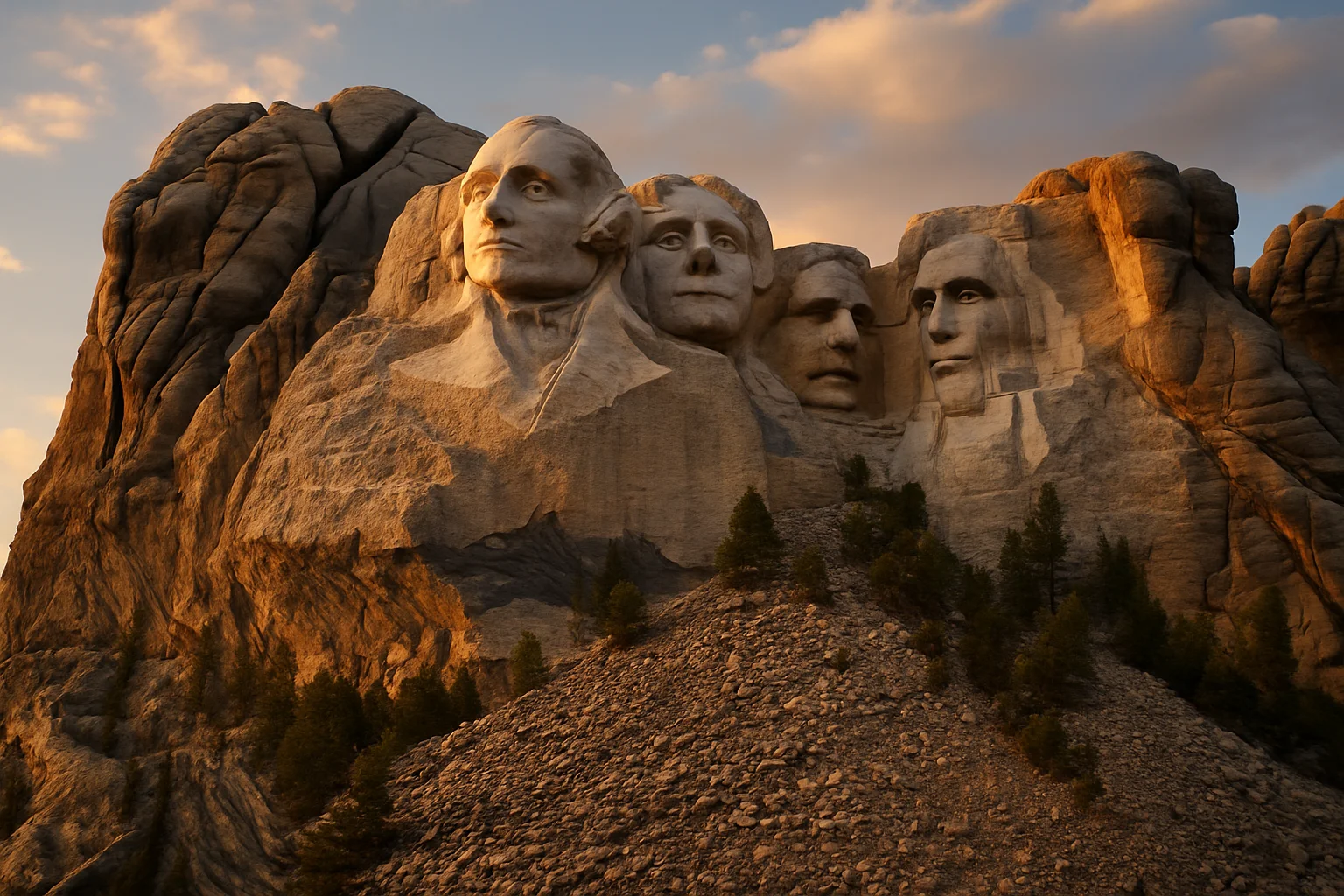
Mount Rushmore was conceived by South Dakota historian Doane Robinson as a way to attract tourists to the Black Hills. Sculptor Gutzon Borglum was commissioned to carve the 60-foot faces of Washington, Jefferson, Theodore Roosevelt, and Lincoln into the granite face of Mount Rushmore between 1927 and 1941. The project was federally funded and employed hundreds of workers during the Depression.
The location was in the Black Hills, land still claimed by the Lakota Sioux under the 1868 Fort Laramie Treaty. The Crazy Horse Memorial, a private project begun nearby in 1948 and still under construction, was conceived as a counterpoint, honoring the Lakota chief on the land the government had carved into.
Robinson first wanted the carvings to show Western figures such as Lewis and Clark, Red Cloud, and Buffalo Bill on the Needles spires, but Borglum insisted on presidents and on the sounder granite of Rushmore, a peak named in 1885 for a New York lawyer checking mining titles. Borglum, who had earlier worked on the Confederate memorial at Stone Mountain, Georgia, picked four presidents to stand for the nation's founding, expansion, development, and preservation.
About 400 workers, many of them idled Black Hills miners, blasted and chiseled away some 450,000 tons of rock over 14 years, and no one died on the job. Borglum died in March 1941 and his son Lincoln finished that October, stopping short of the waist-up figures first planned when federal money ran out; a 'Hall of Records' chamber behind Lincoln's head was left unfinished until a set of porcelain history panels was placed there in 1998.
South Dakota's Defining Moments in American History
These are the events that didn't just shape South Dakota, they changed the nation.
Mount Rushmore is one of the most recognizable images in American history, four presidents carved into granite in the Black Hills of South Dakota. But the site's full story is more complicated. The Black Hills were taken from the Lakota Sioux in violation of the 1868 Fort Laramie Treaty. In 1980, the U.S. Supreme Court ruled in United States v. Sioux Nation of Indians that the Black Hills had been illegally seized and awarded $102 million in compensation.
The Lakota refused the money, they want the land back. That compensation fund, with accumulated interest, now exceeds $2 billion. It sits uncollected, the largest uncollected court judgment in American history, as the Lakota continue to demand the return of Pahá Sápa.
The 1980 ruling upheld a Court of Claims finding that the 1877 seizure was a taking of property without just compensation, and it awarded the 1877 value of the land, about 17.5 million dollars, plus more than a century of interest. Justice Harry Blackmun's opinion described 'a case of ripe and rank' dishonorable dealing by the government.
All nine Sioux tribes have refused their shares, on the view that taking the money would extinguish the claim to the land itself; the fund, invested by the Interior Department, had grown past 2 billion dollars by the 2020s. Bills to return federal land in the Black Hills, including a 1985 proposal by Senator Bill Bradley, have gone nowhere, and the case is often cited as the clearest test of whether the United States will give land, not just money, back to a tribe.
On February 27, 1973, members of the American Indian Movement (AIM) and Oglala Lakota activists occupied the town of Wounded Knee, South Dakota, the site of the 1890 massacre, for 71 days in a standoff with federal marshals and FBI agents. The occupation was triggered by the failure of a Oglala Sioux tribal government recall election and broader frustration with U.S. treaty violations and the poverty of reservation life.
Two Native Americans were killed, federal officers were wounded, and hundreds were arrested. The occupation drew international attention to the conditions on Pine Ridge Reservation, one of the poorest places in the United States, and became one of the defining moments of the Native American rights movement.
The occupation grew out of a bitter conflict on Pine Ridge between traditional Oglala and tribal chairman Dick Wilson, whose armed private force AIM accused of intimidation, and out of anger over the light charges filed in the 1972 beating death of Raymond Yellow Thunder in Nebraska. AIM leaders including Russell Means, an Oglala from Pine Ridge, and Dennis Banks led about 200 people into the hamlet and demanded Senate hearings on the 1868 treaty.
Federal agents ringed the town with armored vehicles and fired hundreds of thousands of rounds; activists Frank Clearwater and Buddy Lamont were killed and an FBI agent was left paralyzed. The main trials collapsed when a judge dismissed the charges against Means and Banks for government misconduct. A period of violence on Pine Ridge followed in which dozens of people died, culminating in the 1975 shootout that sent AIM member Leonard Peltier to prison for two agents' deaths; his sentence was commuted in January 2025.
Every August since 1938, the small city of Sturgis, South Dakota (population ~7,000) hosts one of the largest motorcycle rallies in the world. The Sturgis Motorcycle Rally draws between 400,000 and 700,000 riders for 10 days of racing, concerts, scenic rides, and the general spectacle of a small prairie town temporarily transformed into a city the size of Denver.
The rally generates an estimated $800 million in economic activity for the region and is a defining event for motorcycle culture globally. In 2020, Sturgis held its rally during the COVID-19 pandemic, the only major mass gathering in the country that year, drawing significant national attention and controversy.
The event started in 1938 as the 'Black Hills Motor Classic,' a small race put on by the Jackpine Gypsies club and local Indian Motorcycle dealer Clarence 'Pappy' Hoel, and for decades it drew only a few thousand riders. It grew explosively after the mid-1980s as the baby-boom generation took up motorcycling, reaching an estimated 700,000 attendees for the 75th rally in 2015.
The 10-day rally roughly doubles South Dakota's traffic-death count for a normal August and strains emergency services across the Black Hills, but it also produces tens of millions of dollars in state and local sales-tax revenue. Governor Kristi Noem's decision to hold the 2020 rally against federal public-health advice drew national scrutiny, and later studies linked it to hundreds of COVID-19 cases across several states.
Notable South Dakotans
Sitting Bull
Hunkpapa Lakota leader who unified the Sioux and defeated Custer at Little Bighorn
Crazy Horse
Oglala Lakota warrior and resistance leader, memorialized in the Crazy Horse Memorial
Tom Brokaw
NBC News anchor and author of The Greatest Generation, born in Webster
Laura Ingalls Wilder
Author of the Little House on the Prairie series, spent her youth in De Smet
Ernest Lawrence
Nobel Prize-winning physicist who invented the cyclotron, born in Canton
Billy Mills
Oglala Lakota runner who pulled off one of the greatest upsets in Olympic history at the 1964 Tokyo Games
State Symbols & Quick Facts
| Nickname | "The Mount Rushmore State" |
| Capital | Pierre |
| Largest City | Sioux Falls |
| Statehood | November 2, 1889 (39th or 40th state) |
| Population | ~920,000 (2025 est.) |
| Area | 77,116 sq mi, 17th largest state |
| Motto | "Under God the People Rule" |
| State Bird | Ring-necked Pheasant |
| State Flower | Pasque Flower |
| State Tree | Black Hills Spruce |
| State Animal | Coyote |
| State Fish | Walleye |
| State Insect | Honeybee |
| State Song | "Hail, South Dakota" |
| Time Zone | Central (most of state); Mountain (western counties) |
| Borders | North Dakota (N), Minnesota & Iowa (E), Nebraska (S), Wyoming & Montana (W) |
Did You Know?
South Dakota and North Dakota were admitted to the Union on the exact same day, November 2, 1889. President Grover Cleveland shuffled the signing papers so no one would know which came first. North Dakota is listed 39th and South Dakota 40th purely by alphabetical convention.
South Dakota has no state income tax and no corporate income tax. Combined with the 1980 elimination of interest rate caps, this made the state the legal home for the credit card operations of Citibank, Wells Fargo, Capital One, and dozens of other major financial institutions.
The Crazy Horse Memorial in the Black Hills has been under construction since 1948 and is still not complete. When finished, it will be the largest mountain carving in the world, dwarfing Mount Rushmore. Commissioned by Lakota elder Henry Standing Bear and carved by sculptor Korczak Ziolkowski, whose family's nonprofit foundation still runs the project, it has refused all federal funding to maintain independence.
The Badlands of South Dakota are one of the richest fossil beds in the world. The region has yielded remains of ancient three-toed horses, giant pigs, saber-toothed cats, and dozens of other species that roamed the Great Plains 23-35 million years ago. New fossils wash out of the eroding rock walls every year.
South Dakota has more cattle than people, by a lot. The state's roughly 920,000 human residents share the plains with over 3.5 million head of cattle. South Dakota consistently ranks in the top five states for beef cattle production, and 'more cows than people' is a point of genuine pride.
Quick Facts and Common Questions
Short answers to the questions people most often ask about South Dakota: its abbreviation, how it became a state, its capital, and Mount Rushmore.
South Dakota's two-letter postal abbreviation is SD. The U.S. Census Bureau places it in the Midwest region, in the West North Central division, and about 887,000 people lived there in the 2020 census.
South Dakota and North Dakota both became states on November 2, 1889, when the Dakota Territory was divided. President Benjamin Harrison shuffled the proclamations so no one would know which he signed first, and South Dakota is usually listed as the 40th state because it comes second alphabetically.
The name comes from the Dakota people, part of the Great Sioux Nation along with the Lakota and Nakota. In the Dakota language the word is usually translated as "friends" or "allies."
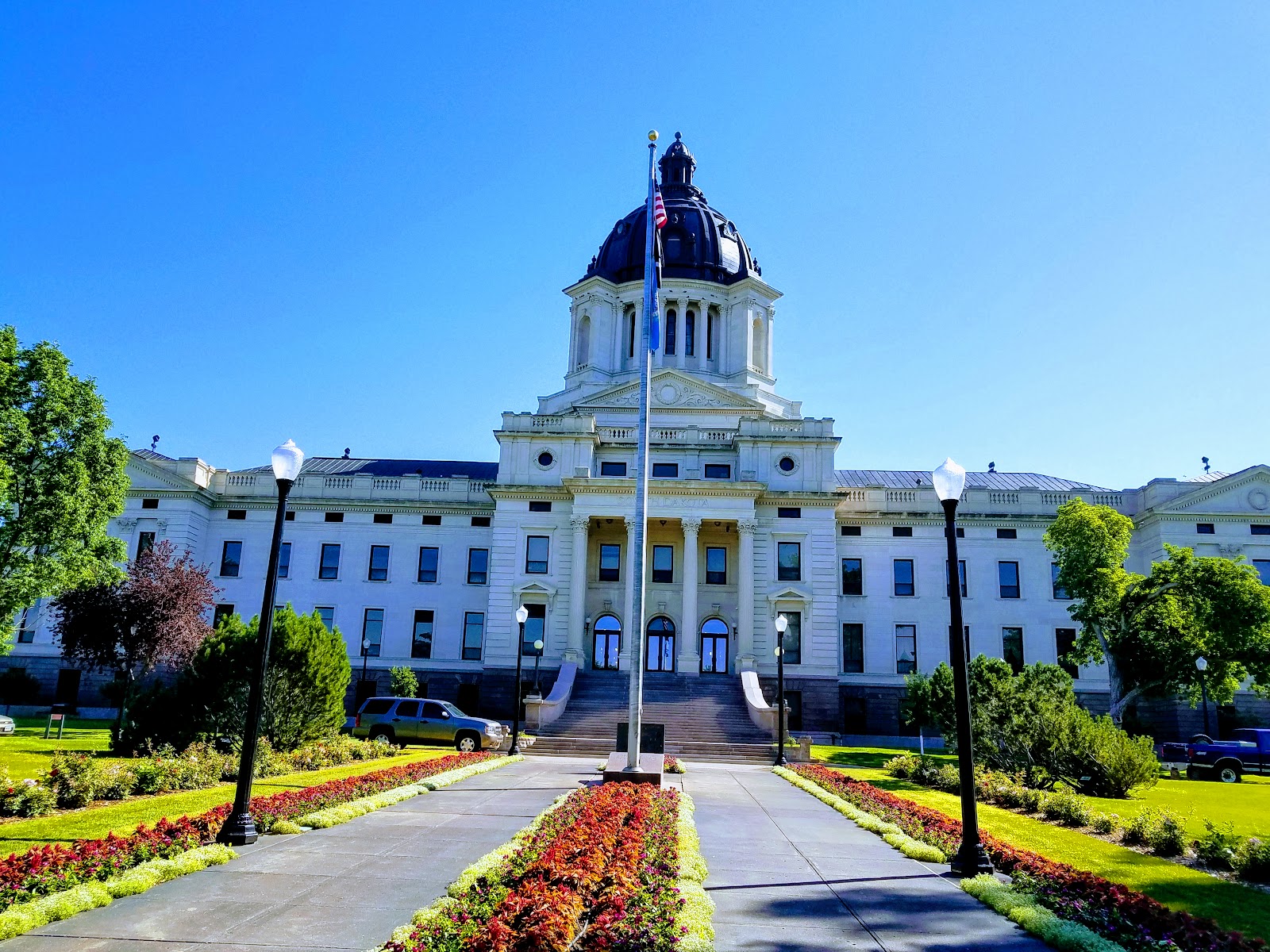
Pierre has been the capital since statehood in 1889. It was first chosen as a temporary capital, and voters confirmed it in later elections against challengers such as Huron and Mitchell. Pierre is one of the smallest state capitals by population, and its State Capitol was completed in 1910.
South Dakota borders six states: North Dakota to the north, Minnesota and Iowa to the east, Nebraska to the south, and Wyoming and Montana to the west. The Missouri River runs through the middle of the state, dividing it into "East River" and "West River."
Sculptor Gutzon Borglum and about 400 workers carved Mount Rushmore in the Black Hills from 1927 to 1941. The 60-foot faces show Presidents George Washington, Thomas Jefferson, Theodore Roosevelt, and Abraham Lincoln, and the site is Mount Rushmore National Memorial.
The 1868 Treaty of Fort Laramie set aside the Black Hills for the Lakota, but Congress took the land in 1877 after gold was discovered. In United States v. Sioux Nation of Indians (1980), one of the Supreme Court's landmark cases, the Court ruled the taking unlawful and upheld an award of compensation. The Lakota have refused the money, which remains in a federal account, and continue to seek return of the land.
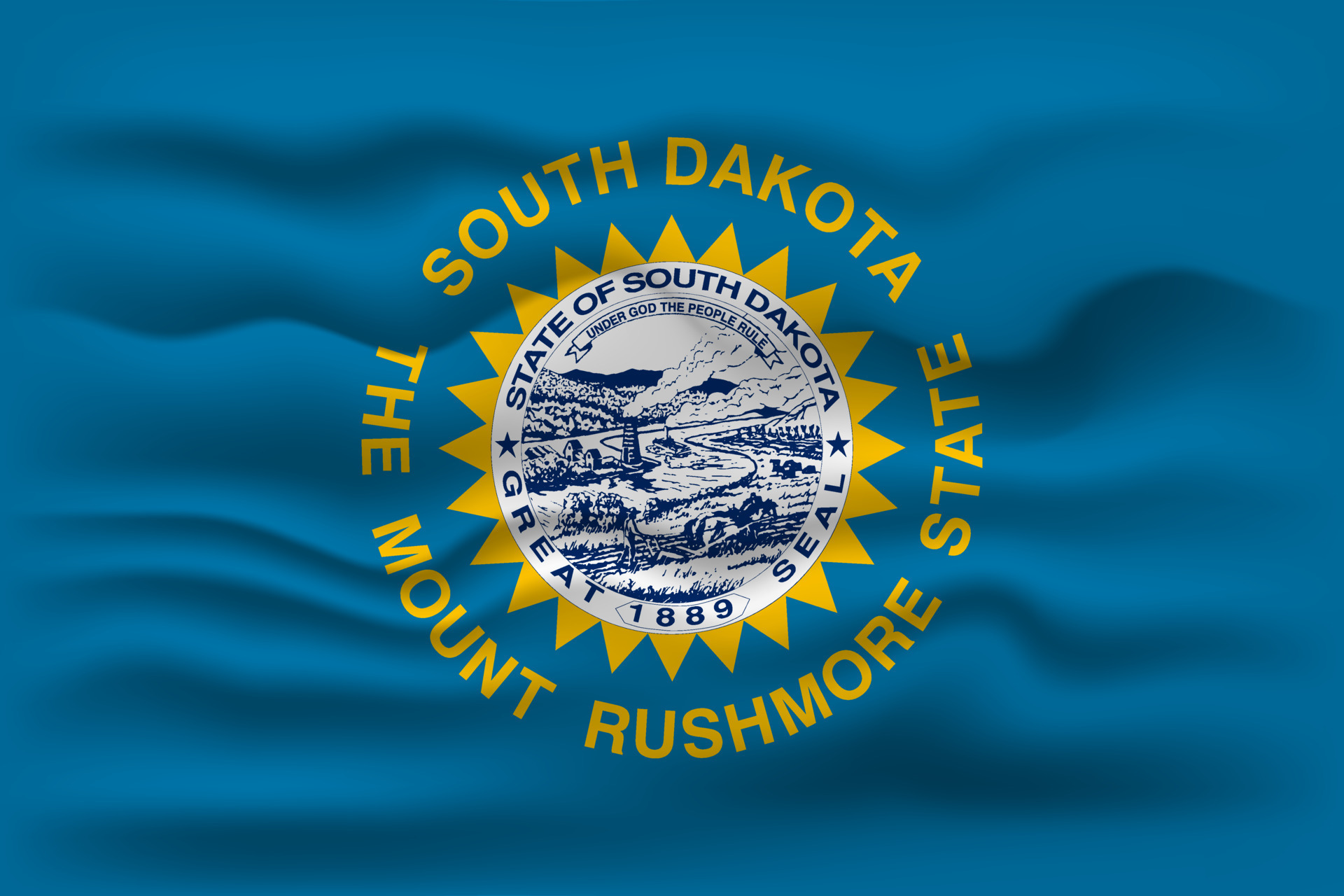
South Dakota is known as "The Mount Rushmore State." Its motto is "Under God the People Rule." Its state bird is the ring-necked pheasant, its flower is the pasque flower, and its tree is the Black Hills spruce.
Based on the 2020 census, South Dakota has 1 seat in the U.S. House of Representatives, elected statewide, which gives it 3 votes in the Electoral College, the minimum for any state.
Sources & Further Reading
Badlands National Park
Four Million Acres of Otherworldly Eroded Buttes, Fossil Beds, and Mixed-Grass Prairie
About Badlands National Park
Badlands National Park protects about 244,000 acres of eroded buttes, spires, and pinnacles cut from layered sedimentary rock, wrapped around a large block of mixed-grass prairie in southwestern South Dakota. The striped rock records more than 30 million years of deposition, and the whole formation is wearing away at roughly one inch a year, one of the fastest erosion rates in the country.
The Lakota name for the area is 'mako sica' and early French trappers called it 'les mauvaises terres a traverser,' both meaning bad lands to travel through, for the maze of loose, waterless, sharp-edged terrain. The Cheyenne, Lakota, and earlier peoples used the Wall as a landmark and the prairie above and below it as bison range.
The White River Badlands are one of the richest fossil beds on Earth for the Oligocene epoch, about 34 to 30 million years ago. Since the 1840s they have yielded tens of thousands of specimens, including three-toed horses, oreodonts, early rhinoceroses, giant pig-like entelodonts, and saber-toothed nimravids, and new bones weather out constantly.
The area became Badlands National Monument in 1939 and a national park in 1978. It has two units: the North Unit holds the classic formations, the 39-mile Loop Road, and most facilities; the roughly 133,000-acre South Unit lies within the Pine Ridge Reservation and is co-managed with the Oglala Sioux Tribe.
- Designation
- National Park, UNESCO Biosphere Reserve
- Location
- Interior, South Dakota, western South Dakota
- Established
- Established as National Monument 1939; National Park 1978
- Annual Visitors
- ~1.2 million
Geological Layers
The oldest rock exposed in the park is the Pierre Shale, a dark gray marine mud laid down about 75 million years ago on the floor of the Western Interior Seaway, the shallow sea that split North America from the Arctic Ocean to the Gulf of Mexico in the Late Cretaceous.
It preserves sea life, ammonites, clams, fish, and the bones of mosasaurs and plesiosaurs, along with rounded concretions and gypsum crystals. The shale shows in the low, rounded 'haystack' mounds along the base of the Badlands Wall and in the valley floors.
Pierre Shale is rich in bentonite clay from weathered volcanic ash, so it swells when wet and shrinks when dry. That behavior makes it slippery and unstable, undermines the harder rock above, and produces the popcorn-textured surface hikers see after rain.
Because the shale forms the erosion-prone base of the whole sequence, its steady removal is what lets the Badlands cut backward into the prairie, a process that has carved the modern landscape in roughly the last 500,000 years and continues today.
Above a long erosional gap sits the Chadron Formation, deposited between about 37 and 34 million years ago, in the late Eocene, by rivers meandering across a humid, forested floodplain. It forms the lower, gray, rounded slopes of the Badlands Wall.
Its most famous fossils are the bones of titanotheres (brontotheres), huge browsing mammals the size of a rhinoceros or larger with paired blunt horns on the snout. Early Lakota knew these bones and connected them to stories of thunder horses or thunder beasts.
The Chadron also preserves turtles, crocodilians, early camels, and small three-toed horses, a fauna that shows the region was warmer and much wetter than today, closer to a modern subtropical woodland.
A pale band near the top of the Chadron marks a shift toward drier climate that continues upward through the overlying Brule Formation as forests gave way to open savanna.
The Brule Formation, roughly 34 to 30 million years old, is the thick pink-and-tan middle section that forms most of the dramatic spires and knife-edge ridges, and it holds the densest concentration of Oligocene mammal fossils found anywhere.
Its rock is mostly fine wind- and water-laid silt from a dry savanna crossed by seasonal streams. Common fossils include Mesohippus (a dog-sized three-toed horse), Subhyracodon (a hornless rhinoceros), oreodonts (sheep-sized cud-chewers found by the thousands), Archaeotherium (an entelodont, or 'hell pig'), and Hoplophoneus (a saber-toothed nimravid).
Serious collecting began in 1846, when a fossil jaw from the area reached scientists in Philadelphia and St. Louis, touching off nearly two centuries of expeditions by the Smithsonian, universities, and the South Dakota School of Mines and Technology.
The Ben Reifel Visitor Center houses a working fossil preparation lab where visitors can watch technicians free bones from Brule rock, and the nearby Fossil Exhibit Trail, a boardwalk loop, shows casts of the animals at sites where specimens have been found.
The Sharps Formation, about 30 to 28 million years old, caps many of the higher buttes and tables in the park. It is pale, ash-rich siltstone laid down as volcanic eruptions far to the west, in what is now the Great Basin, blew ash eastward over the plains.
Near its base is the Rockyford Ash, a distinctive white marker bed of nearly pure volcanic ash that geologists use to correlate rock across the region and to date the layers from the radioactive decay of minerals in the ash.
The Sharps is capped in places by a resistant sod table, a layer of prairie soil and root-bound sediment that shields the softer rock beneath. Where that cap is breached, erosion speeds up and new spires form.
Younger deposits that once covered the area, including the Miocene Arikaree Group, have largely been stripped away; erosion is now removing the Sharps and Brule, which is why the Badlands are getting lower and wider over time rather than building up.
Indigenous Heritage
Oglala Sioux Tribe (Oglala Lakota)
The Oglala are one of the seven divisions of the Lakota (Teton Sioux), who moved onto the northern plains in the 1700s and built a horse-and-bison culture across the region. They call the eroded country 'mako sica' and used the Badlands Wall as a landmark and the surrounding grassland as prime hunting ground.
The 1868 Fort Laramie Treaty recognized the Great Sioux Reservation, including this land, as Lakota territory, but the United States seized the Black Hills in 1877 after gold was found and broke up the reservation in 1889. In 1980 the Supreme Court ruled the Black Hills taking illegal and awarded compensation, which the Lakota have refused, continuing to seek return of the land.
In November and December 1890, Ghost Dancers gathered on the Stronghold Table in what is now the South Unit, a natural fortress reached by a narrow land bridge, to perform the ceremony free from Army interference. The movement ended weeks later with the massacre of roughly 250 to 300 Lakota at Wounded Knee Creek, just south of the park, on December 29, 1890.
The Oglala Sioux Tribe manages the South Unit of Badlands National Park through a co-management agreement with the National Park Service, one of the few such arrangements in the national park system. The tribe's Pine Ridge Reservation borders the park on the south. Visitors to the South Unit are on tribal land and are asked to respect the cultural significance of the landscape, particularly around the Stronghold Table.
Things To Do
Badlands Loop Road (SD-240)
The Badlands Loop Road runs about 39 miles from the Northeast Entrance near Interstate 90 through the North Unit to the town of Wall, climbing from the White River valley up and over the Badlands Wall with more than a dozen named overlooks.
Stops like Big Badlands Overlook, Panorama Point, Yellow Mounds (where deep-red and yellow paleosols mark an ancient weathered land surface), and Pinnacles Overlook show the range of rock colors and forms. Short walks including the Door, Window, Notch, and Fossil Exhibit trails leave from pullouts near the Ben Reifel Visitor Center.
The rock glows most intensely at sunrise and sunset, and the road is a prime spot for bighorn sheep on the formations and bison and pronghorn on the grassy benches. Bighorn were reintroduced here in 1964 after the native subspecies was hunted out by 1926.
Most visitors drive the loop in two to four hours with stops. The road stays open year-round but can close briefly for snow and ice, and there are no gas stations or food services on the loop itself.
Notch Trail
The Notch Trail is a 1.5-mile round trip from the Door and Window parking area that follows a canyon floor, climbs a wooden log ladder bolted to a steep slope, then traverses a ledge to 'the Notch,' a gap in the Wall with a long view over the White River valley and, on clear days, the Pine Ridge Reservation.
The ladder is the crux: roughly 45 rungs up loose, eroding rock, with a cable handline. It can be dangerous when wet and is not suitable for small children or anyone uneasy with heights or exposure.
Beyond the ladder the trail runs close to drop-offs and is easy to lose; hikers should follow the numbered posts and turn back in rain, when the clay becomes greasy and flash flooding can fill the canyon.
Summer heat on this shadeless trail regularly tops 100 degrees, and the park treats heat illness as the main hazard here; rangers advise hiking early, carrying at least a liter of water per person, and skipping it in a thunderstorm.
Castle Trail
The Castle Trail is the park's longest maintained trail, running about 10 miles one way between the Door and Window area and the Fossil Exhibit Trail parking lot, across open mixed-grass prairie below the northern formations.
It is nearly flat and easy to follow but fully exposed, with no water and little shade; most hikers do an out-and-back of a few miles or arrange a car shuttle for the full traverse. Connecting trails (Medicine Root, Saddle Pass) allow loop options.
The route is one of the better places in the park to see bison, pronghorn, prairie dogs, meadowlarks, and burrowing owls at a distance, and it passes eroded 'castle' formations that give the trail its name.
Badlands is one of the few national parks with an open backcountry policy: hikers may leave the trail and camp anywhere out of sight of roads and overlooks, which makes the Castle Trail a common starting point for overnight prairie trips.
Wildlife Watching
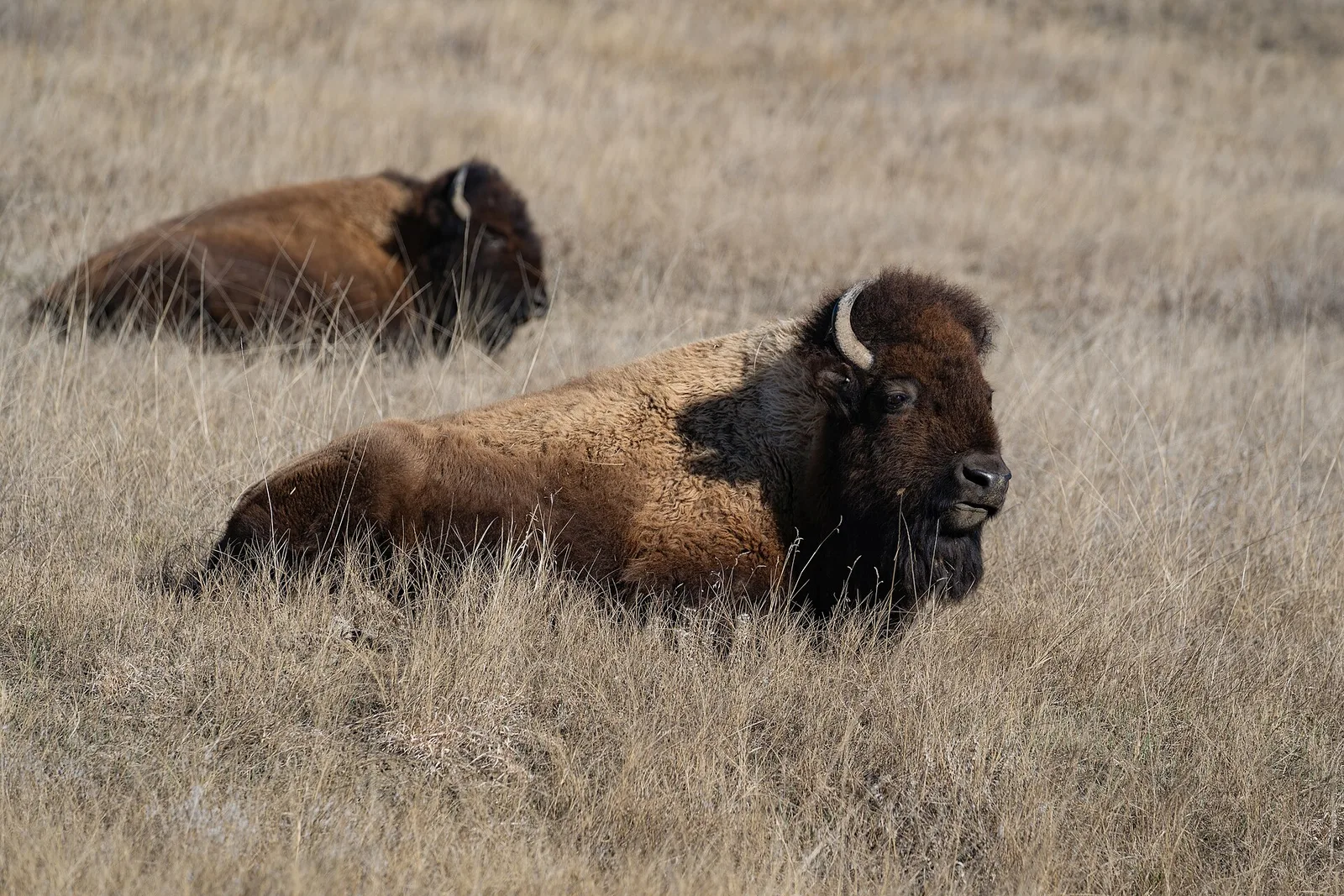
Badlands supports one of the larger public bison herds in the country, around 1,000 to 1,200 animals descended from 50 brought from Theodore Roosevelt National Park and other herds starting in 1963. They range the mixed-grass prairie and are often seen from the Loop Road, Sage Creek Rim Road, and the Sage Creek area.
Roberts Prairie Dog Town, along the gravel Sage Creek Rim Road, is one of the largest black-tailed prairie dog colonies in the park and the center of its black-footed ferret program. Ferrets, once thought extinct, were reintroduced here in 1994; they are nocturnal and best spotted at night with a spotlight along the road.
Bighorn sheep, pronghorn, mule and white-tailed deer, coyotes, badgers, and swift foxes also live in the park, along with prairie rattlesnakes and more than 200 bird species, including golden eagles, ferruginous hawks, and the burrowing owls that nest in prairie dog burrows.
The Sage Creek Wilderness Area, about 64,000 acres in the northwest, is the least developed part of the North Unit and the best place for undisturbed wildlife, reached by the unpaved Sage Creek Rim Road and a primitive campground.
Conservation and Challenges
Bison Herd Management
The park keeps roughly 1,000 to 1,200 bison inside about 80,000 acres of fenced range, a number set by how much forage the grassland can sustain alongside prairie dogs, pronghorn, and other grazers rather than by the animals' own reproduction.
Every two to three years the park rounds up part of the herd by helicopter and horseback to check health, test for disease, and remove surplus animals. Since the mid-2010s most surplus bison have gone to Native nations through the InterTribal Buffalo Council rather than to auction.
The herd is valued for conservation genetics: it descends from multiple source herds and has tested largely free of cattle-gene introgression, so Badlands animals help rebuild genetically important herds elsewhere.
Managers also watch for brucellosis and other diseases that could pass between park bison and cattle on neighboring ranches, and they maintain the boundary fence in country where erosion and weather constantly damage it.
Erosion and Fossil Loss
The Badlands wear back about one inch a year on average, and faster on steep faces during heavy rain. That erosion is what exposes new fossils, but it also destroys them: a bone that weathers out is often gone within a few seasons if no one collects it.
The park has only a small paleontology staff to survey hundreds of square miles of eroding rock, so most specimens are never found. A single storm can uncover and then wash away skeletons that would take a crew weeks to excavate.
In 2010 a seven-year-old visitor found a rare, largely complete saber-toothed predator skull along a trail; the resulting 'Saber Site' excavation, run with the School of Mines, became a model for training volunteer fossil monitors to report finds quickly.
Fossil theft is a continuing problem because White River Badlands specimens are commercially valuable. Collecting any fossil in the park is a federal crime, and rangers and researchers rely heavily on visitors reporting, not removing, what they see.
Invasive Plants
Leafy spurge, an aggressive Eurasian perennial with deep roots and a milky toxic sap, is the park's worst plant invader. Cattle and bison avoid it, so infested prairie loses grazing value, and a single plant can put out thousands of seeds that shoot several feet when the capsules burst.
Canada thistle, spotted and diffuse knapweed, yellow sweet clover, and Kentucky bluegrass, a cool-season sod grass that crowds out native warm-season prairie, round out the main targets, and cheatgrass is spreading on disturbed and burned ground.
The park combines targeted herbicide, mowing, prescribed fire, and biological control, including flea beetles released against leafy spurge, but 244,000 acres of rough country with limited roads means treatment can only keep pace in priority areas.
Native prairie resists invasion better when it is healthy, so the park also manages bison numbers and uses fire to keep the grassland vigorous, treating invasive control and grassland health as the same problem.
Free-roaming bison herd on the mixed-grass prairie of Badlands
Fast Facts
Did You Know?
Badlands National Park is home to one of the world's richest Oligocene fossil beds. The eroding rock continuously exposes new specimens of animals that lived on the North American plains 23 to 37 million years ago, including three-toed horses, early rhinoceroses, and saber-toothed predators. The Badlands have produced more fossil specimens than any other comparable area in the world, and paleontologists have been excavating here since the 1840s.
The South Unit of Badlands National Park is co-managed with the Oglala Sioux Tribe and includes the Stronghold Table, where Lakota Ghost Dancers gathered in November and December 1890. The Ghost Dance movement was a spiritual response to the destruction of traditional Lakota life, and practitioners believed the ceremonies would bring back the buffalo and restore the world to the way it was before European settlement. The U.S. Army's fear of the movement contributed to the events that led to the Wounded Knee massacre on December 29, 1890.
The black-footed ferret, once considered extinct, has been successfully reintroduced to Badlands National Park. The ferret depends almost entirely on prairie dogs for food and uses prairie dog burrows for shelter and breeding. Prairie dog towns at Badlands, particularly Roberts Prairie Dog Town, provide some of the best remaining habitat for the species. The Badlands population is one of about 30 reintroduction sites that together have brought the species back from the brink of extinction.
Plan Your Visit
Location
Interior, South Dakota, western South Dakota
Designation
National Park, UNESCO Biosphere Reserve
Best Seasons
Late spring through early fall (May-September) offers the best weather and all facilities open. Summer temperatures can reach 100°F and there is little shade. Bring at least one gallon of water per person per day. Spring (April-May) and fall (September-October) offer milder weather and smaller crowds.
Entrance Fee
$35 per vehicle (7-day pass), or use an America the Beautiful annual pass. The entrance fee covers both units of the park.
Getting There
Badlands is located in western South Dakota, 75 miles east of Rapid City. Access the North Unit via I-90 exits at Wall (Exit 110) or Interior (Exit 131). The Ben Reifel Visitor Center is the main hub. There is no public transit to the park.
South Unit
The South Unit is co-managed with the Oglala Sioux Tribe and requires driving through the Pine Ridge Reservation. Roads are unpaved and require a high-clearance vehicle. There are no facilities and cell service is extremely limited. Visit with a full tank of gas and adequate supplies.
Wildlife Safety
Maintain a minimum 25-yard distance from bison and a 100-yard distance from wolves. Never approach prairie dog burrows or reach into them. Rattlesnakes are present in the park; watch where you step when hiking off-trail.