

Four Centuries in the Making
Europeans dreamed of a canal across Panama since Balboa first saw the Pacific in 1513. It took a failed French fortune, an American-backed revolution, and a decade-long war on mosquitoes before a single lock gate closed.
The Panama Canal is often remembered as a single American triumph completed in 1914. In reality it was the product of a private railroad built for gold prospectors, a catastrophic French bankruptcy, a revolution the United States helped engineer, and a decade of disease control before American engineers ever moved the bulk of the earth.
What follows is every major milestone in order, sourced to the U.S. Department of State's Office of the Historian, the Library of Congress, the Panama Canal Authority, and peer-reviewed historical research.
Every Milestone, Start to Today
Spanish explorer Vasco Núñez de Balboa led an expedition across the narrow Isthmus of Panama in 1513 and became the first European to see the Pacific Ocean from the Americas, confirming that only a slender strip of land separated the Atlantic and Pacific at that point.
For the next three centuries, Spanish, and later other European, planners periodically proposed cutting a canal through the isthmus, but none had the engineering knowledge, machinery, or disease control needed to attempt it seriously.
Balboa called the ocean the "South Sea" because he first glimpsed it looking south; Ferdinand Magellan renamed it the Pacific in 1520. Balboa himself was beheaded for treason by a rival Spanish governor in 1519.
Spain's King Charles I ordered the first survey for a canal route across Panama in 1534, and over the following centuries engineers weighed crossings through Panama, Nicaragua, Mexico's Isthmus of Tehuantepec, and Colombia's Darién, none feasible with the tools of the day.
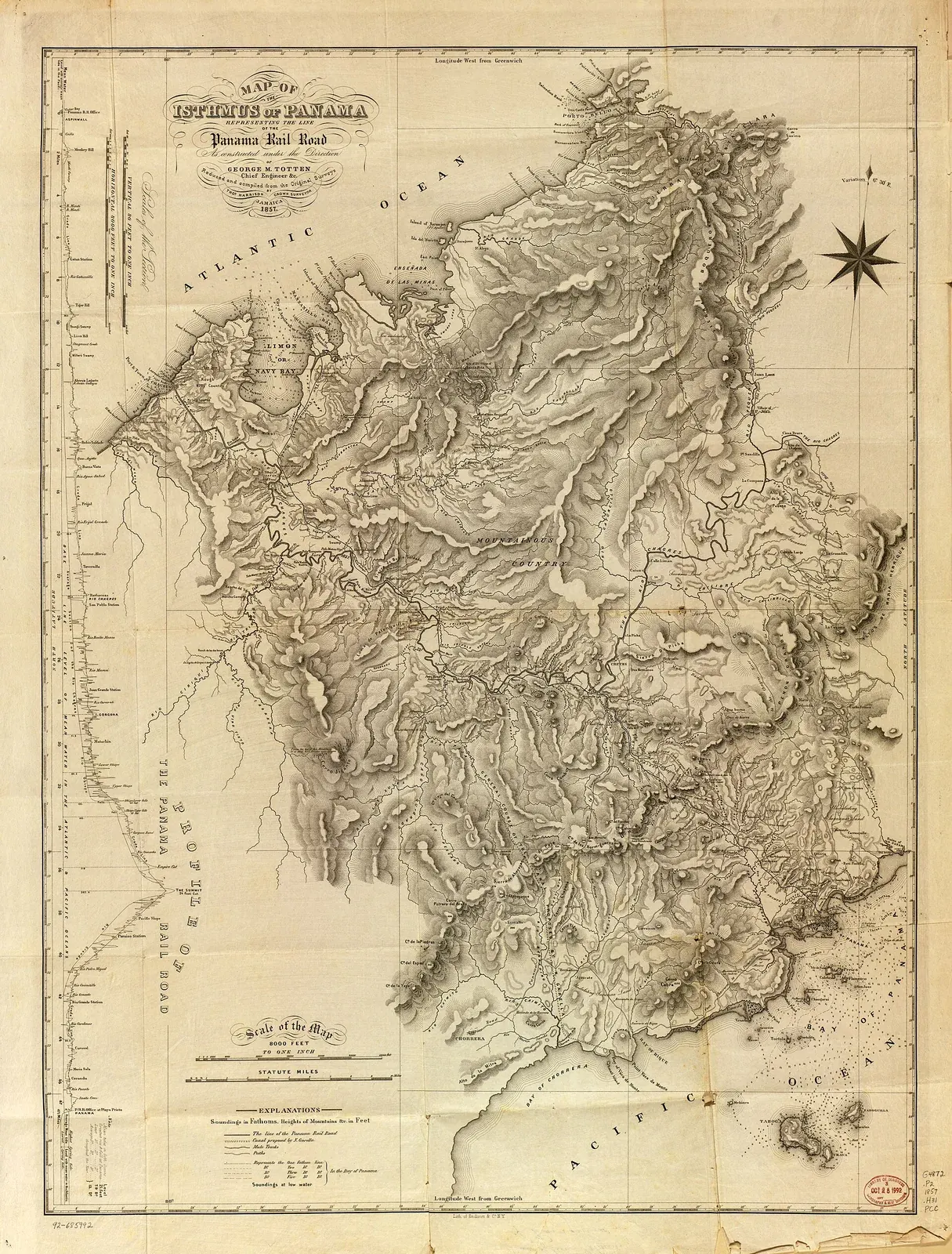
Before any canal was dug, a private American company built the Panama Railroad, the first transcontinental railroad in the Western Hemisphere, connecting the Atlantic port of Colón to Panama City on the Pacific in just 47 miles of track.
Construction ran from 1850 to 1855, driven largely by demand from prospectors trying to reach the California Gold Rush, and it cost an estimated $8 million and roughly 6,000 workers' lives to disease, chiefly cholera and malaria. The railroad's survey work and workforce logistics later proved essential to both the French and American canal efforts, which followed almost exactly the same route.
The work was brutal. Crews cut through mangrove swamp and jungle drawn from the United States, Ireland, China, the Caribbean, and India, and the death rate was so high that the company reportedly sold unclaimed bodies to medical schools for cash.
When it opened, the Panama Railroad was for a time the most profitable railroad in the world per mile of track, charging $25 in gold for the few-hour crossing. It carried much of California's gold and mail eastward until the U.S. transcontinental railroad opened in 1869.
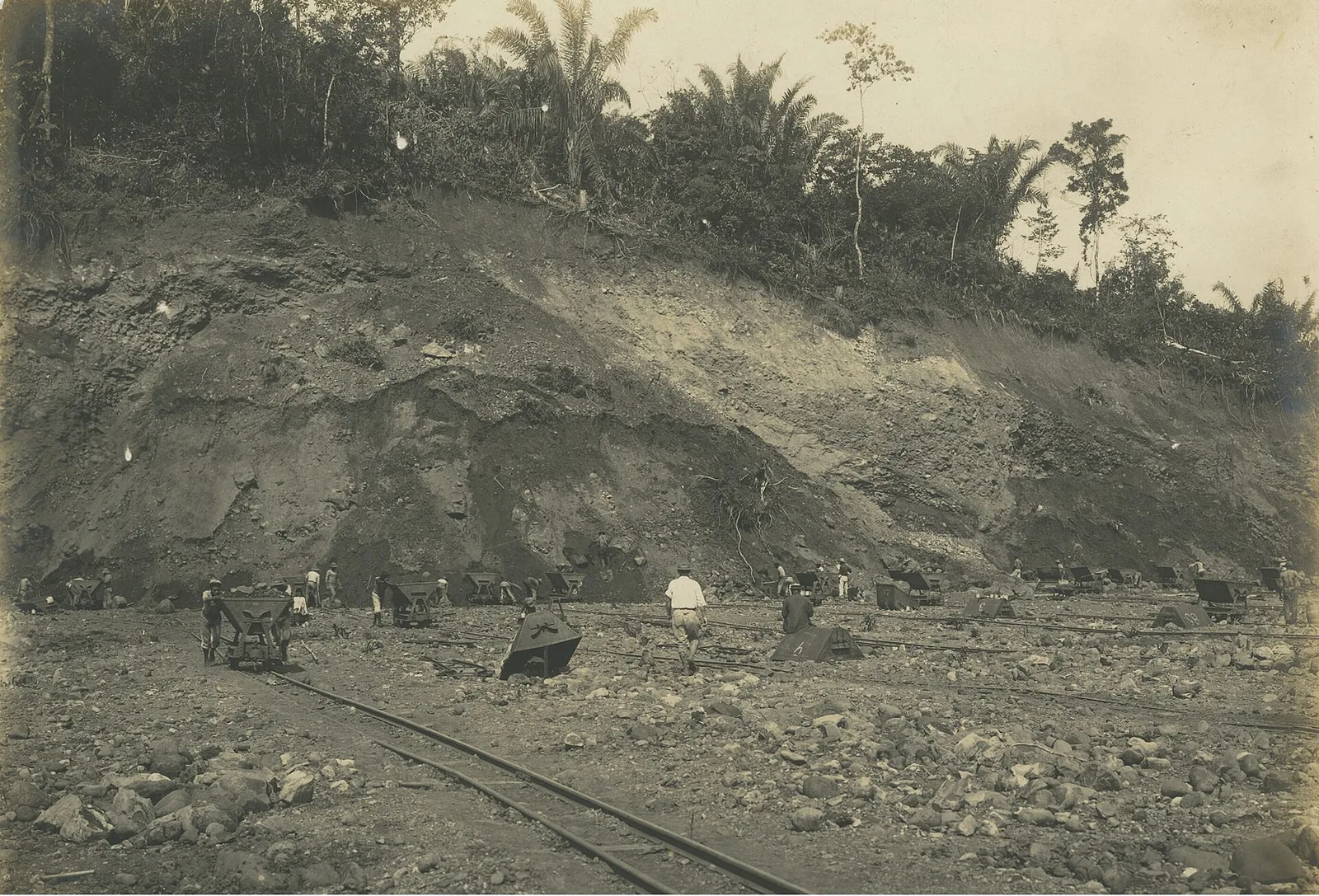
Ferdinand de Lesseps, fresh off his triumph building the Suez Canal, organized a French company to dig a sea-level canal through Panama, beginning excavation in January 1882.
The project was engineered for the wrong kind of terrain, Panama's mountains and seasonal flooding bore no resemblance to Suez's flat desert, and yellow fever and malaria killed an estimated 20,000 workers before the company collapsed into bankruptcy in 1889, having spent roughly $287 million raised from some 800,000 French investors. The failure triggered the Panama Scandal, a major corruption investigation that found de Lesseps and company officials guilty of mismanaging investor funds and implicated more than 100 members of the French legislature in bribery.
De Lesseps was in his mid-70s and refused for years to abandon the sea-level plan even as engineers, including Gustave Eiffel, contracted for a belated lock redesign, warned it could not be done. Machinery rusted in the jungle, and only about two-fifths of the required digging was ever completed.
A reorganized firm, the Compagnie Nouvelle du Canal de Panama, kept minimal work going after 1894 mainly to preserve the concession's value. In 1902 it agreed to sell its assets, equipment, excavations, and the railroad, to the United States for $40 million, down from an initial asking price of $109 million.
When Colombia's senate rejected the Hay-Herrán Treaty in 1903, refusing to grant the United States a canal zone on the terms offered, President Theodore Roosevelt turned his support toward a Panamanian independence movement instead.
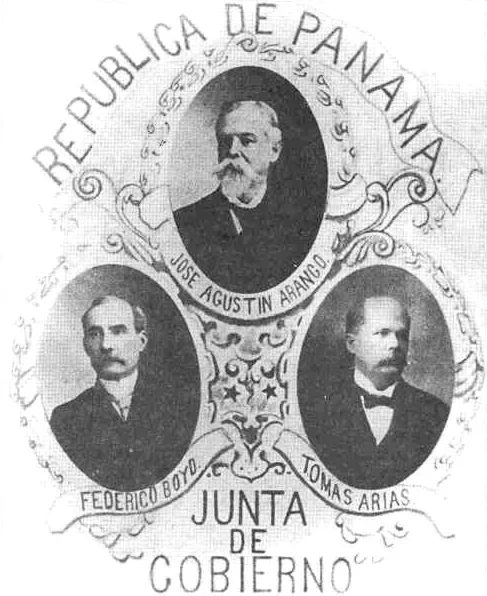
Panama declared independence from Colombia on November 3, 1903, aided by the presence of the U.S. Navy warship Nashville offshore and the American-controlled Panama Railroad, which refused to transport Colombian troops sent to suppress the rebellion. A provisional governing junta took power in Panama City within days, and the United States recognized the new republic almost immediately.
Colombia's senate had rejected the treaty unanimously in August 1903, partly holding out for a larger share of the $40 million bound for the French company. Philippe Bunau-Varilla, the French engineer who stood to profit from that sale, helped organize and finance the Panama City uprising and coordinated its timing with Washington.
U.S. warships were positioned on both coasts under a broad reading of an 1846 treaty with Colombia guaranteeing "free transit" across the isthmus. Roosevelt later boasted, "I took the Isthmus," and in 1921 the United States paid Colombia $25 million in what was widely understood as compensation.
Just fifteen days after Panama's independence, the new republic's government authorized Philippe Bunau-Varilla, a French engineer who had not set foot in Panama in eighteen years, to negotiate a canal treaty on its behalf in Washington.
The Hay-Bunau-Varilla Treaty, signed November 18, 1903, granted the United States a 10-mile-wide Canal Zone across the isthmus in exchange for a one-time $10 million payment to Panama and an annual annuity of $250,000. Bunau-Varilla later admitted he had been willing to concede almost anything to secure quick U.S. Senate ratification, and the treaty's terms became a lasting source of Panamanian grievance.
The treaty gave the United States control of the Zone "in perpetuity" and to act "as if it were the sovereign," language Panama had not authorized Bunau-Varilla to concede. The Panamanian delegation reached Washington only hours after the signing.
The U.S. Senate ratified it on February 23, 1904. Panamanians came to call it "the treaty no Panamanian signed," and its perpetuity clause was the central grievance in seven decades of protest, finally removed by the 1977 Torrijos-Carter Treaties.
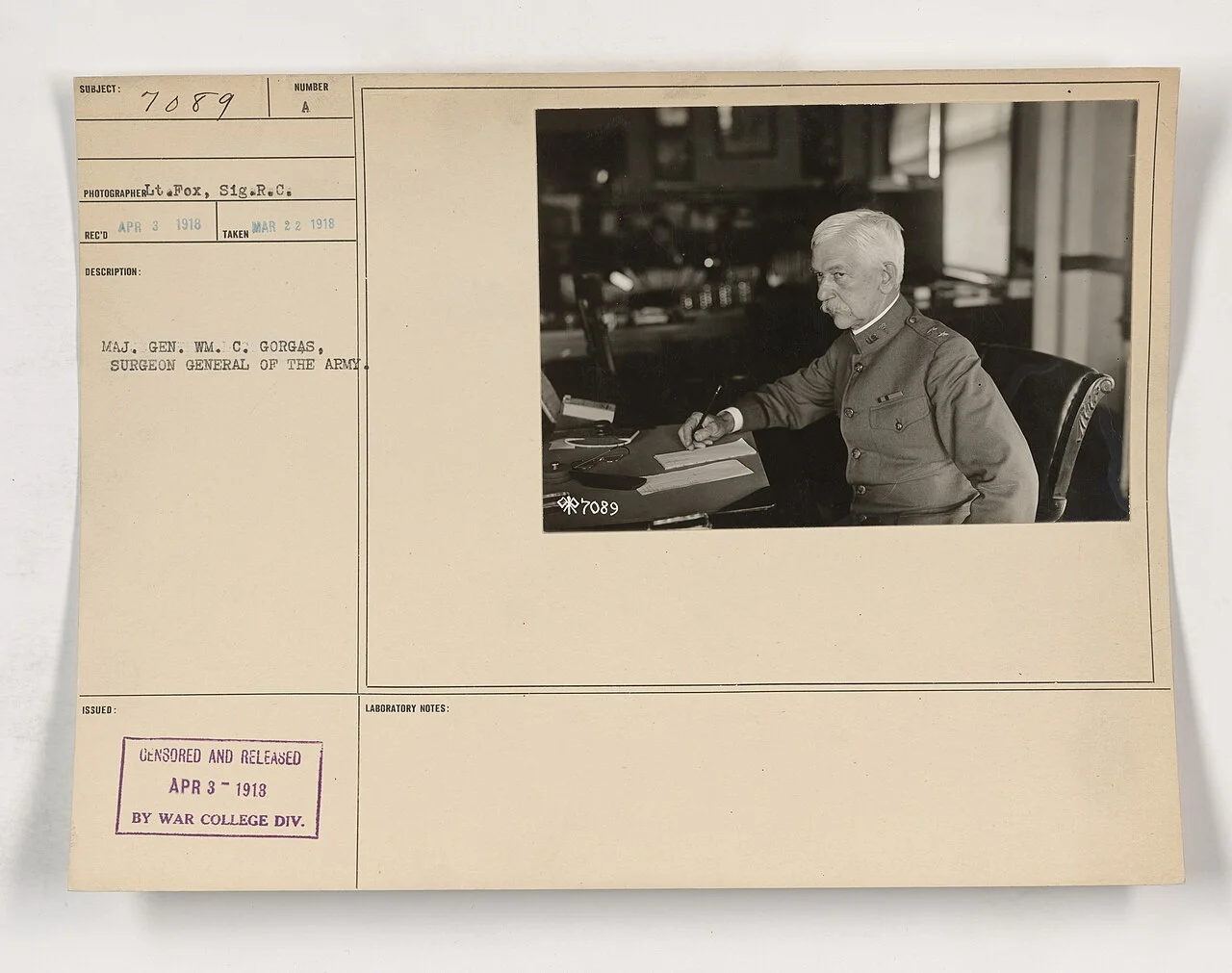
Before American engineers could dig, Army physician William Gorgas had to defeat the disease that had crippled the French effort. Estimating that yellow fever and malaria had killed roughly a third of the French workforce, Gorgas launched an aggressive sanitation campaign starting in 1904, draining or oiling standing water to stop mosquitoes from breeding, fumigating infested buildings, and screening hospital patients to prevent further transmission.
Yellow fever cases in the Canal Zone fell from 62 in June 1905 to a single case in December of that year, and by 1906 the disease had been eradicated from the isthmus entirely, clearing the way for large-scale construction to begin.
Gorgas built on the Walter Reed commission's 1900-01 work in Cuba, which had proven that a mosquito transmits yellow fever. Canal officials at first dismissed the "mosquito theory," and Gorgas nearly lost his job before the chief engineer and President Roosevelt backed him with money and staff.
The campaign fumigated every building in Panama City and Colón, installed running water and sewers so households would stop storing water, and spread larvicide oil across standing water for miles around. Malaria was never eliminated, but its rate among employees fell from over 800 per thousand in 1906 to a small fraction of that by 1913.
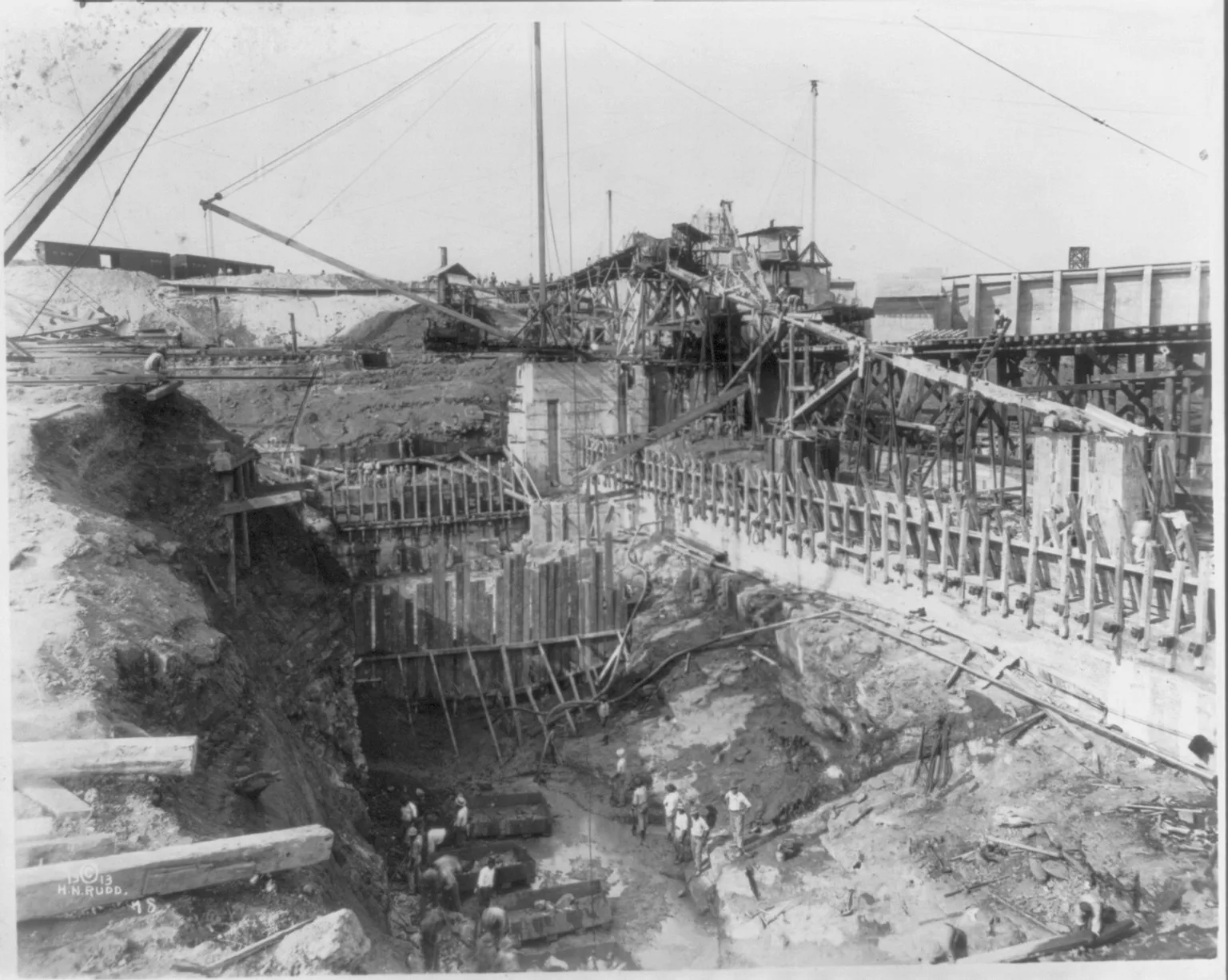
Chief engineer John Frank Stevens spent his first year focused not on digging but on logistics, rebuilding the Panama Railroad and organizing a supply system capable of feeding a workforce that would eventually exceed 40,000 people.
When Stevens resigned in 1907, President Roosevelt handed the project to Lt. Col. George Washington Goethals, a military engineer who ran construction with strict discipline for the remaining seven years. The single hardest obstacle was the Culebra Cut, later renamed the Gaillard Cut, a nine-mile trench through the Continental Divide where as many as 68 steam shovels worked simultaneously, cutting through solid rock and battling landslides that repeatedly buried finished sections and had to be re-excavated.
The American project ran on segregated labor: roughly 45,000 to 50,000 workers at the peak, most of them Black West Indians, especially from Barbados and Jamaica, alongside white American supervisors and European contract laborers. Recorded deaths in the American era were 5,609.
The Culebra Cut alone removed about 96 million cubic yards of rock and soil, and total excavation for the canal, French and American eras combined, exceeded 260 million cubic yards. Steam shovels loaded the spoil onto trains that hauled it away to build causeways, breakwaters, and Gatun Dam.

Rather than dig a sea-level channel as the French had attempted, American engineers designed a lock canal: ships are raised roughly 85 feet above sea level into an artificial lake, then lowered back down on the other side.
Gatun Dam, completed in 1913, held back the Chagres River to create Gatun Lake, at the time the largest man-made lake in the world, while three sets of paired locks, Gatun, Pedro Miguel, and Miraflores, did the actual lifting using nothing but gravity-fed water and no pumps. The Gatun Locks alone required 1.56 million cubic meters of concrete, and the first test lockage took place on September 26, 1913; the Culebra Cut was flooded on October 10, 1913, when the Gamboa dike was blown.
Each original lock chamber is 110 feet wide and 1,000 feet long, dimensions that defined the "Panamax" ship-size limit for a century. The steel gates, some as tall as a seven-story building, were built by a Pittsburgh firm and are balanced finely enough that a pair of small motors can swing them.
The whole system runs on gravity: water flows from Gatun Lake through 18-foot culverts into a chamber to raise a ship and drains to the sea to lower one. A full transit lifts a vessel about 85 feet in three steps and takes eight to ten hours end to end.
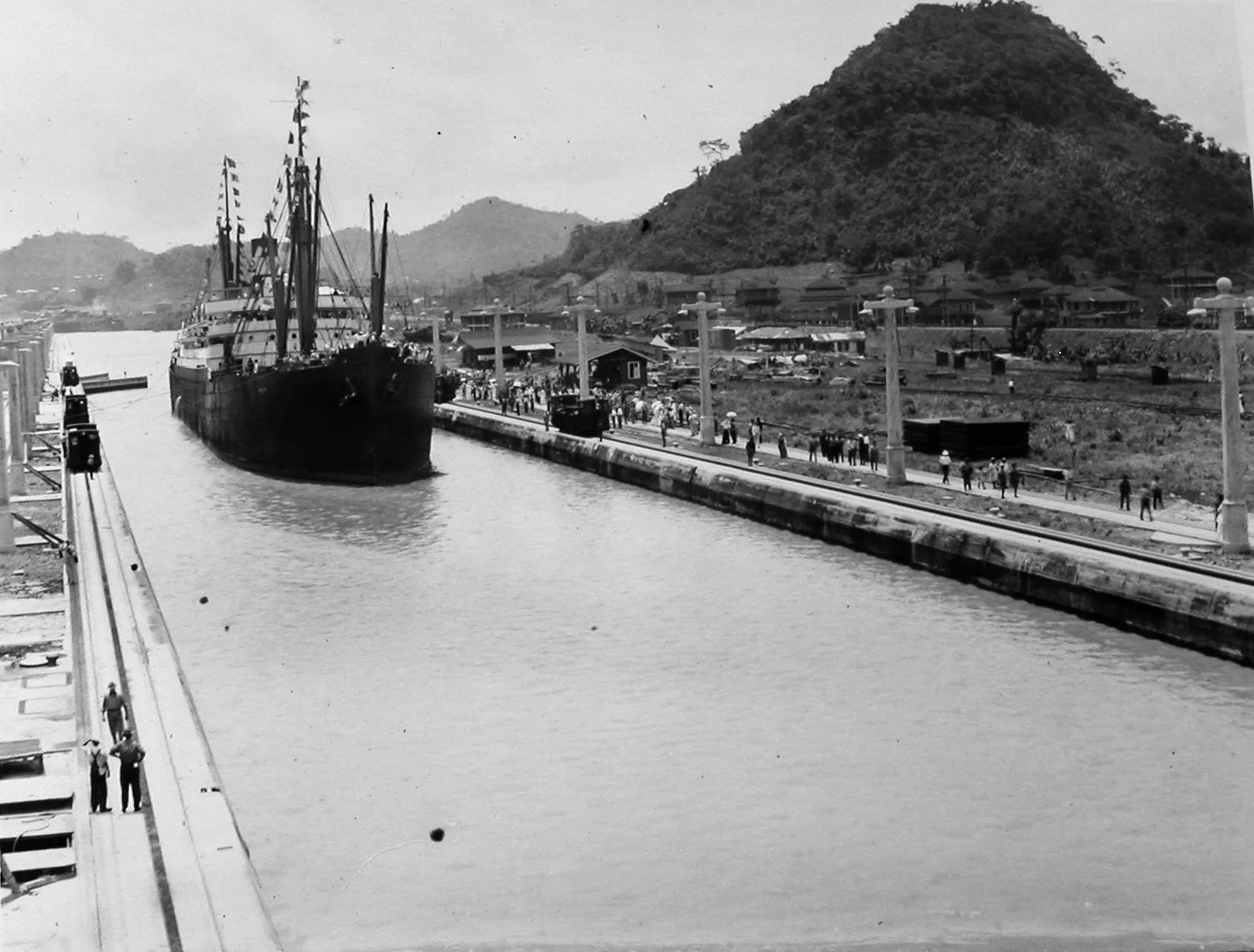
The cargo and passenger ship SS Ancon made the first official transit of the completed Panama Canal on August 15, 1914, entering the Gatun Locks at the Atlantic side around 8 a.m. and reaching the Pacific by early evening, completing a journey that had taken sailing ships weeks around Cape Horn in a matter of hours.
The grand international celebration originally planned for the opening was scaled back dramatically because World War I had broken out in Europe just weeks earlier, and global attention shifted almost immediately from the canal to the war. The completed project had cost the United States roughly $375 million, the most expensive construction project in American history to that point.
Congress had authorized operations with the Panama Canal Act of 1912, which also exempted U.S. coastal shipping from tolls; Britain protested that as a treaty violation, and Congress repealed the exemption in 1914.
Regular commercial traffic began at once, but the canal proved fragile at first: landslides in the Culebra Cut closed it for months at a time through 1915 and 1916 before the slopes finally stabilized.
Canal Zone workers were divided into two racially coded payroll systems for half a century. The gold roll, paid in U.S. gold-backed dollars, was reserved almost entirely for skilled white American workers and came with quality housing, commissary privileges, paid vacation, and pensions.
The silver roll, paid in local silver-backed currency, covered the mostly West Indian laborers who made up the bulk of the workforce and received far inferior housing, no pension, and separate, segregated schools, clubs, and even post office windows. The formal gold and silver designations were not fully dropped until the mid-1950s, decades after the canal itself was finished.
The labels came from the currencies of pay, but they hardened into a caste line. Gold-roll towns had paved streets, screened houses, clubhouses, and U.S.-curriculum schools; silver-roll housing was often crowded, unscreened barracks in the years mosquitoes still carried disease.
West Indian workers organized against the system. A 1920 strike by some 17,000 silver-roll laborers was broken within days and its leaders deported. The gold and silver labels were replaced around 1950 with "U.S.-rate" and "local-rate," which preserved most of the same pay gap until the 1977 treaties phased it out.
Tension over Panamanian sovereignty in the U.S.-controlled Canal Zone boiled over on January 9, 1964, when Panamanian students attempting to raise their national flag alongside the American flag at Balboa High School clashed with Canal Zone police and the flag was torn.
Three days of rioting followed between Panamanian demonstrators and U.S. troops, leaving 22 Panamanians and four American soldiers dead. Panama commemorates the anniversary as Martyrs' Day, and the crisis is widely credited with starting the renegotiation process that eventually produced the treaties transferring the canal to Panama.
Under a 1963 agreement the U.S. flag was not to fly alone at civilian sites in the Zone. When Canal Zone authorities kept flying it at Balboa High School, American students raised it themselves, and Panamanian students marching in with their own flag were turned back before the flag was torn in a scuffle.
Panama briefly broke off diplomatic relations with the United States over the deaths and demanded the 1903 treaty be renegotiated. President Johnson agreed to talks, and by 1967 three draft treaties existed, though they were shelved for a decade amid political change in both countries.
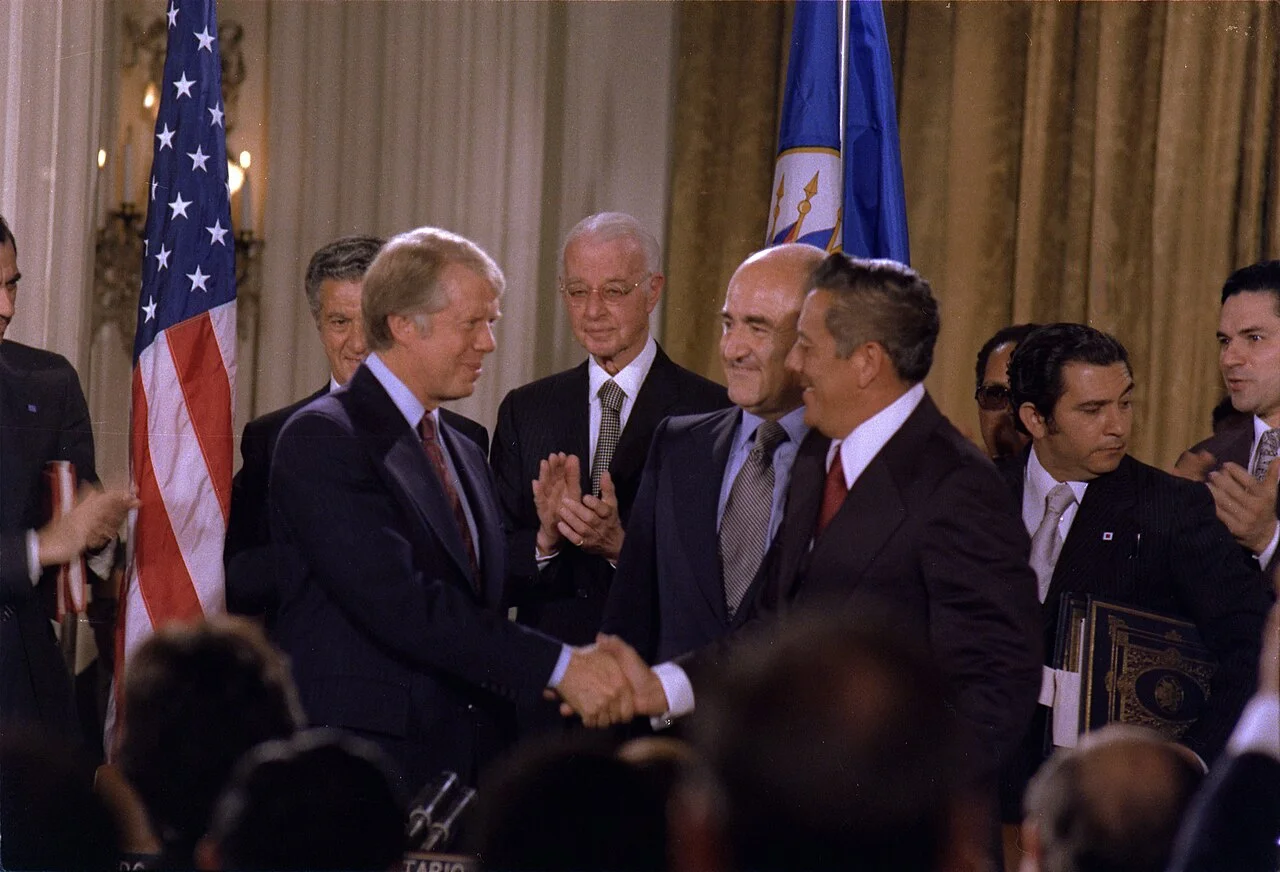
After nearly two decades of Panamanian protest and more than a decade of on-and-off negotiation, President Jimmy Carter and Panamanian leader General Omar Torrijos signed two treaties in Washington on September 7, 1977.
The Panama Canal Treaty set a firm date, December 31, 1999, for the United States to hand full control of the canal to Panama, while the companion Neutrality Treaty guaranteed the canal would remain open to ships of all nations and gave the U.S. a permanent right to defend its neutrality. The treaties passed the U.S. Senate in 1978 by the narrowest possible two-thirds margin and remained politically controversial in the United States for years afterward.
Ratification was a bruising fight. The Senate approved the Neutrality Treaty in March 1978 and the Canal Treaty in April, each exactly 68 to 32, after adding reservations asserting a U.S. right to intervene militarily to keep the canal open. Opponents, including Ronald Reagan, made "we built it, we paid for it, it's ours" a campaign slogan.
Torrijos died in a 1981 plane crash. His protégé Manuel Noriega later became Panama's de facto ruler, and the United States invaded Panama in December 1989 to remove him; the canal transition nonetheless stayed on the treaty timetable through to the 1999 handover.
At noon on December 31, 1999, the United States formally transferred complete control of the Panama Canal to the Republic of Panama, ending 96 years of American administration of the Canal Zone.
Operation of the waterway passed to the Panama Canal Authority, an autonomous agency of the Panamanian government, which had spent the prior two decades training Panamanian engineers, pilots, and administrators under the joint U.S.-Panamanian Panama Canal Commission created by the 1977 treaties. The handover was completed without incident and the canal has operated under full Panamanian control ever since.
The transition ran through that joint commission from 1979, with a U.S. administrator until 1990 and a Panamanian one after, and Panama took back Zone territory, ports, and U.S. military bases such as Fort Clayton and Howard Air Force Base in stages through the 1990s.
Former President Carter represented the United States at the December 1999 transfer ceremony; the sitting president, Bill Clinton, did not attend, a decision some criticized as a snub and the administration defended as avoiding any appearance of reluctance. Panama declared the day a national holiday.
By the early 2000s, the largest modern container ships, dubbed post-Panamax, had grown too wide for the original locks, threatening the canal's long-term competitiveness. Panamanian voters approved a $5.25 billion expansion in a 2006 referendum, and the Panama Canal Authority built an entirely new, wider set of locks alongside the originals, funded through canal revenue and bonds rather than any Panamanian or American tax dollars.
The new locks opened to traffic on June 26, 2016, roughly doubling the canal's cargo capacity and introducing water-saving basins that recycle about 60 percent of the fresh water used in each transit, a design later credited with helping the canal cope with severe drought less than a decade after opening.
The Third Set of Locks Project added one lock complex on each ocean side, each with three chambers 180 feet wide and 1,400 feet long, big enough for ships carrying about 14,000 containers, nearly triple the old Panamax limit of around 5,000.
The work ran over budget and roughly two years late amid contractor disputes and concrete-quality problems. It opened with the transit of a chartered Chinese-owned container ship chosen by lottery, the Cosco Shipping Panama.
A severe regional drought, worsened by the El Niño weather pattern, dropped Gatun Lake to its lowest recorded water level in January 2024, forcing the Panama Canal Authority to cut daily transits from a normal 36 to as few as 24 ships and causing lengthy queues that rippled through global shipping schedules before rains restored normal operations by late 2024.
Around four percent of Panama's entire economy and roughly 40 percent of all U.S. container traffic now depend on the canal each year. In January 2025, President Trump stated in his inaugural address that the United States would 'take back' the canal, alleging Chinese control over its operations; Panama's government rejected the claim, calling the canal's sovereignty 'non-negotiable' and formally notifying the United Nations of the threat of force, while also declining to renew a prior memorandum joining China's Belt and Road infrastructure initiative.
The 2023-24 restrictions cost the canal an estimated several hundred million dollars in lost toll revenue and pushed some shippers toward the Suez Canal or U.S. rail before higher rainfall let the authority raise transit numbers back toward normal.
On the sovereignty question, U.S. officials pointed to a Hong Kong-based company, CK Hutchison, that has operated port terminals at both ends of the canal under a concession since 1997; Panama's government and the canal authority responded that those ports are not the canal itself and that the waterway remains under Panamanian control. In 2025 CK Hutchison announced a deal to sell most of its global port holdings, including the Panama terminals, to a group led by the U.S. firm BlackRock, a transaction that stalled under regulatory review. In January 2026 Panama's Supreme Court declared the Panama Ports Company concession for the Balboa and Cristobal terminals unconstitutional; the ruling became final in February, the terminals were placed under interim operation by units of Maersk and MSC, and CK Hutchison filed an arbitration claim of about $2 billion.
How Water Lifts Ships Over a Mountain Range
The canal's basic design, three sets of gravity-fed locks raising ships into an artificial lake, has not changed since 1914, even as ownership passed from the United States to Panama and a second, wider set of locks was added in 2016.
A Lock Canal, Not a Sea-Level Cut
Unlike the sea-level channel the French attempted, the Panama Canal lifts ships roughly 85 feet above sea level into Gatun Lake, then lowers them back down on the far side.
Three original sets of paired locks, Gatun on the Atlantic side and Pedro Miguel and Miraflores on the Pacific side, do the lifting and lowering. Each chamber is 110 feet wide and 1,000 feet long and fills or drains in roughly eight to ten minutes.
The lifting is done entirely by gravity: water flows from Gatun Lake through culverts built into the lock walls to raise a ship, then drains to the sea to lower one. The original locks use no pumps.
Ships do not move under their own power inside the chambers. Electric towing locomotives called "mules" run on tracks along the walls to keep each vessel centered while its own engines provide gentle forward motion.
Gatun Lake: An Engineered Water Supply
Gatun Lake is entirely artificial, created by damming the Chagres River, and covers about 164 square miles; it was the largest man-made lake in the world when it was completed in 1913.
Every transit through the original locks releases about 52 million gallons of fresh water from the lake to the sea, which is why the canal's capacity has always been limited as much by rainfall as by lock size.
The lake is also the main drinking-water source for Panama City and Colón, home to roughly half the country's population, so canal operations compete directly with municipal water supply in dry years.
To manage that, the authority built the Alajuela (Madden) Lake reservoir upstream in 1935 and has long studied piping in water from neighboring river basins, a contested and repeatedly delayed option.
Who Owns and Operates It Today
Since December 31, 1999, the canal has been owned and operated entirely by the Panama Canal Authority, an autonomous agency written into Panama's constitution specifically to run the waterway independently of everyday national politics.
The Authority is governed by an eleven-member board, sets its own tolls and budget, and by law cannot be tapped as a general source of government money beyond a fixed annual payment and dividend to the national treasury.
No U.S. federal agency has any operational role in the canal today. Under the 1977 Neutrality Treaty, which has no expiration date, the United States keeps only a right to act to keep the canal open and neutral if it is threatened.
The Authority employs around 8,000 people, nearly all Panamanian, including the specialized pilots who by law take command of a ship's navigation for the length of the transit.
Tolls: How the Canal Pays for Itself
Every ship pays a toll calculated under the Panama Canal's own measurement system, based mainly on a vessel's cargo capacity rather than its physical size, with separate rate structures for container ships, tankers, bulk carriers, and passenger ships.
The canal generated about $3.38 billion in toll revenue in fiscal year 2024, and canal activity accounts for roughly four percent of Panama's gross domestic product, a dramatic reversal from the canal's first 90 years as a cost center for the United States.
Tolls have risen steadily under Panamanian management and can reach several hundred thousand dollars for a large container ship; the highest single transit fee on record, about $4 million, was paid in late 2023 by a company that won an auction to jump the drought-year queue.
For its first half-century the canal actually ran at a net cost to American taxpayers once construction and defense are counted, and only near break-even afterward, so its transformation into one of Panama's largest revenue sources is recent.
Maintenance and Modernization
The Panama Canal Authority funds all dredging, lock-gate replacement, and dam maintenance from toll revenue, with no outside subsidy.
The original locks have been kept in continuous daily service for more than a century through rolling maintenance: gates are periodically floated out and rebuilt, and the channel has been dredged and widened in stages, including a long project to straighten and deepen the Gaillard Cut.
The 2016 expansion added a third, wider set of locks with water-saving basins that reuse about 60 percent of the fresh water in every transit, a feature that proved critical during the severe 2023 to 2024 drought that forced daily transit limits well below normal.
Water remains the central constraint. After the drought, the authority accelerated planning for new reservoirs and other supply projects to protect future capacity against a drier climate.
A Global Chokepoint
Roughly 13,000 to 14,000 ships transit the canal each year, carrying an estimated five to seven percent of all global maritime trade and around 40 percent of all U.S. container traffic.
The United States is by far the largest user; besides containers, a large share of U.S. grain and energy exports moves through the canal, mostly between Asia and the East and Gulf coasts.
The alternatives are far worse. Sailing around Cape Horn adds close to 8,000 nautical miles and two to three weeks between the U.S. coasts, the Strait of Magellan is shorter but hazardous, and the Suez Canal substitutes only for some Asia-to-U.S.-East-Coast routes.
Because there is no close substitute, disruptions at the canal, whether drought, labor unrest, or political crisis, feed quickly into global shipping rates and delivery times.
Still Visible From Space
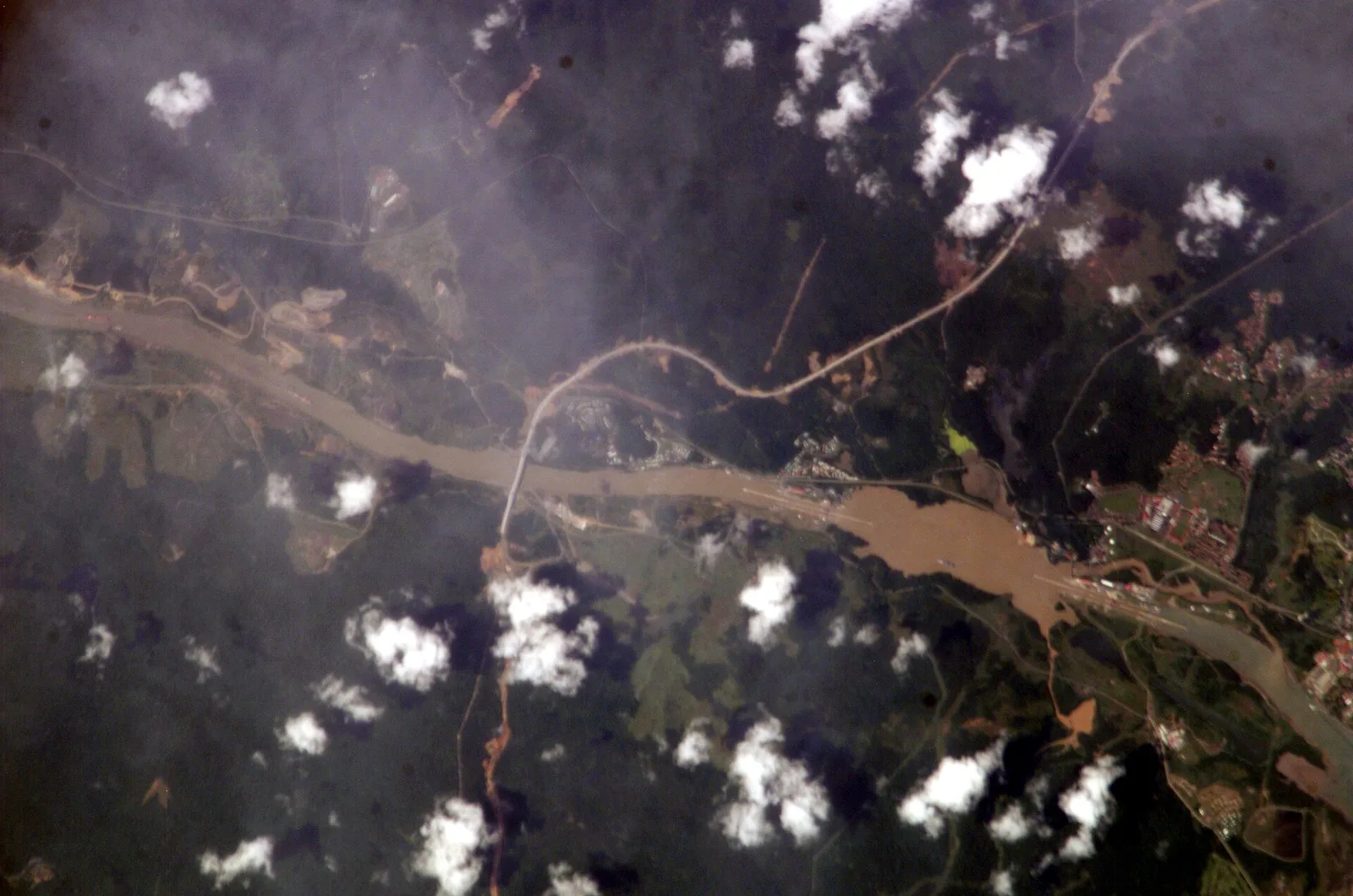
The canal's route and its port cities remain one of the most recognizable pieces of engineering on the planet. More than a century after construction began, the same narrow isthmus that once separated two oceans by a matter of miles still carries an outsized share of world trade through it every single day.
What It Has Cost, and Who Pays Now
From a private $8 million railroad to a $375 million American construction project to a $5.25 billion Panamanian-funded expansion, figures below reflect publicly reported and federally sourced estimates.
| Item | Timeline | Reported Cost | Note |
|---|---|---|---|
| The Panama Railroad | 1850 to 1855 | About $8 million, privately financed | Not a canal project, but its route, survey data, and workforce logistics were used directly by both the French and American canal efforts that followed. |
| The French Canal Company | 1881 to 1889 | About $287 million spent before bankruptcy | Financed by roughly 800,000 French private investors, not French taxpayers; the company's collapse triggered a major French political corruption scandal. |
| Payments at U.S. acquisition | 1903 to 1904 | $40 million to the French New Panama Canal Company, plus $10 million and a $250,000 annual annuity to Panama | The $40 million purchased the French company's excavation work, equipment, and the Panama Railroad; the payments to Panama were set by the 1903 Hay-Bunau-Varilla Treaty. |
| U.S. construction, 1904 to 1914 | 1904 to 1914 | Roughly $375 million total, including the payments above | The most expensive construction project in American history at the time; 5,609 deaths are recorded in official hospital records from the American construction era alone. |
| Combined human toll, French and American eras | 1881 to 1914 | An estimated 25,000 total deaths | Most historians consider even this figure conservative, since many French-era deaths, particularly among contract laborers, went unrecorded. |
| Third Set of Locks expansion | 2007 to 2016 | $5.25 billion | Funded entirely by the Panama Canal Authority through canal revenue and bonds; no Panamanian or American general tax dollars were used, since the U.S. had transferred the canal to Panama in 1999. |
| Annual toll revenue today | Fiscal year 2024 | About $3.38 billion | The canal has gone from a 20th-century American taxpayer expense to one of the Panamanian government's largest sources of national revenue, funding roughly four percent of its GDP. |
The Canal Zone's Legacy: Segregation, Sovereignty, and a New Dispute
Presented neutrally, with the documented facts on segregation, sovereignty disputes, and the modern controversy over control of the canal.
For half a century, the U.S.-controlled Canal Zone operated a formal, racially coded two-tier employment system. Skilled workers, recruited almost entirely from the United States, were paid in gold-backed dollars and given quality housing, pensions, and recreational access. The mostly West Indian laborers who made up the bulk of the workforce were paid in local silver currency and relegated to inferior housing, segregated schools, and separate service windows, distinctions that were not formally dropped until the mid-1950s.
Panamanian resentment of U.S. control of the Canal Zone, a 10-mile-wide strip of sovereign Panamanian territory administered entirely by the United States since 1903, built for decades and exploded into violence on January 9, 1964, when a dispute over flying the Panamanian flag at an American high school triggered three days of rioting that killed 22 Panamanians and four U.S. soldiers. Panama commemorates the date as Martyrs' Day, and the crisis is widely credited with forcing the treaty renegotiations that followed.
Those negotiations produced the 1977 Torrijos-Carter Treaties, which set December 31, 1999, as the date for full transfer of the canal to Panama, and the handover was completed on schedule and without incident. The Panama Canal Authority, an autonomous Panamanian government agency, has operated the canal independently ever since, funding a $5.25 billion expansion in 2016 without any U.S. or general Panamanian tax dollars.
In January 2025, President Trump stated the United States would 'take back' the canal, citing alleged Chinese influence over its operations. Panama's government rejected the claim, stating the canal's sovereignty is 'non-negotiable' and formally notifying the United Nations of what it characterized as a threat of force under the UN Charter, while separately declining to renew a memorandum with China's Belt and Road Initiative. These are documented, current developments presented here for context, not an editorial judgment on the dispute.
Did You Know?
A quick-reference set of facts drawn from the sourced material throughout this page.
- A ship sailing from New York to San Francisco through the Panama Canal travels about 5,200 miles, versus roughly 13,000 miles around Cape Horn, a savings of nearly 7,900 miles.
- Each transit through the original locks uses about 52 million gallons of fresh water, drawn entirely from Gatun Lake and released to the sea by gravity, no pumps are involved.
- The original 1914 locks are still in daily use today, more than a century later, operating alongside the wider Neopanamax locks added in 2016.
- When Theodore Roosevelt inspected the construction site in November 1906, he became the first sitting U.S. president to travel outside the country while in office.
- Combined French and American construction deaths are estimated at around 25,000, making the canal one of the deadliest construction projects in modern history.
- About 40 percent of all U.S. container traffic passes through the Panama Canal every year, even though the United States has had no ownership stake in it since 1999.
Sources & Further Reading
- End of the Construction, Panama Canal Authority
- Panama Canal: History, Impact & Canal Zone, HISTORY
- Death, Disease, and Discrimination During the Construction of the Panama Canal (1904 to 1914), Hektoen International
- How the Panama Canal Took a Huge Toll on the Contract Workers Who Built It, Smithsonian Magazine
- Gorgas Develops Effective Methods of Mosquito Control, EBSCO Research Starters
- The Panama Riots of 1964: The Beginning of the End for the Canal, Association for Diplomatic Studies and Training
- The Panama Canal and the Torrijos-Carter Treaties, U.S. Department of State, Office of the Historian
- Panama Canal Turned Over to Panama, HISTORY
- Panama Canal Expansion Wraps Up, Engineering News-Record
- Gatun Lake's Lower Water Levels Imperil the Panama Canal in 2024, Peterson Institute for International Economics
- What to Know About Trump's Day-One Promise to Take Back the Panama Canal, Atlantic Council
- Trump Says China Controls the Panama Canal, But Here's How It Really Works, NBC News