
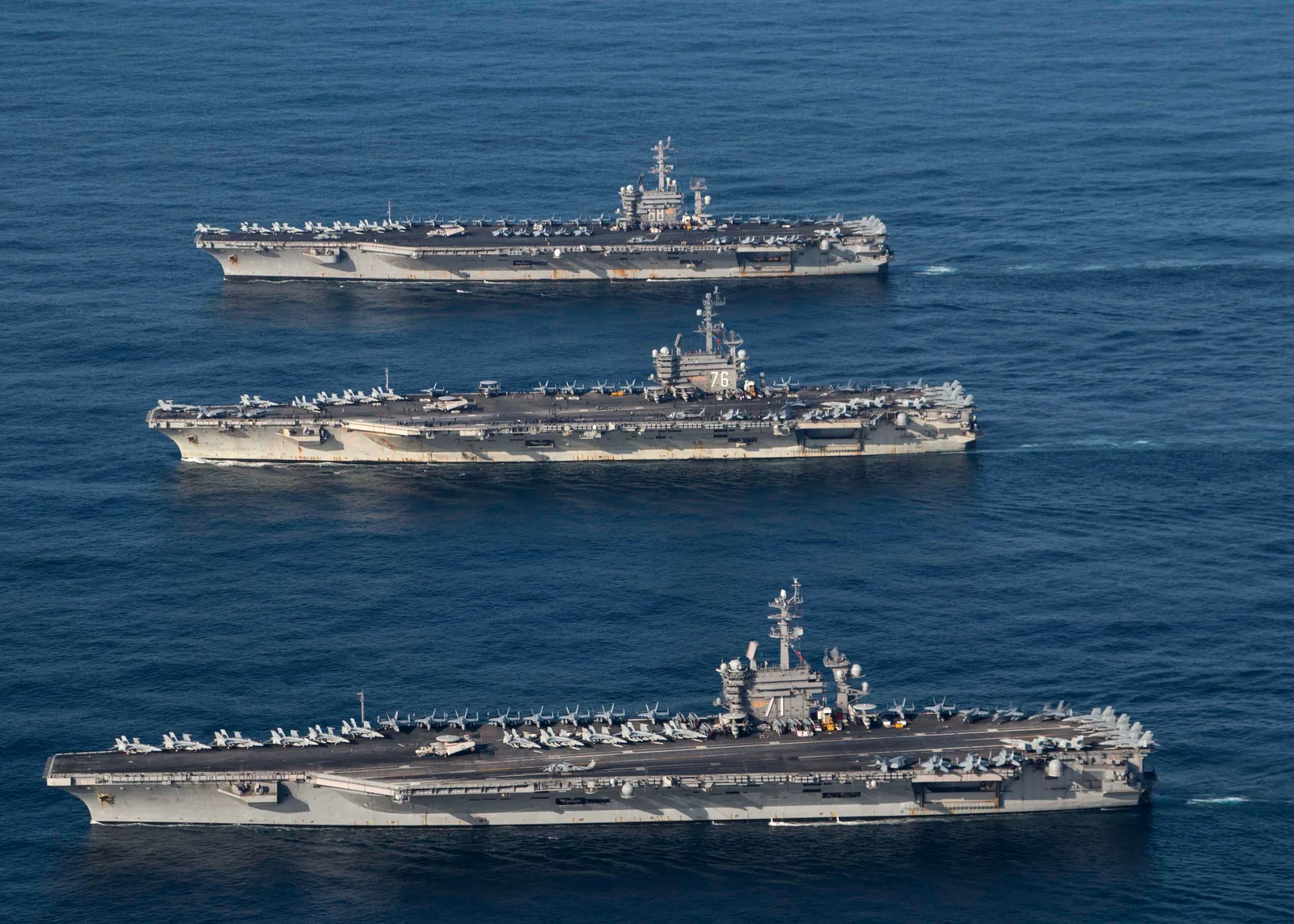
Two and a Half Centuries at Sea
The United States began with a handful of converted merchant ships and grew into the largest navy in history. Open any entry to see how each era of ships shaped the next.
The story of American warships is a story about reach. A country with two long coastlines, overseas trade, and allies across both oceans has always needed ships to protect its commerce, guard its shores, and carry its soldiers and supplies to distant wars. Each new technology, from steam and iron to aircraft and nuclear power, changed what a navy could do. See how these ships fit into the wider story of U.S. military history.
The Constitution gives Congress the power "to provide and maintain a Navy," and Congress has decided the size and shape of the fleet ever since. The milestones below are drawn from the Naval History and Heritage Command, the Coast Guard Historian's Office, the Marine Corps History Division, the U.S. Army, and the Congressional Research Service.
At a Glance
1775
Continental Congress orders the first armed vessels, the Navy's birthday
1790
Congress authorizes ten revenue cutters, the start of today's Coast Guard
2,710
Liberty cargo ships built in World War II, the most of any single design
~290
Battle force ships in the U.S. Navy today
Sources & Further Reading
- Ship histories and naval history, Naval History and Heritage Command
- Coast Guard history, U.S. Coast Guard Historian's Office
- Marine Corps History Division, U.S. Marine Corps University
- USS Constitution Museum, USS Constitution Museum
- Monitor National Marine Sanctuary, NOAA
- The H.L. Hunley, Friends of the Hunley
- Higgins boats and the D-Day landings, The National WWII Museum
- Submarine Force Museum and USS Nautilus, U.S. Navy
- Navy Force Structure and Shipbuilding Plans, Congressional Research Service
- Reports on Navy and Coast Guard shipbuilding, Government Accountability Office
- Ship fact files, U.S. Navy
- Official military photographs, Defense Visual Information Distribution Service
Ship counts and production totals vary between sources, especially for World War II classes built at many shipyards and for ships later transferred to other countries; the figures here are the ones most commonly cited by the Naval History and Heritage Command, the Coast Guard, and the Congressional Research Service. Fleet sizes and shipbuilding plans after 2023 (the Columbia-class schedule, Zumwalt modernization, and Army watercraft plans) reflect announcements current as of September 2026 and may change.