About Connecticut
Connecticut takes its name from the Connecticut River, which the Algonquian-speaking peoples of the region called "Quinnehtukqut," meaning "beside the long tidal river" or "at the long tidal river." English colonists from Massachusetts followed the river into the interior in the 1630s and adopted the indigenous name for the river and the region, adapting its spelling to approximate the Algonquian sounds. The name was recorded in various English spellings before settling into its current form. Connecticut is one of several states whose name reflects the Algonquian geographical knowledge that European settlers depended on as they moved through unfamiliar terrain.
Connecticut is one of the smallest states in the country and one of the most consequential. Wedged between New York and Massachusetts, it punches far above its weight in history, wealth, education, and national influence. The fifth state to ratify the U.S. Constitution, it was already a center of American political thought before the nation itself existed.
The Fundamental Orders of Connecticut, adopted in 1639, are considered by many historians to be the first written constitution in history, a document that established government by the consent of the governed more than a century before the U.S. Constitution. That legacy of principled self-governance gave Connecticut its nickname and shaped its character ever since.
Today, Connecticut is one of the wealthiest states per capita in the nation. Southwestern Connecticut's Gold Coast is home to hedge funds and corporate headquarters; Hartford anchors the global insurance industry; Groton builds the Navy's nuclear submarines; and New Haven is home to Yale University, one of the world's great research institutions.
Geography, Four Distinct Regions
Despite its small size, Connecticut contains four remarkably distinct regions, each with its own economy, character, and identity.
Southwestern Connecticut hugs the Long Island Sound and sits within commuting distance of New York City. Fairfield County is one of the wealthiest counties in the United States, home to hedge funds, corporate headquarters, and some of the most expensive real estate in the Northeast. Cities like Stamford, Greenwich, and Norwalk have boomed as extensions of the New York metro economy.
The wealth is real and extreme: Greenwich has been home to more hedge funds than most countries, and per-capita income in the backcountry north of the Merritt Parkway is among the highest in the nation. That concentration makes Connecticut, by some measures, the state with the widest gap between its richest and poorest residents.
Fairfield County depends on New York. Tens of thousands of residents ride Metro-North's New Haven Line, the busiest commuter rail line in the country, into Manhattan each day, and the county's fortunes rise and fall with Wall Street. Stamford has lured corporate headquarters, from a former UBS trading floor to Charter Communications and NBC Sports, by offering lower taxes and shorter commutes than the city.
The county also contains Bridgeport, Connecticut's largest and one of its poorest cities, a former manufacturing hub whose government nearly went bankrupt in 1991. The contrast between Bridgeport and neighboring Fairfield or Westport, towns that draw sharp school-district and zoning lines, has made the county a national case study in suburban segregation and the politics of local land use.
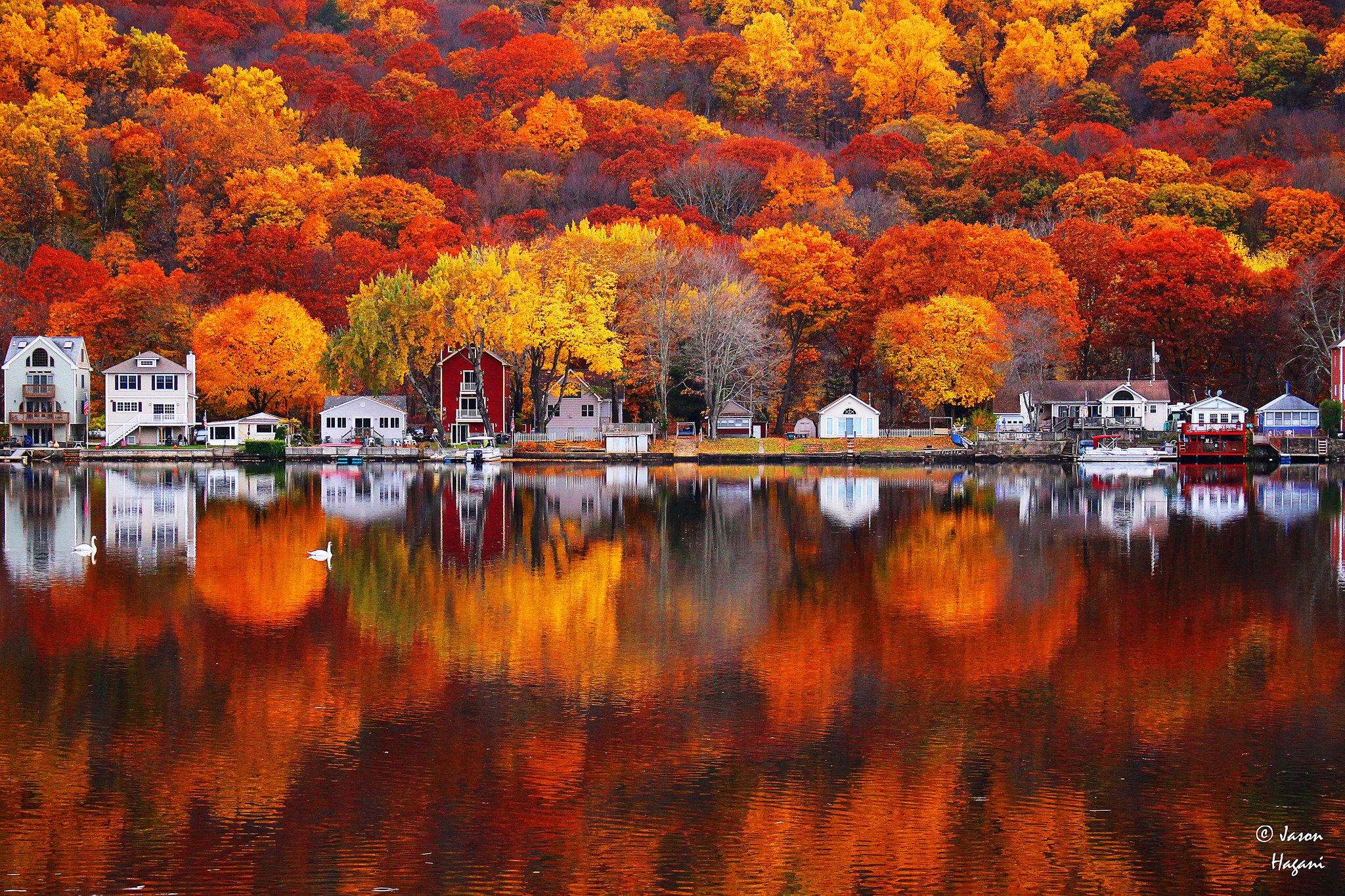
The Connecticut River, the longest river in New England, runs from Canada south through the state's center before emptying into Long Island Sound. The valley contains Hartford, the state capital, as well as the University of Connecticut in Storrs, Wesleyan University in Middletown, and broad stretches of farmland and tobacco fields that date to colonial times.
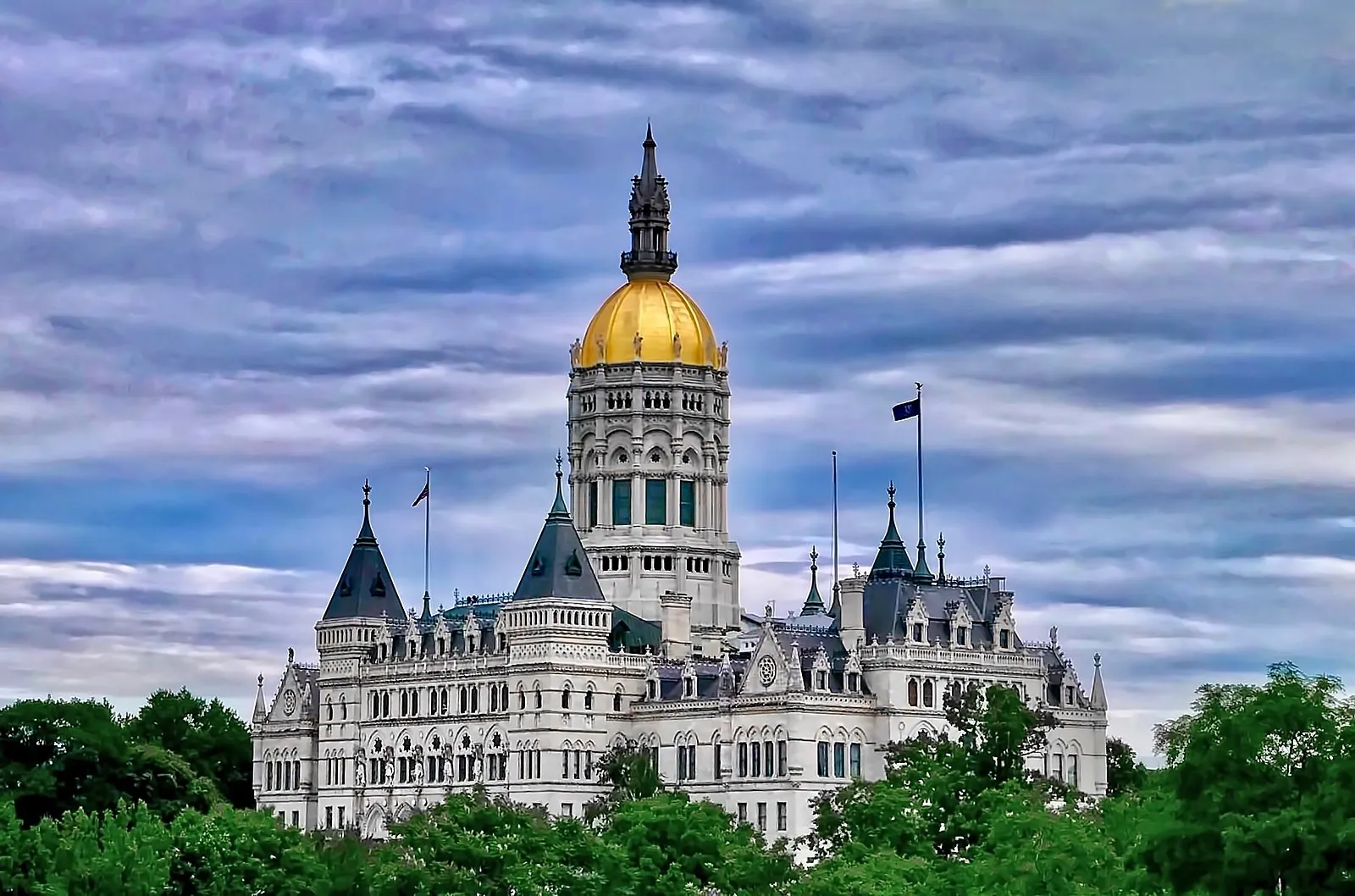
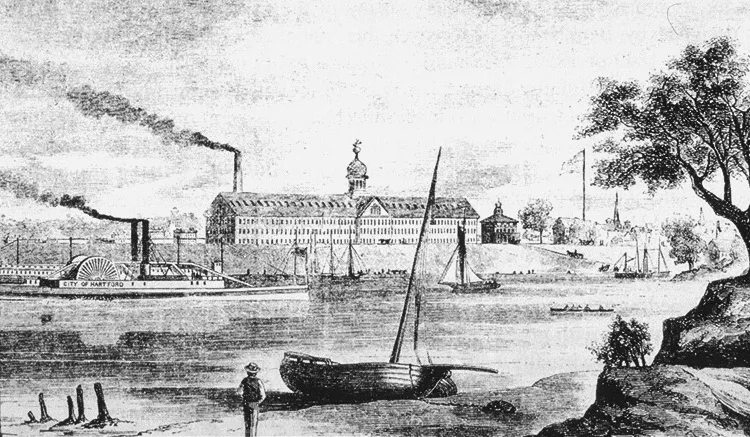
Hartford was one of the richest cities in America a century ago on insurance money and is now one of the poorest by household income, ringed by wealthy suburbs it cannot tax. The 1878 state capitol above Bushnell Park sits a few blocks from the Mark Twain House, where Twain wrote 'Tom Sawyer' and 'Huckleberry Finn,' and from the Wadsworth Atheneum, the oldest public art museum in the country.
The valley's rich floodplain grew a specific crop, shade-grown tobacco for cigar wrappers, under acres of white netting. The industry peaked in the 1920s and is down to a few hundred acres now, some of it once worked by Caribbean and Southern Black laborers, and briefly by a young Martin Luther King Jr., who came north for summer work in the fields in the 1940s.
North of Hartford the river passes the University of Connecticut in Storrs, the state's flagship, whose women's basketball program is among the most dominant in the history of American sport. The river itself, once so polluted it was described as 'landscaped sewage,' is clean enough to swim in again after decades of Clean Water Act investment, and it is the only major river in the Northeast with no port or city at its mouth.
Connecticut's southern coast along Long Island Sound features beaches, historic fishing villages, and world-class maritime destinations. New Haven is home to Yale University and its famous pizza scene. Mystic, with its renowned Seaport Museum and Aquarium, draws visitors from across the country. The shoreline blends old New England character with modern cultural amenities.
New Haven, the second-largest city, was laid out in 1638 on one of the first planned grids in America, nine squares around a central green, and is now defined by Yale, whose $40-billion-plus endowment and role as the city's largest employer and landlord shape everything from local politics to the biotech startups spun out of its labs.
The eastern shoreline runs from the mouth of the Connecticut River past Old Lyme, where American Impressionist painters gathered around 1900, to the old whaling and shipbuilding ports of New London and Mystic. Two of the largest casinos in the Western Hemisphere, Foxwoods and Mohegan Sun, sit a few miles inland on the Mashantucket Pequot and Mohegan reservations, opened in the 1990s after a landmark federal recognition and land-claim settlement.
The Sound is a shared, heavily used estuary: it supports lobster and oyster fisheries, hundreds of thousands of boaters, and the cooling water and nitrogen runoff of the region's cities, which produce summer low-oxygen 'dead zones.' Long Island shields the Sound from the open Atlantic, keeping Connecticut's coast calmer, and lower, than Rhode Island's or Cape Cod's.
The northeastern corner of the state, known as the 'Quiet Corner', is among the most rural and least-developed areas in New England. Rolling hills, small farms, and dense forests characterize a region that has changed little in generations. Woodstock, Pomfret, and Putnam anchor a part of Connecticut that feels worlds away from the Gold Coast fifty miles south.
Industrialization mostly passed the Quiet Corner by after its early textile mills closed; the mill villages along the Quinebaug and French rivers are National Park Service heritage areas today, and the region has some of the darkest night skies left in the densely populated Northeast, which is why it is called 'the Last Green Valley.'
The University of Connecticut sits at the edge of this region in Storrs, and the corner's farms, dairy, apples, Christmas trees, and increasingly vineyards and breweries, feed farm stands and a growing cider industry. Interstate 395 and the pull of the two casinos and the submarine base to the south have drawn some development into the southern half of the corner.
Culturally the Quiet Corner has more in common with rural Massachusetts and Rhode Island than with Fairfield County. The drive from Putnam to Greenwich, about 90 miles, crosses one of the sharpest wealth gradients anywhere in the United States, all within a single small state.

Economy
Connecticut's economy is built on high-value industries, finance, defense, education, and healthcare, that make it one of the wealthiest states per capita in the country.
Connecticut, and Hartford in particular, has been the center of the American insurance industry since the early 1800s. Aetna (founded 1853), The Hartford, and Travelers Insurance all trace their roots here. Connecticut's finance and insurance sector employs hundreds of thousands and is disproportionately large relative to the state's size.
Hartford Fire Insurance Company, founded in 1810, is one of the oldest property and casualty insurers still operating in the United States, and Connecticut's early adoption of standardized insurance policy language helped shape industry practices nationwide.
Connecticut also holds one of the largest concentrations of hedge funds in the world in lower Fairfield County; Bridgewater Associates in Westport, the biggest hedge fund on Earth, manages well over $100 billion. The industry pays enormous state income taxes, which leaves Connecticut's budget unusually dependent on a few thousand wealthy filers whose earnings swing with the market.
The insurance industry that built Hartford has consolidated, Aetna was bought by CVS in 2018, and much of the back-office work has moved elsewhere, but The Hartford, Travelers, and Cigna still headquarter or employ heavily in the region, and Connecticut remains a national center for insurance regulation, actuarial work, and reinsurance.
General Dynamics' Electric Boat division in Groton and New London produces virtually all U.S. Navy nuclear submarines. Pratt & Whitney in East Hartford makes jet engines that power military and commercial aircraft worldwide. Sikorsky (now Lockheed Martin) in Stratford has built military helicopters for decades. Defense contracts are a cornerstone of Connecticut's economy.
Electric Boat in Groton built the USS Nautilus, the world's first nuclear-powered submarine, commissioned in 1954. Decades earlier, Igor Sikorsky's Connecticut-based company had produced the R-4, the world's first mass-produced helicopter, used by the U.S. military during World War II.
Electric Boat is in the middle of the largest submarine buildout since the Cold War, constructing both Virginia-class attack subs and the new Columbia-class ballistic-missile boats, and has been hiring thousands of workers a year, straining the region's housing and trade-school capacity. The AUKUS deal to sell submarines to Australia has added pressure to raise the pace to more than two boats a year.
The rest of the cluster is aerospace: Pratt & Whitney, now part of RTX, builds the F135 engine for the F-35 and the geared turbofan for airliners, and Kaman and hundreds of small precision-machining shops feed both. Manufacturing employs about 160,000 people in Connecticut, a larger share of the workforce than in most states, and its biggest problem is finding enough skilled machinists as older workers retire.
Yale University in New Haven is one of the world's foremost research institutions, generating billions in economic activity and attracting global talent. The University of Connecticut, Wesleyan, Trinity, and dozens of smaller colleges make Connecticut one of the most highly educated states per capita. Research partnerships between universities and industry drive biomedical and tech innovation.
Yale, founded in 1701, is the third-oldest institution of higher education in the United States, after Harvard and William & Mary, and its endowment is among the largest of any university in the world.
Yale is New Haven's economic engine: its largest employer with about 15,000 workers, its biggest landlord and taxpayer despite its nonprofit status, and the subject of a running fight over 'payments in lieu of taxes' from an institution sitting on a $40-billion-plus endowment in a struggling city. Its medical and public-health schools anchor a growing life-sciences cluster.
The public system centers on the University of Connecticut, whose Storrs campus and UConn Health center in Farmington have expanded sharply since the 'UConn 2000' building program began in 1995. Connecticut also has some of the country's best-known private schools and colleges and, by census measures, one of the highest shares of adults with graduate degrees of any state.
Yale New Haven Health is one of the largest health systems in New England. The state has attracted significant pharmaceutical and biotech investment, particularly in the New Haven and Farmington areas. Connecticut's proximity to Boston and New York makes it a natural link in the Northeast's biomedical corridor.
Pfizer's research campus in Groton, one of the company's largest research and development sites, is where scientists discovered sildenafil, later marketed as Viagra, during cardiovascular drug trials in the 1990s.
The Jackson Laboratory opened a roughly $1.1 billion genomic-medicine campus in Farmington in 2014, next to UConn Health, part of a state 'Bioscience Connecticut' push to build a research corridor between New Haven, Farmington, and Groton. New Haven's 300-plus biotech firms, many of them Yale spinouts, occupy converted downtown buildings.
Yale New Haven Health, the largest hospital system in the state, runs the region's only Level 1 trauma center and children's hospital and has grown by absorbing community hospitals along the shoreline. Hospitals are among the largest employers in most Connecticut cities, and the state's aging population, one of the oldest median ages in the country, keeps demand rising even as smaller hospitals struggle financially.
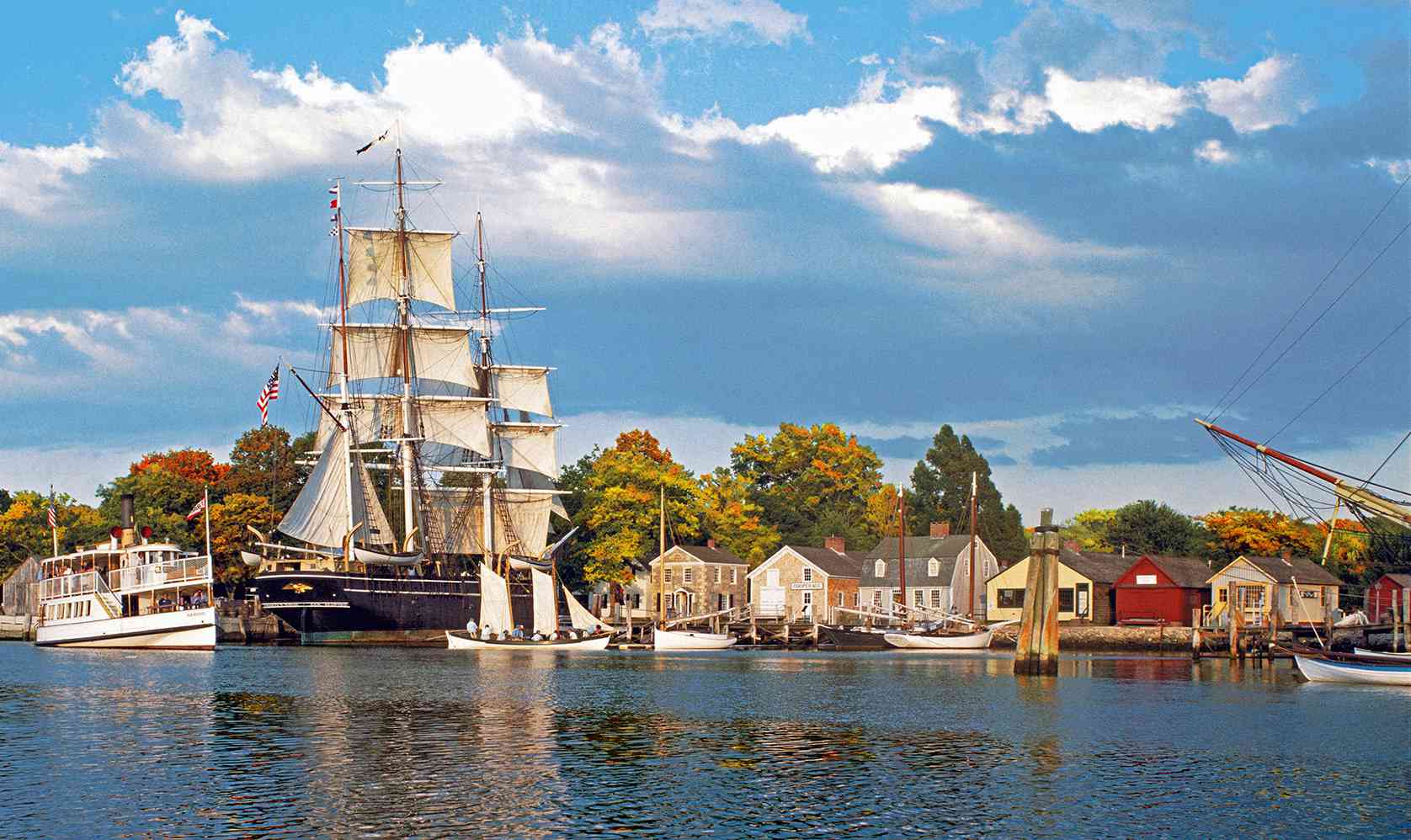
Mystic Seaport Museum, the nation's largest maritime museum, and the Mystic Aquarium are among the most visited attractions in New England. The Mark Twain House in Hartford, Yale's galleries, and dozens of colonial-era historic sites make Connecticut a destination for history and culture. Tourism generates over $10 billion annually for the state.
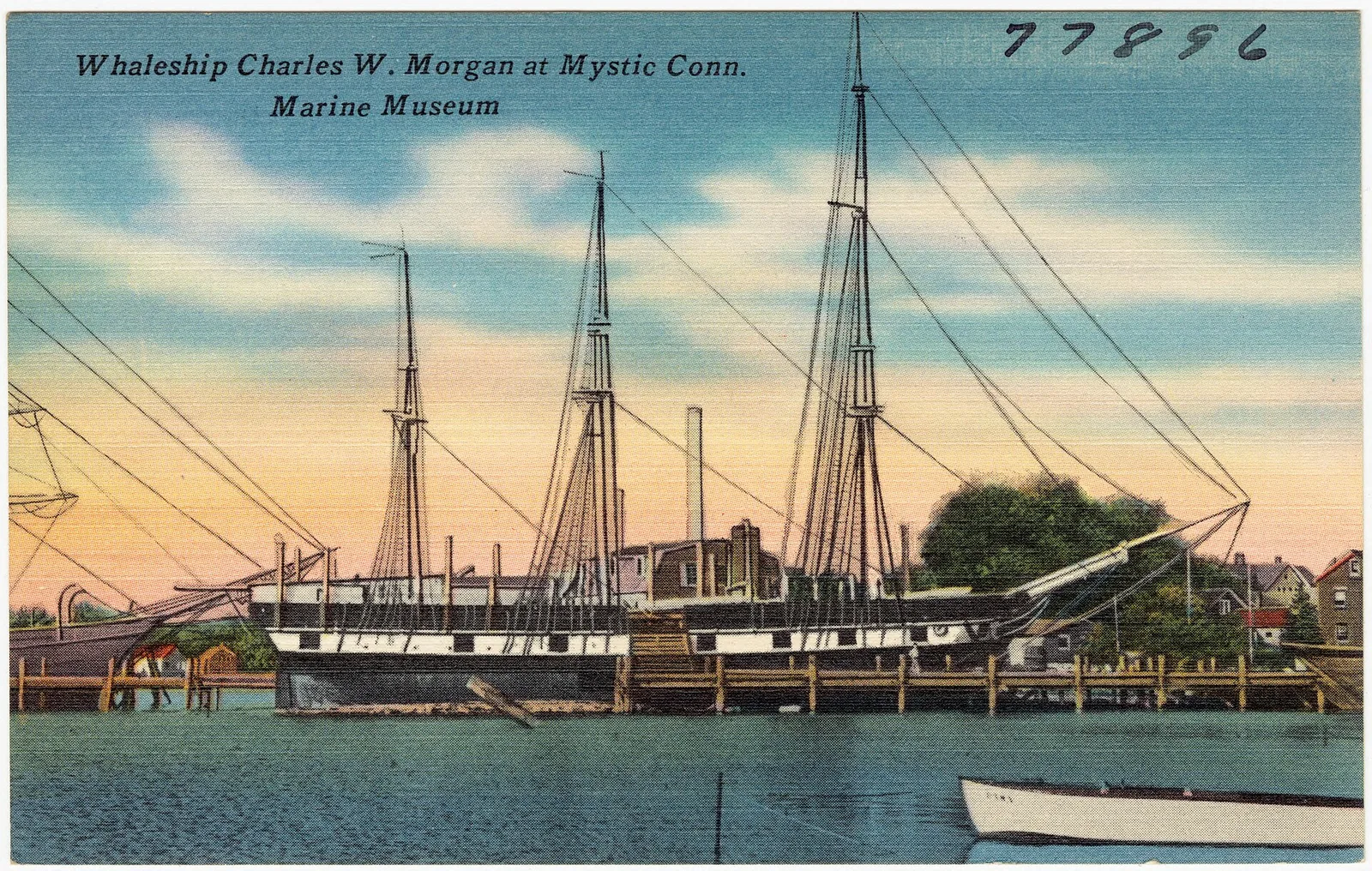
Mystic Seaport is home to the Charles W. Morgan, launched in 1841 and the last surviving wooden whaling ship in the world, which the museum has kept in sailing condition through multiple restorations.
Foxwoods and Mohegan Sun are the state's biggest tourist attractions by far, drawing tens of millions of visits a year and paying Connecticut a 25 percent slice of their slot revenue, which for years funded a large share of the state's aid to towns; that money has shrunk as casinos opened in Massachusetts, New York, and Rhode Island.
Beyond the casinos, Connecticut sells history and coastline: Mystic Seaport and Aquarium, the Twain and Harriet Beecher Stowe houses in Hartford, Yale's free museums, the beaches and boatyards of the Sound, and the old farms and prep schools of Litchfield County in the northwest hills, which has become a weekend retreat for New Yorkers and driven up land prices there.
How Connecticut's State Government Works
Connecticut operates under a three-branch state government. The General Assembly consists of a 36-member Senate and a 151-member House of Representatives. Unlike many states, Connecticut does not have term limits for state legislators, though the governor is limited to two consecutive terms.
Connecticut has historically been a competitive swing state at the federal level, though recent decades have seen it lean reliably Democratic in statewide races. Fiscally, Connecticut faces significant long-term pension obligations that have shaped budget debates for years.
The state Supreme Court consists of seven justices appointed by the governor and confirmed by the General Assembly. Connecticut uses a merit-based appointment process intended to insulate the judiciary from direct political elections.
Governor of Connecticut
Current Governor
Ned Lamont

- Party
- Democrat
- In Office Since
- January 9, 2019
- Elected
- 2018, re-elected 2022
- Term Ends
- January 2027
- Born
- January 3, 1954, Washington, D.C.
- Prior Role
- Businessman and entrepreneur (cable television)
Ned Lamont is the 89th Governor of Connecticut. A businessman from Greenwich, he founded a cable television company before entering politics. As governor, he has focused on fiscal discipline, transportation infrastructure, free community college, and strengthening Connecticut's competitive position against neighboring New York and Massachusetts.
Other Current State Officials
Lieutenant Governor
Susan Bysiewicz
In office since January 2019. Former Connecticut Secretary of State and Attorney General candidate.
Attorney General
William Tong
In office since January 2019. First Asian American Attorney General elected in the United States.
Secretary of State
Stephanie Thomas
In office since January 2023. Former state representative focused on election administration and voting access.
State Treasurer
Erick Russell
In office since January 2023. Former Bridgeport deputy mayor and the youngest state treasurer in Connecticut history.
The Connecticut General Assembly
Connecticut State Senate
- Seats: 36 members
- Terms: 2-year terms
The upper chamber. Connecticut is one of a small number of states where senators serve 2-year terms rather than 4-year terms, meaning all 36 Senate seats are on the ballot every election cycle.
Connecticut House of Representatives
- Seats: 151 members
- Terms: 2-year terms
The lower chamber. Connecticut's House is one of the larger lower chambers for a state its size. All 151 seats are up for election every two years, making the entire General Assembly competitive in every election cycle.
Connecticut's U.S. Senators
U.S. Senator
Richard Blumenthal
Former Connecticut Attorney General for 20 years (1991–2011) before winning his Senate seat. Known for consumer protection, veterans' issues, and gun safety legislation. One of the Senate's most vocal advocates for oversight and accountability.
U.S. Senator
Chris Murphy
Former U.S. Representative who won his Senate seat in 2012. Became one of the Senate's leading voices on gun violence prevention following the Sandy Hook Elementary School shooting in Newtown, Connecticut. Also focuses on foreign policy and health care.
Connecticut Through the Years
From early settlement to the present day. Tap any era to read more.
The Reverend Thomas Hooker led a congregation from Massachusetts Bay Colony south to found Hartford on the Connecticut River. Hooker believed in broader participation in government than Massachusetts allowed, an idea that would shape Connecticut's political identity for centuries. The settlement was among the earliest permanent English communities in New England.
Hooker's move in 1636 was partly a break with Massachusetts, where the rule was that only visible 'saints' should govern; Hooker argued in a 1638 sermon that 'the foundation of authority is laid in the free consent of the people.' His congregation joined earlier trading posts on the river, including a Dutch fort at Hartford, 'the House of Hope,' built in 1633.
The English settlements at Hartford, Wethersfield, and Windsor united in 1637 to wage the Pequot War, a campaign that included burning a fortified Pequot village at Mystic with hundreds of people inside. The war destroyed the most powerful nation on the Connecticut coast and opened the region to English expansion.
Connecticut and the separate New Haven Colony to the south ran as independent Puritan governments until 1662, when Connecticut's governor John Winthrop Jr. obtained a royal charter from Charles II that absorbed New Haven and gave the colony unusually broad self-rule, a charter Connecticut would cling to for more than a century.
Connecticut's colonial leaders adopted the Fundamental Orders of Connecticut, widely regarded as the first written constitution in history to establish a government based on the will of the people. It created a framework of government with defined powers and protected rights. This document directly inspired Connecticut's nickname 'The Constitution State' and influenced the later U.S. Constitution.
The Fundamental Orders of January 1639 set up an elected governor and legislature and, unlike Massachusetts, did not require voters to be church members, only 'admitted inhabitants' who took an oath. A 19th-century historian's claim that it was 'the first written constitution... that created a government' is where the Constitution State nickname comes from, though scholars debate it.
The Orders governed Connecticut until the 1662 royal charter replaced them. That charter became legend in 1687, when the royal governor Edmund Andros came to Hartford to seize it and, the story goes, it was hidden in a hollow oak, the 'Charter Oak,' which stood until 1856 and now appears on the Connecticut state quarter.
Connecticut kept the 1662 charter as its constitution straight through the Revolution and into statehood, not adopting a formal state constitution until 1818, one of the last of the original states to do so. The 1818 document finally separated church and state in Connecticut, ending tax support for the Congregational Church.
Connecticut ratified the U.S. Constitution on January 9, 1788, becoming the fifth state to join the Union. Connecticut's delegates played a pivotal role at the Constitutional Convention, Roger Sherman and Oliver Ellsworth co-authored the 'Connecticut Compromise,' which created the bicameral Congress with equal Senate representation and proportional House representation, resolving the deadlock between large and small states.
Roger Sherman of Connecticut is the only person to sign all four founding documents: the Continental Association of 1774, the Declaration of Independence, the Articles of Confederation, and the Constitution. He and Oliver Ellsworth pushed the compromise that split Congress into a population-based House and an equal-representation Senate, breaking a deadlock that had nearly ended the 1787 convention.
Connecticut ratified quickly and by a wide margin, 128 to 40, with little of the Anti-Federalist fight seen in New York or Virginia; the state's merchants and farmers liked a federal government that could regulate trade and tax imports at the ports of rival states.
Ellsworth went on to write much of the Judiciary Act of 1789, which created the federal court system, and served as the third Chief Justice of the United States. Sherman sat in both the House and the Senate of the First Congress, the only member ever to do so, and helped shepherd the Bill of Rights.
Connecticut became a powerhouse of American manufacturing during the 19th century. Samuel Colt invented the revolver in Hartford; Winchester rifles were made in New Haven; textiles, clocks, and brass goods poured from Connecticut factories. The state's rivers powered mills that supplied goods to a growing nation and, critically, weapons and supplies to the Union during the Civil War.
Connecticut was where American mass production was invented. Eli Whitney's 1798 musket contract and the culture of the federal armories promoted interchangeable parts, and the 'Connecticut Valley' gun makers, Colt, Winchester, Sharps, Marlin, made the region the country's arms arsenal through the Civil War and beyond.
The state also ran on small things sold everywhere. Waterbury was the 'Brass City,' making buttons, pins, clock movements, and later ammunition casings, and Yankee peddlers carried Connecticut clocks, tinware, and notions across the country, which is how 'Connecticut Yankee' came to mean a sharp, inventive trader.
Immigration built the mill cities, Irish, then French Canadian, Italian, Polish, and Eastern European Jewish workers, and Connecticut became one of the most densely industrial states in the country. The 20th century hollowed much of it out, and cities like Waterbury, New Britain, and Bridgeport have spent decades looking for a replacement economy.
Connecticut sent over 57,000 soldiers to fight for the Union and was a critical industrial supplier throughout the war. Hartford-area manufacturers produced rifles, ammunition, and military equipment at scale. Connecticut's political leaders were strong abolitionists, and the state contributed significantly to the Union's logistical and industrial war effort.
Connecticut had deep ties to slavery despite being a free state: it did not fully abolish slavery until 1848, and its factories, insurers, and shipowners had grown rich on the cotton trade and on insuring enslaved people. The 1839 Amistad case, in which kidnapped Africans who had seized a slave ship were jailed in New Haven, was argued to the Supreme Court, which freed them in 1841.
The state was politically divided. A 'Peace Democrat' governor opposed the war and some mill towns saw draft unrest in 1863, but Republican industrialists like Colt and the Hartford insurance men backed the Union hard, and Connecticut ended the war firmly in the Union camp.
Connecticut's real contribution was matériel. Colt's Hartford armory turned out hundreds of thousands of revolvers and rifles, Sharps and other makers armed whole regiments, and Waterbury and Bridgeport supplied the brass and cartridges. The war left Connecticut manufacturers with the capital, machine tools, and contracts that carried them into the postwar boom.
The 20th century transformed Connecticut into one of America's premier defense manufacturing states. Electric Boat began producing submarines in Groton. Pratt & Whitney's jet engines powered American aviation. Sikorsky's helicopters became military workhorses. This defense infrastructure created well-paying manufacturing jobs and anchored Connecticut's economy through economic cycles that devastated other industrial states.
Electric Boat launched the USS Holland, the Navy's first commissioned submarine, in 1897 and has built submarines on the Thames River ever since; the USS Nautilus, the first nuclear-powered sub, went to sea from Groton in 1955 and is a museum there now. The Navy's submarine school and its main East Coast base are across the river in Groton.
Pratt & Whitney was founded in Hartford in 1925 and by World War II built roughly half the horsepower flown by American aircraft; its jet engines later powered the 747, the F-15, and the F-22. Sikorsky, founded by the Russian émigré Igor Sikorsky in 1923, moved to Stratford and built the helicopters, Black Hawk, Sea King, the presidential Marine One, that made the company a household name.
Cold War spending shielded Connecticut from the deindustrialization that gutted the rest of the manufacturing belt, but the 1990s defense cuts hit hard: employment at Electric Boat and Pratt each fell by half or more, and the state has ridden the swings of Pentagon budgets ever since. The current submarine surge has reversed the decline, at least around Groton.
Connecticut's Defining Moments in American History
These are the events that didn't just shape Connecticut, they changed the nation.
In the summer of 1787, the Constitutional Convention was on the verge of collapse. Large states wanted representation based on population; small states demanded equal representation.
Connecticut's Roger Sherman and Oliver Ellsworth proposed a bicameral legislature, the House based on population, the Senate with two seats per state. The 'Great Compromise' broke the deadlock and made the Constitution possible.
The vote to adopt the compromise on July 16, 1787, passed by a single state, with Massachusetts split and abstaining. Large-state delegates like James Madison were bitterly disappointed and considered walking out; instead the convention moved on, and the equal-Senate provision was written so it could never be amended away without a state's own consent.
The compromise is still argued over: it gives Wyoming's roughly 590,000 people the same two senators as California's 39 million, and it shapes the Electoral College, which adds two votes per state on top of the House allocation. Defenders say it protects small states and forces coalition-building; critics say it hands less populous states outsized power over national policy.
The Naval Submarine Base New London in Groton is the oldest and largest submarine base in the United States, and General Dynamics' Electric Boat has built the vast majority of U.S. Navy nuclear submarines on the Thames River.
Connecticut's role in undersea naval power has been central to American military strategy for over a century.
Groton has built nearly every class of American submarine, from the diesel boats of two world wars to the nuclear fleet designed by Admiral Hyman Rickover, whose insistence on building the reactor and the ship together turned Electric Boat into the Navy's lead submarine yard. The town's schools, housing, and trade programs are organized around the yard's hiring cycles.
Today Electric Boat and the public Newport News yard in Virginia split the work of building two Virginia-class attack submarines a year plus the far larger Columbia-class missile boats, and the program is the single biggest thing in Connecticut's economy, with state and federal money going into expanding the supplier base and training welders and pipefitters.
On December 14, 2012, a gunman killed 20 children and 6 adults at Sandy Hook Elementary School in Newtown, Connecticut. The tragedy catalyzed a national movement for gun safety legislation.
Connecticut's own Senator Chris Murphy went on to lead a decade-long effort in the U.S. Senate, culminating in the Bipartisan Safer Communities Act of 2022, the most significant federal gun safety legislation in nearly 30 years.
Connecticut's legislature responded within four months with one of the strictest gun laws in the country: it banned more than 100 models of semi-automatic rifle, capped magazines at 10 rounds, required registration of existing 'assault weapons' and background checks on all sales, and set up a registry of dangerous-weapon offenders. Federal courts upheld the law.
The families of nine victims sued the maker of the rifle, Remington, and in 2022 won a $73 million settlement, the first time a U.S. gunmaker had been held financially liable for a mass shooting, using a Connecticut consumer-protection law to get around the federal shield that normally protects the industry. Sandy Hook also spawned online conspiracy theories, and the broadcaster Alex Jones was ordered to pay the families roughly $1.5 billion for defamation.
Notable Connecticuters
Mark Twain
Author of Adventures of Huckleberry Finn and Tom Sawyer, lived in Hartford for 17 years
Harriet Beecher Stowe
Author of Uncle Tom's Cabin, a pivotal antislavery novel, born in Litchfield
Noah Webster
Lexicographer who created the first major American dictionary, born in West Hartford
P.T. Barnum
Showman and circus entrepreneur who founded the Greatest Show on Earth, born in Bethel
Nathan Hale
Revolutionary War spy and patriot, born in Coventry, famous for his last words
J.P. Morgan
Banking titan who reshaped American finance and industry, born in Hartford
State Symbols & Quick Facts
| Nickname | "The Constitution State" |
| Capital | Hartford |
| Largest City | Bridgeport |
| Statehood | January 9, 1788 (5th state) |
| Population | ~3.6 million (2025 est.) |
| Area | 5,543 sq mi, 3rd smallest state |
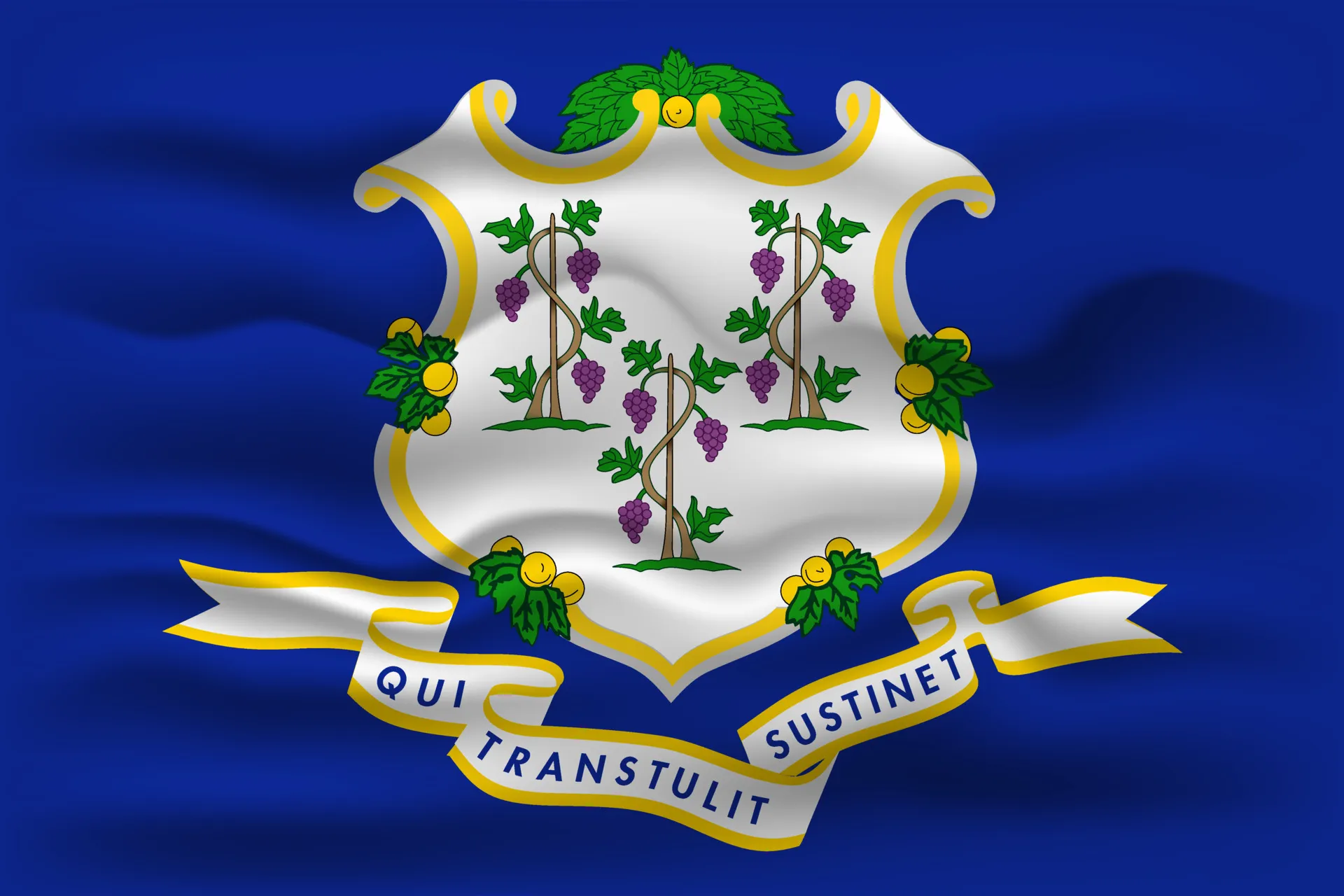
| Motto | Qui Transtulit Sustinet (He Who Transplanted Still Sustains) |
| State Bird | American Robin |
| State Flower | Mountain Laurel |
| State Tree | White Oak (The Charter Oak) |
| State Animal | Sperm Whale |
| State Fish | American Shad |
| State Song | "Yankee Doodle" |
| Time Zone | Eastern Time (UTC−5 / UTC−4) |
| Borders | Massachusetts (N), Rhode Island (E), Long Island Sound (S), New York (W) |
Did You Know?
Connecticut and Massachusetts trade the top two spots for per-capita personal income among the states, driven in Connecticut's case by finance, defense, and insurance.
The hamburger is said to have been invented in New Haven at Louis' Lunch in 1900, the restaurant still operates today and still cooks burgers in the original cast-iron vertical broilers.
The Frisbie Pie Company of Bridgeport made pie tins that Yale students began tossing for fun in the 1940s. Walter Morrison's plastic flying disc of 1948 was sold as the Flyin-Saucer and later the Pluto Platter; Wham-O, which bought the design, renamed it the Frisbee in 1957 in homage to the pie tins.
Hartford was home to Mark Twain, who wrote 'Adventures of Tom Sawyer' and 'Adventures of Huckleberry Finn' in his Victorian mansion there. His home is now a national historic landmark.
Connecticut is just 5,543 square miles, the third smallest state, yet it holds two of the Navy's most critical submarine assets, both in Groton: Naval Submarine Base New London and General Dynamics' Electric Boat shipyard.
Quick Facts and Common Questions
Short answers to the questions people most often ask about Connecticut: its abbreviation, how it became a state, its capital, and its place in Congress.
Connecticut's two-letter postal abbreviation is CT. The U.S. Census Bureau places it in the Northeast region, in the New England division, and about 3.61 million people lived there in the 2020 census.
Connecticut became the 5th state on January 9, 1788, when its convention ratified the U.S. Constitution. It was one of the original 13 colonies, founded by English Puritans who settled Windsor, Wethersfield, and Hartford in the 1630s.
The name comes from the Connecticut River and a Mohegan-Pequot (Algonquian) word, often written "quinnehtukqut," meaning "beside the long tidal river."
The nickname honors the Fundamental Orders of 1639, adopted by the towns of Hartford, Windsor, and Wethersfield to set up a government by the consent of the people. Many historians describe it as one of the first written constitutions in the Western tradition, and the legislature made "The Constitution State" the official nickname in 1959.
Hartford is the capital, but from 1701 to 1875 Connecticut had two capitals, Hartford and New Haven, and the legislature met in each city in turn. Voters made Hartford the sole capital in 1875, and the current State Capitol opened there in 1879.
Connecticut borders New York to the west, Massachusetts to the north, and Rhode Island to the east. Its southern shore lies on Long Island Sound, an arm of the Atlantic Ocean.
At the Constitutional Convention of 1787, Connecticut delegates Roger Sherman and Oliver Ellsworth proposed the plan that broke the deadlock between large and small states: seats in the House of Representatives based on population, and two senators for every state. It is also called the Great Compromise.
Connecticut's motto is "Qui Transtulit Sustinet," Latin for "He Who Transplanted Still Sustains." Its state bird is the American robin, its flower is the mountain laurel, and its tree is the white oak, honoring the Charter Oak, where colonists are said to have hidden the colony's charter from a royal governor in 1687.
Based on the 2020 census, Connecticut has 5 seats in the U.S. House of Representatives, the same as before, which gives it 7 votes in the Electoral College.
Mystic Seaport Museum
America's Leading Maritime Museum, a Living 19th-Century Seafaring Village
About Mystic Seaport Museum
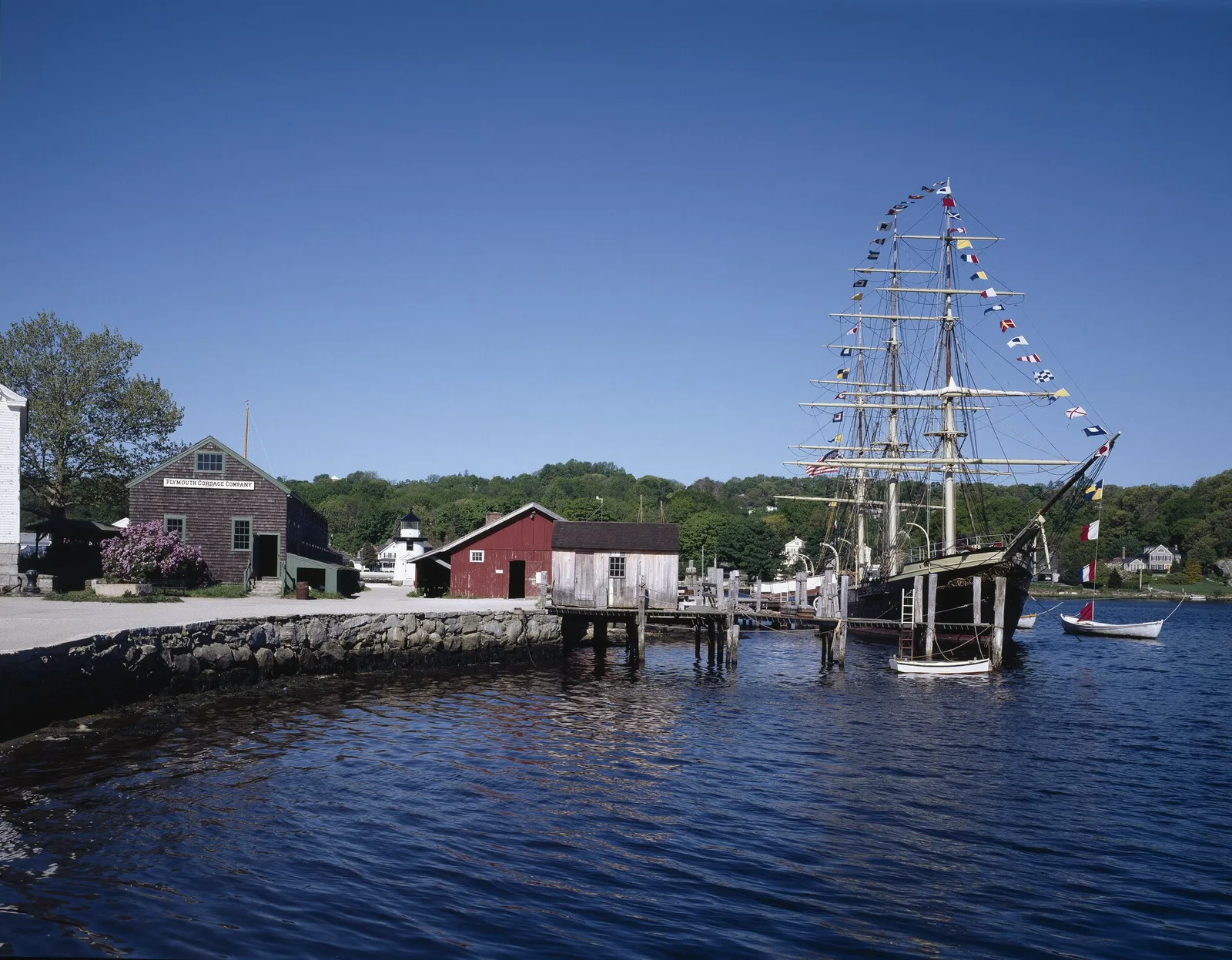
Mystic Seaport Museum, on the Mystic River in southeastern Connecticut, is the largest maritime museum in the United States, holding more than 60 historic buildings moved here from around New England, some 500 watercraft, and roughly two million artifacts on a 19-acre former shipyard site.
It was founded in 1929 as the Marine Historical Association by three Mystic residents, on the grounds of the 19th-century George Greenman and Company shipyard, which had launched clipper ships including the record-setting David Crockett in 1853.
The museum's centerpiece is the Charles W. Morgan, launched at New Bedford in 1841, the last surviving wooden American whaleship and the oldest surviving American merchant vessel. She came to Mystic in 1941 and, after a five-year rebuild, sailed a 38th voyage to New England ports in 2014.
Around her the museum runs a working preservation shipyard, a re-created seafaring village with a cooperage, ropewalk, and sail loft, and a fleet that includes the 1908 steamboat Sabino, the 1921 fishing schooner L.A. Dunton, and the 1882 training ship Joseph Conrad, all National Historic Landmarks.
- Designation
- Smithsonian Affiliate Museum
- Location
- Mystic, Connecticut
- Established
- 1929
- Annual Visitors
- ~500,000
What to Explore at Mystic Seaport
The Morgan was launched on July 21, 1841, at the Hillman brothers' yard in New Bedford, and made 37 whaling voyages between then and 1921, ranging from three months to nearly five years and touching every ocean.
She is the last of an American whaling fleet that once numbered more than 2,700 vessels, and she outlived the industry itself: kerosene from the 1859 Pennsylvania oil strike, and then electric light, destroyed the market for whale oil.
After retirement she was displayed on a private estate in South Dartmouth, Massachusetts, then towed to Mystic in 1941, and was named a National Historic Landmark in 1966.
A five-year restoration finished in 2013 rebuilt her hull below the waterline, and in 2014 she made her 38th Voyage, sailing to New Bedford, Boston, and the Stellwagen Bank feeding grounds, her first time at sea since 1921.
More than 60 buildings were dismantled elsewhere in New England and rebuilt on the grounds, among them a bank, a chapel, a one-room schoolhouse, a printing office, a drugstore, and the homes of shipyard families.
The trade shops interpret the industries behind the whaling and fishing fleets: a cooperage making the barrels that held whale oil, a section of the Plymouth Cordage Company ropewalk, a sail loft, and a shipsmith's forge.
The Greenman brothers' own houses still stand near the river; their yard built merchant and clipper ships on this site from the 1830s to the 1870s.
During the Civil War the Mystic yards, including works next to the museum site, built dozens of steam gunboats and transports for the Union Navy, a wartime boom the village exhibits describe.
The shipyard, opened in the 1970s and named for a museum benefactor, is a working restoration yard where visitors watch shipwrights build and repair wooden vessels with traditional tools and methods.
Its centerpiece is a ship lift, or lift dock, that raises vessels weighing up to hundreds of tons out of the river for hull work.
The yard carried out the Morgan's 2008 to 2013 rebuild and the 2015 to 2017 restoration of the steamboat Sabino, and it takes contract work on historic vessels from around the country.
The museum also built the schooner Amistad here, a reconstruction of the 1839 vessel at the center of the United States Supreme Court freedom case, launched at Mystic in 2000.
Tall ships lie along the museum's wharves, and traditional small craft are rowed and sailed on the river through the season as part of the museum's boathouse and sailing programs.
The Sabino, built in 1908 on the Damariscotta River in Maine, is one of the last coal-fired steamboats carrying passengers in the country and runs trips on the Mystic River in the warmer months.
The village sits at the head of navigation on the Mystic, and the drawbridge in downtown Mystic, a 1922 bascule bridge, still opens on the hour for river traffic.
The waterfront's exposure to the river is also the museum's main vulnerability, and it has begun raising key structures and planning for storm surge.
Indigenous Connections
Pequot Nation
The Mystic River area is the homeland of the Pequot, who by the early 1600s were the dominant people of the Connecticut coast and controlled much of the wampum trade of Long Island Sound.
On May 26, 1637, during the Pequot War, an English force under Captain John Mason with Narragansett and Mohegan allies surrounded and burned the Pequot village at Mistick, killing an estimated 400 to 700 people, most of them women, children, and the elderly.
The 1638 Treaty of Hartford declared the Pequot nation dissolved and its name abolished, dividing the survivors among the Mohegan and Narragansett; the maritime economy the museum interprets grew on the land opened by that war.
The Mashantucket Pequot Tribal Nation and the Eastern Pequot Tribal Nation are both federally recognized tribes in Connecticut today. The Mashantucket Pequot Museum and Research Center near Ledyard is a world-class museum of Pequot and regional Native American history.
Mohegan Nation
The Mohegan broke from the Pequot under the sachem Uncas in the 1630s and allied with the English, a split that shaped the Pequot War and left the Mohegan in control of much of the Thames valley.
Mohegan people used the coastal rivers for fishing, shellfishing, and trade, and continued to live in the region through the colonial and early American periods when many other southern New England nations were dispossessed.
The tribe kept a documented land base and leadership line into the 20th century, which supported its federal recognition in 1994.
The Mohegan Tribe is a federally recognized tribe headquartered in Uncasville, Connecticut, and maintains an active cultural presence in the region.
Experiences at Mystic Seaport
Board the Charles W. Morgan
Visitors walk the Morgan's deck and go below to the cramped forecastle where the crew slept, the officers' cabins aft, and the blubber room where whale fat was cut up.
On deck stand the brick tryworks, the furnace where blubber was boiled into oil, and the davits that lowered the light cedar whaleboats from which the men actually hunted.
A typical voyage carried about 33 men, often for three to four years, and a full ship might come home with 3,000 barrels of oil; many voyages lost money, and men, along the way.
Audio guides and staff connect the ship to the trade that lit and lubricated Victorian America and to the multiethnic crews, many of them Azorean, Cape Verdean, and Pacific Islander, who sailed her.
Historic Village Walking Tour
A self-paced walk through the village stops at the cooperage, chandlery, ropewalk, sail loft, and shipsmith, where interpreters in period dress demonstrate the trades.
The ropewalk building holds a working rope machine, the cooper still raises barrels over a fire, and the sail loft crew sews and repairs the museum fleet's canvas.
The village also has a working 19th-century printing office, a nautical instrument shop, and the Greenmanville Church, built by the shipyard-owning family in 1851.
The shipyard viewing area lets visitors watch current restoration work, and the small-boat livery offers rowing and sailing on the river in season.
Mystic River Steamboat Cruise
The Sabino makes roughly 30- to 45-minute trips from the museum wharves down the Mystic River past the town and back, with longer evening cruises on some dates.
Built in 1908 as the ferry Tourist on the Damariscotta River in Maine, she was renamed Sabino and worked Maine waters until the museum acquired her in 1974.
Her compound steam engine burns coal, and passengers can look down into the engine room and stokehold while the boat runs.
She is a National Historic Landmark, and a 2015 to 2017 rebuild at the museum shipyard replaced much of her hull to keep her in passenger service.
Conservation Challenges
Wooden Vessel Preservation
Keeping wooden ships afloat is a constant fight against rot, marine borers, and the flexing that opens seams, so the museum's shipwrights inspect and repair the fleet year-round.
The Morgan's 2008 to 2013 restoration replaced most of her structure below the waterline at a cost of roughly $7 million, and the Sabino rebuild that followed cost several million more.
The museum keeps a stock of large, naturally curved timber, live oak and other species, seasoned for years, because the shapes traditional hulls need cannot be bought as sawn lumber.
Even with that effort, some vessels in the roughly 500-boat collection are preserved on land rather than in the water, because floating them all is beyond any budget.
Rising Sea Levels and Coastal Flooding
The museum sits at the head of the Mystic River estuary, only a few feet above mean high water, with its wharves, trade shops, and collection storage all in the flood path.
Storm surge from Hurricane Sandy in 2012 and from earlier hurricanes has pushed water into buildings, and sea level at nearby New London has risen roughly a foot over the past century.
Planning now includes raising the most vulnerable structures, moving collections storage to higher ground, and designing new construction for flooding.
A single major hurricane on the wrong track could put much of the 19-acre campus underwater, which the museum treats as its central long-term risk.
Maritime Skills Preservation
Wooden boatbuilding, hand sailmaking, rigging, and coopering are trades with few remaining practitioners, and the knowledge to maintain the collection lives mostly in the museum's own staff.
The shipyard runs a formal apprenticeship, and the museum operates the Williams-Mystic maritime studies program with Williams College alongside a boatbuilding school.
Demonstrations in the village are partly outreach and partly training, keeping techniques such as barrel-raising and ropewalk spinning in active daily use.
The museum shares expertise with other historic-ship operators nationally, since only a shrinking pool of yards can do this kind of work at all.
The Charles W. Morgan, the last surviving American wooden whaleship, launched 1841
At a Glance
Did You Know?
The Charles W. Morgan completed 37 whaling voyages between 1841 and 1921, sailing over a million miles and visiting every major ocean. She helped light the homes of America for 80 years before electric lighting made whale oil obsolete.
The Charles W. Morgan appeared in the 1922 silent whaling film 'Down to the Sea in Ships,' shot around New Bedford, and was designated a National Historic Landmark in 1966.
The Sabino, built in 1908, is one of the oldest coal-fired steamboats still operating as a passenger vessel in the United States and is listed on the National Register of Historic Places.
The museum's ropewalk, a long narrow building used to twist fibers into rope, demonstrates a craft that dates back thousands of years. The ropewalks of New England supplied rigging for the sailing fleets that connected America to the world.
Plan Your Visit
Location
Mystic, Connecticut
Designation
Smithsonian Affiliate Museum
Best Time to Visit
Year-round; summer offers the most programming including Sabino river trips
Admission
Adults $29.95, Children $15.95 (prices may vary, check museum website)