
The Epstein Files Transparency Act
In November 2025 Congress ordered the Justice Department to release its Epstein records within 30 days. Here is how that law passed, what it lets the government hold back, and why the fight over whether it was obeyed is still going.
A Law That Ordered Records Released
The Epstein Files Transparency Act told the Attorney General to post the Justice Department's unclassified Epstein records online within 30 days, listed the only reasons anything could be held back, and banned holding records back to spare anyone embarrassment. As of the date above, whether the department has fully obeyed it is still being fought over in federal court and in Congress.
Quick Facts
| Official name | Epstein Files Transparency Act |
|---|---|
| Bill number | H.R. 4405, 119th Congress |
| Public law | Public Law 119-38 |
| Lead sponsors | Rep. Ro Khanna (D-CA) introduced it on July 15, 2025; Rep. Thomas Massie (R-KY) led the discharge petition |
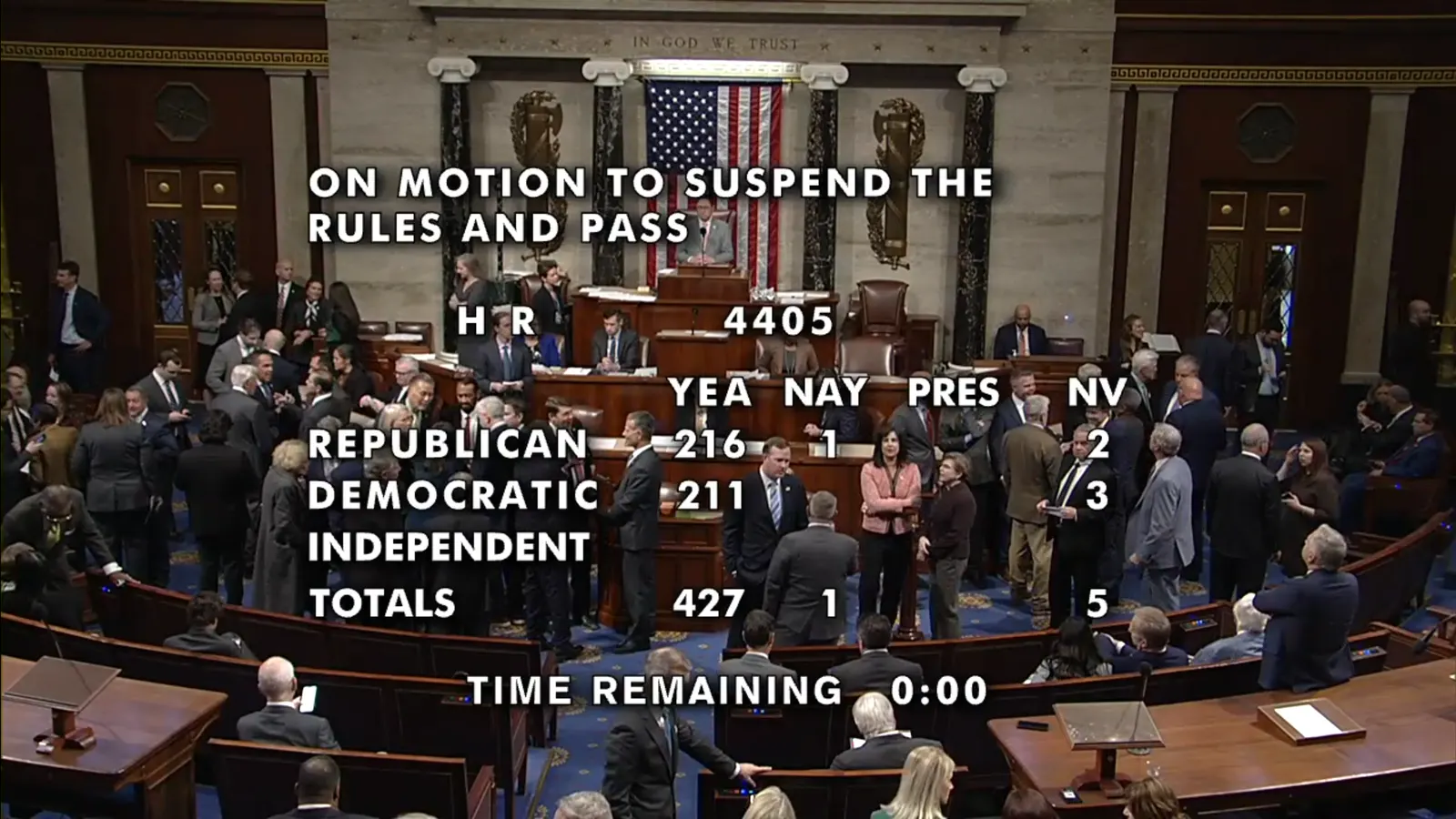
| House vote | Passed 427 to 1 on November 18, 2025 (the one no vote was Rep. Clay Higgins, R-LA) |
| Senate vote | Passed by unanimous consent on November 19, 2025 |
| Signed | By President Trump on November 19, 2025 |
| Release deadline | 30 days after enactment: December 19, 2025 |
| Report to Congress | Due 15 days after the release is complete |
| Penalty for missing the deadline | None written into the law |
How the Law Got Passed
Rep. Ro Khanna, a California Democrat, introduced H.R. 4405 on July 15, 2025, with Rep. Thomas Massie, a Kentucky Republican, as his lead partner. The bill was short: it ordered the Attorney General to release the Justice Department's Epstein records and listed the narrow reasons anything could be held back.
In the House, a bill normally reaches the floor only when the majority's leaders schedule it. The Speaker of the House and the Rules Committee decide what comes up and when, and a bill sent to committee can sit there for the rest of a Congress without a vote.
Speaker Mike Johnson did not schedule H.R. 4405. He argued that the House Oversight Committee's own investigation, which was already collecting records from the Justice Department, was a better way to get the facts out while protecting victims.
That left the sponsors with one tool that does not depend on leadership: a discharge petition. It is the House's built-in way for a majority of members to take a bill away from the committee and the leaders who are holding it.
A discharge petition is a House rule that lets any member start a list of signatures to force a floor vote on a bill stuck in committee. Once 218 members, a majority of the full House, have signed, the petition goes on a special calendar and, after a short waiting period, any signer can call the bill up for a vote. The Speaker and the committees cannot stop it.
The rule exists so that a majority of the House, not just its leaders, has the final say over what the House considers. It is one of the less familiar steps in how a bill becomes law, because it is used rarely and succeeds even more rarely.
Discharge petitions usually fail because members of the majority party are reluctant to sign one. Signing means going around your own party's leaders in public, and leaders have many ways to reward loyalty and punish defiance, from committee assignments to campaign help.
The signatures are public. The House Clerk posts the names of everyone who has signed, so voters, reporters, and party leaders can all see who has broken ranks.
The petition reached 218 signatures on November 12, 2025. Every Democrat in the House signed, 214 in all, along with four Republicans: Thomas Massie, Lauren Boebert, Nancy Mace, and Marjorie Taylor Greene.
The 218th signature came from Rep. Adelita Grijalva, an Arizona Democrat who had won a special election in September 2025. Her swearing-in was delayed until the House returned from the long government shutdown that fall, and she signed the petition right after taking the oath.
Speaker Johnson had urged Republicans not to sign, and the White House pressed the four Republican signers to withdraw. None did. In a chamber as closely divided as the House of Representatives was in 2025, four votes from the majority party were enough to tip the balance.
Reaching 218 did not pass the bill. It guaranteed a vote. But once a vote is certain, the politics change, because every member has to go on the record.
President Trump opposed the effort for months. The weekend before the vote, he reversed course and urged House Republicans to vote yes, saying the party had nothing to hide.
On November 18, 2025, the House passed the bill 427 to 1. The only no vote came from Rep. Clay Higgins, a Louisiana Republican, who said the bill could harm innocent people named in the files. The next day, November 19, the Senate passed it by unanimous consent, meaning no senator objected, so no recorded vote was needed.
The bill went to the President, who signed it on November 19, 2025. It became Public Law 119-38. A President who opposed the bill could have used his veto, but with only one House member voting no, an override would have been almost certain.
This is a common pattern. Once a discharge petition succeeds, opposition often collapses, because few members want to be recorded voting against something a large majority supports. The Senate took the House's lead and passed the bill without changes, which sent it straight to the President.
What the Law Actually Says
Within 30 days of enactment, the Attorney General had to post, in a searchable and downloadable format, all unclassified records, documents, communications, and investigative materials held by the Department of Justice, including the FBI and the U.S. Attorneys' Offices, that relate to the topics the law lists.
The first topics are the cases themselves: Jeffrey Epstein, including every investigation, prosecution, and custody matter, and Ghislaine Maxwell, his longtime associate, who was convicted of sex trafficking in 2021. The law also covers flight logs and travel records for any aircraft, boat, or vehicle Epstein owned or used.
The next topics reach beyond Epstein himself: individuals, including government officials, named or referenced in connection with his crimes, civil settlements, immunity or plea agreements, or investigations; companies, nonprofits, schools, and government bodies with known or alleged ties to his networks; and any immunity deal, non-prosecution agreement, plea bargain, or sealed settlement.
The last topics concern the government's own conduct: internal Justice Department communications about decisions to charge, not charge, investigate, or decline to investigate; any records about the destruction, deletion, or concealment of related evidence; and records of Epstein's detention and death in federal custody in 2019, including incident reports, witness interviews, and autopsy files.
Section 2(b) is one sentence long, and it may be the most important sentence in the law. It says: "No record shall be withheld, delayed, or redacted on the basis of embarrassment, reputational harm, or political sensitivity, including to any government official, public figure, or foreign dignitary."
Congress wrote this because those are exactly the reasons people suspect when a government keeps records secret. By banning them in advance, the law tells the Justice Department that protecting a powerful person's reputation is never a legal reason to hold something back.
This is a big departure from normal practice. Under the Freedom of Information Act, agencies can withhold records to protect the personal privacy of people mentioned in law enforcement files, and the Justice Department has long avoided publicly naming people it investigated but never charged.
Section 2(b) overrides those habits for this one set of records. It does not say that anyone named in the files did anything wrong. It says only that embarrassment cannot be the reason a name stays hidden.
The law lists five, and only five, kinds of material the Attorney General may withhold or redact. The first is victims' personally identifiable information, along with victims' personal and medical files, where release would be a clearly unwarranted invasion of personal privacy.
The second is child sexual abuse material, which is a federal crime to distribute and is never released. The third is any material that would jeopardize an active federal investigation or ongoing prosecution, but only if the withholding is "narrowly tailored and temporary." The fourth is images of death, physical abuse, or injury of any person.
The fifth is information that is properly classified under an executive order to protect national defense or foreign policy. Even then, as the next section explains, the law pushes hard toward releasing as much as possible. The page on personal privacy and government records covers why privacy and openness so often pull against each other.
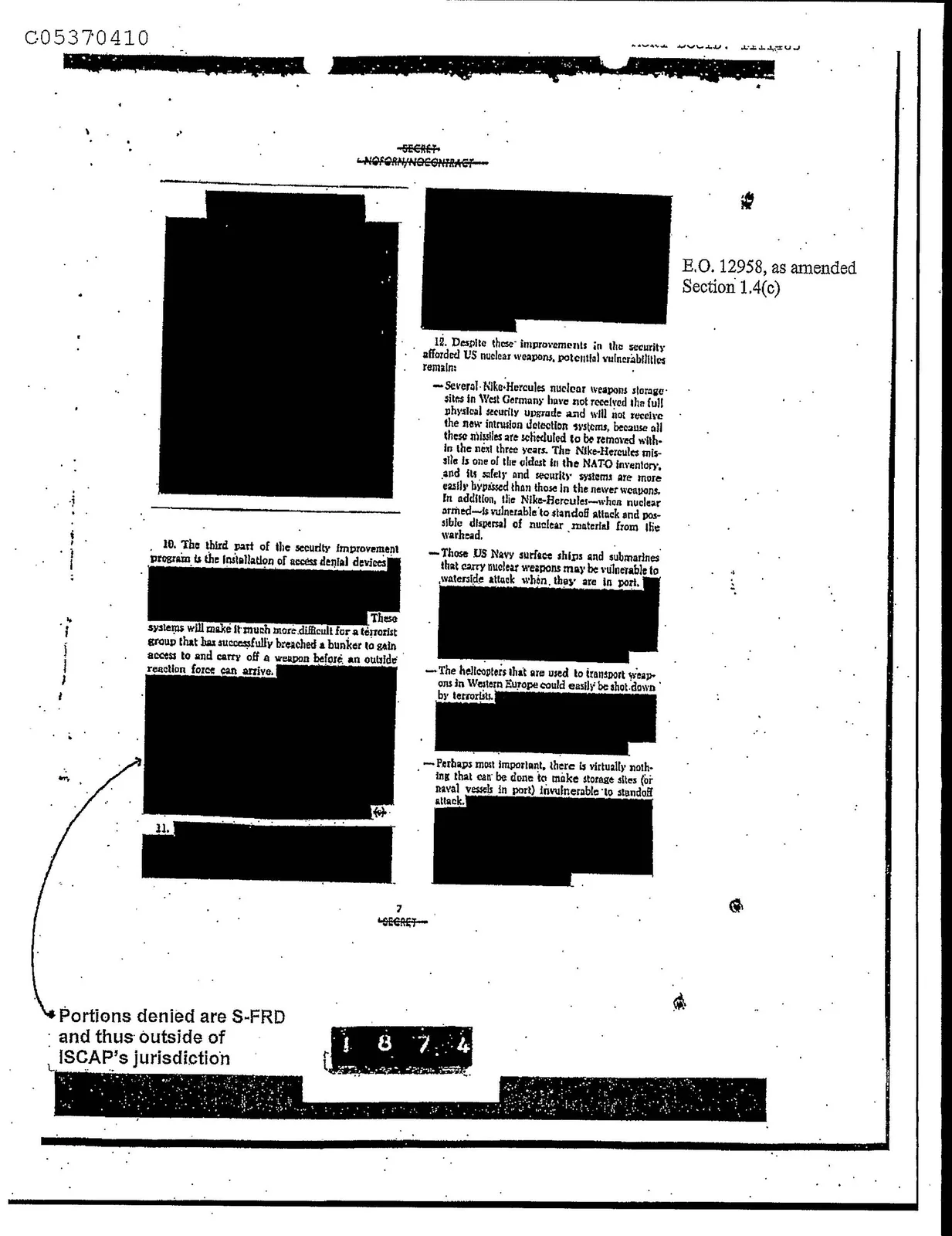
The law also says the department may withhold only the "segregable portions" of a record. That means it should black out the protected lines, not the whole page, whenever the rest of the page can be released safely.
Every redaction must come with a written justification that is published in the Federal Register, the government's official daily journal of rules and notices, and sent to Congress. That makes each blacked-out passage something the public can question, not just a black box.
For classified material, the Attorney General must declassify as much as possible. If something truly cannot be declassified without harming national security, including intelligence sources and methods, the department must publish an unclassified summary of it instead. The page on the intelligence community explains how classification works.
The law also guards against a classic workaround: classifying records after the fact so they fall under the national security exception. Any decision to classify covered material after July 1, 2025 must be published in the Federal Register and reported to Congress, with the date, who classified it, and an unclassified summary of why. Classification rules themselves are set by the President through executive orders.
These rules are what made the law enforceable in practice. When the Justice Department's redaction justifications were late or incomplete, critics and a federal judge could point to the specific requirement that had not been met.
Within 15 days after the release is complete, the Attorney General must send a report to the House and Senate Judiciary Committees. The report has to list every category of records released and withheld, and summarize each redaction along with its legal basis.
The report must also list all government officials and "politically exposed persons" named or referenced in the released materials, with no redactions allowed on that list for reasons of embarrassment or reputation. Politically exposed person is a banking and law enforcement term for someone who holds, or recently held, a prominent public position.
This report gives Congress its own record to check the release against. If the report says a category was withheld, the committees can ask why. If it lists a redaction with no legal basis that fits the law, that becomes a question for a hearing.
Because the report depends on the release being "complete," its timing became part of the dispute. The Justice Department says its release was complete in early 2026; the bill's sponsors say it never was.
Notice what is not on the list of permitted withholdings. There is no exception for privileged material, such as attorney-client communications or the internal back-and-forth before a decision. There is no exception for documents that duplicate other documents. And there is no exception for records the department decides are not really about Epstein.
Those three categories are exactly the ones the Justice Department later relied on to explain why about 3 million pages were not released. That is why the fight ended up in court: one side reads the five listed exceptions as the only ones allowed, and the other says ordinary legal principles still apply.
The law also has no penalty for missing the deadline. It does not fine anyone, does not set up a special prosecutor, and does not say what happens if the Attorney General falls short.
Finally, the law does not say who may sue to enforce it. That left it to judges to decide whether anyone could bring a case at all, and it is the gap a follow-up bill, the Epstein Files Transparency Act II, was written to close.
How a Release Like This Happens
Passing a law is the easy part. Turning millions of pages scattered across the FBI, federal prosecutors' offices, and the prison system into a public, searchable library takes a long chain of steps, and each step is a place where things can slow down or go wrong.
From Signed Law to Public Library
The law is signed and the clock starts
Here the clock was 30 days, running from November 19 to December 19, 2025. Every later step had to fit inside that window.
Collection
The department gathers records from every office that holds them: FBI case files (reported at more than 300 gigabytes in the FBI's case system), the U.S. Attorneys' Offices for the Southern District of New York and the Southern District of Florida, and the Bureau of Prisons, which holds the detention and death records.
Court-sealed material is handled separately
Grand jury testimony is secret under Federal Rule of Criminal Procedure 6(e) and normally needs a judge's order to release. Here the department asked the courts to unseal it, and judges in Florida and New York agreed after the law passed. One Florida judge ruled that the new law overrode the usual grand jury secrecy rule.
Removing duplicates
Big case files hold many copies of the same document, such as an email saved in five places. Removing copies is normal, but the law does not list duplication as a reason to withhold, and that later became a legal fight.
Review for each exception
Reviewers go page by page looking for victims' information, child sexual abuse material, graphic images, classified material, and anything tied to an active investigation. Handwritten notes and foreign-language records are slower to review.
Redaction
Reviewers black out only the protected part of a page, not the whole page, wherever that is possible. Done badly, digital redactions can sometimes be undone, which happened with some early releases here.
The justification log
Each redaction gets a written legal reason, which the law says must be published in the Federal Register and sent to Congress.
Publication
The department posted the records on its website, in a collection it calls the Epstein Library, in numbered data sets. Each page carries a serial number with the prefix "EFTA," which lets anyone spot gaps in the numbering.
Corrections
The public, the press, and Congress catch mistakes. Pages get pulled, re-redacted, and restored, and pages that were wrongly held back get added.
Report to Congress
Within 15 days after the release is complete, the Attorney General reports to the House and Senate Judiciary Committees on what was released, what was withheld, and why.
Oversight and enforcement
Congress, the courts, and the department's own Inspector General test whether the release actually met the law.
Why Records Can Still Be Held Up, Lawfully
Even a law that orders release leaves room for some records to stay hidden, at least for a while. The key question for each reason below is whether the law itself allows it, whether some other law does, or whether the two sides are fighting over it.
What the tags mean
- Written into the lawThe Epstein Files Transparency Act itself lists this reason.
- Allowed by other lawA different law or court rule allows it, and the Act does not override it outright.
- DisputedThe Justice Department relies on it; critics, and in some cases a court, say the Act does not allow it.
- Gap in the lawSomething the Act does not cover, which affects how it can be enforced.
- Practical, not legalA real-world cause of delay that does not change what the law requires.
Victims' names, identifying details, and personal and medical files can be redacted when releasing them would be a clearly unwarranted invasion of privacy. This is the least controversial exception in the law. Nearly everyone involved, including the bill's sponsors, agrees it should exist.
It also slows everything down, because every page has to be checked, and a single missed name can hurt a real person. In early 2026 the Justice Department acknowledged that some victim-identifying information had been published by mistake, pulled thousands of documents, and redid the redactions. A department spokesperson told CBS News that about 0.1 percent of released pages had been found with victim information left visible.
Some survivors later sued the government over the release of their personal information, CBS News reported. The episode shows the tension the law creates: moving fast serves transparency, while moving carefully serves privacy.
It is a federal crime to distribute child sexual abuse material, and the law cites the federal statutes that define and ban it. This material is never released under any circumstances.
No one involved in the dispute has argued otherwise. The work this exception creates is in the review itself: investigators' files in a sex trafficking case can contain such material, and reviewers have to find and remove all of it before any page goes public.
The law allows the department to withhold images of death, physical abuse, or injury of any person. This covers, for example, autopsy and crime scene photographs.
The exception covers the images, not the records around them. The law separately requires release of the written records of Epstein's detention and death, including incident reports, witness interviews, and the medical examiner's findings, so the facts can be public even when the pictures are not.
Records can be held back if releasing them would jeopardize an active federal investigation or ongoing prosecution, but only if the withholding is "narrowly tailored and temporary." Releasing evidence in the middle of a case can tip off suspects or make a fair trial harder, which is why most transparency laws have an exception like this.
Critics worried about this exception from the start. Days before the House vote in November 2025, at the President's request, Attorney General Pam Bondi assigned a federal prosecutor to investigate certain people and institutions connected to Epstein. Some members of Congress said a new investigation could be used as a reason to hold records back.
The words "narrowly tailored and temporary" are the limit. The department cannot use an investigation to withhold everything, and it cannot hold records forever. Once a case ends, the reason to withhold ends with it.
Records properly classified for national defense or foreign policy reasons can be withheld. But the law adds three conditions: the department must declassify as much as possible, publish an unclassified summary of anything it keeps secret, and publicly report any new classification decision made after July 1, 2025.
Those conditions exist because classification is controlled by the executive branch itself, and Congress did not want new secrecy labels to become a back door around the law.
CBS News has reported that documents in the released files suggest some classified material was not included. Whether that material exists and how it should be handled is part of the larger dispute over what was released.
Federal grand jury testimony is secret under Rule 6(e) of the Federal Rules of Criminal Procedure, which protects witnesses and people who were investigated but never charged. Releasing it normally needs a judge's approval. The page on juries and the courts explains what a grand jury does.
Before the law passed, three federal judges in Florida and New York had turned down requests to release Epstein grand jury records, citing that secrecy rule. After the law passed, the Justice Department asked again. On December 5, 2025, U.S. District Judge Rodney Smith in Florida granted the request, ruling that the new law overrode the usual grand jury secrecy rules, and judges in New York granted similar requests days later.
Here the courts said yes, but grand jury material is still an extra step that takes time, because the department has to ask a judge first and wait for an answer.
Some records come from court cases in which a judge ordered them sealed, or issued a protective order limiting who may see evidence. Those orders belong to the court, not the Justice Department, and the federal courts decide when they can be lifted.
The Justice Department has said some withheld material falls into this category. Unsealing it means going back to the court that sealed it, which can involve hearing from the people the order was meant to protect.
Whether a law like this one should override a court's sealing order on its own, the way the Florida judge found it overrode grand jury secrecy, is a question each court has to answer for its own records.
The Justice Department says some records are protected by legal privilege: attorney-client communications, attorney work product (lawyers' notes and case strategy), or the deliberative process privilege, which shields internal discussion before a government decision is made. These privileges normally protect government records from release.
But the Act does not list privilege as a permitted reason to withhold, and it specifically orders release of internal communications about decisions to charge or not charge. Critics say that means Congress meant to override privilege for these records.
In March 2026 the department released five prosecution memos from the Southern District of Florida that it had earlier marked privileged. Whether a later, specific law like this one overrides long-standing privileges is a real legal question, and it is one of the issues in the federal lawsuit described below.
The Justice Department says many unreleased documents are copies of records it already released. Removing exact copies saves the public from wading through the same page many times, and every large records release does it.
The problem is that "duplicate" can stretch. In March 2026 the department released documents it admitted had been "incorrectly coded as duplicative" during the first review, including FBI interview summaries. At an August 2026 hearing, Senior U.S. District Judge Emmet Sullivan noted that the Act has no exception for "substantially similar" or duplicative documents.
The main test case became the FBI's handwritten interview notes. The department said they were duplicates of the typed interview reports (called FD-302s) that it had released. Judge Sullivan ruled that handwritten notes are not simply duplicates and ordered them produced.
Rep. Ro Khanna has said the department identified more than 6 million potentially responsive pages and released only about 3.5 million after review. Reviewing millions of pages by hand, including handwritten notes and records in other languages, takes a great deal of time and staff.
In court, the department argued that it was not practical for first-level reviewers to judge whether foreign-language documents were responsive. Judge Sullivan rejected that reason and ordered the department to begin reviewing those records.
Volume can explain a delay. It does not change a legal deadline, and the law did not give the department more time for a bigger pile.
The Justice Department has long had a policy against publicly naming people it investigated but did not charge. The idea is fairness: a person who is never charged never gets a trial to clear their name. That idea draws on the same values as the due process and grand jury protections in the Fifth Amendment.
The Act's ban on withholding for "reputational harm" overrides that policy for this set of records. Some legal commentators argue this raises real fairness concerns, and Rep. Clay Higgins cited it when he cast the only no vote in the House.
Supporters respond that Congress made that choice on purpose, after years of public doubt about how the Epstein cases were handled, and that the law protects victims' privacy while declining to protect anyone's reputation. Being mentioned in a file is not evidence of a crime, a point both sides accept.
Ghislaine Maxwell's lawyers argued that releasing certain records tied to her case would violate the separation of powers. More broadly, the executive branch sometimes argues that Congress cannot fully dictate how it handles its own investigative files, because enforcing the law is the President's job.
Congress, in turn, has the power to make laws about federal records and to fund or not fund the agencies that keep them. Where one branch's power ends and another's begins is a question the Constitution leaves to the courts. The page on separation of powers explains why the Framers built in these collisions on purpose.
The Act sets a deadline but no consequence for missing it. It does not fine anyone, remove anyone from office, or name an outside official to take over the job.
That means enforcement depends on someone else acting: a person filing a lawsuit, Congress using its own tools, or Congress passing a new law. The page on legislative and executive powers explains which tools each branch has.
The Act does not say who may go to court to enforce it. A person who sues has to prove "standing," meaning they were personally harmed in a way a court can fix. Being an interested citizen is usually not enough.
In January 2026, Reps. Massie and Khanna asked a federal judge in New York to appoint a special master to oversee the release. Judge Paul Engelmayer said no, finding he lacked jurisdiction to supervise the department's compliance in that case, and noted that members of Congress have their own oversight tools.
In June 2026, Judge Sullivan found that journalist Katie Phang did have standing, because being denied information she needed for her reporting was an "informational injury." The page on freedom of the press covers why the courts treat reporters' access to information seriously. That ruling covers only her case and is on appeal. The Epstein Files Transparency Act II is designed to close this gap.
Any court order can be appealed, and the government can ask for a stay, a pause on the order while the appeal is decided. Each round can add weeks or months, even after a judge has ordered release.
Here, the Justice Department filed a notice of appeal in August 2026 and asked the U.S. Court of Appeals for the D.C. Circuit to pause part of Judge Sullivan's orders. The appeals court briefly paused one deadline while it considered the request, then denied the stay on October 28, 2026. The appeal itself is still pending.
The House calendar matters. A discharge petition can be signed and acted on only while the House is in session, and the House spent most of the fall of 2026 out of Washington for the midterm campaign.
Supporters of the Epstein Files Transparency Act II said the recess through the midterm elections delayed their effort. They said they would finish collecting signatures when the House returned in November.
There is also a hard stop. Every bill and discharge petition dies when a Congress ends. The 119th Congress ends on January 3, 2027, so a bill that has not passed both chambers by then has to start over in the 120th.
What Has Happened So Far
From a bill that House leaders would not bring up to a federal appeals court fight, here is how the law has played out, in order.
On July 15, 2025, Rep. Ro Khanna introduced H.R. 4405 with Rep. Thomas Massie as his lead Republican partner, and Massie started a discharge petition to force a House vote on it.
The bill came after the Justice Department and FBI said in a July 2025 memo that a review of the Epstein files had found nothing that would justify charging anyone else and that no more records would be released. That memo drew criticism from members of both parties.
The discharge petition reached 218 signatures: all 214 House Democrats and four Republicans. The final signature came from newly sworn-in Rep. Adelita Grijalva of Arizona.
With 218 names, a floor vote was guaranteed under House rules, whatever the Speaker decided.
At the President's request, Attorney General Pam Bondi assigned the U.S. Attorney for the Southern District of New York to investigate certain people and institutions connected to Epstein.
Critics in Congress said the new investigation could later be used to hold records back under the law's "active investigation" exception. The Justice Department did not say it would do so.
After the President reversed his opposition and urged Republicans to vote yes, the House passed H.R. 4405 by 427 to 1. Rep. Clay Higgins of Louisiana cast the only no vote.
The House debate is recorded in the Congressional Record for November 18, 2025.
The Senate passed the bill by unanimous consent, and President Trump signed it the same day. It became Public Law 119-38.
The 30-day clock started. The release was due by December 19, 2025.
U.S. District Judge Rodney Smith in Florida granted the Justice Department's request to unseal grand jury transcripts from the mid-2000s Florida investigation of Epstein, ruling that the new law overrode grand jury secrecy rules.
Earlier requests to release Epstein grand jury records had been denied by three federal judges in Florida and New York before the law passed. Judges in New York granted similar requests in the days after the Florida ruling.
On the deadline, the Justice Department released a first batch of several thousand files and said the release would come in stages. Hundreds of pages were fully blacked out.
The bill's sponsors said the department had missed the legal deadline, since the law required all covered records within 30 days. The department said it was releasing records as fast as it could review them while protecting victims.
Over the following days, the department released more material, including grand jury records and redacted flight logs, adding tens of thousands of files.
Readers found that some redactions in the digital files could be bypassed, for example by copying the hidden text into another program. The episode showed how hard it is to redact electronic records correctly at speed.
Reps. Massie and Khanna had asked U.S. District Judge Paul Engelmayer in New York to appoint a special master, an outside official, to oversee the remaining releases. He denied the request, finding he lacked jurisdiction to supervise the department's compliance in that case.
The judge called the questions important and timely and noted that the lawmakers were free to use Congress's own oversight tools. He did not decide whether they could bring a separate lawsuit.
The department released more than 3 million pages, along with photos and videos, and said its review was complete. It said this brought it into compliance with the law.
Rep. Khanna said the department had identified more than 6 million potentially responsive pages, so roughly half had still not been released. The department said the rest were duplicates, unrelated to Epstein, or privileged.
The department acknowledged that some victim-identifying information had been published by mistake. It pulled thousands of documents to fix the redactions.
A department spokesperson told CBS News that about 0.1 percent of released pages had been found with victim information left visible. Some survivors later sued over the release of their personal information.
NPR reported that the public database was missing dozens of pages, identified through gaps in the serial numbers and in discovery logs, including FBI interview records tied to an allegation against President Trump, which he has denied.
The Justice Department disputed that it had improperly withheld any records.
The department published more than 1,000 additional pages. They included FBI interview summaries it said had been "incorrectly coded as duplicative" during the first review, and five prosecution memos from the Southern District of Florida that it had earlier marked privileged.
The department said the mistakes were human error. News outlets reported that some pages NPR had identified as missing still had not appeared.
President Trump removed Pam Bondi as Attorney General and named Deputy Attorney General Todd Blanche as acting Attorney General. The Attorney General leads the Justice Department and sits in the President's Cabinet.
Because the law assigns its duties to the Attorney General, lawsuits over compliance name whoever holds that office, which is why the federal case became Phang v. Blanche.
On April 23, 2026, the Justice Department's Office of the Inspector General, its internal watchdog, announced an audit of how the department identified, redacted, and released records under the law. It said it would publish a report when the work is done.
Later that month, journalist Katie Phang sued the acting Attorney General in federal court in Washington, D.C., under the Administrative Procedure Act, arguing the department's incomplete release violated the law.
The Justice Department told CBS News that it had released every document the law requires and that the roughly 3 million unreleased documents were duplicates, unrelated to Epstein, or protected by legal privilege.
CBS News reported on gaps it had identified, including document numbering that suggested some records had been used in earlier court cases but did not appear in the release.
Senior U.S. District Judge Emmet Sullivan granted Phang a preliminary injunction. He found she had standing to sue because being denied the information was an "informational injury," and he found the department had likely violated the law.
He ordered the department to unredact certain materials or explain why it would not by July 2, to publish the required redaction justifications, and to begin reviewing foreign-language records.
The department declined to turn over additional materials and told the court its redactions were appropriate and followed the law.
It also said it strongly disagreed that private citizens could enforce the law through the Administrative Procedure Act.
The Senate confirmed Todd Blanche as Attorney General by a vote of 50 to 49.
He remained the defendant in the Phang case, now as the confirmed Attorney General.
At a hearing, Judge Sullivan pressed department lawyers on missing redaction justifications and on handwritten FBI interview notes that had not been released. He noted that the law has no exception for "substantially similar" documents and raised the possibility of contempt if his orders were not followed.
The department argued that the notes duplicated typed interview reports already released and that checking handwritten pages for victim information was technically difficult.
The department filed what it called a protective notice of appeal of the June 25 order, to the U.S. Court of Appeals for the D.C. Circuit, which preserved its right to appeal within the 60-day deadline.
A department spokesperson said it had produced all responsive documents and would appeal with confidence.
Judge Sullivan ruled that the handwritten FBI notes are not mere duplicates of the typed reports and ordered the department to produce them and to begin reviewing and producing foreign-language records, with a deadline of September 24.
He wrote that a contempt finding would be premature but did not rule it out if the deadline was missed.
After briefly pausing one deadline, a three-judge panel of the D.C. Circuit denied the department's request for a stay of the order to review foreign-language records, finding the department had not shown it would be irreparably harmed by starting that review.
The panel left the main appeal of the June 25 injunction for a later decision.
Reps. Massie and Khanna said they had commitments for the 218 signatures needed on a discharge petition for the Epstein Files Transparency Act II, and that they would finalize it when the House returned after the midterm elections. As of this page's date, the petition had not formally reached 218.
The bill would let state attorneys general, district attorneys, Epstein victims, and members of Congress sue the U.S. Attorney General to enforce the original law. Even with 218 signatures, House rules require a waiting period before the vote, and the bill would also have to pass the Senate before the 119th Congress ends on January 3, 2027.
The Compliance Dispute
The central question is simple to ask and hard to settle: has the Justice Department released everything the law requires? Here are the two positions, in their own terms.
The Justice Department's position
- The Justice Department says it has released every document the law requires, about 3.5 million pages across its releases.
- It says the roughly 3 million pages it did not release are duplicates, unrelated to Epstein, or protected by legal privilege.
- It says its redactions protect victims and follow the law's exceptions, and that nothing was redacted to protect famous or politically connected people.
- It says the court rulings against it misread the law, including on who may sue to enforce it, and it has appealed.
- It acknowledged redaction errors, corrected them, and released documents it found had been wrongly held back.
The position of the sponsors, survivors' advocates, and the court so far
- The bill's sponsors, Republican Thomas Massie and Democrat Ro Khanna, say the department missed the deadline and still withholds about 3 million pages.
- They point out that "duplicate," "unrelated," and "privileged" are not among the five exceptions written into the law.
- A federal judge found the department likely violated the law and noted its required redaction justifications were months late.
- Survivors' representatives have said they were not told what was withheld or why, even as some survivors' private details were exposed.
- Critics point to inconsistent redactions and to gaps in the file numbering, some of which the department later filled.
As of November 6, 2026, this dispute is still in the courts and in Congress. This page will be updated as it develops.
How a Law Like This Gets Enforced
Federal courts
A person with standing can sue under the Administrative Procedure Act, the 1946 law that lets courts review whether federal agencies followed the law, as in Phang v. Blanche.
Judges can review disputed documents privately (in camera), order records released, and hold officials in contempt if they defy a court order.
Congress
Congress can hold oversight hearings, issue subpoenas, vote to hold officials in contempt of Congress, delay nominations, attach conditions to the department's funding, and pass new laws. Some members called for contempt proceedings against the former Attorney General.
CBS News reported that the Government Accountability Office, Congress's own auditing agency, also announced a review of how the released documents were redacted.
The Inspector General
The Justice Department's internal watchdog, the Office of the Inspector General, opened an audit of the department's compliance in April 2026.
Inspectors general cannot order records released, but their public reports often shape what Congress and the courts do next.
New legislation: EFTA II
The Epstein Files Transparency Act II would let state attorneys general, district attorneys, Epstein victims, and members of Congress sue the U.S. Attorney General to enforce the original law.
It would also give survivors access to their own records and give state prosecutors access to files they need for state cases.
The press and the public
Journalists, researchers, and ordinary readers found redaction errors and gaps in the serial numbers that led the department to pull, fix, and add documents.
Because every page carries a public serial number, anyone can check the release for missing pages, which is part of what makes a searchable public library a check on the government.
For Classrooms
Teachers can use this case to show how Congress, the executive branch, and the courts check one another over a single set of records. The vocabulary and questions below work for a class discussion or a written assignment.
Key Vocabulary
- Discharge petition
- A House procedure that forces a floor vote on a bill stuck in committee once 218 members sign it, without the Speaker's approval.
- Unanimous consent
- A way to pass a measure without a recorded vote, as long as no member present objects.
- Public law
- A bill that has passed both chambers and been signed by the President (or passed over a veto), numbered by Congress and order of enactment.
- Federal Register
- The government's official daily publication of rules, notices, and other formal actions by federal agencies.
- Redaction
- Blacking out or removing protected information from a document before it is released.
- Segregable portion
- The part of a record that can be separated out and withheld while the rest of the record is released.
- Personally identifiable information (PII)
- Details that identify a specific person, such as a name, address, birth date, or photo.
- Classified information
- Information the executive branch has marked secret to protect national defense or foreign policy.
- Declassification
- Removing the classified label so information can be shared or released.
- Grand jury
- A group of citizens that hears evidence in secret and decides whether there is enough to charge someone with a federal crime.
- Rule 6(e)
- The federal court rule that keeps grand jury proceedings secret unless a judge allows disclosure.
- Sealed record
- A court record that a judge has ordered hidden from the public.
- Protective order
- A court order that limits who may see or share certain evidence in a case.
- Privilege
- A legal protection that shields certain communications from disclosure, such as attorney-client privilege, attorney work product, or the deliberative process privilege for internal government discussions.
- Standing
- The requirement that a person suing must have been personally harmed in a way a court can fix.
- Informational injury
- A harm courts recognize when a law entitles someone to information and they are denied it.
- Administrative Procedure Act (APA)
- The 1946 federal law that sets how agencies act and lets courts review whether they followed the law.
- Preliminary injunction
- A court order early in a case that requires or forbids action while the case continues.
- In camera review
- A judge's private review of documents in chambers to decide whether they should be released.
- Stay pending appeal
- A pause on a court order while a higher court decides an appeal.
- Contempt of court
- A finding that someone disobeyed a court order, which can bring fines or other penalties.
- Contempt of Congress
- A vote by a chamber of Congress finding that someone refused to comply with its subpoena or orders.
- Inspector General
- An independent watchdog inside a federal agency who audits and investigates its programs and conduct.
- Bates number
- A unique serial number stamped on each page of a large document production, so pages can be tracked and gaps spotted.
- FD-302
- The FBI form an agent uses to write up a typed summary of an interview.
For more terms, see the site's glossary of government terms.
Discussion Questions
Why do you think Congress wrote "embarrassment, reputational harm, or political sensitivity" into the law as forbidden reasons? What problem were they trying to prevent?
The law protects victims' privacy and also requires broad public release. How should the government balance those two goals?
Should a law like this include a penalty for missing the deadline? What would a fair penalty look like?
Who should have the right to sue to enforce a transparency law: anyone, journalists, victims, states, members of Congress?
Is it fair to release files that mention people who were never charged with a crime? Make the best argument on each side.
A discharge petition let a majority of the House override its own leadership. Is that a good feature of the House rules or a risky one?
Common Questions About the Epstein Files Transparency Act
It is a 2025 federal law, Public Law 119-38, that ordered the Attorney General to post the Justice Department's unclassified records about Jeffrey Epstein and Ghislaine Maxwell online in a searchable format within 30 days. It lists the only reasons records may be withheld and bans withholding them because of embarrassment, reputational harm, or political sensitivity.
House leaders did not bring the bill up, so Reps. Thomas Massie and Ro Khanna used a discharge petition, which forces a vote once 218 members sign. It reached 218 on November 12, 2025, the House passed the bill 427 to 1 on November 18, and the Senate passed it by unanimous consent the next day. President Trump signed it on November 19, 2025.
Only five kinds of material: victims' identifying information and personal files, child sexual abuse material, material that would jeopardize an active investigation (only if narrowly tailored and temporary), images of death or injury, and properly classified national security information. Every redaction must have a written justification published in the Federal Register.
That is disputed. The Justice Department says it has released everything the law requires, about 3.5 million pages, and that the rest are duplicates, unrelated, or privileged. The bill's sponsors say about 3 million pages are still withheld, and in June 2026 a federal judge found the department had likely violated the law. The case is on appeal.
It is a follow-up bill led by Reps. Massie and Khanna that would let state attorneys general, district attorneys, Epstein victims, and members of Congress sue the Attorney General to enforce the original law. As of November 6, 2026, its backers said they had commitments for a discharge petition to force a House vote.
Sources & Further Reading
Primary sources
- H.R. 4405, Enrolled Bill Text (GovInfo)
- Public Law 119-38 (Congress.gov)
- H.R. 4405 Bill Status and Actions (Congress.gov)
- Congressional Record, House Debate, November 18, 2025
- U.S. Department of Justice: Epstein Library
- Phang v. Blanche, No. 1:26-cv-01417 (D.D.C.), Docket (CourtListener)
- Office of the Clerk, U.S. House: Discharge Petitions
- DOJ Office of the Inspector General: Ongoing Work
News coverage
- CBS News: What's missing from the Epstein files?
- CBS News: Judge orders DOJ to unredact more Epstein files or explain why
- CBS News: Justice Department watchdog launches probe into compliance
- CBS News: Judge orders unsealing of Florida grand jury transcripts
- ABC News: DOJ declines to turn over additional Epstein files
- ABC News: Judge presses DOJ to explain redactions
- Courthouse News: Feds struggle to explain redactions
- The Hill: Judge orders DOJ to produce, unredact Epstein files
- The Hill: DOJ files protective notice of appeal
- The Hill: Judge gives Blanche deadline, warns of possible contempt
- Roll Call: Judge denies lawmakers' request on Epstein files law
- NPR: Missing pages in the Epstein files (February 2026)
- NBC News: Senate confirms Todd Blanche as attorney general
- Axios: Roadblocks to a full release (November 2025)
- Time: The redactions in the Epstein files
- Newsweek: Massie's discharge petition for EFTA II
The law's wording comes from the enrolled bill and Public Law 119-38 at GovInfo and Congress.gov. Court rulings are summarized from the opinions and docket in Phang v. Blanche (D.D.C. No. 1:26-cv-01417) and from news reports of the hearings. Claims about what has or has not been released are attributed to the Justice Department, the bill's sponsors, the court, or the news outlet that reported them. News coverage is paraphrased, not quoted. Facts checked as of November 6, 2026.