

Palmyra Atoll LQ
America's only incorporated minor territory, a lush, jungle-covered atoll in the central Pacific managed jointly by the U.S. Fish and Wildlife Service and The Nature Conservancy as a world-class marine and terrestrial research station.
About Palmyra Atoll
Palmyra Atoll is unlike any other U.S. minor territory in two fundamental ways. First, it is incorporated, the full U.S. Constitution applies here, a distinction shared with no other minor outlying island and only a handful of other American places. Second, it is green. While Baker, Howland, Jarvis, and the others are sun-baked expanses of coral rubble and scrub, Palmyra is blanketed in dense tropical forest. From the air it looks like a jungle dropped into the middle of the Pacific.
Sitting about 1,050 miles south of Honolulu, the atoll consists of roughly 50 small islets arranged on three reef segments enclosing a large lagoon. Its incorporated status traces back to 1862, when King Kamehameha IV of the Kingdom of Hawaii annexed it. When Hawaii became a U.S. territory in 1900, Palmyra came along, and when Hawaii became a state in 1959, Palmyra was deliberately left out, leaving it as an incorporated federal territory with no state affiliation.
Today Palmyra is jointly managed by the U.S. Fish and Wildlife Service and The Nature Conservancy, which purchased the privately owned portions in 2000 for $30 million. It hosts one of the most active research stations in the remote Pacific, and its reefs and forests are considered benchmark ecosystems for understanding what the pre-human Pacific looked like.

Aerial view of Palmyra Atoll

Dense Pisonia forest, rare among Pacific atolls
Palmyra Atoll vs. a U.S. State
| Feature | Palmyra Atoll | U.S. State |
|---|---|---|
| Permanent Population | None | Yes |
| Local Government | None | State government |
| Congressional Representation | None | Senators + Representatives |
| Voting in Federal Elections | No residents | Yes |
| U.S. Constitution Applies | Yes, fully incorporated | Fully |
| Administered By | USFWS & Nature Conservancy | Elected officials |
| Incorporated Territory | Yes, unique among minor islands | Yes (as a state) |
| Public Access | Limited (research station) | Generally open |
Geography at a Glance
- Location
- Central Pacific Ocean
- Coordinates
- 5°52′N 162°6′W
- Land Area
- ~4.6 sq mi (12 km²)
- Islands
- ~50 islets on 3 reef segments
- Highest Point
- ~10 ft (3 m) above sea level
- Nearest Land
- Kingman Reef (~35 mi NW)
- Distance to HI
- ~1,050 miles S of Honolulu
- Time Zone
- UTC−11:00
- Climate
- Equatorial, hot, wet, lush vegetation
- Administration
- USFWS & The Nature Conservancy
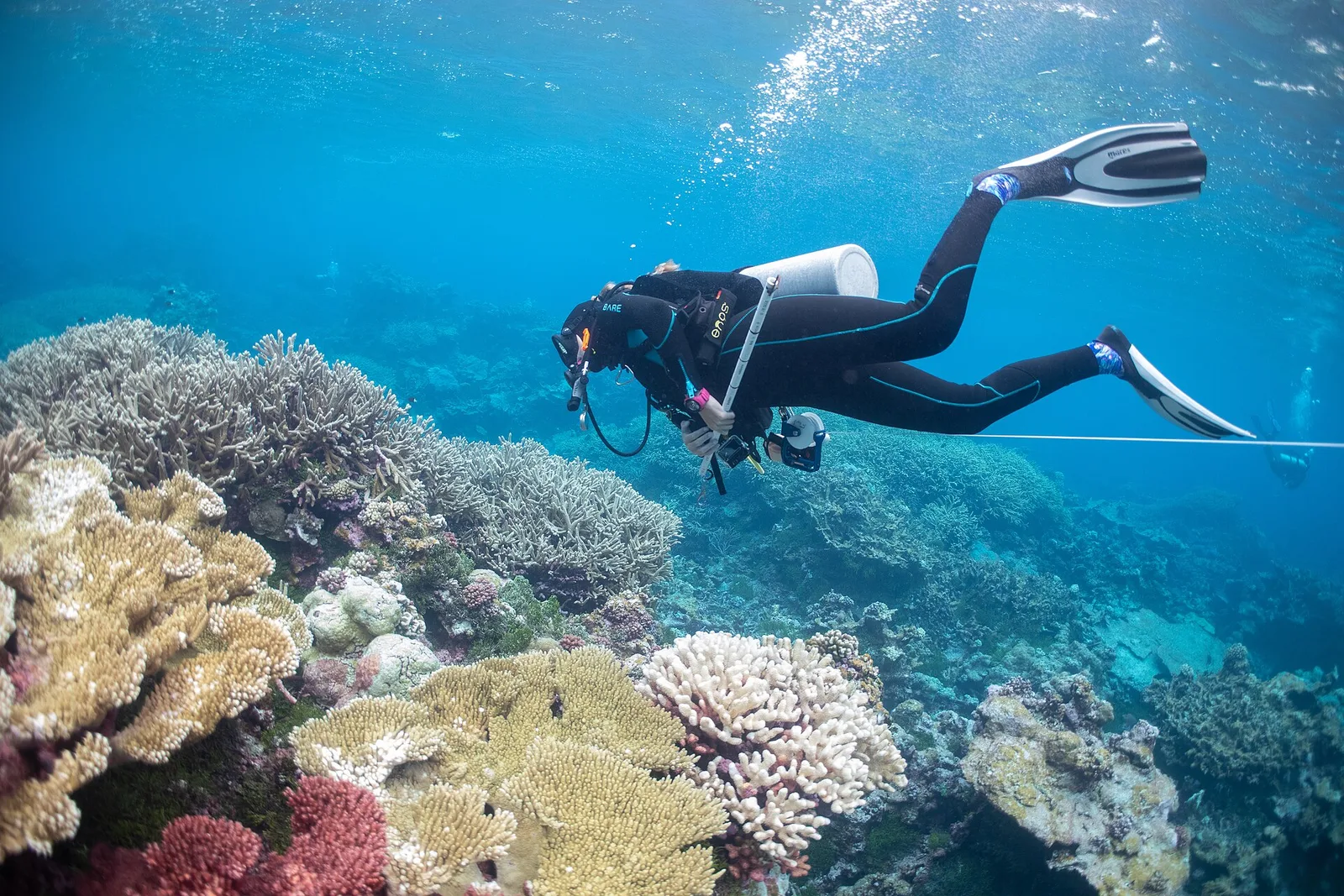
Palmyra's reef and lagoon system, one of the most studied in the Pacific
Wildlife of Palmyra Atoll
Palmyra's combination of dense Pisonia forest and pristine surrounding reef makes it ecologically richer than any other U.S. minor territory. It is both a world-class terrestrial bird refuge and a benchmark marine ecosystem, studied continuously by researchers from institutions around the globe.
Palmyra is covered in dense Pisonia grandis forest, a rare tropical tree found across very few Pacific atolls. The forest provides critical nesting habitat for seabirds and creates a jungle canopy that makes Palmyra look dramatically different from its barren Pacific neighbors.
Red-footed boobies, great frigatebirds, white terns, and brown noddies nest in Palmyra's Pisonia forest in large numbers. The dense tree canopy supports nesting densities far higher than the open terrain of other minor Pacific islands.
Palmyra's lagoon and outer reef are renowned for exceptional shark abundance, including grey reef, whitetip reef, and blacktip reef sharks. The atoll is a flagship site for studying predator-dominated reef ecosystems in the Pacific.
The reefs surrounding Palmyra are among the most studied and best-documented in the Pacific. Long-term research by The Nature Conservancy and partner institutions has made Palmyra a global reference point for coral reef ecology and climate resilience.
Palmyra Atoll Through Time
- ✦1798
First Recorded Sighting
The American captain Edmund Fanning, aboard the Betsey, recorded the atoll in 1798, noting its lush greenery and lagoon, but did not land.
Palmyra is a wet, forested atoll of about 50 islets around three lagoons, some 1,000 miles south of Honolulu, and it gets 175 or more inches of rain a year, making it one of the few naturally green places in the region.
- ✦1802
Named After a Shipwreck
The American ship Palmyra wrecked on the atoll's reef in 1802; the crew survived and were rescued, and the atoll kept the ship's name.
The USS Palmyra was wrecked there again in 1870, and over the years the atoll gained a reputation among sailors as unlucky, a reputation a 1974 double murder there would later reinforce.
- ✦1859
U.S. Claim Under Guano Act
The United States claimed Palmyra in 1859 under the Guano Islands Act of 1856, but the atoll's guano deposits were thin and it was never mined at any real scale.
The claim overlapped with a claim by the Kingdom of Hawaii, and the two would eventually merge once Hawaii itself became American.
- ✦1862
Kingdom of Hawaii Annexation
In 1862 King Kamehameha IV had two Hawaiian officials sail to Palmyra and formally annex it to the Kingdom of Hawaii.
That act of Hawaiian sovereignty is the reason Palmyra later became, and remains, the only incorporated U.S. territory: it was folded into Hawaii before Hawaii was folded into the United States.
- ✦1898–1900
Incorporated with Hawaii
When the United States annexed the Republic of Hawaii in 1898 and organized the Territory of Hawaii in 1900, Palmyra came in as part of Hawaii.
Because it entered as part of an incorporated territory, Palmyra is treated as fully part of the United States for constitutional purposes, unlike Guam, Puerto Rico, and the other 'unincorporated' territories, a distinction that has almost no practical effect on an uninhabited atoll but is a legal curiosity.
- ✦1912–1922
Private Ownership Begins
Judge Henry Cooper of Honolulu bought Palmyra in 1911, and in 1922 the atoll passed to the Fullard-Leo family of Honolulu, who held it for most of the rest of the century.
Private ownership of land inside an incorporated U.S. territory was unusual, and the family had to fight the federal government in court in the 1940s, winning a 1947 Supreme Court decision, United States v. Fullard-Leo, that confirmed their title.
- ✦1941–1945
World War II Naval Air Station
The Navy took over Palmyra after Pearl Harbor and built a naval air station, dredging a deep channel and a seaplane runway, filling and connecting islets, and stationing thousands of personnel there.
A Japanese submarine shelled the atoll on December 24, 1941. The wartime dredging and causeways permanently altered Palmyra's lagoons and water flow, and rusting equipment, roads, and a runway remain today.
- ✦1974
The Palmyra Murders
In 1974 a San Diego couple, Malcolm 'Mac' Graham and Eleanor 'Muff' Graham, sailed to Palmyra and were killed there; another couple, Buck Walker and Stephanie Stearns, sailed the Grahams' boat to Hawaii.
Muff Graham's remains were found on the atoll in 1981. Walker was convicted of her murder in 1985, and the case became the subject of Vincent Bugliosi's best-selling book 'And the Sea Will Tell.'
- ✦1959
Excluded from Hawaii Statehood
When Hawaii became the 50th state in 1959, the statehood act explicitly drew the new state's boundary to exclude Palmyra Atoll, which reverted to direct federal jurisdiction.
Palmyra thus remains an incorporated territory that is part of no state, administered from Washington through the Office of Insular Affairs and the Fish and Wildlife Service.
- ✦2000
Nature Conservancy Purchase
In 2000 the Nature Conservancy bought the privately owned parts of Palmyra from the Fullard-Leo family for about 30 million dollars, one of the largest private conservation purchases of its kind.
The Conservancy holds most of the emergent land, and the U.S. Fish and Wildlife Service holds the rest and the surrounding waters.
- ✦2001
National Wildlife Refuge
The federal portions of Palmyra were designated the Palmyra Atoll National Wildlife Refuge in 2001, and the Nature Conservancy and the Fish and Wildlife Service jointly run a research station on the atoll.
With a runway, buildings, and a resident science staff, Palmyra has become one of the most intensively studied coral-reef and tropical-forest sites in the remote Pacific, focused on reef recovery, seabirds, rats and their eradication, and climate effects.
- ✦2009
Pacific Remote Islands Marine National Monument
Palmyra was included in the Pacific Remote Islands Marine National Monument in 2009, and its protected waters, like those of neighboring Kingman Reef, extend 50 nautical miles; the 2014 expansion to 200 nautical miles covered only Wake, Johnston, and Jarvis.
A large-scale rat-eradication effort completed in the 2010s let native seabirds, crabs, and forest trees rebound, making Palmyra a widely cited example of island ecological restoration.
Did You Know?
Interesting facts about America's most constitutionally unique territory.
Palmyra is the only incorporated U.S. minor territory, meaning the full U.S. Constitution applies there. Every other minor outlying island is unincorporated, where constitutional protections apply only partially by statute.
Unlike the barren, wind-scoured terrain of its Pacific neighbors, Palmyra is blanketed in dense Pisonia forest. From the air it looks like a green jewel dropped in the ocean, a stark contrast to the sand-and-rubble look of Baker, Howland, or Jarvis.
Palmyra hosts one of the most active remote research stations in the Pacific, operated jointly by The Nature Conservancy and USFWS. Scientists from around the world study its reefs, forests, and marine life as a benchmark for pristine Pacific ecosystems.
The atoll takes its name from the American ship Palmyra, which wrecked on its reef in 1802. Shipwrecks on remote Pacific atolls were common in the age of sail, and several other minor U.S. islands are similarly named after ships.
Palmyra was once formally part of the Kingdom of Hawaii. King Kamehameha IV annexed it in 1862, and its incorporation into the Hawaiian territorial chain is why it holds its unique incorporated status today.
A limited number of researchers and authorized visitors can visit Palmyra through The Nature Conservancy's research station program, making it the most accessible of the minor territories after Midway and one of the few where overnight stays are possible.
Quick Facts and Common Questions
Short answers to the questions people most often ask about Palmyra Atoll: where it is, why it is the only incorporated U.S. territory, and who owns and manages it.
Palmyra Atoll is a ring of about 50 small, heavily forested islets in the central Pacific Ocean, about 1,000 miles south of Hawaii and the northernmost of the Line Islands. It has no permanent residents, though a small number of Fish and Wildlife Service and Nature Conservancy staff and visiting scientists stay there at a research station.
Palmyra had been claimed by the Kingdom of Hawaii, and it became U.S. territory when the United States annexed Hawaii in 1898. When Hawaii became a state in 1959, the Hawaii Admission Act left Palmyra out of the new state, so it remained a federal territory. During World War II the Navy operated an air station there.
Palmyra was part of the incorporated Territory of Hawaii, and when it was separated from Hawaii at statehood it kept that incorporated status. That makes it the only incorporated territory of the United States today, meaning the entire U.S. Constitution applies there. It is also unorganized, because Congress has not passed a law setting up a local government.
Most of the atoll was privately owned for much of the 20th century, and in 1947 the Supreme Court, in United States v. Fullard-Leo, upheld the Fullard-Leo family's private title. The Nature Conservancy bought most of the atoll in 2000, and in 2001 much of it became Palmyra Atoll National Wildlife Refuge.
The U.S. Fish and Wildlife Service, part of the Department of the Interior, manages Palmyra Atoll National Wildlife Refuge, established on January 18, 2001, and The Nature Conservancy runs the research station. Palmyra is part of the marine national monument created in 2009 and renamed the Pacific Islands Heritage Marine National Monument in 2025. Visits require a permit.
No. Palmyra Atoll has no permanent residents, is not part of any state or congressional district, and has no delegate in Congress.